MOULD SUFFIX: 930
YEARS: 1988-2006
AIRLINES: 11
MODEL VARIANTS: 30
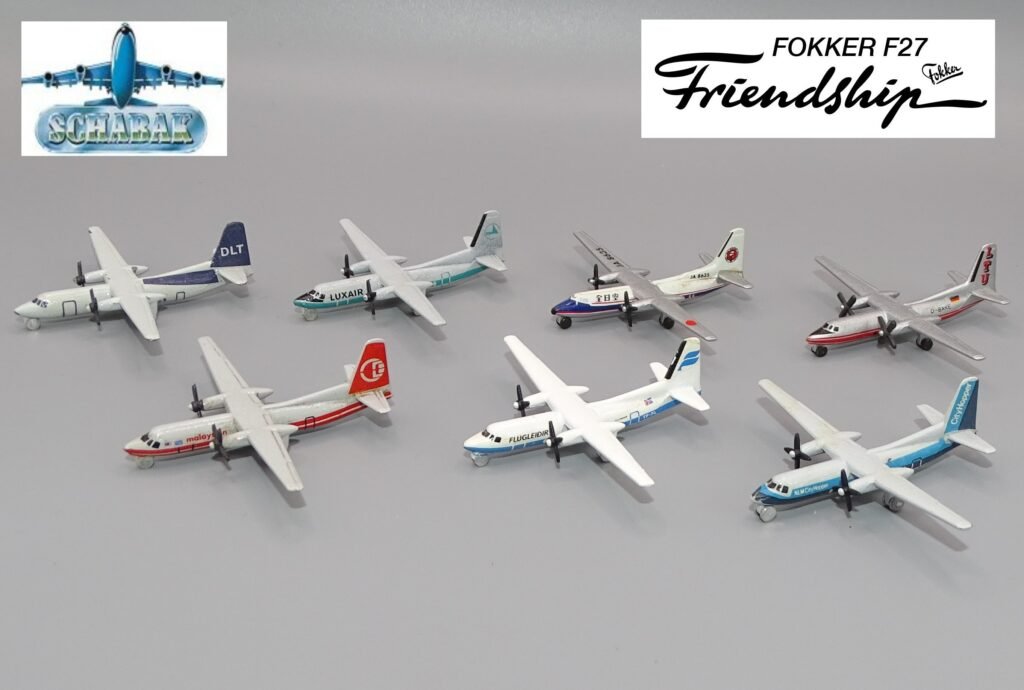
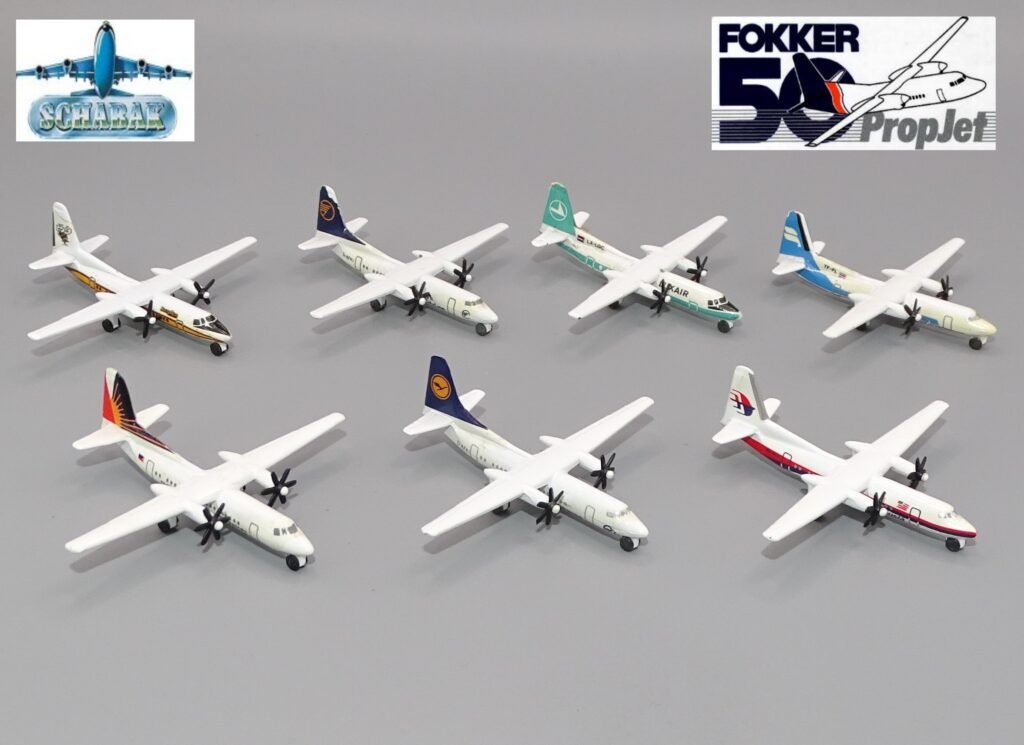
The Fokker F27 and F50 were both part of the major 1988 Schabak expansion that saw a raft of regional propliners, plus the F28, Douglas Dc-3 and Convair 440 join the Schabak range. Unlike the ATRs, where separate moulds were required due to the size differences, the F27 and F50 in 600 scale were both effectively the same. This enabled a single mould to be used with just the number of prop blades differentiating what was an older F27 (4 blades) or a newer F50 (6 blades).
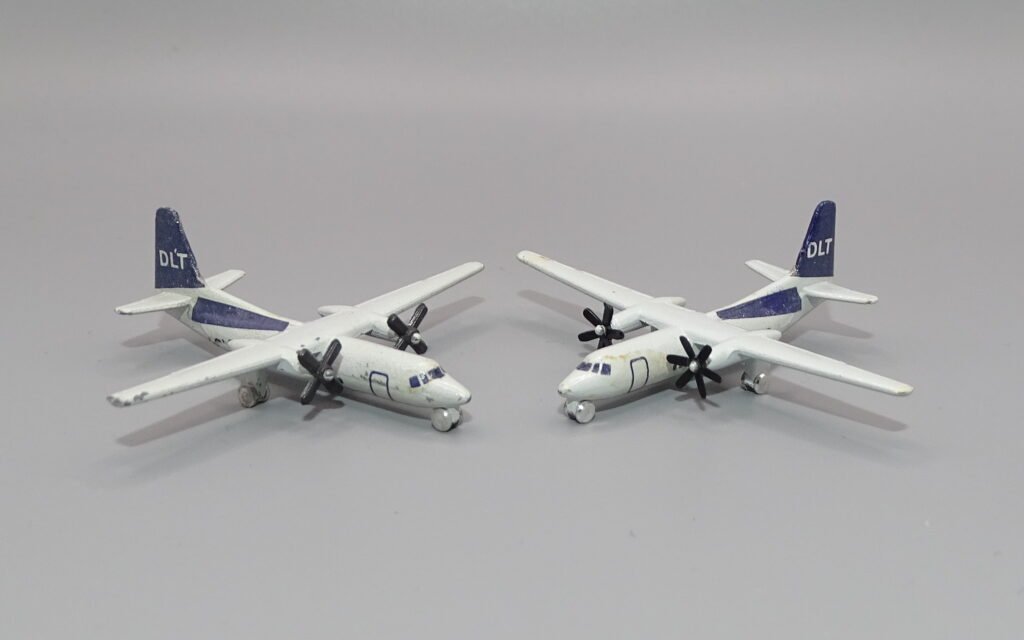
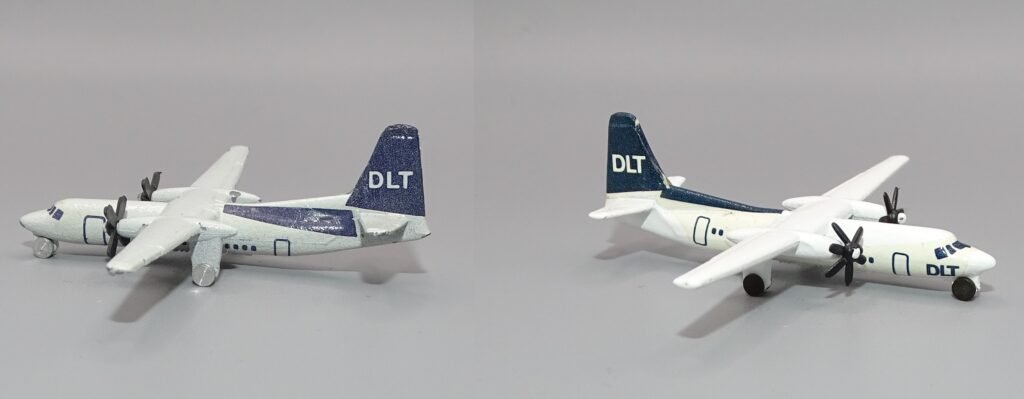
Below: Schabak being Schabak they of course didn’t always get the correct blades on a model so on the left we have a DLT ‘F27’ and on the right the correct F50!
MOULD VARIANTS
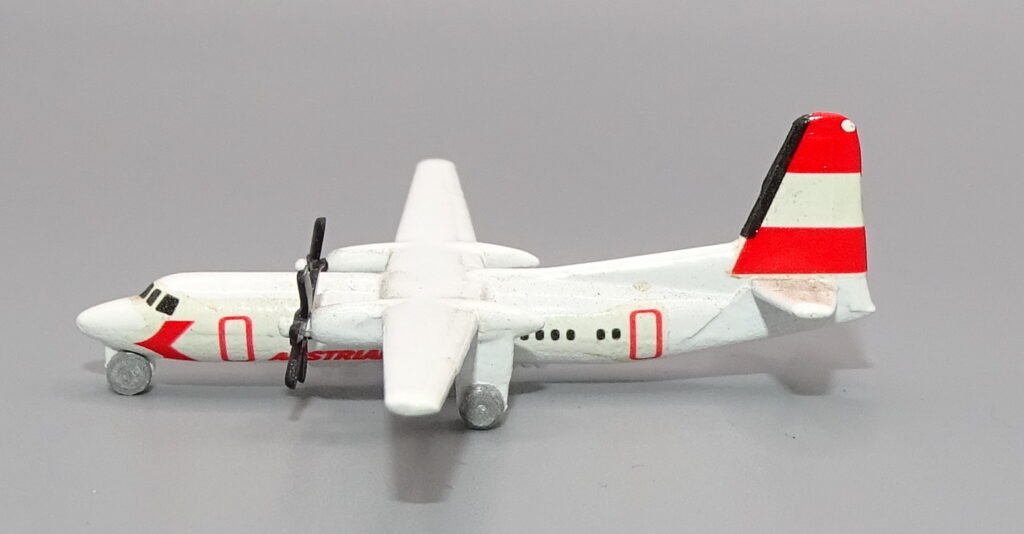
The basic F27/F50 mould is surprisingly decent and captured the shape of the real aircraft well, even with the long maingear descending from the engine nacelles. Of course, the usual standard of Schabak decal application meant the models weren’t always attractive!
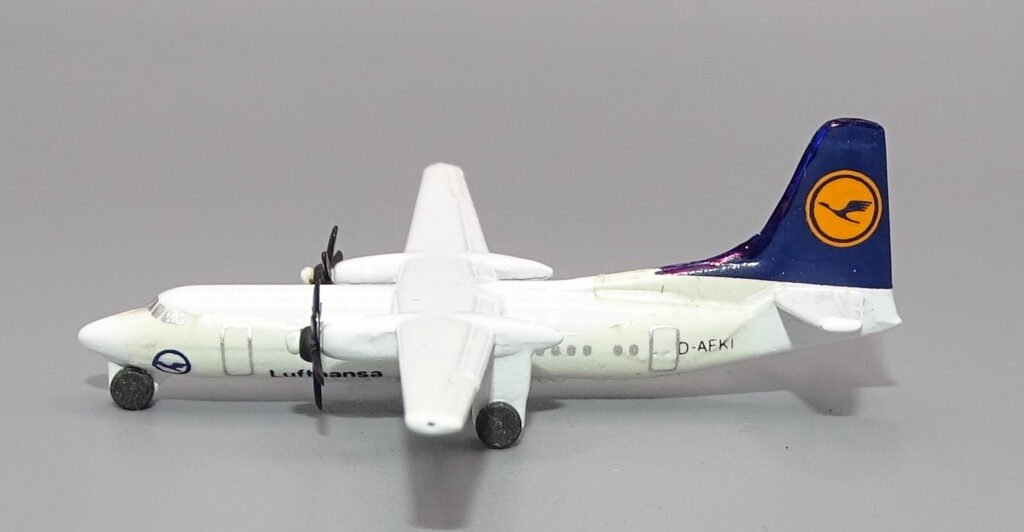
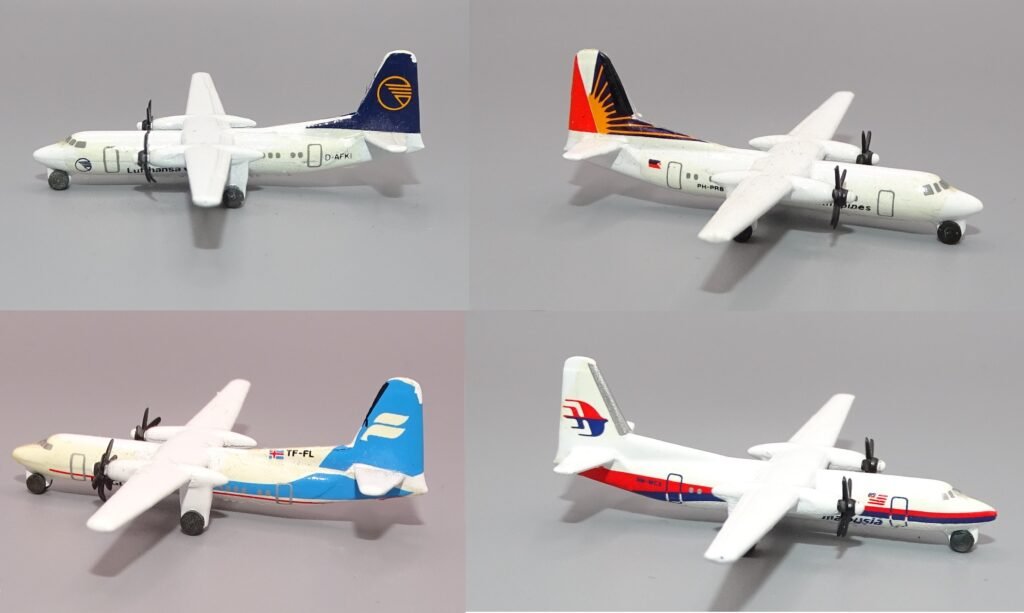
As with all Schabaks over time the wheels and decals were modified. The below Lufthansa F50 includes the later black wheels and silver windows but is otherwise the same as the above earlier Austrian example.
PRODUCTION
Schabak produced around 30 different Fokker 27/50 models, which is about equal with the number of ATRs made. That apparent diversity isn’t replicated with different airlines however as many of the versions were decal or wheel type changes and not completely new models. Even so, considering the small size of the mould usage was quite good and at least 1 F27 and 2 F50s continued to be produced up until the end of Schabak production in 2006.
For a complete list of F27/F50 production by Schabak see the database at MADb that has been updated with photos and accurate records for the type:
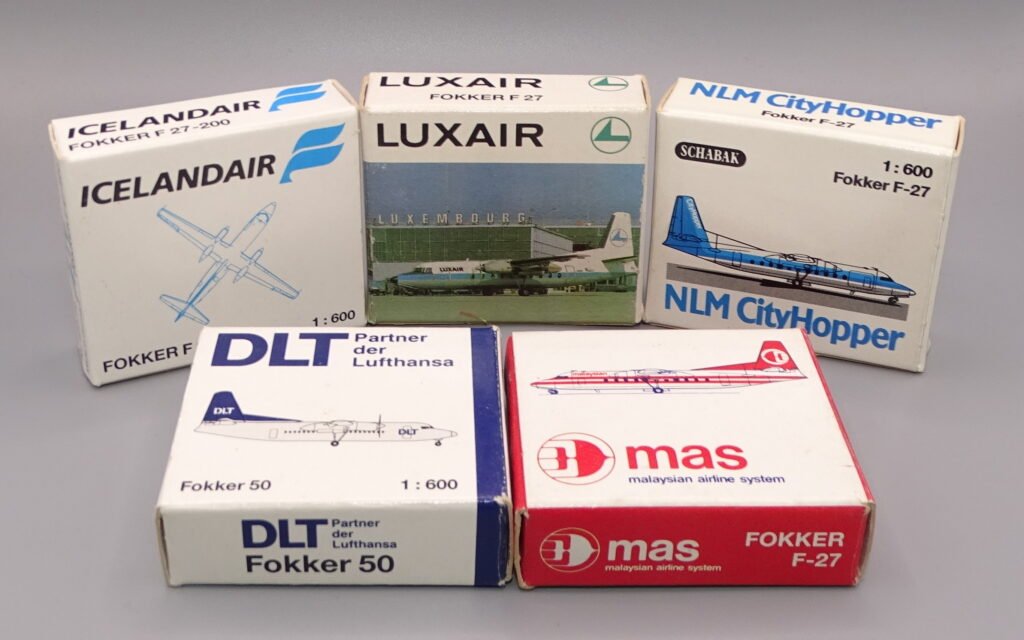
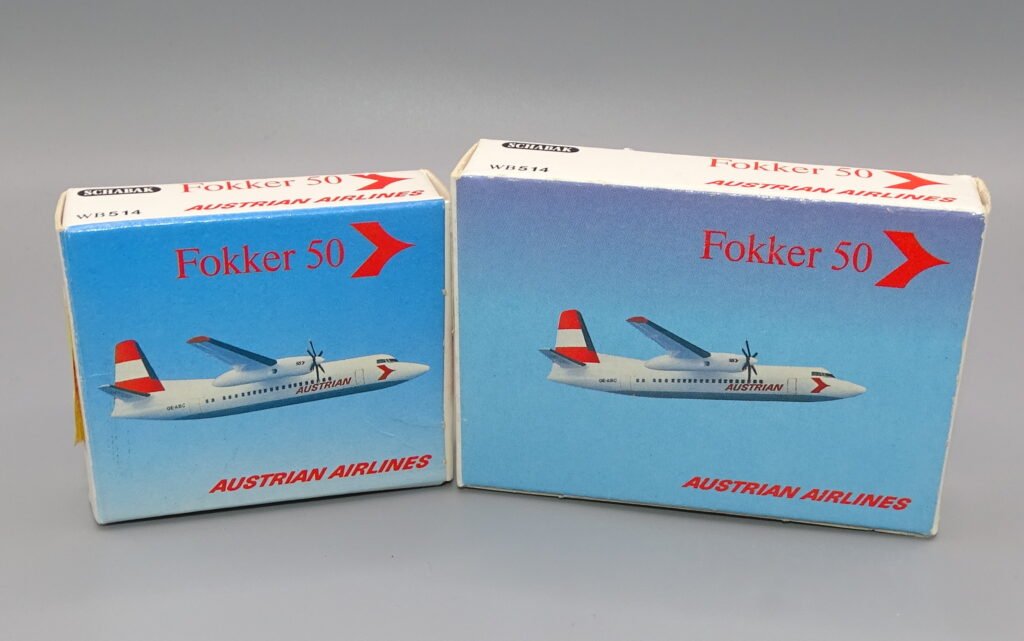
In keeping with Schabak’s smaller types early production of F27/F50s used the smallest square box, which was upgraded to the rectangular size above during the 1990s.
Below you can see the size difference between the two box types. Interestingly the box design stayed the same across the size change for this Austrian F50.
A SELECTION OF NOTABLE RELEASES
The base colour of the model itself came into play several times with the F27/F50s. The first DLT releases used a grey painted mould, whereas the later version (with updated decals) used a white fuselage.
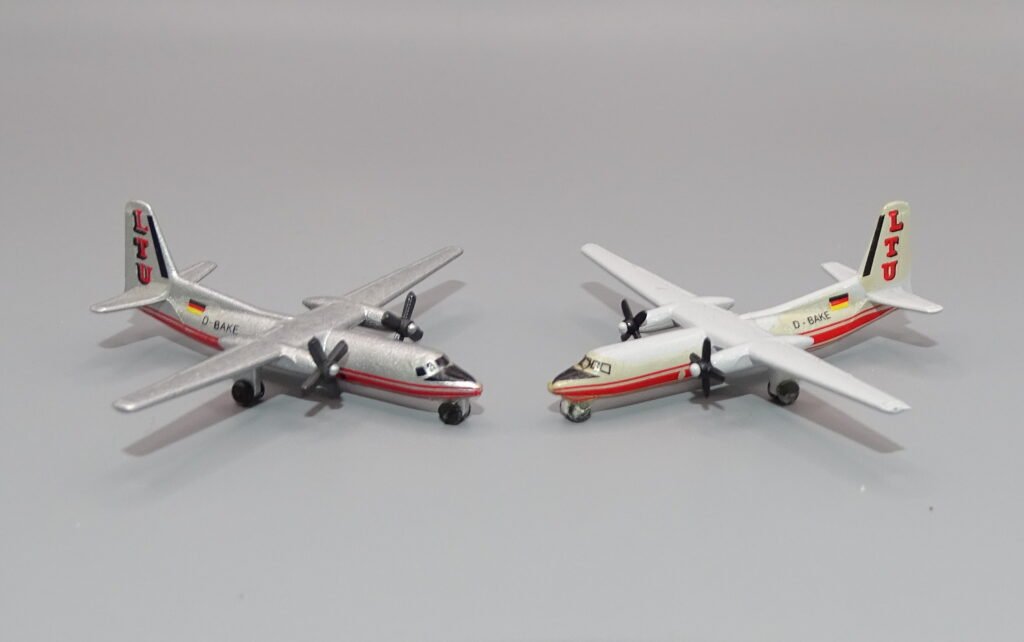
Similarly the initial LTU Fokker 27s made used a silver base fuselage, which changed to grey for later versions. Note also the change in window colours at the cockpit.
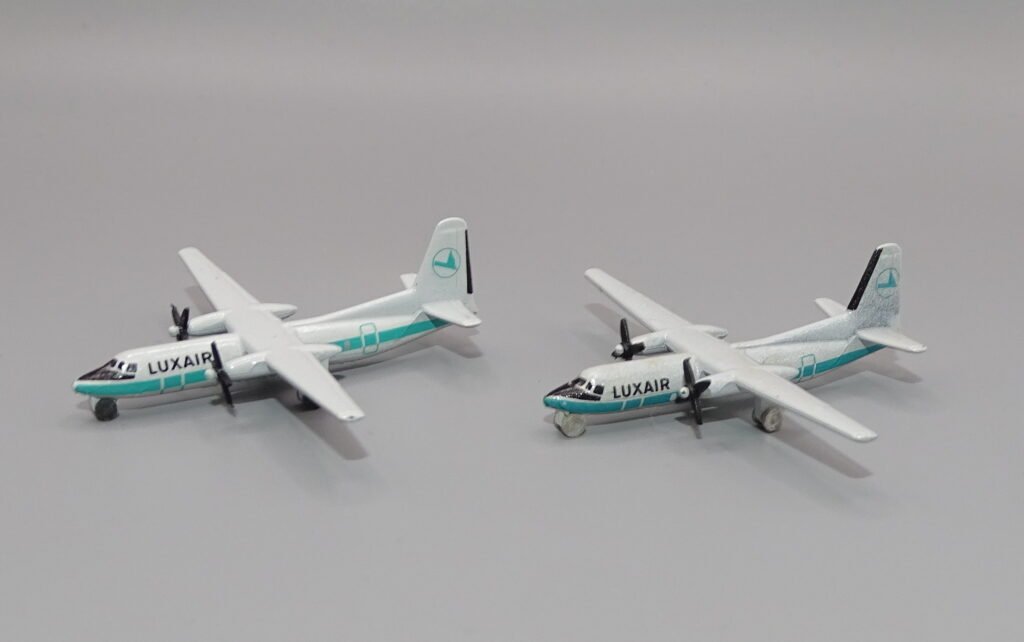
This pair of Luxair F27s is a good illustration of an early and late variant of the same model. The decals here have not changed but the black wheeled variant looks somehow more modern. Of course Luxair also flew F50s and was one of several airlines that got both F27 and F50 releases.
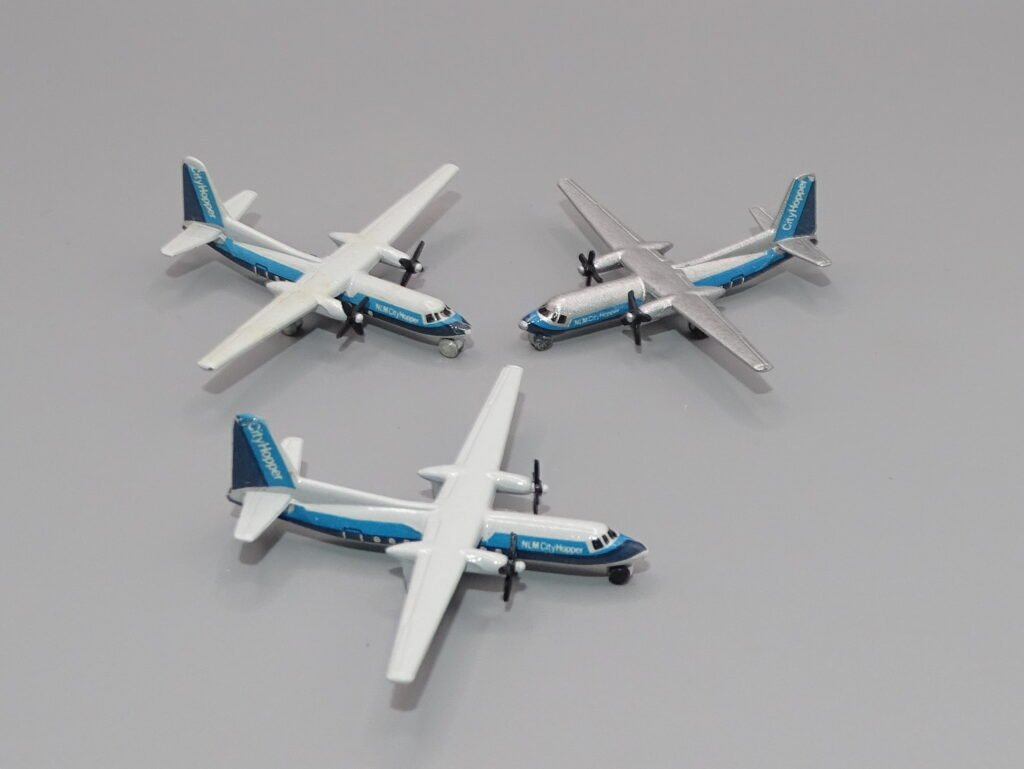
The Dutch regional NLM was another recipient of multiple versions including with a silver and grey base colour:
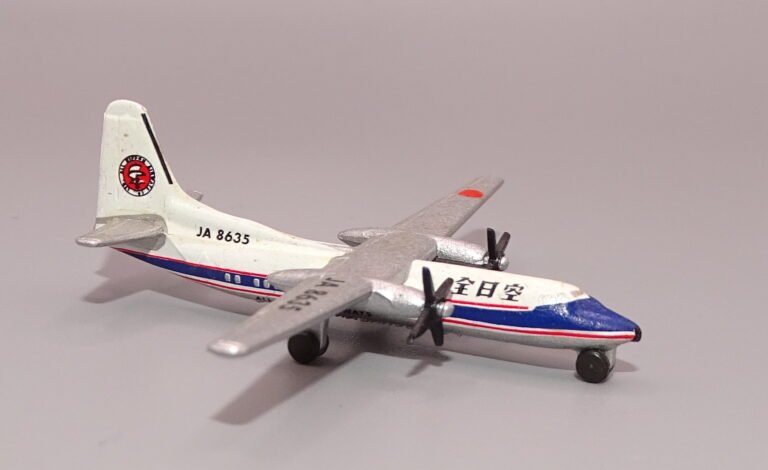
Unsurprisingly the F27 didn’t get many new releases after the initial batch in the 1980s. The last new F27 made was a historical All Nippon example produced from 1993 onwards. Note the silver windows of later Schabaks.
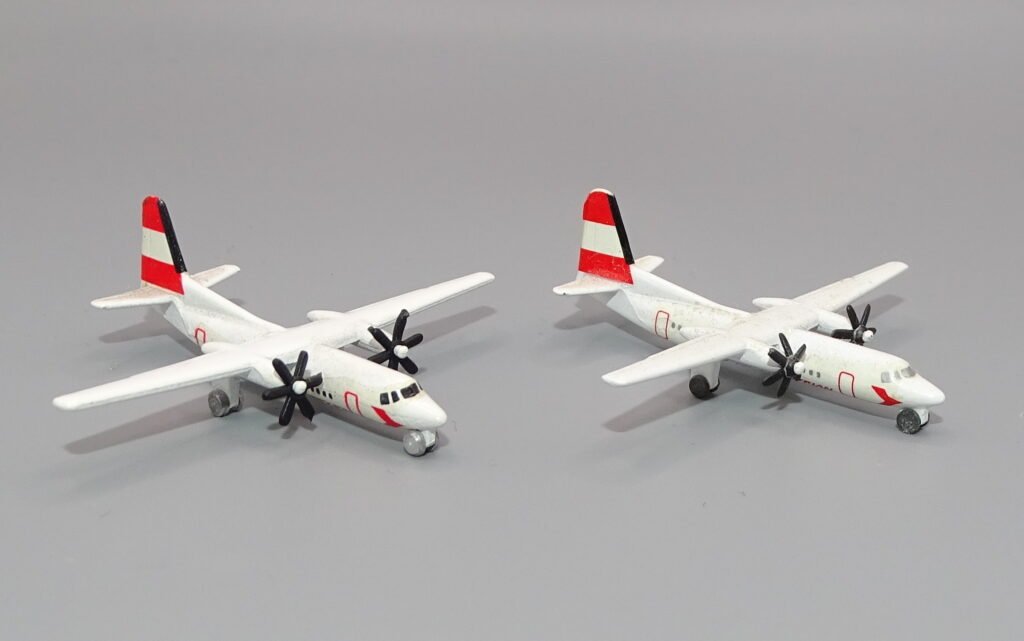
By the beginning of the 90s the Fokker 50 had largely replaced the F27 in new production, although only a couple of all new F50s were announced after 1994. Several existing releases did have their decals upgraded though, such as Austrian Airlines:
Most releases served the European market, but alongside Germany, Iceland, Luxembourg and Austria, Malaysia and the Philippines received F50s too. Both of these would also appear in multi-aircraft sets for their respective airlines as well as being solo releases.
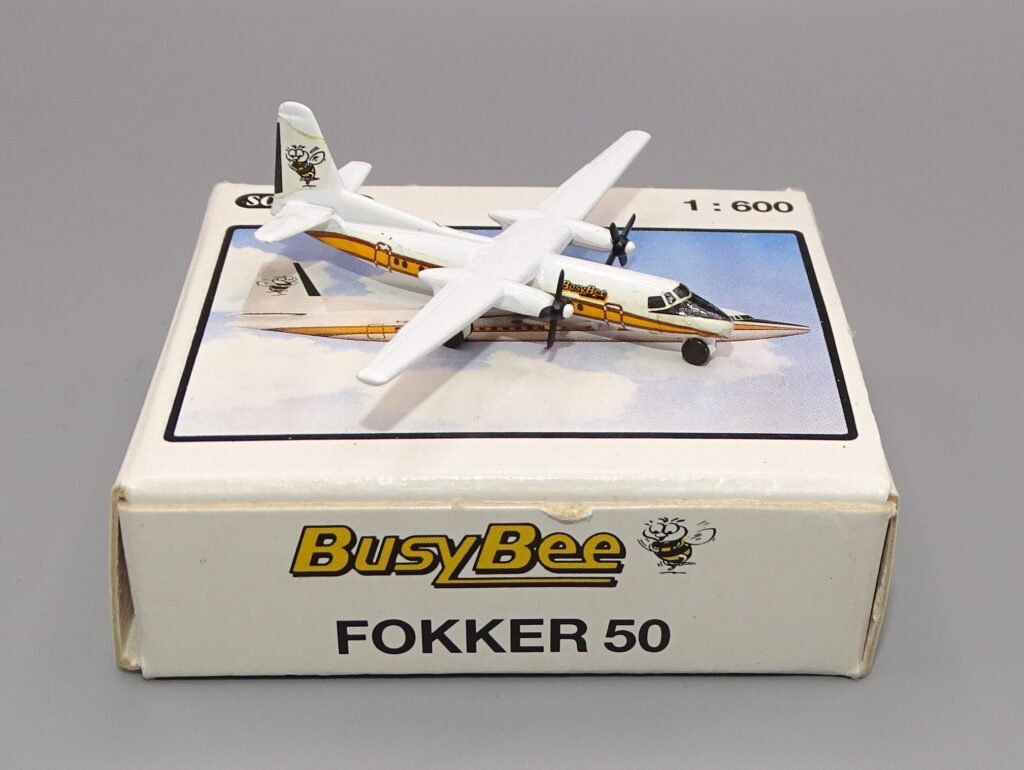
Busy Bee of Norway had already had a Boeing 737-200 release and in 1989 also gained a Fokker to go with it. As you can see although it is supposed to be a F50 it has the wrong props on it.