MOULD SUFFIX: 905
YEARS: 1982-2006
AIRLINES: 33
MODEL VARIANTS: 80
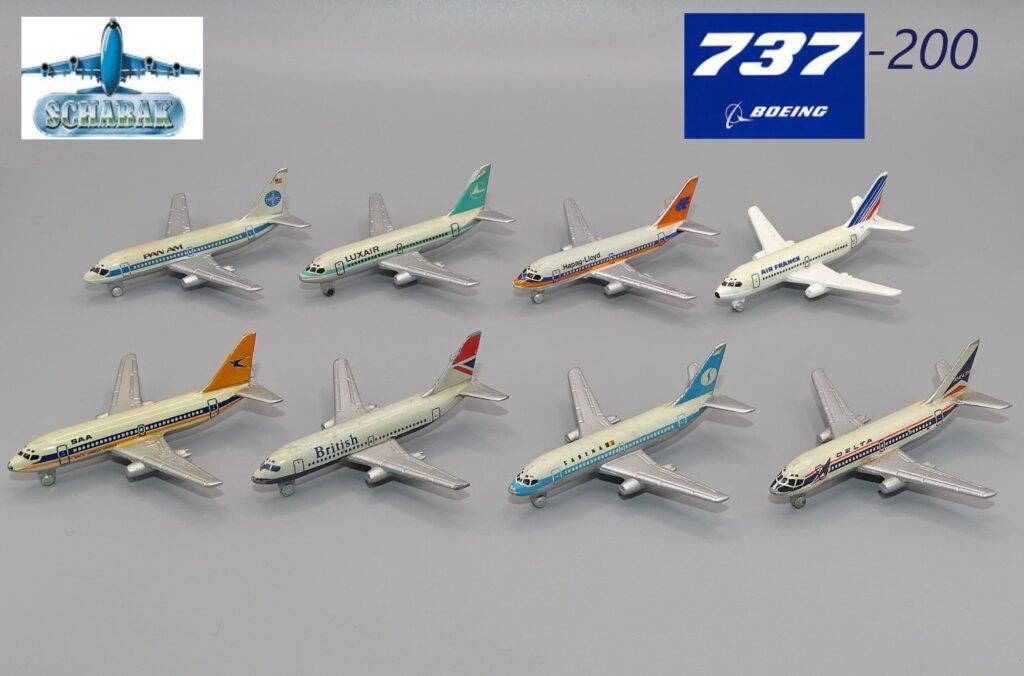
The Boeing 737-200 shares a similar place in my heart as the 727 when it comes to Schabaks and the mould shares a lot in common with the trijet. Similarly to the 727-200, the 737-200 stayed in production for the entirety of Schabak history and remained essentially unchanged. Usage wasn’t quite as heavy as for the 727, perhaps because of its small size, but nonetheless it was one of Schabak’s most important types. This was especially true in their first decade when it was a common feature of the classic Schabak airline multipacks. Like the 727 and MD-80 it has a real charm to it.
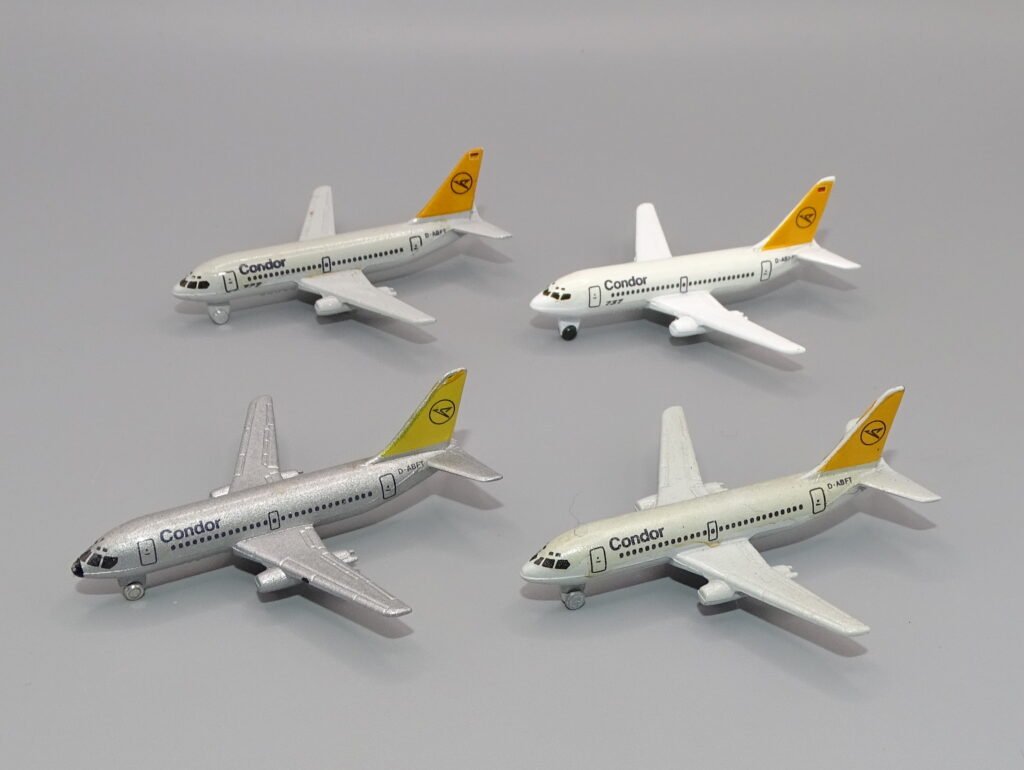
Below: A lineage of Condor 737-200s showing 4 different versions all with different combinations of decal, wheel type or base colour
MOULD VARIANTS
TYPE 1: 1982-2006
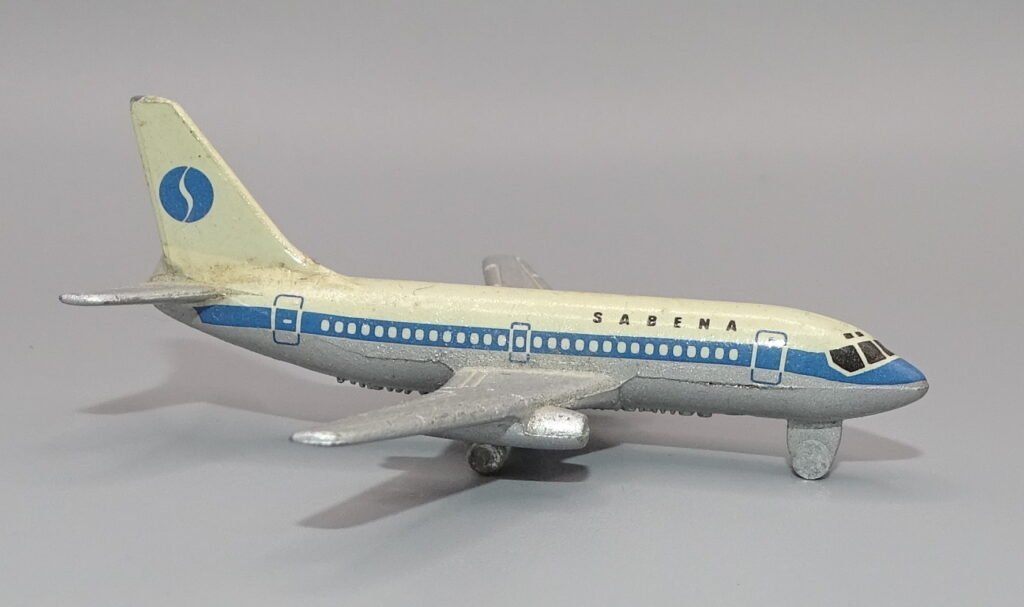
As with all smaller early Schabak moulds the 737-200 initially had the small metal wheels. It shared the same nose as the 727, but you can see that on very early versions, like the SABENA above, often the cockpit windows were quite large.
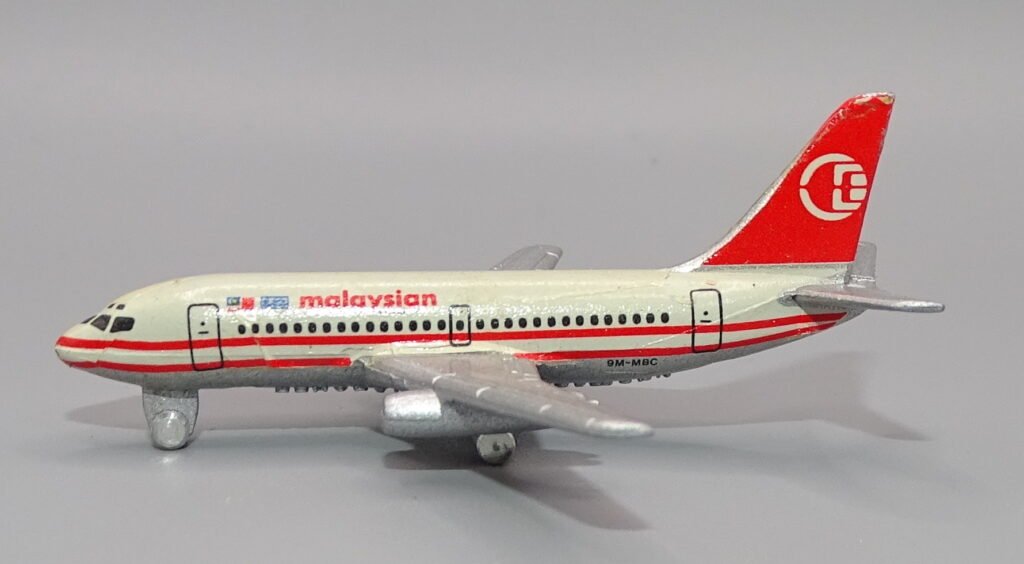
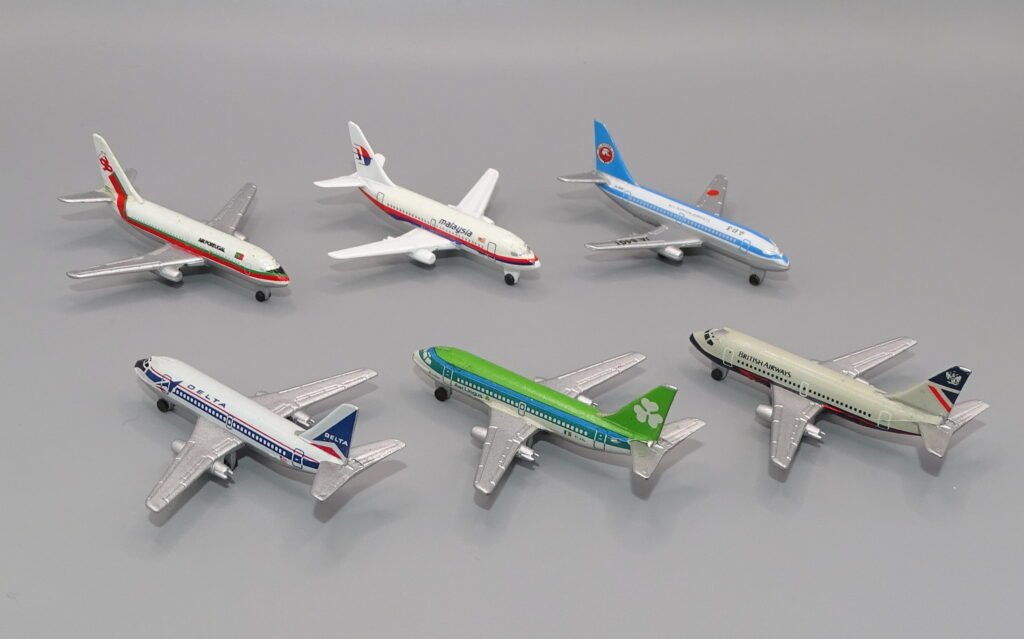
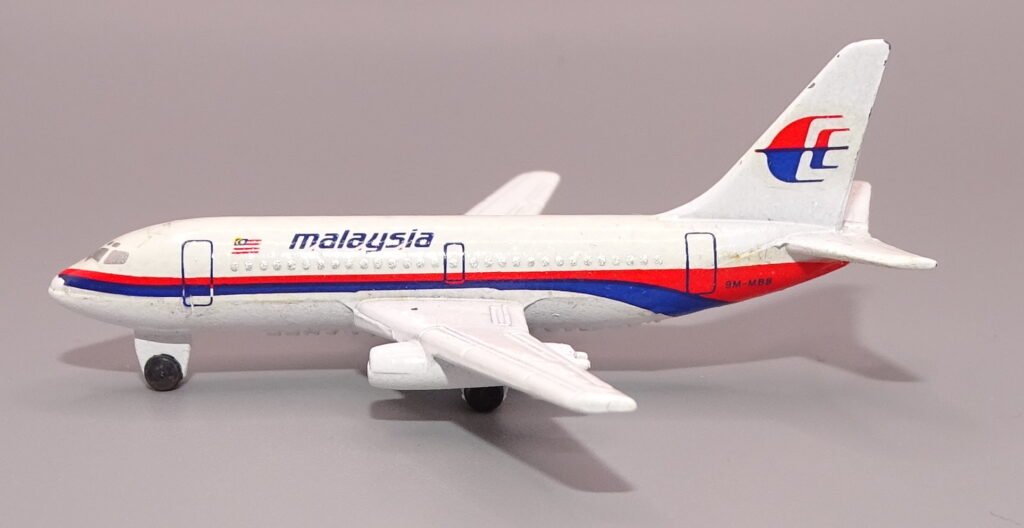
As you can see below the original mould was updated in line with other Schabak products and gained the small black wheels in the early 90s. Decals were typically updated with silver windows and more detail. This later Malaysia scheme was introduced from 1989:
PRODUCTION
Schabak’s 737-200 production mirrored their 727s in many ways, with many airlines getting both a 737-200 and 727-200. Of course as usual Schabak continuously modified the decals and wheels of the releases so there are around 80 separate releases in total.
For a complete list of 737-200 production by Schabak see the database at MADb that has been updated with photos and accurate records for the type:
The 737-200 had at least 4 different box types. The very earliest came in a tiny box but I have only seen that with a Condor version. The next size was only marginally larger and was the standard size for the smallest Schabak types. This was expanded into the standard 727 / MD-80 rectangular box as the 90s arrived.
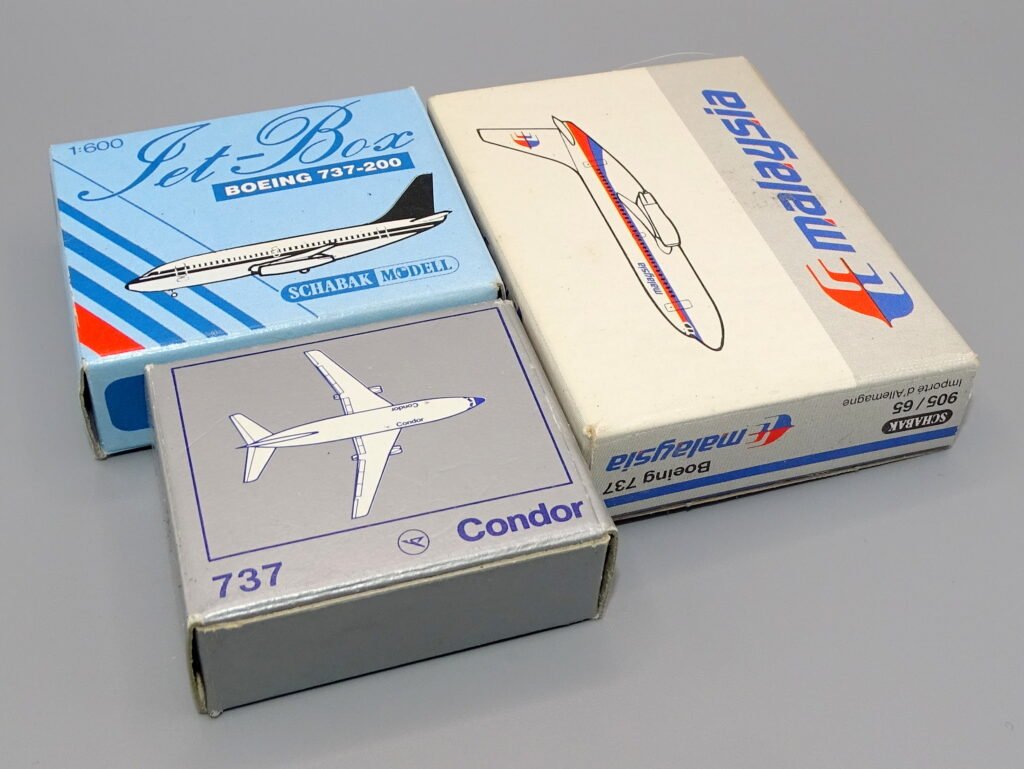
A small number of the latest 737-200s, produced at the end of the 90s and early 2000s, gained the upsized box used for later 727s and MD-80s.
A SELECTION OF NOTABLE RELEASES
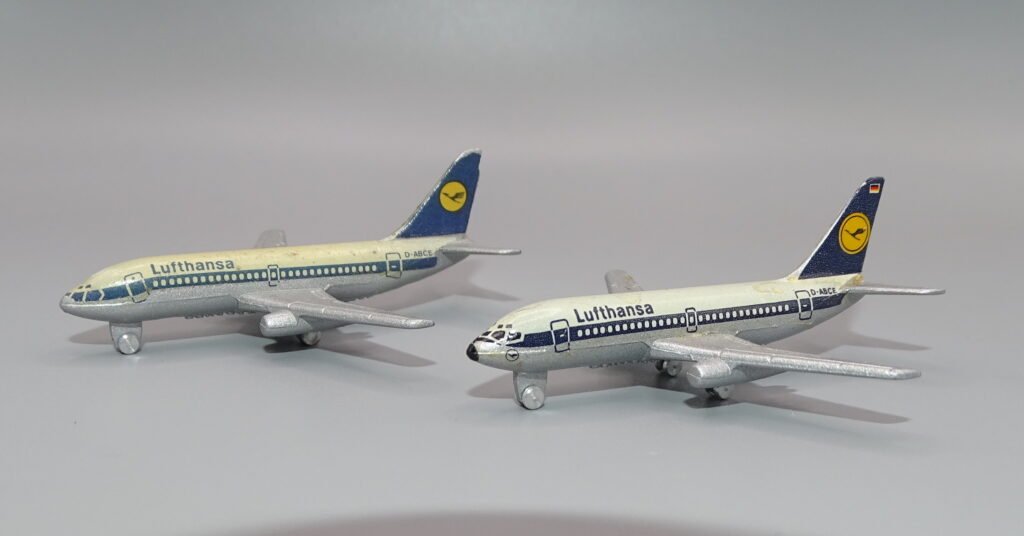
Similarly to the 727s the very earliest 737-200s are often simple even for Schabaks but quickly got decal upgrades. As you can see here the first Lufthansa version lacked the crane roundel at the nose, a ring around the tail logo and the German flag:
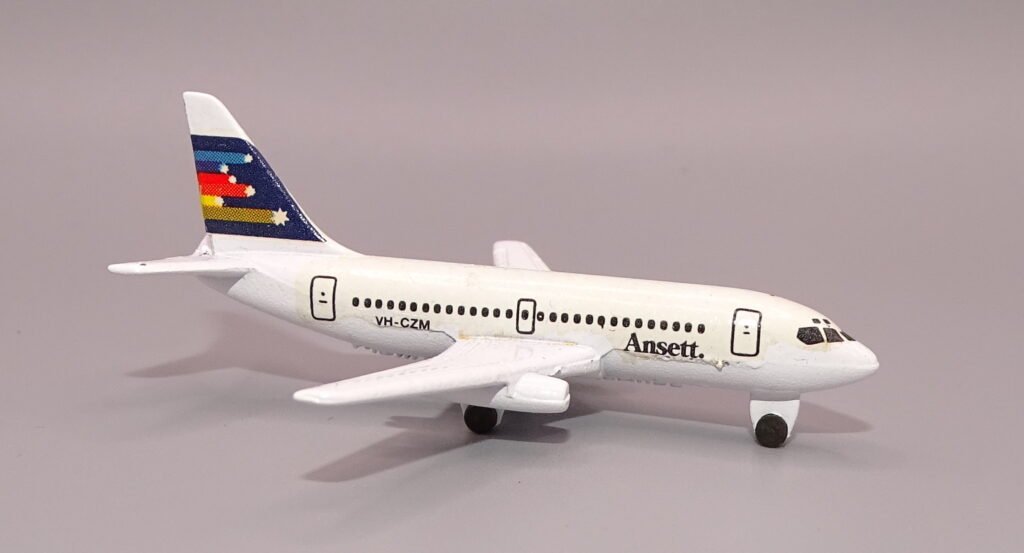
Decal application was always hit and miss but the 737-200 usualy faired better than some types and done well, as with this Ansett, was very cute:
As you’d expect major European national carriers were well represented. The BA negus version was replaced quickly by a Landor and was only produced for 4 years:
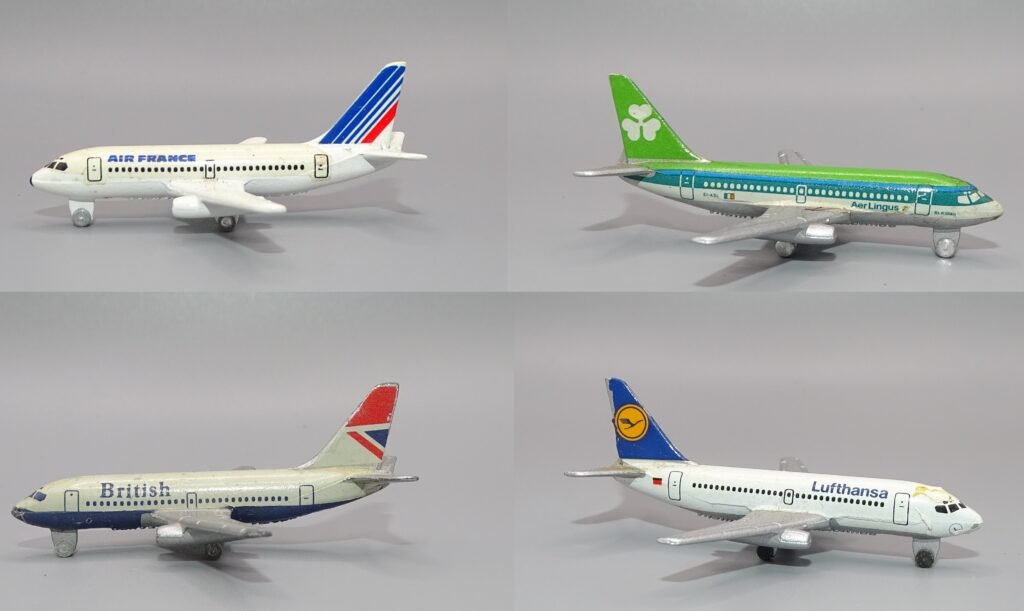
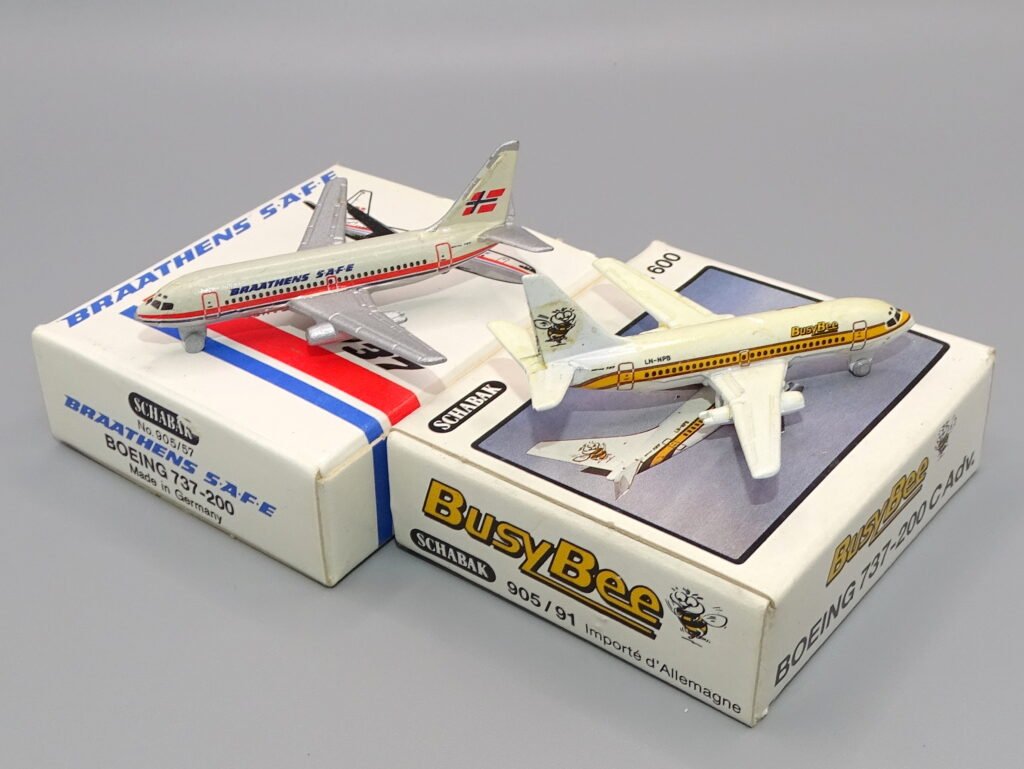
Schabak also made some more unusual European airlines. The Norwegian pair of Braathens and Busy Bee are delightful:
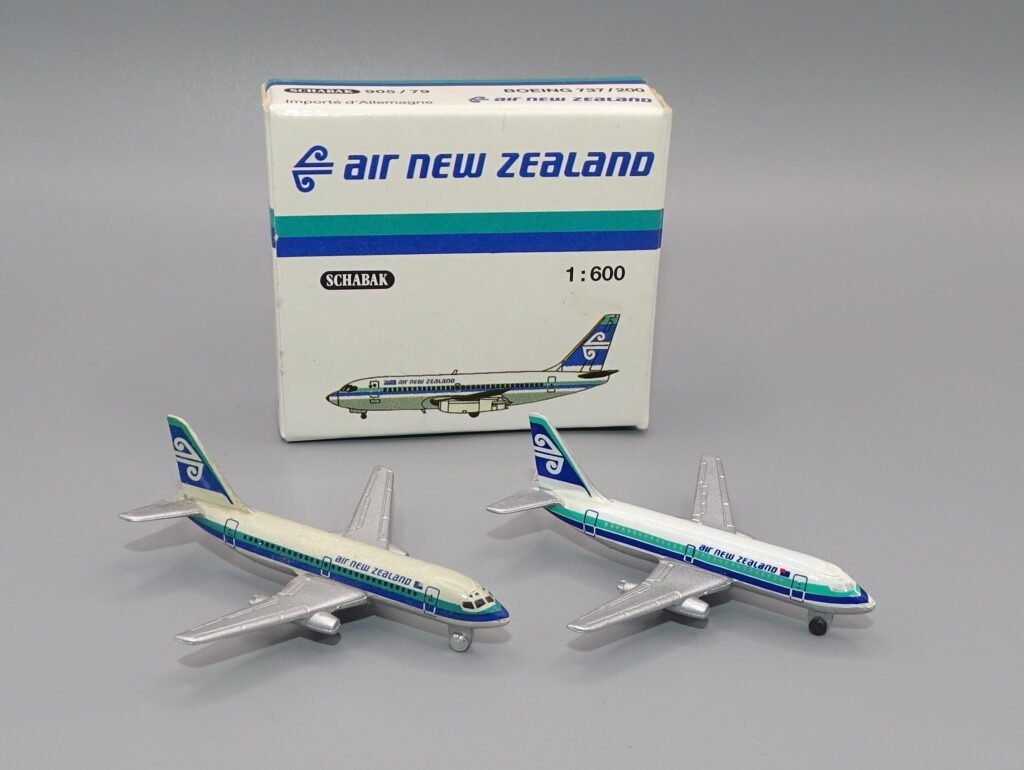
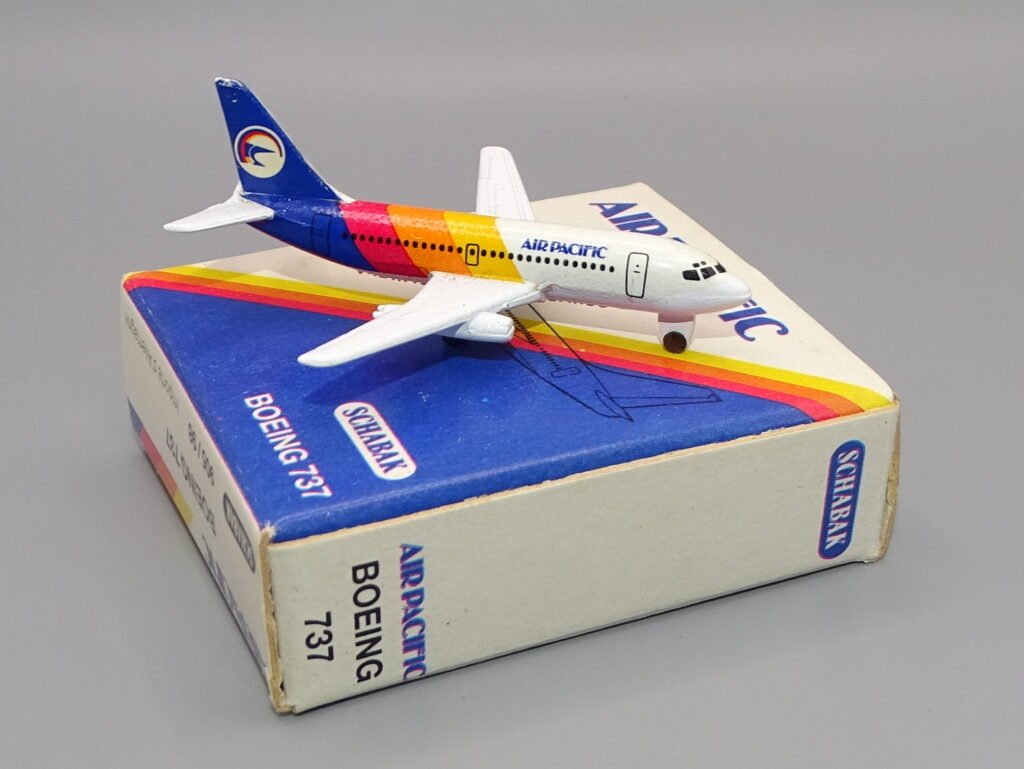
As well as Ansett, Air New Zealand and Air Pacific also represented Oceania. Air New Zealand was made from 1988-2000 and had at least 3 variants. Here is the earliest and latest:
737-200s from other more exotic places than Germany also got a look in. Lan Chile, South African and Ethiopian were all really nice.
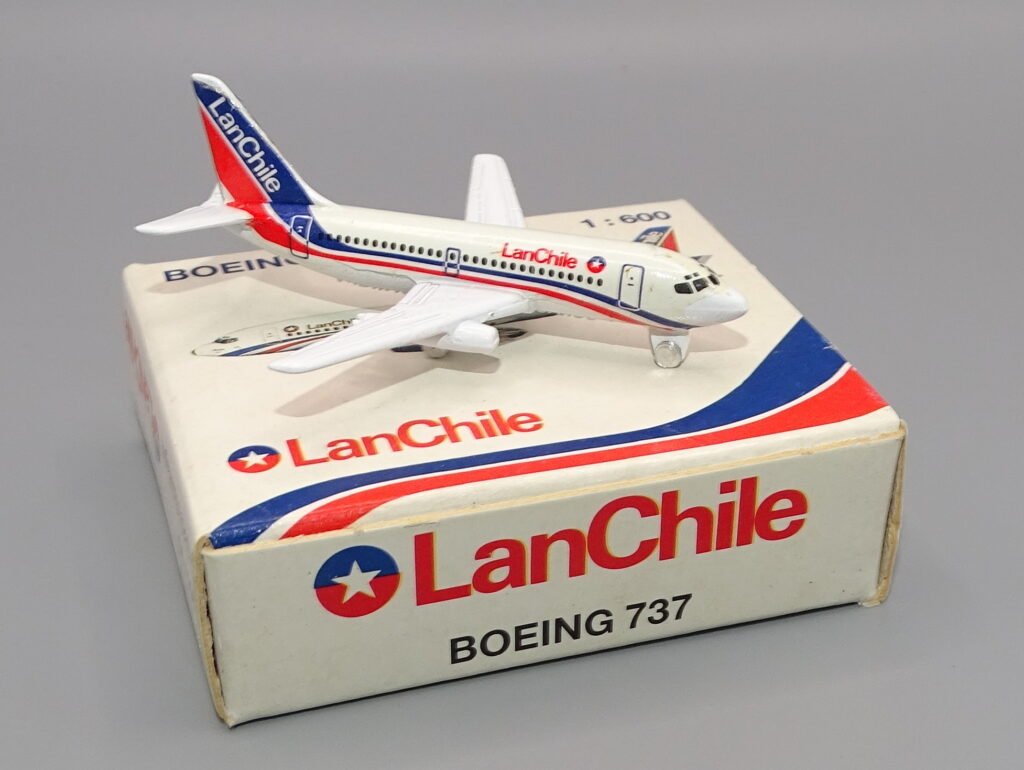
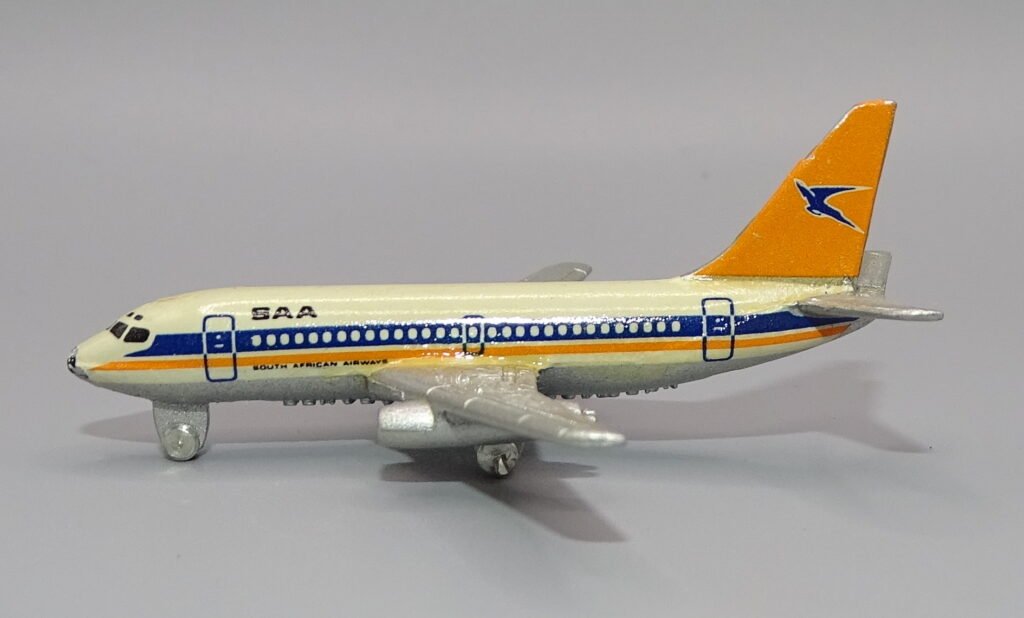
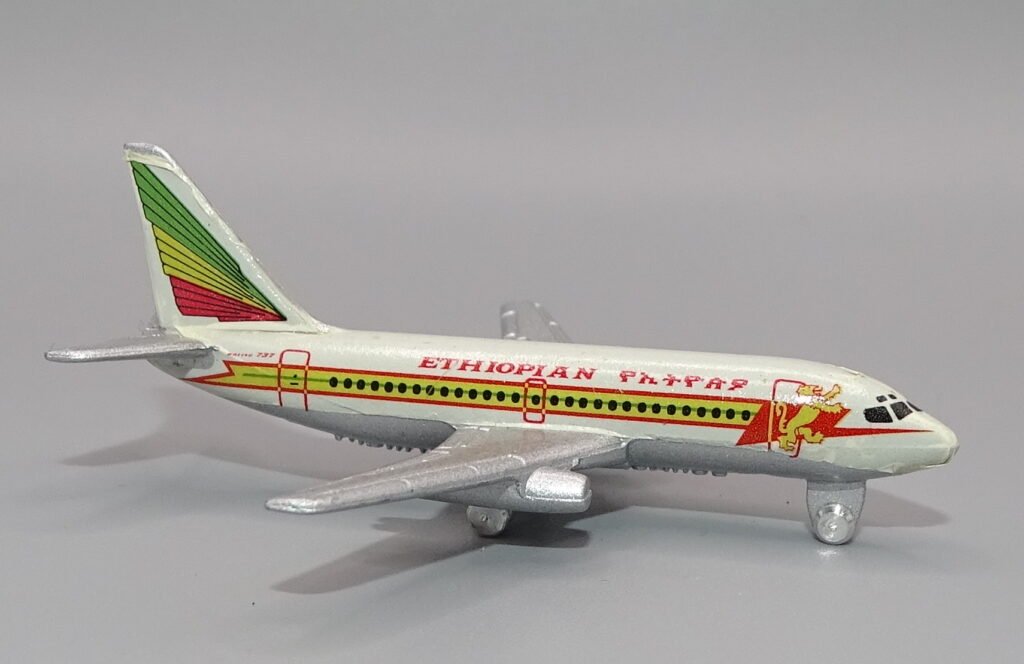
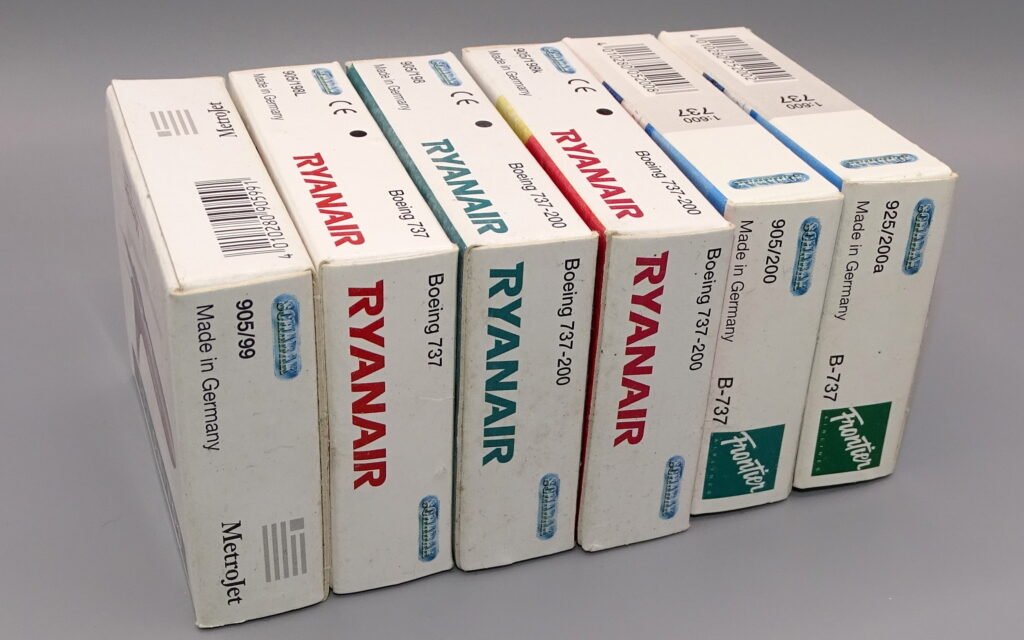
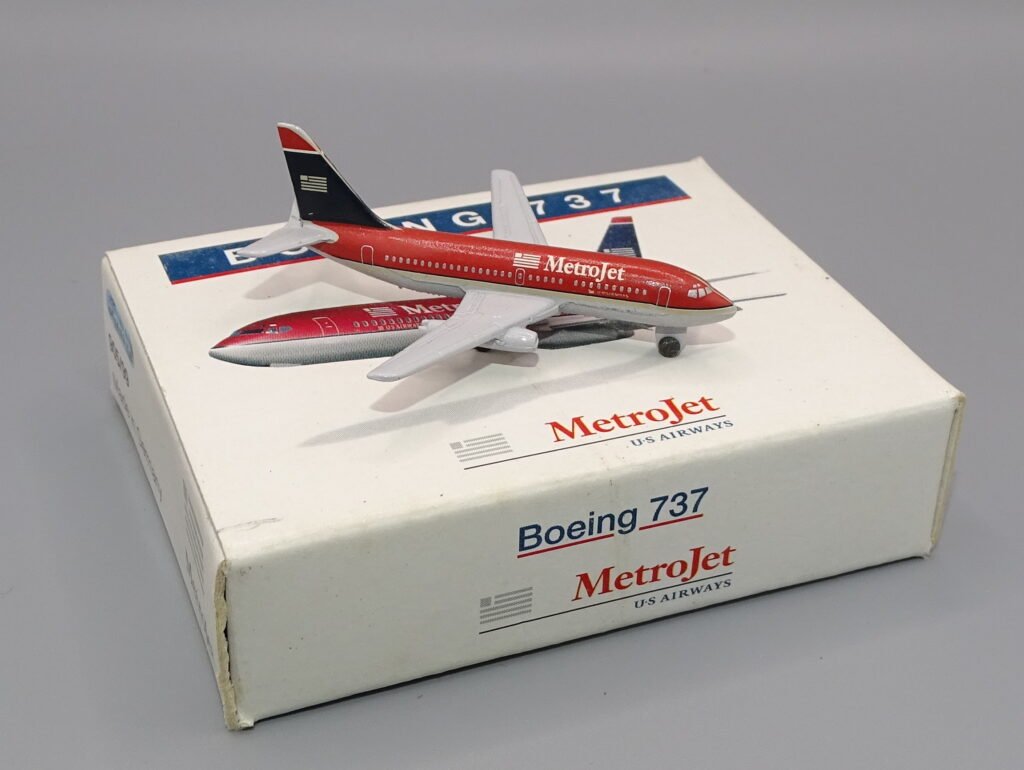
Relatively few North American 737-200s were made. Aside from Pan Am, Delta and Canadian Airlines it wasn’t until 1999 that another would appear in the form of the colourful Metrojet. This version continued in production until 2006 – long after Metrojet itself had vanished.
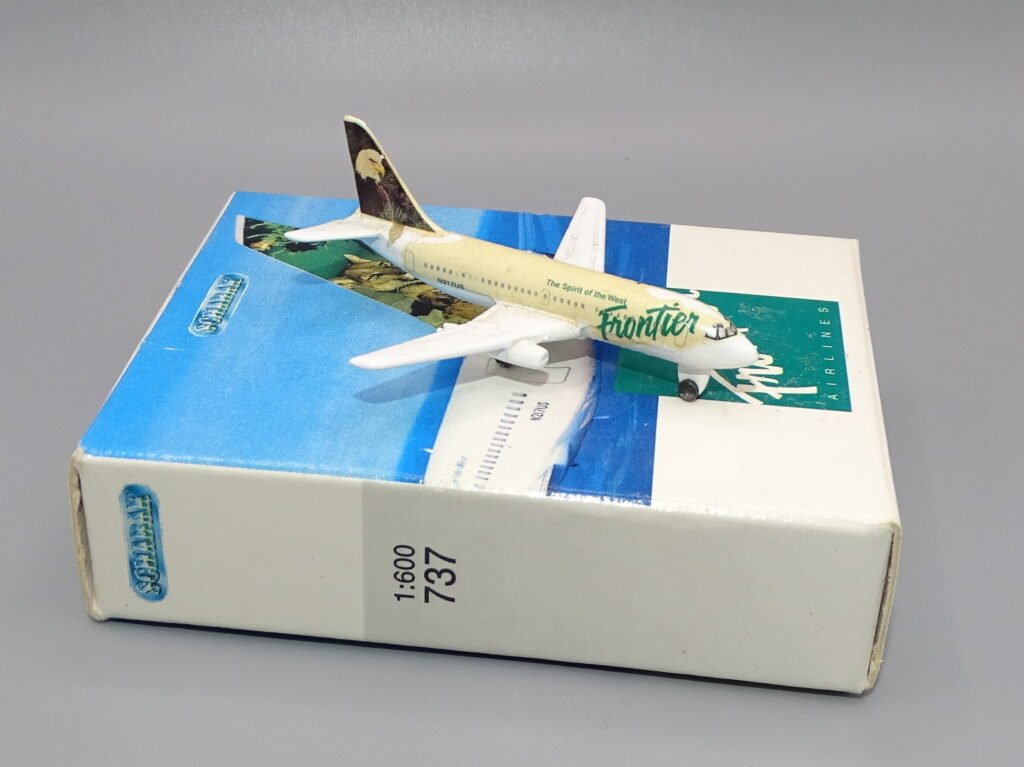
Also in 1999 Schabak made another US 737-200, this time for the reborn Frontier Airlines. N217US featured the cougar and eagle on the tail.
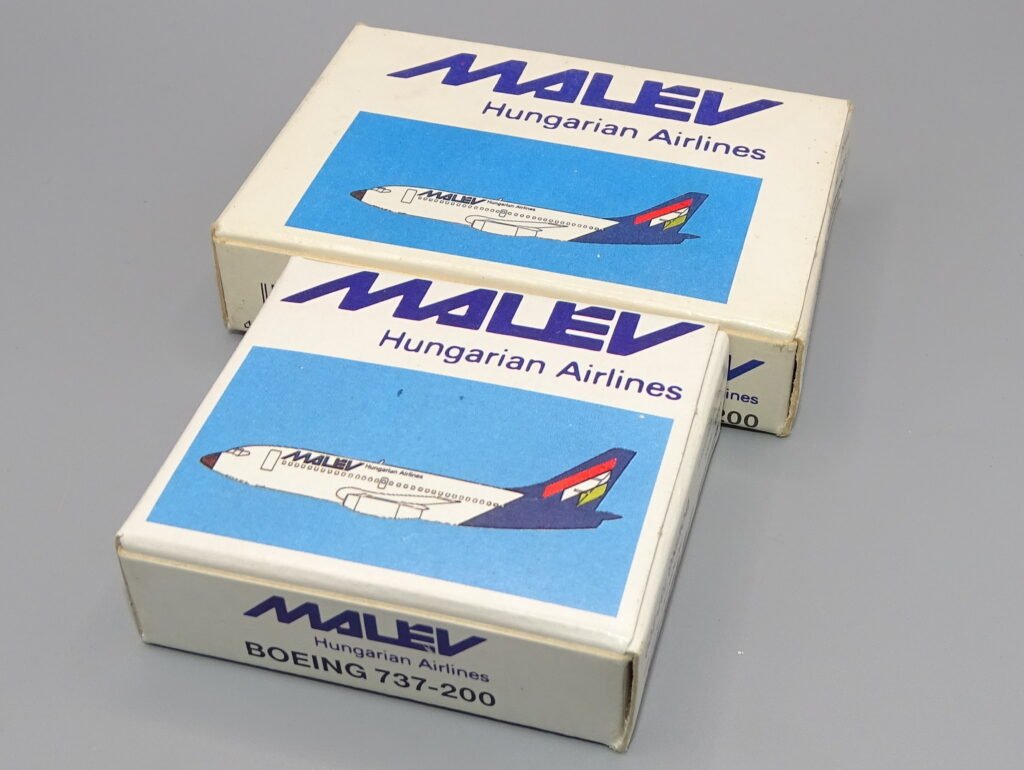
Schabak did take the opportunity to produce Malev versions and as you can see as well as the models the box also evolved over the years.
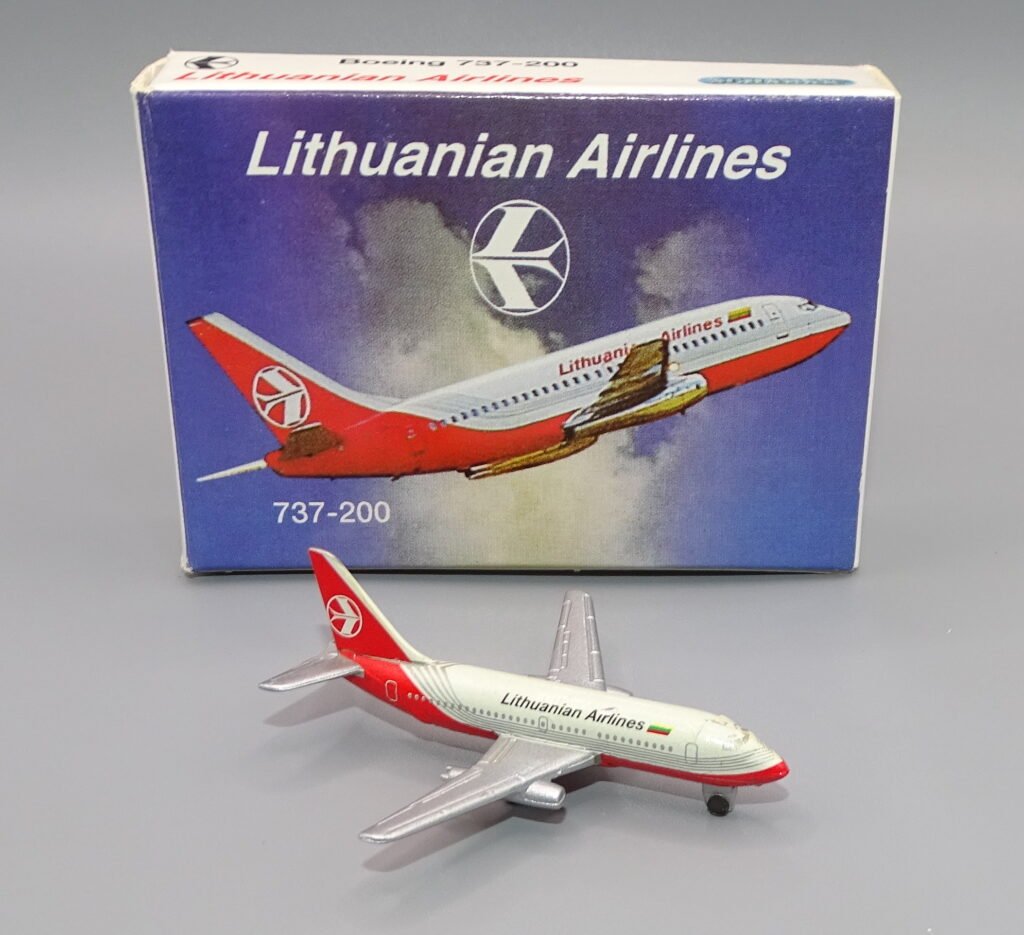
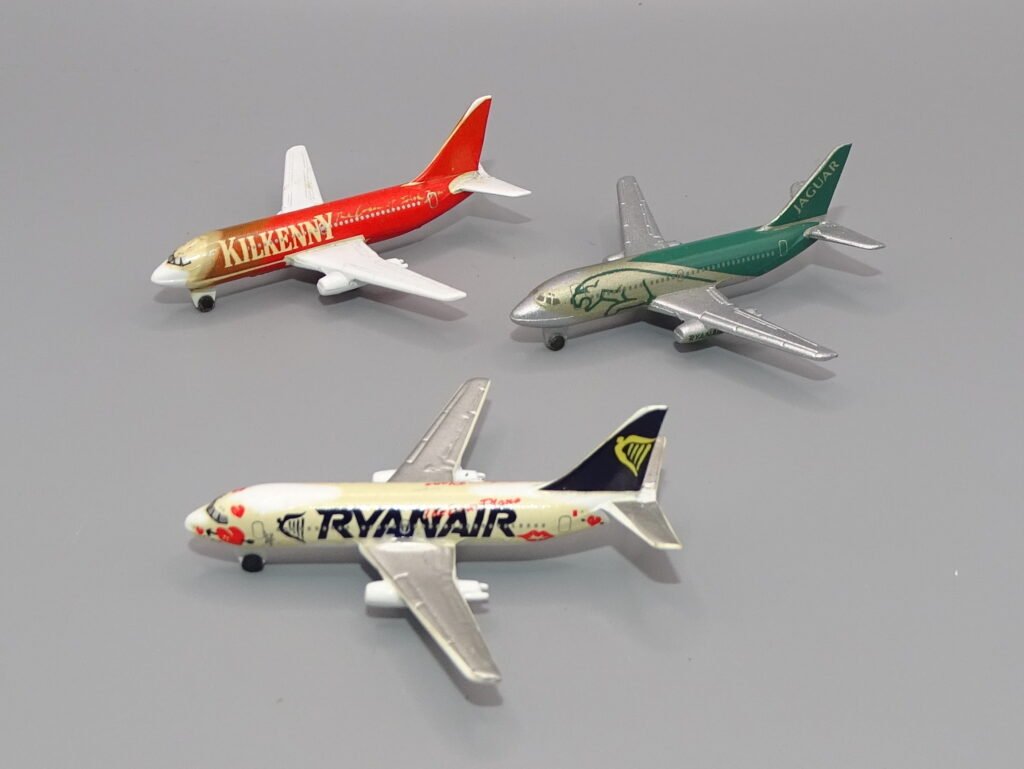
More late model 737-200s made by Schabak included Lithuanian Airlines (1996) and a trio of Ryanairs (1998-2000) all wearing special liveries. All four of these would make it to the end of Schabak production in 2006.