DOUGLAS DC-3
DOUGLAS DC-4
DOUGLAS DC-6
CONVAIR CV-440
LOCKHEED L-1049G
MOULD SUFFIX: 932
MOULD SUFFIX: 938
MOULD SUFFIX: 948
MOULD SUFFIX: 933
MOULD SUFFIX: 934
YEARS: 1987-2006
YEARS: 1990-2006
YEARS: 1992-2006
YEARS: 1987-2006
YEARS: 1988-2006
AIRLINES: 19
AIRLINES: 8
AIRLINES: 5
AIRLINES: 11
AIRLINES: 11
MODEL VARIANTS: 33
MODEL VARIANTS: 9
MODEL VARIANTS: 5
MODEL VARIANTS: 17
MODEL VARIANTS: 17
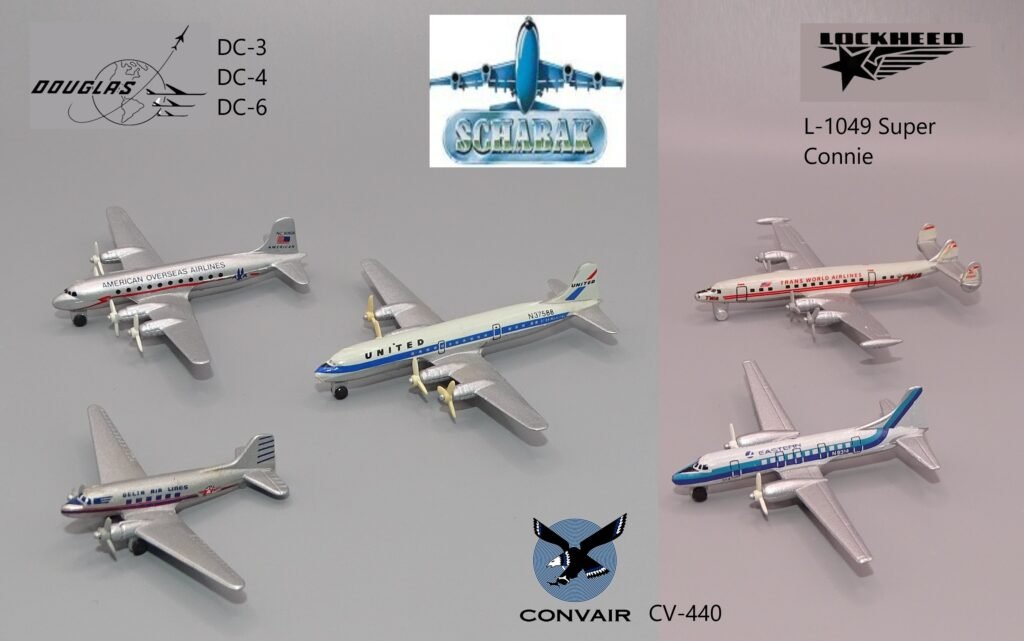
Alongside regional aircraft, even more surprisingly, Schabak showed an impressive interest in classic airliners even those predating pure-jets. From 1987 a DC-3 and Convair 440 mould were introduced, quickly followed up by a Super Connie and then in the early 90s both a DC-4 and DC-6. The earlier 3 moulds got the most usage but all 5 survived until the end of Schabak’s first generation in 2006. Some, like the TWA Connie would appear in airline specific multi-packs while the DC-3s even got a multi-pack of their own!
MOULD VARIANTS
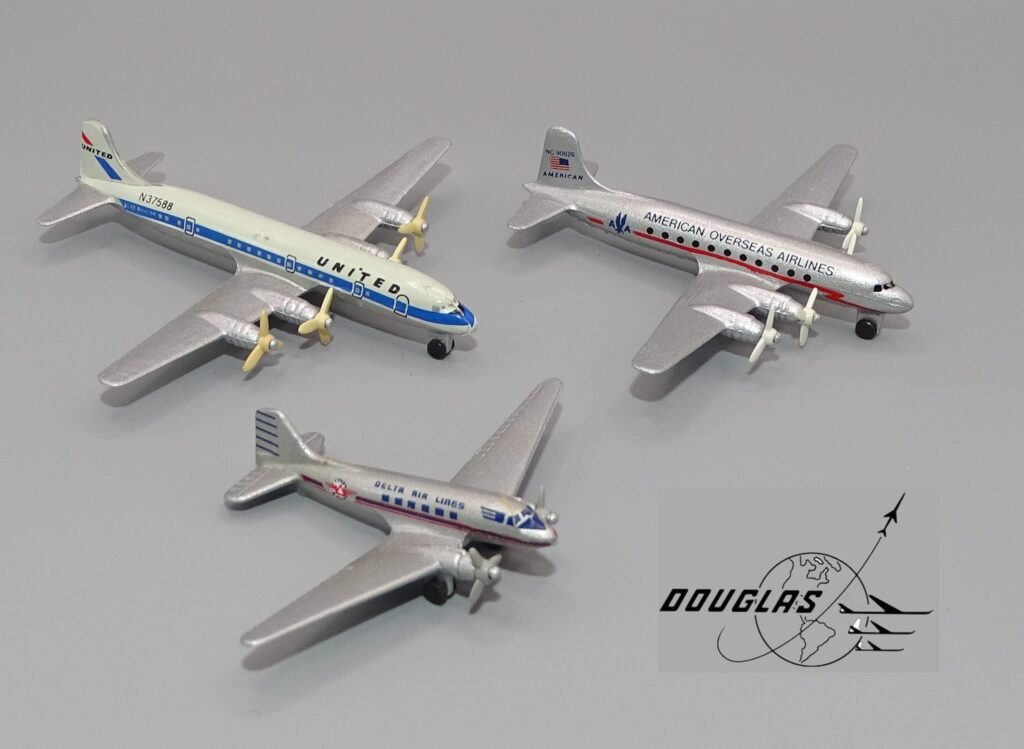
All the piston-propliners had a single version of their mould produced, except for the Super Connie where shaving off the wingtip tanks created a modified version. They are all small moulds in 600 scale and as was common for all Schabak moulds updated with the new style black wheels in the early 90s (the DC-4 and DC-6 post date the changeover). Decals were also updated for airline’s whose production ran for many years.
DOUGLAS C-47 / DC-3
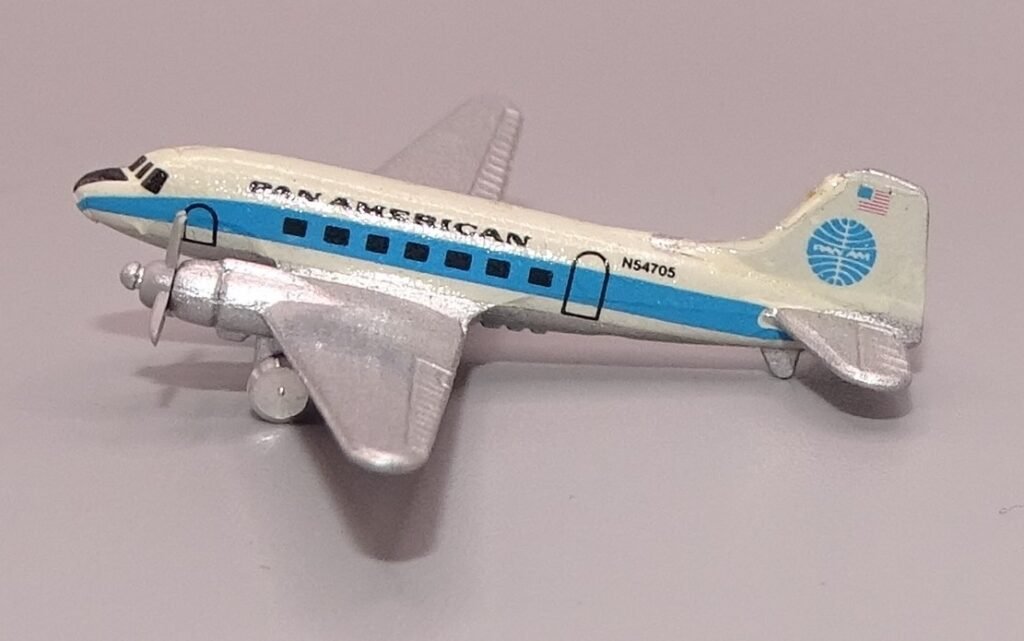
The DC-3 mould must be one of the smallest Schabak moulds, but is actually a surprisingly faithful rendition, although I am amazed there was any demand for the type.
CONVAIR CV-440
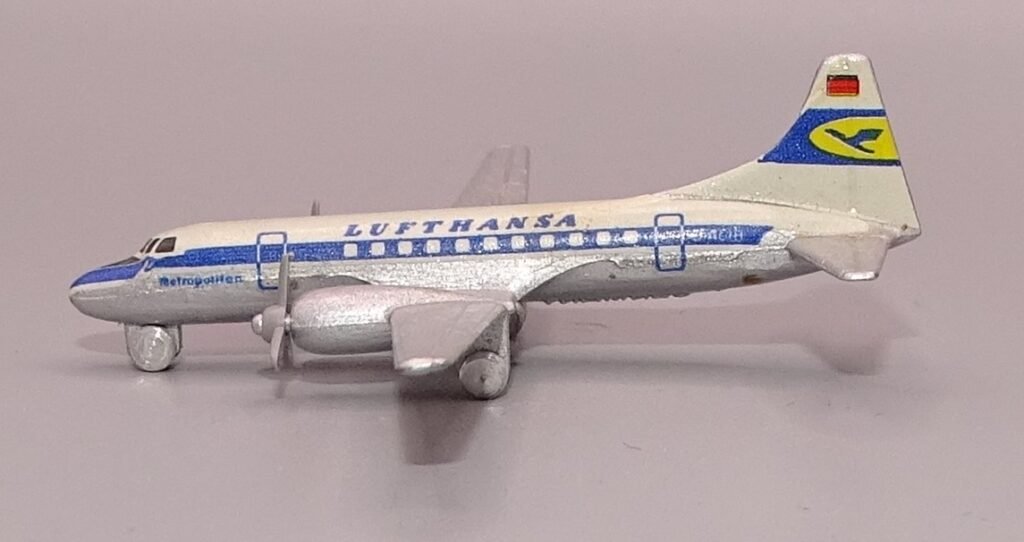
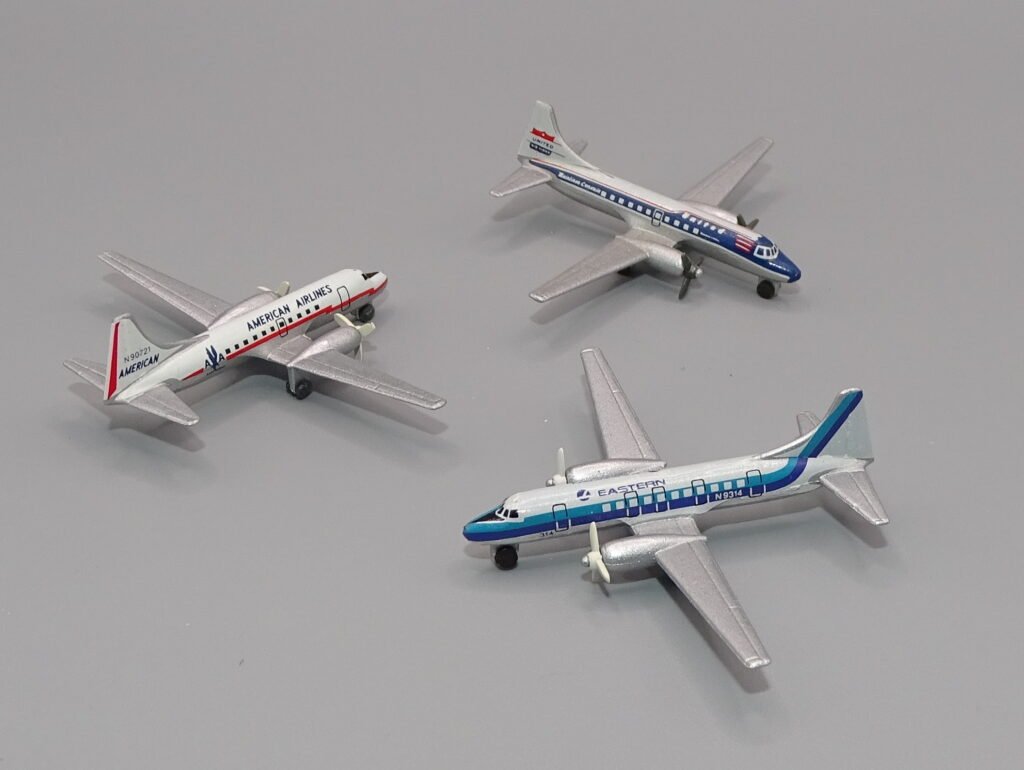
The mould for the CV-440 was probably the least successful of these 5 moulds, mainly because the nosegear is too short. The mould represents a radar equipped long-nose CV-440 Metropolitan but was used for short-nosed CV-240s and turboprop CV-580s at times.
LOCKHEED L-1049G SUPER CONSTELLATION
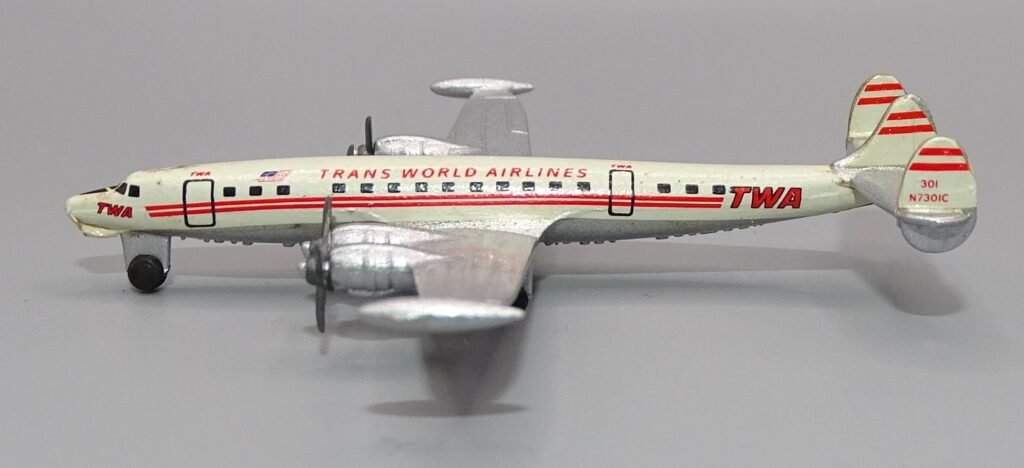
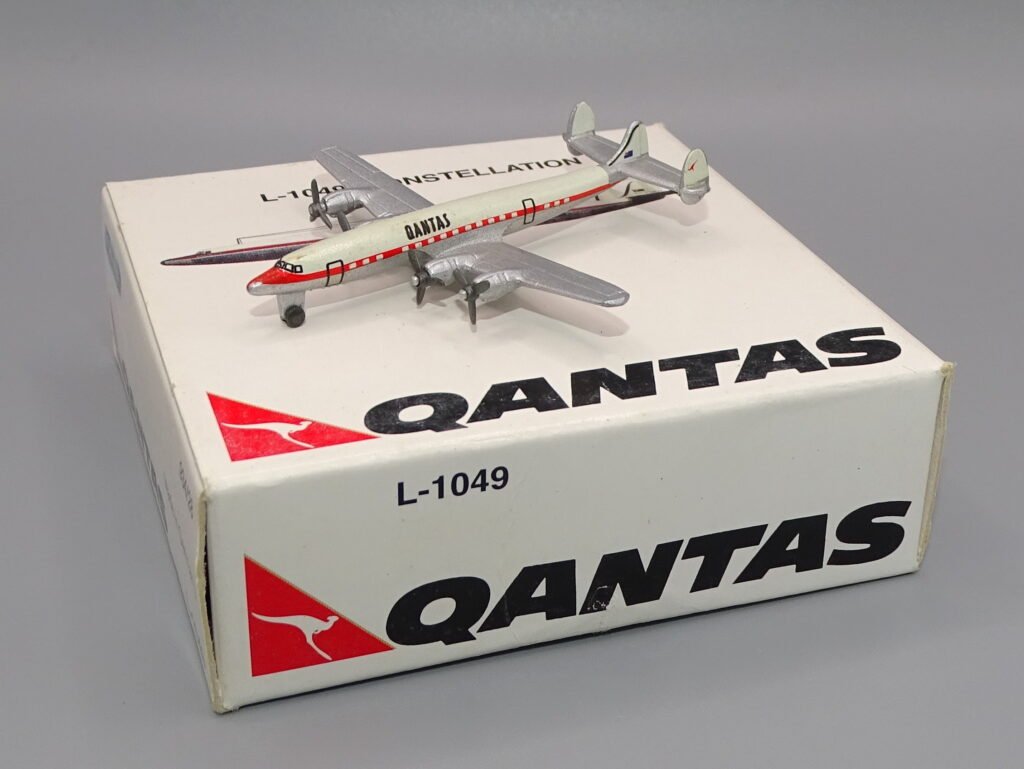
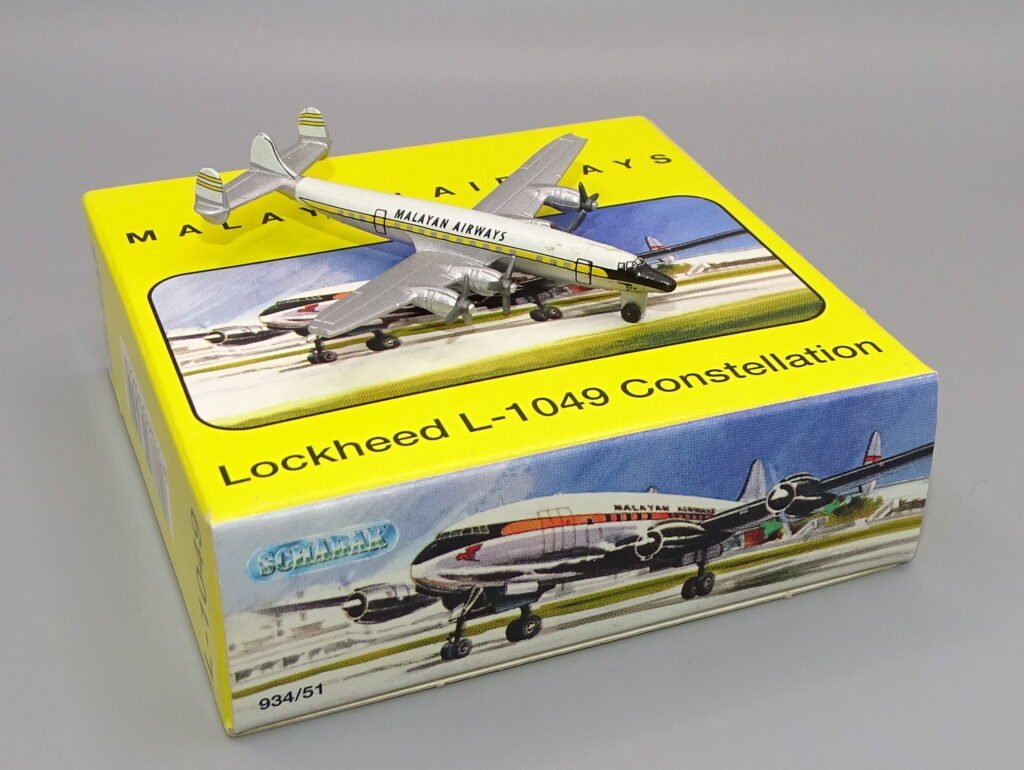
The Super Connie mould is quite nice but doesn’t exactly relate the gracefulness of the real aircraft due to the undercarriage. The mould represents a radar-equipped long-nose Super G with tiptanks, although for at least two releases (Malayan and Qantas) the tiptanks were shaved off:
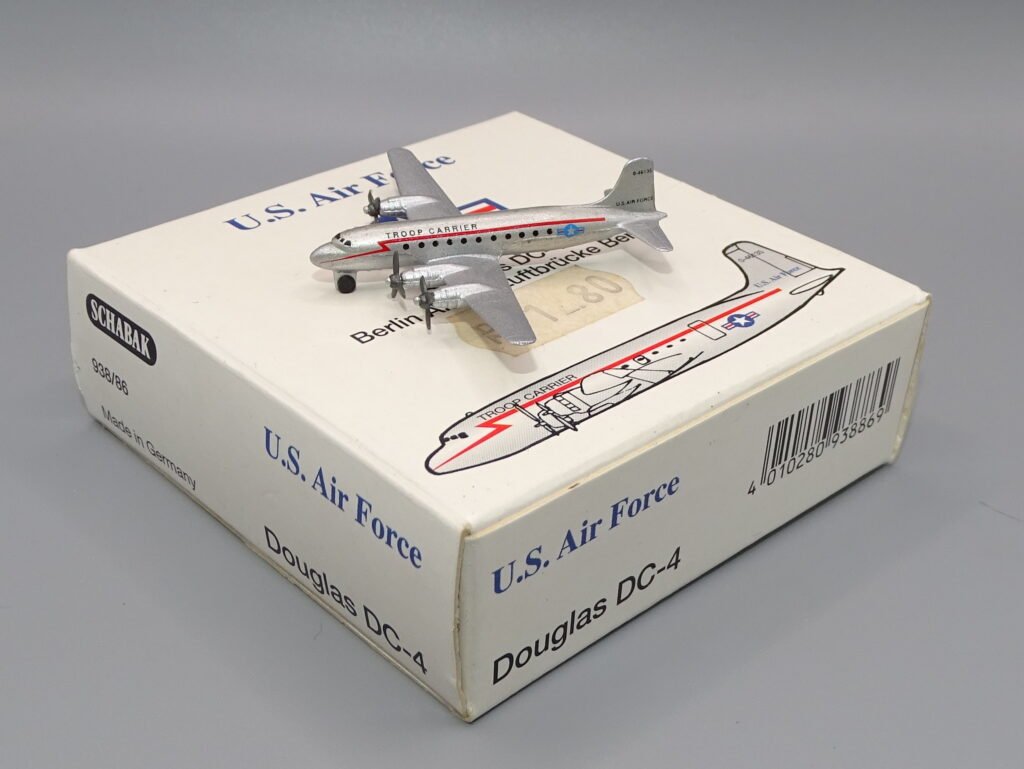
DOUGLAS C-54 / DC-4
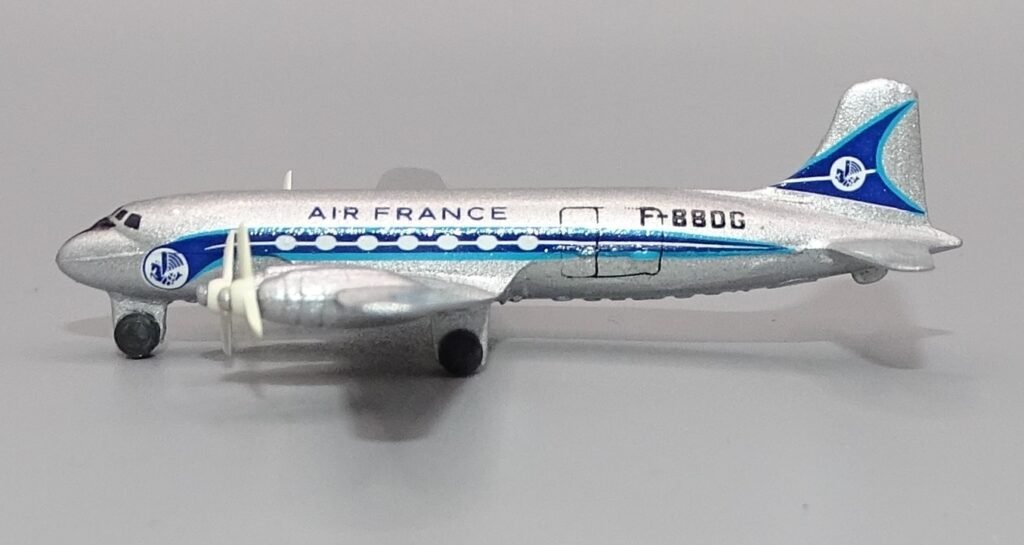
The DC-4 mould is decent enough, although Schabak really struggled to place the cockpit windows.
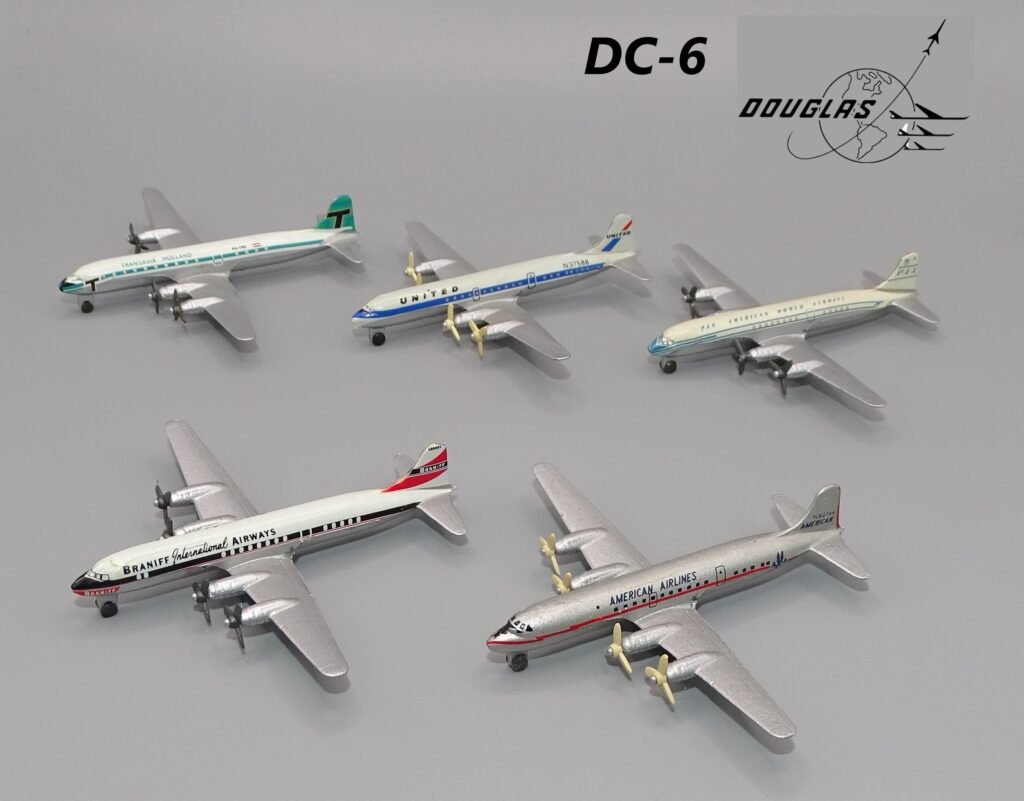
DOUGLAS DC-6
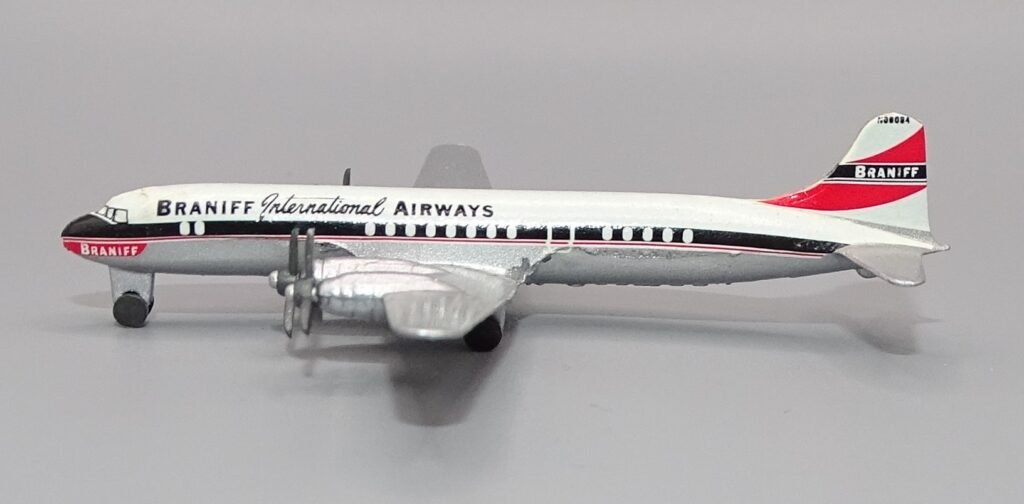
Cockpit placement was also a concern on the DC-6 although this Braniff example has benefitted from the larger decal and a more skilled placement than the rest of my DC-6s. Once again the mould is surprisingly decent.
BOXES
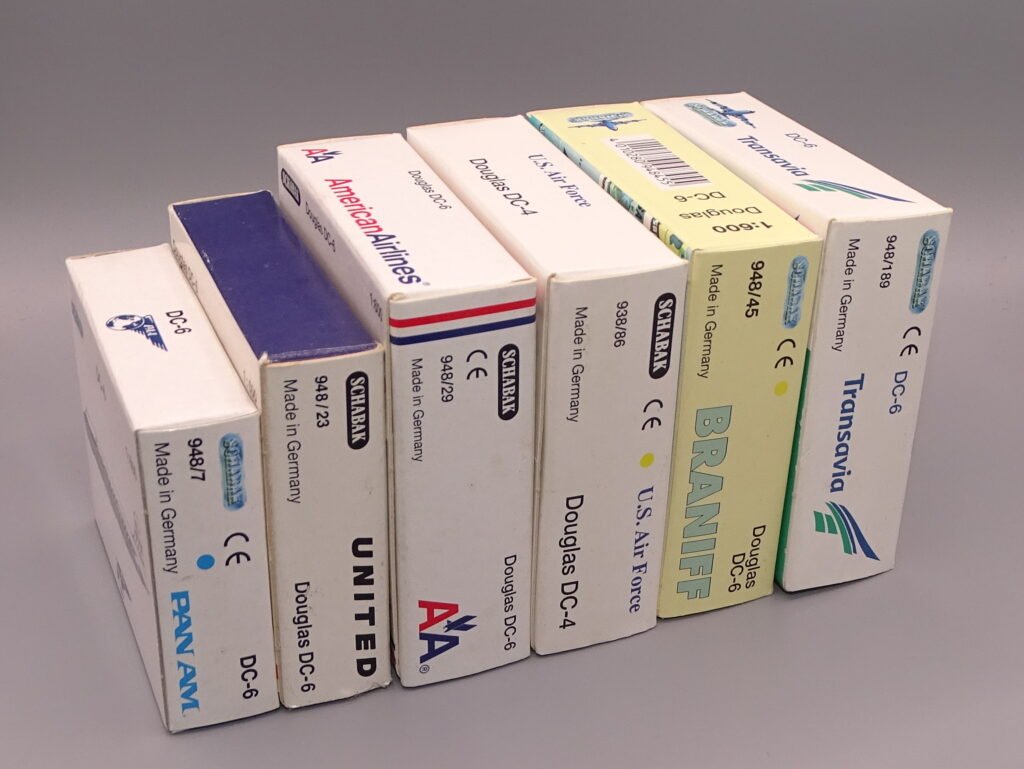
Being so small the early Convairs and DC-3s used Schabak’s smallest square box style, but later versions were upgraded to use the small rectangular box and in the early 2000s upgraded again to the slightly larger rectangular box, that by that time was the smallest in use.
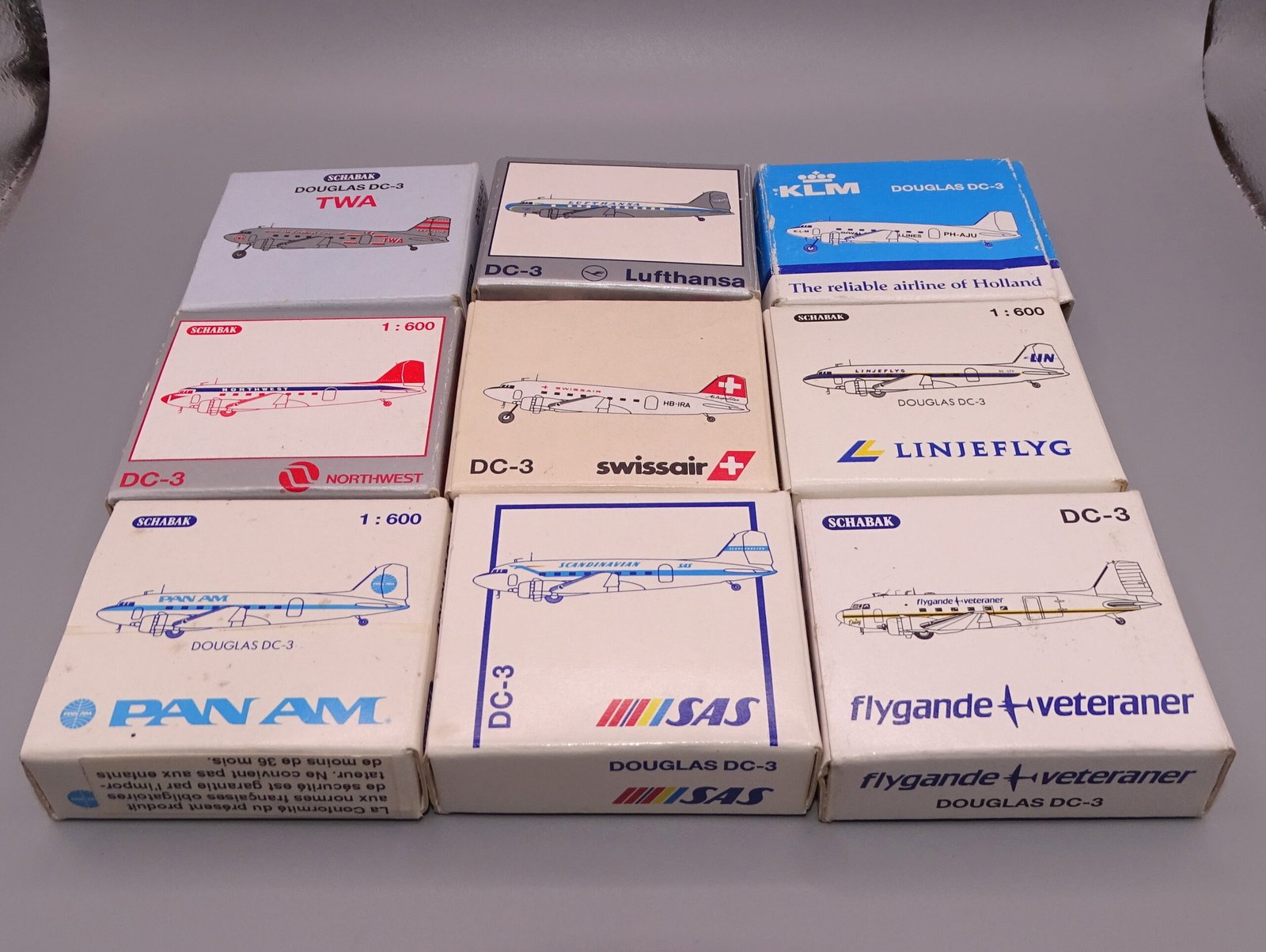
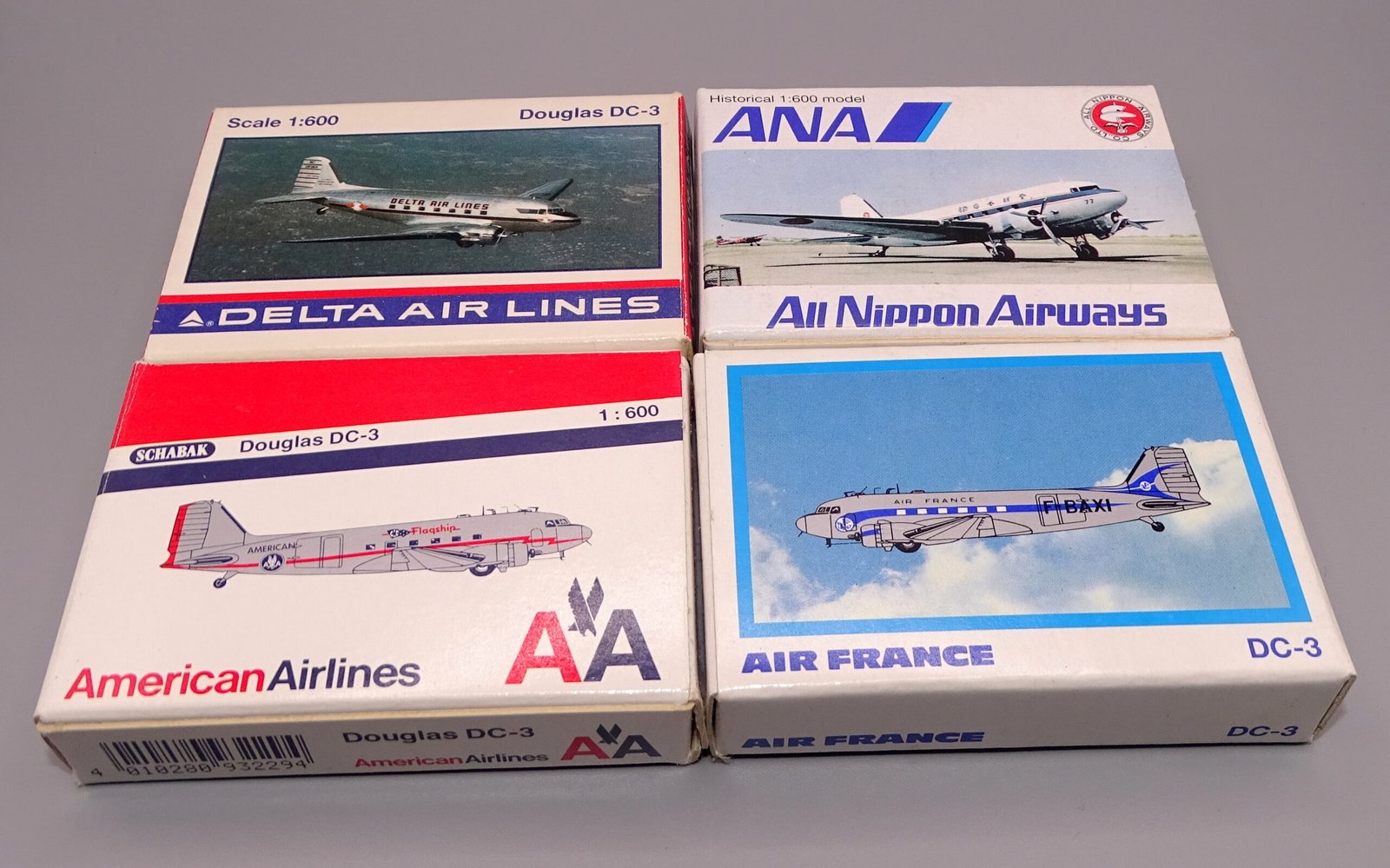
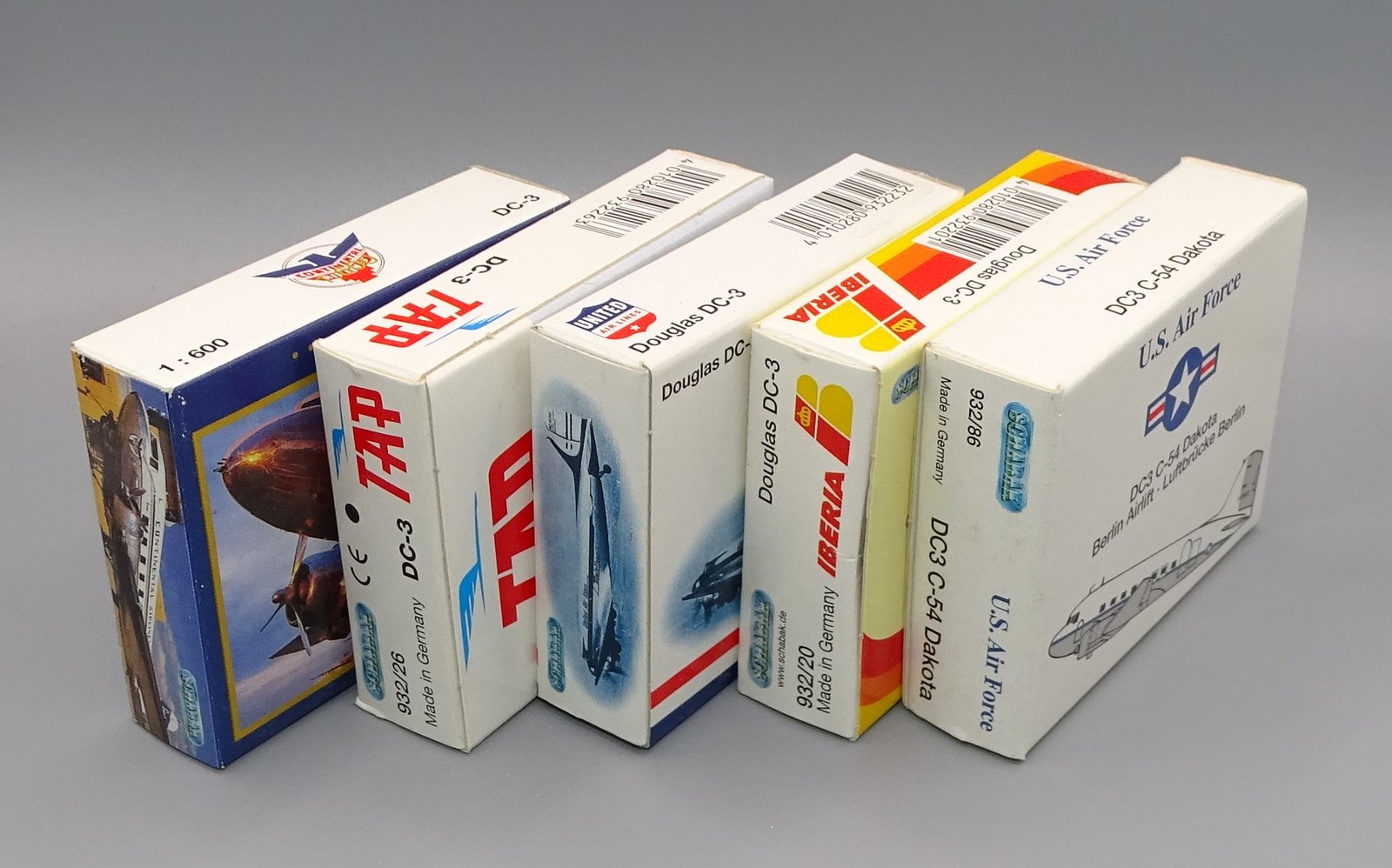
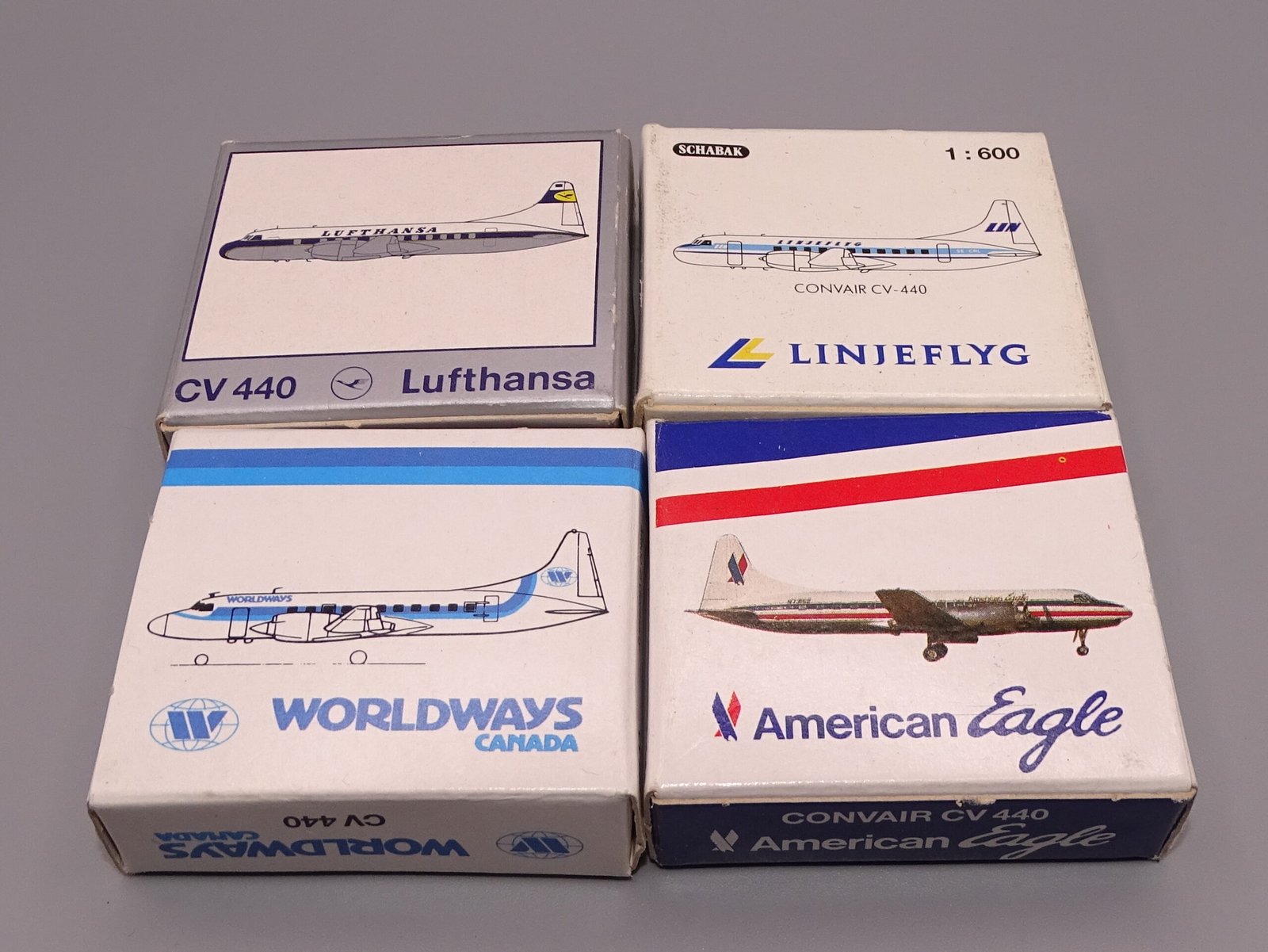
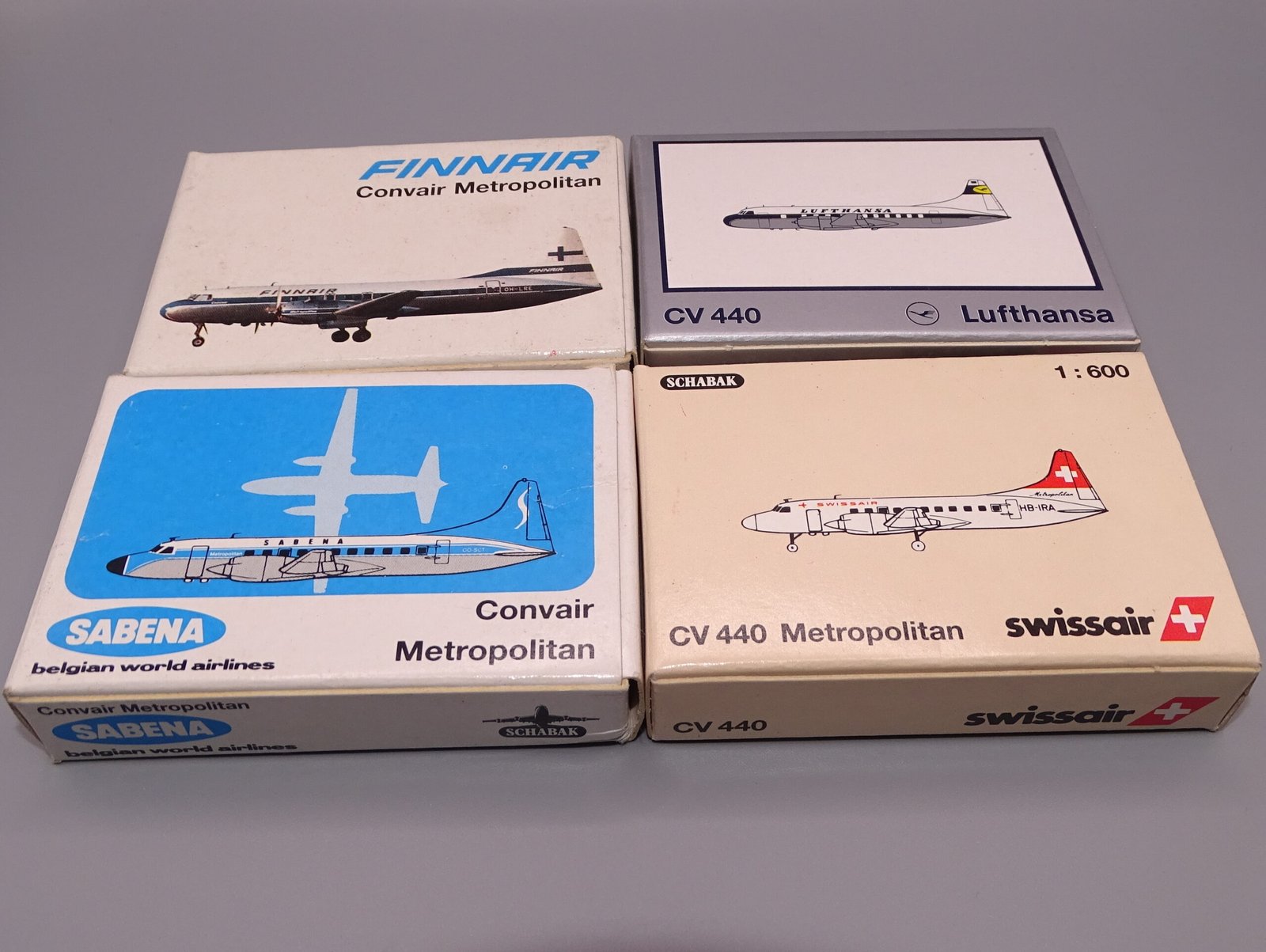
The later Douglas and Connie releases were upscaled even more into a larger square box. Here you can see the 3 styles used for the small number of DC-6 releases.
DC-3 PRODUCTION
Obviously these piston propliners didn’t have the same demand as modern jets but Schabak’s production was still quite decent, especially of the earlier 3 moulds. The later DC-4 and DC-6 got much smaller production runs. The below image shows a good selection of early DC-3s, all for airlines.
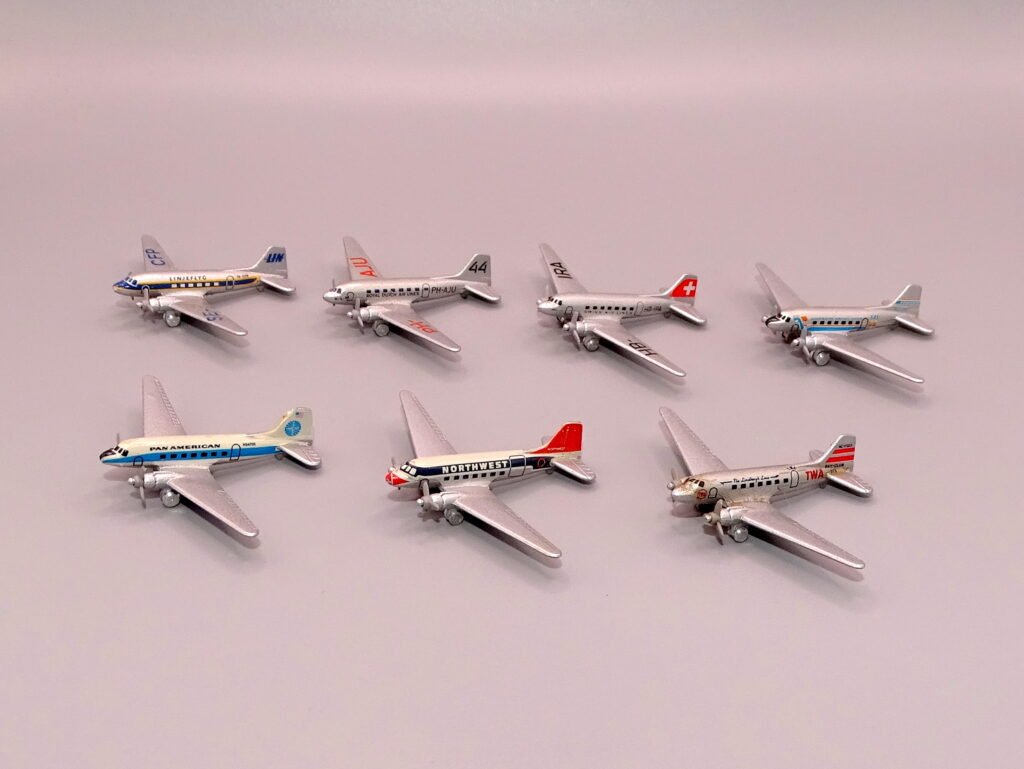
For a complete list of DC-3 production by Schabak see the database at MADb that has been updated with photos and accurate records for the type. Note that Schabak modeled two modern DC-3s flown by the Dutch Dakota Association and Flygande Veteraner:
CONVAIR PRODUCTION
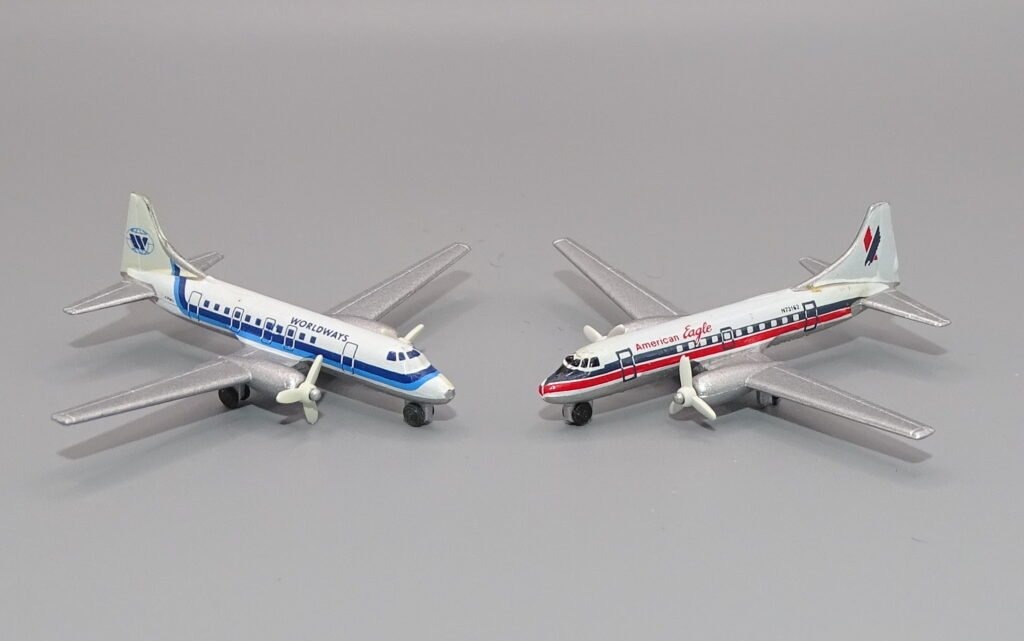
The Convairs like the DC-3s got both classic and more modern releases. The latter included Worldways Canada and American Eagle.
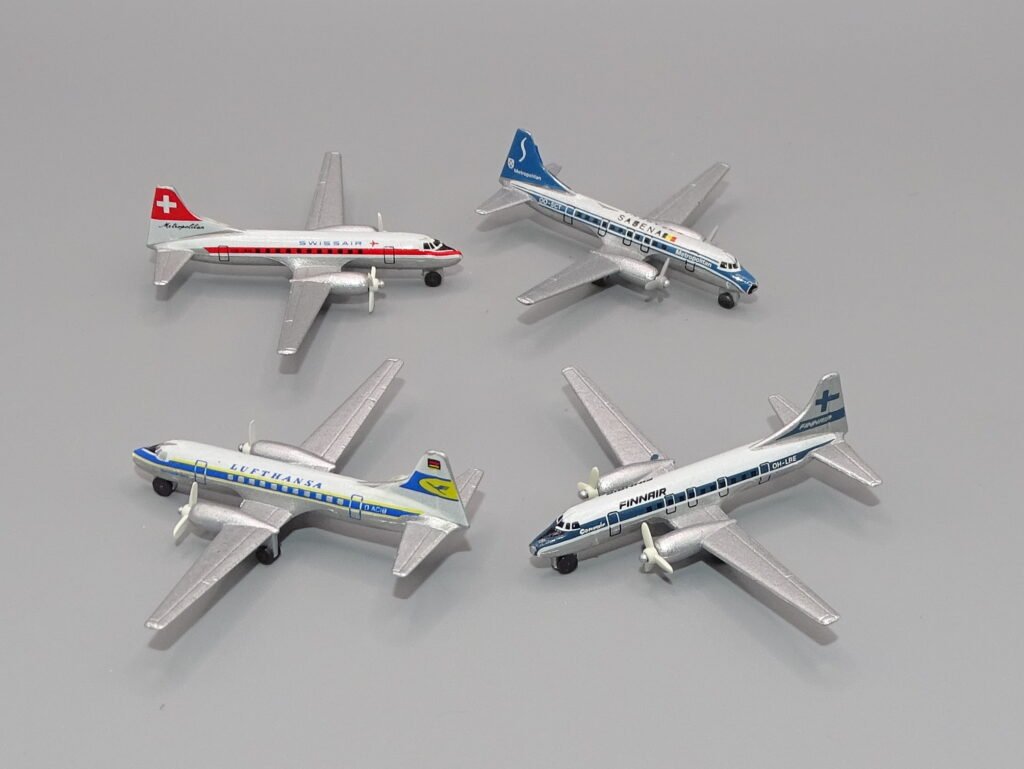
The more classic releases included both European and North American airlines. Mostly the mould fitted the selected aircraft aside from the American Airlines example, which is masquerading as a CV-240:
For a complete list of CV-440 production by Schabak see the database at MADb that has been updated with photos and accurate records for the type:
L-1049G PRODUCTION
The Connie releases seemed quite popular but only one of them received updated decals and that was the Lufthansa. This was an example of Schabak using their long-nosed Connie to represent a short-nosed version, which was quite a common occurrence.
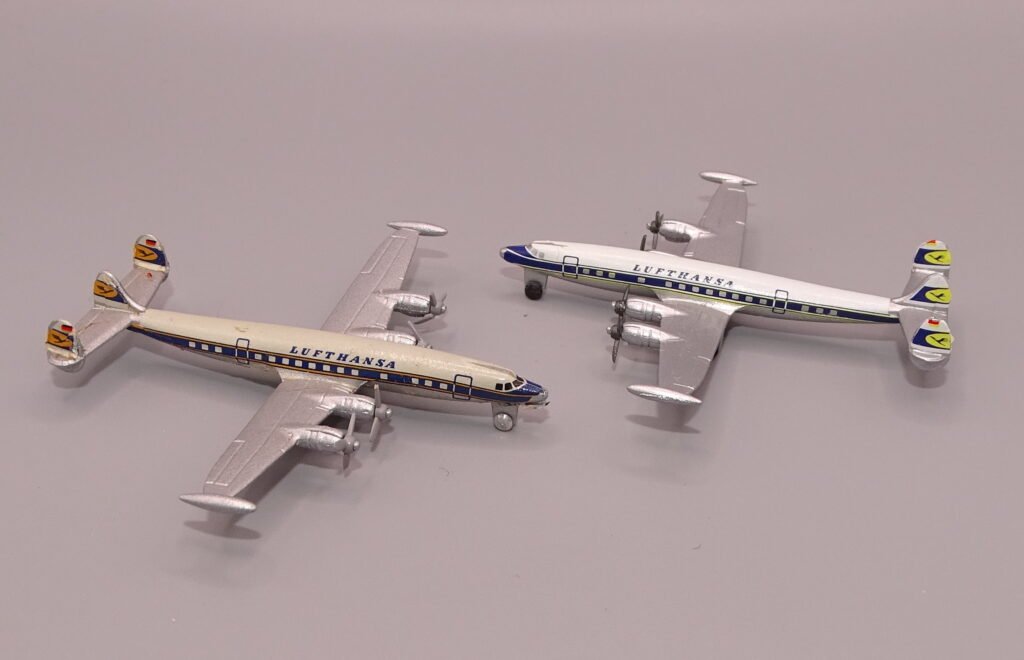
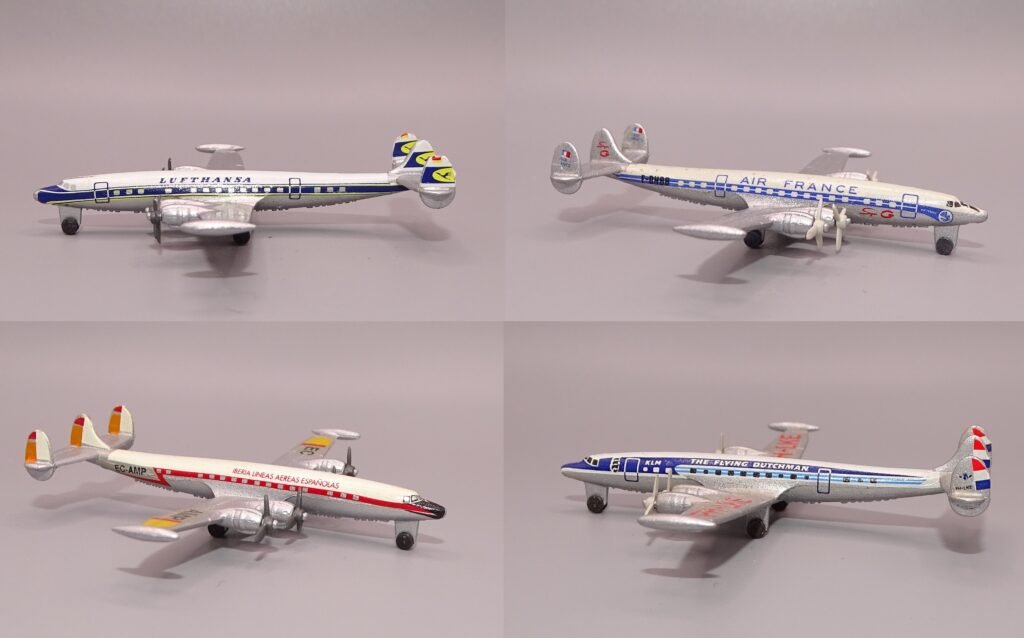
I believe all four of the European Super Connies below should technically have the shorter nose not fitted with radar:
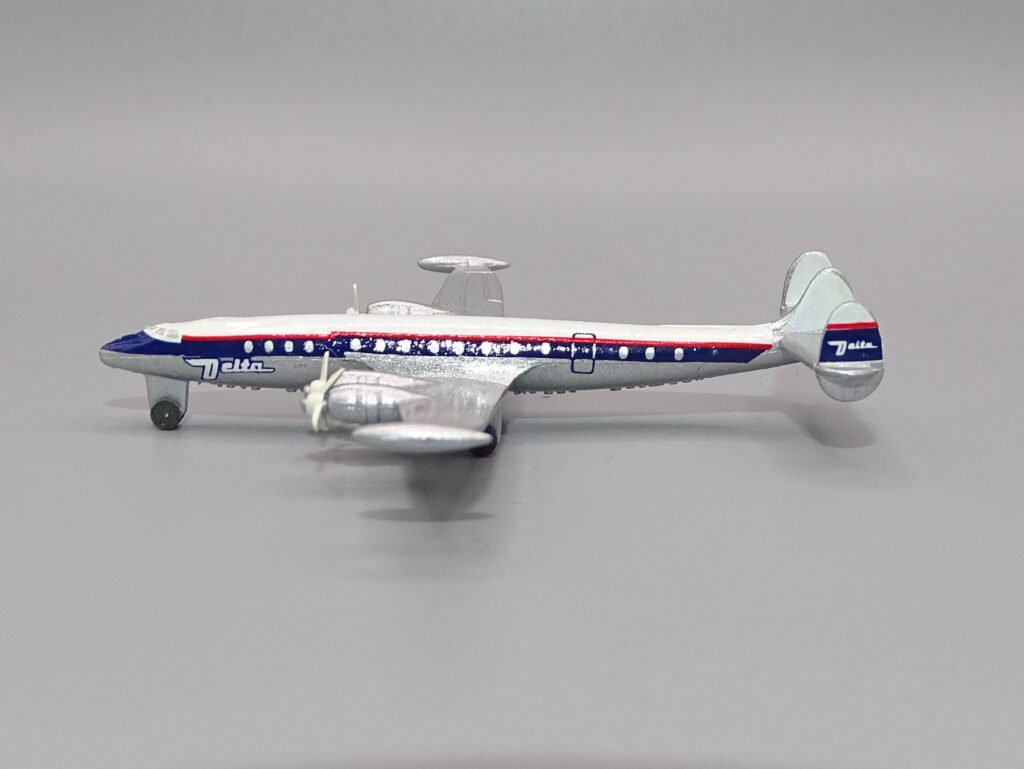
Delta never even operated the Super Connie but did inherit a few short Connies from the Chicago & Southern takeover. The Eastern example is correctly fitted with the long nose.
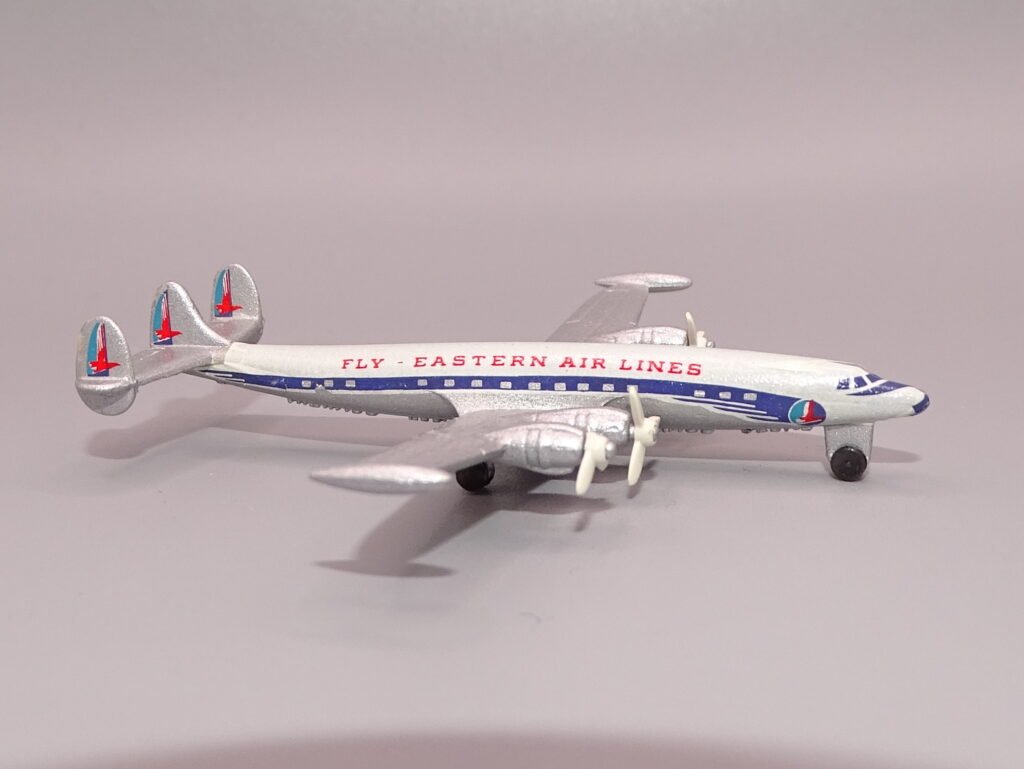
For a complete list of Super Constellation production by Schabak see the database at MADb that has been updated with photos and accurate records for the type:
DC-4 & DC-6 PRODUCTION
The larger Douglas products received a lot less use coming as they did later in the 90s, however the majority of them did continue in production until the end of Schabak in 2006.
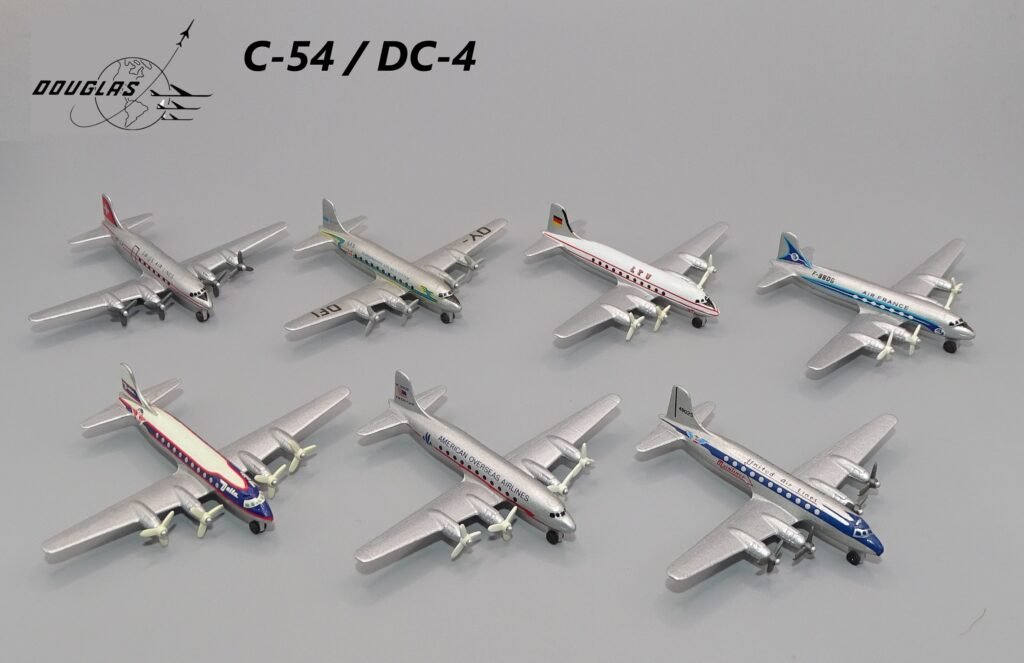
For a complete list of Douglas DC-4 and DC-6 production by Schabak see the database at MADb that has been updated with photos and accurate records for the type: