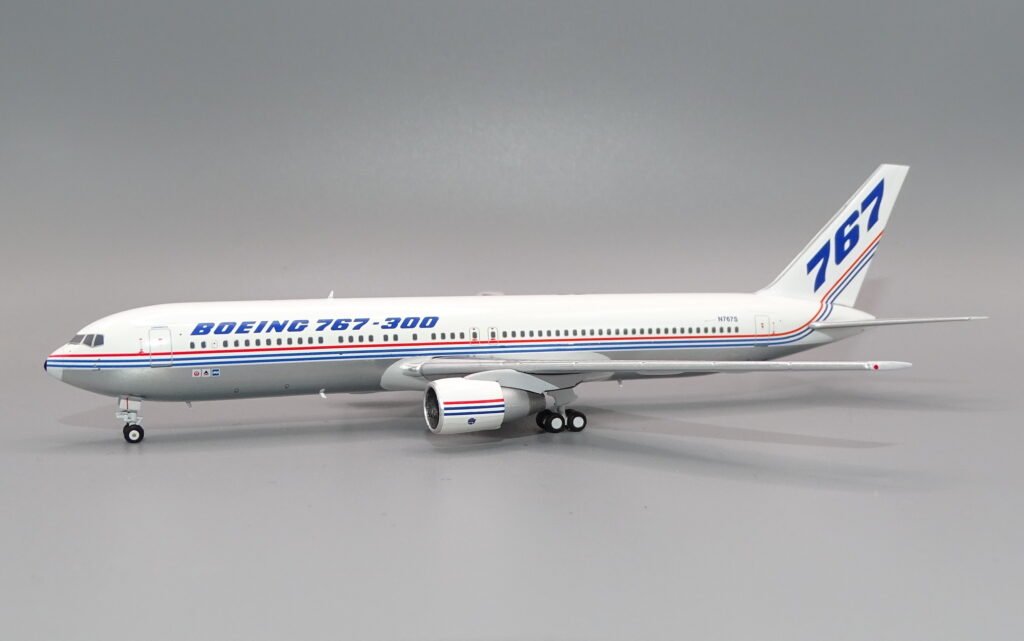
Panda Model’s reliance on orders from third parties for exclusives means their Boeing 767-300 has seen a rather random hodgepodge collection of models made on it. Such obscurities as DHL Cargo, Belarussian Government, UN colours and Air Sahara alongside the usual selection of Chinese versions and a few more mainstream releases. One of Panda’s regular customers is Patriot Models and although their tastes do tend to fall into obscure governmental and private aircraft they also have a strong interest in manufacturer house colours too. This model was announced last November but only reached most Western retailers around June / July.
Each review is to split into three key areas:
- The model mould
- The paint and livery reproduction
- Printing and quality control
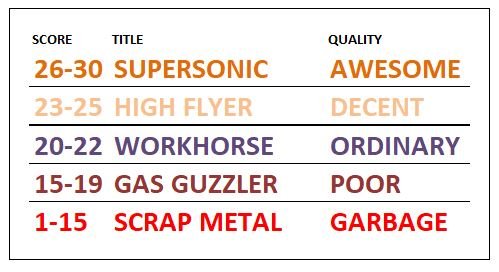
Each section can get a maximum score of 10 for a maximum combined score of 30
This review is sponsored by Northeast Diecast. Check out their store for an excellent range of hard to find 200 and 400 scale collection sale models and get 15% off!

MOULD
As I mentioned usage of the Panda Models Boeing 767-300 has been very diverse with just over 30 releases since November 2024 from 13 different brands! Back in February 2026 I covered its usage in a YouTube video but there have been more releases since then:
Panda Models make relatively few models under their own brand name nowadays and in fact Panda themselves have used the mould only 5 times (6 if you count the Air Astana originally made for another brand). This does mean that it really doesn’t feel like there is a plan for usage of the mould and the releases have been pretty random.
There are at least four other 767-300s actively competing against this version (from Apollo, Gemini Jets / JC Wings, NG Models and Phoenix Models). Of those only the NG version is less than 10 years old, but at least only one, by Gemini / JC, is still an old cradle mount with wing seam.
NG Models 767-300 debuted before the Panda, in June 2024, but has been used for only 9 models (only featuring 3 airlines), although there are currently another 10 future releases in the works. The NG mould hasn’t been met with universal approval – mainly due to windowline printing and winglet form. Otherwise, it is strong competition.
The reborn Apollo Models has used the slot in wings Witty mould but only for a selection of copycat Chinese models so can largely be ignored. That really leaves Phoenix as the only brand producing decent numbers of 767s, although they themselves have used their mould only 7 times since 2025 began. For earlier reviews of 767-300s from JC Wings and Phoenix see here.
All of that use and misuse from the competition means the Panda 767-300 has plenty of scope for releases and taking the mantle as the best 767 in the scale. I think presently in August 2026 it achieves that. Together with the Panda Models Boeing 767-200 and 767-400 variants Panda has a very strong representation of the entire 767 line.
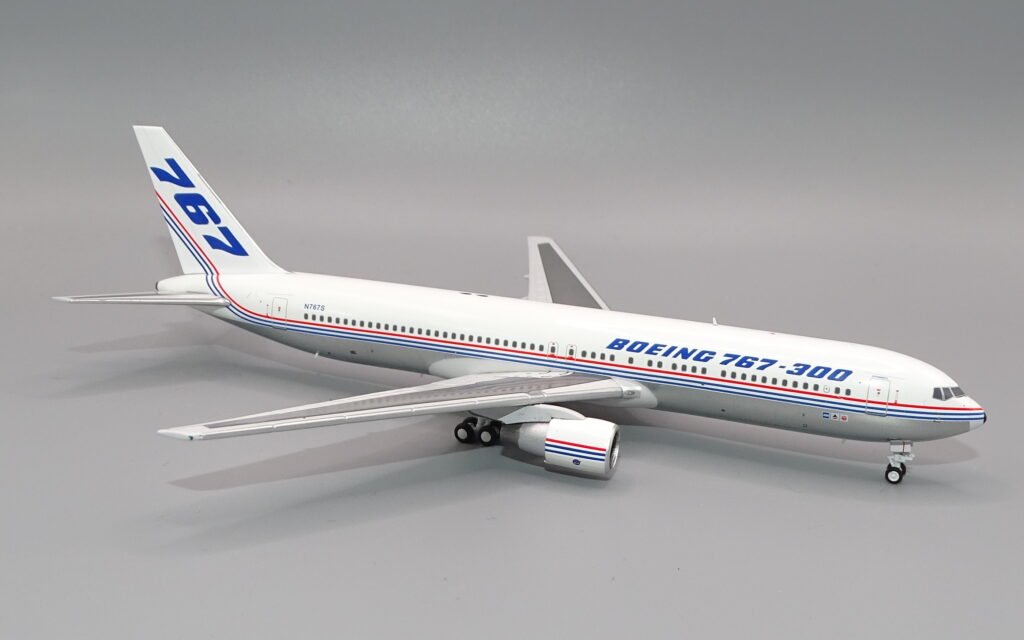
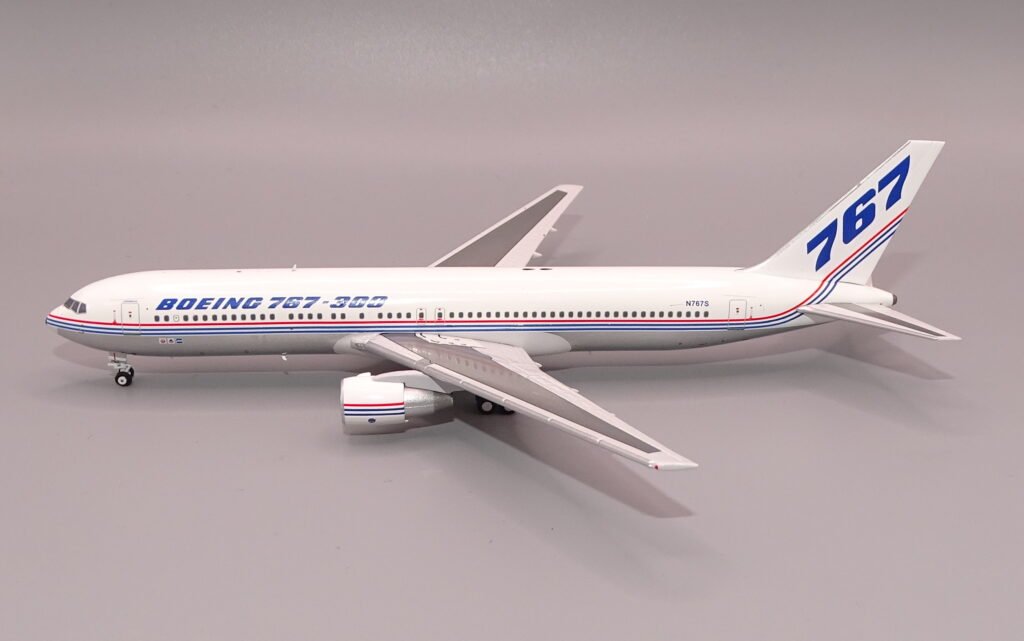
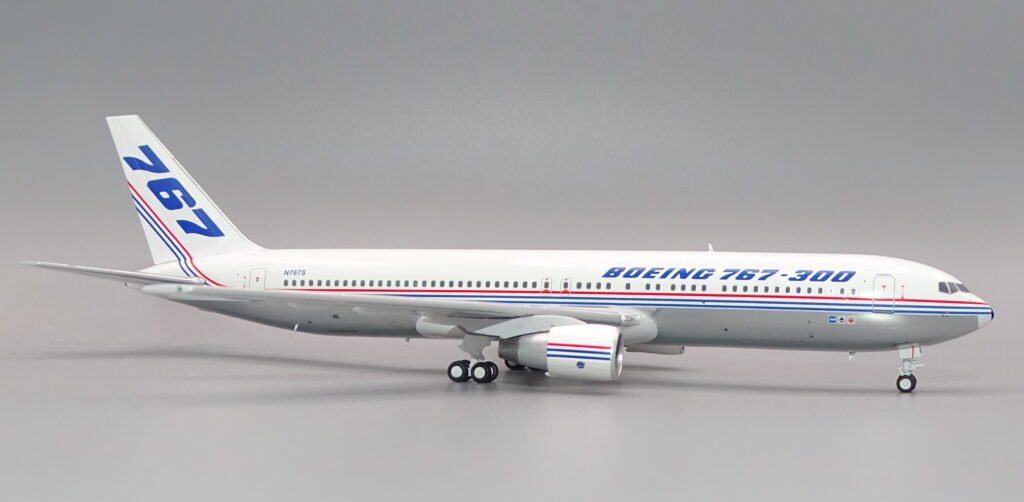
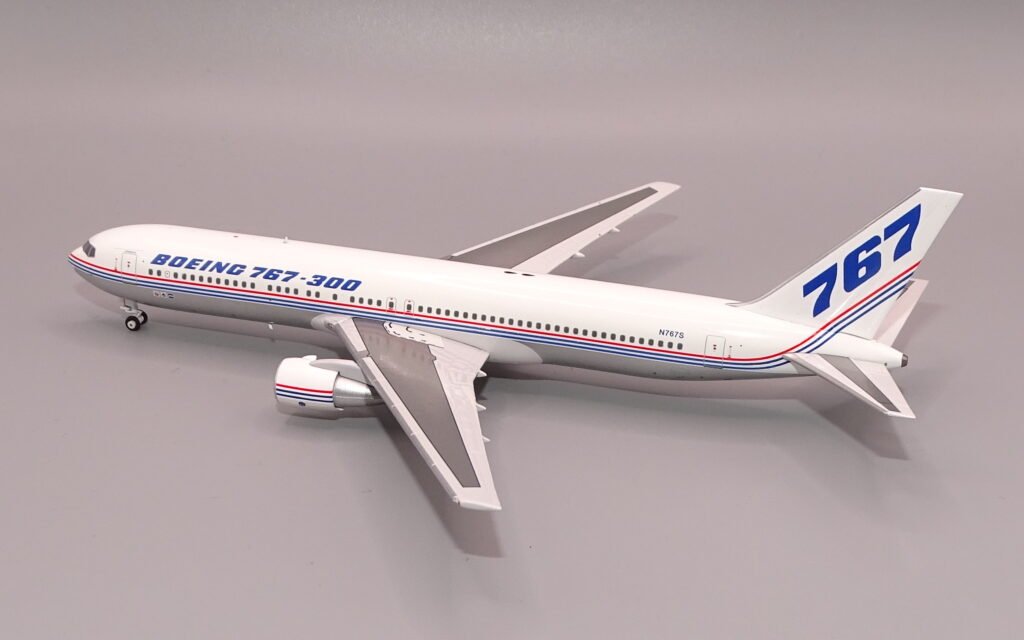
The shape of the fuselage barrel, from nose to tailcone is wonderful. The wings slot in tightly to the fuselage, giving this area a big advantage over the cradle mount JC Wings mould. The shaping of the fuselage to wing fairing is also better than the Phoenix mould.
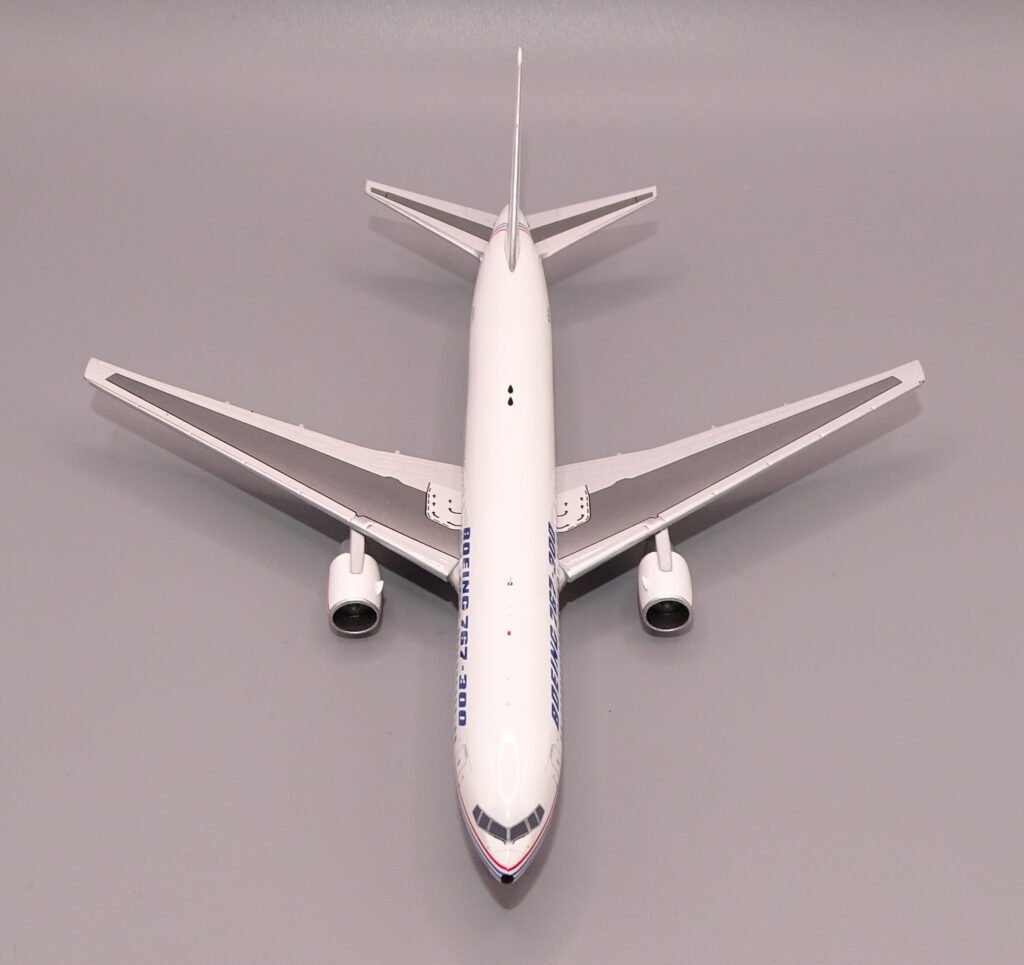
The wings, engines and pylons all show excellent detailing also. The attachment of the pylons to the wing and engine detailing is an improvement over the older moulds. I also think the hot sections of the Pratt & Whitney engines fitted here are more accurate than the NG samples had.
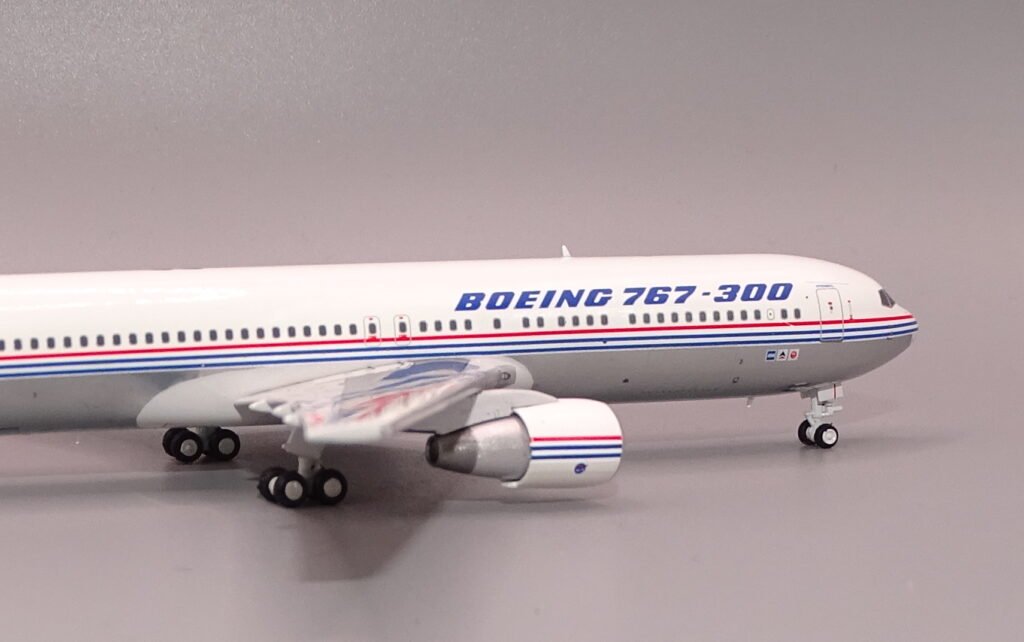
At the rear of the wing one of the small points of difference from the NG 767 mould is that the flap track fairings are slightly longer and protrude very slightly further beyond the wing margin. I think this is more accurate.
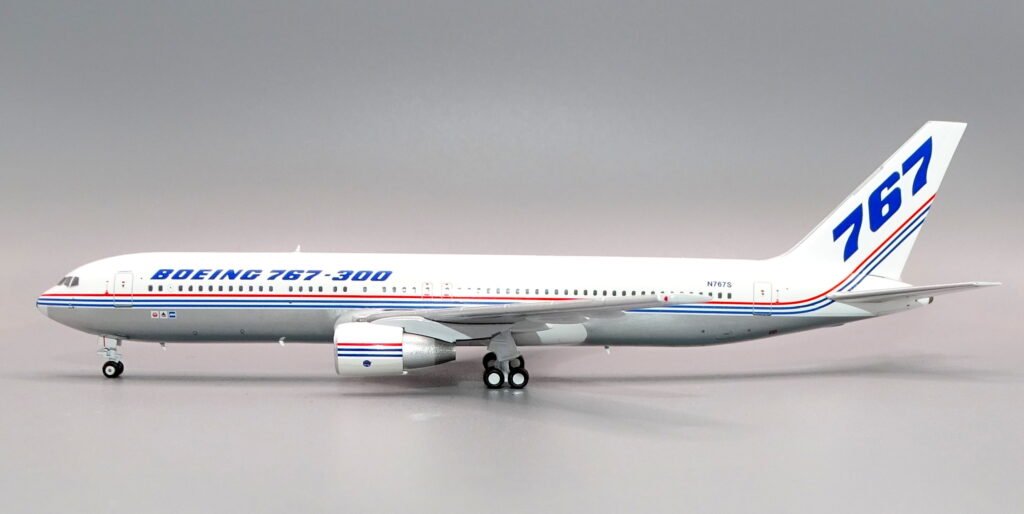
On a winglet-less 767 the biggest differentiator between this mould and the NG is at the maingear. The Panda 767 shows a little more gear leg than the NG and the maingear itself is angled a little further rearward too. In this case the NG takes the prize.
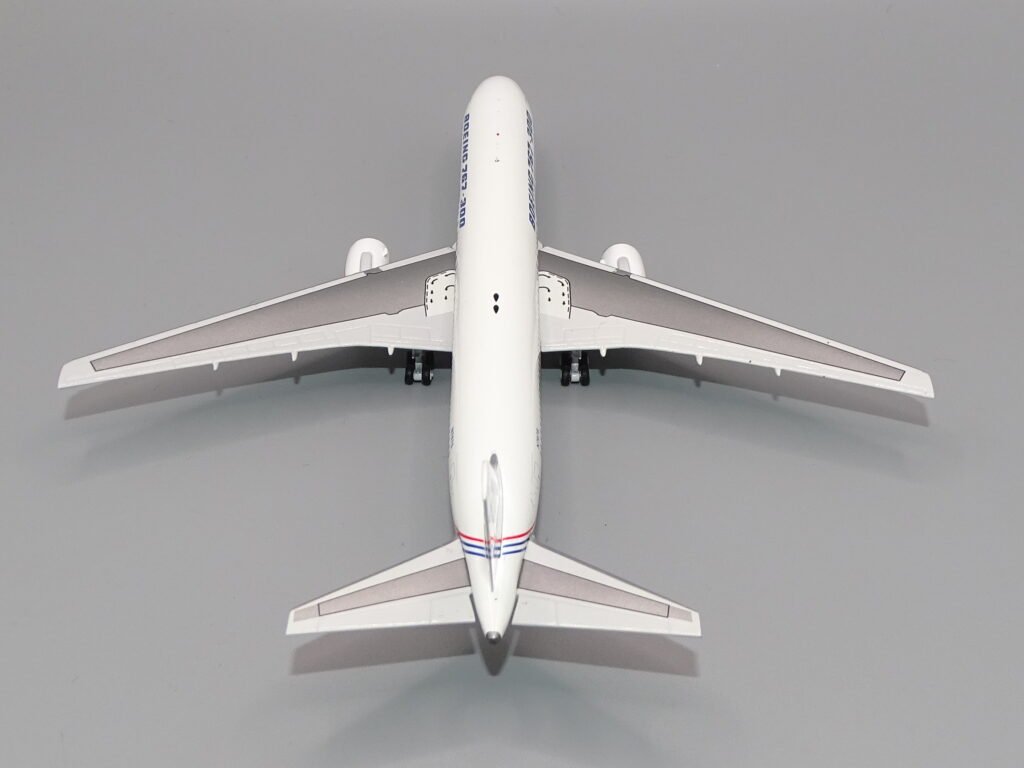
Small areas of detailing on the mould, missing on the Phoenix edition, such as the underbelly NACA intakes (also absent on the JC Wings mould) and the tailbumper, are present. Additionally, this model has unusually got two further small aerials on the underside for a total of 5 overall. The two new aerials are small and offset to each side forward and aft of the wing.
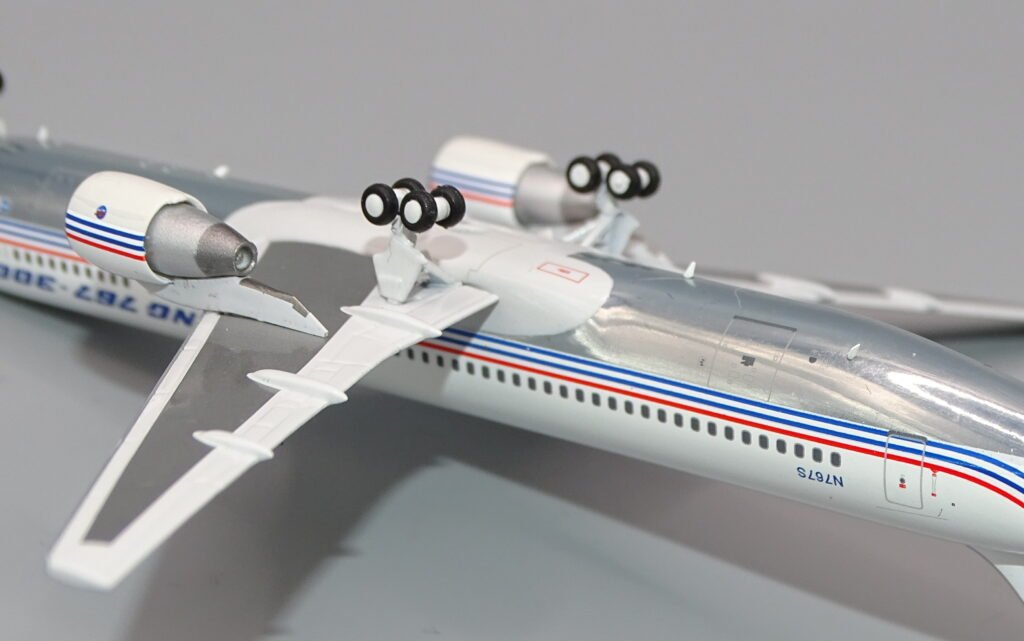
This Boeing 767 mould is currently my favourite of the 5 available, although none of them are awful. With modern detailing and features it is between this and the NG 767-300 for the prize. The Panda version is in that grey area between a 9 and a 10 from a scoring perspective but I’ll err on the side of caution and mark it down slightly.
SCORE – 9
PAINT & LIVERY
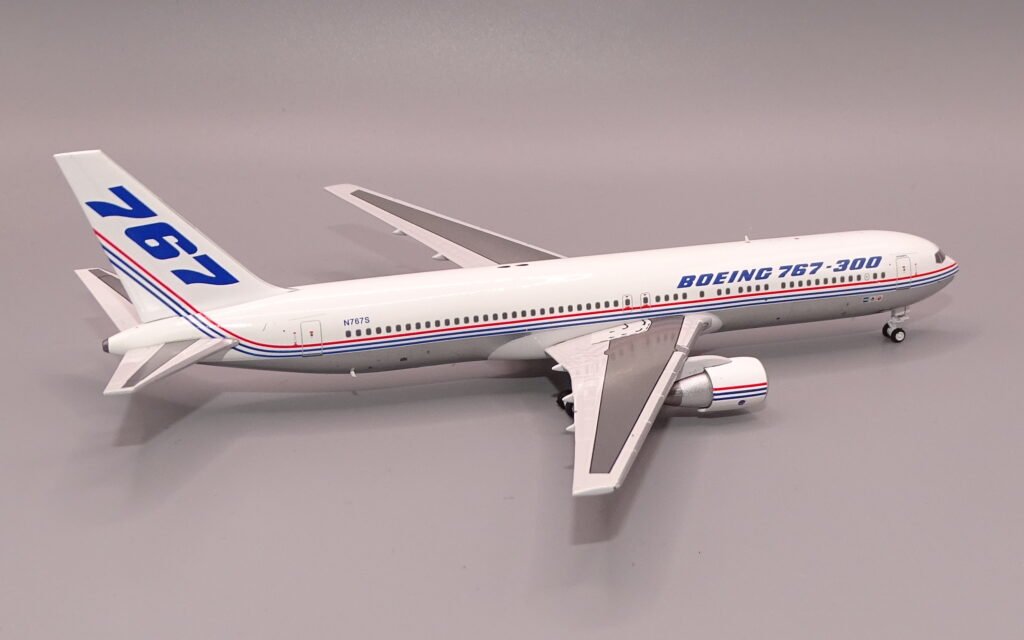
As merely a variant of the 767 the series 300 prototype didn’t get quite the same fanfare as the original series 200. N767S first flew on January 30, 1986 and would be delivered to launch customer Japan Air Lines on December 16. It also didn’t get the full livery that the 767-200 received, presumably because JAL’s livery at the time called for a natural metal belly.
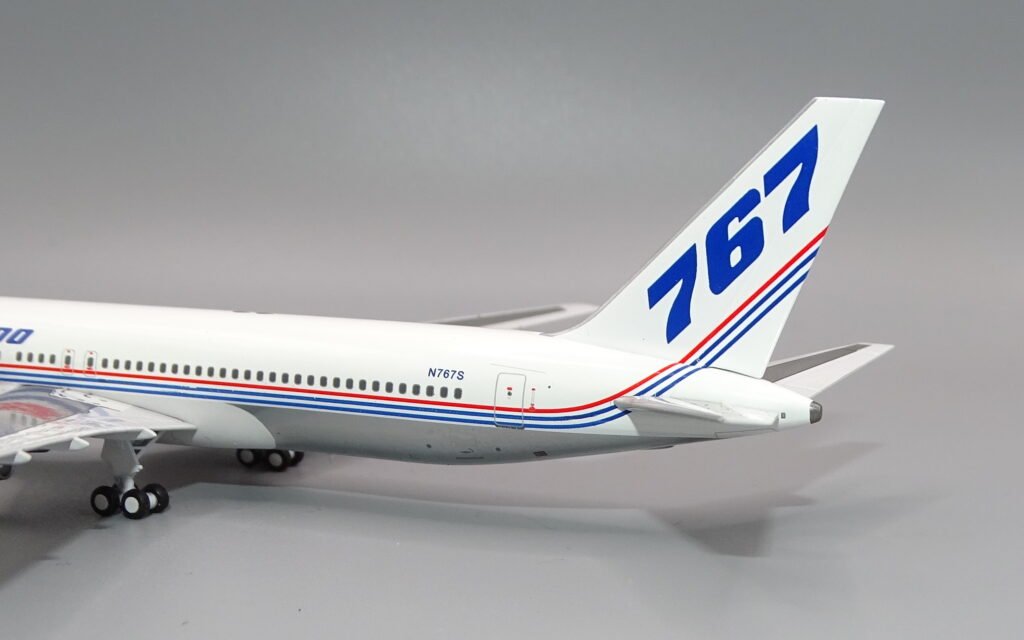
As is surprisingly often the case for Boeing prototypes there aren’t lots of images of the aircraft online. Those that exist, such as this image from Airliners.net of N767S, suggest that the livery replication is accurate.
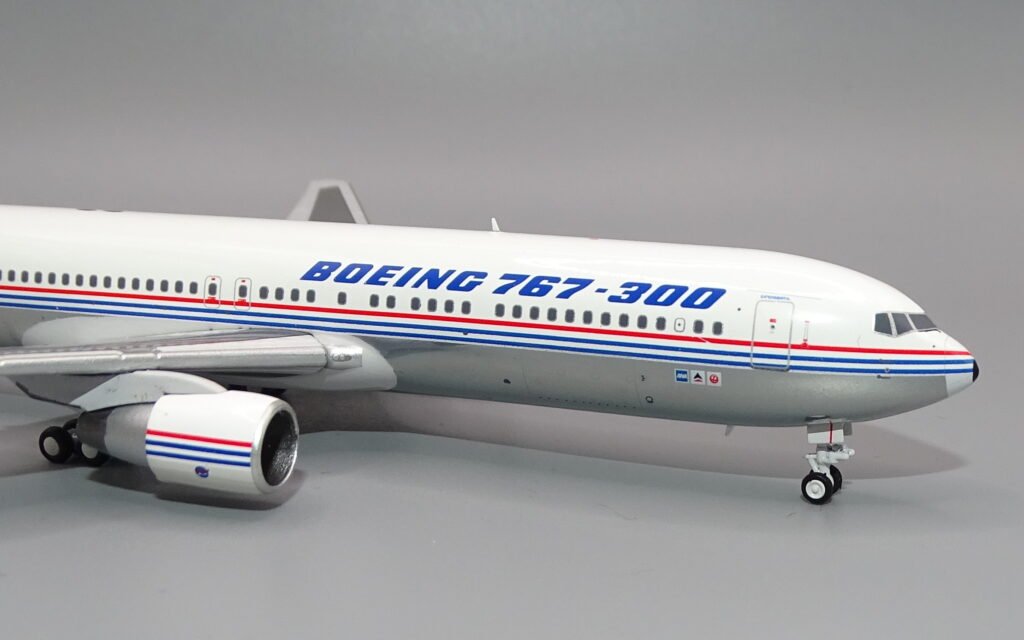
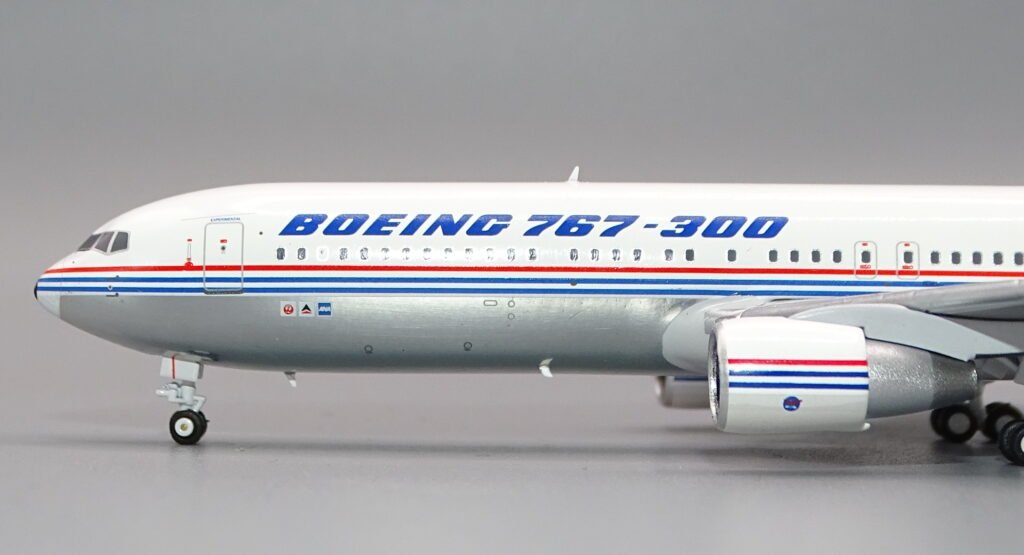
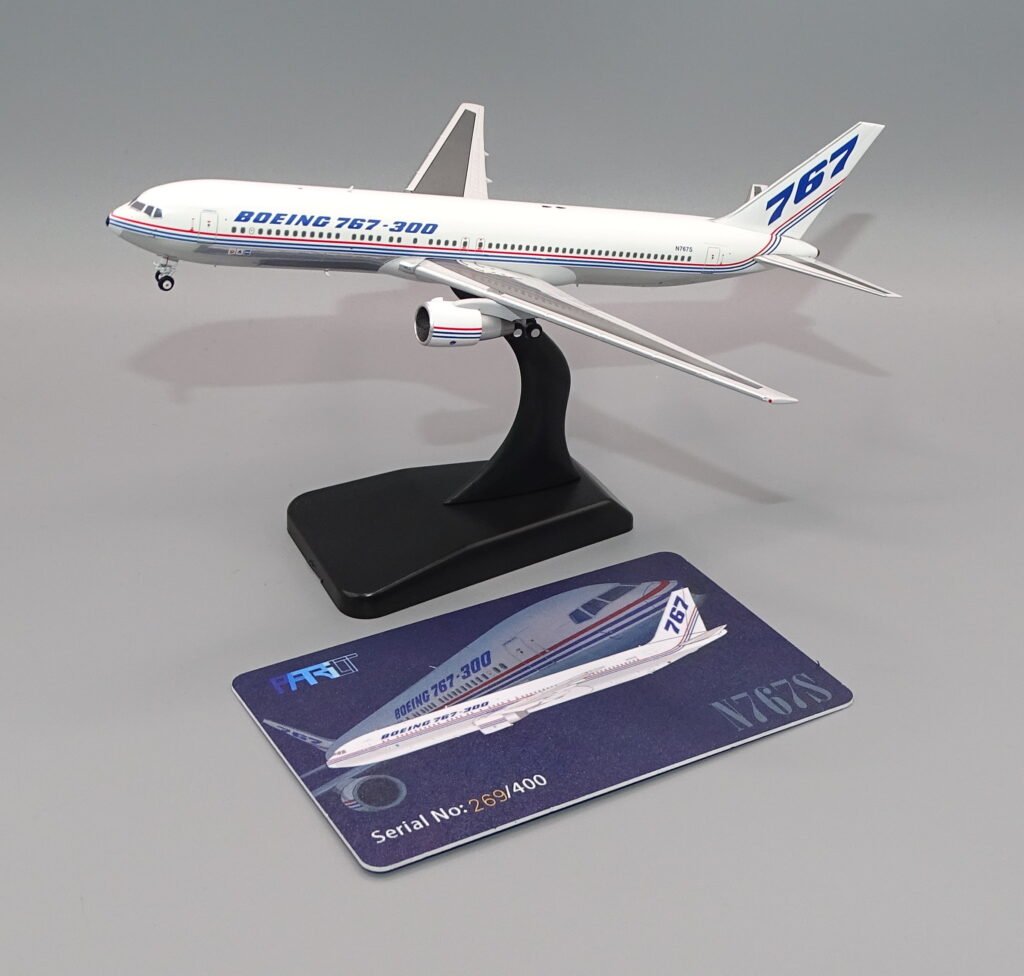
The colour of the pinstripes and font of the titles are very satisfactory. On the lower forward fuselage the logos of the three launch customers (All Nippon, Delta and JAL) are well printed and have good definition even in extreme macro shots. Similarly striping and the Pratt & Whitney logo on the engines look great.
SCORE – 10
PRINTING & QUALITY CONTROL
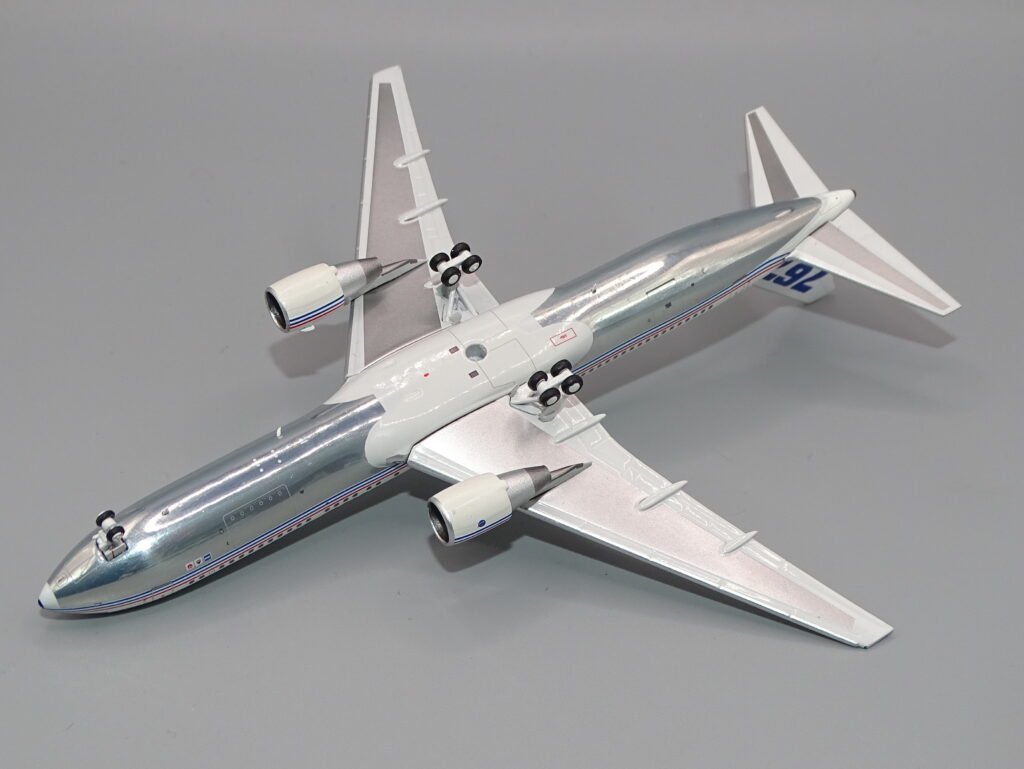
I am a big fan of the printing and paintwork of Panda Models. In my experience of working with them on the V1:400 line they have been reliable and able to produce very high-quality outputs with little supervision. This model doesn’t change my mind as the print and paint are exemplary. I have no complaints and areas requiring accuracy, such as the very small radome spot, look great.
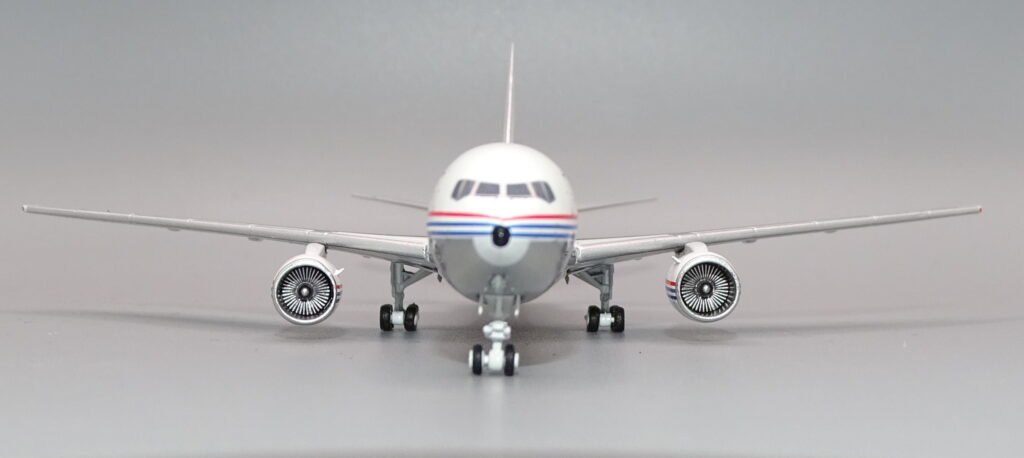
An area I particularly like are the engine fans. They aren’t silver and they aren’t fully black or grey. In fact, the painting enables good definition of each of the fanblades to be seen.
Build quality is generally sound. The one detractor for a lot of Panda 767s has been the angle of fit of the engines to the pylons. I have seen improvements in this with recent releases and on this model the portside engine is level. The starboard side has only a very minor downward angle to it. An area that could do with some work is the detailing on the maingear tyre hubs, which are rather vanilla. Neither of these things add up to much unless you have the model under the microscope.
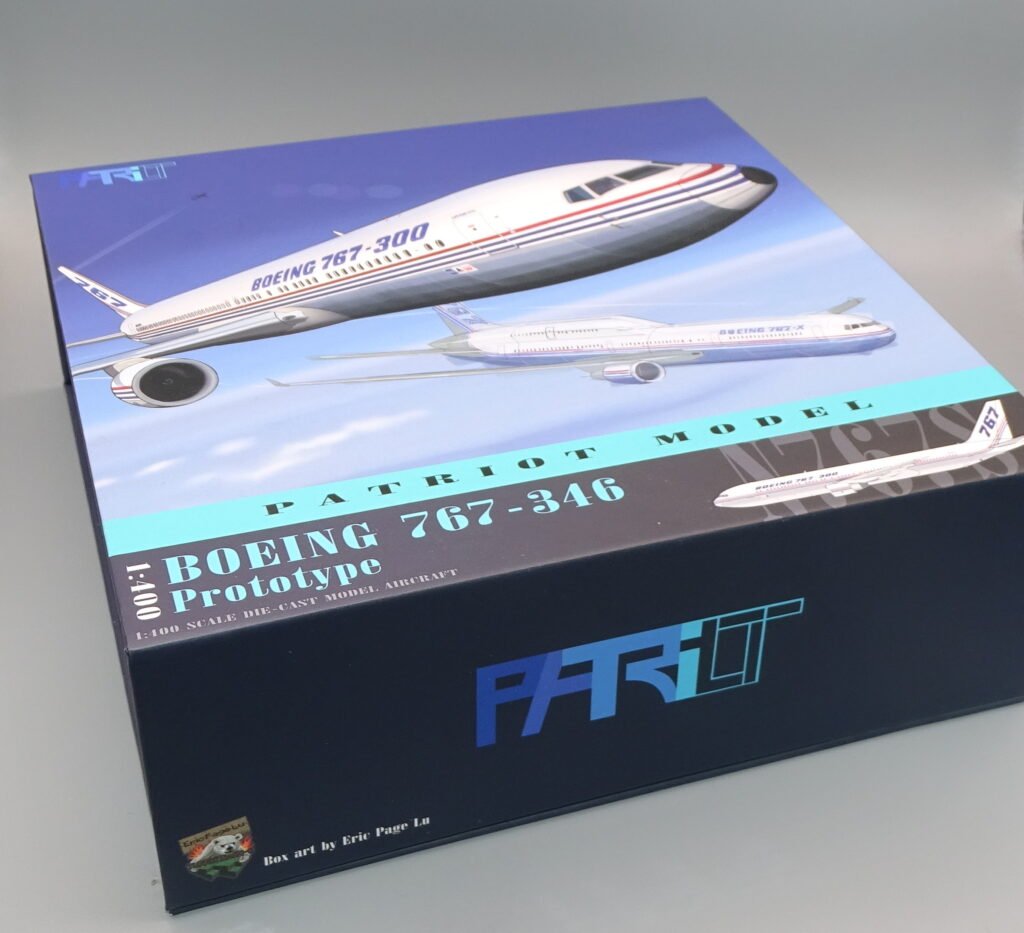
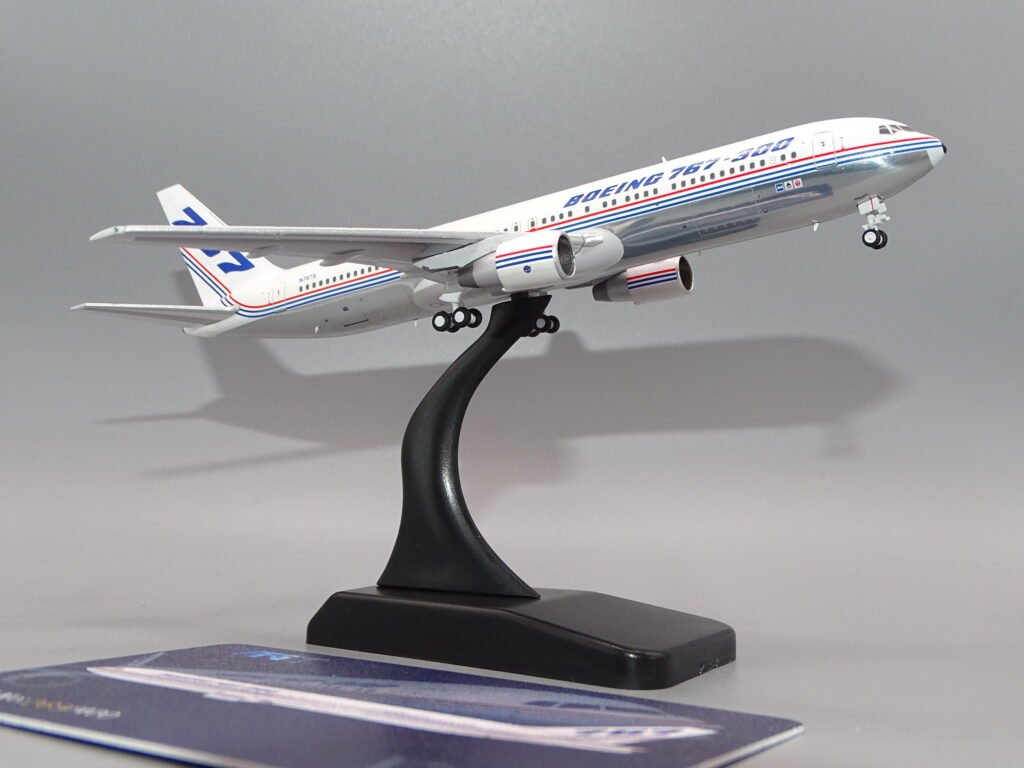
As this is a Patriot Models release the overall package with this release is of extremely high quality. The large magnetic flip top box is sturdy and made of very thick card. Inside the model comes in foam rather than a plastic cradle. The model also comes with the standard Patriot postcard and collectors’ card, plus plastic stand. All of this is decorated as usual by the excellent work of Eric Page Lu.
SCORE – 9
CONCLUSION
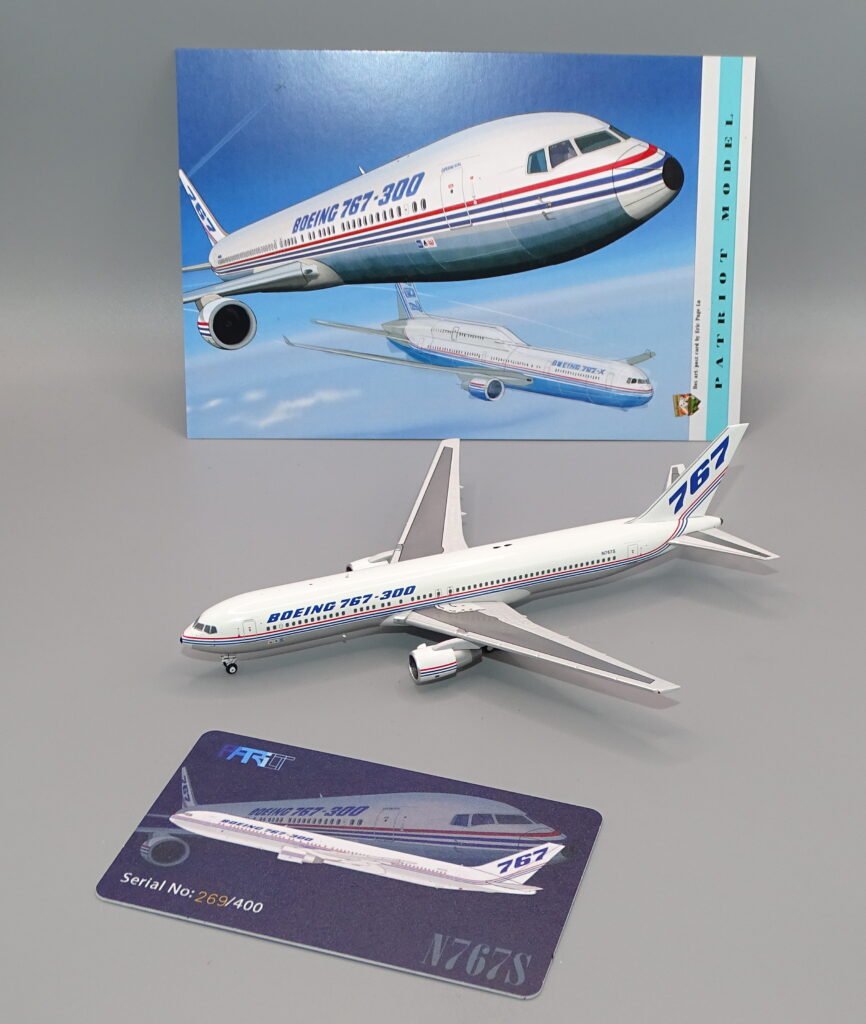
This release completes the series of prototype 767 releases using the Panda mould. All have been made for Patriot, aside from the series 200 made for V1:400. The 4 together make an excellent assemblage and testament to an important but often overlooked type. They also go to illustrate what is possible in 400 scale nowadays with exceptional moulding and printing, plus a strong set of top-quality packaging and extras. Obviously with Patriot Models this comes at a cost. This model retails in the UK for nearly £60 (about $81), but despite that high upfront cost I have found Patriot releases to be worth the money in general, even if as a standard aircraft without add-on components that many Patriot releases feature, this model could have presumably retailed for quite a bit less without the Patriot extras.
FINAL SCORE – 28/30