JC Wings has a curious mould development strategy whereby they produce some outstanding obscure moulds while at the same time they don’t appear to see the need to replace some obsolescent versions used for many more releases and that have strong competition from other brands. That means this is an all-new Airbus A300 Beluga mould and yet the passenger A300s they’ve been making of recent use the abysmal old BlueBox mould, definitely a contender for the worst 400 scale ever made. That isn’t to say that this beluga isn’t very welcome, especially as it is interactive too.
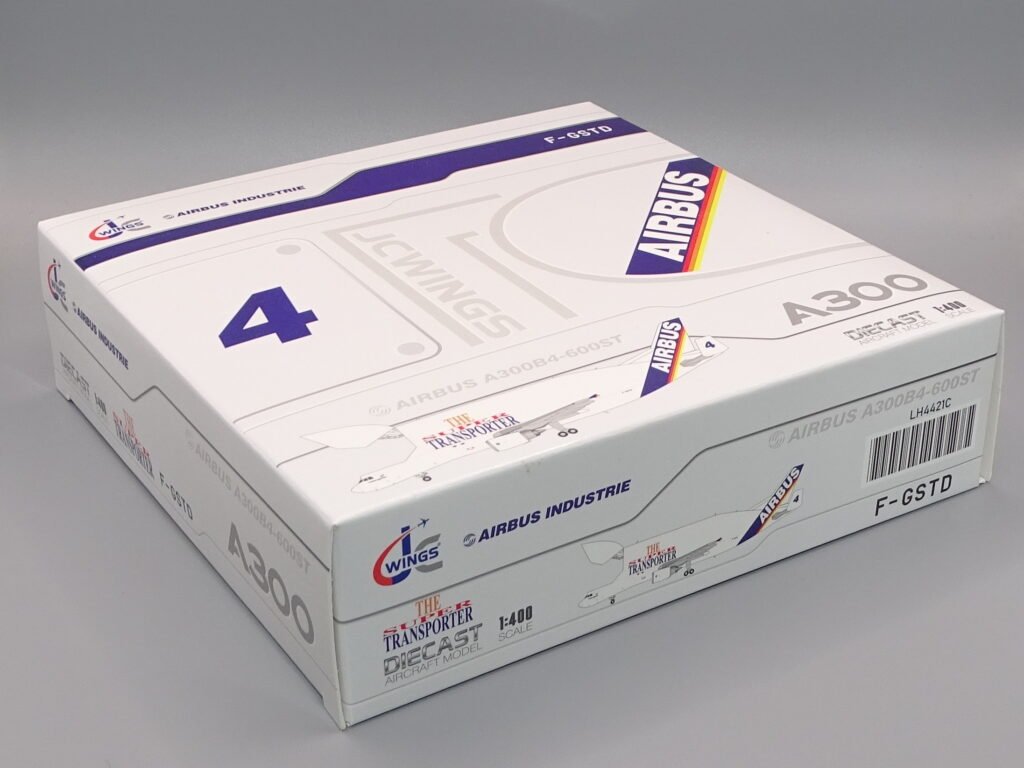
Due to JC’s equally curious distribution practices it seemed for a long time I wouldn’t be able to acquire a copy of this model, which was announced in January 2026. Thankfully my UK go-to for model purchases, Bedfordshire Diecast, managed to get a big shipment in at the end of August and it finally included this and several other sought-after releases. Quite why JC can’t ship models on a monthly basis closer to the announcement date is anyone’s guess.
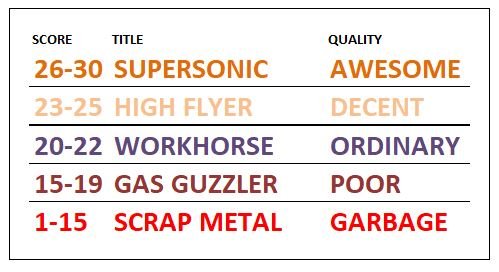
Each review is to split into three key areas:
- The model mould
- The paint and livery reproduction
- Printing and quality control
Each section can get a maximum score of 10 for a maximum combined score of 30
This review is sponsored by Northeast Diecast. Check out their store for an excellent range of hard to find 200 and 400 scale collection sale models and get 15% off!

MOULD

Aside from some old and poorly known del Prado / ModelPower versions the only other Beluga mould prior to this one came from Dragon Wings as early as the year 2000. That mould benefitted from some of Dragon’s strengths in terms of detailing and willingness to customise, plus didn’t suffer from their weaknesses since the undercarriage on the Beluga is short and, on that mould, the vertical stabiliser was metal and part of the fuselage. The result is a surprisingly competitive mould even by modern standards.
Nonetheless, Dragon last used their Beluga mould back in 2011 and only two of their eleven releases came after 2005. For a Dragon mould it isn’t that common and easy to find, plus of course it lacks modern features such as rolling gear, aerials and interactivity.

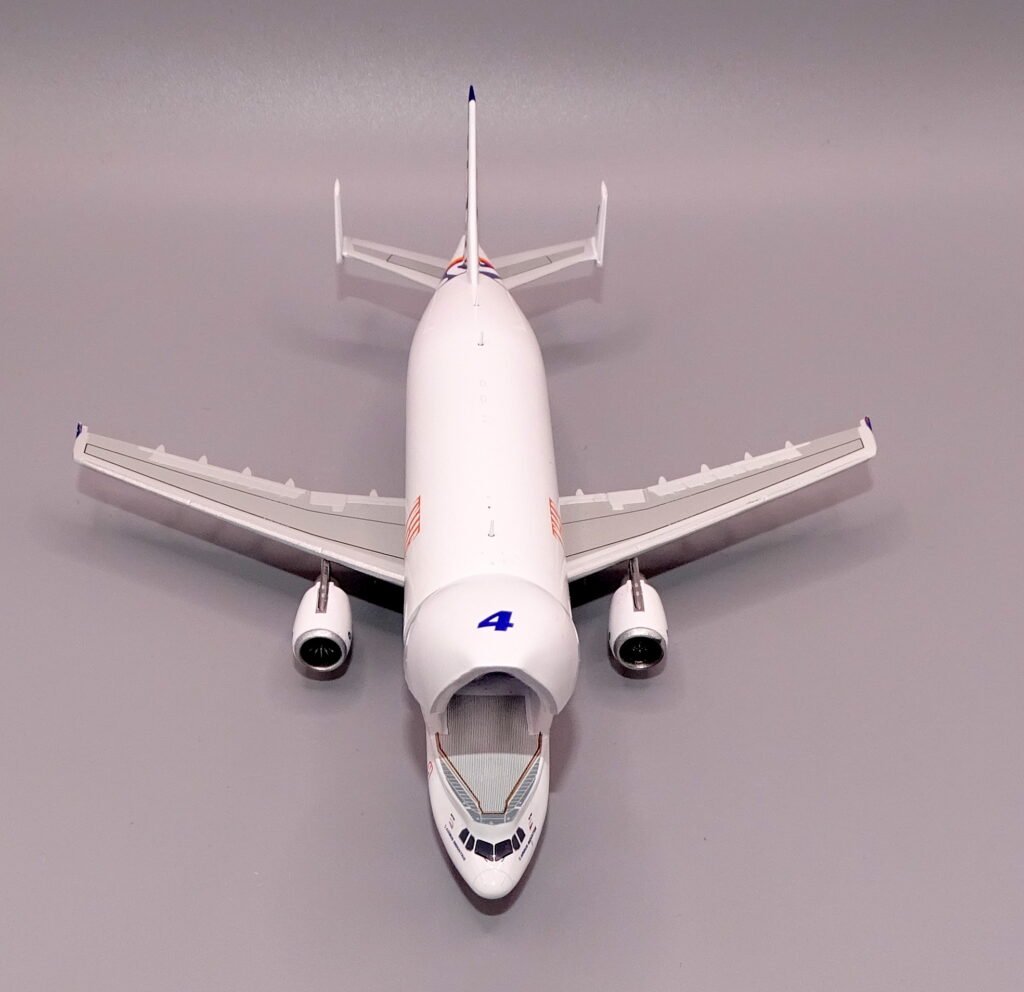
The new JC Wings version is an excellent successor to the old Dragon and has the wings and maingear basis to be converted into an all-new passenger A300 to replace the dreadful BlueBox. Indeed, the accuracy of the complex bulbous fuselage and low-slung cockpit make you wish JC put this much effort into some of their other commonly used moulds.
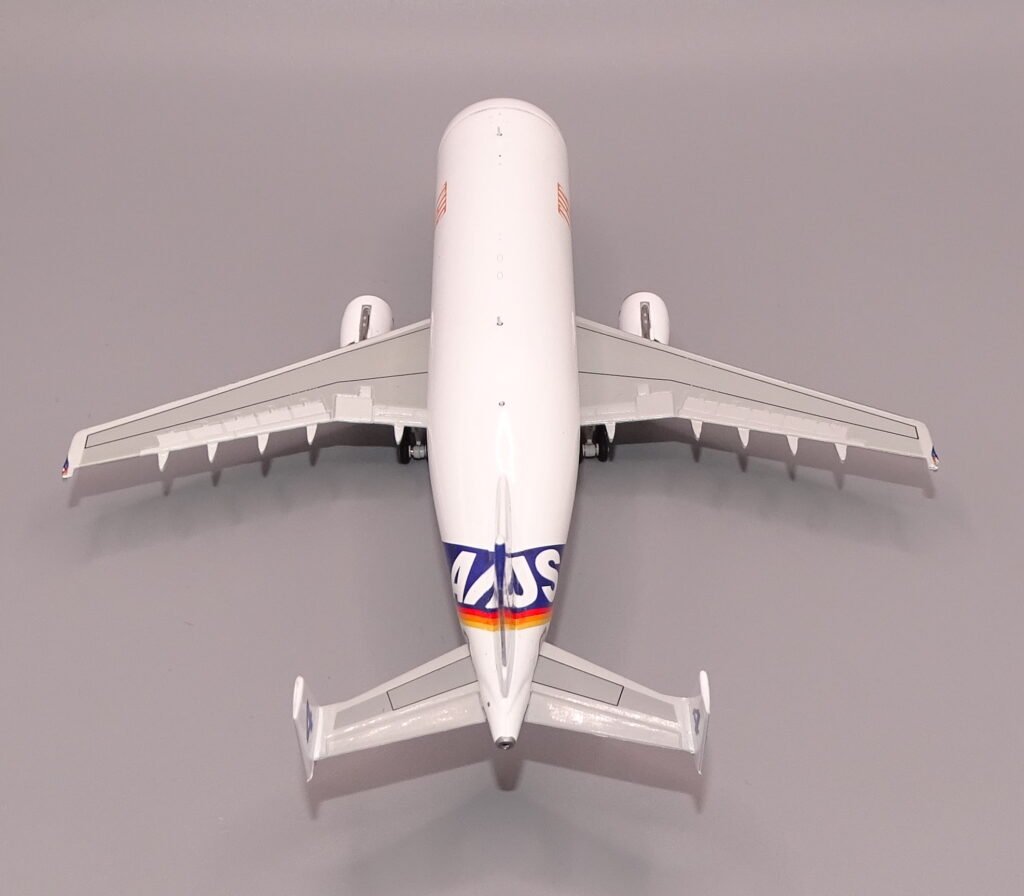
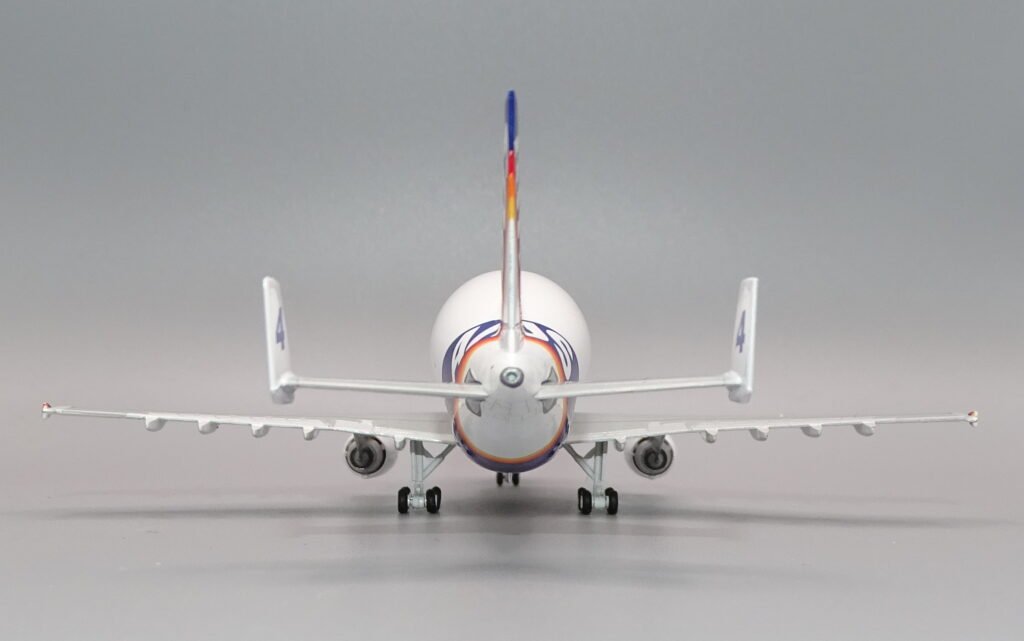
I can’t find fault with the fuselage barrel or vertical stabiliser. As with the Dragon the latter is fully metal and part of the fuselage itself rather than a slot in piece. The extra blade under the rudder and the pointy tailcone look great.
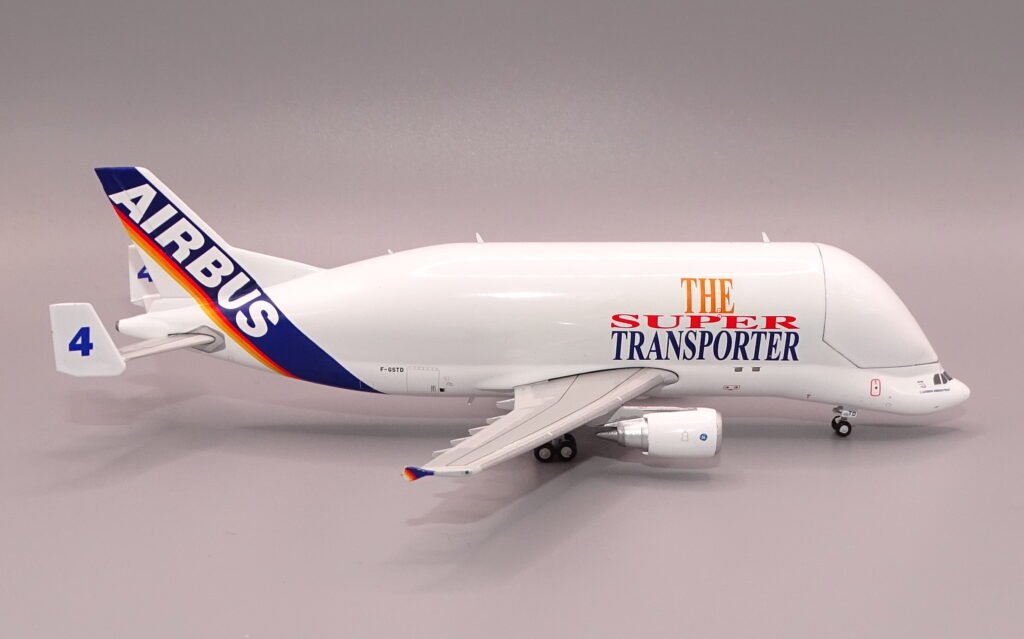
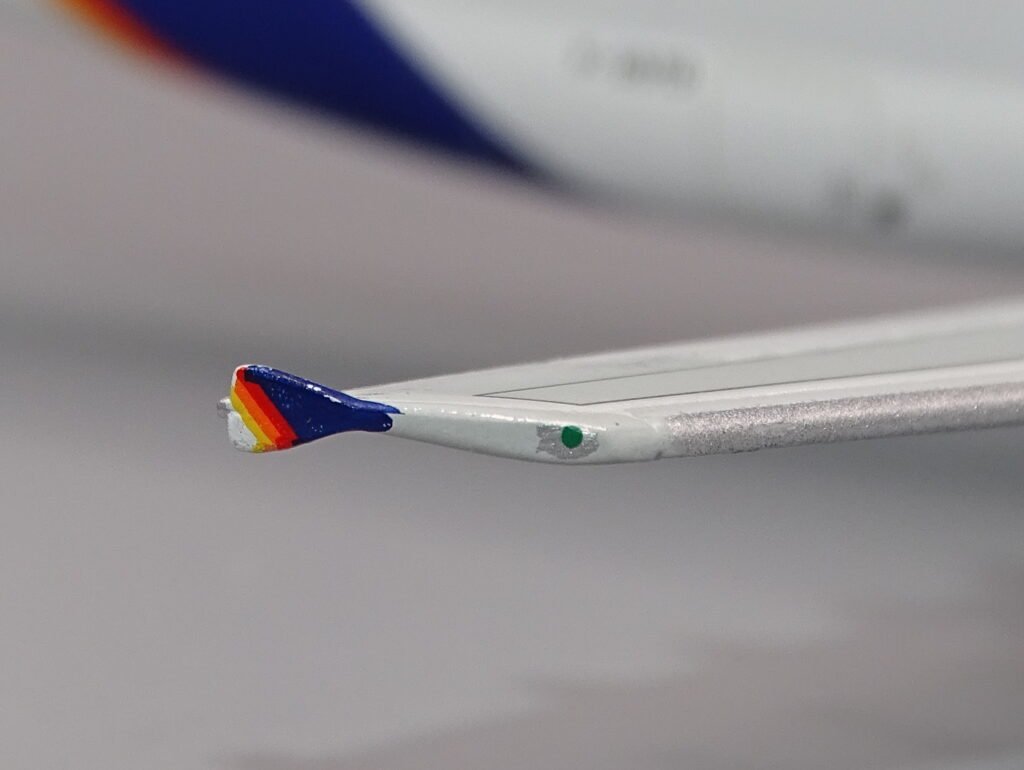
The wings slot into the fuselage tightly and have a lot of accurate detailing on them. The wingtip fences, typical of an A300-600, are well shaped and better than on the Dragon (and the recent YU A300).
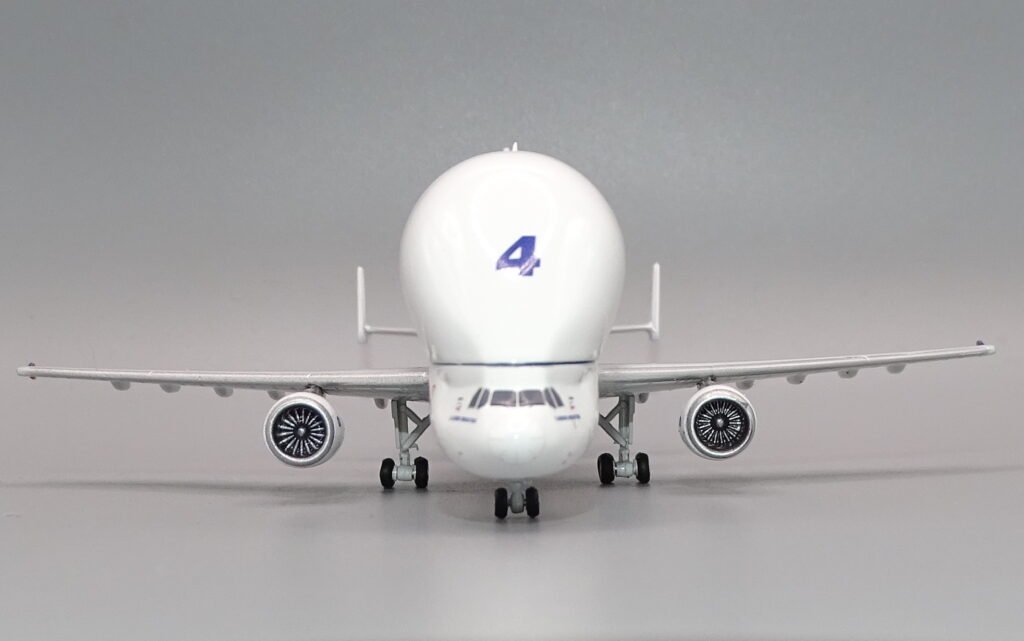
Engine pylons and nacelles attach well and are held at a good height. Many more recent JC moulds have suffered from the landing gear being too short (A330 and 747-400 are just two examples) but here the gear is very well detailed and suitably tall. Arguably in fact the nosegear is slightly too tall.

The engines are refreshingly solid-core enabling a more accurate fanblade count and nice detailing. The horizontal stabilisers are, like the Dragon, made of plastic but actually have a little less linework detailing than the Dragon does on the upright outer surfaces.
The model comes fitted with four aerials, three of which are a little large. On the underside the detailing of the large oval intakes is excellent and unlike the Dragon there is of course no seamline. One innovation the old Dragon mould does have that the JC doesn’t is that the latter had a deployed crew entry stairwell behind the nosegear door.
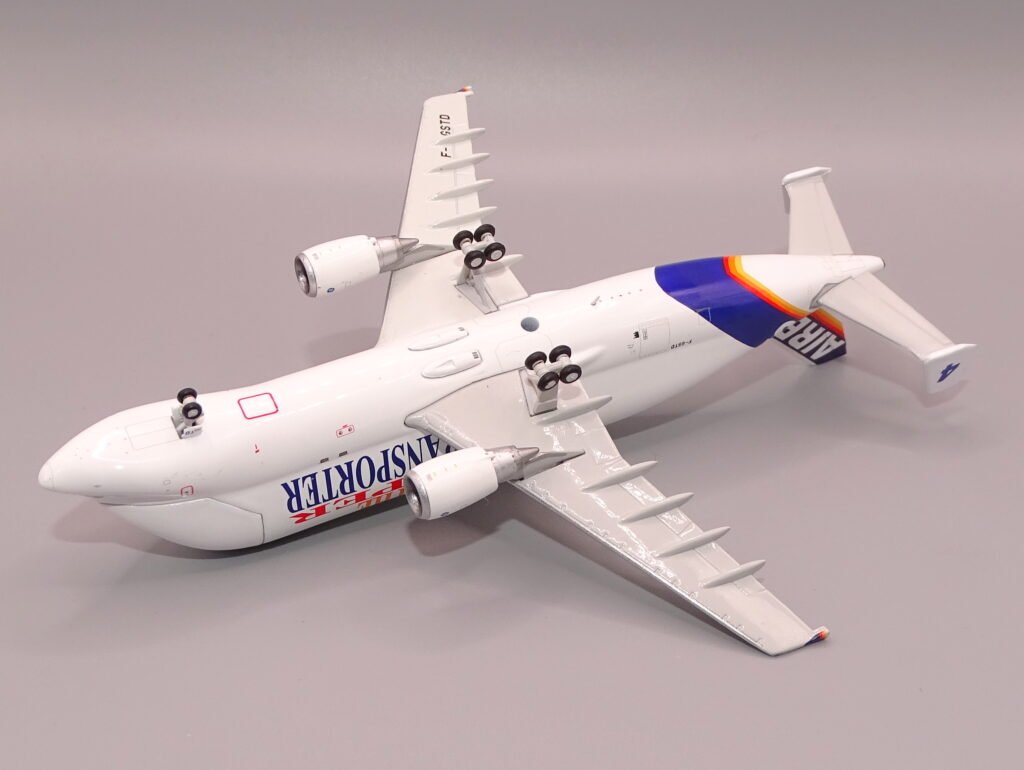
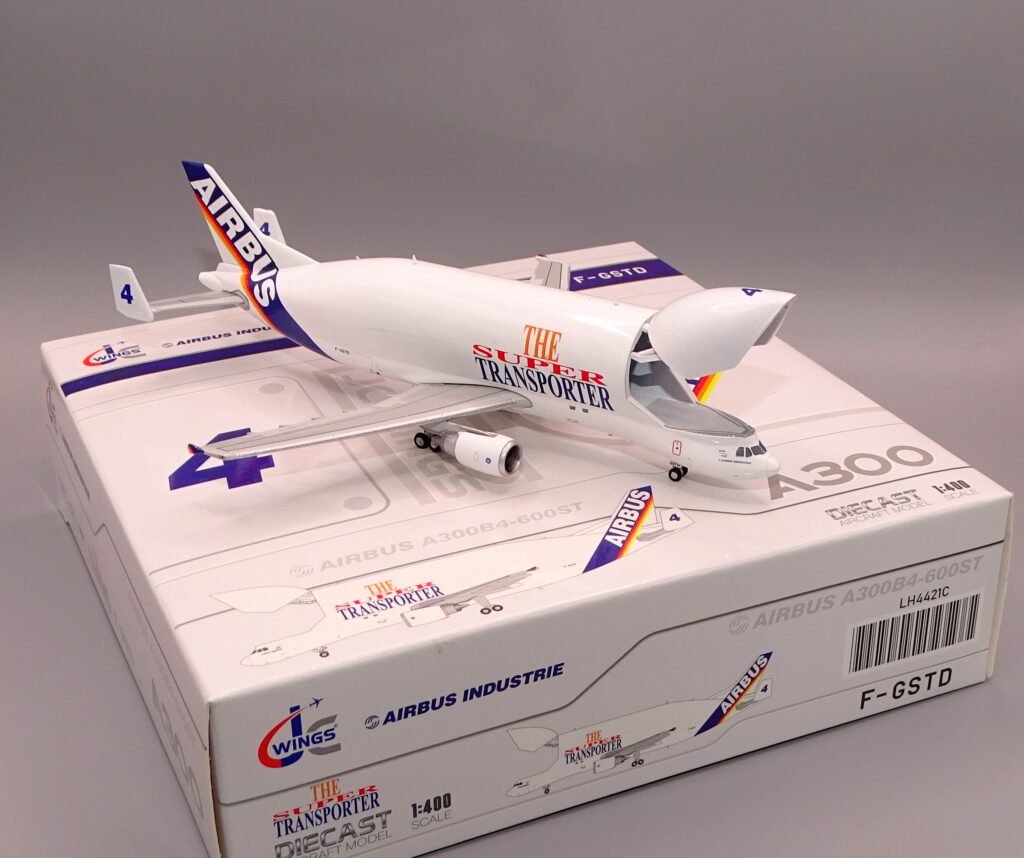
Of course, what this JC version also has is two versions of the cargo door – one opened and one closed. Closed the fit is tight and the seam just obvious enough. Curiously the old Dragon also had the cargo door added as an extra unit with a similar seam, but you couldn’t remove it.
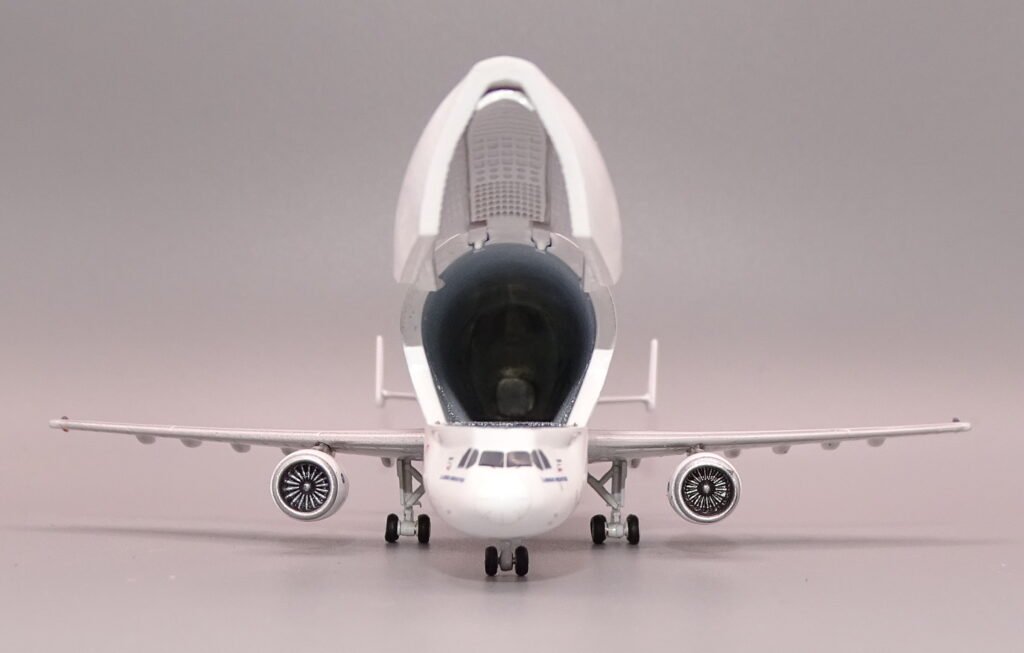
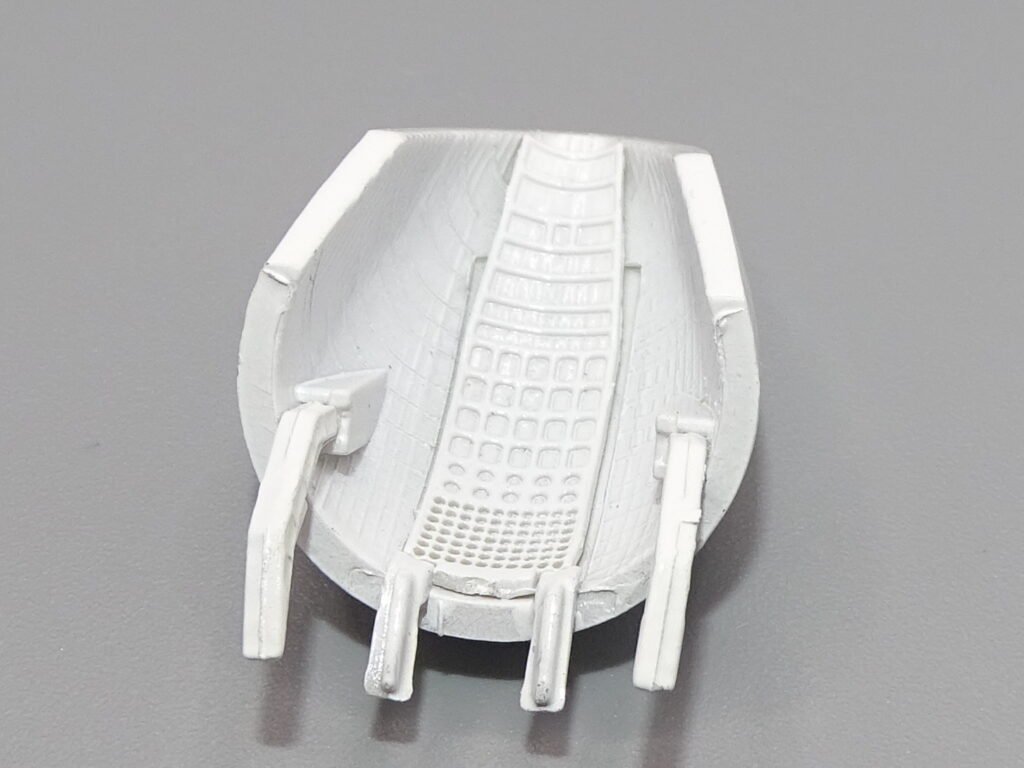
With the cargo door removed the internal cargo bay goes all the way back to the rear of the model, which is a very nice touch. The plastic open door element has a lot of internal underside detailing and slots into position easily. It looks fabulous and as with most interactive models surely that is the best way to display the model.


This new Beluga mould is an excellent addition to the scale and an almost perfect example of modern 2020s mould production. There are no criticisms that are important enough for me to detract points at this stage.
SCORE – 10
PAINT & LIVERY
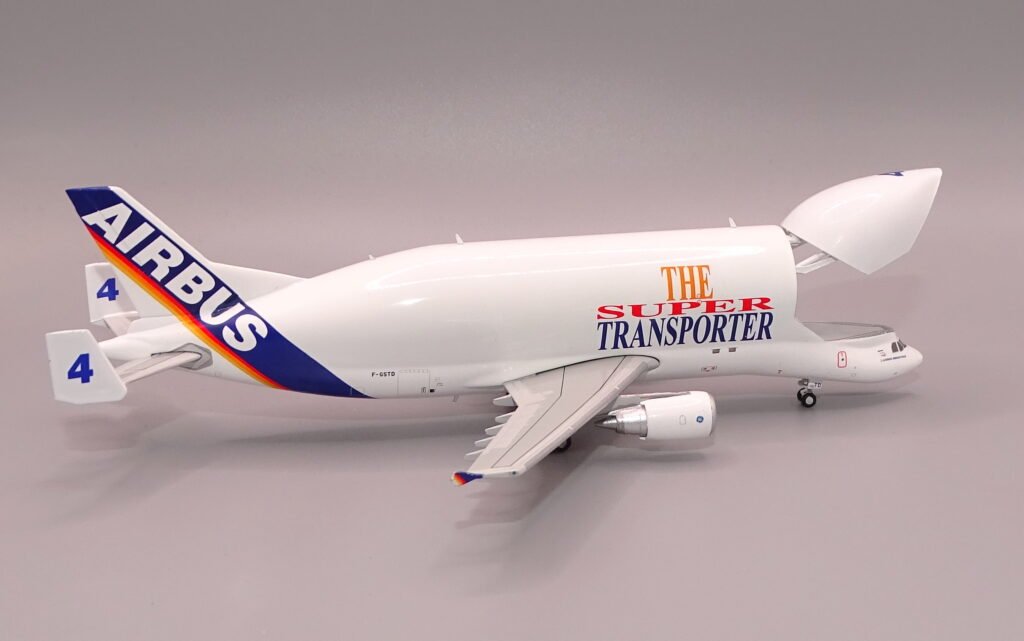
JC Wings has now announced 7 releases using this mould, with the first actually announced as long ago as 2022, however until this year all releases had been in the later more sedate modern Airbus house colours with the blue sash, rather than the colourful rainbow version worn here by F-GSTD – the 4th of 5 frames made.
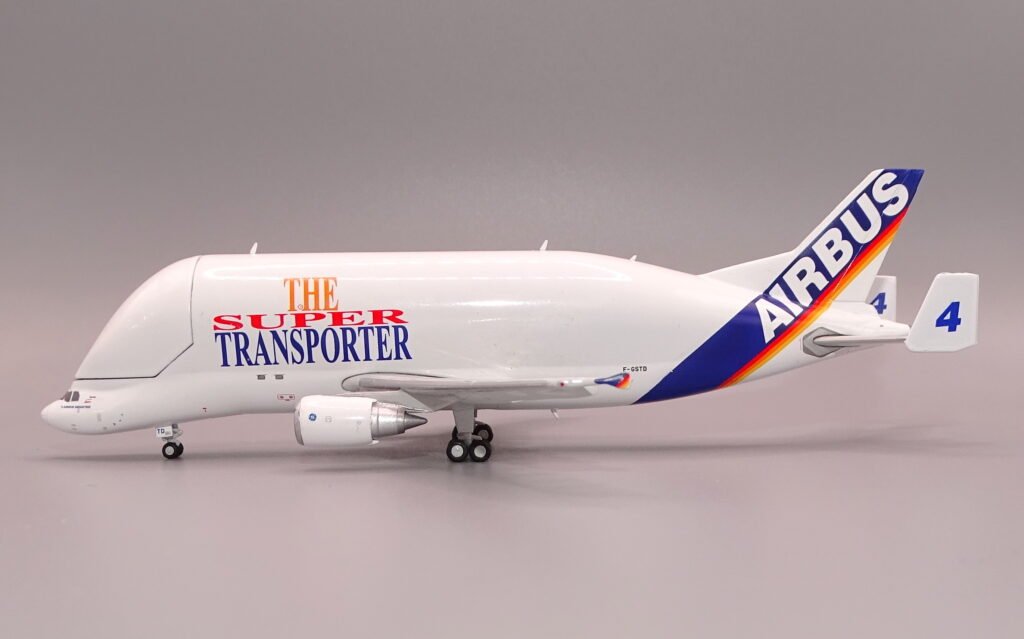
The recent Shanghai show included photos of at least two more Beluga releases with rainbow schemes and earlier Skylink titles rather than the AIRBUS on the tail version worn here. This aircraft was delivered new in 1998 wearing these colours and exhibited at the Farnborough Airshow that September.

It is a simple livery, only complicated by applying it to the curvy surfaces of the Beluga mainbody. There are no obvious errors in the application on the model with colours and fonts passing muster. Going full nitpicker you could argue the Pratt logo on the engine nacelle is a little too high. Once again, not enough to detract points for me.
SCORE – 10
PRINTING & QUALITY CONTROL
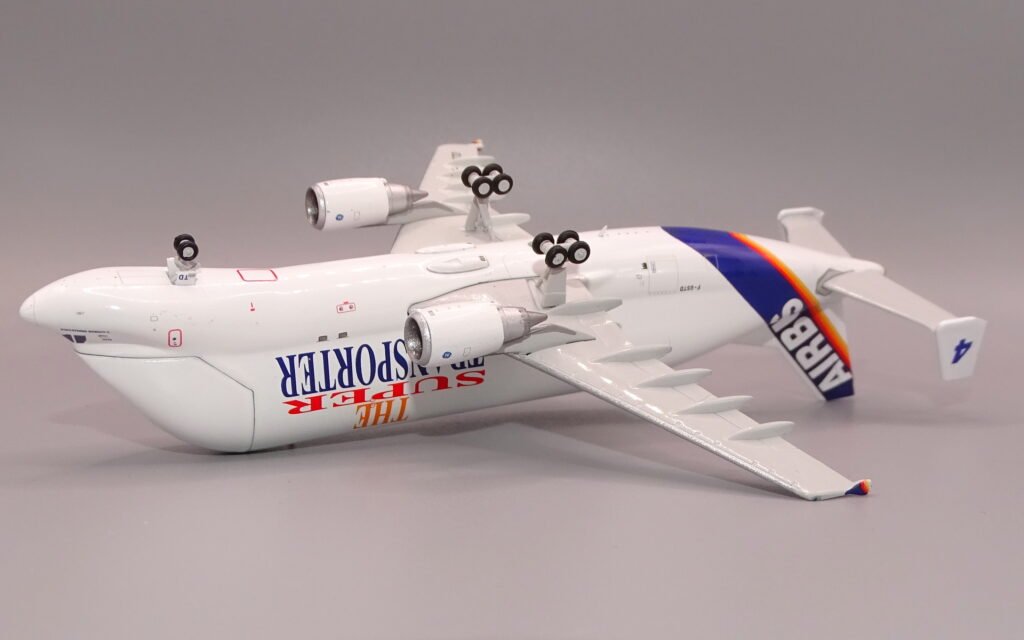
I’m not always fully complimentary about JC Wings printing as they do have the annoying tendency to misposition and misalign things on some models. That isn’t an issue here however and in fact they deserve plaudits for the level of printwork and its fidelity.
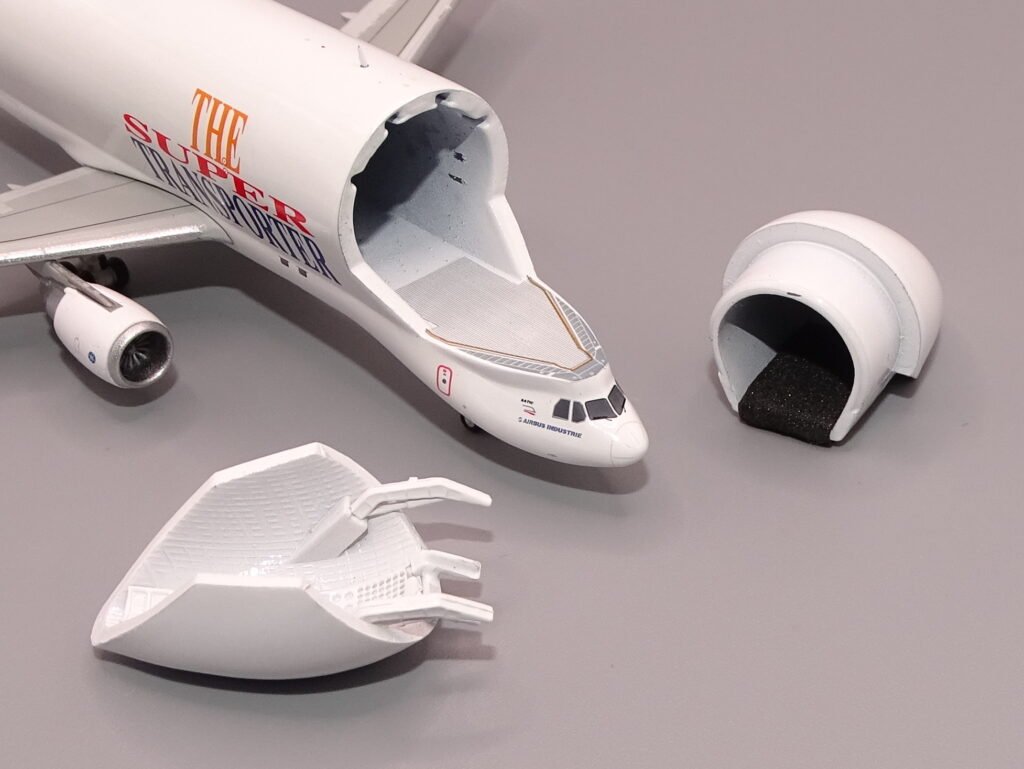
I’m particularly liking the printing on the inside of the cargo area directly atop the cockpit, which shows nicely and will no doubt go extremely well with the A320 inserts JC has made previously and the various loaders made by brands such as Fantasy Wings.
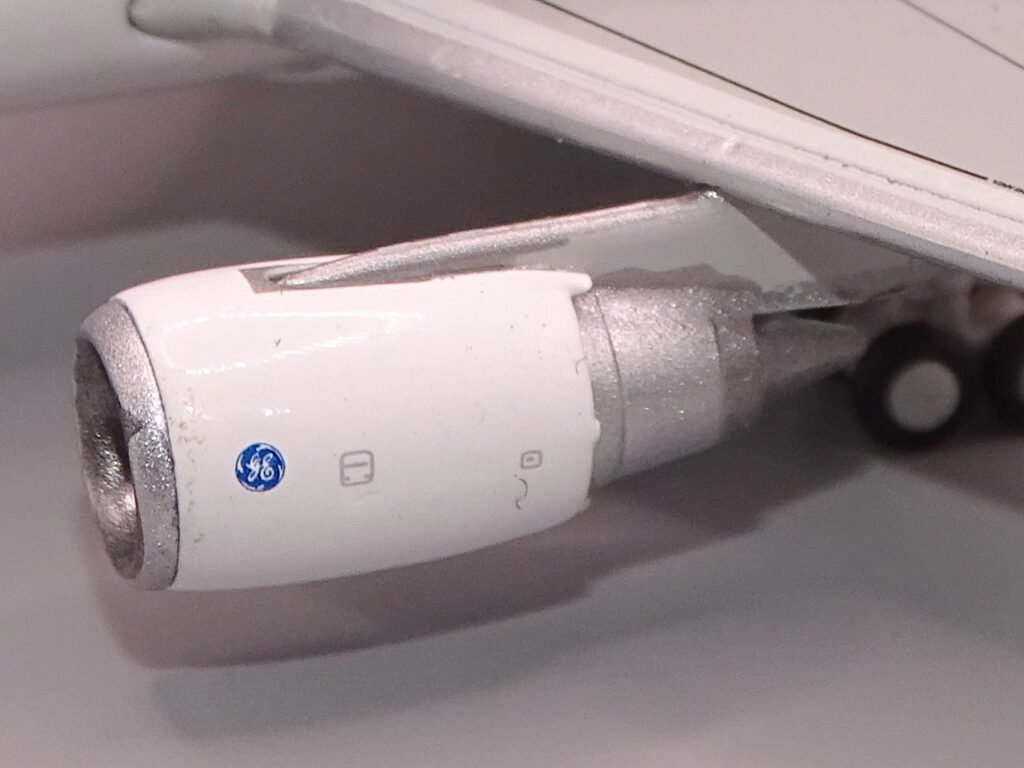
There are no major quality issues in relation to build, but there is a little untidiness around the left engine rim and the pylon join to hot section. Something worth mentioning is rhis model is retailing in the £47-49 range in the UK, which is quite expensive for a model that although interactive doesn’t come with any other additions such as a collector’s card or premium box.
SCORE – 9
CONCLUSION
This model comes out the end of the review with a near perfect score. It demonstrates that JC Wings can reach the heights when it tries hard, as the result here combines the ingenuity of the interactive feature with a strong base mould and solid printwork. Too often with JC that isn’t the case but in this instance, it is a triumph. Even so, the wait and uncertainty of being able to acquire this model was annoying. At least it was worth the wait, as it is a worthy successor to one of Dragon Wings’ finest moulds and the sort of more unusual output I am thrilled to see getting made in a world where the majority of releases are A350s and the like.
FINAL SCORE – 29/30