NG Models’ mould usage has come under criticism from many, including myself, and the 757-300 is a good example of that with only 13 releases in 30 months, and that includes the Chinese New Year model for 2025 and a blank! They have however in the past two release sets announced a trio of Condors so there is some hope for the type even if every single release to date comes fitted with winglets despite the type flying for a decade from 1999-2009 entirely without them. I’ve been wanting to review one of their 757-300s for a while and this attractive special scheme is as close to my collection criteria as I’ve been able to get!
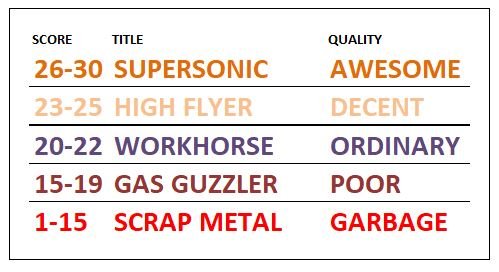
Each review is to split into three key areas:
- The model mould
- The paint and livery reproduction
- Printing and quality control
Each section can get a maximum score of 10 for a maximum combined score of 30
This review is sponsored by Northeast Diecast. Check out their store for an excellent range of hard to find 200 and 400 scale collection sale models and get 15% off!

MOULD
The Boeing 757 was the bedrock of NG Models’ success in its early years and between 2018 and 2020 there was a fabulous collection of 757s made covering the entire history of the type. Since then 757 release numbers have plummeted as more modern types have come to the fore, yet NG still felt the need to create the missing series 300 version, which I got early access to in April 2024 and reviewed here at the site:
Competition in the 757-300 space comes entirely from the updated Gemini Jets mould nowadays as the Dragon Wings mould (dating from 2002) and the Herpa (dating from 2004) have barely been used and are out of production. Prior to the arrival of the NG mould there had only been about 27 models made so the field was wide open for NG.
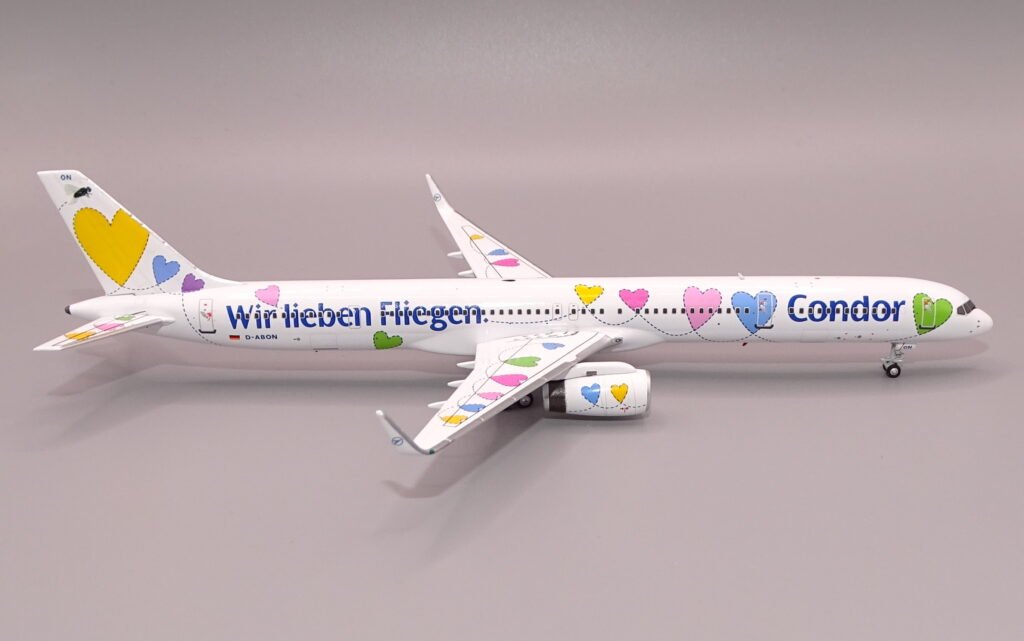
They haven’t really grasped the opportunity as with only 11 airline releases covering a paltry 3 airlines the 757-300 has been ignored. Gemini Jets and JC Wings haven’t been overly active either, but they have made 4 releases since mid-2025 and they include both Delta and Northwest – ignored by NG.
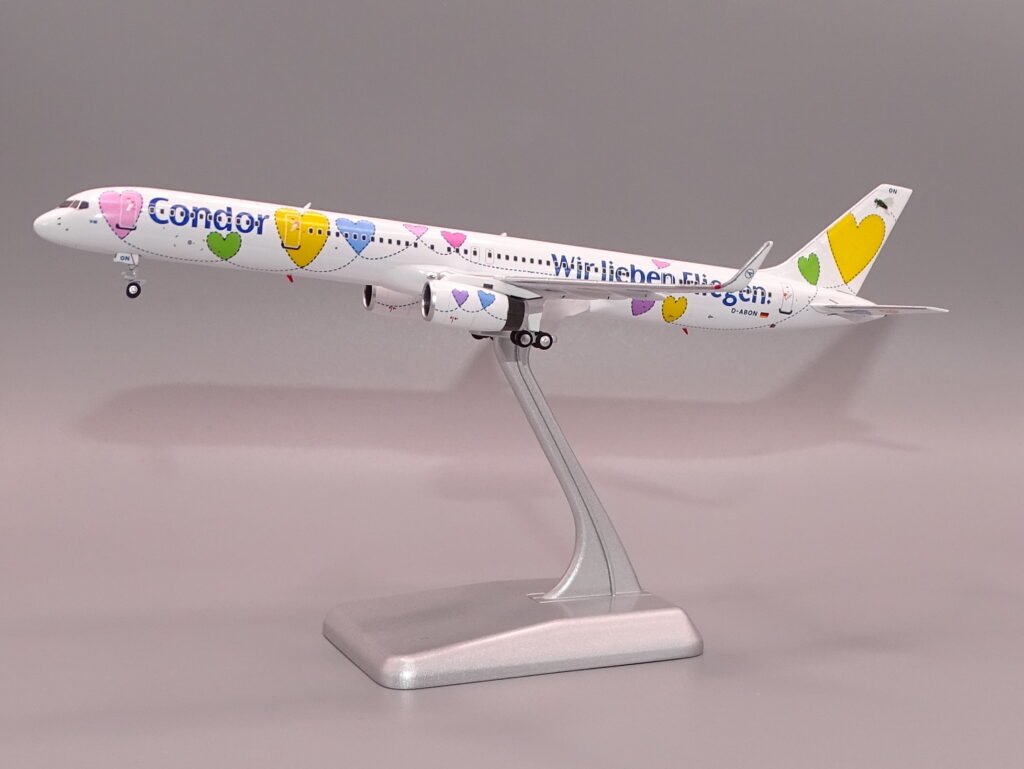
Of course, with the GJ / JC mould dating originally from 2003, and with the original NG 757-200 being so impressive, it really should be quite easy for NG to beat it. The old Gemini still features a cradle fit wing and an old-fashioned pylon to wing join but is otherwise reasonably competitive given it has been upgraded with new undercarriage and aerials. Nonetheless, the NG is comfortably superior as it ought to be given its age.
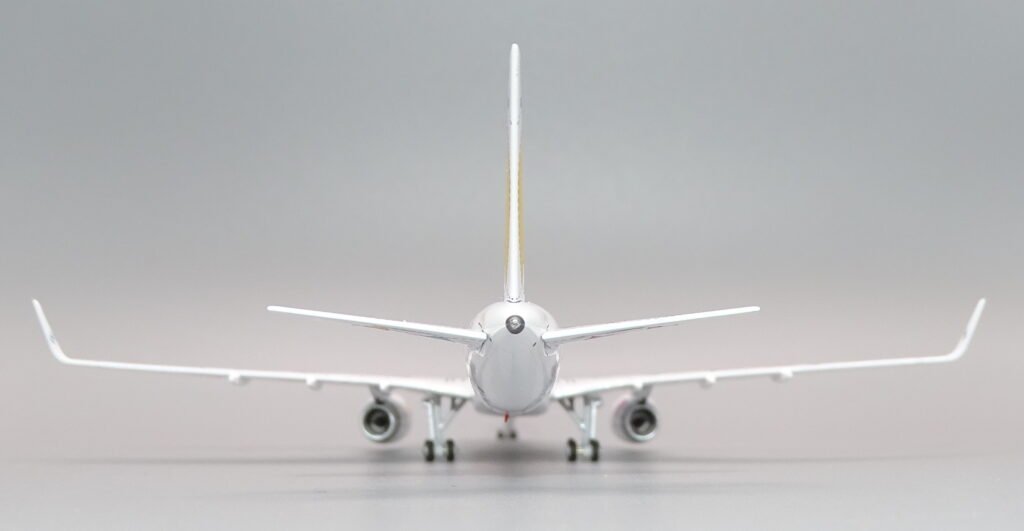
Annoyingly, despite having both engine and wing options all of NG’s 757-300s have been fitted with blended winglets, even this aircraft despite the fact it wore this scheme from 2006-2010 without having them fitted. I’ll just have to get over it; however the shape of the winglets is about the only area of complaint with this mould. They rather lack the correct curve at the tips or the pointiness at the rear dorsal.
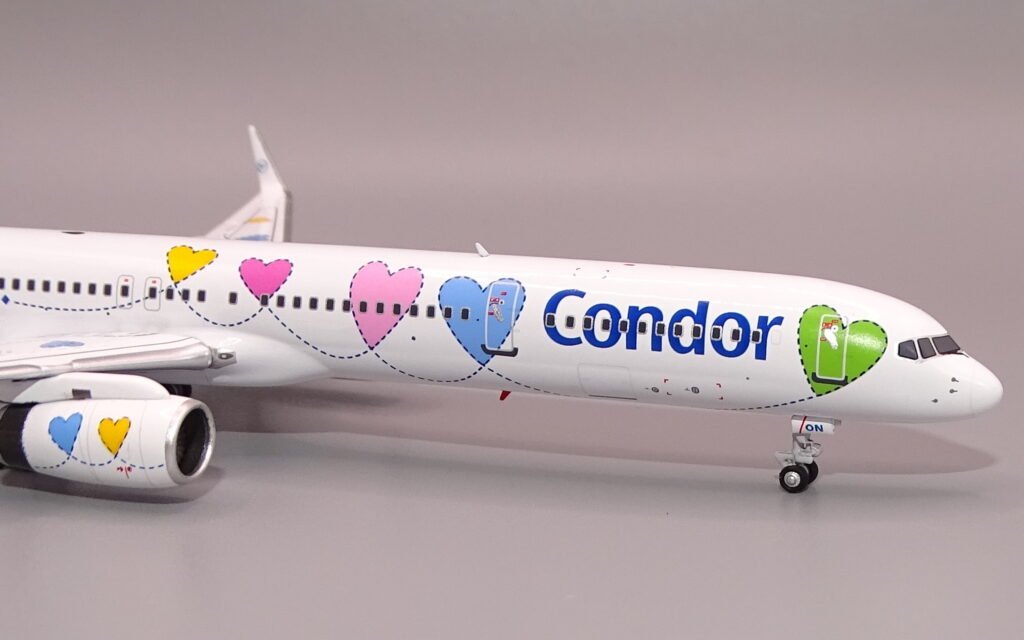
The rest of the mould is effectively faultless, using the basic components of the near perfect series 200, but with the additional fuselage stretch. The nosegear is an area of distinct superiority compared to the GJ / JC version as the fit and gearleg is a lot nicer even though the old mould has been updated with newer rolling gear.
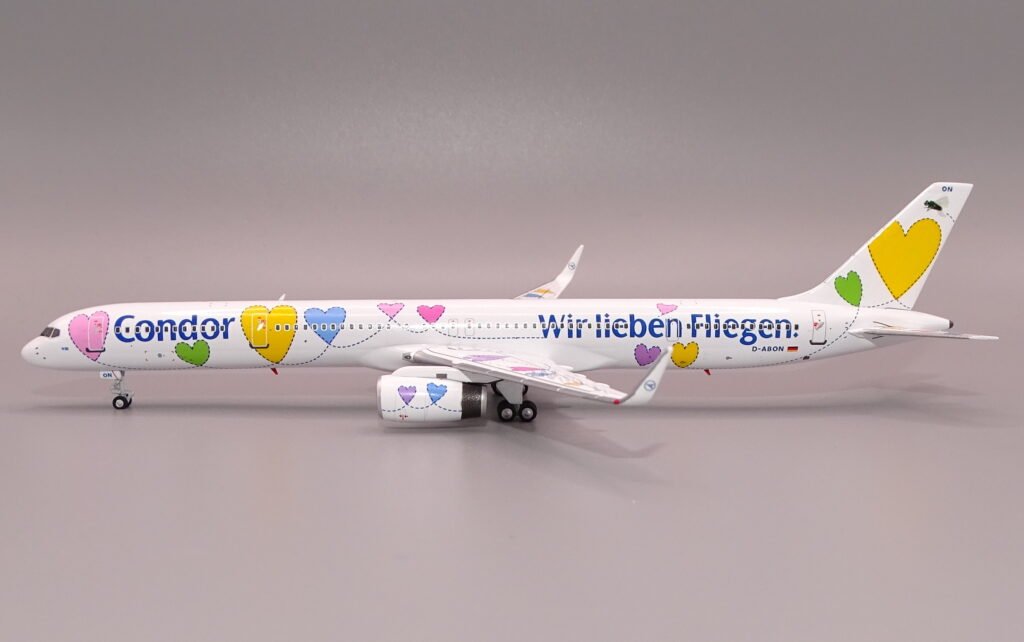
The NG’s aerials are also smaller and better shaped, plus the model comes fitted with three, including two on the underside, an area where Gemini often skimps on aerials.
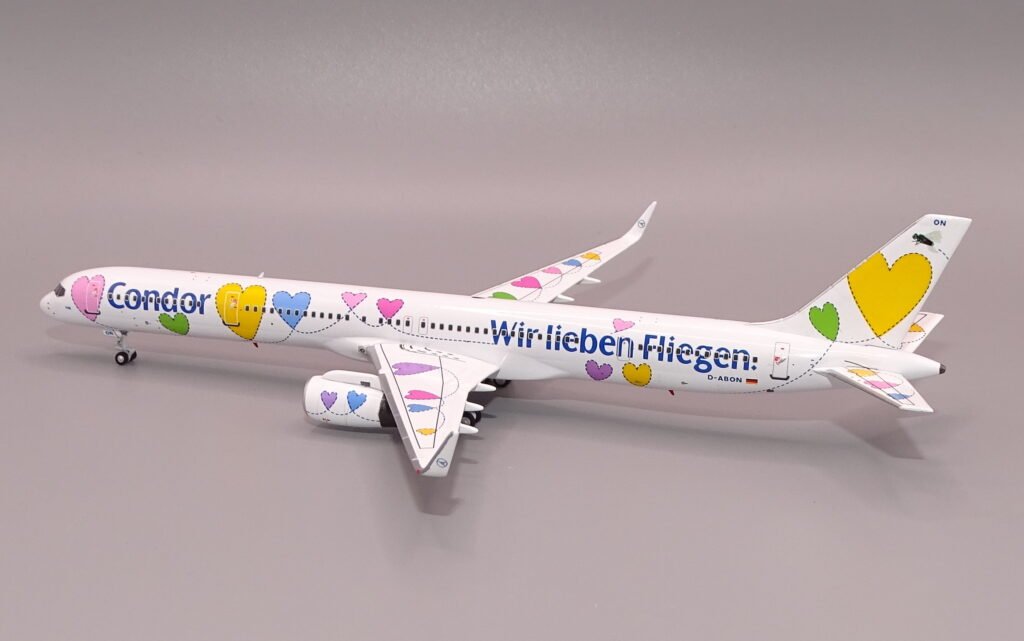
The slot in wings of the NG mould provide a seamless and sculpted wing to fuselage join that obviously outcompetes the underside seams on the Gemini version. Overall although the updated Gemini 757-300 outperforms the series 200 version they have, and is decent enough, the NG mould is distinctly better so it is a shame NG have been rather reluctant to use it properly.
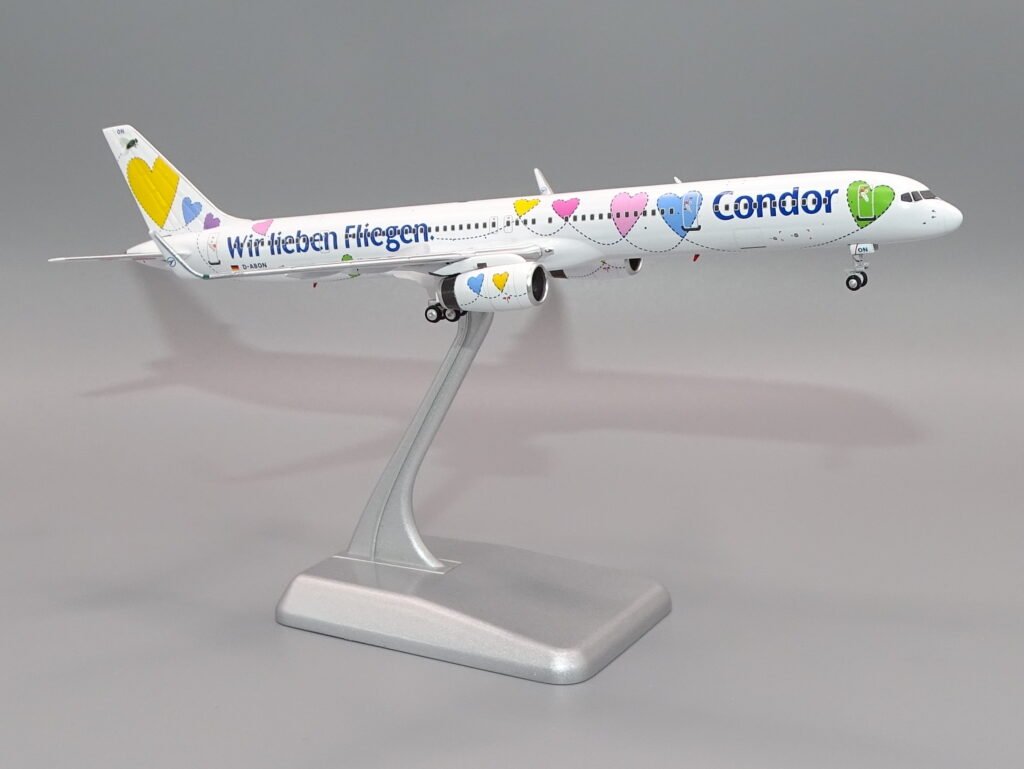
When it comes to 757s NG Models should be the first and last option in the scale, at least for the timebeing anyway – as I know there is a new competitor in the wings for the type who looks very promising.
SCORE – 9
PAINT & LIVERY
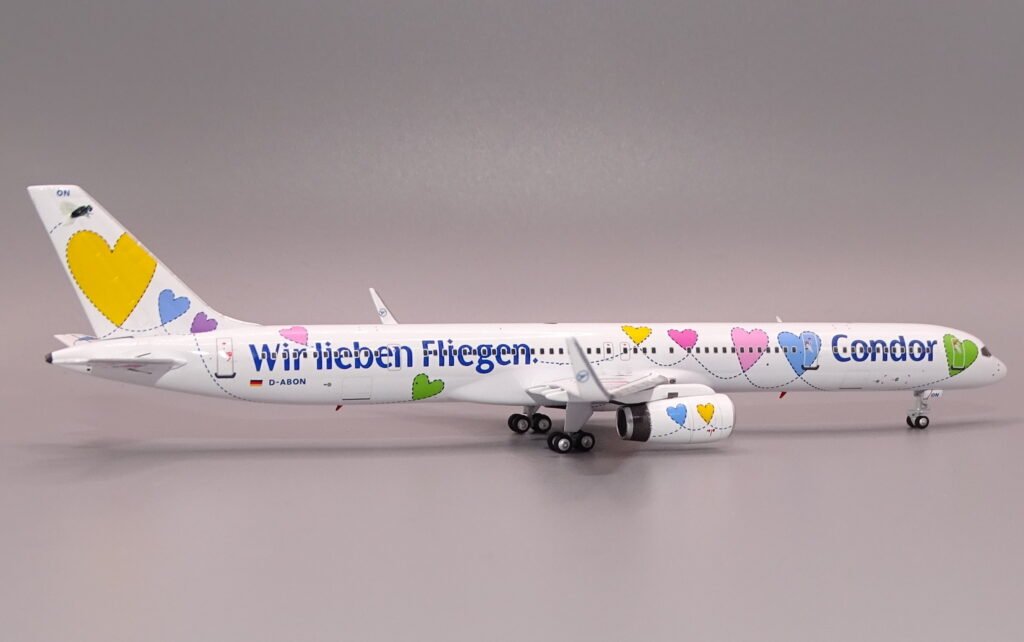
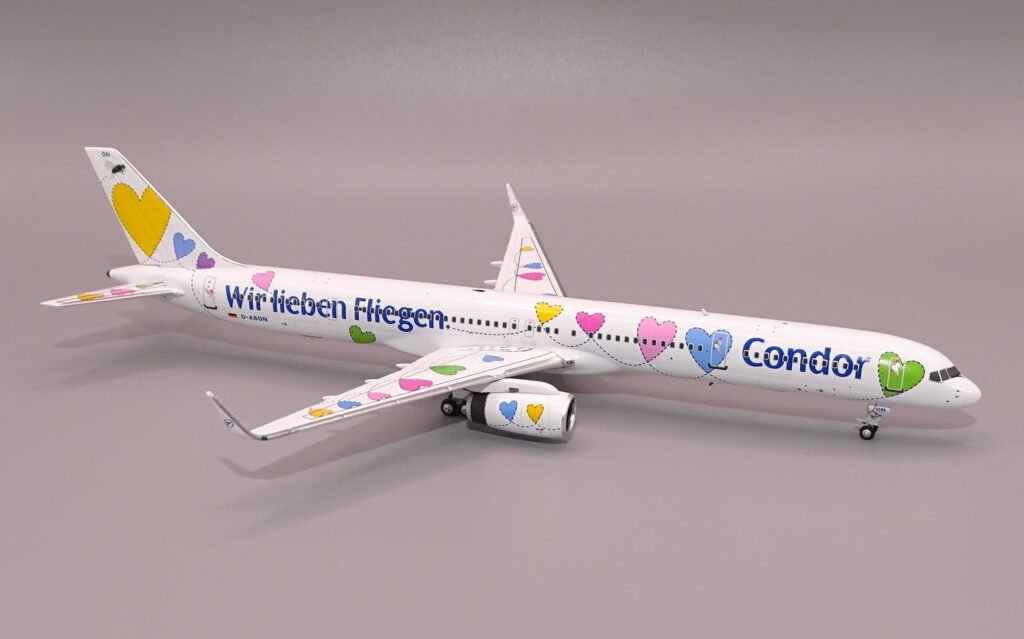
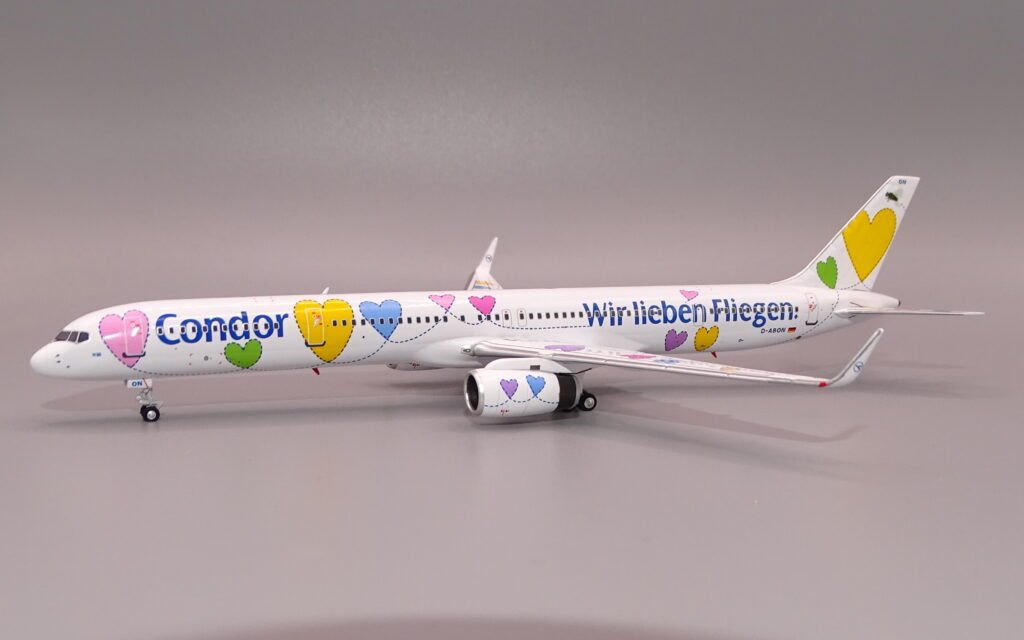
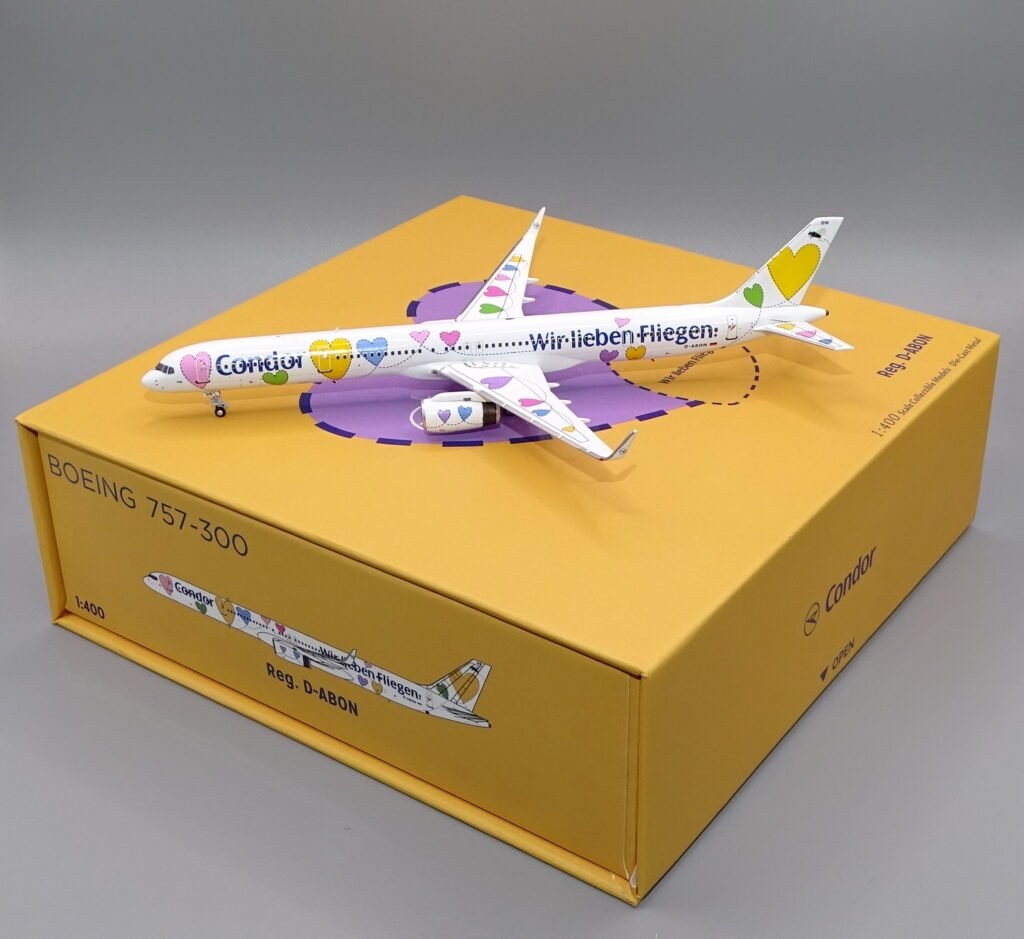
This aircraft is well known for having worn the ‘Wir lieben Fliegen’ (‘we love flying’) livery for nearly 20 years from early 2006 until its retirement in 2025. The scheme was designed by the artist James Rizzi (who had previously designed the Rizzi Bird scheme worn by a 757-200) to celebrate Condor’s 50th anniversary. The aircraft was affectionately known as ‘Willi’.
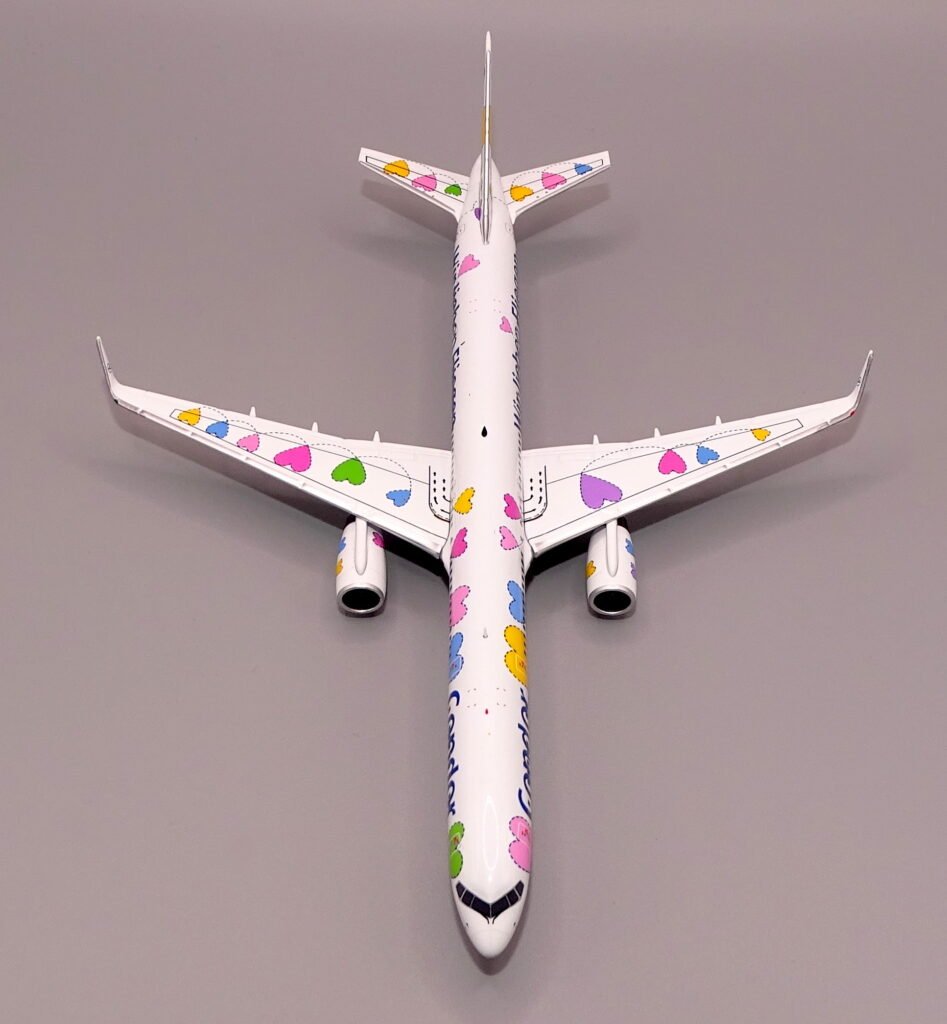
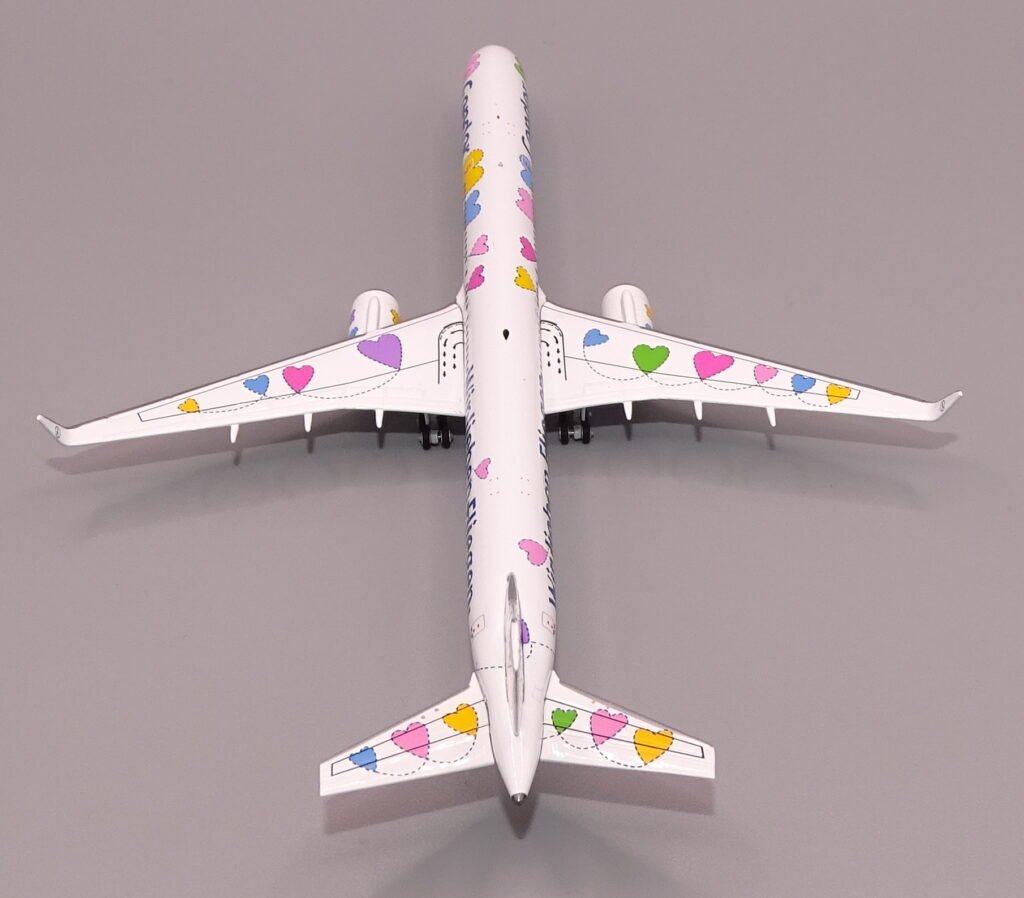
The livery is deceptively simple, being basically a series of hearts interconnected by a dotted line and rather curiously with a literal fly on the top of the tail producing the line. The hearts come in 6 different colours and are replicated not only on the fuselage but also on the wingtops and bottoms. The colours used on the model match well what I’m seeing in photos.
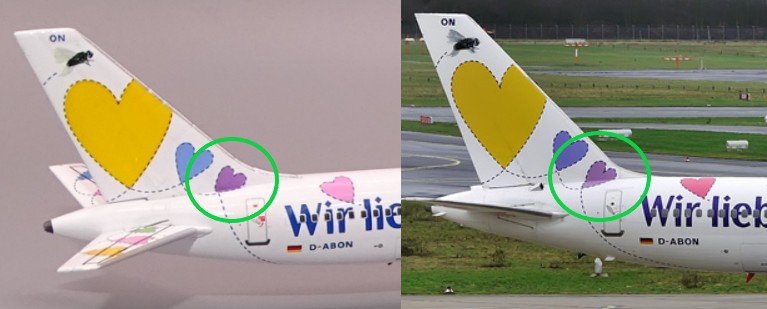
Positionally the model is largely excellent as well. All the hearts are well shaped and sized with the dotted line connecting them pretty much perfectly. The only minor issue is the lowest heart on the tail on the starboard side which should be slightly lower. Thanks to MacSergey for pointing that out – I’d missed it.
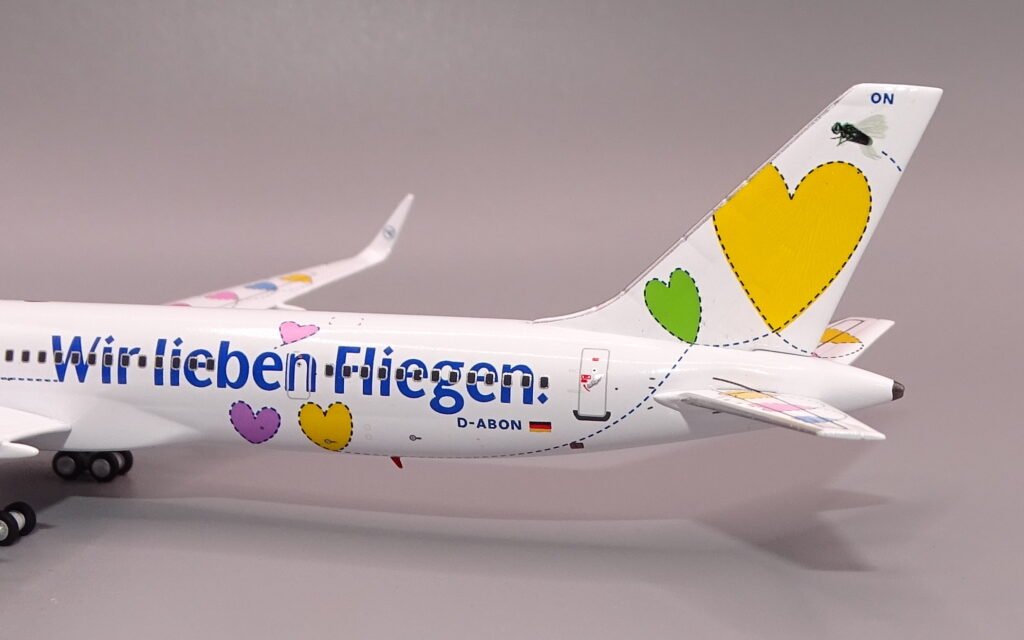
The Condor titles, logo on both sides of the winglets and the fly on the tailtop all look excellent. This is a good example of NG’s ability to basically replicate a livery on a model with photo-realism.
SCORE – 9
PRINTING & QUALITY CONTROL
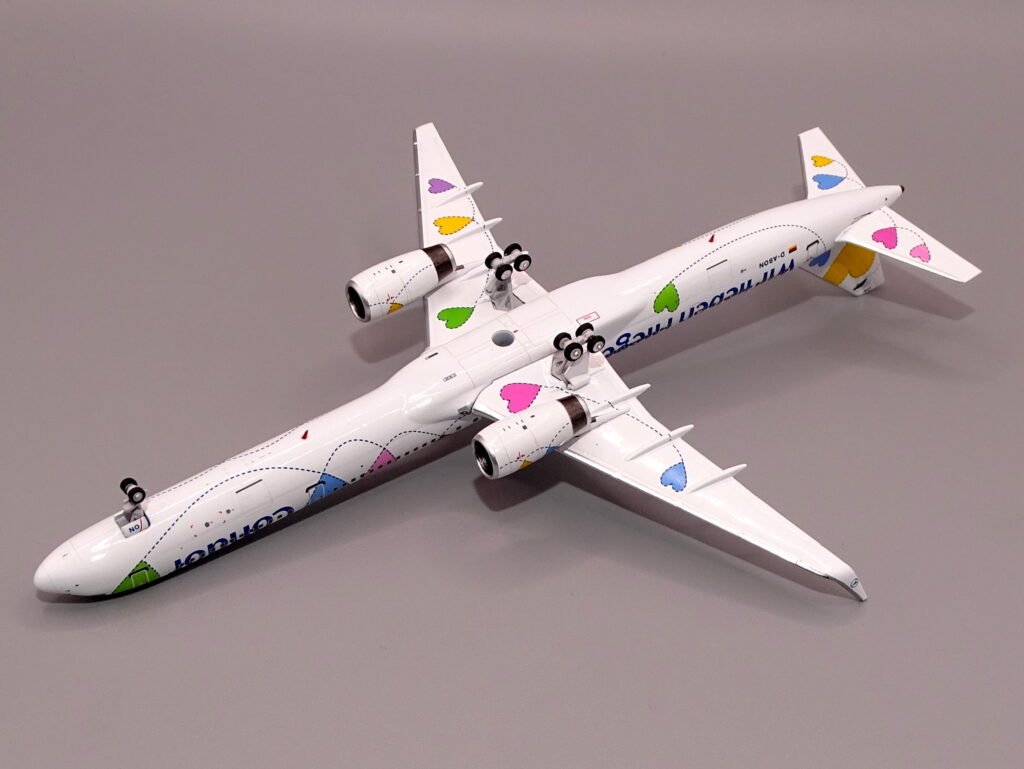
NG Models’ print capability is second to none and you have to get very close to the model to see some of the linework, it is that fine. Linework such as the nosecone radome and engine nacelle thrust reverser lines are so feint, they can be hard to determine, but they are all there. You could even argue it would be better if they were slightly darker and easier to see.
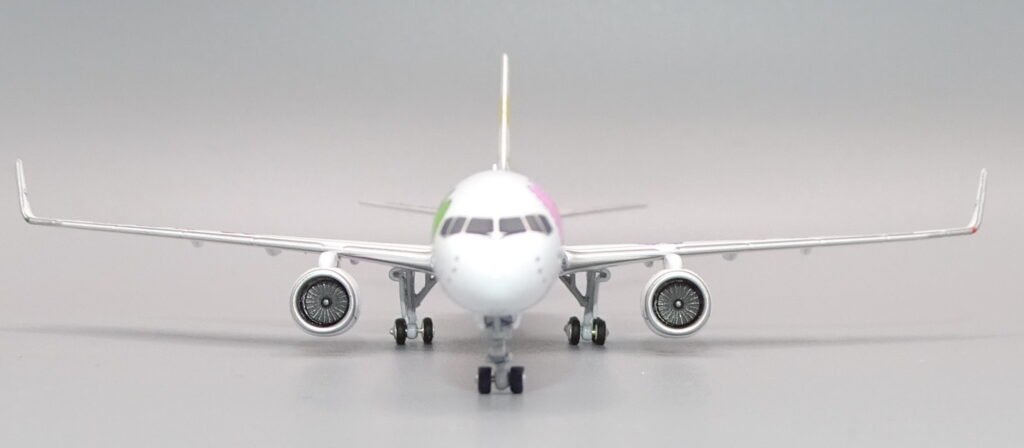
NG has never had problems with cockpit print on its 757s, which can’t be said for the Gemini / JC versions, and the paintwork is topnotch, especially in areas such as the engine rims and fans.
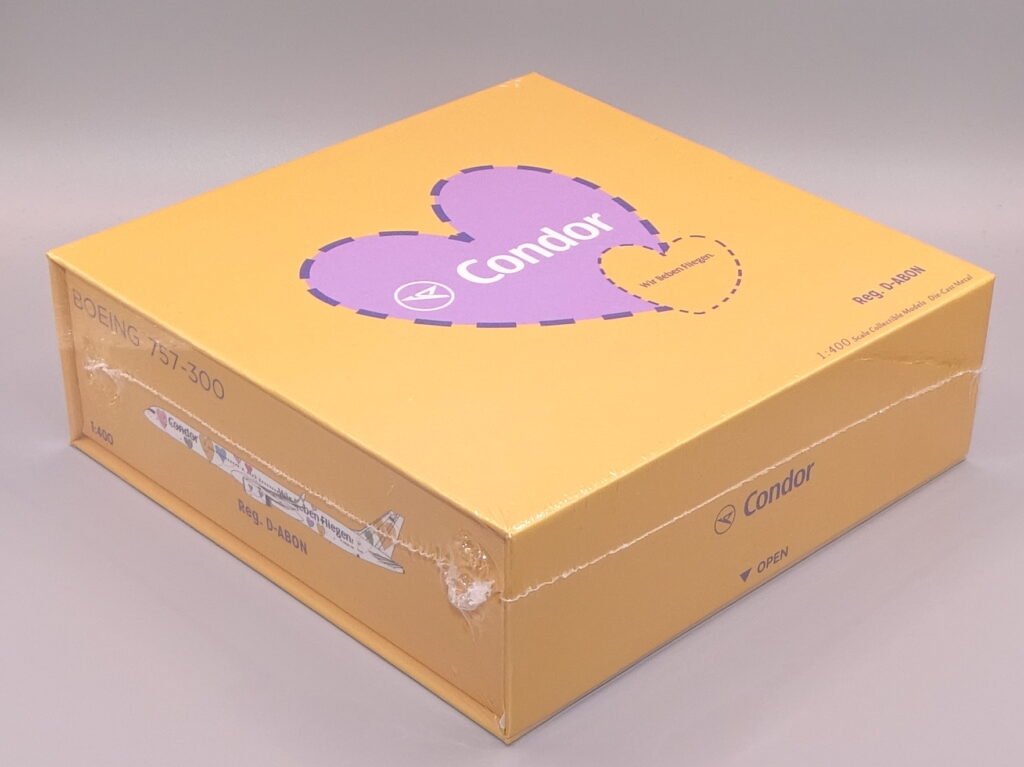
There are no QC issues I can see. This model was unusually only released as an Ultimate Collection version, which does increase the price, but does mean you get a very nice overall package. The box was film wrapped and has the magnetic flip top and superior materials you get with the Ultimate Collection.
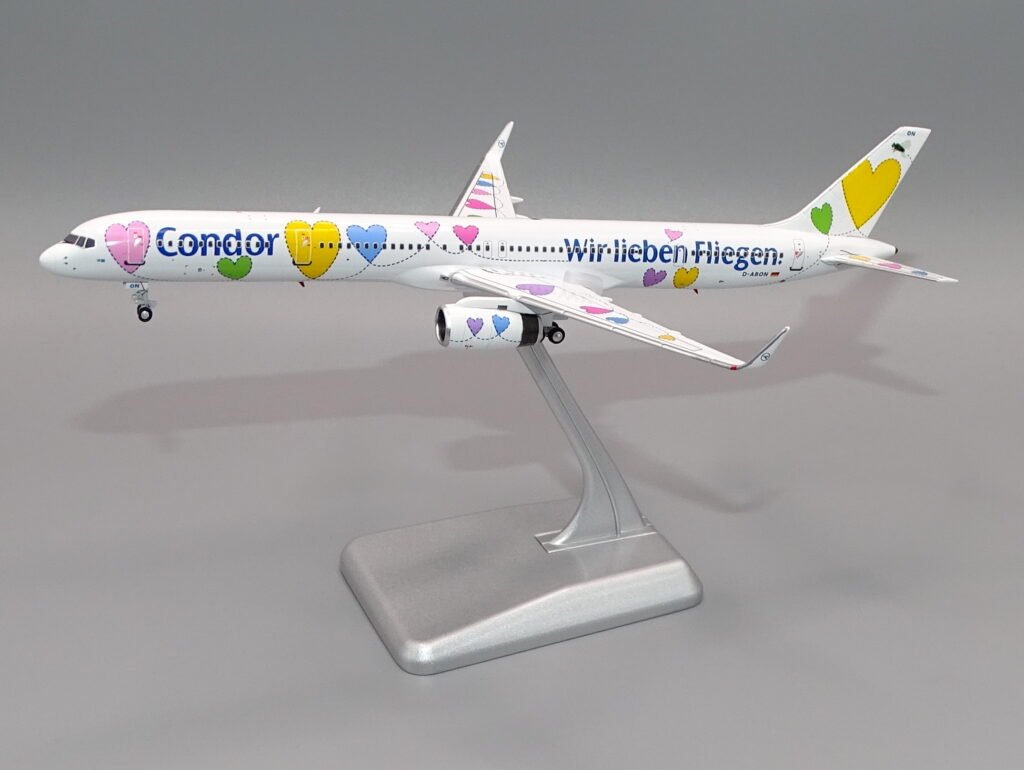
It also comes with a smaller example of the new overwing stand (although the 757-300 mould still has a standard stand hole too). The stand is attractive, but I admit I’m not 100% sold on the style of the join to the model. Not necessarily because of the overwing clips but more because they are easy to knock the model off of if you clip it. Some UC models have come with booklets, but this one does not, although there is nice printing inside the boxlid.
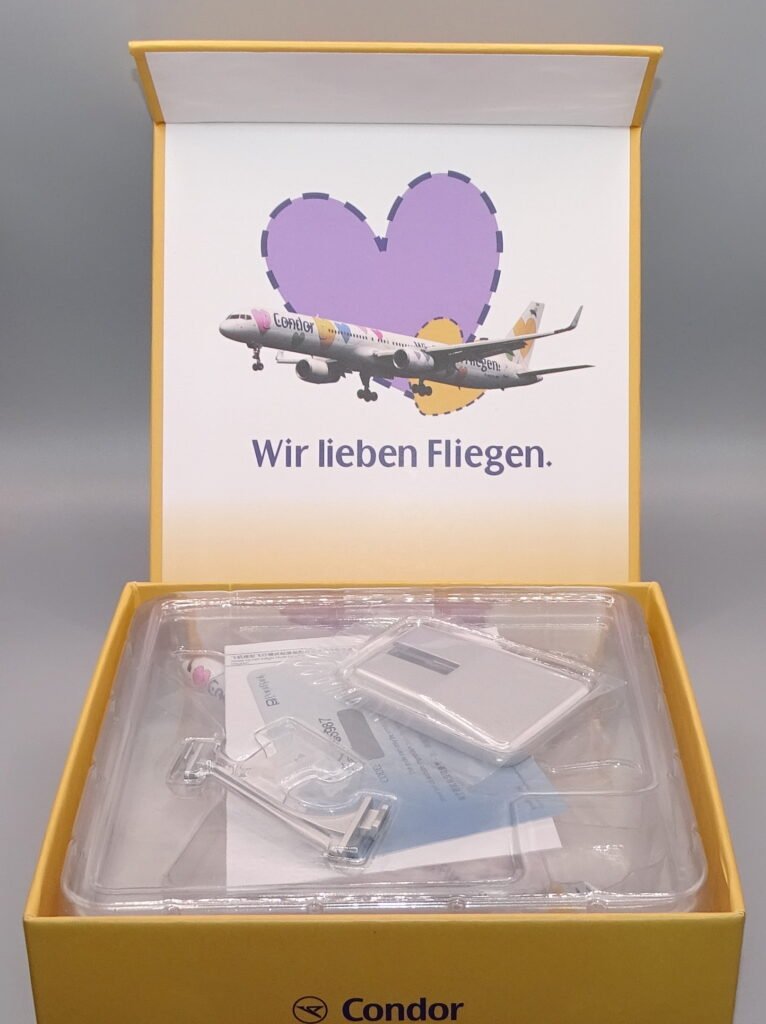
There’s also no collector’s card and when compared to a brand like HX Models, whose models come with an excellent stand and the card, plus a premium card box as standard, it does feel a little like the Ultimate Collection isn’t necessarily great value. I guess the box itself is responsible for most of the price increase.
SCORE – 10
CONCLUSION
It is good to see NG Models releasing a little bit more diversity of aircraft types than we’ve become used to in 2026, however I suspect 3 757-300s is our lot for the year since we only got 3 in 2025, and the fact that most are special schemes for the same airline rather than standard schemes for a varied range of airlines is disappointing. NG Models just no longer produces the sort of variety they once did and refuses to use its mould catalogue as it might. Nonetheless, I can’t argue this is a poor model because it is clearly very very good. I would have preferred to see it without winglets and I don’t see why they didn’t make both versions given they often do release multiple similar models at the same time. Oh well – beggars can’t be choosers and at least unlike for certain brands when you get the model from NG you know it will be well made on an excellent mould.
FINAL SCORE – 28/30