You don’t get many props made in 2026 let alone classic propliners, albeit admittedly this one is a turboprop not a pistonliner and is technically modern, since it was still flying in 2026 after a stunning 68 years of service! As they’ve shown with their unducted fanjets JC Wings does love an unusual airframe. The creation of an airtanker modification for their Electra mould is an excellent idea and one that I couldn’t pass up taking a closer look at.
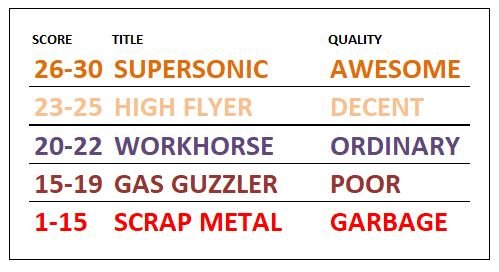
Each review is to split into three key areas:
- The model mould
- The paint and livery reproduction
- Printing and quality control
Each section can get a maximum score of 10 for a maximum combined score of 30
This review is sponsored by Northeast Diecast. Check out their store for an excellent range of hard to find 200 and 400 scale collection sale models and get 15% off!

MOULD
There have been an impressive 131 Electra releases in 400 scale with the majority (around 81) coming from Aeroclassics. In the past 3 years though it has been JC Wings making the running. Gemini Jets made a run of 6 Electras using the JC mould from August 2021-January 2023 and the type has reappeared from 2025 with 3 models announced by JC Wings and another for Z2 Models. Of those 4 this is the first to appear and by far the most interesting.
Given the released models my Electra fleet is based around the Aeroclassics mould (first released in 2004), however there is little doubting that the JC Wings version (first released in 2008) is superior. The Aeroclassics Electra has a charm but is too short ahead of the wing, has incorrectly shaped engine nacelles and vertical stabiliser plus rarely gets the cockpit printing correct. See the Electra mould history review for more details:
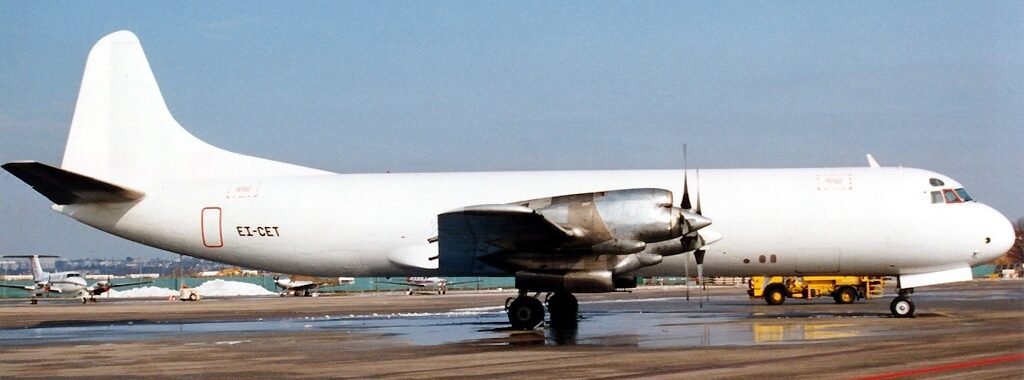
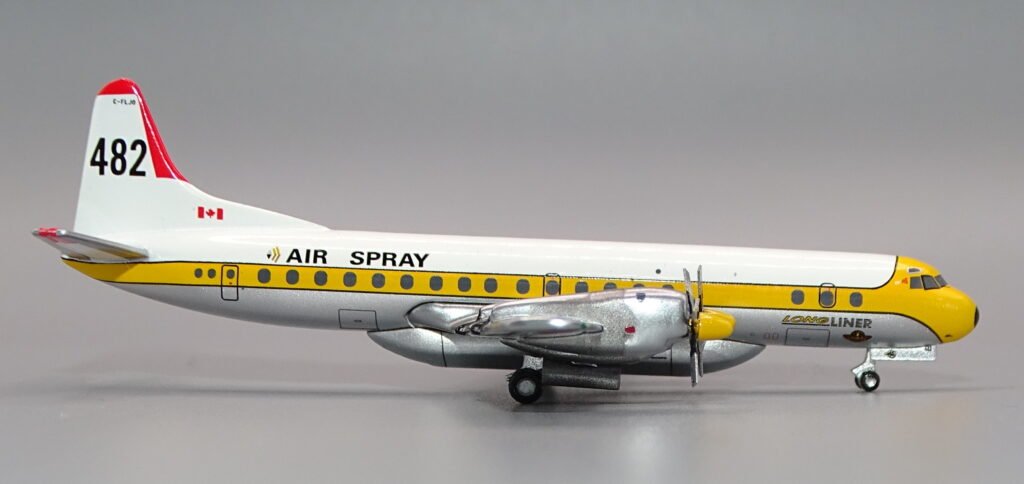
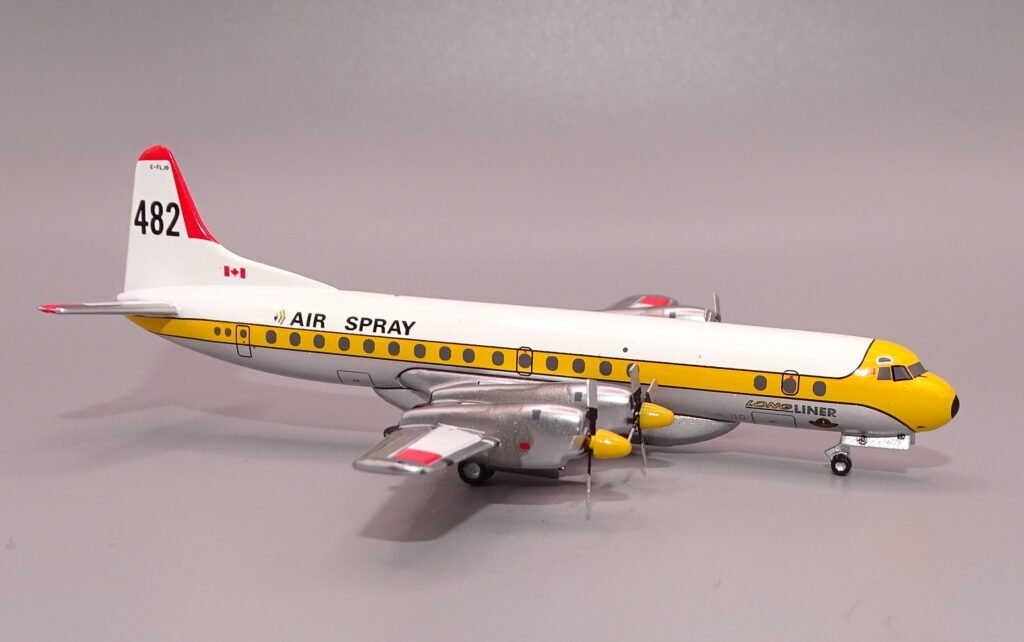
The newer JC Wings mould has not got most of these issues but does have some new ones of its own. It’s fuselage width to length ratio is better and the mould, although an old-fashioned cradle mount, has a more realistic seam line that curves and follows the fairing line after the wing (unlike the squared off seam on the Aeroclassics).
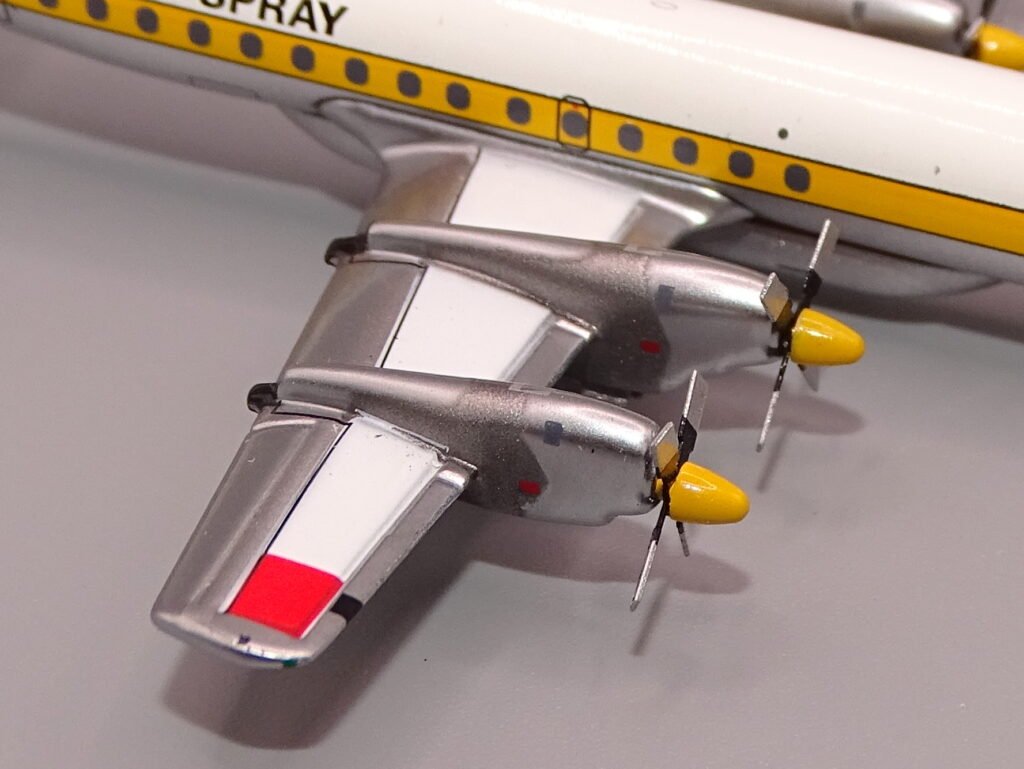
The engines are nicely shaped when viewed from the side but a little slab-sided from other angles. The prop spinners could also be slightly pointier. The engines attach well to an excellent pair of wings.
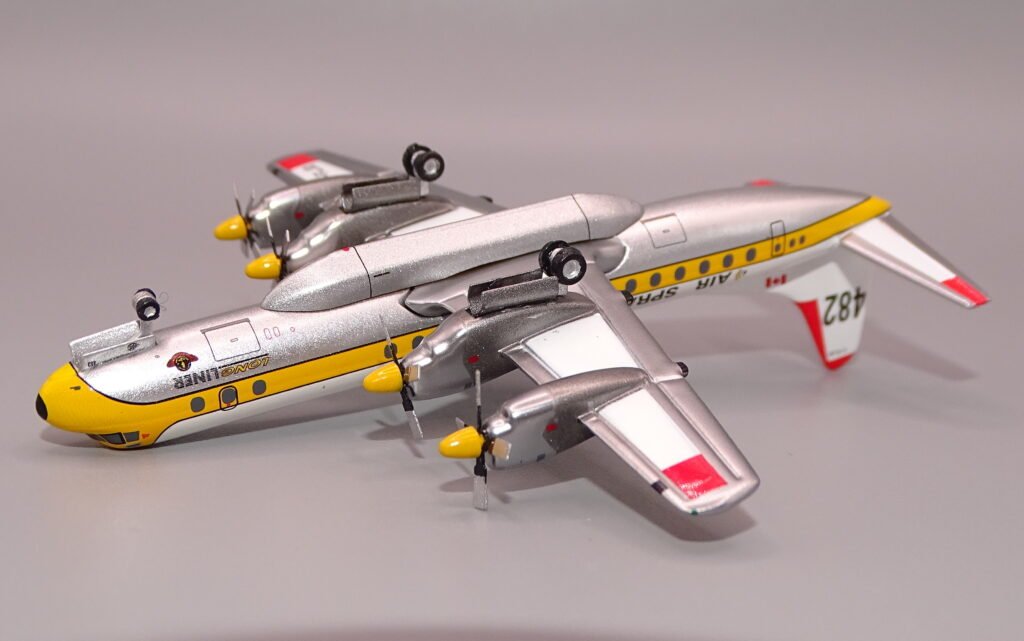
The newly created airtanker fire retardant carrying underside tank is nicely sculpted and attaches very tightly to the fuselage, presumably using the standhole as the connection point.
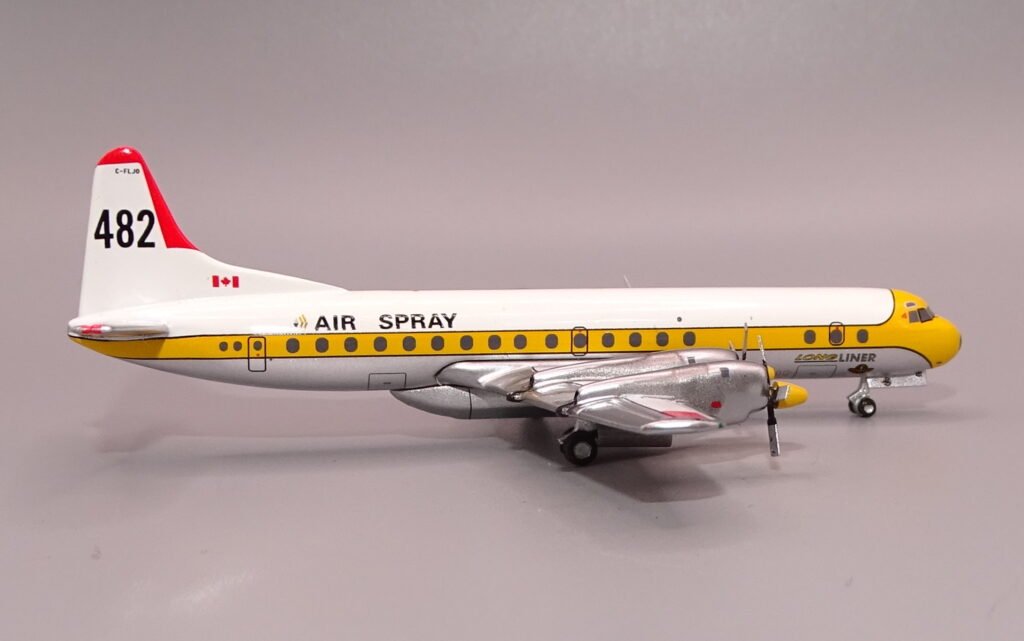
The vertical stabiliser correctly has the unusual asymmetric shape of the Electra tailfin giving an accurate rudder form. At the front the nose shape is good, but it is in this region that the mould’s biggest issue presents.
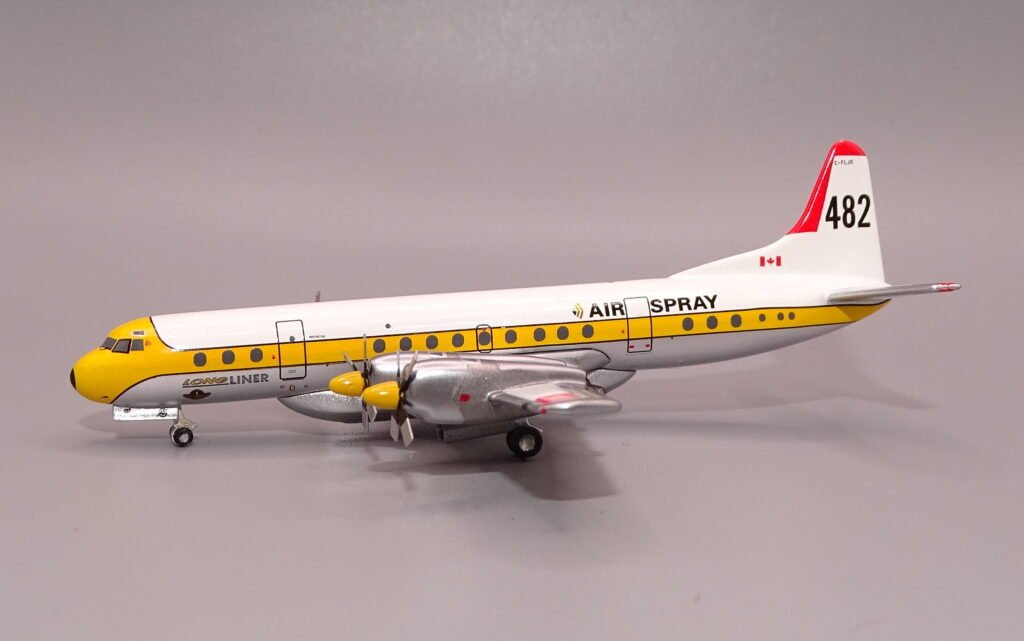
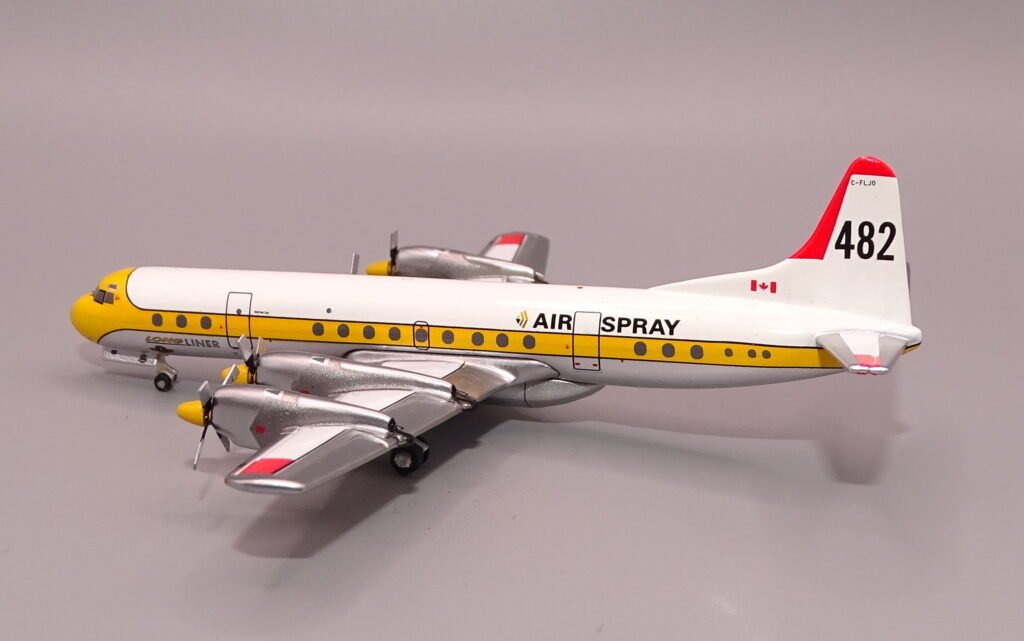
Historically JC’s Electra had a rather chunky nosegear tyre. This is something several JC moulds, such as the Saab 340, have been criticised for recently and here JC have replaced the original tyre with a much smaller one at the nosegear. Unfortunately, they did not make the gearleg longer too, which means the model now has a rather obvious and strong nosedown attitude.
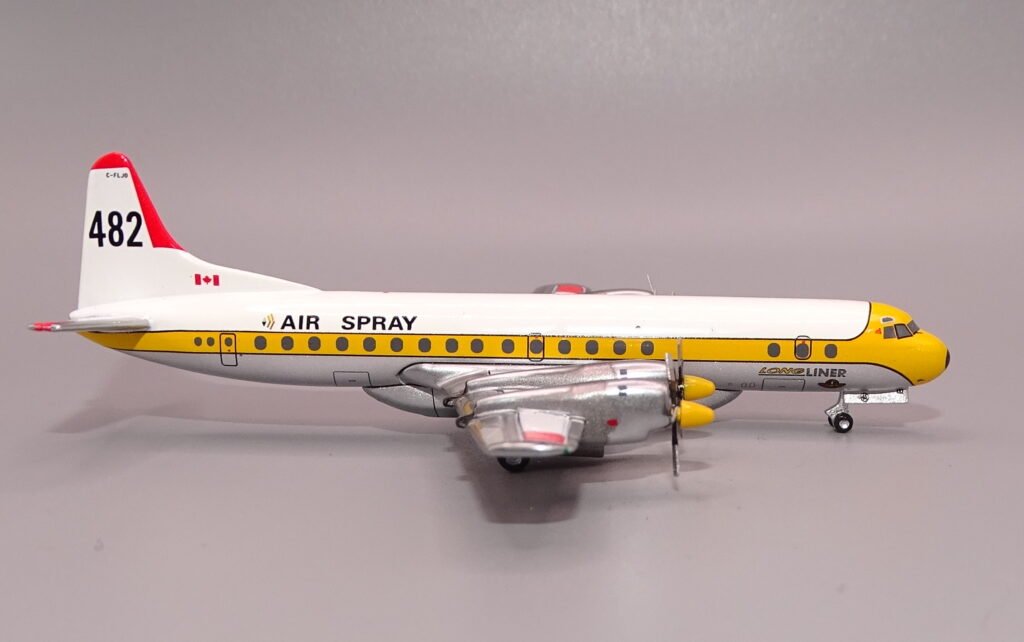
While the Electra certainly could have a slight nosedown profile, especially when underway, it was never this strong and it does impact the look of the model. It is a shame as the rest of the mould is a very decent Electra. It is not unusual for JC to make a change for the right reasons only to fall foul of the resulting change by not thinking the issue through.
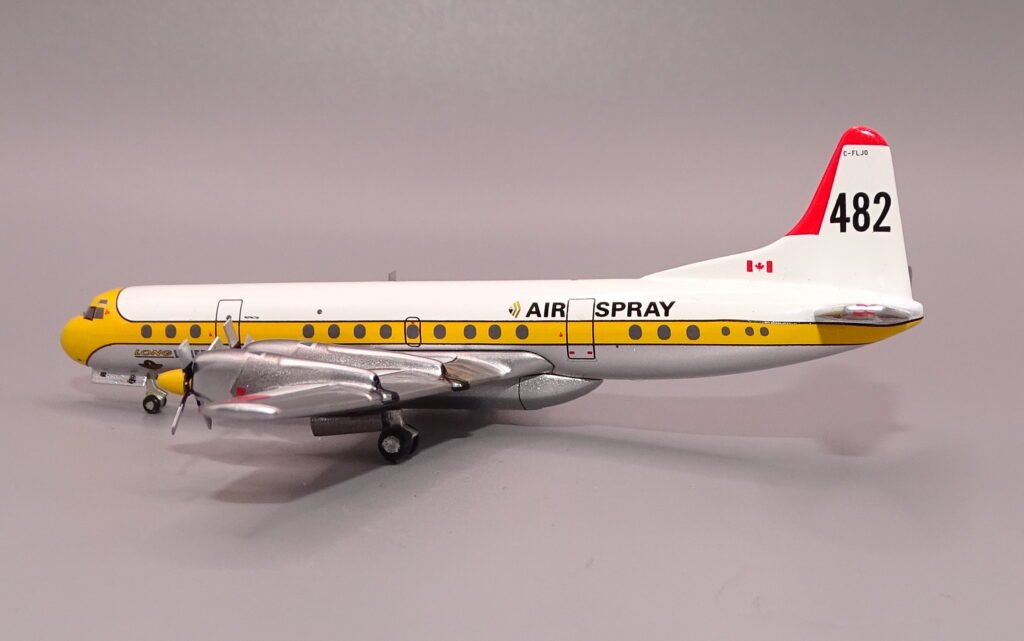
You could even argue that the maingear legs are a little too short as the tyres should be well beneath the maingear doors. There’s no doubt this mould would be much better with new landing gear legs across the board. Despite the angle of attack problem this is the best Electra casting available in 2026 and I can’t see another one ever being made.
SCORE – 7
PAINT & LIVERY
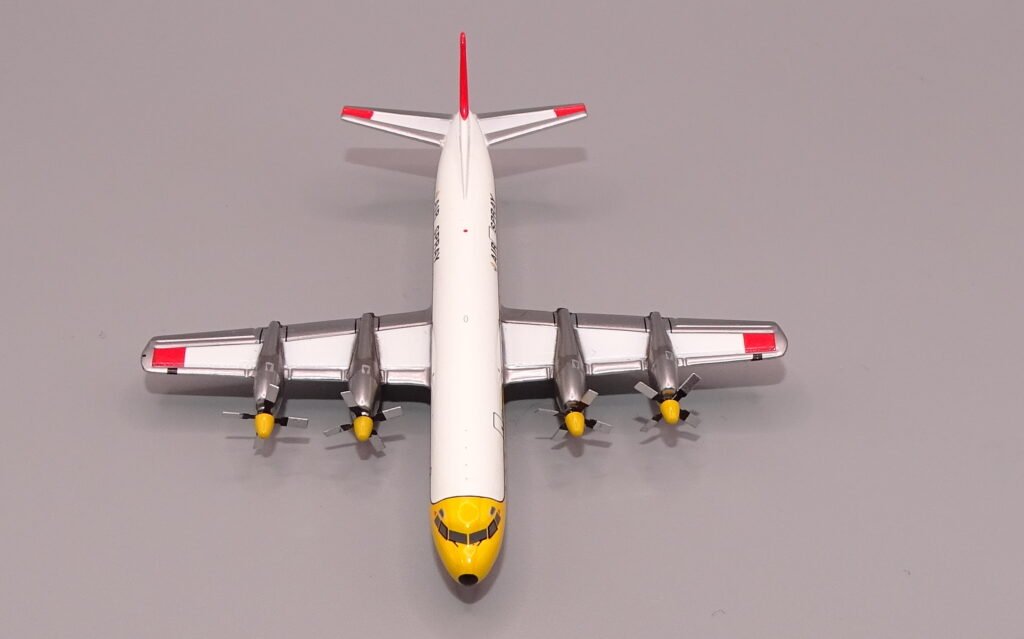
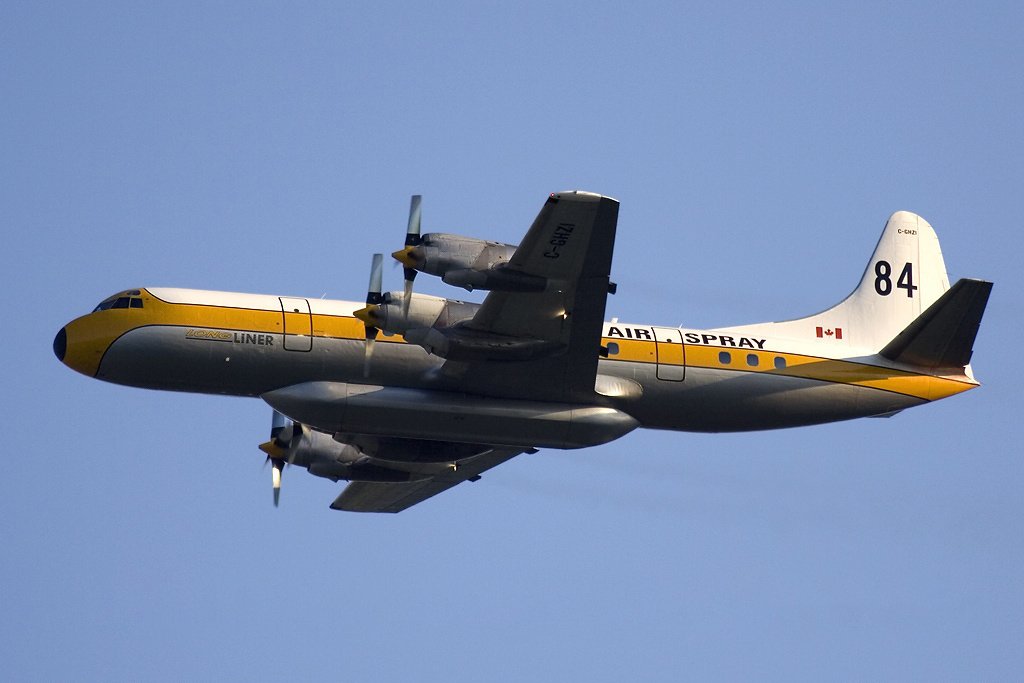
As of now it seems that Air Spray still has at least 8 Electras in operation although it wouldn’t surprise me if they weren’t all airworthy. This aircraft looks like it still is judging by a photo taken in September 2026 wearing the livery with the updated Air Spray logo. That version will be made by JC Wings since it is also on the model’s box but this model itself wears a similar scheme with different logo as seen in this 2015 photo taken at Abbotsford.
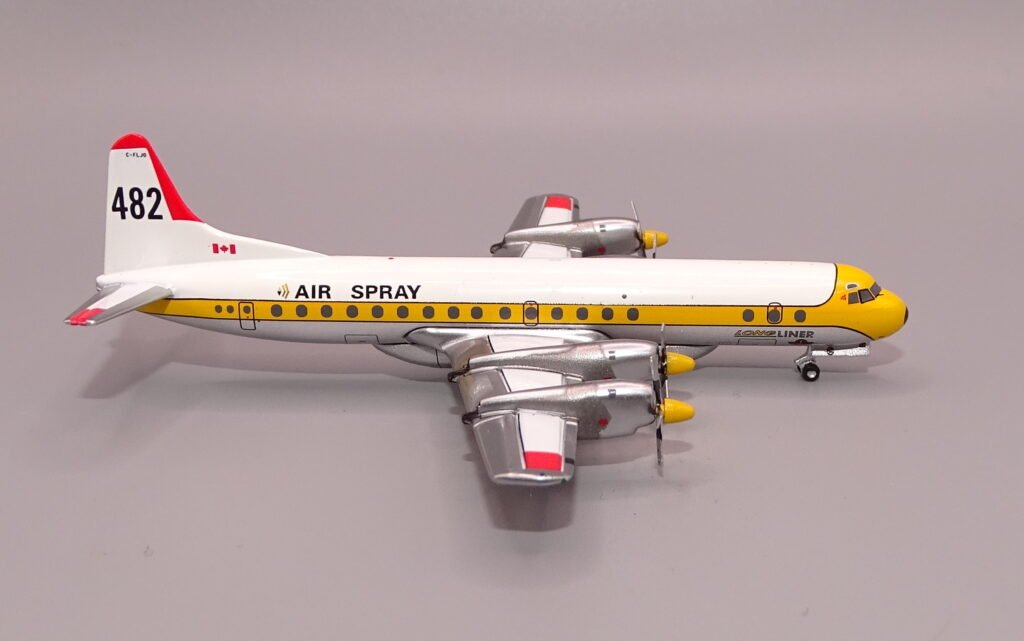
Incredibly this aircraft was originally delivered to the FAA in 1961 and also flew with NASA in the 1970s. Presumably they flew it a lot less than an airline would have, making it a good candidate for such a long career. She joined Air Spray back in 2006.
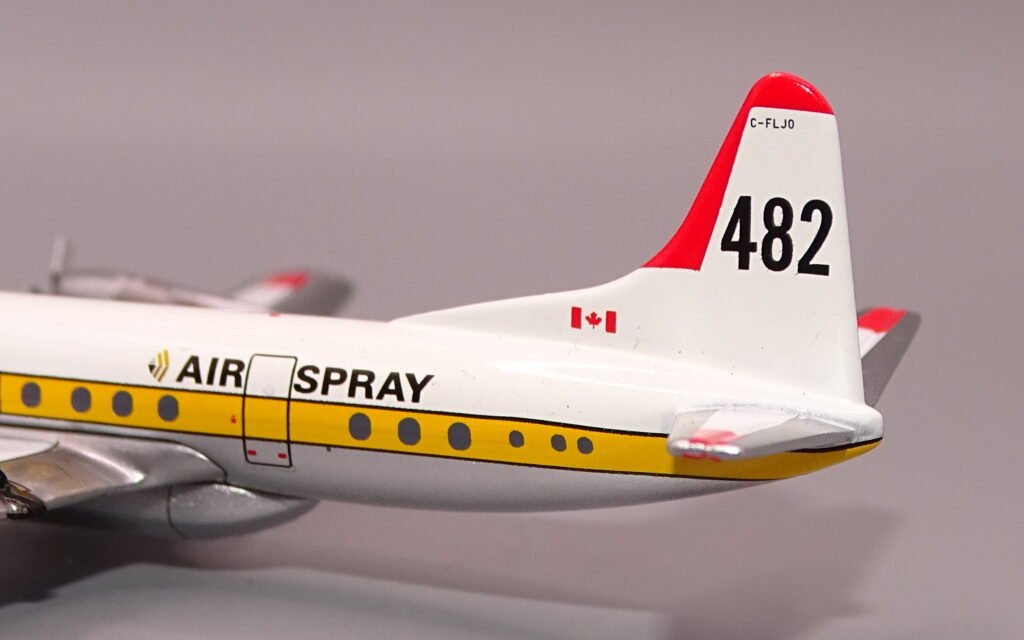
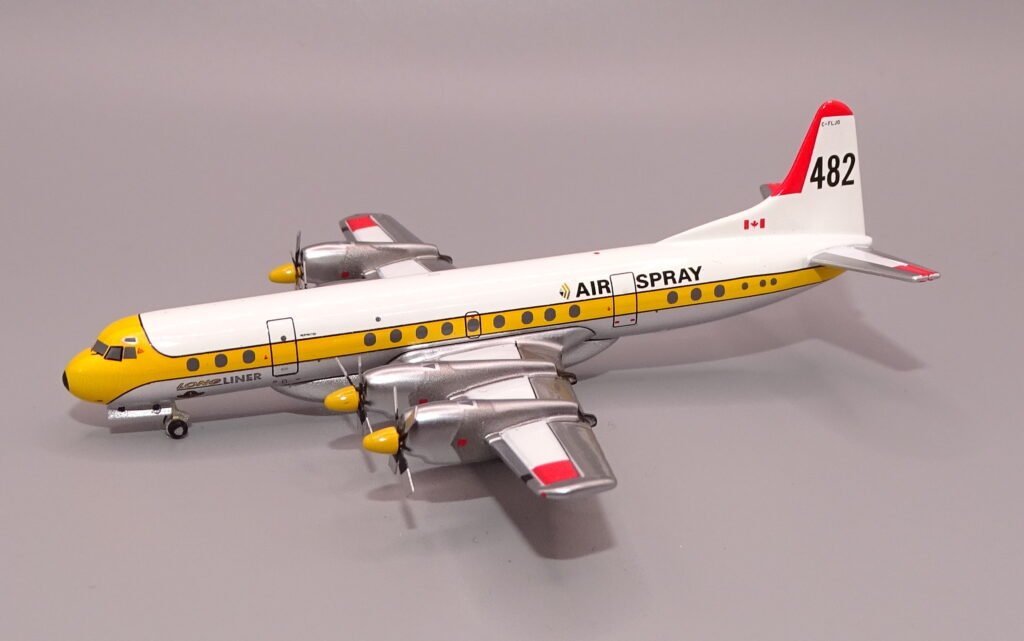
The livery replication on this model is really good. The mustard yellow cheatline looks accurate in terms of colour and the expansion at the nose that sees it cover the entire nose region. The prop spinners are correctly also painted yellow.
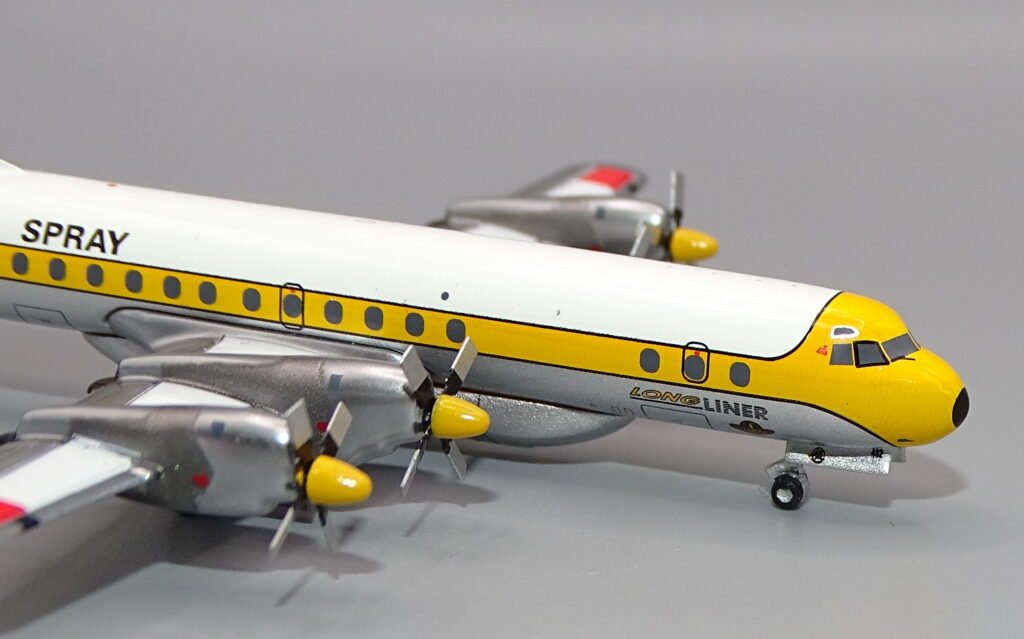
The simple tail design is effectively reproduced, as are the titles on the rear fuselage and Long Liner text on the lower forward belly. The small roundel on the nosegear doors is even present. No complaints from me.
SCORE – 10
PRINTING & QUALITY CONTROL
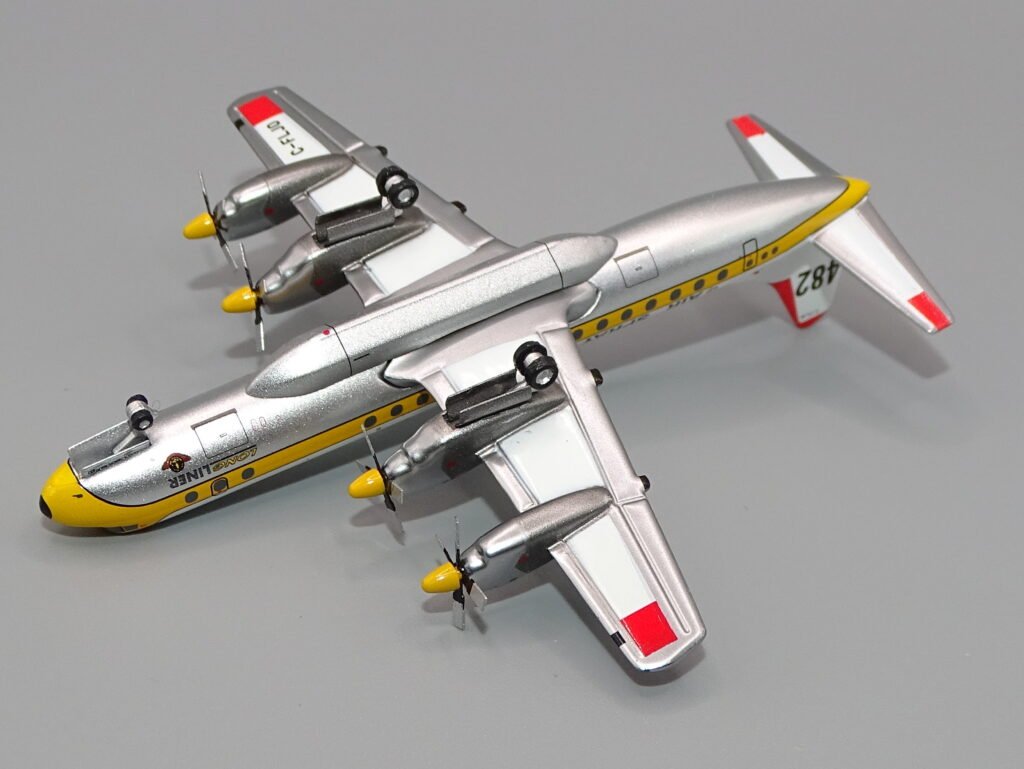
Paint and print on small models is challenging but JC has done well here. There is some added linework on the belly hydrant tank and not a lot to complain about. One area that perhaps could have done with some printwork is the rudder itself. On the real aircraft it is large and fairly obvious but the mould doesn’t show it and it isn’t printed on.
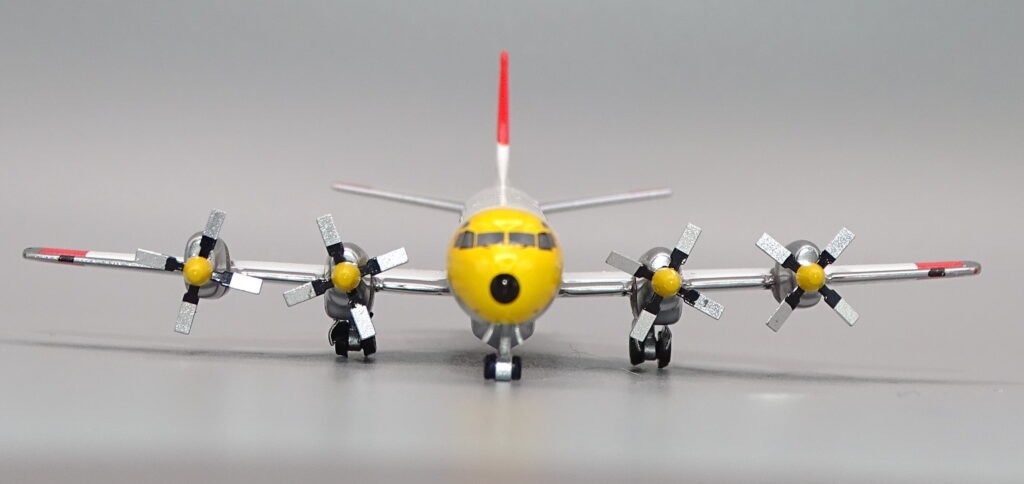
Build quality is respectable and it is only the undercarriage which slightly lets the model down once again. The new nosegear tyre is so small that the gearleg between the tyres is actually larger than the tyres themselves. From the front you can see that the maingear tyres don’t really fit well either or lay flat on the surface. Admittedly, none of these are things you’ll notice with the naked eye.
I should also mention that JC has decided not to add the aerial on the rear dorsal fuselage. Its not a biggie, and I’m not docking anything for its absence. Indeed, none of the previous Electras using this mould have had aerials either.
SCORE – 8
CONCLUSION
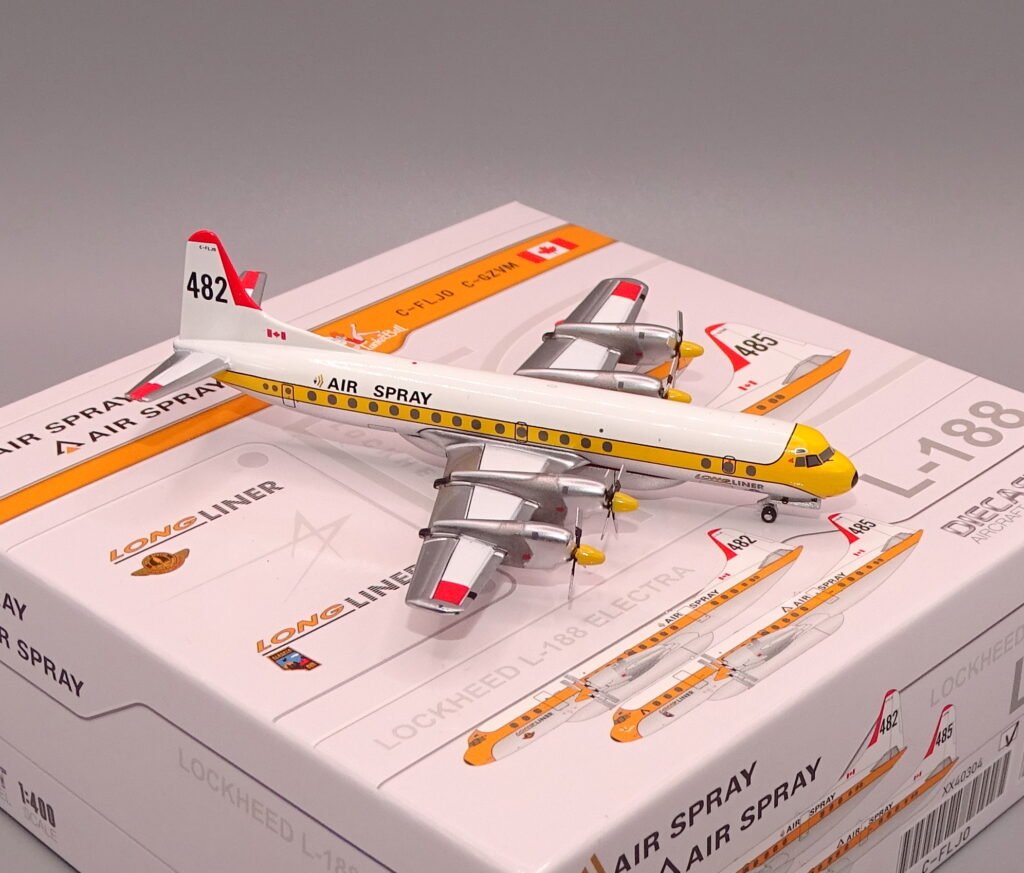
This airtanker is an excellent idea for a 400-scale release and as with the UDF releases shows a playfulness to JC’s release schedule. This may frustrate you if you’re keen for them to get on replacing their often used 737-800 but it does mean collectors get some wacky and cool models that are a breath of fresh air to continuous A350s. This is a really decent Electra mould that is let down by the undercarriage legs. They should be easily fixable but given the mould’s lack of status I doubt we’ll ever see a fix. Even so, it’s a great little addition to any collection.
FINAL SCORE – 25/30