3D printing has come a long way in a short time, but although increasingly I am seeing a lot of very nice 3D printed models, the vast majority are one-offs or blanks made to order for individual collectors. 3D Design Deck are the first brand to productionise 3D printed models, which are being sold through retailers, and the first I have seen to also be able to print onto the model itself. I’ve been keeping an eye on their output for a while now, but this is the first time that I’ve been able to get my hands on a model and take a closer look – thanks to Simon at Bedfordshire Diecast for that opportunity
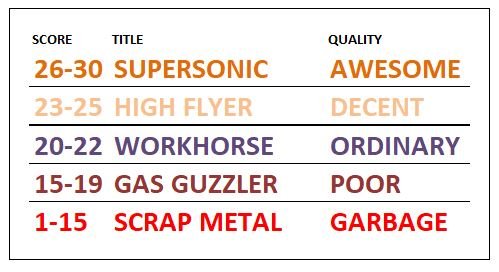
Each review is to split into three key areas:
- The model mould
- The paint and livery reproduction
- Printing and quality control
Each section can get a maximum score of 10 for a maximum combined score of 30
MOULD
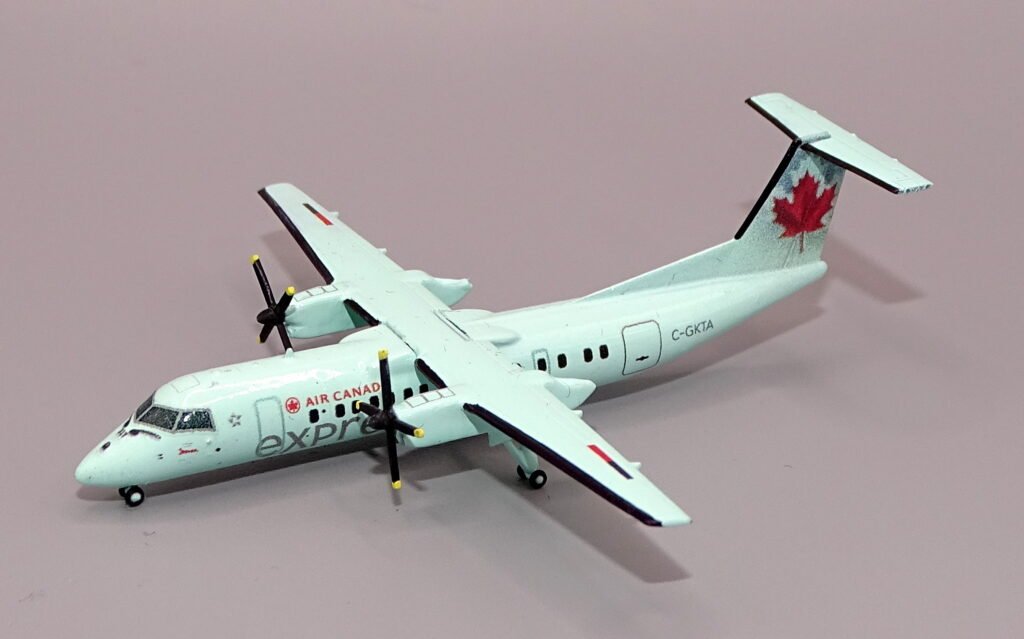
Since this isn’t a die-cast model, or made of metal, technically this model doesn’t have a mould at all, as it has been printed. Nonetheless, you get the idea and this section continues to look at the accuracy of the reproduction of the aircraft itself.
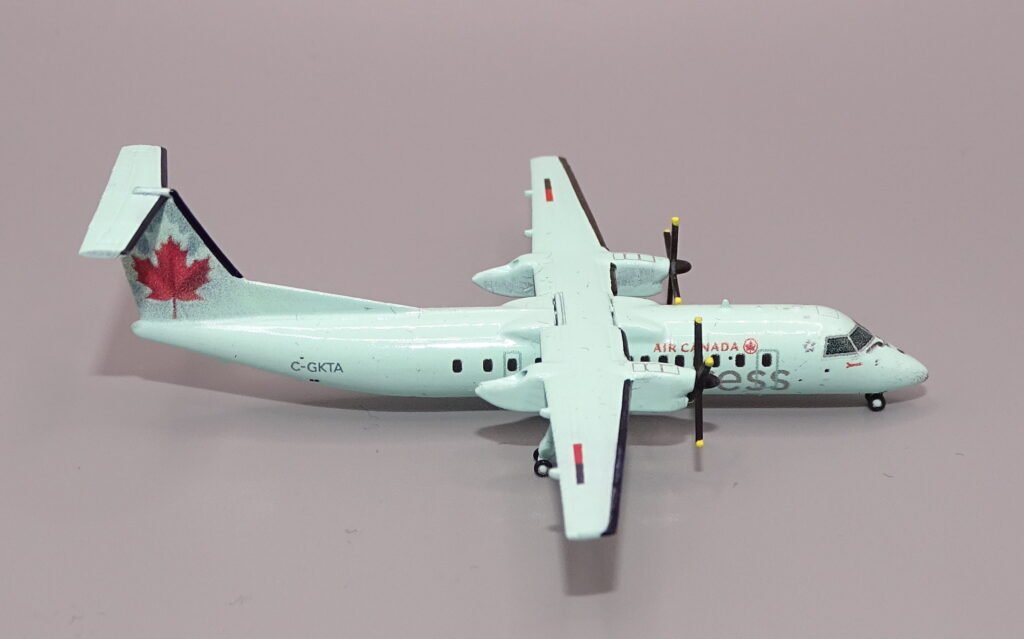
It was only a few weeks ago I last looked at a DHC-8 in review, but that was a series 100 and the only other existing series 300 mould in 400 scale is represented by a single release in the DeAgostini JAL Collection magazine series (apologies I neglected to mention that mould’s existence in the previous review).

This is quite surprising as 267 series 300s were produced and the type has seen widespread service – especially in Canada, Europe, Australia and New Zealand. The fact that it has been lacking in the scale and was so popular in Canada is the reason it exists in the 3D Design Desk portfolio, since they are a Canadian enterprise.

As I said this mould is 3D printed, so not made of metal. That means it is incredibly light but also somewhat delicate. Then again, it also means that if you drop it, it is probably less likely to break than a diecast model since it is so light and the weight of the fuselage won’t crush the undercarriage.

3D Design Deck have been rapidly improving their product and compared to the first version of the mould these latest DHC-8s have impressive levels of added detail, including spinning prop blades and aerials! The latter is a feature that isn’t even seen on the diecast DHC-8s. On the negative side there is no rolling landing gear, but on a DHC-8 that is really nothing that is needed anyway!

I admit, I am very impressed with this printed version. It is actually probably as good, maybe even better, than the JC Wings DHC-8-100/200. One area that I feel is better is the shape of the nose and the change of angle down from the cockpit. For me, it is excellent.

The model comes with 3 aerials (1 dorsal, 1 ventral forward and 1 ventral rear) plus the tailbumper. The aerials aren’t quite the right shape but they look good and it is better to have them than not.
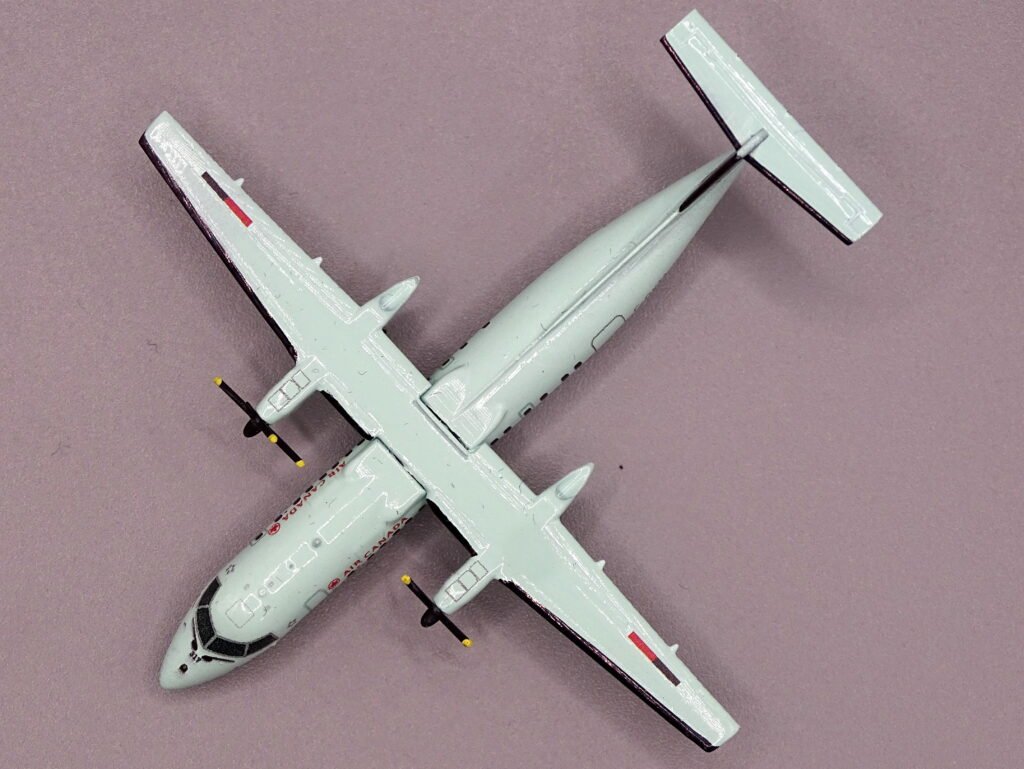
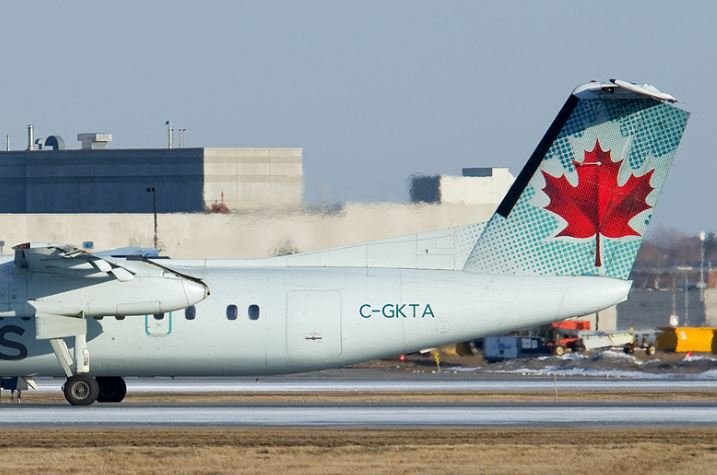
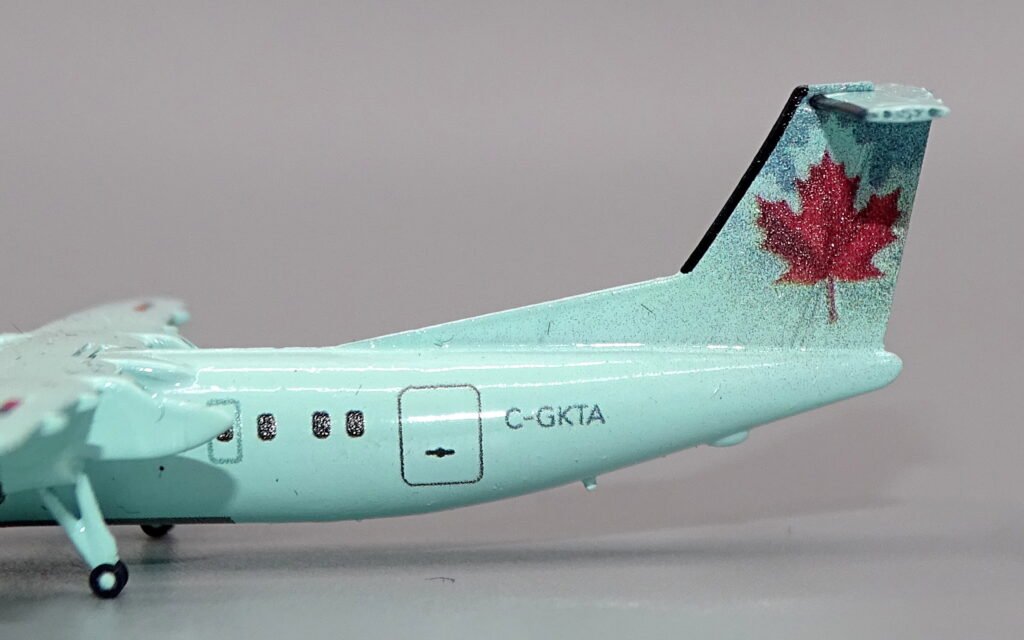
Looking at the tailshape, the tail chord is slightly off at the rudder. The rudder at the top should be beyond the rear border of the horizontal stabs. It doesn’t stand out when you look at the model but the angle of the rear margin is too acute.

One other area I’d like to see improved is the size of the maingear tyres. As with the JC Wings editions the tyres are too small, however the model doesn’t have the rear down aspect the JC does. The gear legs themselves are really good.
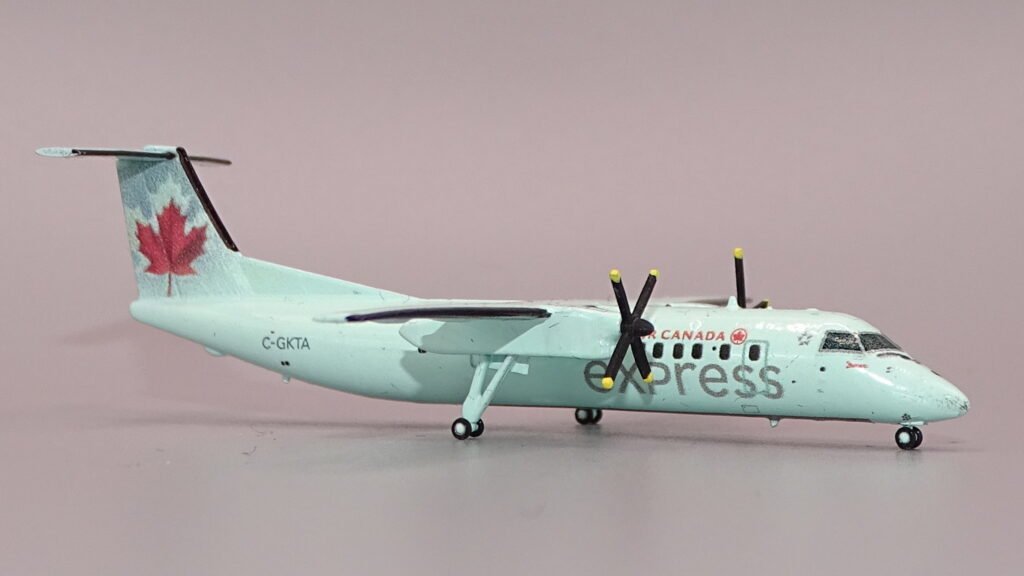
If I’m honest I really didn’t expect this reproduction of a DHC-8 to be as good as it is. It is certainly better than their first releases and very comparable with what is available in diecast for a DHC-8. I think overall I probably prefer it to the JC Wings version, but that it scores roughly the same.
SCORE – 8
PAINT & LIVERY
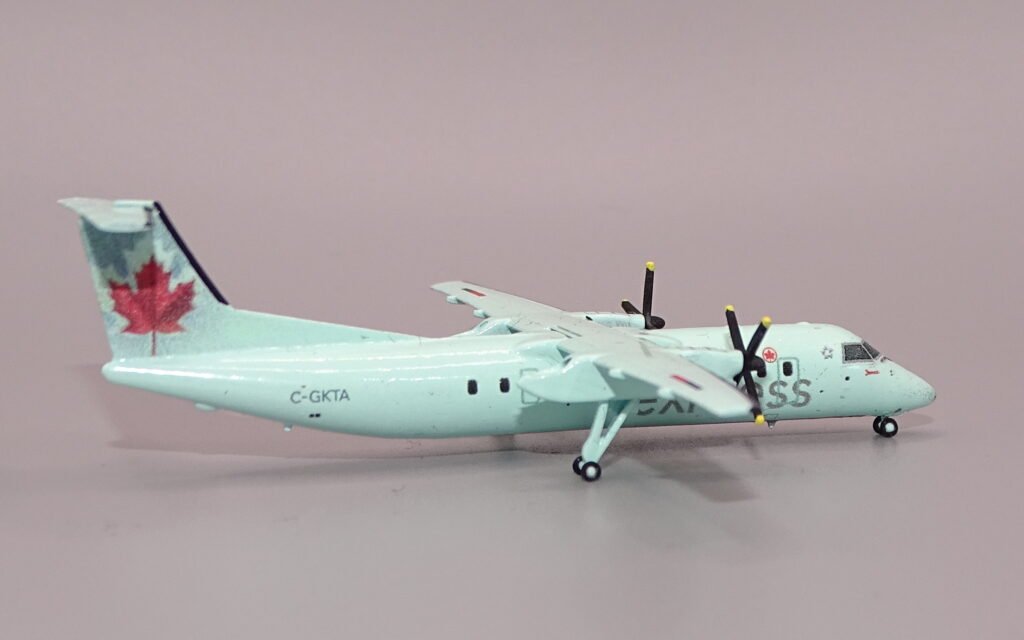
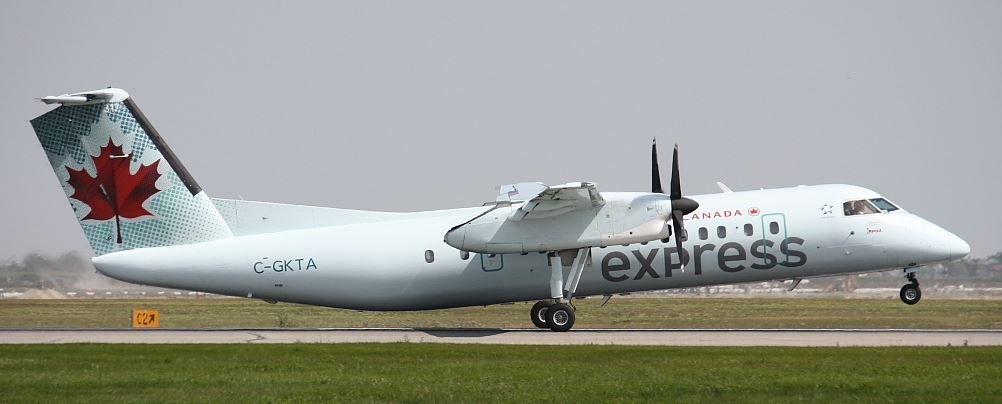
I admit I really wasn’t a fan of the frosted leaf ‘toothpaste’ livery Air Canada adopted in 2004. This aircraft adopted the updated scheme quite late, between 2011 and April 2012, having previously worn the green version of the Jazz scheme.
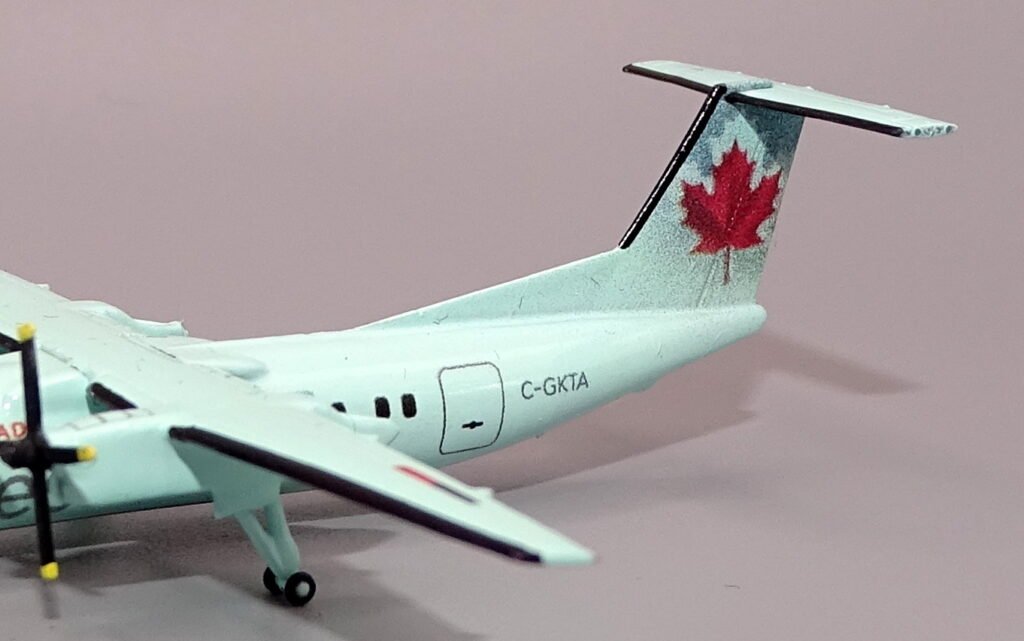
I’m no expert but the fuselage colour applied here looks good to me. 3D Design Deck uses a UV printing method nowadays on their models and the finish is broadly comparable with Tampo printing. Having said that it has its limitations and the definition of the dot effect on the tail doesn’t really work. Then again, this is only visible at magnification and at 1:1 you really don’t notice it.
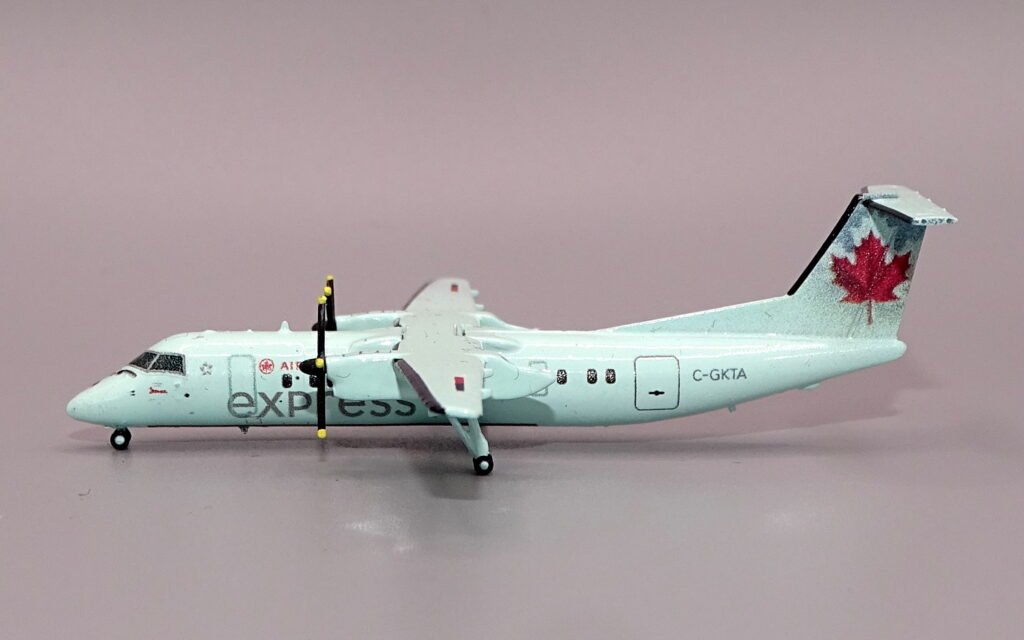
The registration and titles printing is excellent and to my eye the fonts match. Small details such as the Star Alliance logo behind the cockpit, and tiny Jazz titles under the cockpit are present too. It is a solid little print job, especially when you consider this brand is effectively a one-man band.
SCORE – 8
PRINTING & QUALITY CONTROL

As I said this model has been mainly printed onto using a UV method and that has allowed for some nice detailing, all the more impressive considering the model’s size. The belly shows a lot of nice detailing, but in comparison to the JC Wings example there is less detail print on areas like the nose and doors.

As I understand it the cockpit windows are not printed on and use decals, but frankly I can’t tell for sure. They certainly look excellent and are much better than on the JC Wings DHC-8 I reviewed recently. As you can see above there is some minor paint wear or lack of coverage on the nose starboard side.
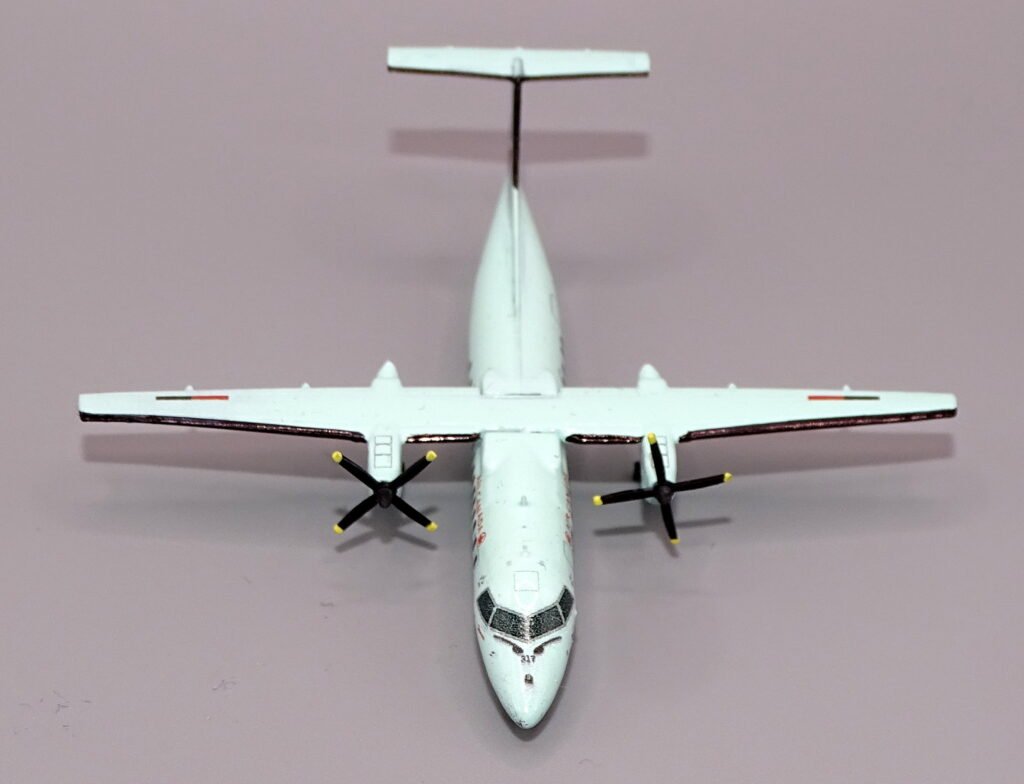
I think some areas, such as the wing leading edges have been handpainted, again it is hard to be certain, as the job is excellent. From a print perspective the only extra I’d like to see is some colour inside the engine exhausts.
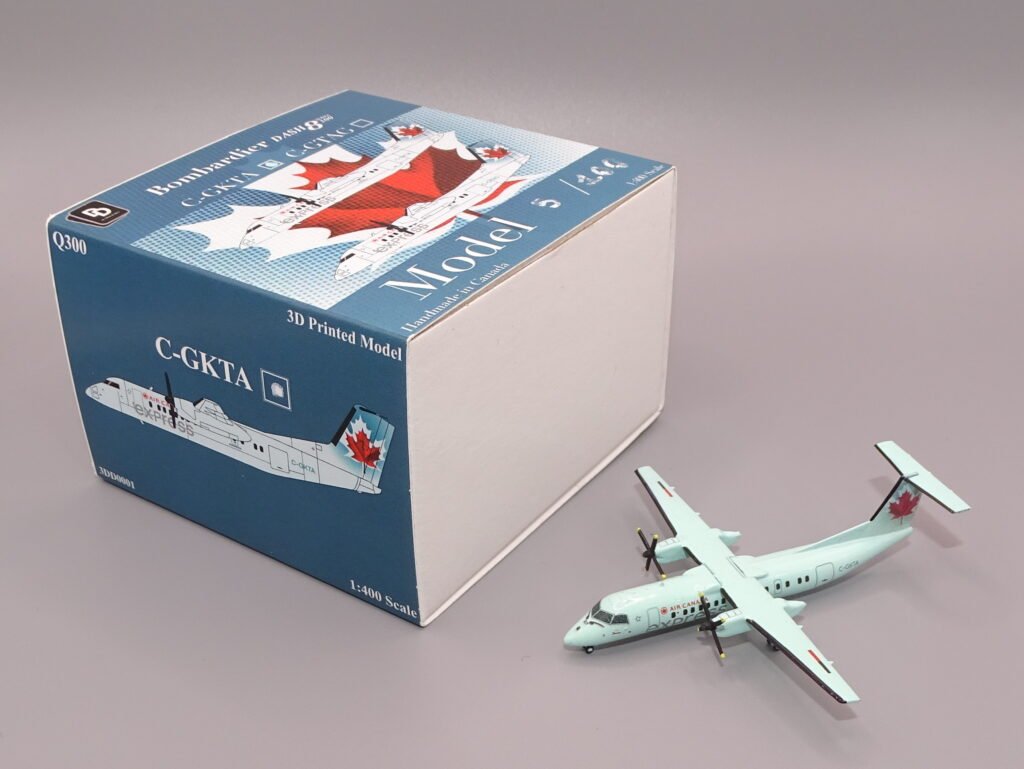
This model is one of a production run of only 100, which is actually not too far off of some brands standard runs. The finish of the model is excellent and it comes in a lovely little box with a sleeve covering, attractively decorated.
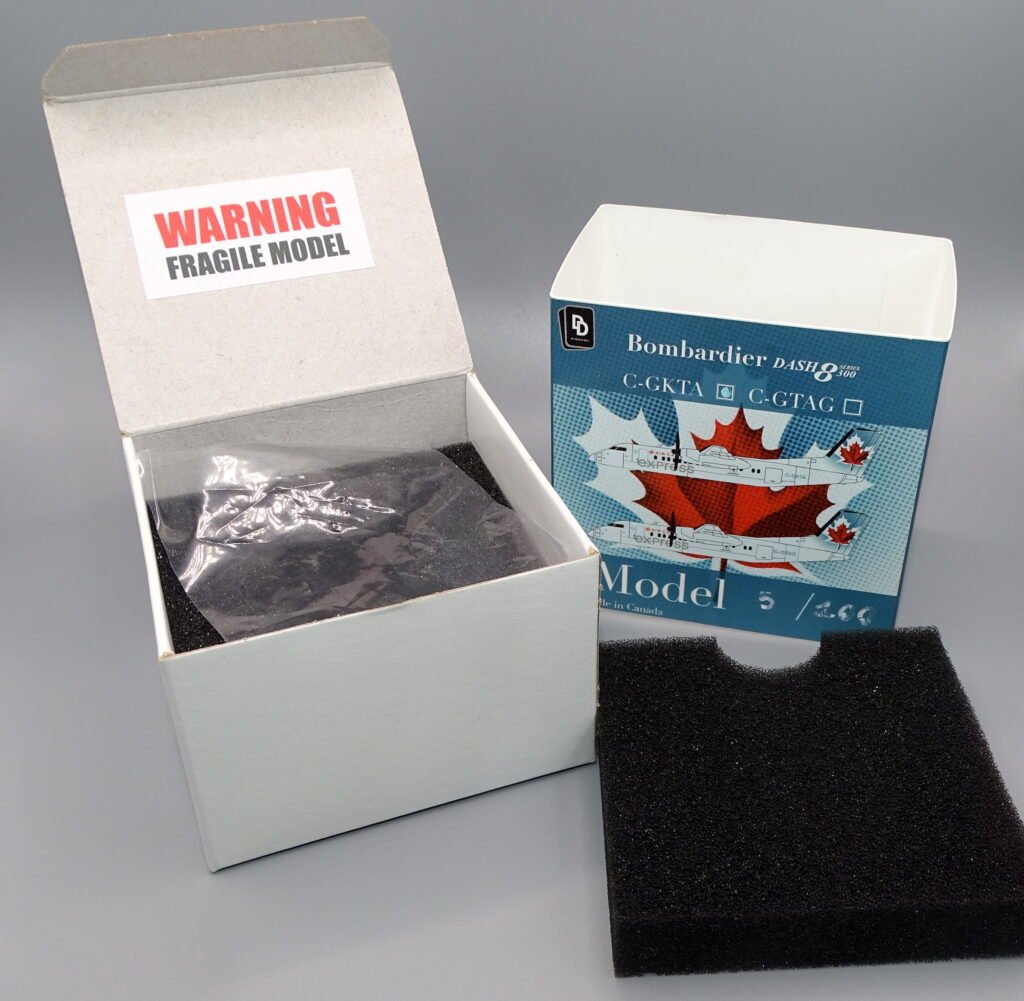
Inside the box the model is protected by a two piece foam cradle giving it all the protection it needs. Like the model itself the care and attention given to the box is great.
SCORE – 8
CONCLUSION
FINAL SCORE – 24/30