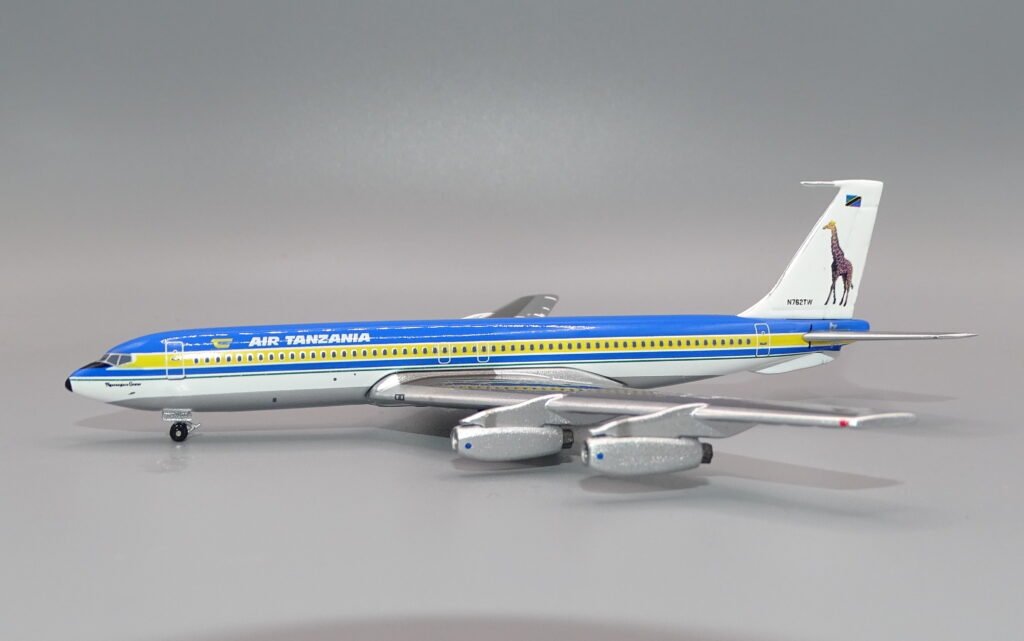
To date 2026 has mainly been a year of modern Airbus and Boeings, lacking a lot of variety when it comes to airlines or aircraft type. So, it is pleasing to see at least one brand stick to its guns and focus on classics. That brand is obviously Aeroclassics. Plus, a turbojet 707 has been long overdue. However, undeniably there is often a compromise to be had when it comes to quality with Aeroclassics, leaving the classics collector in a position where they must accept just good enough rather than excellence. Then again with such a lack of diversity in the scale will there ever be an alternative?
Each review is to split into three key areas:
- The model mould
- The paint and livery reproduction
- Printing and quality control
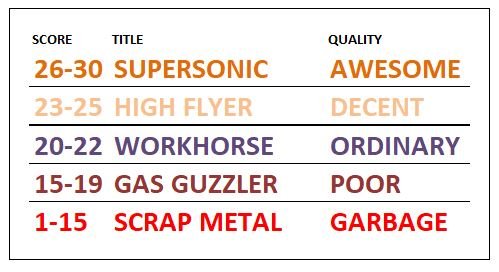
Each section can get a maximum score of 10 for a maximum combined score of 30
This review is sponsored by Northeast Diecast. Check out their store for an excellent range of hard to find 200 and 400 scale collection sale models and get 15% off!

MOULD
Aeroclassics haven’t made many new moulds in recent years and the ones they have made in the last decade have not been great. Both the 737 Max and L-1011 Tristar are pretty bad, while the 767s and updated 727s are middling. So it is with some trepidation that this new 707 arrives.
Aeroclassics has made turbojet 707s before, but the mould was only used between 2002 and 2003 30 times. Worse many of those releases were caught up in the zinc rot scandal including the original Air Tanzania release from 2003. For more on zinc rot see:
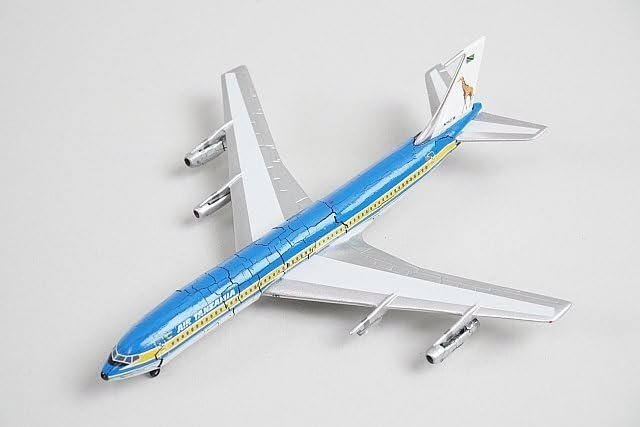
Aeroclassics has shown an interest in replacing old zinc rot releases (they have already remade several Canadian 737-200s for example) and the turbojet 707 is a type seriously under-released in 400 scale since there have never been any other moulds made for it.
It does seem that most collectors simply don’t understand how different the 707-320B/C is to the original 707-320/420 Intercontinental. The many and varied differences between 707 variants can be found explained in detail at David Hingtgen’s wonderful Ultimate Boeing 707 Guide.
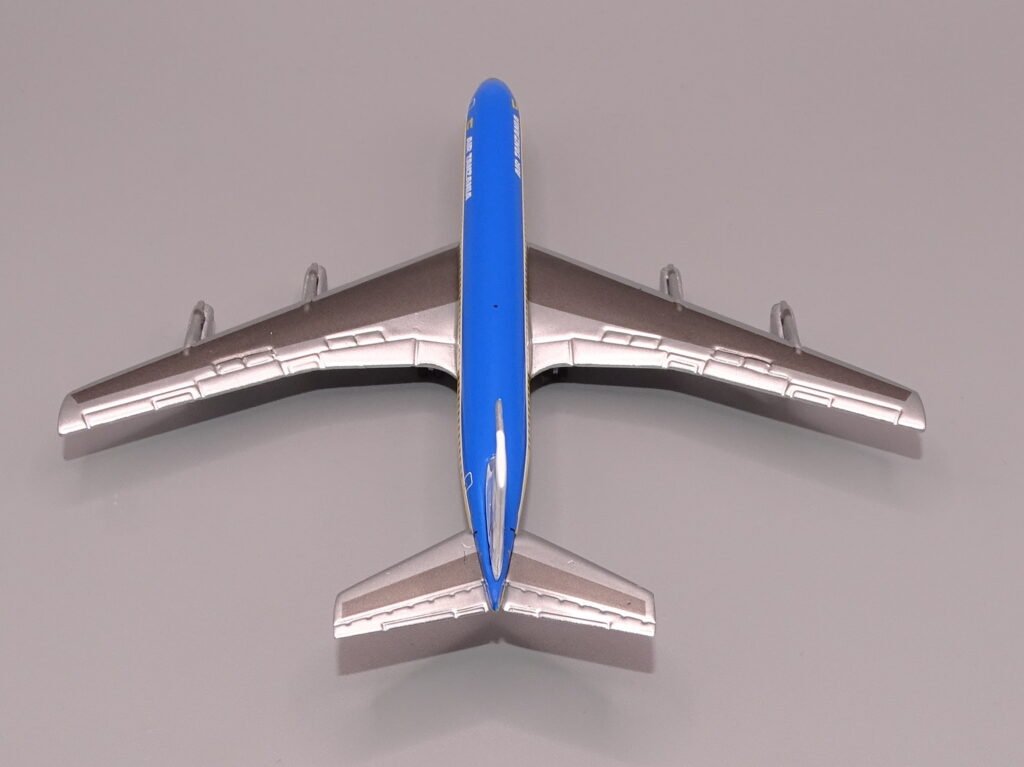
In summary when it comes to those differences the 707-320:
- Has a very different wing, which lacks the dogtooth kink on the leading edge, lacks the flared extended wingtip and lacks the double kinked rear profile as well.
- Has turbocompressors on all four of the engine pylons.
- Has a ventral fin fitted under the rear fuselage
- Has the original style of nosegear without the rectangular box type doors
- Obviously, the engines are turbojets not fans.
Indeed, all the other 707s in 400 scale, including the Witty Wings mould that has been seen recently for various Z2 Models releases, actually can only replicate a 707-320C and 707-320B Advanced. It doesn’t even match the original 707-320B. Similarly the upcoming Patriot Models 707 will be the later variant too.
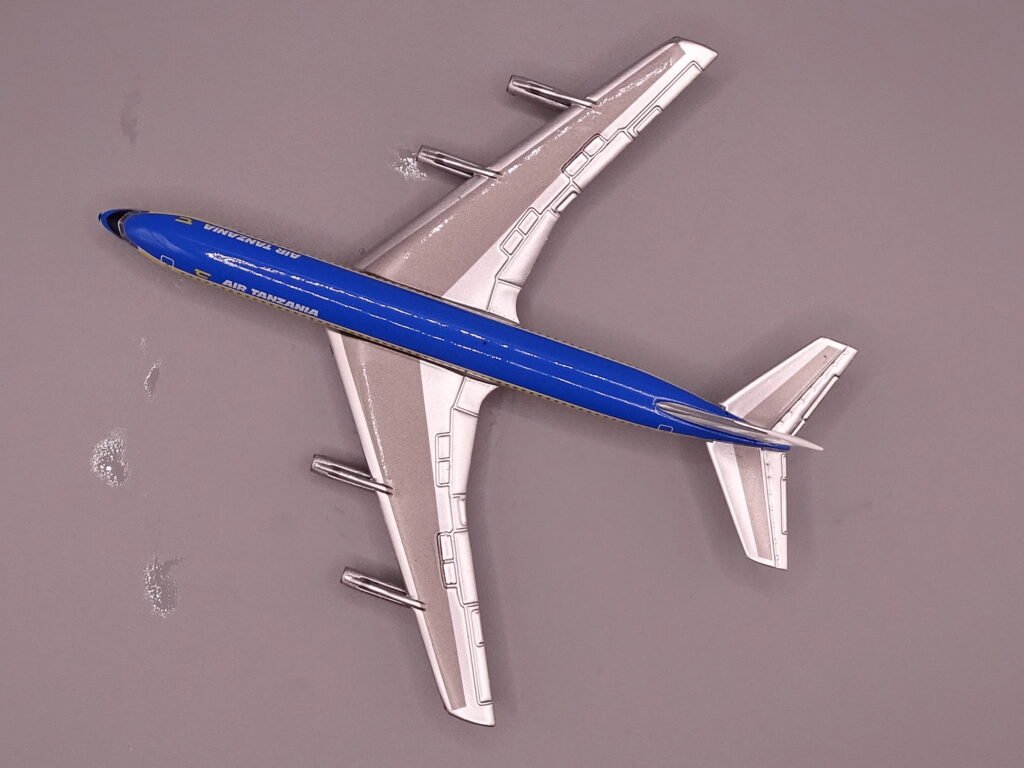
So, to sum it up a new 707-320 is very much to be welcomed and there’s plenty of material to be made on it. Of course, how much it is welcomed depends on its quality and as ok as it is, it certainly isn’t as good as I’d hope.
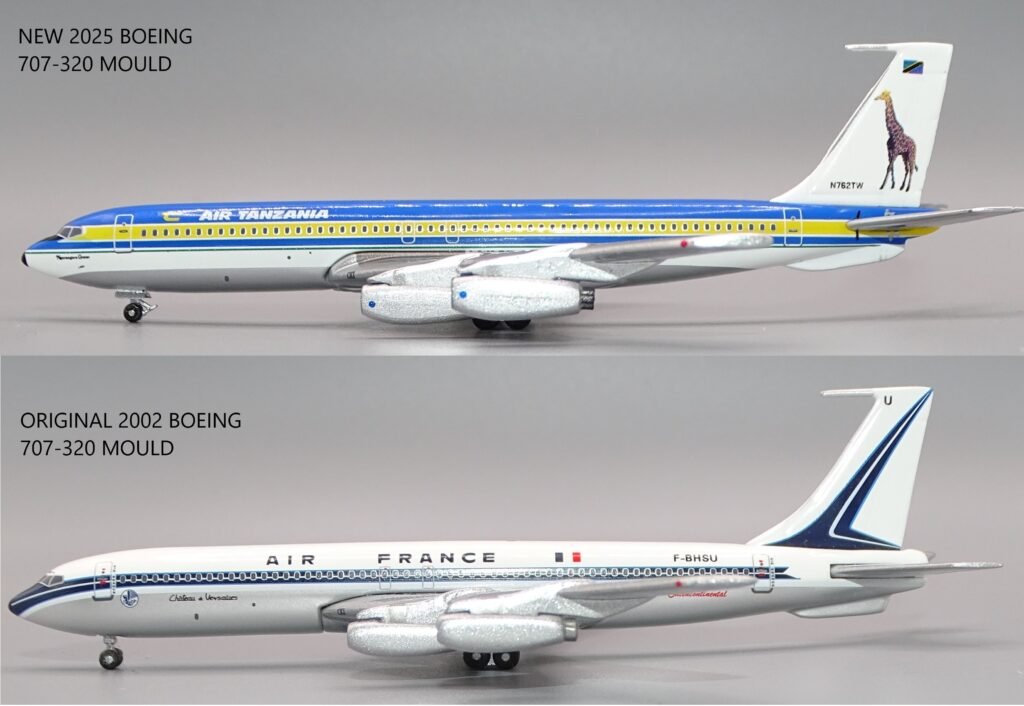
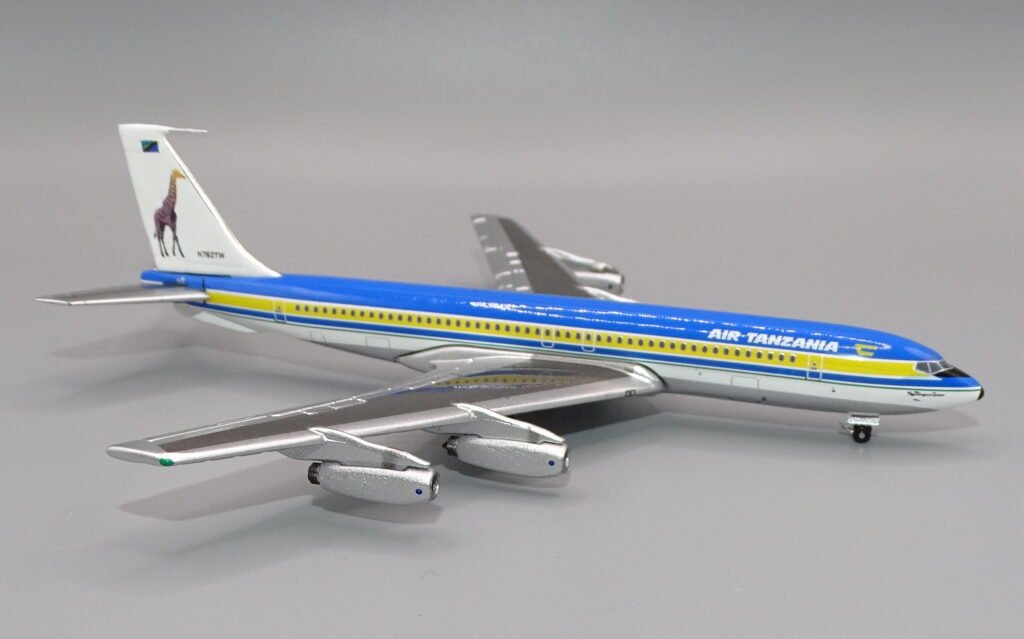
Aeroclassics already has a decent 707-320B/C and this mould can obviously trade off some ancestry with that. That means that the forward section and fuselage barrel are decent, but it also means that it inherits the rather large and clunky wing seam / cradle mount of that mould rather than going for a new slot in wings style version like the Witty Wings 707 has.
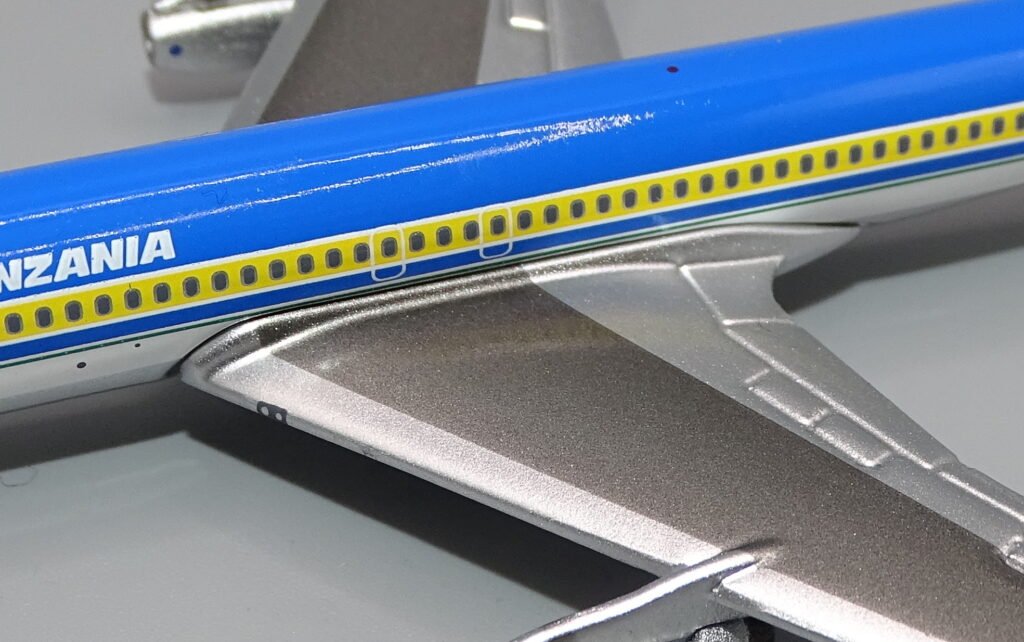
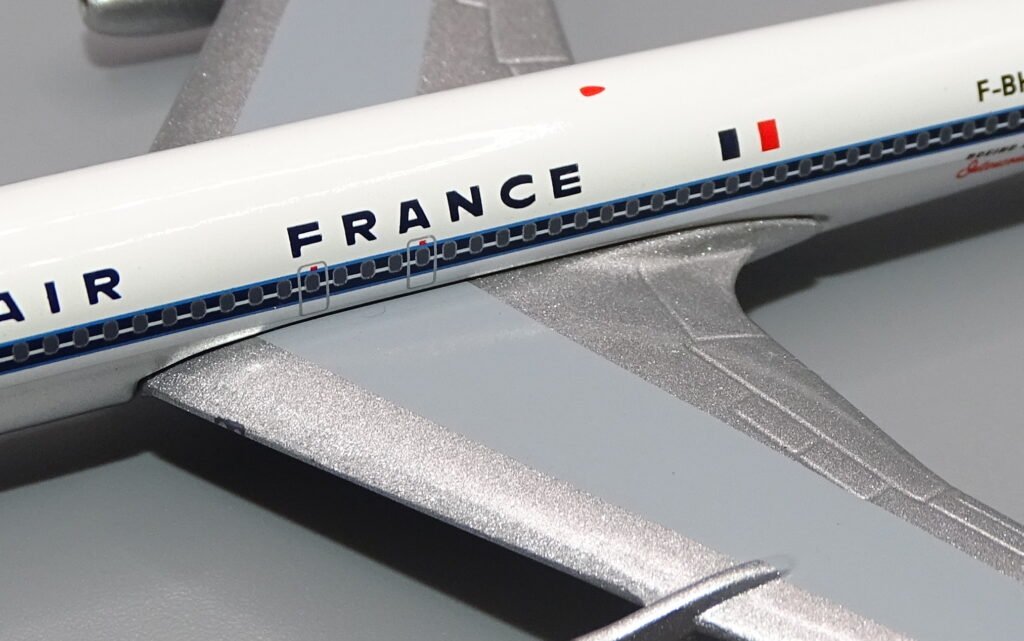
Somewhat ironically the wing seam is actually larger and more obvious than on the original 707-320 mould, where it follows the wing join line rather than being more squared off.
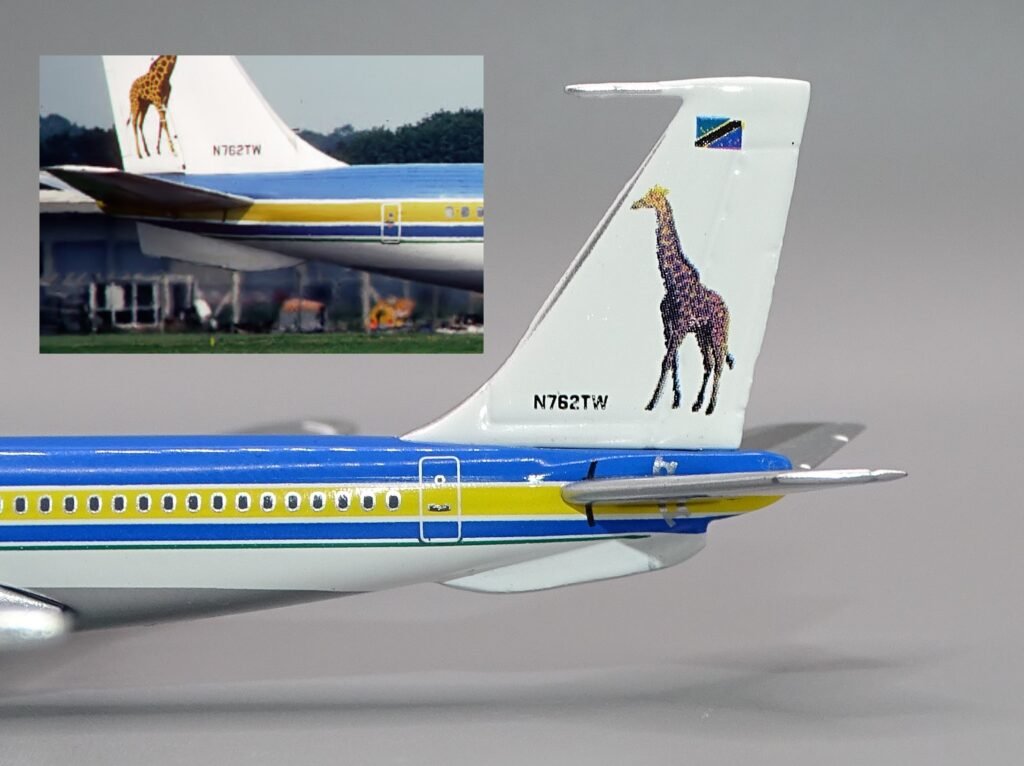
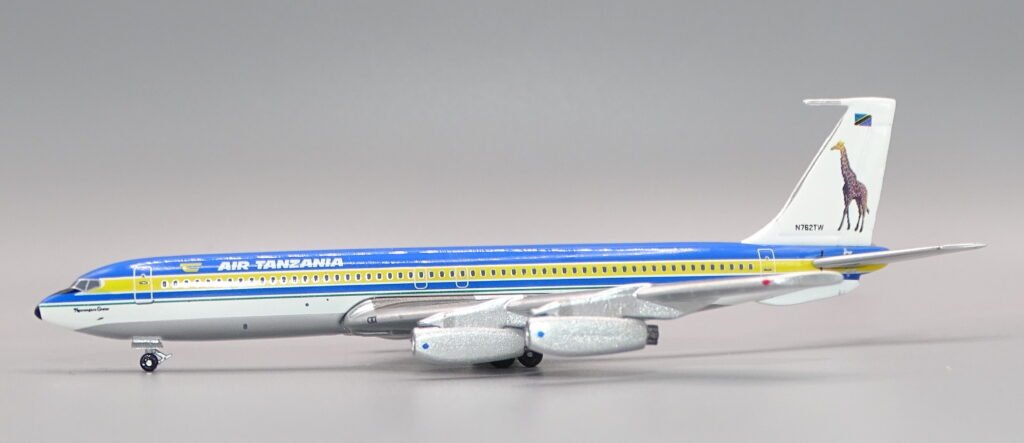
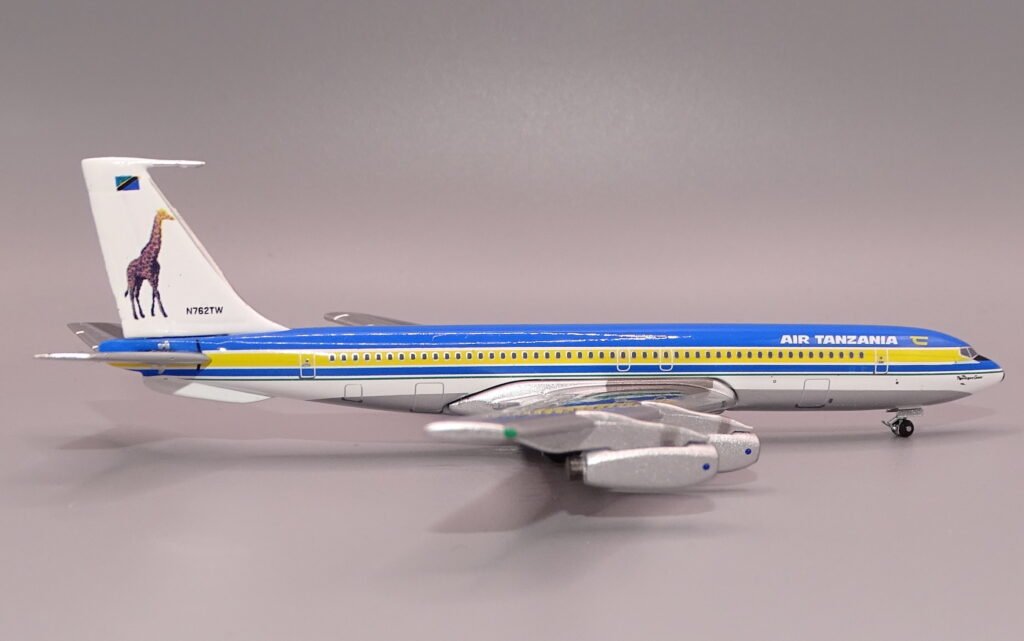
The ventral fin has been added to the rear underside fuselage but is poorly shaped at the back with the wrong profile at the rear margin.
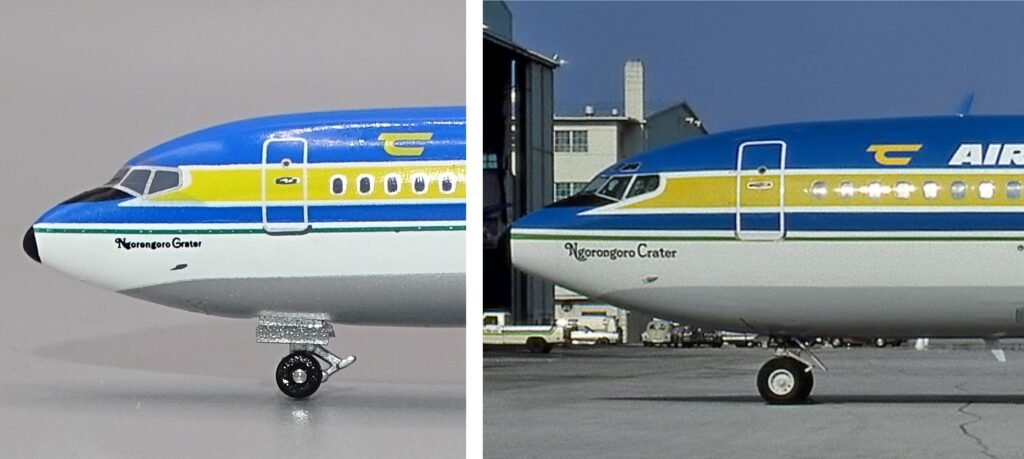
The most obvious error is the structure of the nosegear. It reuses the 707-320C gear components giving it an inaccurate rectangular gear door rather than the much smaller and rear facing door it ought to have. It seems this error has now been rectified on the latest Alaska Airlines release, but it is a shame that it took 8 other models to get released before that, especially when the first was released all the way back in December.
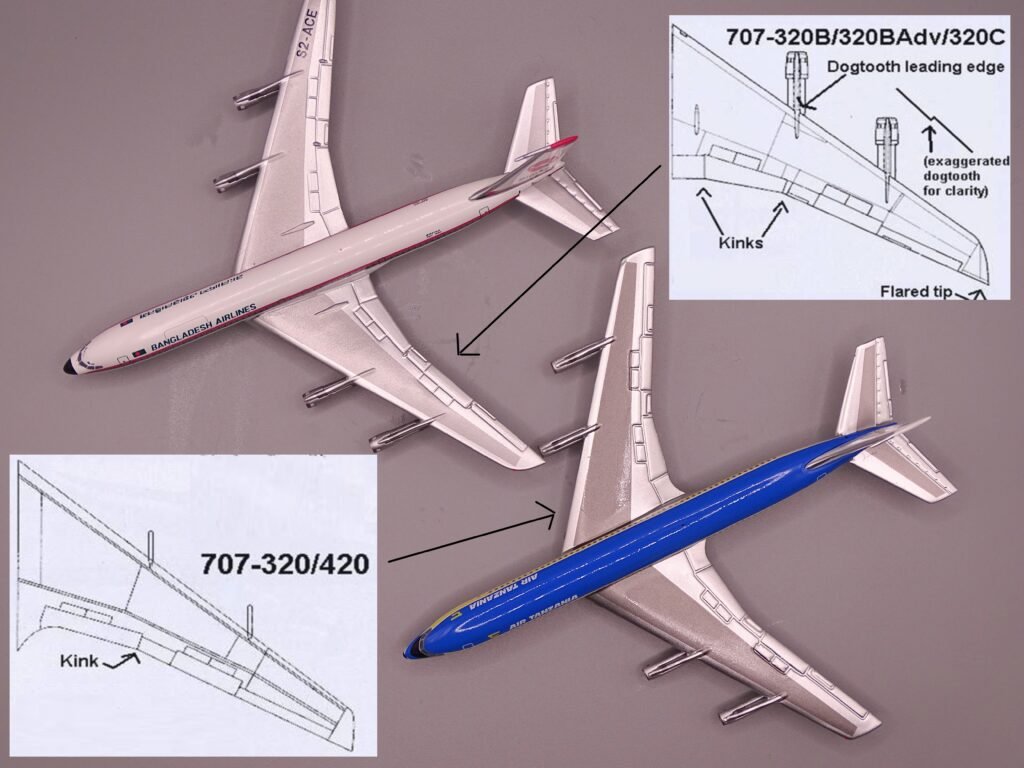
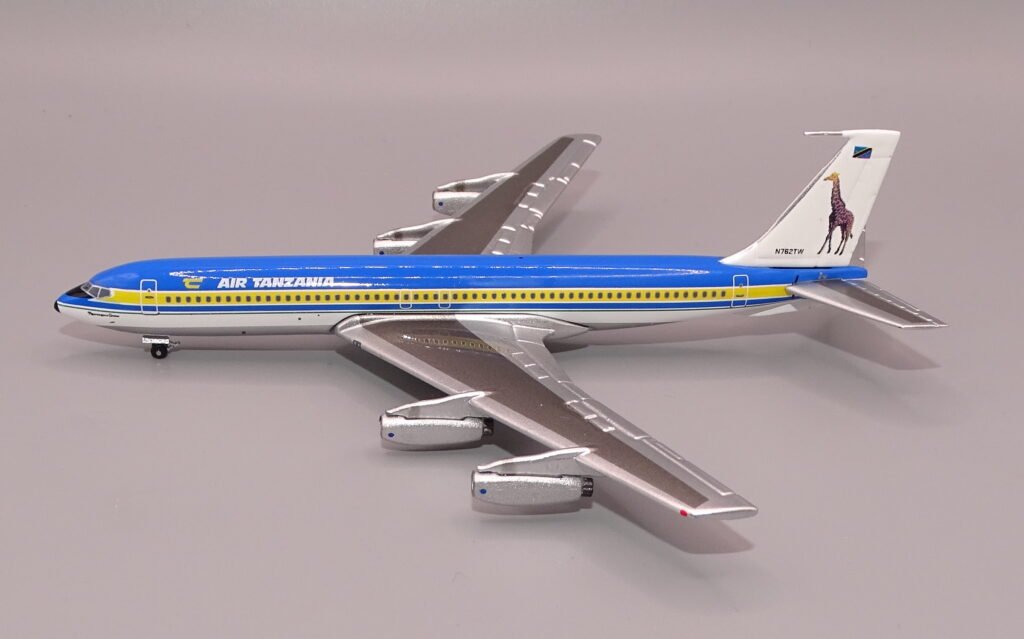
The new 707-320 wing is well shaped and accurately depicts the differences between it and a later 320B/C version both at the wingtips and rear wing join. The engine pylons are part of the wing and do the job well enough, although I’m not loving the shape of the turbocompressors above the nacelle rim tops.
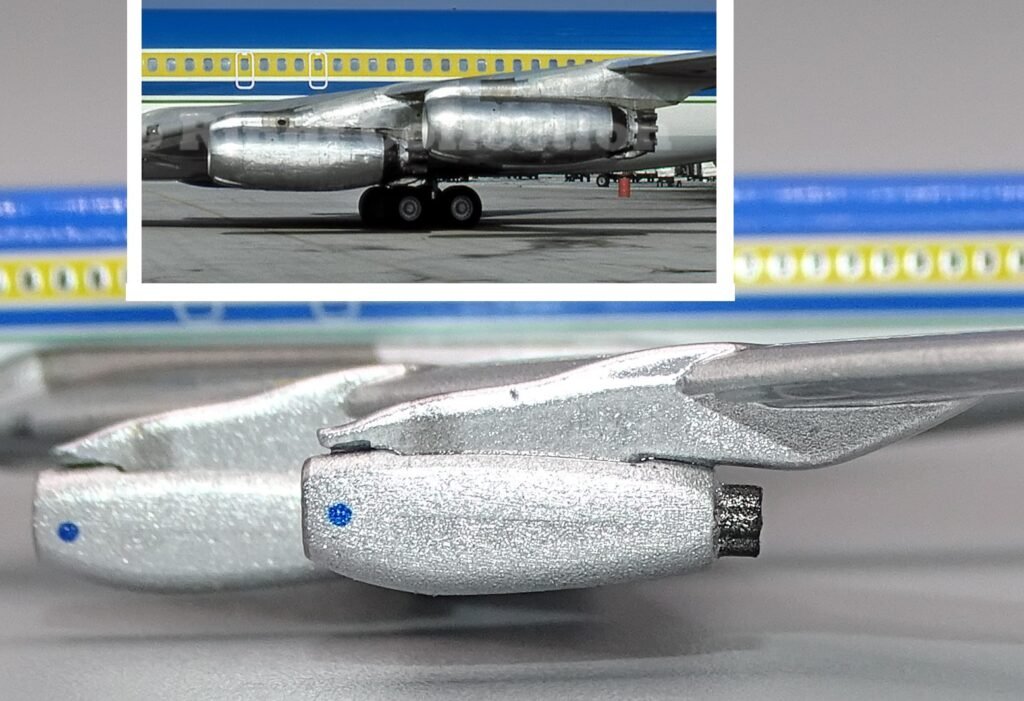
The engines themselves are oddly flat-sided and not rounded enough. Again, they are inferior to the original turbojets on the 2002 mould, which were not as deep and more rounded. Detailing of the engine exhaust is also rather rudimentary and certainly not long enough.
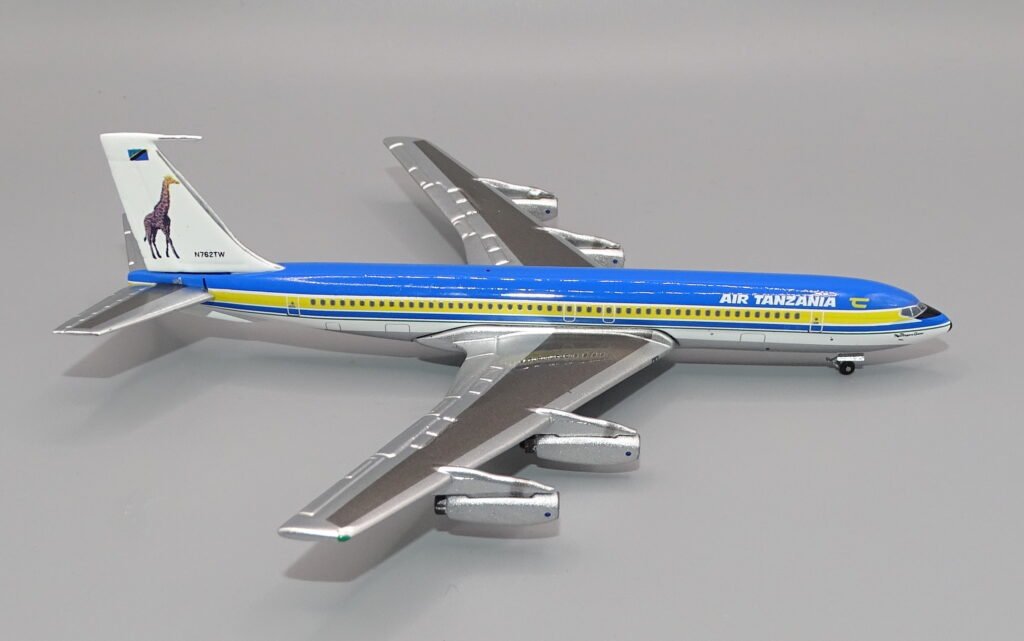
So this 707 has some issues but with the nosegear fixed for later versions it does the job. Nonetheless, this feels like something of a missed opportunity, and you wonder how difficult it would be to have simply got the engines and ventral fin shape correct, let alone made a slot in wings mould in 2026.
SCORE – 6
PAINT & LIVERY
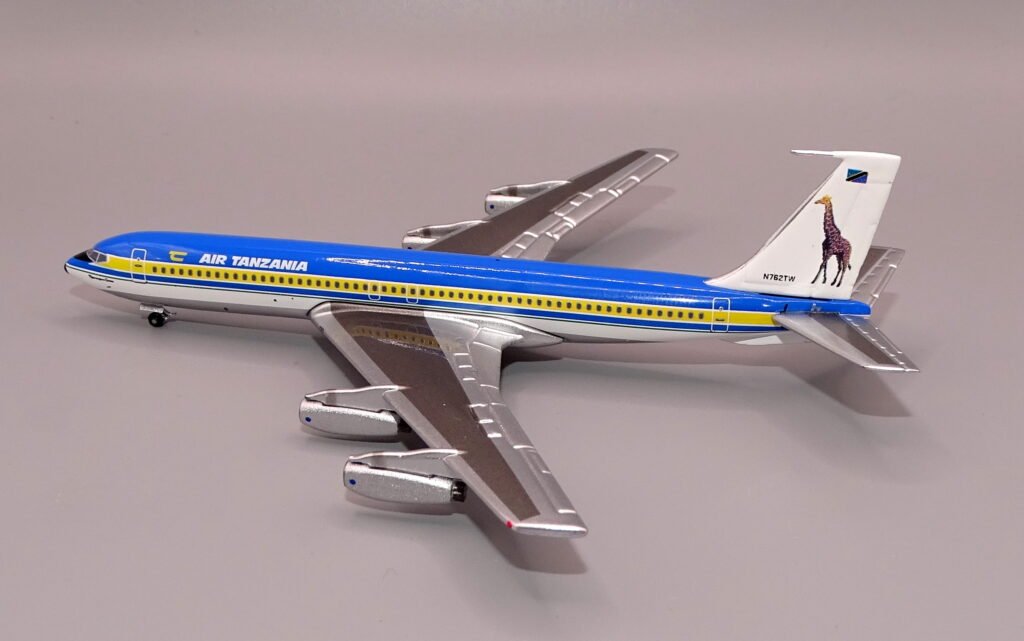
Back in the 1970-90s Air Tanzania had a wonderful colour scheme in the Aer Lingus style whereby the majority of the aircraft was painted including the roof. It is also a livery that has been made by Aeroclassics 7 times before, most recently for the 767-200 in 2019.
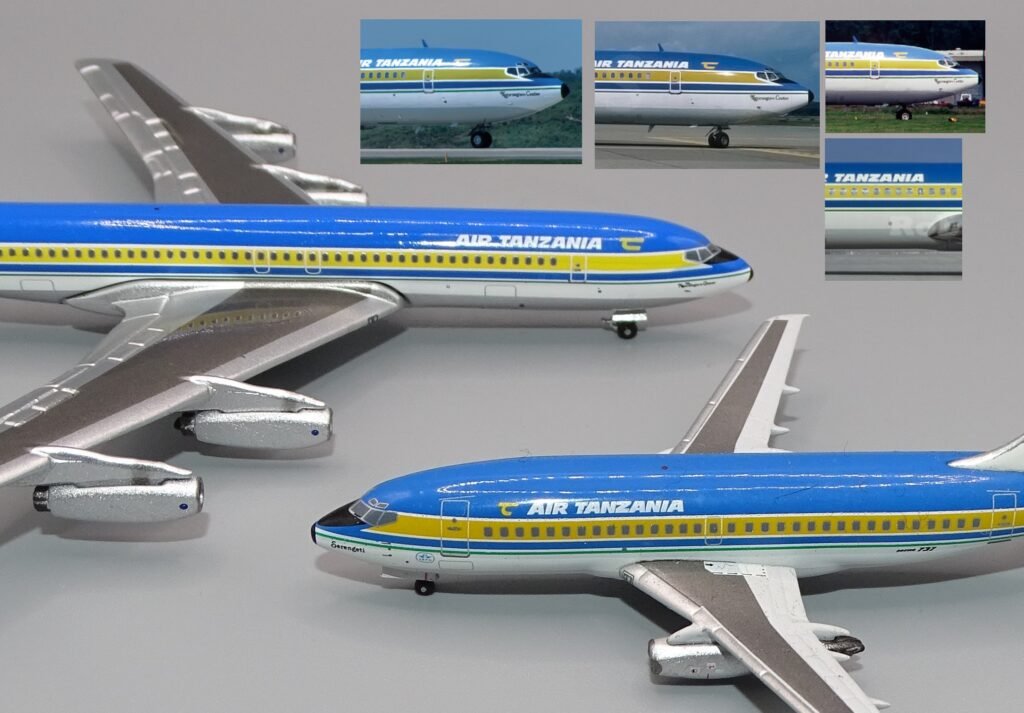
There aren’t a ton of photos of this aircraft about but there are several that show it very well such as this 1980 image from Zurich at JetPhotos.com and this 1980 image from London Gatwick at AirHistory.net. The blue colour being used here is good, but the golden cheatline differs from the other 7 Aeroclassics releases. This time around it is a brighter yellow. Although it varies in photos it does seem too light especially when compared to any of their previous releases like this 737-200.
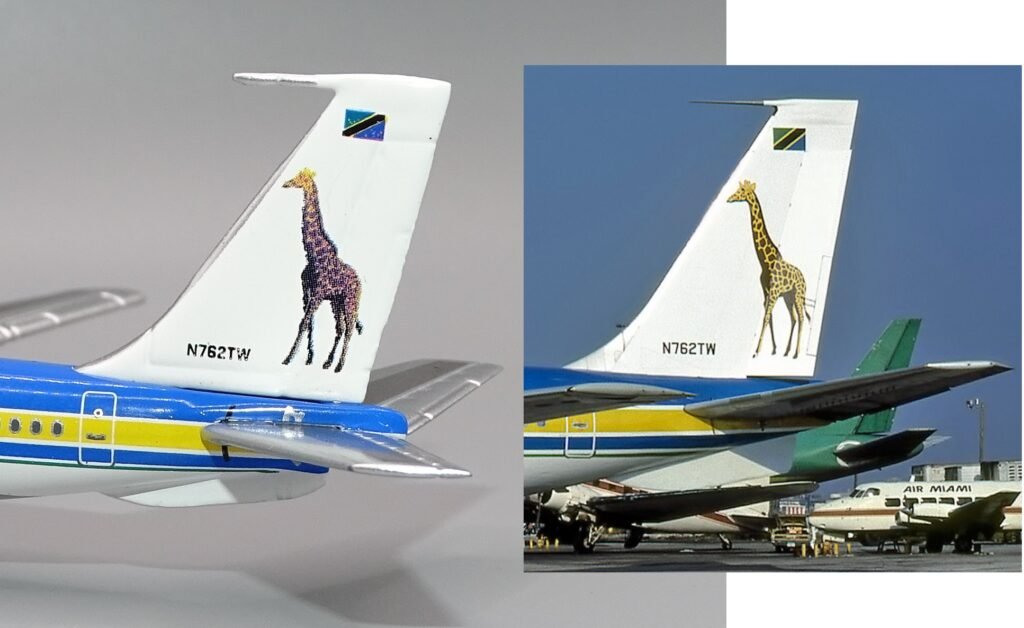
At the tail the giraffe is heavily pixellated and poorly defined at magnification but passes the eyetest ok. In closeup it is clear the flag has also been miscoloured since it is supposed to be green in the top triangle whereas here both triangles are blue.
SCORE – 7
PRINTING & QUALITY CONTROL
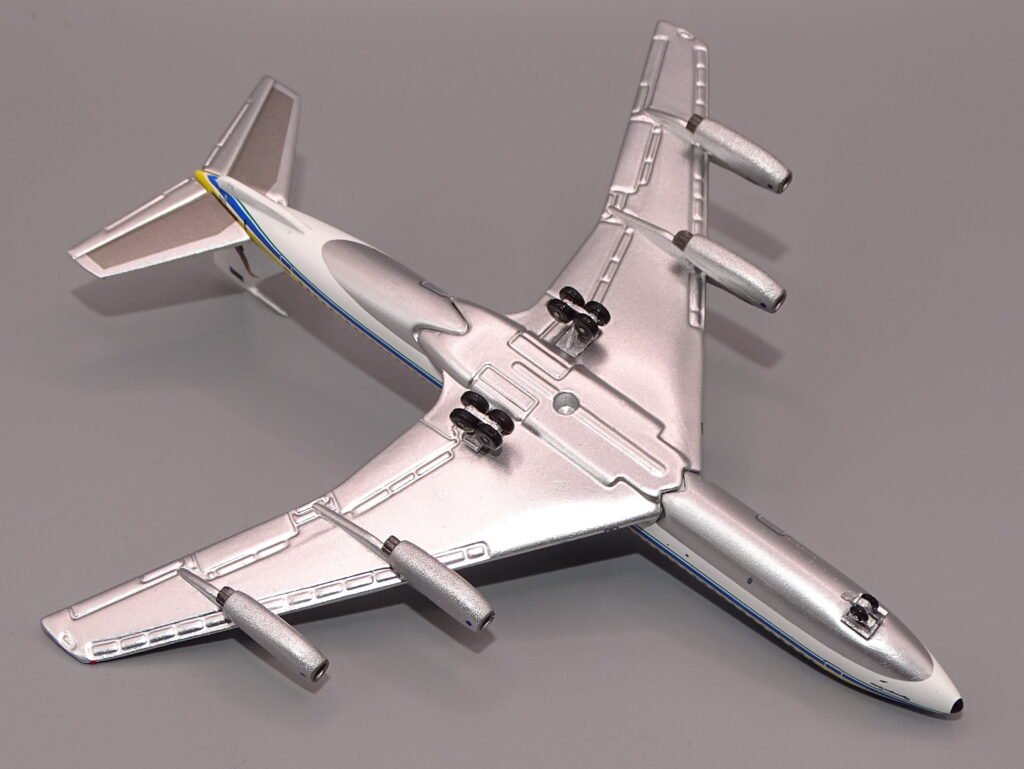
Printing detail on this model is at the usual Aeroclassics level, which in this case is good enough as long as you aren’t using a lot of macro photography. Unfortunately, whomever was doing the art design for this model didn’t do their job properly since in addition to the livery issues mentioned in the previous section looking at the photos of the real aircraft for more than a few minutes makes it obvious that it had a light grey belly, not a silver one.
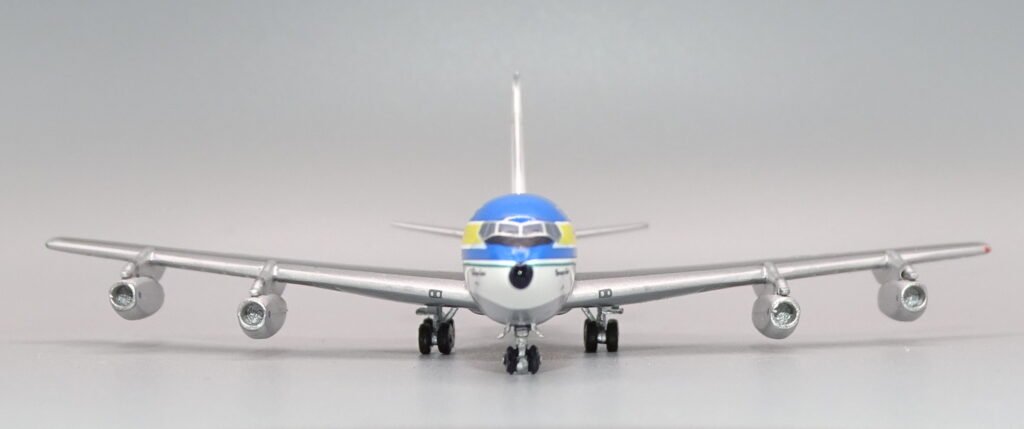
From the front the fact Aeroclassics have left the engine inners plain silver just goes to highlight the complete lack of engine fan detailing.
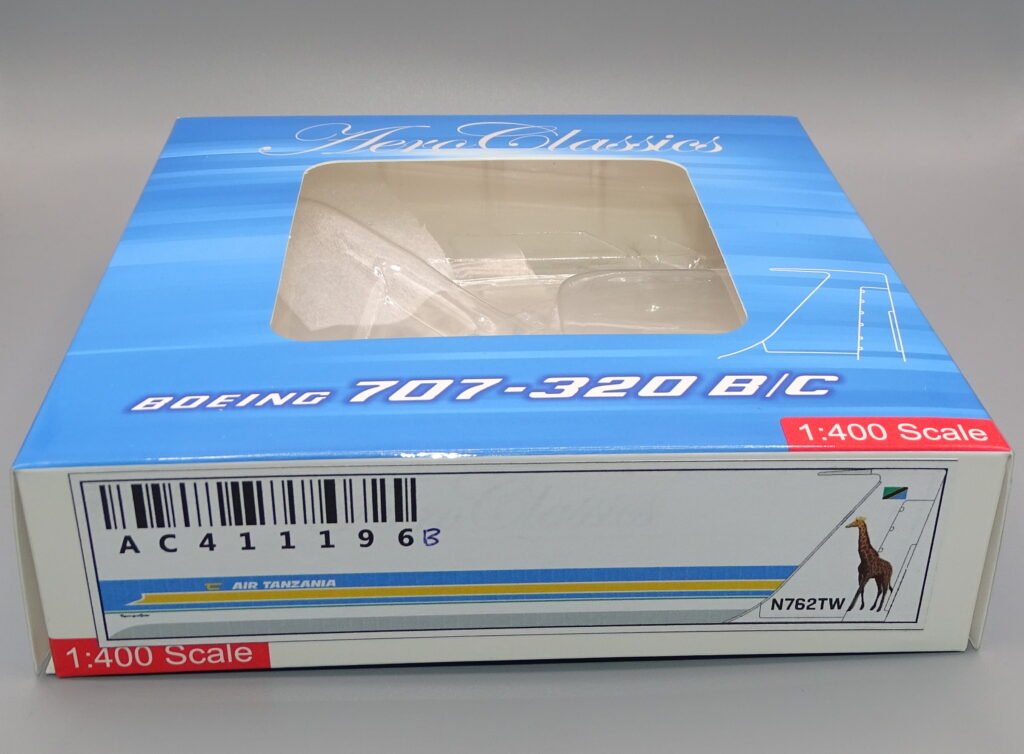
Construction wise the model is solidly put together and there are no QC issues. It comes in the usual Aeroclassics 7070 generic box but at least has a big sticker on it denoting the release.
SCORE – 8
CONCLUSION
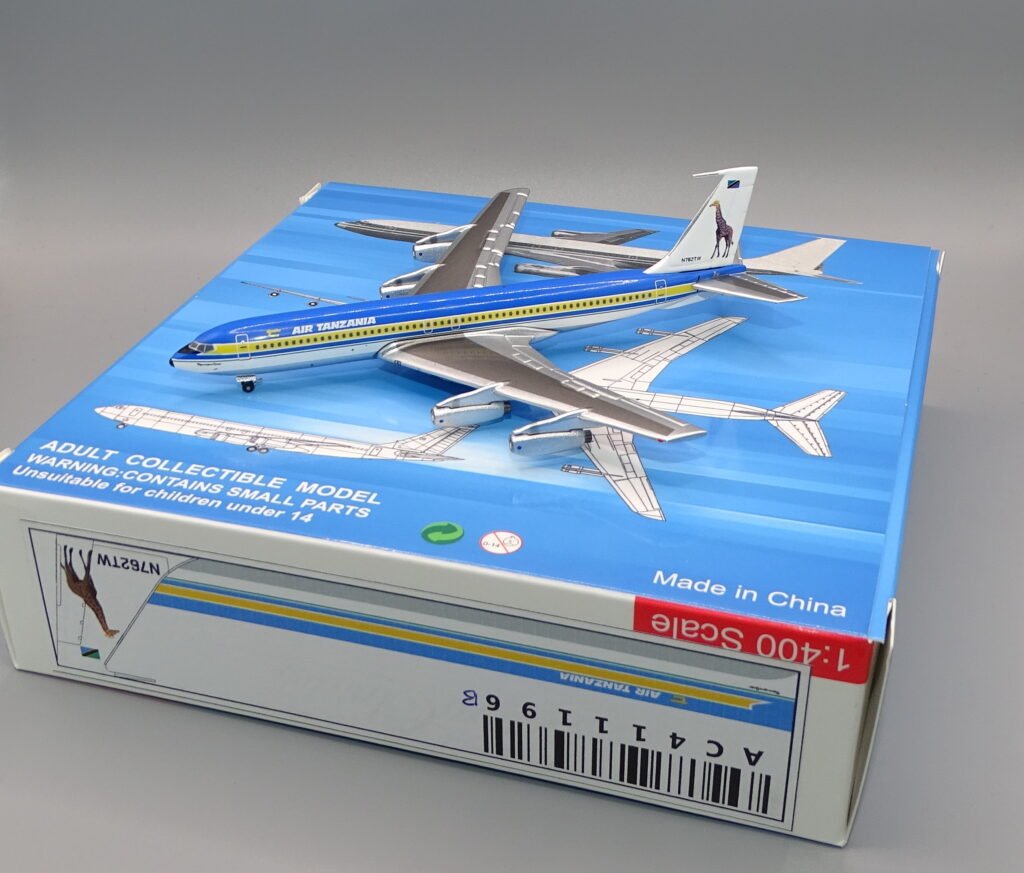
Along with this version I also acquired the Air Mauritius 707 released at the same time. I was already aware of the nosegear issue when I purchased. I buy a lot of Aeroclassics and am a major supporter of their product but I am not blind to their limitations either. There’s no doubt this model could have been quite a bit better if more care had been taken – both from a mould and a livery perspective. I’m not expecting this review to change their behaviour and I will no doubt continue to purchase their models (and like a lot of them) because the options for these type of releases in 400 scale are so limited. I would love to see a more accurate 707 turbojet made, but given the low chances of that the decision to be made is – is this one good enough? I’ll leave that up to you to decide.
FINAL SCORE – 21/30