When it comes to variety Aeroclassics are the brand to beat and this Ukrainian A320 is probably the most interesting A320 release for years now – since perhaps Air Moldova or Air Cote d’Ivoire, both of which were also Aeroclassics releases. For this reason Aeroclassics are still my top brand in terms of purchases and definitely worth a look. It is just a shame that they rarely reach the same levels of quality nowadays as they did in the past, or as other brands regularly do. Let’s take a look and see how this release came out.
Each review is to split into three key areas:
- The model mould
- The paint and livery reproduction
- Printing and quality control
Each section can get a maximum score of 10 for a maximum combined score of 30
MOULD
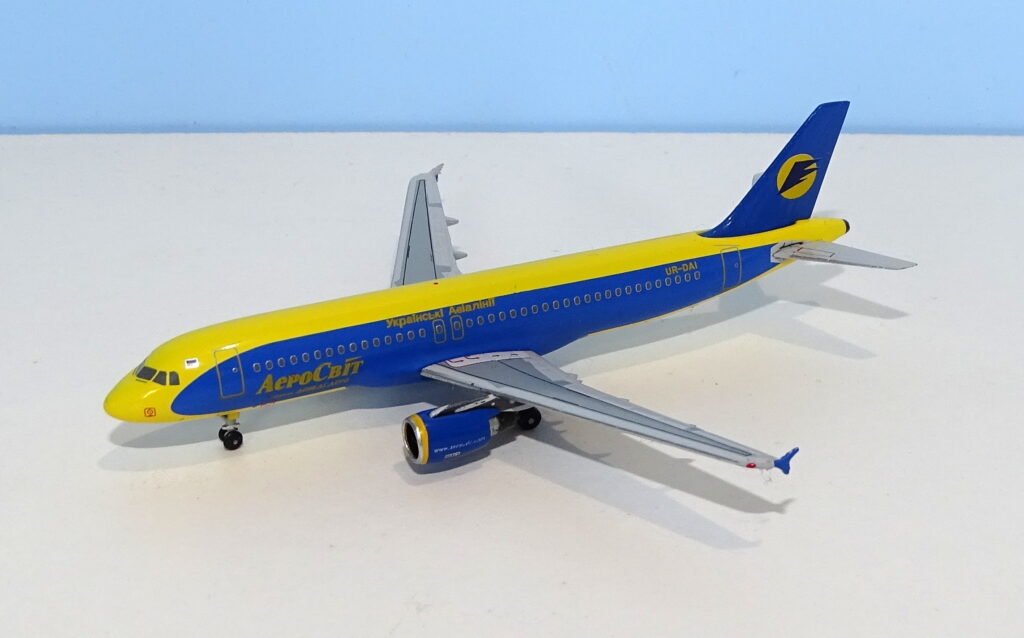
This Aeroclassics A320 is one of the most important moulds in 400 scale history. Released originally in 2009 it was streets ahead of the competition and, along with the Aeroclassics A330s/A340s, thrust the brand to perhaps its peak. It has also been used more times than any other A320 mould and remains a good example of the type.
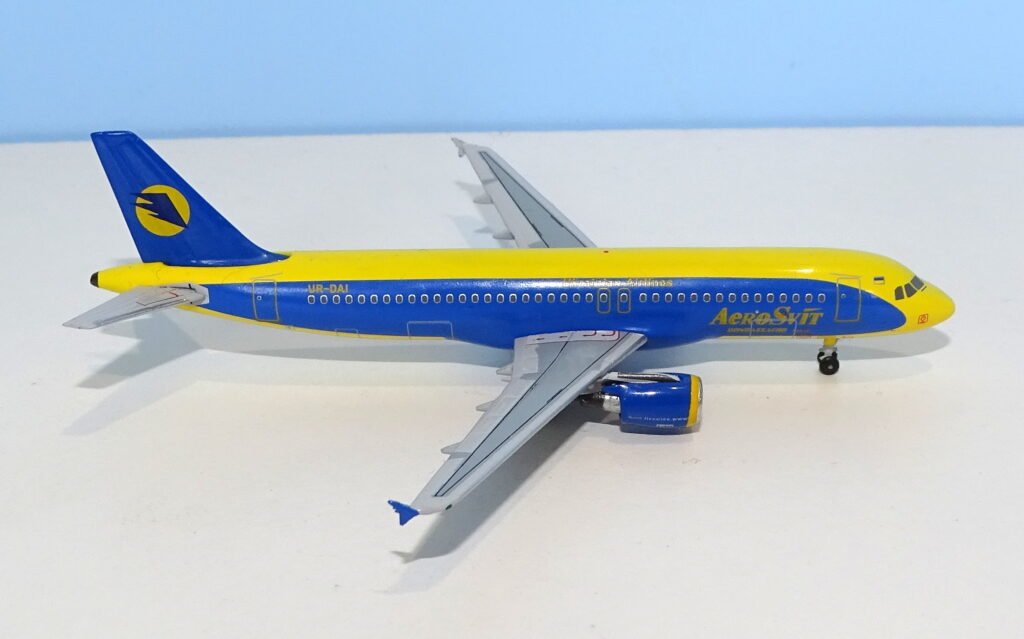
Unfortunately the mould, and Aeroclassics, have not really kicked on since the mid-2010s and although this mould remains decent it is nowadays inferior to the Panda Models, NG Models and the upcoming Aviation400 versions. The Panda Models version is an interesting comparison since it is likely a clone of this version, but one updated with new undercarriage and aerials.
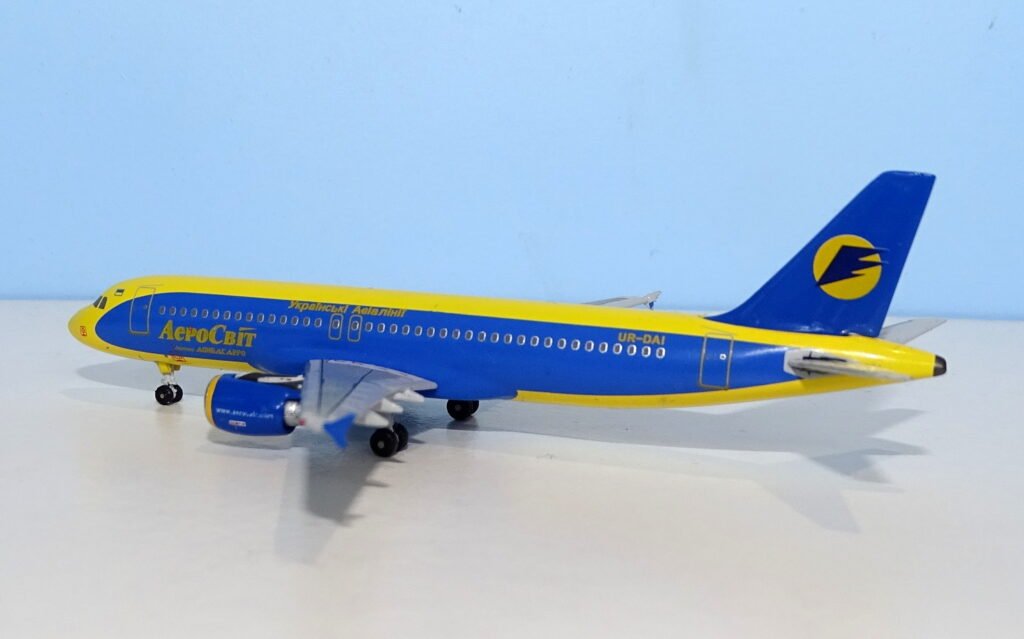
The Aeroclassics mould has not remained static since in 2018 as the nosegear tyre was modified and made larger. This didn’t go with a new tyre-hub though and because of this the simple hub is too small and the tyre doesn’t look as good as competing efforts, even though it is a better size than before.
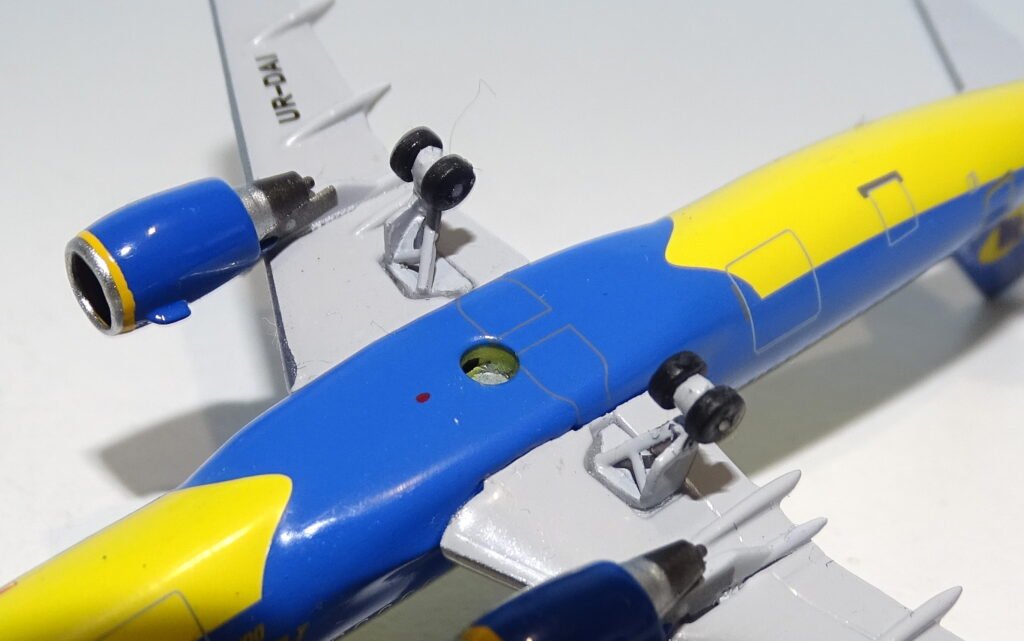
The core of the mould is exemplary with an effectively perfect fuselage, wings and stabiliser set. The wings slot into the fuselage with no discernable gap and angle upwards gently towards the wingtip fences.
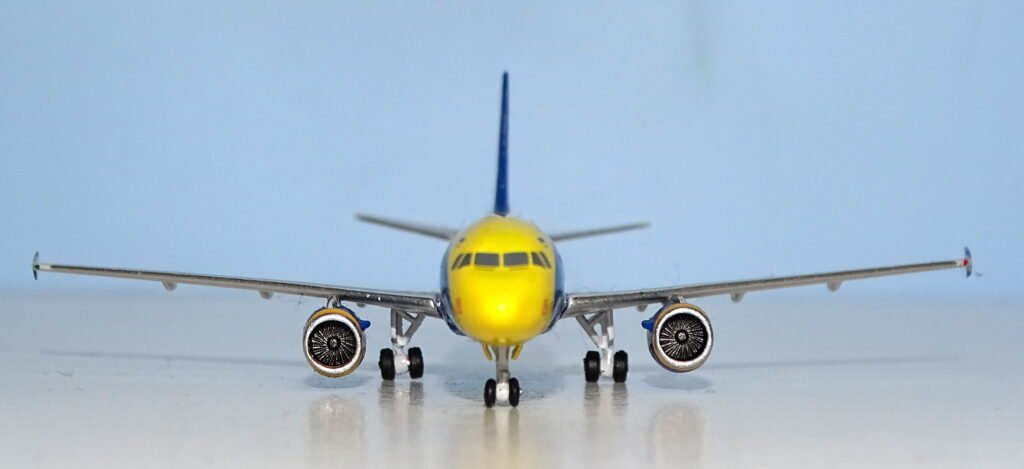
The engines on this example are CFM56-5A3s and the Aeroclassics CFM engines are very nice.
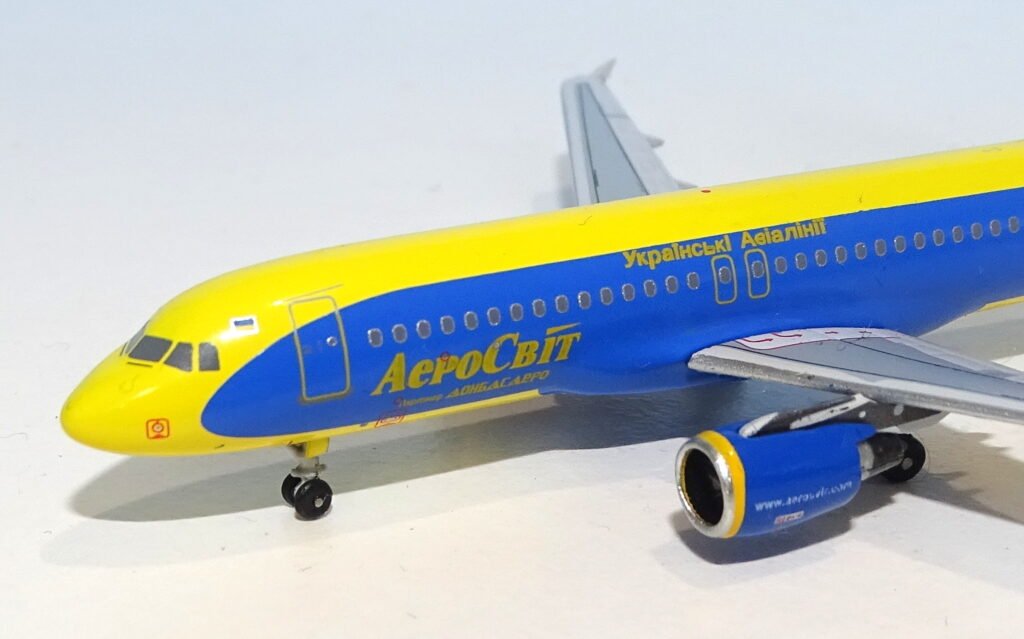
This particular example of the mould has a somewhat suspect nosecone but that isn’t I believe a mould issues per se and I’ll look at that in the quality control section.
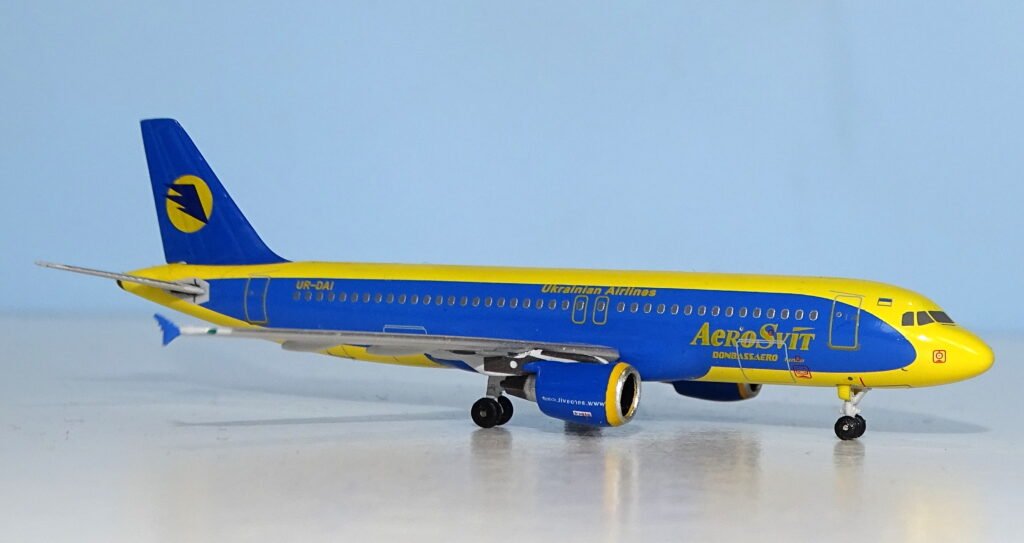
In general this mould still holds up well and is close to perfect with the changes Panda Models has made, but Aeroclassics refuse to do.
SCORE – 8
PAINT & LIVERY
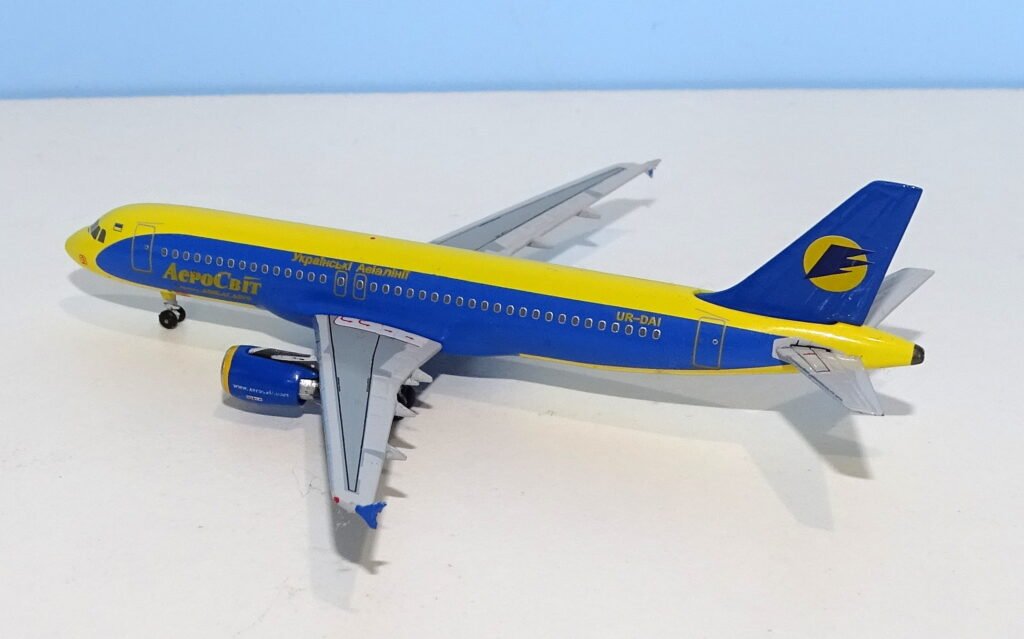
In 2007 the Ukrainian Aviation Group was formed by the Privat Group to combine Dniproavia, Donbassaero and Aerosvit. The airlines continued to operate separately, at least at first, but swapped aircraft and adopted this patriotic blue and yellow scheme in 2011. This aircraft was one of three A320s with Dniproavia that gradually transferred to Aerosvit and operated with dual titles.
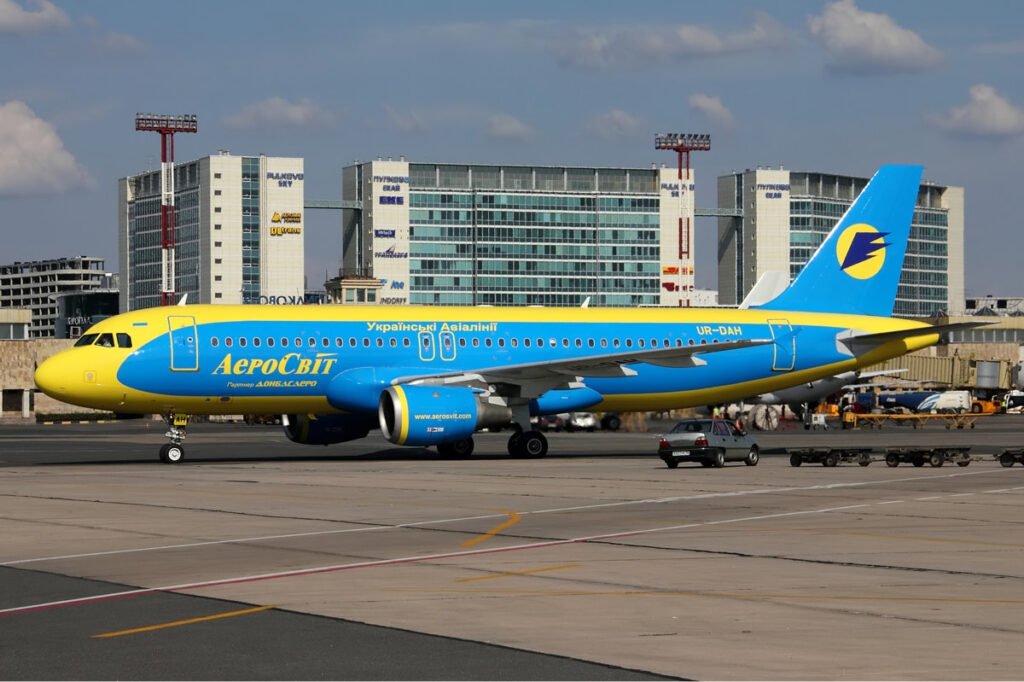
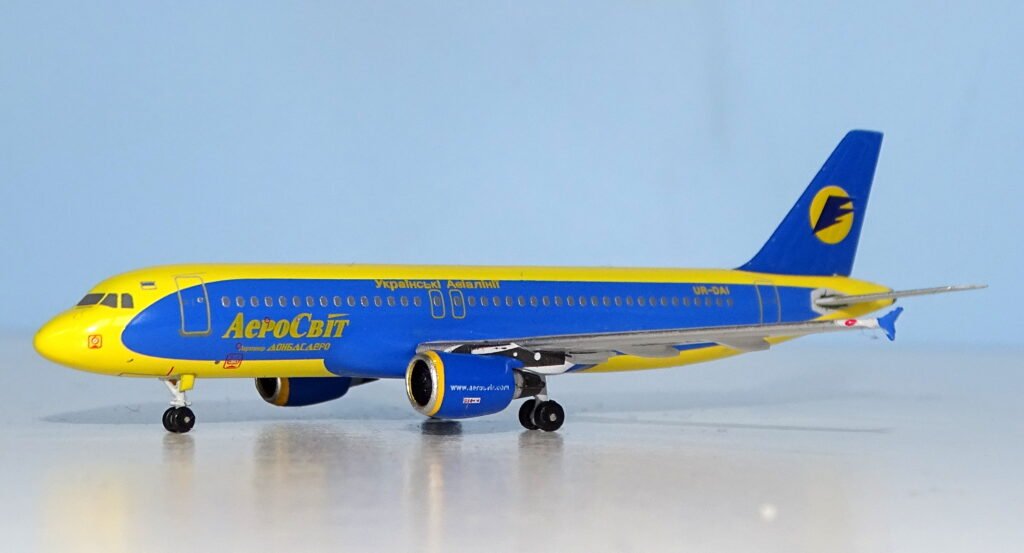
The colours of the livery were a bright yellow and a light blue, with a much darker blue tail emblem. Aeroclassics have a tendency to reproduce colours too dark and once again that is the case here. The yellow isn’t too bad but the light blue is definitely quite a lot darker than it ought to be.
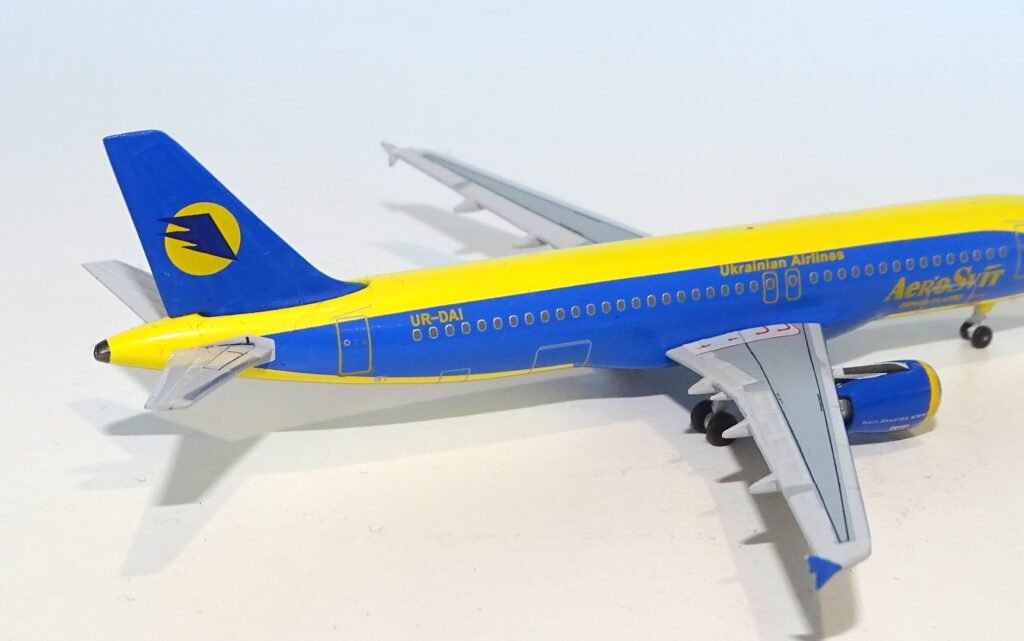
On the other hand the rest of the scheme is replicated well positionally, with the shape of the central blue curving section accurate and titles in the right place. The model is missing the AI registration ending on the nosegear doors. Unfortunately, there are several other printing issues with the livery replication that I will cover in the quality control section.
SCORE – 8
PRINTING & QUALITY CONTROL
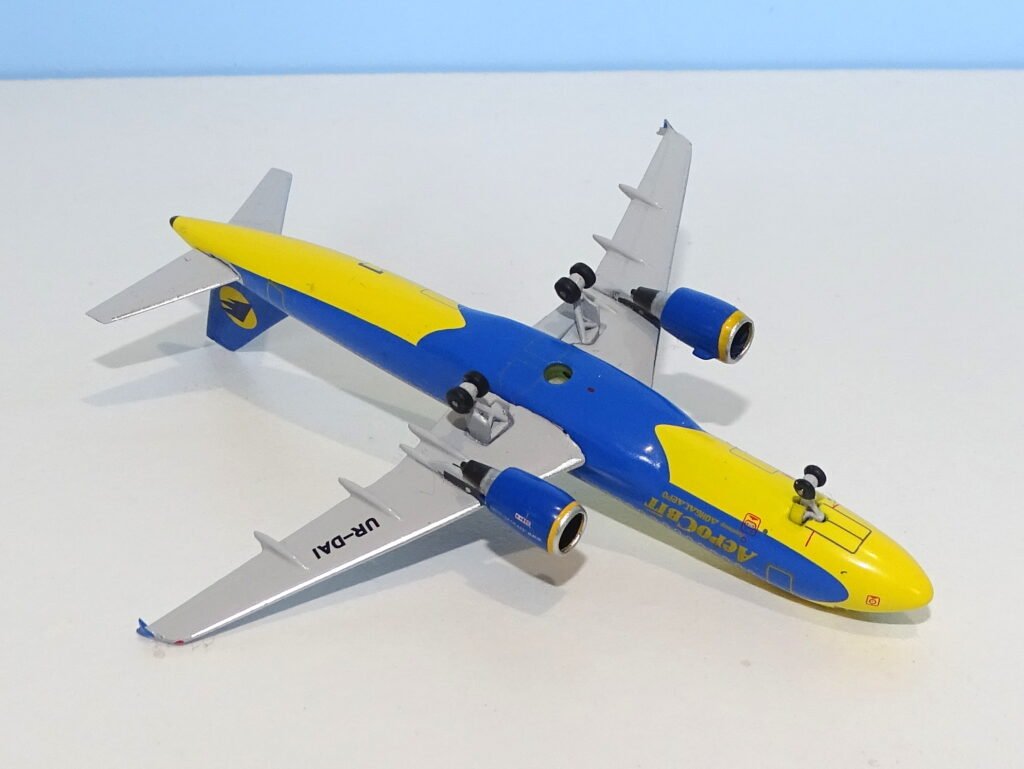
As I have suggested in the introduction nowadays Aeroclassics biggest issue appears to be printing and quality – two areas that in days gone by weren’t major concerns for them. The factory just seems unable to do the finer things that others can and so you have to accept there will be issues.
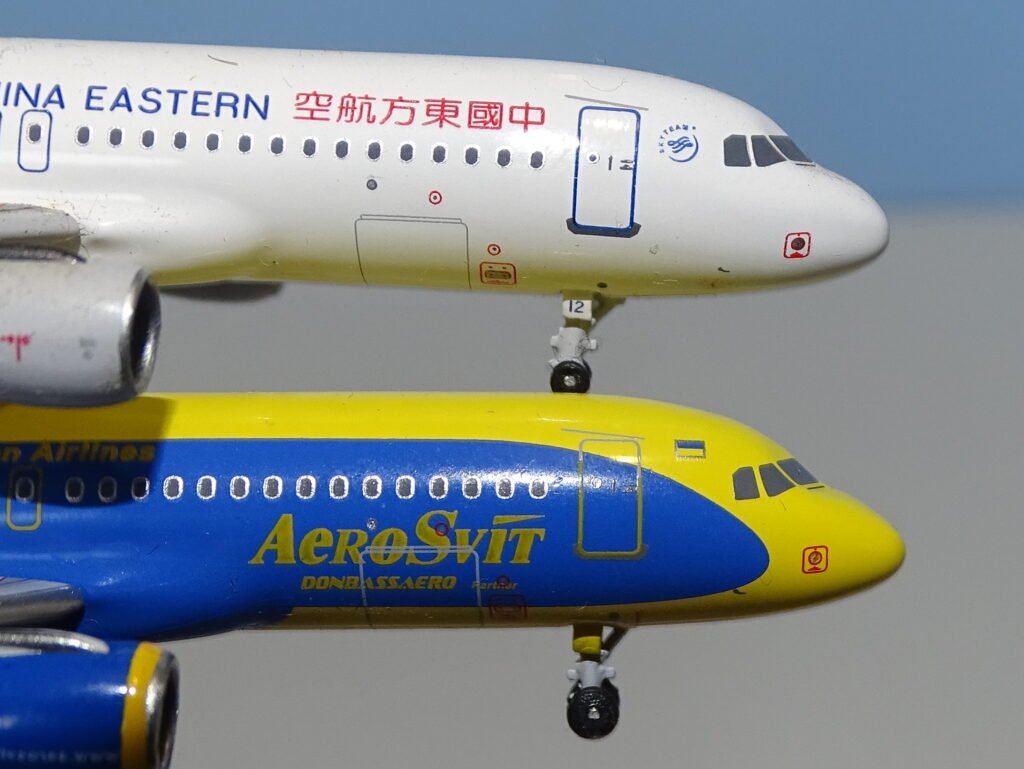
One of the issues Aeroclassics have had recently is over-polishing of the nosecones of their moulds. There have been problems with various types such as the Viscount and DC-9. This A320 also seems to have the issue to some degree. Comparing it to other Aeroclassics A320s I own and the angle down from the cockpit is not as rounded and the nosecone is a little pointy. It isn’t dreadful but it is noticeable.
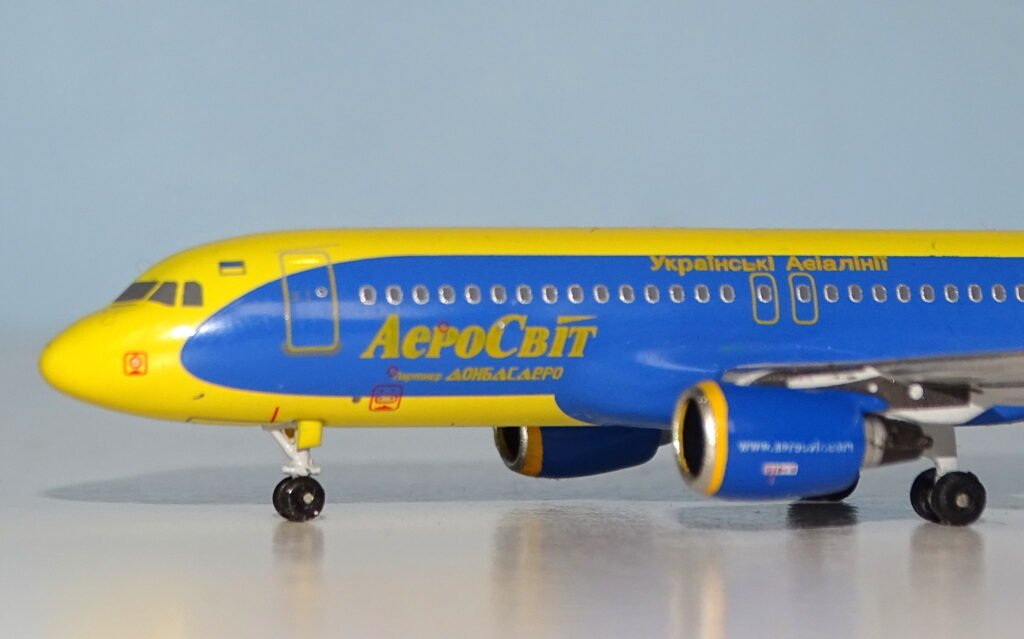
In terms of printing the A320 template is good but there are aspects of the finished version that don’t improve the model. Firstly overprinting of colours is another area Aeroclassics sometimes struggle with. Here the yellow titles have clearly been printed over the blue and so the titles, which should be just as yellow as the rest of the scheme, are significantly darker than they should be.
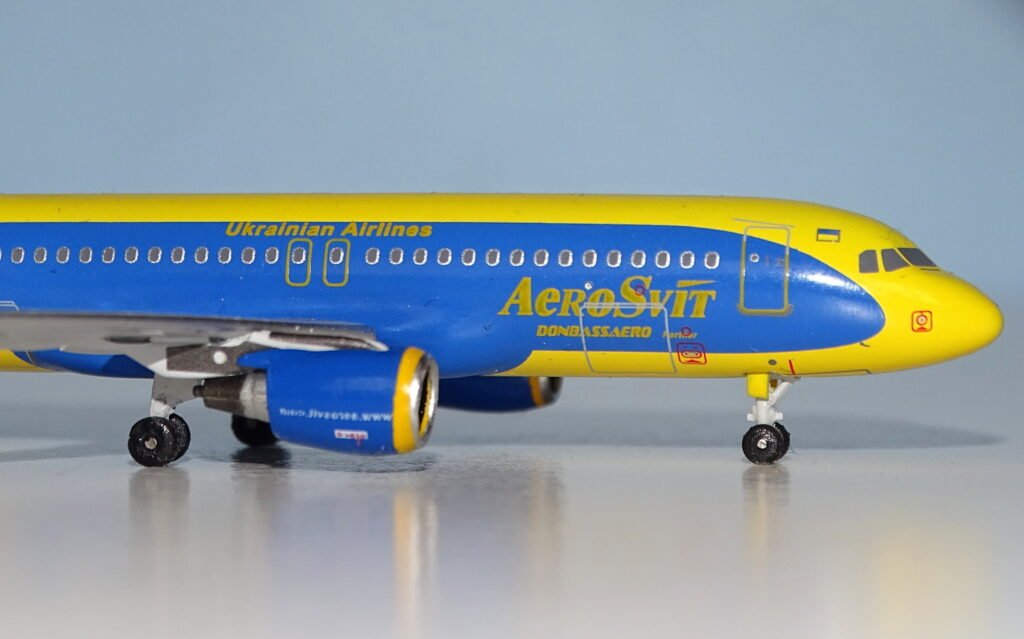
Another printing error is on the engines and this one is just sloppy. The engines have the airline’s web address on them, and the titles are admittedly tiny and hard to read by the naked eye. Take photos though and it becomes obvious that the text on the right side engine is backwards.
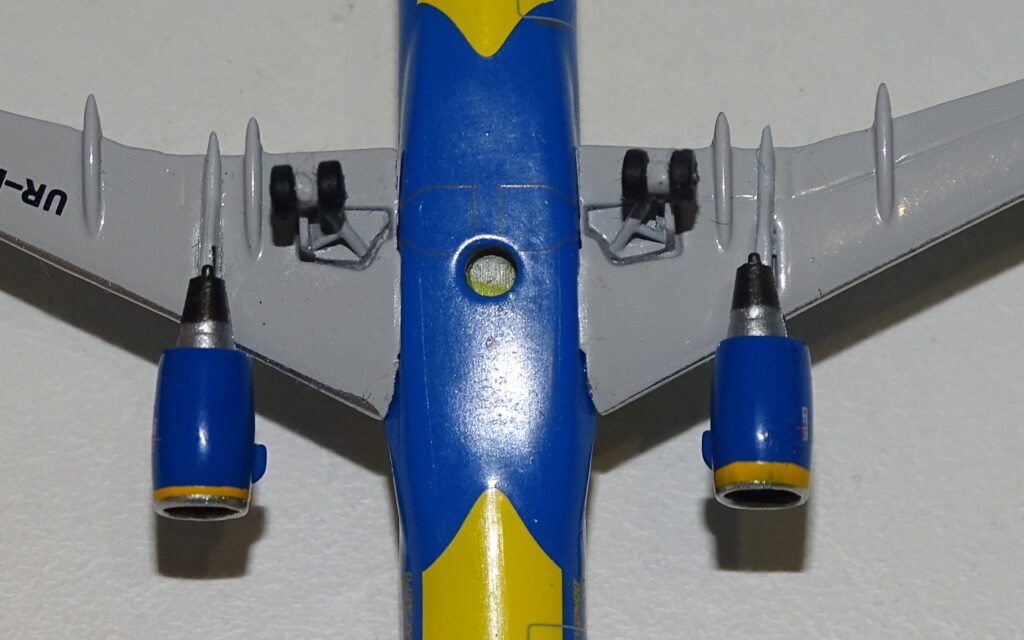
The engines also have some sloppy paintwork. The yellow ring should be the same width all the way around the engine but on the port side engine it clearly tapers towards the bottom, whereas on the starboard engine it does not. This is most obvious from underneath where the differences in thickness are largest.
SCORE – 6
CONCLUSION
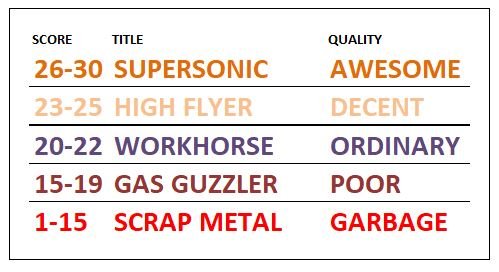
This model almost slips into the decent category but in the end falls just outside. Does that mean I don’t recommend it – not really. I am still glad I got it but it does illustrate the compromise you often must make when acquiring Aeroclassics releases. They do produce some very good models but the issues seen with this model are not at all unusual. Having said that I can’t see anyone else producing the diversity of airlines they do. Not even NG nowadays make these sort of niche products and so as a collector you are caught somewhat between a rock and a hard place. I get a huge amount of pleasure from my Aeroclassics releases but I would be very surprised to receive a model with the overpolished nose and print issues here from any other brand too.
FINAL SCORE – 22/30