NG Models has entered a release rhythm nowadays that means classic collectors have to settle for only 2 or 3 classics a month in a release set of about 25 models. I can’t say that pleases me much and it means that Tristar releases are few and far between. Even so, those that are dribbling out are obviously still miles ahead of the competition’s efforts and worthy of a closer look.
Each review is to split into three key areas:
- The model mould
- The paint and livery reproduction
- Printing and quality control
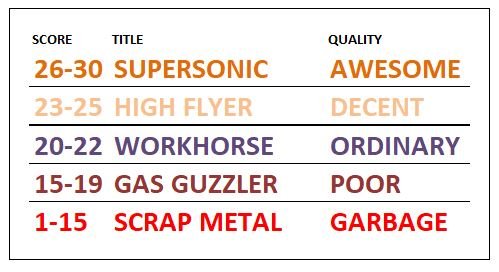
Each section can get a maximum score of 10 for a maximum combined score of 30
MOULD
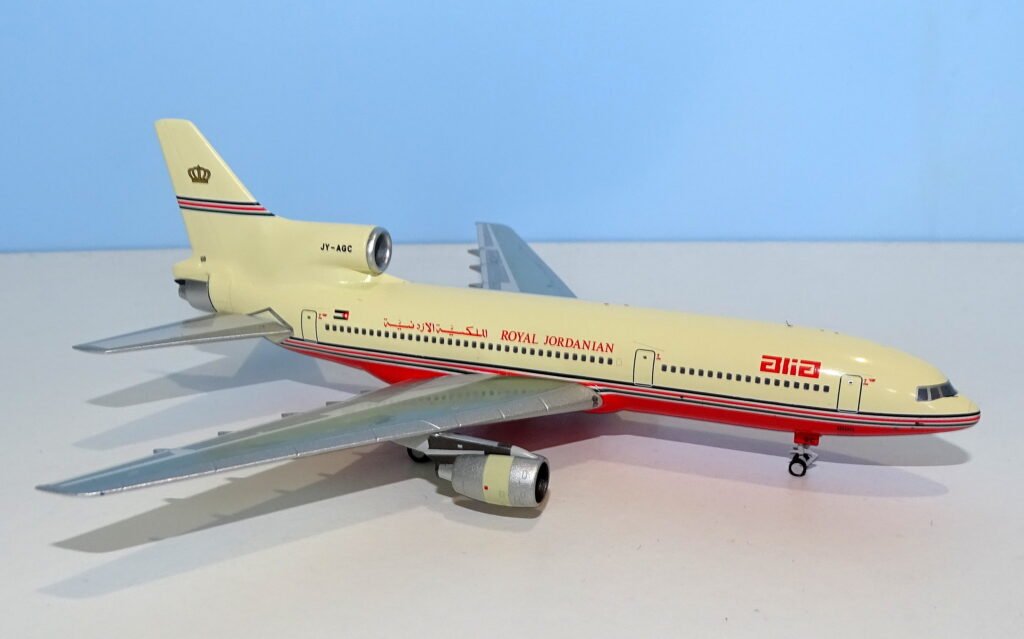
Despite there being a relative flurry of Tristar 500s in the past few years from Gemini Jets, Lockness / Aeroclassics and NG Models the only real competitor to the NG Models Tristar 500 is the old Dragon Wings version dating from the turn of the century. Certainly, the Gemini Jets and Lockness Models versions from the past couple of years can be easily discounted as they do not portray a real aircraft. They instead portray a weird Tristar hybrid without many of the features that make the 500 unique.
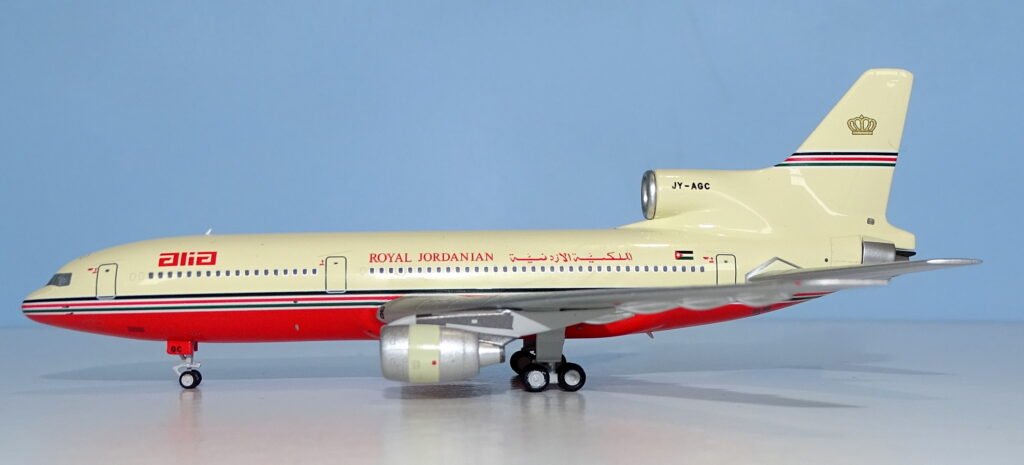
It helps that the standard-length NG Tristar is so good but that wouldn’t count for anything if NG had ignored the differences. As a recap they are:
- A decrease in length by just under 4 metres
- A redesigned and shorter forward and rear wing fairing where it meets the fuselage
- An increased wingspan (by an extra 3 metres) at the tip.
- The frisbee fairing middle engine / fuselage connector (shared with the L-1011-200)
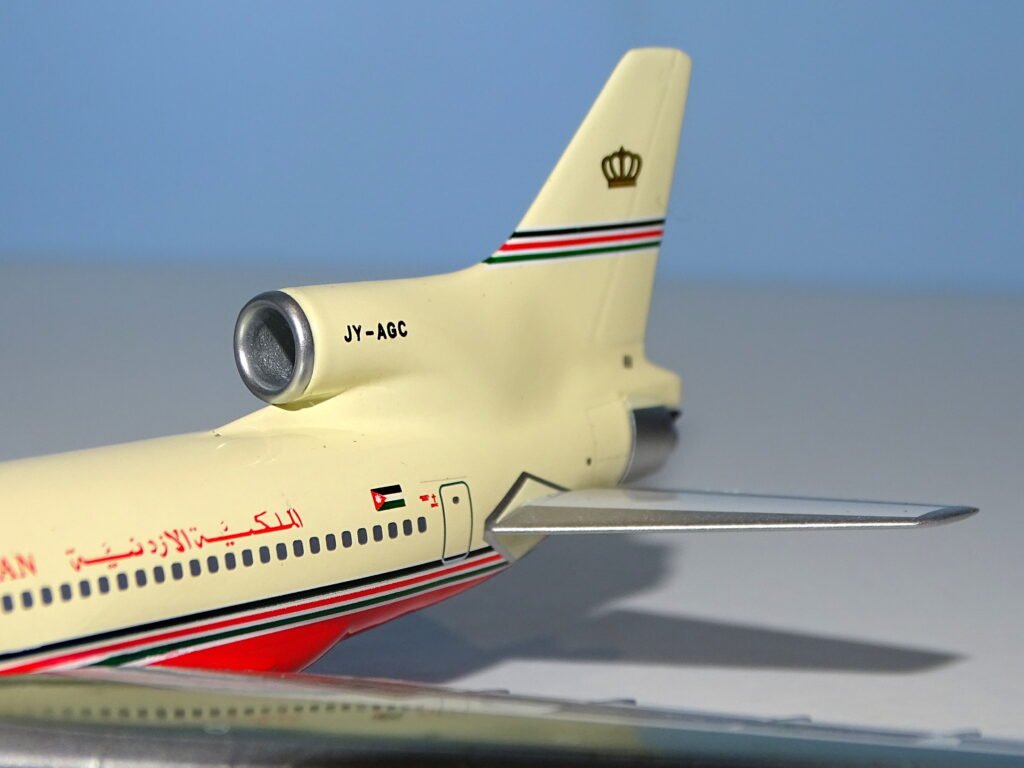
Gemini got 1.5 of the 4 and Aeroclassics managed slightly better (about a 2 although the undercarriage and nose are worse). NG Models gets about a 3.75. My only criticism is that the complete shape of the middle engine fuselage fairing (frisbee) isn’t 100% spot on. The number 2 engine does look excellent though with delightful curves and no sharp edges.

What you do get of course is the perfect nose shape, beautiful fuselage and amazing tail section. The latter is particularly nice with an excellent engine to fuselage width and perfect angles. The complex tailcone, engine exhaust area is tightly fitted and looks great. The wings of course demonstrate the extended wingtips and a good angle. These are all major features that have been incorrect or poorly reproduced on the competition.
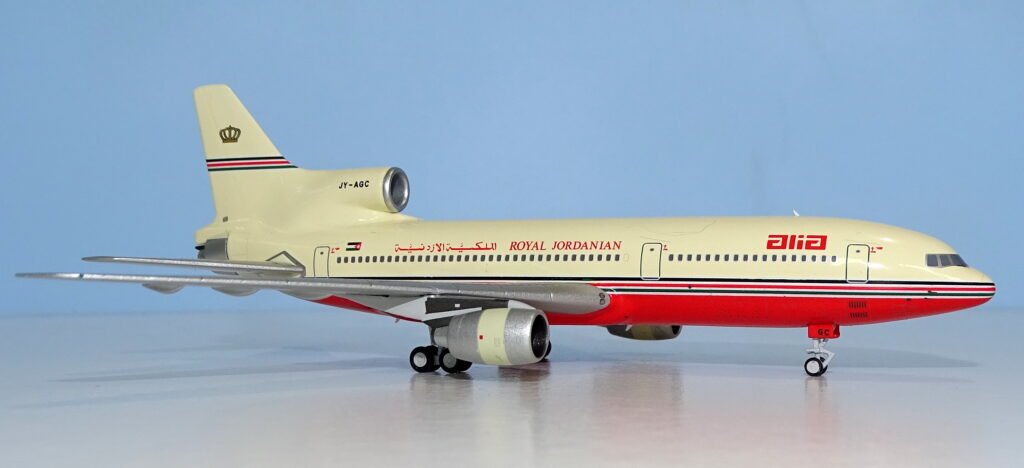
The undercarriage is very attractive but does repeat the slight errors of the standard-length version. The forward process on the nosegear is a little large and the angle of the maingear doors is not quite correct.

That being said this is an excellent Tristar 500, one that NG has improved with mods to the angle of the engine rims. I don’t see competitors making any worthwhile changes to their Tristars even when they are grievously incorrect. For me this mould is over the threshold necessary to achieve a 10.
SCORE – 10
PAINT & LIVERY
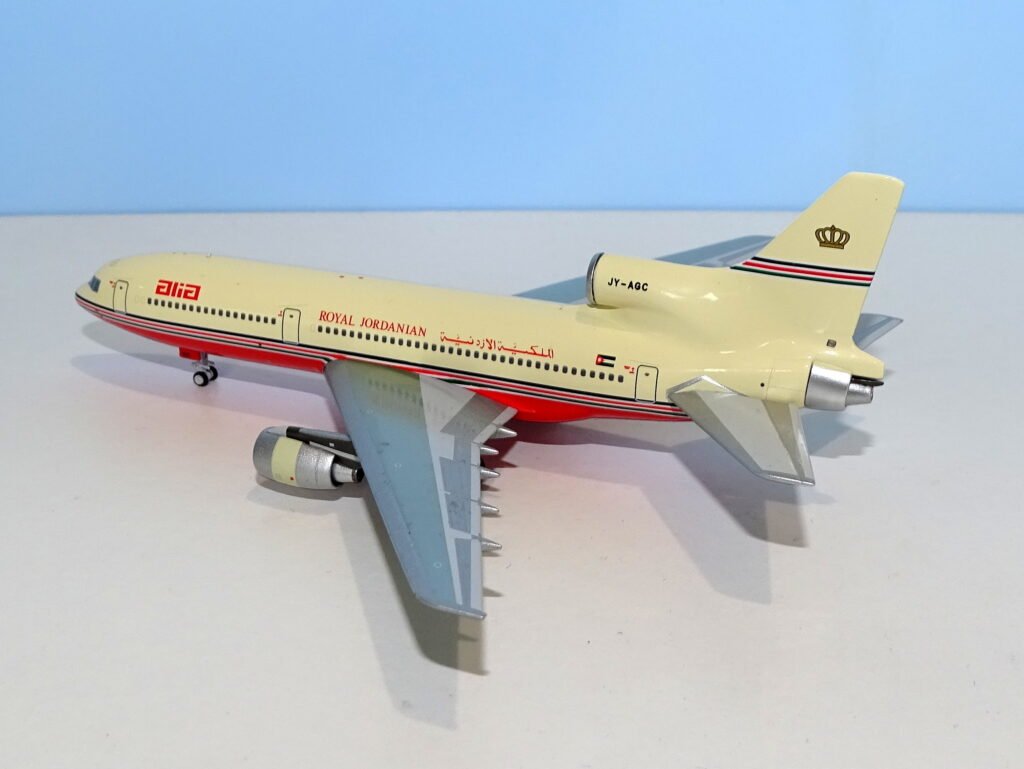
Alia experimented with several liveries in the early 1980s around the time their Tristar 500s were delivered and so within a few years of service entry the Tristars had worn three different schemes (they would later wear a fourth when the Royal Jordanian name was adopted). This version is NG’s second Alia livery and the shortest lived of the first three.
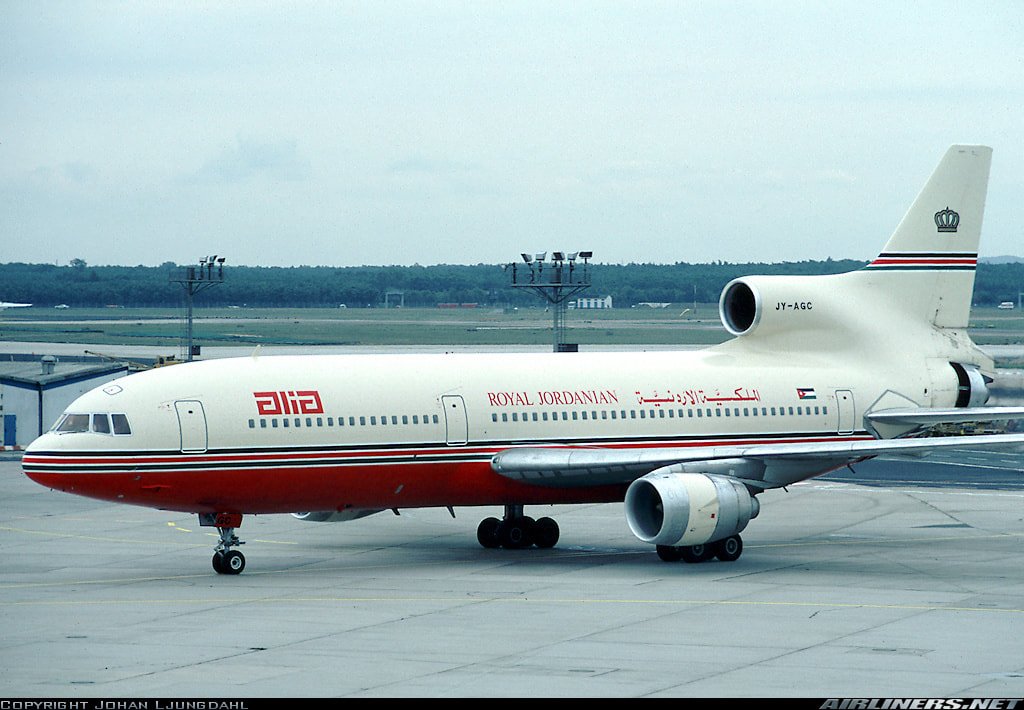
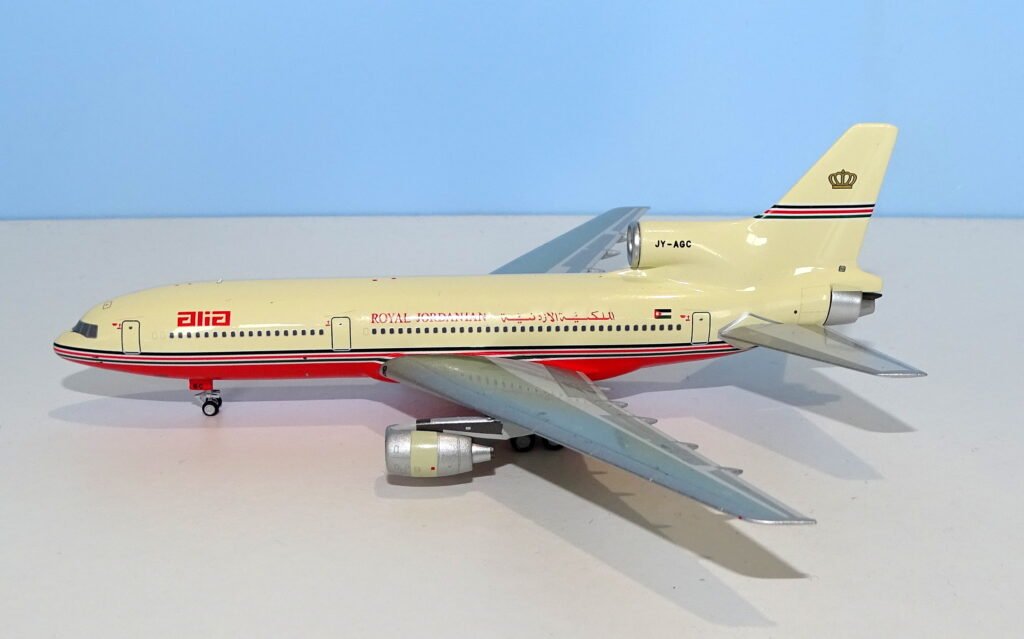
The scheme seems to have only been worn by two of the Tristar 500s (JY-AGC and AGD). It is essentially similar to the scheme that followed it aside from the simpler less colourful tail design. Unusually the fuselage base colour of this scheme is an off-white beige tone. The shade of the model is a little too sandy but it looks lighter in hand than in the photos.
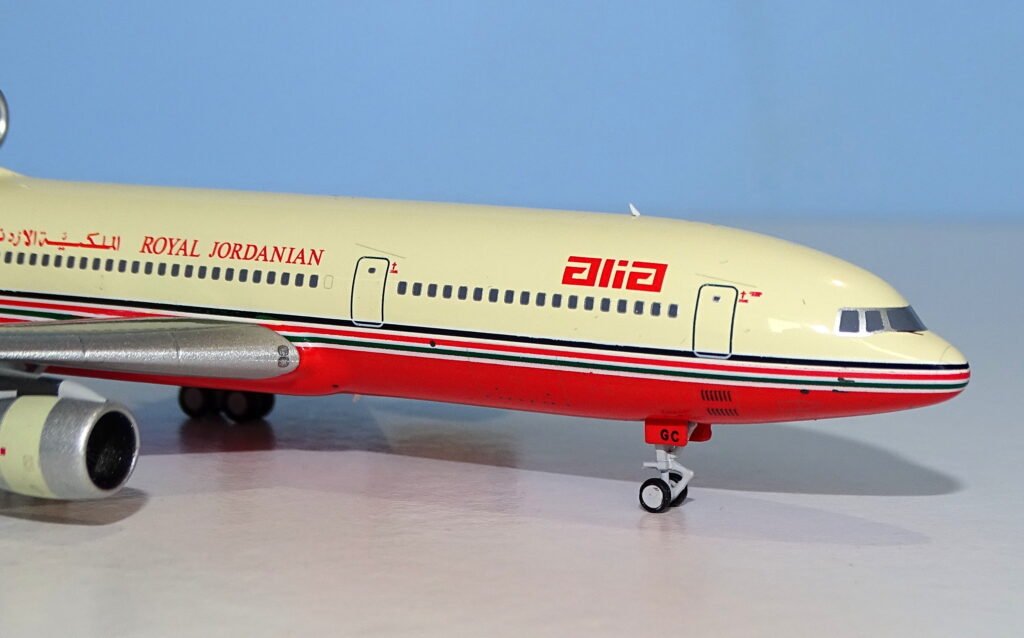
The remaining red and black are fine and the position of the pinstripes and belly line are fine. JY-AGD repeated the pinstripes on the engines however this aircraft, JY-AGC, did not and has the blander style of engine detailing seen here.
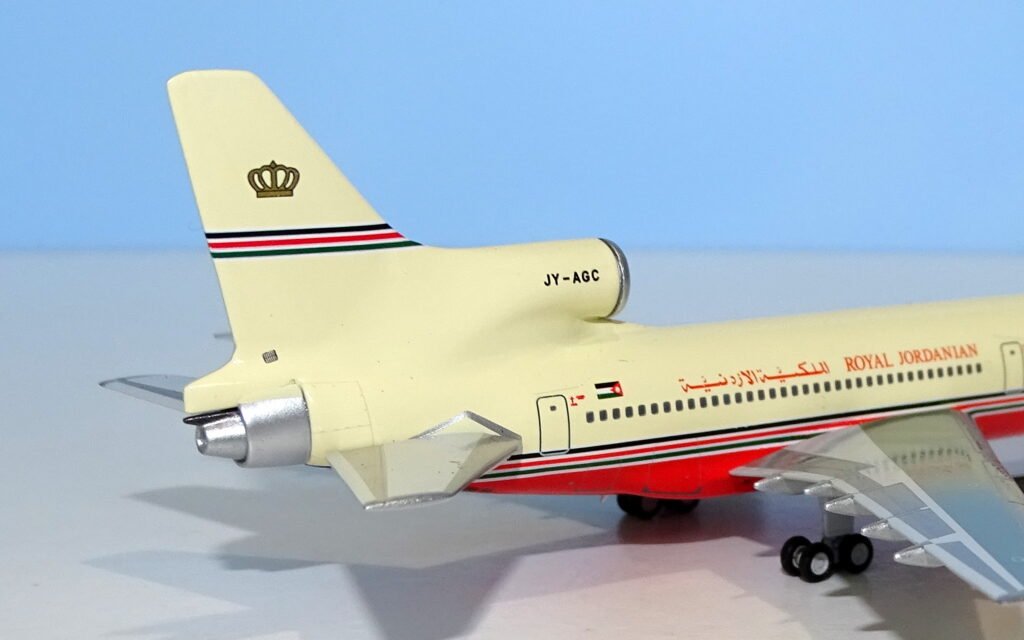
The titles and black outlined golden crown on the tail all look accurate. The only thing out of place appears to be the aircraft registration, which is a little too high on the number 2 engine.
SCORE – 8
PRINTING & QUALITY CONTROL

The base template for the L-1011 has given NG Models the license to run riot with their printing detail and there is no mistaking the fineness and quality on show here. The underside, an area lesser manufacturer’s leave largely vanilla, has more than 50 bits of detail on it. NG have taken printing to another level and this L-1011 has the finest.
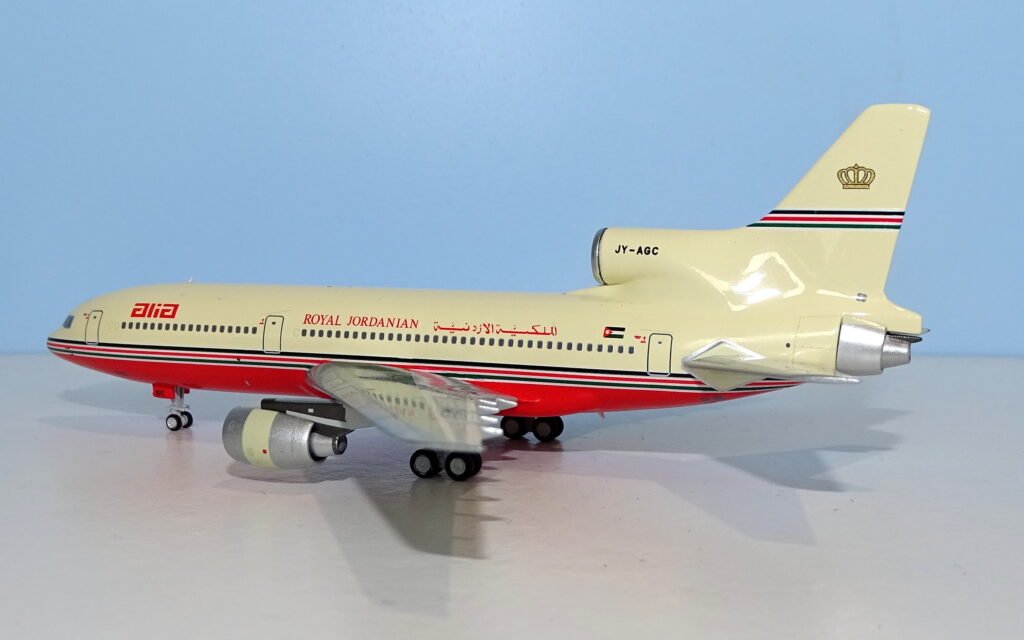
I am not 100% sold on the shape of the outer cockpit windows, which appear slightly too small but overall the printing and paintwork are of the usual high standard.
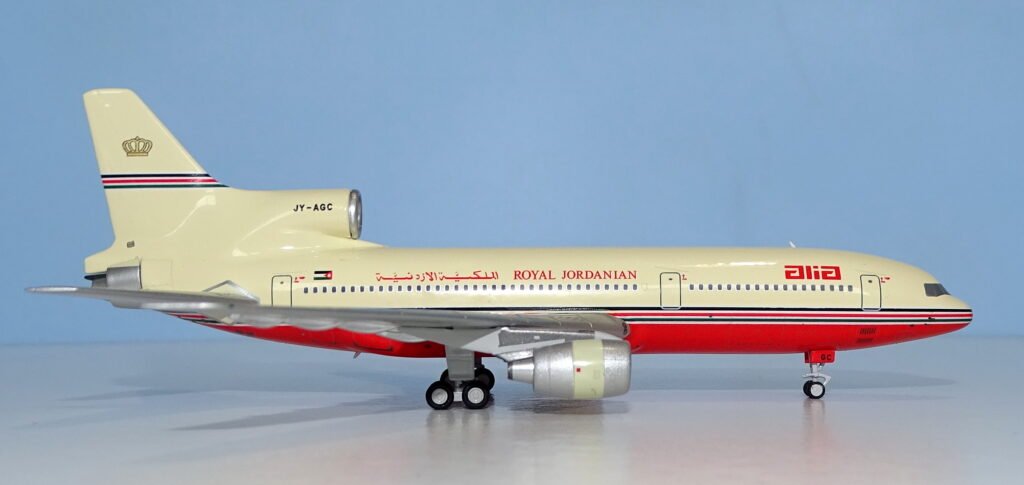
Build quality is fine aside from the perennial issue of hubcap detailing. This model almost escapes without issue but the right side nosegear hub is undetailed.
SCORE – 9
CONCLUSION
I want to see more Tristars from NG Models. I think the aircraft was a beauty and that the NG version of it is superb. This model illustrates that well but ironically if they were making more it is one I might not have acquired for my collection. As it is with such limited L-1011 production I’ll take almost any NG Tristar I can get. Hopefully sales of these examples will convince NG that we need more trijets and less modern twinjets.
FINAL SCORE – 27/30