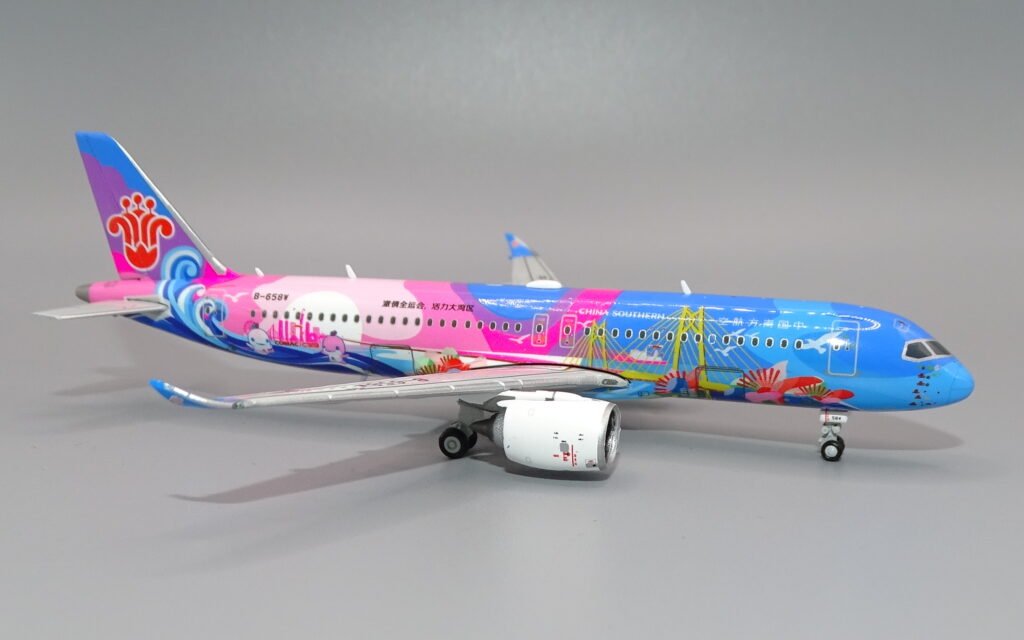
HX Models has recently been branching out with new narrowbody moulds for the Airbus A320, Boeing 737NG and COMAC C919, all of which introduce flaps down into smaller aircraft in 400 scale for the first time. Having previously reviewed both the A320 and 737 here at the site it is time to take a look at the Chinese equivalent. Although it no doubt can’t hope to meet the performance levels of its Western competitors the C919 is building up a lot of paper orders and gradually entering service in decent numbers in China. It is also building up a serious head of steam with 400 scale brands with not far off twice as many model versions made as real aircraft delivered!
Each review is to split into three key areas:
- The model mould
- The paint and livery reproduction
- Printing and quality control
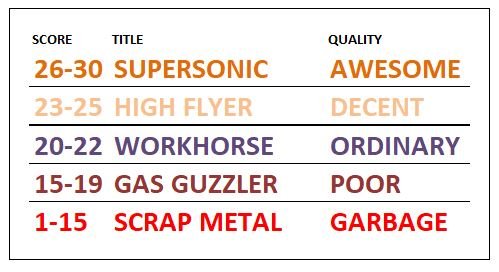
Each section can get a maximum score of 10 for a maximum combined score of 30
This review is sponsored by Northeast Diecast. Check out their store for an excellent range of hard to find 200 and 400 scale collection sale models and get 15% off!

MOULD
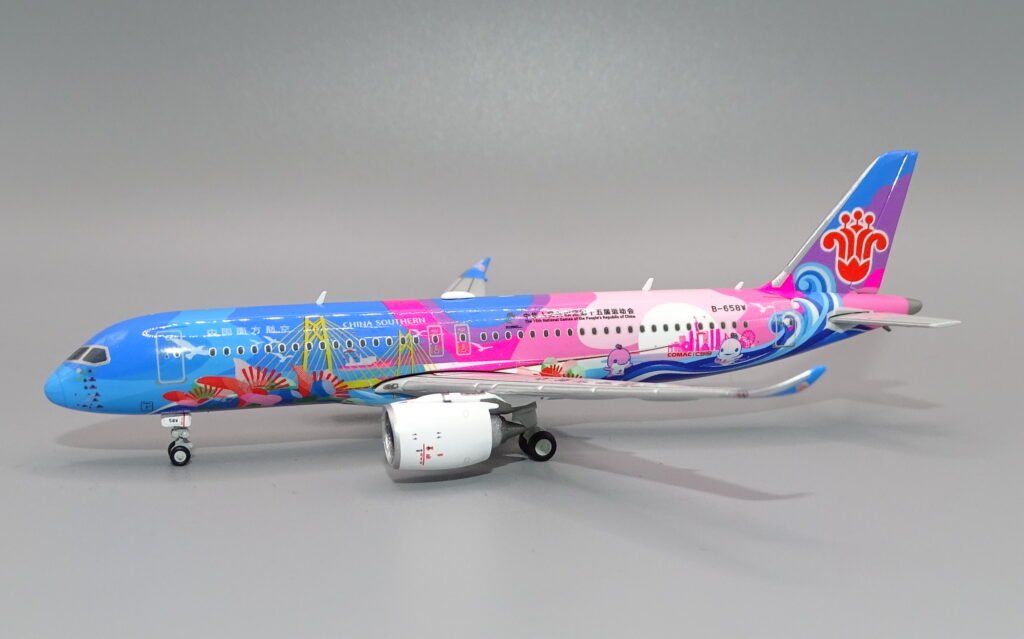
In 400 scale there are now 5 different moulds for the C919, from HX Models, JC Wings, NG Models, Panda Models and Phoenix Models. Three of those five moulds were introduced in the 2017-2019 period with the Phoenix version not appearing until 2024. The model under review here signifies the first release from HX.
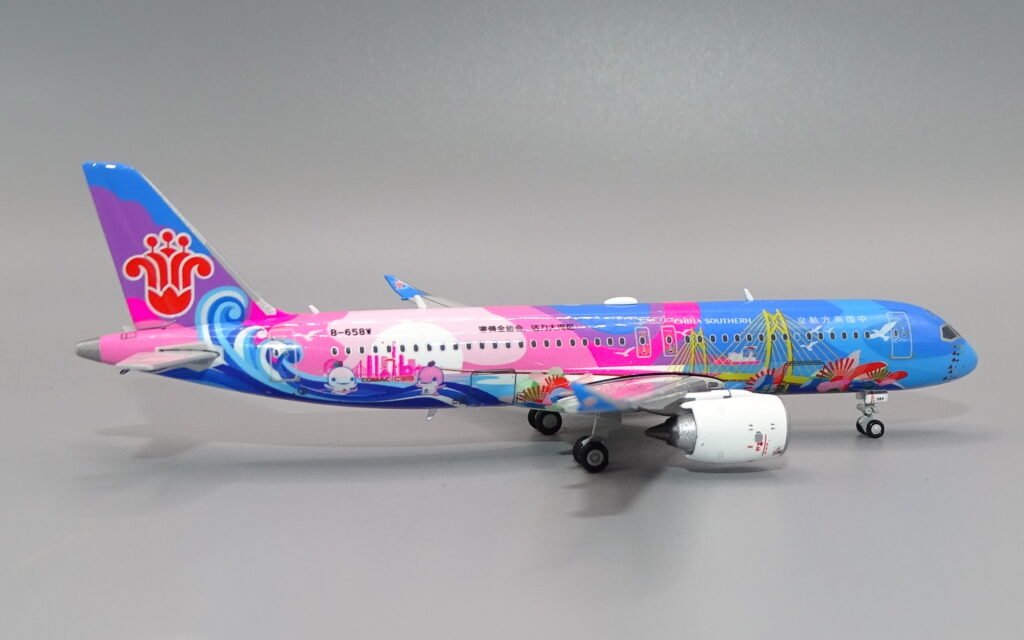
Personally, I’ve always found the C919 to be a rather ugly aircraft compared to the A320 and 737, as it has a rather unflattering nose profile. How this looks is heavily impacted by the huge cockpit windows and that is also evident when looking at model versions, however since that is a print concern it isn’t scored in this section.
My C919 purchasing to date has centred around the NG and Panda varieties. Comparing those two to the HX and the real thing I would argue that both the HX and Panda noses are a little too short and rounded whereas the NG has a slightly longer and more accurate profile to it. Photos of the JC mould suggest its nose is also more like the NG and real thing.

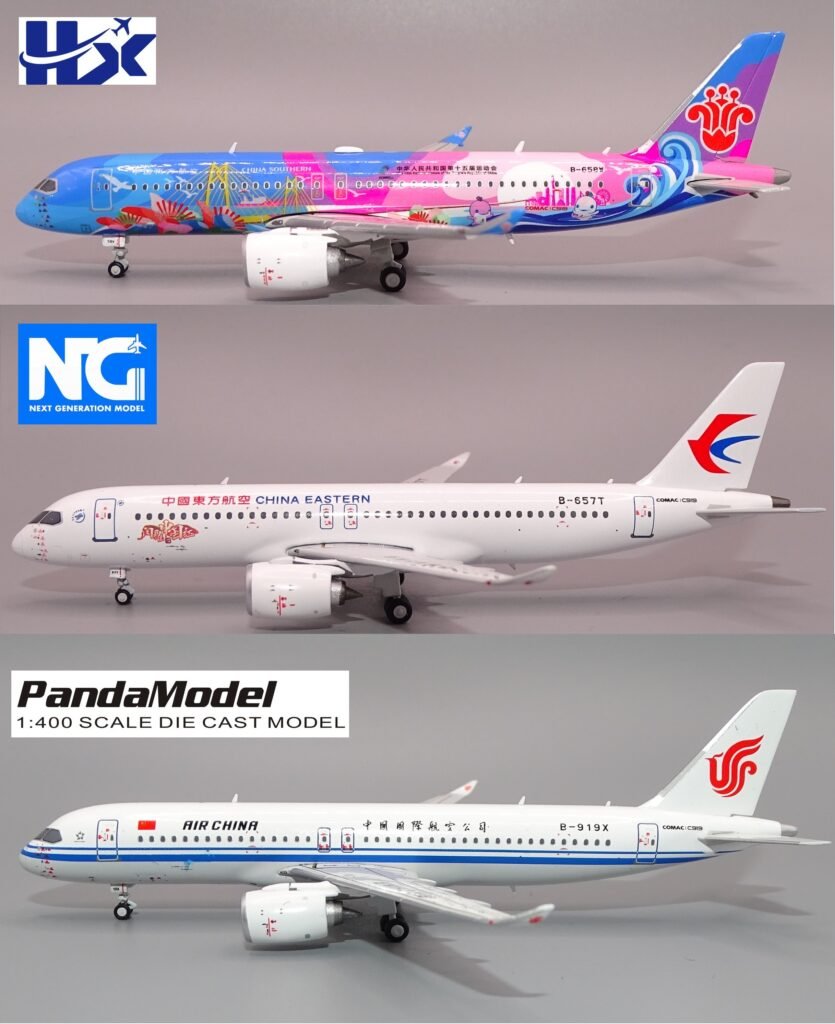
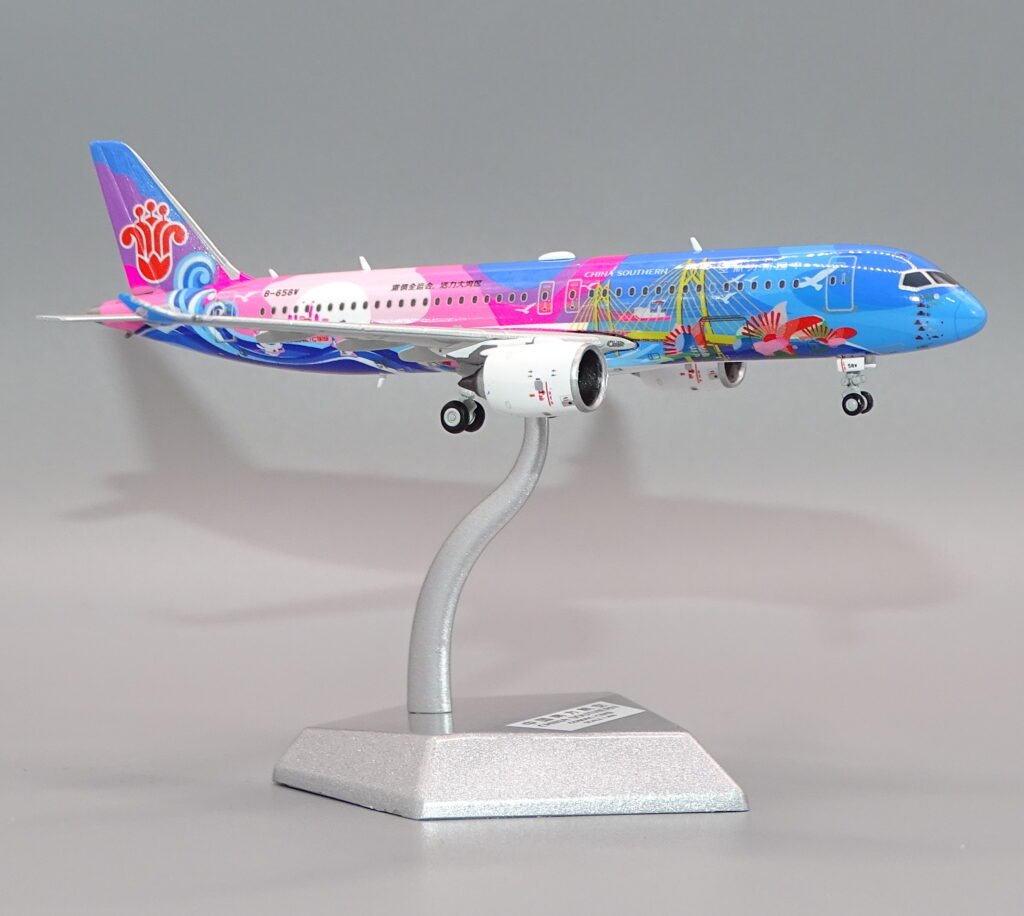
The nosegear on the HX edition is quite robust and tall, more so than the competition. It doesn’t have the same level of detail as the Panda version but does hold the aircraft quite high – a necessity due to the engines.
The engines are of course CFM LEAP-C128s and they share the issue to those fitted to the HX A320neo in that they are just too large. This appears to be a trait HX has carried over from its JC days as the JC Wings NEO engines are notoriously oversized too. The nacelles are too deep and barrel like, plus don’t have the slightly upturned angle of the real thing either. From the front the engine rims are also rather thick.
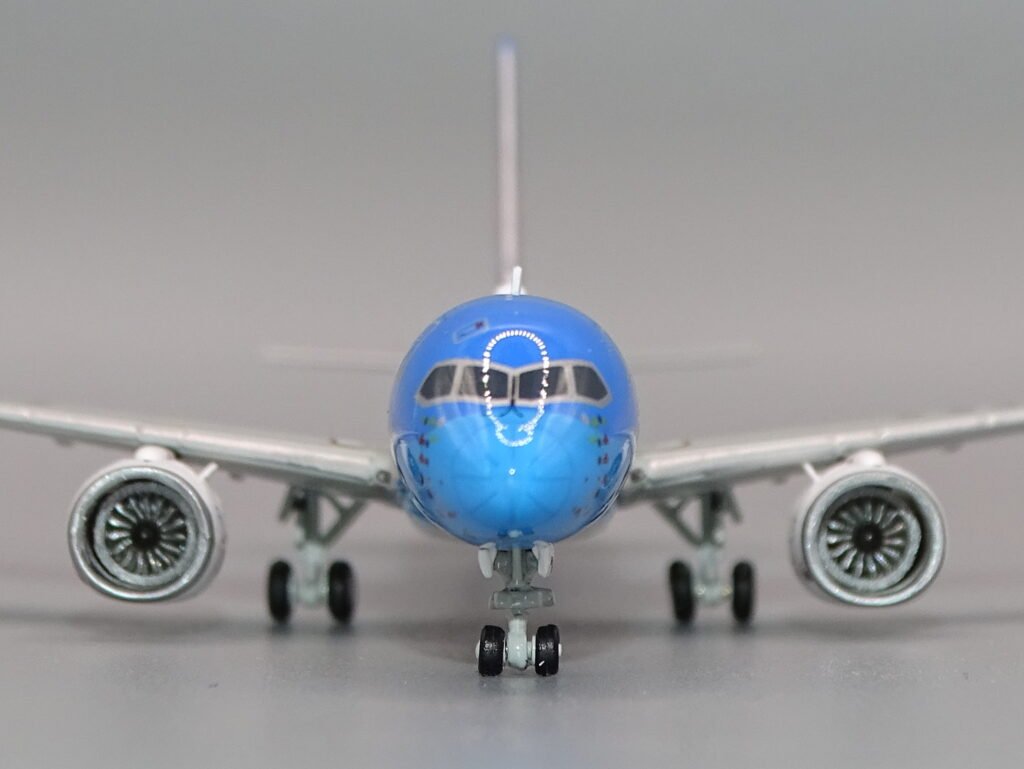
The engines are hollowcore and that may be partly to blame for them being too large in the first place. This interest in see through engines also means there are only 15 fanblades present rather than the 18 there ought to be. Once again, you could make the argument that hollowcore fans for such small engines make little sense and only decrease the realism of the model.
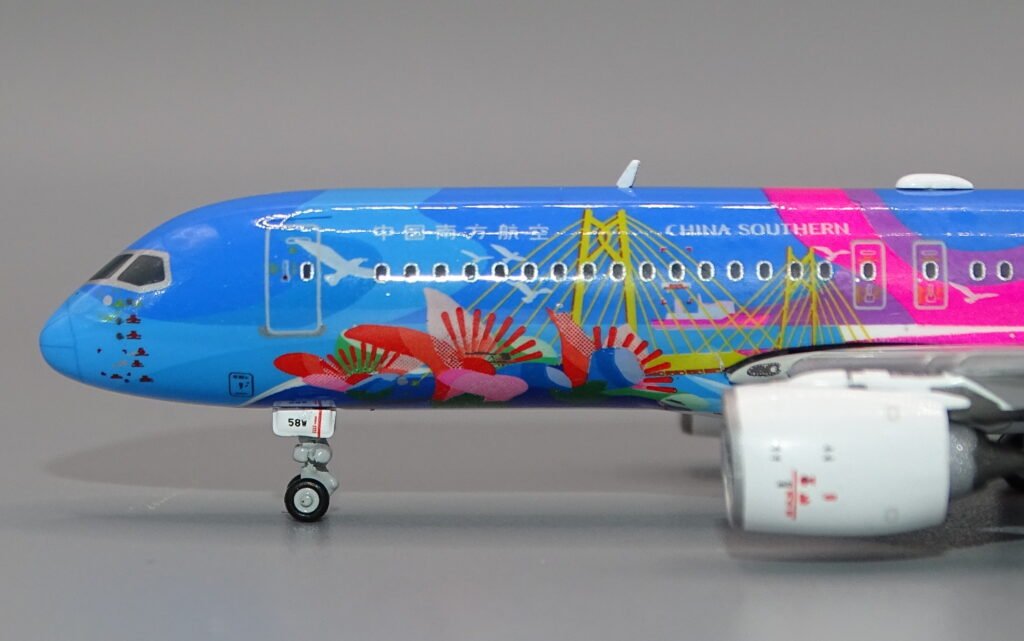
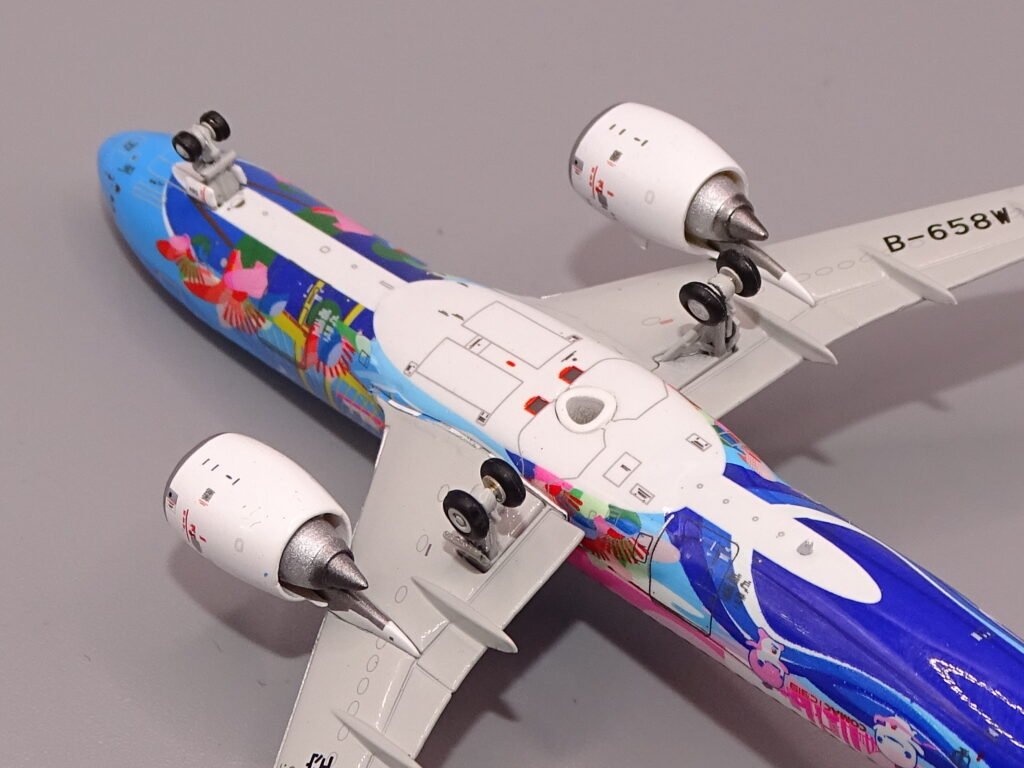
Despite this criticism the engines are not as bad as the JC Wings versions used on their A320neos. Ground clearance is good, partly due to the height of the undercarriage, which I think is too tall, even if by only a mm or so.
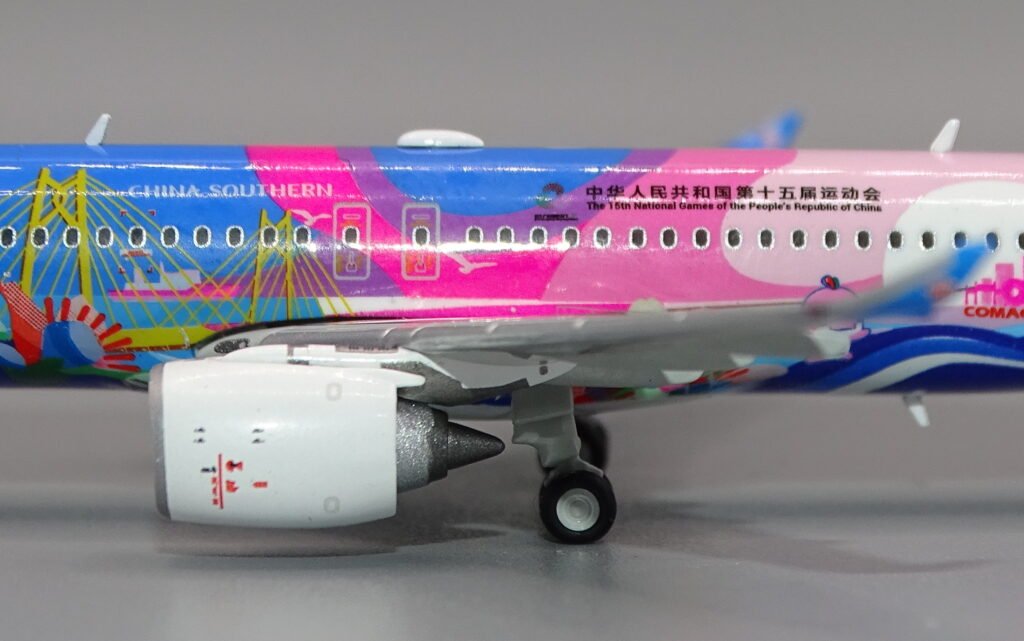
The engine hot sections and pylons are both good. The pylons attach to a very nice wing complete with smaller details such as the fuel dump pipe just inboard of the winglets. This is something missing on the NG and Panda moulds.
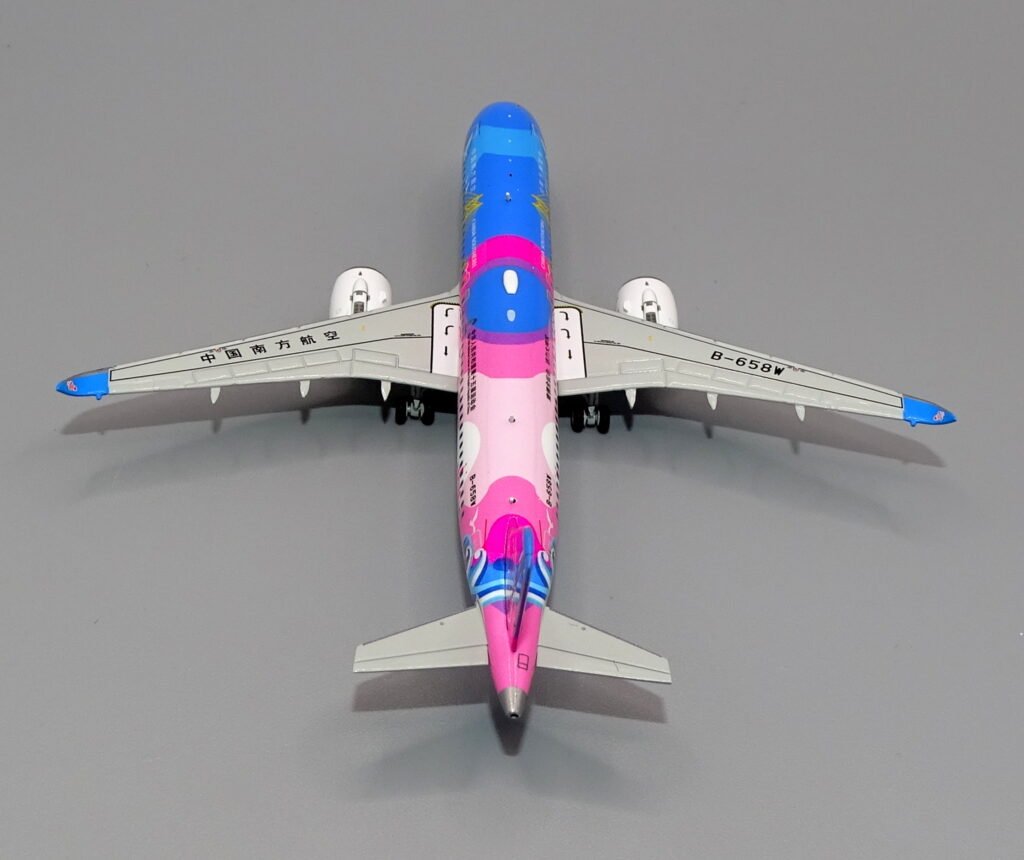
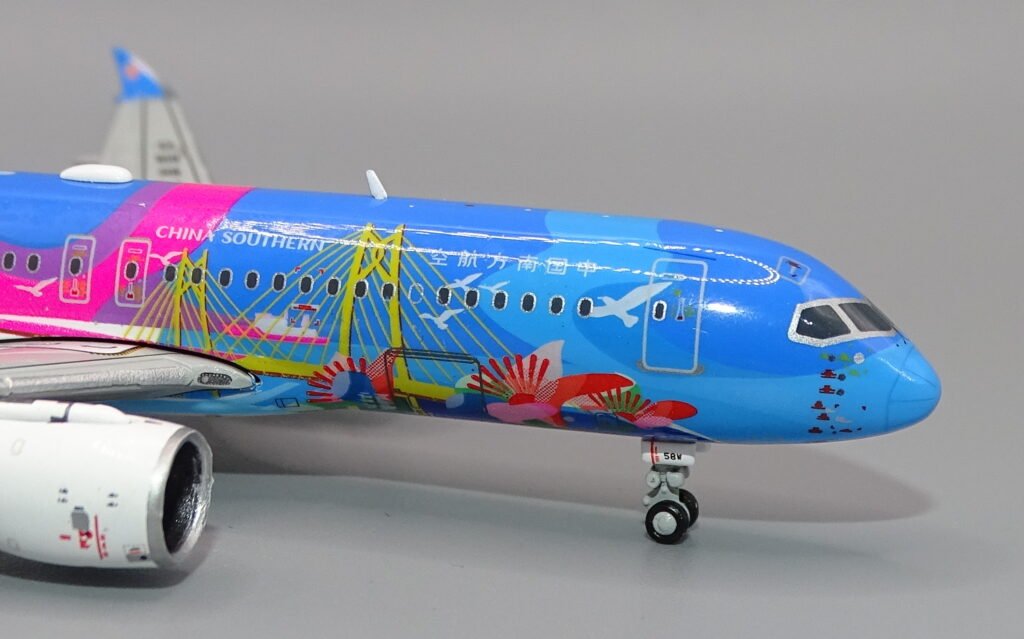
The join of the wing to the fuselage is good, but the mould does appear to rather lack the wingjoin fairing ahead of the wingjoin, which is quite obvious on the C919. There are no concerns at the rear of the model. The shape of the tailcone and stabilisers is excellent, arguably better than the competing moulds, especially at the lower margin of the rudder. This mould also has the odd little aerial just under the tailcone that is not present on other examples in 400 scale.
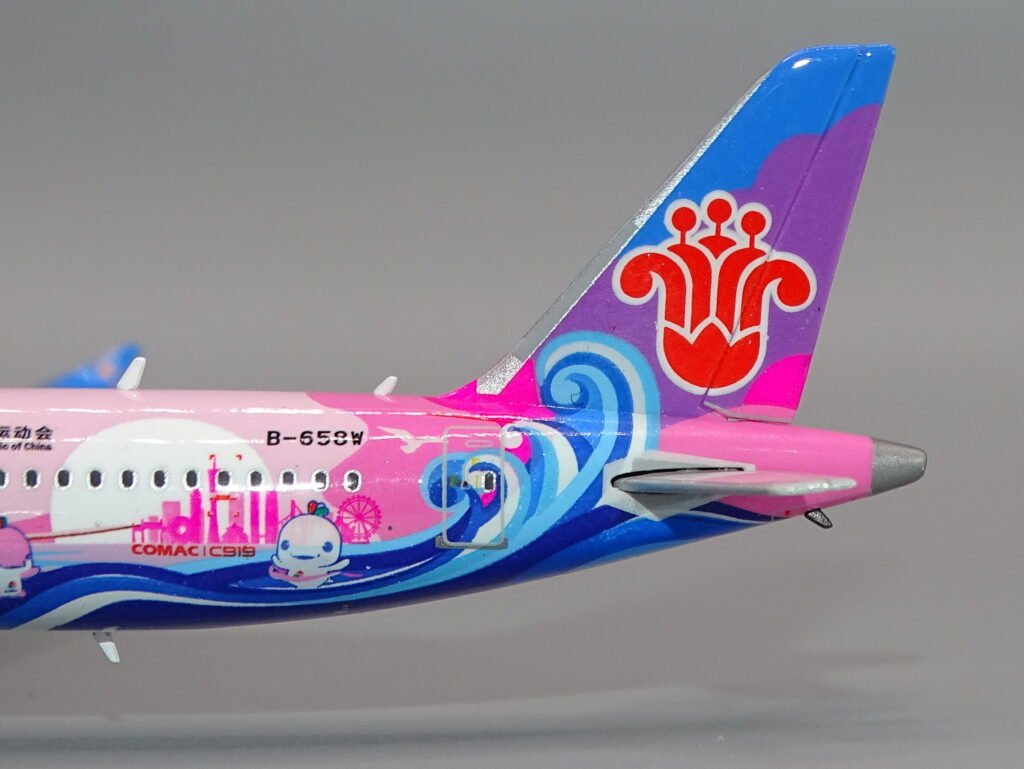
Broadly I would say this mould shows a lot of the potential HX has to add details others often don’t bother with. In this case that means extra wing detailing and aerials. However at the same time HX has also shown that it struggles a little bit with the finesse on its smaller aircraft types. The nose form is no worse than the Panda version and not very noticeable, however the height of the landing gear and size of the engines are less good and leave this mould behind the Panda and NG versions in my estimation.
SCORE – 7
PAINT & LIVERY
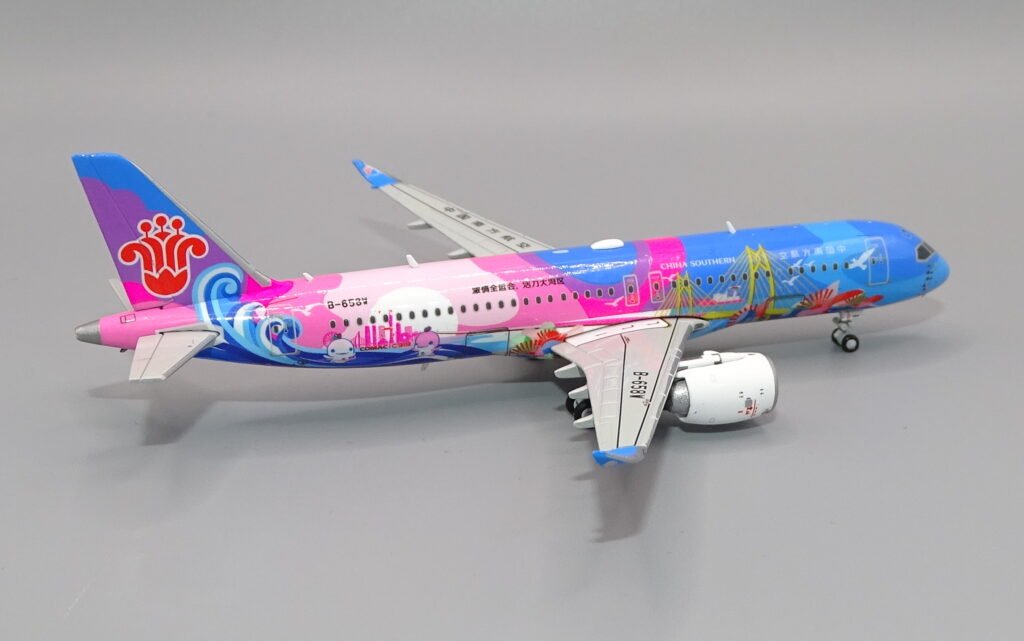
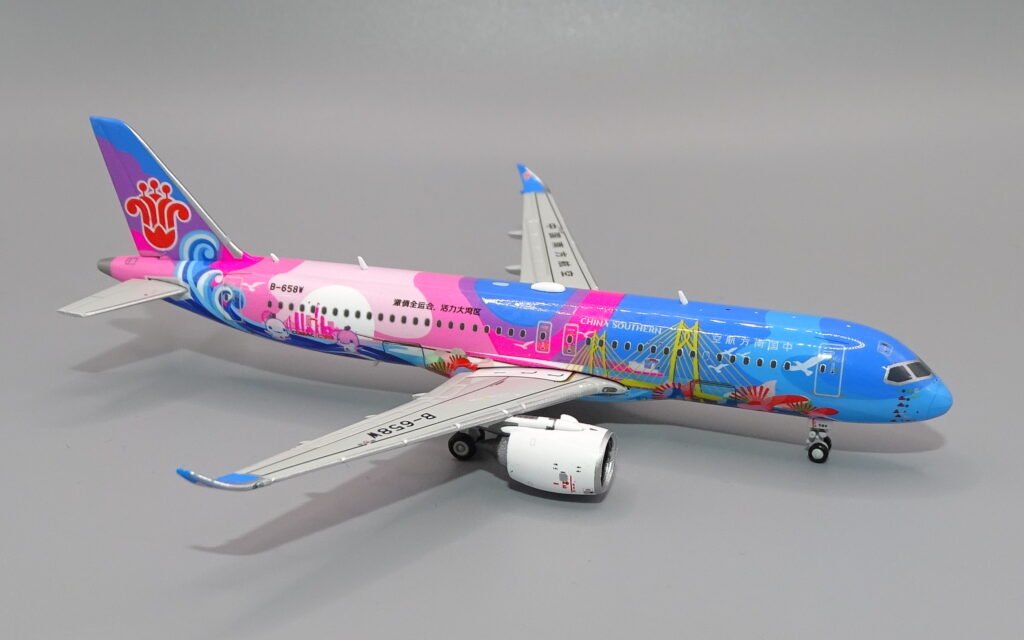
B-658W was delivered wearing the 15th National Games – Vibrant Bay Area scheme a companion piece to the scheme worn by the China Southern A350 B-308T (an NG Models version of this got a review here at the site a few months back). It shares many of the same colours of blue, pink, lilac and purple with that and apparently set a record for C919 schemes with 44 unique colours used on it. You can read more about it in this article by AzkoNobel Aerospace Coatings.
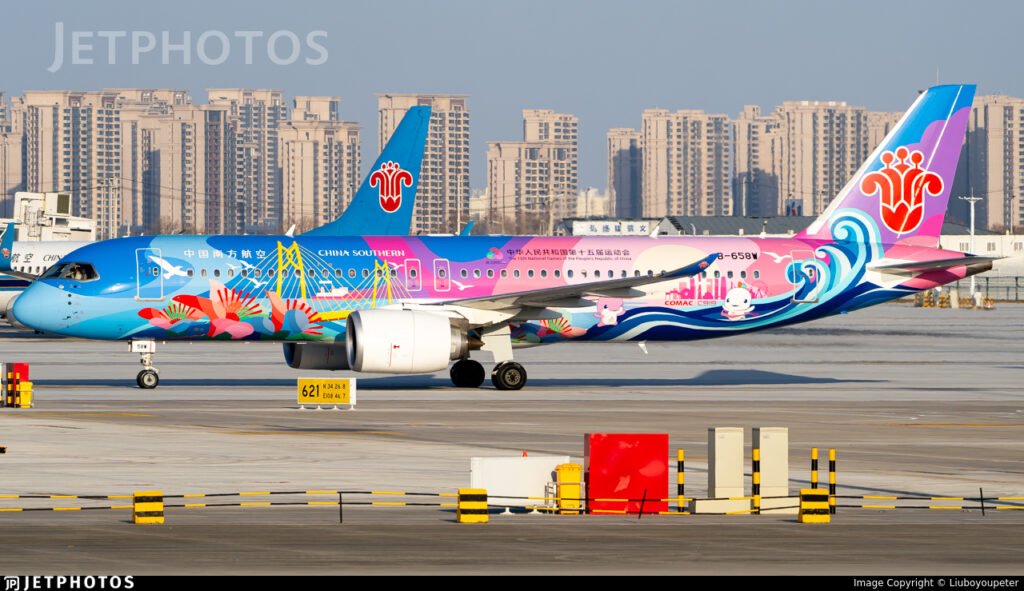
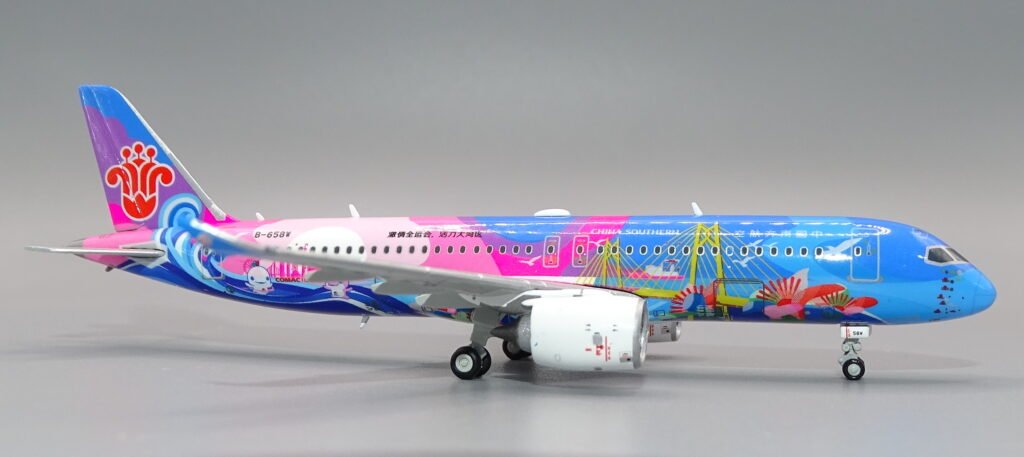
One of the centrepieces of the livery is the Hong Kong–Zhuhai–Macao Bridge on the lower forward fuselage. Once again, the ability to replicate this complex sort of livery in 400 scale is very impressive. The printing detail and placement of livery elements is really impressive. I can’t fault that aspect of the model.
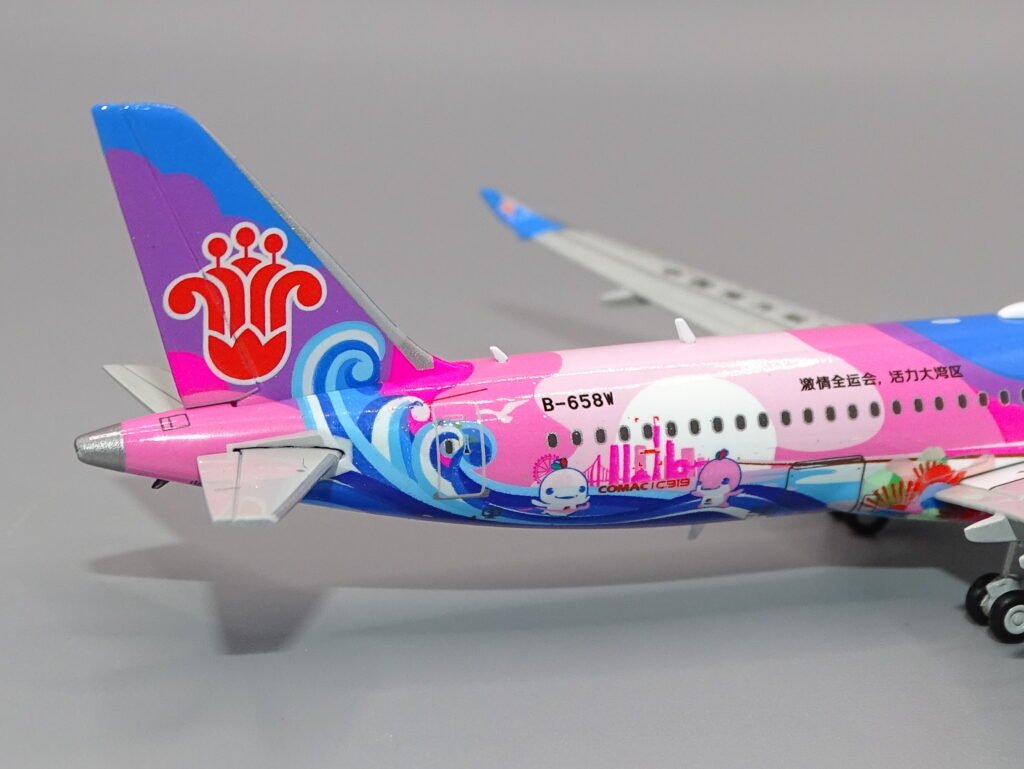
Unfortunately, when it comes to the colours used there is plenty of room for improvement. Several are much too dark, especially the light blue at the nose, but also the medium blue with the largest seagull on it. In fact at a quick glance only two of the blues really stand out.
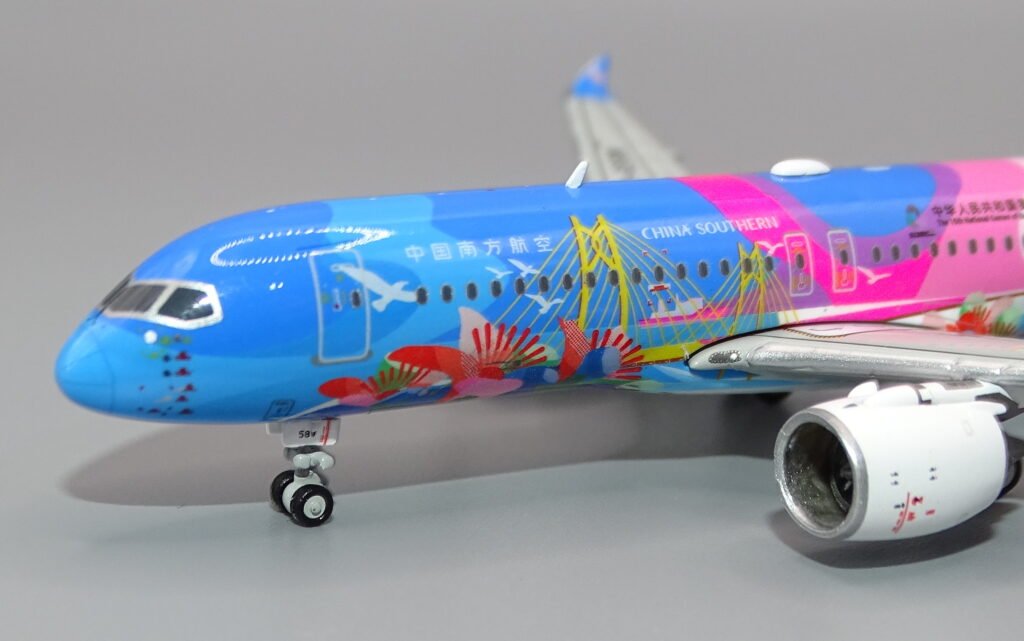
Equally the yellow bridge elements are too golden and the pinks at the rear fuselage too dark as well. Additionally, the white elements (gulls and titles) are not bright enough. This is undoubtedly a very difficult livery to replicate and printing multiple colours over each other will not help accuracy, but there’s no doubt the livery is not bright or light enough overall.
SCORE – 7
PRINTING & QUALITY CONTROL
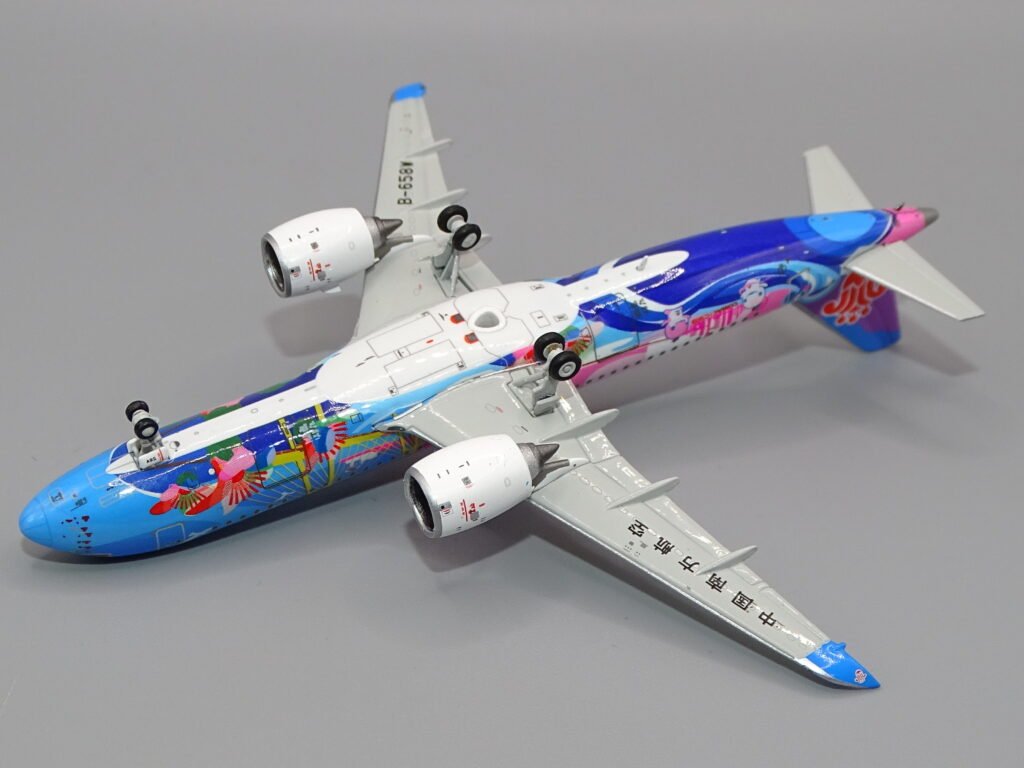
HX is well known for lots and lots of print detailing. This can be both a blessing and a curse as although the detail linework is nice it can also sometimes be a bit heavy handed, especially on smaller aircraft like this. The livery printing is very good on this model, but in some places I do think less may have been more. The printed text around the pitots and sensors beneath the cockpit is for example a little too obvious and thick. Additionally, in closeup the nose radome lines are a bit thick.
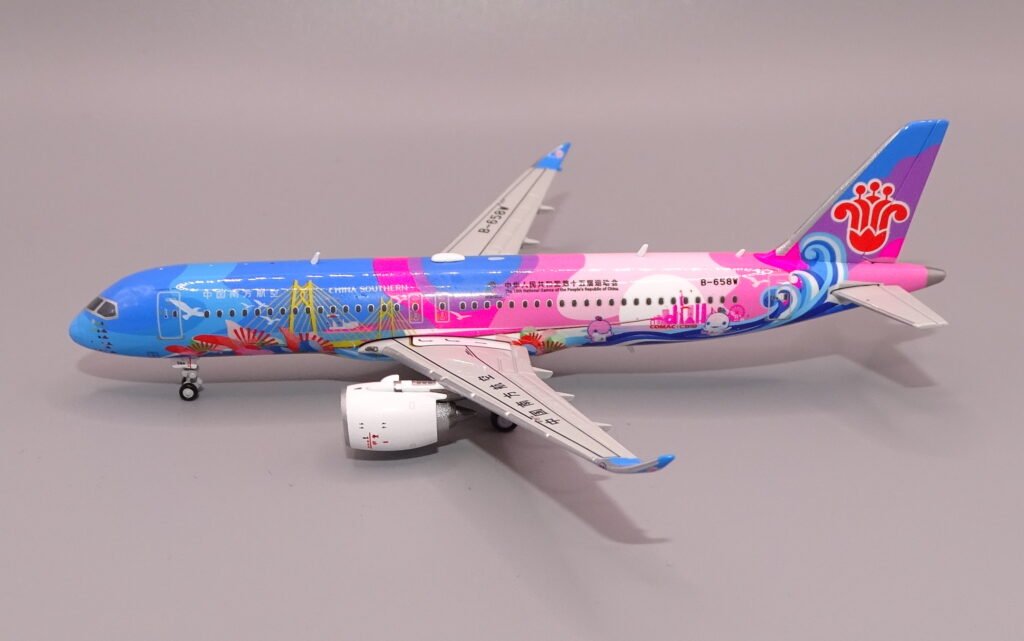
The C919 has very large cockpit windows and this is an area NG, for example, has struggled with in the past (although not anymore). The inner cockpit windows on this model are fine, but I think the outer windows should be larger and extend further rearwards.
Quality control on the model is good, except that the starboard side wing was detached. Fortunately, this had no impact on the print or paintwork and it could be slotted easily back into place.
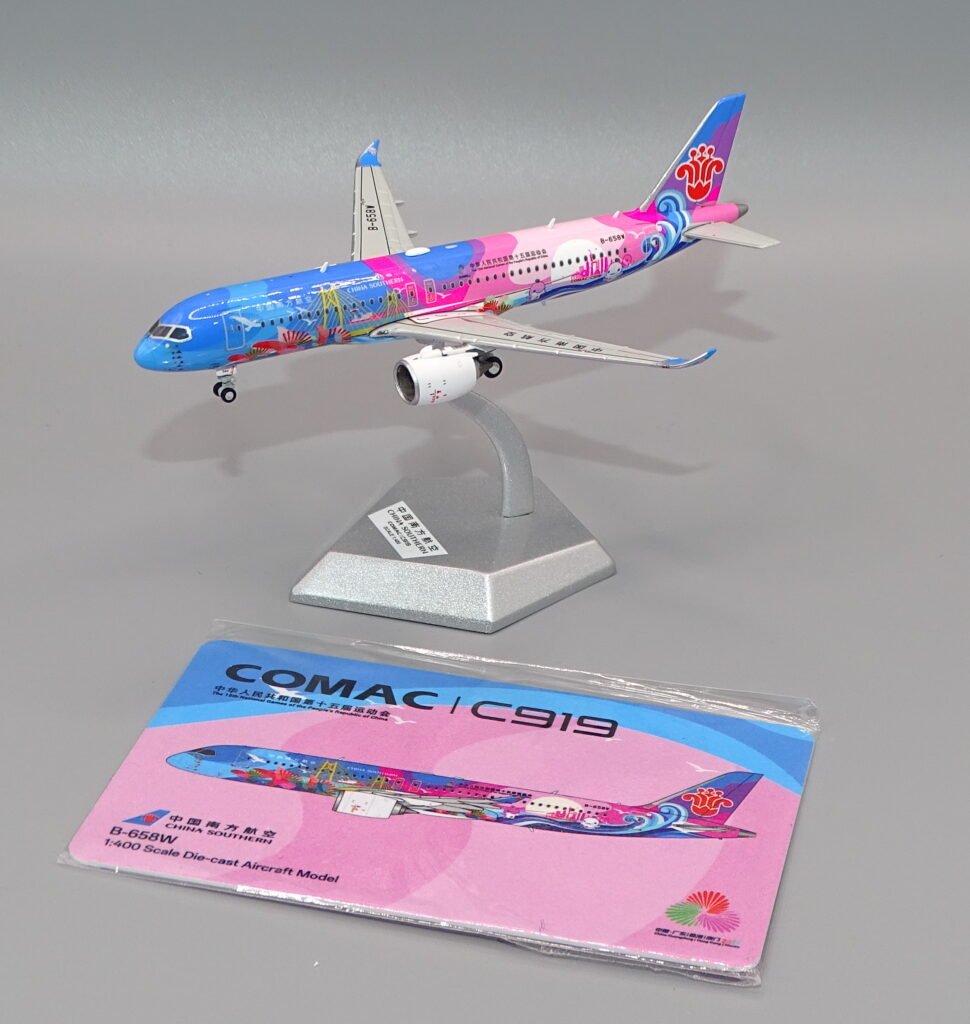
The model comes with the usual high quality packaging and additions I’ve come to expect from HX Models. HX boxes do use a pleasingly thick and robust card. The model also comes with a credit-card style collectors card and a small version of the usual high quality metal pentagonal stand.
SCORE – 7
CONCLUSION
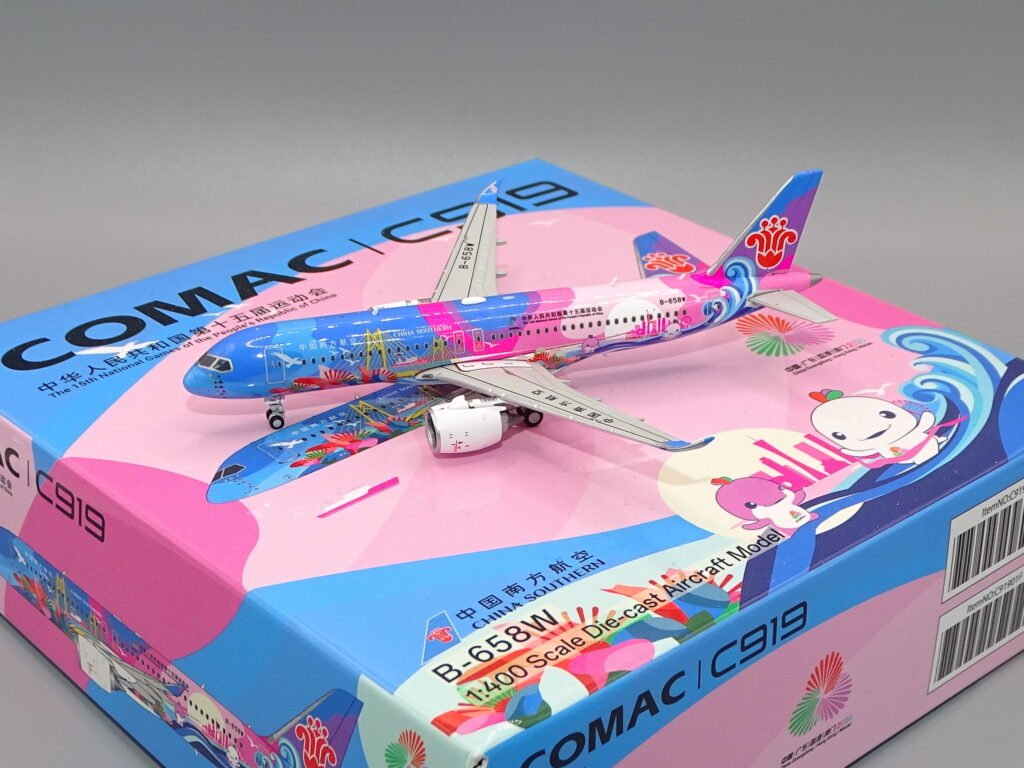
Despite looking great, in detail this model is a little disappointing, which the final score illustrates. HX certainly chose a complicated scheme for their first C919. That shows their confidence and ambition, which are to be commended, however the narrowbody moulds they have produced also illustrate that things you might be able to more easily get away with on a larger widebody mould are harder to hide on a smaller model. There is a lot to like with their ultra-detailed approach to mould and print, indeed several of these things really work on this model and mould, but there is also a question of suitability and a level of subtlety that they are not always achieving.
FINAL SCORE – 21/30