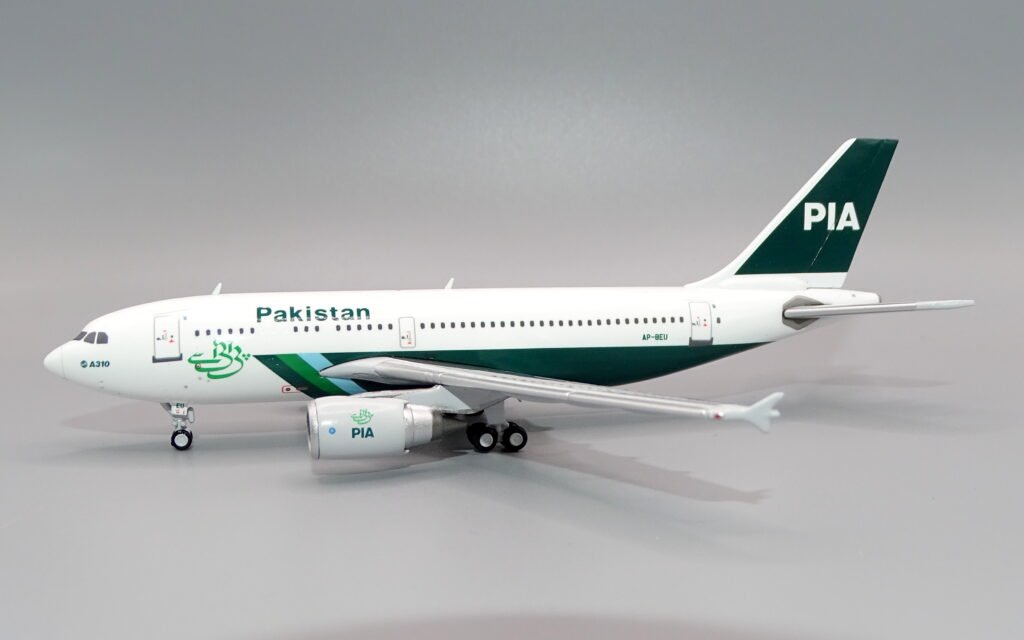
JC Wings continue to be an enigma. They can produce amazing models and make exquisite new castings, but also can struggle with simple things, continue to use dated castings and take an age to get their releases to market. Behind the scenes there is clearly lots of engineering going on and at the Beijing 2025 Expo they had an incredible 12 new 400 scale moulds on show. Since then they have announced new 737NGs as well but almost none of these new products have reached the market. The wait for the new A310 has been even longer, but it has now arrived with at least three separate releases announced and close to being shipped to retailers. With the A310 being relatively ignored in the scale a new mould for the type is very welcome so let’s take a closer look.
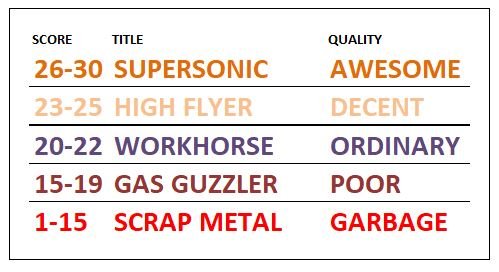
Each review is to split into three key areas:
- The model mould
- The paint and livery reproduction
- Printing and quality control
Each section can get a maximum score of 10 for a maximum combined score of 30
This review is sponsored by Northeast Diecast. Check out their store for an excellent range of hard to find 200 and 400 scale collection sale models and get 15% off!

MOULD
They say good things come to those who wait and it was back in November 2021 that I reviewed the original JC Wings Airbus A310 sample, so it has been nearly 5 years for them to get the first release completed. For the original review of the sample see:
There have been 5 previous moulds for the A310 in 400 scale, however only two (Gemini Jets and Aeroclassics) have been used more than 20 times and only one has been produced since 2006 (Aeroclassics). None of the pre-2010 moulds are at all decent and they all certainly show their age enough to make them easy to dismiss in any modern comparison.
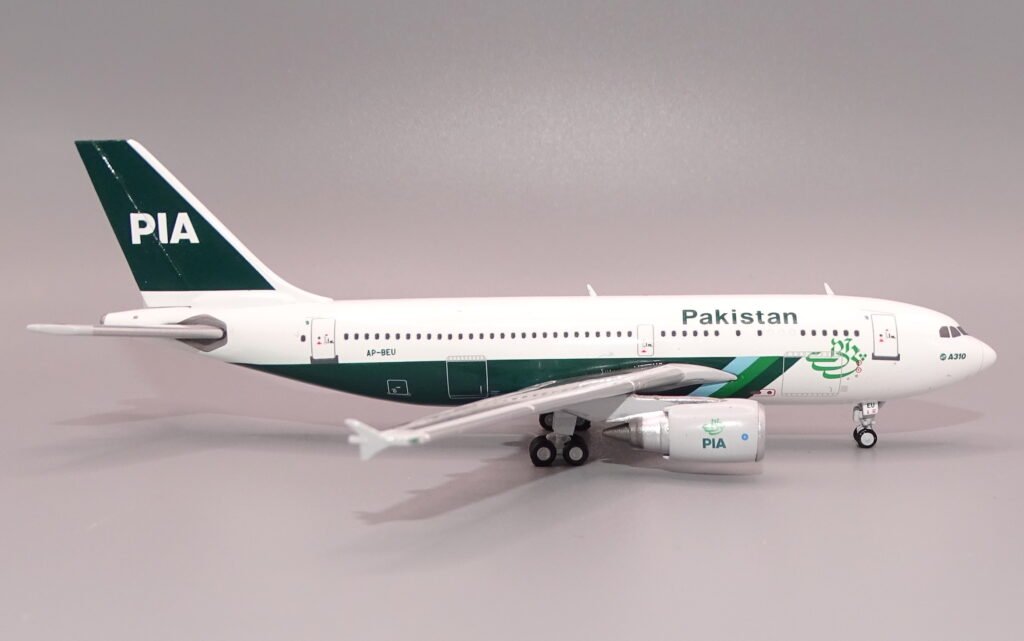
The Aeroclassics mould has been used an impressive 91 times. You can say things about Aeroclassics but you can’t deny they know how to use their moulds well. Released first in 2016 twelve were made in 2025 so it is very much still in use and probably the last good mould Aeroclassics produced. Nonetheless, it does have weaknesses, most obviously simple tyres, no aerials, generic engines and a lack of belly detailing.
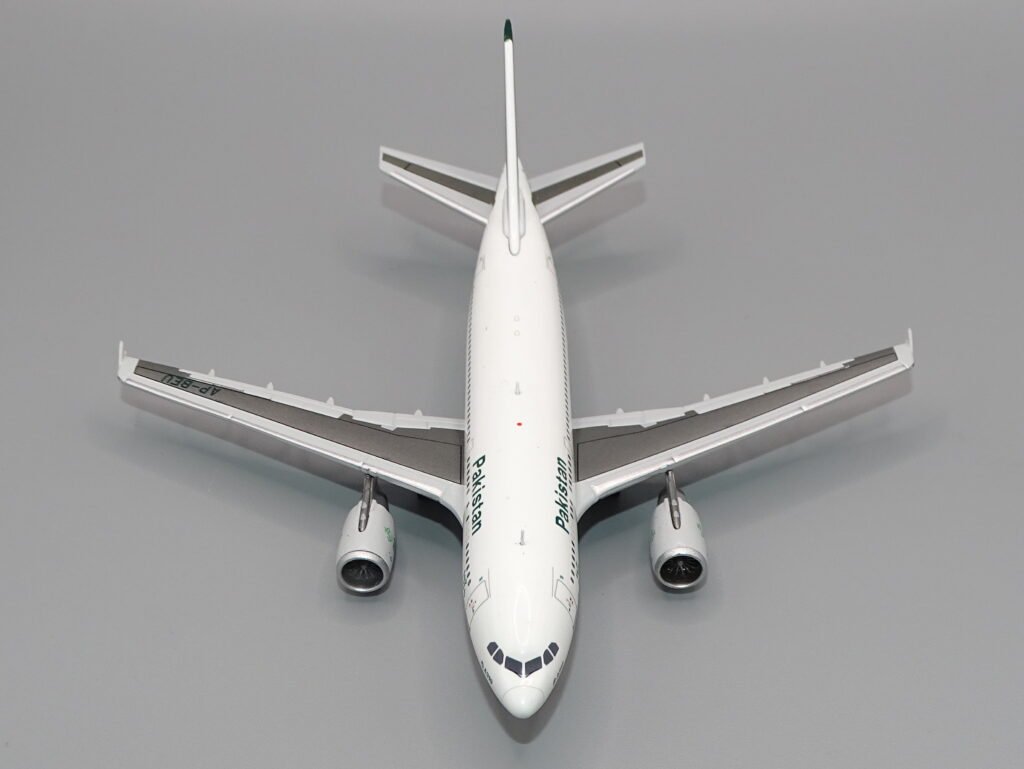
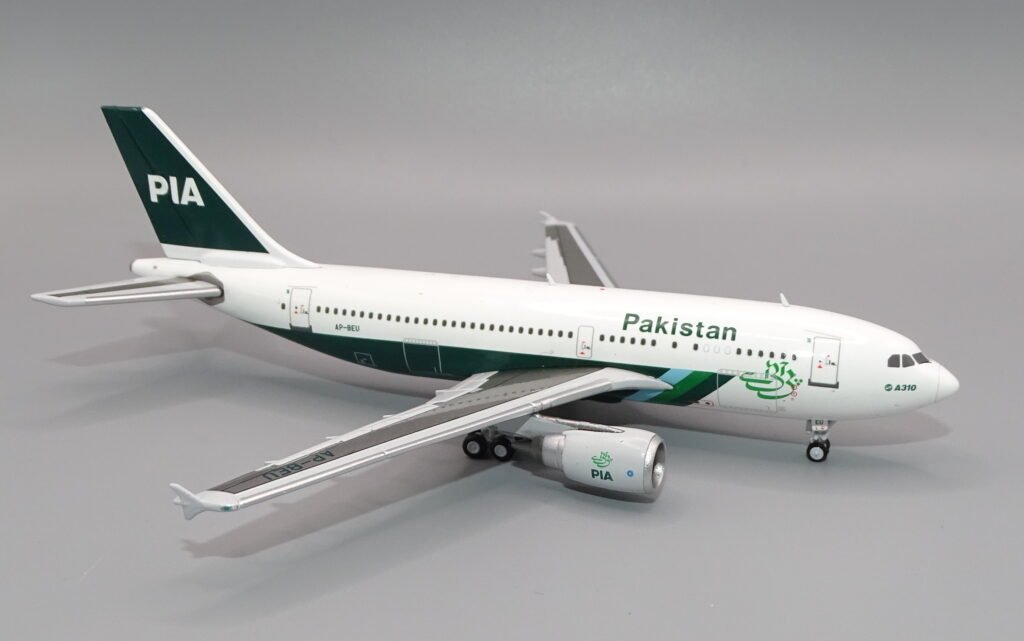
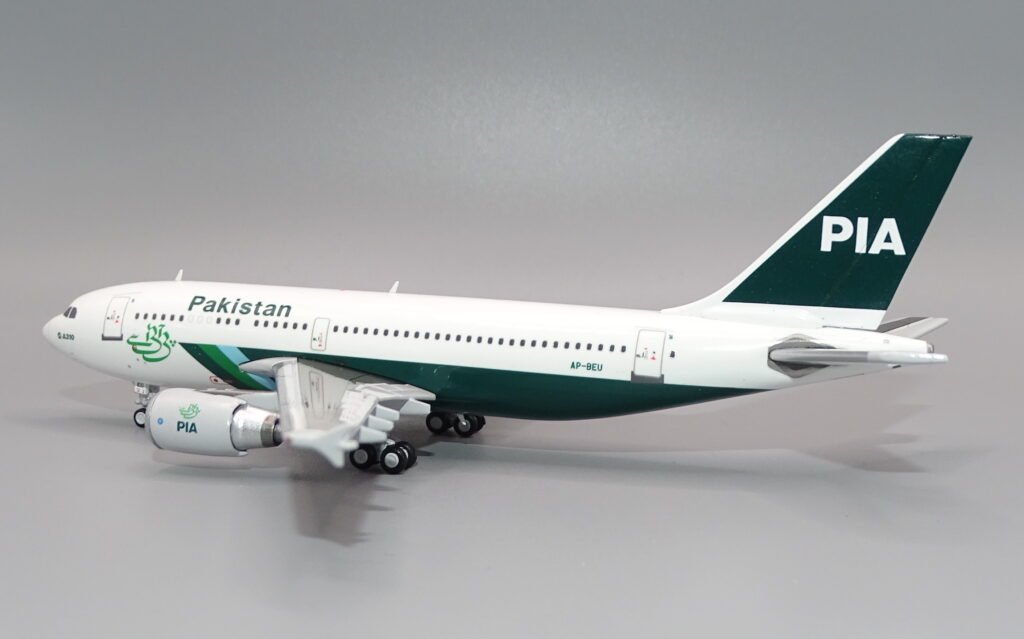
There is definitely room for a better mould, but is this JC Wings edition it? In many ways yes, it is. Official JC Wings photos had raised concerns about the size of the tyres, but the model I have received has noticeably thinner tyres on both the nose and maingear and although the tyrehubs are a little too large the undercarriage overall looks fine.
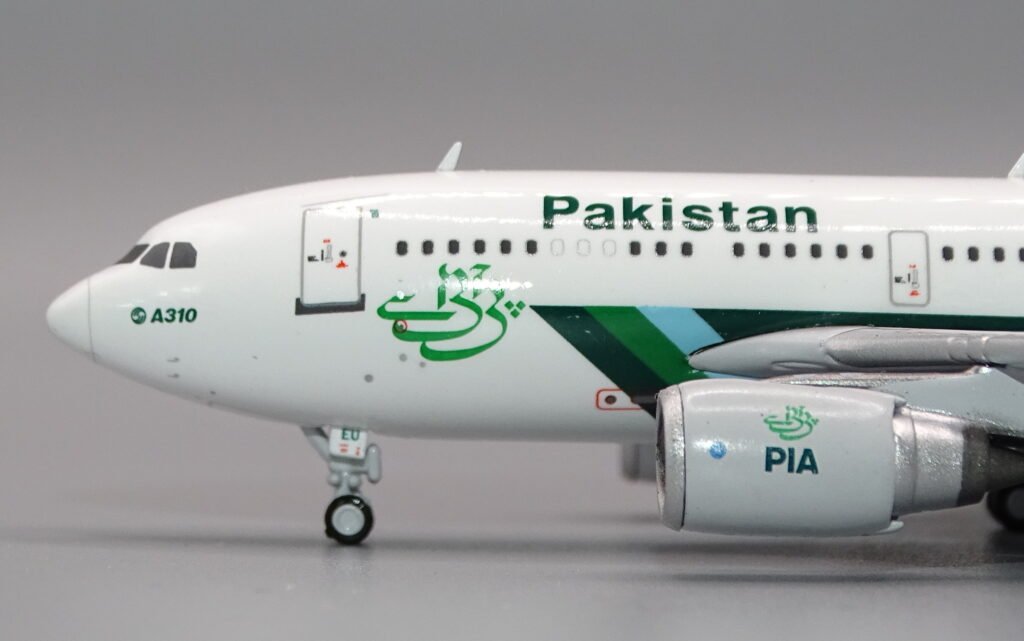
I’m also happy with the majority of the fuselage barrel. The nose shape is suitably pointy and certainly superior to the old Gemini Jets edition. It is at least as good as the Aeroclassics and possibly slightly better. I do think the tailcone could be a little longer, but it isn’t a major concern for me.
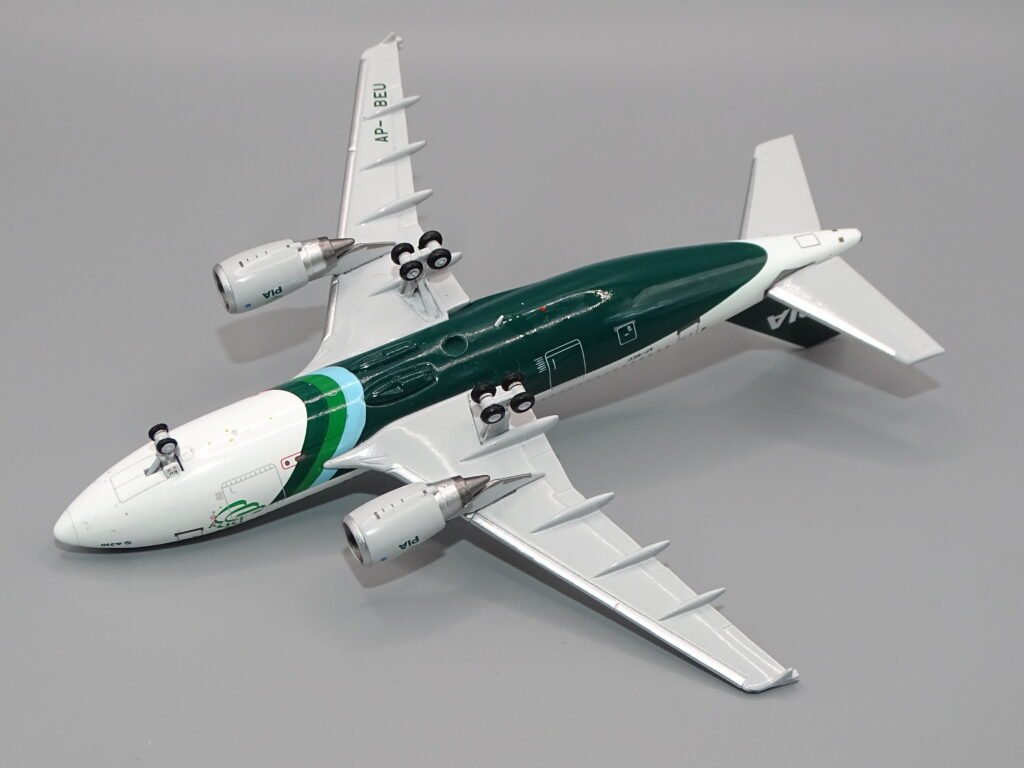
On the underside the large intake fairings, with the air intakes built into them, are moulded in relief nicely and this is much more accurate and a significant improvement over the Aeroclassics. The model is fitted with 3 aerials and unlike on some JC Wings moulds they are well shaped and sized.
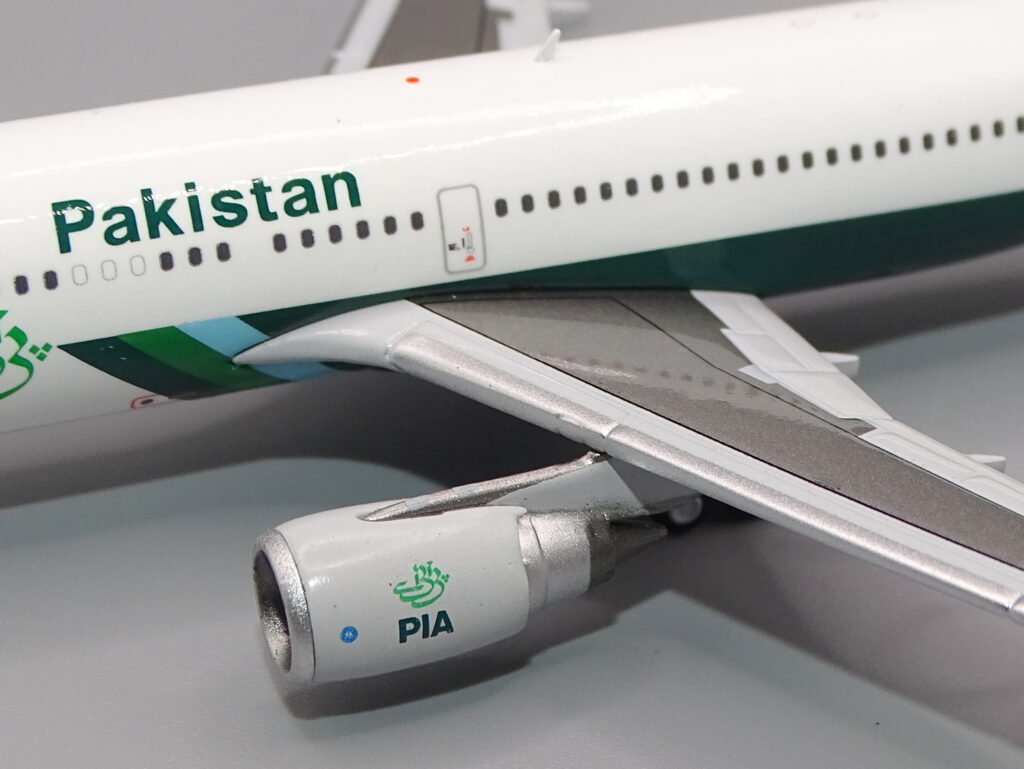
The wings slot in tightly and unlike on the Aeroclassics version, where the join seam runs around the fairing, the fairing behind the wing is moulded into the fuselage. It makes it a lot tidier, but I’d argue the fairing after the wing should be more obvious and larger.
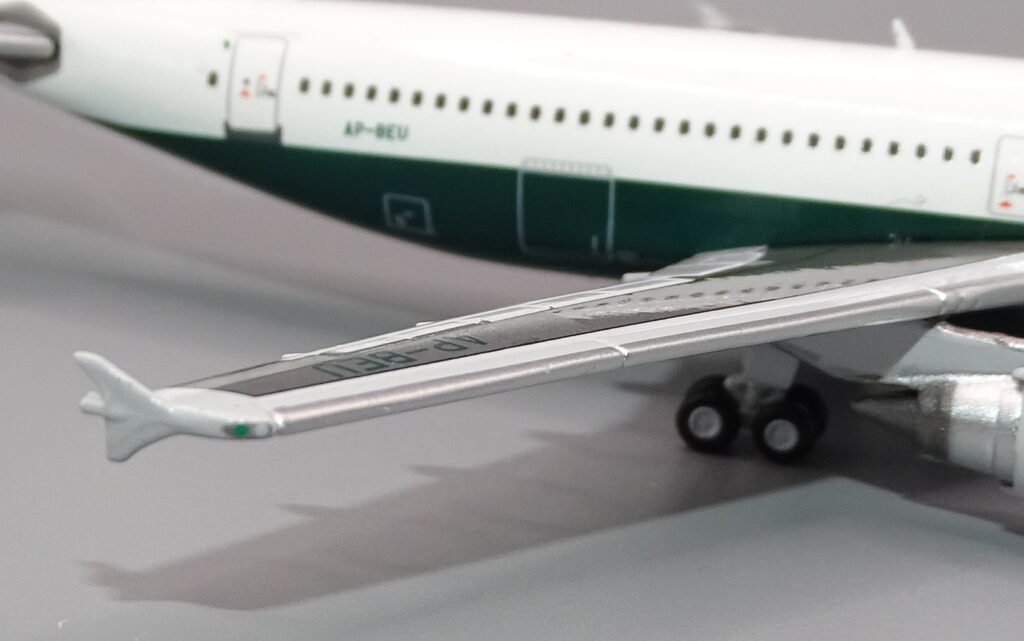
The wings have a lot of nice detailing on them and accurately shaped asymmetrical wingtip fences at their ends. They do however show off, what is probably the mould’s biggest failing – the lack of wing dihedral. The wingtips are lower than those on the Aeroclassics by about 1mm, which doesn’t sound like a lot but does make the aircraft rather flat winged. On the plus side the lack of dihedral is nowhere near as bad as the official JC photos made it look.
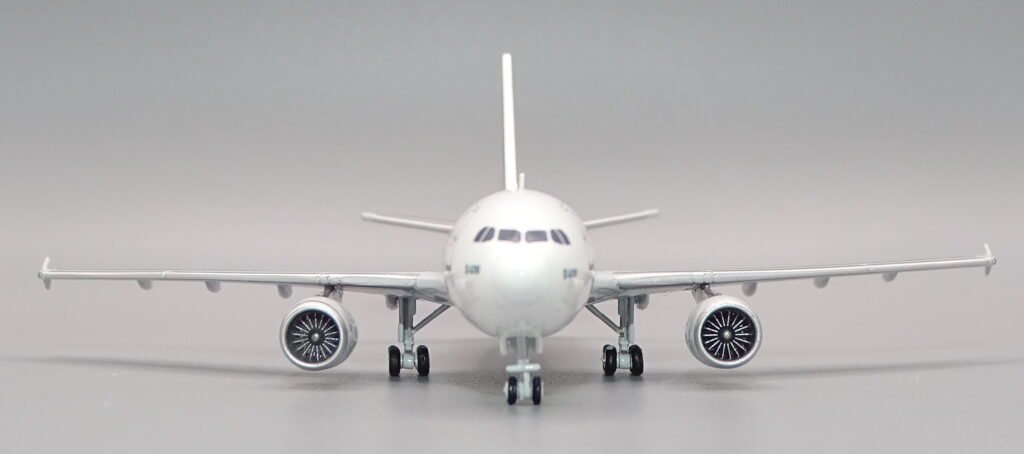
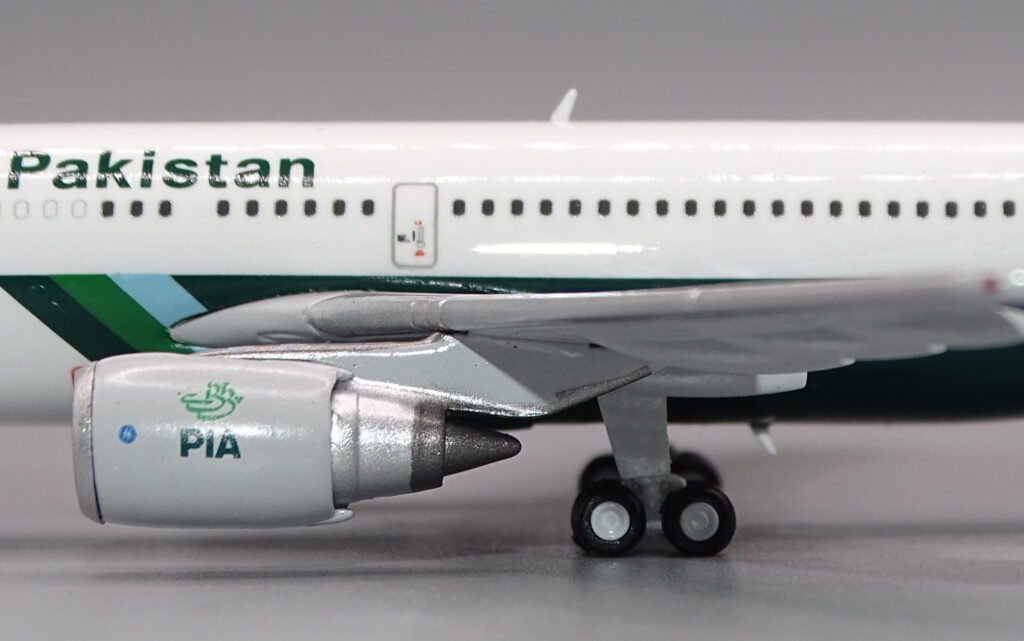
This PIA aircraft was fitted with General Electric CF6s and the engines and pylons are well detailed and shaped. The mould has hollow-core engines, which also means the nacelle rims are separate pieces, but actually it all fits together well and the engine fans are modelled well too. You don’t notice they are hollowcore unless you hold the model up to the light and the fan detailing is nice.
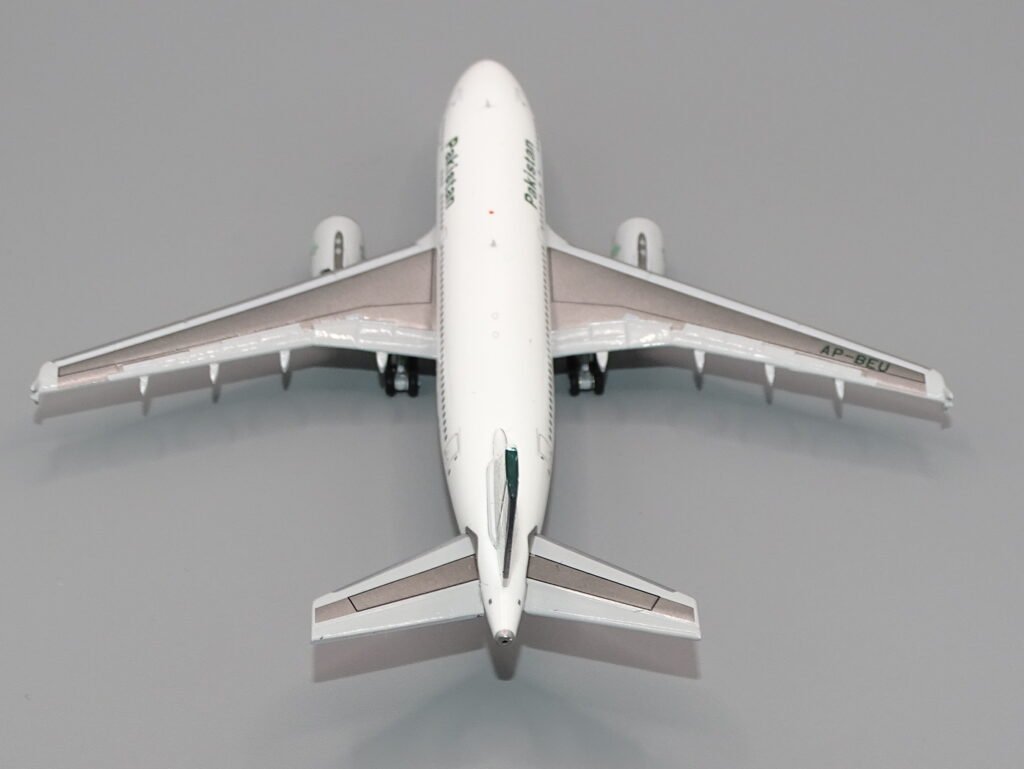
When I first saw the official JC Wings photos I was a little concerned about this mould but actually it is very nice. It is superior to the Aeroclassics version in most areas (engines, wing join, undercarriage detailing, aerials, underbelly moulding) and only obviously inferior when it comes to wing dihedral. A few minor tweaks to the tailcone, rear wing fairing and wing dihedral would improve it but overall I think it is a very good A310.
SCORE – 8
PAINT & LIVERY
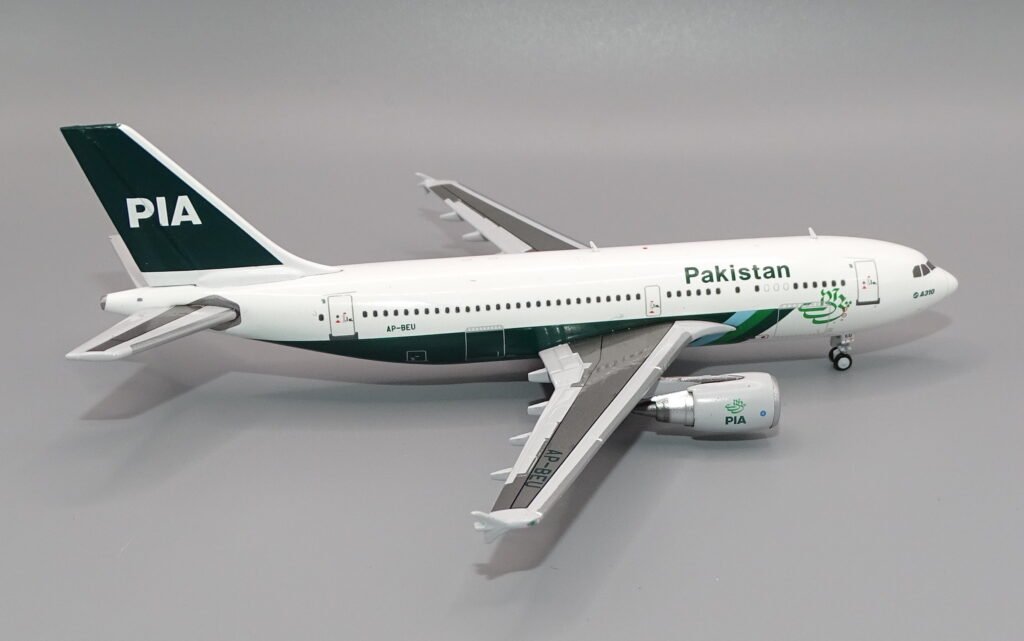
When Pakistan International dumped the cheatlines they moved to what was still a fairly conservative scheme with the rear belly painted dark green and stripes ahead of the wing. Photos later in its career around 2000 show this aircraft without the A310 titles at the nose, but photos from the 1990s have the A310 titles and I always prefer earlier livery variants than later ones.
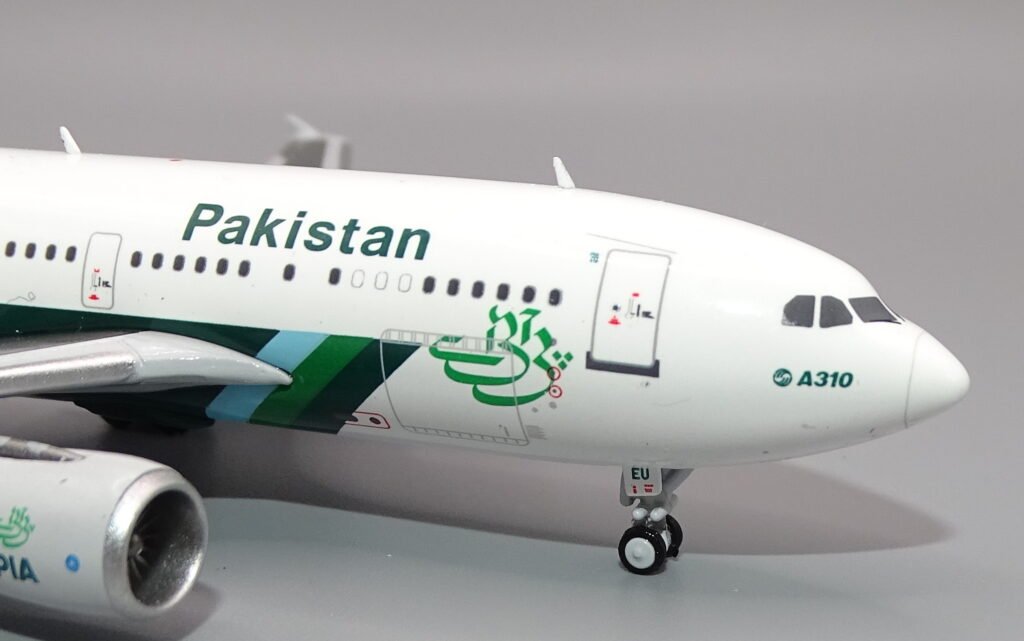
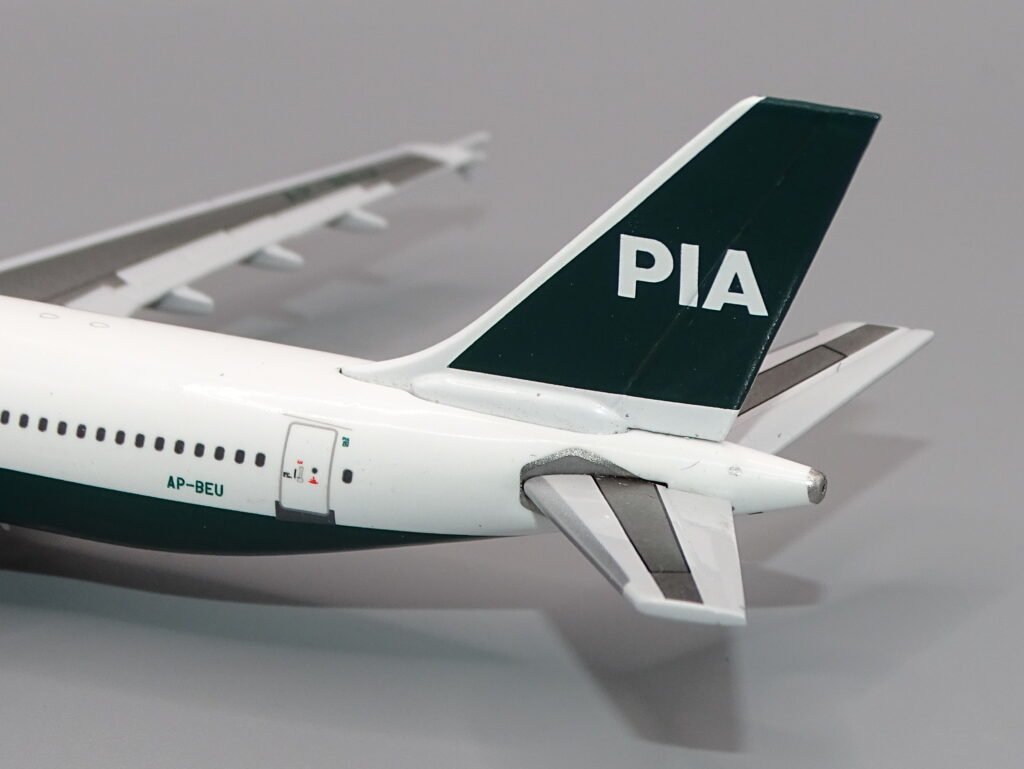
Some photos show the green to be very dark, but those taken in better light make it look quite a lot lighter. JC Wings have chosen the darker route and I don’t think that was the correct way to go. It almost looks black in some lighting and is a lot darker even than Aeroclassics versions (a brand well known for too dark colours).
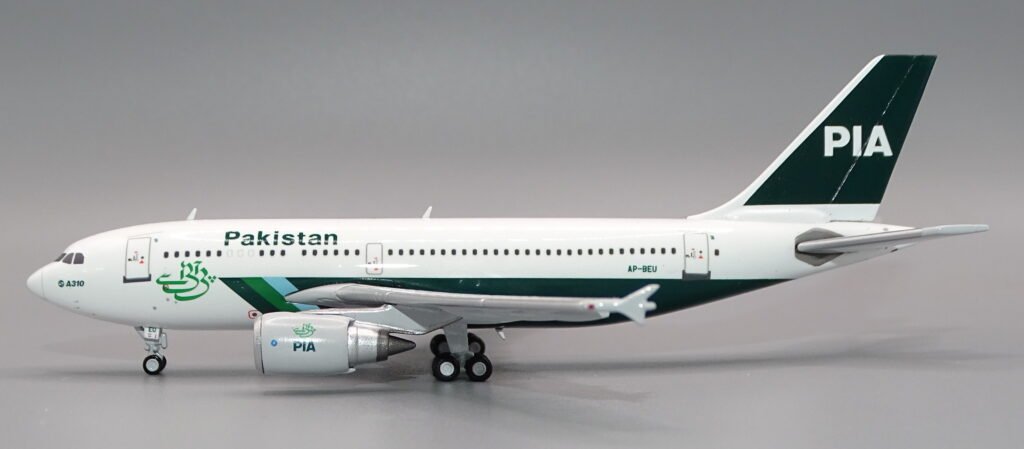
The rest of the livery is quite simple and well replicated. Fitting the photos from the 90s the aircraft has PIA titles on the engines, which were removed by the 2000s.
SCORE – 8
PRINTING & QUALITY CONTROL
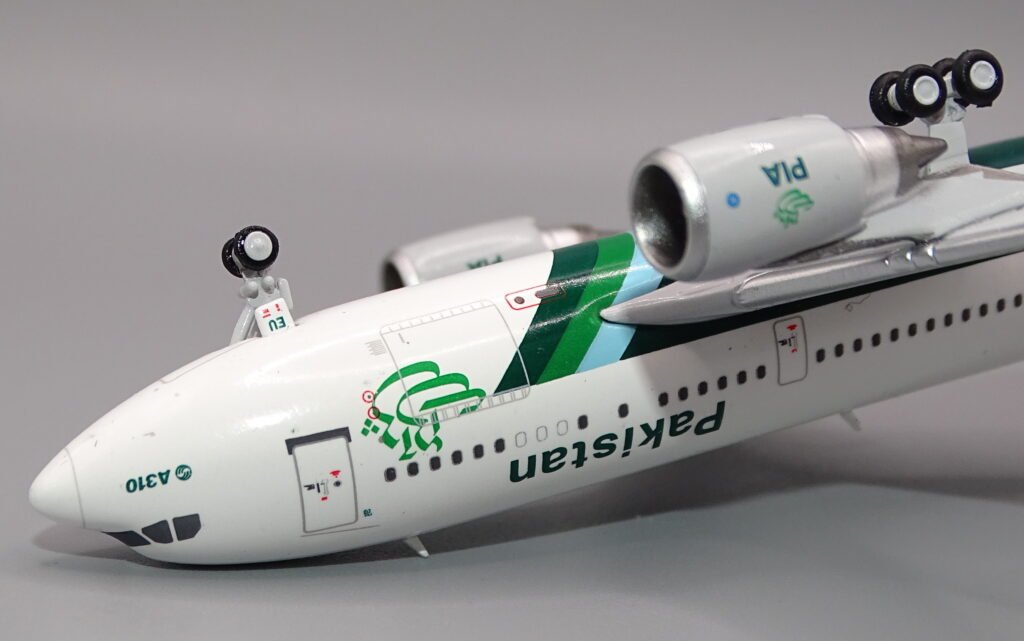
Aeroclassics often struggle with the cockpit printing of its A310s, making the middle windows too low. The cockpit printing on this model is better and the windows are well shaped and sized. JC Wings printing is typically superior across the board to that of Aeroclassics and there is plenty of fine detailing apparent everywhere except on the engines themselves, which could do with the thrust reverser panel lines on them.
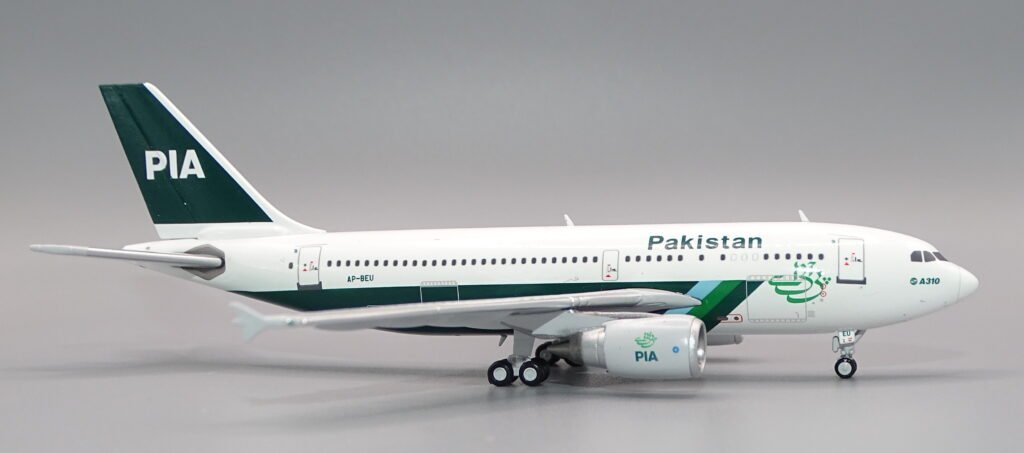
The windowline correctly skews upwards towards the rear. Arguably the windowline is very slightly too high, but if it is it is by less than a mm and barely noticeable to me.
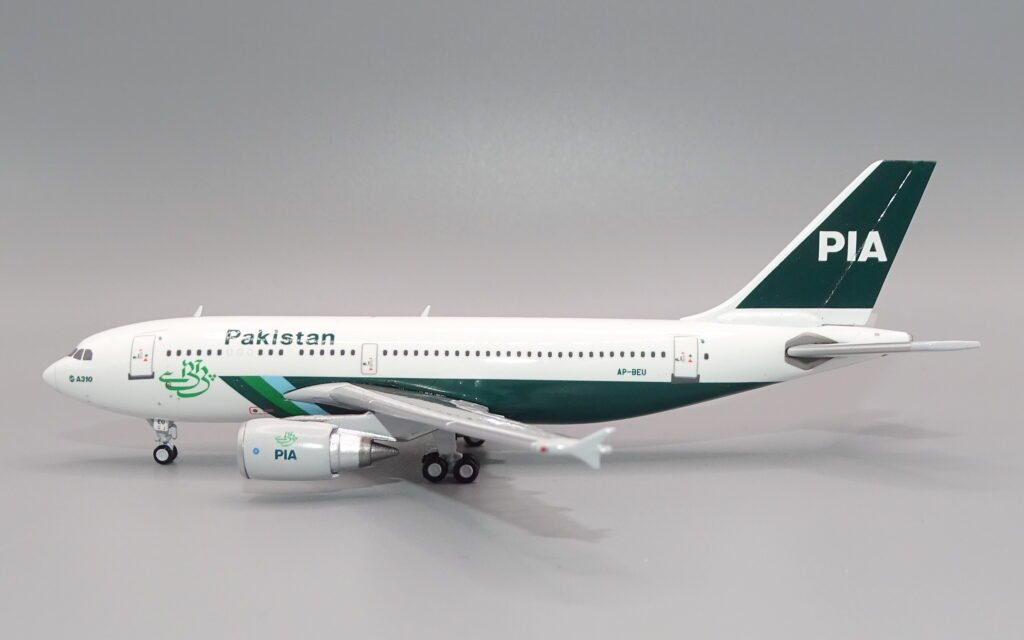
Build quality is very good. There is a small tyre tab on one of the maingear tyres but everything else is in the right place and well fitted.
SCORE – 9
CONCLUSION
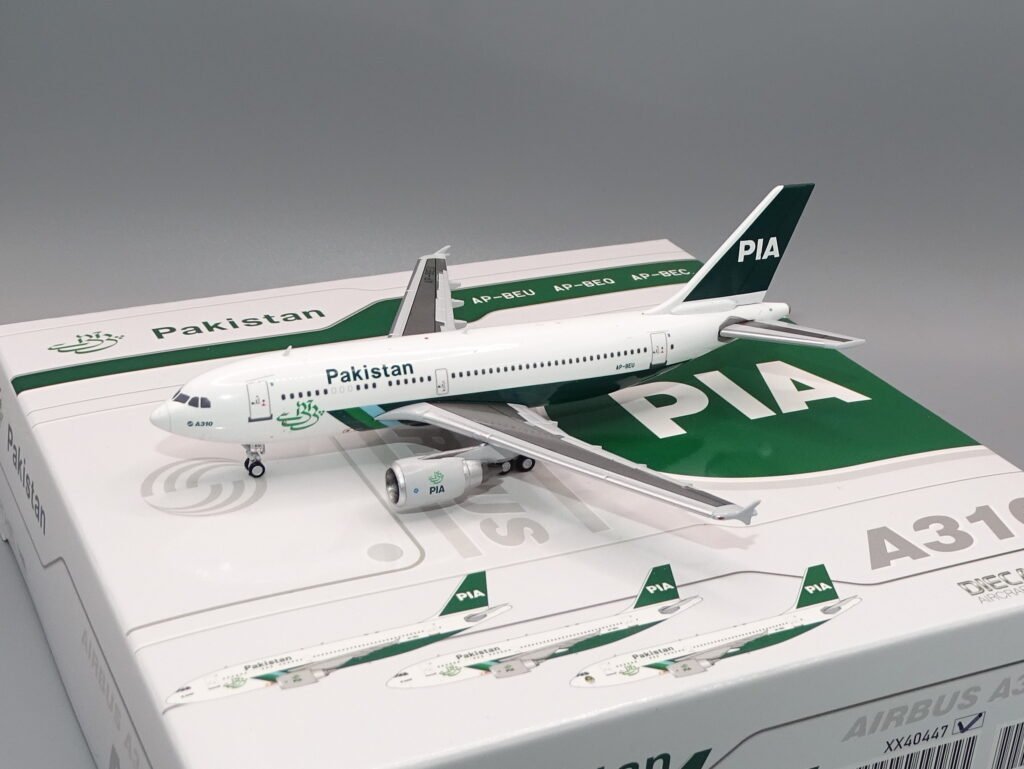
Aeroclassics made this same aircraft / livery combination in 2018 (and used much lighter colours in doing so). There is still plenty of virgin territory for A310 releases but JC Wings higher MOQ will make it more difficult to tread new ground with the mould. They are unlikely to be able to support more unusual airlines like Air Niugini and Air Djibouti that Aeroclassics can produce with its much smaller runs. Nonetheless, the extra details on the JC version make it appealing and the relative scarcity of many of the Aeroclassics versions also adds to its value. Hopefully this JC Wings mould gets good usage, especially for Pratt & Whitney powered versions where the Aeroclassics mould has oversized engines. The first three releases (Air India, PIA and Air France) are all promising so they are off to a good start.
FINAL SCORE – 25/30