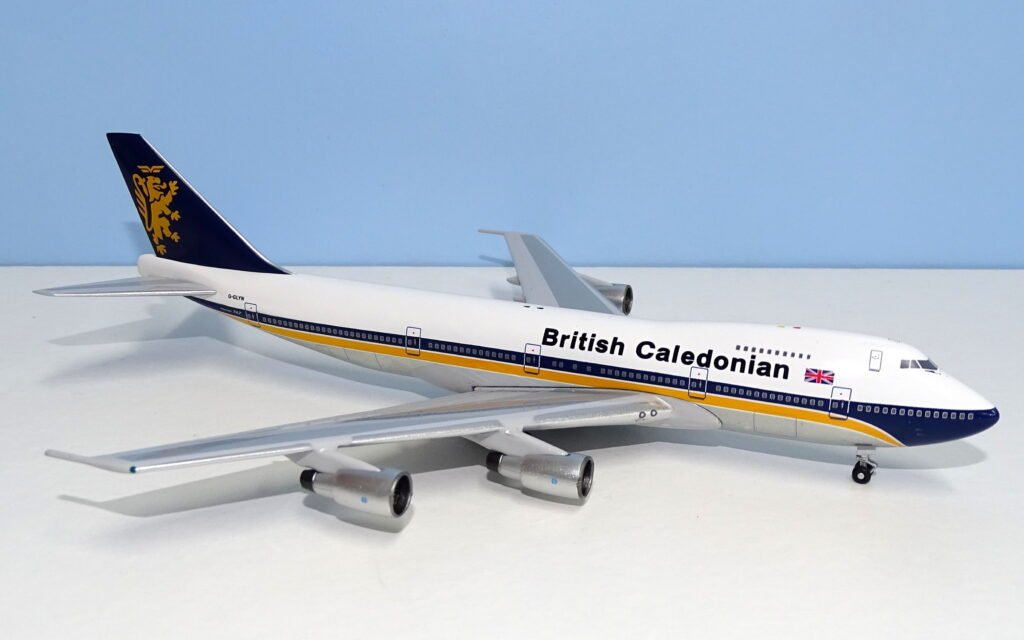
Both Aeroclassics and NG Models have been releasing quite a few models that can be seen as replacements for older model versions (usually Gemini) that may already be in your collection. This leaves the collector with a dilemma as to whether they are worth buying or not, and this certainly isn’t helped when they sell out within half an hour, as Aeroclassics regularly do, and are nudging $50 each. The lack of BCal 747s and DC-10s from Aeroclassics was surprising and both have now been released by them in the past two months. Is this new version of the 747 worth trading in your old Gemini Jets version for though? Let’s take a look.
Each review is to split into three key areas:
- The model mould
- The paint and livery reproduction
- Printing and quality control
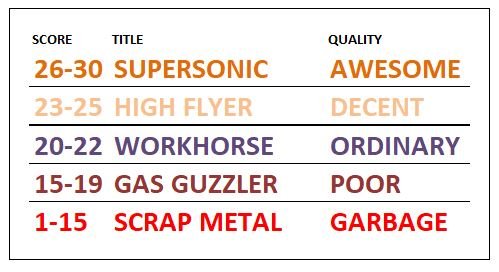
Each section can get a maximum score of 10 for a maximum combined score of 30
MOULD
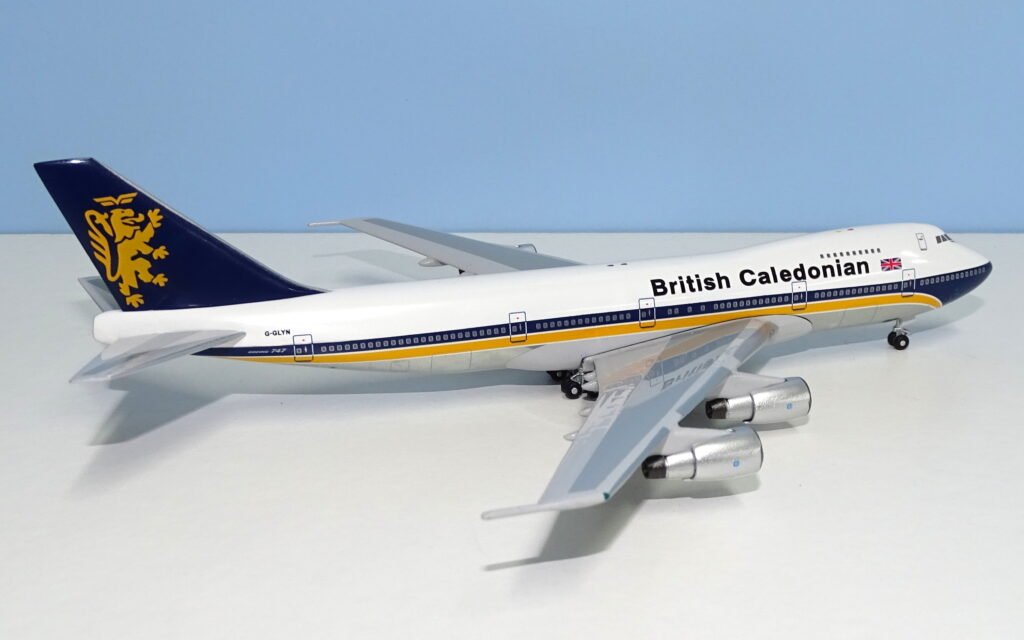
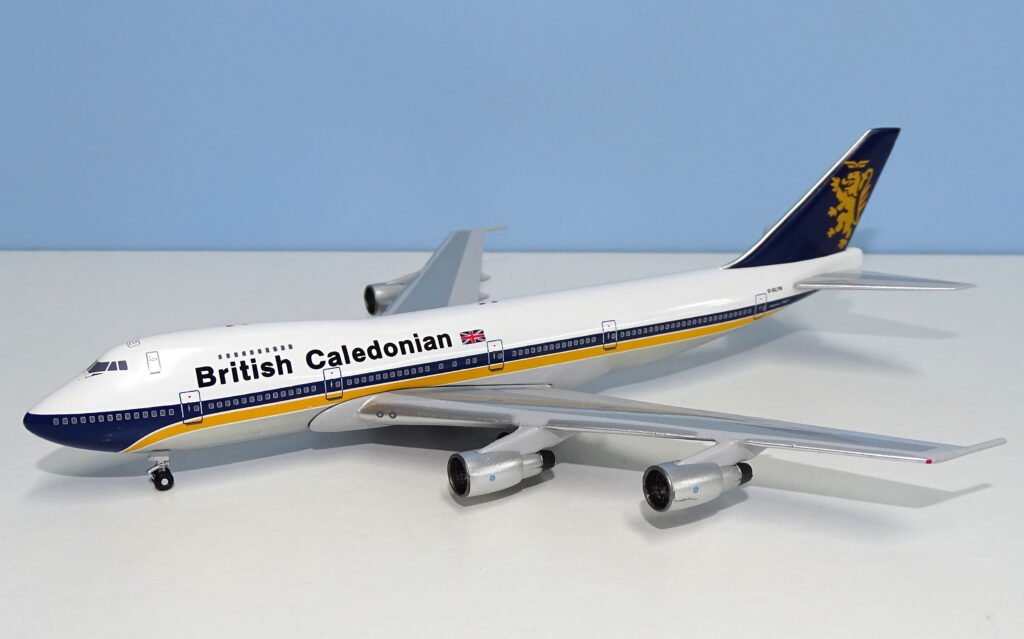
The new Aeroclassics model is the last 747 (for the time being at least) to be made using a batch of 747 mould castings that Aeroclassics acquired from JC Wings recently. These use a version of the original Big Bird / Aeroclassics 747 that dates from 2003, but it is not exactly the same as the original. The classic BigBird 747-200 has been lionized for years, and although it is perhaps showing its age it is still an impressive casting.
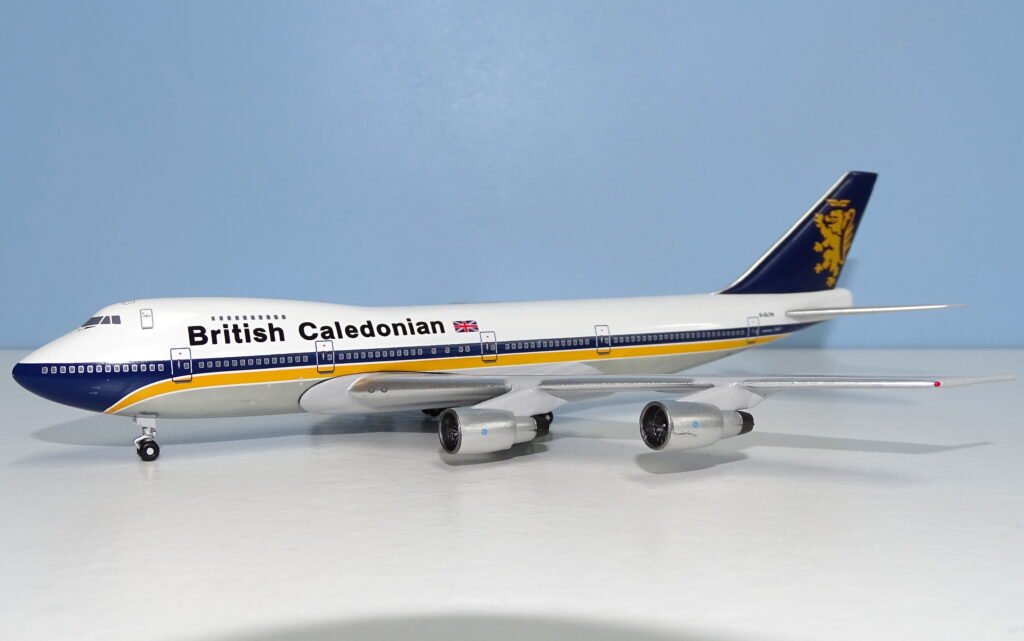
Obviously since this mould is as old as the original Gemini mould it also does not feature rolling gear or aerials. Although Big Bird Mk3 did update it with aerials when they used it, as is well known, adding aerials is not something Aeroclassics believes is worth it and never uses moulds with them in 400 scale.
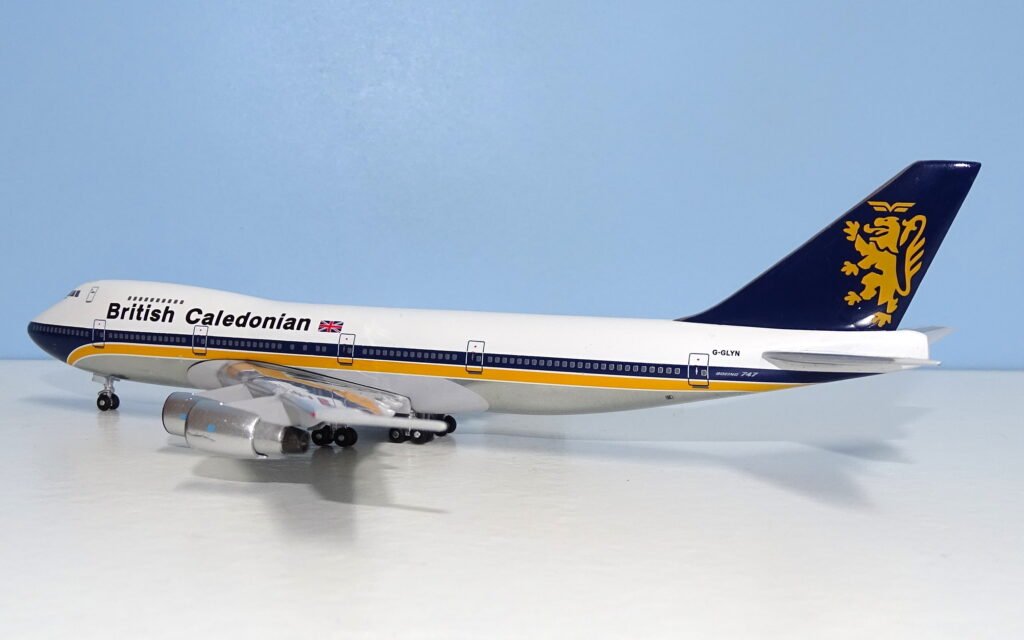
This mould has a great fuselage shape, plus comes with very finely done landing gear. It actually bears a strong resemblance to the Gemini mould but has a slightly superior cockpit region. Both the moulds are cradle fit with a resulting wing seam and both solve the problem by having the seam follow the wing join fairing. The seam line isn’t in exactly the same position and is marginally superior on this Big Bird version.

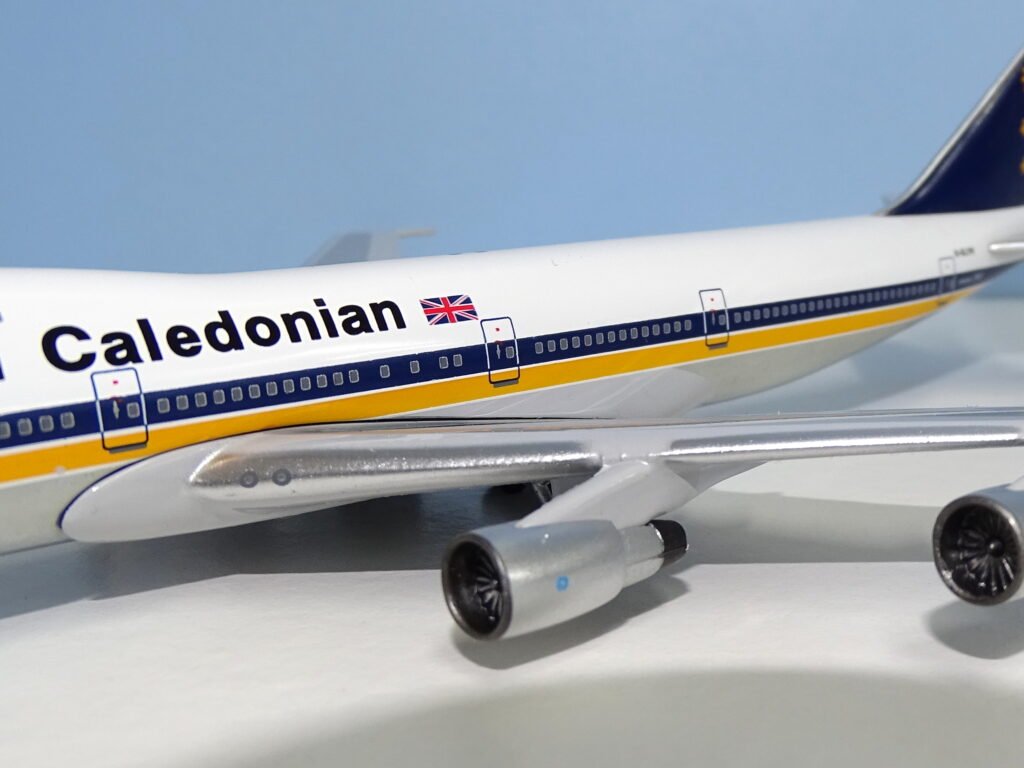
Both moulds also have their biggest failing in the same place i.e., the manner of the engine pylon to wing join. The fit to the wing on both is quite square and untidy but is worse on the Gemini version. Of 747 moulds available in the early 2000s only the Dragon version is better in this area. This Big Bird does have a better connection of the pylons to the engines however than the Gemini.

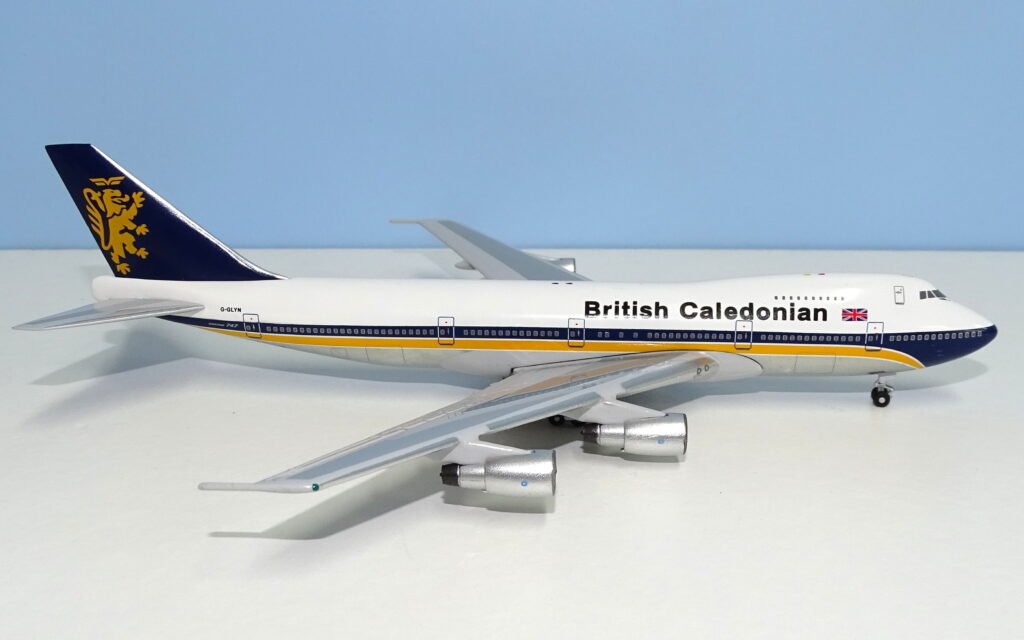
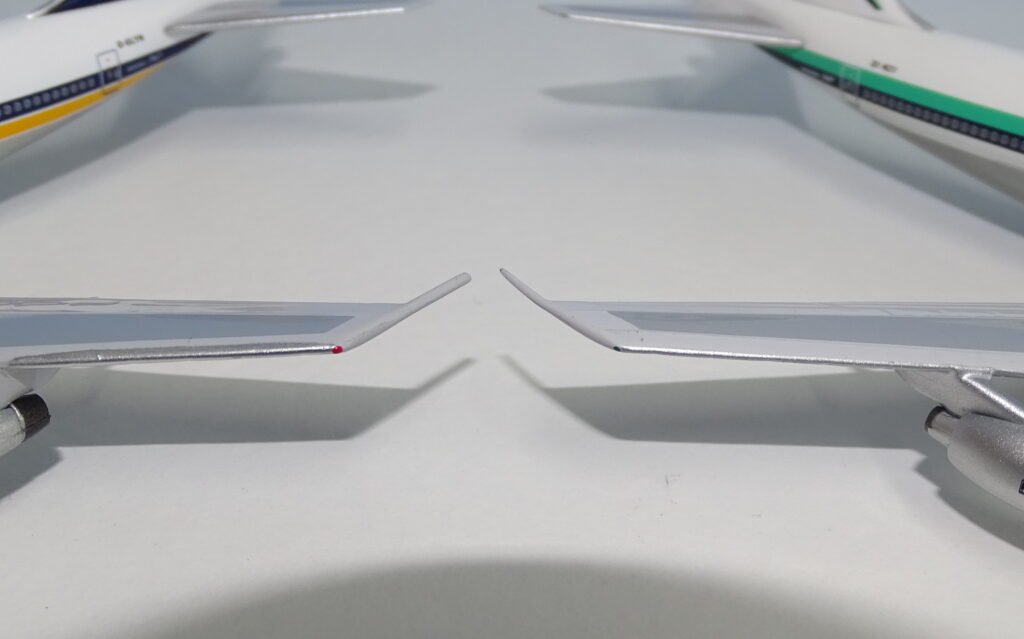
An area that has gained some criticism is the shape of the wingtip HF aerials. Some have described them as ‘broom handles’ since they are quite thick and don’t taper to a point well like the aerials on the Dragon and Gemini moulds. This is the area where the mould differs from the original BigBird mould, which had more accurate tapering aerials. Unfortunately, the original Big Bird aerials are very prone to breakage and these newer thicker versions are a lot sturdier so honestly the change doesn’t bother me.
Another area of difference with the original BigBird / Aeroclassics mould is the tailcone, which unlike the original Big Bird and the Gemini version is rather flat and squared off at the end with no obvious APU exhaust hole.

This particular aircraft sports the CF6-50E2 engine and compared to the casting for the JT9s this engine isn’t as good on the Big Bird 747. The primary issue is at the engine nacelle, which does not curve at its rear or front as it ought to. This means the engine intakes are too large. Having said that the Gemini G-HUGE version has a dreadful exhaust section, which looks more like the JT9 engine’s.
The only clearly superior 747-200 mould at present is the Aviation400/Witty Wings mould – a seamless version of the original Big Bird. This mould is better as it has all the best parts of the original but no seam, plus retains the original pointier wingtip aerials. I believe this mould is also owned by JC Wings so it is slightly odd that it was not used in place of this Big Bird variant.
SCORE – 7
PAINT & LIVERY
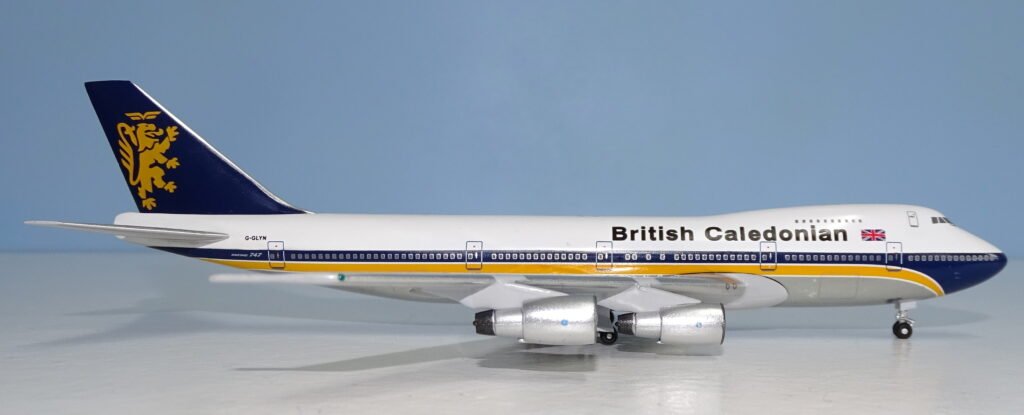
You can’t get much more Gatwick classic from the 80s than British Caledonian with its blue and gold. G-GLYN was only in service for just over a year before the BA merger having originally been delivered to Wardair Canada in 1978. The reason this aircraft has been made is because it flew the Aeroclassics owner to Hong Kong at one stage. There aren’t lots of photos of G-GLYN in BCal colours but try these for reference:
- ABCPic – 2 Photos
- AirTeamImages
- and this one below from FlickR:

The livery application on this model is decent but not entirely correct. The one big factor, which is superior to the Gemini version, is that the cheatline is better positioned at the nose as it is too low on the Gemini due to the windowline in general being too low. This gives the entire model a better appearance.
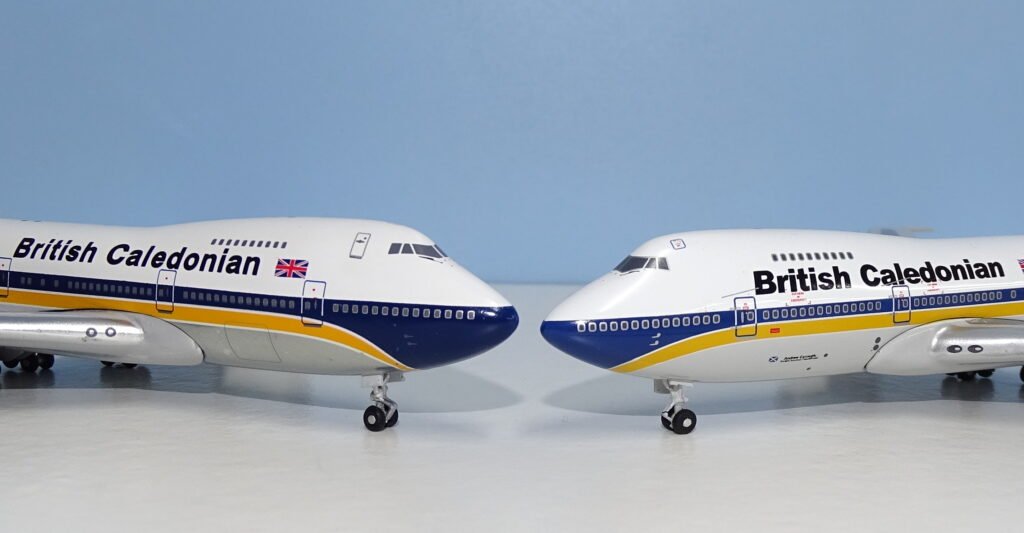
The colours are ok by me. Although the BCal dark blue is slightly too dark it really doesn’t stand out when they are side by side and I can barely tell the difference. In photos it seems a lot more obvious. The natural metal belly is really nice. Interestingly the spacing of the main titles is wider than on the Gemini release but this is backed up by photographic evidence and is correct.

What isn’t correct about the titles is their angle. They should be ever so slightly slanted but are not. It isn’t enormously obvious on the real thing so doesn’t stand out massively. Other small livery details are pretty good. The Boeing 747 titles in the blue cheatline at the rear should be whiter and the YN is missing from the nosegear doors however.


Lastly looking at the lion tail logo the lions are substantially different. Although not perfect the Gemini lion is clearly the better of the two in terms of shape. The printing is crisper and the form better defined. In particular the head of the lion is much more accurate. The head of the lion on the Aeroclassics model looks more like a dragon with a much fatter snout and a much weaker lower jaw. It is the same odd lion Aeroclassics has used on all their BCal releases so at least it matches across the fleet of models, but it doesn’t look much like the actual lion BCal used.
SCORE – 7
PRINTING & QUALITY CONTROL
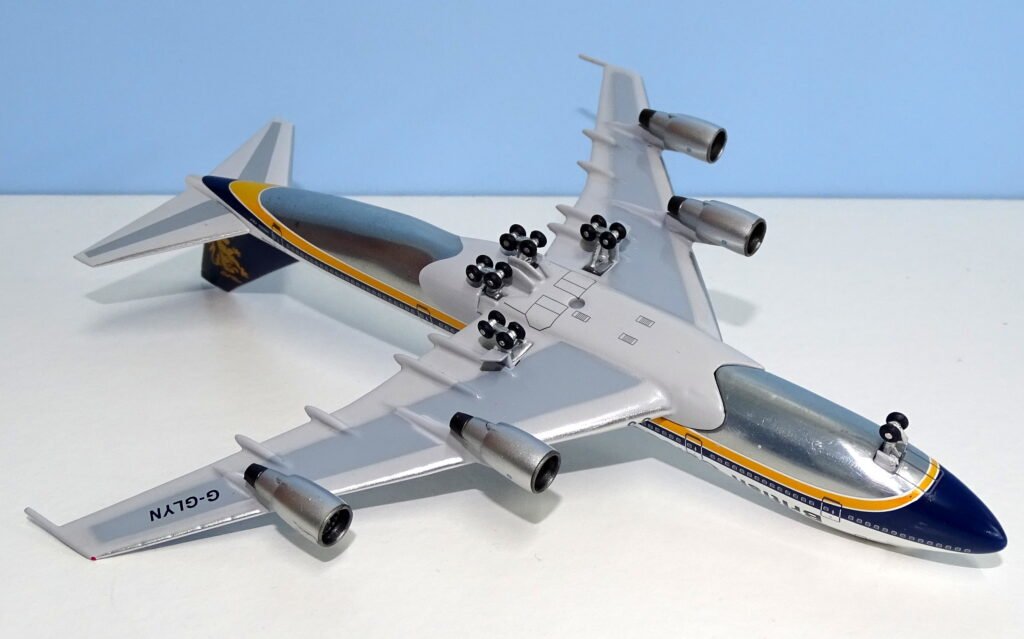
As I mentioned above one of my major gripes with the otherwise good Gemini version of this model is the position of the windowline, which is too low but the cockpit has a similar problem. The Aeroclassics release has well positioned windowline and cockpit printing so wins on this note. However, it isn’t all great for Aeroclassics. Their printing is still rudimentary in 2021 compared to what Gemini were doing in 2005. The old Gemini model has more detailing on the doors, cut-here in emergency panels and other areas, but is missing maingear doors on the underside.
Aeroclassics have also made a significant error with their template, which they haven’t done before with the earlier 747s. They have added a door behind the cockpit on both sides of the fuselage rather than just on the starboard side as it ought to be. I get the feeling this is due to the designer only looking at images of one side of the plane.
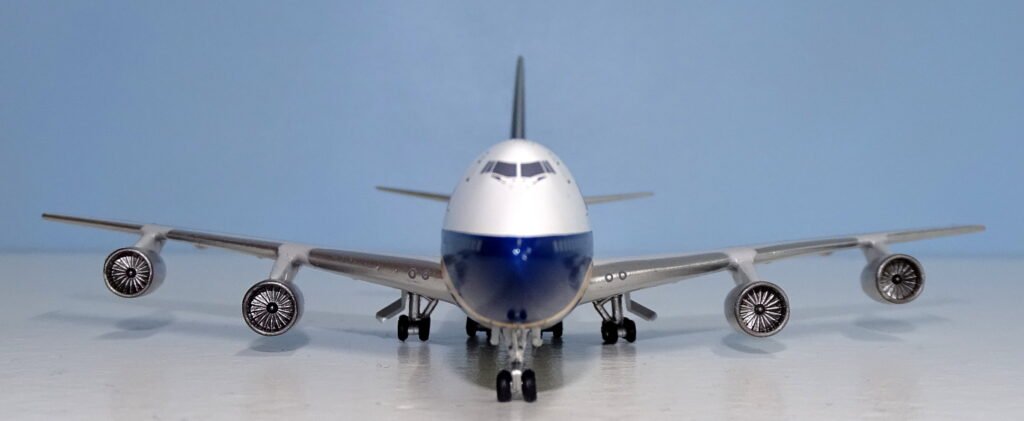
One good point about the more modern model is that the engine inners are a much better dark titanium grey and not full on silver. Build quality of the model is exceptional. No problems at all.
SCORE – 8
CONCLUSION
This definitely a nice model and one I can recommend if you don’t have the old release from Gemini, although I suspect your chances of finding the new release now are slim. However, even though there are 16 years between the two models, in terms of release dates, in reality this new model could easily have been made in 2005 as well. That is not necessarily a criticism and overall considering the cheatline, marginally inferior mould and incorrect engines of the Gemini version the new Aeroclassics is probably slightly better. Having said that, some of the printing on this newer version is lacklustre (especially the lion) and the mould, although one of my favourites, is a little obsolete. Is it worth replacing the Gemini version with this one considering the pricetag that comes with it? I’m not so sure.
FINAL SCORE – 22/30