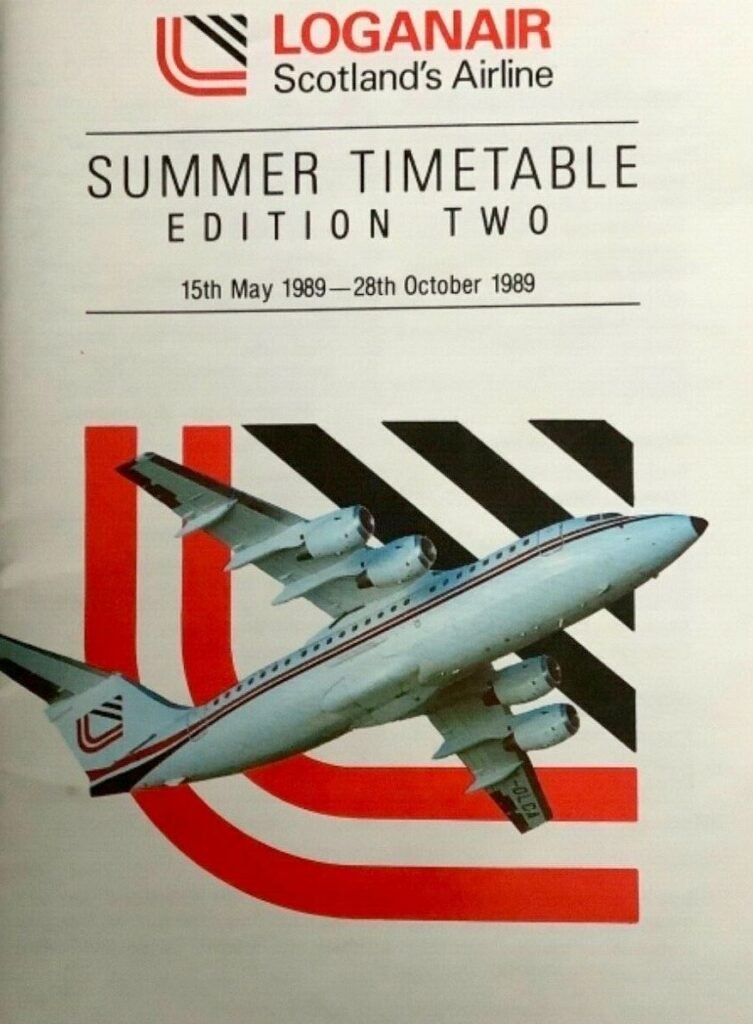
2022 marks the 60th anniversary of ‘Scotland’s Airline’ Loganair. The 1980s would see its survival assured by new ownership and expansion south of the border that merited the acquisition of its first jets before its own brand disappeared behind the mask of franchise operations for quarter of a century.
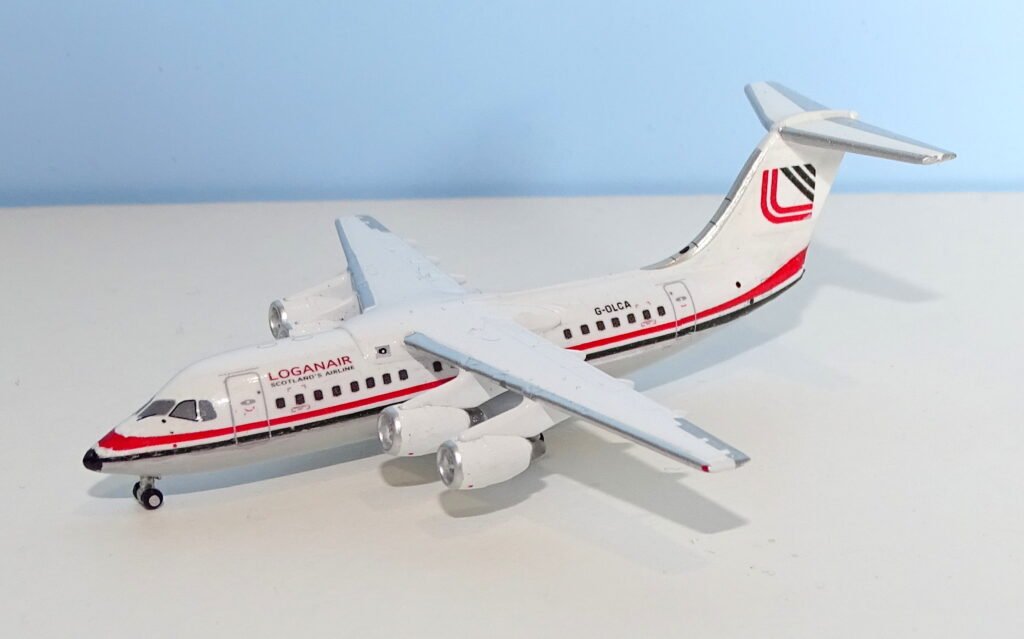
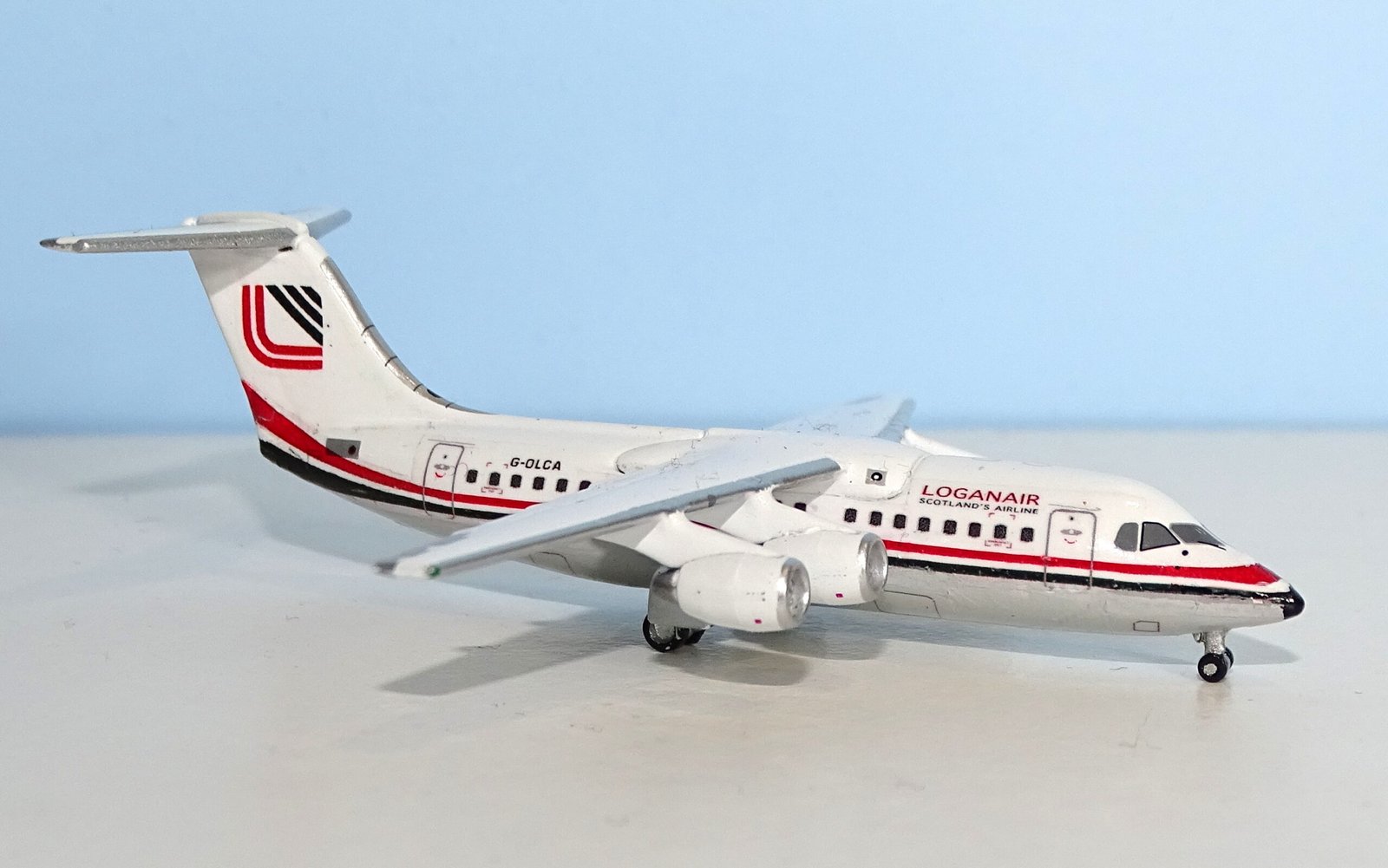
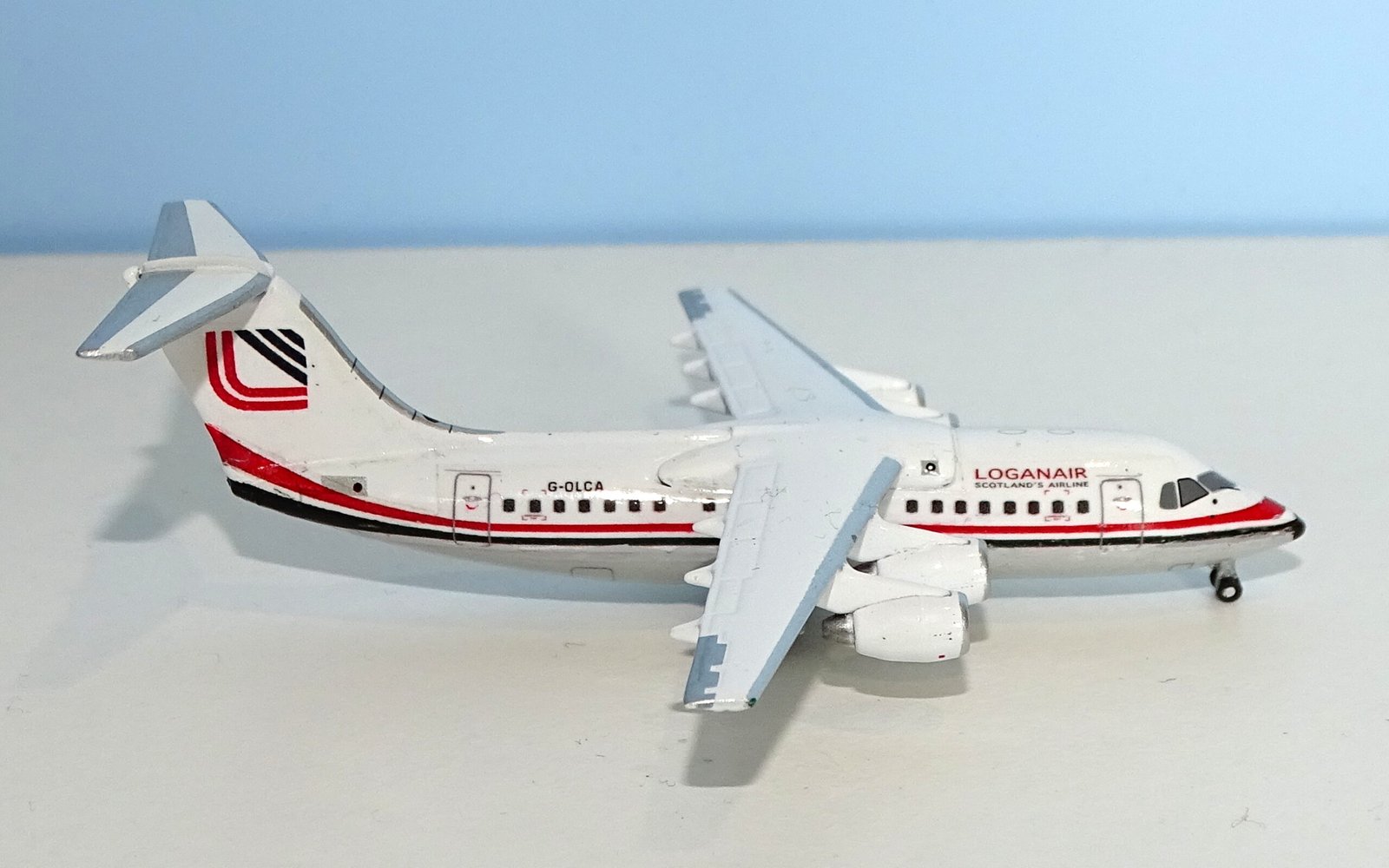
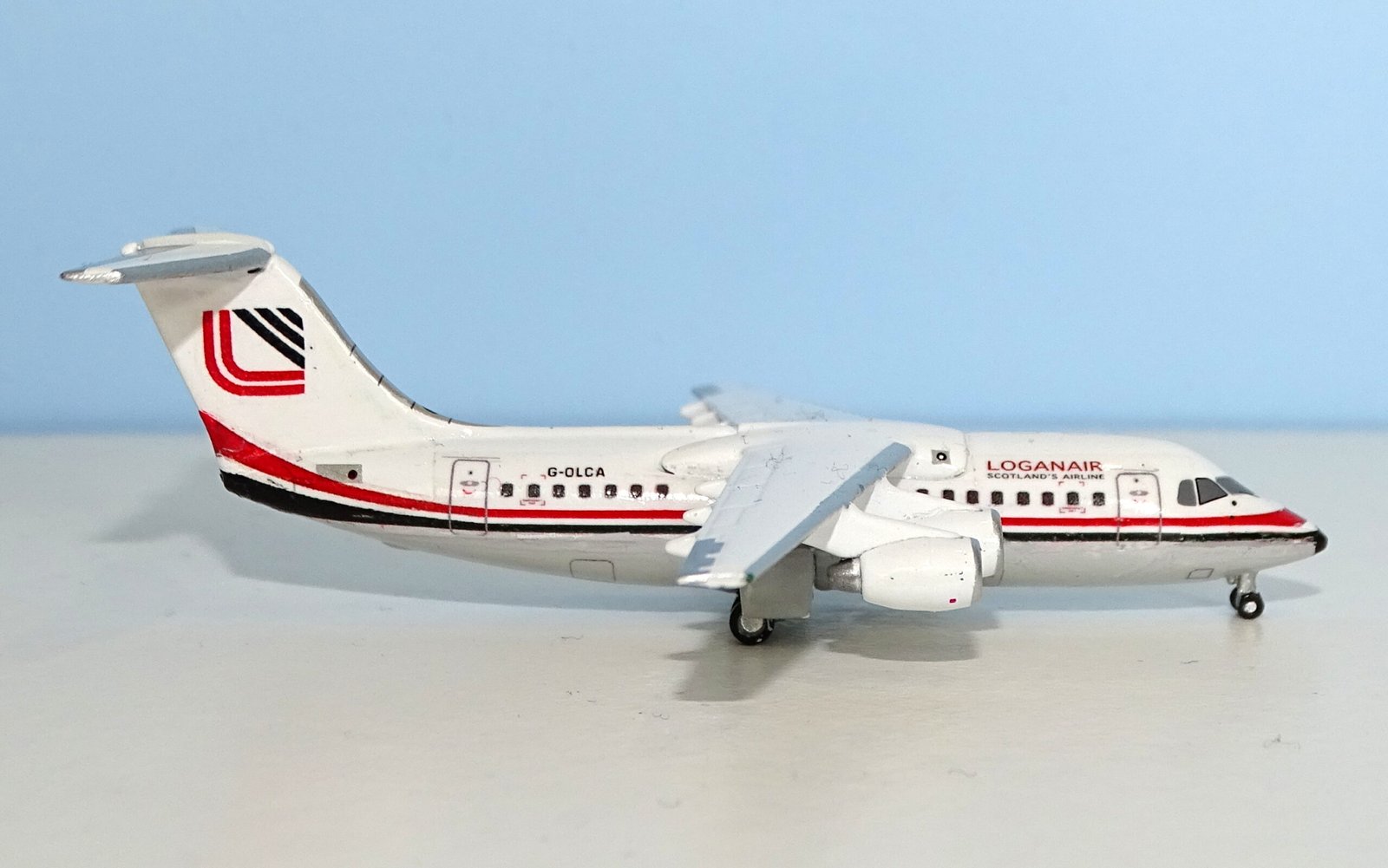
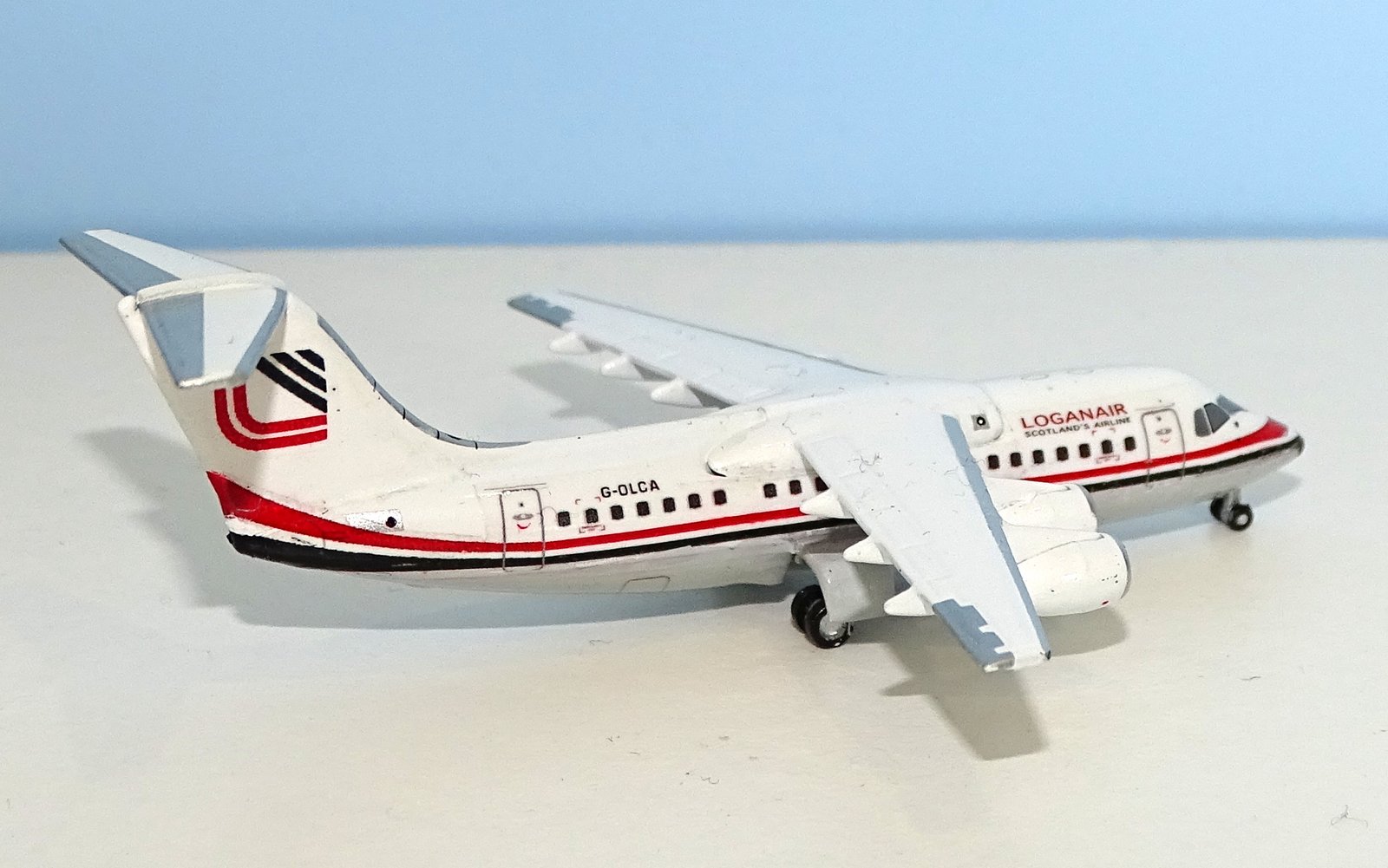
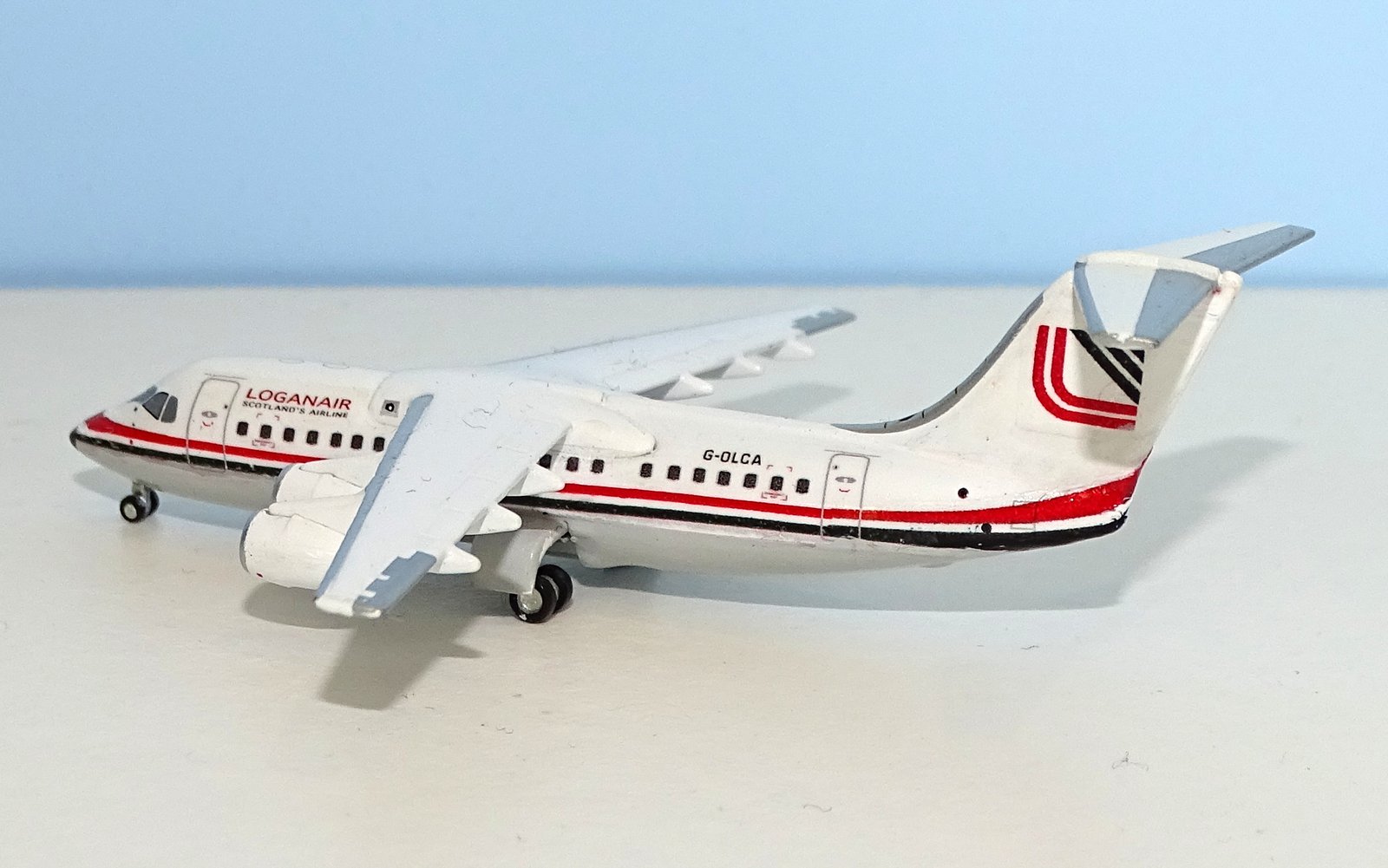
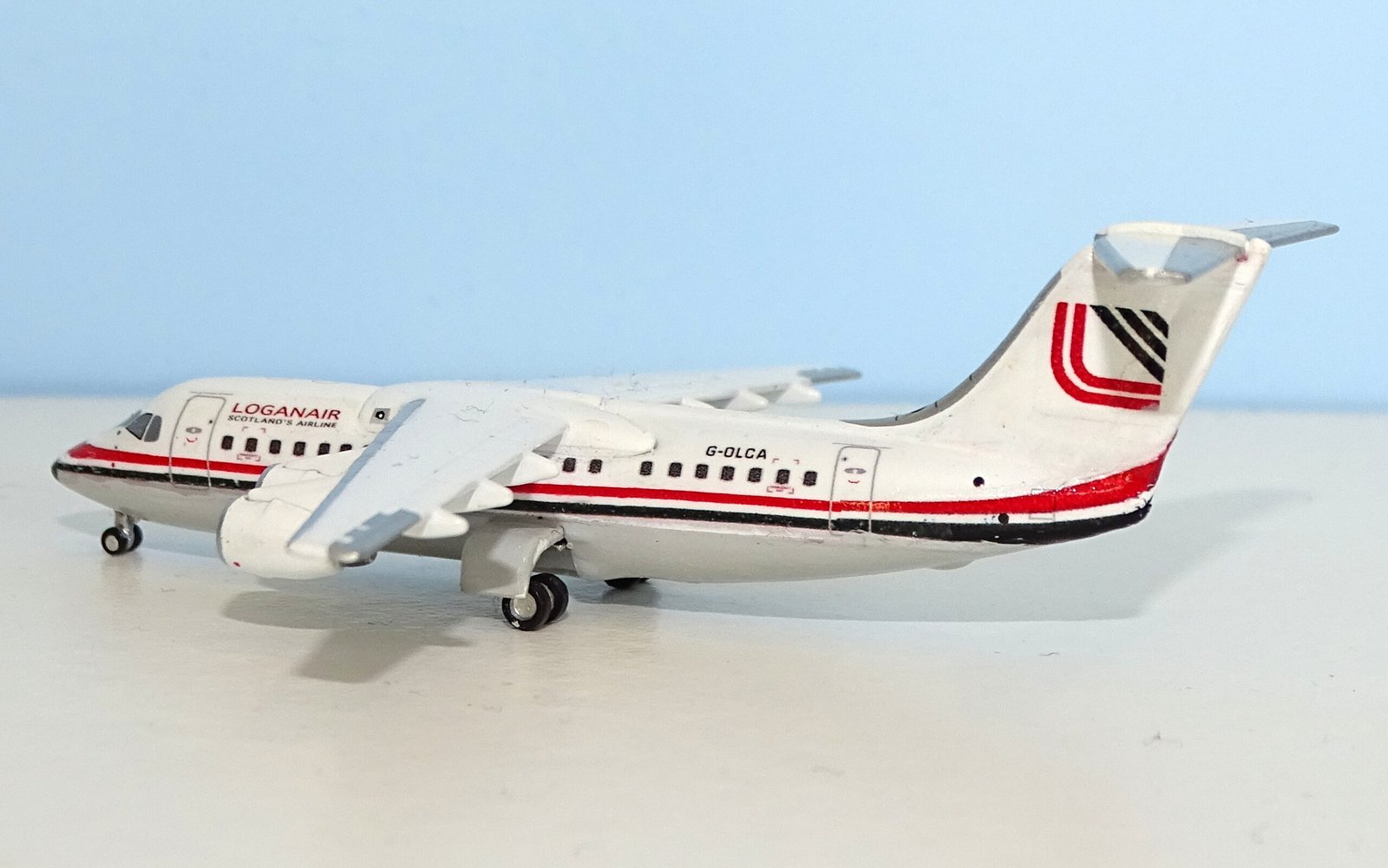
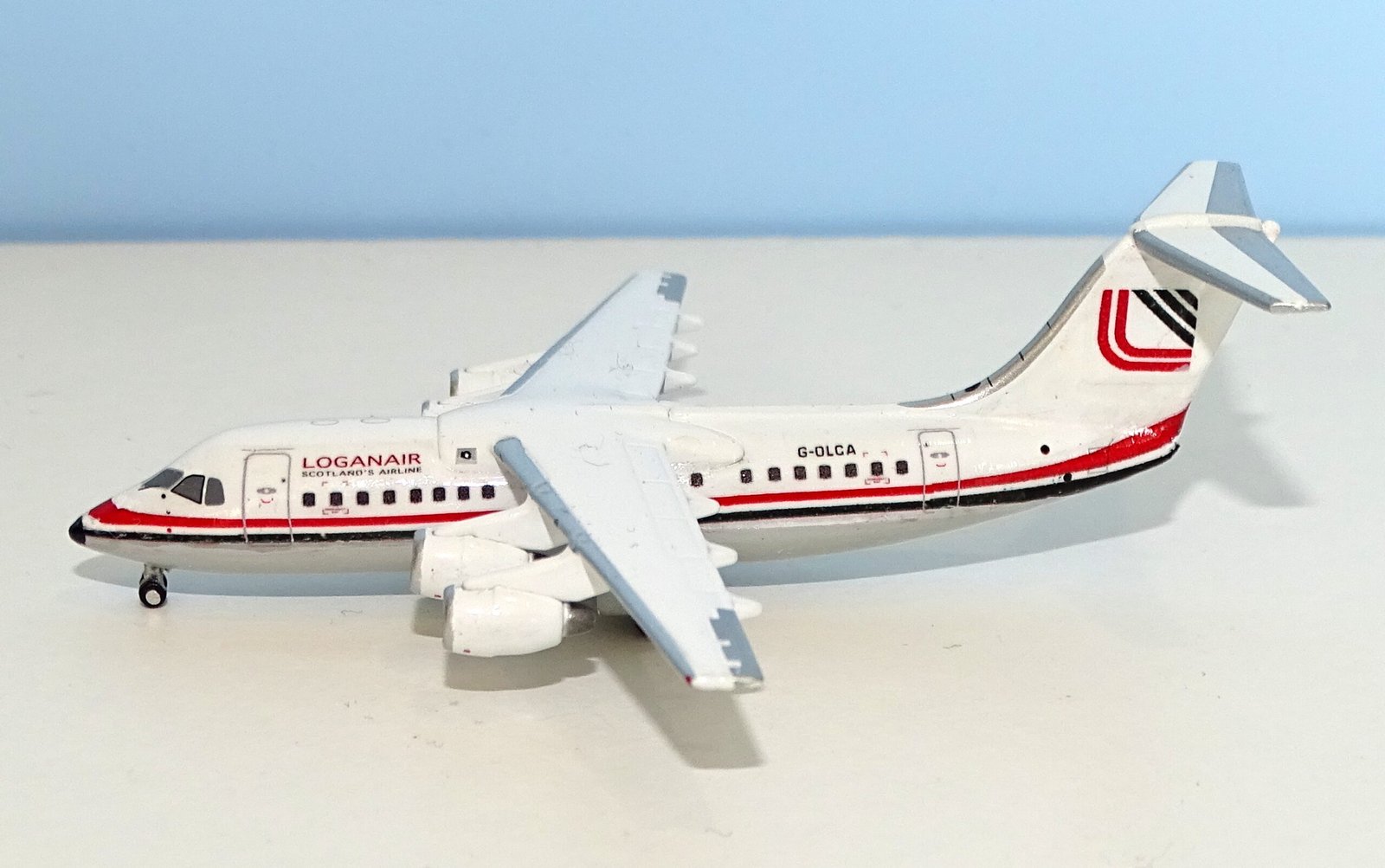
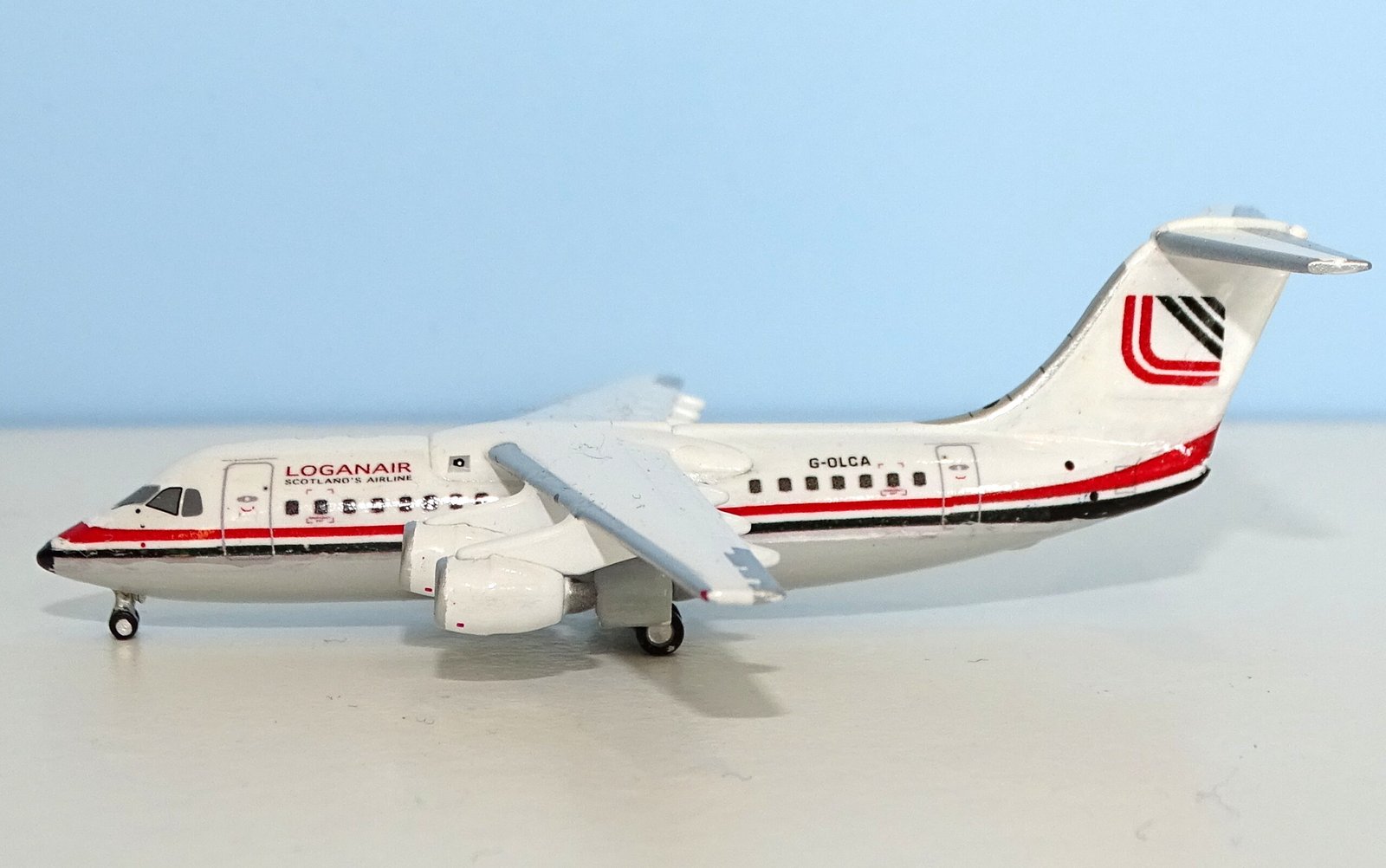
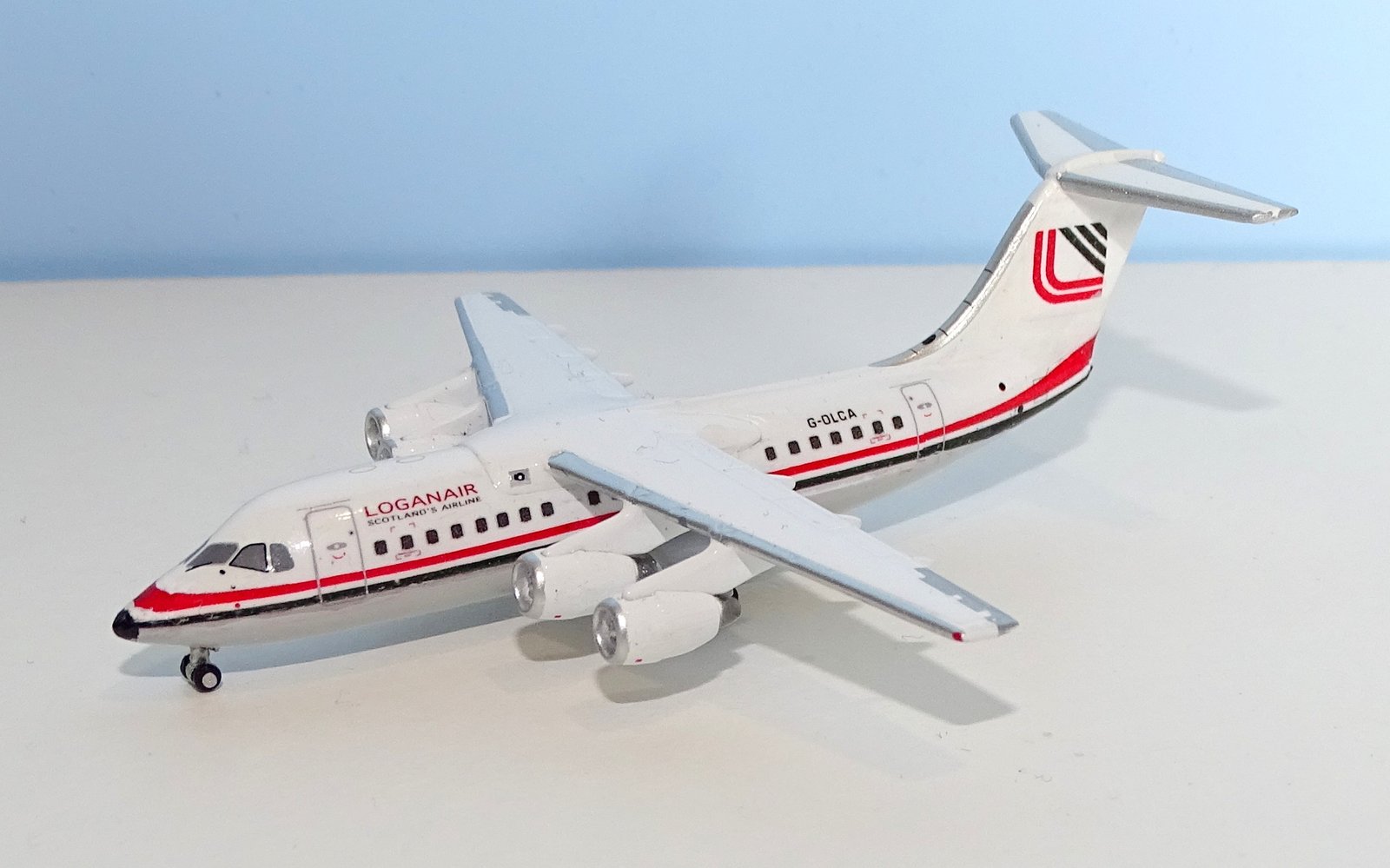
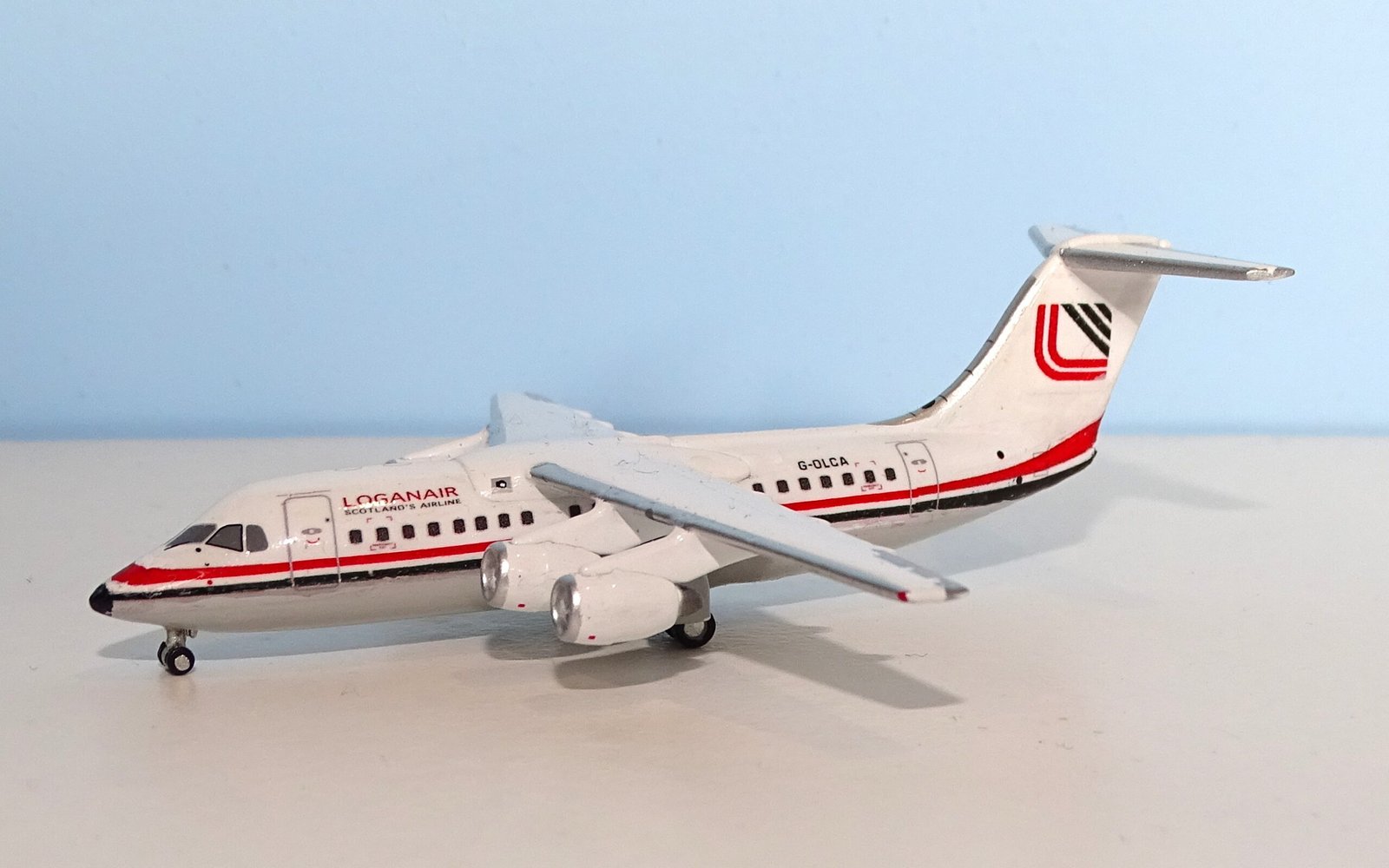
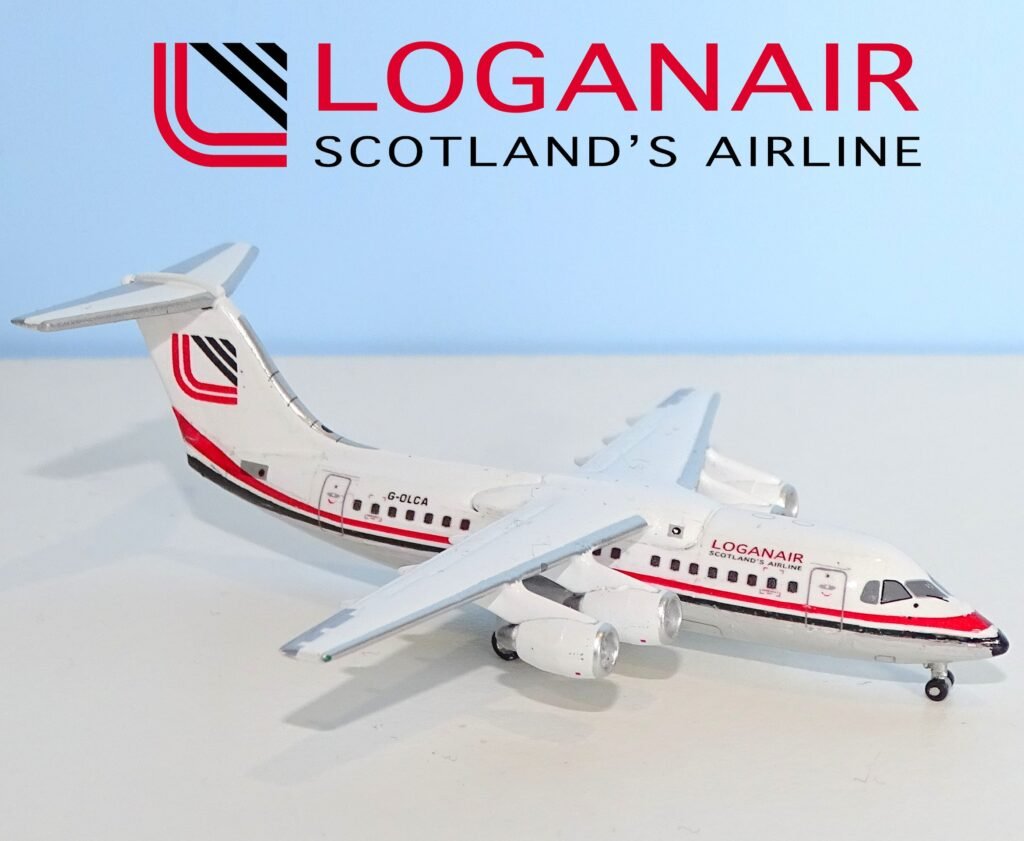
Loganair British Aerospace 146-200 G-OLCA by MLC Customs (Jet-X Donor)
This post is dedicated to Mike Cage of MLC Customs who made this excellent custom model.
Nowadays Loganair is the UK’s largest regional airline but it has had to weather the stormy skies and tumultuous changes that have overtaken the regional market over the past 30 years to get to where it is today. The 1980s were a period of impressive growth and profitability for Loganair as it basked in being part of the Airlines of Britain group.
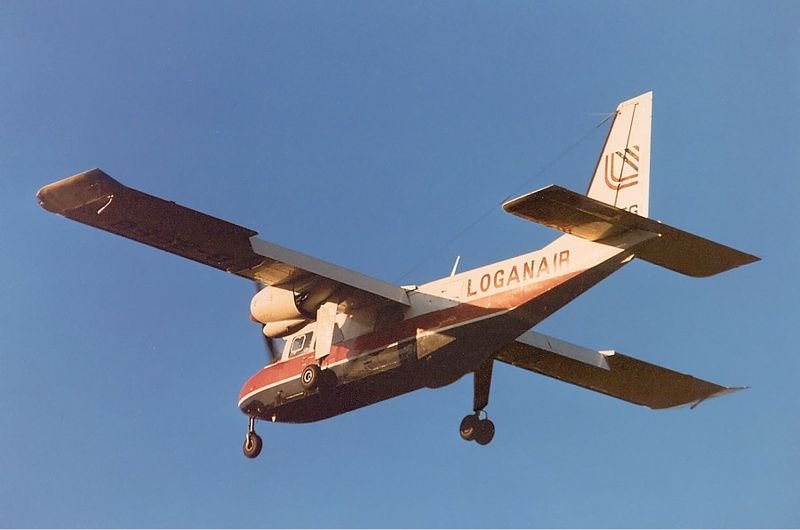
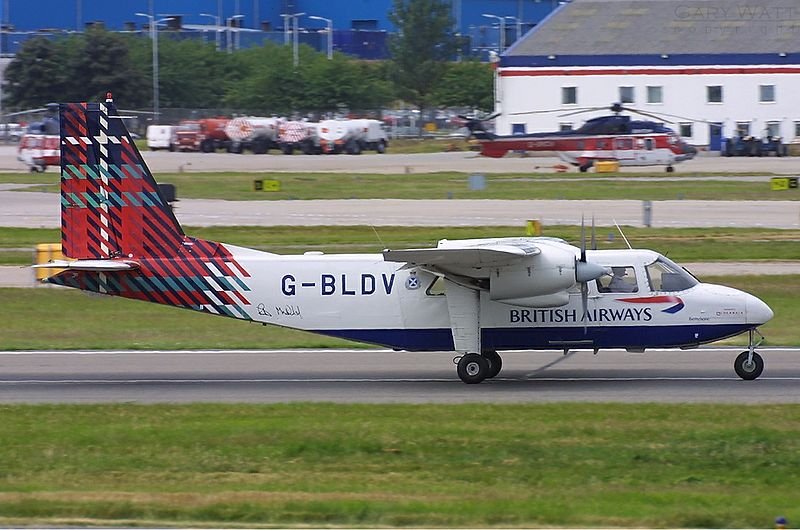
Britten Norman Islanders have proven long servants for Loganair. Gary Watt (GFDL 1.2 or GFDL 1.2 ), via Wikimedia Commons
Loganair started operating mainly as a charter taxi operator, gradually taking over air ambulance services, and moving into scheduled services by taking over much of the former Highlands and Islands network previously flown by BEA. These especially included services to the Orkneys, Shetlands and Western Isles. Internal flying within the Scottish mainland was rather limited but in 1969 the airline had begun its first international service, albeit one that was short-lived.
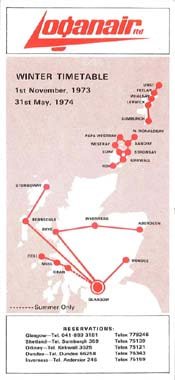
Below: The 1973 timetable shows operations from the Glasgow base as well as the separate services within the Orkneys and Shetlands to the North of the Scottish mainland.
This service connected Glasgow with Stavanger, in Norway, via Aberdeen using a leased Shorts Skyvan but couldn’t be supported for long and was dropped by 1972. Instead the fleet was centred on the Britten Norman Islander and Trislander during the 70s with the latter gradually replaced by new DHC-6 Twin Otters from 1977. The arrival of the Twin Otters also marked expansion for the airline outside of Scotland, initially centred on services to Northern Island. These began in 1979 connecting Glasgow to Londonderry and Glasgow to Enniskillen.
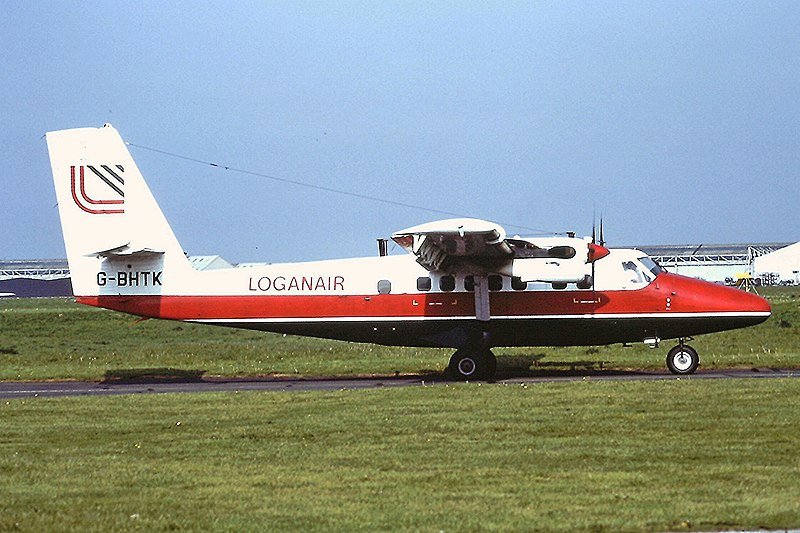
DHC-6 Twin Otters, like G-BHTK here seen in 1984, tookover the main routes served previously by Trislanders at the end of the 70s. Rob Hodgkins, CC BY-SA 2.0 , via Wikimedia Commons
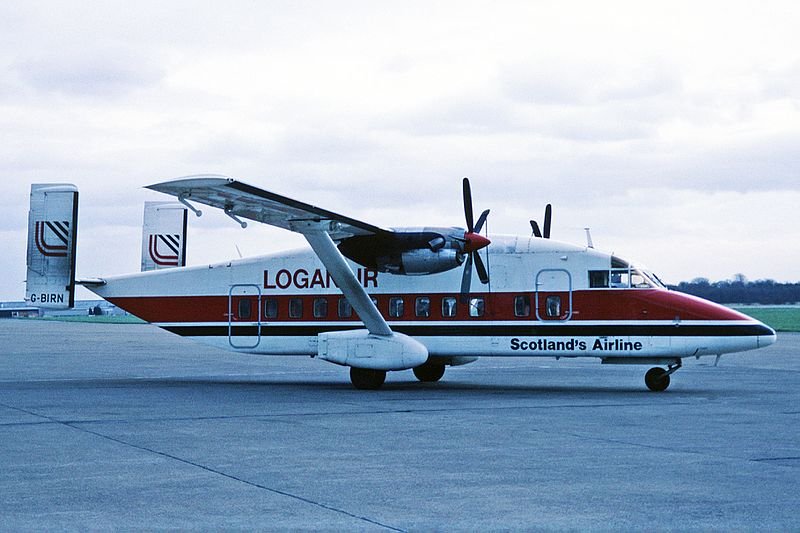
More impressively in April 1980 the Belfast-Edinburgh service was taken over from British Airways enabling a three times daily service with a new Shorts 330. The following year Loganair could be seen on the Belfast-Glasgow and Belfast-Blackpool route. Clearly ‘Scotland’s Airline’ was looking to grow and wasn’t afraid of going head to head with BA.
The Shorts 330 enabled Loganair to begin its expansion out of Scotland. Ken Fielding/https://www.flickr.com/photos/kenfielding, CC BY-SA 3.0 , via Wikimedia Commons
Switching its competing Belfast flights to the new Belfast Harbour Airport, much closer to Belfast City, increased the passenger loads by 40%. Loganair was however constrained from growing within Scotland itself by a non-compete moratorium in Scotland to give the new BA Highland Division a chance to prove itself. Loganair was forced to instead look south of the border.
Loganair’s timing was fortuitous as although BA initially fought to keep it away from the Edinburgh-Manchester service BA itself axed the route in October 1982 as part of its fight for profitability. Loganair swiftly started operations on the route and would grow Manchester into an important hub for itself.
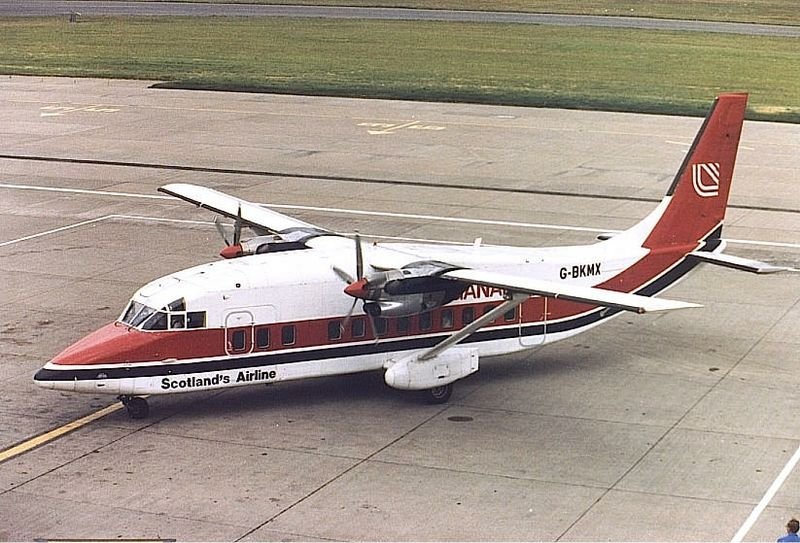
The Shorts 360 was a workhorse for Loganair. Gary Watt (GFDL 1.2 or GFDL 1.2 ), via Wikimedia Commons
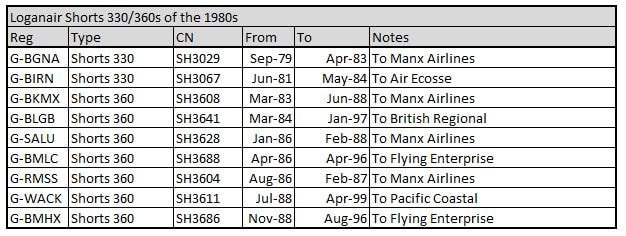
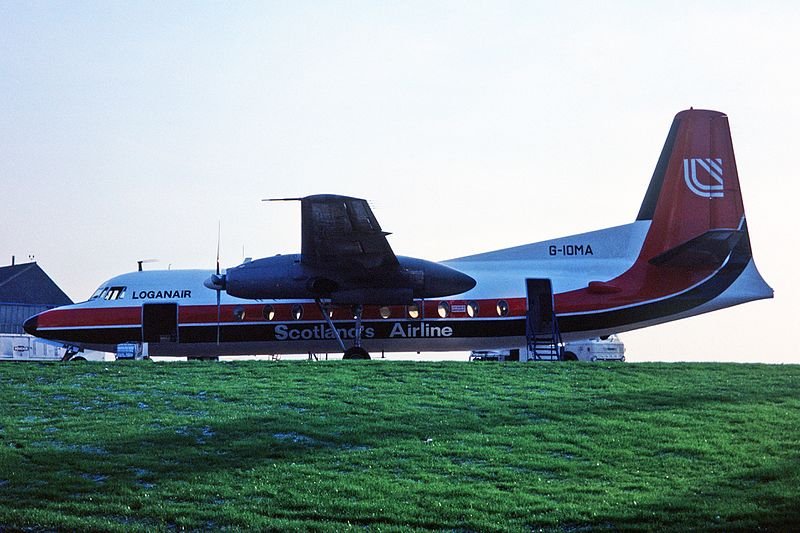
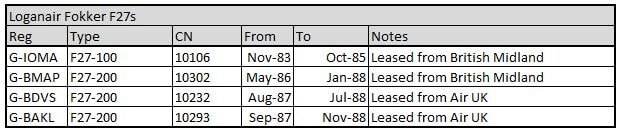
The Edinburgh service initially saw a three times daily Shorts 330 but in March 1983 the airline’s first Shorts 360 (G-BKMX) joined the fleet. It would be used on both this service and the new Manchester-Belfast route. Growth continued and in November 1983 a 44 seat Fokker F-27 (G-IOMA) was leased from British Midland to handle the Edinburgh service.
G-IOMA in her original colours in 1984 at Manchester. Ken Fielding/https://www.flickr.com/photos/kenfielding, CC BY-SA 3.0 , via Wikimedia Commons
Unfortunately for Loganair the growth came with associated costs that hit profitability. The airline was owned by the Royal Bank of Scotland but losses had been accumulating for four years including one of around £1 million in 1982. Fortunately a white knight was on the horizon. British Midland had already begun Manx Airlines and acquired Loganair for less than £1 million in December 1983. Although Michael Bishop of British Midland became Chairman Loganair kept its own unique identity and much of its autonomy within the British Midland Group (later Airlines of Britain Group).
A belly landing by the F-27 on January 11, 1984 gave Loganair the opportunity to operate its largest aircraft yet as a British Air Ferries Vickers Viscount was leased while it was being repaired. G-AOHM operated from January to May 1984 in a hybrid scheme but with clear Loganair titles and the name of ‘The Flying Scotsman’. The end of the year saw the successful culmination of Loganair’s five year plan of opening a new trunk route each year with the addition of Manchester – Glasgow beginning in October.
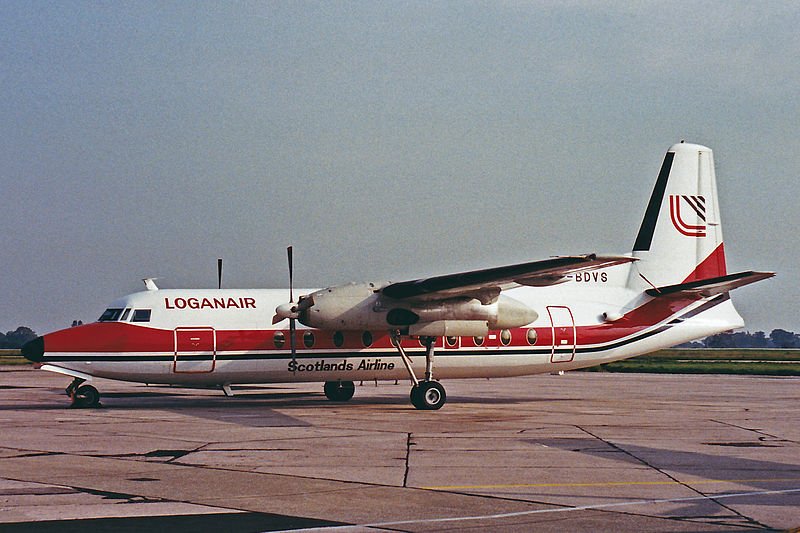
Other F-27s were leased in 1986/87. Ken Fielding/https://www.flickr.com/photos/kenfielding, CC BY-SA 3.0 , via Wikimedia Commons
With the new trunk services in place and Shorts 360s joining the fleet, replacing the Shorts 330s and many of the DHC-6s, consolidation and profitability now became the focus. The airline broke-even and then became profitable as frequencies on existing routes were increased. By 1988 profits had increased to £808,000.
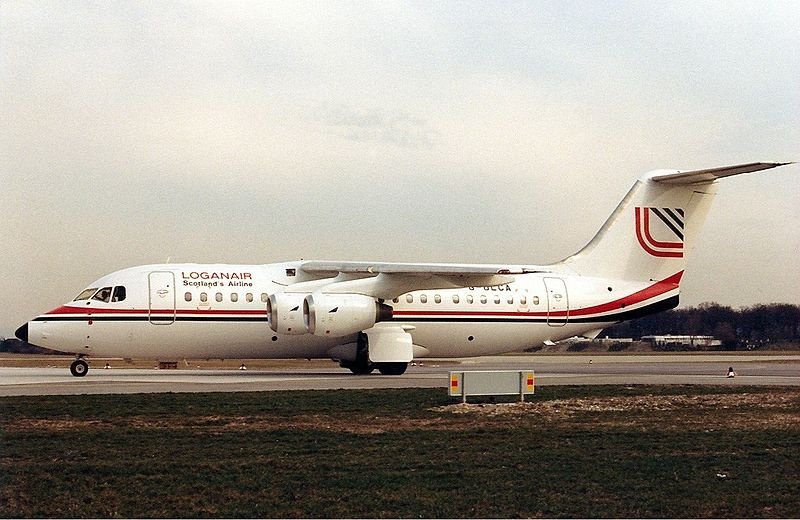
BAE 146-200 G-OLCA. Torsten Maiwald (GFDL 1.2 or GFDL 1.2 ), via Wikimedia Commons
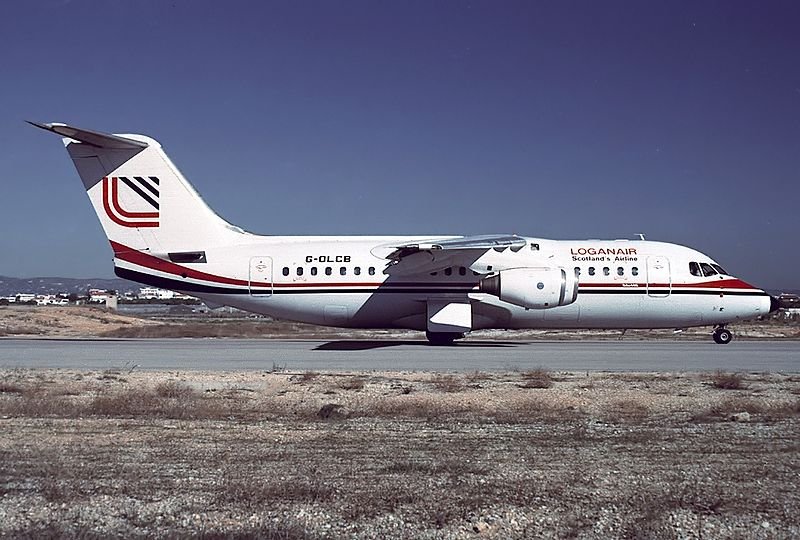
It was also 1988 that would see the introduction of Loganair’s first jets. The airline bid for the Glasgow and Edinburgh to London Gatwick routes and in preparation leased a pair of new British Aerospace 146-200s for the routes. Alas the services were won by Air UK instead but the BAE-146s joined the fleet. The first G-OLCA arrived in July 1987 and the second, G-OLCB, in May 1989 after a lease to American Airlines.
Loganair British Aerospace 146-200 G-OLCA by MLC Customs (Jet-X Donor)
Loganair British Aerospace 146-200 G-OLCA by MLC Customs (Jet-X Donor)
Loganair British Aerospace 146-200 G-OLCA by MLC Customs (Jet-X Donor)
Loganair British Aerospace 146-200 G-OLCA by MLC Customs (Jet-X Donor)
Loganair British Aerospace 146-200 G-OLCA by MLC Customs (Jet-X Donor)
Loganair British Aerospace 146-200 G-OLCA by MLC Customs (Jet-X Donor)
Loganair British Aerospace 146-200 G-OLCA by MLC Customs (Jet-X Donor)
Loganair British Aerospace 146-200 G-OLCA by MLC Customs (Jet-X Donor)
Loganair British Aerospace 146-200 G-OLCA by MLC Customs (Jet-X Donor)
Loganair British Aerospace 146-200 G-OLCA by MLC Customs (Jet-X Donor)
G-OLCA was introduced on the Edinburgh – Manchester route initially but later switched to new Manchester – Channel Islands services and even flew inclusive tour (IT) charters at the weekend taking it as far afield as the Mediterranean – a far cry from Loganair’s traditional route system! In the summer of 1989 a BAC One-Eleven was leased briefly – probably as a precursor for the 2nd BAE-146.
Loganair BAE-146 G-OLCB enjoying the sun in Faro, Portugal in 1990. Pedro Aragão, CC BY-SA 3.0 GFDL, via Wikimedia Commons
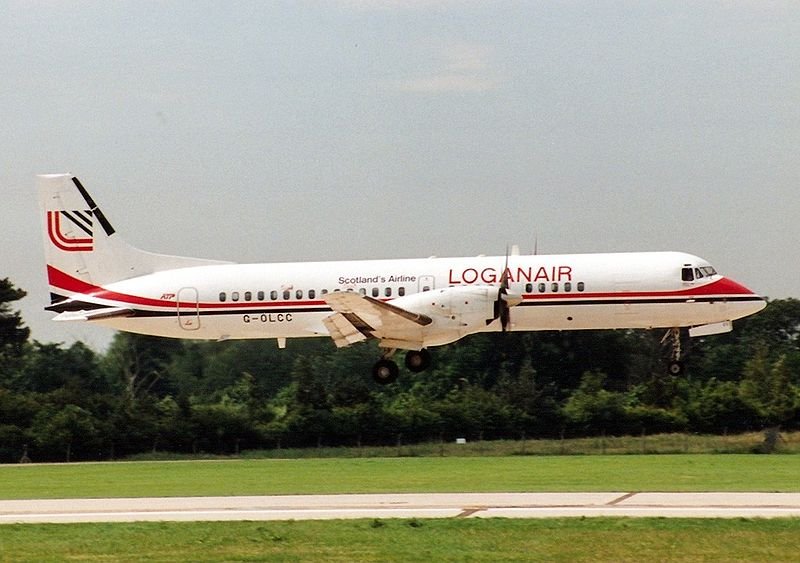
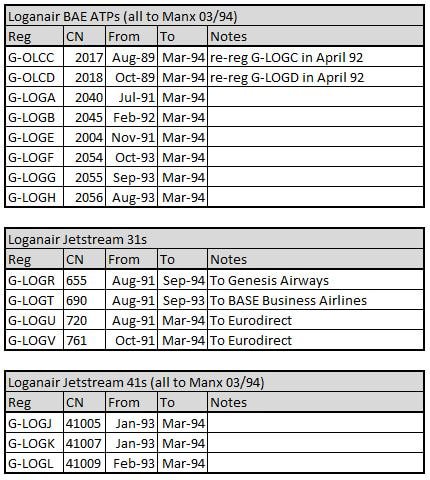
Another new type to join the fleet was the BAE ATP with the first pair on line by the end of 1989. Loganair didn’t have it all its own way however as competition with British Airways resulted in the closure of the Glasgow – Manchester service in March 1990. Somewhat ironically this led to British Airways leasing the aircraft it had been competing against from Loganair to increase frequencies on the route. This happened to be the first BAE 146 G-OLCA. The aircraft subsequently led a rather nomadic existence on short leases to NORTJet and Air Sur before being returned to BAE in November 1991.
BAE ATP G-OLCC at Manchester in 1991. JetPix (GFDL 1.2 or GFDL 1.2 ), via Wikimedia Commons
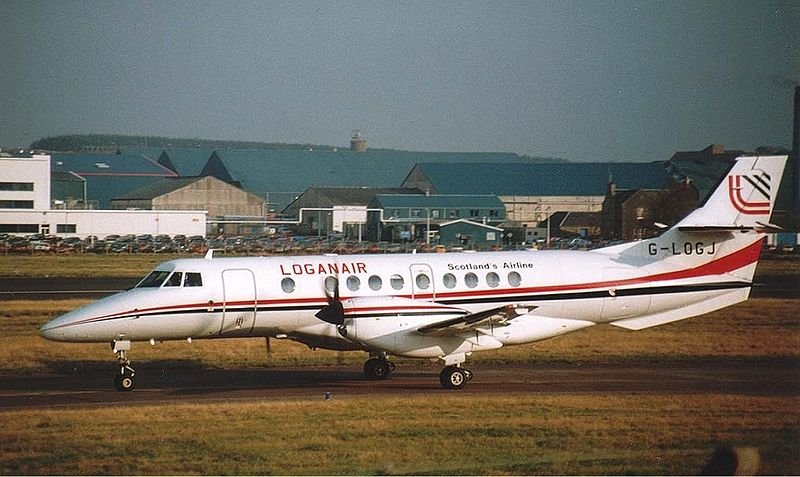
Loganair was still profitable in 1990 to the tune of £500,000 pre-tax but the economic recession following the First Gulf War couldn’t fail to have an impact. Losses were posted for the next two years just as new Jetstream 31s and Jetstream 41s joined he fleet. New services were inaugurated to Southampton from both Glasgow and Edinburgh in late 1991 plus a Manchester – Inverness route.
Alan McKnight (GFDL or GFDL ), via Wikimedia Commons
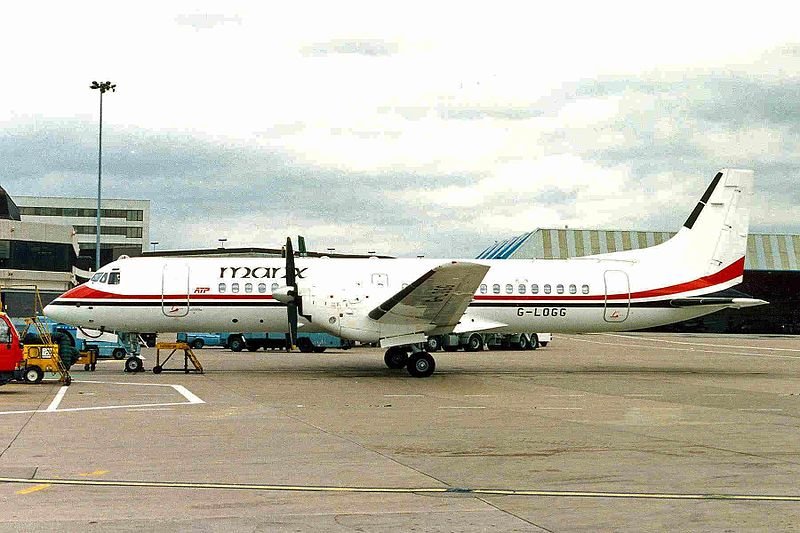
This was the high watermark of the airline’s expansion and the 90s would see a very different Loganair survive. The airline cut jobs and returned the second BAE 146 to its lessor. The Airlines of britain group was restructured and the drastic decision was made to take all of Loganair’s non-Highlands and Islands routes and transfer them, along with 11 aircraft, to the new Manx Airlines Europe subsidiary of Manx Airlines. This included all the BAE ATPs, Jetstream 31s and Jetstream 41s.
G-LOGG in Loganair colours but with Manx titles in 1994. Ken Fielding/https://www.flickr.com/photos/kenfielding, CC BY-SA 3.0 , via Wikimedia Commons
All that was left at Loganair were Shorts 360s, BN Islanders and DHC-6 Twin Otters. Then in 1994 Loganair lost its outward identity when it became a franchise carrier for BA as part of the British Airways Express network. Thankfully a management buyout in 1997 secured the airline’s future, although initially as part of the deal this included the further ignominy of losing the Shorts 360s and most of its remaining trunk routes. Following the buyout the fleet included only 5 BN Islanders and a single Twin Otter.
Islander G-BLDV in 2003. Gary Watt (GFDL 1.2 or GFDL 1.2 ), via Wikimedia Commons
Fortunately by hanging on Loganair has been able to eventually reclaim, and even surpass, its former glory by taking over and making sustainable the routes of competitors and fallen franchise partners. It is a very different airline today to that which broke out of Scotland to form a Manchester hub in the 1980s but it is still ‘Scotland’s Airline’.
References
Hutchison, I. The Story of Loganair – the First 25 Years. 1986 Airlines of Britain Group. Airplane #139 Gunston, Bill. Diamond Flight: British Midland 1938-1988 History of Loganair. Funding Universe.com Loganair. RZJets.net