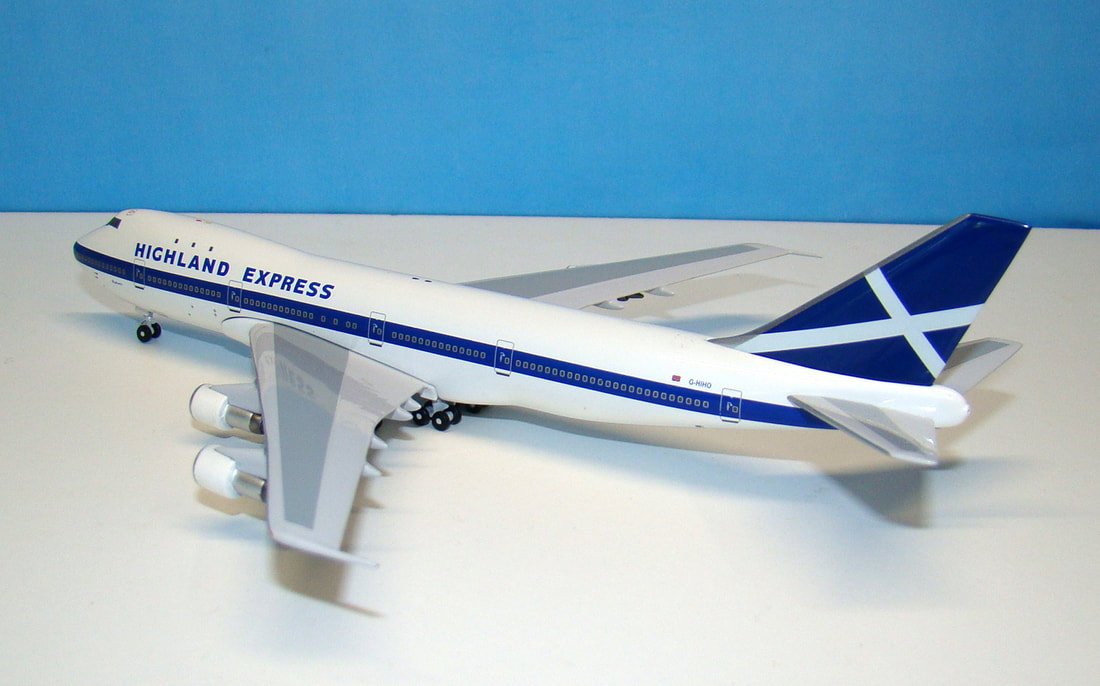
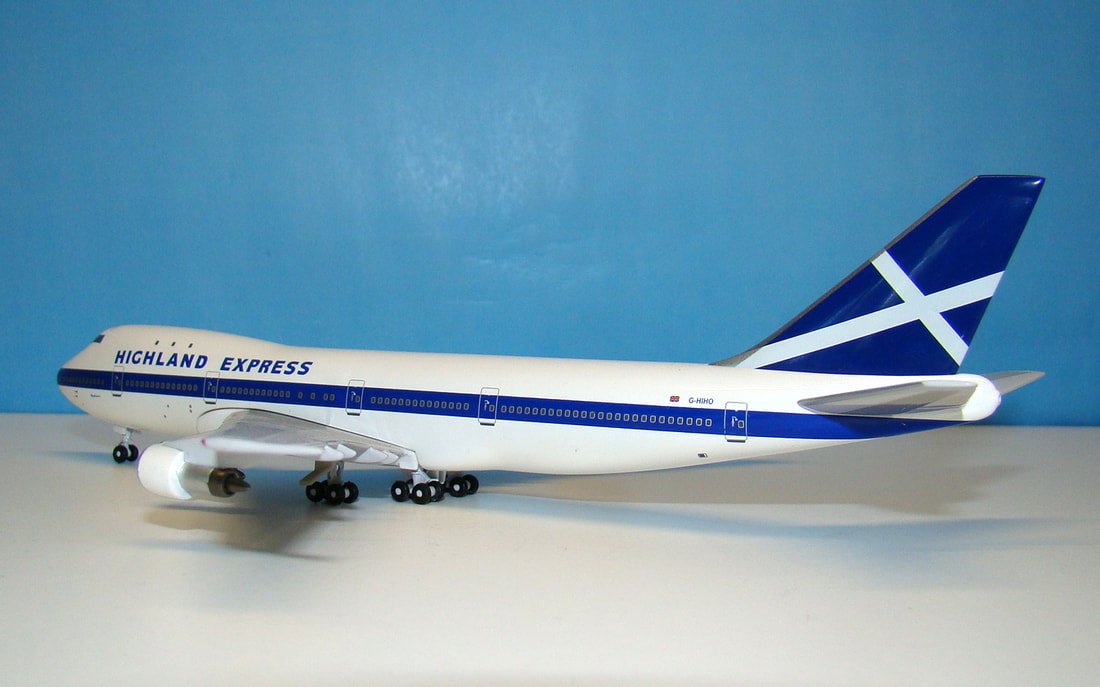
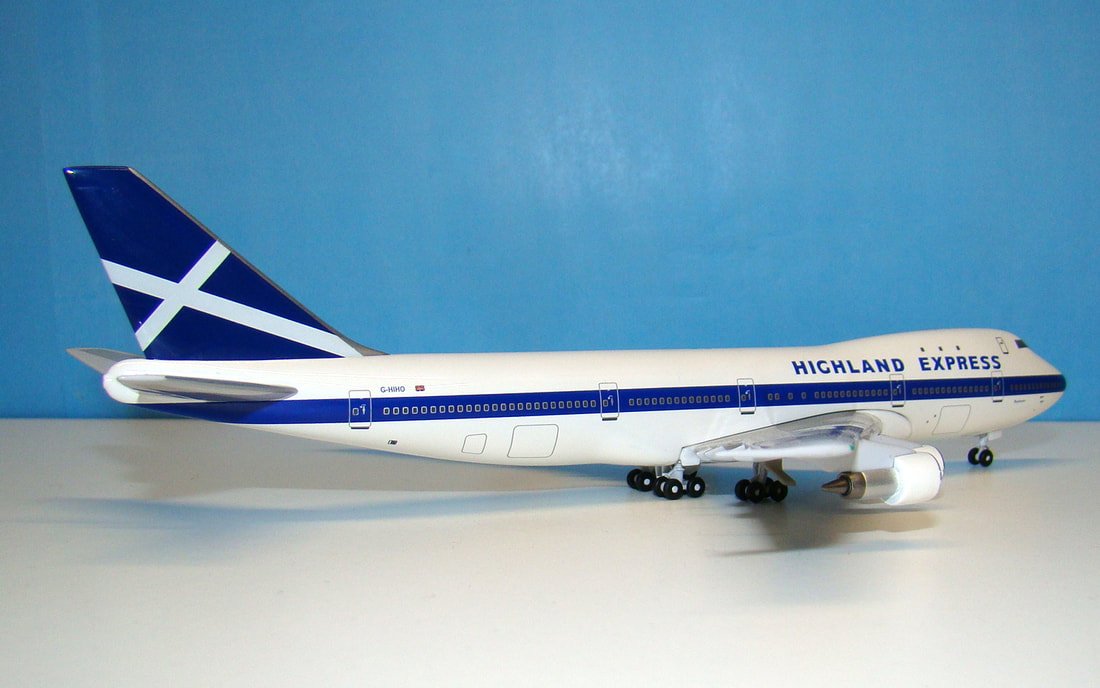
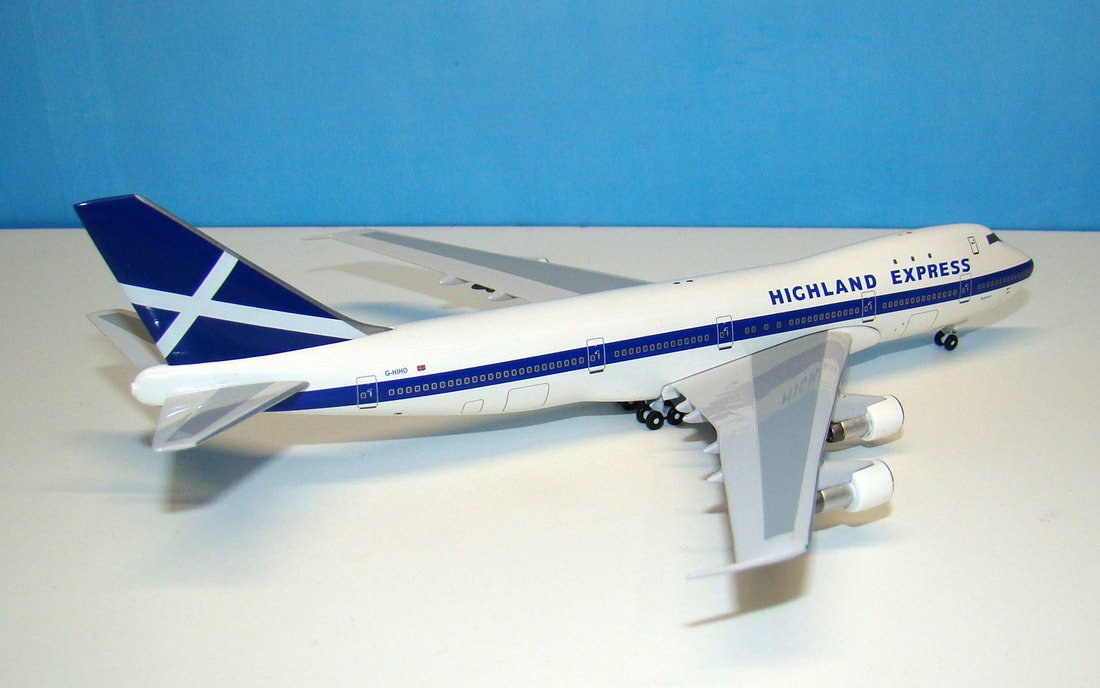
Scotland has never had a successful national airline (except I guess Loganair), although several carriers have traded on a Scottish heritage including Caledonian (later BCal) and more recently the quasi-airline Air Scotland. During the 1980s another bold attempt to fly long-haul from Scotland was attempted with Highland Express, however, though its 747 looked stunning, it was a short-lived air bridge.
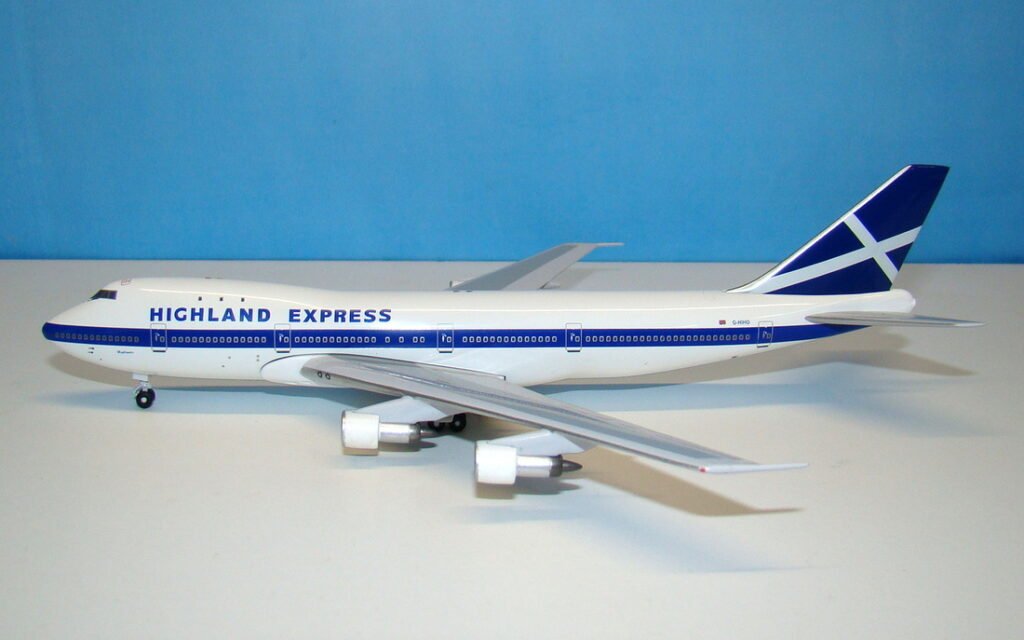
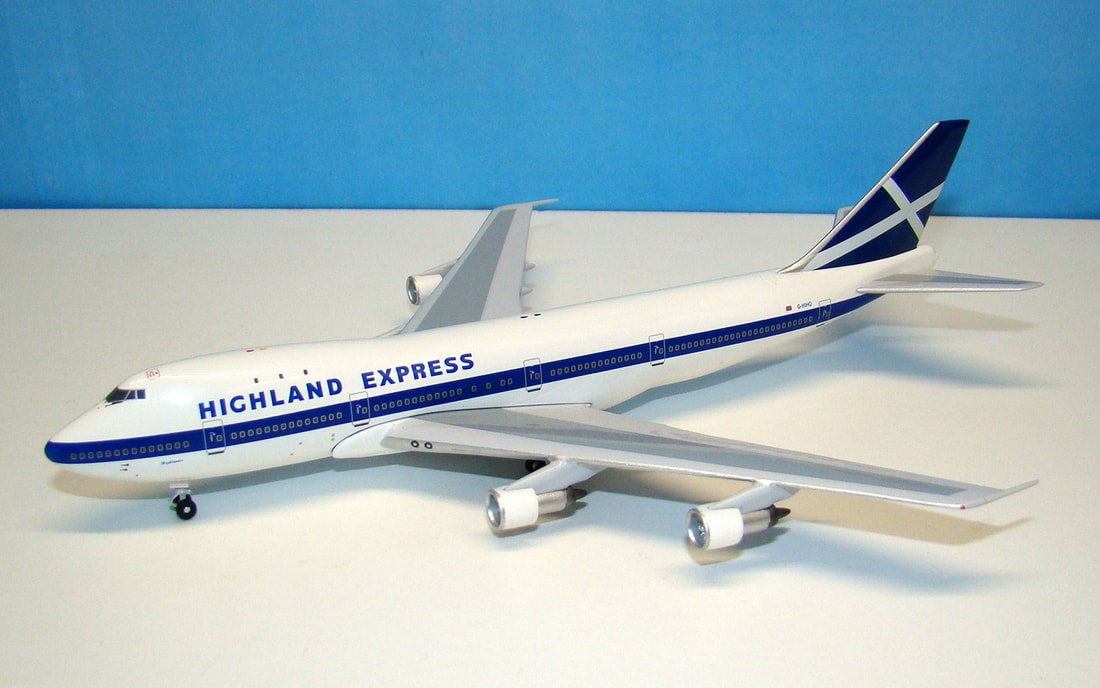
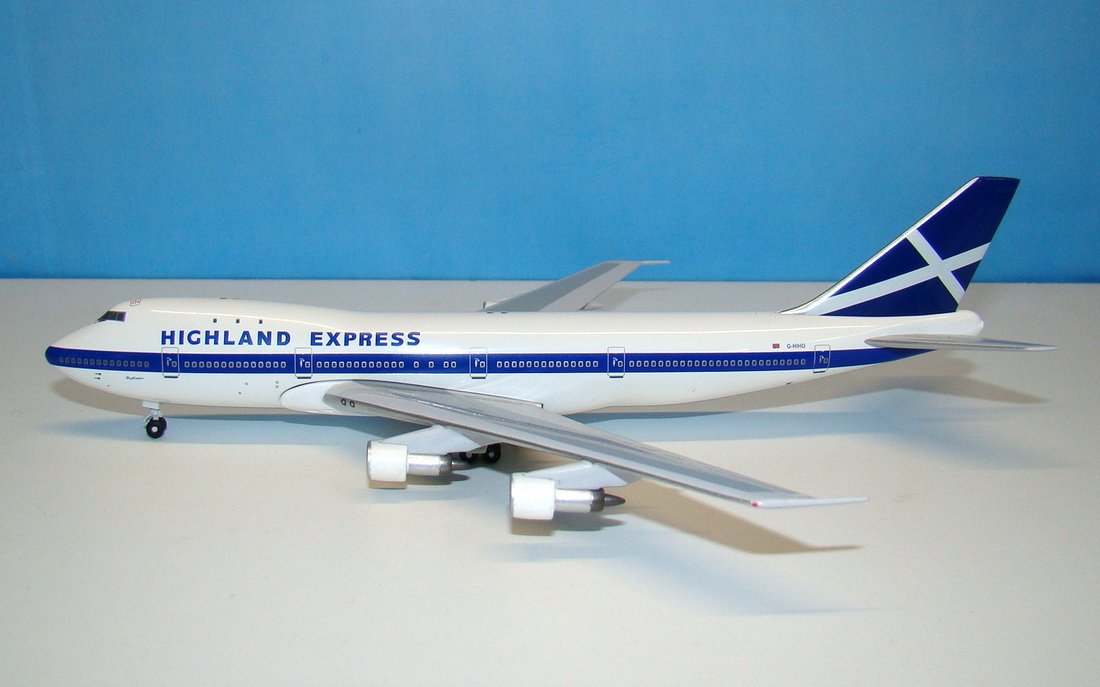
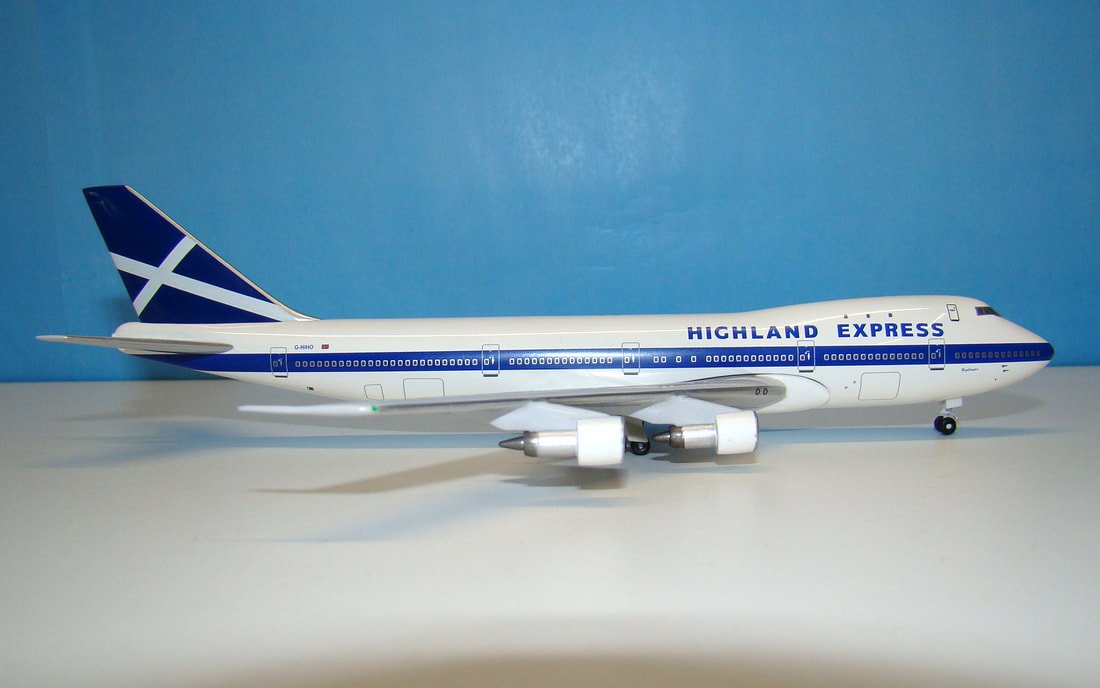
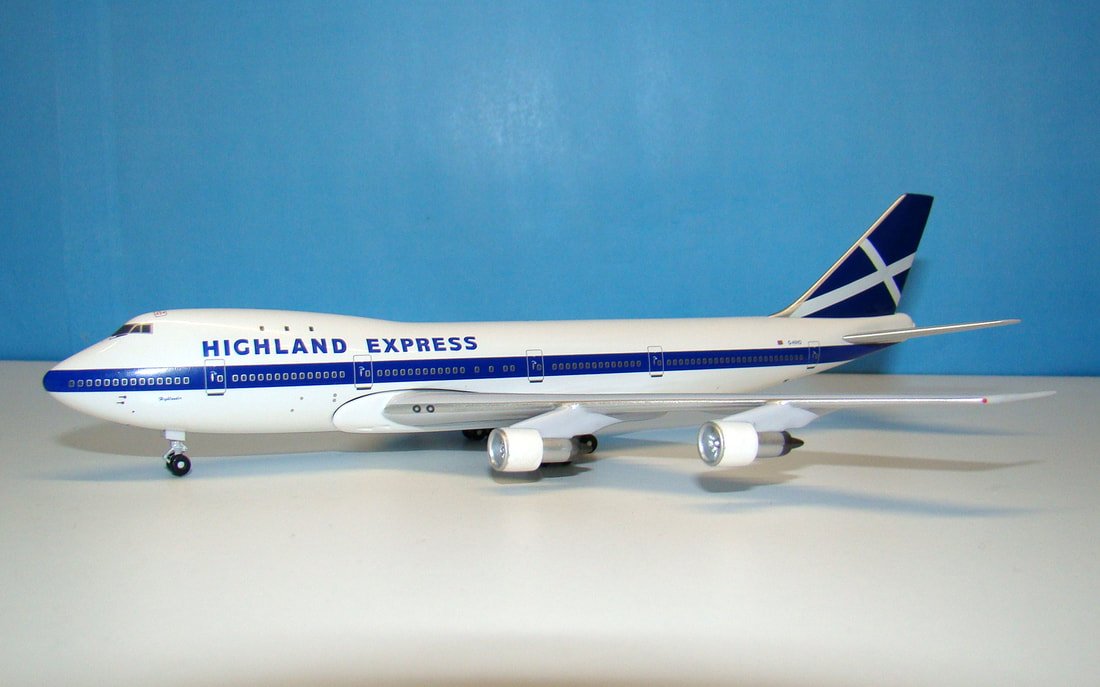
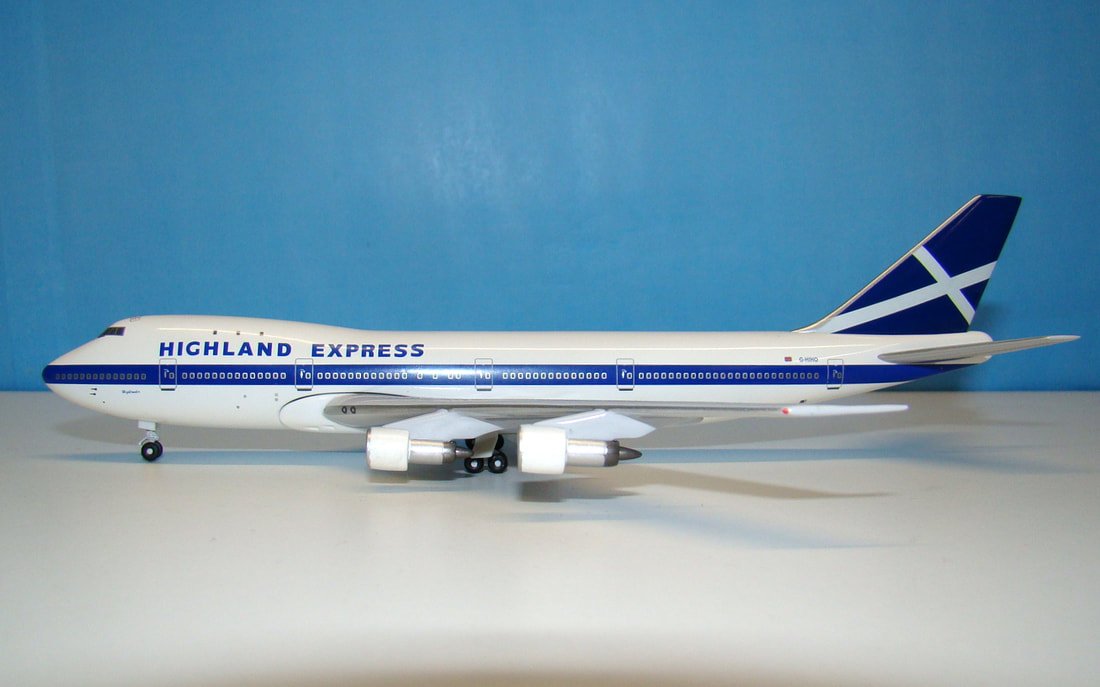
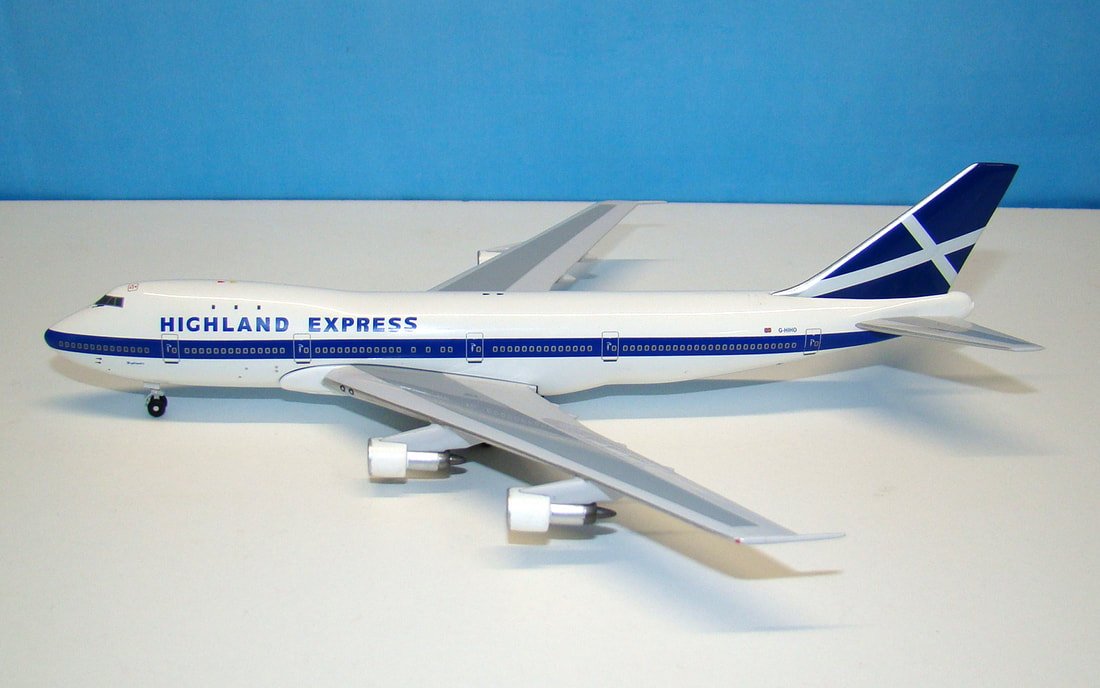
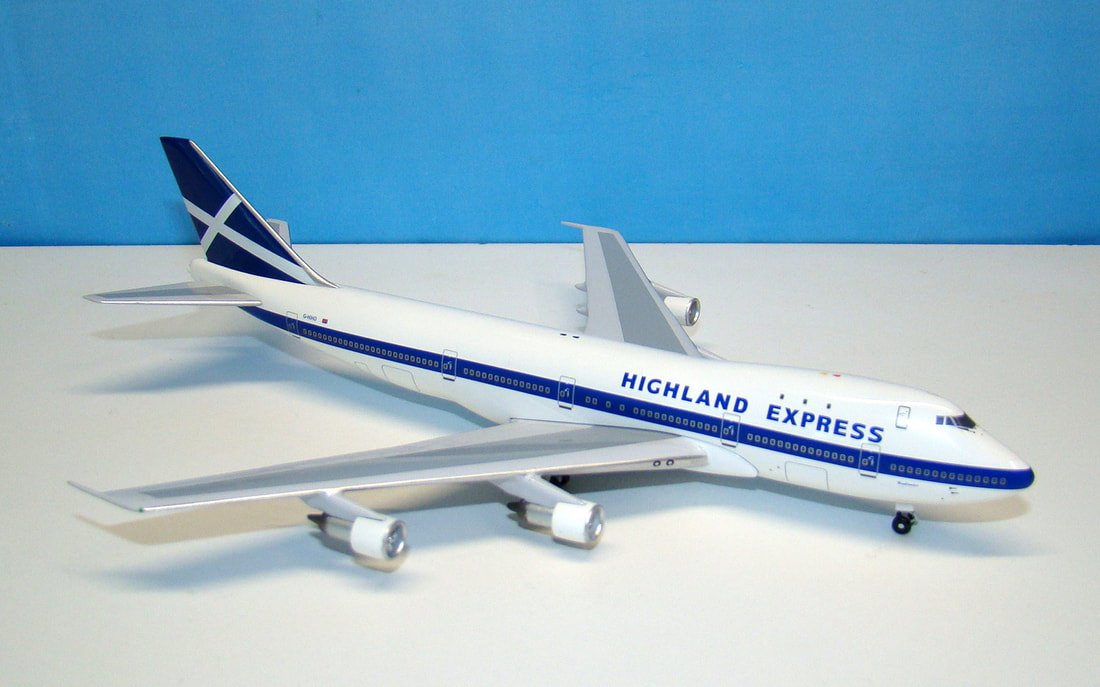
Highland Express Boeing 747-123 G-HIHO - Aeroclassics 1:400 Scale
Highland Express was the brainchild of Randolph Fields, who was at the time a 31 year old barrister. He owned a paper airline named British Atlantic which had applied to fly a dormant ex-Laker route from London Gatwick to Newark. Fields had done a feasibility study but did not have money to purchase aircraft so approached Richard Branson’s Virgin Group. Virgin at the time had no interest or expertise in the airline market but Branson was attracted to the opportunity and he and Fields became business partners.
Randolph Fields
Fields originally planned an all business class carrier but Branson was more interested in a low cost enterprise. Though the 1984 agreement between the pair had Fields running the airline on a day to day basis Branson lost confidence in him and the pair split in September 1984 with Fields receiving GBP125,000 in compensation. Fields’ remaining GBP1 million in shares were bought out in 1985 and he also received unlimited free travel on Virgin.
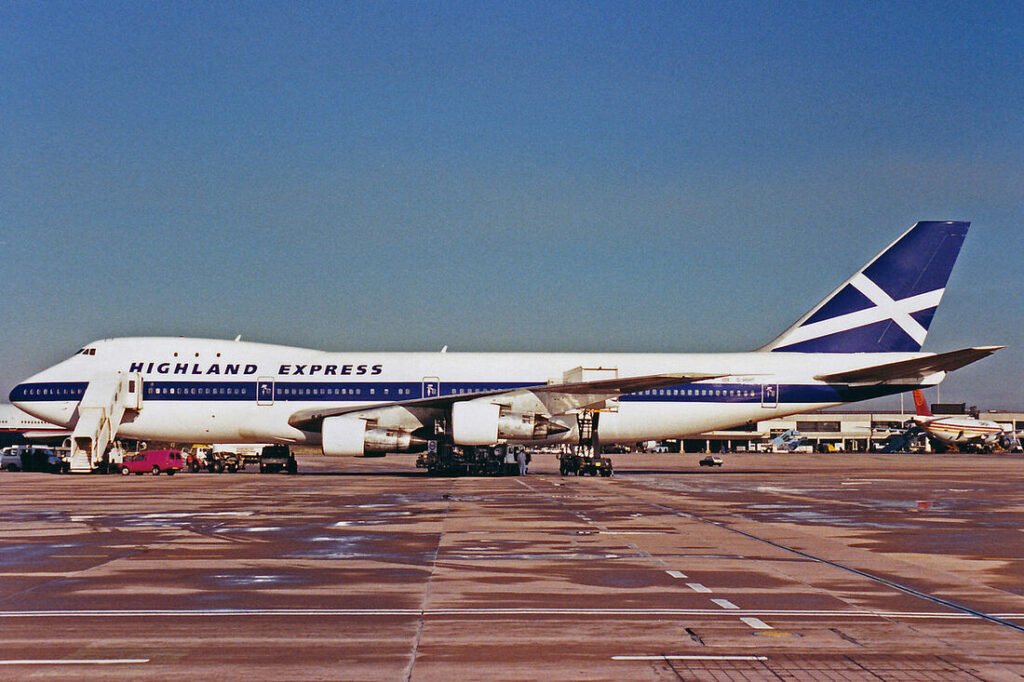
Fields now went his own way and created Highland Express to operate transatlantic services with a Scottish flavour from Prestwick, Birmingham and London Stansted to Newark. The airline’s callsign was TARTAN, however all its services would start in England, routing via the Scottish long-haul hub at Prestwick.
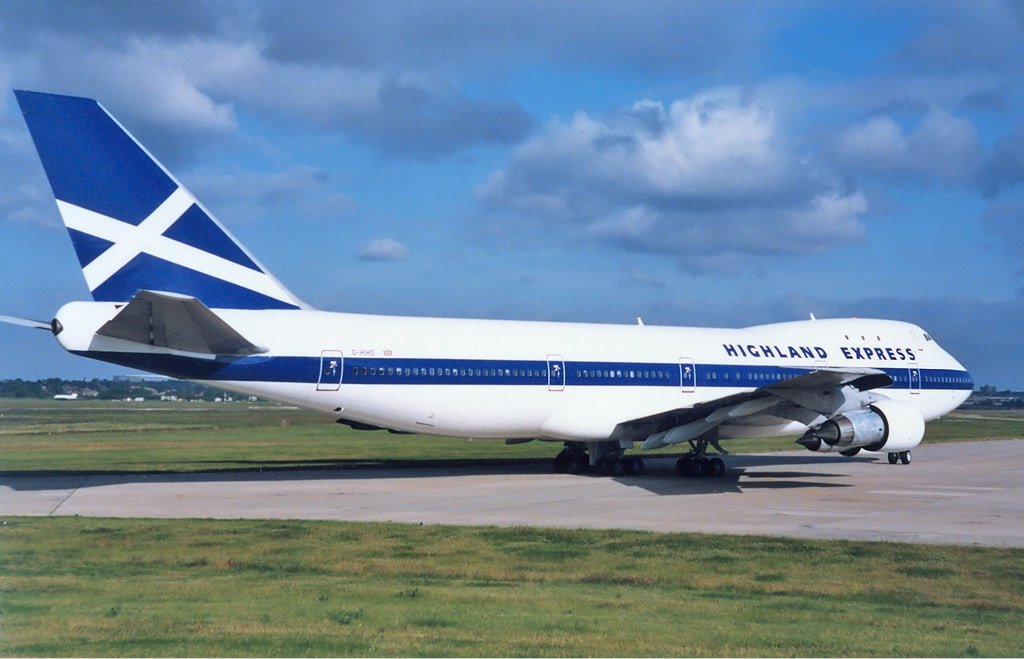
Gary Watt (GFDL 1.2 or GFDL 1.2 ), via Wikimedia Commons
The first service was to be flown on May 30, 1987, the day of the Scottish International Airshow at Prestwick but, the Newark and Toronto service was delayed as the license to operate to Toronto was not forthcoming. Worse a deal to lease a 747 from GATX collapsed and the replacement aircraft leased from Citicorp was delivered weeks late. Operations finally began on June 30 as VY201 routing Stansted-Prestwick-Newark, although this service used a leased Caribbean Airways 747 rather than the intended Citicorp aircraft. Birmingham services followed on July 4 as VY211 using the ‘new’ 747 G-HIHO for the first time. With only a single aircraft the route frequencies were limited to a single daily flight (4 from Stansted and 3 from Birmingham). The 747 was maintained at SABENA’s Brussels facility and so routed their on Monday, returning to service on Tuesday.
Highland Express Boeing 747-123 G-HIHO - Aeroclassics 1:400 Scale
Highland Express Boeing 747-123 G-HIHO - Aeroclassics 1:400 Scale
Highland Express Boeing 747-123 G-HIHO - Aeroclassics 1:400 Scale
Highland Express Boeing 747-123 G-HIHO - Aeroclassics 1:400 Scale
Highland Express Boeing 747-123 G-HIHO - Aeroclassics 1:400 Scale
Highland Express Boeing 747-123 G-HIHO - Aeroclassics 1:400 Scale
Highland Express Boeing 747-123 G-HIHO - Aeroclassics 1:400 Scale
Highland Express Boeing 747-123 G-HIHO - Aeroclassics 1:400 Scale
Highland Express Boeing 747-123 G-HIHO - Aeroclassics 1:400 Scale
Highland Express Boeing 747-123 G-HIHO - Aeroclassics 1:400 Scale
Highland Express Boeing 747-123 G-HIHO - Aeroclassics 1:400 Scale
Highland Express Boeing 747-123 G-HIHO - Aeroclassics 1:400 Scale
Highland Express Boeing 747-123 G-HIHO - Aeroclassics 1:400 Scale
Highland Express Boeing 747-123 G-HIHO - Aeroclassics 1:400 Scale
G-HIHO was named ‘Highlander’. She had been delivered to American Airlines in October 1970 as N9669. American sold her to Citicorp in May 1984 and by July she was operating with one of the reincarnations of National Airlines. Returned to Citicorp in September 1985 she was stored and registered N14939. Though painted for a lease to Cargolux this didn’t eventuate and the poor condition of the frame was what resulted in her delay arriving at Highland Express.
The flights were not a success and debts began to mount very quickly. Due to the multi-stop nature of the flights the domestic leg was often half empty and these seats were sold from GBP10 each. On occasions a chartered London European BAC One-Eleven was used for the domestic leg of the journey. A Gatwick-Prestwick-Newark route began in November but only 3 weeks later SABENA repossessed the aircraft in Brussels leading to the carrier’s collapse. Highland Express had flown for only four months.
Gary Watt (GFDL 1.2 or GFDL 1.2 ), via Wikimedia Commons
It is hard to see what Fields was trying to achieve with such a niche product, however the limited funding and single aircraft didn’t help. The UK’s CAA had seen the airline as being undercapitilised prior to the start of operations and the early equipment shortage seriously impacted credibility and advance ticket sales. The legal necessity of using Prestwick as the Scottish gateway was also unhelpful. The airline collapsed with debts of GBP8.4 million including the trading loss of GBP6 million accrued between March 31, 1987 and December 11.
Ken Fielding/https://www.flickr.com/photos/kenfielding, CC BY-SA 3.0 , via Wikimedia Commons
Fields himself also connected the airline’s failure with the world’s stockmarket crash on ‘Black Monday’ which resulted in expected funding not being forthcoming. He was upbeat about the airline’s prospects as he claimed that the carrier had been solvent since the end of November, had a 70% load factor and solid Christmas bookings. Despite this Highland Express simply couldn’t pay its bills and Fields decided to step back from running the carrier. Sadly plans to resurrect the airline with a new managing director and charter flights in January 1988 followed by scheduled services in March were not successful.
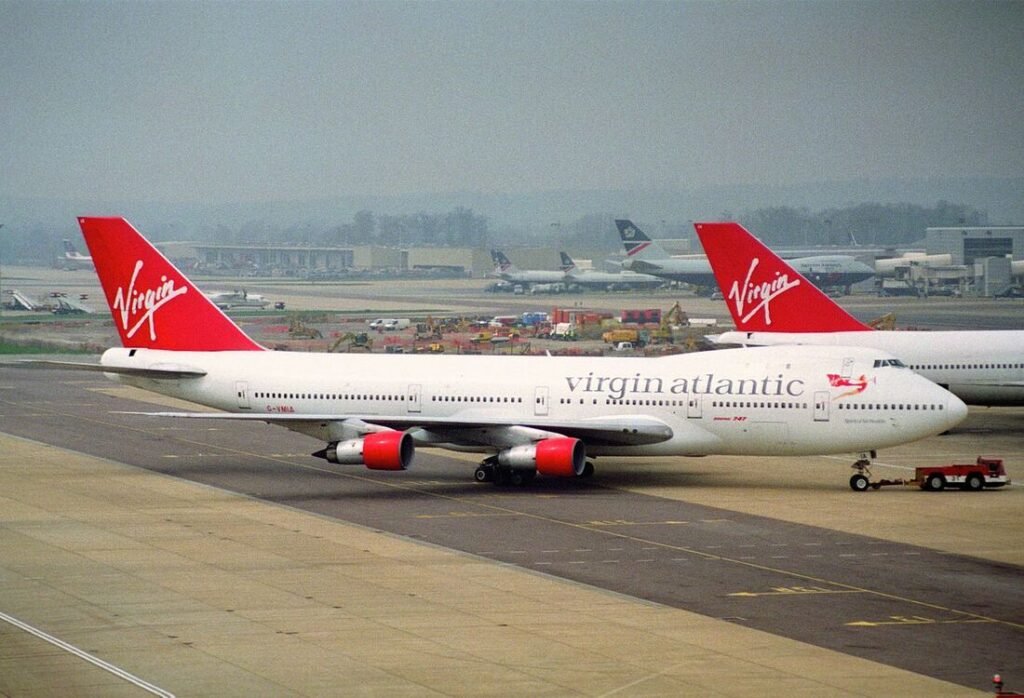
Aero Icarus from Zürich, Switzerland, CC BY-SA 2.0 , via Wikimedia Commons
G-HIHO was returned to Citicorp in January 1988. She was leased to Qantas but repainted into Air Pacific colours as VH-EEI in March. The aircraft was named ‘Island of Viti Levu’ and served until November 1989. She operated with Qantas briefly after confusingly being leased to Aer Lingus as EI-CAI who sub-leased her back to QF. She returned back to the United Kingdom in 1990 when she joined Virgin as G-VMIA ‘Miami Maiden’. Virgin bought her outright in 1993 and she became ‘Spirit of Sir Freddie’. She served a decade with Virgin until retirement in January 2000. She had flown 84,293 hours and 18,397 cycles at the time of her scrapping in March 2000. I wonder if Fields ever flew free with Virgin on this frame and wondered what might have been?