The pride of any small nation having its own national airline is tempered by the incredibly competitive nature of the industry and the need for discipline. Too often national carriers of developing countries are ripe for graft and mismanagement. Even well-run airlines can struggle to compete and the history of Air Aruba is a classic example of poor decision making in a tough environment.
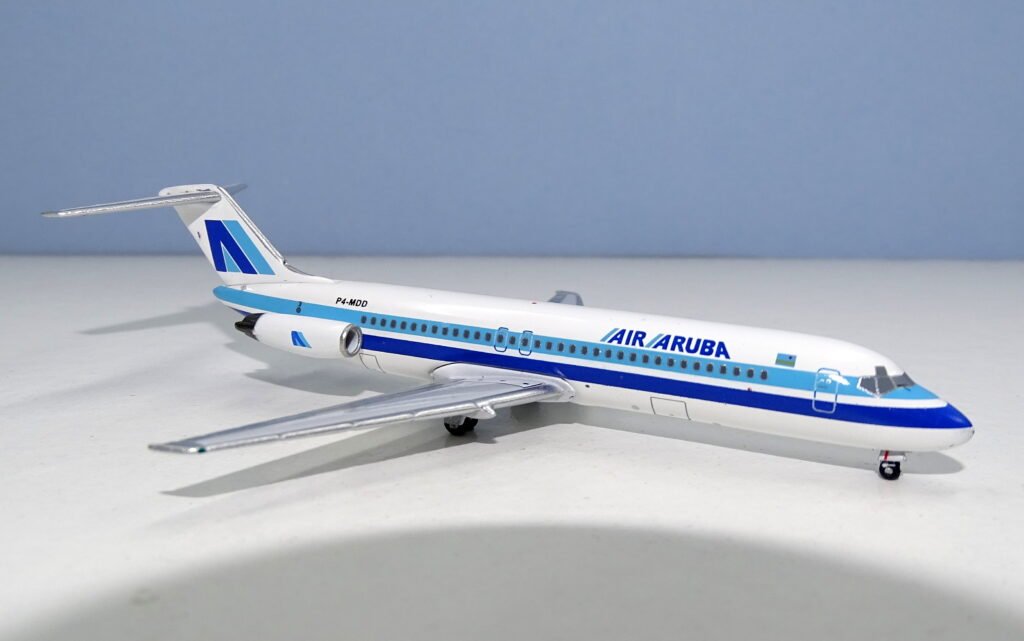
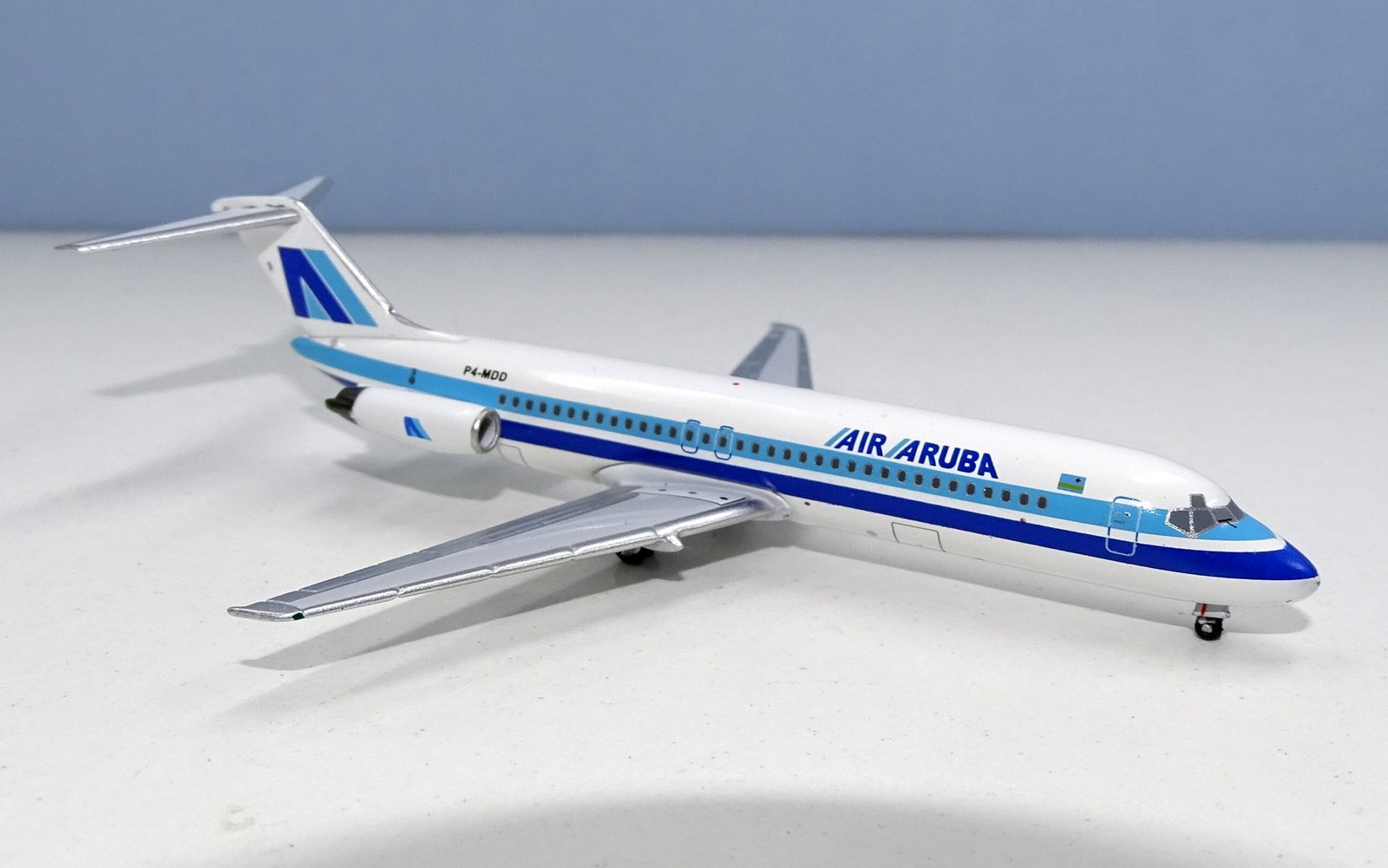
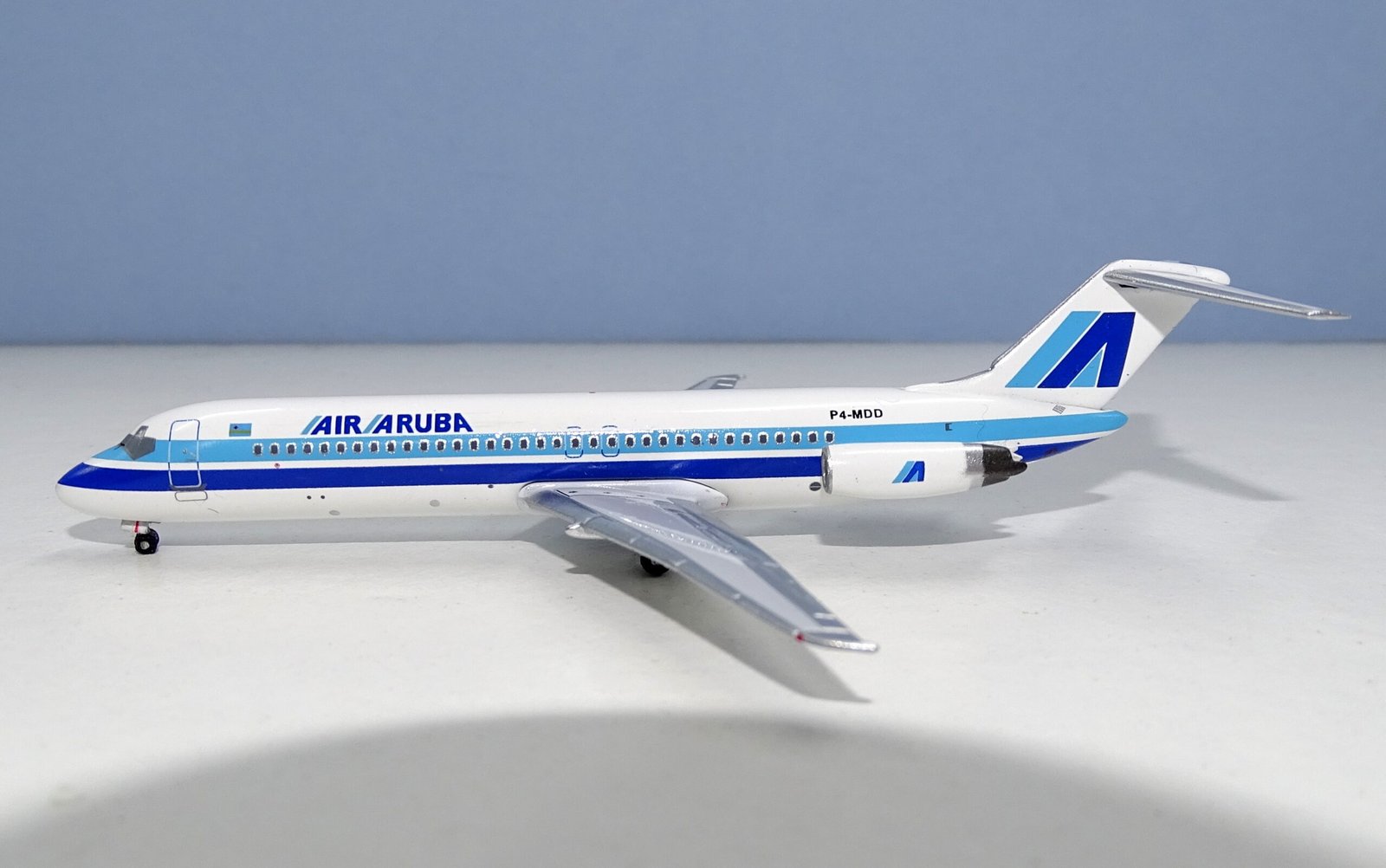
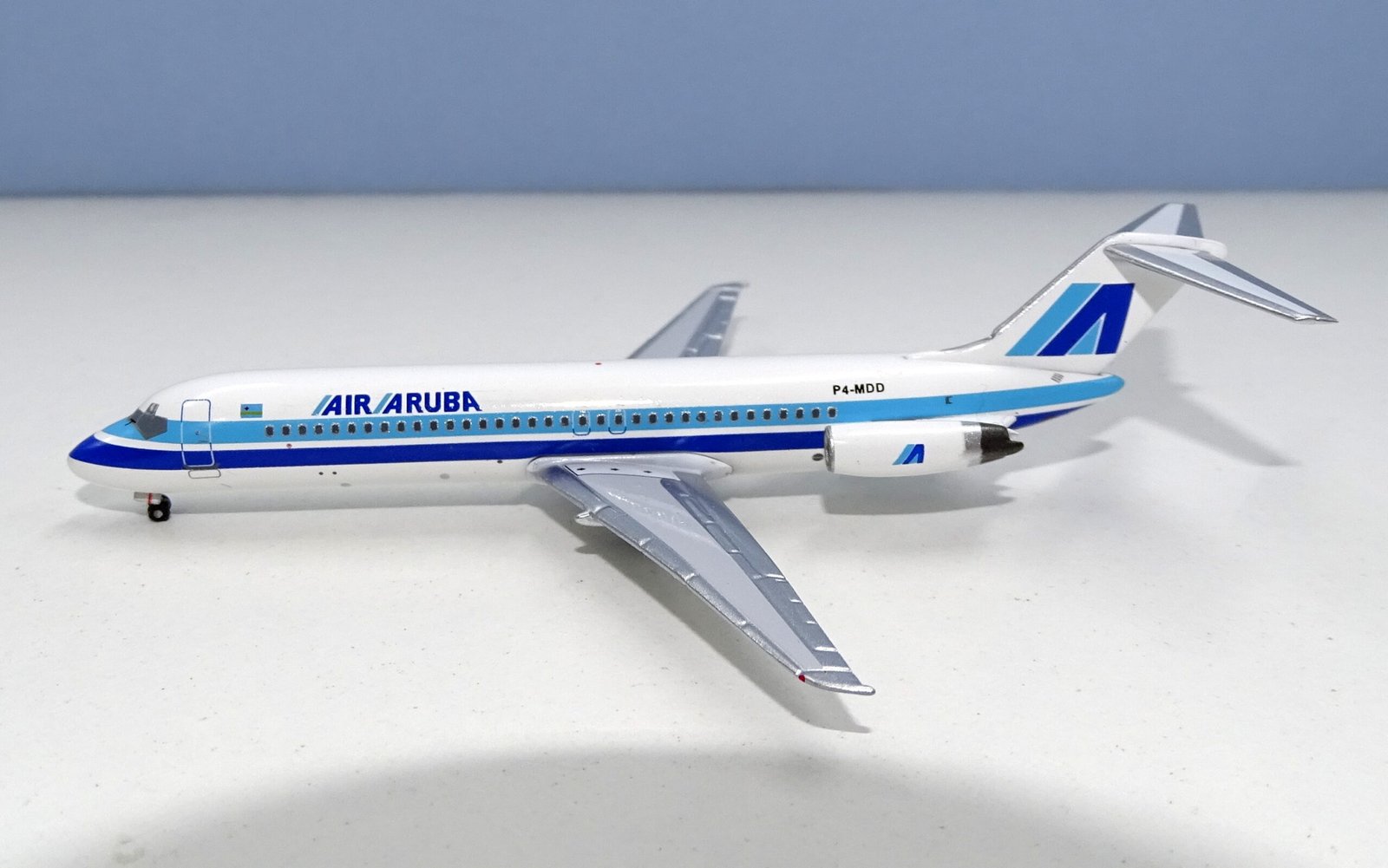
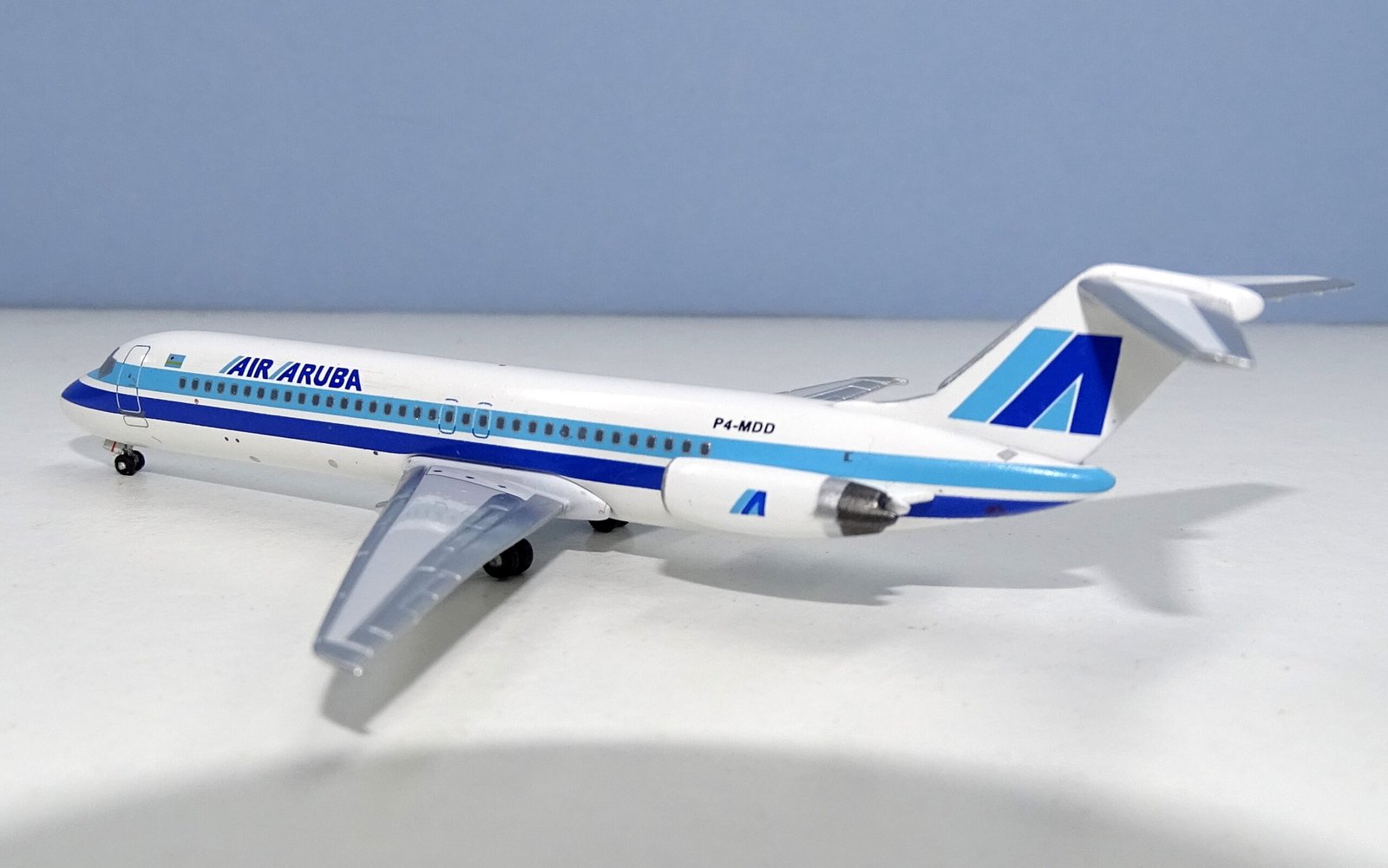
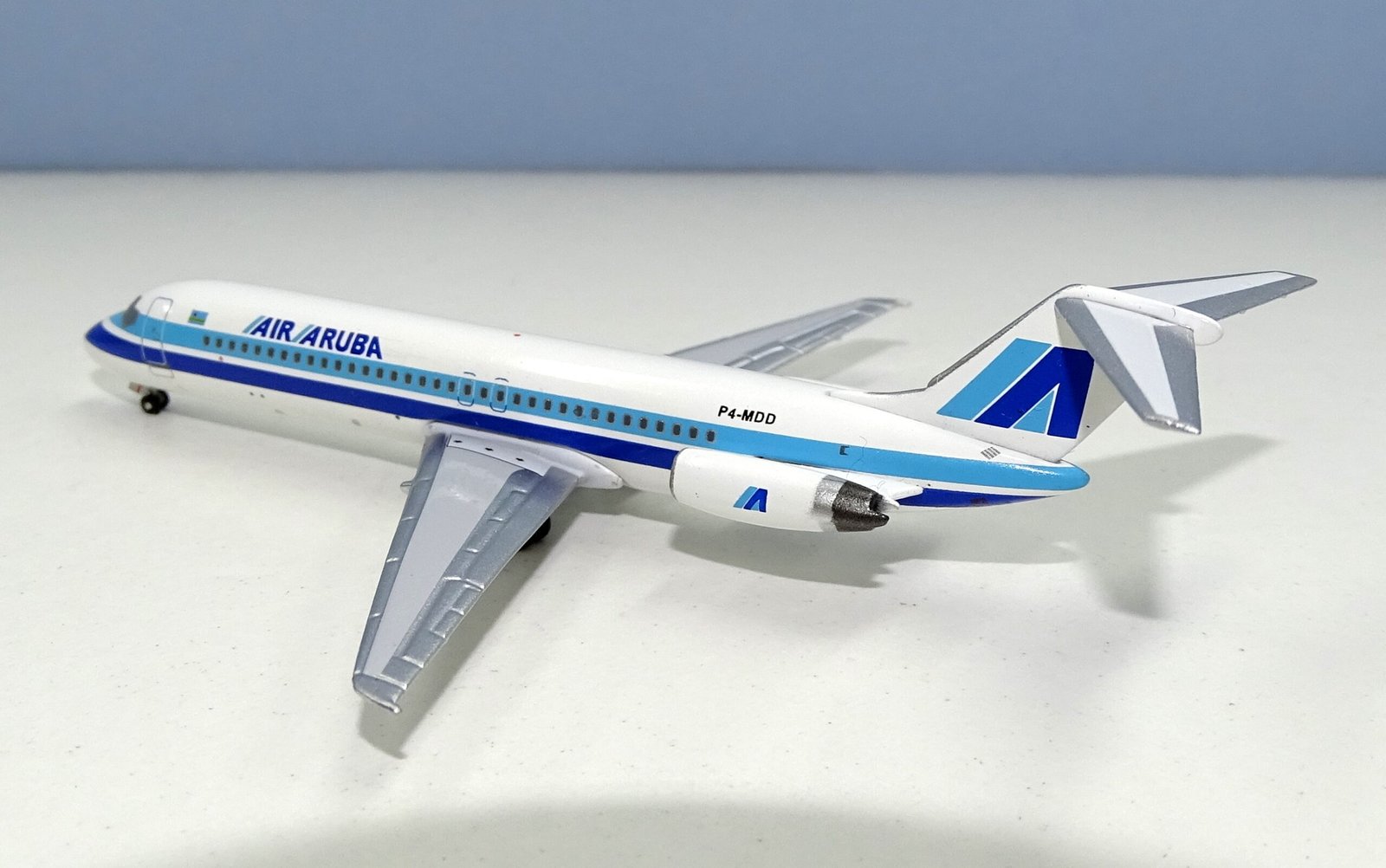
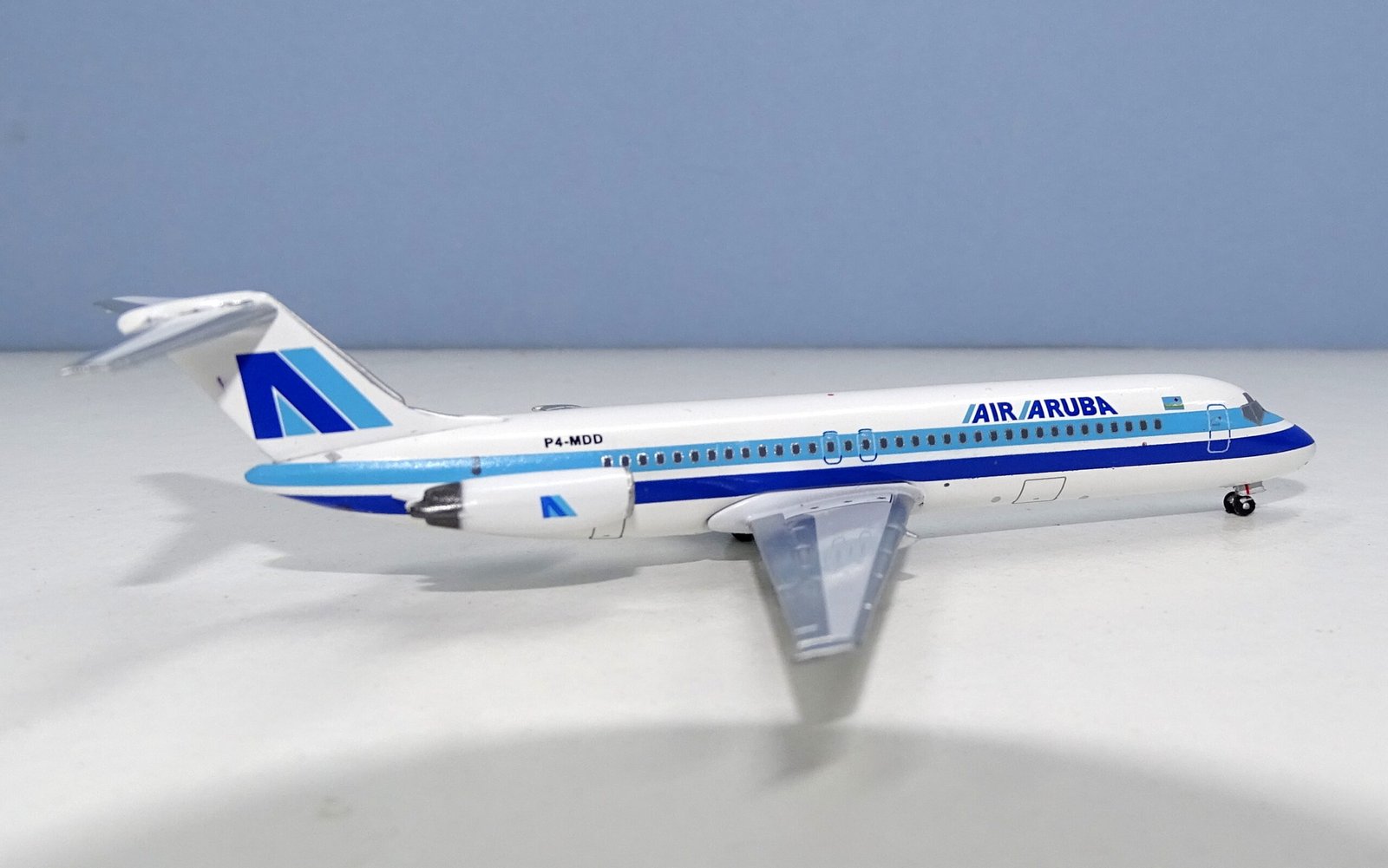
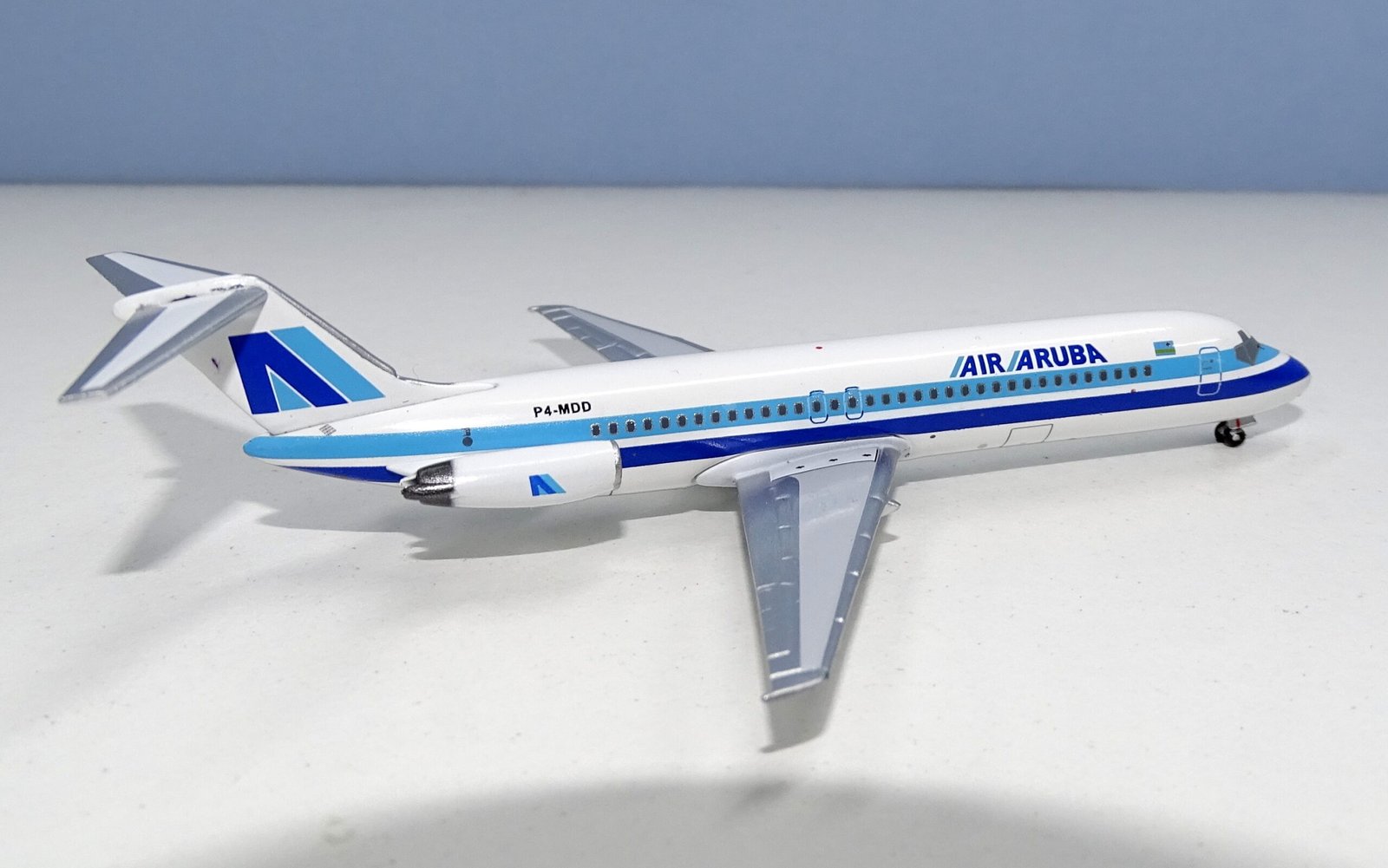
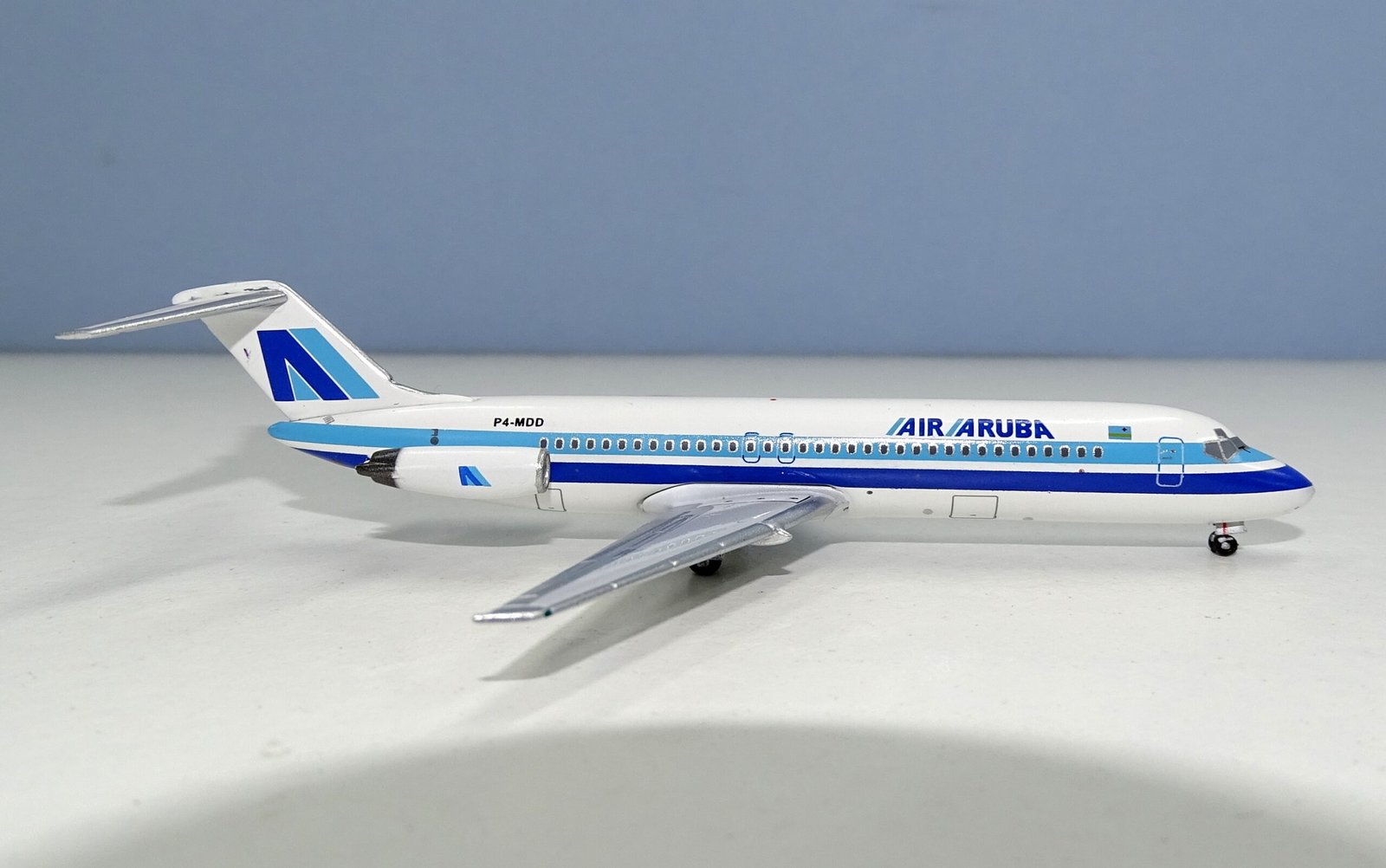
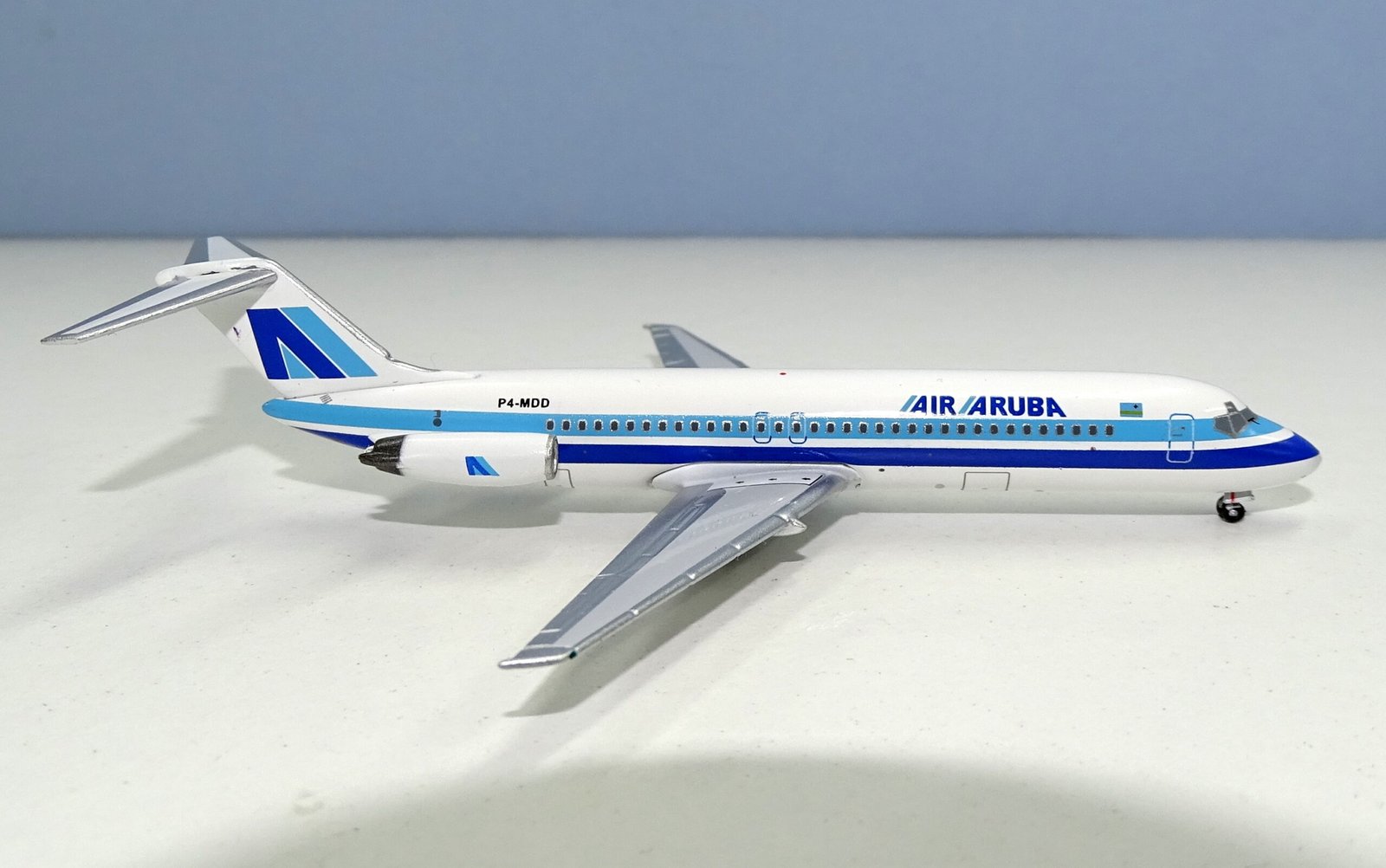
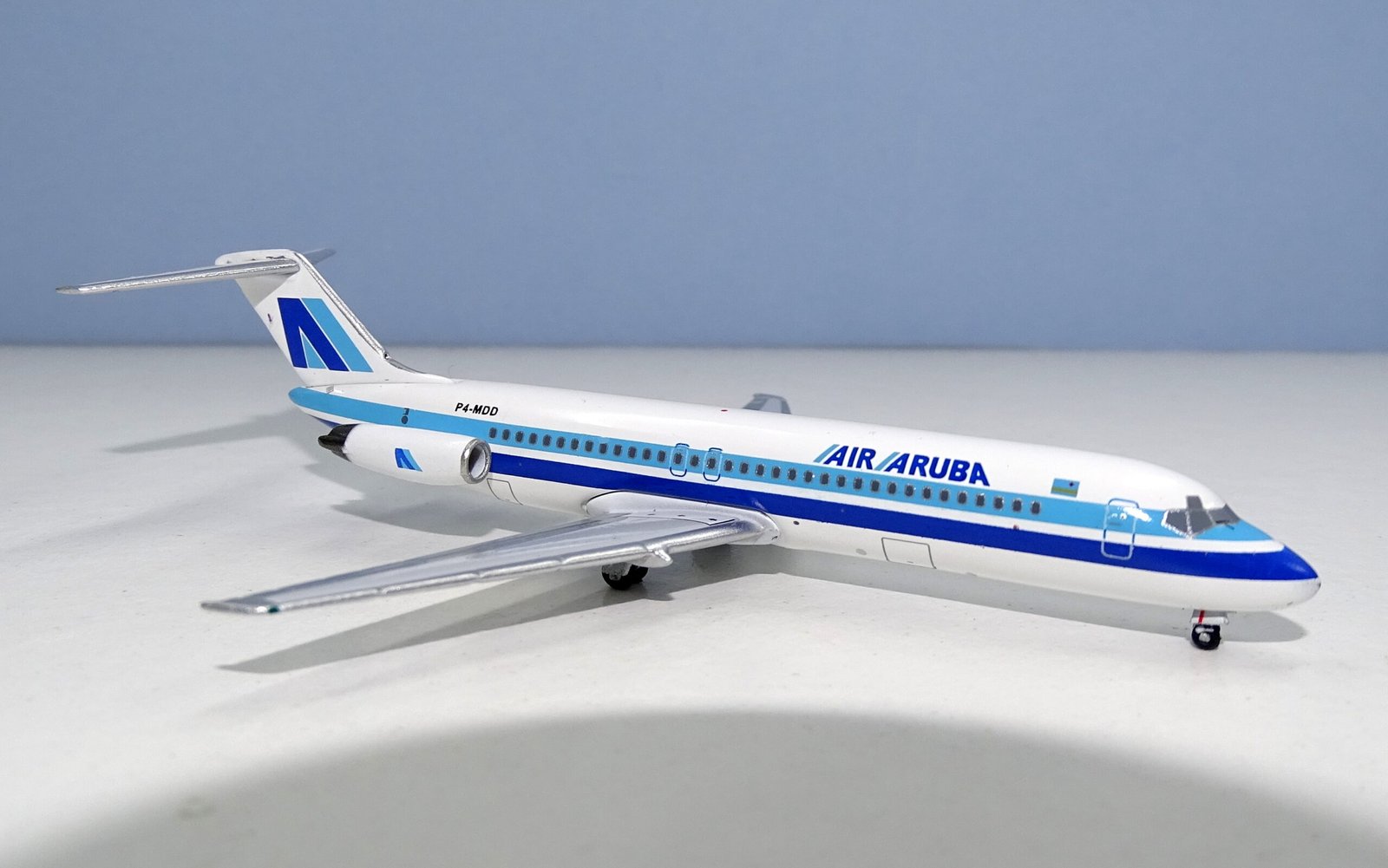
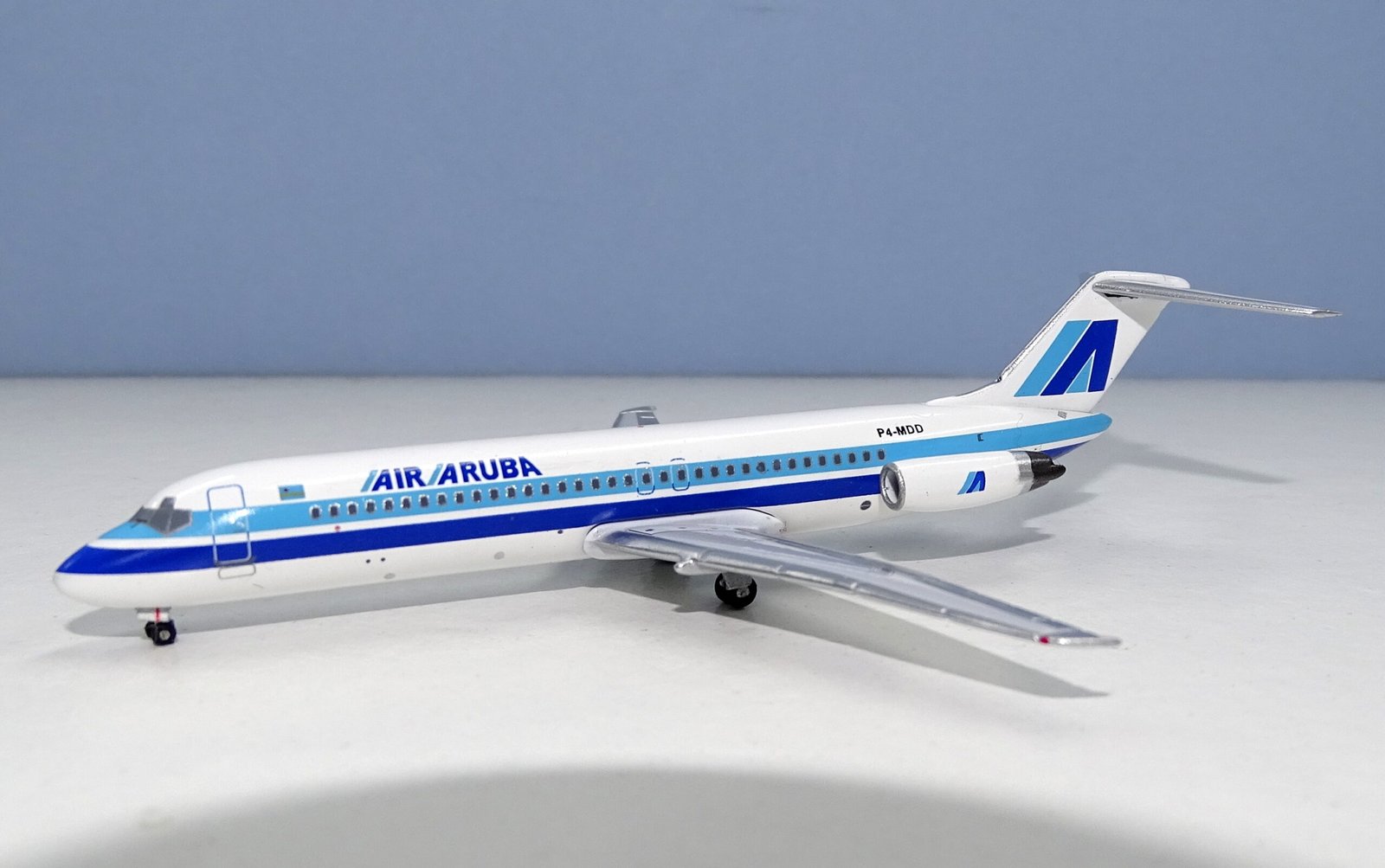
Air Aruba Douglas DC-9-31 P4-MDD Aeroclassics 1:400 Scale Airliner
Aruba, known as the ‘Happy Island’, is technically a country within the Kingdom of the Netherlands (along with the Netherlands itself, Curacao and Sint Maarten) and is an island just off the Northern coast of South America. Originally part of the Netherlands Antilles it broke away from the neighbouring islands of Bonaire and Curacao on January 1, 1986 (the island group is still known as the ABC islands after the initials of each island). There had always been local competition between Aruba and Curacao, but the former felt it was shouldering too much of the burden of the national airline, ALM, and not receiving enough of the benefits.
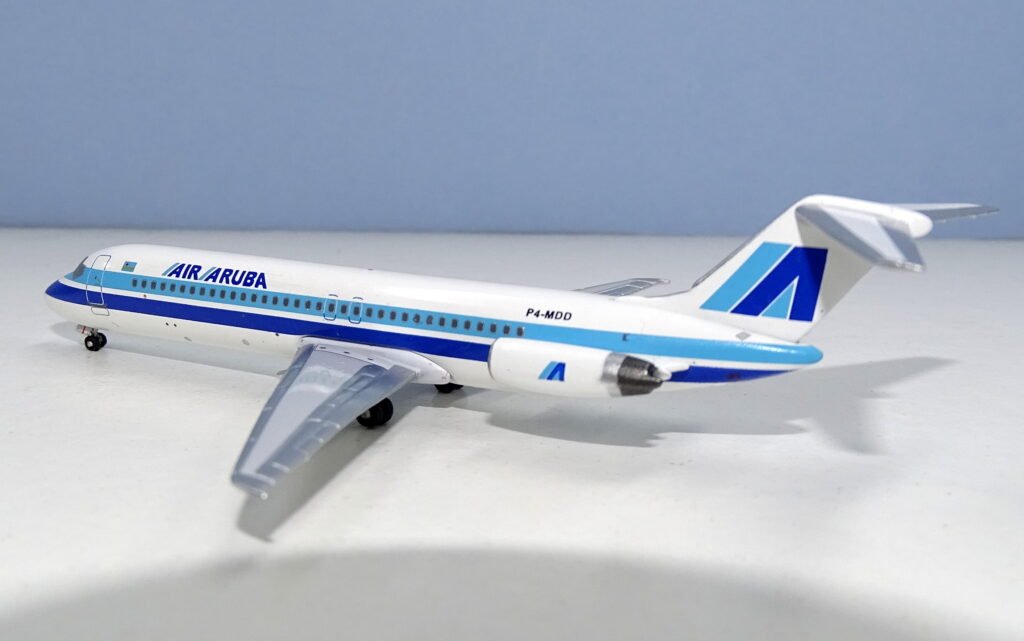
Air Aruba Douglas DC-9-31 P4-MDD Aeroclassics 1:400 Scale Airliner
The stoush came abruptly to a head in 1986 when the Aruban authorities warned ALM that if it didn’t agree to more equitable terms it would be denied landing rights within a month. ALM took the hint and, instead of waiting, withdrew its operations over night causing chaos in Aruba. After this it was decided that Aruba needed its own airline, which was no mean undertaking considering the population was only around 80,000 at the time.
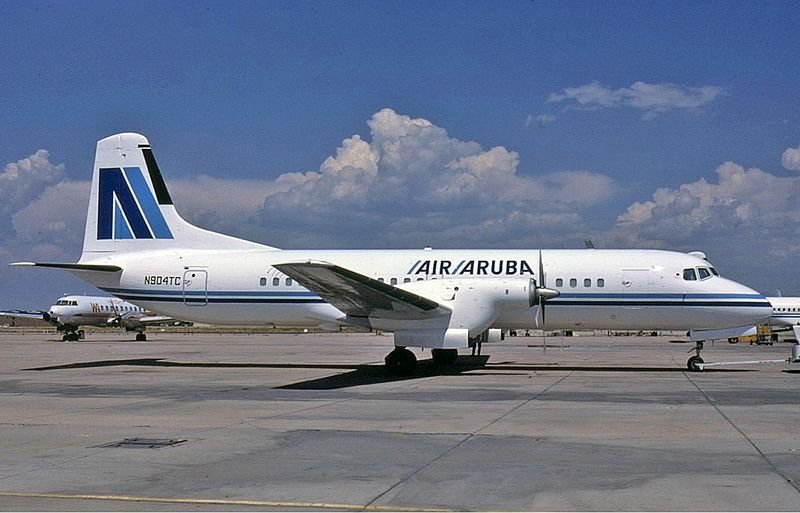
N904TC prior to delivery as P4-YSA in 1988. Clinton Groves [GFDL 1.2 (http://www.gnu.org/licenses/old-licenses/fdl-1.2.html) or GFDL 1.2 (http://www.gnu.org/licenses/old-licenses/fdl-1.2.html)]
Aruba was banking on tourism to build its economy and an airline would be a cornerstone of this policy. In September 1986 Air Aruba was formed as a public-private partnership, but until the necessary applications and authorities could be put in place Air Aruba remained merely as a ground handling agent at Aruba’s Reina Beatrix Airport.
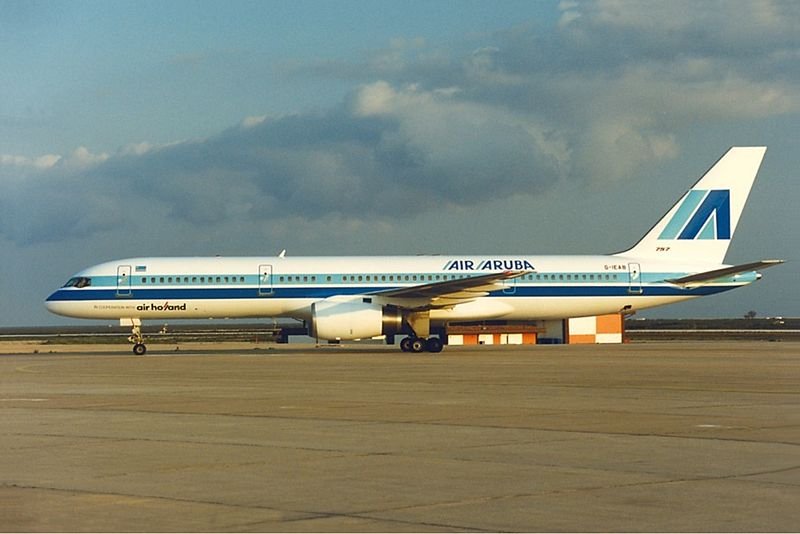
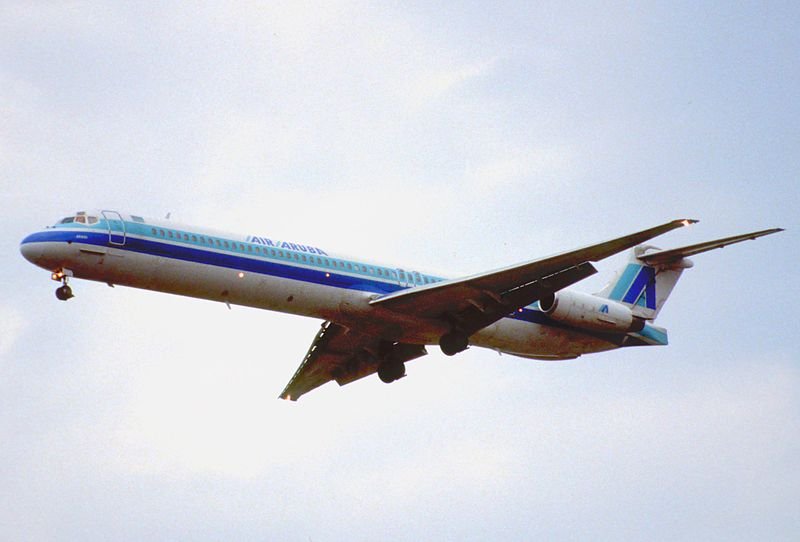
G-IEAB in 1990. Pedro Aragao / CC BY-SA 3.0 GFDL
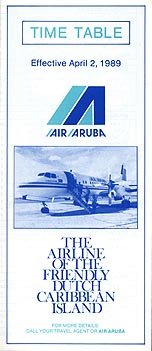
Flight operations began on August 18, 1988 using a pair of Japanese NAMC YS-11s, both of 1969 vintage. One was ex-All Nippon and the other ex-Piedmont, but both had most recently seen operations with the American Eagle carrier Simmons Airlines. Initial routes connected the ABC islands, and Aruba with Caracas in Venezuela. A third YS-11 joined in April 1989 and routes were expanded to Las Piedras and Maracaibo in Venezeula, plus Santo Domingo in the Dominican Republic.
From the collection of Bjorn Larsson from Airlinetimetableimages.com
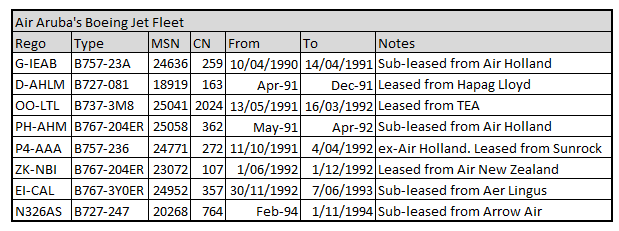
Additional YS-11s were added, with six aircraft operated in total but never all at the same time. Operating local island-hopping services did not match the ambitions of Aruba and a deal with one of the airline’s shareholders, Air Holland, saw the addition of an Air Holland Boeing 757, itself leased from Inter European Airways, in April 1990. This allowed service to be started to Sao Paulo and Miami.
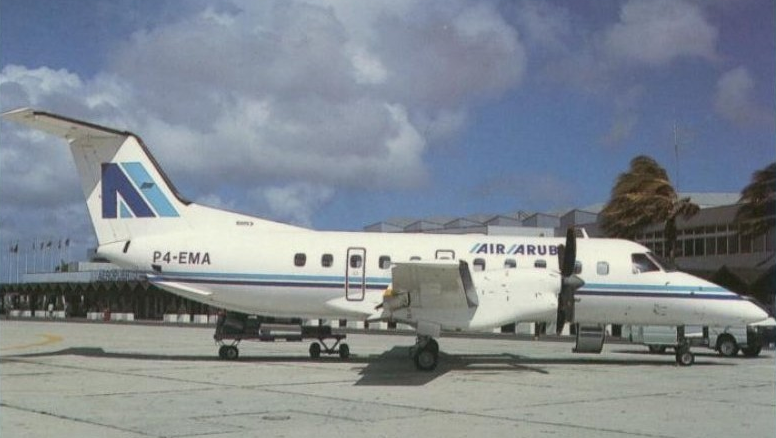
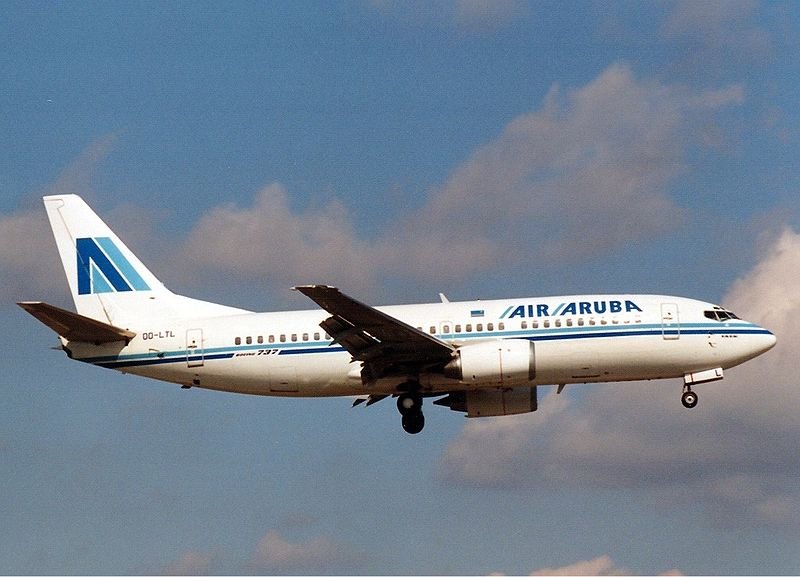
To update the regional routes a single Embraer EMB-120 Brasilia was acquired in July 1990, but several NAMCs continued in service into 1992 alongside it. Expansion continued as in May 1991 a fourth type joined the fleet. This time it was a leased TEA 737-3M8, which replaced the 757 on the Miami service as well as flying to Caracas and St Maarten.
The original 757 had been returned to the lessor in April 1991 and replaced by a 727-81, but after six months a second 757 replaced the 727. This was used for new flights to Newark.
737 OO-LTL at Miami in 1991. Torsten Maiwald [GFDL 1.2 (http://www.gnu.org/licenses/old-licenses/fdl-1.2.html) or GFDL 1.2 (http://www.gnu.org/licenses/old-licenses/fdl-1.2.html)]
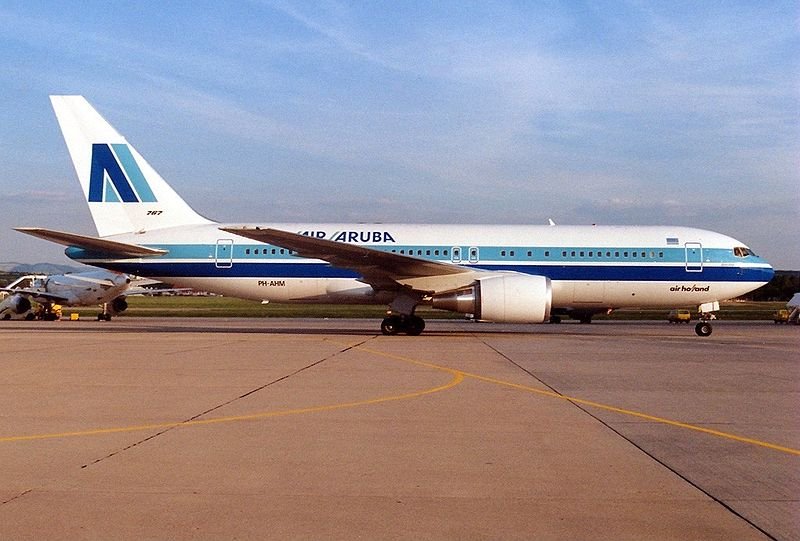
In May 1991 Air Aruba expanded even further and leased a Britannia Airways 767-204ER, in a joint venture with Air Holland, to fly from Aruba to Amsterdam and Cologne. This was a mistake as the world economy had taken a massive hit from the first Gulf War and the impact on Air Aruba’s partner Air Holland had been massive losses. Air Holland withdrew from the joint venture and indeed went bankrupt itself in September – See Block’s Third Way: Air Holland.
PH-AHM at Stuttgart in May 1991. JetPix [GFDL 1.2 (http://www.gnu.org/licenses/old-licenses/fdl-1.2.html) or GFDL 1.2 (http://www.gnu.org/licenses/old-licenses/fdl-1.2.html)]
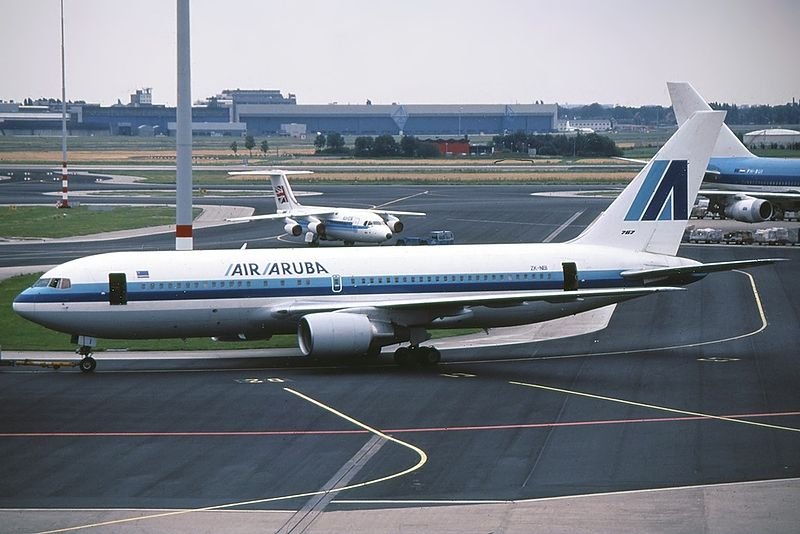
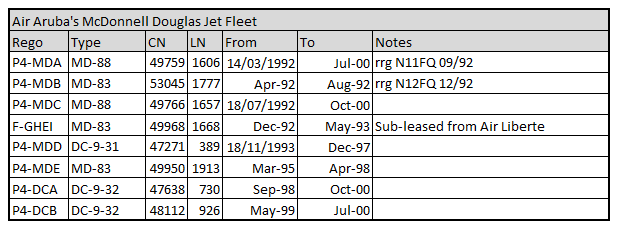
The 767-200, 737-300 and 757 were all returned to their lessors in early 1992 and some sense of sanity was attempted with the fleet. Replacing the Boeing types were a pair of McDonnell Douglas MD-82s and a pair of MD-88s – mostly ex-Midway Airlines aircraft. Even so Air Aruba continued its 767 experiment and leased an Air New Zealand example between June and December. A 767-3Y0ER was also leased from Aer Lingus from November to July 1993.
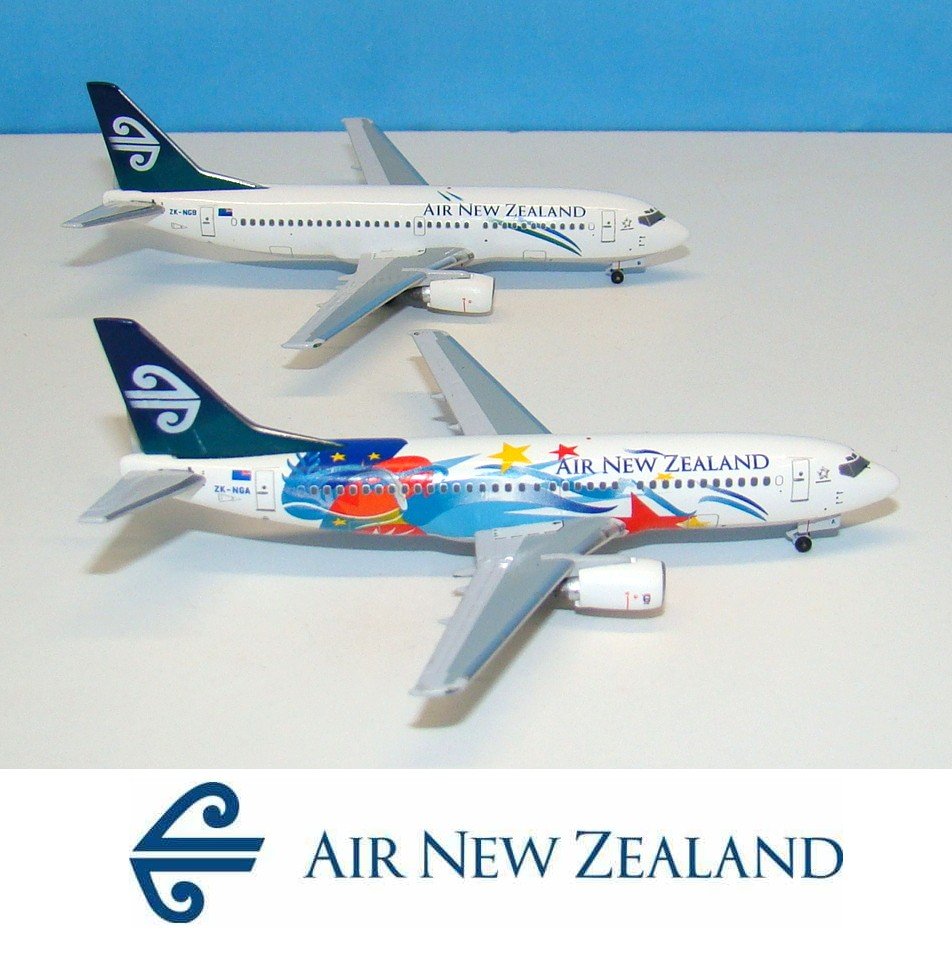
ZK-NBI at Amsterdam in 1992. Peter Bakema [GFDL 1.2 (http://www.gnu.org/licenses/old-licenses/fdl-1.2.html) or GFDL 1.2 (http://www.gnu.org/licenses/old-licenses/fdl-1.2.html)]
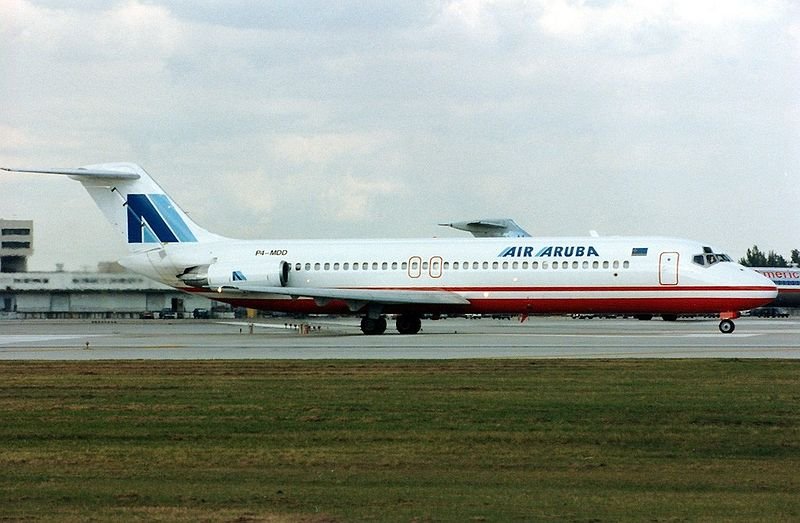
The airline needed rescuing and the Aruban government stepped in, at the same time taking majority ownership. By September 1993 the fleet was down to just the pair of MD-88s (the EMB-120 was sold in August). With money short expansion took in yet more random types that were no doubt cheaper than further MD-80s. A DC-9-31 was added in November 1993 and for ten months in 1994 a 727-247 was leased. At least when the 727 lease expired another MD-83 could be sourced for a total fleet of 3 MD-80s and a single DC-9.
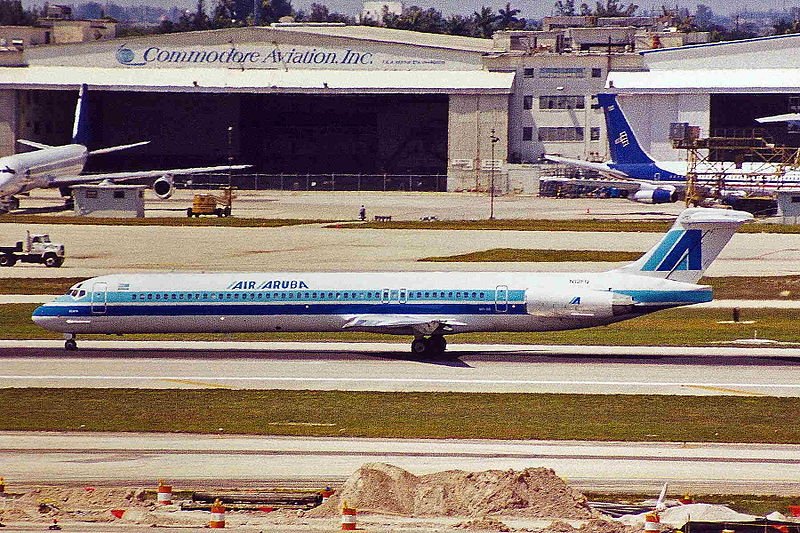
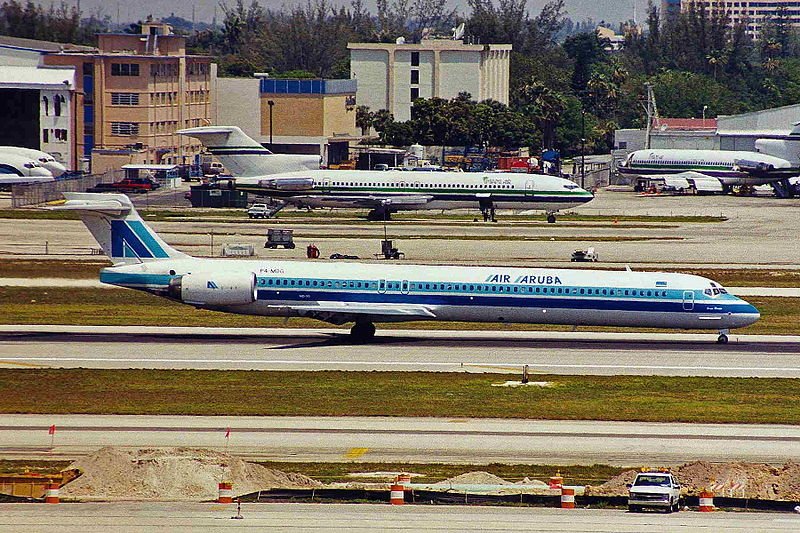
P4-MDD clearly showing her Midway heritage in this shot from 1993. JetPix [GFDL 1.2 (http://www.gnu.org/licenses/old-licenses/fdl-1.2.html) or GFDL 1.2 (http://www.gnu.org/licenses/old-licenses/fdl-1.2.html)]
Even with a somewhat standardised fleet the airline was unable to control its costs and improve its productivity. Cash reserves continued to dwindle, no doubt not helped by strong competition from American Airlines, which carried 60% of the tourist traffic into the country. By February 1997 the airline was on the brink of collapse and once again the government was forced to dip into its pockets to keep it flying.
Air Aruba Douglas DC-9-31 P4-MDD Aeroclassics 1:400 Scale Airliner
Air Aruba Douglas DC-9-31 P4-MDD Aeroclassics 1:400 Scale Airliner
Air Aruba Douglas DC-9-31 P4-MDD Aeroclassics 1:400 Scale Airliner
Air Aruba Douglas DC-9-31 P4-MDD Aeroclassics 1:400 Scale Airliner
Air Aruba Douglas DC-9-31 P4-MDD Aeroclassics 1:400 Scale Airliner
Air Aruba Douglas DC-9-31 P4-MDD Aeroclassics 1:400 Scale Airliner
Air Aruba Douglas DC-9-31 P4-MDD Aeroclassics 1:400 Scale Airliner
Air Aruba Douglas DC-9-31 P4-MDD Aeroclassics 1:400 Scale Airliner
Air Aruba Douglas DC-9-31 P4-MDD Aeroclassics 1:400 Scale Airliner
Air Aruba Douglas DC-9-31 P4-MDD Aeroclassics 1:400 Scale Airliner
Air Aruba Douglas DC-9-31 P4-MDD Aeroclassics 1:400 Scale Airliner
They brought in the well-known local figure of Henri Coffi, who had been famous for representing Esso’s Aruban Petroleum refinery both against the Aruban government and the US Internal Revenue Service. Coffi left his position, as Exxon’s Chief Executive on the Island, and joined the airline, a deal he must have regretted. Coffi attempted to introduce some financial rigour to the operation. According to him the airline’s ‘maintenance was a disaster’ and there was no accountability for operational costs. He reduced staffing from 390 to 320 and attempted to get basics in place from which he hoped government investment would help the airline ‘start from scratch’.
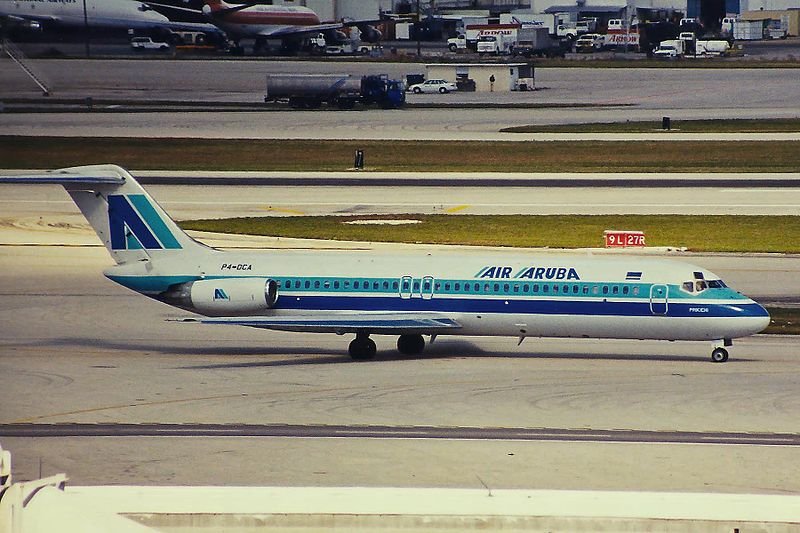
DC-9 PH-DCA in this January 1999 shot. Ken Fielding/https://www.flickr.com/photos/kenfielding / CC BY-SA (https://creativecommons.org/licenses/by-sa/3.0)
The route structure in 1997 was quite impressive. From Aruba the airline flew to Curacao, Bonaire, Medellin, Caracas, Bogota and Sao Paulo. In the US it reached Miami, Tampa, Baltimore and Newark. Unfortunately, the MD-80s were not well suited to short hops to the other ABC islands or the long flight to Sao Paulo. On the latter, although loads were high, the route sometimes required an extra fuel-stop or load restrictions.
MD-80 N12FQ in 1998. Aero Icarus from Zürich, Switzerland / CC BY-SA (https://creativecommons.org/licenses/by-sa/2.0)
Henri Coffi’s time at Air Aruba appears to have been short as in October 1998 the Venezuelan airline Aserca became the majority shareholder. In reality Aserca was probably less interested in Air Aruba itself than the lucrative rights that came with it to fly to the USA. An ‘open-skies’ agreement had been signed between Aruba and the US in July 1997 whereas Venezuelan airlines remained under a Category 2 restriction from the US FAA. Air Aruba could fly anywhere in the USA and carry US traffic beyond Aruba without restriction. This must have seemed very attractive to Aserca and its President Simeon Garcia.
MD-80 N12FQ at Miami in April 2000. Ken Fielding/https://www.flickr.com/photos/kenfielding / CC BY-SA (https://creativecommons.org/licenses/by-sa/3.0)
Aserca’s takeover brought a new lease of life to Air Aruba, at least for a short period. A deal was struck with Hwa-Hsia Leasing Co of Taiwan for the acquisition of three new ‘Boeing’ MD-90s. One of the three found itself with Aserca but joined Air Aruba in 2000. All three were examples painted for, but not taken up by, the US start-up Pro Air. They started operations in November 1998 and were joined by a further pair of DC-9s. That stood the fleet at 7 aircraft – 2 DC-9s, 2 MD-80s and 3 MD-90s.
Aserca owned 10% of Air Aruba but Garcia owned a further 60% through another Venezuelan company. The Aruban government owned the remaining 30%. Part of the deal was that Aserca would park its aircraft in Aruba overnight, presumably so they paid airport fees there. Air Aruba began to carry substantial sixth freedom passengers using Aruba as the stop-off between the USA and Venezuela.
The lease rates on the MD-90s were apparently very high and despite the sixth-freedom traffic Air Aruba was still unprofitable. There was also the suggestion that Aserca forced Air Aruba to buy spares at high prices through its parts subsidiary. Whatever the details it is clear the relationship broke down between Aserca and the Aruban Government. On October 23, 2000 Air Aruba was abruptly grounded by the Aruban government who did not consult Aserca or Garcia. The airline apparently owed millions to the airport and was about to lose the MD-90s due to lease payment defaults.
MD-90 P4-MDG at Miami in April 2000. Ken Fielding/https://www.flickr.com/photos/kenfielding / CC BY-SA (https://creativecommons.org/licenses/by-sa/3.0)
Unsurprisingly Aserca were less than pleased and immediately ceased operations to Aruba. The Aserca CEO Julian Villalba said: “This is another one of the great errors committed by the authorities of Aruba.”
The history of Air Aruba was one of struggle. Continuous mis-management of the day to day operations and poor fleet planning were major factors in its problems. Attempts by Coffi in 1997 to turn the airline around were dashed by the size of the problem and the Aruban government’s willingness to partner with Aserca. Somewhat ironically in 2001 Air Aruba’s original competitor ALM also went bankrupt and attempts to start airlines in the ABC islands in the 2000s, such as Dutch Caribbean Airlines failed. Never ones to give up though Aruba is currently served by Aruba Airlines, which operates a small fleet of A320s and a single CRJ.