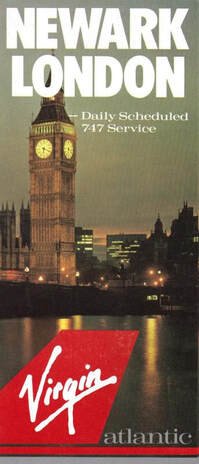
Nowadays Virgin Atlantic seems like part of the aviation establishment, having cemented its place at Heathrow, become part-owned by Delta and joined the Skyteam alliance. That wasn’t always the case and given the anti-competitive nature of flying across the pond in the 1980s it is a massive achievement that it survived into the 90s at all.
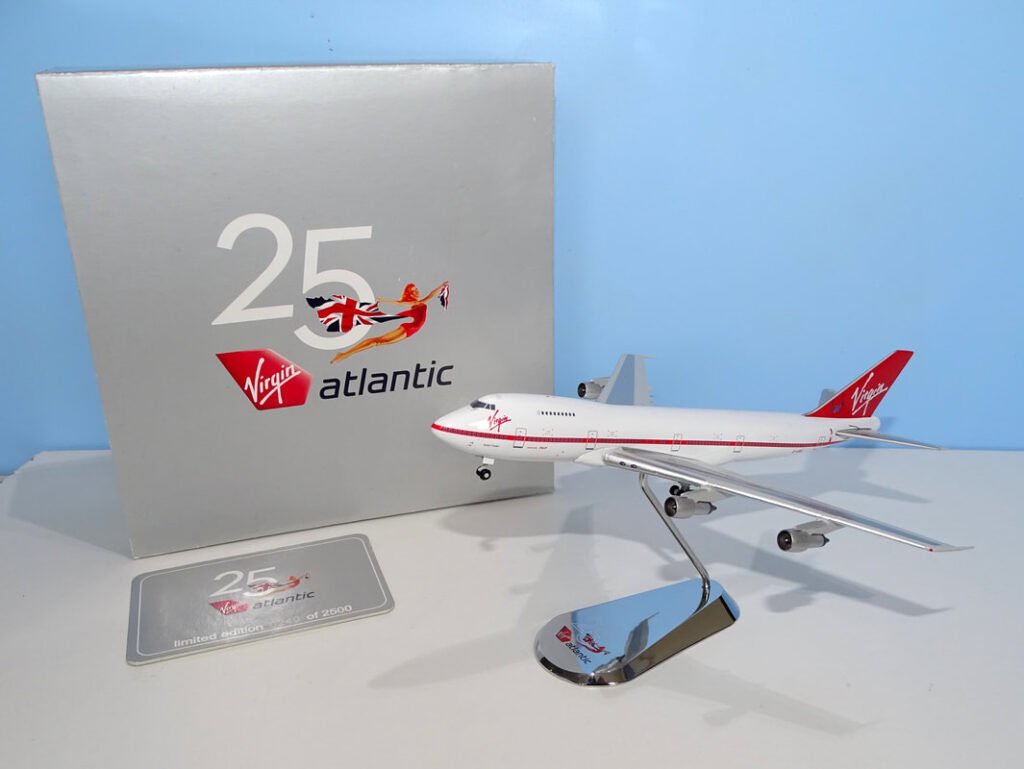
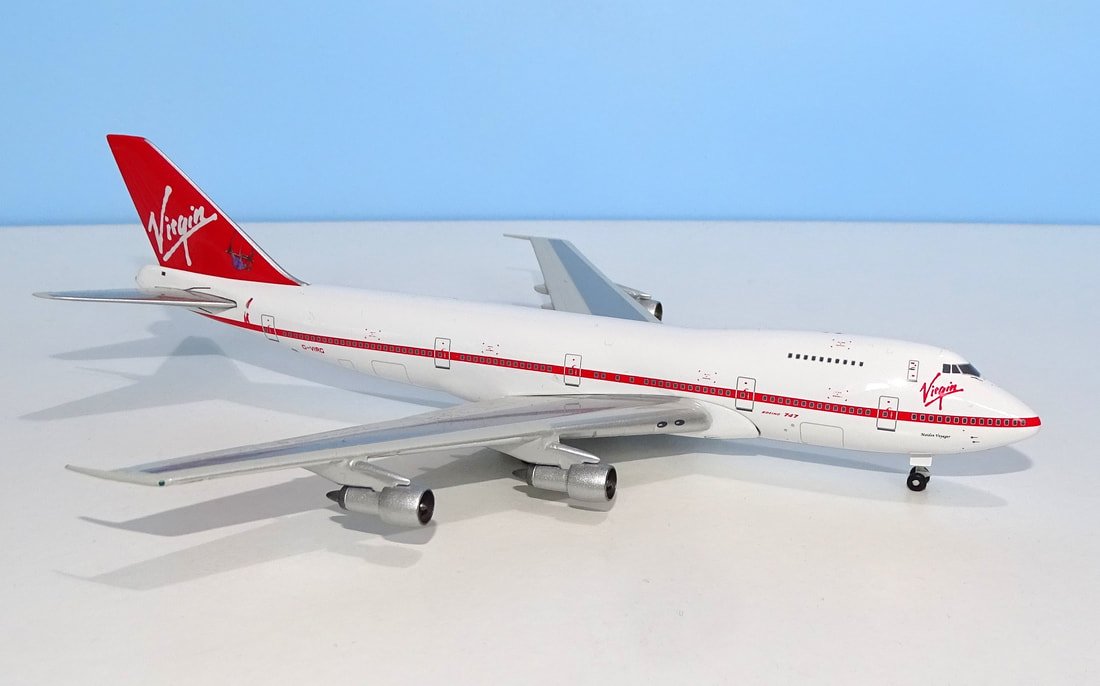
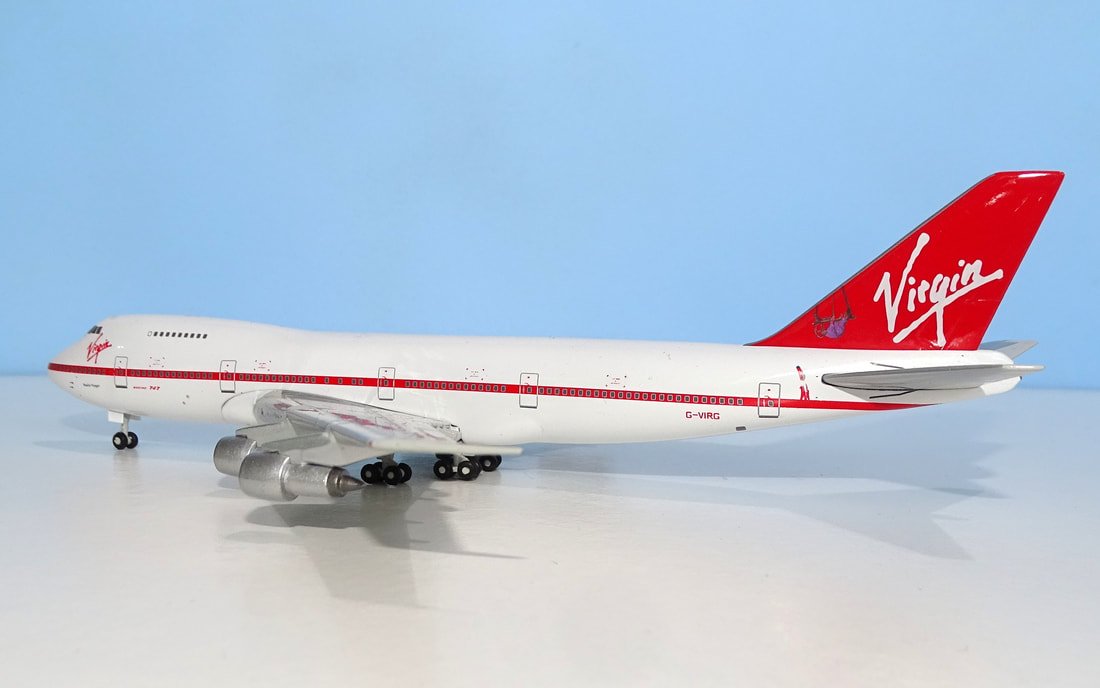
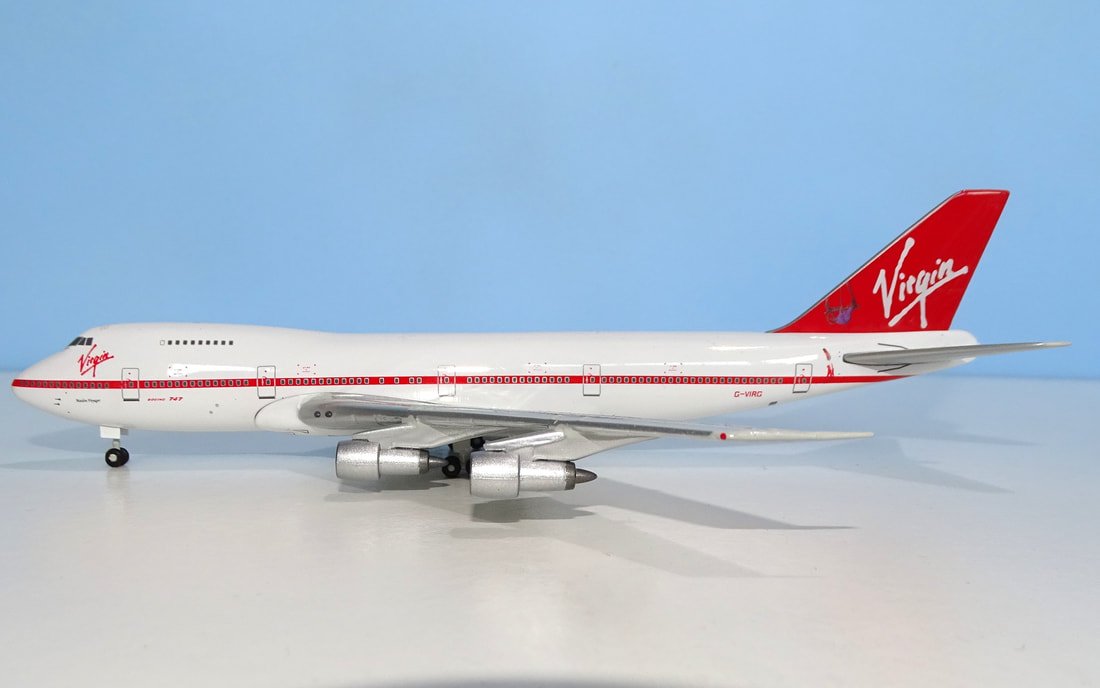
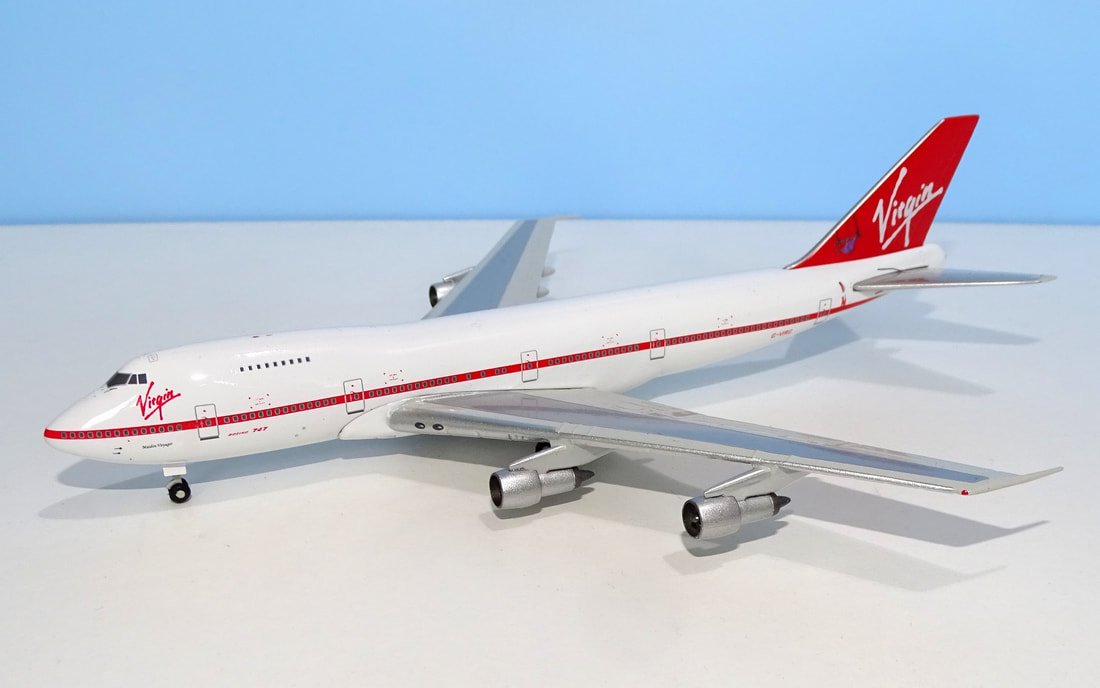
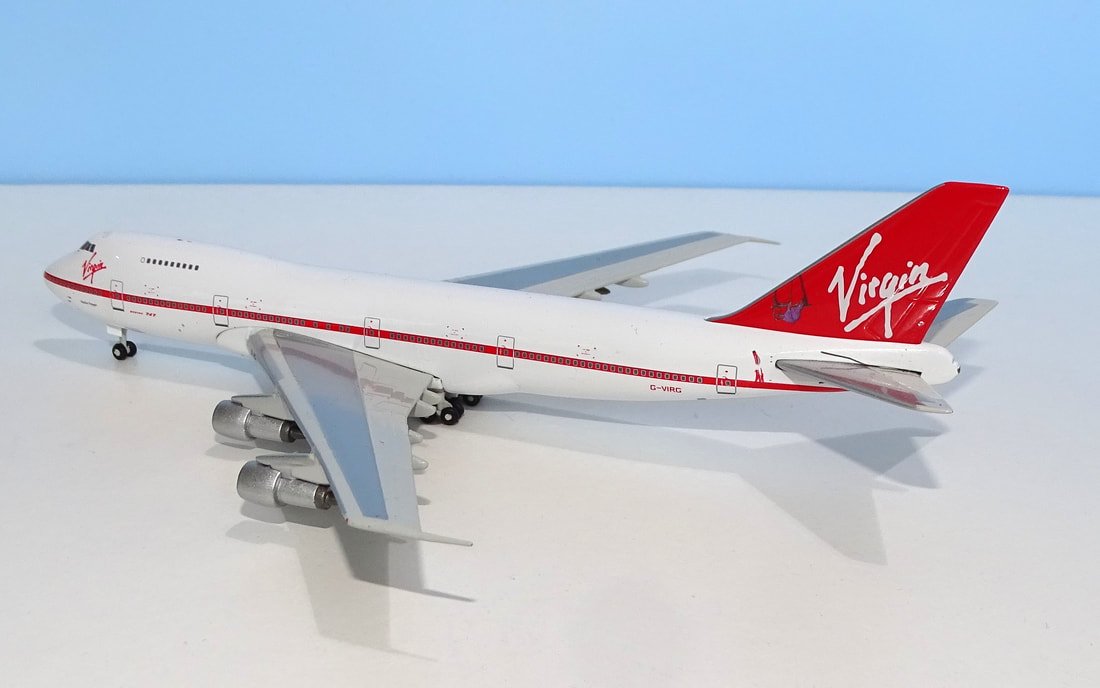
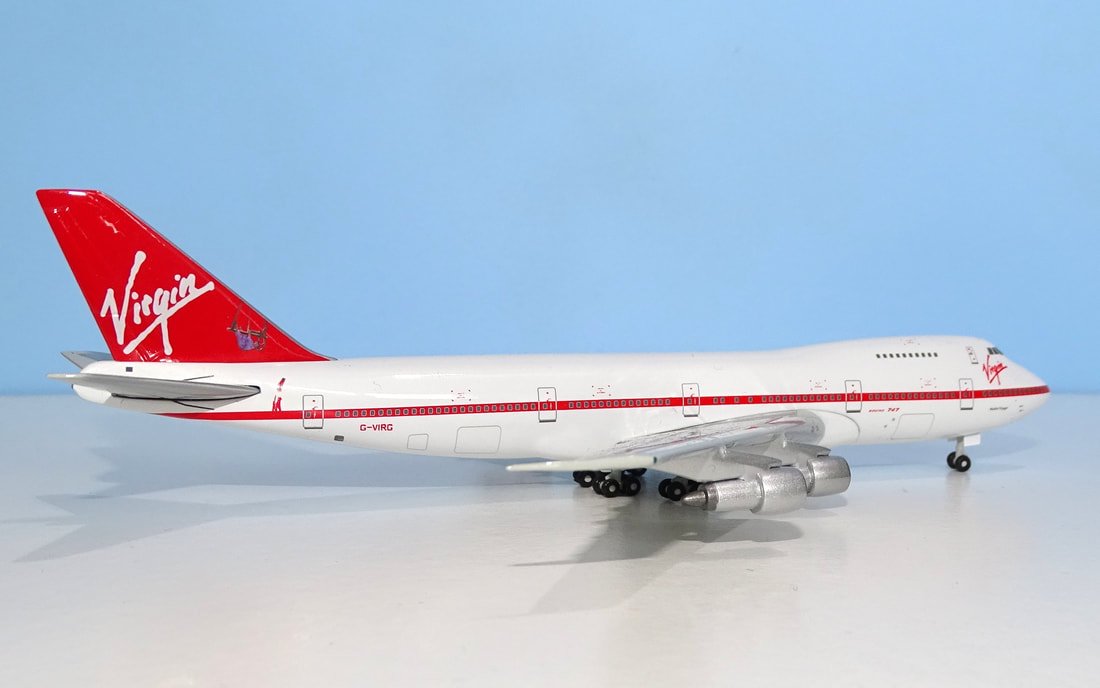
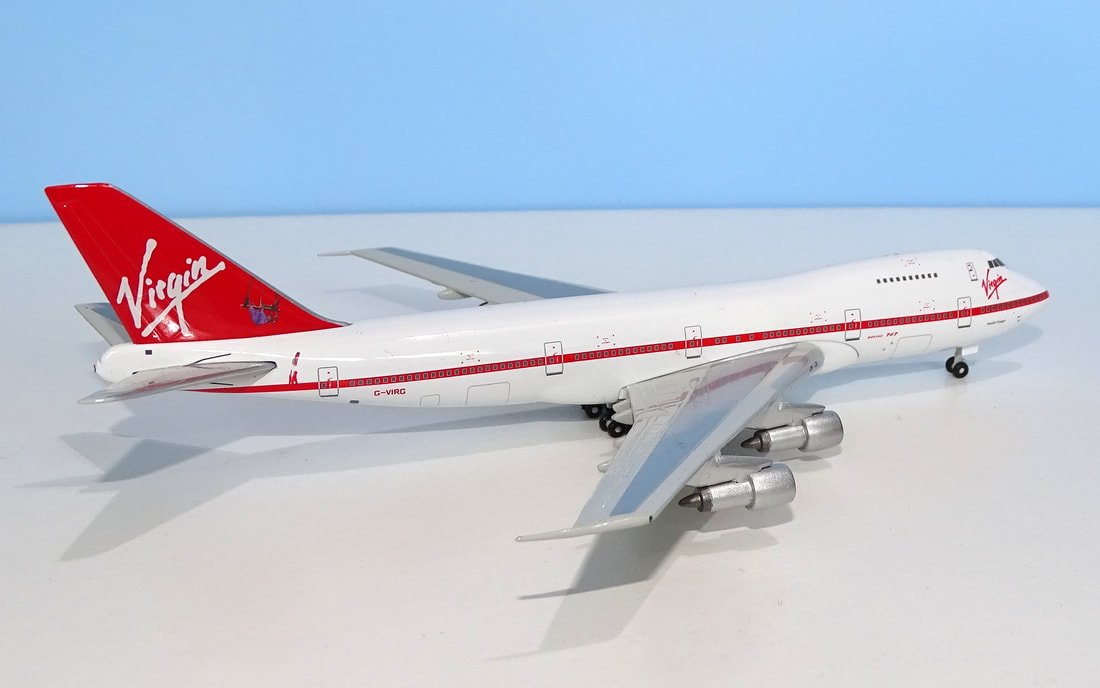
Above: The model depicted in this post is an old Gemini Jets release made for Virgin for inflight sales on their 25th anniversary in 2009. It comes with a metal stand and card, this being number 249 of 2,500 made.
The origins of Virgin Atlantic goes back further than Richard Branson himself. It had come out of the collapse of Laker Airways and initially the start-up, then known as British Atlantic Airways, was rather oddly aimed at starting scheduled services between London and the Falkland Islands. At this point the airline was a joint venture between an American-born lawyer, Randolph Fields, and a former Laker chief pilot, Alan Hellary.
The short runway at Port Stanley put paid to the idea of serving the Falklands and the much grander plan of operating transatlantic services was thought of connecting London Gatwick with New York JFK. Unsurprisingly the appearance of a new startup competitor after they’d only just killed off Laker was not music to the ears of British Airways or British Caledonian and the route application was rejected in mid-1983.
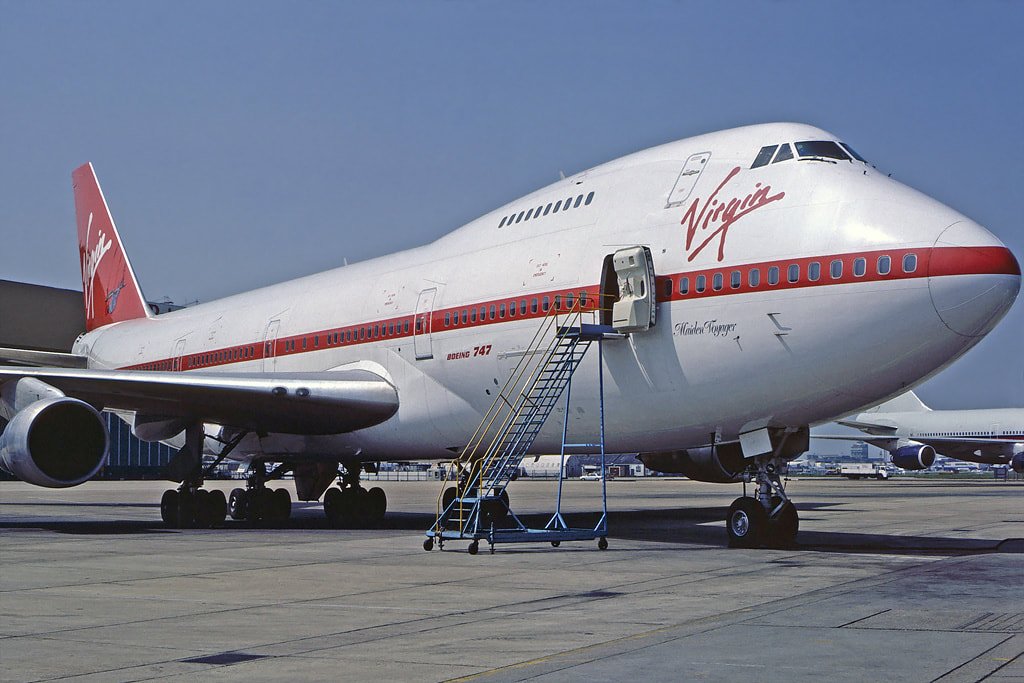
Steve Fitzgerald, CC BY-SA 3.0 , via Wikimedia Commons
Hellary and Fields switched to serving Newark, using a DC-10, but by then PeoplExpress was operating the route and it was felt further funding was required. It is here that Richard Branson enters the scene, having met Fields at a party. The pair became business partners and Fields, with a reduced 25% share, was the new airline’s first chairman.
Richard Branson was just 34 and already a millionaire with an entertainment empire using the Virgin name. Renaming British Atlantic to Virgin Atlantic made a lot of sense, especially given the charisma and publicity that Branson could, and did, frequently bring to the fledgling airline.
Fields had originally seen the airline as a business class carrier but Branson’s vision was for a niche operator offering high-quality but low-cost services on what were termed ‘fat’ routes i.e. popular easy to sell destinations from London.
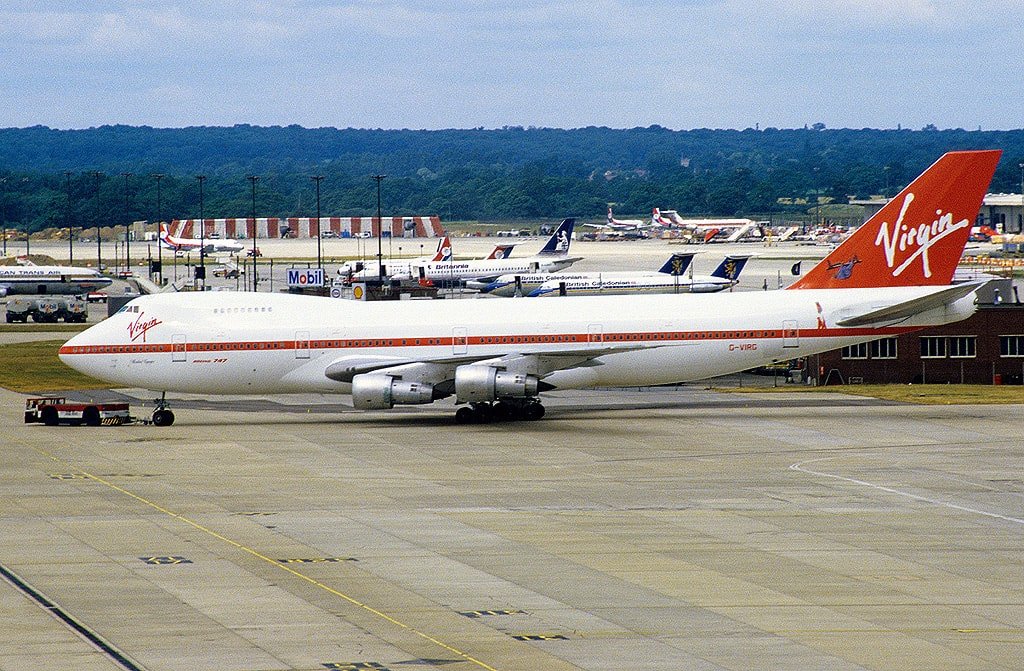
Tim Rees (GFDL 1.2 or GFDL 1.2 ), via Wikimedia Commons
Fields relationship with Branson deteriorated quickly and his tenure with Virgin lasted only until September 1984 – less than three months after the first flight. He would go on to startup Highland Express with a lot less success than Branson had with Virgin. For more on Highland Express see:
For equipment Virgin secured a single Boeing 747-200. The 1976 build series 287B was delivered new to Aerolineas Argentinas as LV-LZD on December 16, 1976. It had been returned to Boeing in January 1982 and in storage since then before joining Virgin in June 1984. It was re-registered appropriately G-VIRG and named ‘Maiden Voyager’.
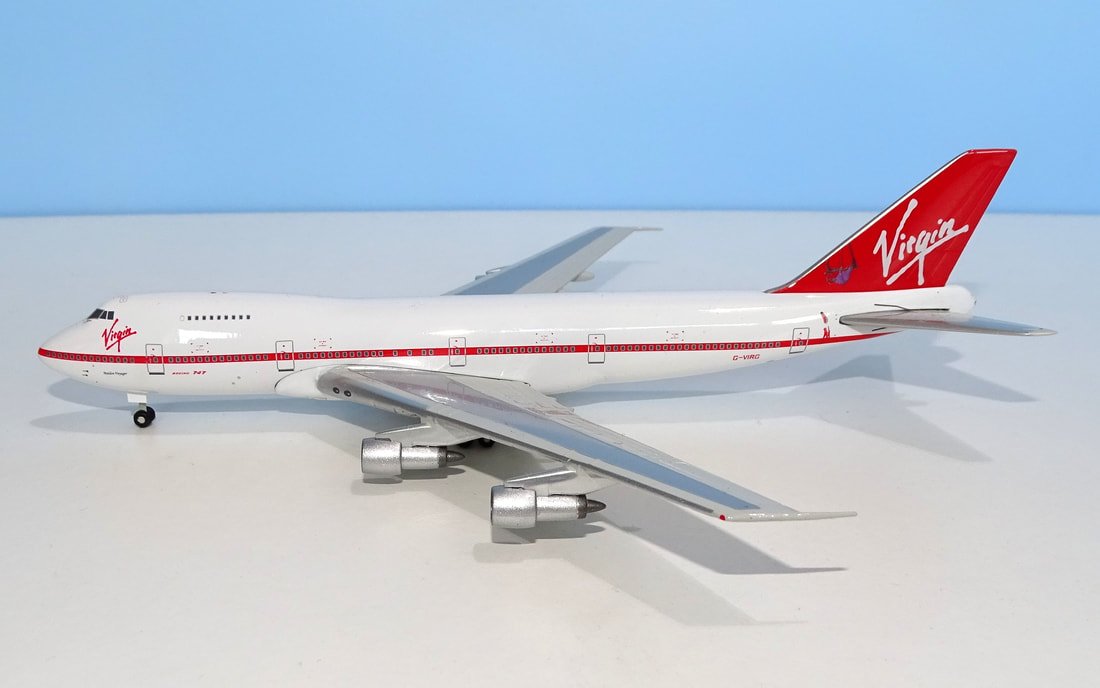
Virgin Atlantic Boeing 747-287B G-VIRG - Gemini Jets 1:400 Scale
Virgin Atlantic Boeing 747-287B G-VIRG - Gemini Jets 1:400 Scale
Virgin Atlantic Boeing 747-287B G-VIRG - Gemini Jets 1:400 Scale
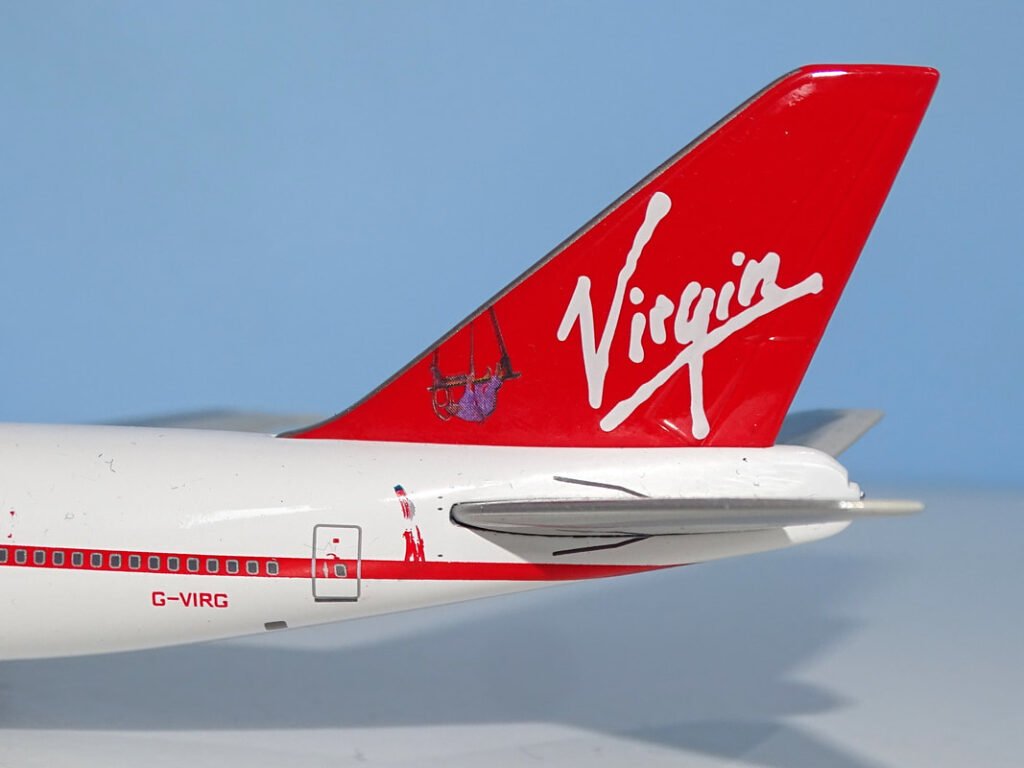
Virgin Atlantic Boeing 747-287B G-VIRG - Gemini Jets 1:400 Scale
Virgin Atlantic Boeing 747-287B G-VIRG - Gemini Jets 1:400 Scale
Virgin Atlantic Boeing 747-287B G-VIRG - Gemini Jets 1:400 Scale
Virgin Atlantic Boeing 747-287B G-VIRG - Gemini Jets 1:400 Scale
Virgin Atlantic Boeing 747-287B G-VIRG - Gemini Jets 1:400 Scale
Virgin Atlantic Boeing 747-287B G-VIRG - Gemini Jets 1:400 Scale
Virgin Atlantic Boeing 747-287B G-VIRG - Gemini Jets 1:400 Scale
The aircraft was fully refurbished for Virgin and re-equipped with a two-class configuration featuring Upper class and economy class. Upper class was on par with other airline’s first class but at business class seats. Both classes featured state-of-the-art in-flight entertainment systems. Upper class passengers could even take advantage of a limousine service.
Virgin’s first livery was only ever worn by G-VIRG. It had a thin red cheatline and all red tail with Virgin titles, but the things that made the scheme unique were the Virgin titles under the cockpit and the comedy painter falling off his paint platform and dropping his paint down the side of the rear fuselage. The ‘Flying Lady’ mascot would not be adopted and replace the Virgin titles forward until the arrival of the second 747 G-VGIN in 1986.
The accident prone painter wasn’t the only scheme extra to be worn by G-VIRG as in August 1987 she was provided with a huge pair of sunglasses over her cockpit, however by late 1988 she had adopted the standard scheme. Apparently the painter had been mistaken for damage to the aircraft’s tail by several other aircraft and reportted to ATC.
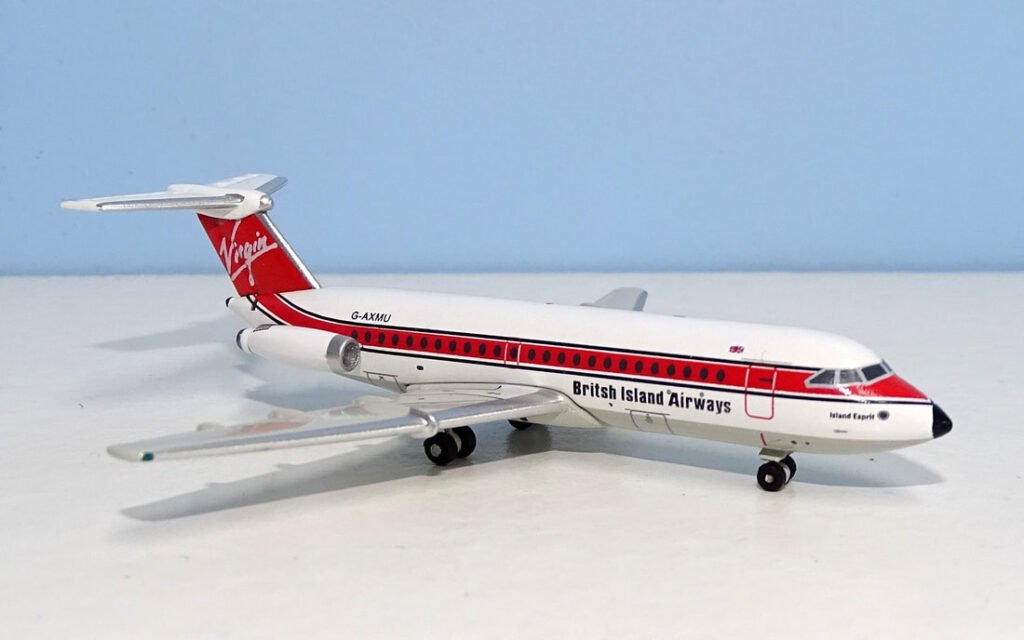
Virgin’s first flight departed Gatwick for Newark on June 22, 1984 and it would remain Virgin’s only long-haul service until April 1986. That didn’t mean Virgin wasn’t active in the short-haul market. It dabbled with the concept of feeding its Newark service, initially using a wet-leased British Island Airways BAC One-Eleven 400 (G-AXMU) to fly from Maastricht to Gatwick. This ran from early 1985 into 1986 when it was replaced by a British Air Ferries Viscount 806 (G-AOYP).
The One-Eleven wore a Virgin tail over its BIA scheme but the Viscount was named ‘Maastricht Maiden’ was repainted into Virgin colours albeit with a much thinner pinstripe cheatline.
The combination of great service, low fares and Branson driving strong publicity towards the airline, helped by his own record-breaking antics, gave Virgin a great start. Although the airline lost around £4 million in the first two years that was a considerable success, and a result followed by consistent profitability.
Virgin’s first 747 continued in service until July 2001 when she was delivered to the Nigerian carrier Kabo Air, along with two others, where she became 5N-NNN. She was stored at Victorville in September 2008 and broken up in 2010.
References
1991. Duffy, P. Not Like a Virgin. Airliners Issue 13 Virgin Atlantic 747s. RZJets.net