Managing the seasonal nature of the charter airline business has historically led to several airlines switching capacity across the Atlantic in the Winter with lease agreements whereby their aircraft get a winter in North America and a summer back in the UK. Air Europe had such an agreement with Air Florida between 1980/81 and 1982/83 but the failure of the American airline led to a more unusual arrangement with the British flag carrier that not only saw Air Europe swap aircraft but also acquire its first 757s from British Airways order backlog.
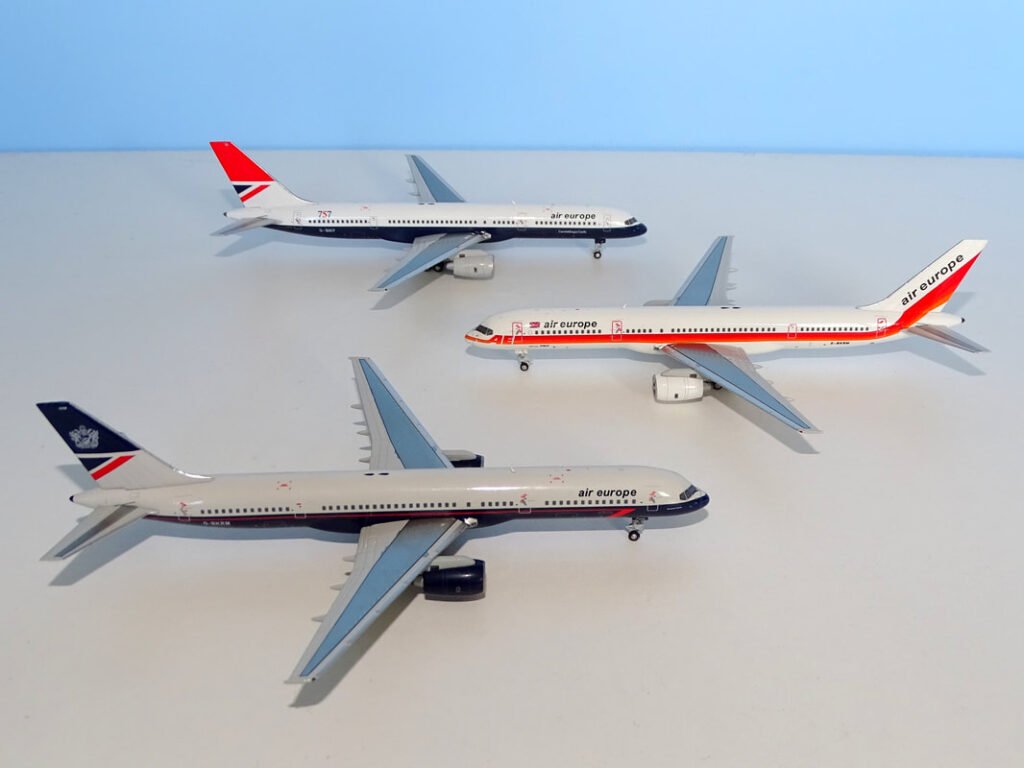
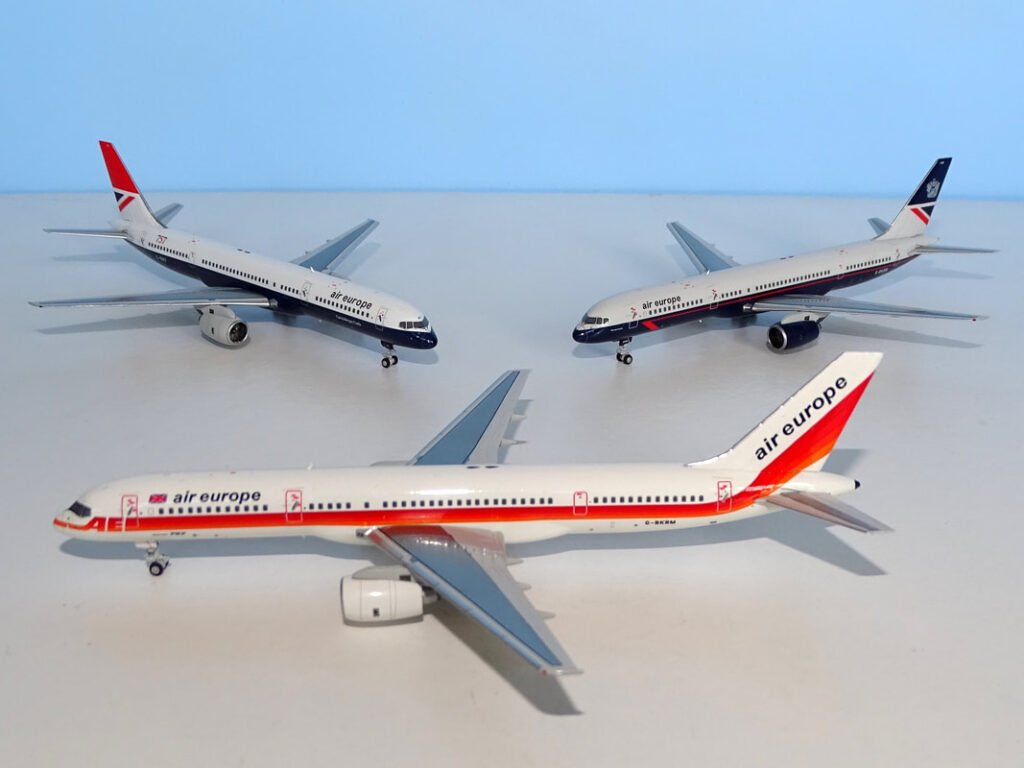
Air Europe 757s by NG Models - 1:400 Scale
British Airways was, along with Eastern Air Lines, the joint launch customer for the Boeing 757. It’s order, for 19 orders and 18 options, was announced on August 31, 1978. The order was signed off on March 2, 1979 and 3 months later the options were formalised, however the early 80s was a difficult period for BA, which was heavily loss making. The airline’s fortunes would be turned around impressively in the mid-80s but in 1982 it found some of its 757 order surplus to requirements.
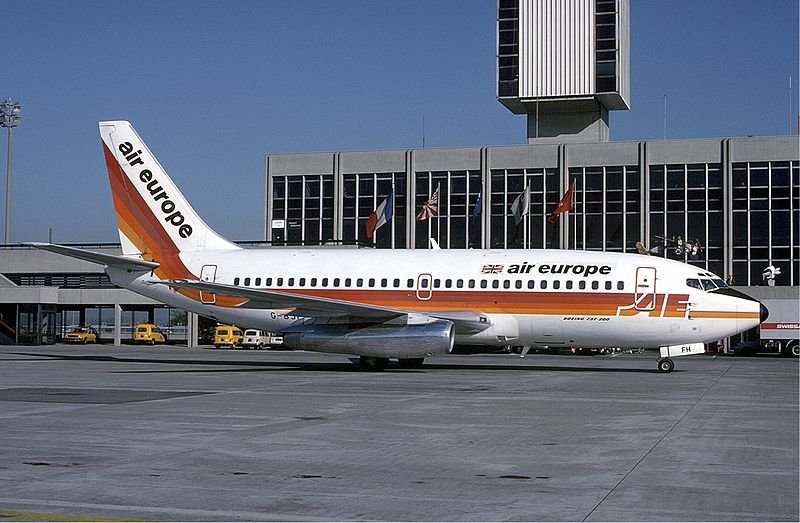
Eduard Marmet, CC BY-SA 3.0 GFDL 1.2, via Wikimedia Commons
Air Europe had started charter services from its Gatwick base on May 4, 1979 using brand new 737-200s. It had big plans to take advantage of opportunities in the UK charter market that older competitors like Dan Air weren’t able to, but operating new equipment meant that unlike Dan Air it couldn’t leave its aircraft sitting around idle in the low season.
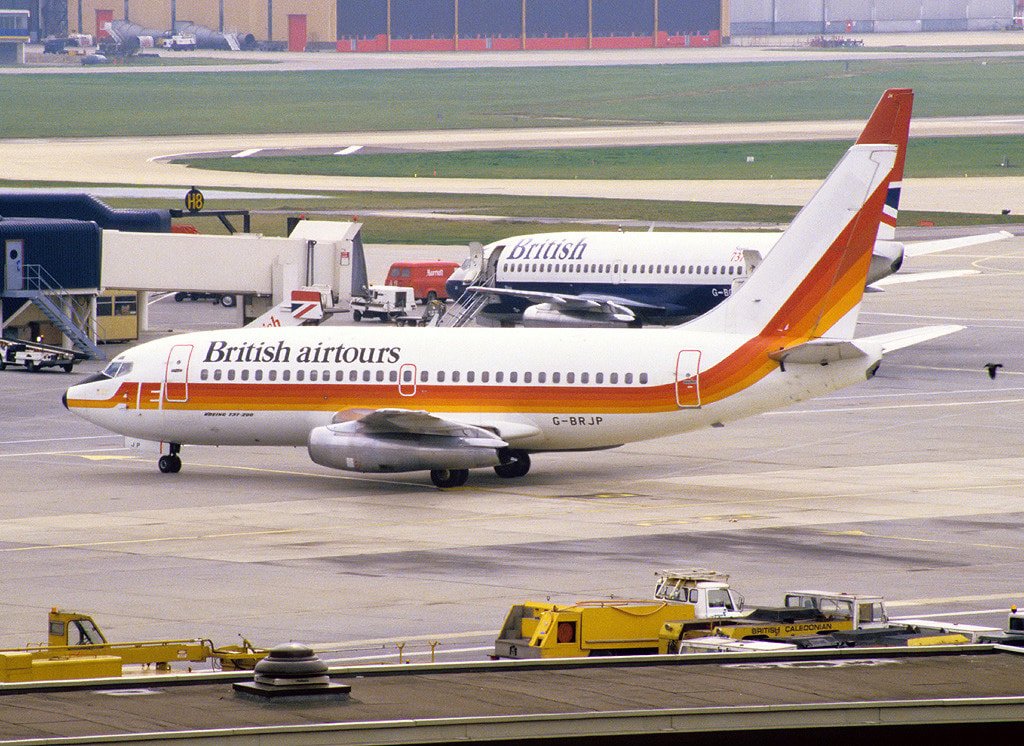
By 1982 Air Europe was flying 7 737-200s and had a second base in operation at Manchester. With Air Florida no longer being a viable option for its aircraft in the winter season it instead approached British Airways with a plan whereby it would take over a pair of BA’s 757 orders and then lease them back to BA in the winter, along with some 737s.
Below: It wasn’t just Air Europe 757s that were part of the lease arrangement as this 737 on lease to BA’s charter subsidiary British Airtours shows.
Tim Rees (GFDL 1.2 or GFDL 1.2 ), via Wikimedia Commons
This worked for BA both because it found the 757s surplus to its requirements but also because the winter season was the period when their aircraft undertook scheduled maintenance and so they needed cover. The deal would allow BA to save an estimated $40 million over two years.
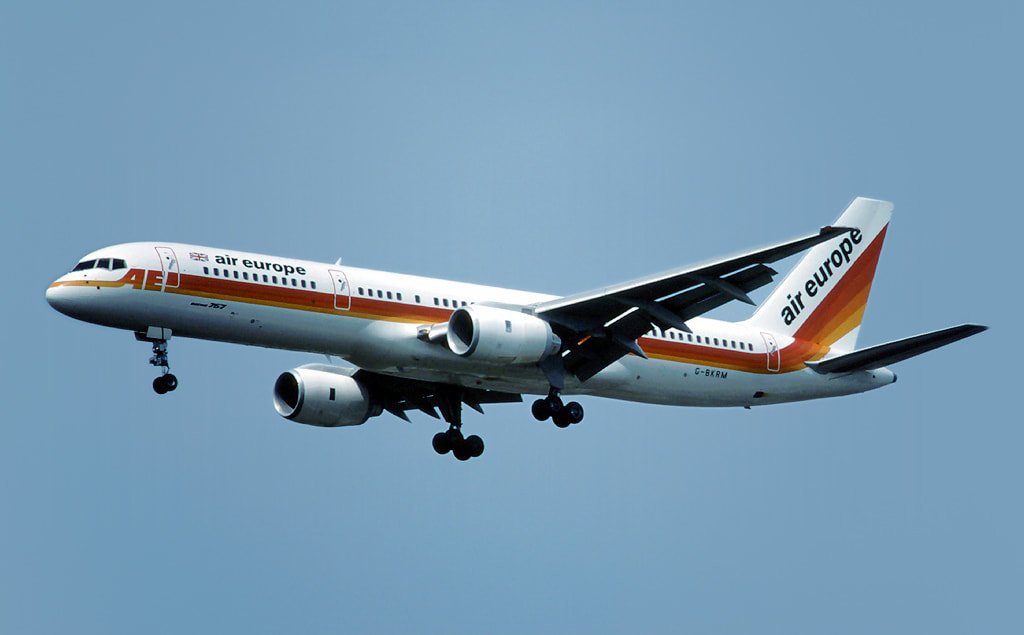
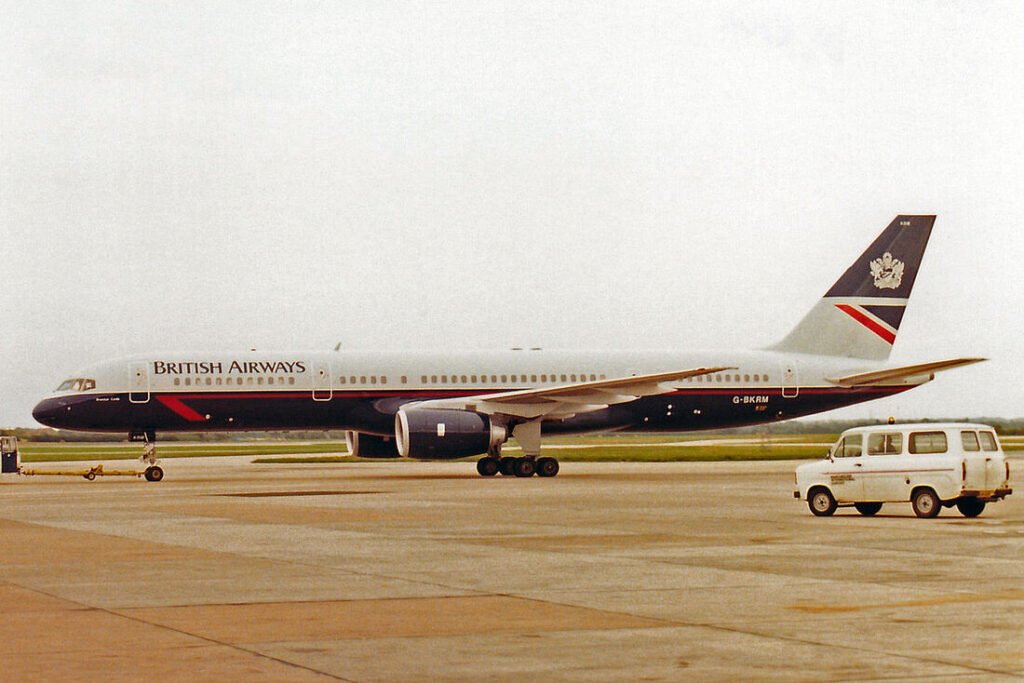
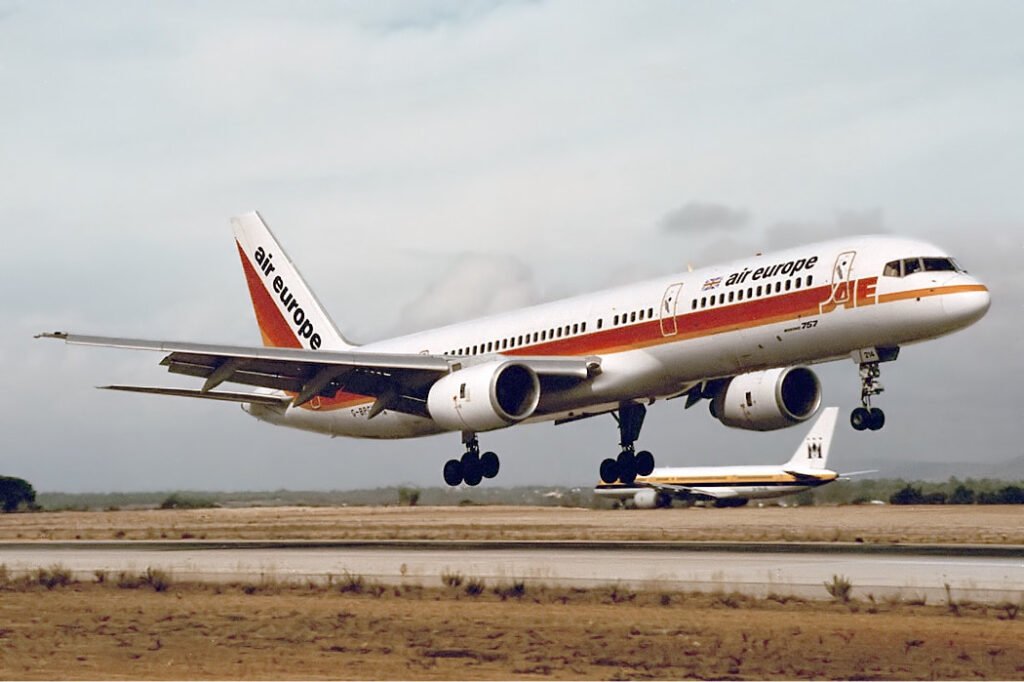
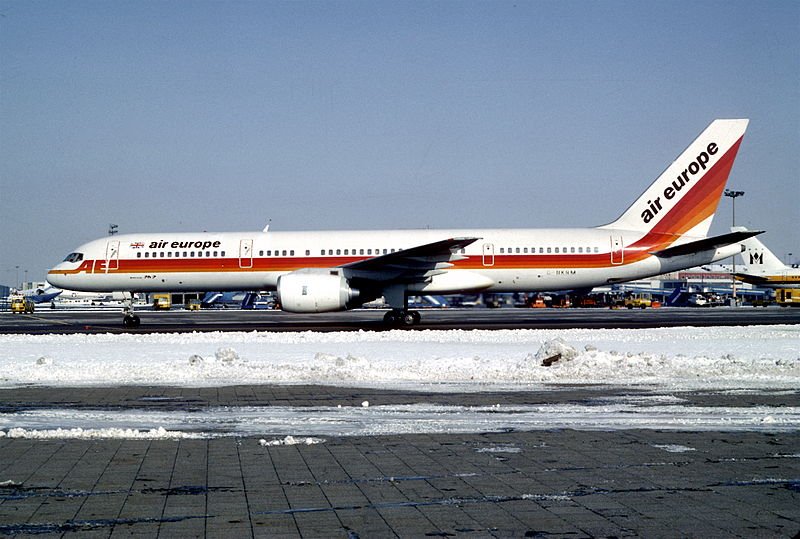
Below: A nearly new G-BKRM in June 1983
Eduard Marmet, CC BY-SA 3.0 GFDL 1.2, via Wikimedia Commons
Air Europe kept the same specification as British Airways for the 757s and so its aircraft were also 757-236s, initially equipped with the earlier RB211-535C engine but later upgraded with 535E4s. It enabled Air Europe to get the leap on other UK charter airlines with earlier delivery positions at an advantageous price. BA also supplied the flight crews, simulator facilities, technical support and spares.
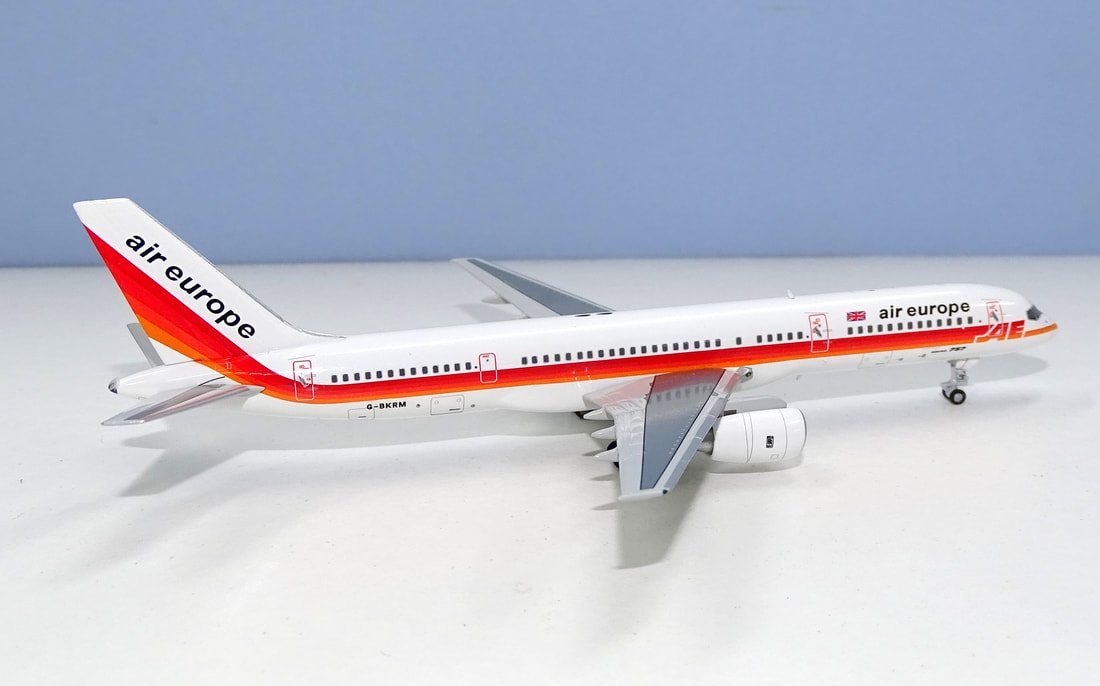
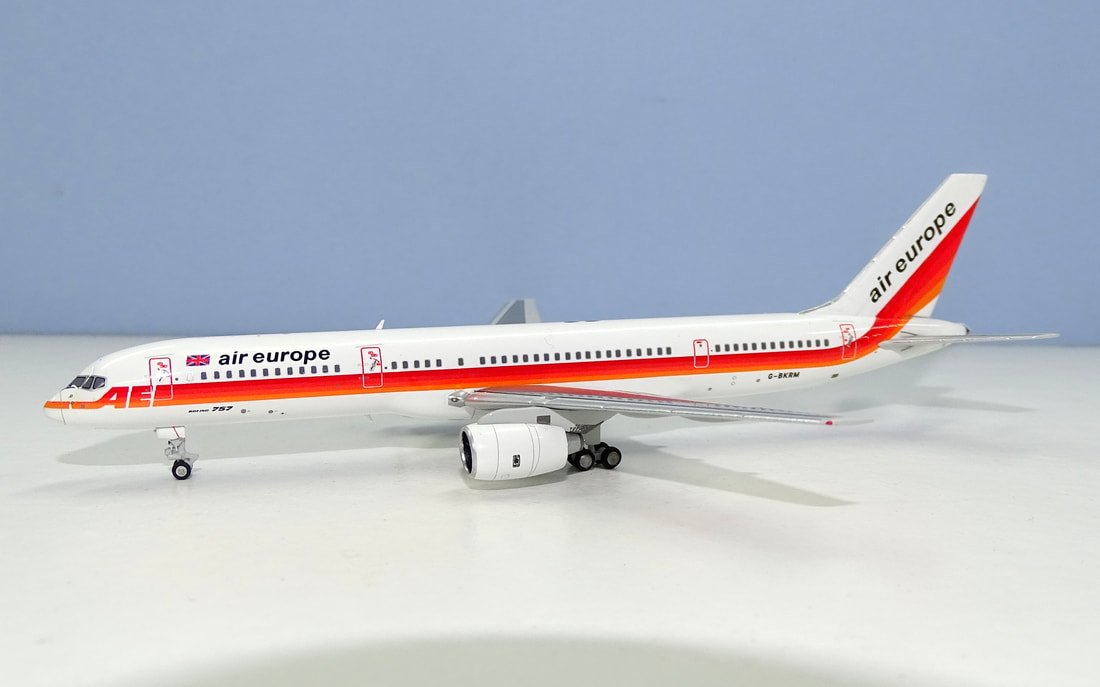
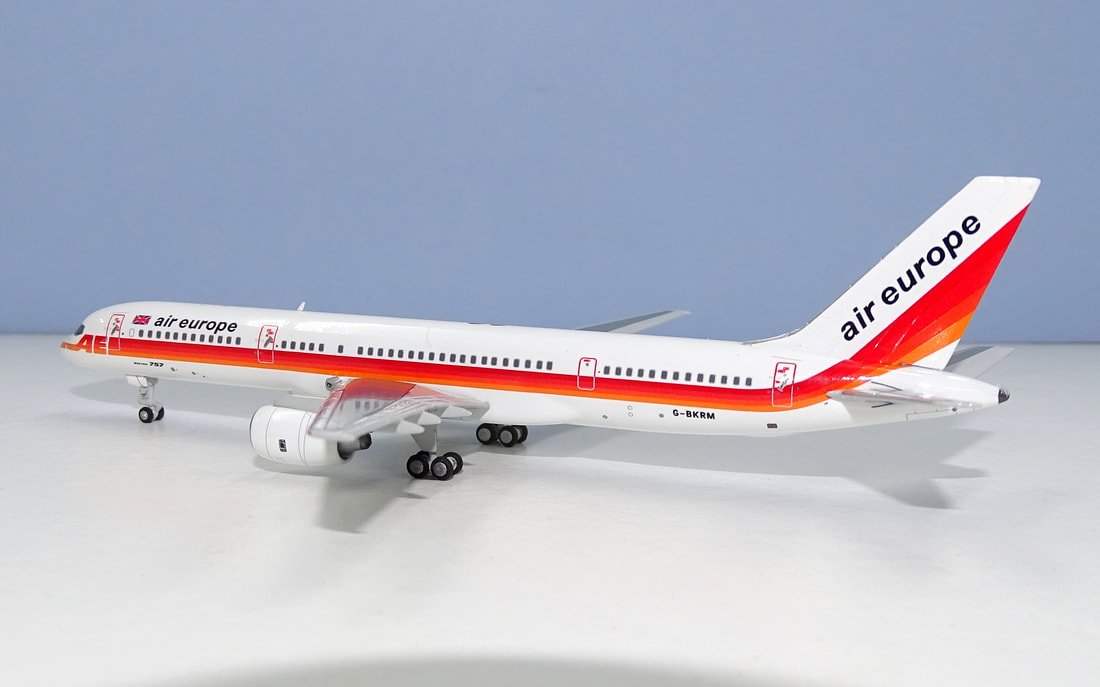
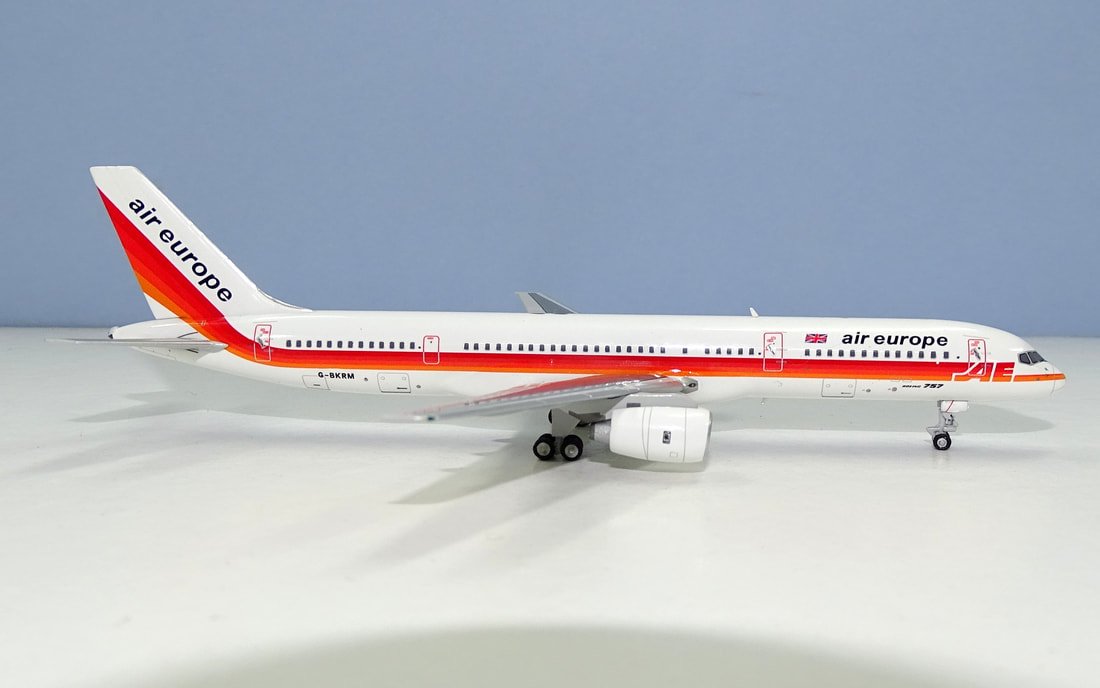
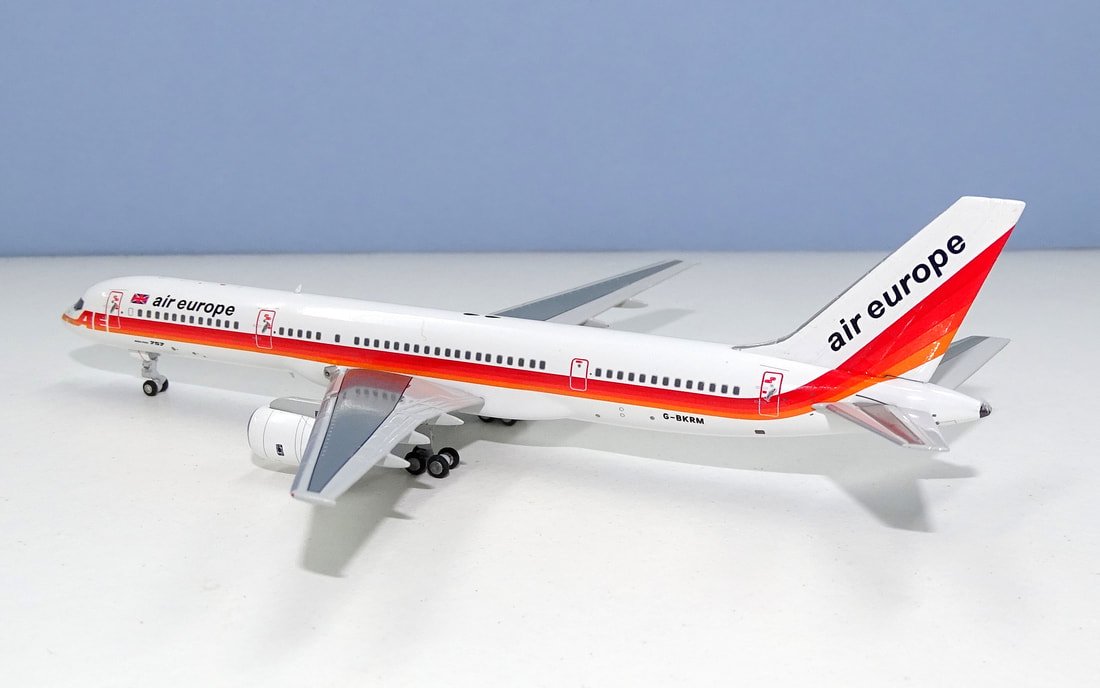
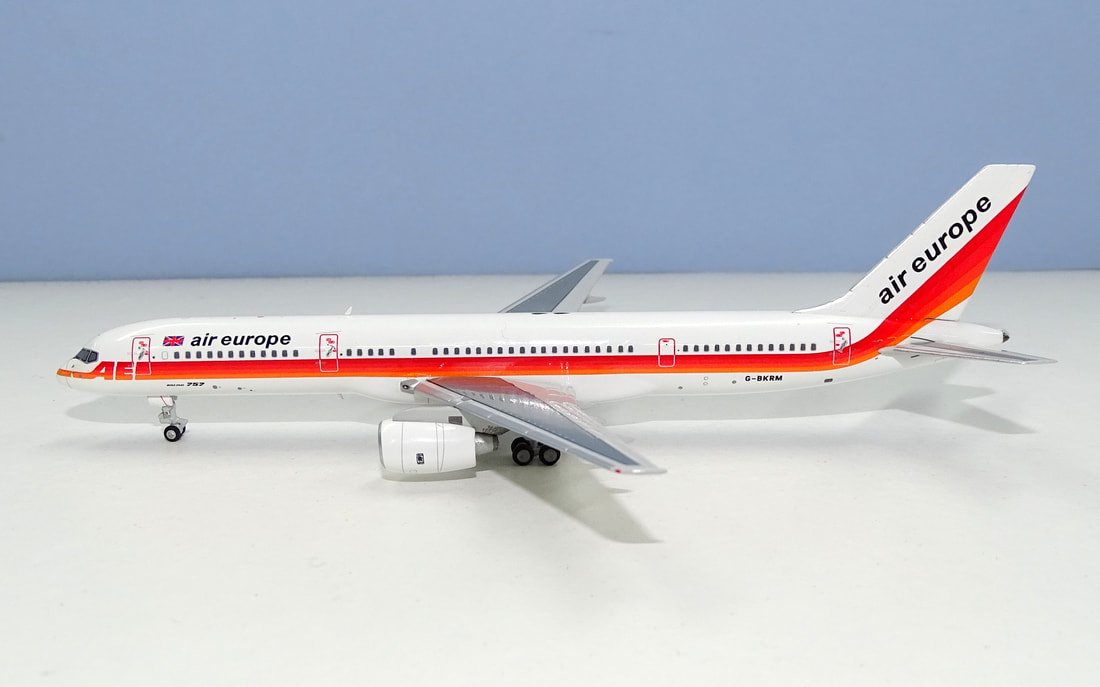
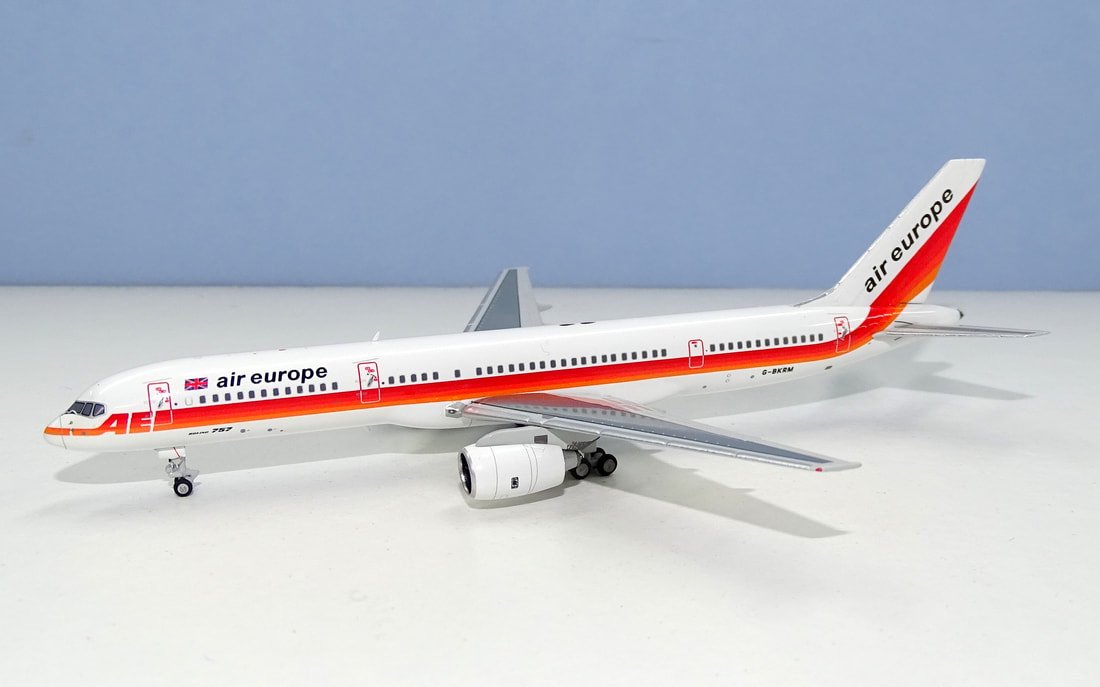
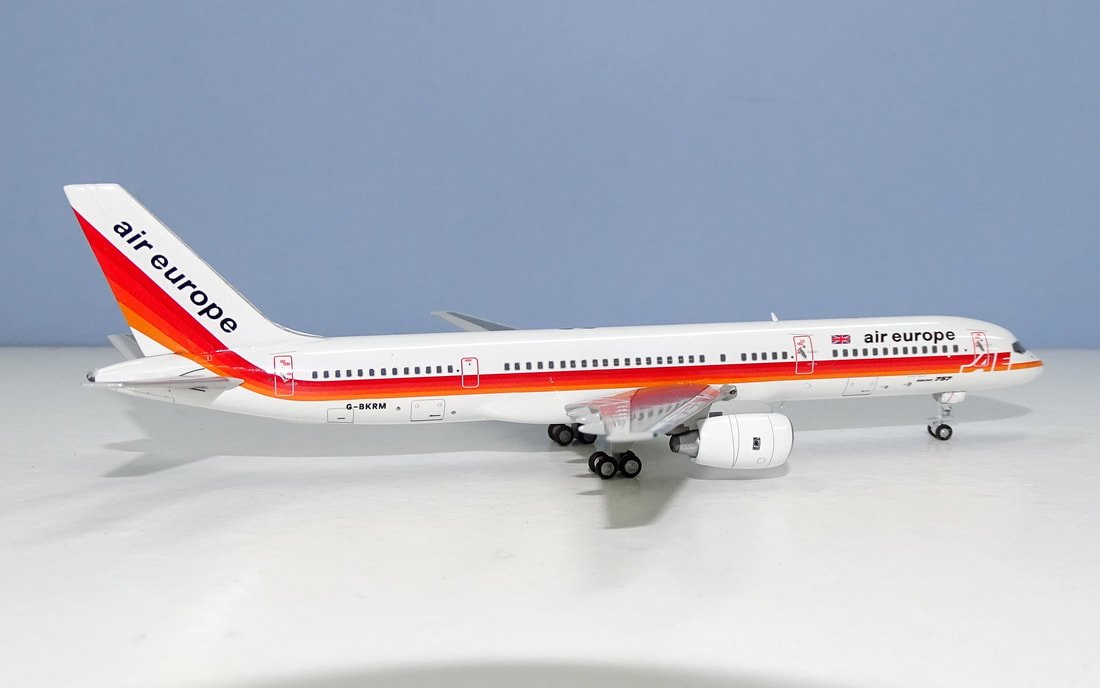
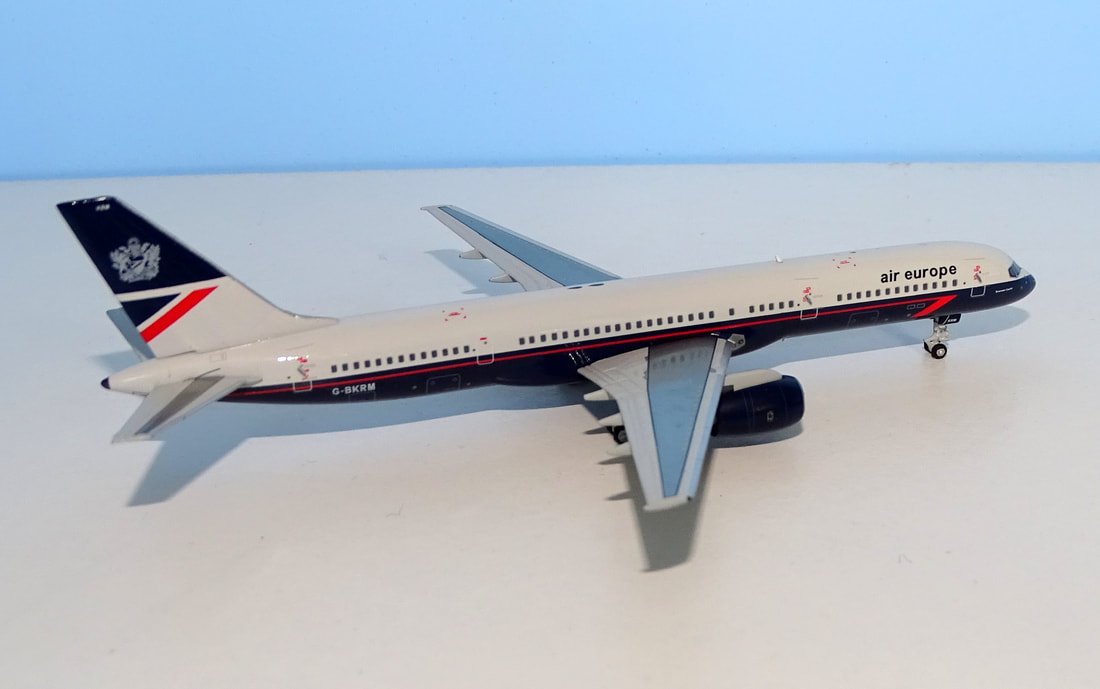
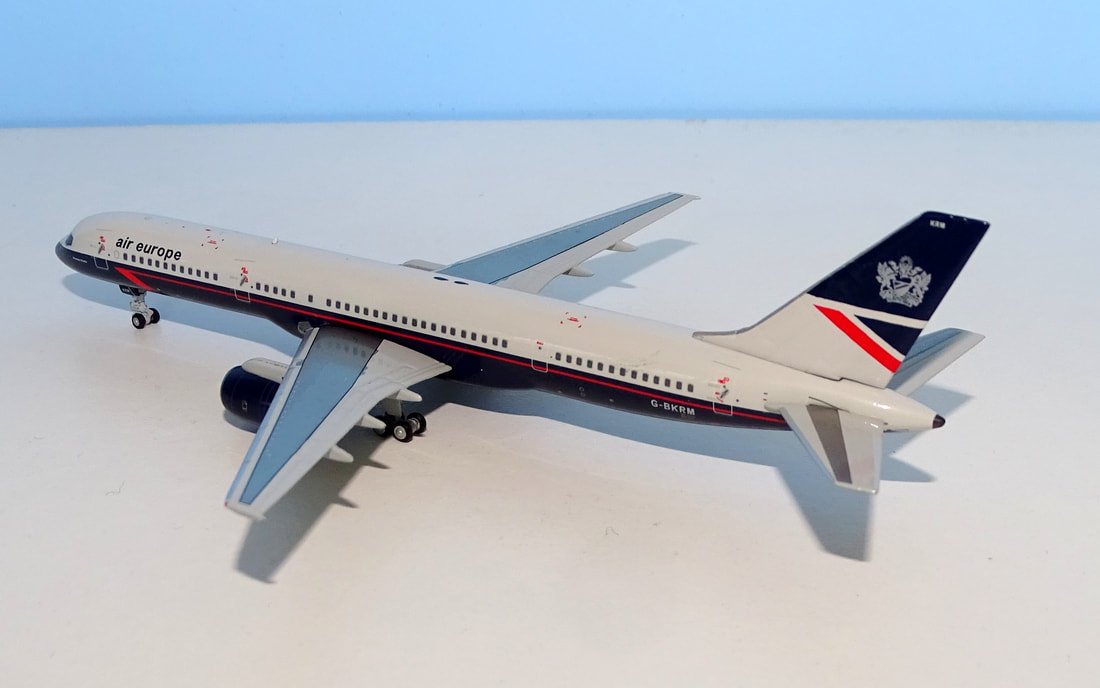
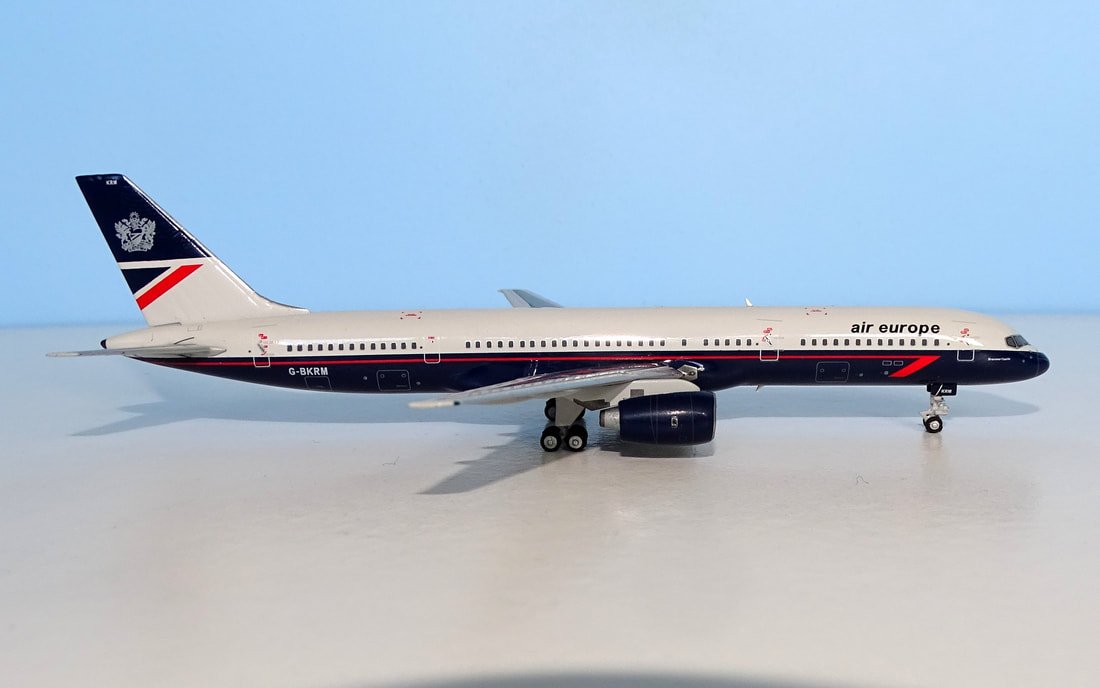
Air Europe Boeing 757-236 G-BKRM by NG Models
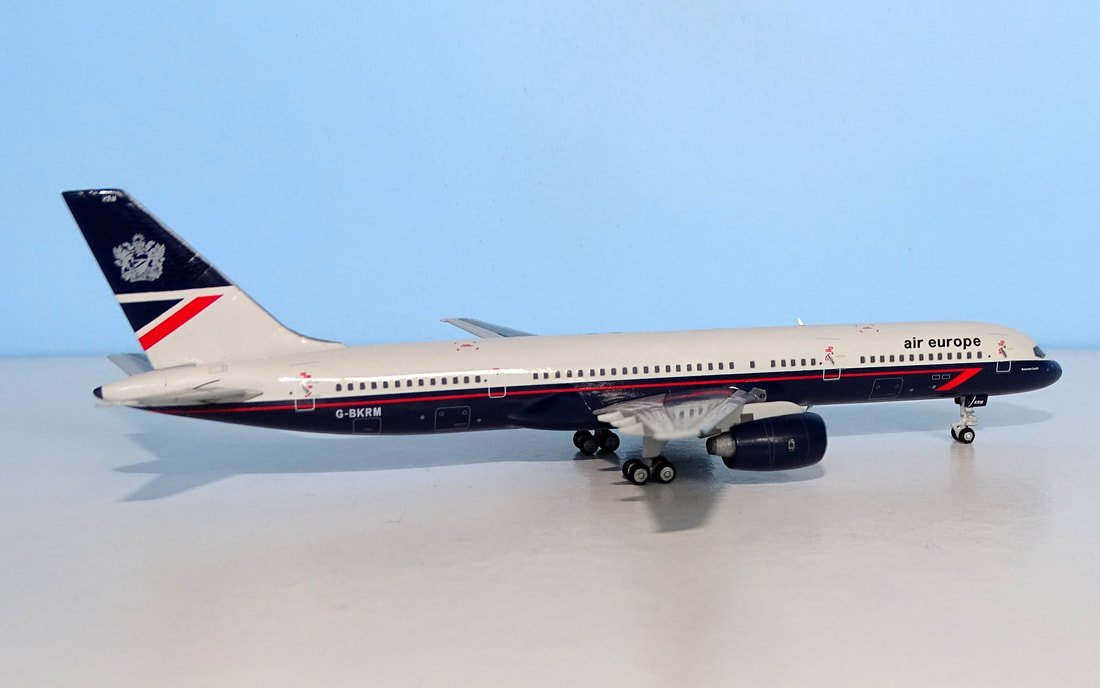
Air Europe Boeing 757-236 G-BKRM by NG Models
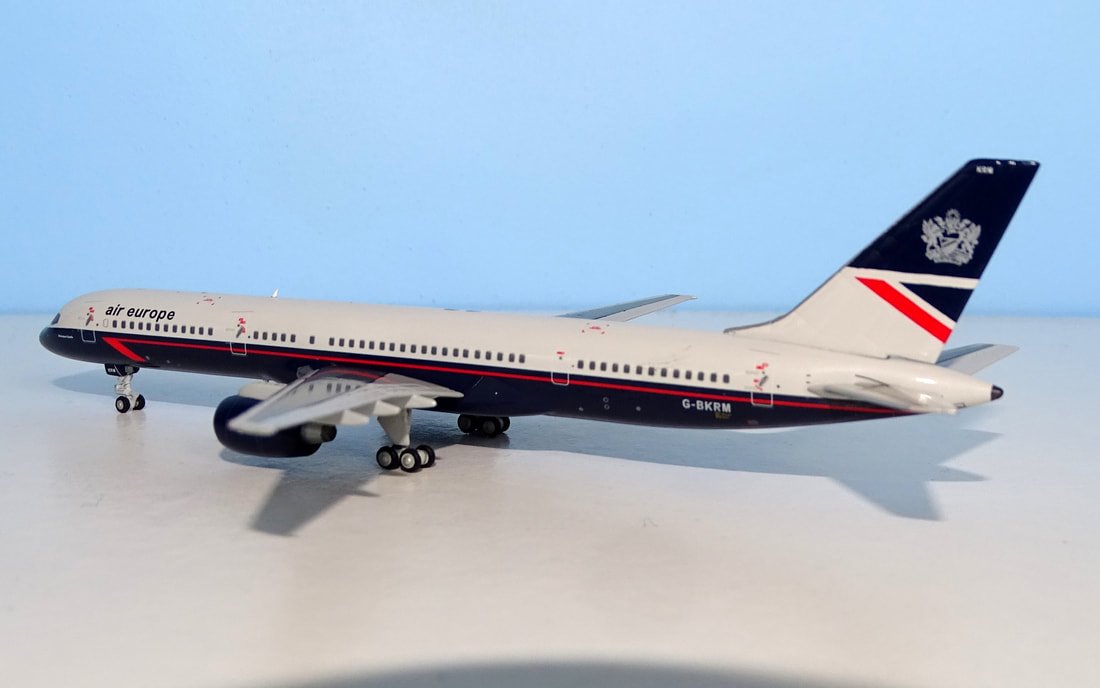
Air Europe Boeing 757-236 G-BKRM by NG Models
Air Europe Boeing 757-236 G-BKRM by NG Models
Air Europe Boeing 757-236 G-BKRM by NG Models
Air Europe Boeing 757-236 G-BKRM by NG Models
Air Europe Boeing 757-236 G-BKRM by NG Models
Air Europe Boeing 757-236 G-BKRM by NG Models
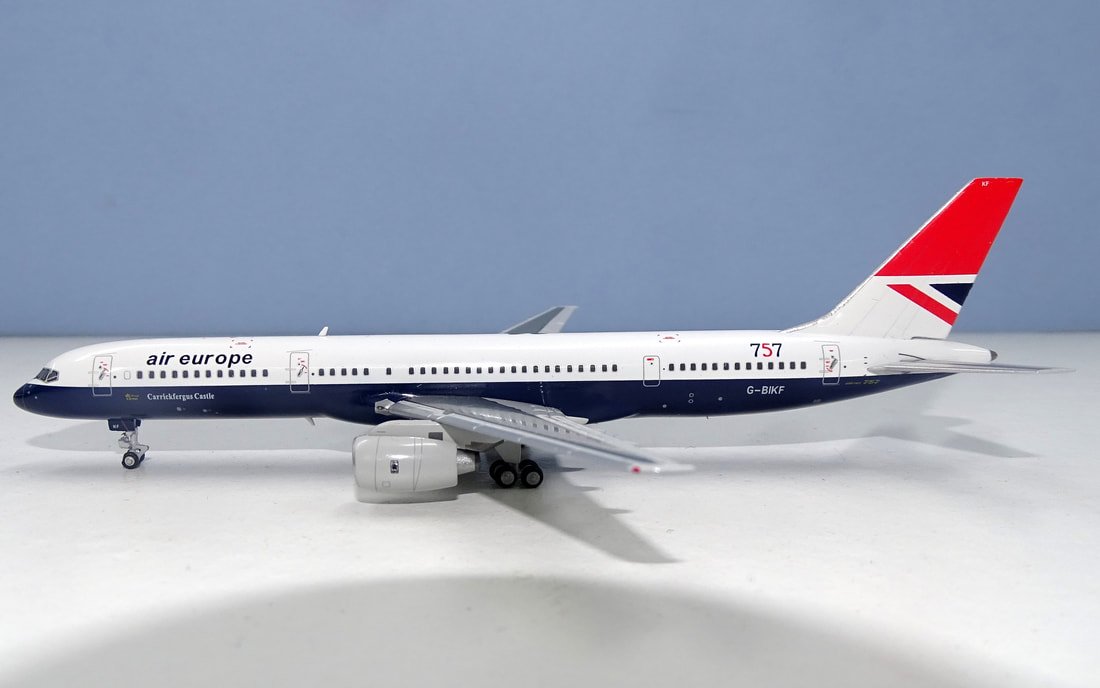
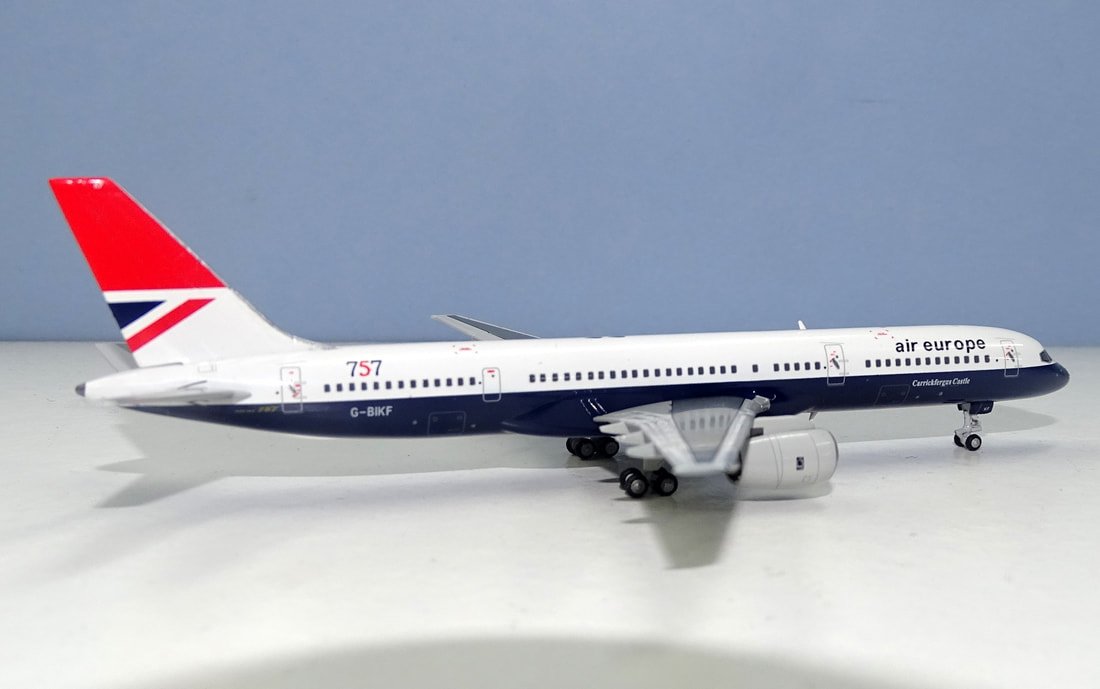
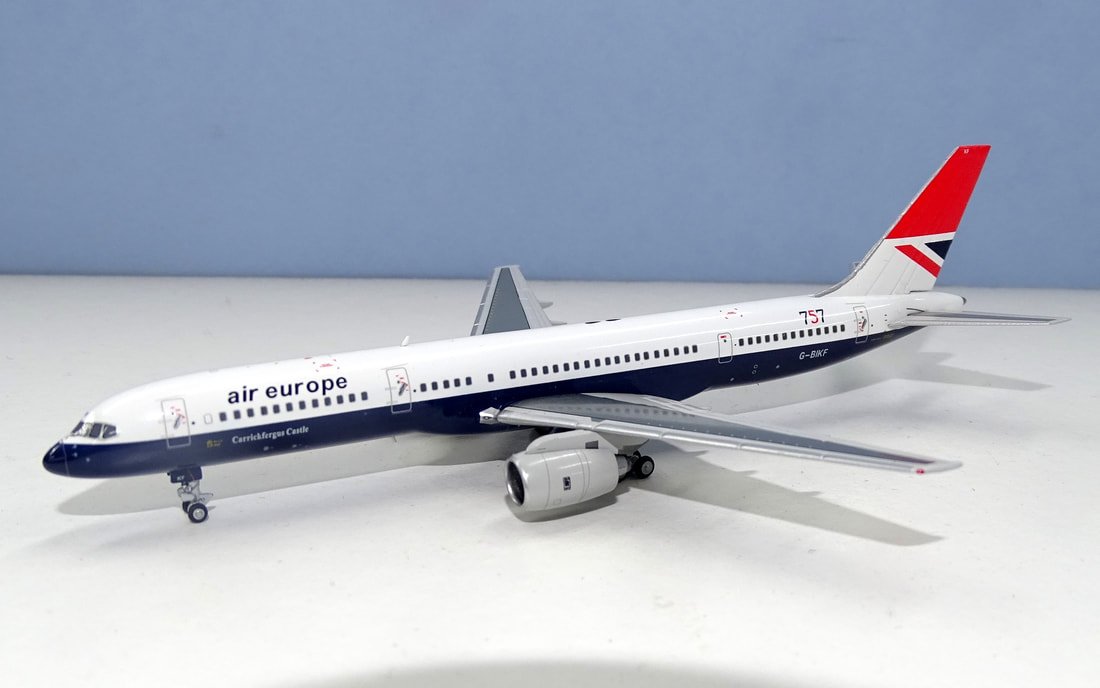
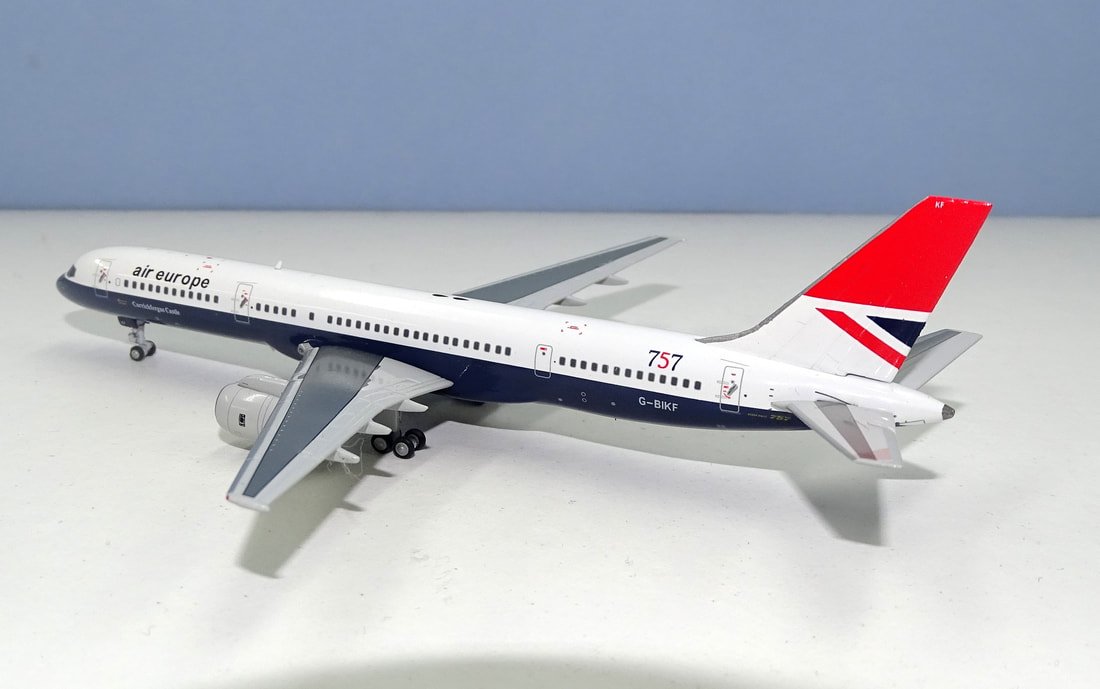
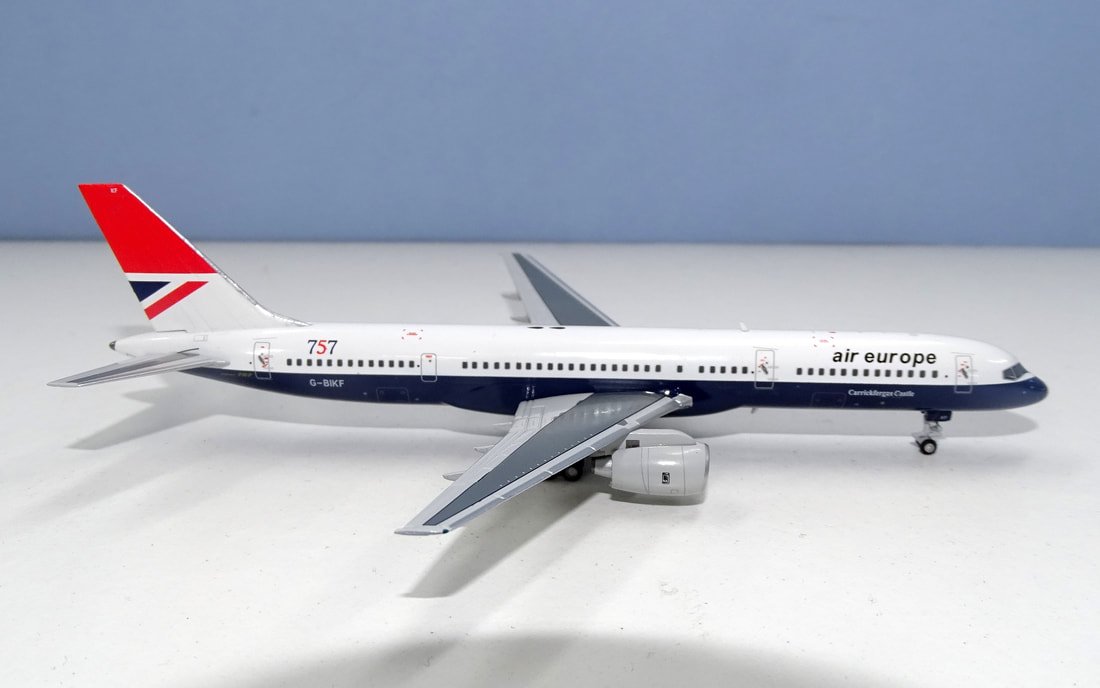
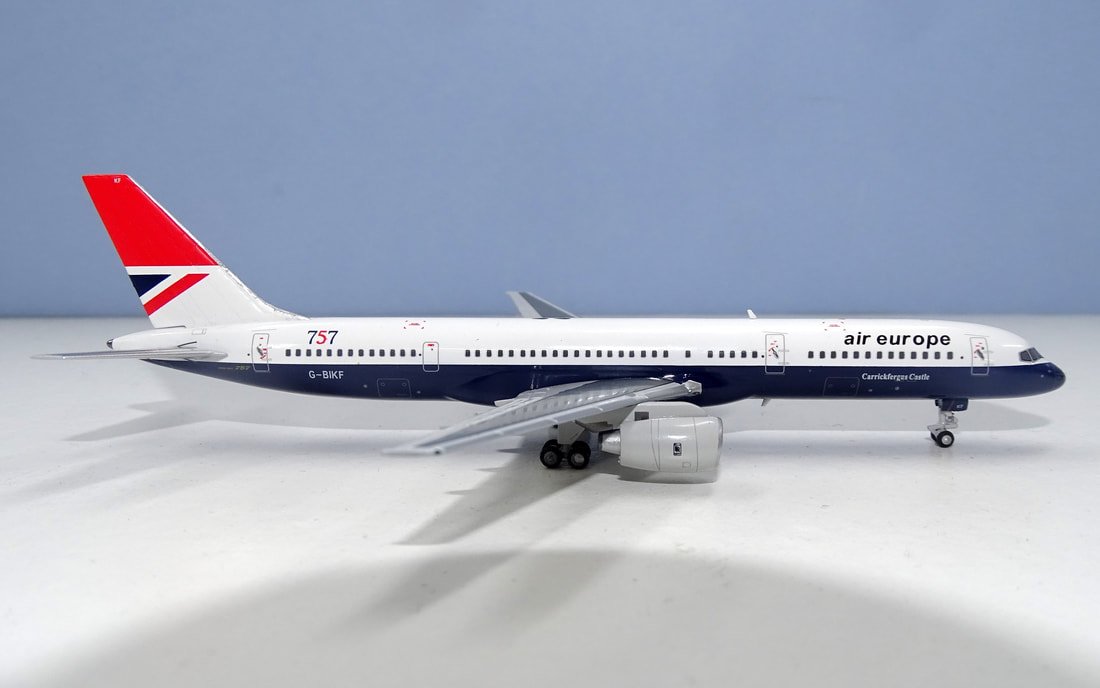
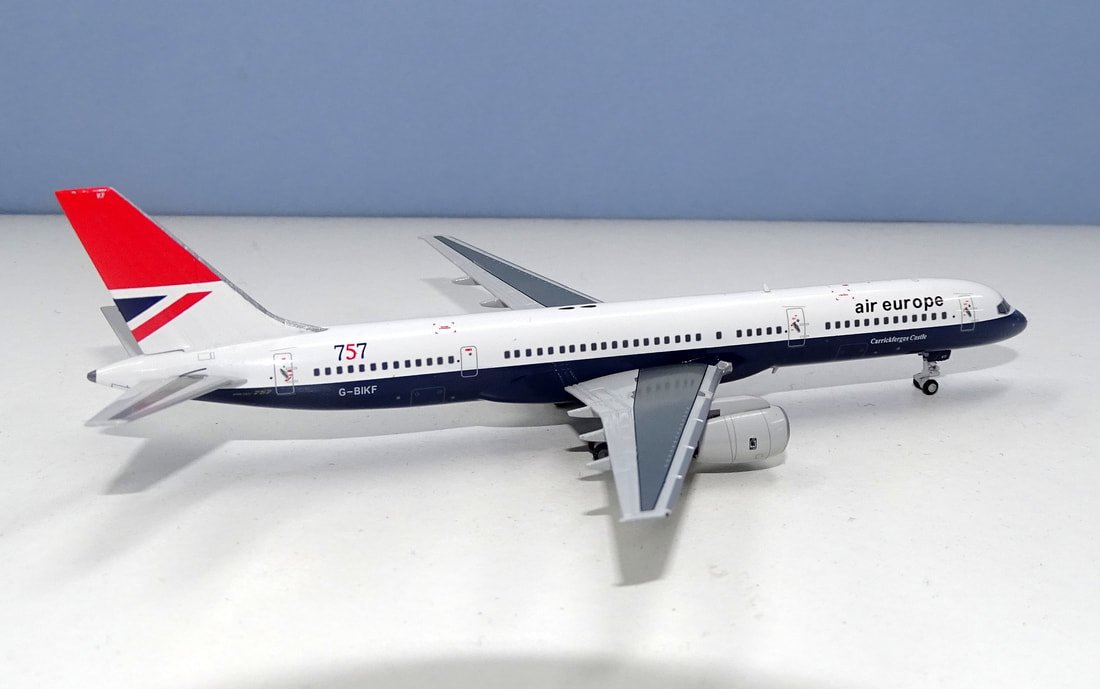
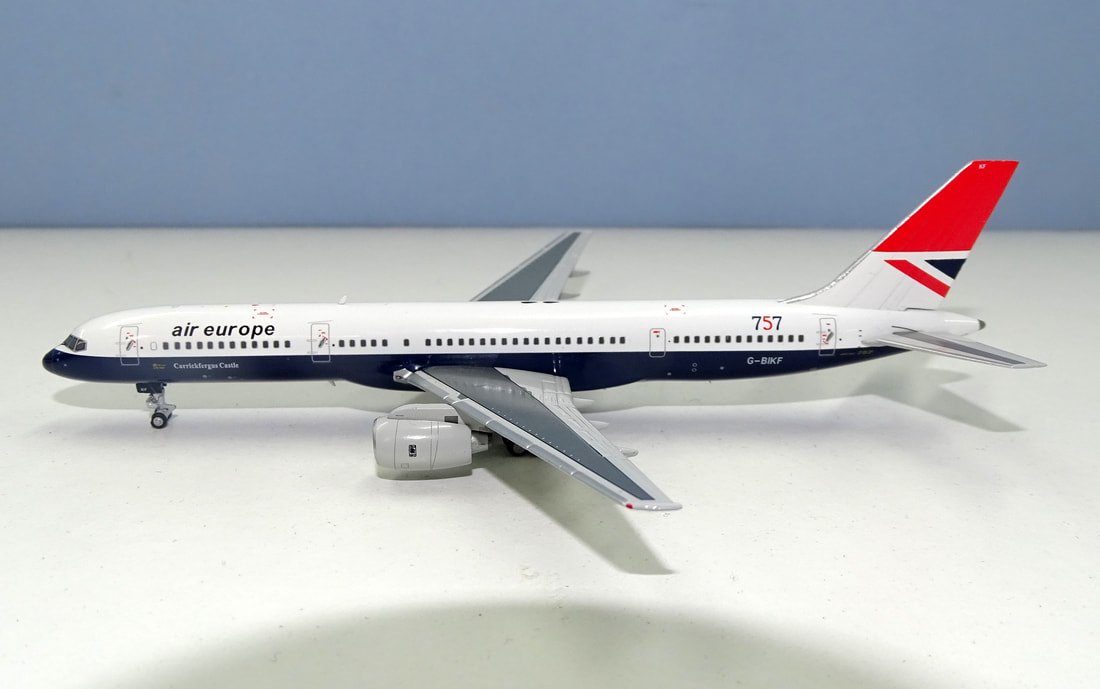
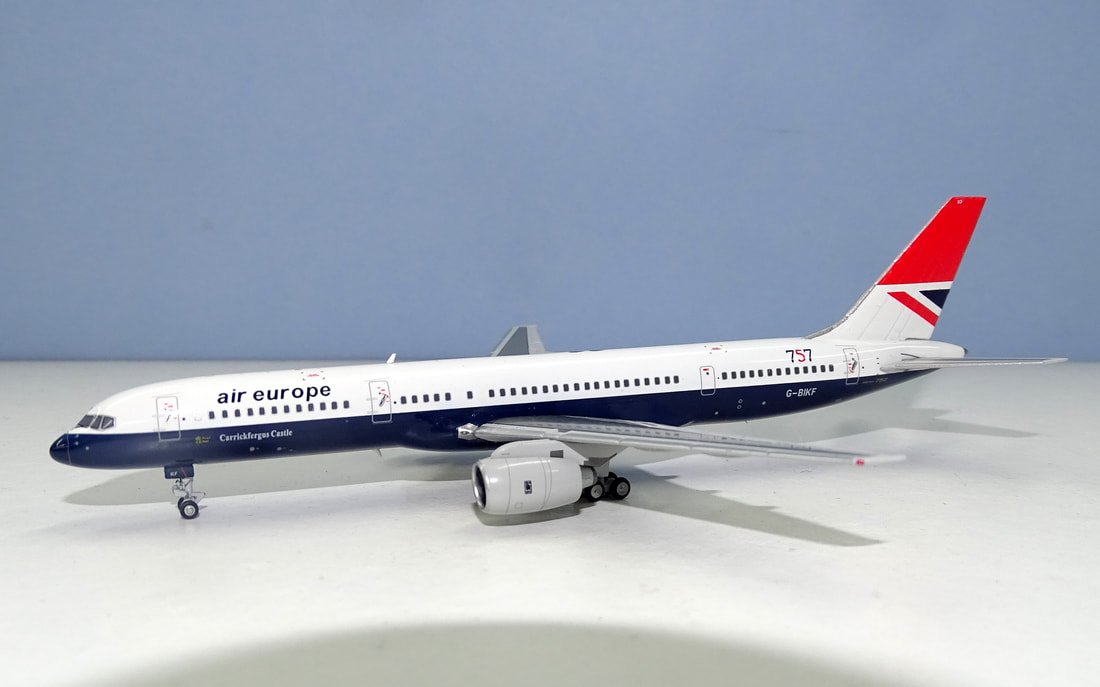
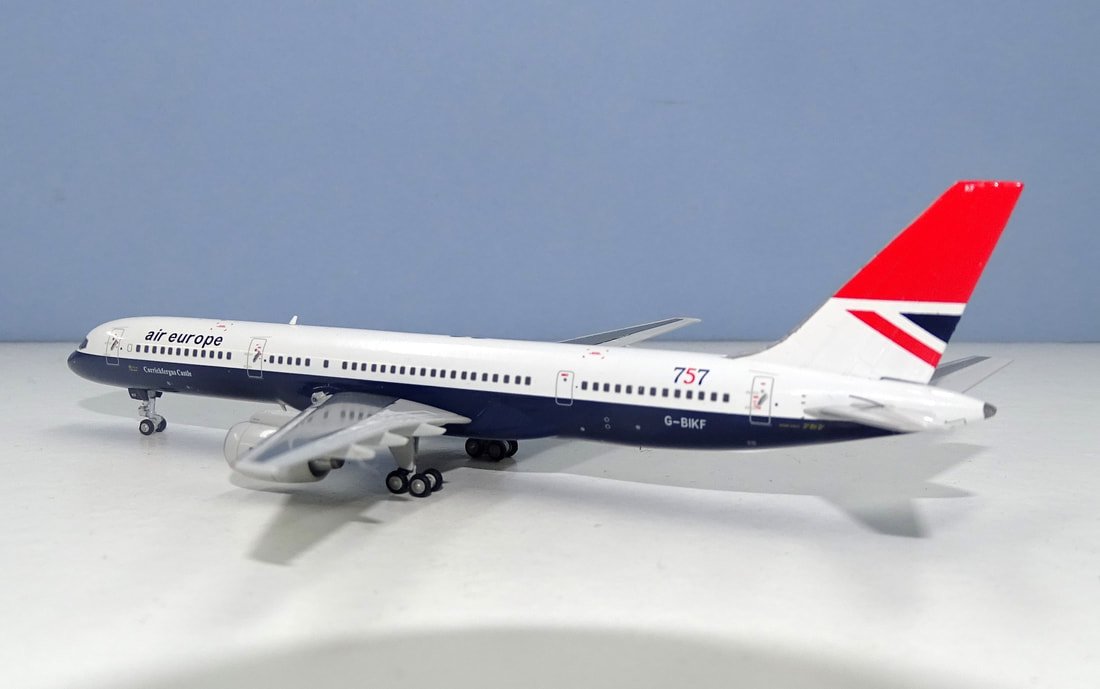
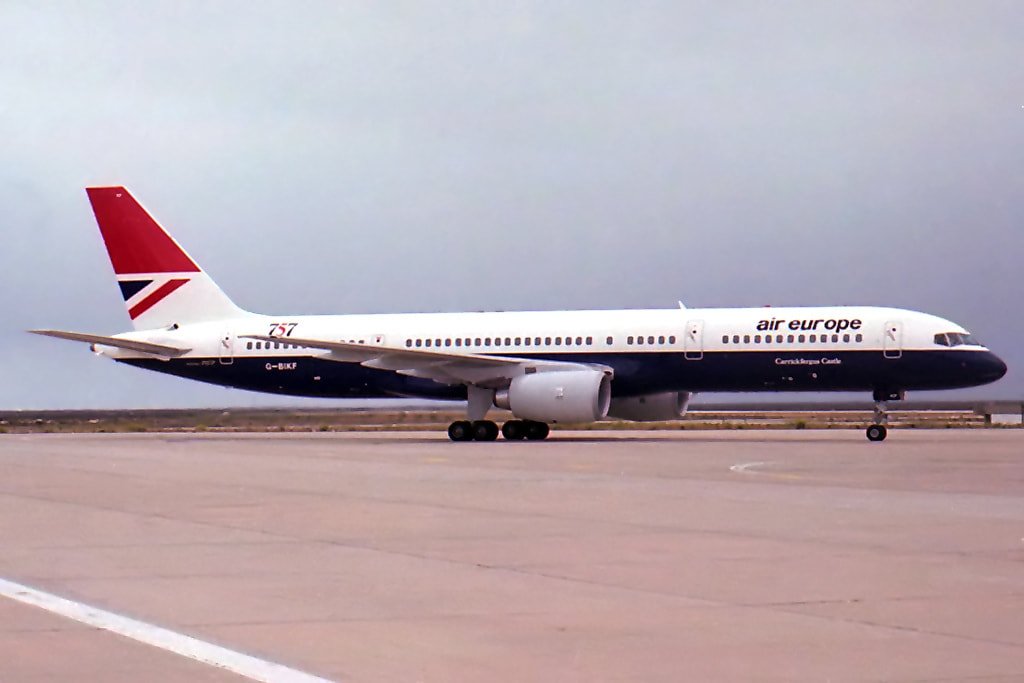
The first of the pair was registered G-BKRM and named ‘Fiona’. It arrived on April 6, 1983 to the LGW base and entered service on April 23. To cover the busy summer season Air Europe additionally leased a 757 direct from BA, with a utilisation of 3,600 hours planned for each 757. The BA aircraft was G-BIKF ‘Carrickfergus Castle’. It was delivered to British Airways on April 28 and switched to Air Europe only two days later. It wore the British Airways Negus scheme but with Air Europe titles applied. After the summer season it was returned to BA on October 31.
Air Europe Boeing 757-236 G-BIKF by NG Models
Air Europe Boeing 757-236 G-BIKF by NG Models
Air Europe Boeing 757-236 G-BIKF by NG Models
Air Europe Boeing 757-236 G-BIKF by NG Models
Air Europe Boeing 757-236 G-BIKF by NG Models
Air Europe Boeing 757-236 G-BIKF by NG Models
Air Europe Boeing 757-236 G-BIKF by NG Models
Air Europe Boeing 757-236 G-BIKF by NG Models
Air Europe Boeing 757-236 G-BIKF by NG Models
Air Europe Boeing 757-236 G-BIKF by NG Models
The second of the proper Air Europe 757s was delivered on March 27, 1984 as G-BPGW and was named ‘Anna Marie’. It would be sent to Air Europe’s Spanish subsidiary Air Europa in April 1989 and return to the parent on March 29, 1990.
Pedro Aragão, CC BY-SA 3.0 GFDL, via Wikimedia Commons
Aero Icarus from Zürich, Switzerland, CC BY-SA 2.0 , via Wikimedia Commons
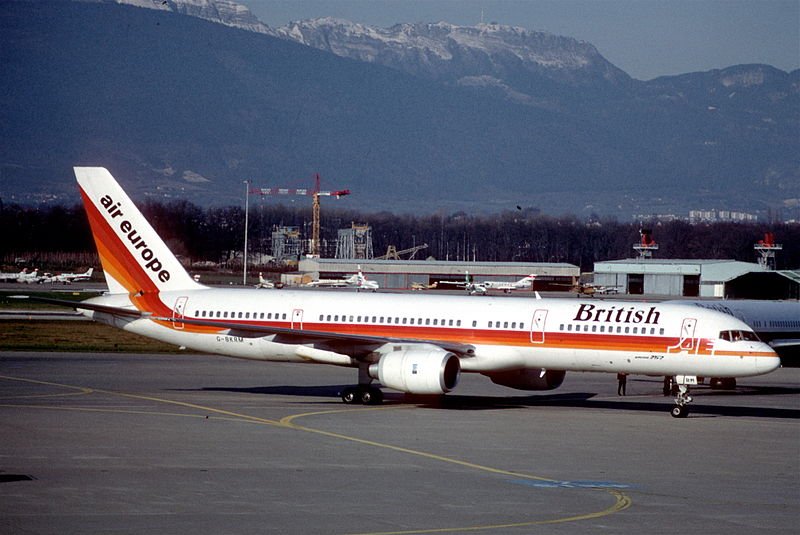
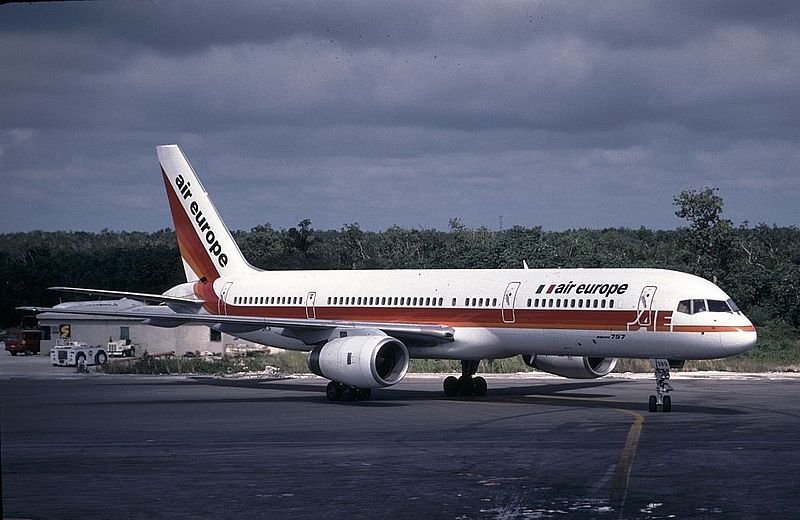
Above: G-BKRM flying with British Airways in December 1984 at Geneva
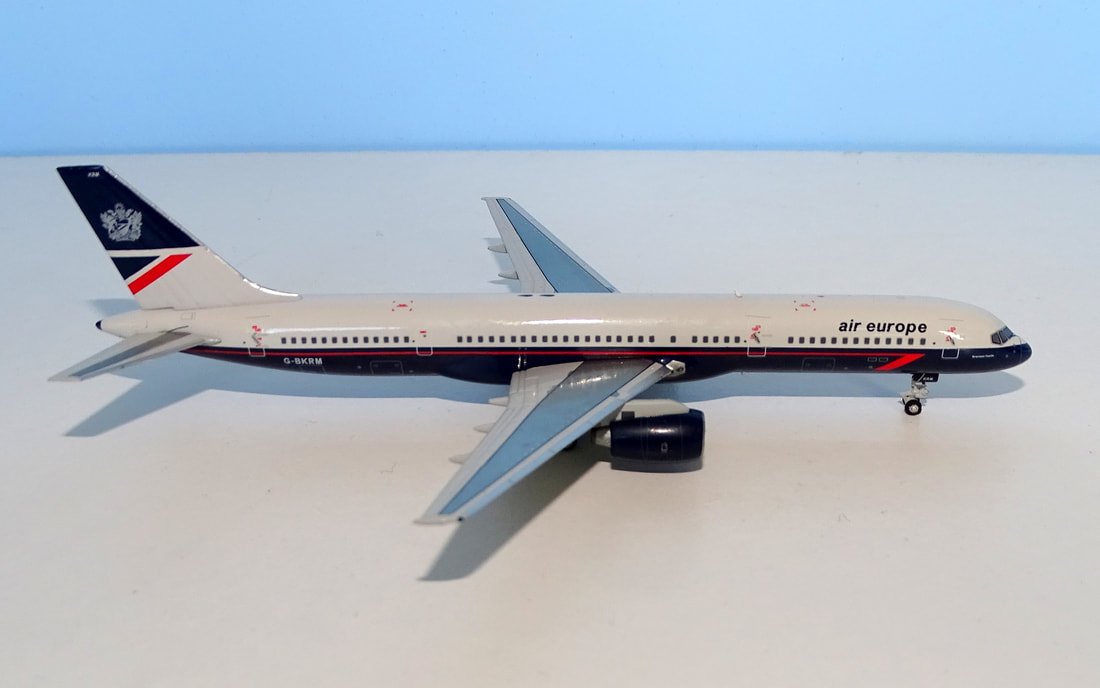
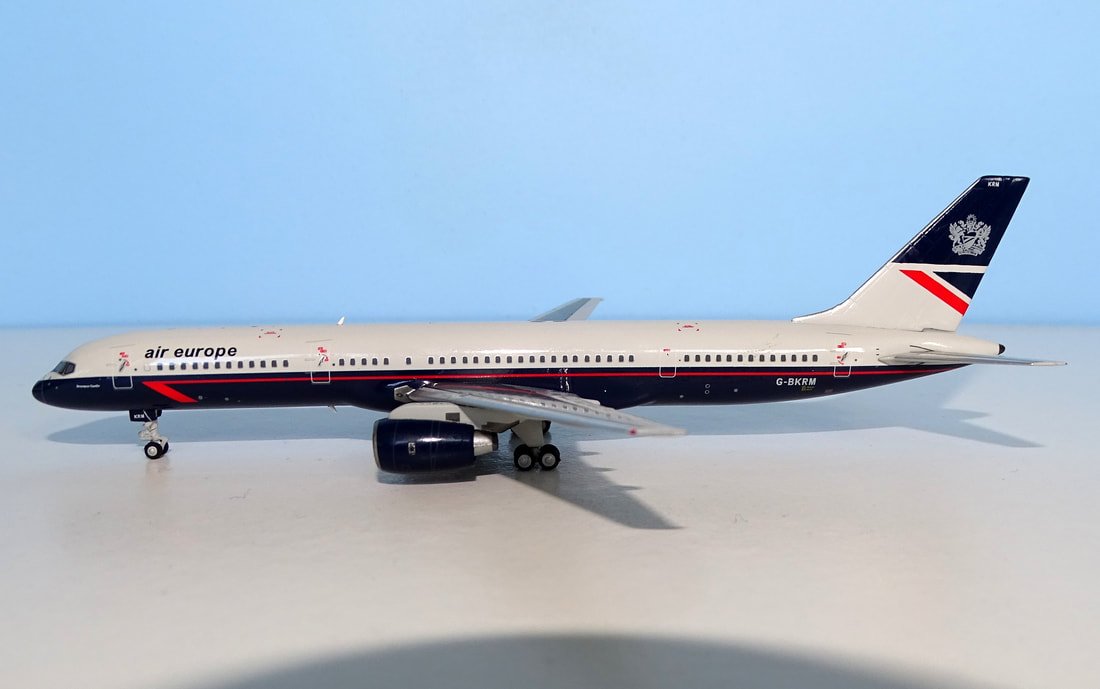
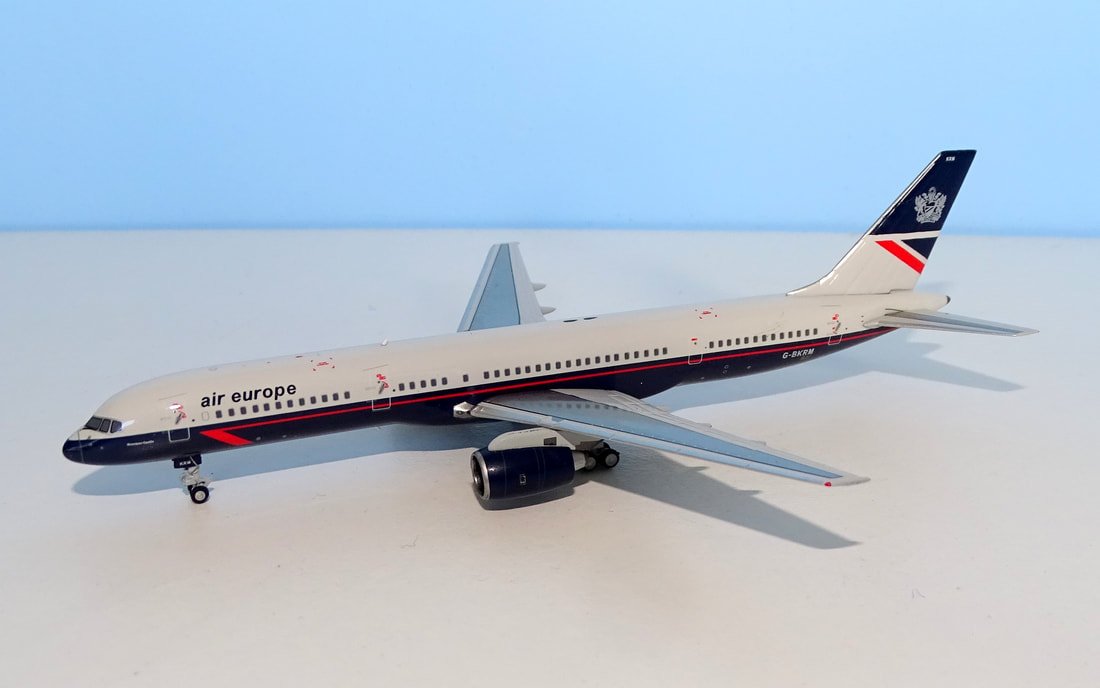
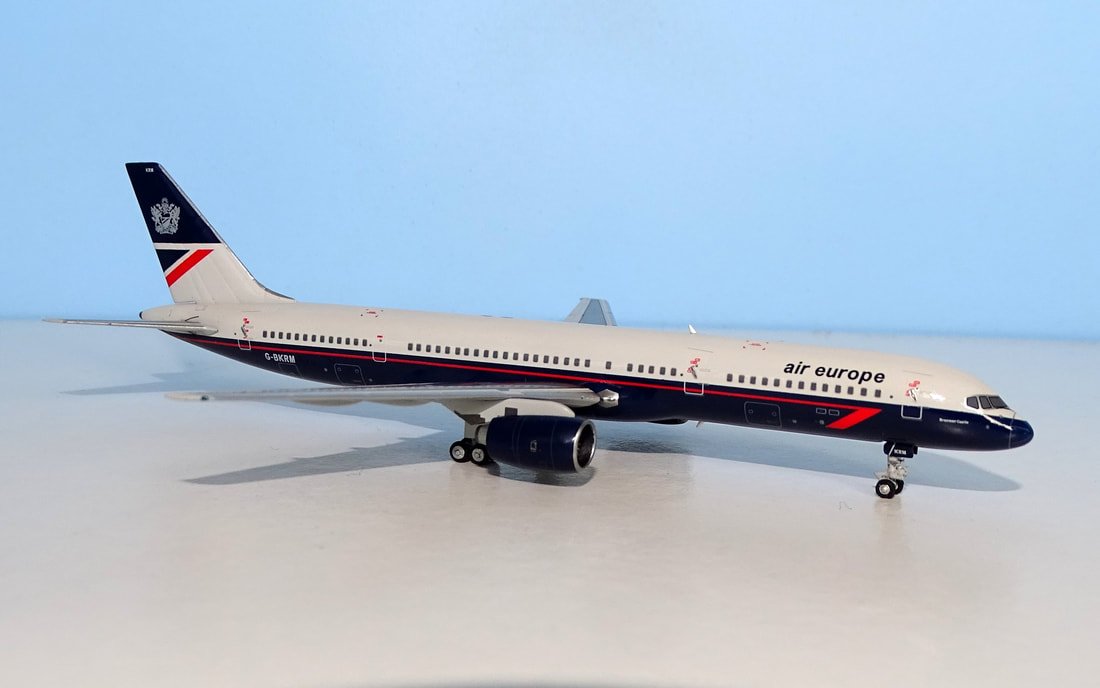
The first 757, G-BKRM, would be leased to British Airways in November 1984 and wear the Air Europe scheme with British titles. A second lease in November 1986 would see it fully painted into the British Airways Landor scheme and upon its return to Air Europe in April 1987 it wouldn’t initially be repainted. Instead it kept the Landor livery with Air Europe titles.
Below: G-BKRM In full Landor colours while on lease to British Airways
Ken Fielding/https://www.flickr.com/photos/kenfielding, CC BY-SA 3.0 , via Wikimedia Commons
Air Europe Boeing 757-236 G-BKRM by NG Models
Air Europe Boeing 757-236 G-BKRM by NG Models
Air Europe Boeing 757-236 G-BKRM by NG Models
Air Europe Boeing 757-236 G-BKRM by NG Models
Air Europe Boeing 757-236 G-BKRM by NG Models
Air Europe Boeing 757-236 G-BKRM by NG Models
Air Europe Boeing 757-236 G-BKRM by NG Models
Air Europe Boeing 757-236 G-BKRM by NG Models
Air Europe Boeing 757-236 G-BKRM by NG Models
Air Europe acquired further 757s direct from Boeing but they were all still configured as 757-236s i.e. to BA’s standard. G-BLVH arrived in March 1985 with five more joining in 1988, another in 1989 and four more in 1990. Several of these saw service with the Spanish subsidiary Air Europa but all also spent time on the British register.
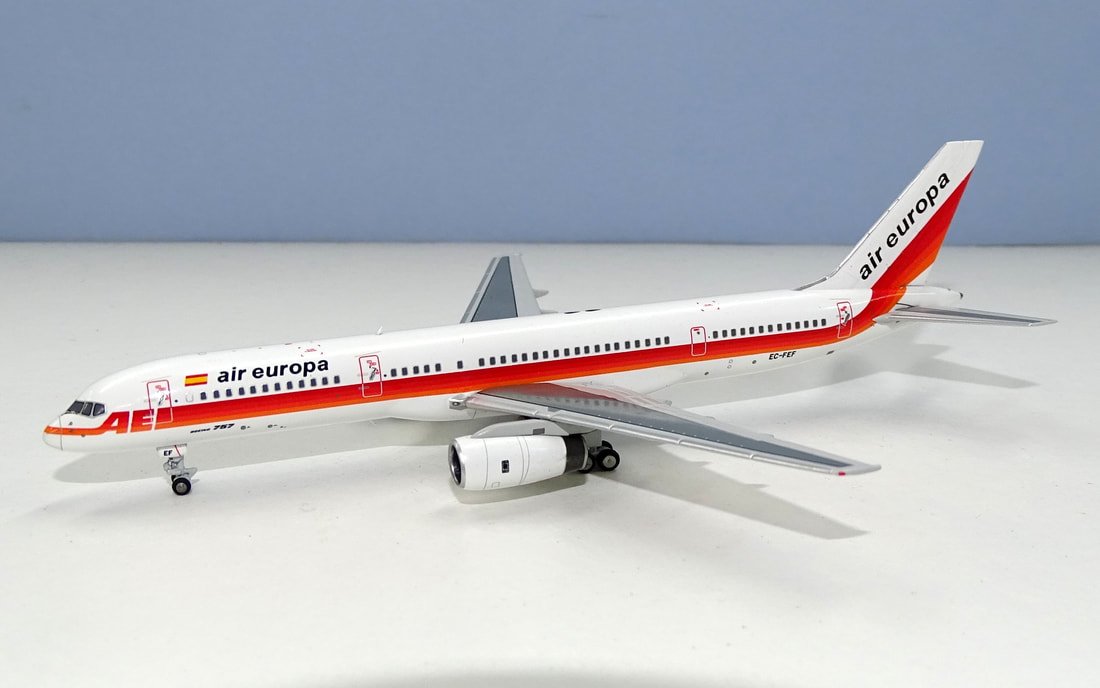
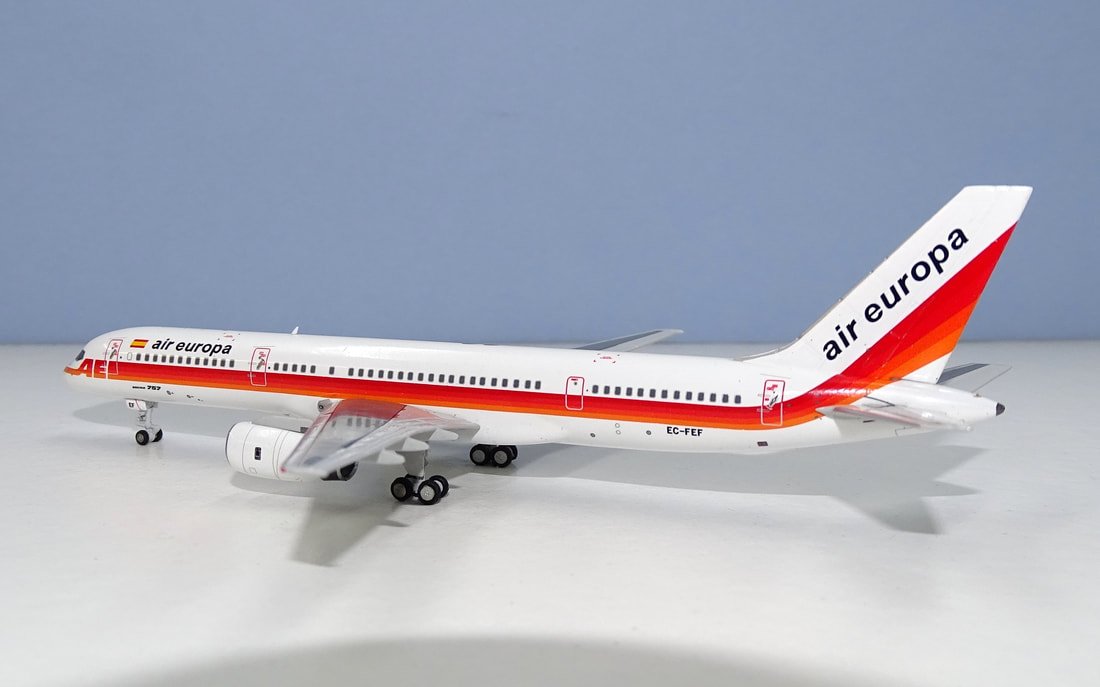
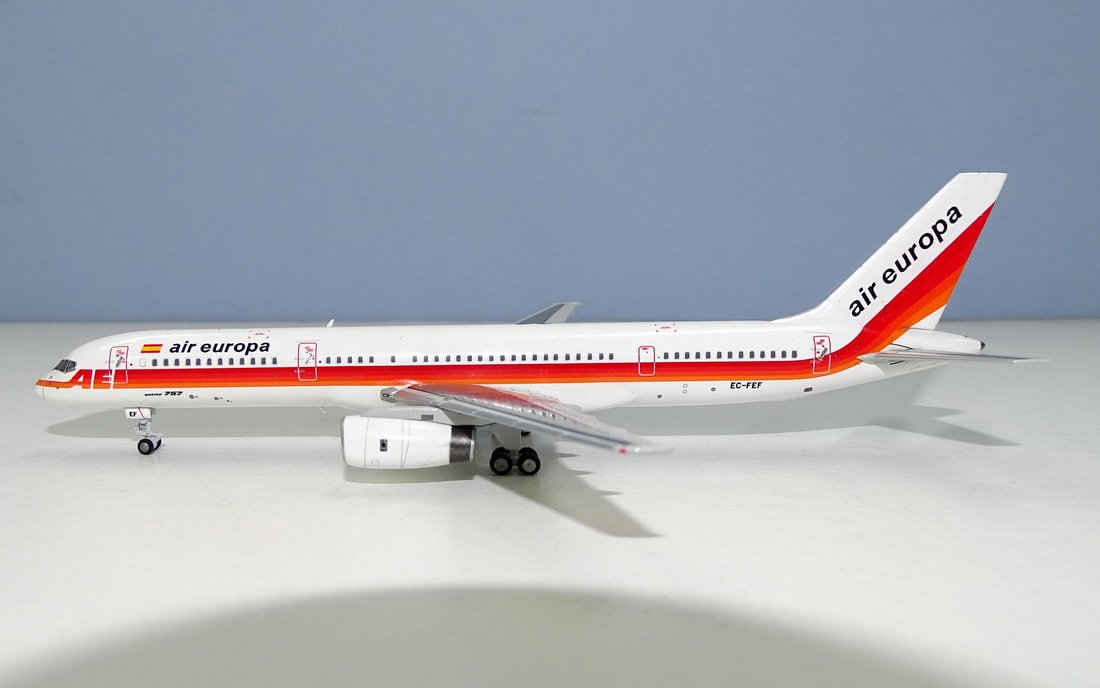
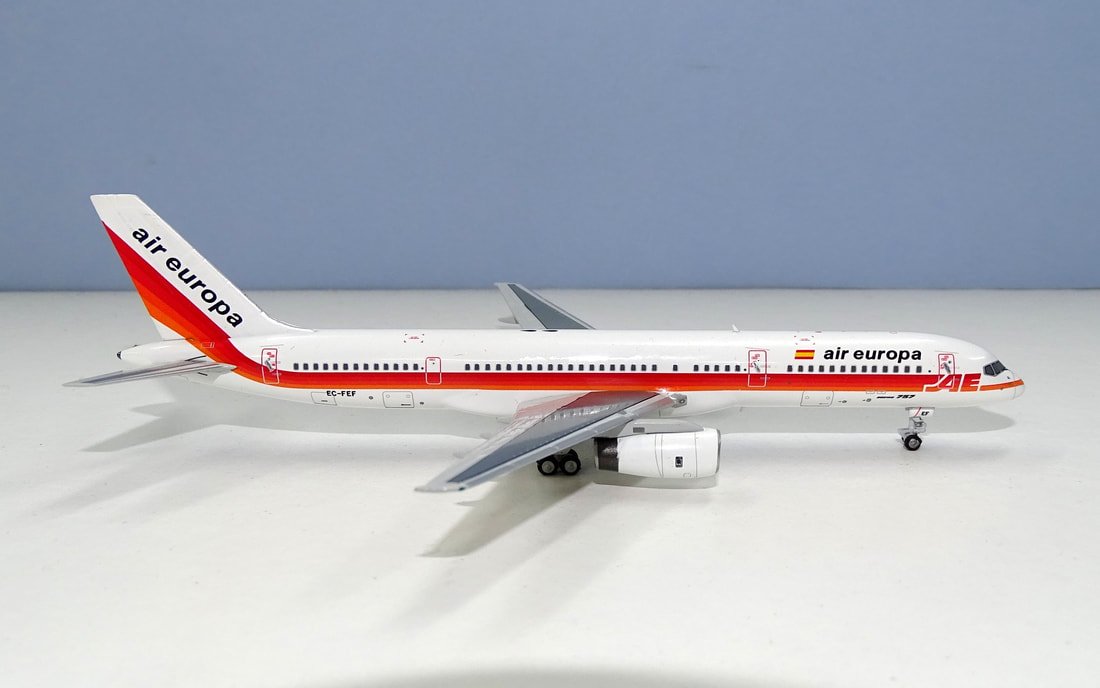
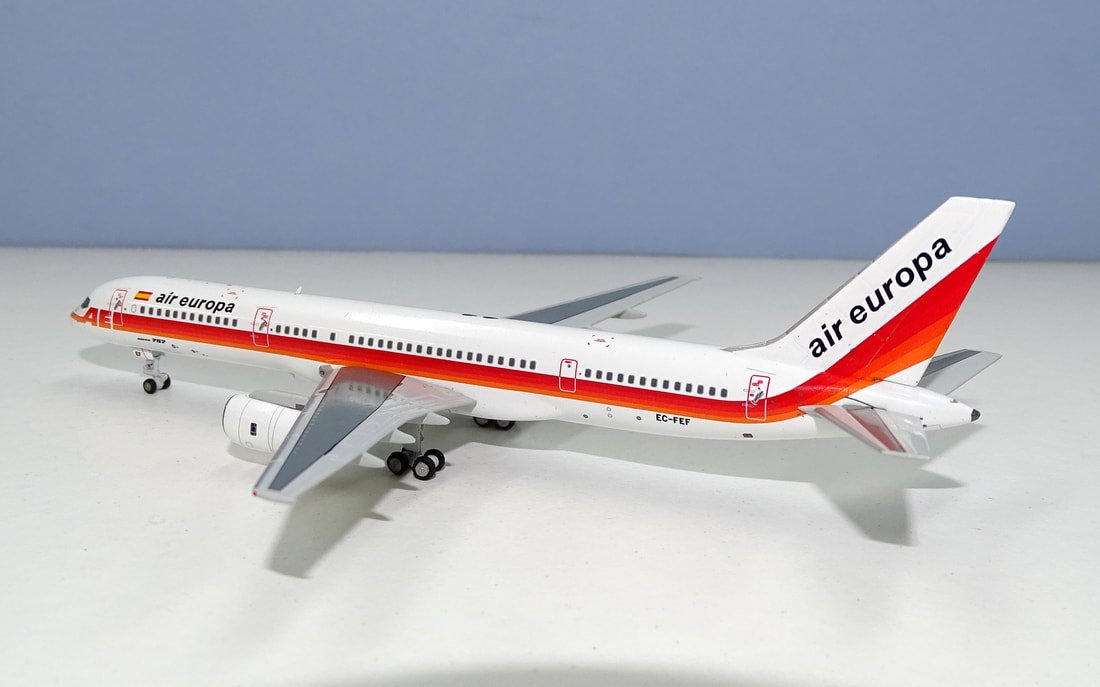
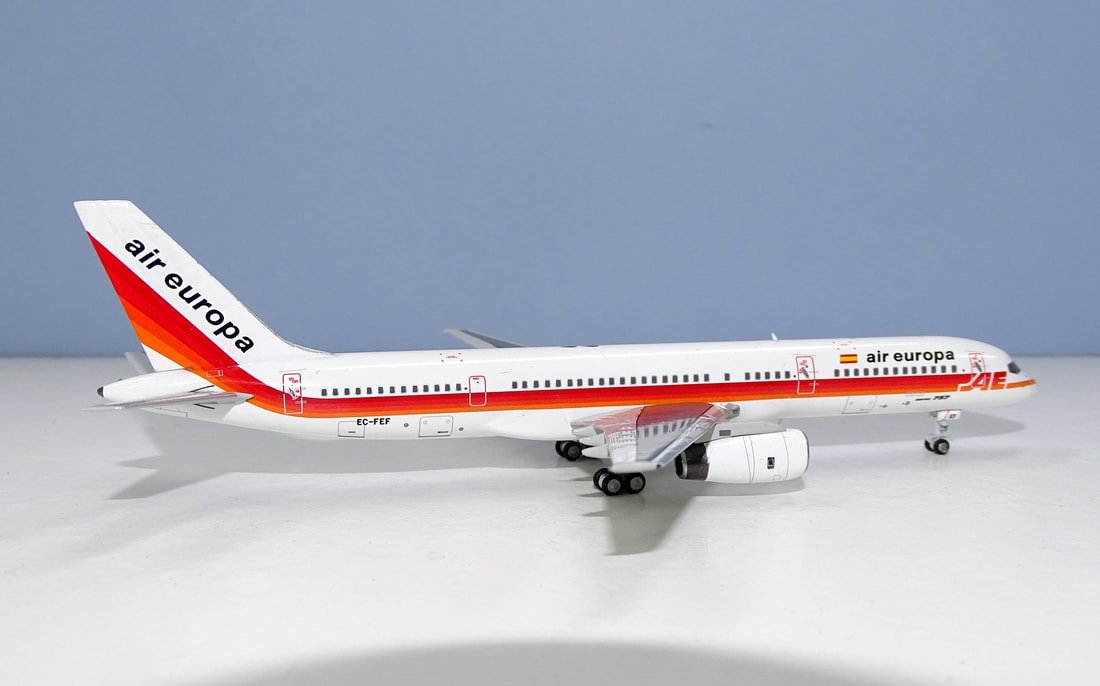
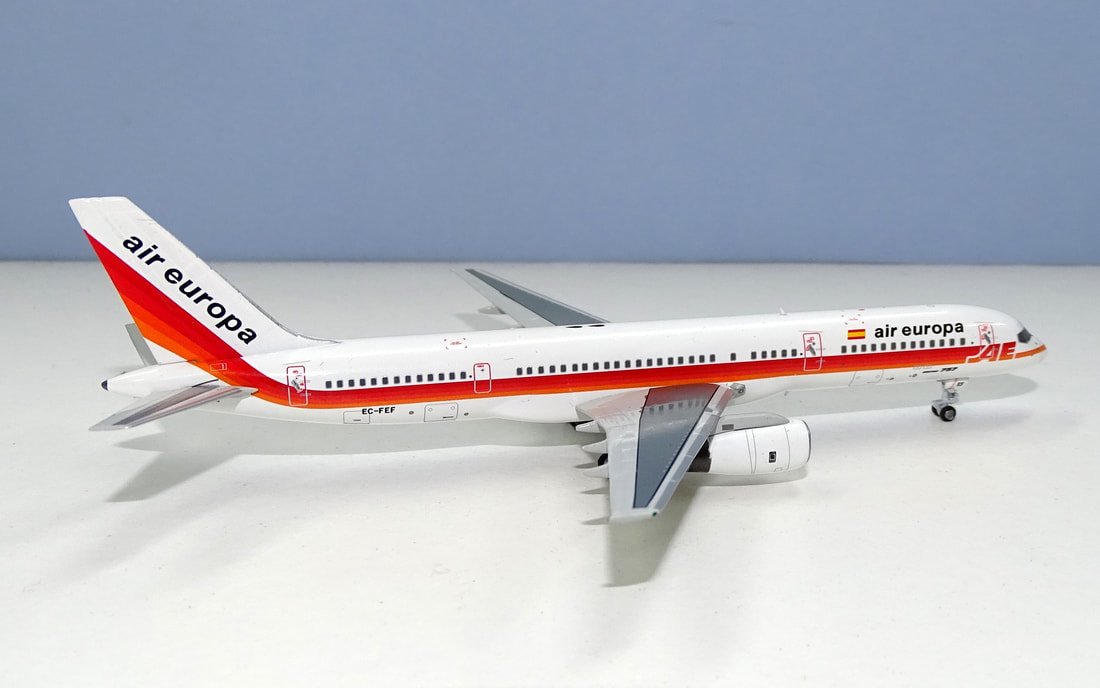
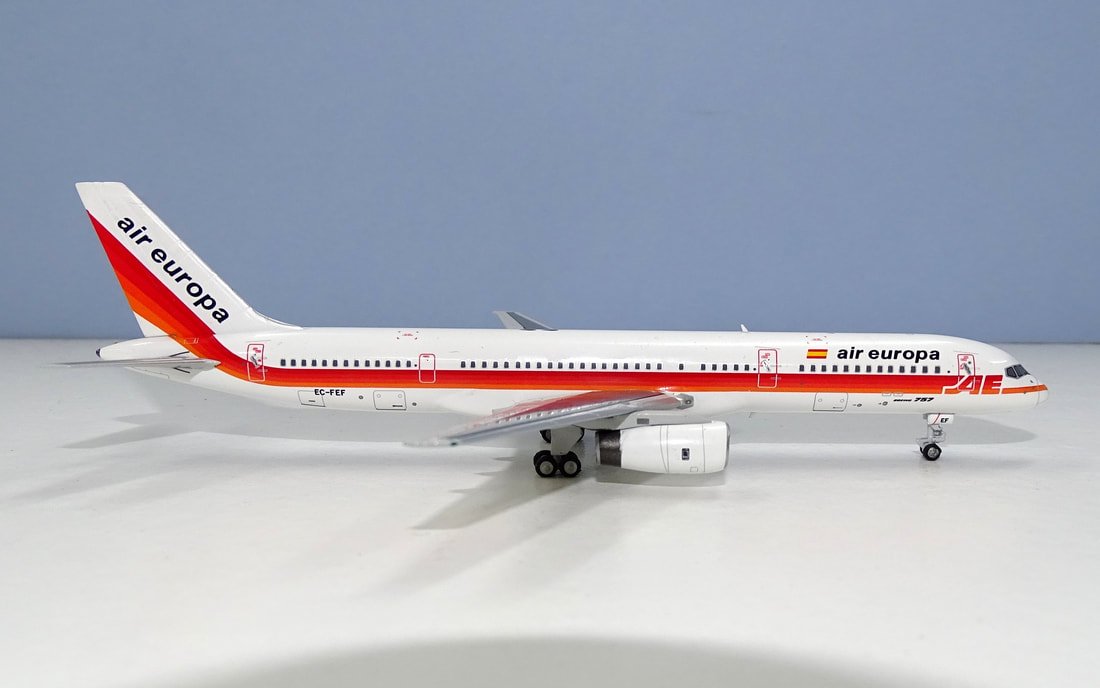
Below: EC-FEF served with the Spanish subsidiary Air Europa from April 1991 until 2000 (Air Europa survived the collapse of the UK parent). It had initially been delivered as G-BRJH in April 1990.
Air Europa Boeing 757-236 EC-FEF by NG Models
Air Europa Boeing 757-236 EC-FEF by NG Models
Air Europa Boeing 757-236 EC-FEF by NG Models
Air Europa Boeing 757-236 EC-FEF by NG Models
Air Europa Boeing 757-236 EC-FEF by NG Models
Air Europa Boeing 757-236 EC-FEF by NG Models
Air Europa Boeing 757-236 EC-FEF by NG Models
Air Europa Boeing 757-236 EC-FEF by NG Models
As well as flying to the usual Mediterranean hotspots Air Europe was one of the first charter airlines to take advantage of the change in ETOPs rules that allowed twin engine aircraft to fly long overwater routes as long as a diversionary field was within 120 minutes flying distance. This opened up the possibility of transatlantic operations with the 757s and Orlando was the first destination served, in 1989.
Below: The 2nd AE 757 G-BPGW landing at Faro in 1990
Pedro Aragao, CC BY-SA 3.0 GFDL, via Wikimedia Commons
As late as 1989 Air Europe’s parent the ILG group was highly profitable and able to celebrate its 10th anniversary. Not only did it make £35.5 million that year but by then it flew 31 jets and had 20% of Gatwick’s slots. It had also branched out into scheduled services (and operated 20 such routes with F100s and 737s), had a Commuter subsidiary (with Shorts 360s) plus was expanding its European operations with a variety of subsidiaries. In addition to the Spanish Air Europa there was Air Europe Italy and NFD operated some 757s as Air Europe Germany.
Below: Air Europe Italy I-BRJF had been G-BRJF delivered in March 1990 and also EC-EVD with Air Europa before joining the Italian subsidiary in December 1990.
Sunil Gupta (GFDL 1.2 or GFDL 1.2 ), via Wikimedia Commons
Ultimately, what had grown into one of Europe’s most successful airlines over a ten year period quickly collapsed over two seasons as the economic outlook and air travel market came crashing to earth as a result of the first Gulf War. Air Europe ceased flying in March 1991, a victim of the traffic downturn caused by the conflict but also a victim of its own circumstances too. The airline was undercapitalised, its growth was overextending its finances and it lacked ownership of any real assets (its aircraft and properties were all leased not owned). This high-risk strategy worked well during the good times but meant the carrier had little to fall back on when things turned sour.
Aero Icarus from Zürich, Switzerland, CC BY-SA 2.0 , via Wikimedia Commons
For me Air Europe was one of the most interesting of the UK charter airlines with a wonderful livery. Its plans to become a pan-European airline (similar to those of TEA of Belgium) were groundbreaking and despite being a well run airline with arguably a better financial future than competitors it became another victim of the fickle business of charter operations. Certainly, its 757s served it well and proved an excellent platform from which to build itself up.
References
Air Europe. Wikipedia January 2019. When the luck ran out. Airliner World Boeing 757. Airlife’s Airliners Vol 13