The Il-62 (NATO codename ‘Classic’), in 1967, finally gave the Soviet Union a long-haul jet airliner, albeit one comparable to first generation Western jetliners like the 707 rather than second generation widebodies then under development elsewhere. The original version was then gradually replaced by the improved M variant from 1974, but the ‘basic’ variant continued in service domestically and was even used to introduce a kind of 1st Class service in 1978.
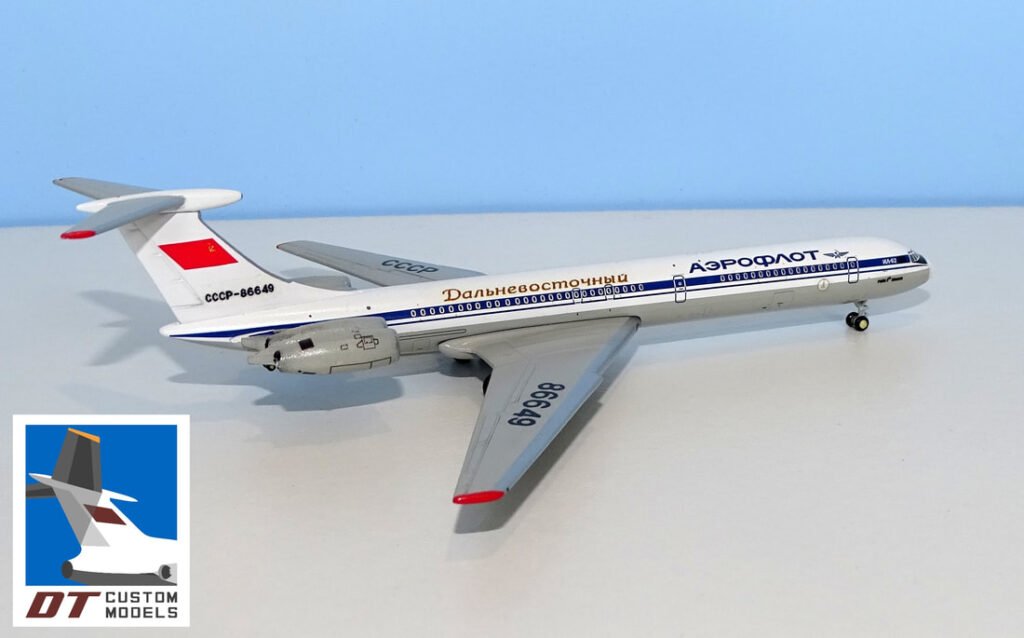
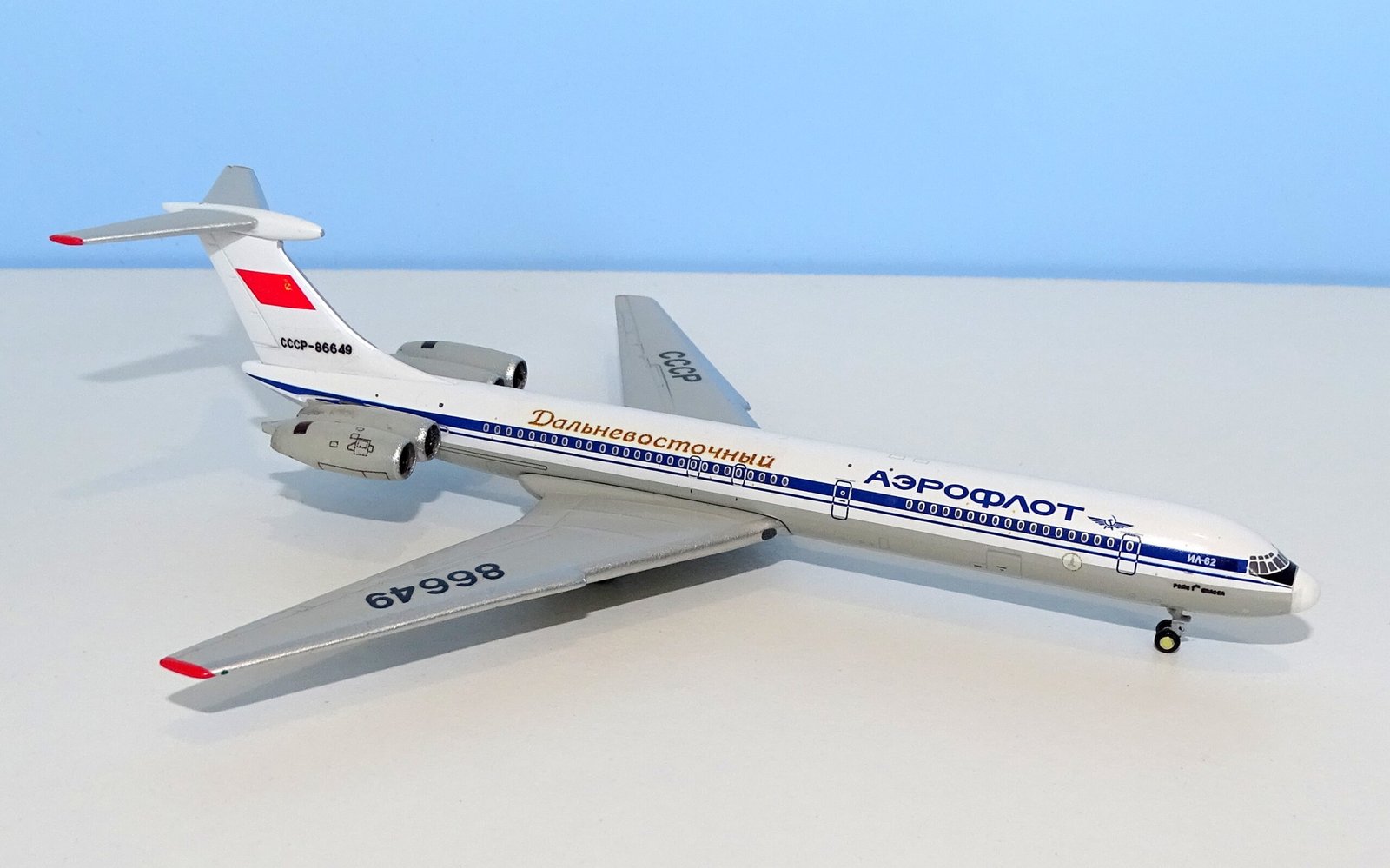
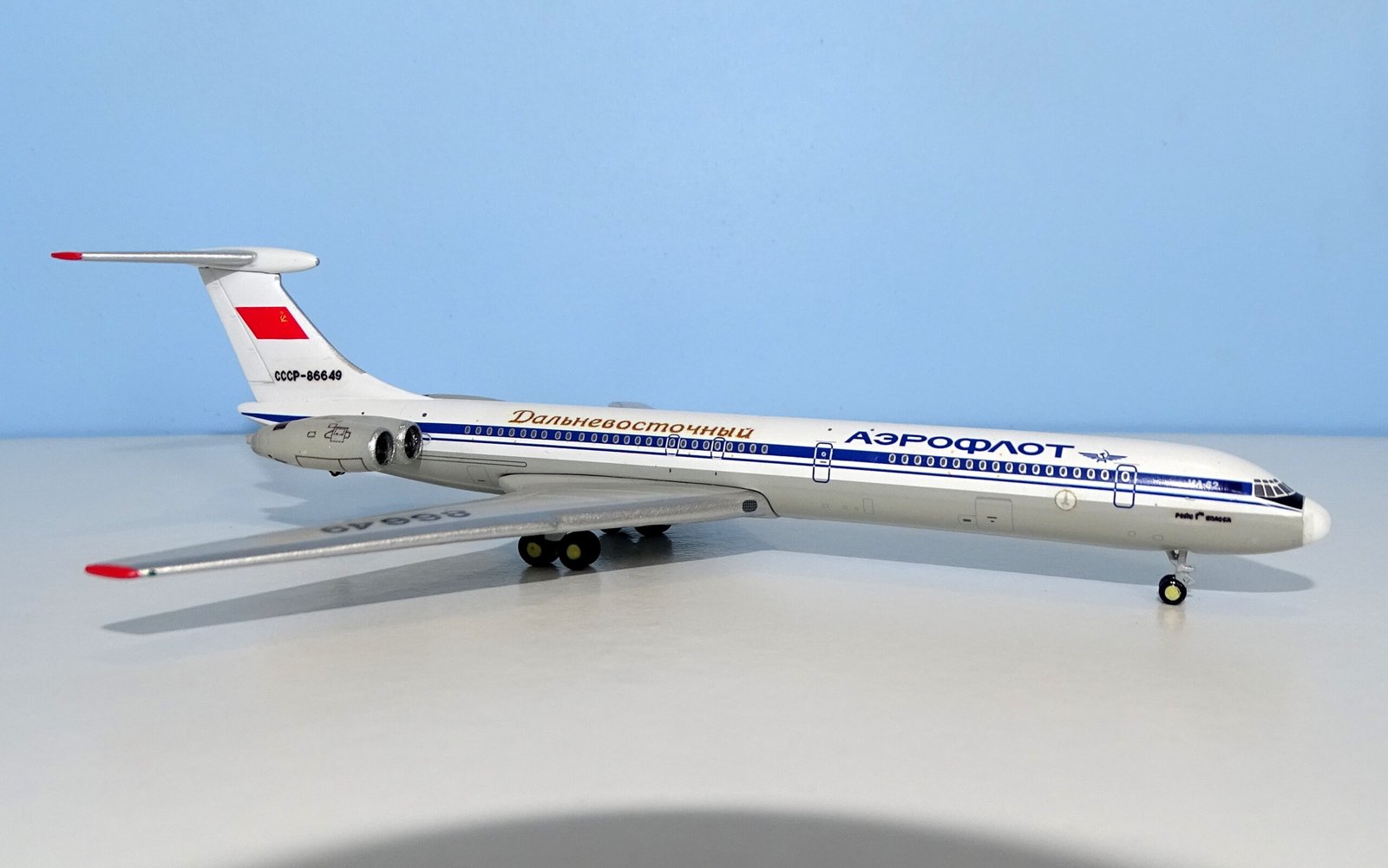
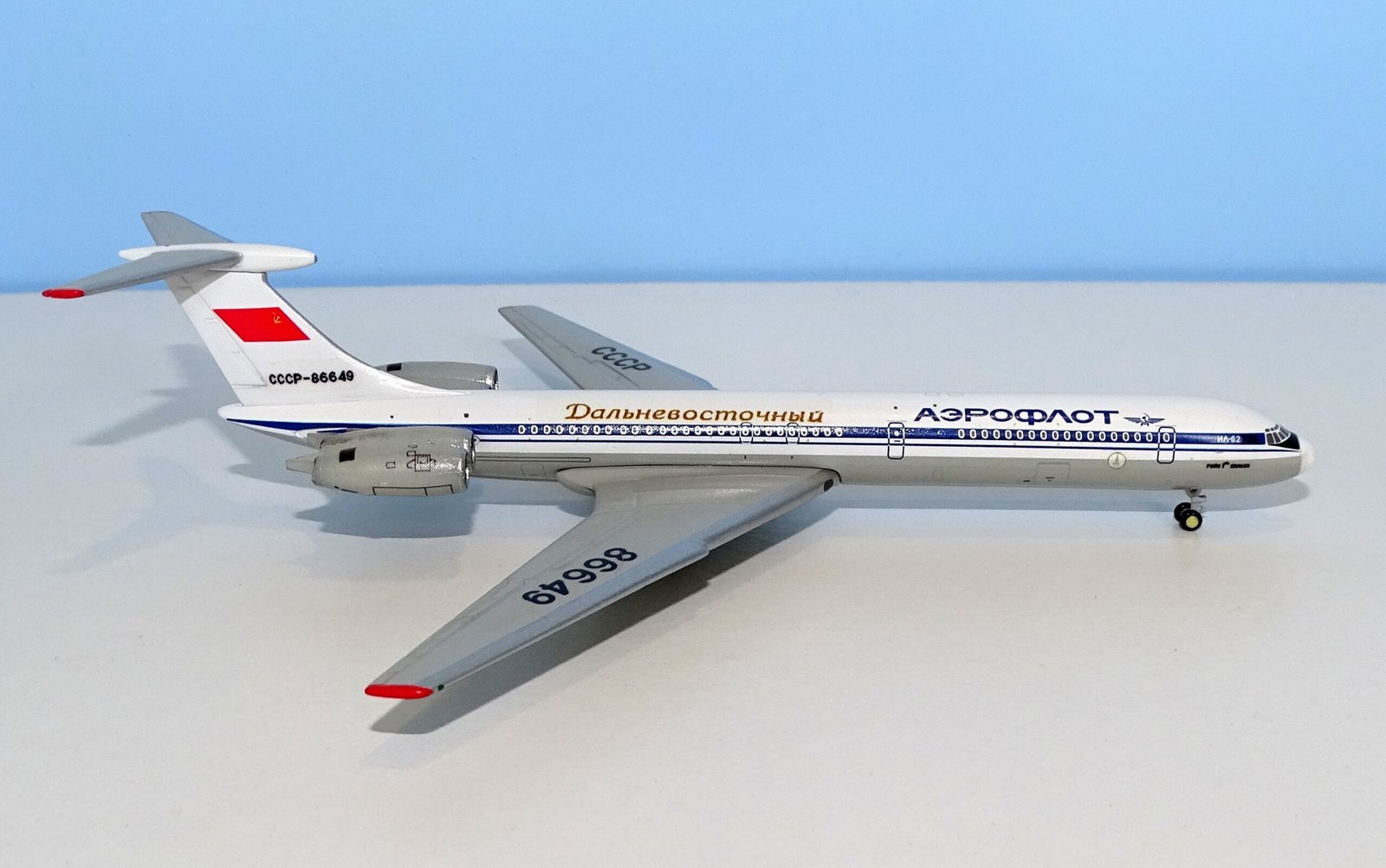
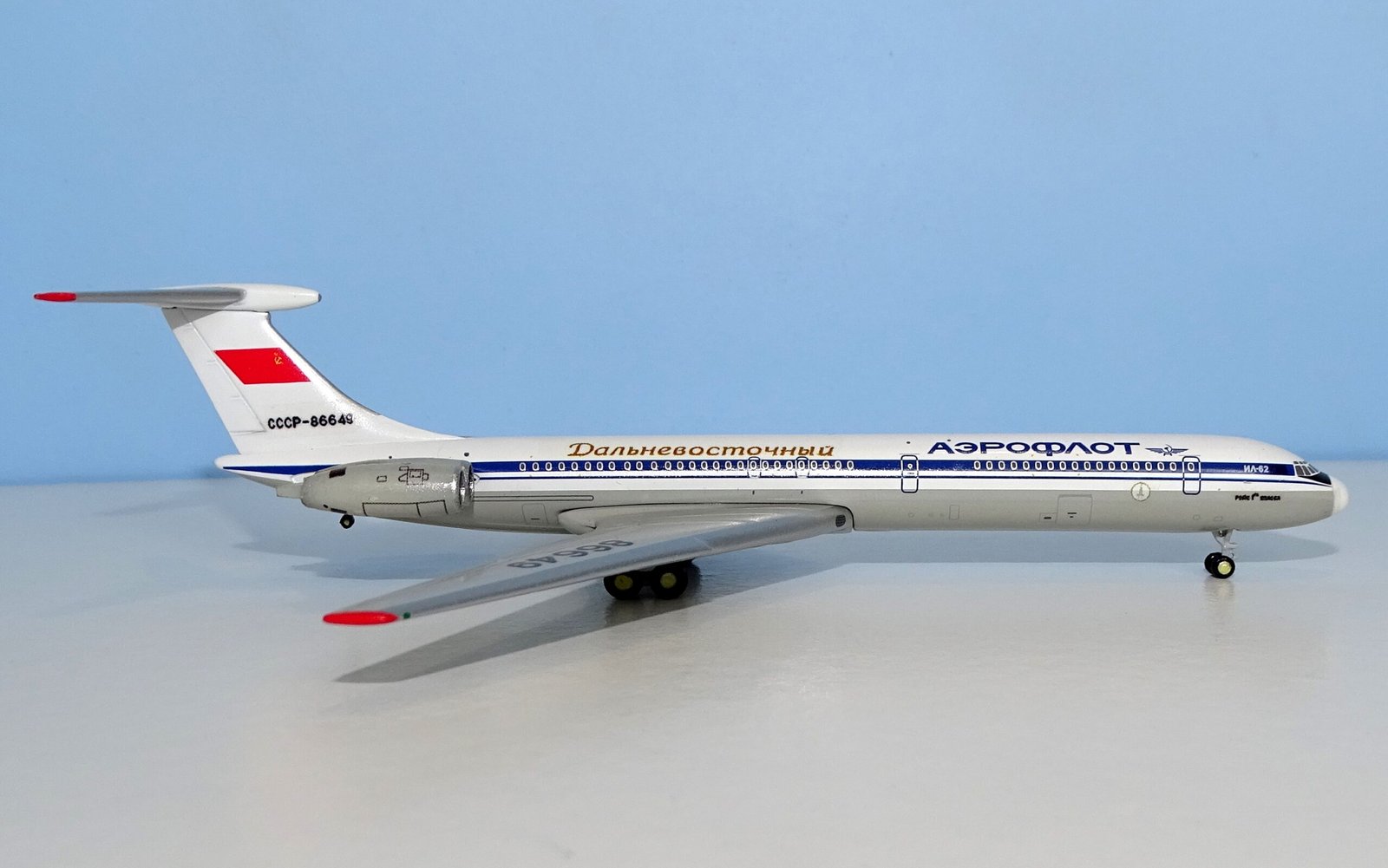
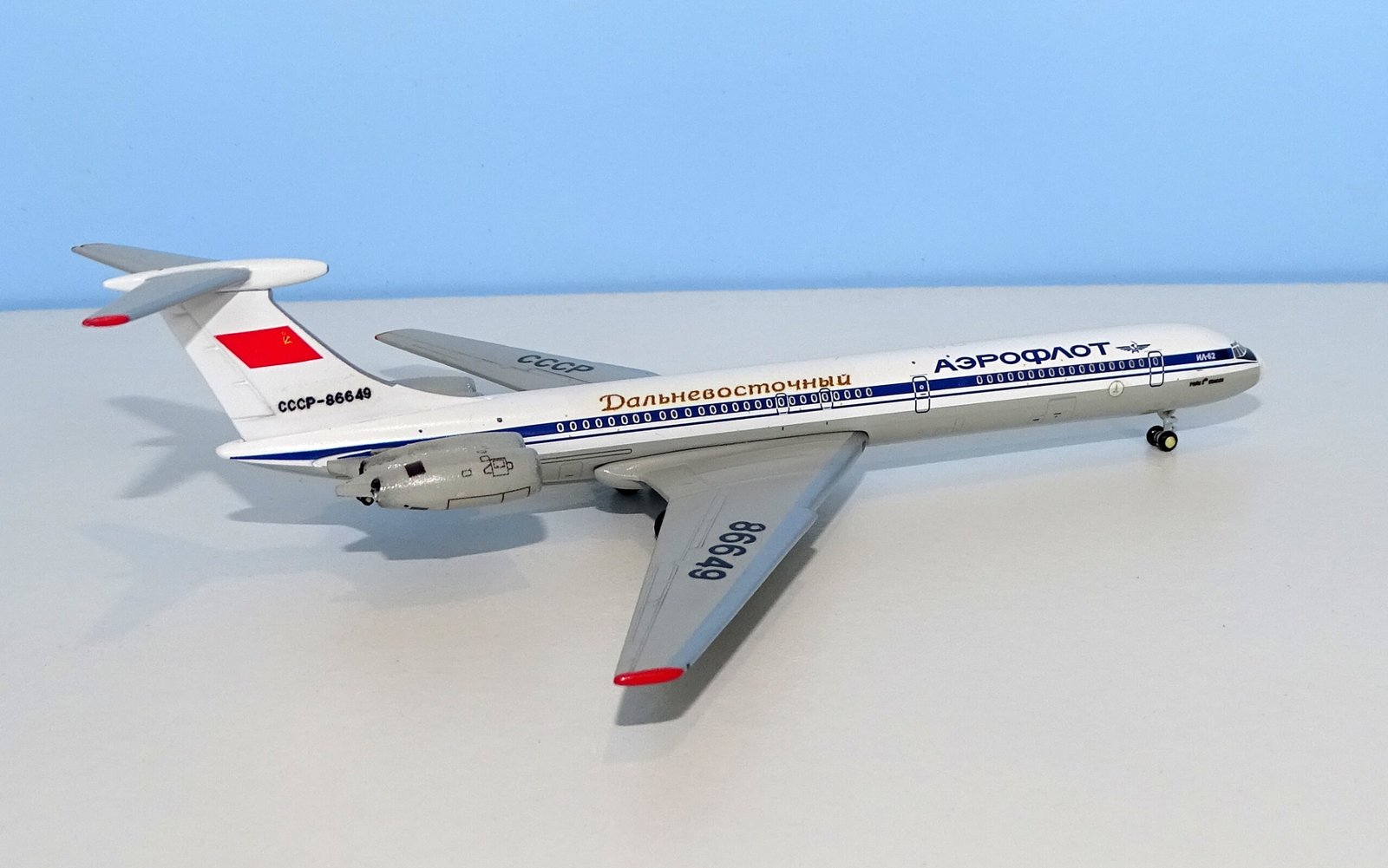
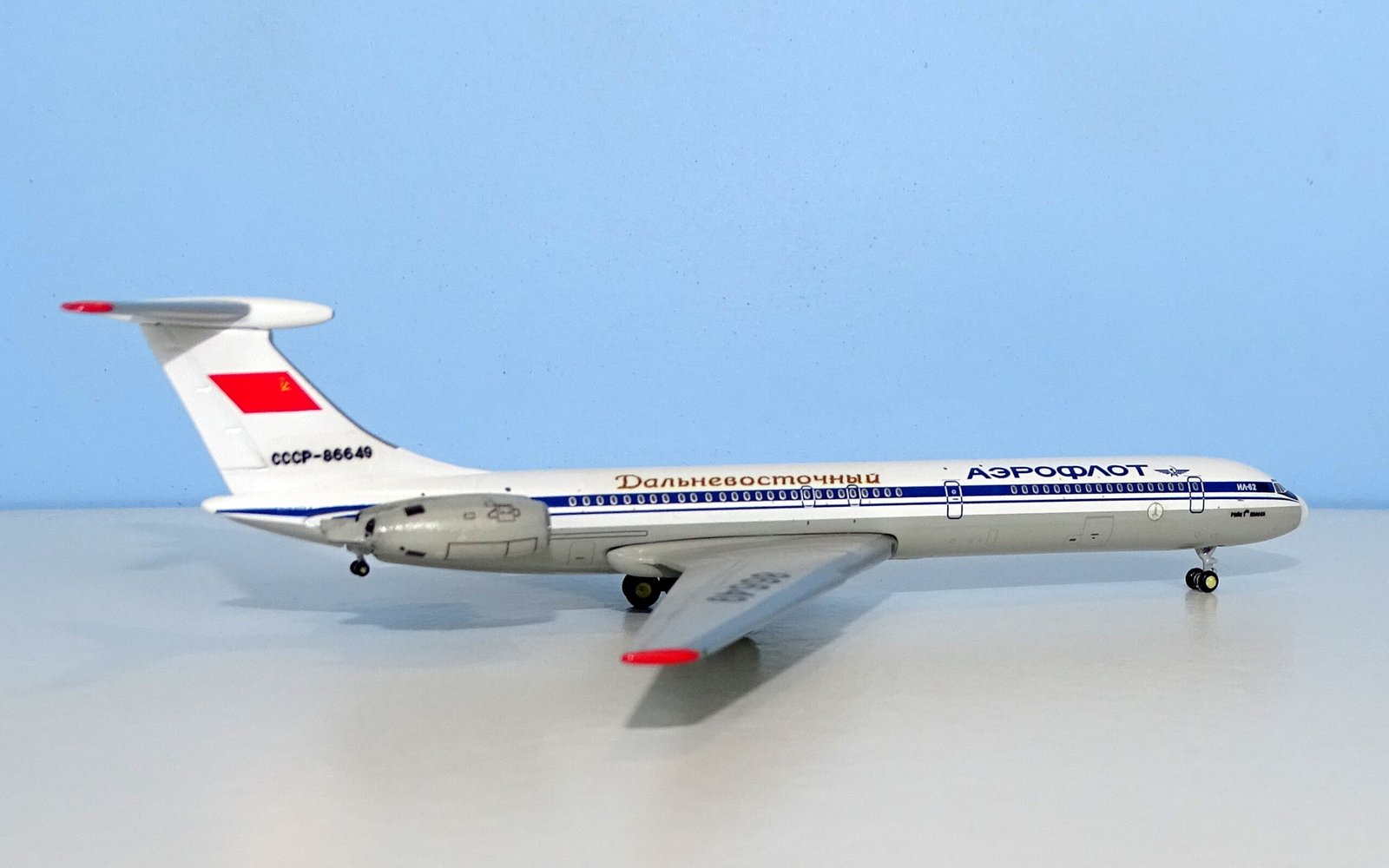
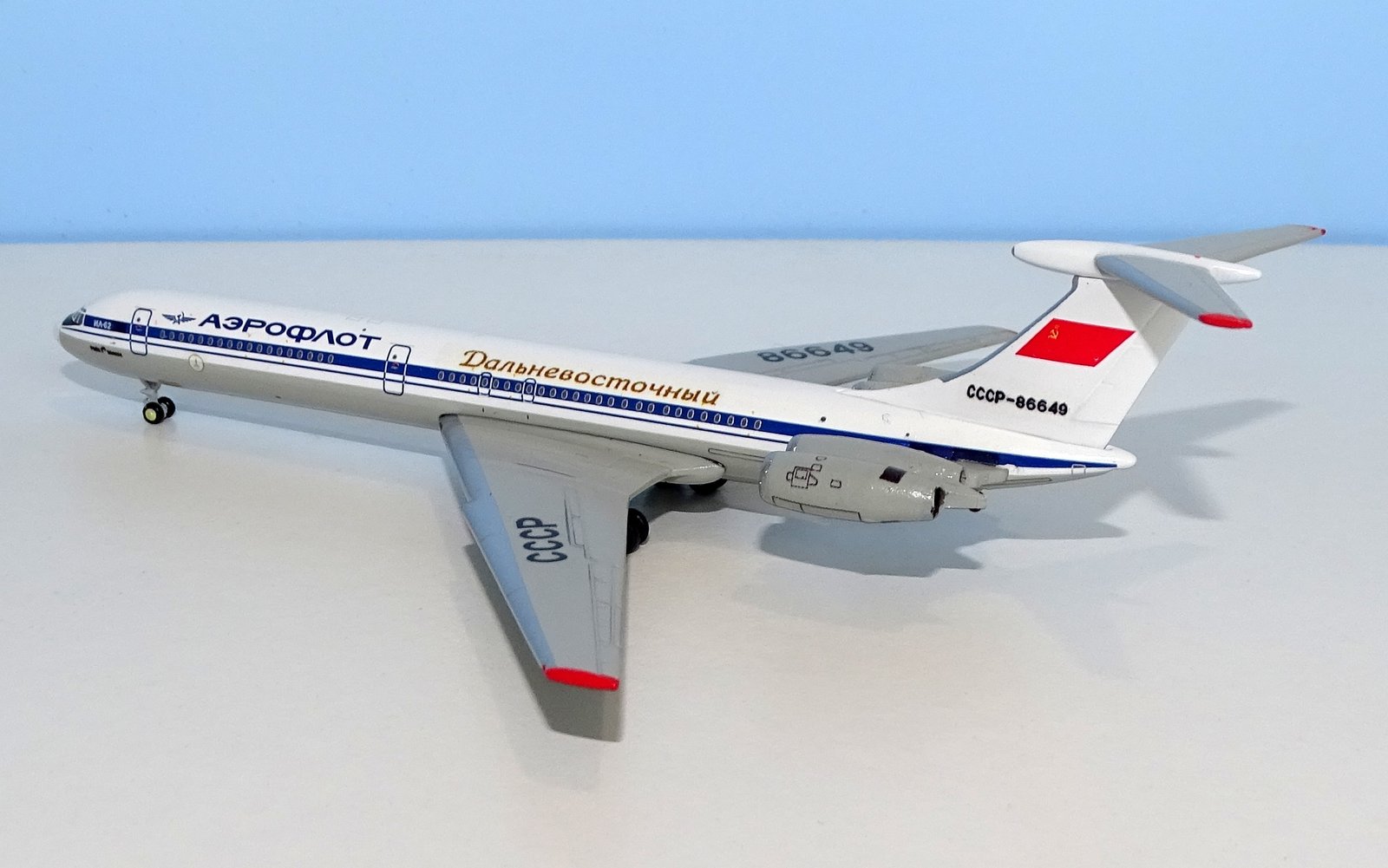
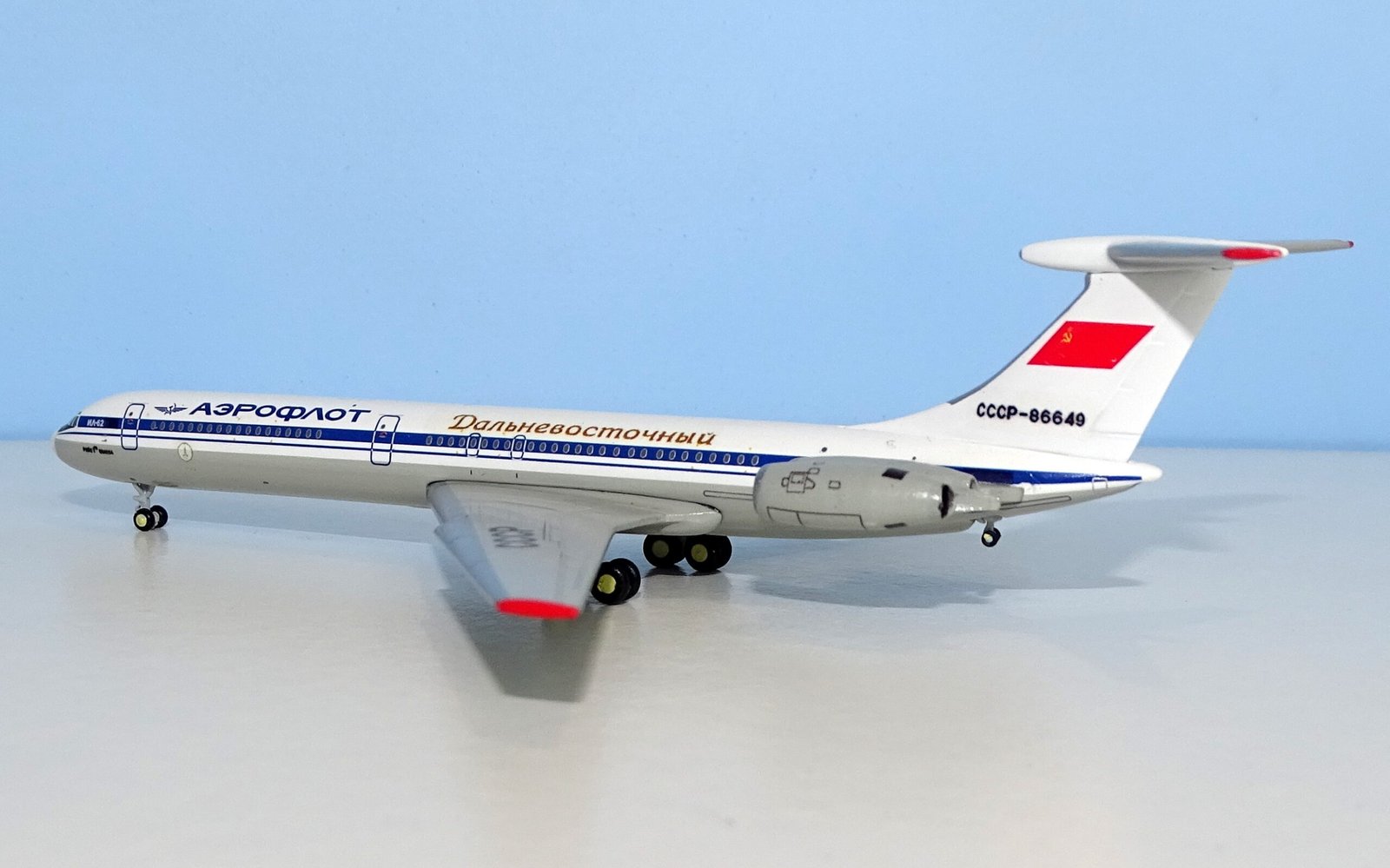
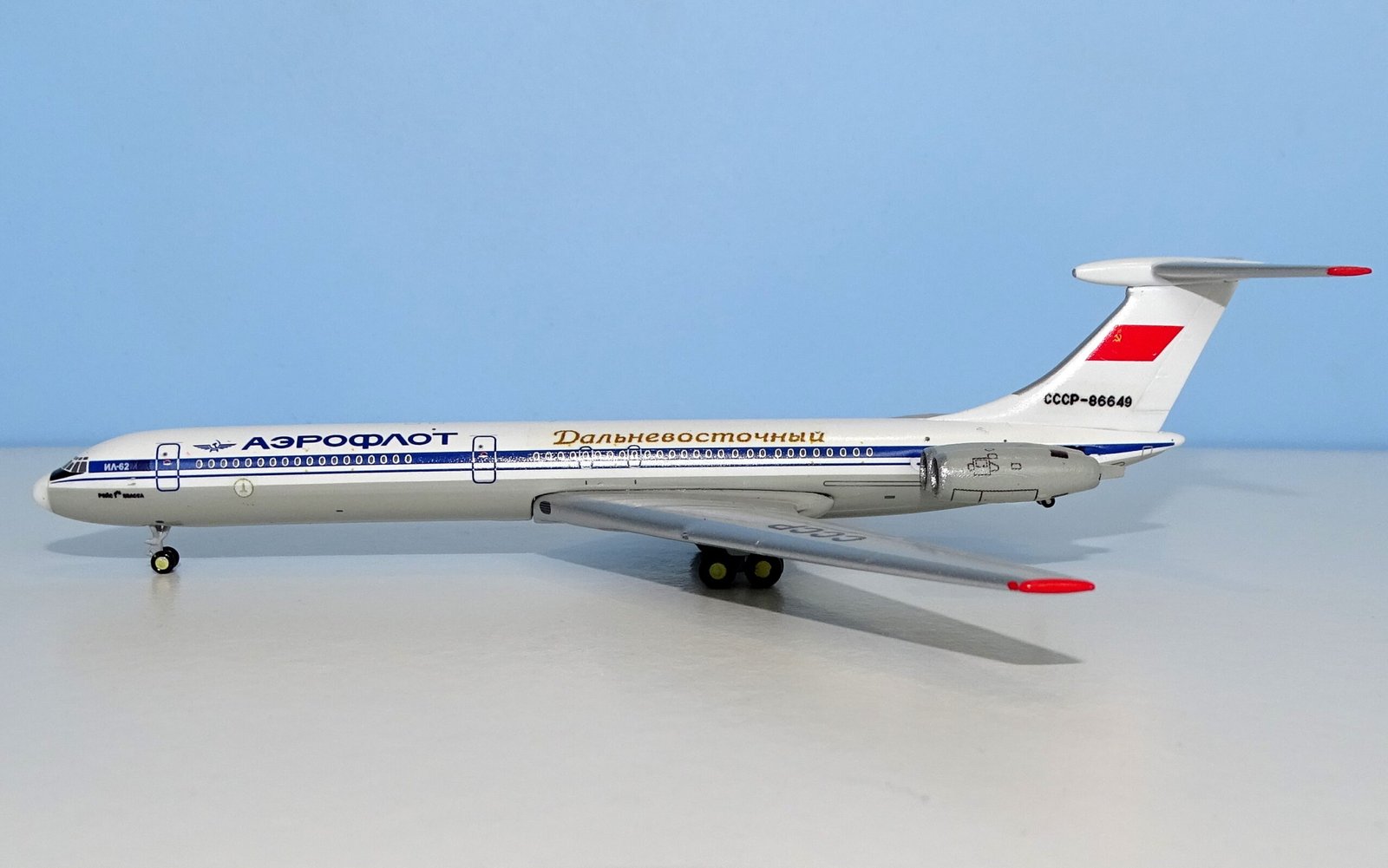
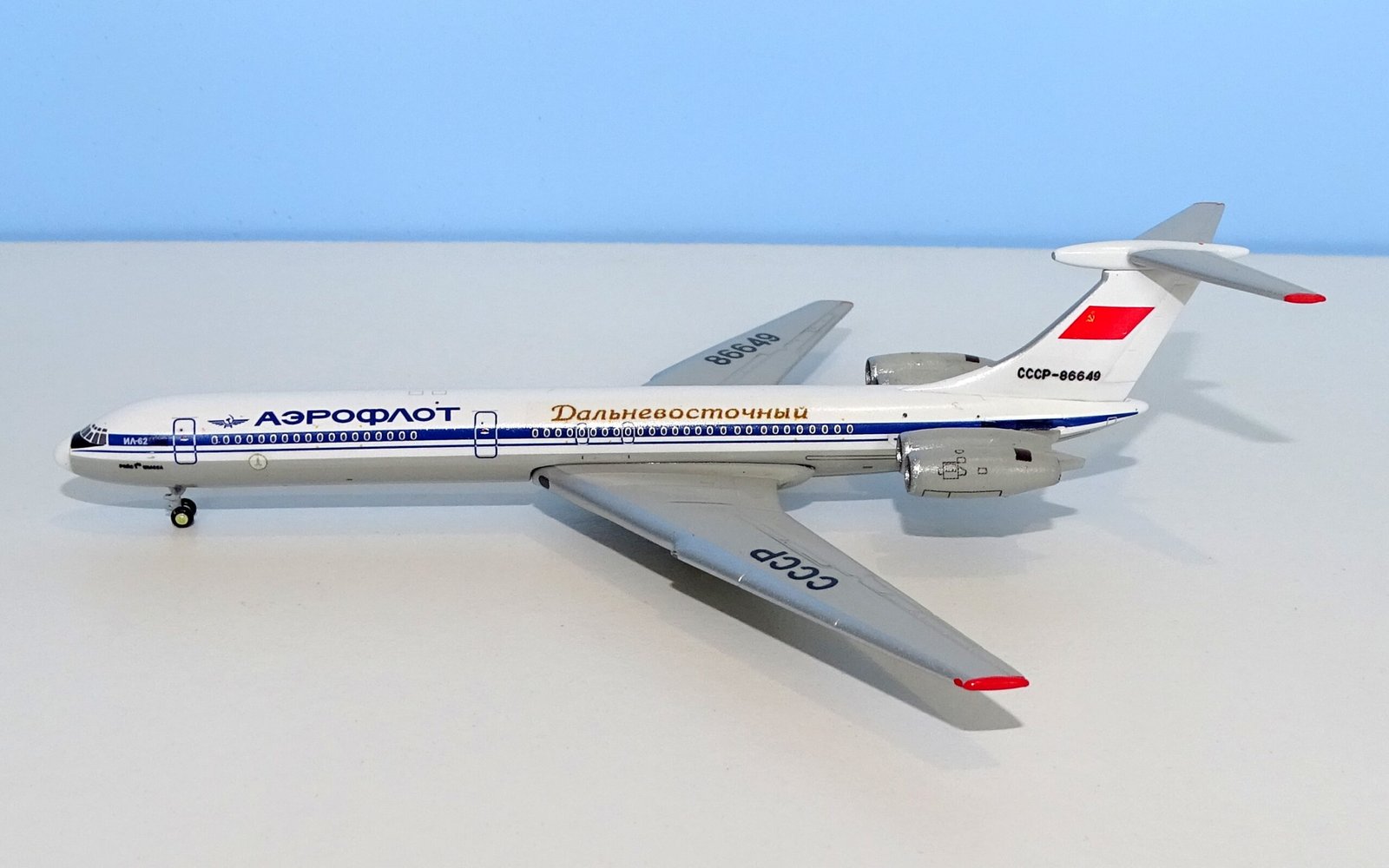
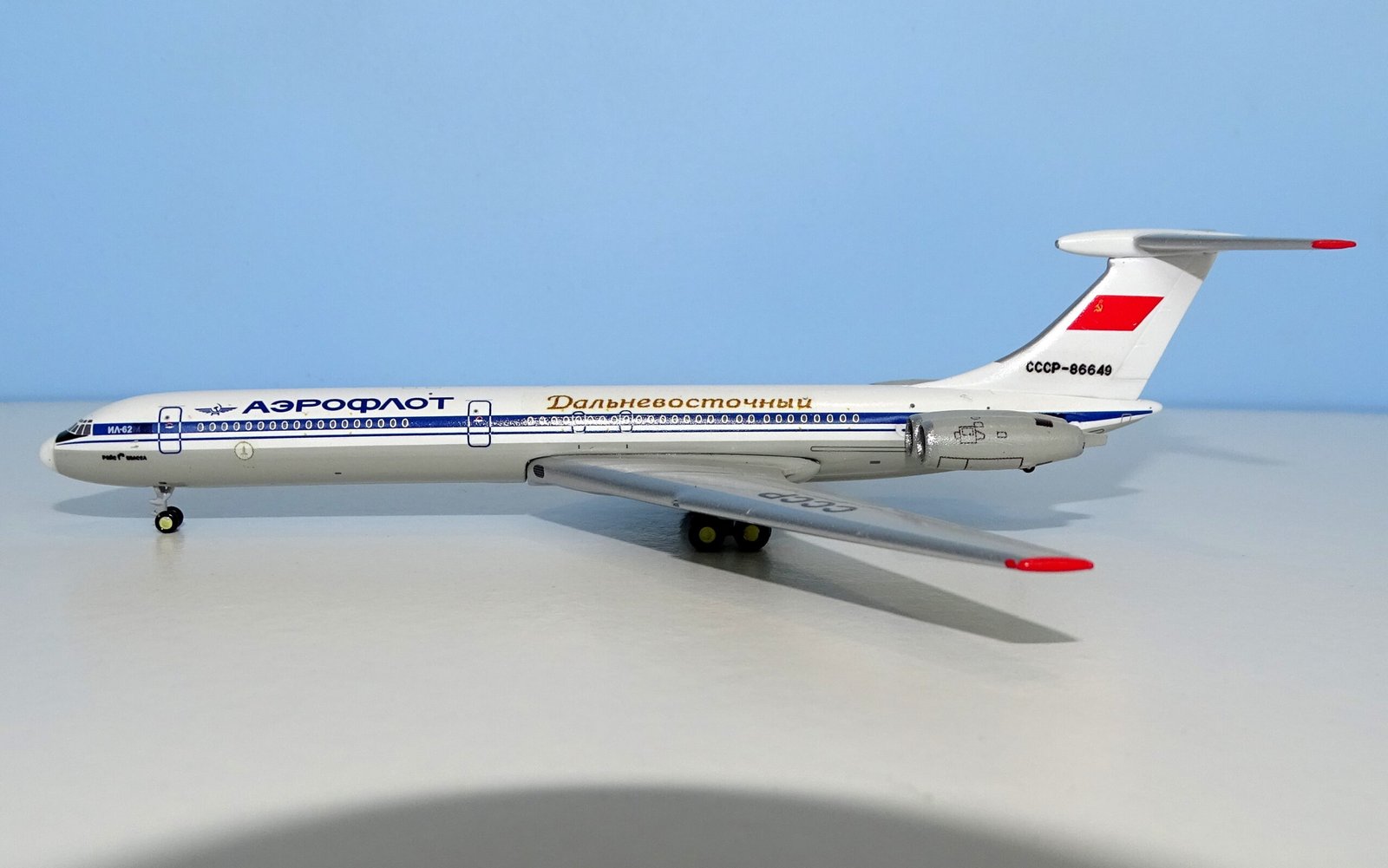
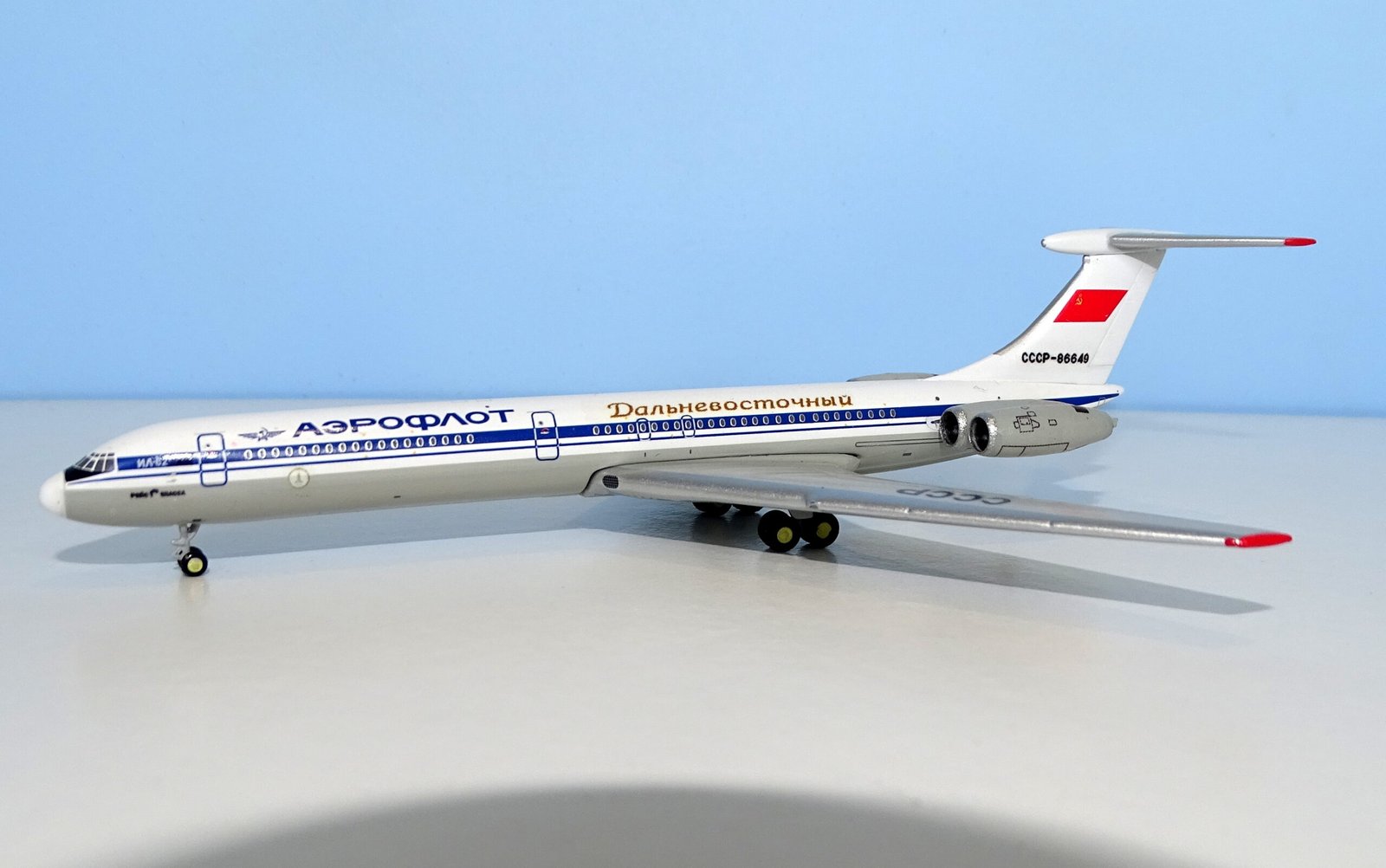
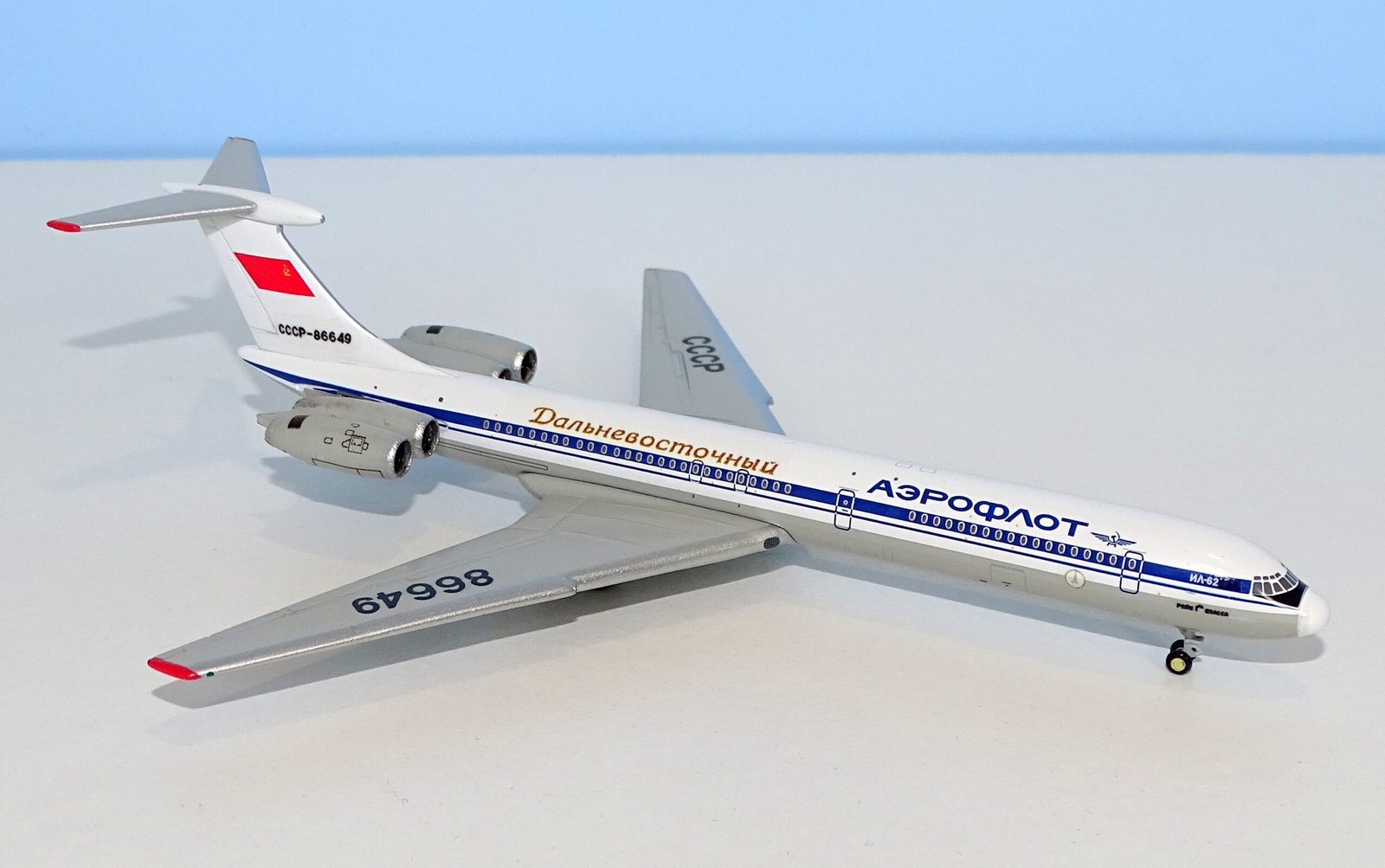
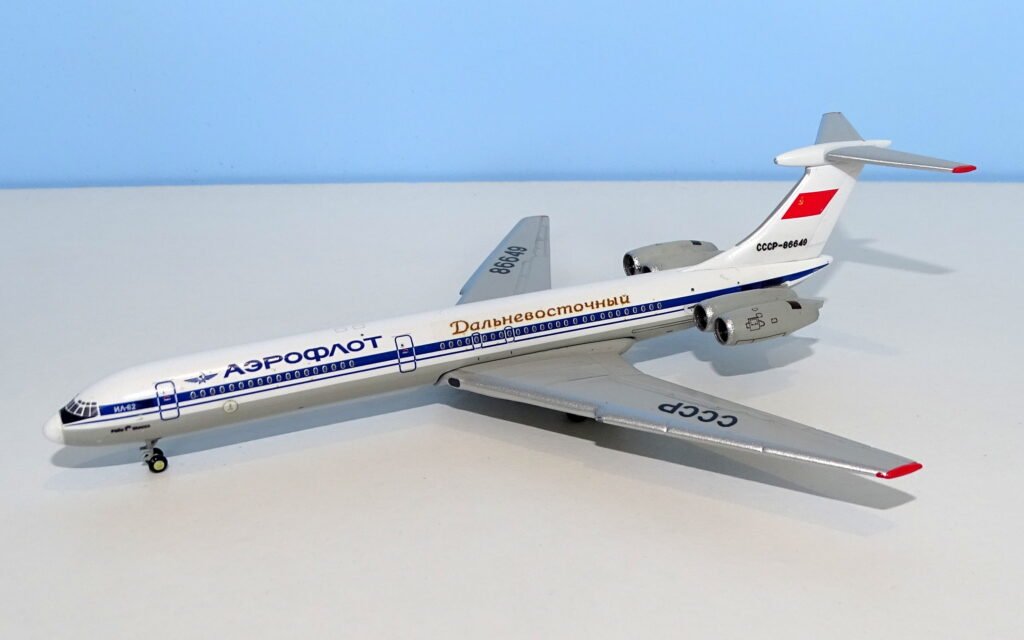
Above: Aeroflot Il-62 CCCP-86649 Custom model by DT Customs with 3D printed NK-8-4 engines – Gemini IL-62M base mould.
Just as the original Il-62s, quickly upon their introduction, relegated the once mighty Tupolev Tu-114 turboprops to long-haul domestic services the advent of the Il-62M did the same for the basic Il-62s in the mid-70s. By this time Aeroflot was organised into Civil Aviation Directorates or CADs, known in Russian as UGAs – Oopravleniye grazhdahnskoy aviahtsii. There were multiple UGAs for regions of Russia and one each for other Soviet Republics like Uzbekistan, Kazakhstan etc.
The Il-62 compared to the Il-62M
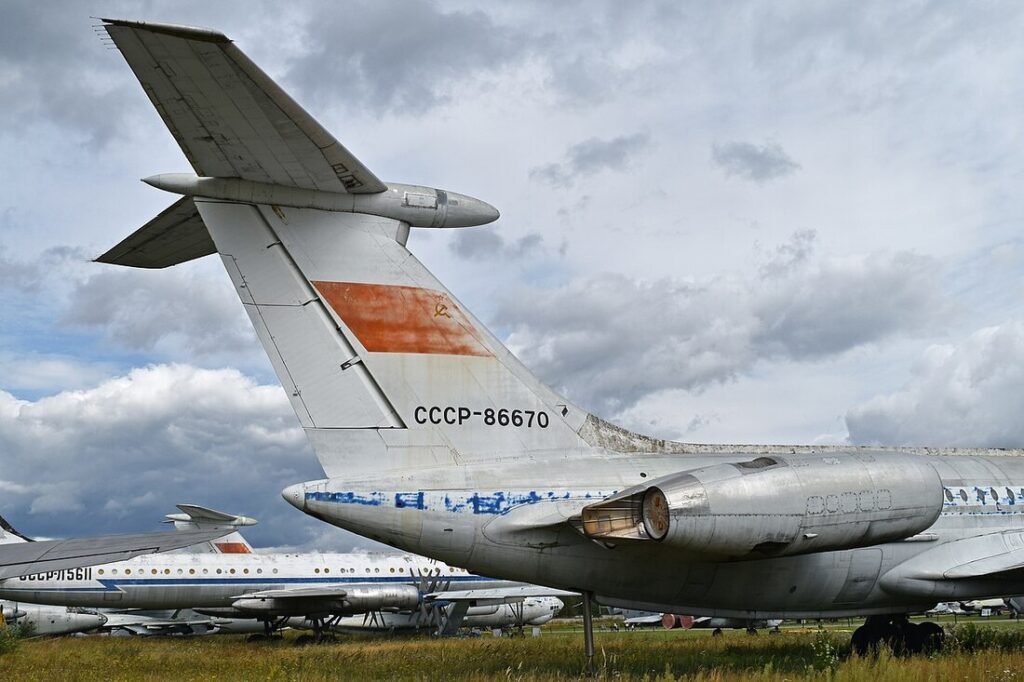
The Il-62 was powered by Kuznetsov NK-8-4 engines. These have internal cascade thrust reversers atop the outer engines:
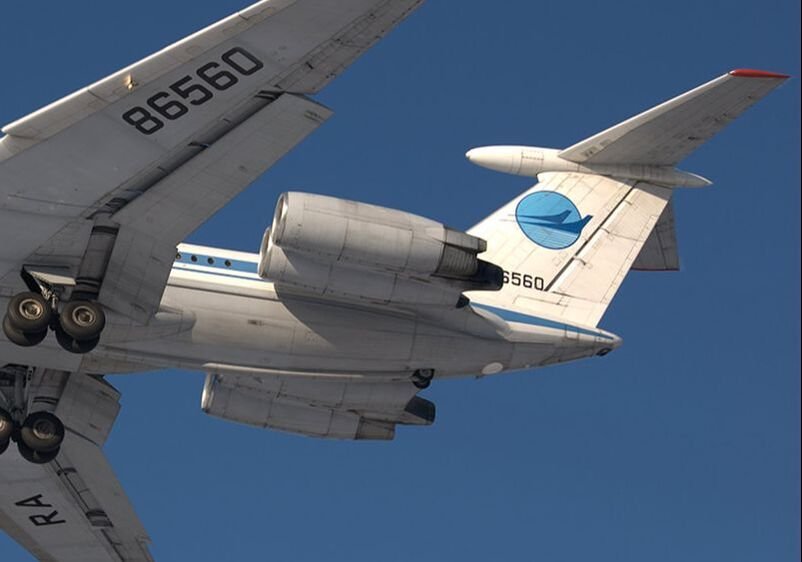
The Il-62M’s primary external difference to the Il-62 ‘basic’ was the new Soloviev D-30KU engines. This has clamshell thrust reversers fitted to the outer engines:
No 400 scale brand has an Il-62 ‘Basic’ mould. The model associated with this blogpost is a Gemini Jets Il-62M with the engines replaced by 3D printed units to replicate an Il-62 ‘basic’
International routes were important to Aeroflot for prestige and political reasons but never made up a large percentage of the airline’s services – in fact they accounted for well under 5%. They attracted the best aircraft but given the sheer size of the USSR there was plenty of scope for use of modern equipment on internal long-haul flights too. After all as has been argued for Aeroflot “The needs of the state are paramount and aviation is vital to the survival of the state”.
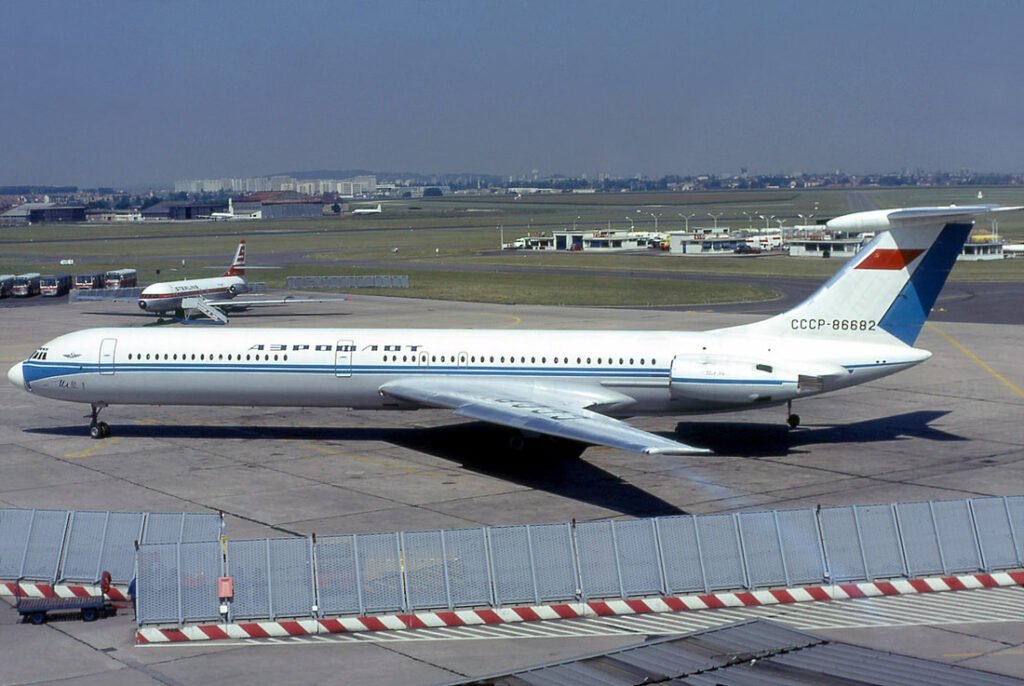
Below: Early Il-62s wore this interesting scheme prior to adopting the standard 1973 livery
Michel Gilliand (GFDL 1.2 or GFDL 1.2 ), via Wikimedia Commons
These needs were not necessarily related to mass transport of the population and cargo. The vast majority of Russians did not have access to flights, especially not long haul ones. In addition, Aeroflot served a pseudo-military role and its aircraft and crew could be expected to double as military transports when needed. There were also other overtly political roles:
Prestige: It wasn’t just impressing foreigners that Aeroflot was used for but also as a symbol to its own population of the Soviet state’s greatness.
Dissemination of Information: Aeroflot was vital in enabling the transportation of newspapers like Pravda so they could be published across the USSR at the same time.
Tool of State: Aeroflot was important for transporting the political elite, KGB and other security forces allowing them to keep control of their empire.
In that way it can be seen that it was vital to the Soviets that Aeroflot was able to successfully operate its network for the state to continue to function. Tu-114s had been operating routes such as Moscow-Khabarovsk, Moscow – Tashkent and Moscow – Alma-Ata since 1968. By 1974 new services were using the Il-62 rather than the big prop and the ‘basic’ Il-62s were being shared amongst CADs such as the Uzbekistan UGA (UZUGA) flying Tashkent-Kiev and the Kazakhstan UGA (KAUGA) flying Moscow Domodedovo – Aktyubinsk – Alma-Ata.
This progress continued with further expansion of Il-62 operations by the UZUGA from Tashkent to Moscow Domodedovo, Novosibirsk and Khabarovsk. In 1976 the KAUGA opened Alma-Ata to Leningrad and Kiev routes using IL-62s as well.
1976 was the last year that Tu-114s operated and the type was replaced fully by Il-62s on the 6,000km plus 8 hour Moscow Domodedovo – Khabarovsk route by the Moscow Transport UGA. It was this route that saw an interesting experiment by Aeroflot in 1978.
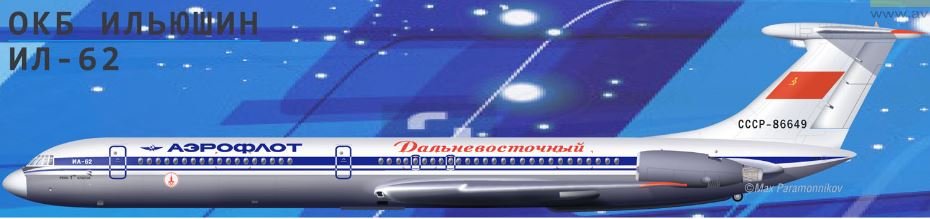
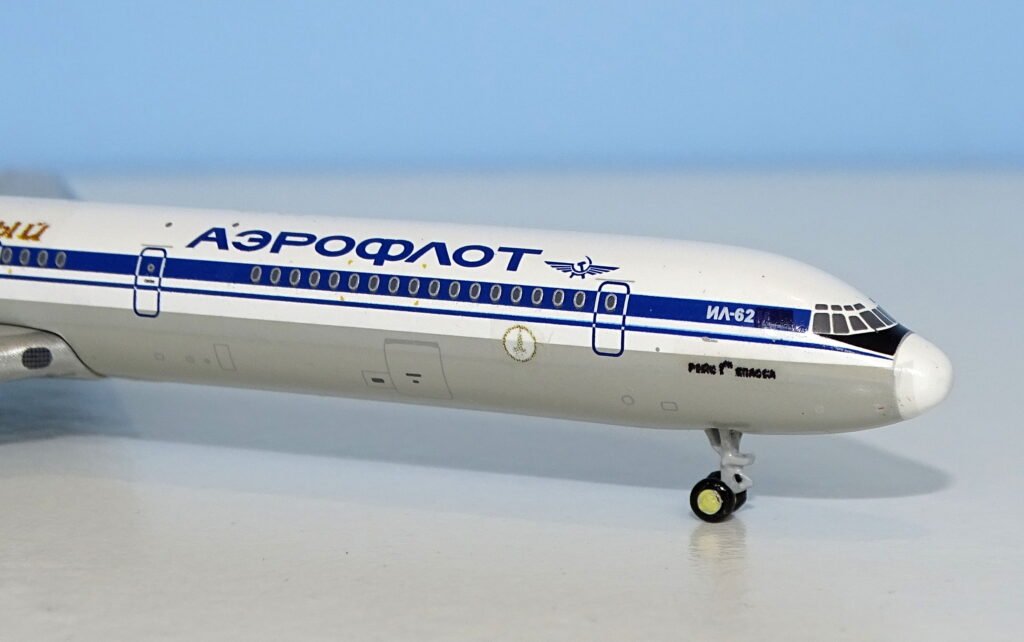
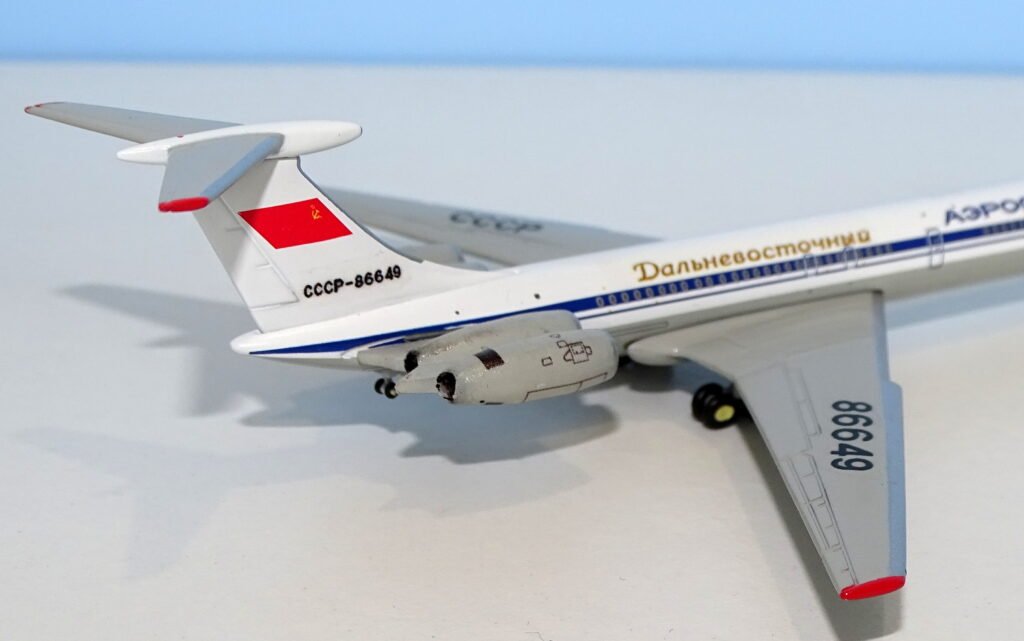
As you’d expect Aeroflot flights, at least domestically, didn’t operate a first class service (I believe that at least some international routes did). On August 1, 1978 the Il-62 CCCP-86459 operated the first service of a new very un-Aeroflot style. The route, known as flight No. 25/26, was branded as ‘Dalnevotochnyi’ (Far Eastern in English), which was painted on the cabin roof of this aircraft, and at least two others (CCCP-86649 and CCCP-86453). Additionally ”First Class Flight” was enscribed on the nose in Russia.
Aeroflot Il-62 CCCP-86649 Custom model by DT Customs with 3D printed NK-8-4 engines - Gemini IL-62M base mould
Aeroflot Il-62 CCCP-86649 Custom model by DT Customs with 3D printed NK-8-4 engines - Gemini IL-62M base mould
Aeroflot Il-62 CCCP-86649 Custom model by DT Customs with 3D printed NK-8-4 engines - Gemini IL-62M base mould
Aeroflot Il-62 CCCP-86649 Custom model by DT Customs with 3D printed NK-8-4 engines - Gemini IL-62M base mould
Aeroflot Il-62 CCCP-86649 Custom model by DT Customs with 3D printed NK-8-4 engines - Gemini IL-62M base mould
Aeroflot Il-62 CCCP-86649 Custom model by DT Customs with 3D printed NK-8-4 engines - Gemini IL-62M base mould
Aeroflot Il-62 CCCP-86649 Custom model by DT Customs with 3D printed NK-8-4 engines - Gemini IL-62M base mould
Aeroflot Il-62 CCCP-86649 Custom model by DT Customs with 3D printed NK-8-4 engines - Gemini IL-62M base mould
Aeroflot Il-62 CCCP-86649 Custom model by DT Customs with 3D printed NK-8-4 engines - Gemini IL-62M base mould
Aeroflot Il-62 CCCP-86649 Custom model by DT Customs with 3D printed NK-8-4 engines - Gemini IL-62M base mould
Aeroflot Il-62 CCCP-86649 Custom model by DT Customs with 3D printed NK-8-4 engines - Gemini IL-62M base mould
Aeroflot Il-62 CCCP-86649 Custom model by DT Customs with 3D printed NK-8-4 engines - Gemini IL-62M base mould
Aeroflot Il-62 CCCP-86649 Custom model by DT Customs with 3D printed NK-8-4 engines - Gemini IL-62M base mould
The difference in this service was that it featured increased comfort at “1st class fares” about 20% higher than normal fares. The aircraft were reconfigured with 144 seats in three blocks of tourist class seats with improved leg room. During the flight, passengers were offered an extended in-flight catering menu that included alcoholic beverages. In addition, souvenir products were sold. Newspapers and magazines were offered.
Photos of the Il-62s wearing this modified scheme are not common suggesting it wasn’t around for long but it seems this was the forerunner of what in January 1989 would become offered as ‘Business class’ (nowadays more like premium economy I guess). The service level was also offered on routes from Vnukovo to the resort cities of Sochi, Simferopol and Mineralnye Vody, which used Tu-154s rather than Il-62s.
The original Il-62 ‘basics’ often had long careers. Of the three ‘Dalnevotochnyi’ aircraft 86459 flew with Kras Air until 1999, 86649 (a 1970 build frame) was withdrawn in 1994 and 86453 looks like it made it into the 21st Century with Kras Air or Rossiya.
Whether the ‘Dalnevotochnyi’ was aimed at important VIP ‘customers’ mainly is hard to say, although the routes kind of suggest it was. Certainly it illustrates that by the end of the 70s Aeroflot was beginning to be influenced by Western methods to a small degree. It is also highlights how import the original Il-62s were to the airline long after they were usurped on the prestige routes by the Il-62M.
References
Komissarov, D & Gordon, Y. Russian Airlines and their Aircraft. Midland Publishing Ilyushin Il-62. Airplane issue 201. Orbis Aeroflot Russian Airlines. Referencd for Business Il-62. Aviaposter.ru