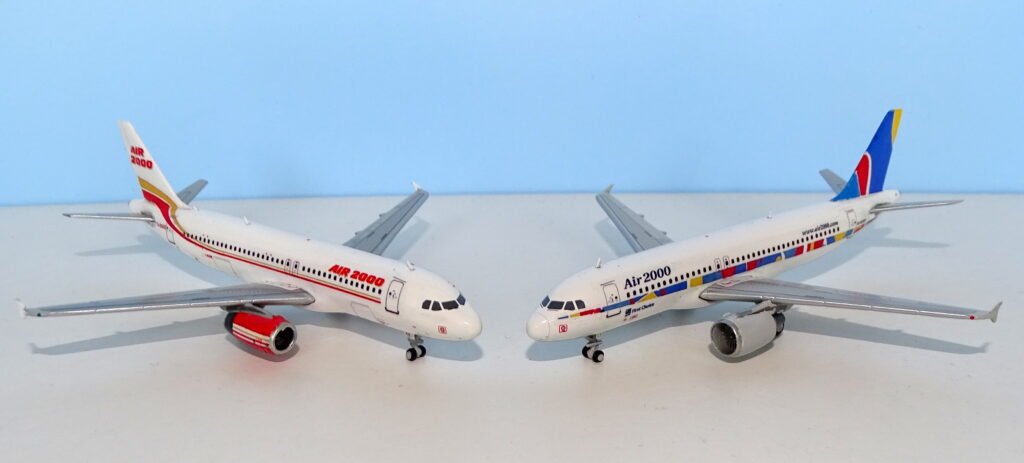
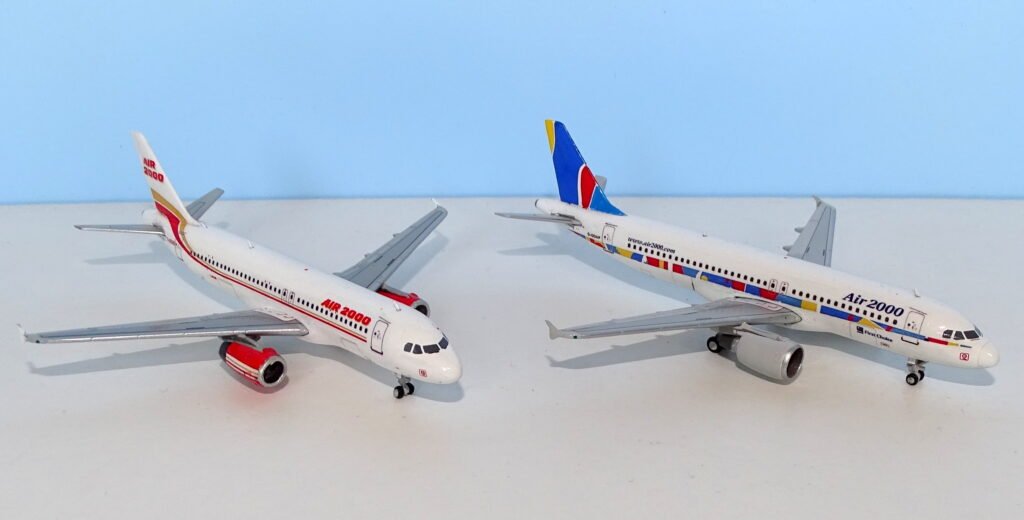
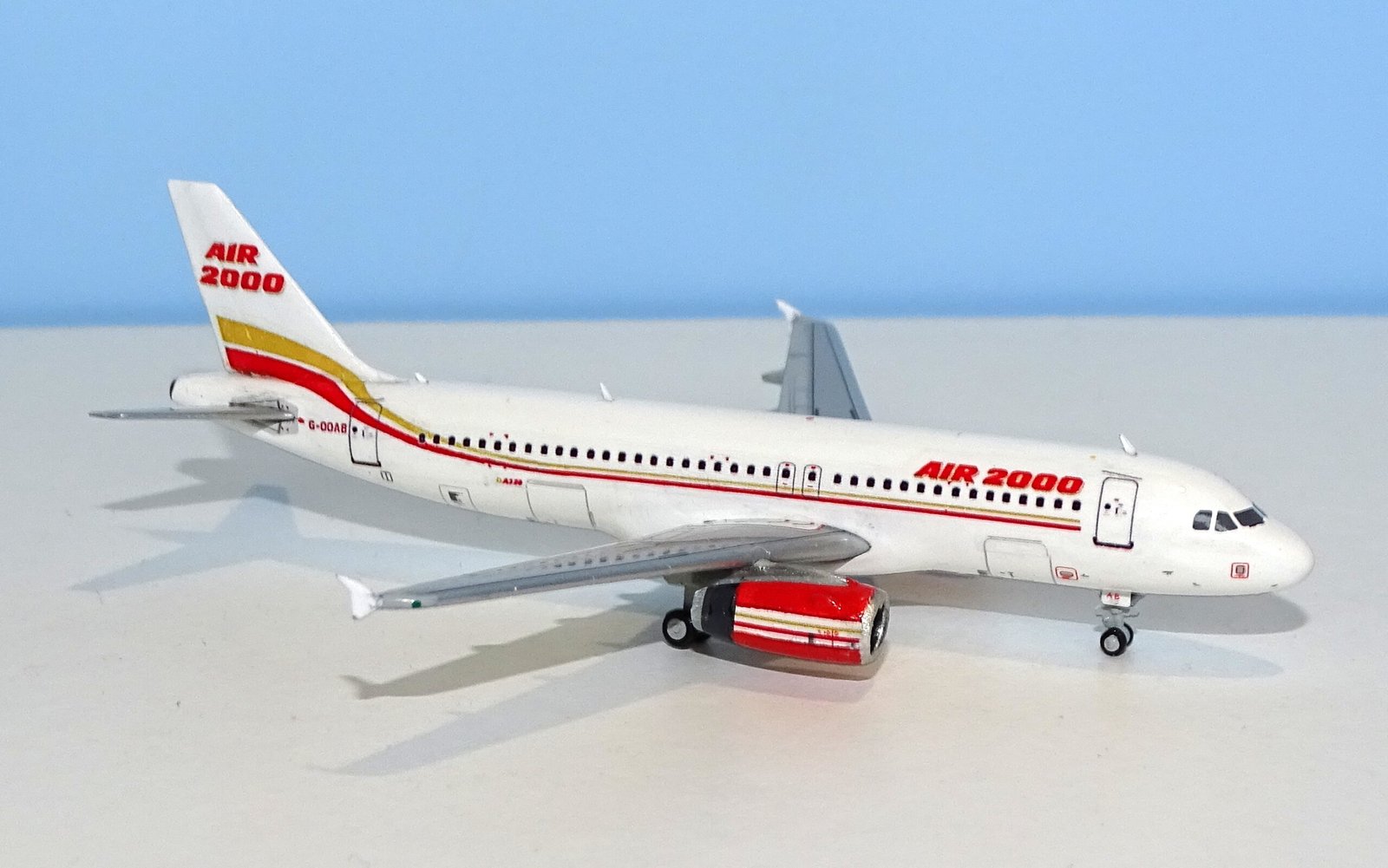
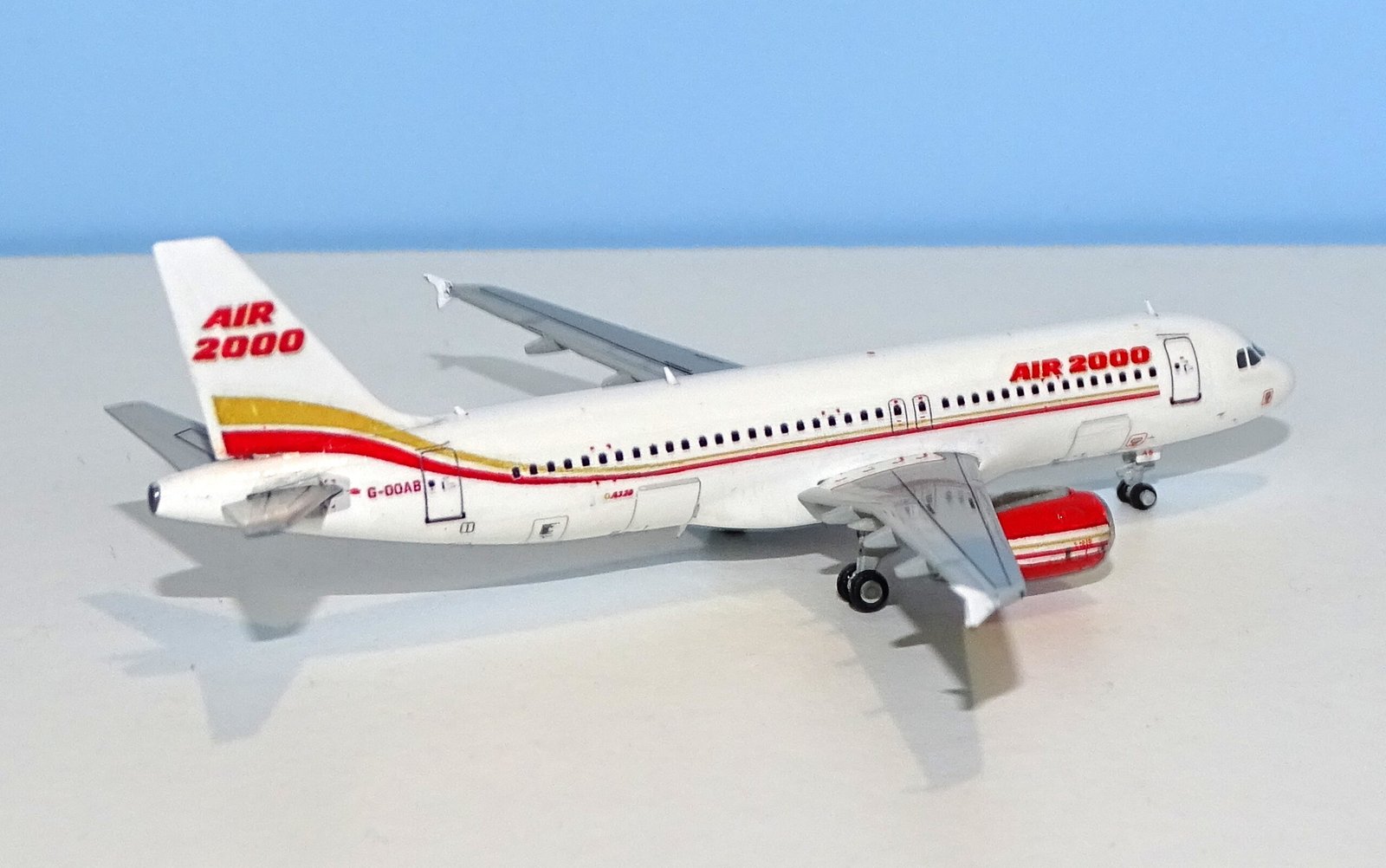
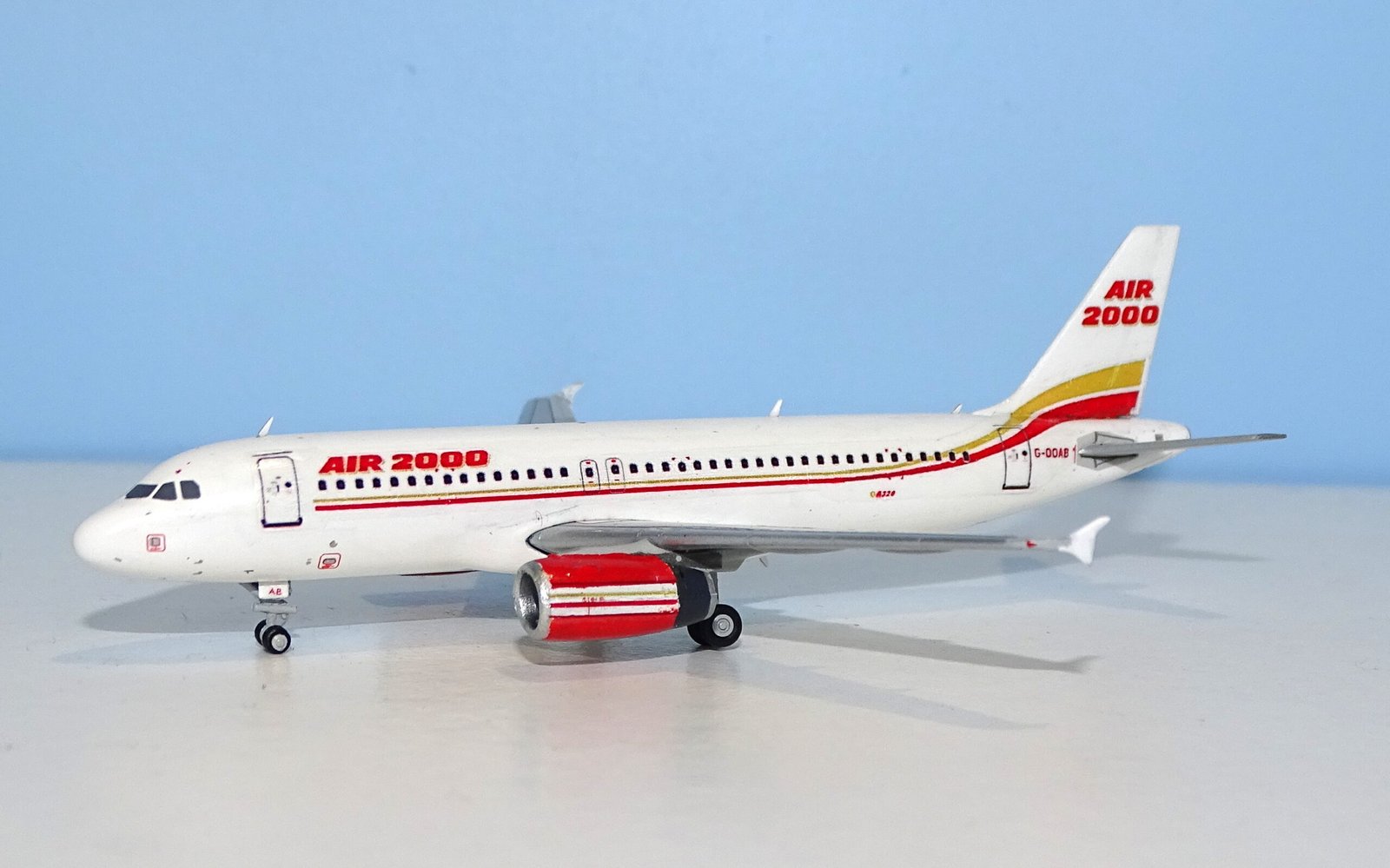
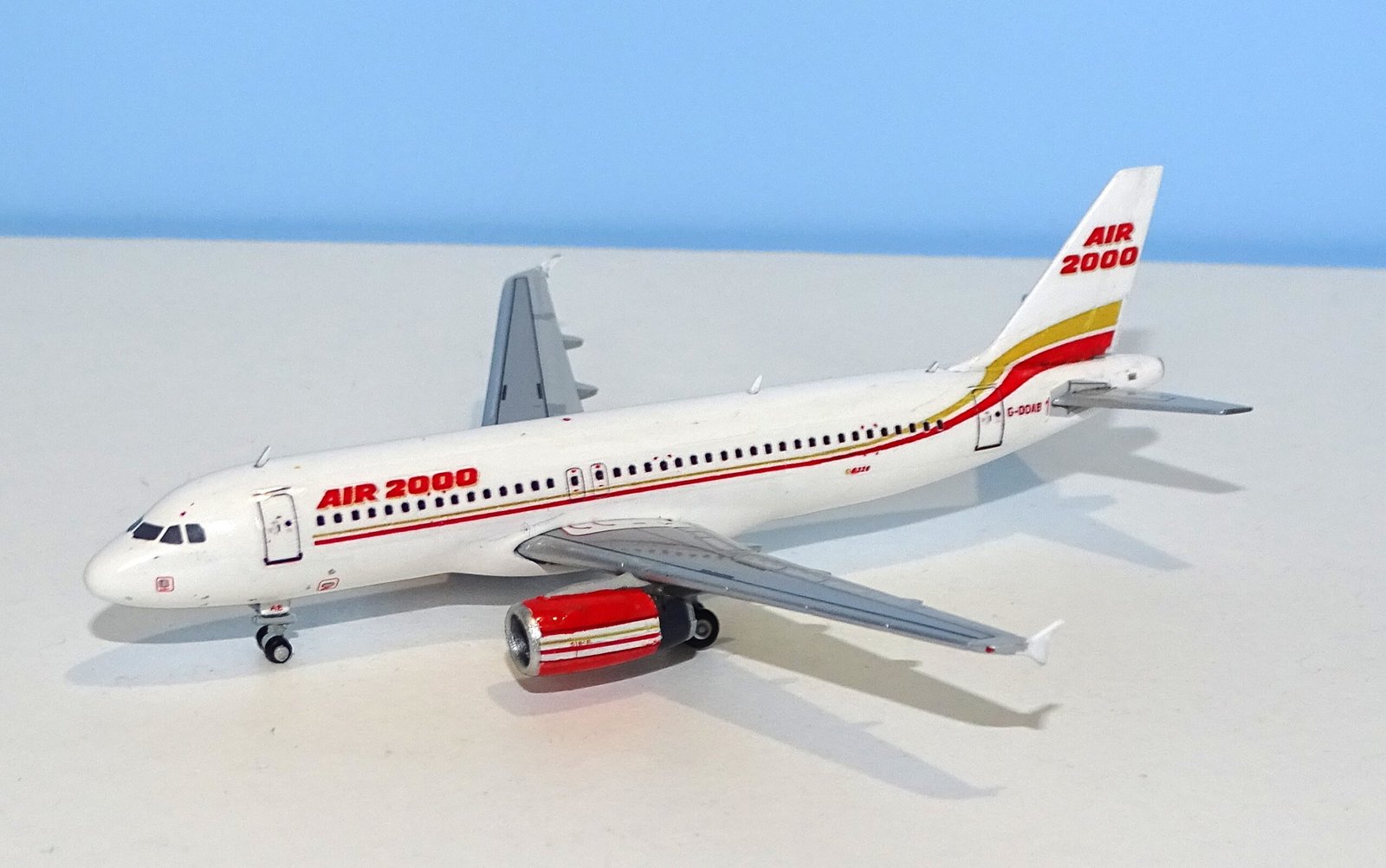
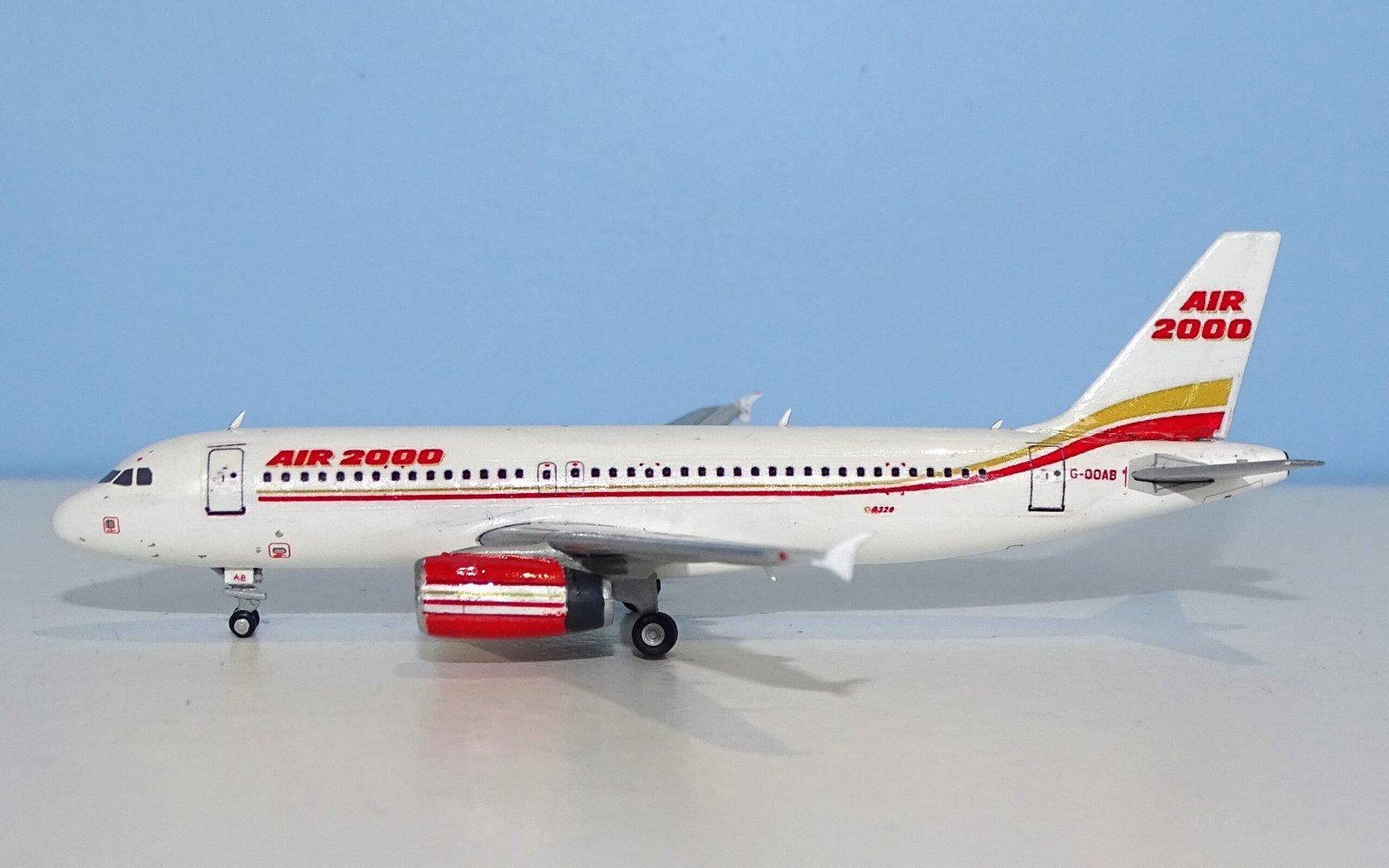
The UK charter airline scene at the dawn of the 1990s was dominated by the BAC One-Eleven, Boeing 737-200 and 757-200. The 737-300 has seen a decent take-up by airlines, such as Dan Air, Monarch and Orion, but was quickly usurped by larger 757s or the new kid on the block the Airbus A320. When an airline needed lower capacity than the 757 it was the A320 they usually fell back on and Air 2000, one of the most successful UK charter carriers of the time, was no expection.
I have already written the history of Air 2000 in the 1990s. The impetus for that was the release of a 757 by NG Models back in 2019. However I have recently received a delightful pair of A320s custom made by MLC Customs so forgive me for revisiting the airline again.
This post is dedicated to Mike Cage of MLC Customs who made these wonderful custom models.
Air 2000 had felt the need for a lower capacity vehicle than its flagship 757s as early as 1989 when they acquired a single Boeing 737-300, G-KKUH, on lease from ILFC. It mainly flew from Glasgow for two seasons before being returned to the lessor. As with several UK charter airlines that operated small numbers of 737-300 or 400s Air 2000 didn’t keep the faith with the 737 and instead switched to its newer competitor the A320.
This pattern was clear with other UK airlines such as Monarch and together with the collapse of Dan Air and Air Europe, both sizeable 737 operators, it meant there were few UK based 737-300/400s with charter airlines by the mid-90s. Other UK charter carriers like Airtours switched to the A320 too but this time from their original MD-80 equipment. Even Air UK Leisure replaced its 737-400s with A320s when its ownership and name changed, to Leisure International.
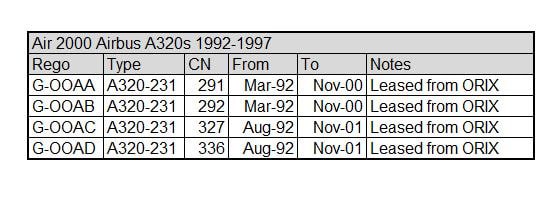
Air 2000 added a pair of A320s for the 1992 summer season and another pair in August, all leased from ORIX aviation. The A320s freed up the 757s for long haul routes and helped Air 2000 become the UK’s third largest charter airline by 1993.
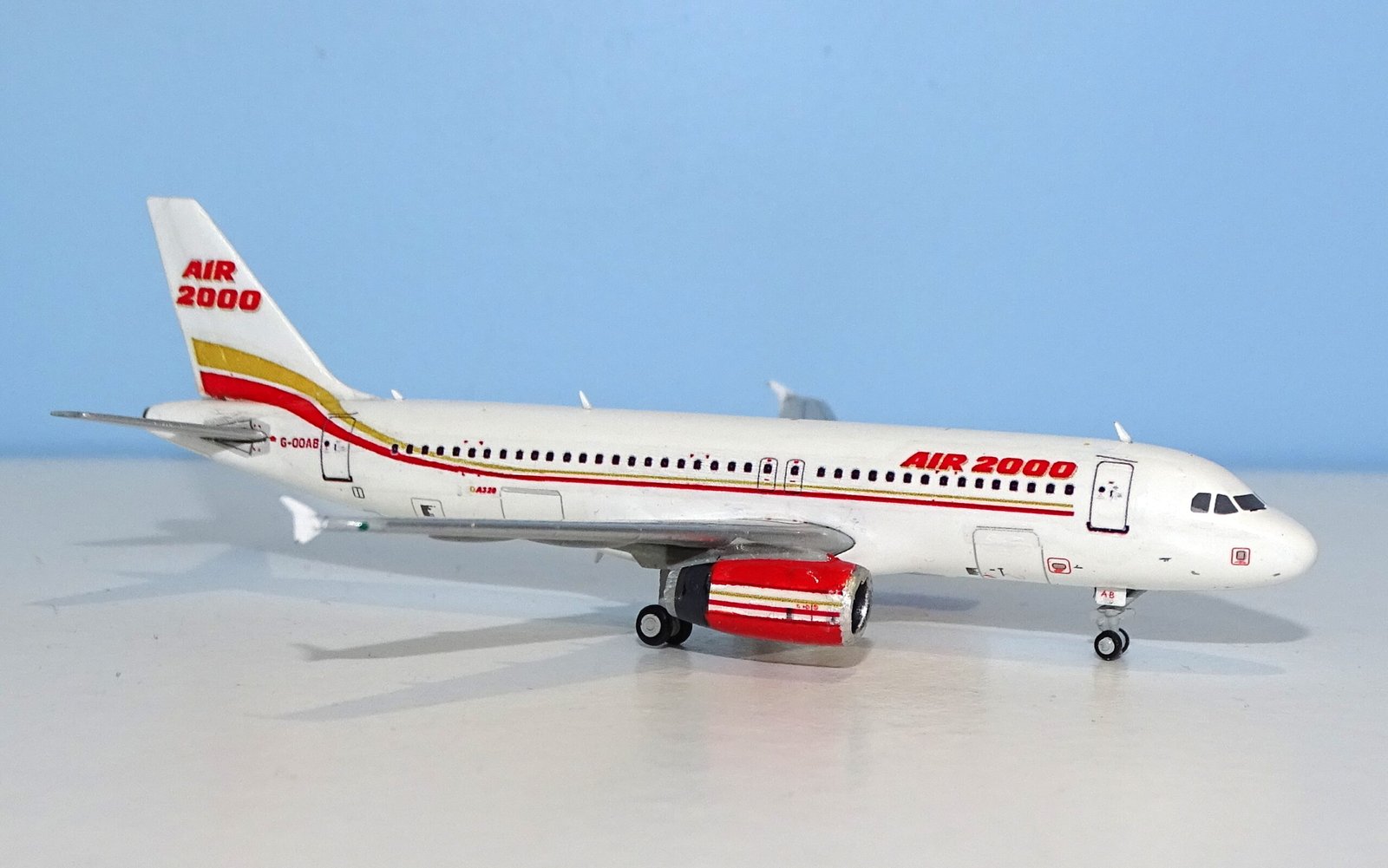
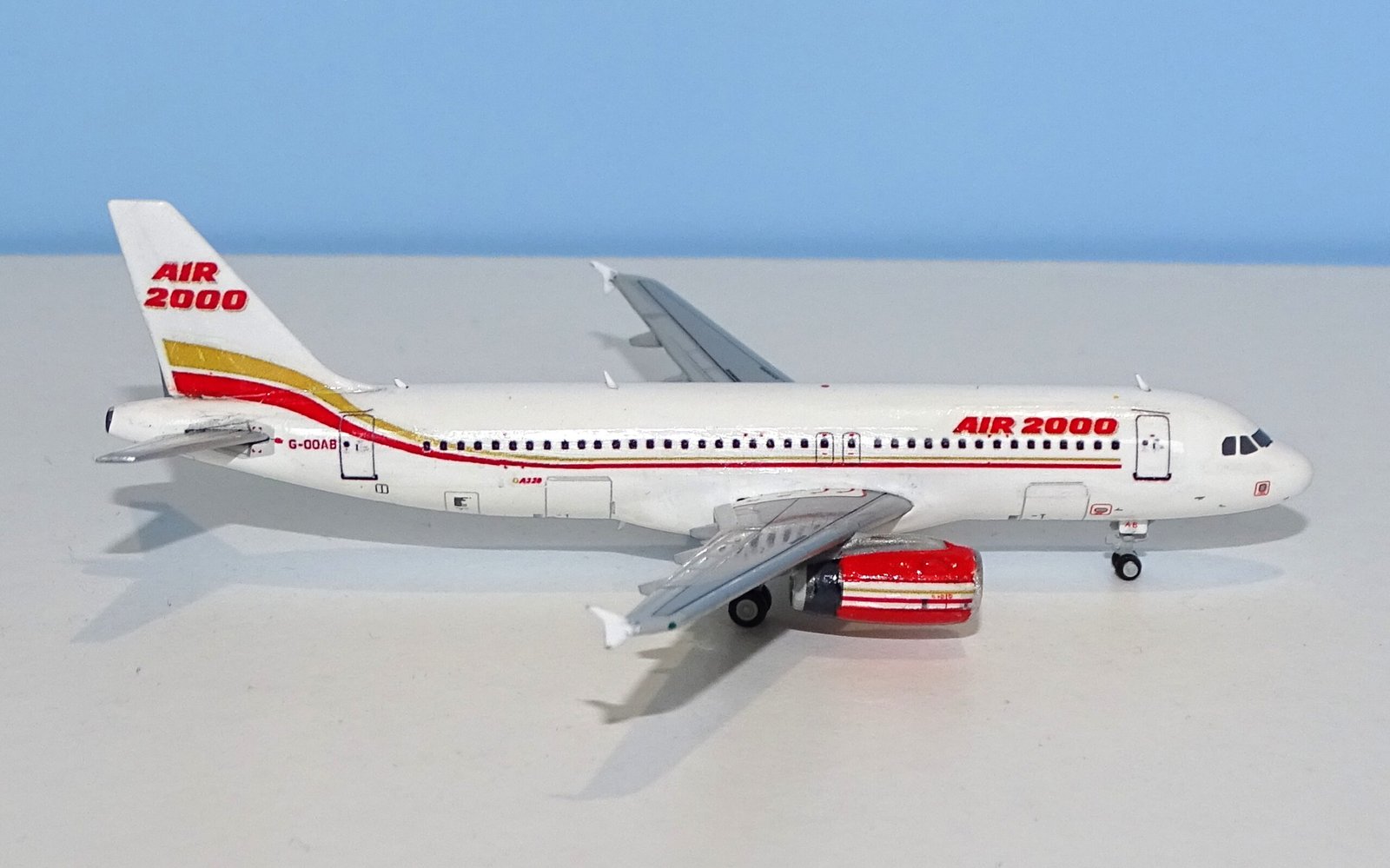
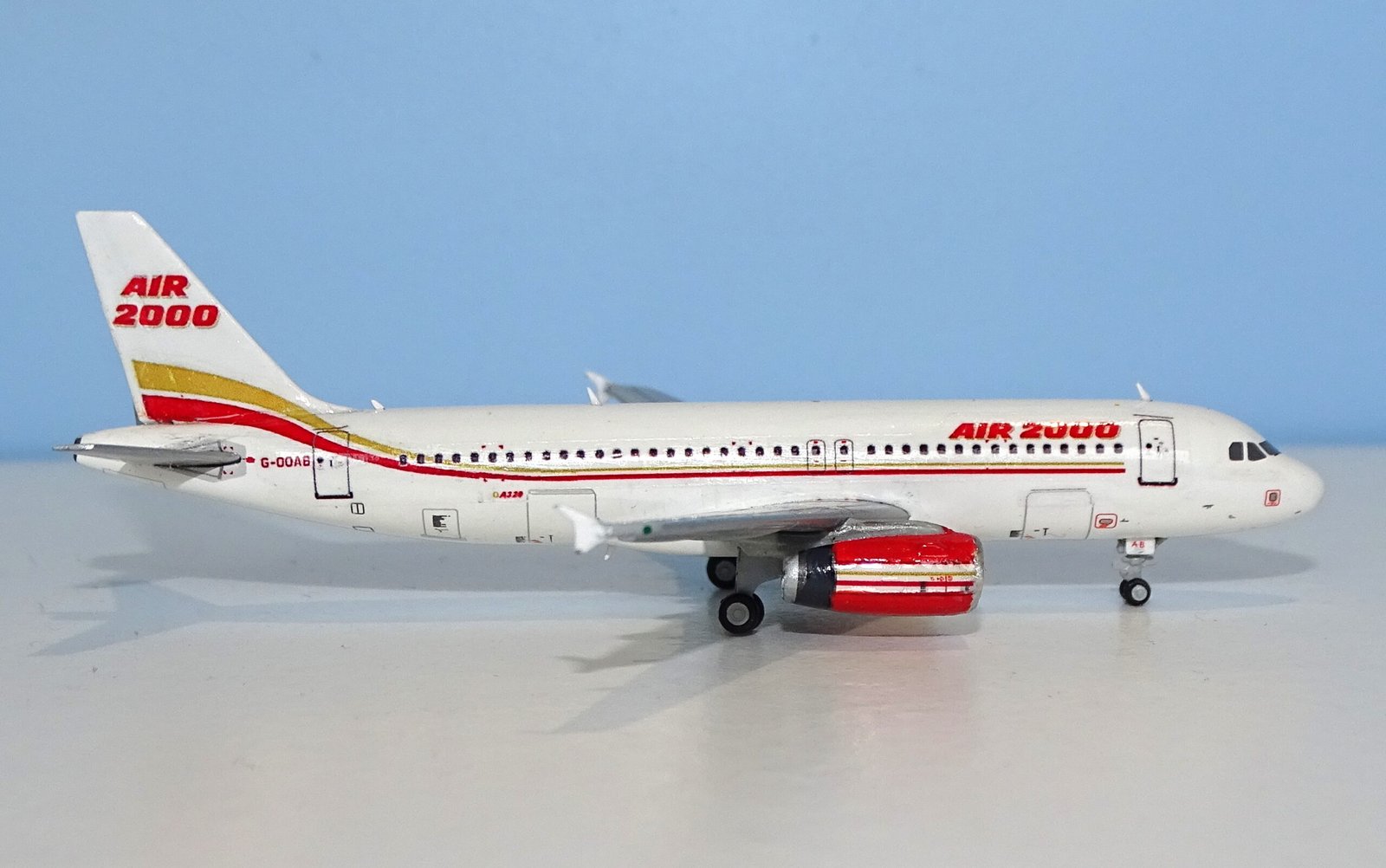
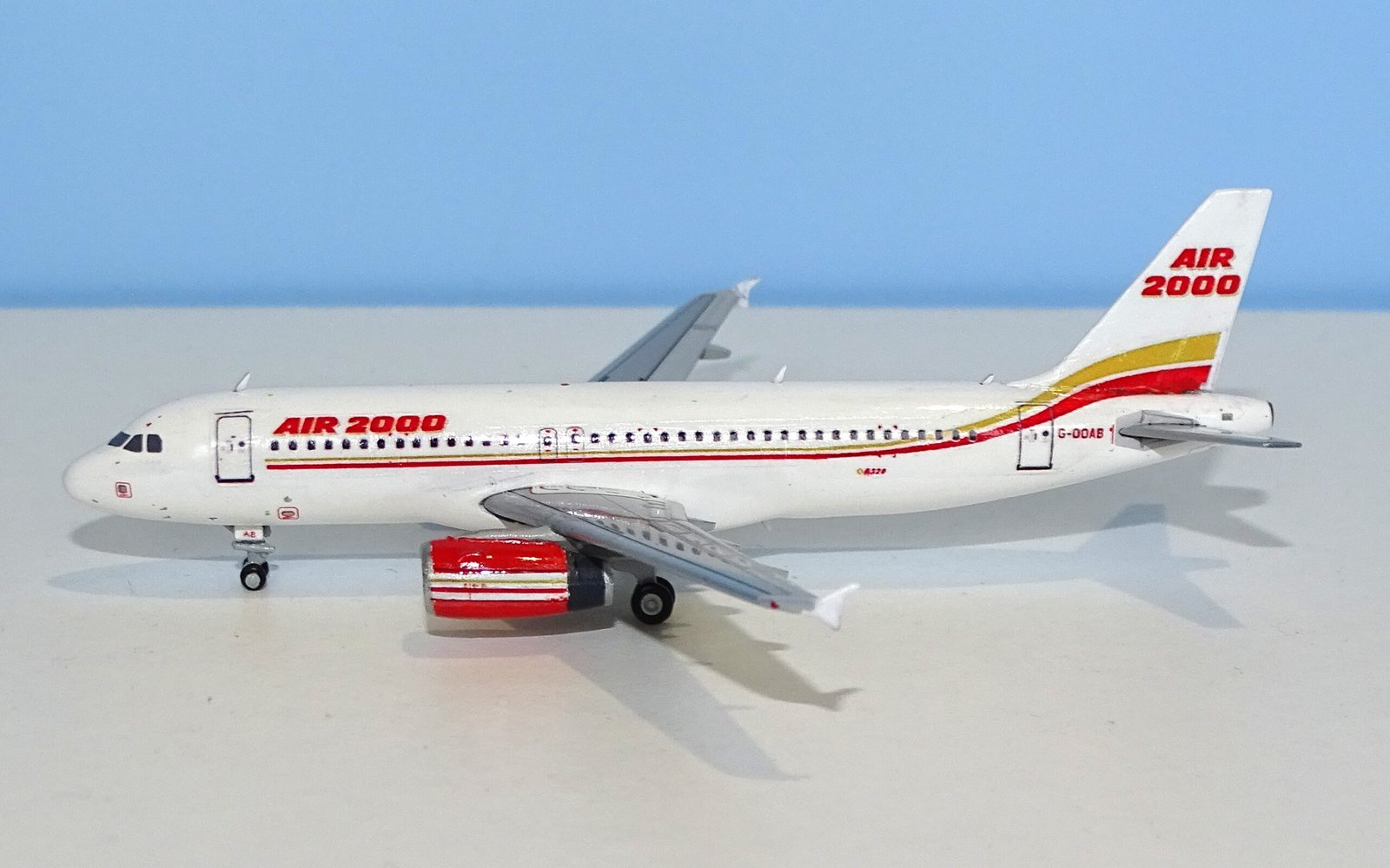
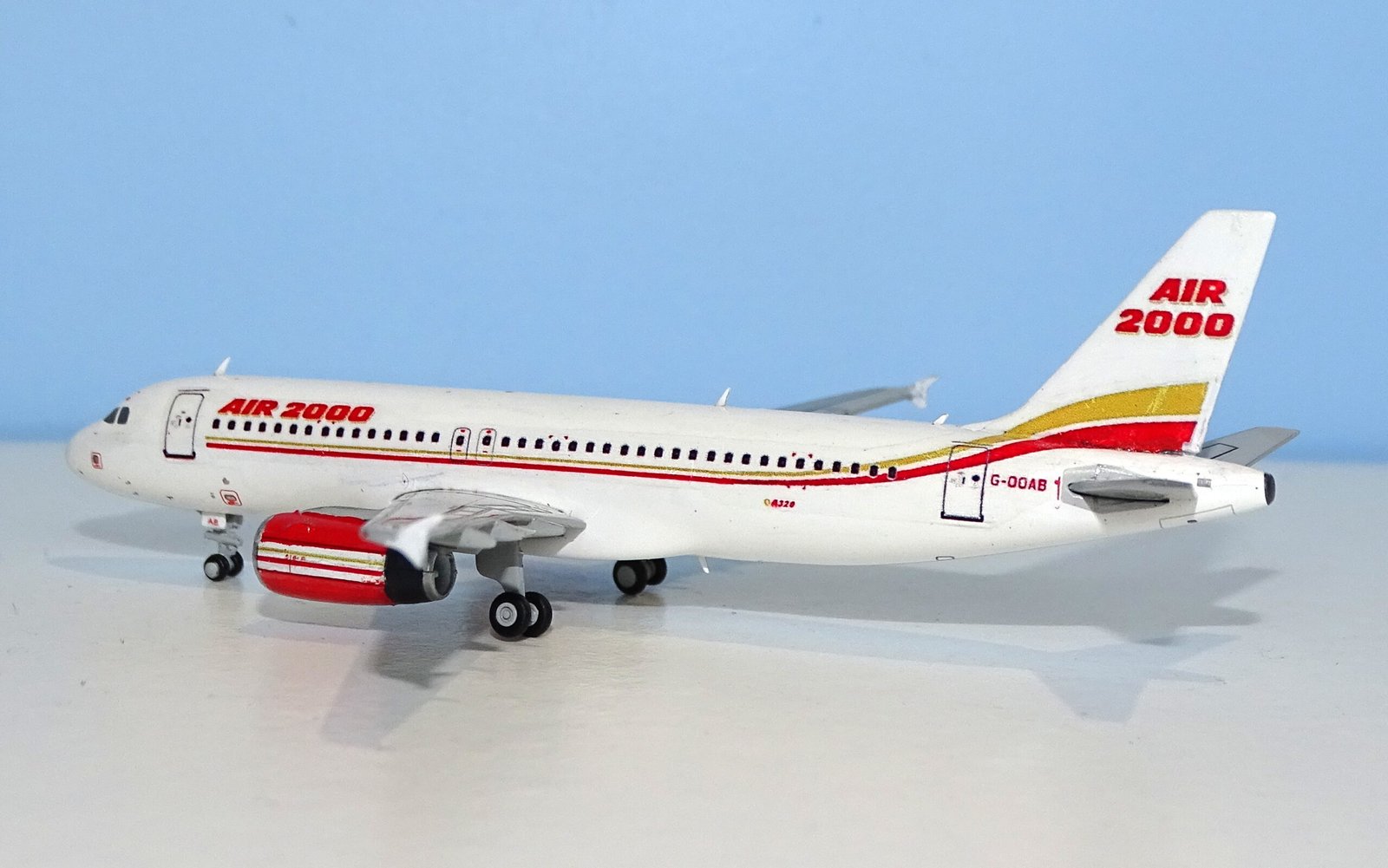
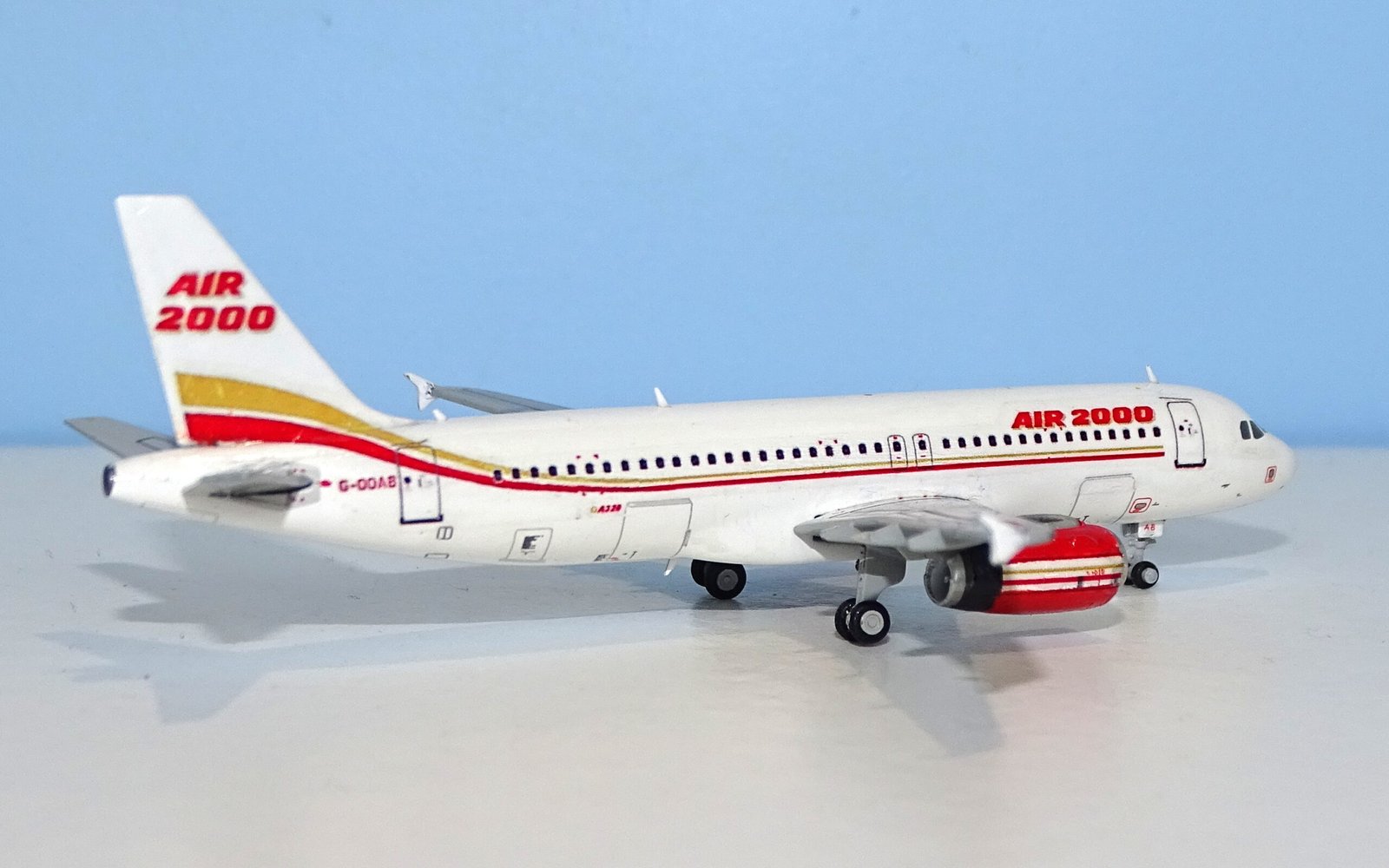
Air 2000 Airbus A320-231 G-OOAB by MLC Customs (JC Wings donor)
Air 2000 Airbus A320-231 G-OOAB by MLC Customs (JC Wings donor)
Air 2000 Airbus A320-231 G-OOAB by MLC Customs (JC Wings donor)
Air 2000 Airbus A320-231 G-OOAB by MLC Customs (JC Wings donor)
Air 2000 Airbus A320-231 G-OOAB by MLC Customs (JC Wings donor)
Air 2000 Airbus A320-231 G-OOAB by MLC Customs (JC Wings donor)
Air 2000 Airbus A320-231 G-OOAB by MLC Customs (JC Wings donor)
Air 2000 Airbus A320-231 G-OOAB by MLC Customs (JC Wings donor)
Air 2000 Airbus A320-231 G-OOAB by MLC Customs (JC Wings donor)
Air 2000 Airbus A320-231 G-OOAB by MLC Customs (JC Wings donor)
Air 2000 Airbus A320-231 G-OOAB by MLC Customs (JC Wings donor)
Air 2000 Airbus A320-231 G-OOAB by MLC Customs (JC Wings donor)
Despite this success the UK charter market was always fickle and easily affected by economic ups and downs. Air 2000 was already vertically integrated with its own tour operator, being owned by Owners Abroad, and so was only as strong as the overall business. It survived a difficult mid-90s and emerged into the late 90s stronger with a fleet of 13 757s and 4 A320s by mid-97.
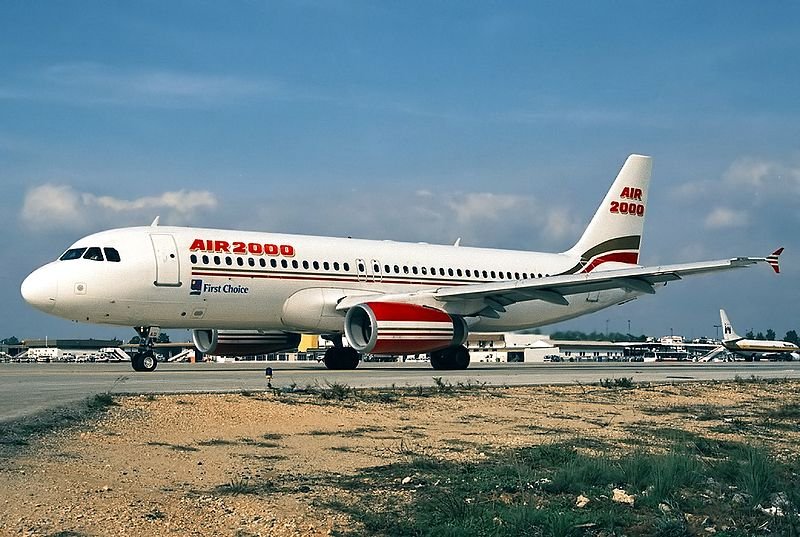
Pedro Aragão, CC BY-SA 3.0 GFDL, via Wikimedia Commons
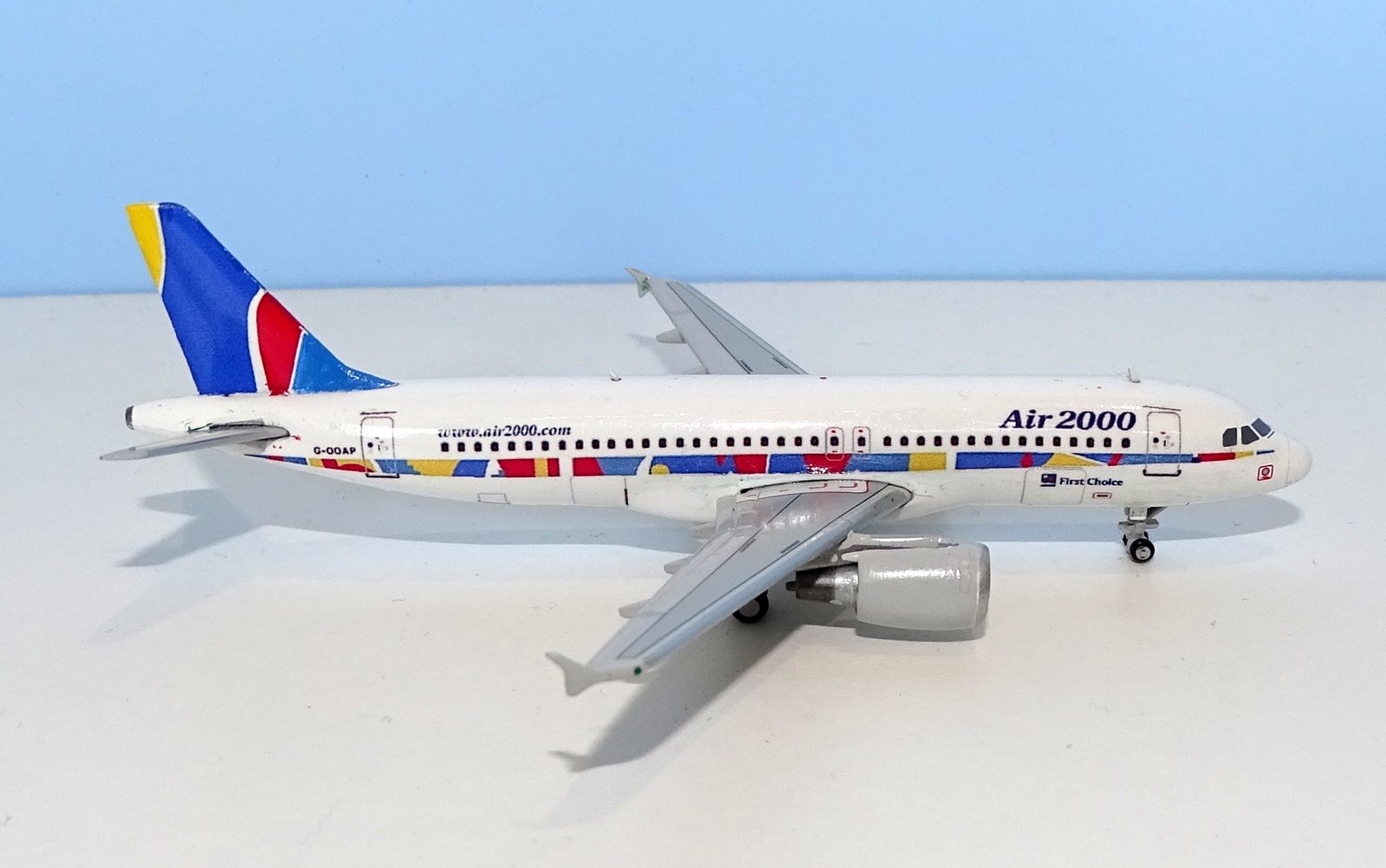
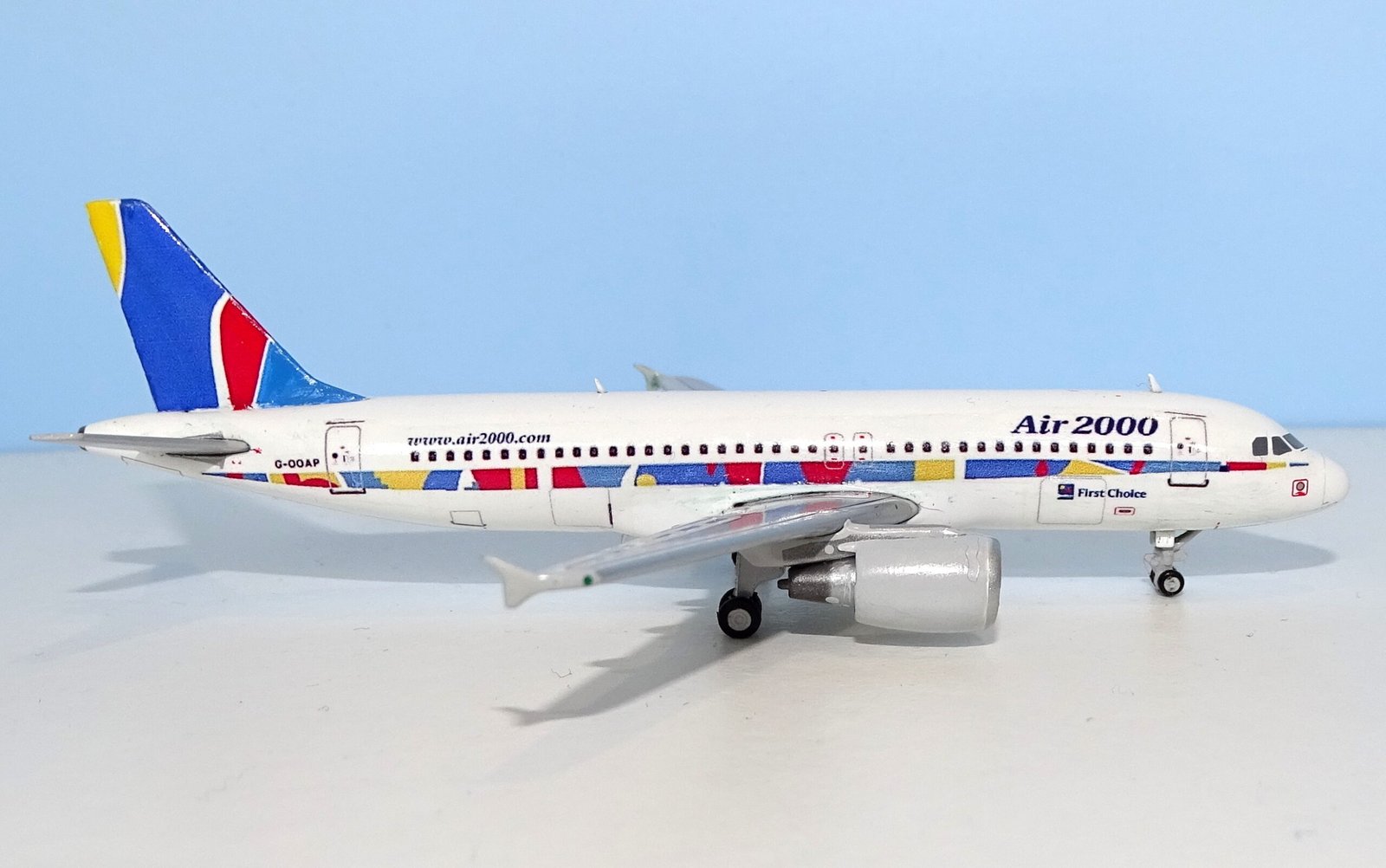
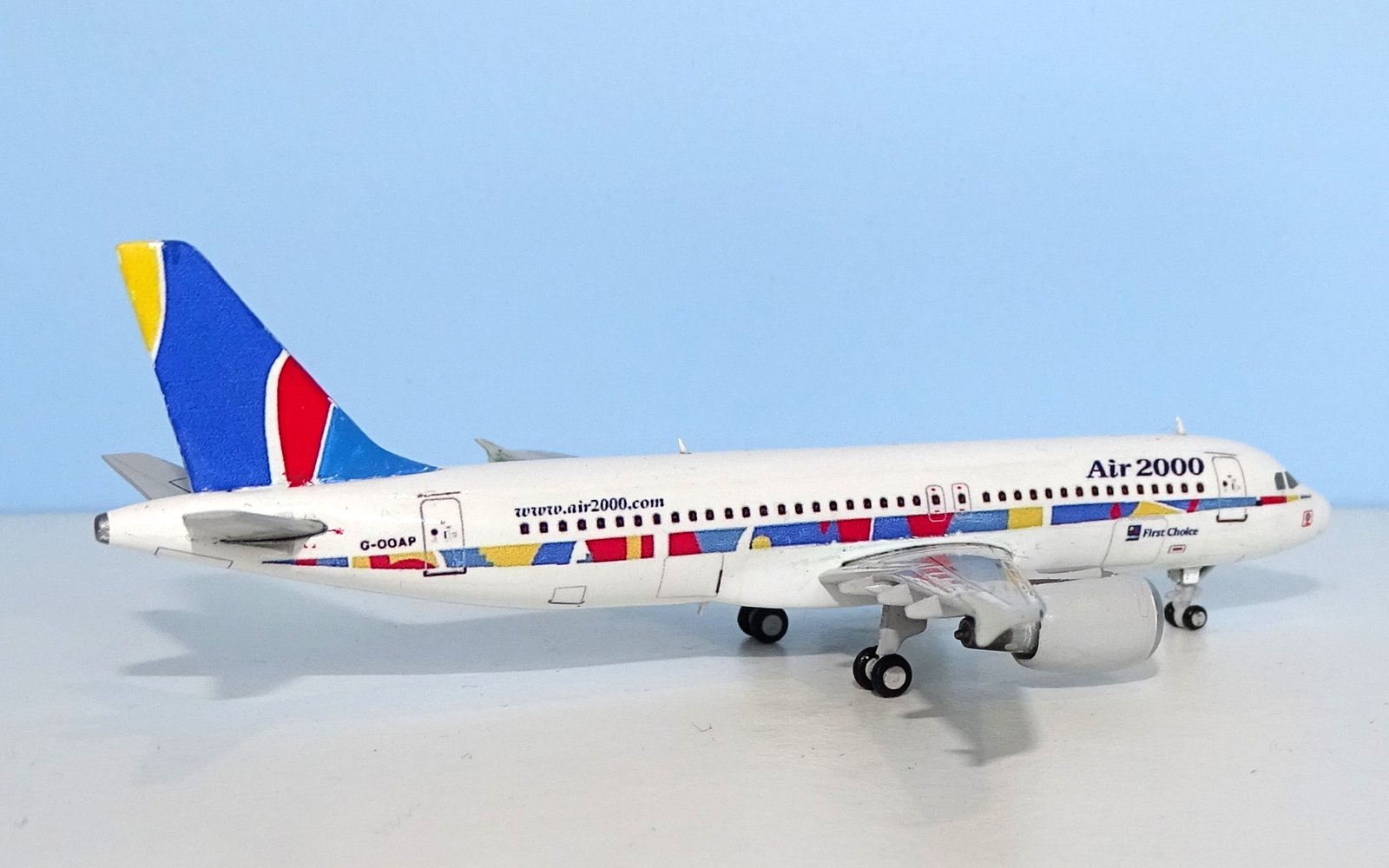
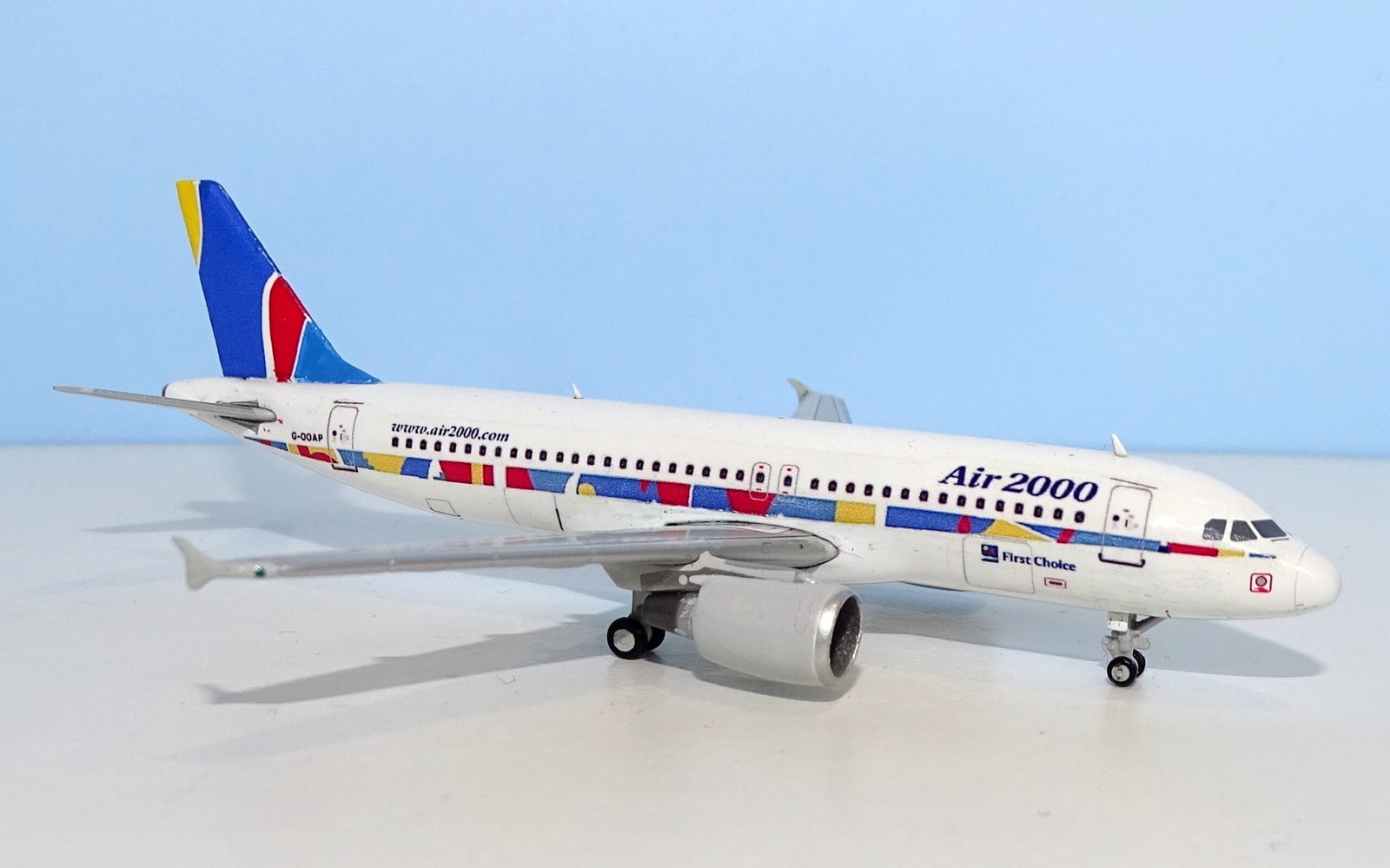
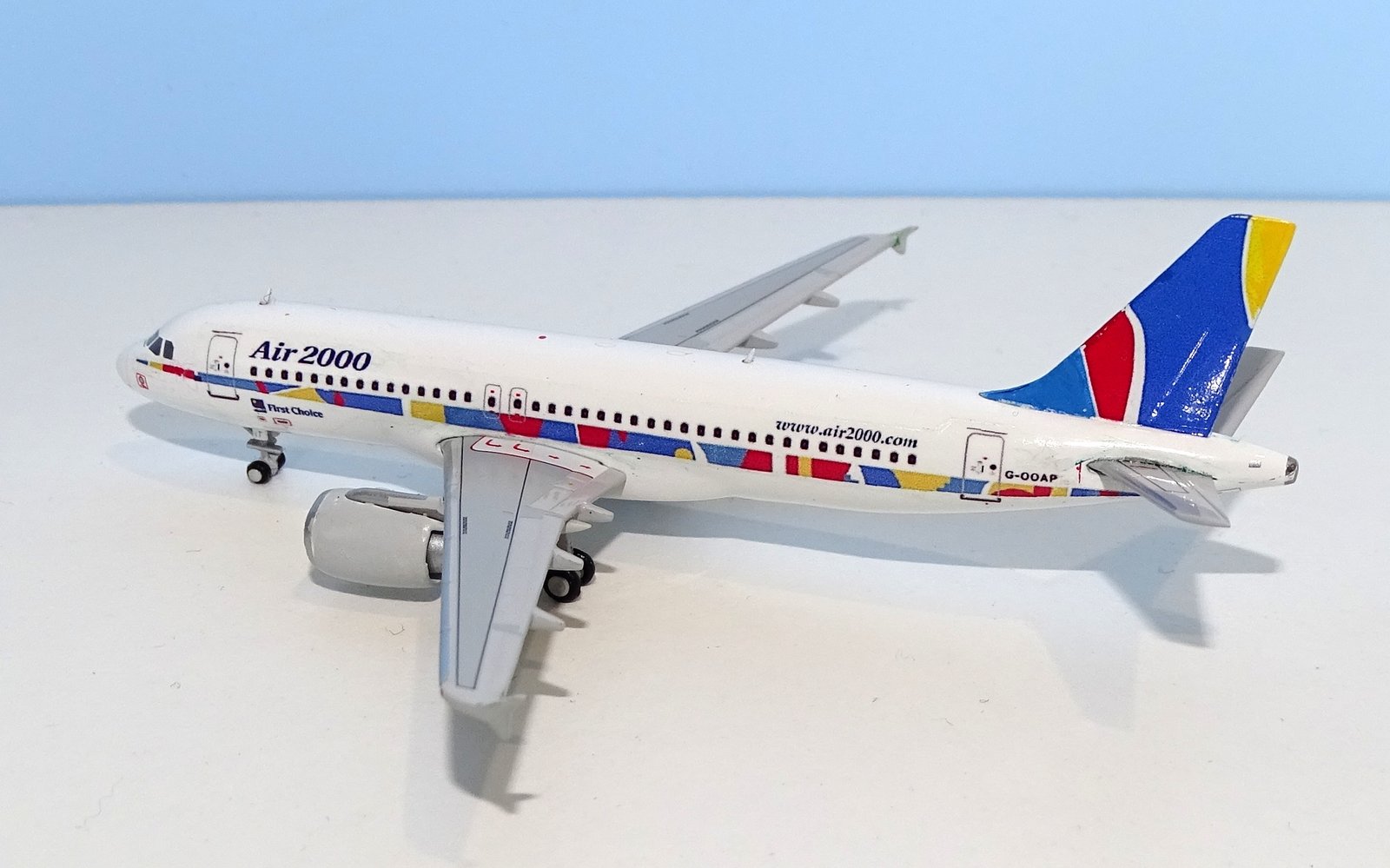
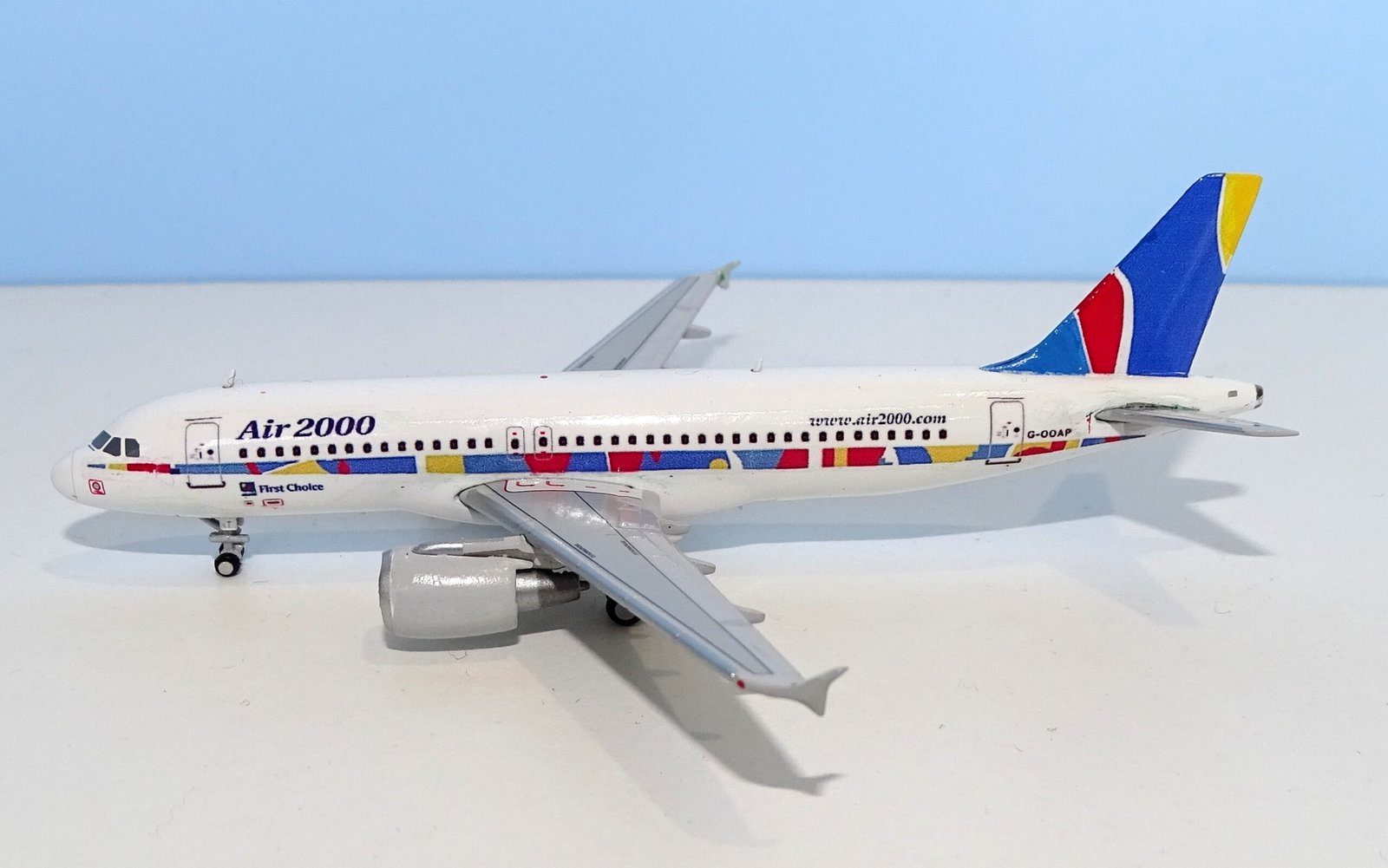
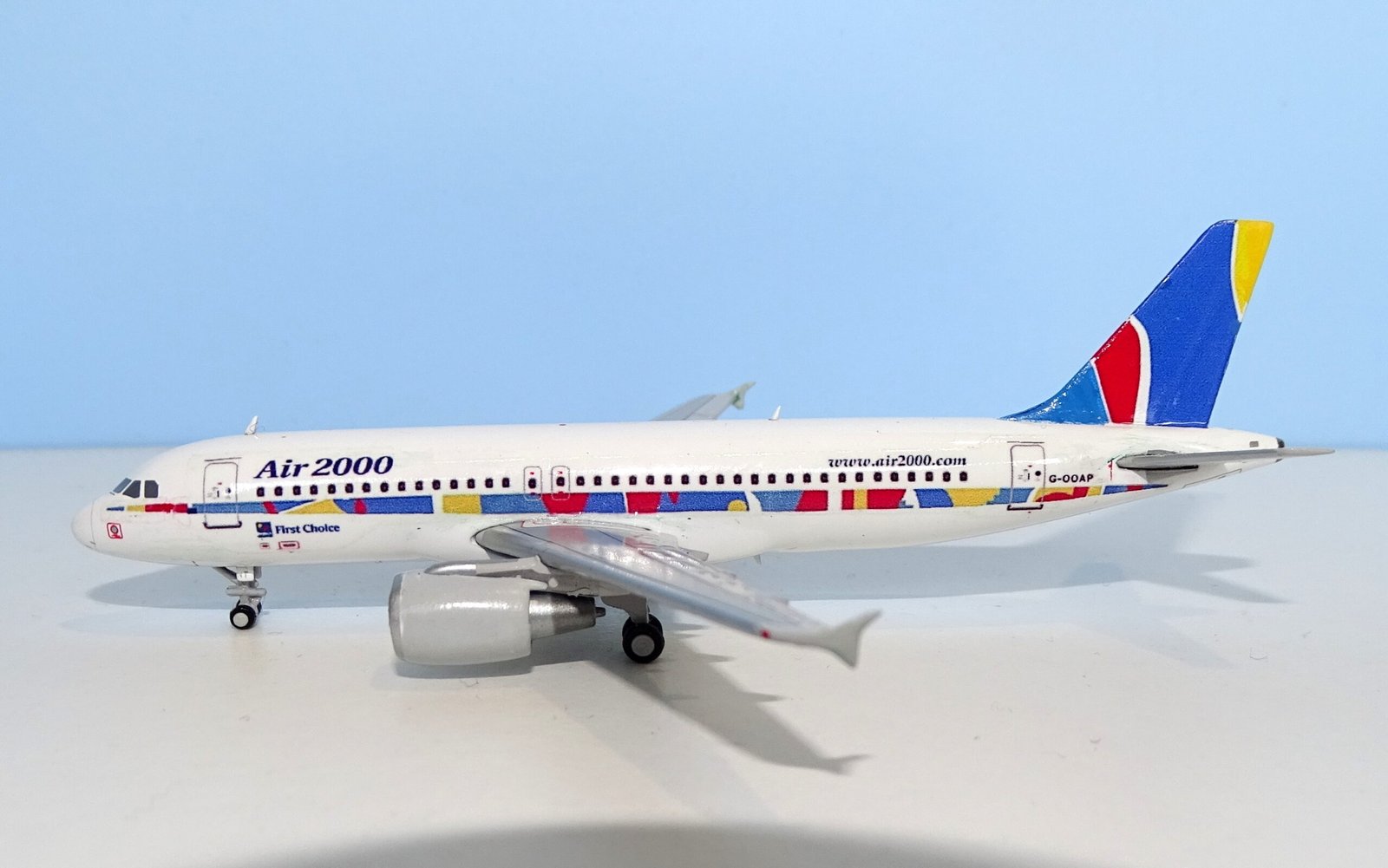
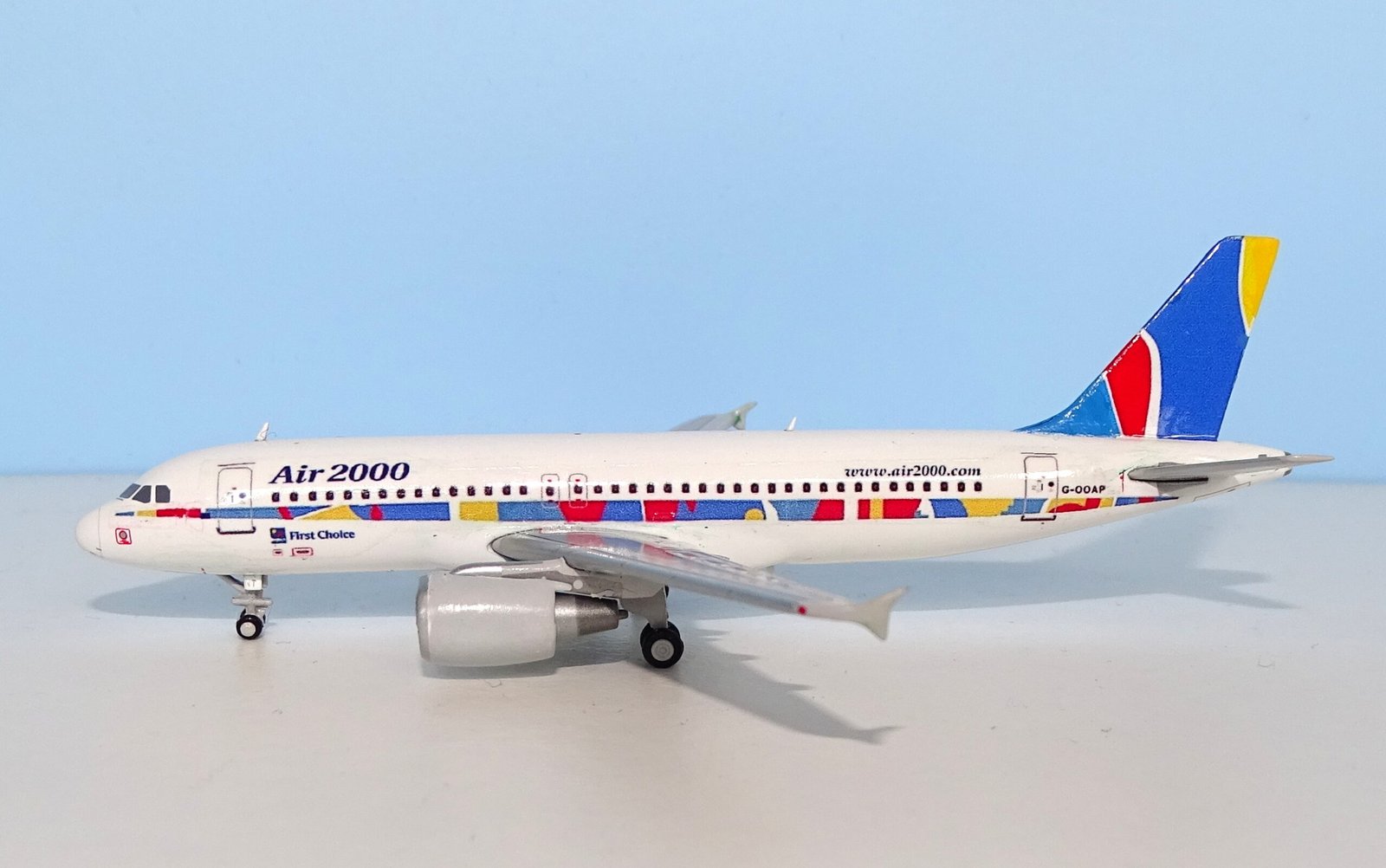
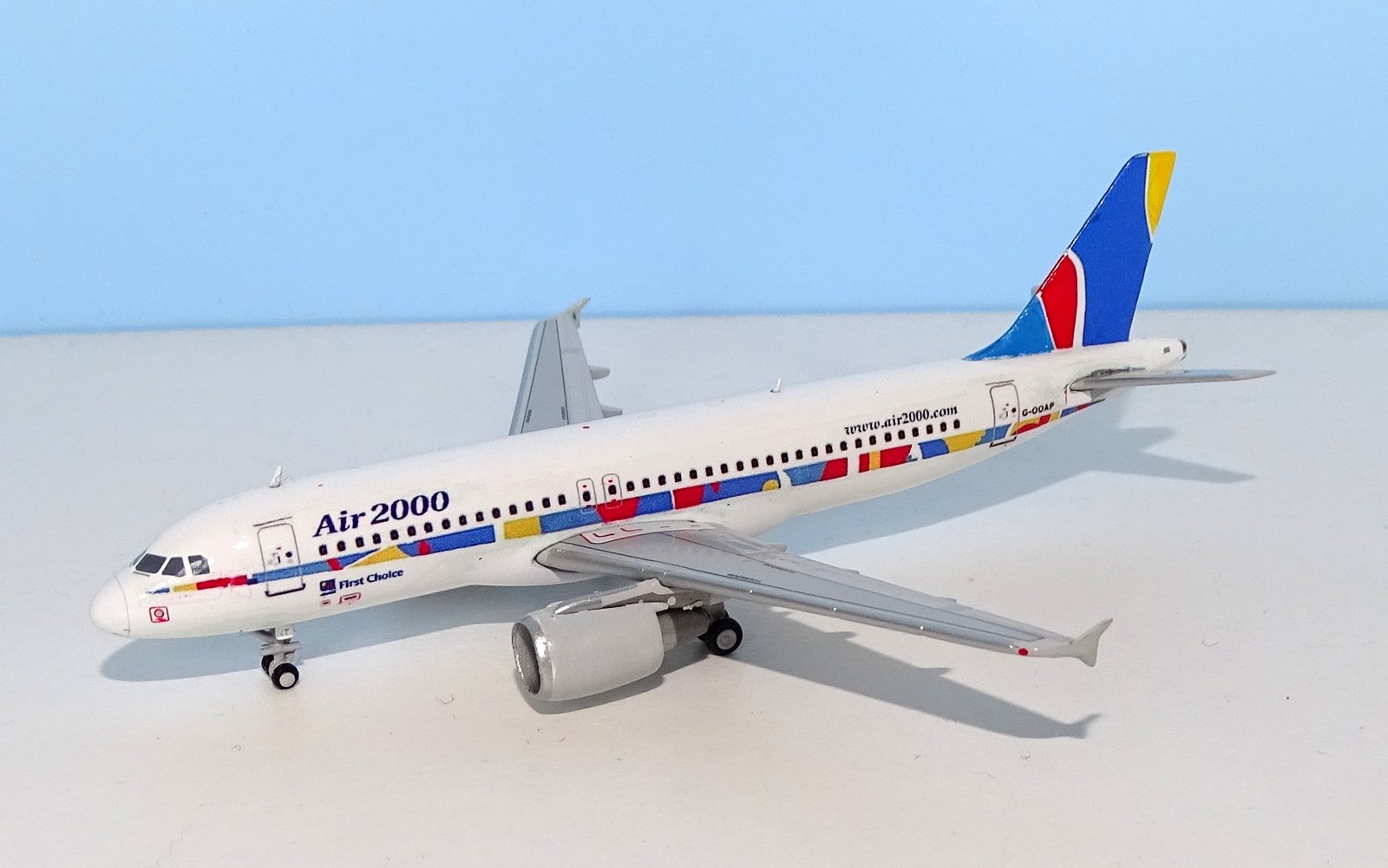
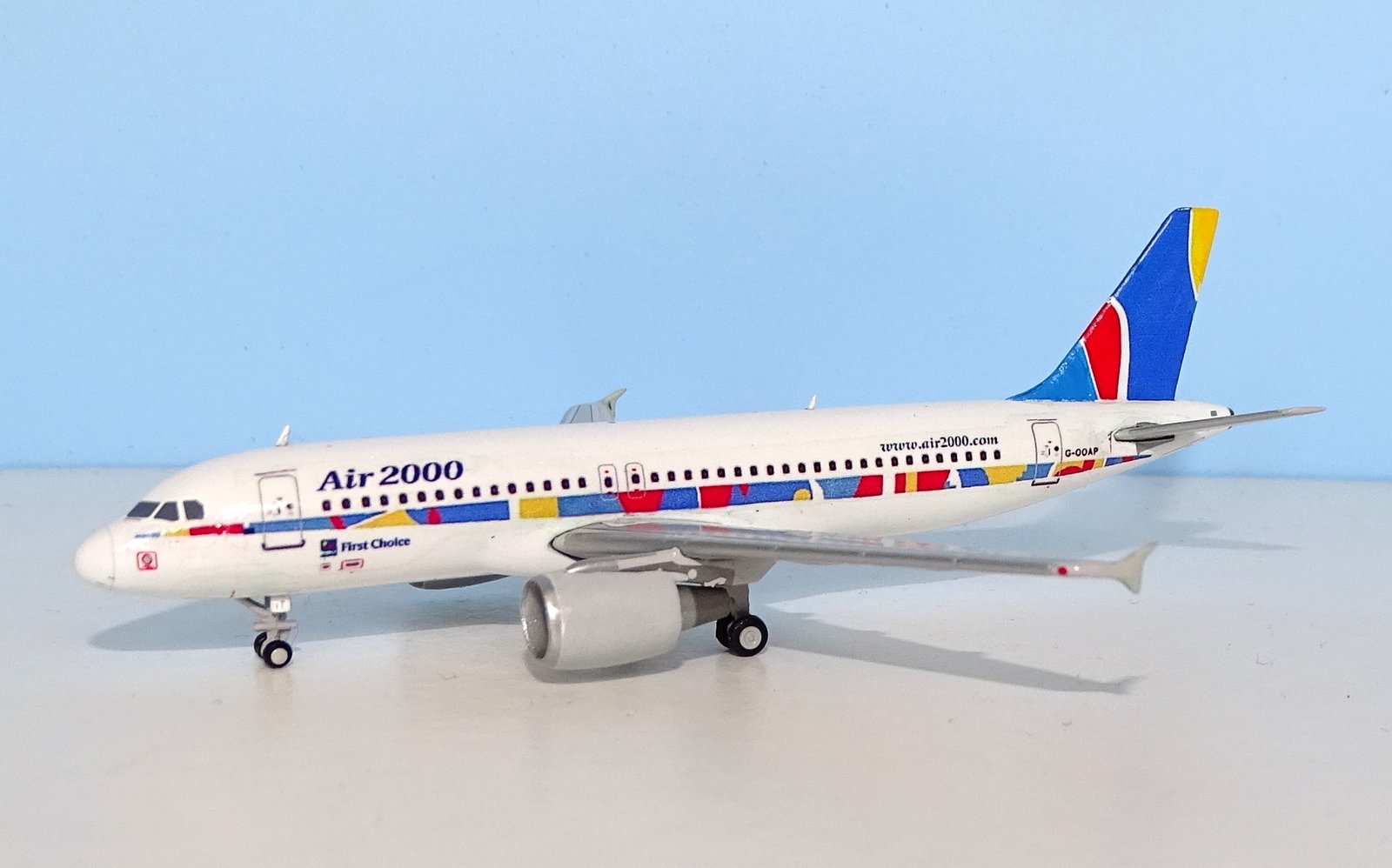
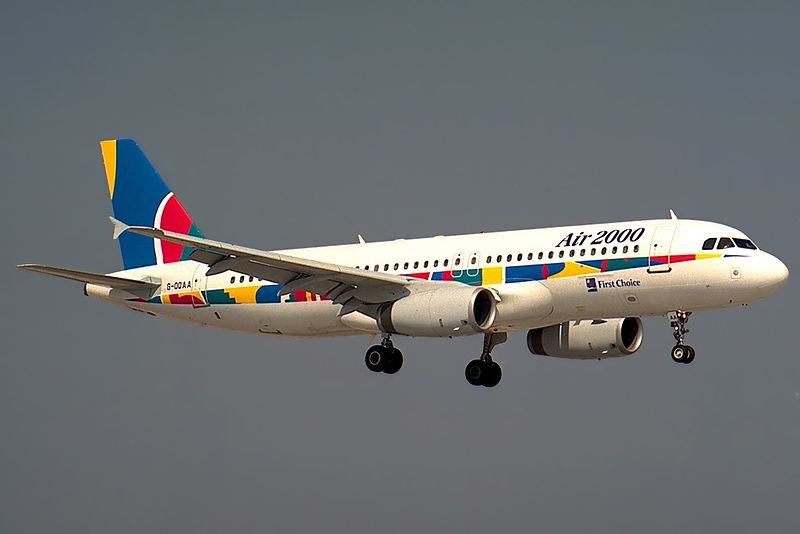
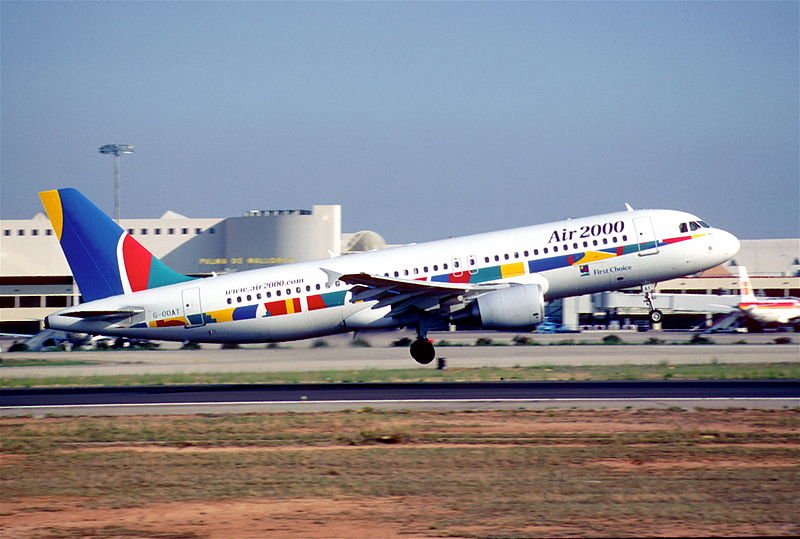
The A320s had been delivered in the smart and rather business like red and gold scheme but with Owners Abroad being rebranded as First Choice Holidays in 1994 it was only a matter of time until the branding of the companies was unified. Air 2000 aircraft already carried the First Choice logo but in 1996 the original colours were replaced with a bright new scheme modelled on the First Choice logo.
This scheme was a lot more colourful than the first with a vibrant holiday feel. It was named ‘Tapestry’ and the A320s were repainted into it quickly, with photo evidence of G-OOAC from December 1996 on Airliners.net.
Air 2000 Airbus A320-214 G-OOAP by MLC Customs (JC Wings donor)
Air 2000 Airbus A320-214 G-OOAP by MLC Customs (JC Wings donor)
Air 2000 Airbus A320-214 G-OOAP by MLC Customs (JC Wings donor)
Air 2000 Airbus A320-214 G-OOAP by MLC Customs (JC Wings donor)
Air 2000 Airbus A320-214 G-OOAP by MLC Customs (JC Wings donor)
Air 2000 Airbus A320-214 G-OOAP by MLC Customs (JC Wings donor)
Air 2000 Airbus A320-214 G-OOAP by MLC Customs (JC Wings donor)
Air 2000 Airbus A320-214 G-OOAP by MLC Customs (JC Wings donor)
Air 2000 Airbus A320-214 G-OOAP by MLC Customs (JC Wings donor)
Air 2000 Airbus A320-214 G-OOAP by MLC Customs (JC Wings donor)
Conslidation in the UK IT market was gathering pace as early as the late 90s and in June 1998 it was announced that First Choice would acquire the smaller Unijet for £110 million. Included in the deal was also the acquisition of the long haul tour operator Hayes & Jarvis for another £24 million. Unijet already had its own airline, Leisure International, and this was merged into Air 2000 on November 1, 1998.
Pedro Aragão, CC BY-SA 3.0 GFDL, via Wikimedia Commons
The Leisure International fleet included a pair of Boeing 767-300ERs, a trio of almost new Airbus A321s and a pair of Airbus A320s. Of the A320s only G-UKLL would join Air 2000 and it would be returned to the lessor, GATX, by May 1999 for onward lease to Volare Airlines.
That would not be the end of A320 additions for Air 2000 however as in December 1999 a deal was announced with Airbus for the acquisition of 8 CFM powered A320 family aircraft (5 A320s and 3 A321s).
Ken Fielding/https://www.flickr.com/photos/kenfielding, CC BY-SA 3.0 , via Wikimedia Commons
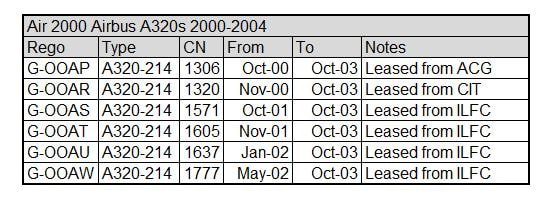
At the time the Air 2000 fleet stood at 4 A320s, 5 A321s, 13 757s and 3 767s. Deliveries of the new Airbuses were scheduled for late 2000 and conclude in 2002. Half would be leased and half owned. Of the leased quartet two were planned to come from International Lease Finance and two from CIT Group. In the end 6 A320s were eventually acquired with four coming from ILFC:
The A320/321 beat off competition for the order from the 737-800. The original quartet of A320s were IAE V2500 powered but the A321s inherited from Leisure International were CFM powered. The new A320s were ordered to replace the original quartet whose leases were due to expire in late 2000. Two would end up with Mexicana and the other pair with Indian Airlines.
Aero Icarus from Zürich, Switzerland, CC BY-SA 2.0 , via Wikimedia Commons
Air 2000 carried 6.5 million passengers in 2002, which would be the last full year that it carried its own name. That year a new scheme was adopted with G-OOAW the first A320 to wear it in June 2002. The scheme was much simpler and less colourful than the Tapestry version and was named Starfish.
Ken Fielding/https://www.flickr.com/photos/kenfielding, CC BY-SA 3.0 , via Wikimedia Commons
The continuing brand consolidation in the UK IT market reached its zenith for First Choice in October 2003 when it was announced Air 2000 would be rebranded as First Choice Airways. With the stagnation of the IT market and the onslught of low cost airline travel it was inevitable that further consolidation would be needed and in March 2008 First Choice Holidays PLC was acquired by TUI AG. TUI’s own in house airline, Thomsonfly, was merged with First Choice Airways to form Thomson Airways (now TUI Airways).
Not all of the newer A320s survived to fly with Thomson. G-OOAP joined Thomas Cook Belgium in 2007 but the other five gained the TUI smile. The A320 certainly proved itself a versatile and reliable platform in Air 2000 service.