As with many developing nation’s national carriers, that have had long glorious histories, Air India is today a model of mismanagement, inefficiency and financial disaster. There have been many attempts to change the airline and probably the most effective of these was during the tenure of Rajan Jetley from 1987-1990. Unfortunately, his successful reforms did not long survive his departure and the airline lurched back into its old patterns all too quickly.
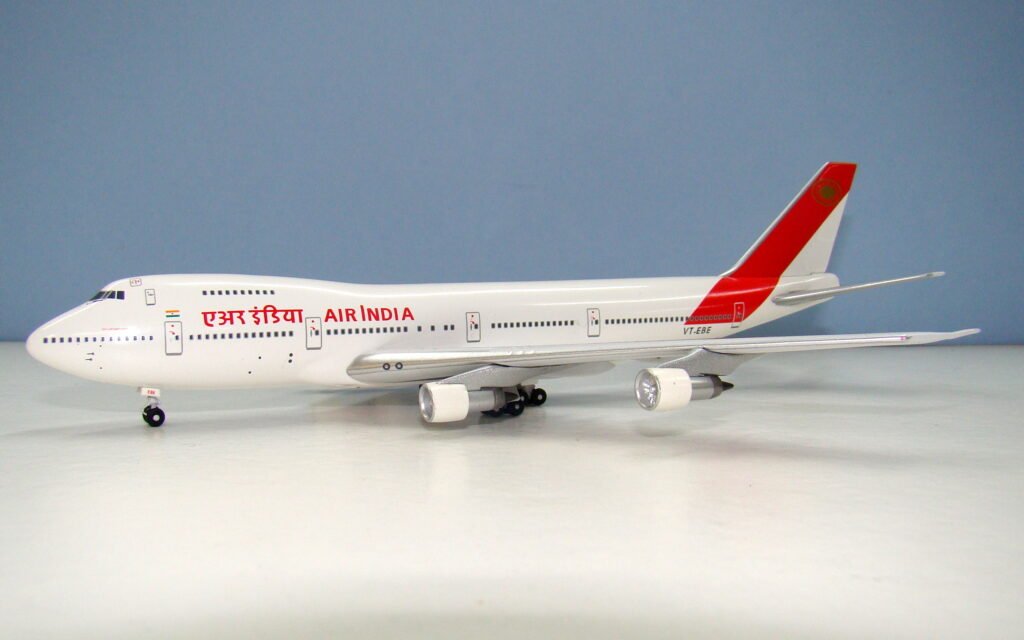
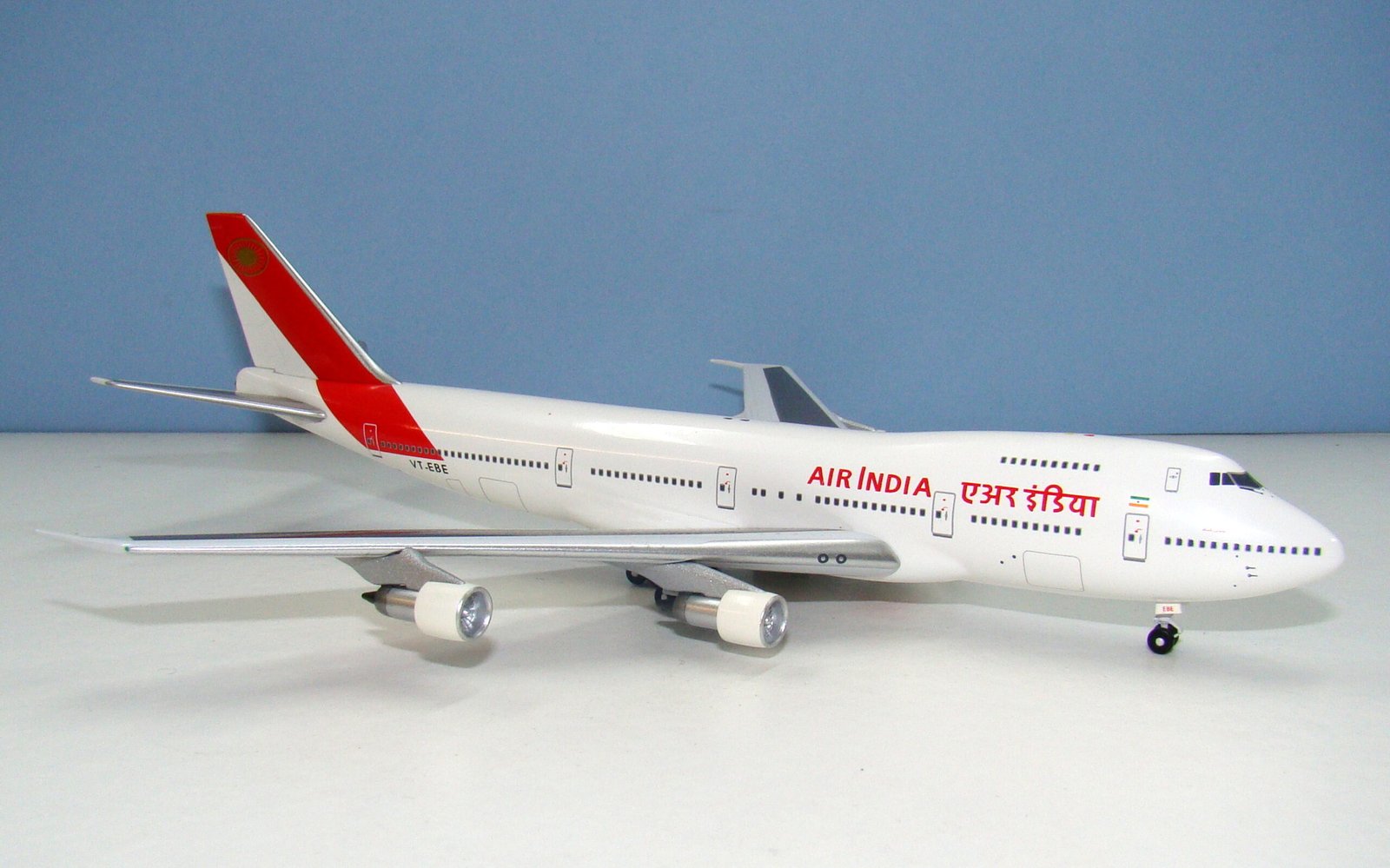
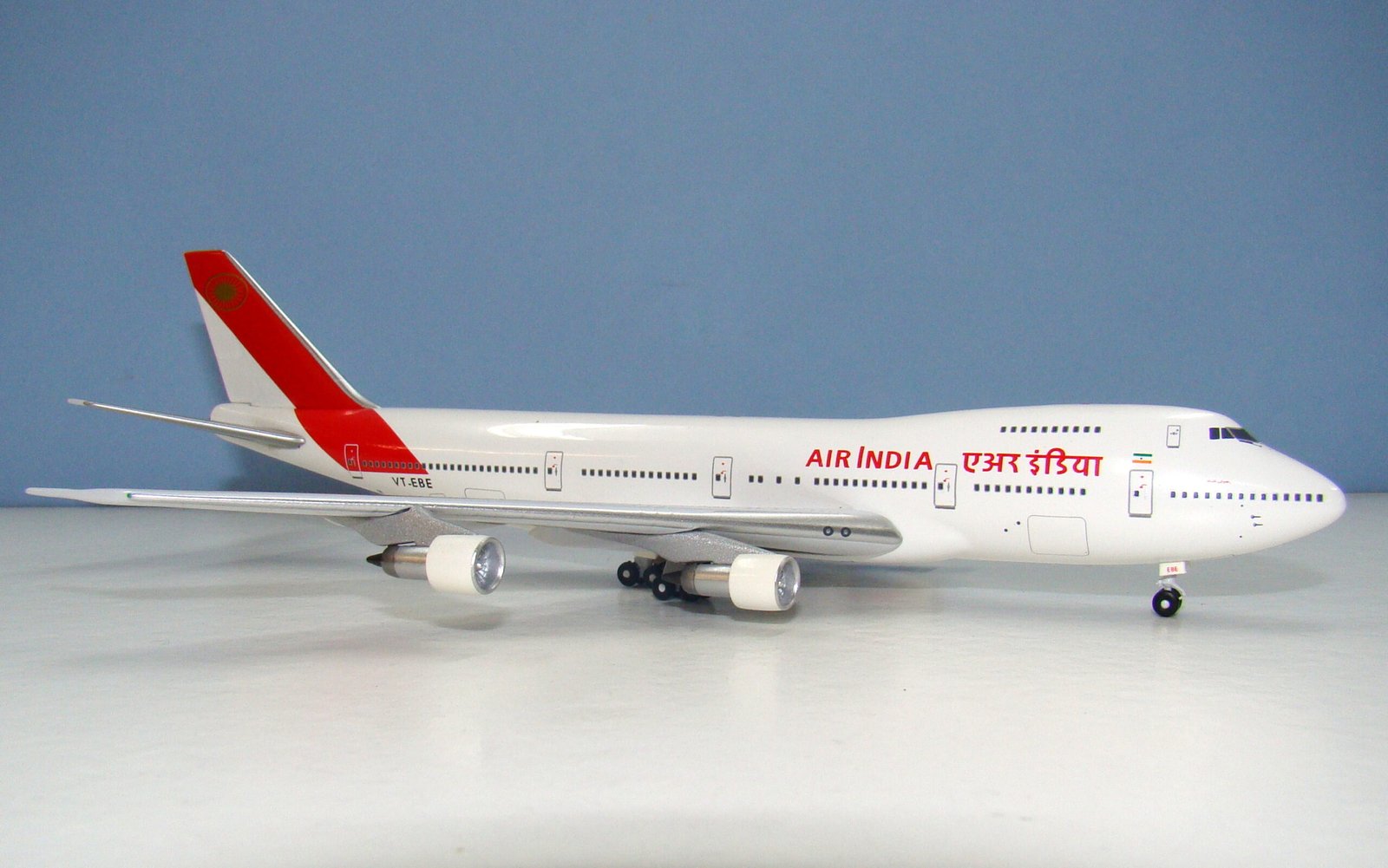
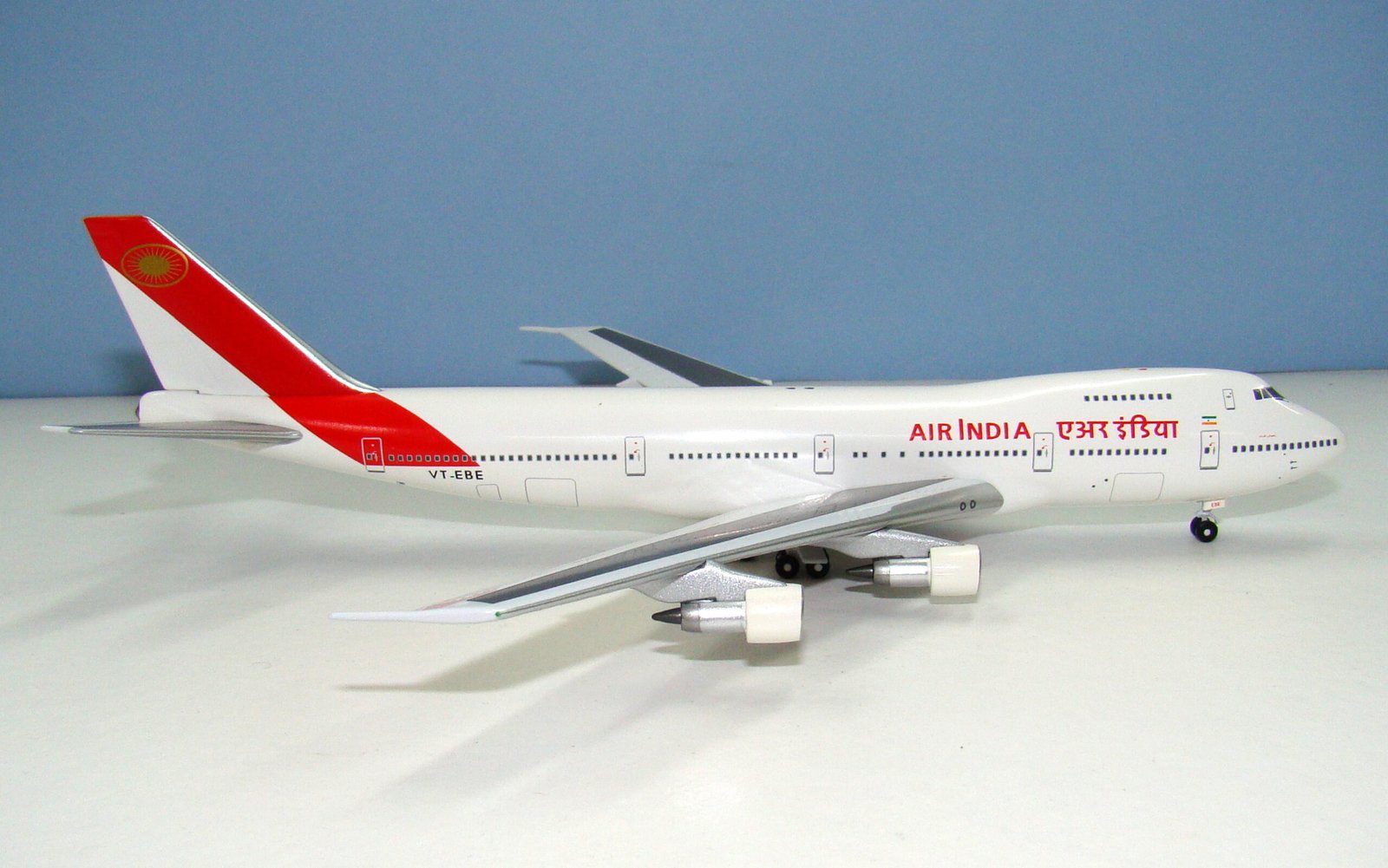
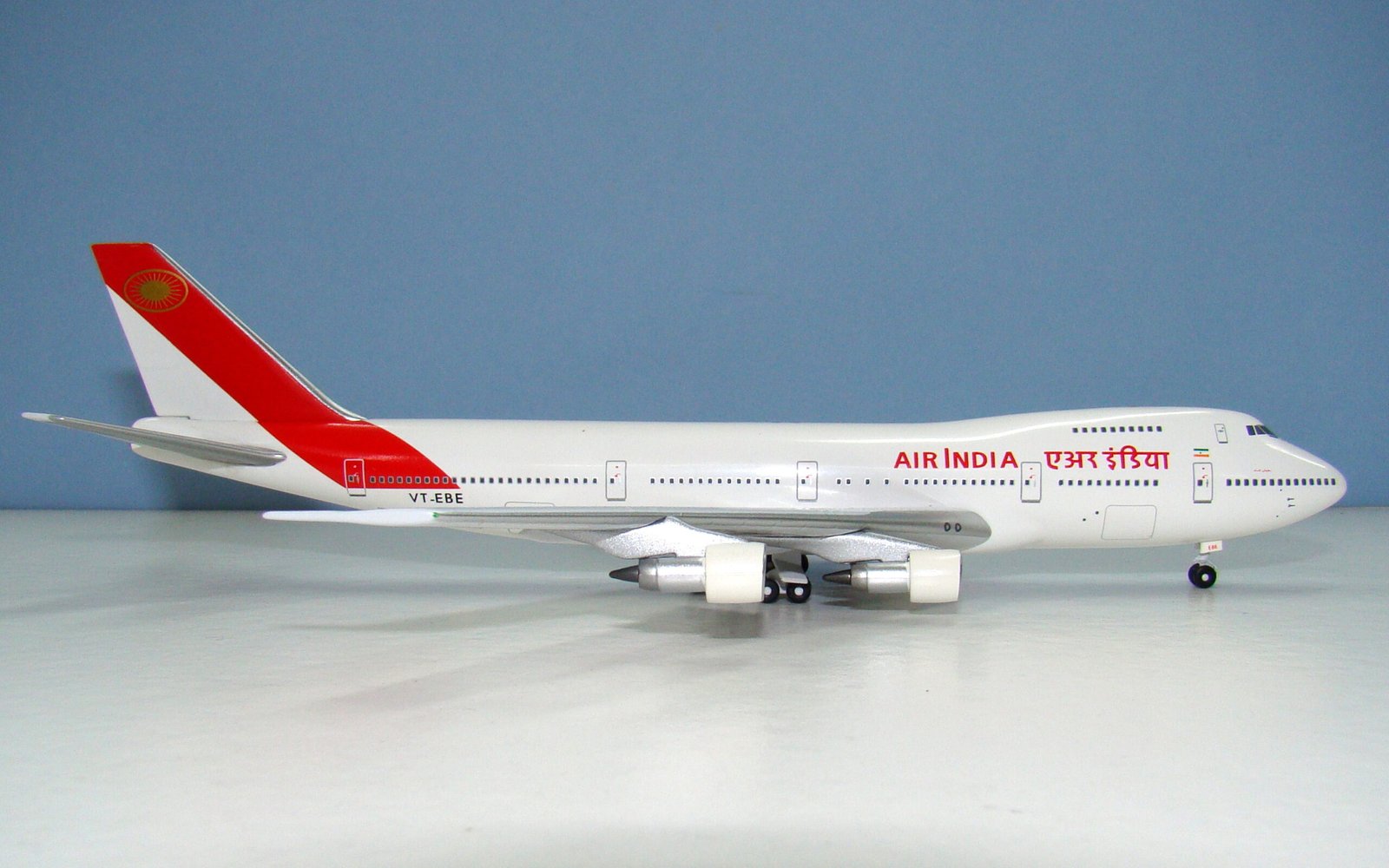
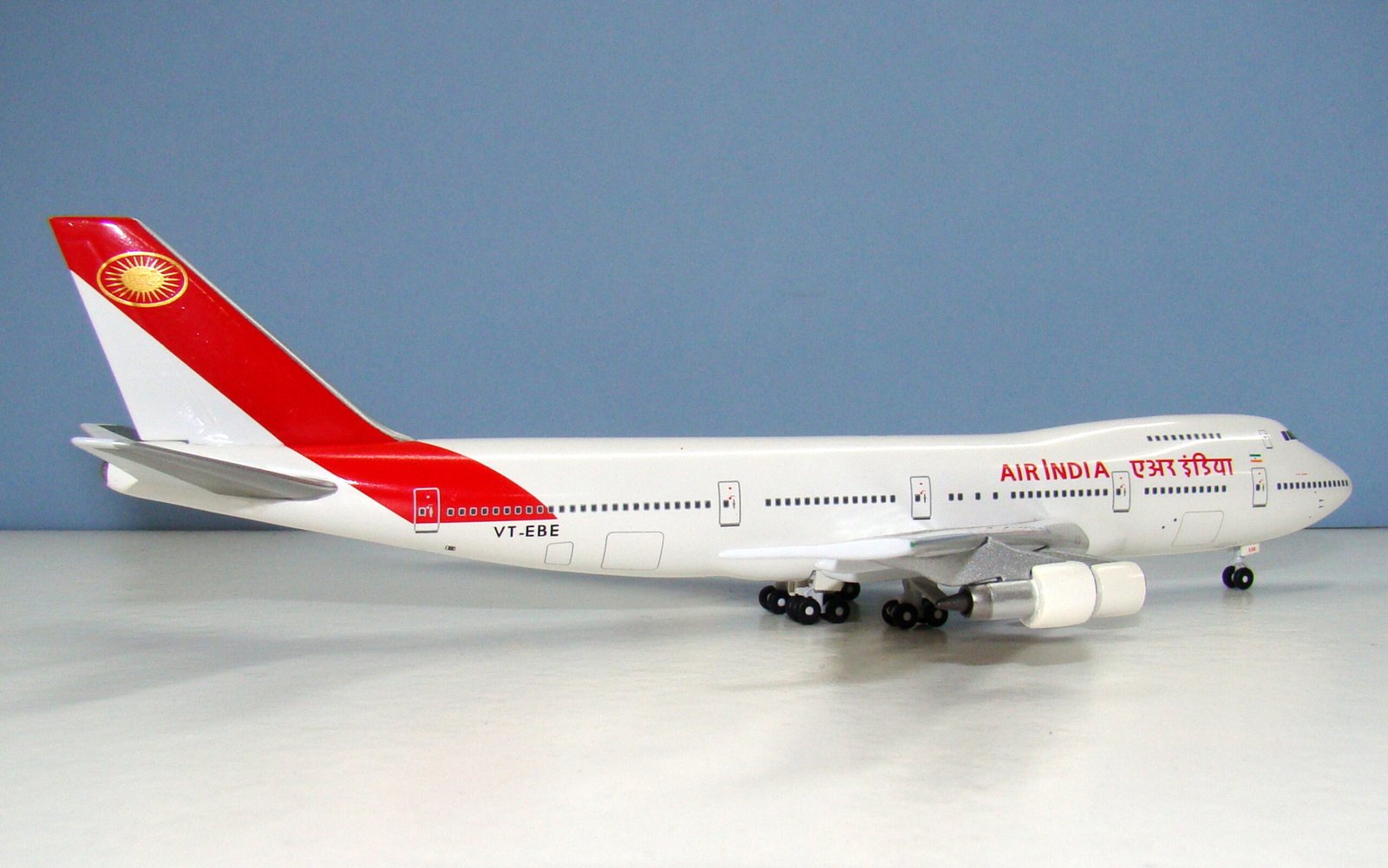
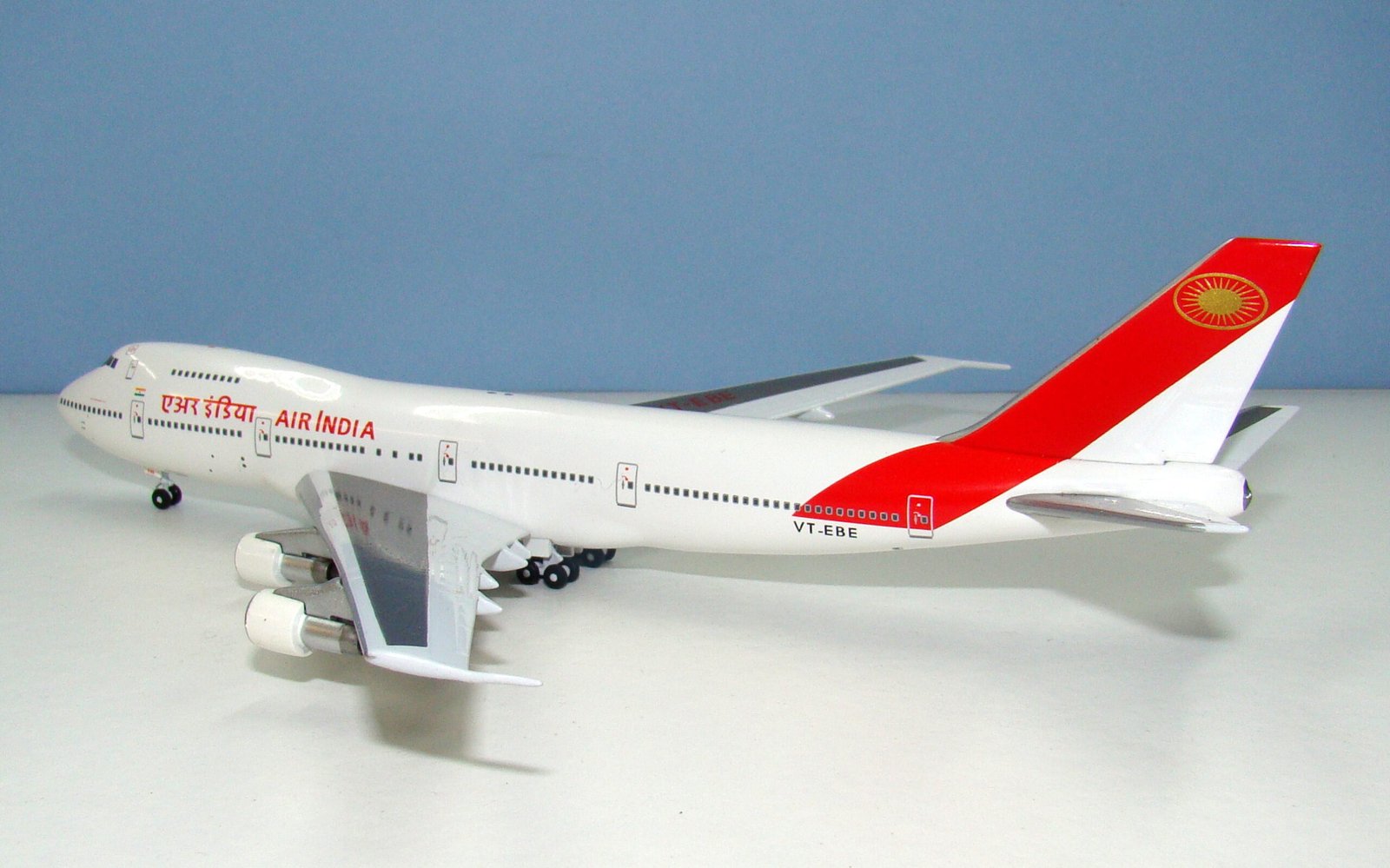
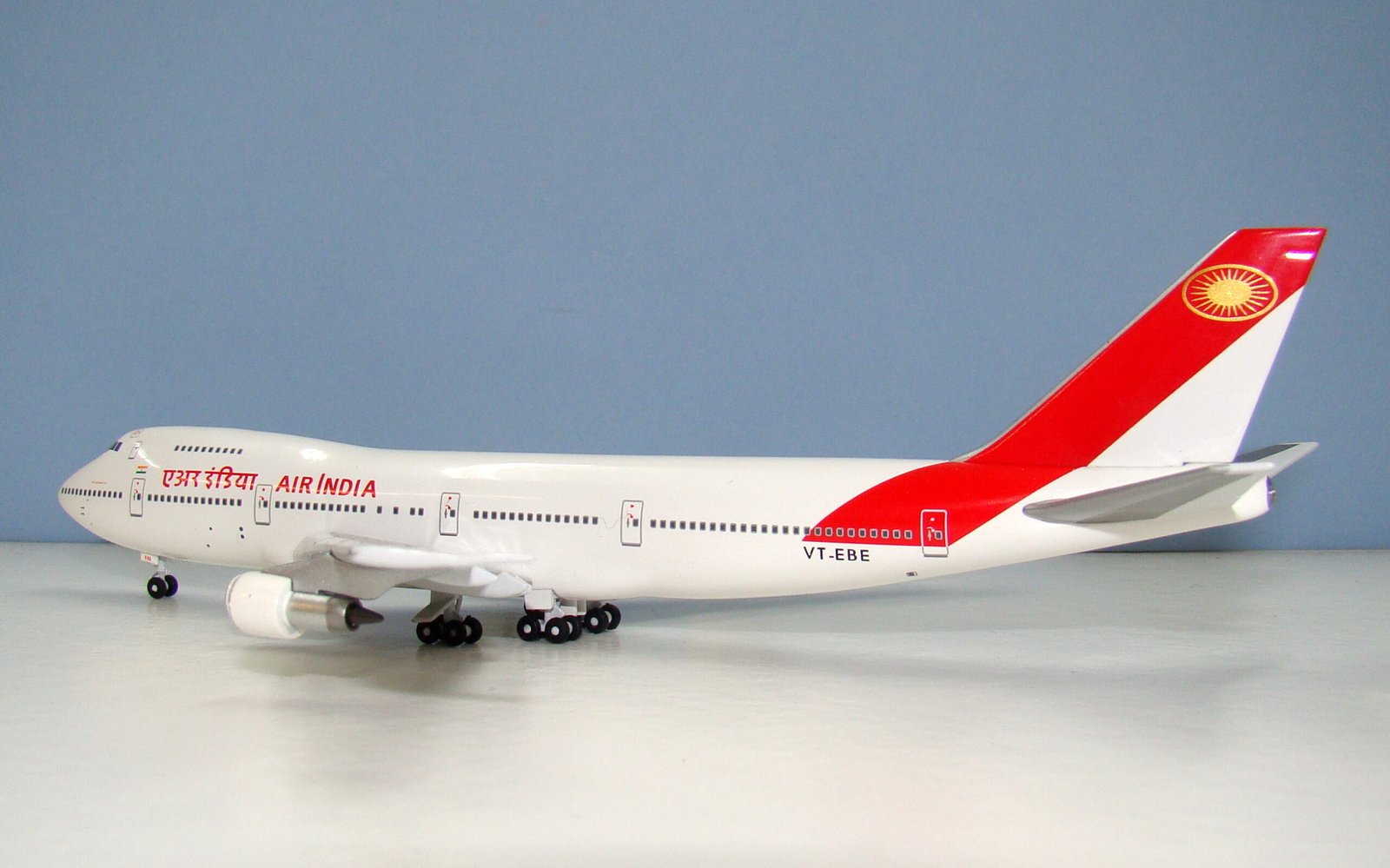
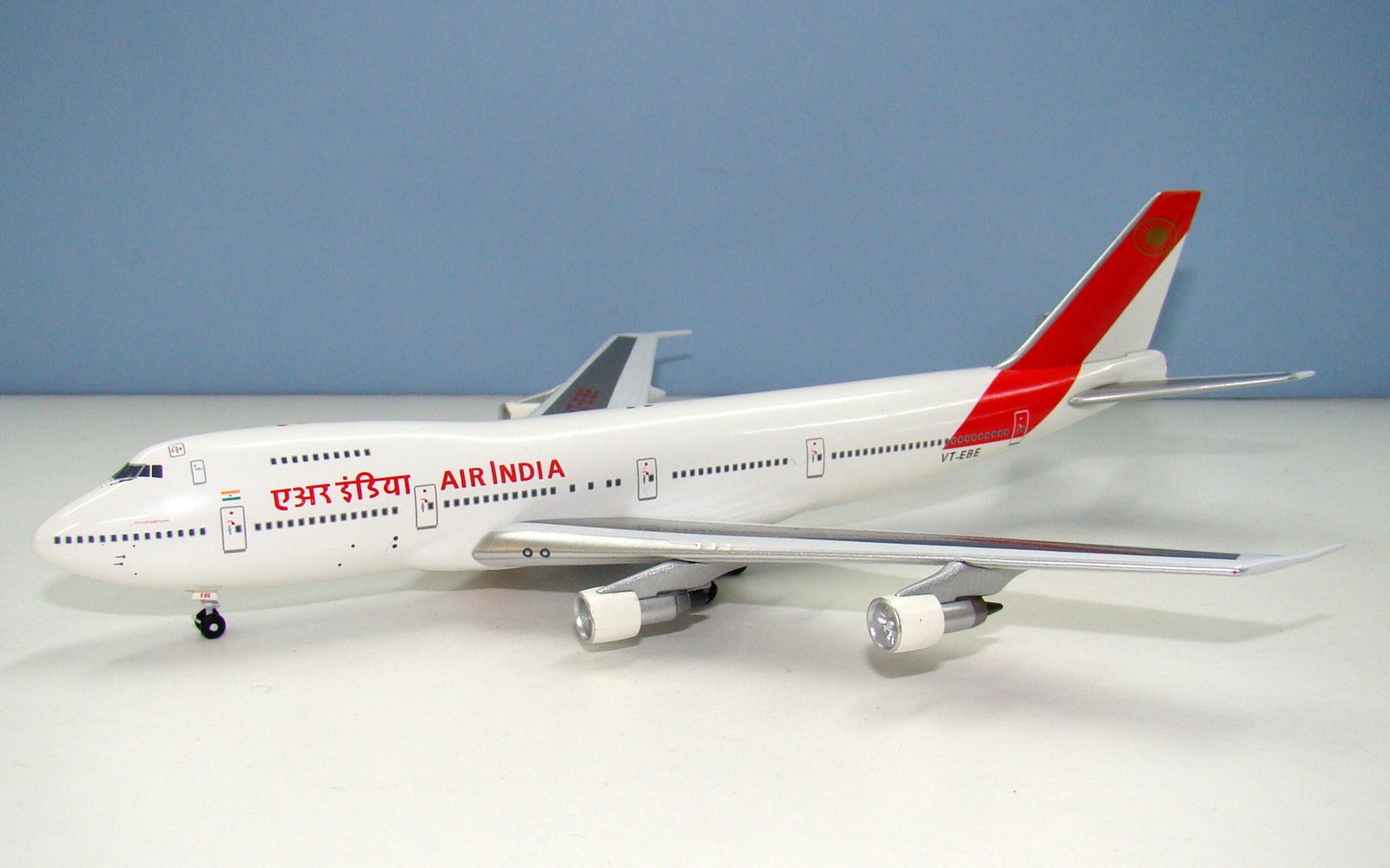
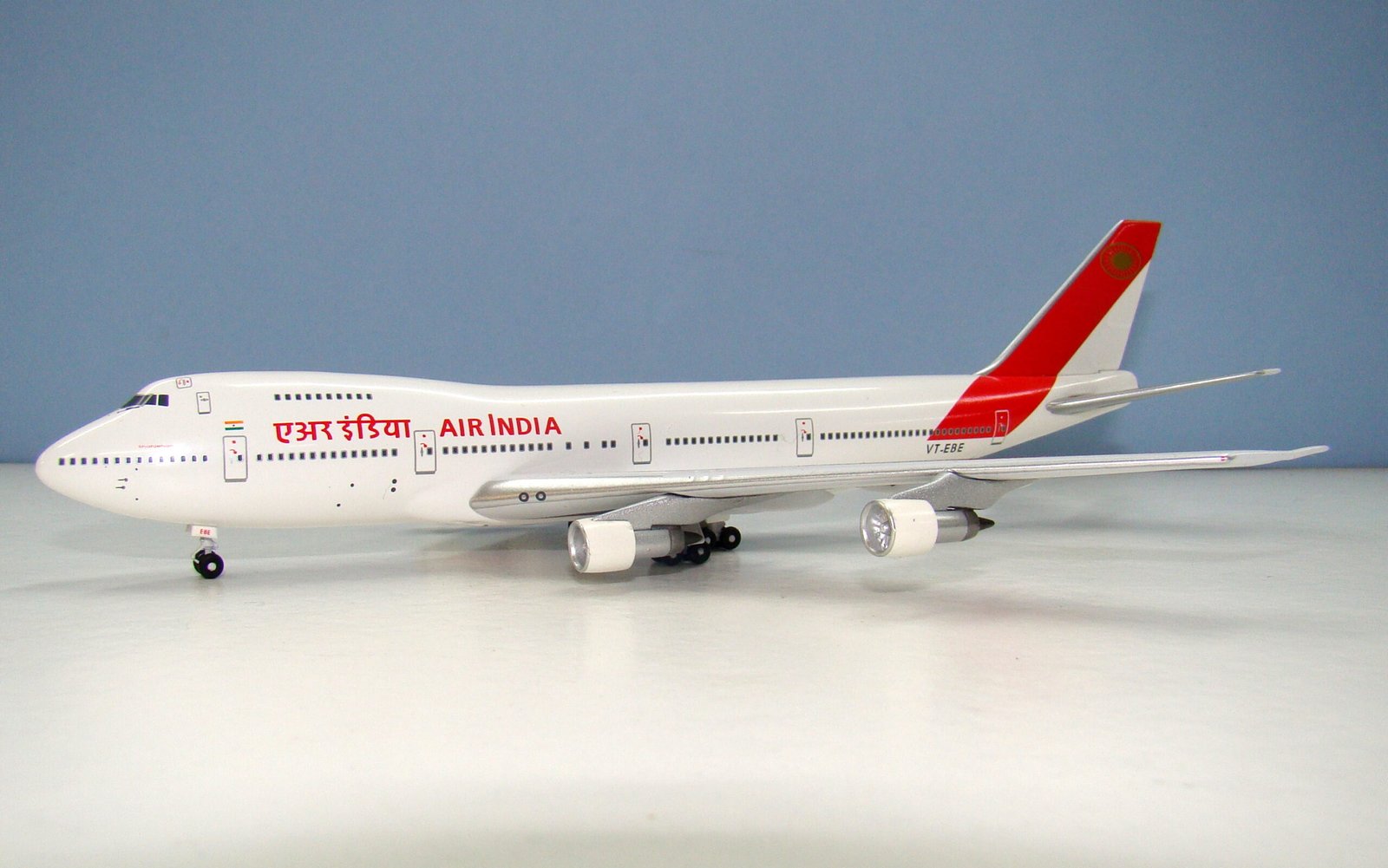
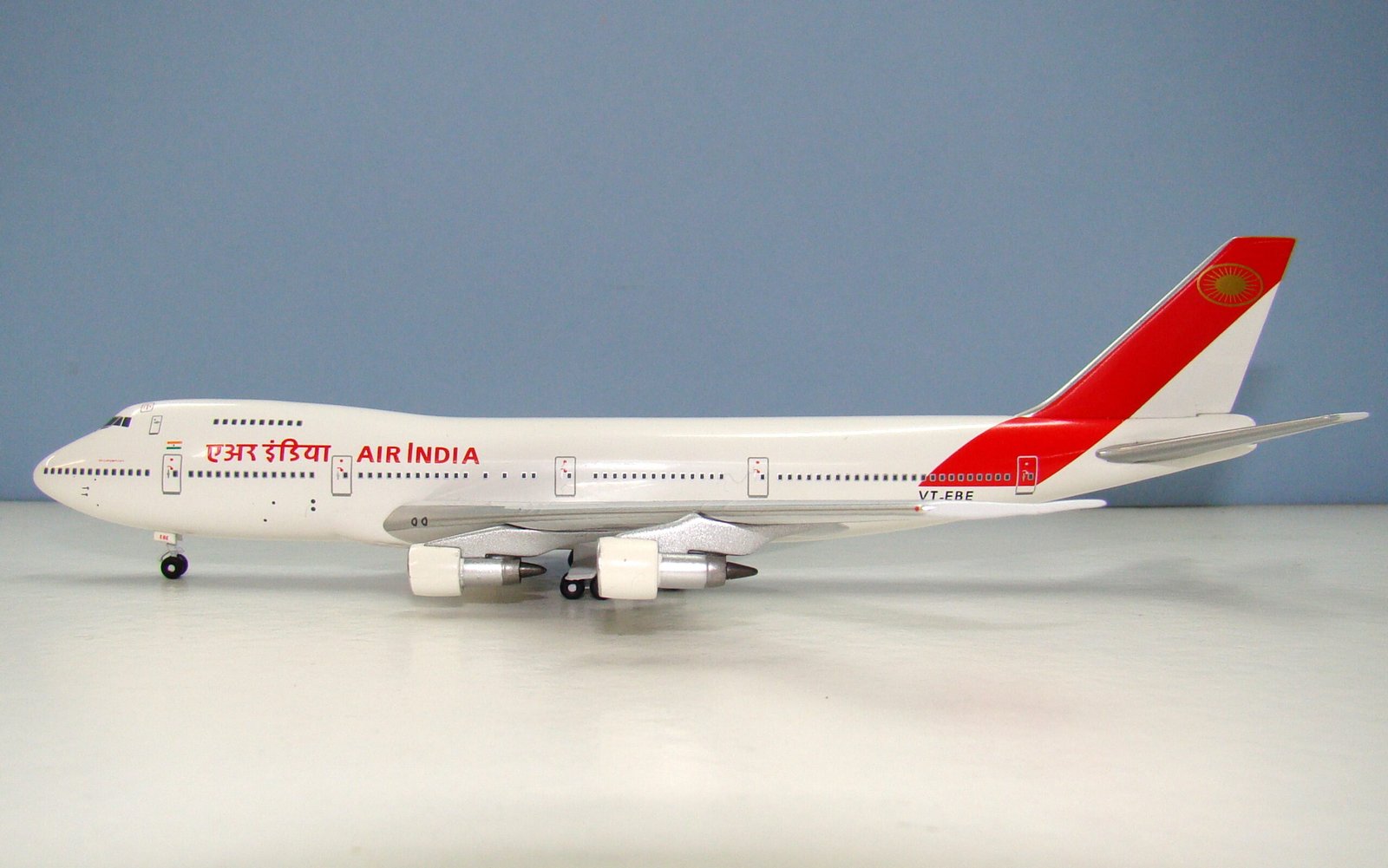
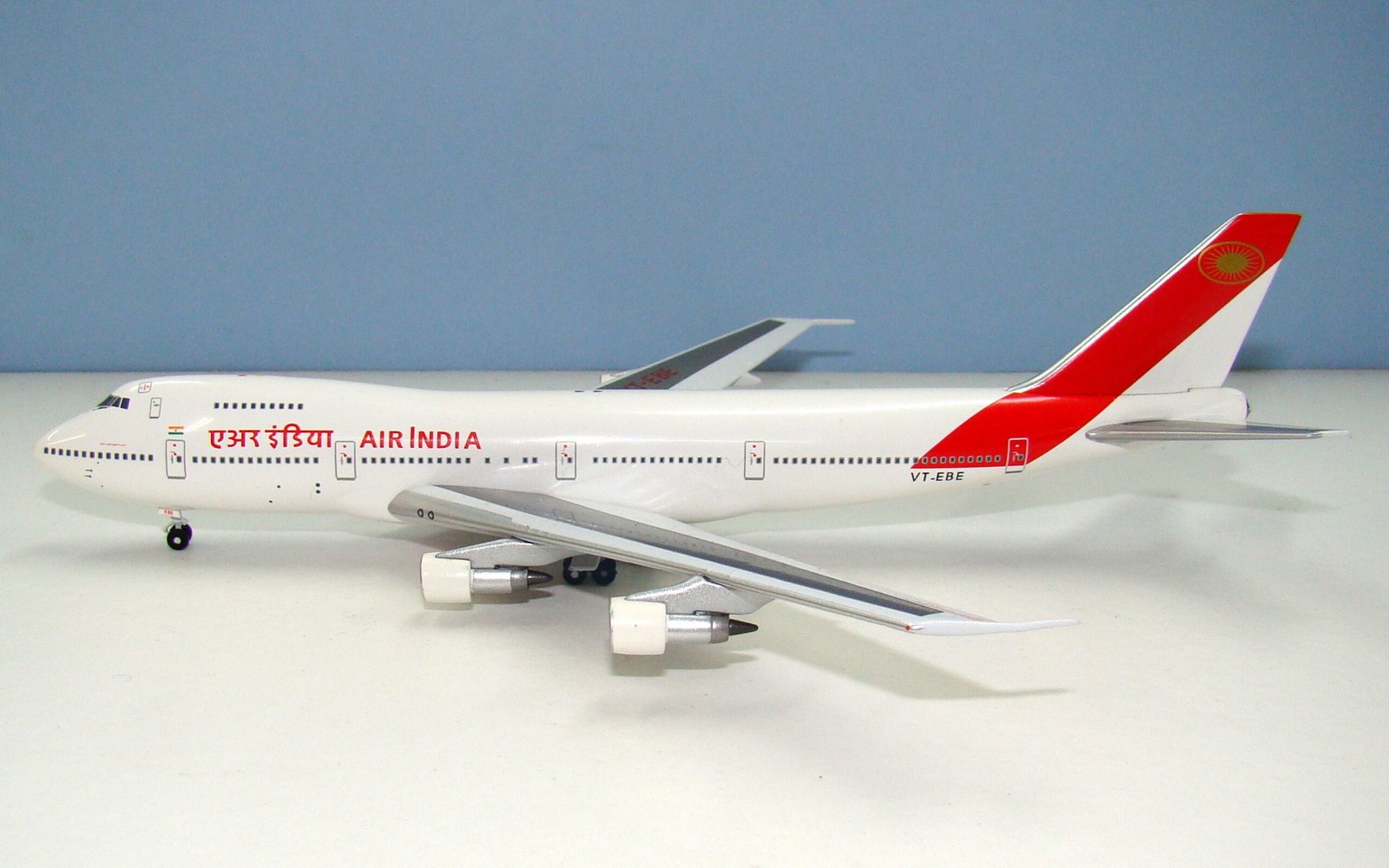
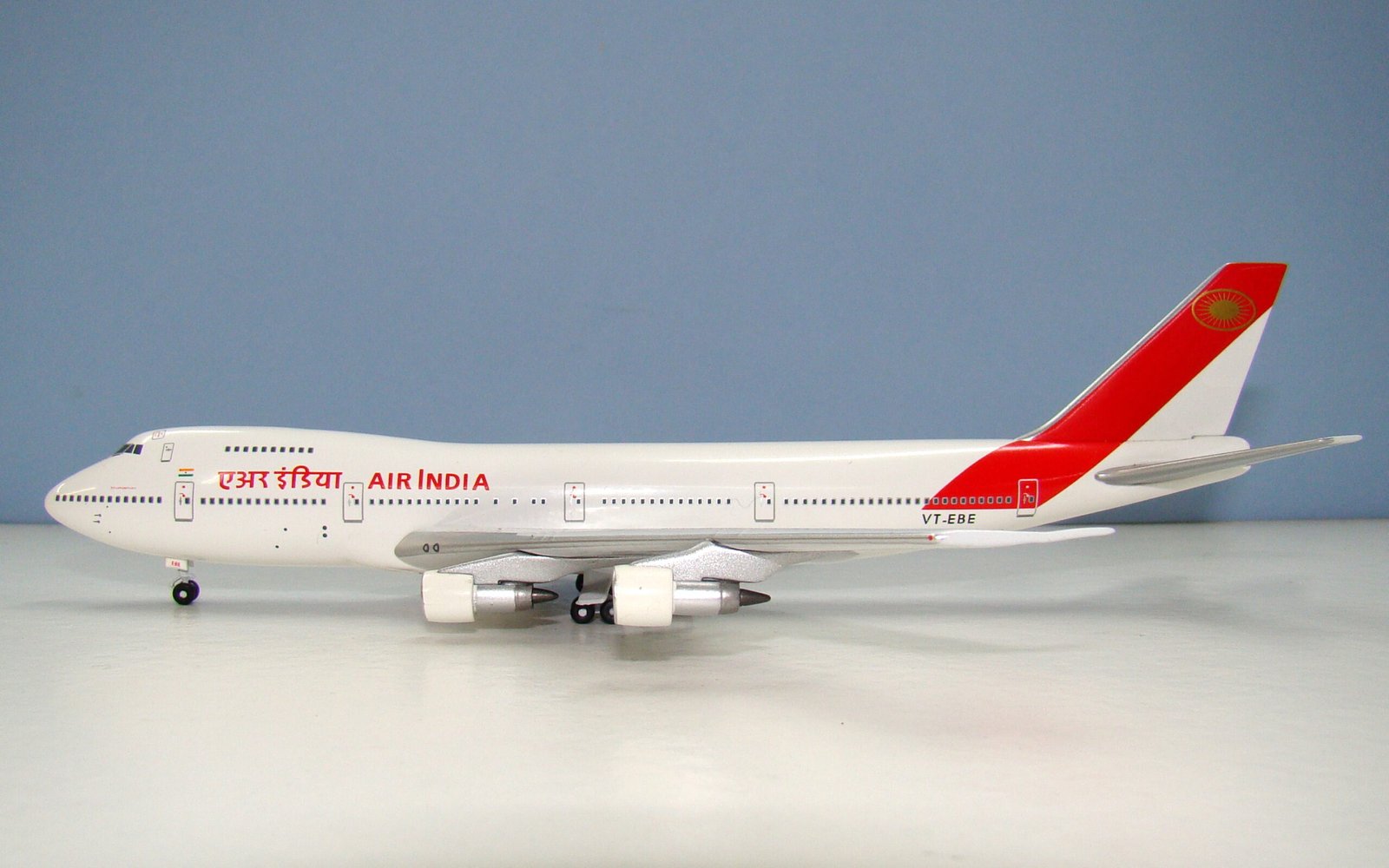
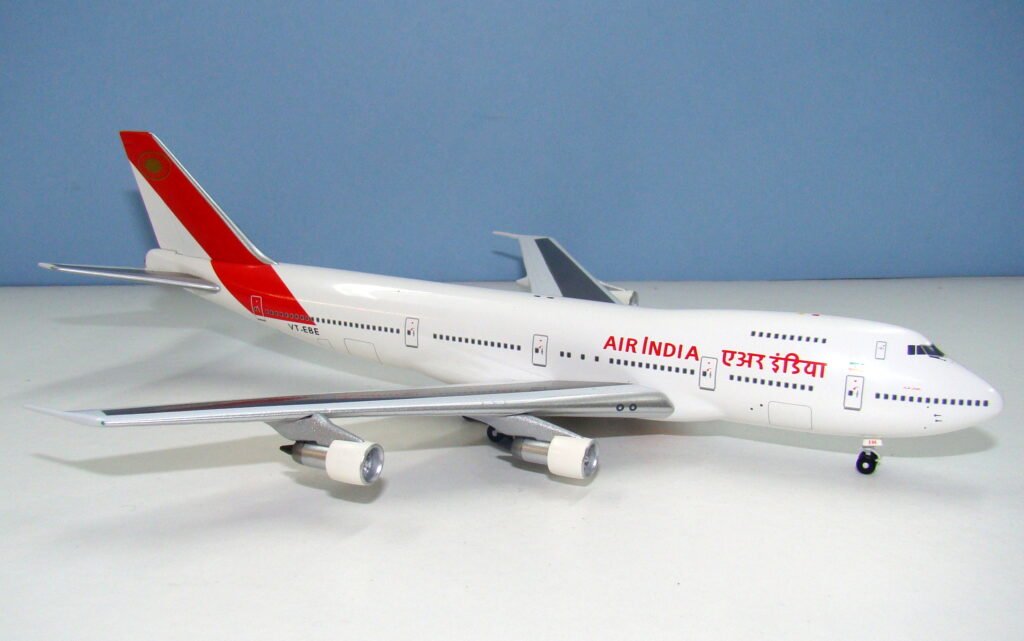
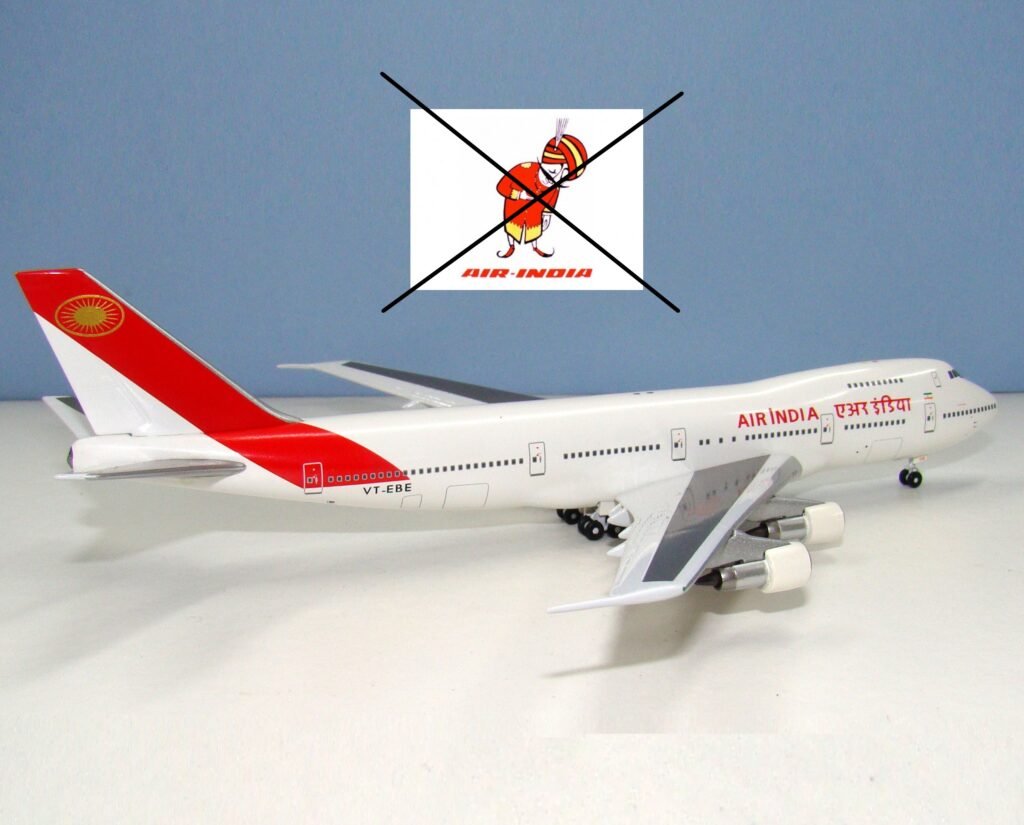
Air India Boeing 747-200B VT-EBE Aviation400 1:400 Scale Model Airliner
Air India had a mixed 1980s with the loss of one of its 747s, in a highly publicized over ocean bombing in June 1985, a major negative impact despite the airline itself not being at fault. I still remember the image of the huge 747 tail with the Air India logo emblazoned floating on the surface of the Atlantic. The airline’s productivity had grown impressively since the introduction of widebody 747s in 1971, but the carrier was still inefficient and lost $23 million in 1987/88.
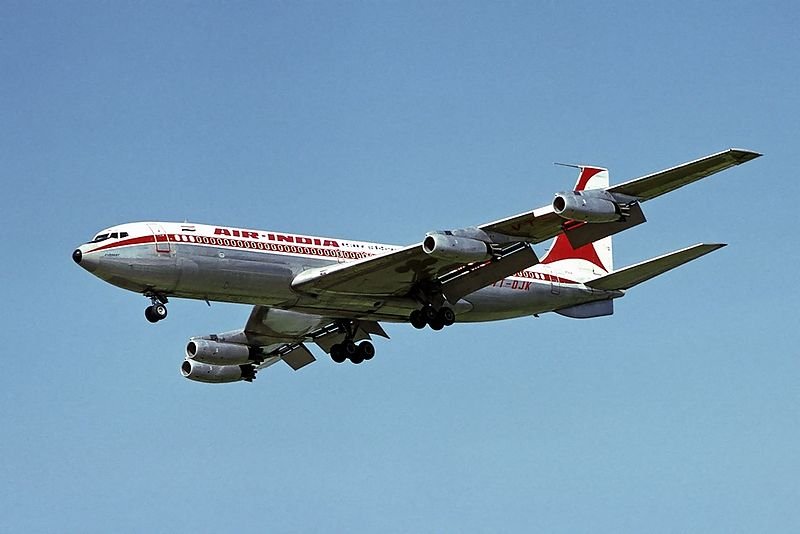
A 707-437 in the pre-1971 colours here landing at LHR in 1979. Photo by Steve Fitzgerald from Wikipedia
To stem the losses and modernize the airline the Prime Minister Rajiv Gandhi appointed Rajan Jetley as the airline’s new managing director in 1987. Air India was mired in a perfect storm of issues. It had a dreadful reputation (one European travel body named it amongst the 10 worst airlines), powerful and disruptive unions, was over staffed, inefficiently run with a staff culture of entitlement, suffered government interference and had an aging fleet.
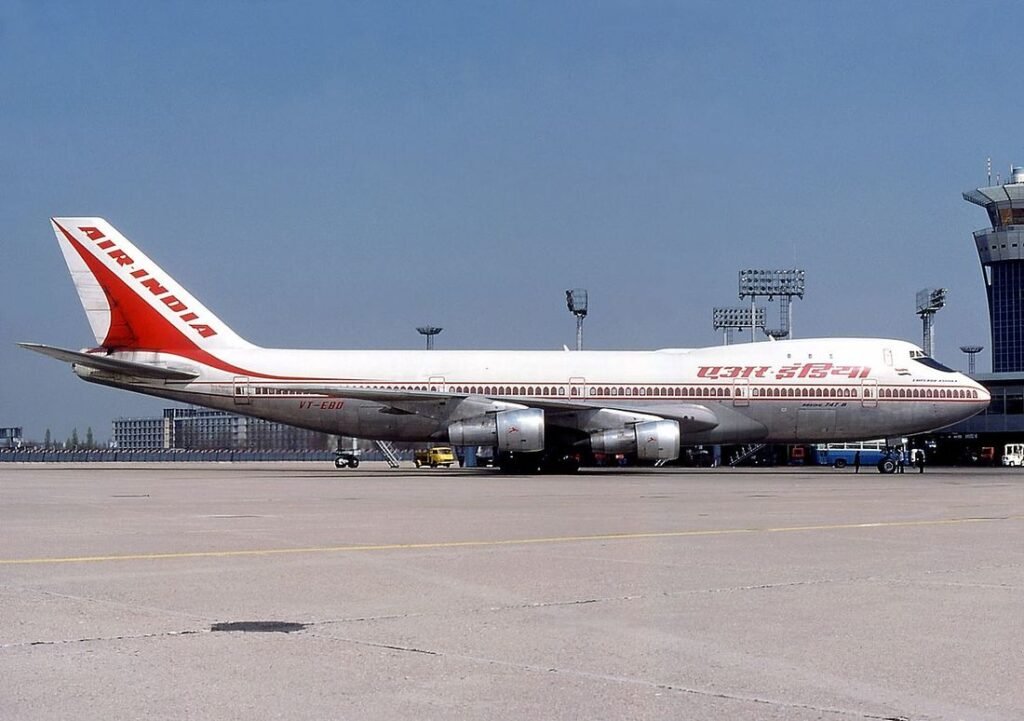
VT-EBD respendent in the much-loved 'Flying Palace' scheme in 1978. Photo by Michael Gilliand from Wikipedia
Jetley, only 37 years old, was under no illusions as to the problems. He moved towards emphasizing discipline and appearance to increase service standards and win passengers back to the premium products. As he said:
“For years, we’ve been packing the back of the bus, but our first-class and business-class cabins have been going empty”
About the fleet he stated:
“Fifty percent of our fleet is over 15 years old”
One of his first actions was to retire old 707s and begin a re-equipment programme with new 747-300s and 400s plus smaller A310s. The airline’s fleet was only twenty aircraft yet it had over 17,000 employees whilst Singapore Airlines with twice as many aircraft had only 9,000.
Air India Airbus A300B4 VT-EHQ Aeroclassics 1:400 Scale Model Airliner
As you’d expect the powerful vested interests within Air India did not look upon Jetley as a welcome figure. In fact, his moves to run Air India more effectively successfully managed to put almost everyone’s noses out of joint. He made sweeping changes at management level and upset operations, commercial and pilots. By December 1988 the airline’s part time Chairman Ratan Tata had resigned due to Jetley’s management style (and after his failure to get the airline privatized so his own family could take ownership).
The Centaur logo had been part of the livery since 1948
Within the first 18 months of his tenure Jetley worked hard to break the major unions stranglehold on the company, successfully seeing off a strike by cabin crew, forcing pilots to work longer hours, cancelling the first-class privileges of 1,300 managers and withdrawing the chauffeur facilities for overseas station managers. The result was a series of major flight disruptions towards the end of 1988 that led to over 100 flights being cancelled and 250 delayed by over 6 hours during a 7 week period. Around 8,000 passengers were stranded around the world. Nonetheless temporarily at least Jetley was successful. He was willing to suffer short term losses for long term gains.
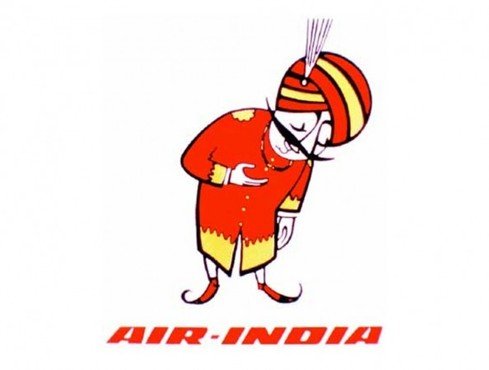
The old Maharaja
His aggressive style forced the airline into profitability despite itself. By the end of 1988-89 the airline recorded a $23 million profit. In the year 1989-90 a record $41 million profit was made and this was followed by $42.7 million a year later. However far from being seen as a major success the Jetley era is seen by many as the opposite and in fact he is still a thoroughly divisive figure.
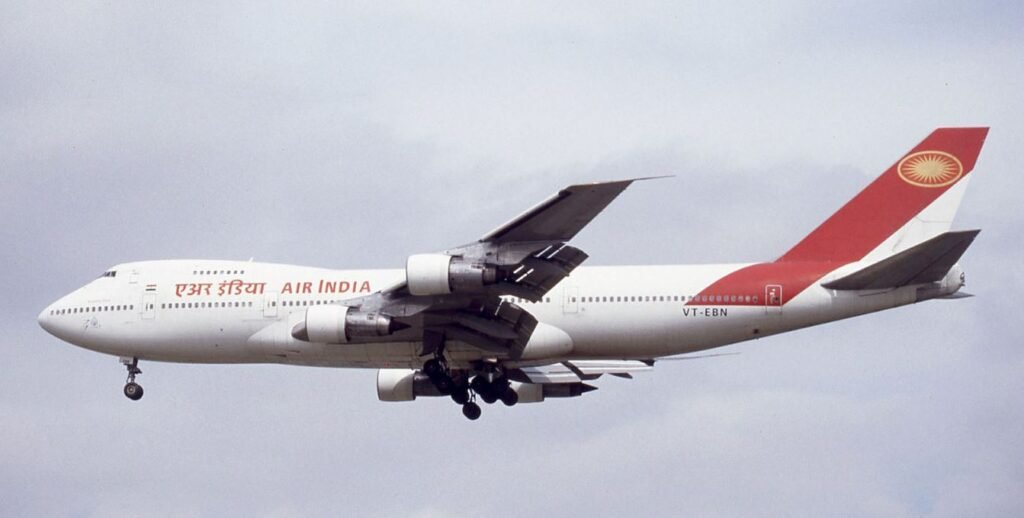
VT-EBN was the first to wear the new livery
A large part of this is due to another aspect of Jetley’s reign – the introduction of a new modern image for the grand old airline. The introduction of new 747s in 1971 also heralded the introduction of a new ‘Flying Palace’ livery with Rajasthani arches around each of the windows. This went hand in hand with the slogan ‘Your Palace In the Sky’ and of course the airline’s famous Maharajah mascot.
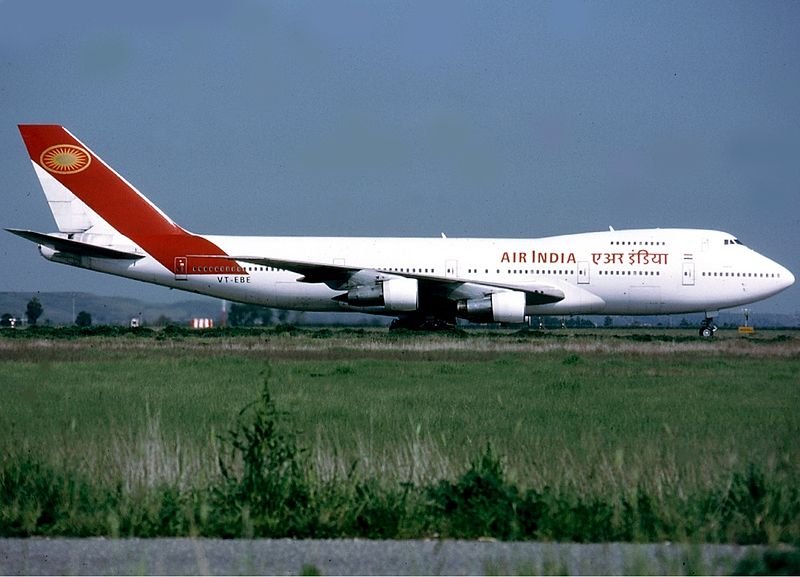
VT-EBE in April 1990. Photo by Guido Allieri from Wikipedia
Jetley was something of an iconoclast and whereas within India the livery and Maharaja were almost revered he saw them as reminding passengers of ‘East European Airlines’. Jetley hired the US firm Landor Associates (who had restyled British Airways only a few years earlier) to recreate a new image for every aspect of Air India.
In October 1989 the $35 million rebrand was unveiled and saw the retirement of both the 1971 livery and the Maharaja. The new slogan was ‘the pace of the West and the grace of the East’. The new livery comprised a euro-white fuselage with a glittering golden sun with 24 spokes emblazoned on the tail against a deep red sash.
Air India Boeing 747-200B VT-EBE Aviation400 1:400 Scale Model Airliner
Air India Boeing 747-200B VT-EBE Aviation400 1:400 Scale Model Airliner
Air India Boeing 747-200B VT-EBE Aviation400 1:400 Scale Model Airliner
Air India Boeing 747-200B VT-EBE Aviation400 1:400 Scale Model Airliner
Air India Boeing 747-200B VT-EBE Aviation400 1:400 Scale Model Airliner
Air India Boeing 747-200B VT-EBE Aviation400 1:400 Scale Model Airliner
Air India Boeing 747-200B VT-EBE Aviation400 1:400 Scale Model Airliner
Air India Boeing 747-200B VT-EBE Aviation400 1:400 Scale Model Airliner
Air India Boeing 747-200B VT-EBE Aviation400 1:400 Scale Model Airliner
Air India Boeing 747-200B VT-EBE Aviation400 1:400 Scale Model Airliner
Air India Boeing 747-200B VT-EBE Aviation400 1:400 Scale Model Airliner
Air India Boeing 747-200B VT-EBE Aviation400 1:400 Scale Model Airliner
Internally there were new uniforms for the crew and a new fit for the fleet. Seating had greater leg room, overhead bins were redesigned and there was new decor and lighting throughout. Royal Doulton china was to be used in the new Sun Executive class along with a new range of wines. The audio-visual experience was also expanded with new music and modern movies.
It was all part of Jetley’s strategy to focus on lucrative full fare paying passengers rather than the economy class fares that still made up much of its traffic, especially to the Middle East. Jetley said: ‘It is a public statement of change and a product modernisation exercise in the classic marketing sense.’
The first aircraft unveiled in the new scheme was the 747-200 VT-EBN, Emperor Rajendra Chola. Unfortunately for Jetley the new scheme was loathed by the Indian public. Deeply conservative they were appalled at the removal of the ‘Flying Palace’ (in particular the temple windows) and especially the Maharaja character. These sentiments were no doubt whipped up by elements from within the airline and the press.
Air India Boeing 747-200B VT-EBE Aviation400 1:400 Scale Model Airliner
There were street demonstrations and staff refused to call the First Class lounges Sun Lounges and instead continued to call them Maharaja lounges. Inflight crews made a point of mentioning the Maharaja during in flight announcements. In retrospection it is hard to not see the outcry as a weapon used by disgruntled staff to attack the Jetley management they hated.
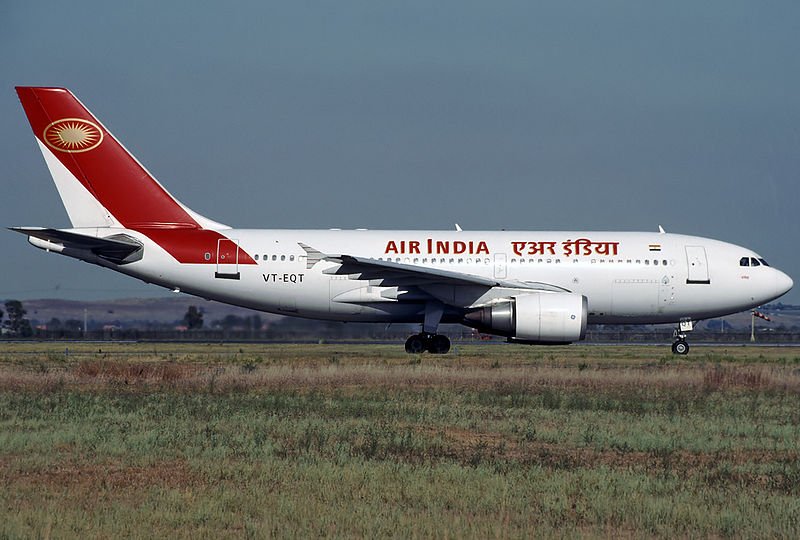
At least some of the A310s got into the new scheme. Here is VT-EQT in 1992. Photo by Aldo Bidini from Wikipedia
In July 1990 Rajan Jetley, still only 40 years old, announced that he would resign. He said:
“I needed something more challenging, and I basically felt that in about three years I’d done the job that I was assigned”
Whether he jumped or was pushed is unclear however he was hired on a 5-year term and made it only 3 and a half. Despite the impressive financial turnaround he oversaw he clearly didn’t make many friends within the airline. Jetley was replaced temporarily by Subhash Gupte, the finance director, and quickly major elements of the new branding were forgotten.
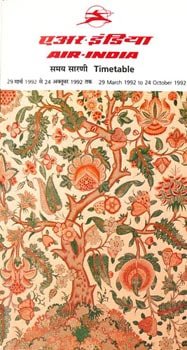
By March 92 the old flying centaur logo was back
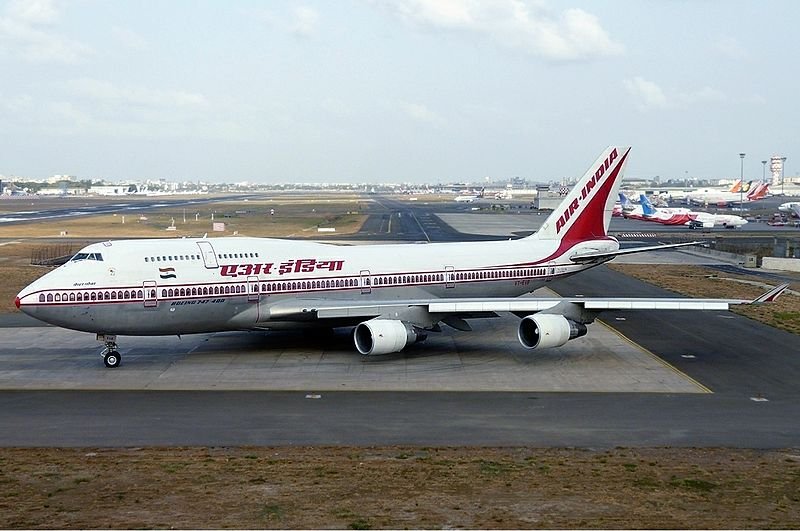
The most high-profile casualty of the counter-revolution was the new airline livery. Demonstrating a very conservative heart that Jetley’s reforms had been unable to change. The airline reverted back to the previous ‘Flying Palace’ livery and the Maharaja reclaimed his place as the carrier’s ambassador.
The new series 400s were delivered back in the 'Flying Palace' colours. This one wears the scheme still here in 2008. Photo by Sean d'Silva from Wikipedia
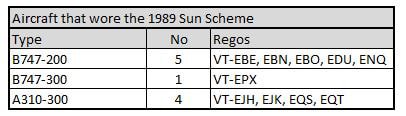
In the end only about half of the fleet ever wore the new scheme. These included 5 747-200s, 1 747-300 and 4 of the A310s. When the first 747-400s were delivered in 1993 they continued to wear the old colours, which weren’t replaced until well into the 2000s. Even then the temple windows and the Maharaja continue to reign supreme. Sadly for Air India the issues that Jetley attempted to control have subsequently flourished so that despite, or maybe because of, the 2007 merger with Indian Airlines the future for the flag carrier looks bleak.