During the 1960s the local service airlines of the United States were growing fast. Not only were they re-equipping their fleets but they were being assigned large numbers of routes by the CAB that had been discarded by the larger airlines. Meanwhile Boeing, Douglas and BAC were keen to sell as many of their new short-haul jets as possible. Boeing even managed to interest several airlines in its medium sized 727 and one of these was Frontier. Like most of the local service airlines however the 727 was still too much jet for their 1960s network.
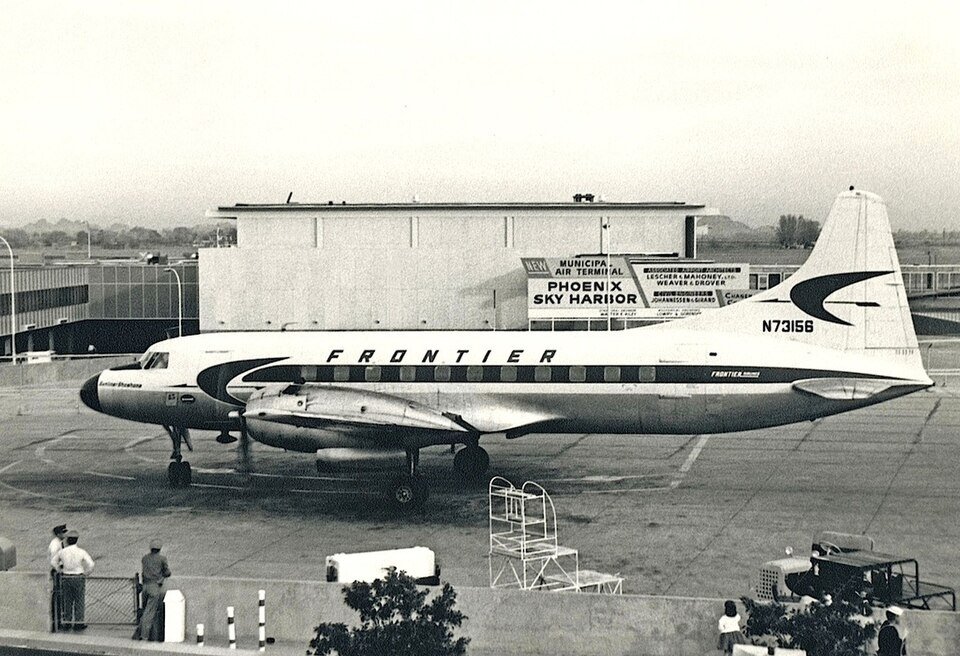
For their first decade the fourteen local service airlines almost universally operated only DC-3s on low volume multi-stop flights feeding passengers into the larger stations, where they could a DC-6 or Connie of one of the big trunk airlines. The end of the 50s had brought the need for a DC-3 replacement and this role was mainly served by either second-hand Convairs and Martinliners acquired on the cheap – cast-offs from the trunk airlines. A few acquired new jet-prop Fairchild F-27s, but the thought that some would be operating tri-jet 727s before the end of the next decade would have seemed outlandish in 1960.
Jon Proctor (GFDL 1.2 or GFDL 1.2 ), via Wikimedia Commons
Nowadays the 727 doesn’t seem like a large aircraft but the 727-100 was only 4 metres shorter than the first long-haul Boeing 707-120 (40.59m : 44.22m). This was nearly twice the length of a Convair-liner and the 727 could seat up to 106 passengers compared to a Convair’s 40. Considering that a 89 seat Douglas DC-6B (and that’s an all coach configuration) was the standard equipment of the US trunk airlines at the dawn of the jet-age and you can see that the step-up for the local service airlines to a 727 was a major one. After all, the majority of the local service airlines were still flying DC-3s well into the second half of the 1960s.
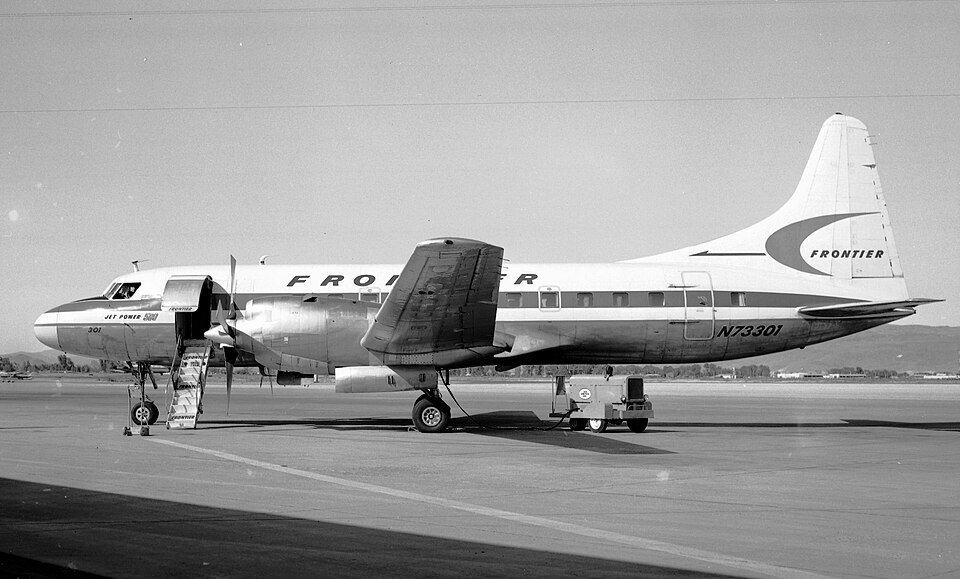
Below: The Convair 580 remained a vital part of the Frontier fleet into the 1980s
Bill Larkins, CC BY-SA 2.0 , via Wikimedia Commons
When acquiring their first pure-jets the early adopters like Mohawk acquired the BAC One-Eleven, but as soon as the Douglas DC-9 was available it scooped up orders from Allegheny Airlines, Bonanza Air Lines, Central Airlines, North Central Airlines, Ozark Air Lines, Southern Airways, Trans-Texas Airways and West Coast Airlines. Boeing was rather late to the scene with its 737 and only Lake Central and Piedmont ordered the baby Boeing.
All was not lost for Boeing however as it sold the much larger 727-100 to both Pacific Air Lines and Frontier Airlines. Incidentally both Piedmont and Lake Central were planning to operate the trijet but mainly as a stopgap for their 737s.
Frontier was much like the other local service airlines. It had been taken up the name when Monarch Air Lines had undertaken a three-way merger with Arizona Airways and Challenger Airlines in 1950. Based at Denver, Colorado it flew to 7 Western States serving a selection of puddle-jumping routes to small airports with its fleet of DC-3 Sunliners. In 1959 the first Convair 340s had been acquired but although it served major stations like Salt Lake City, Kansas City and El Paso it did so via circuitous multi-stop routings.
Nonetheless, under the leadership of Bud Maytag Frontier turned a profit in 1960 and 1961 and was thinking about jets. It did in fact sign a letter of intent for six BAC One-Elevens but like several other airlines it didn’t complete the purchase due to a mixture of buy-American feeling and not really having stats that could support the aircraft.
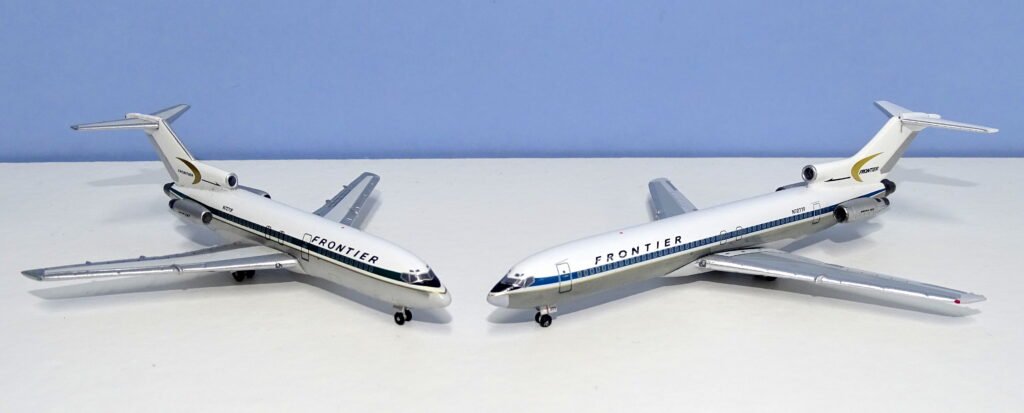
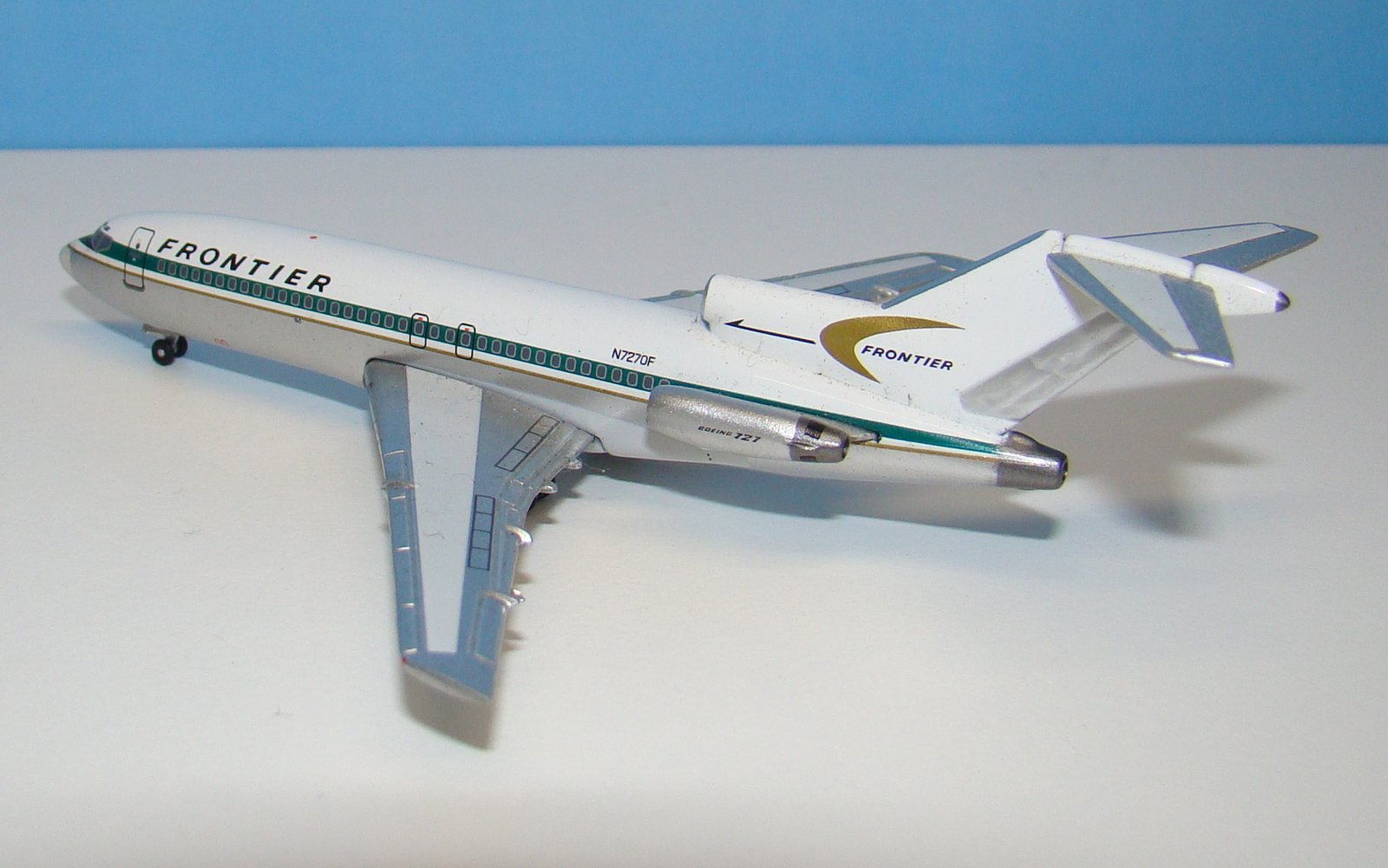
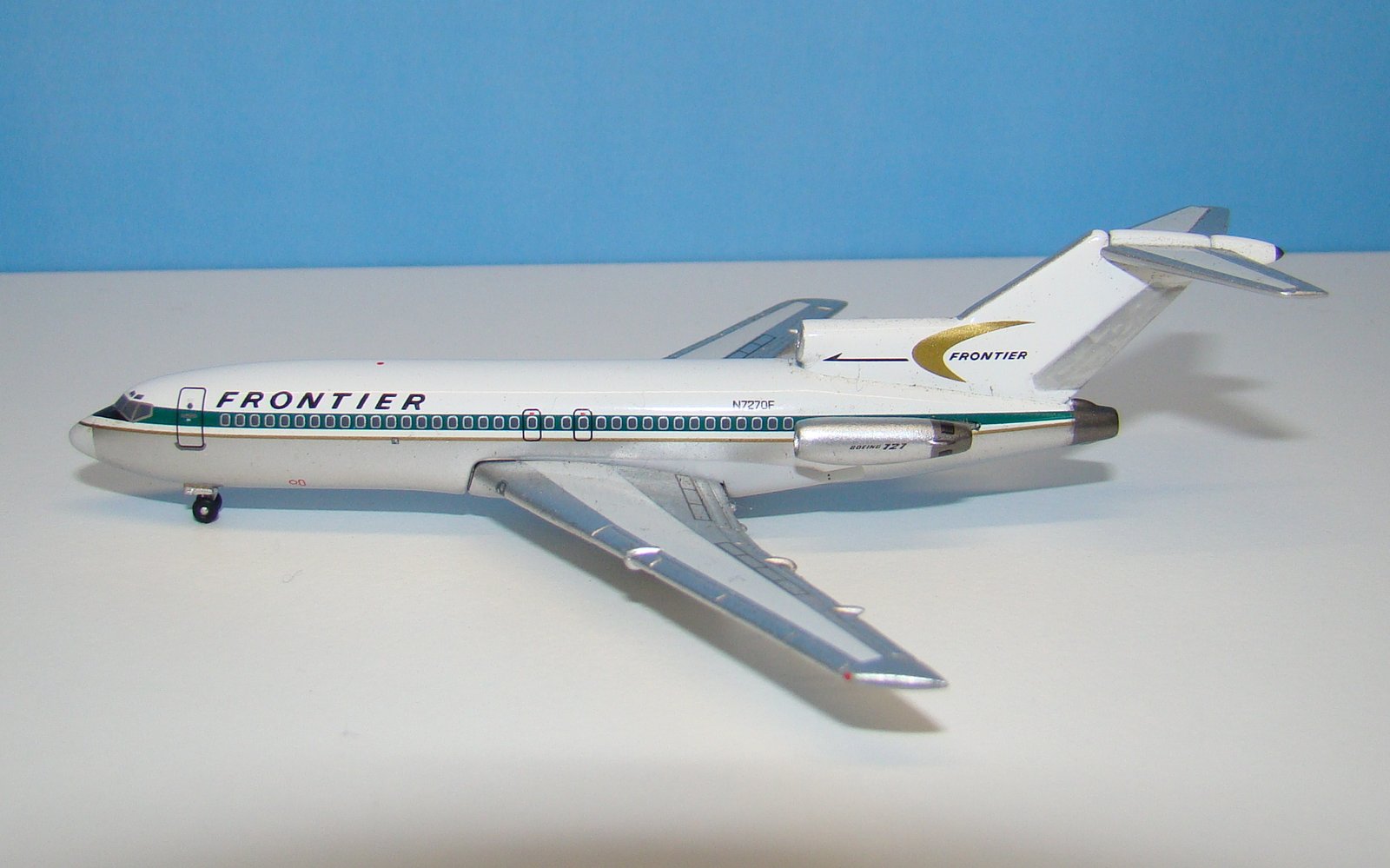
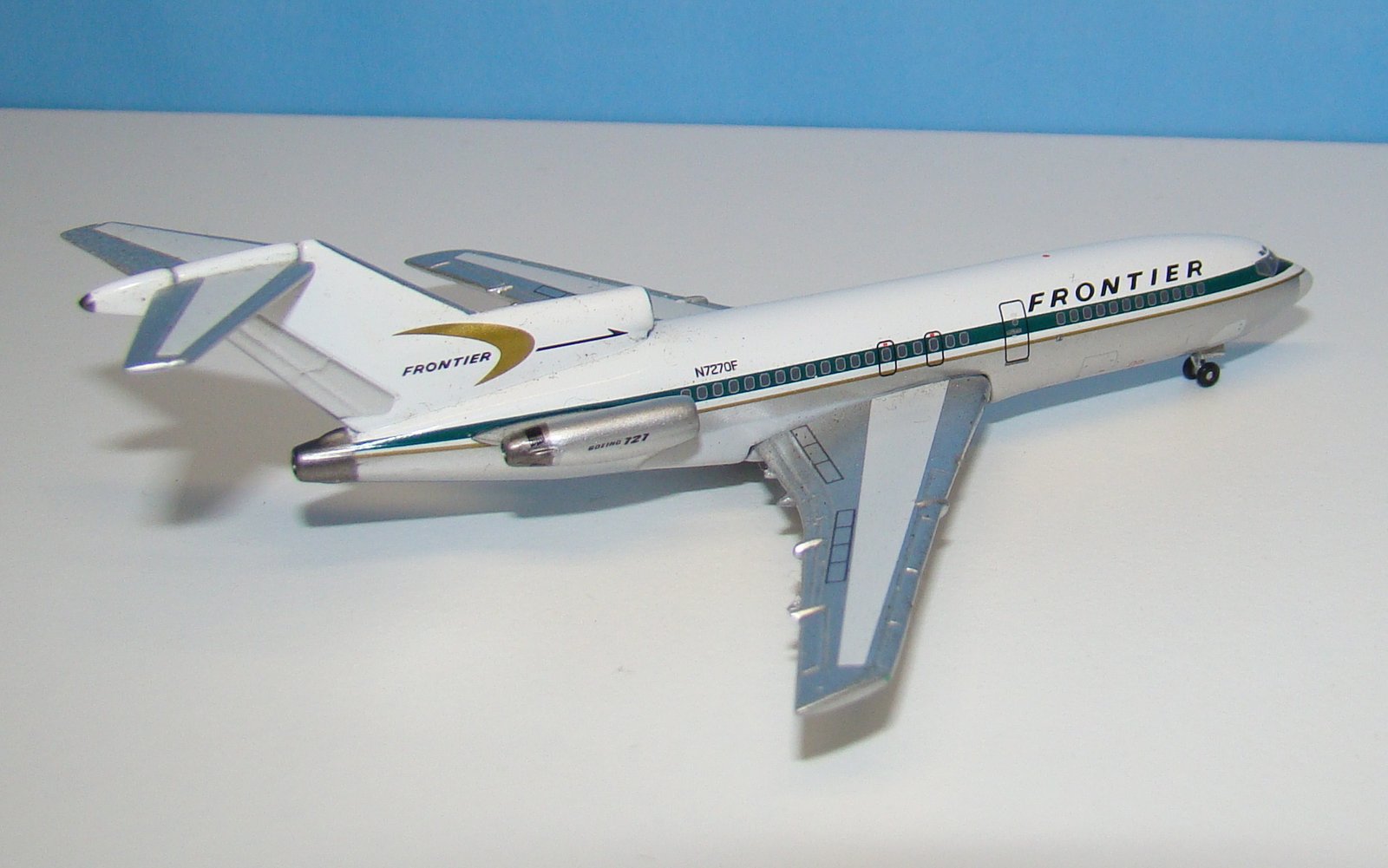
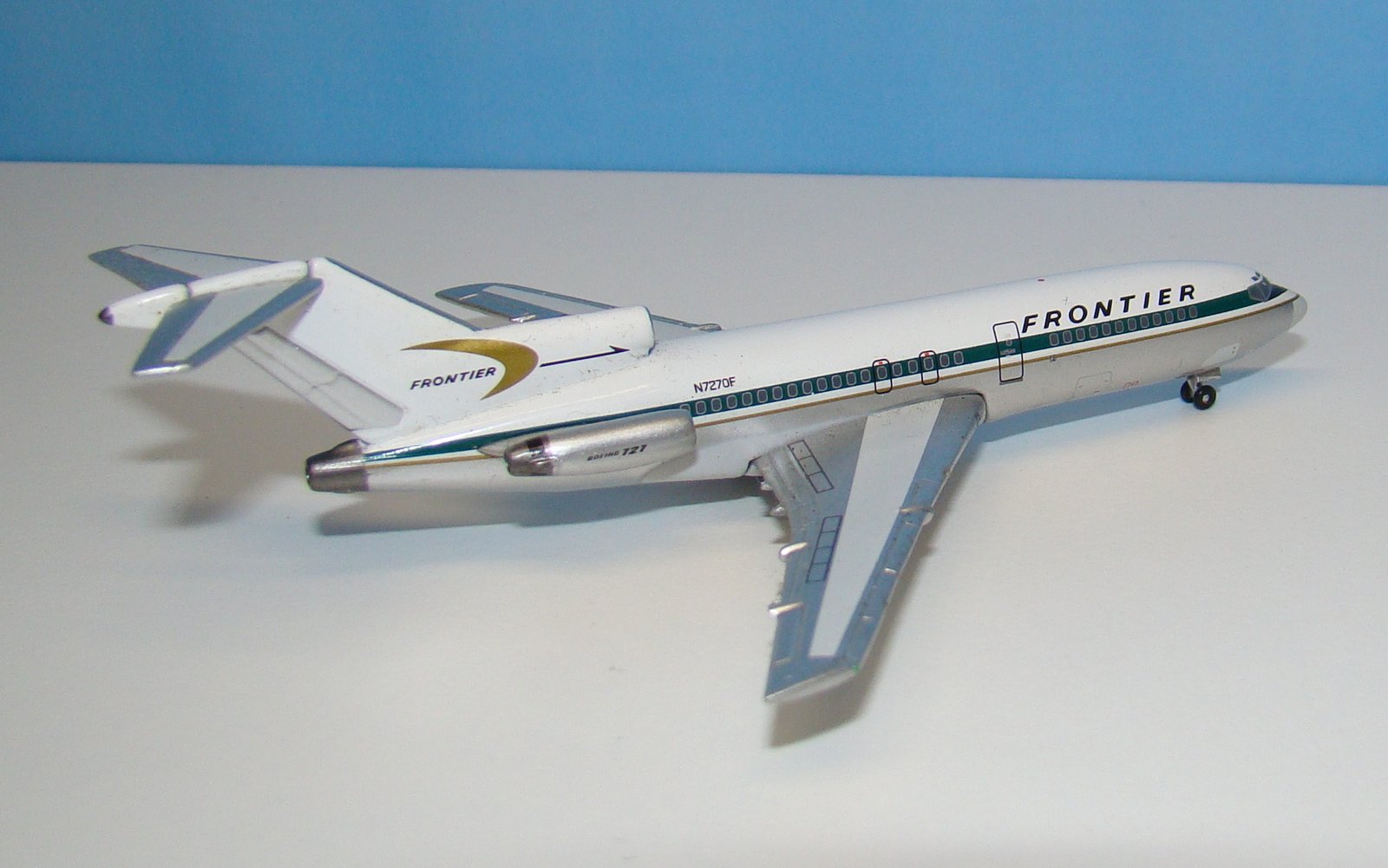
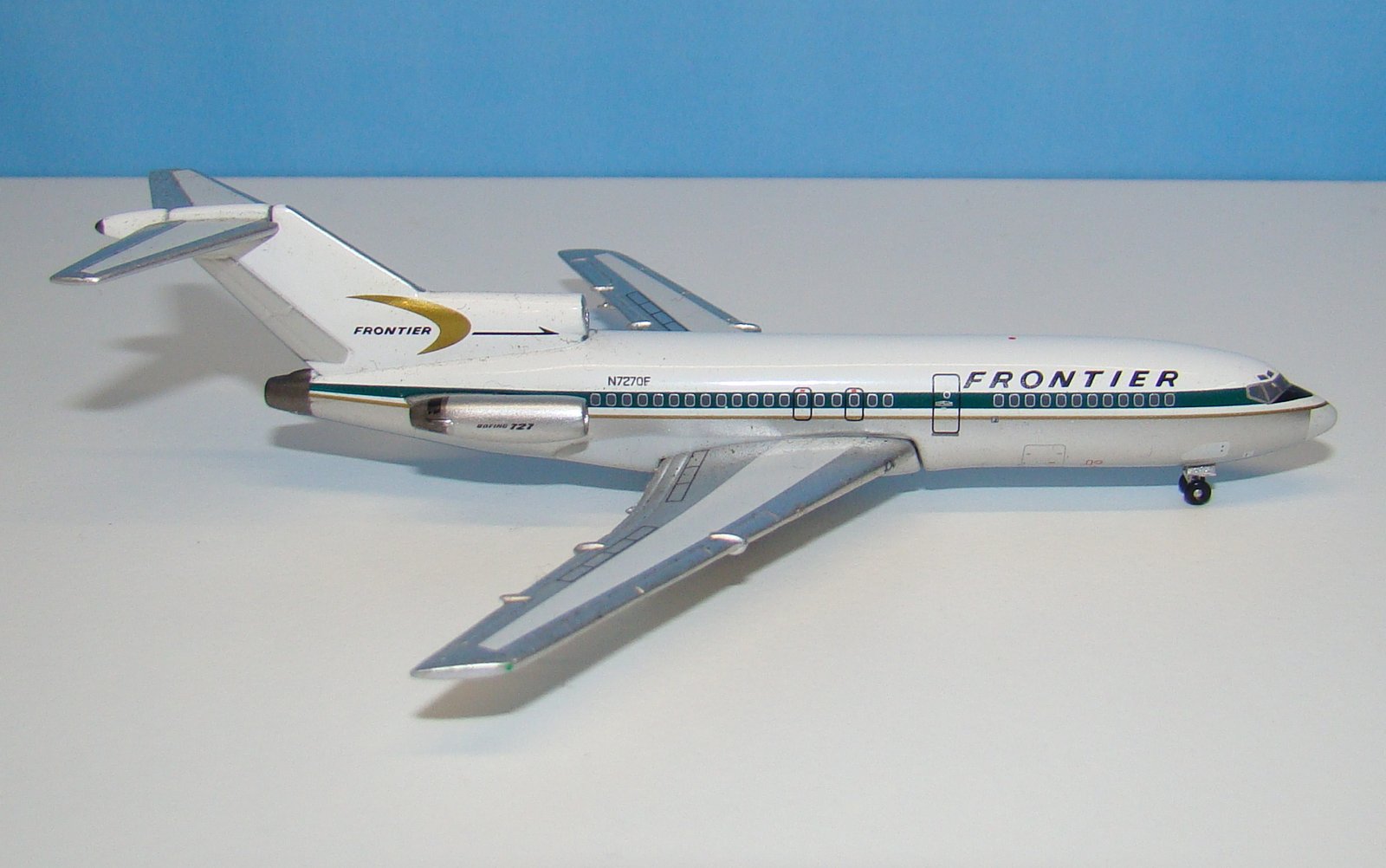
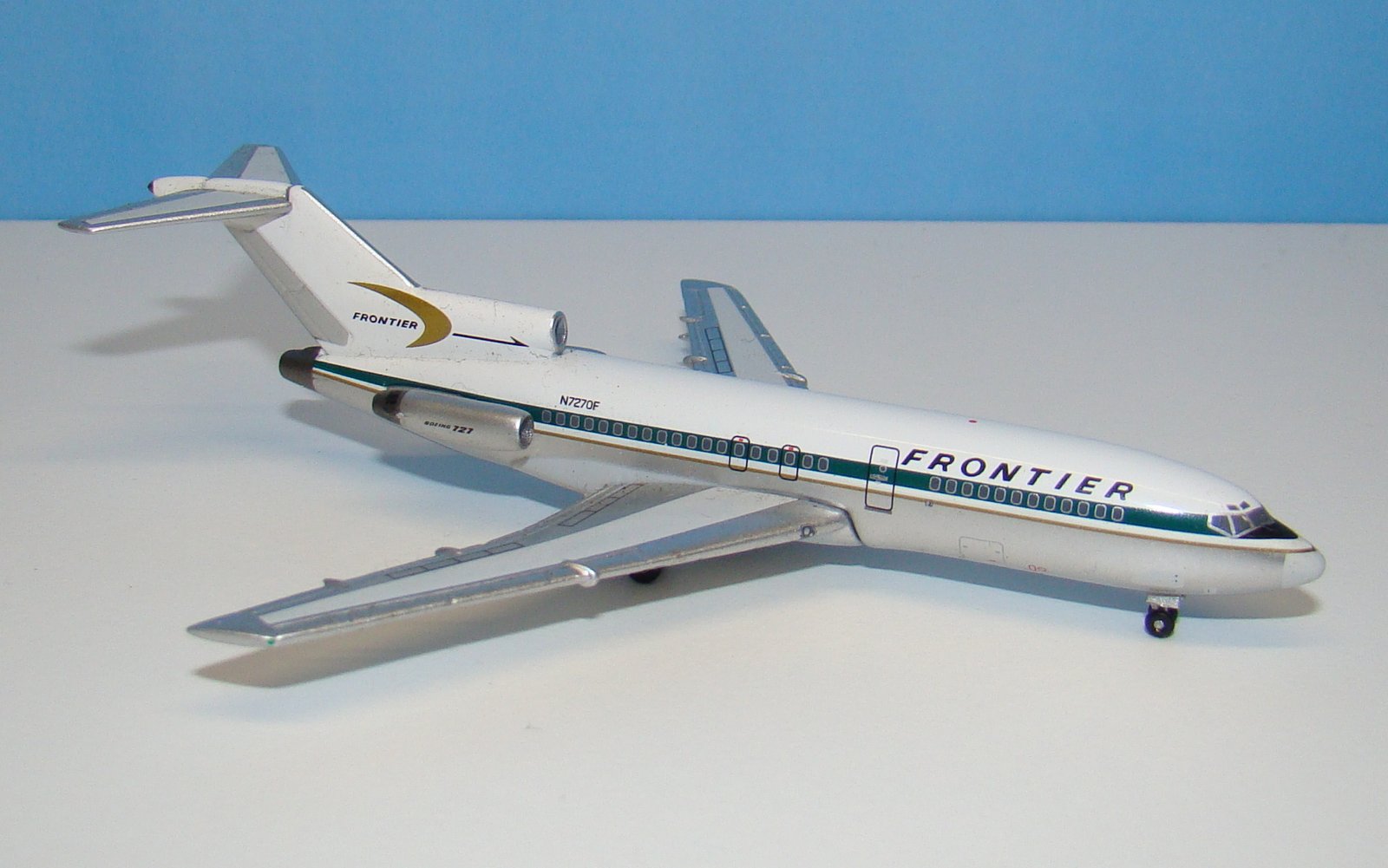
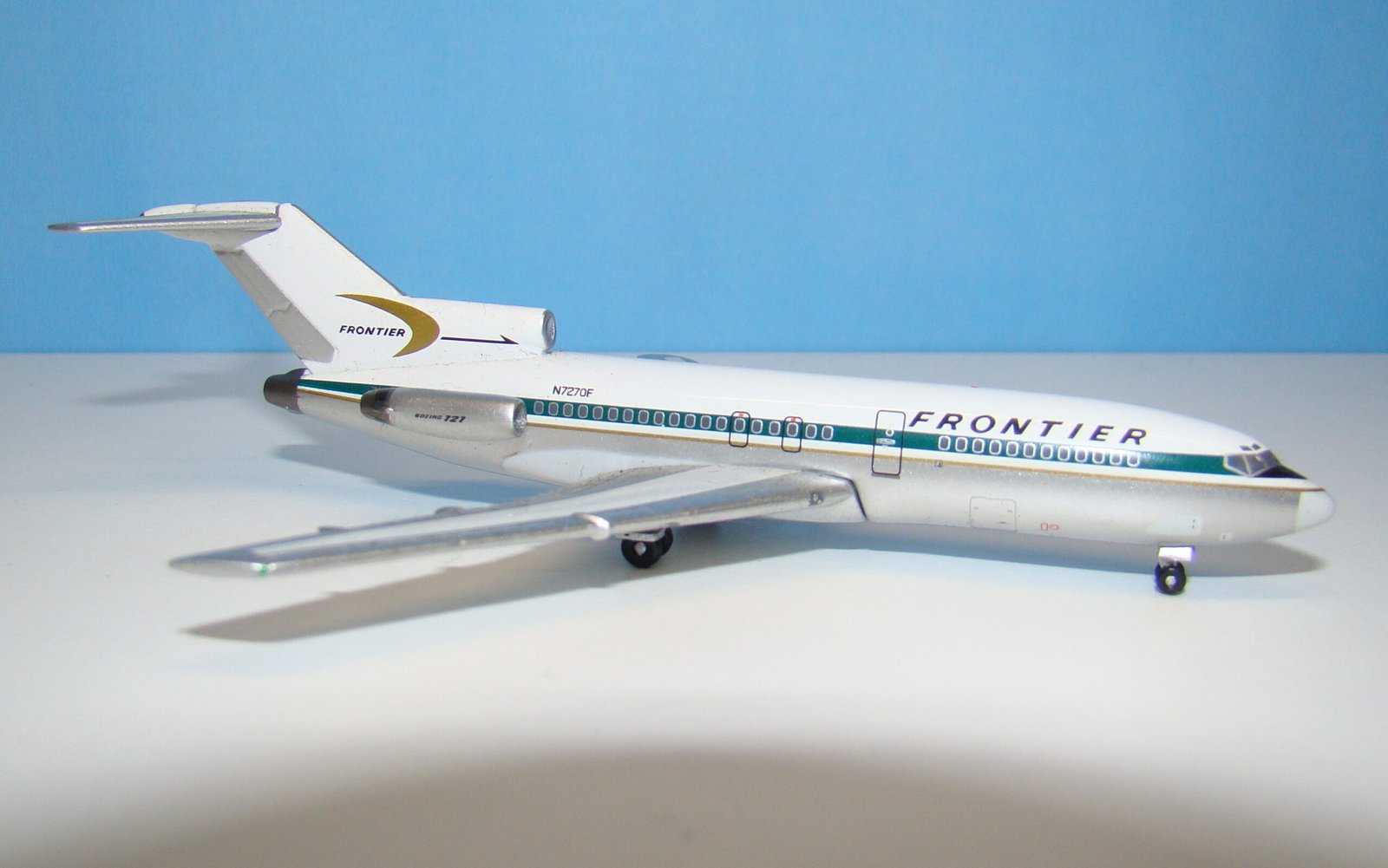
Frontier Airlines Boeing 727-191 N7270F Aeroclassics 1:400 Scale
Frontier Airlines Boeing 727-191 N7270F Aeroclassics 1:400 Scale
Frontier Airlines Boeing 727-191 N7270F Aeroclassics 1:400 Scale
Frontier Airlines Boeing 727-191 N7270F Aeroclassics 1:400 Scale
Frontier Airlines Boeing 727-191 N7270F Aeroclassics 1:400 Scale
Frontier Airlines Boeing 727-191 N7270F Aeroclassics 1:400 Scale
Frontier Airlines Boeing 727-191 N7270F Aeroclassics 1:400 Scale
By this time the controls forced upon the local service airlines by the CAB were beginning to chafe, as they severely restricted where the airline could fly, how many stops it had to make on the way and how much money could be made. Maytag was so frustrated that he sold up in April 1962 and instead went on to acquire the much larger trunk carrier National Airlines. He was replaced by Lewis W. Drymond, who actually came from National, and Frontier’s steady growth continued as more and more Convairs joined the fleet. By the end of 1964 the fleet stood at 14 DC-3s and 14 re-engined jet-prop Convair 580s.
It would be during 1965 that Frontier ordered its first pure-jets when a deal was inked with Boeing for 5 727-191s, with options for a further five. At a total cost of $55 million this was a major purchase for an airline that that year only surpassed the million-dollar earnings mark for the first time. The 727s were too large for Frontiers existing network but were being acquired with the expectation of new route awards that the airline was anticipating. Routes such as Seattle to New Orleans and Portland an St Louis, albeit with intermediate stops, were the planned territory of the new tri-jets.
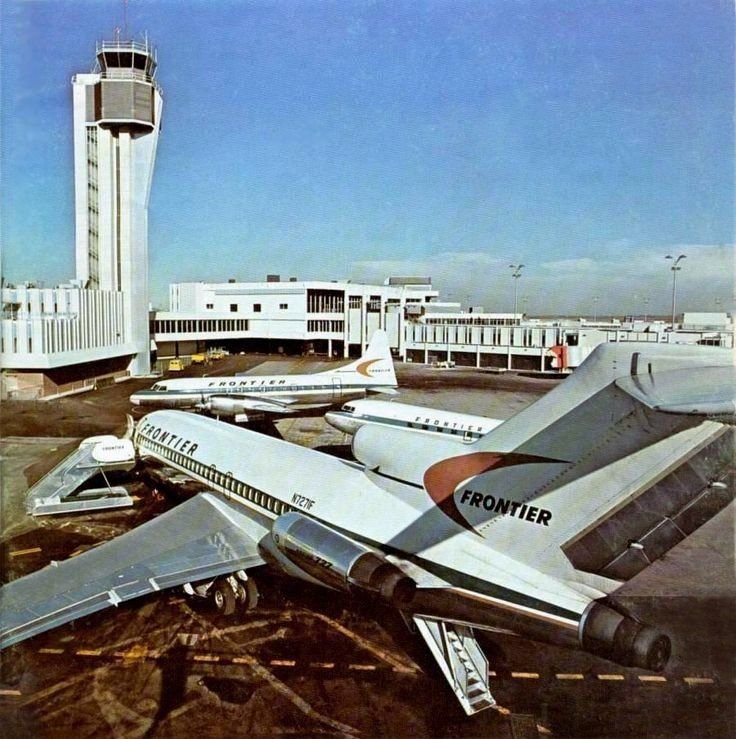
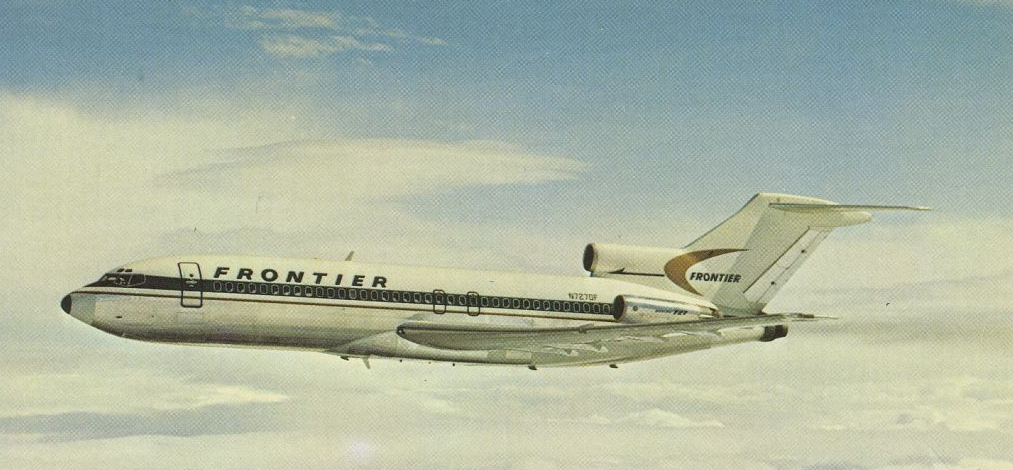
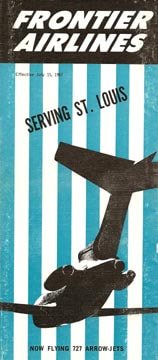
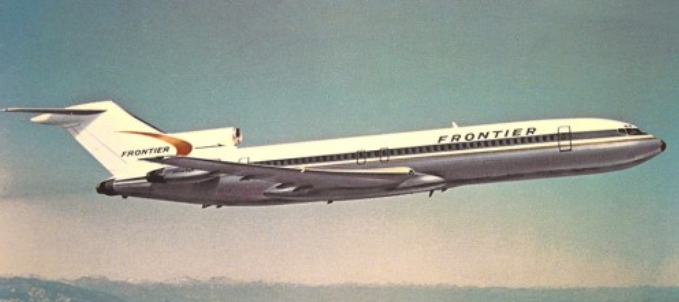
It must have been a proud day when N7270F was delivered in September 1966. Dubbed ‘Arrow Jets’ Frontier was the first local service airline to fly the 727, which seated 99 in a two class (24 first class, 75 economy) configuration. All five aircraft had arrived by the end of July and benefited from increased traffic that had resulted from the implementation of bargain fares.
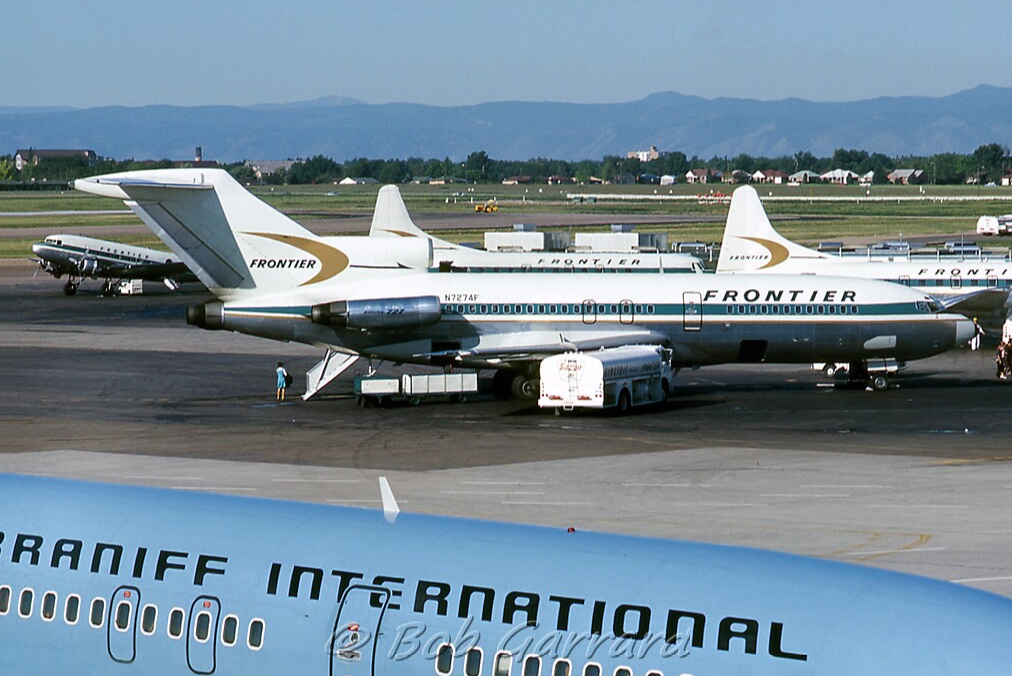
N7274F in July 1967. Photo by Bob Garrard from his FlickR page
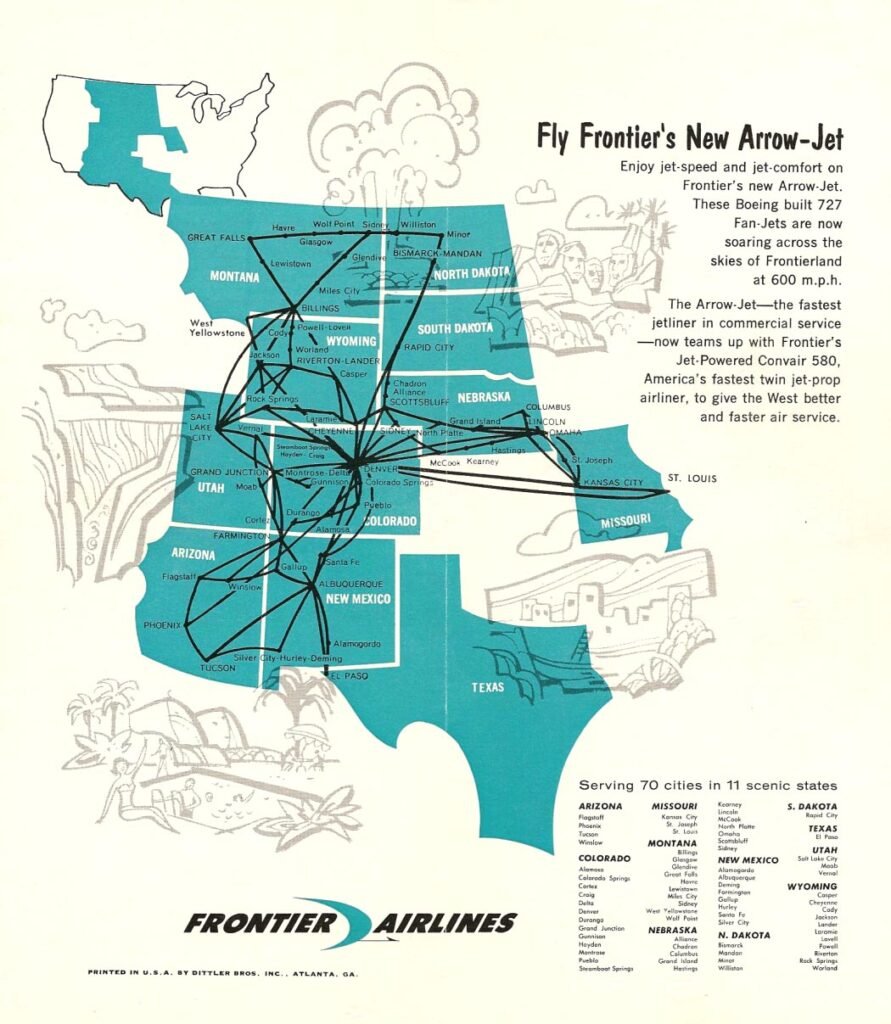
The 727s could be seen flying such routes as St Louis to Salt Lake City via no less than four stops (Kansas City, Lincoln, Denver and Grand Rapids). They could also be found at other larger stations like Albuquerque, El Paso, Phoenix and Tucson. As well as scheduled routes they got employment on military and commercial charters taking them well outside of Frontier’s usual operating range.
The 1967 route map advertising the 727s. Image courtesy of timetableimages.com
Frontier was doing well in the second-half of the 1960s. In 1966 the airline announced plans for a huge new hangar at Denver, which would be able to accommodate six 727s at once. In 1967 the airline acquired the smaller local service airline Central Airlines and placed impressive new jet orders for 5 737-291s and 5 727-291 ‘Super Jets’.
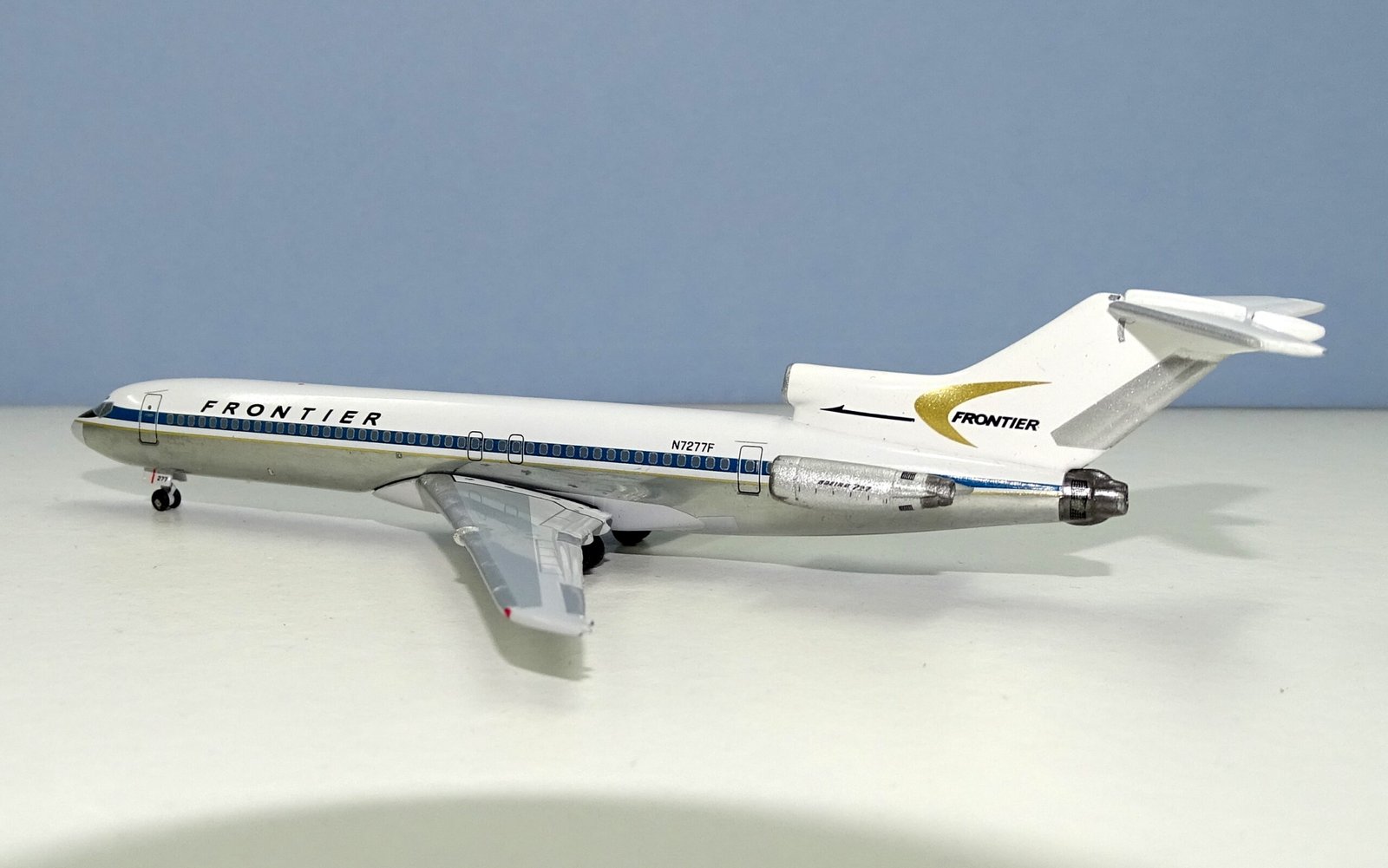
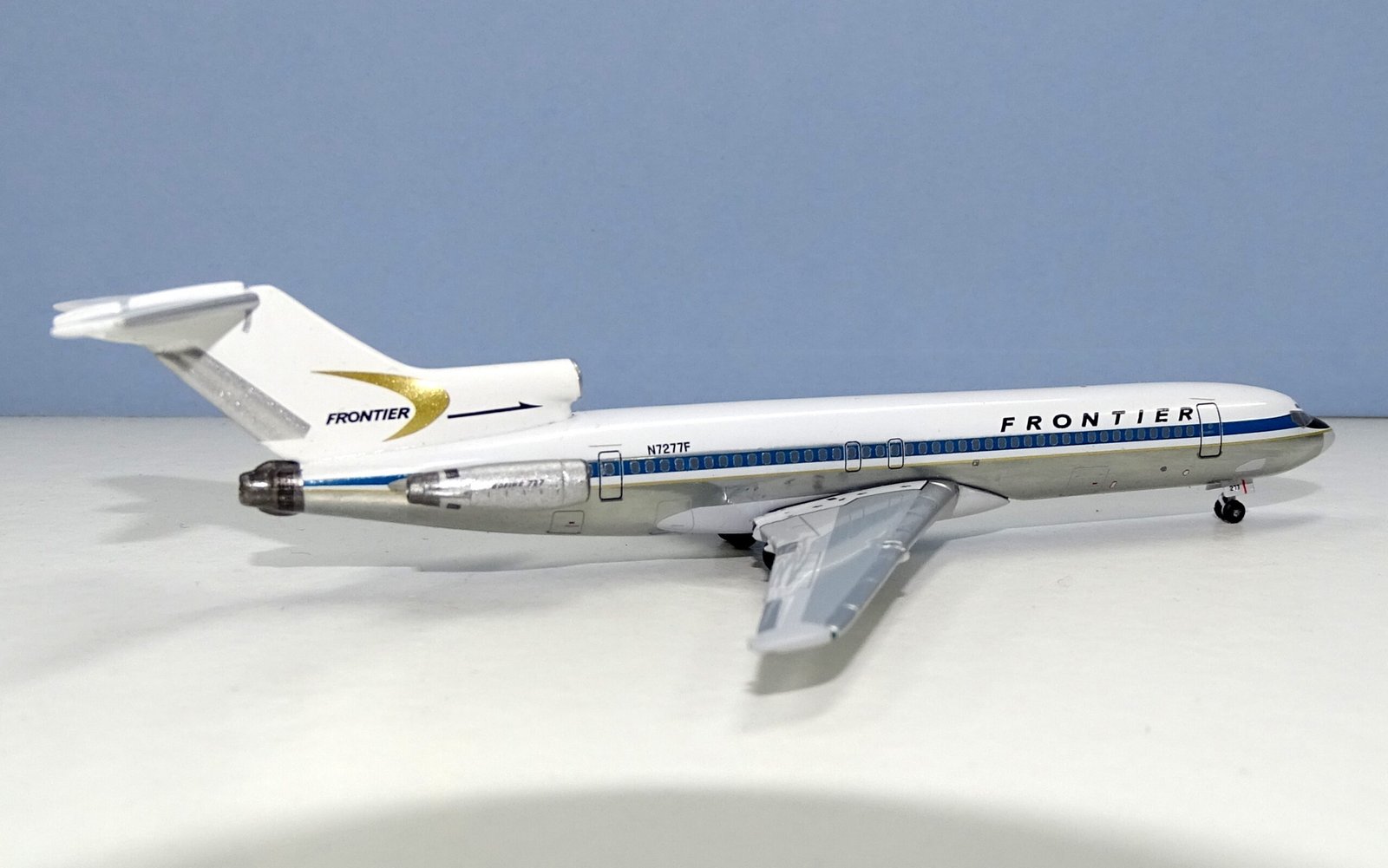
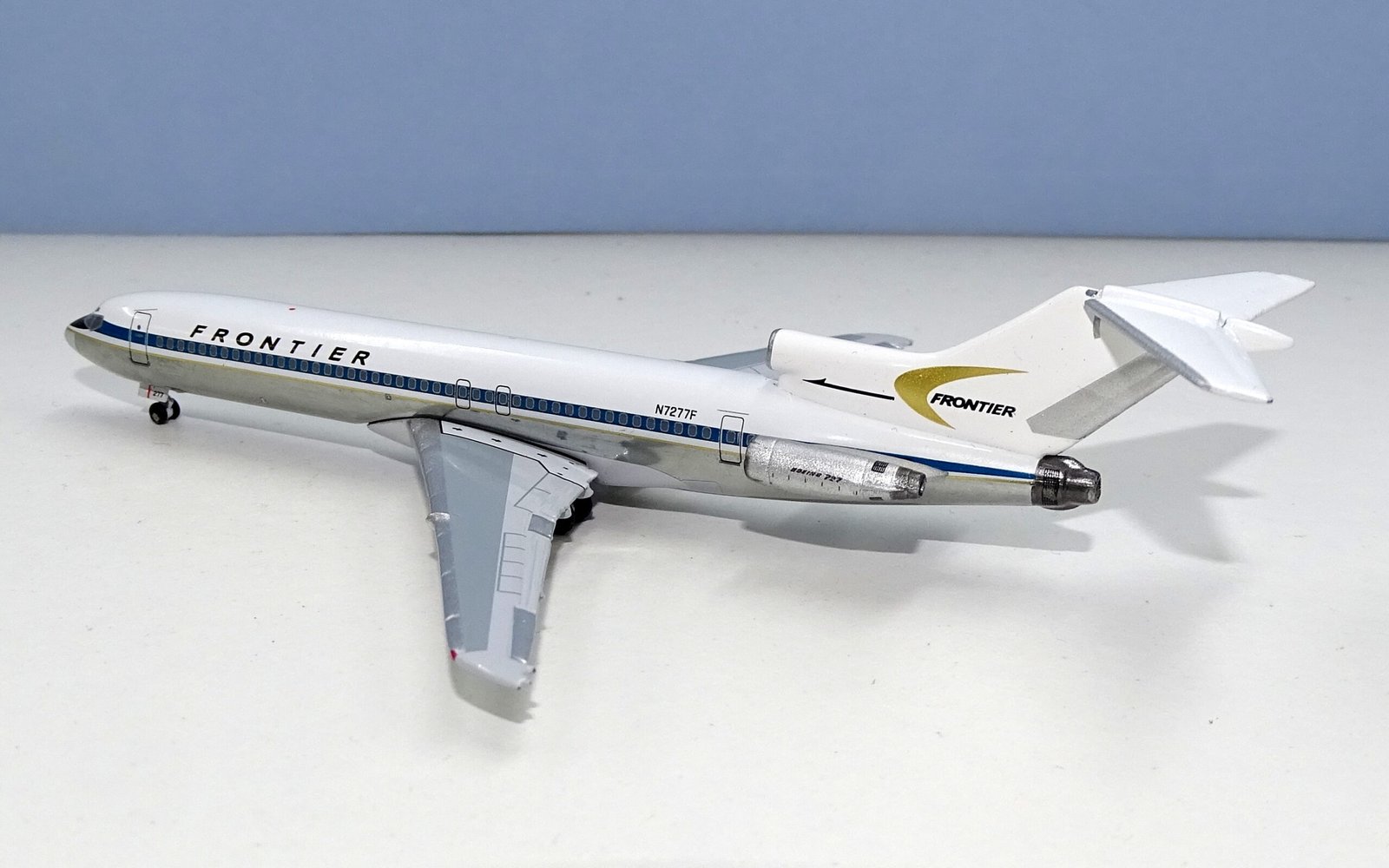
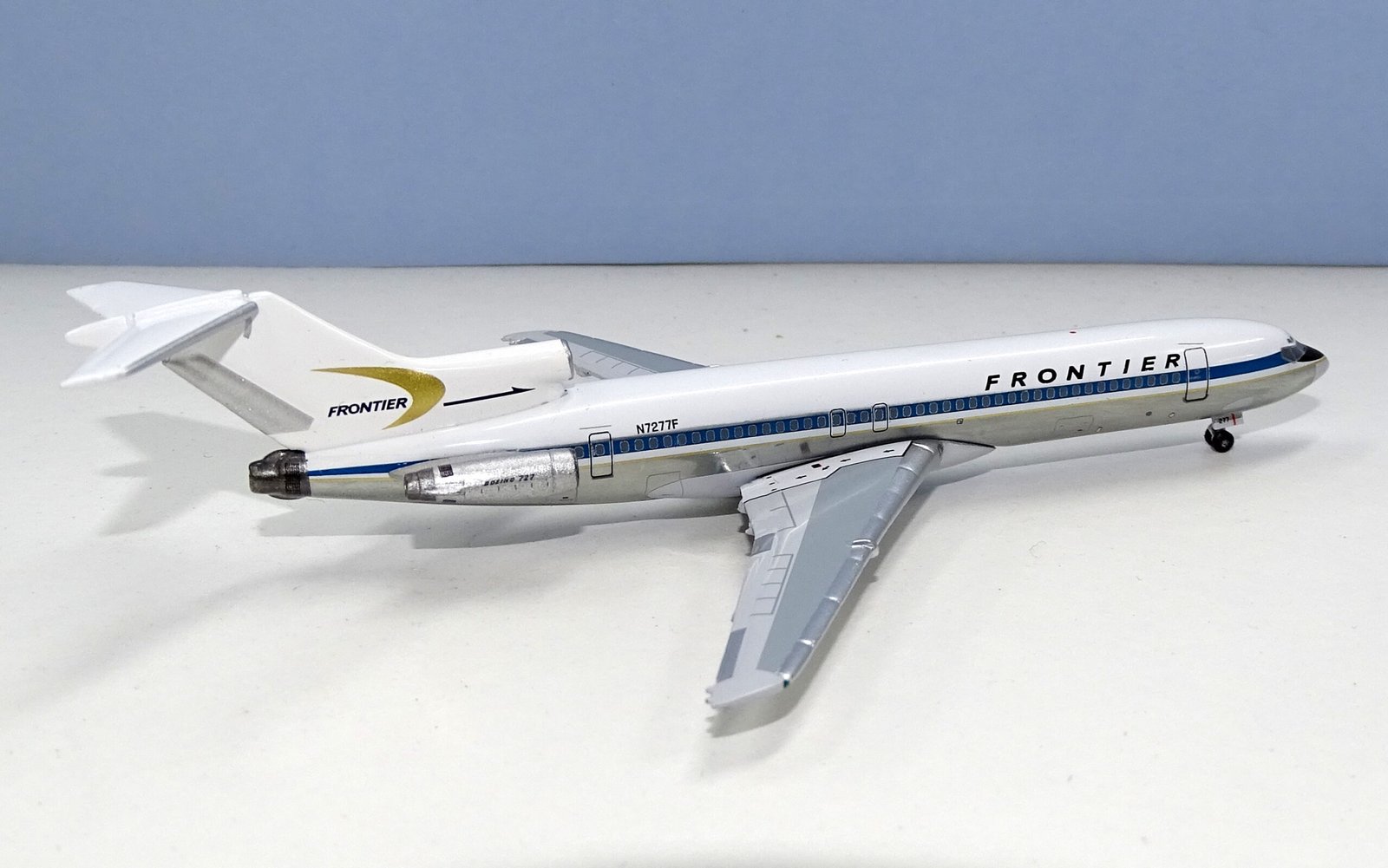
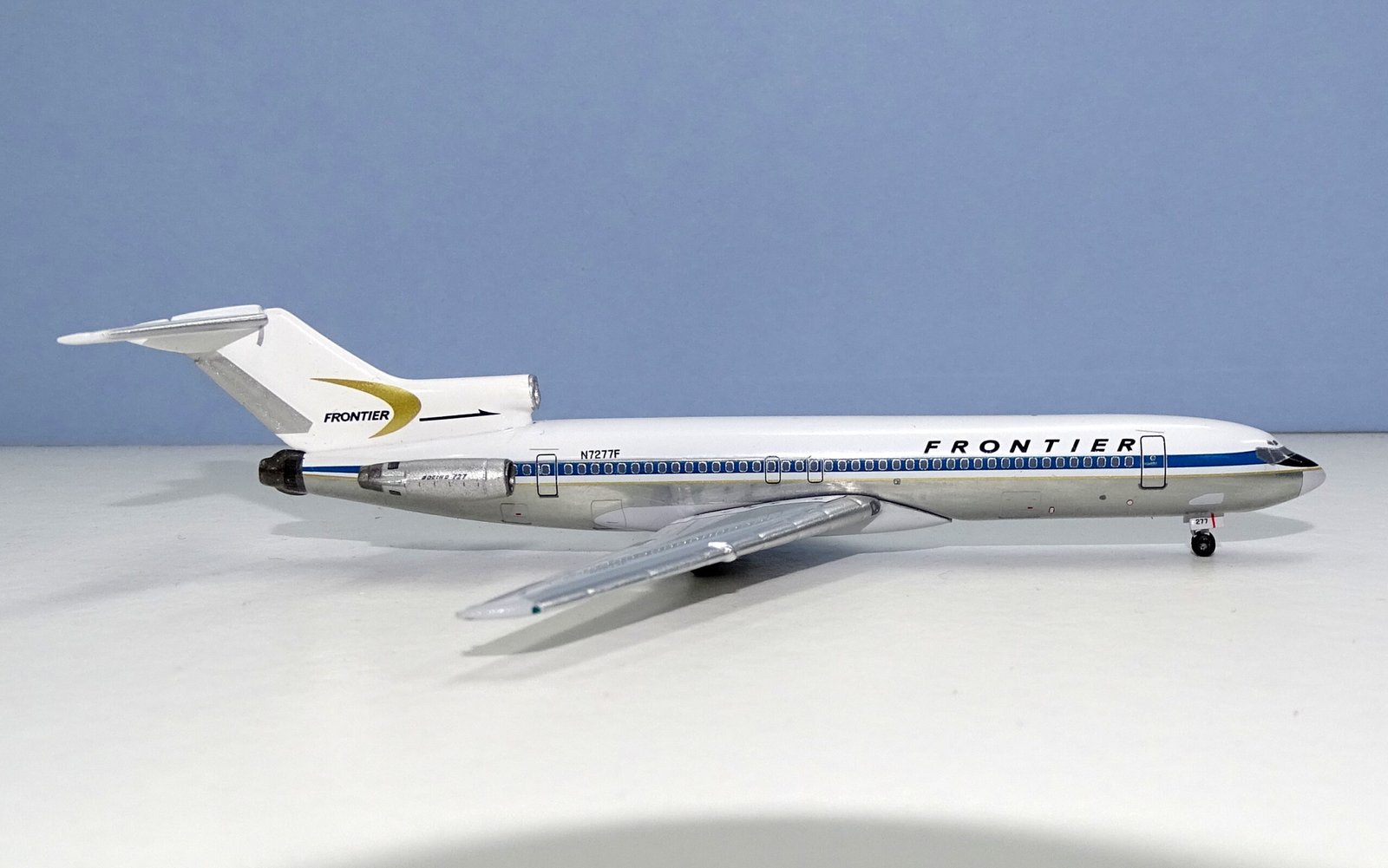
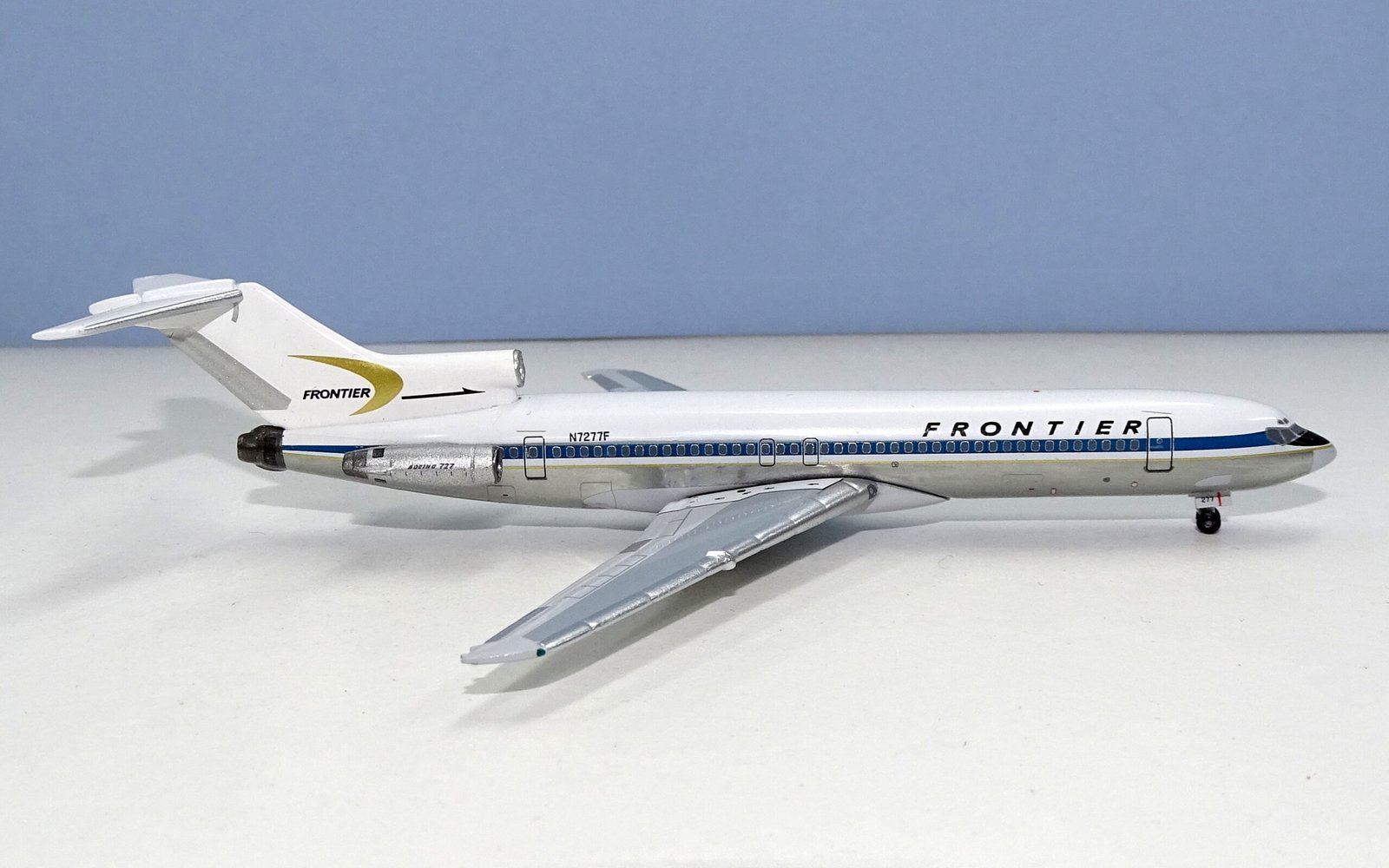
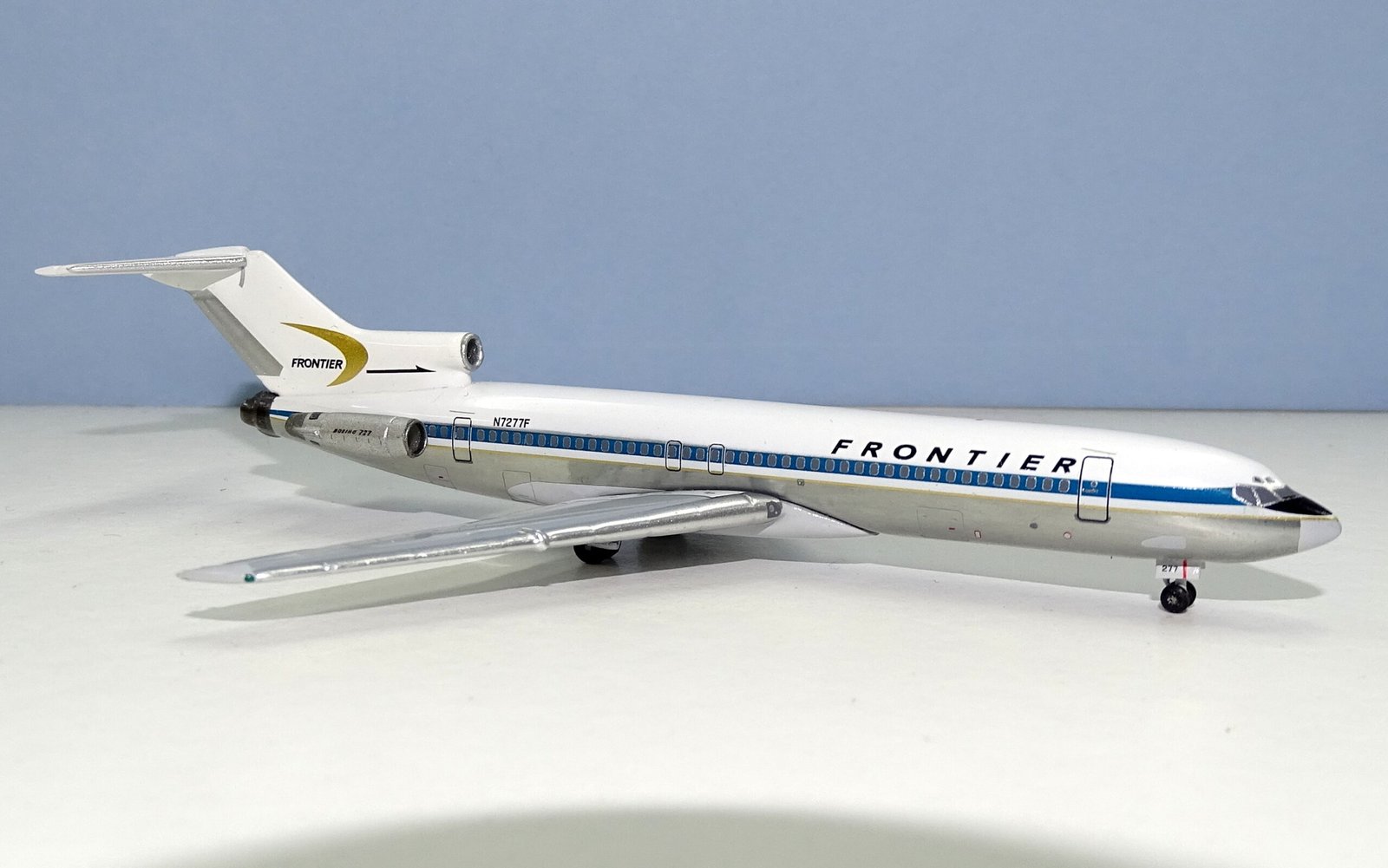
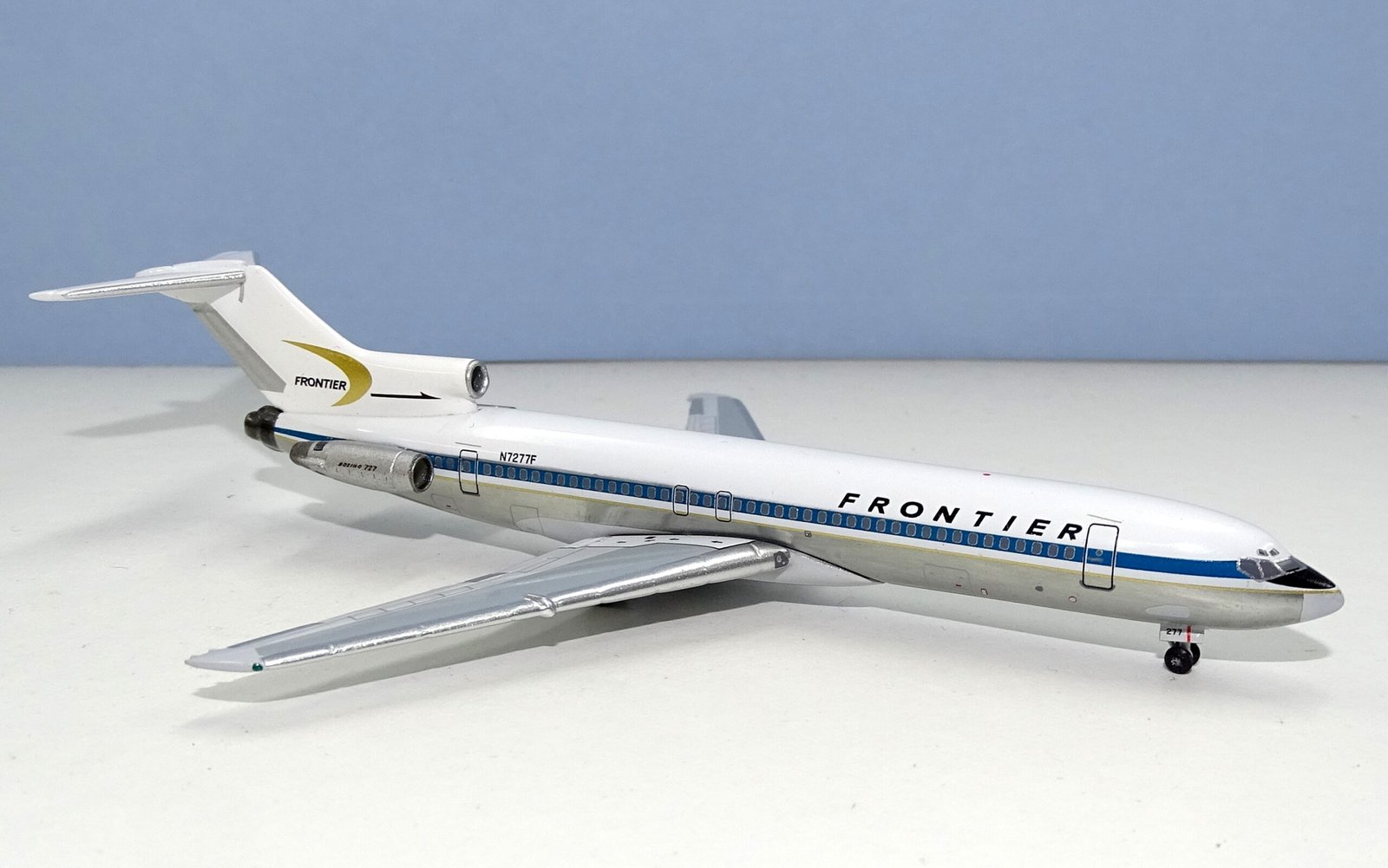
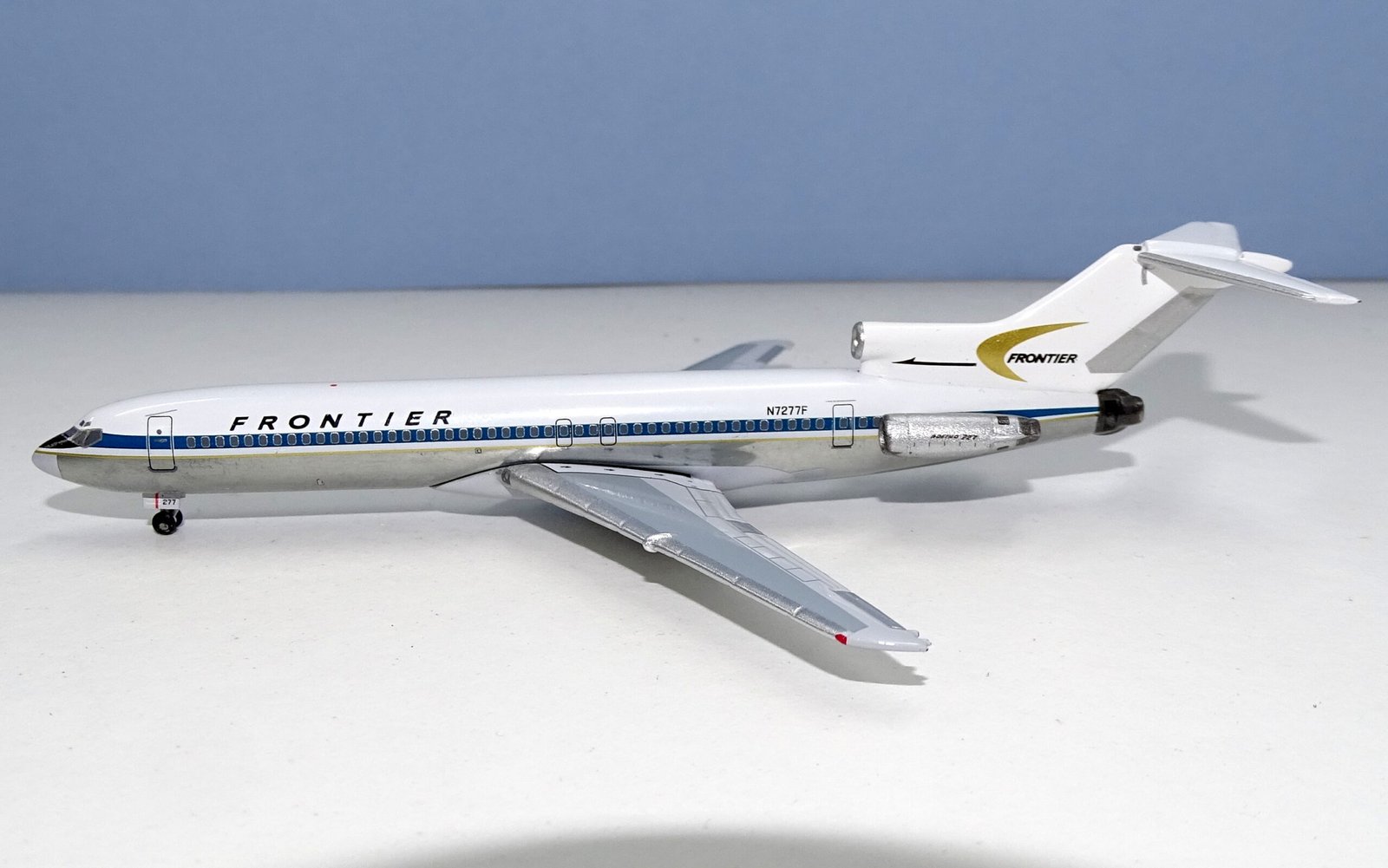
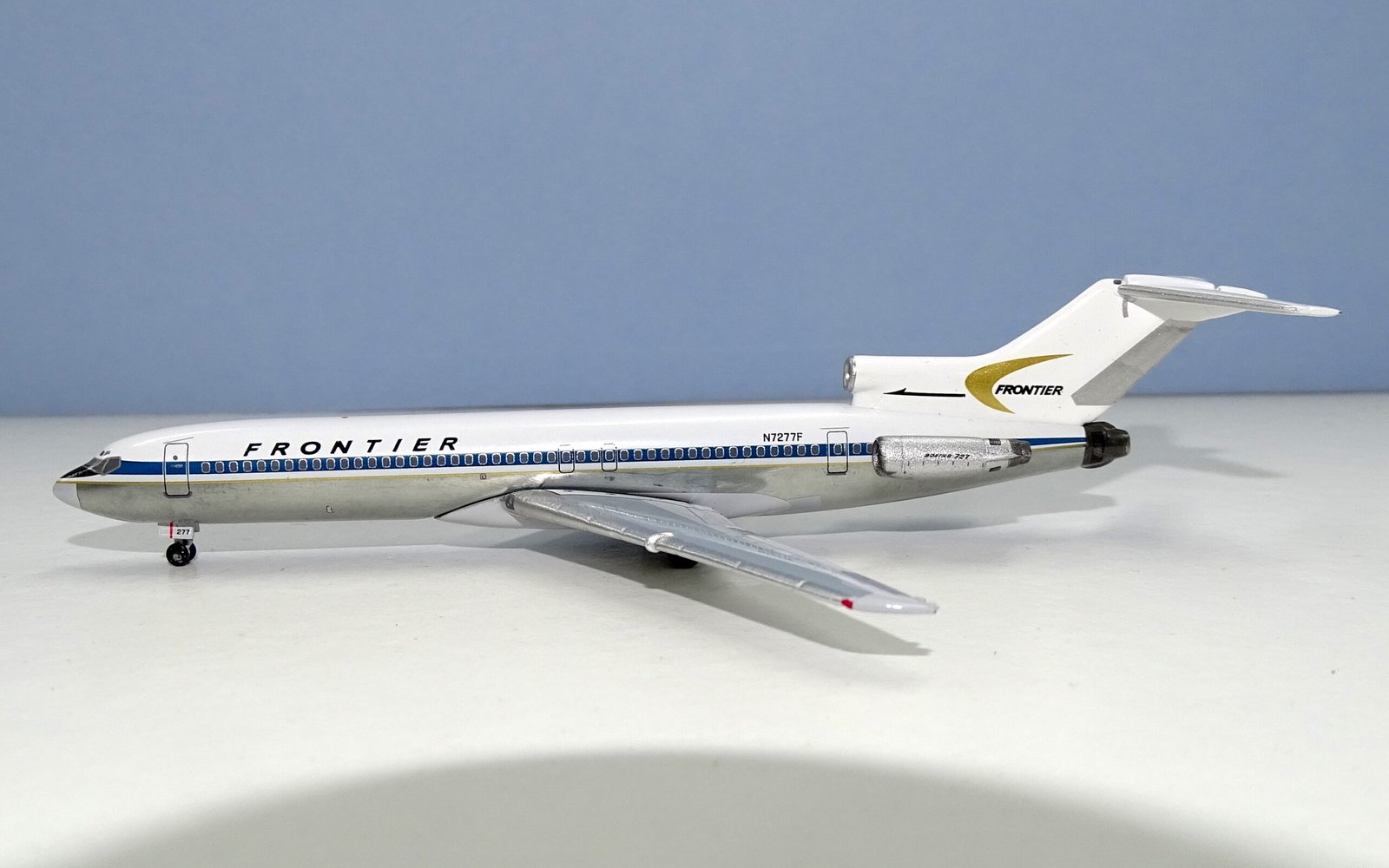
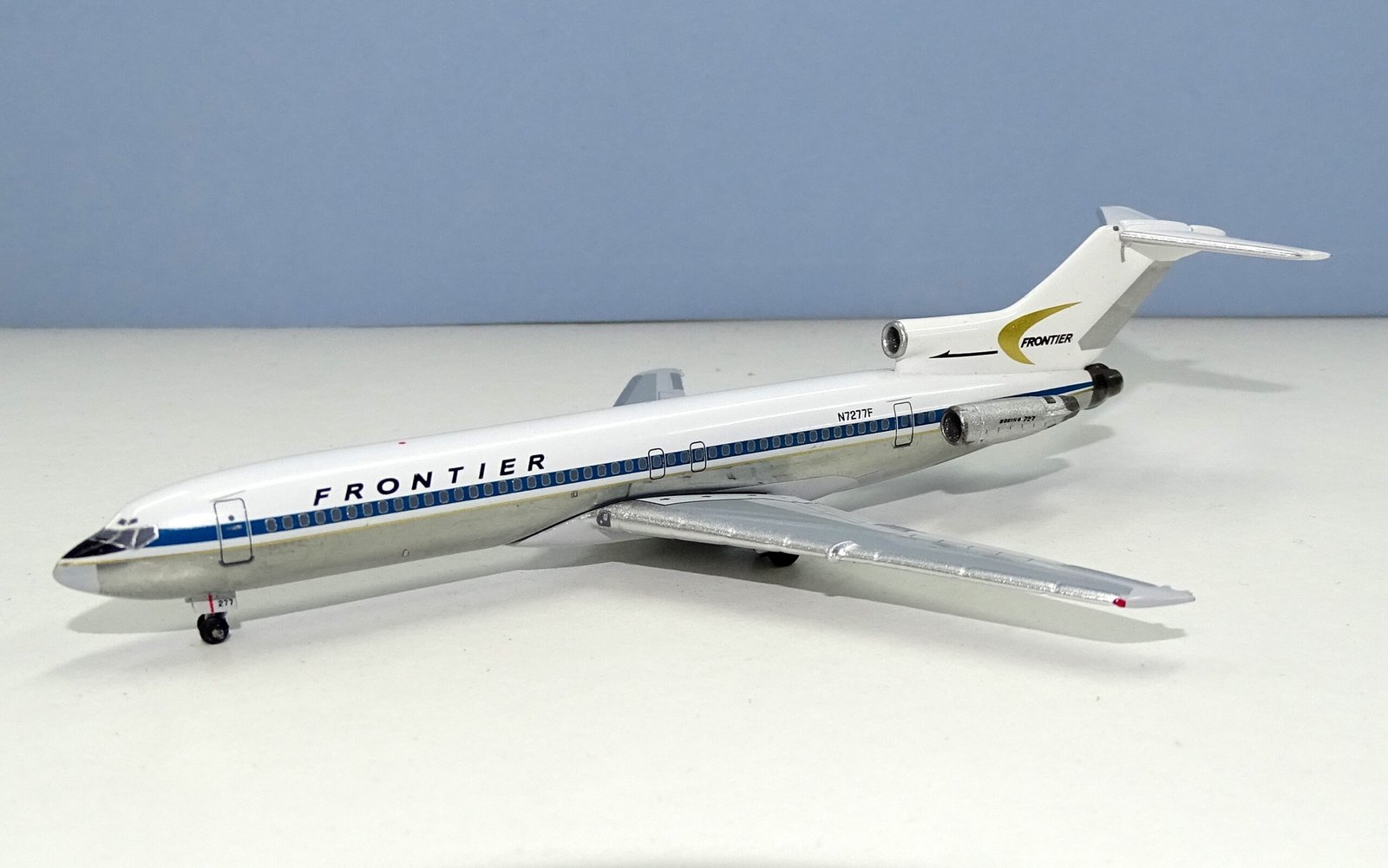
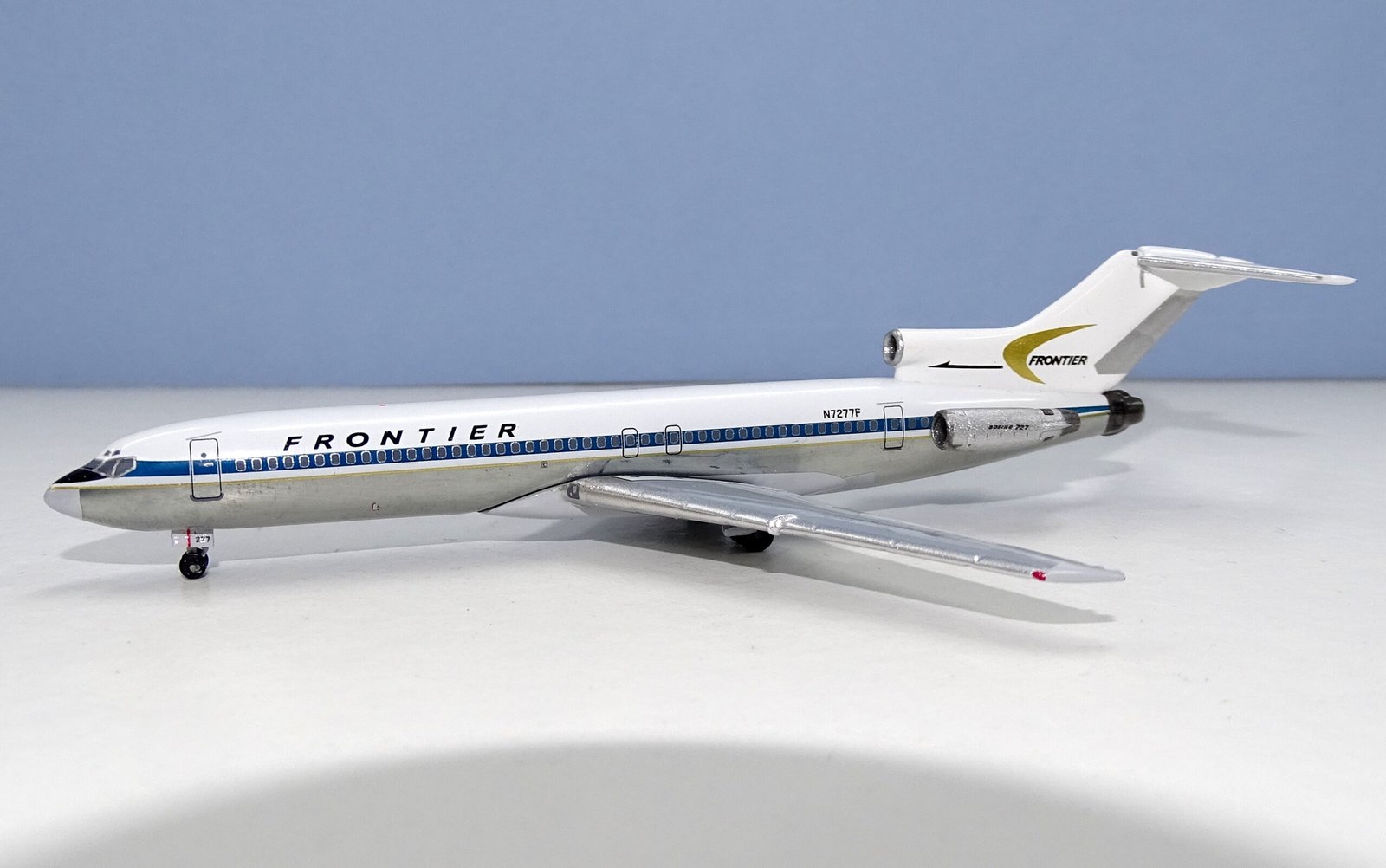
Frontier Airlines Boeing 727-291 N7277F Aeroclassics 1:400 Scale
Frontier Airlines Boeing 727-291 N7277F Aeroclassics 1:400 Scale
Frontier Airlines Boeing 727-291 N7277F Aeroclassics 1:400 Scale
Frontier Airlines Boeing 727-291 N7277F Aeroclassics 1:400 Scale
Frontier Airlines Boeing 727-291 N7277F Aeroclassics 1:400 Scale
Frontier Airlines Boeing 727-291 N7277F Aeroclassics 1:400 Scale
Frontier Airlines Boeing 727-291 N7277F Aeroclassics 1:400 Scale
Frontier Airlines Boeing 727-291 N7277F Aeroclassics 1:400 Scale
Frontier Airlines Boeing 727-291 N7277F Aeroclassics 1:400 Scale
Frontier Airlines Boeing 727-291 N7277F Aeroclassics 1:400 Scale
Frontier Airlines Boeing 727-291 N7277F Aeroclassics 1:400 Scale
Frontier Airlines Boeing 727-291 N7277F Aeroclassics 1:400 Scale
Frontier was aiming for the big leagues with the series 200 727s but the retirement of Lewis Drymond in early 1969 led to a change in strategy. The 727-191s were too large for Frontier’s network, as it stood, and not well suited to the short hops demanded. The 737-291 was a much better fit and as soon as the first aircraft came into service in April 1969 Frontier made a deal to trade the 727s in to Boeing for further 737s. The last of the series 100s was gone by December 1969, only three years after their purchase. All five would go to Braniff and serve with them into the 1980s.
Deliveries of the 727-291s had gone ahead but sensibly Frontier only acquired three of its five ordered aircraft. The last pair were not taken up and ended up being delivered to Northeast Airlines. This made sense as the market was already entering a downturn that would last for most of the early 70s. The new president and chairman E. Paul Burke was unlucky to be making the right fleet decisions but still see the airline make a $12.2 million loss. This increased in 1970 and Burke’s tenure was short as he was replaced in March 1971 by A.L Feldman.
The 727 Super Jets that remained in the fleet were never really wanted by either of the new Presidents and it is no surprise that they were sold in early 1972, to Braniff International. Frontier’s experience with the 727 mirrors that of the other local service airlines. It was just too large for their routes and of the local service airlines only Hughes Airwest (the large regional that was the result of merging three local service airlines together) would make the transition to the 727-200 successfully in the 1970s. Nonetheless, the 727 was an indicator of the ambitions the local service airlines had not to constantly play second fiddle to the trunks. In the end deregulation would level the playing field and allow true competition but sadly within a decade only one of the original local service airlines would still be standing.