Towards the end of the 1970s Eastern Airlines was in a period of cautious expansion and with deregulation upon the US market was free to try and expand its overseas network. One target was the route from Miami – London but initially it managed to grab defeat from the jaws of victory and it was only in 1985 that it was finally able to go transatlantic.
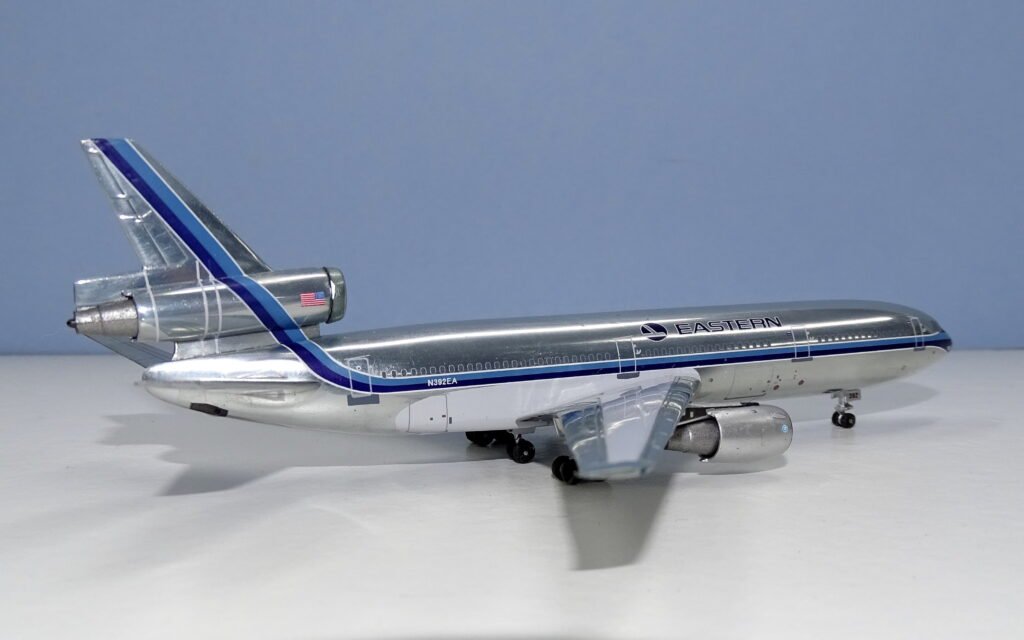
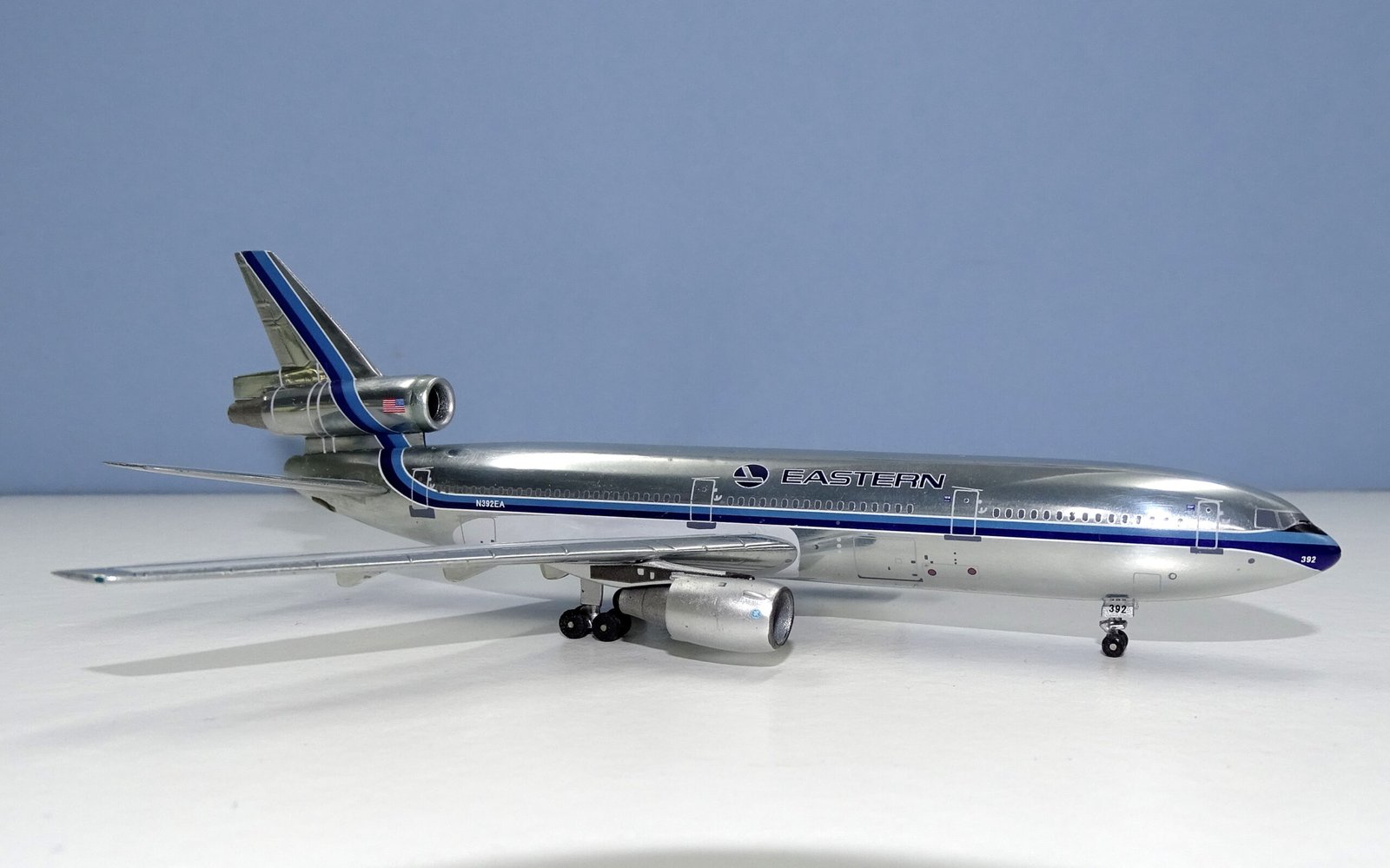
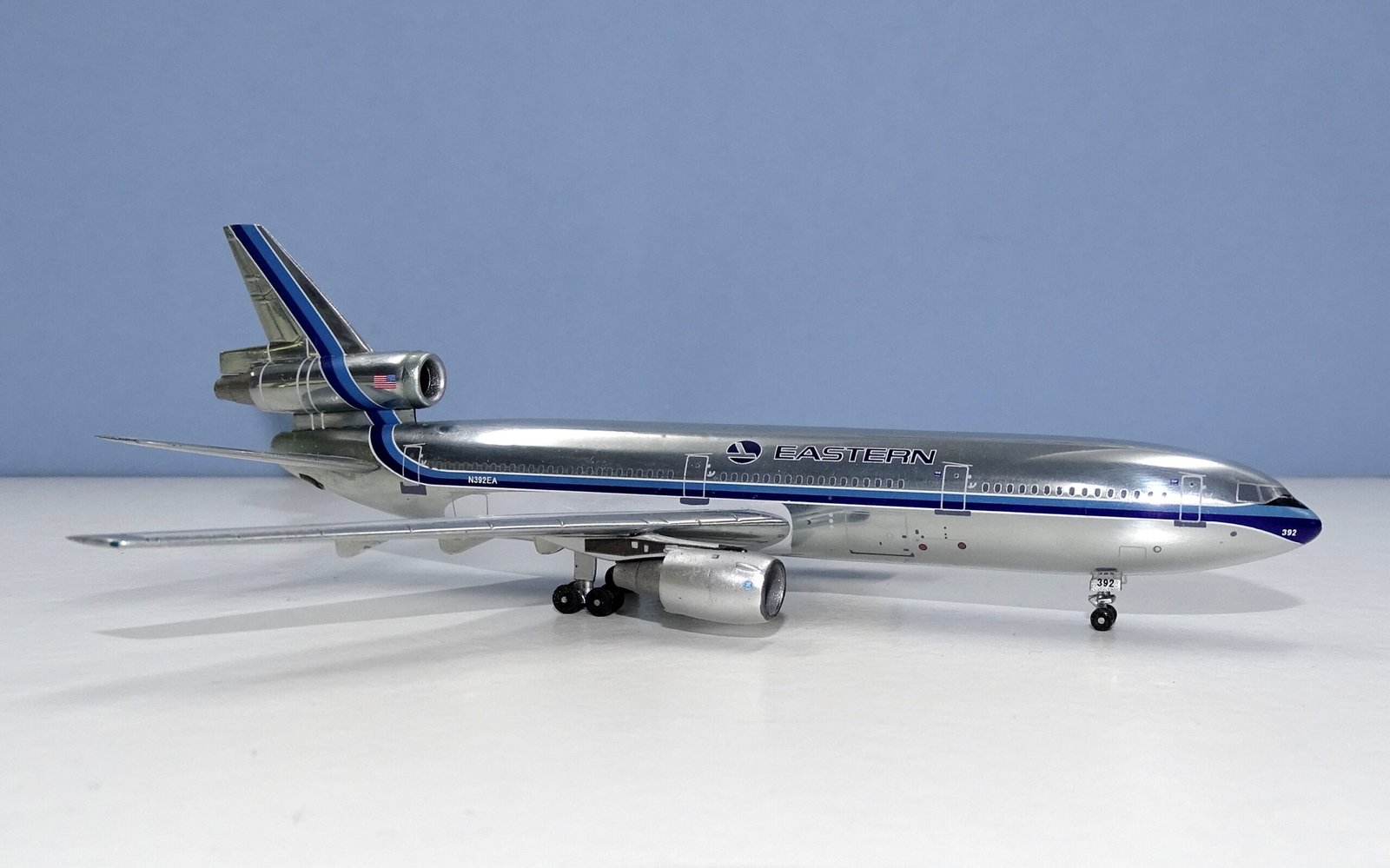
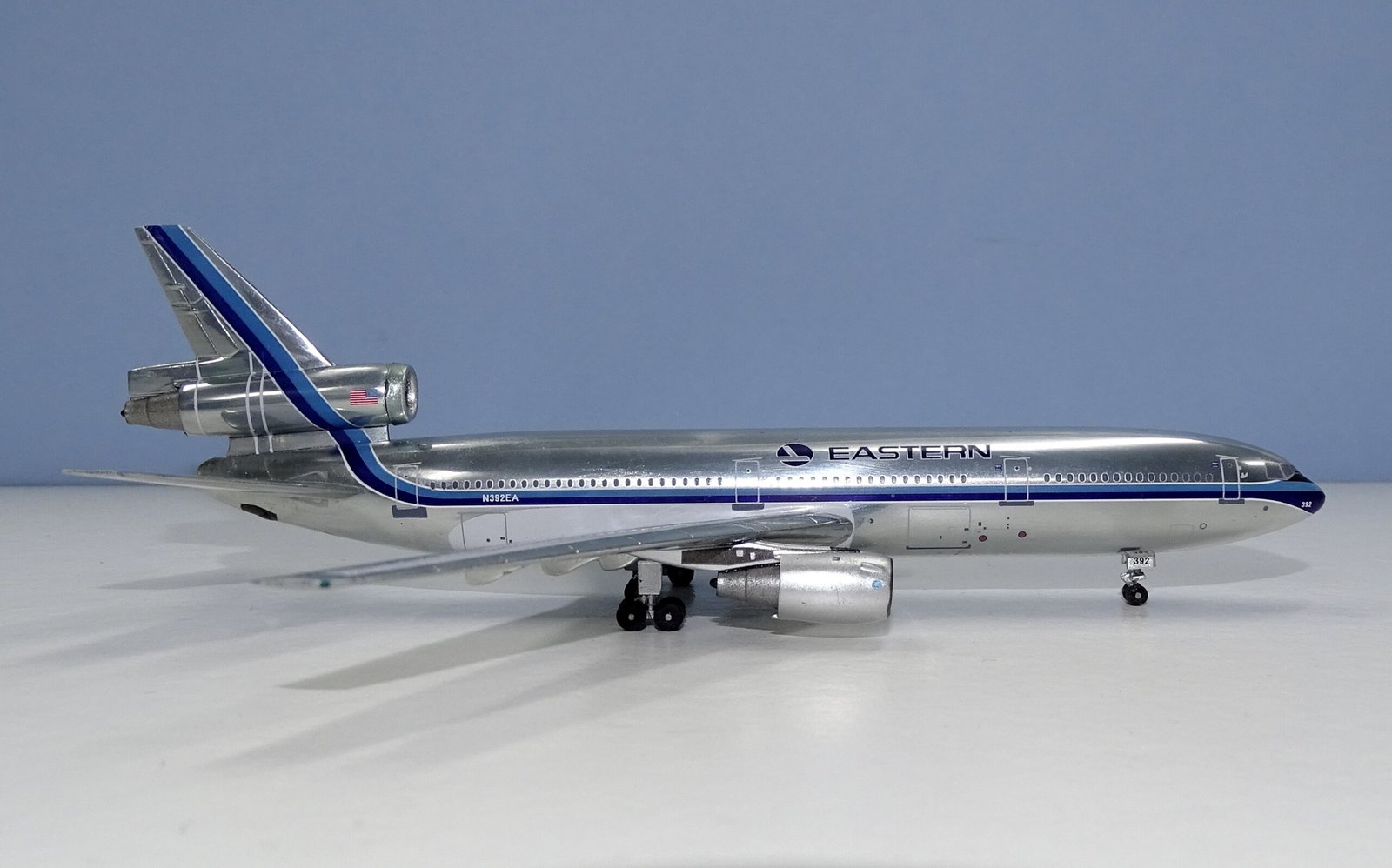
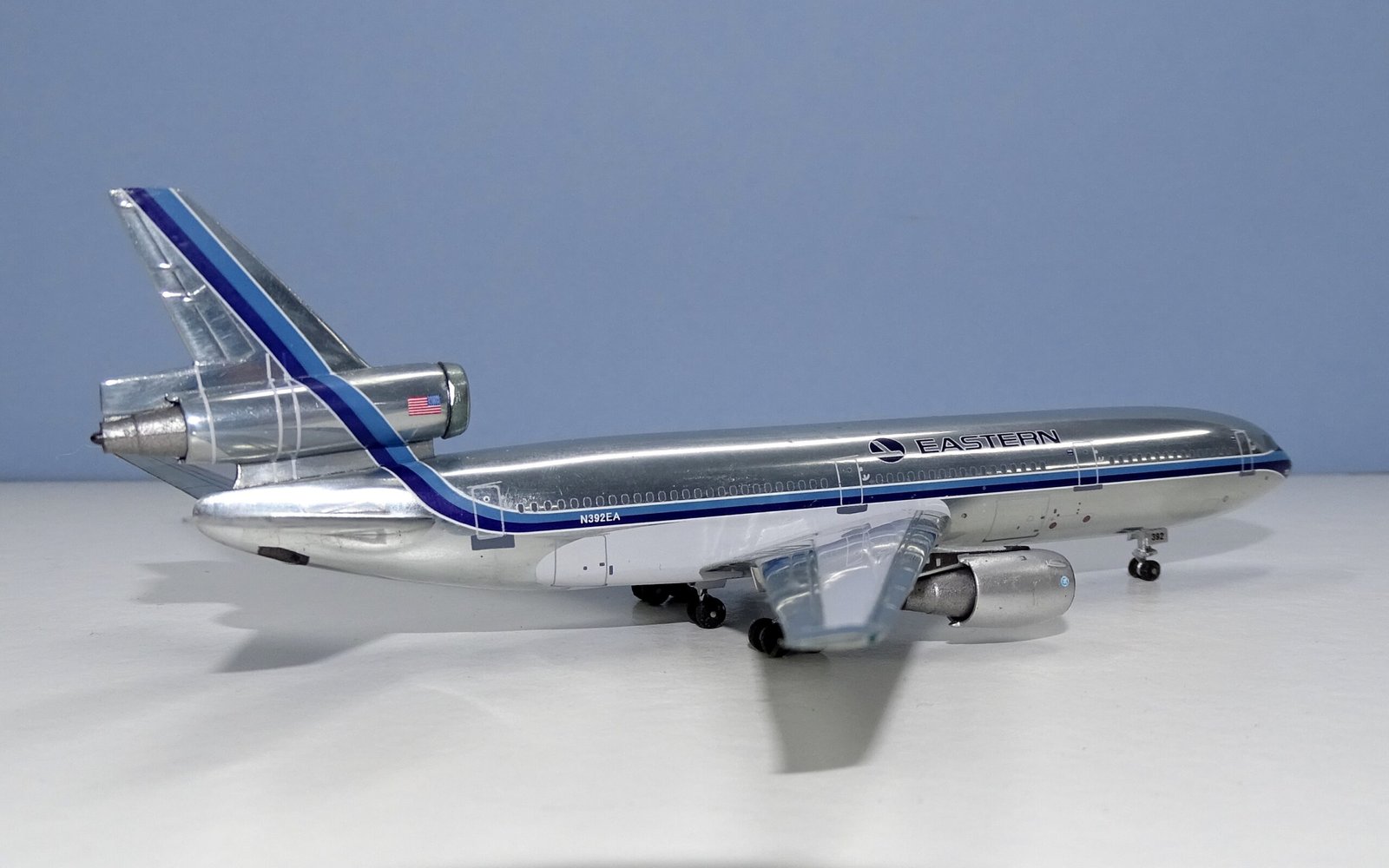
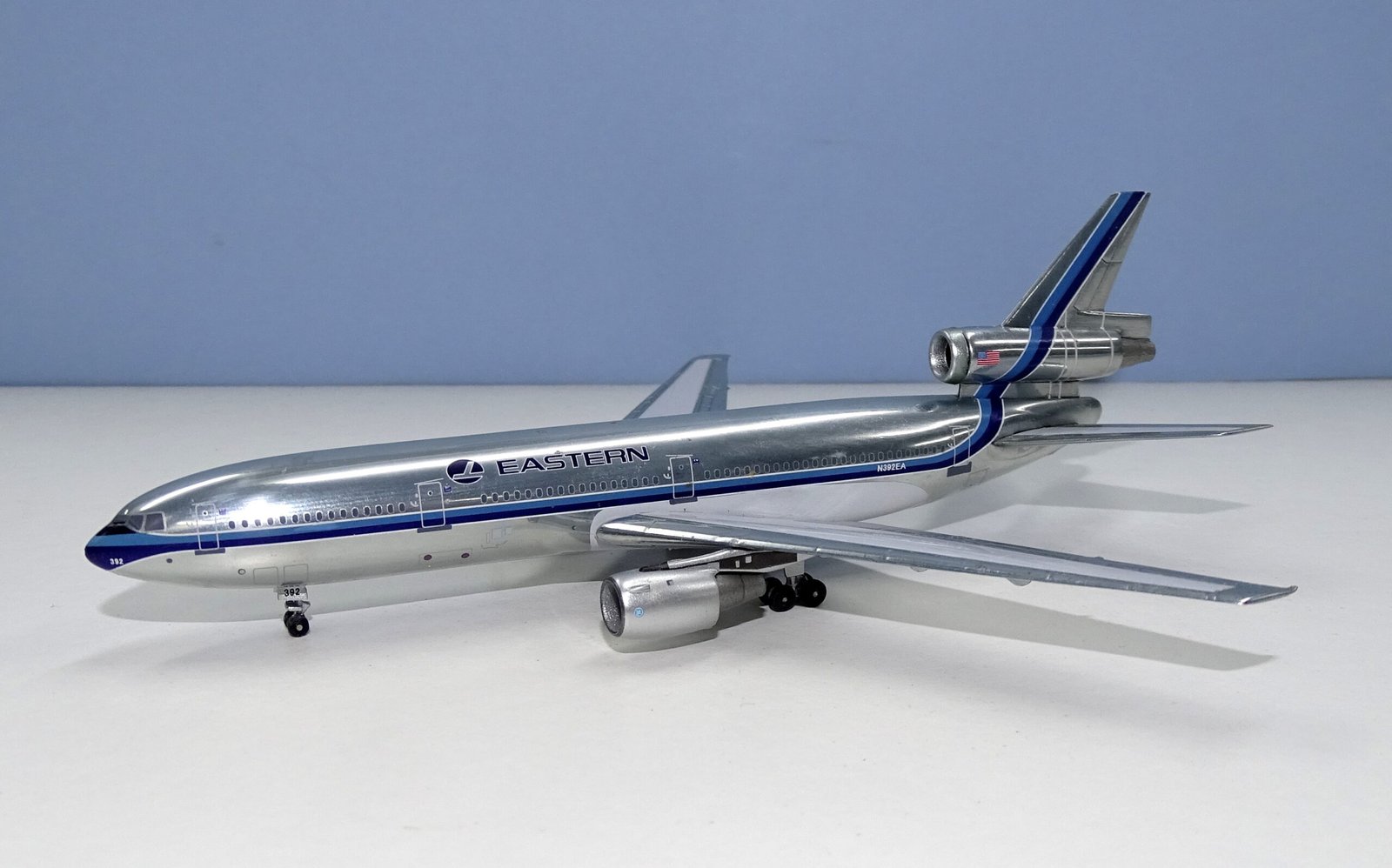
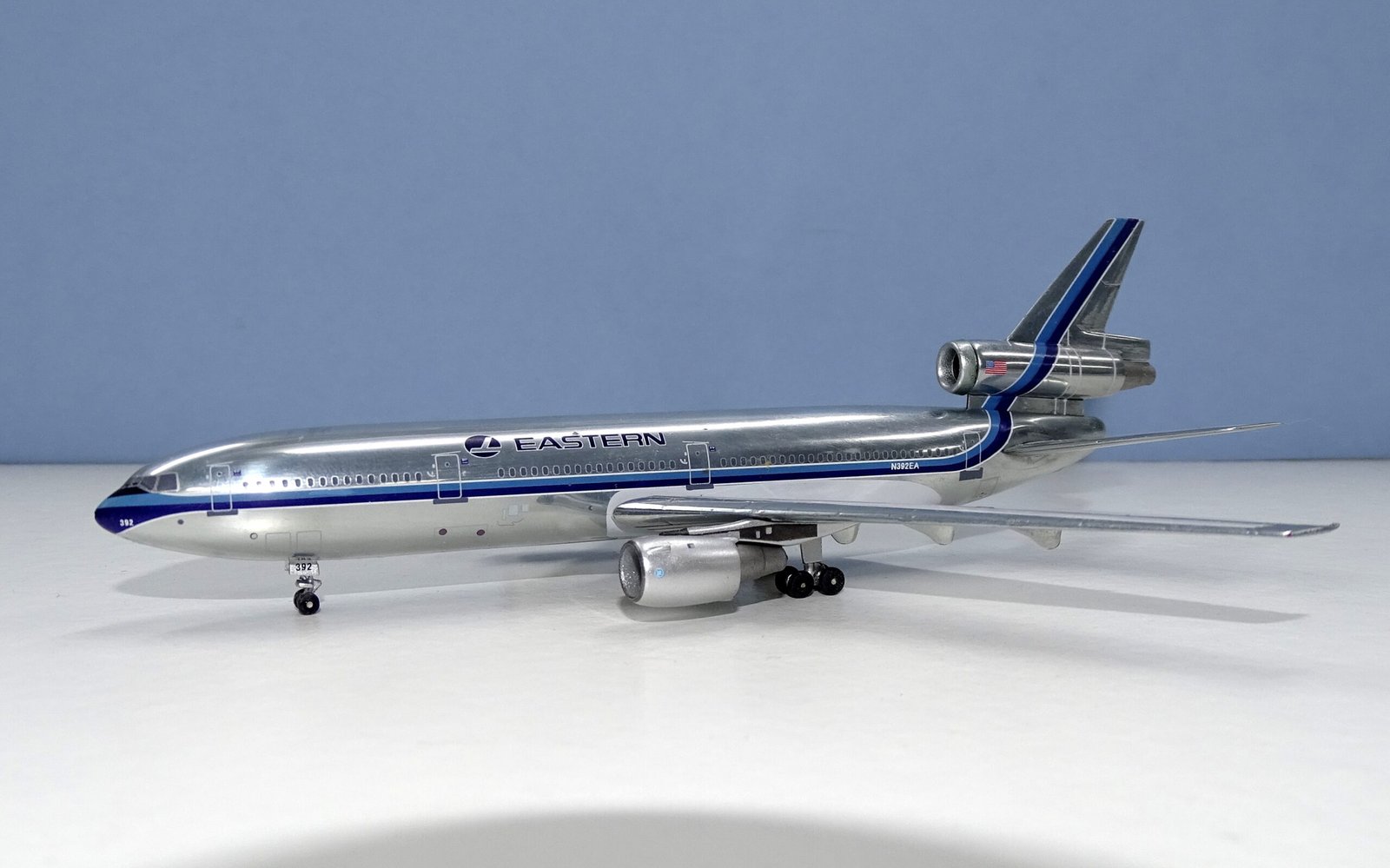
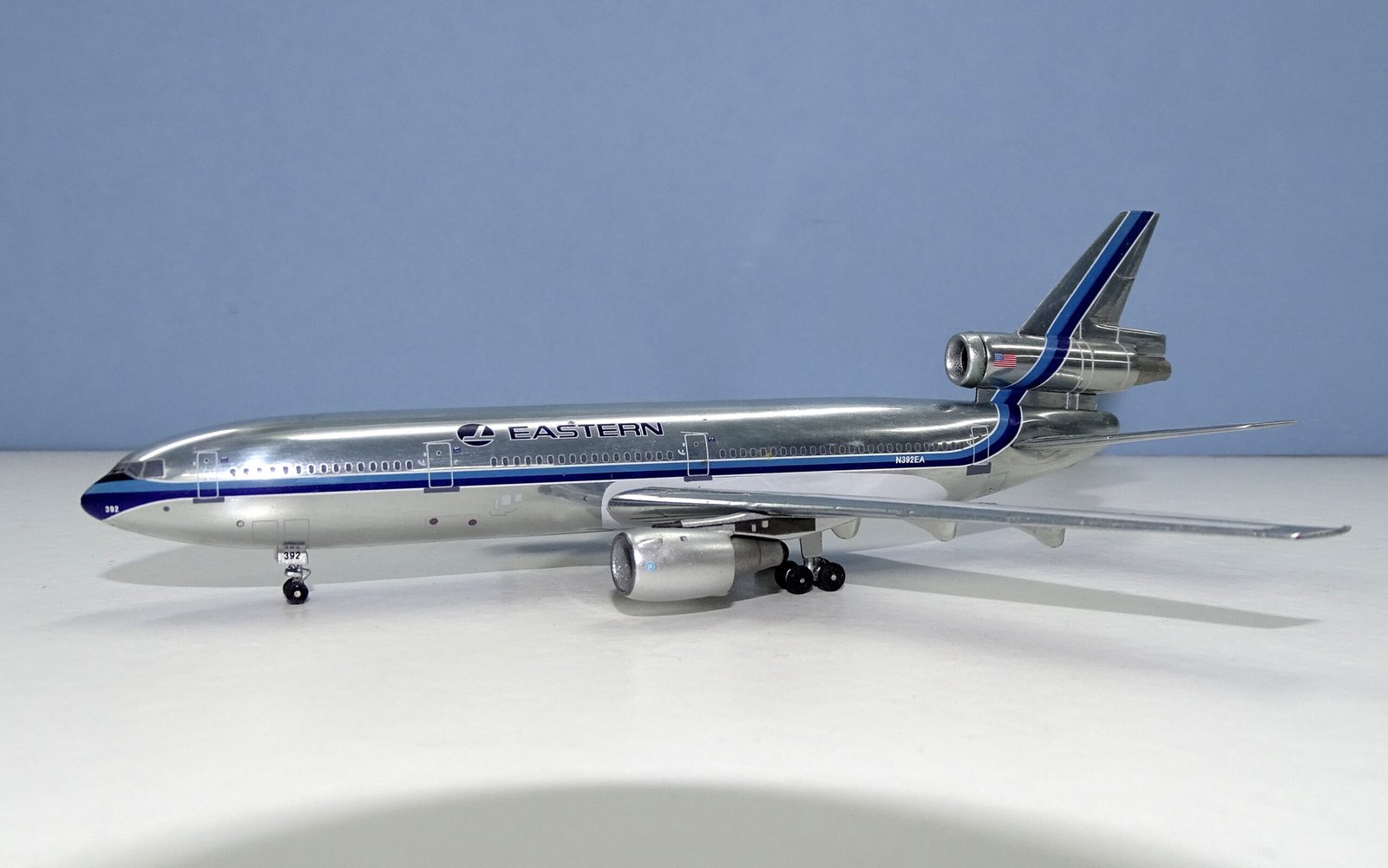
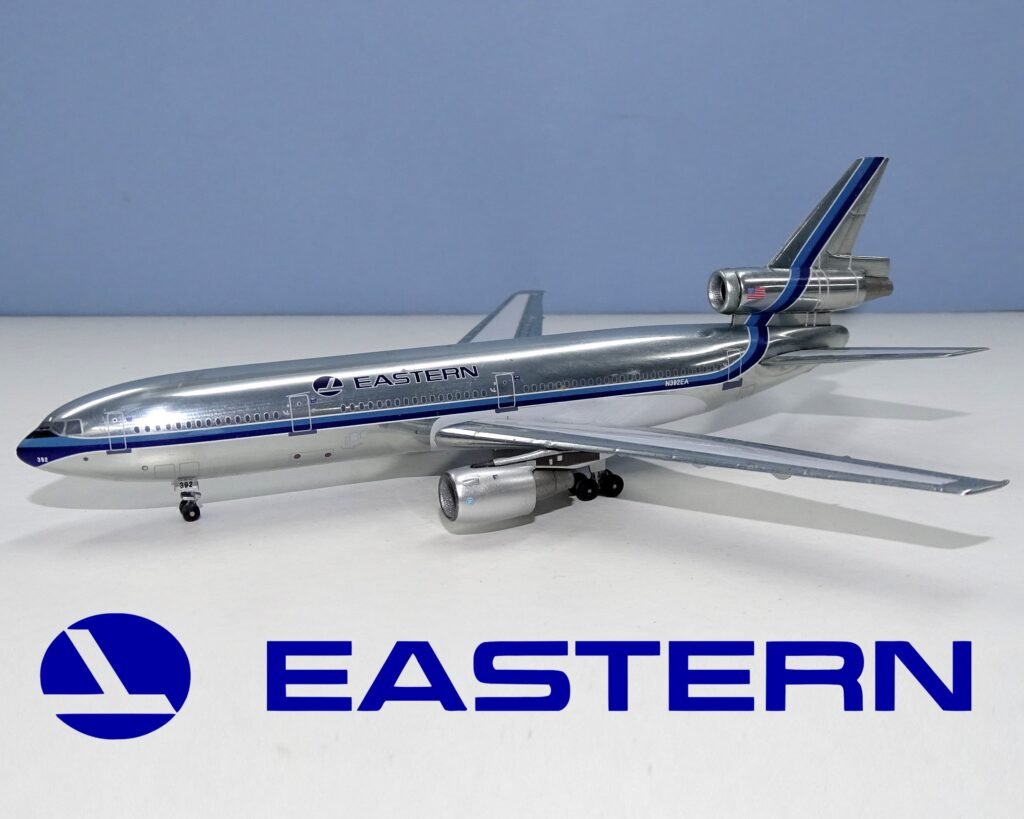
Eastern Air Lines McDonnell Douglas DC-10-30 N392EA Aeroclassics 1:400 Scale Model Airliner
The initial submission for the route from Miami to London was won handsomely by Eastern in 1980 and Frank Borman’s airline busied itself with preparations to begin its new flagship service having never operated across the Atlantic Ocean before. Unfortunately, the British authorities assigned the service to the unfashionable London Gatwick rather than London Heathrow and Eastern protested.
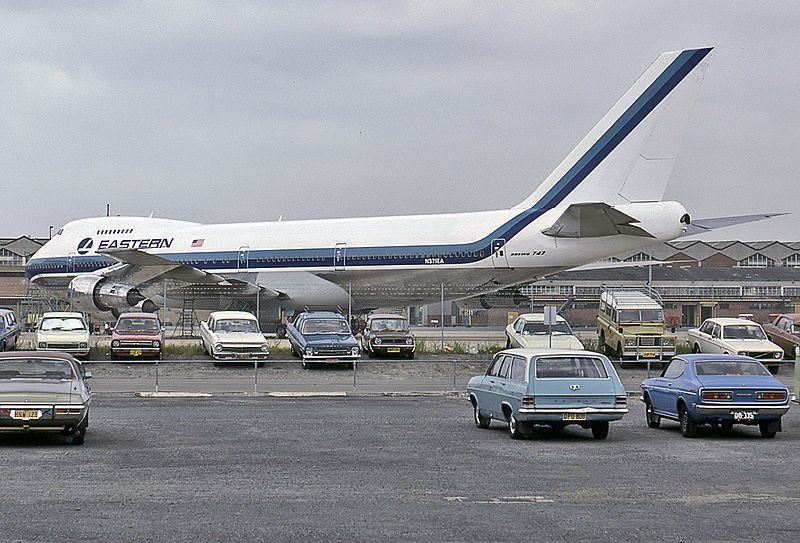
It had already sourced a pair of Qantas 747-238Bs for the route and in February 1980 and VH-EBD was withdrawn from Kangaroo service and entered heavy maintenance with Qantas engineering. She was rolled out in full Eastern colours on March 17, 1980 as N371EA, however the sale fell through and by the end of April she was back in Qantas colours. Her sister-ship VH-EBC, which was scheduled to become N372EA, was never taken out of Qantas service and stayed active with them until November 1984.
The only Eastern 747-200. VH-EBD re-registered as N371EA for less than a month at Sydney. By Daniel Tanner [CC BY-SA 4.0 (https://creativecommons.org/licenses/by-sa/4.0) or CC BY-SA 4.0 (https://creativecommons.org/licenses/by-sa/4.0)], via Wikimedia Commons
The sticking point had been Eastern’s insistence on Heathrow and finally the British authorities ran out of patience and withdrew permission and instead reassigned it to the rapidly growing Air Florida. Eastern instead had to satisfy its wishes for international services with the purchase of Braniff’s Latin American network in April 1982 and it would be another four years until they had the chance to cross the Atlantic again.
This came about due to the failure of Air Florida in July 1984, which left their Miami – London route un-served. Eastern’s success in acquiring the London route was unexpected as World Airways had been the favourite during the application process. Nonetheless Eastern had the same issue it had had in 1980 a lack of suitable aircraft to fly the long route. Although it flew Tristars on the South American routes they typically flew multi-stop services and none of Eastern’s standard Tristars could reach across the Atlantic.
Boeing 747s would have provided better seat-mile economics than trijets but eastern was again faced with flying into Gatwick rather than Heathrow so the justification for them was limited. In addition, Eastern needed aircraft more suitable than the short-legged Tristars on the South American services like LAX-MIA-EZE-SCL and LAX-MIA-GIG-EZE, which had to be routed through Lima, Guayaquil and Panama City due to range restrictions.
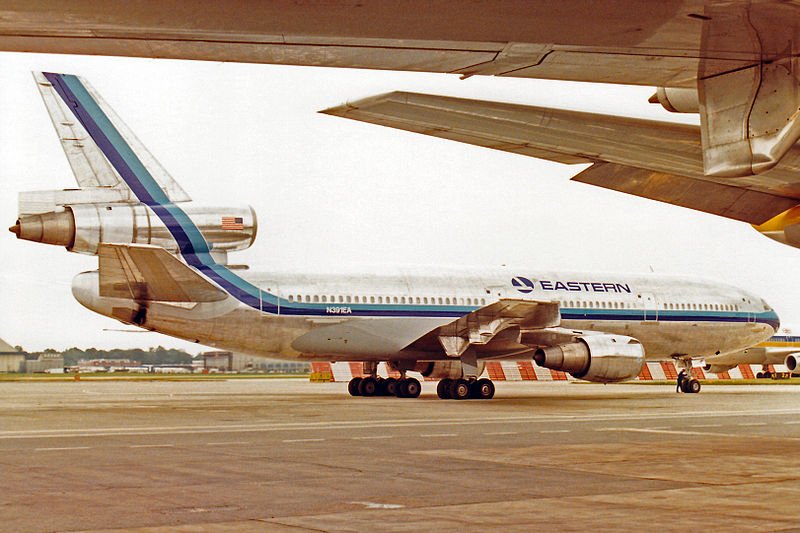
N391EA at LGW in July 1985. Ken Fielding/https://www.flickr.com/photos/kenfielding [CC BY-SA 3.0 (https://creativecommons.org/licenses/by-sa/3.0) or CC BY-SA 3.0 (https://creativecommons.org/licenses/by-sa/3.0)], via Wikimedia Commons
Apparently Eastern looked around for Tristar 500s to provide commonality with its existing fleet but Air Canada’s Tristar 500s were too expensive and instead it settled on a trio of ex-Alitalia DC-10-30s. These aircraft had actually already left the Alitalia fleet and were scheduled to be converted to freighters for Federal Express. Even though they were cheaper than Tristar 500s FedEx apparently made a handsome profit on the sale of the trio to Eastern.
Eastern Air Lines McDonnell Douglas DC-10-30 N392EA Aeroclassics 1:400 Scale Model Airliner
Eastern Air Lines McDonnell Douglas DC-10-30 N392EA Aeroclassics 1:400 Scale Model Airliner
Eastern Air Lines McDonnell Douglas DC-10-30 N392EA Aeroclassics 1:400 Scale Model Airliner
Eastern Air Lines McDonnell Douglas DC-10-30 N392EA Aeroclassics 1:400 Scale Model Airliner
Eastern Air Lines McDonnell Douglas DC-10-30 N392EA Aeroclassics 1:400 Scale Model Airliner
Eastern Air Lines McDonnell Douglas DC-10-30 N392EA Aeroclassics 1:400 Scale Model Airliner
Eastern Air Lines McDonnell Douglas DC-10-30 N392EA Aeroclassics 1:400 Scale Model Airliner
One of the positives of the move by Eastern was that the DC-10s used the same engines General Electric CF6-50C2s as its Airbus A300s. The DC-10s did not come with any spare engines and so it was not uncommon for engines on the A300s to be reused on the DC-10s even though conversion between the two took several hours of modifications.
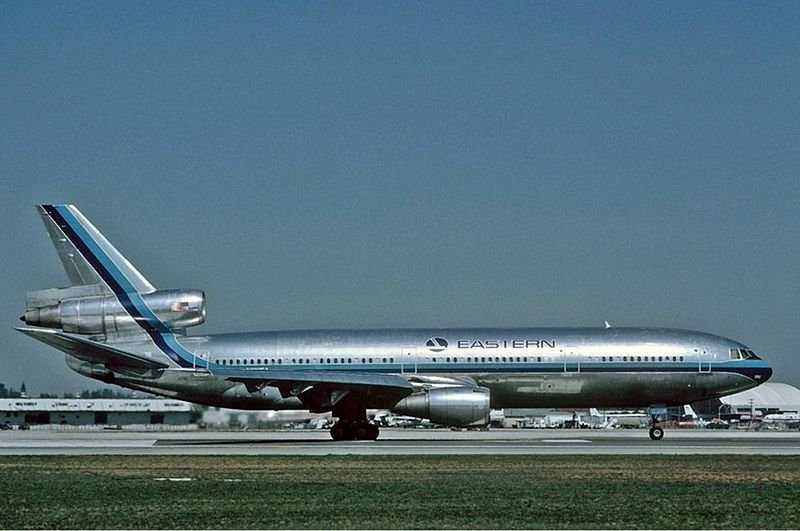
N392EA at Miami in 1989. By Aviation Photography of Miami [GFDL 1.2 (http://www.gnu.org/licenses/old-licenses/fdl-1.2.html) or GFDL 1.2 (http://www.gnu.org/licenses/old-licenses/fdl-1.2.html)], via Wikimedia Commons
The DC-10s acquired were built in 1973 and 1974 and became N390-392EA with Eastern, entering service in June 1985, November 1985 and January 1986. Initially the route was only three times weekly but as all three aircraft arrived it became daily. Initially the 248 seaters had a good load factor but over time this decreased.
Unfortunately for Eastern the London service was not the cash-cow that it hoped it would be. Competition was fierce on the route as both Pan Am and British Airways operated daily 747s between Miami and Heathrow on a similar schedule. Virgin Atlantic had also made Miami its second destination in the USA and provided further unwelcome competition. Eastern needed to fill the premium cabin but up against both PA and BA this was challenging whilst Miami was too far south in its route network to acquire enough feed from domestic services.
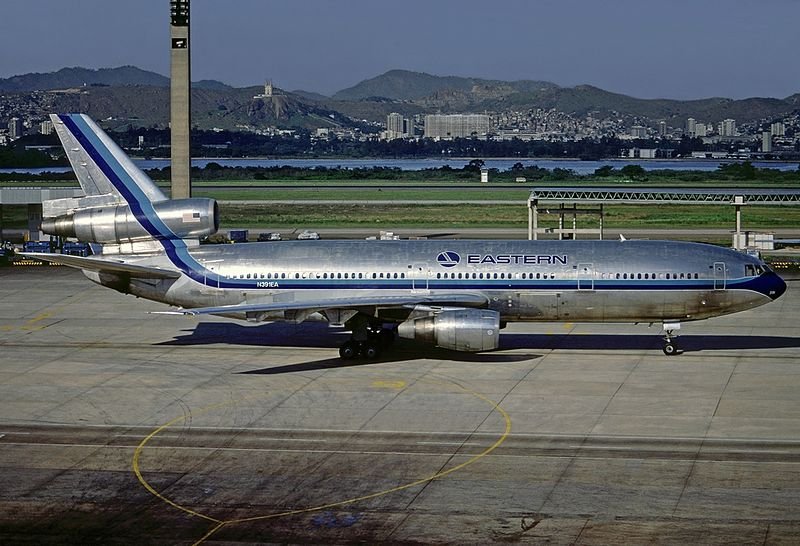
N391EA at Rio in 1990. By Perry Hoppe [GFDL 1.2 (http://www.gnu.org/licenses/old-licenses/fdl-1.2.html) or GFDL 1.2 (http://www.gnu.org/licenses/old-licenses/fdl-1.2.html)], via Wikimedia Commons
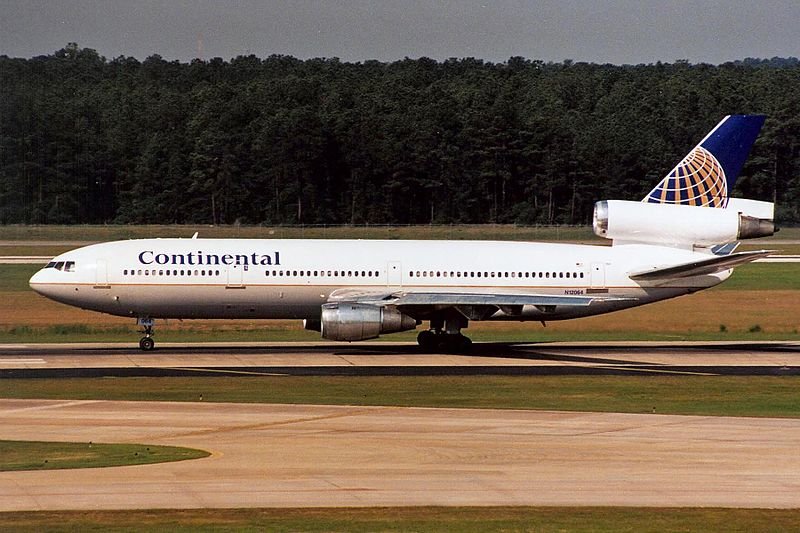
Eastern could not afford to carry the route for long and it was terminated in October 1986 only just over 18 months after it had been begun. This was also only eight months after Eastern was purchased by Frank Lorenzo’s Texas Air Corp and one of the hallmarks of the terminal phase of Eastern’s life was the steady transfer of assets between Eastern and Continental. It is little surprise therefore that N390EA had joined the Continental fleet by October. She would eventually become N12064 and operate with CO until June 2002. Indeed Continental actually took over the Miami-London service itself.
N12064 with Continental. Ken Fielding/https://www.flickr.com/photos/kenfielding [CC BY-SA 3.0 (https://creativecommons.org/licenses/by-sa/3.0) or CC BY-SA 3.0 (https://creativecommons.org/licenses/by-sa/3.0)], via Wikimedia Commons
The other pair of DC-10s remained in the Eastern fleet serving the South American routes until towards the end of 1990 when they too were transferred over to Continental. By this time Eastern was a pale shadow of its former self and had just sold its entire Latin American network to American Airlines for $471 million. As a side note American also tookover the Miami-London service from Continental.
The acquisition of the DC-10s and Transatlantic service was one of the last hurrahs of Eddie Rickenbackers ‘Great Silver fleet’. It is unlikely that Eastern could have made the route work but the Texas Air takeover killed it dead regardless of its viability.