Aviacsa entered into the 21st Century as Mexico’s leading private airline and a serious competitive force to the nationalised Mexicana and Aeroméxico. Unfortunately it was not able to establish itself as a permanent fixture due to its inability to finance fleet replacement and compete as a low cost rather than a low fares airline with the new breed of LCCs in Mexico such as Interjet and Volaris. Within 10 years Pakal would be dethroned.
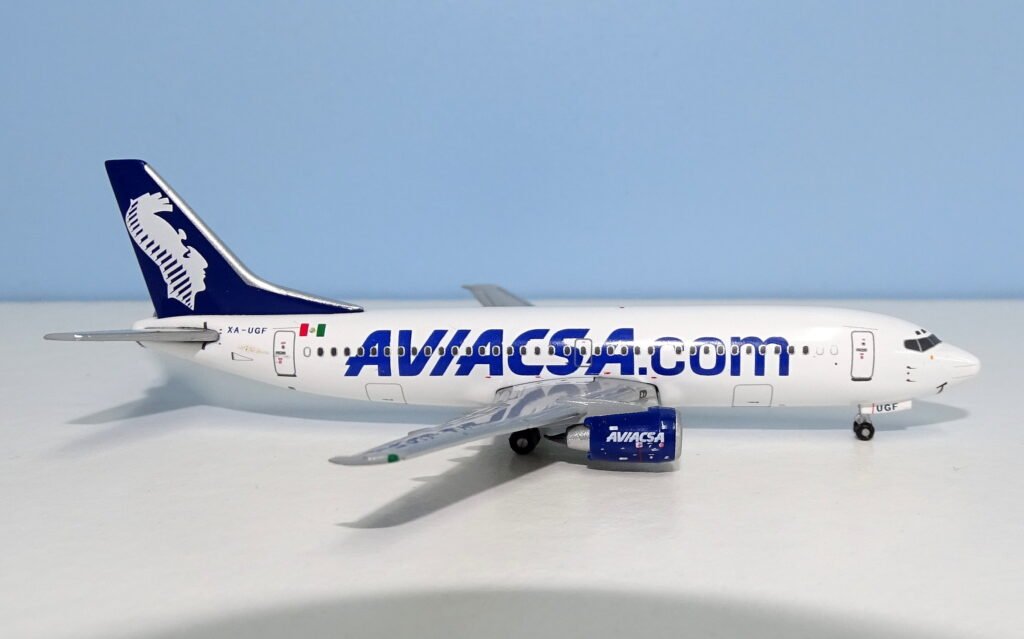
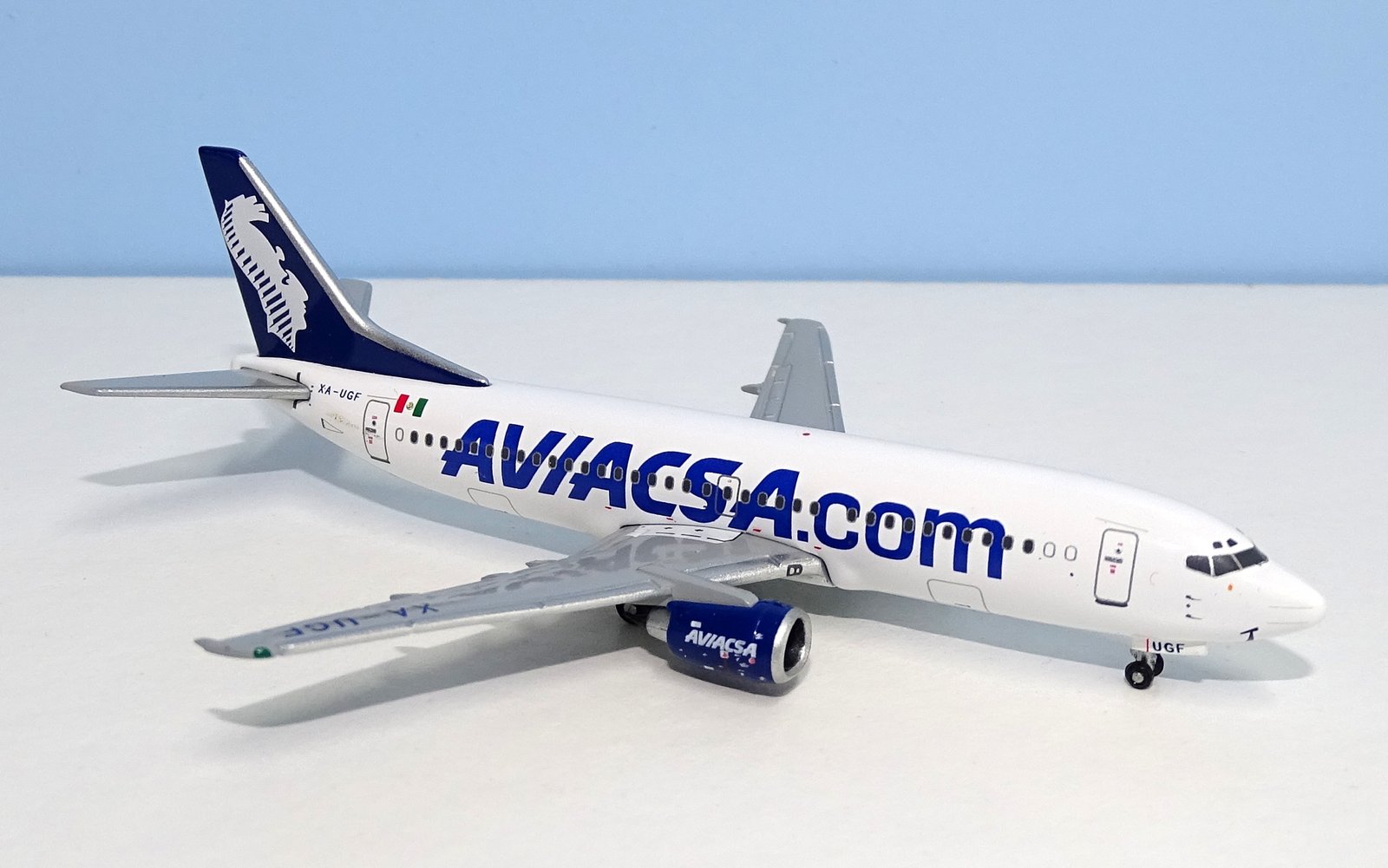
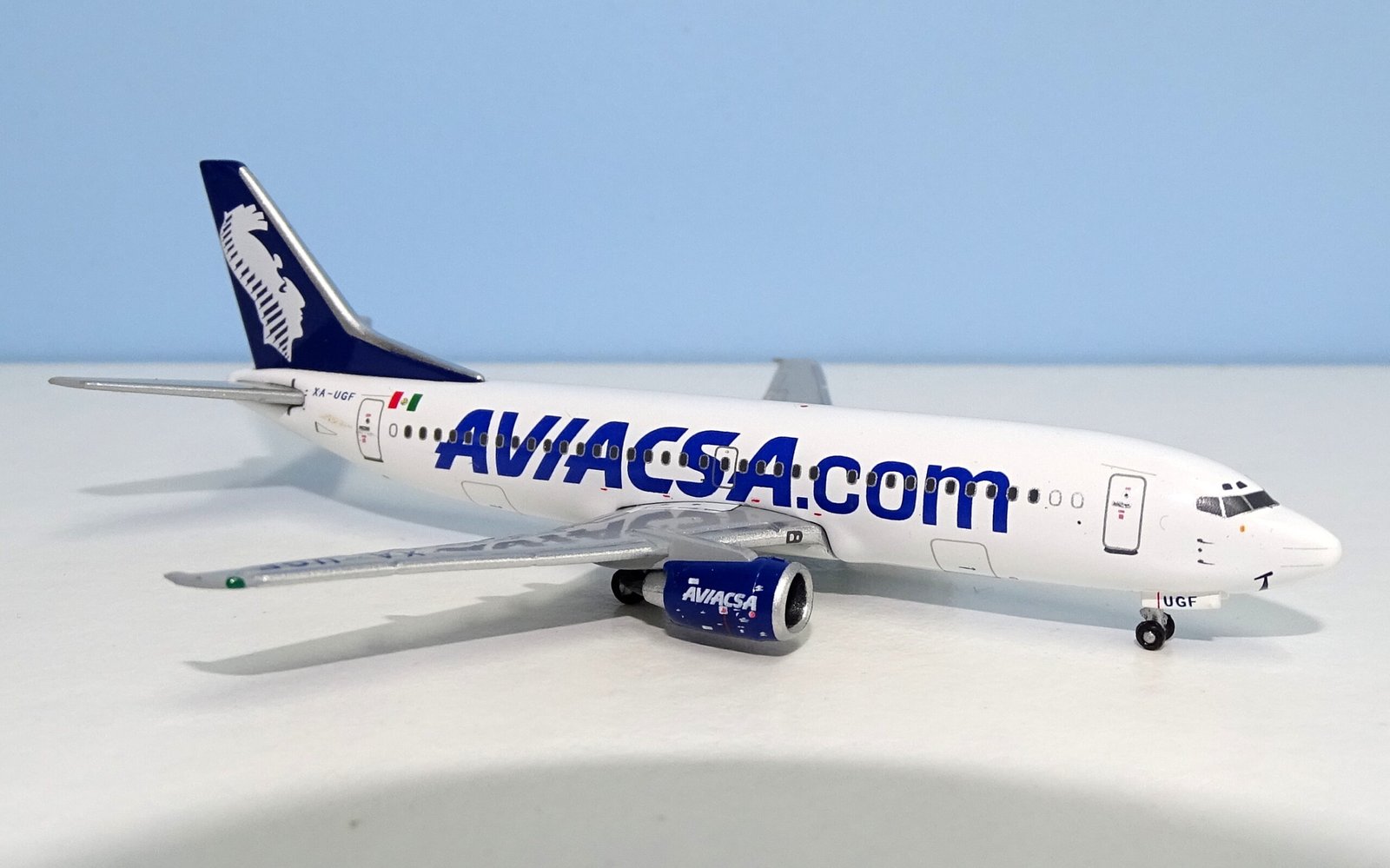
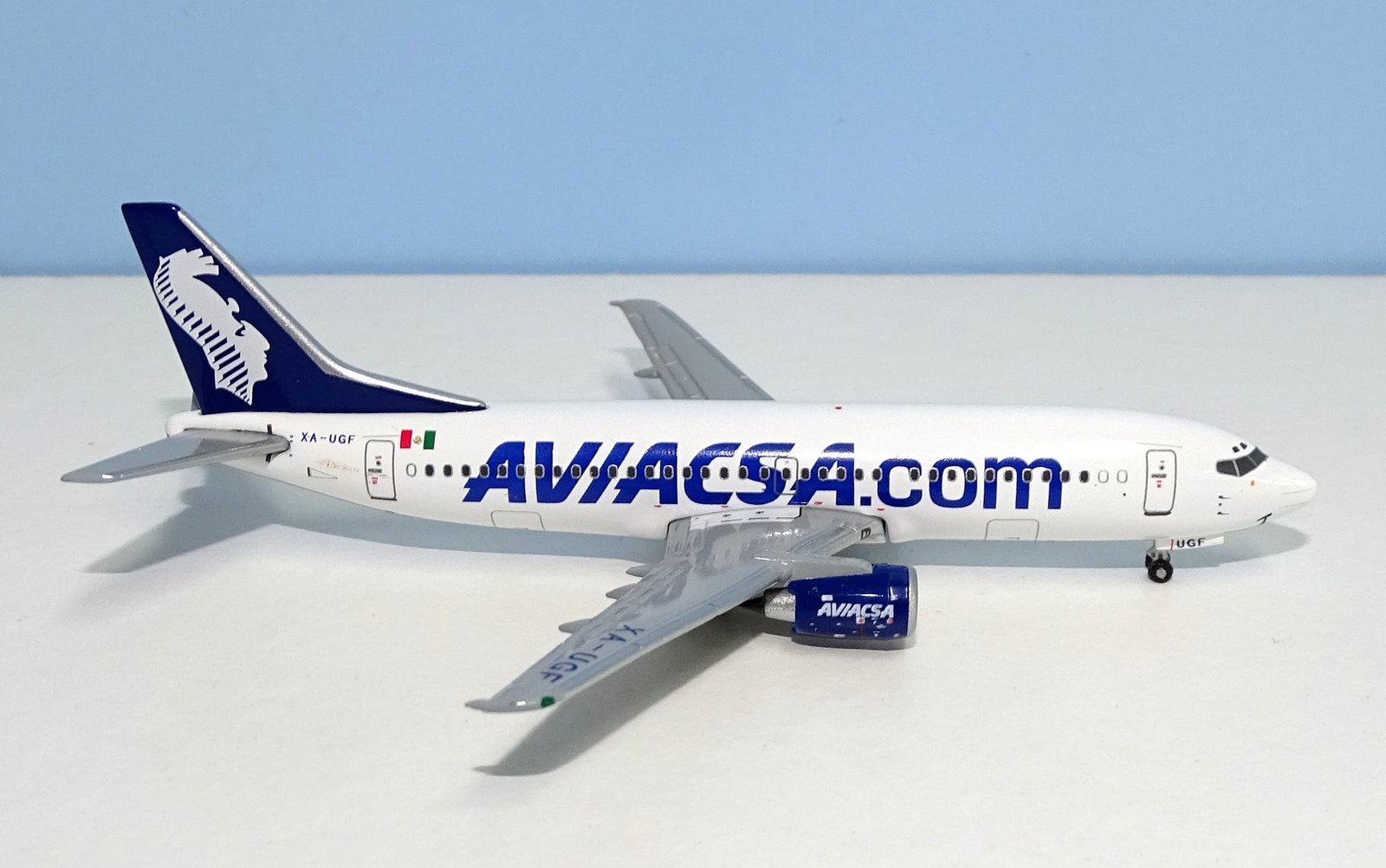
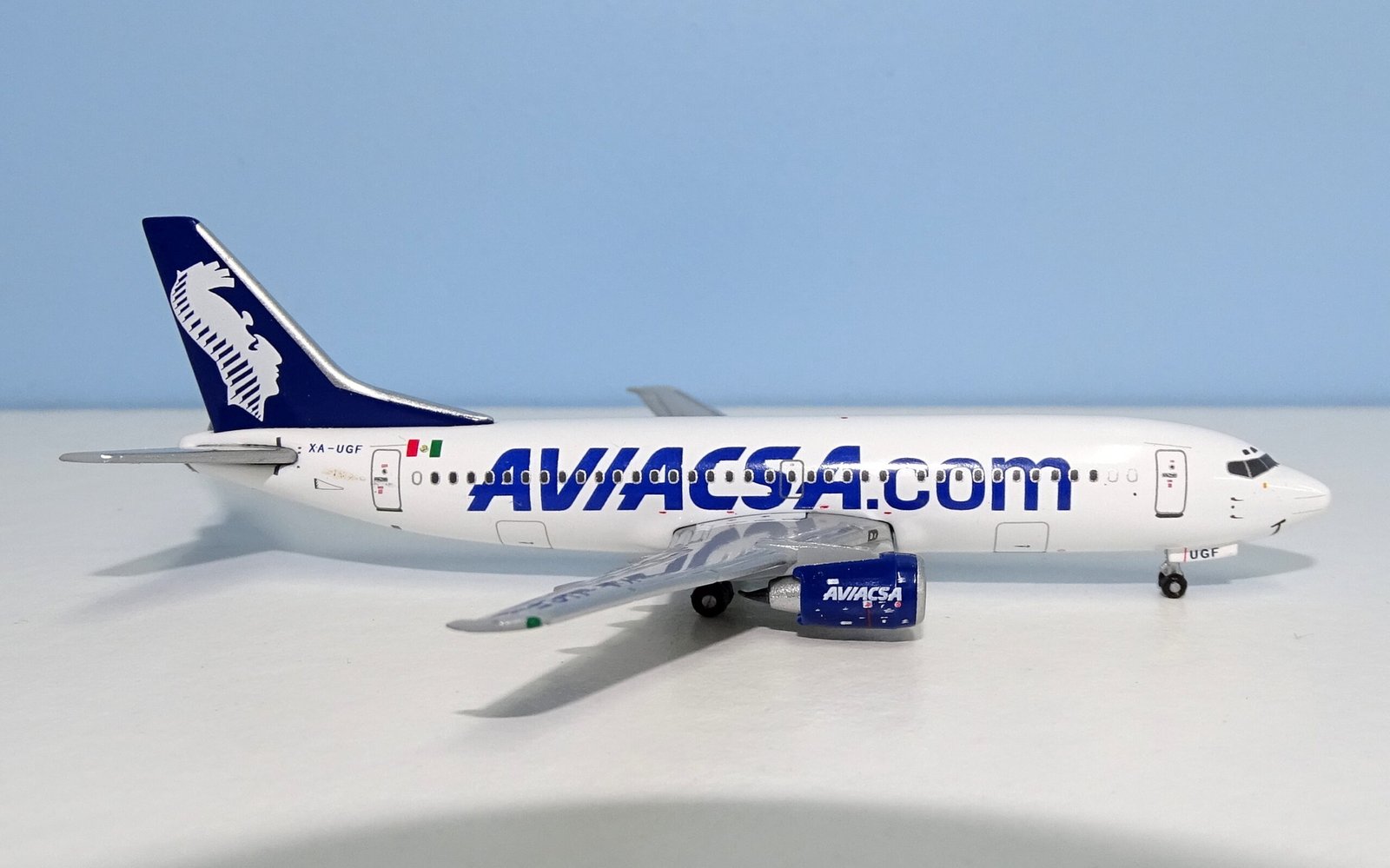
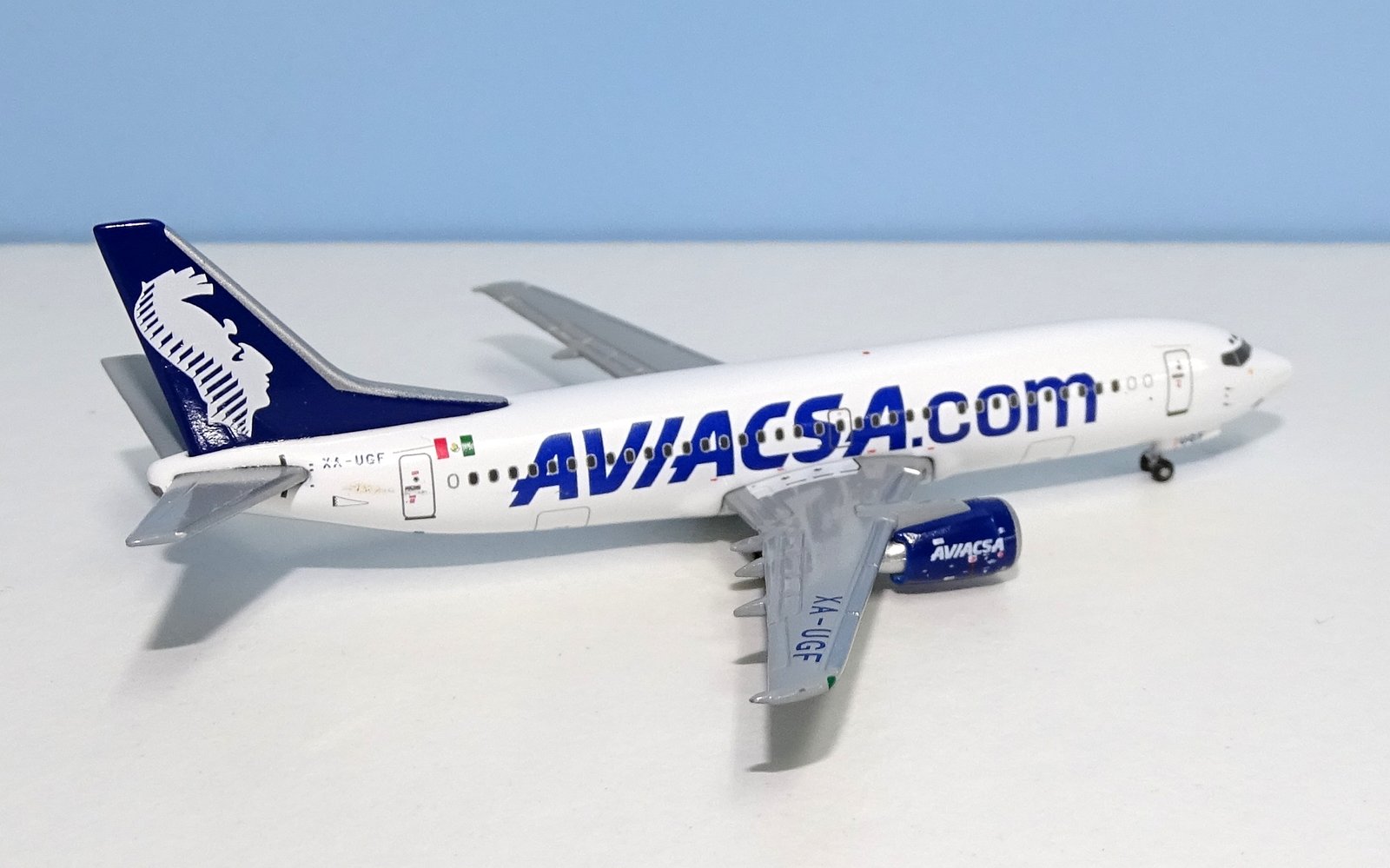
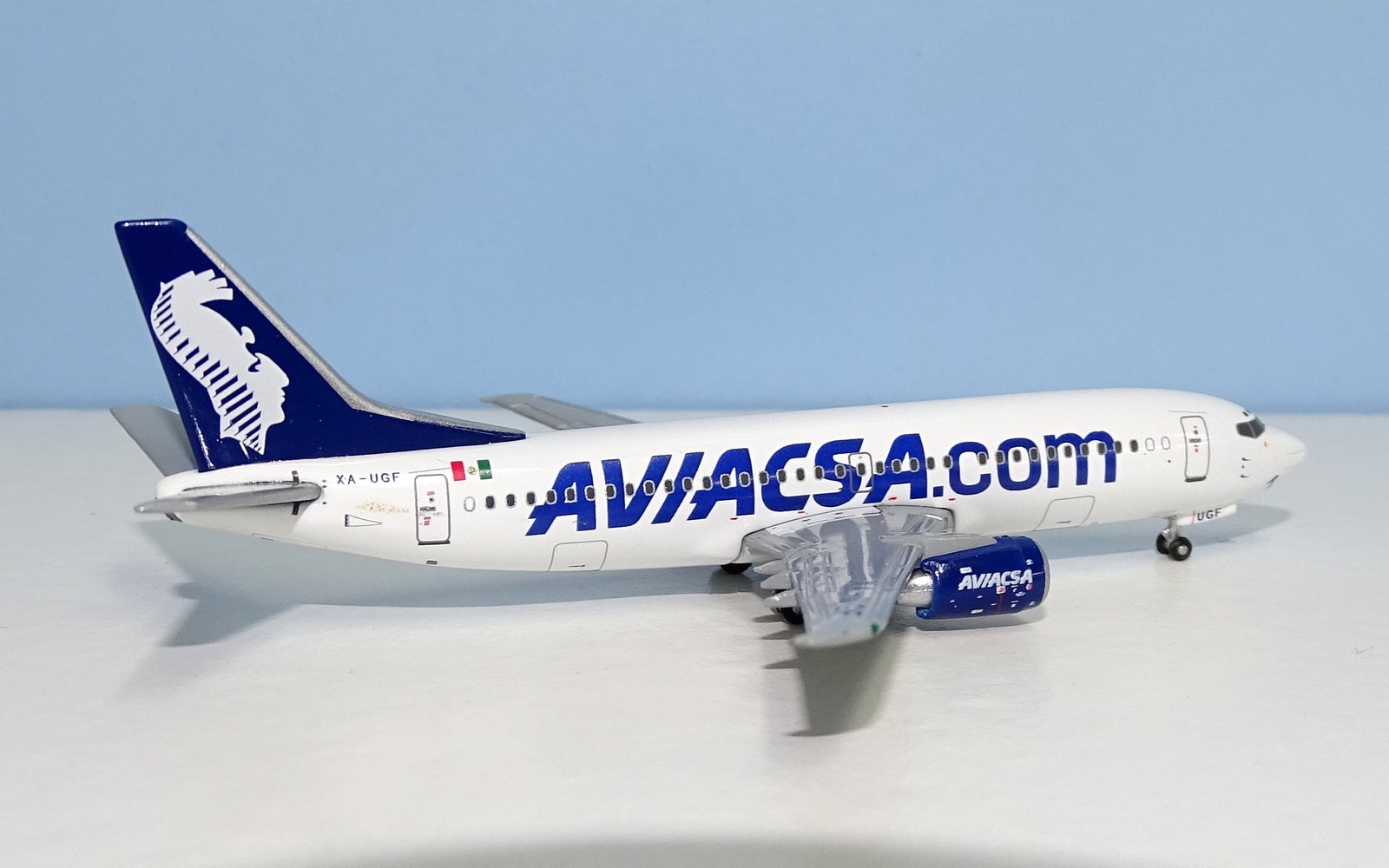
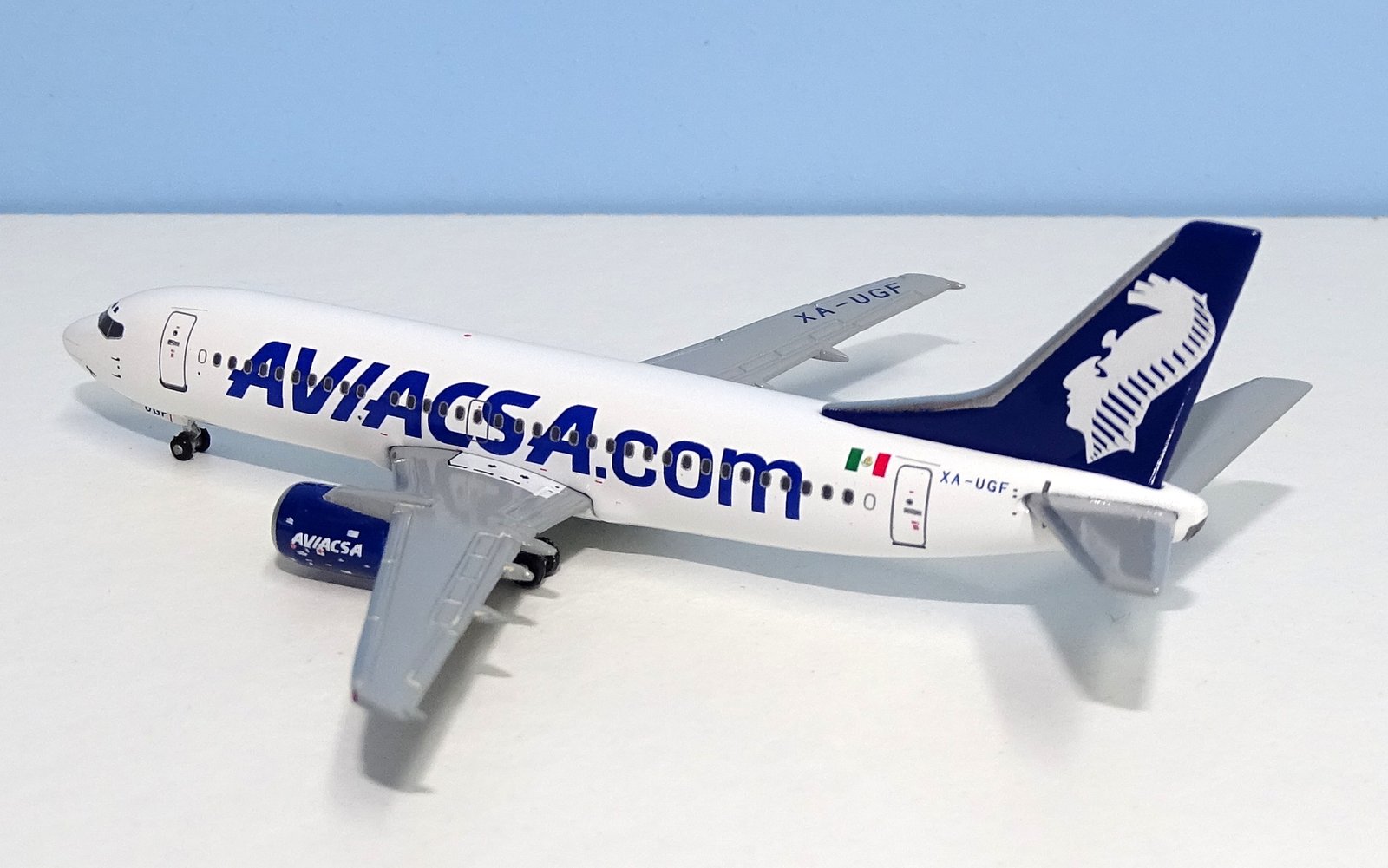
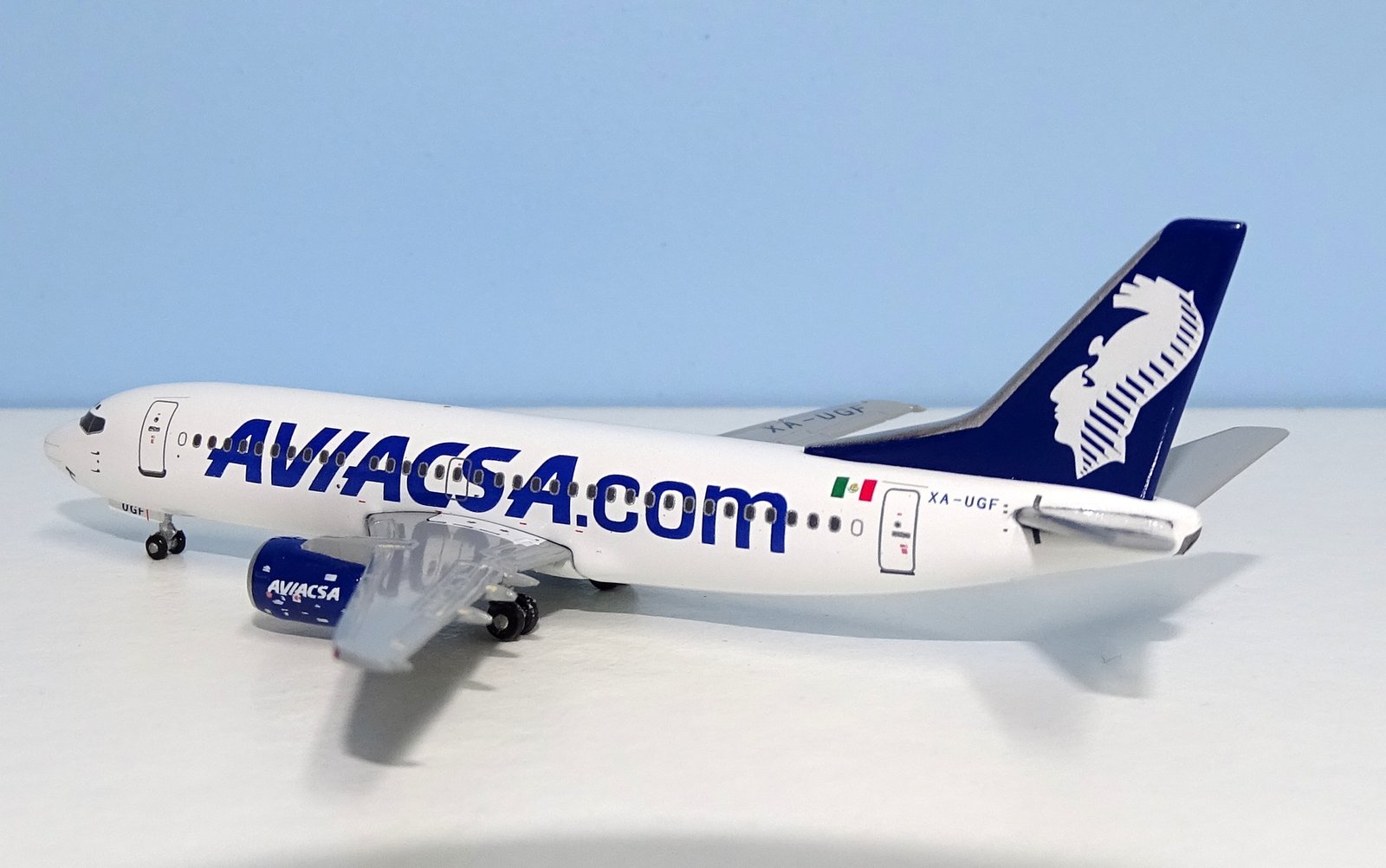
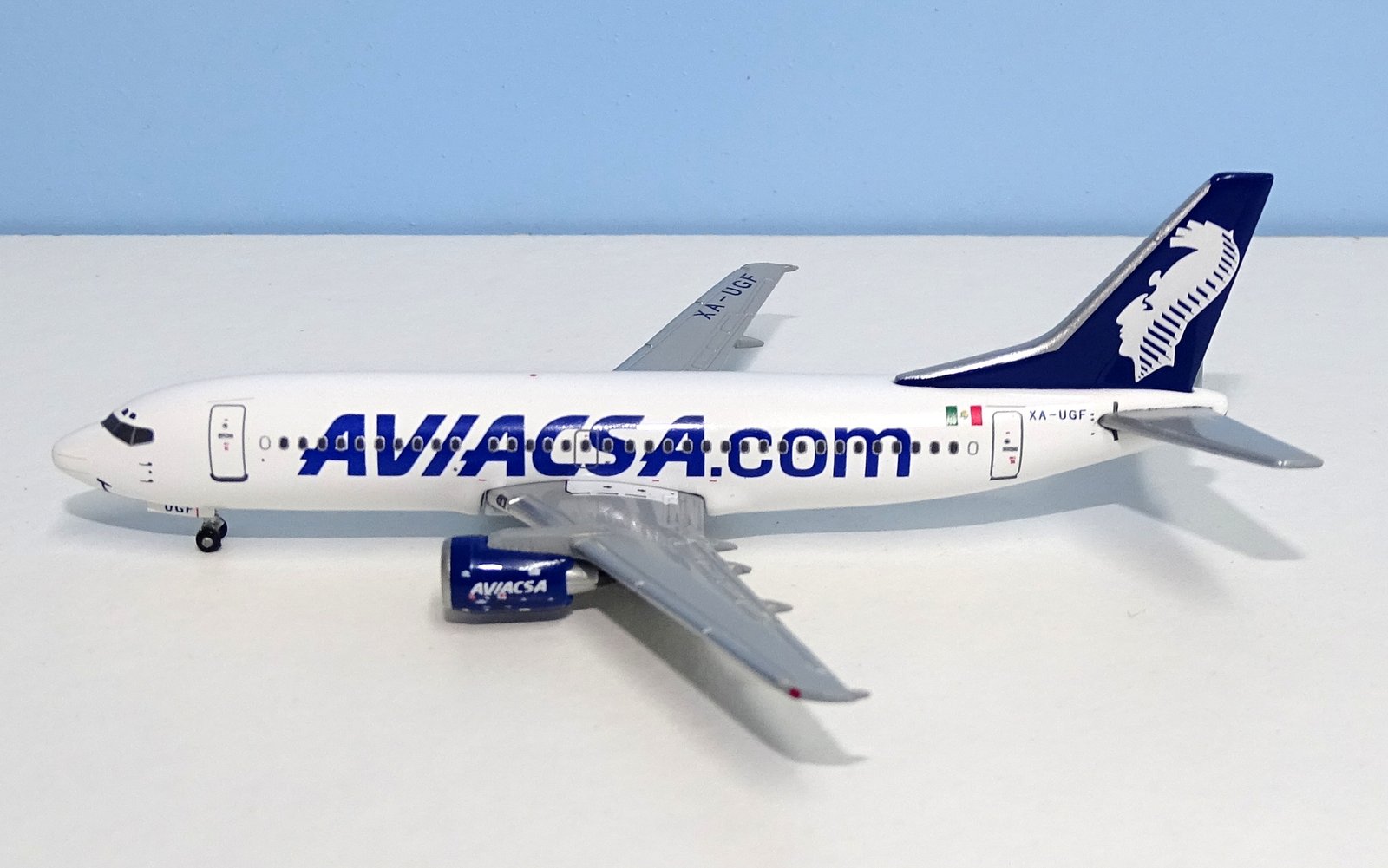
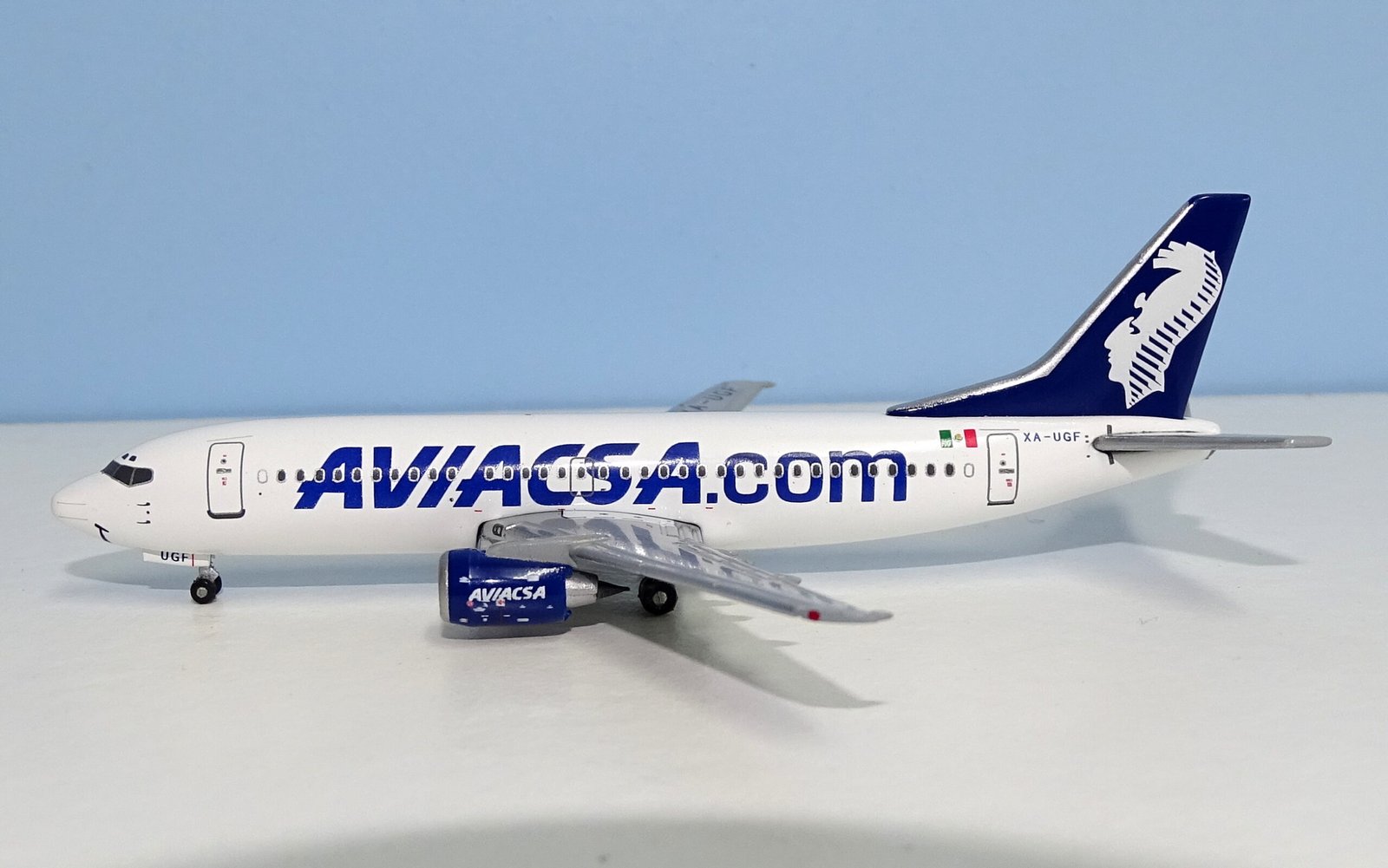
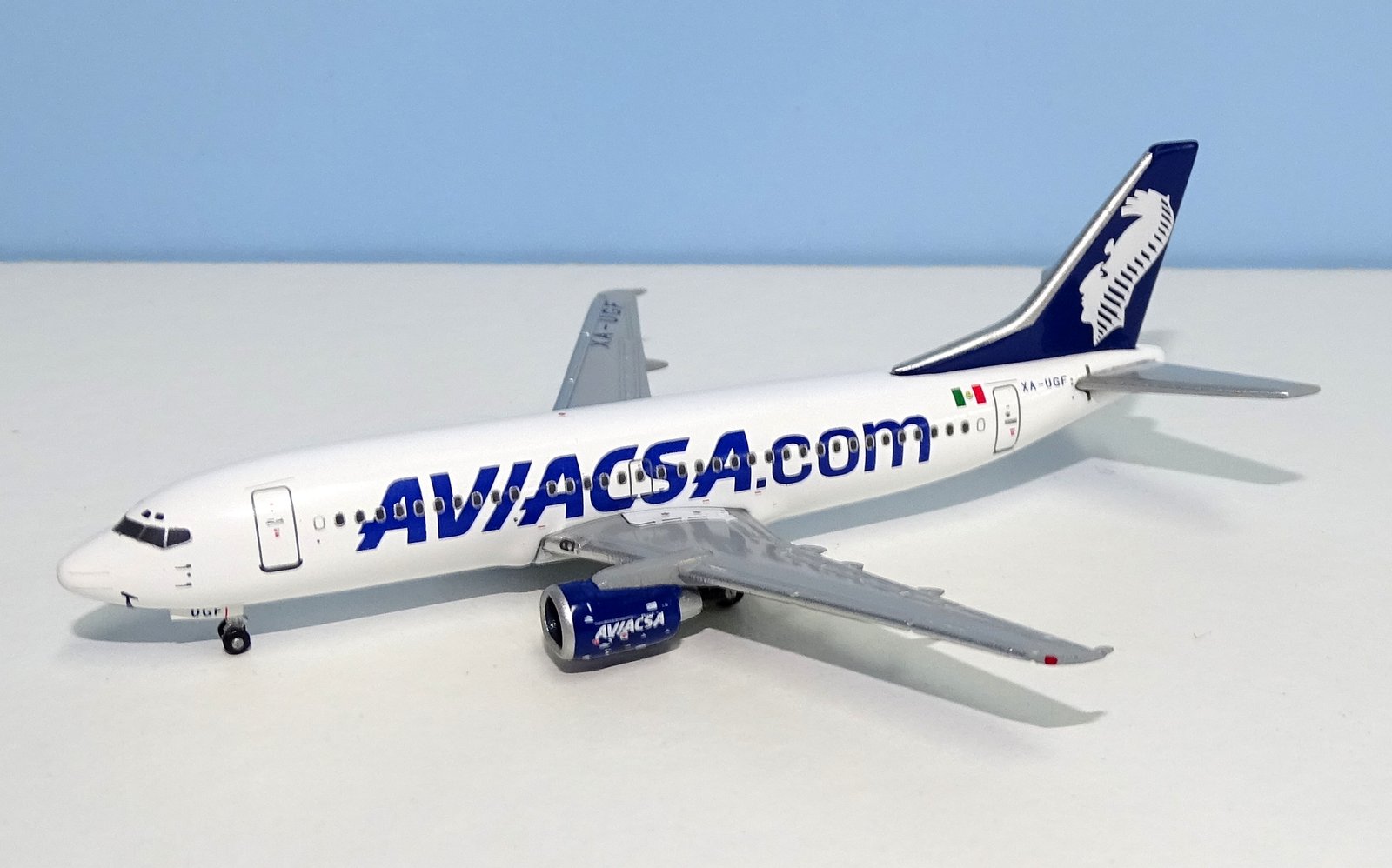
Aviacsa Boeing 737-300 XA-UGF Gemini Jets 1:400 Scale Model Airliner
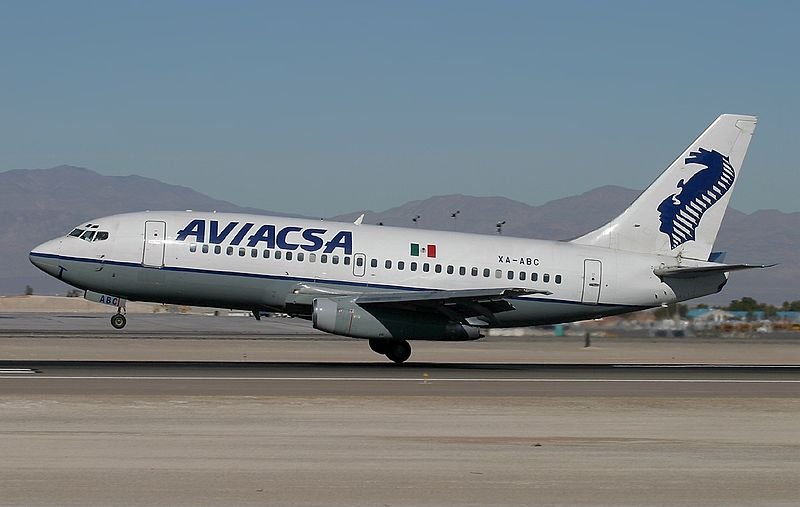
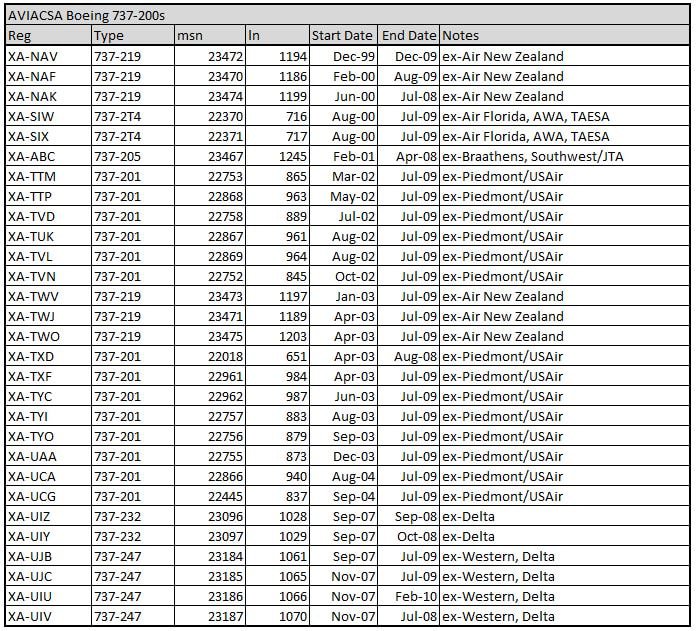
As 2001 dawned Aviacsa was in the midst of its fleet ‘renewal’ using relatively old but no doubt well maintained 737-200 Advanceds sourced from Air New Zealand. Three had arrived along with a pair of ex-TAESA series 2T4s and in February 2001 a single series 205. The 737s introduced a new simplified livery. Gone were the blue cheatlines and golden Pakal on the tail. These were replaced by a grey bellied mainly white scheme with a thin blue cheatline and new blue Pakal on the tail – plus a new smiley face under the nose.
XA-ABC departing LAS in 2003. Photo by Konstantin von Wedelstaedt from Wikipedia
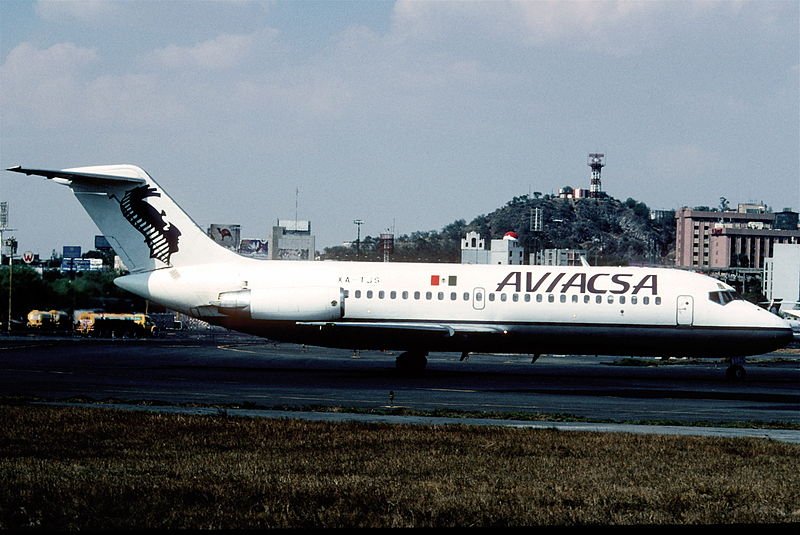
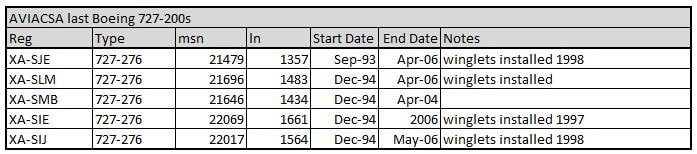
The rest of the fleet consisted of 727-200s, several of which had been equipped with winglets, plus a pair of DC-9-15s. As further 737-200s joined the fleet during 2002 (6 ex-Piedmont and US Air 737-201s) the DC-9s were retired along with several of the 727s.
XA-TJS in 2002 just prior to retirement. Photo by Aero Icarus from Wikipedia
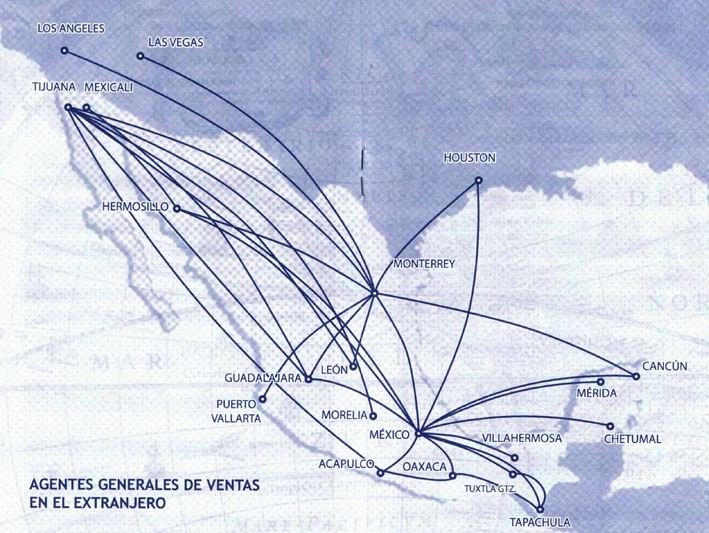
The 2002 route map
Obviously the early years of the century were difficult for airlines following the 9/11 attacks but once again Aviacsa was able to make lemonade from the situation and actually grew its operations, doubling the number of passengers and tripling its fleet to 2003. By then it offered direct service to 15 mexican destinations from both Monterrey and Mexico City with a total of 18 destinations within Mexico. US destinations had grown to include Chicago as well as Los Angeles and Miami.
Operating over 120 flights a day and flying about 200,000 passengers a month the fleet stood at 21 737-200s and 6 727-200s by year end. The carrier had also benefitted from the opening of its own maintenance facility in 2000 plus a partnership with Pratt & Whitney from 2003 for engine repairs in Mexico City. Compliant unions had also enabled Aviacsa to get its pilots to fly 15% more than those of competing airlines. This caused some discord but Aviacsa was able to fire and replace those pilots with others from failed competitors. Further attempts by the pilots to change their union were caught up in litigation.
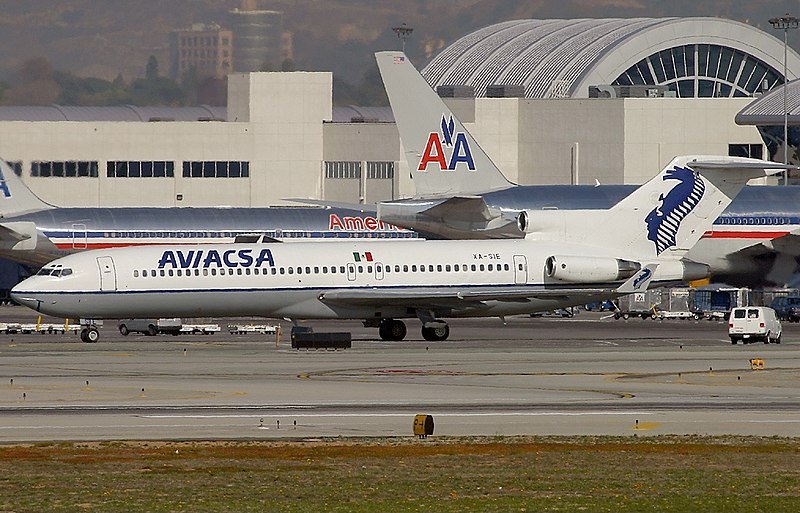
XA-SIE, note winglets, at LAX in 2003. Photo by Konstantin von Wedelstaedt from Wikipedia
Aviacsa’s survival and growth was aided by the continuing weakness of competitors. TAESA had gone bankrupt in 2000, whilst two other 1990s startups, Allegro and Aerolíneas Internacionales, had both failed by mid-2004. In fact in 2003 Aviacsa was the only one of Mexico’s 13 airlines to be profitable. Nonetheless new startups kept appearing, like Azteca and Avolar but it wasn’t these airlines that would provide the largest threat to Aviacsa.
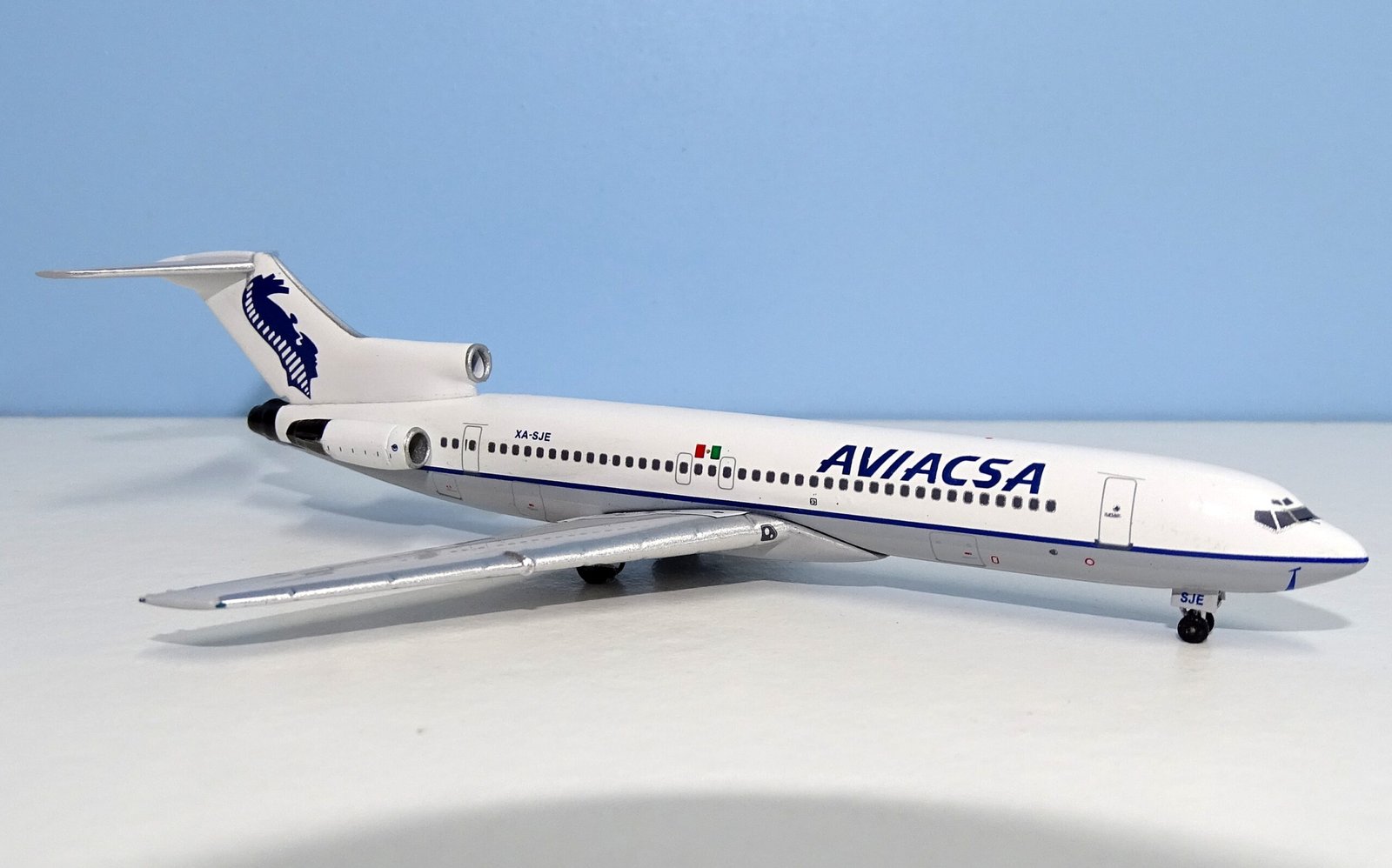
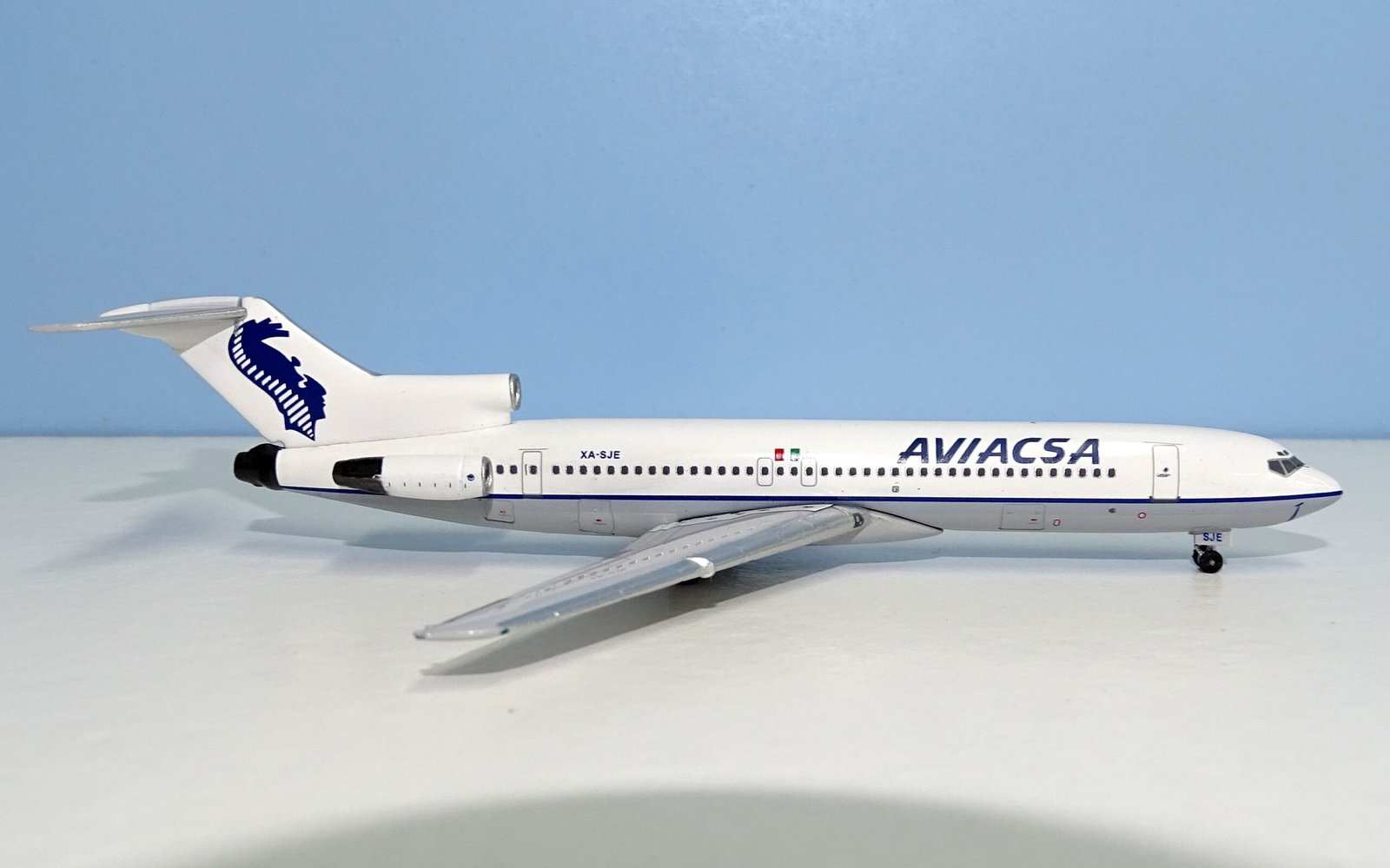
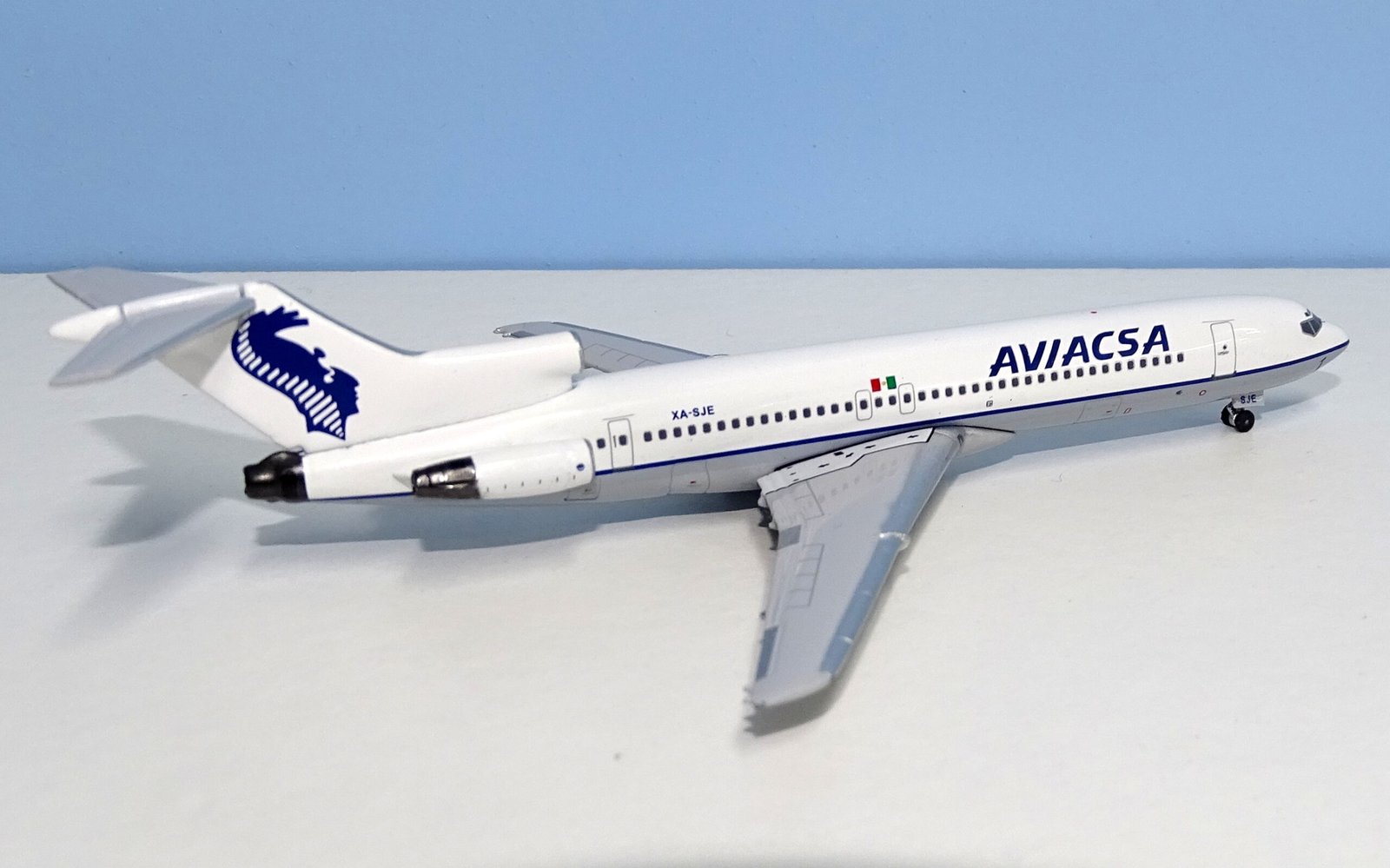
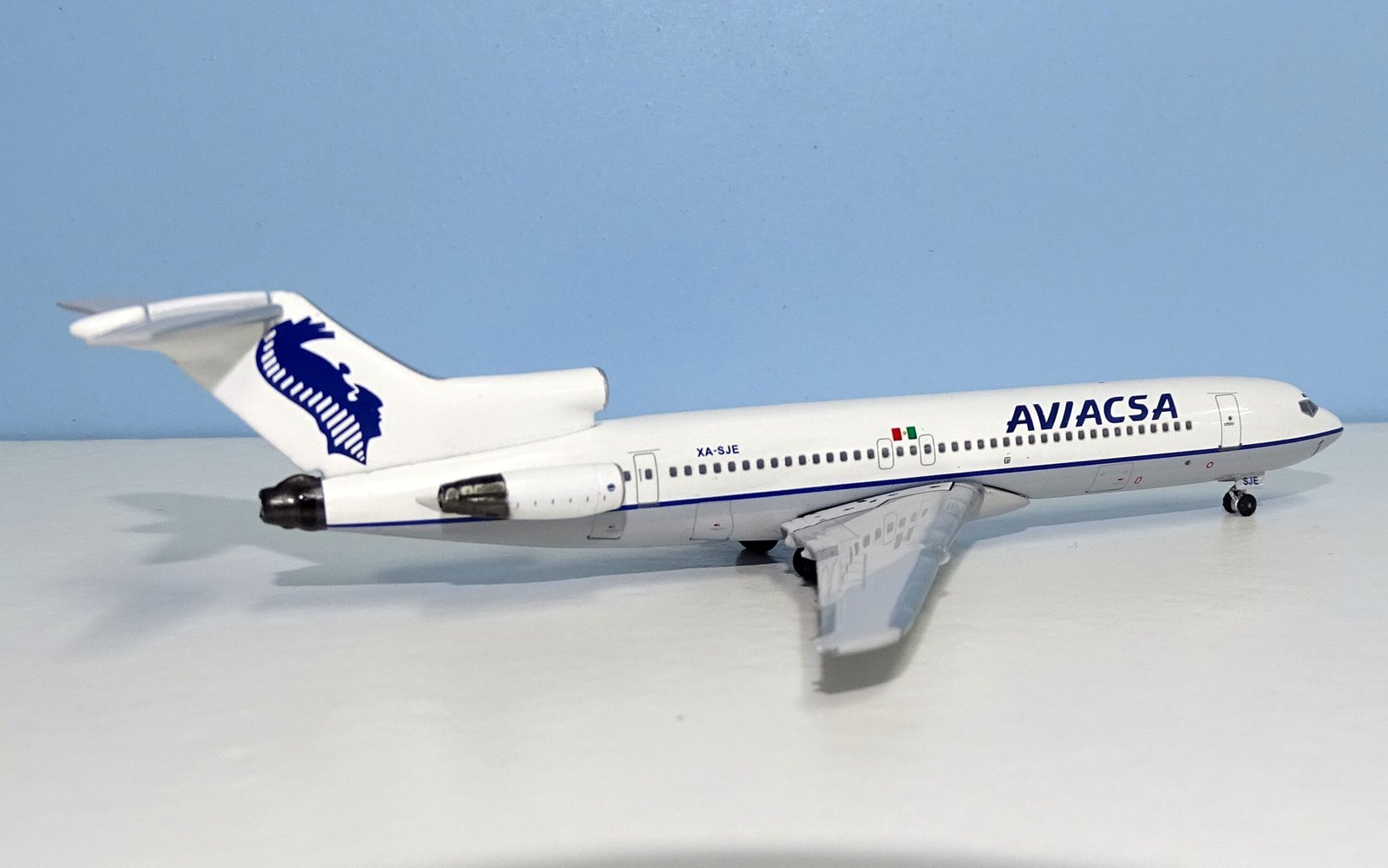
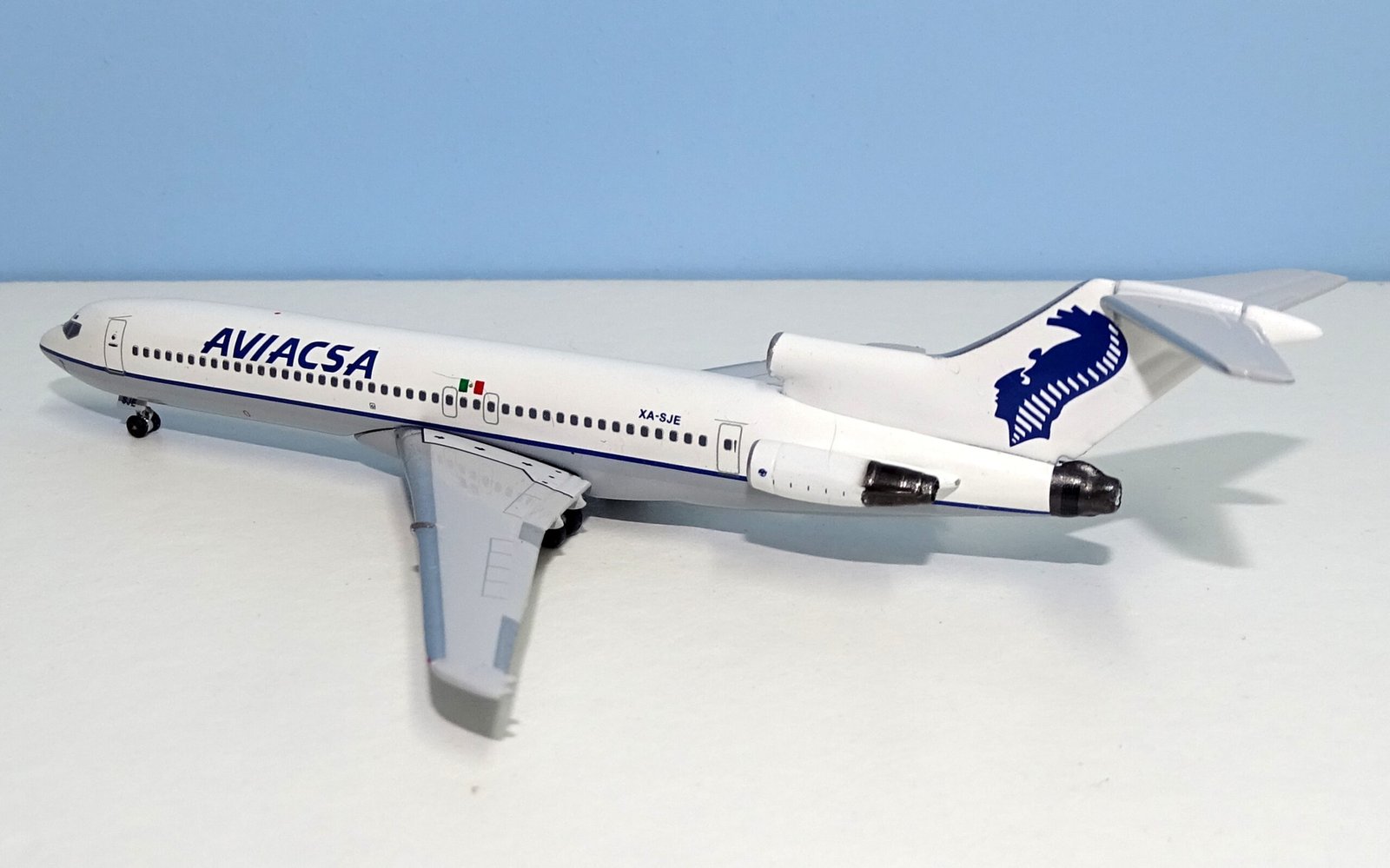
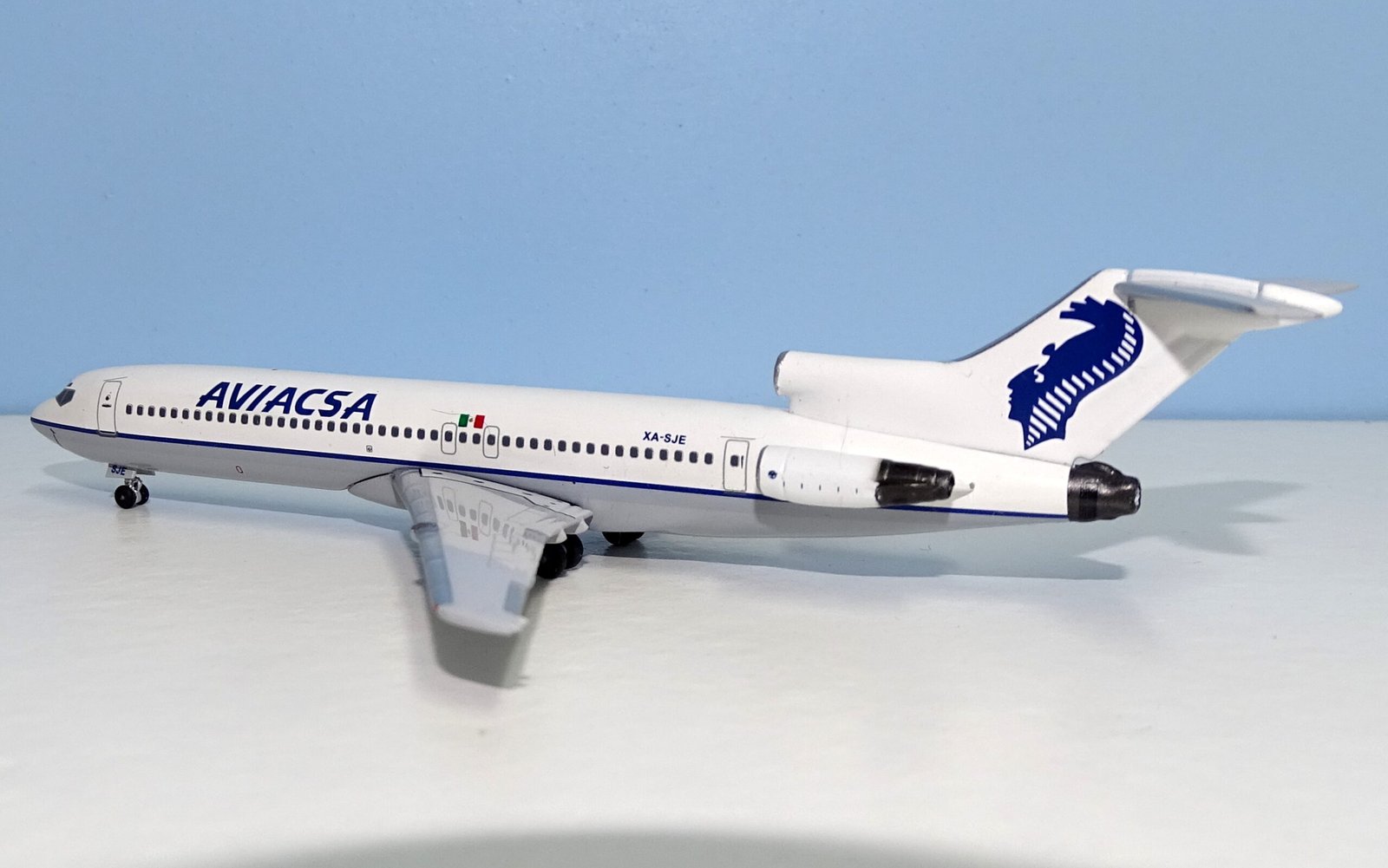
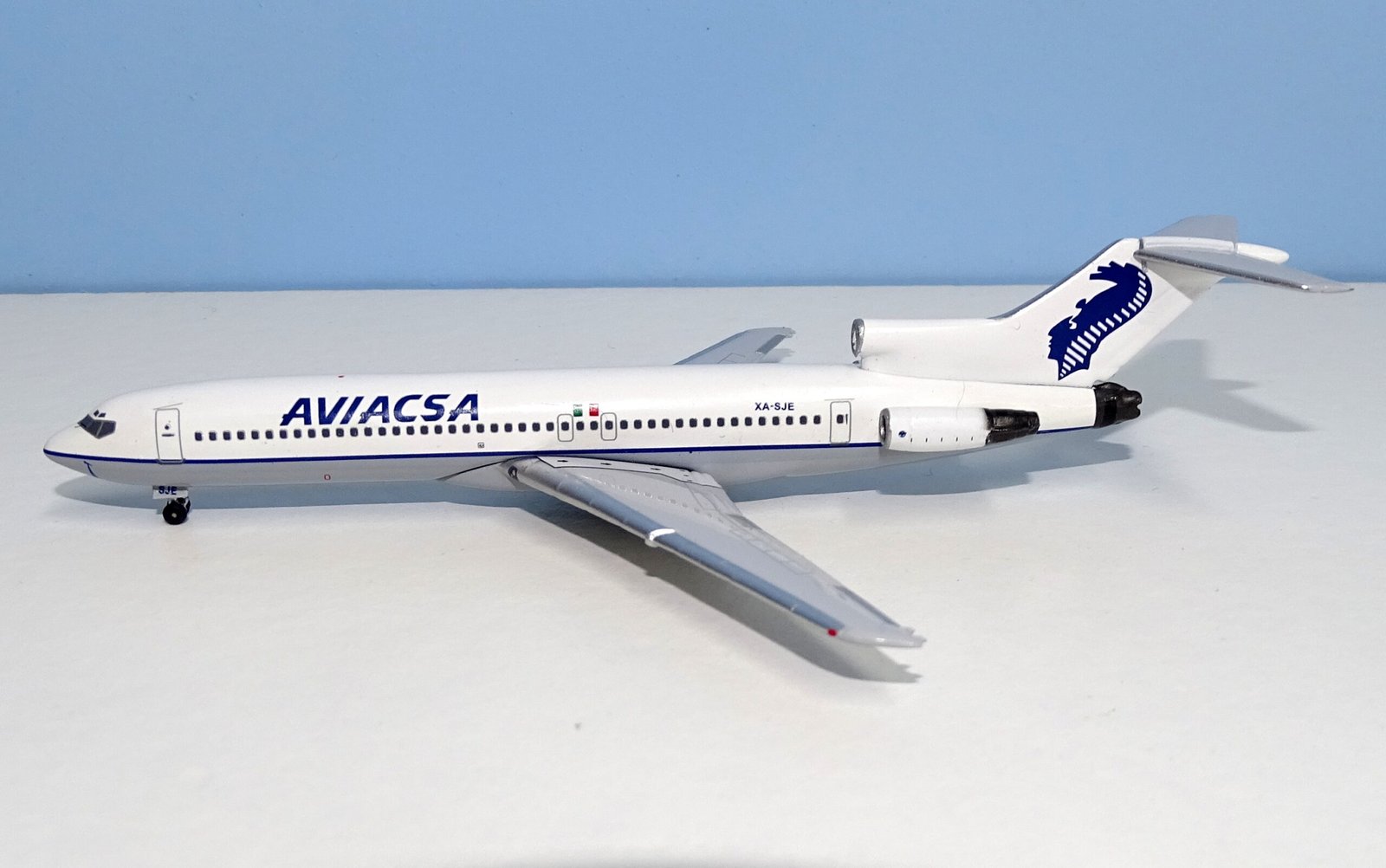
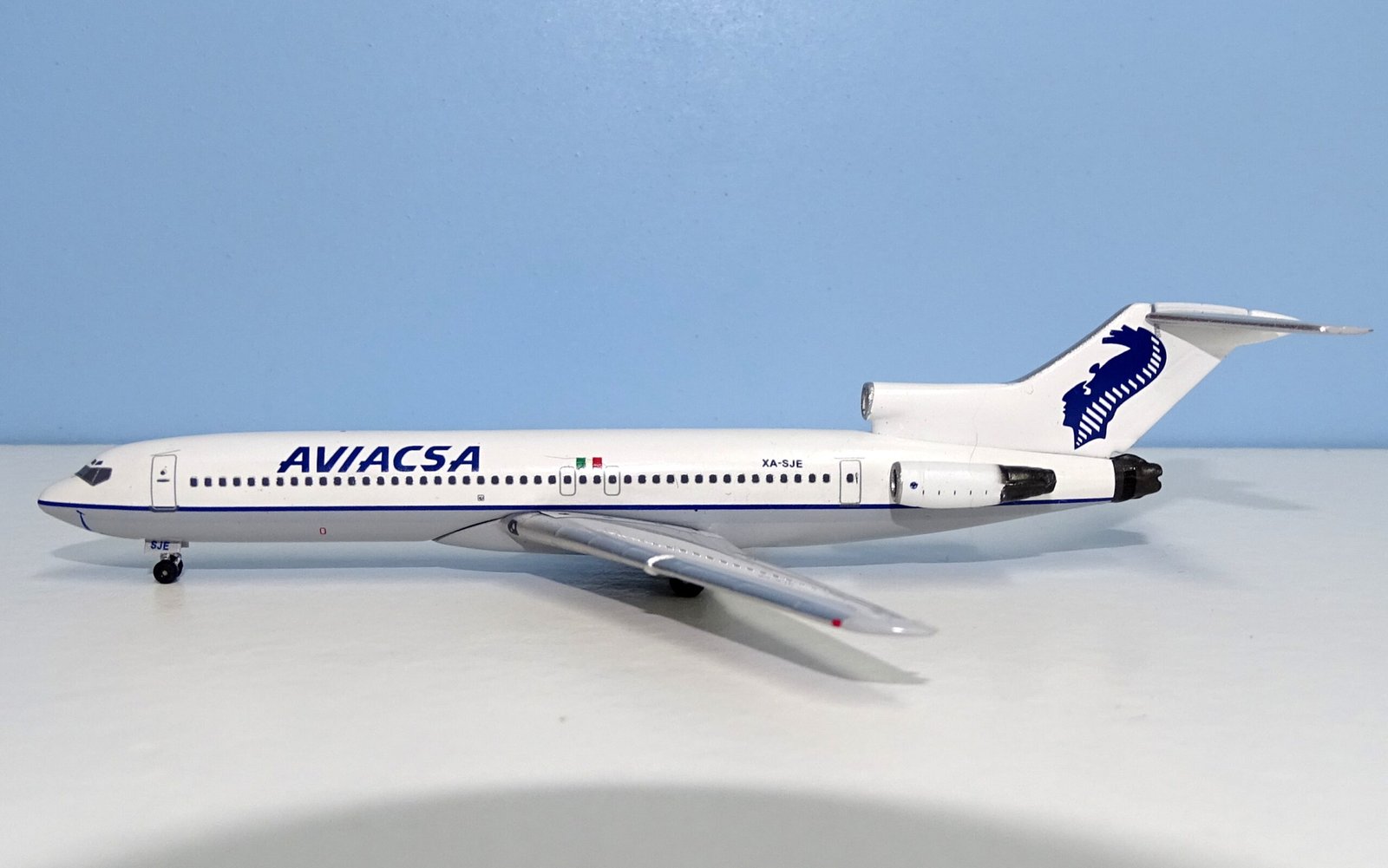
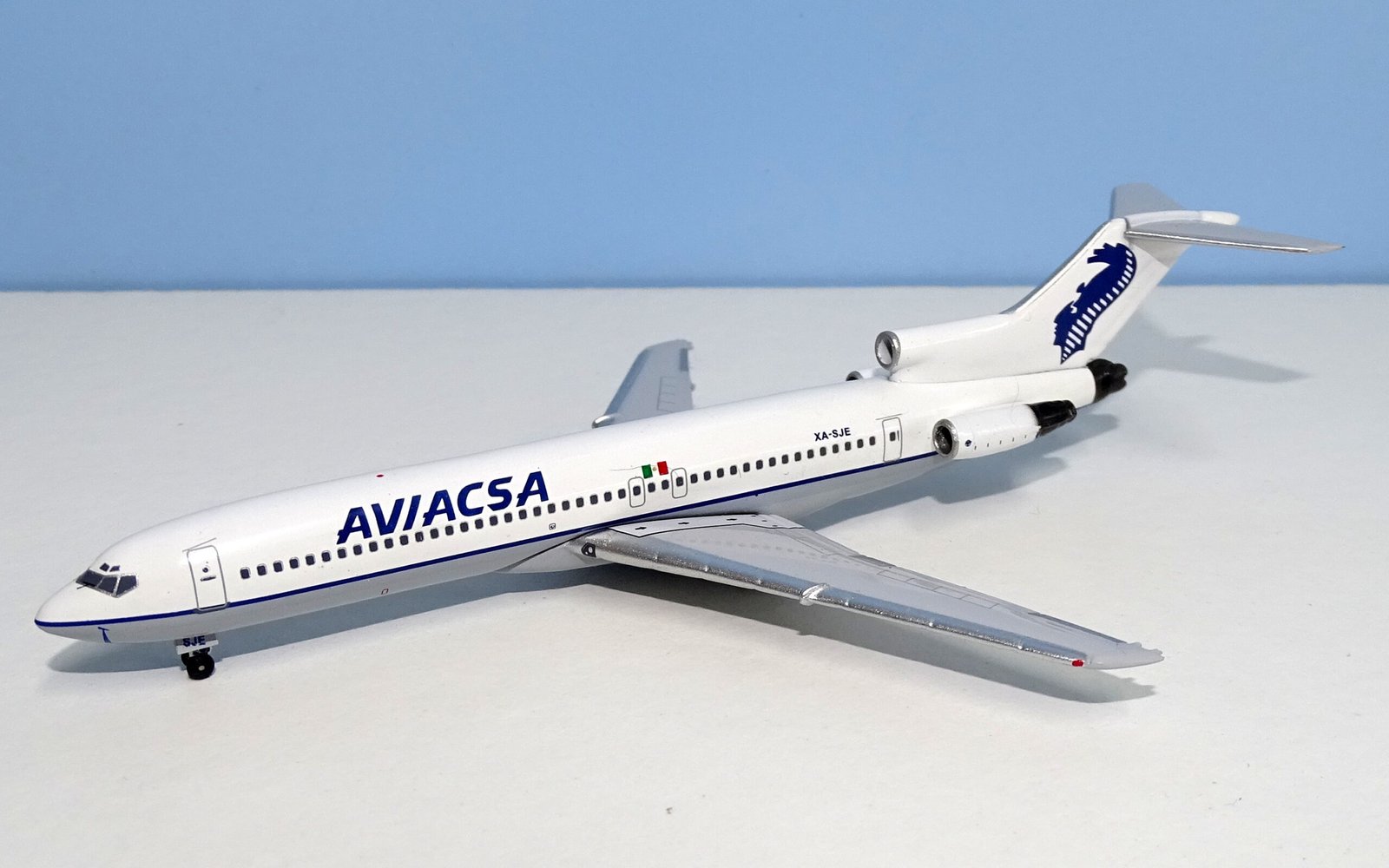
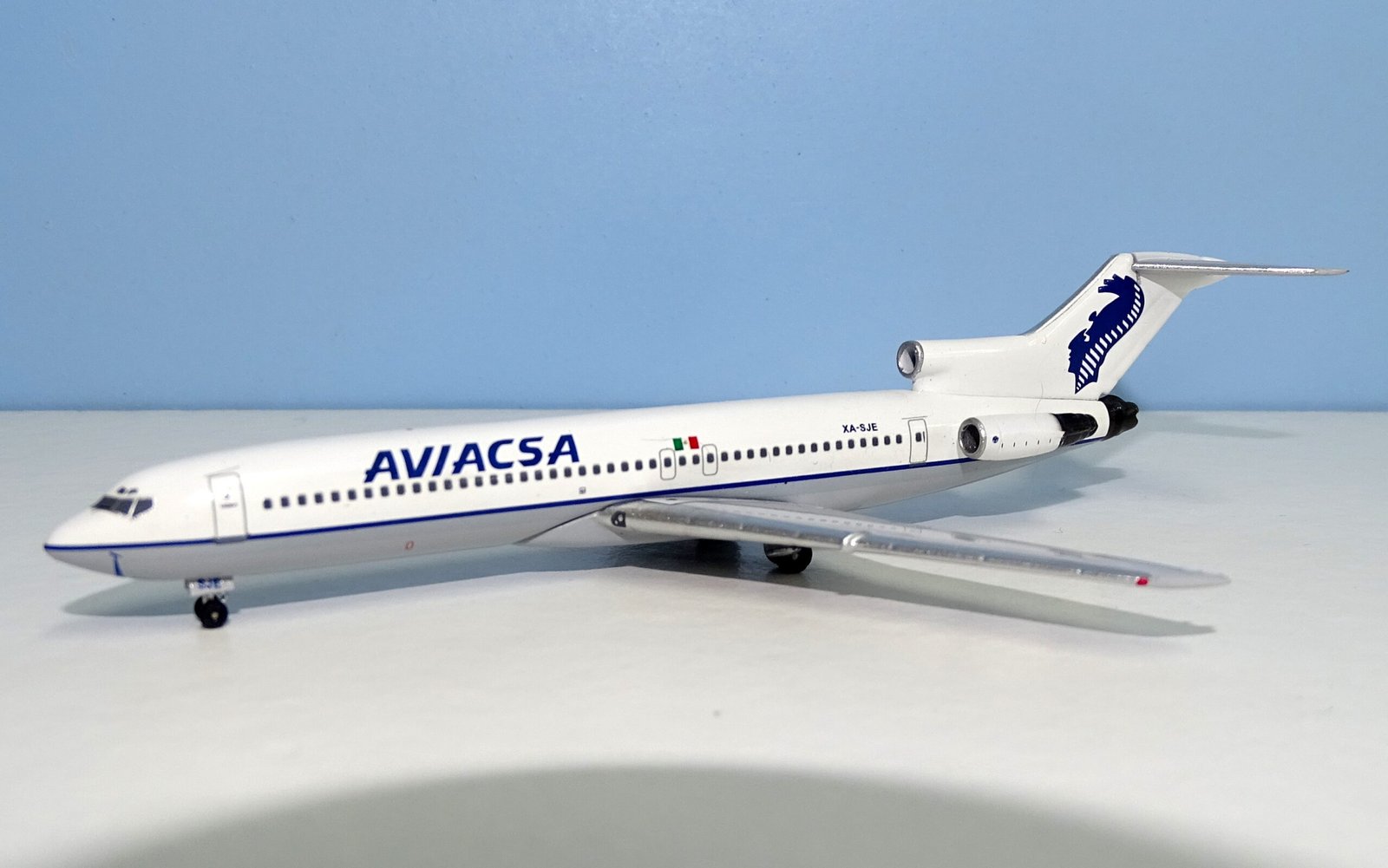
AVIACSA Boeing 727-200 XA-SJE by Aeroclassics
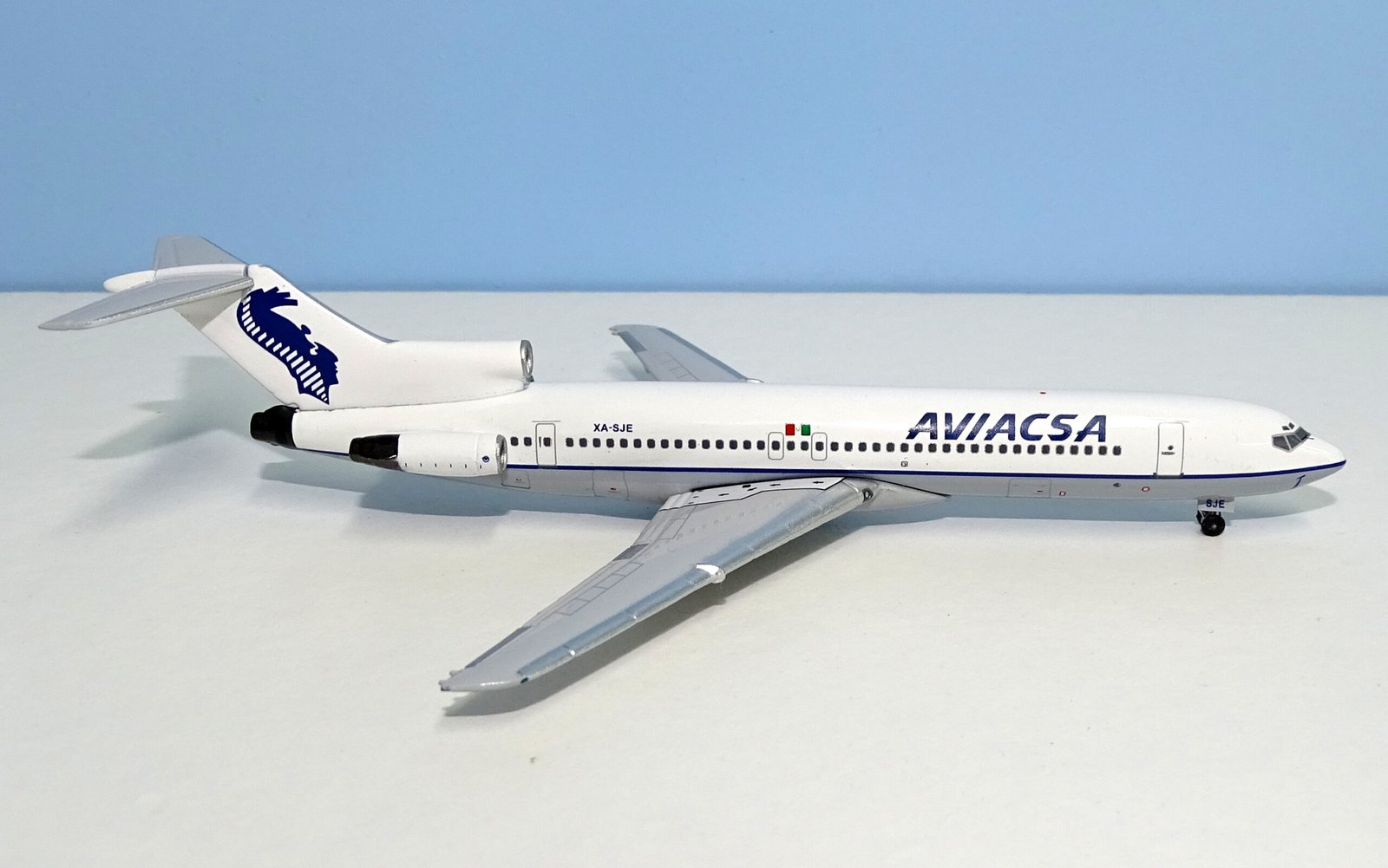
AVIACSA Boeing 727-200 XA-SJE by Aeroclassics
AVIACSA Boeing 727-200 XA-SJE by Aeroclassics
AVIACSA Boeing 727-200 XA-SJE by Aeroclassics
AVIACSA Boeing 727-200 XA-SJE by Aeroclassics
AVIACSA Boeing 727-200 XA-SJE by Aeroclassics
AVIACSA Boeing 727-200 XA-SJE by Aeroclassics
AVIACSA Boeing 727-200 XA-SJE by Aeroclassics
AVIACSA Boeing 727-200 XA-SJE by Aeroclassics
AVIACSA Boeing 727-200 XA-SJE by Aeroclassics
AVIACSA Boeing 727-200 XA-SJE by Aeroclassics
The years 2004-2005 represented the pinnacle of Aviacsa’s growth. Passengers numbers rose by 37% and Aviacsa had acquired a 12% stake of the Mexican domestic scene, but 21% of the market to the 18 destinations it served. The airline began to feel like a grown up and indeed although it had been low fares it had never really been low cost.
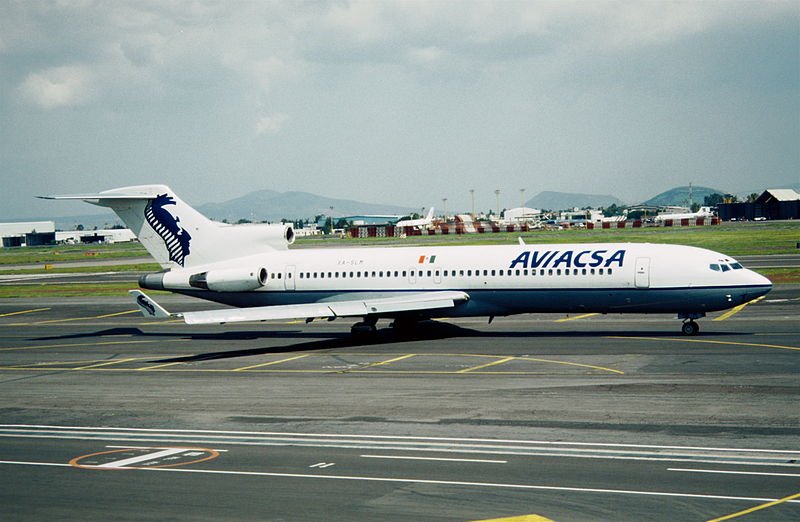
XA-SLM at MEX in 2003. Photo by Aero Icarus from Wikipedia
In 2005 plans were announced for the acquisition of 20 further 737s at a cost of $80 million. Although this sounds impressive these were once again second-hand aircraft. They would however enable the opening of routes like Puebla-Monterrey-New York. In May a 737-200 was specially painted to celebrate the airline’s 15th anniversary and flown around the airline’s network.
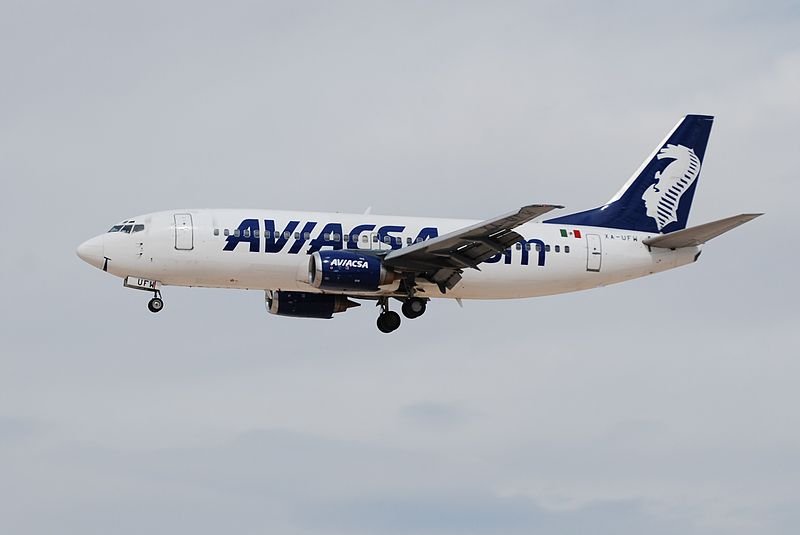
737-300 XA-UFW. Photo by Eddie Maloney from Wikipedia
Even as it ended 2005 transporting 3.5 million passengers thunderclouds were on the horizon. In August 2005 operations began at Volaris, followed in December by Interjet. These airlines were truly low cost and had much better financing, which enabled them to buy new Airbus jets rather than old Boeing 737s.
Aviacsa Boeing 737-300 XA-UGF Gemini Jets 1:400 Scale Model Airliner
Aviacsa Boeing 737-300 XA-UGF Gemini Jets 1:400 Scale Model Airliner
Aviacsa Boeing 737-300 XA-UGF Gemini Jets 1:400 Scale Model Airliner
Aviacsa Boeing 737-300 XA-UGF Gemini Jets 1:400 Scale Model Airliner
Aviacsa Boeing 737-300 XA-UGF Gemini Jets 1:400 Scale Model Airliner
Aviacsa Boeing 737-300 XA-UGF Gemini Jets 1:400 Scale Model Airliner
Aviacsa Boeing 737-300 XA-UGF Gemini Jets 1:400 Scale Model Airliner
Aviacsa Boeing 737-300 XA-UGF Gemini Jets 1:400 Scale Model Airliner
Aviacsa Boeing 737-300 XA-UGF Gemini Jets 1:400 Scale Model Airliner
Aviacsa Boeing 737-300 XA-UGF Gemini Jets 1:400 Scale Model Airliner
Aviacsa Boeing 737-300 XA-UGF Gemini Jets 1:400 Scale Model Airliner
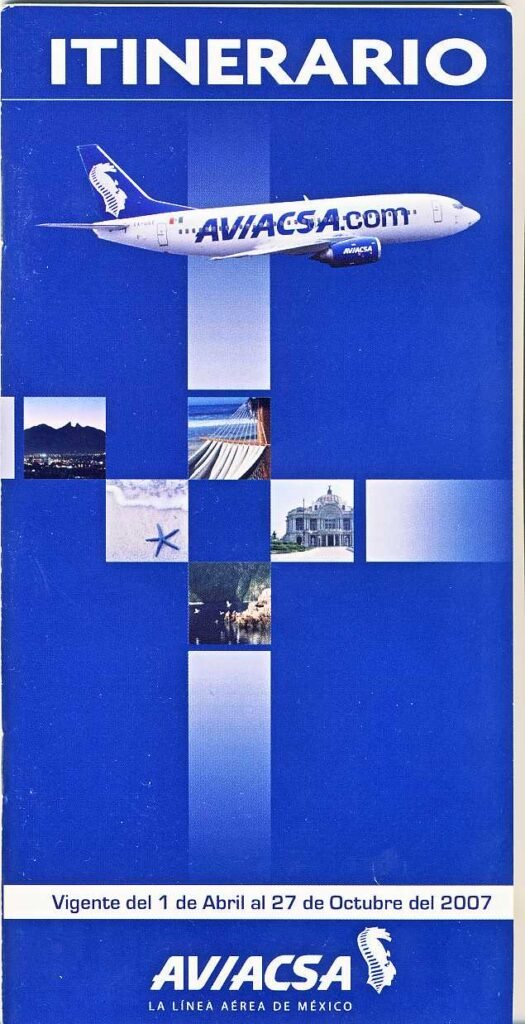
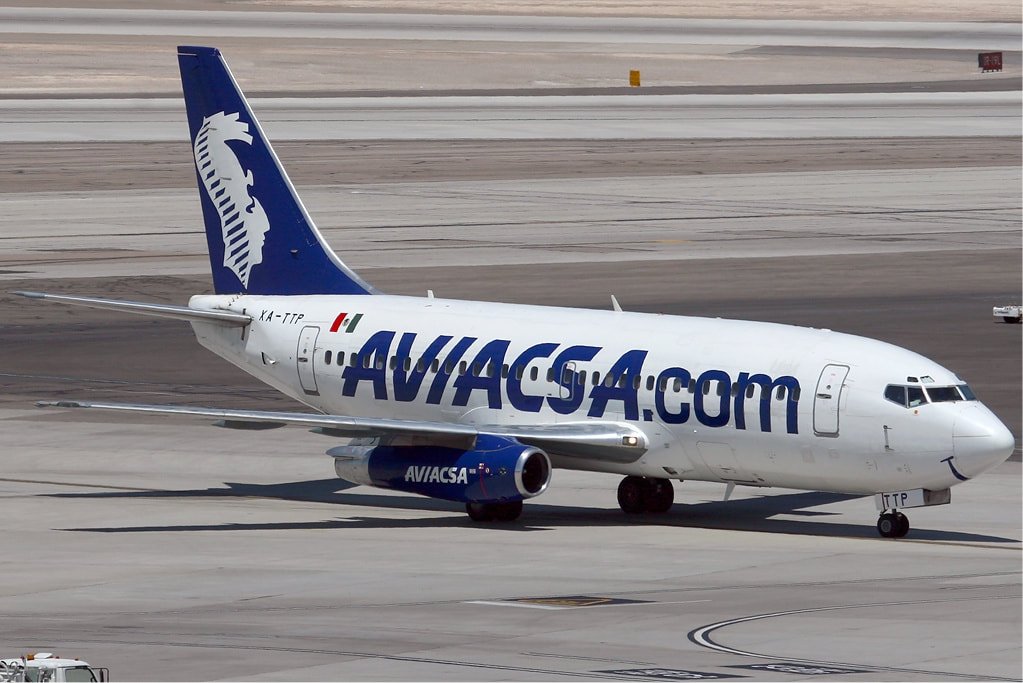
The first ‘new’ 737-300s arrived in August 2006 but only 4 were ever acquired. In fact following these deliveries reverted back to elderly series 200s – 6 arriving in late 2007. The series 300s did at least allow the retirement of the last 727s in May 2006 and at the same time a new billboard AVIACSA.com livery was introduced – retaining Pakal on the tail and the smile on the nose.
Aviacsa began to suffer from the successful competition of the new startup LCCs (Viva Aerobus had joined the scrum in late 2006) plus resurgent Aeromexico and Mexicana. Between January 2007 and January 2008 its marketshare slumped from about 15% to only 10% whilst Volaris and Interjet both doubled their shares to 10-11% in the same period. Things appear to have gone from bad to worse with the addition of travel decreases due to the swine-flu epidemic and the high cost of fuel impacting its thirsty 737-200s.
On June 2, 2009 the airline was grounded by the Mexican Government due to maintenance ‘irregularities’ despite positive FAA and third party inspection reports. The airline cried foul but that didn’t stop a second grounding later in the month. The third and final grounding started on July 7th when the government stated the airline owed it 292 million pesos ($22 million) in fees for the use of Mexican airspace. The carrier was never able to recover from these blows and despite a long legal fight it never restarted operations.
XA-TTP in the final scheme. Photo by Konstantin von Wedelstaedt from Wikipedia
It is hard for me to talk about the validity of the groundings however it is reasonably clear that Aviacsa, although able to outcompete early competitors was ill prepared to face better financed and truly low cost airlines such as Interjet and Volaris. Sunsequently these airlines have grown easily to fill the void left by Aviacsa but nonetheless it was an important airline during the 2nd phase of the deregulation era.