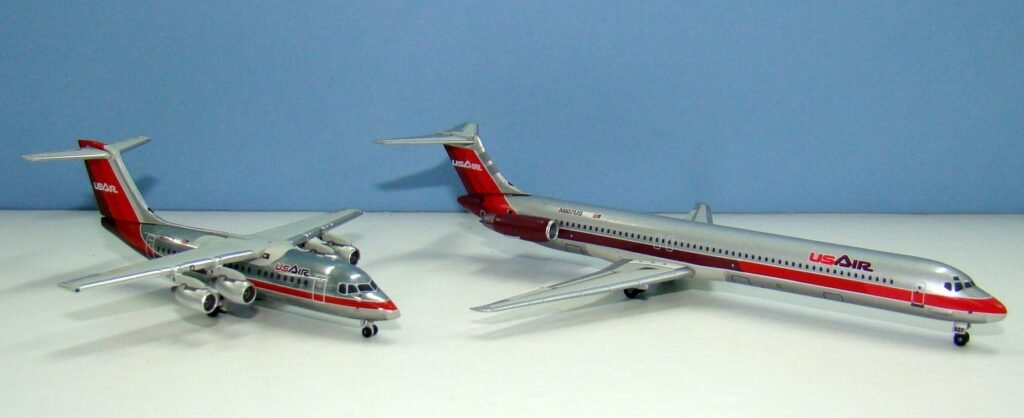
The USAir purchase of Pacific Southwest Airlines was yet another result of the turbulence and merger panic flooding the US airline industry in the 1980s. It would become a textbook example of what not to do and USAir not content with one bad merger then attempted a second (with Piedmont) soon afterwards. USAir survived but PSA and its route network did not.
One of the unexpected factors of deregulation of the US airline industry was the growth of hub and spoke networks and a race by the larger airlines to grow through acquisition so as to outcompete rivals and avoid takeovers themselves. This mentality resulted in a free for all with only American and United Airlines of the original trunk airlines avoiding the merger mania. American of course benefitted substantially by the implosion of its Dallas neighbour Braniff but even they eventually felt the need to acquire someone and scooped up AirCal.
Allegheny Airlines had always been one of the more successful local service airlines and its acquisition of Mohawk in 1971 had assisted in it growing to a position of strength in time for deregulation. Nonetheless USAir avoided the initial rounds of consolidation as Pan Am bought National, Texas Air acquired Continental and Eastern, TWA was taken over by Carl Icahn and then acquired Ozark, Northwest gobbled up Republic, which itself had been created by the merger of 3 of the local service airlines, and Western was acquired by Delta. Apparently however TWA’s Carl Icahn was sniffing about and USAir was a possible takeover target. It was becoming obvious that to stay in the running USAir would need to make a move if only not to get swallowed up itself. Candidates were beginning to appear scarce and American’s acquisition of AirCal spurred USAir into action.
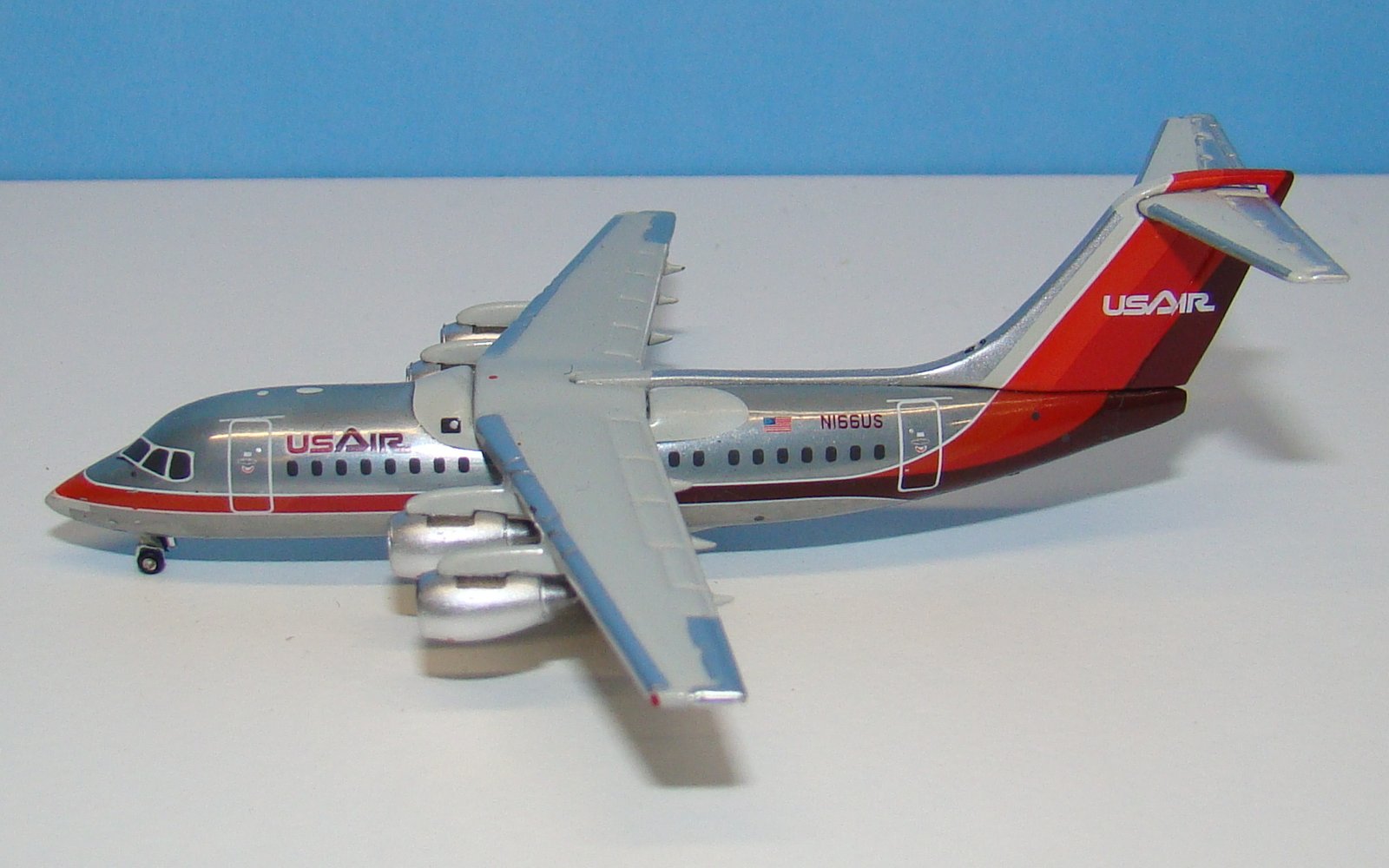
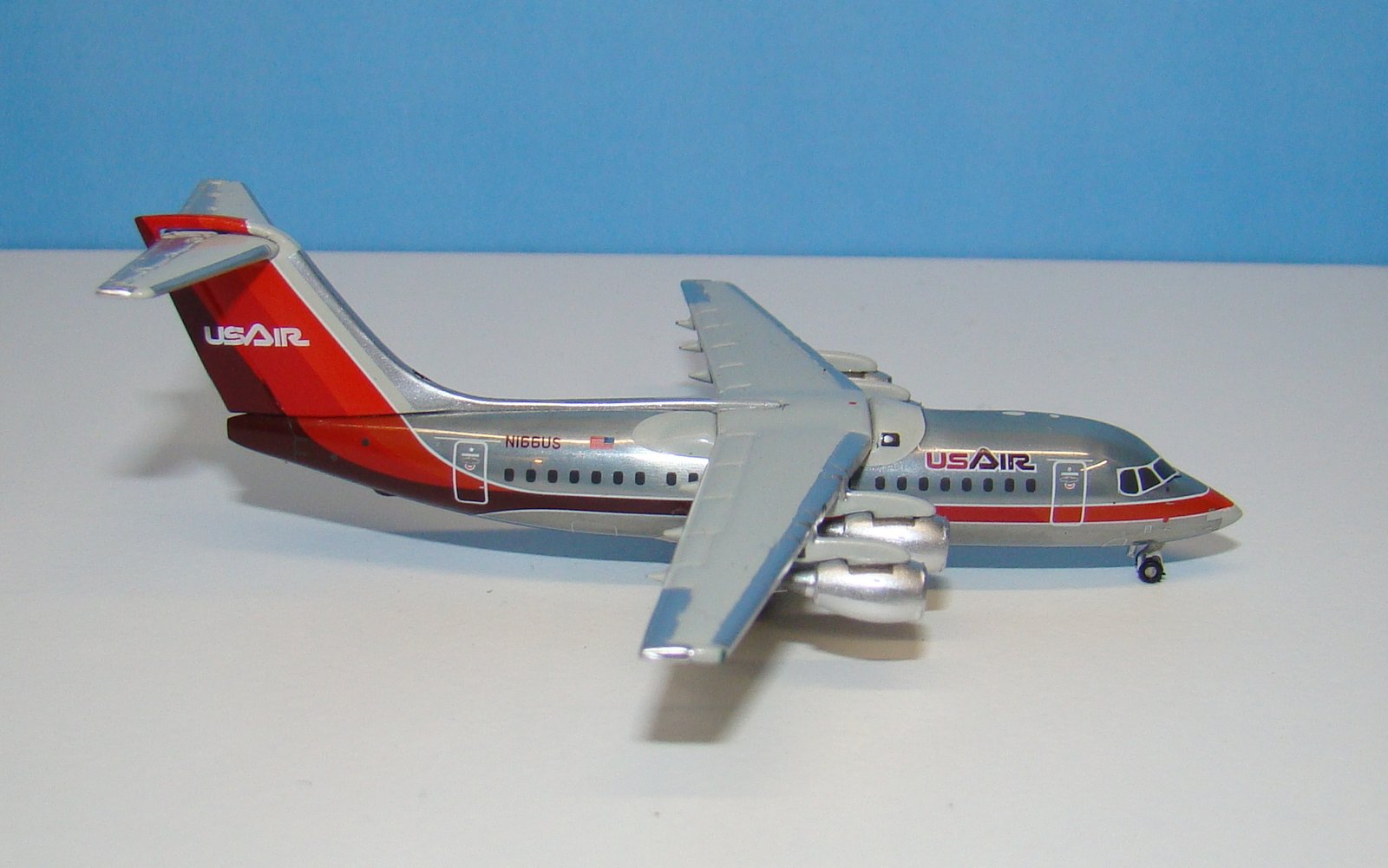
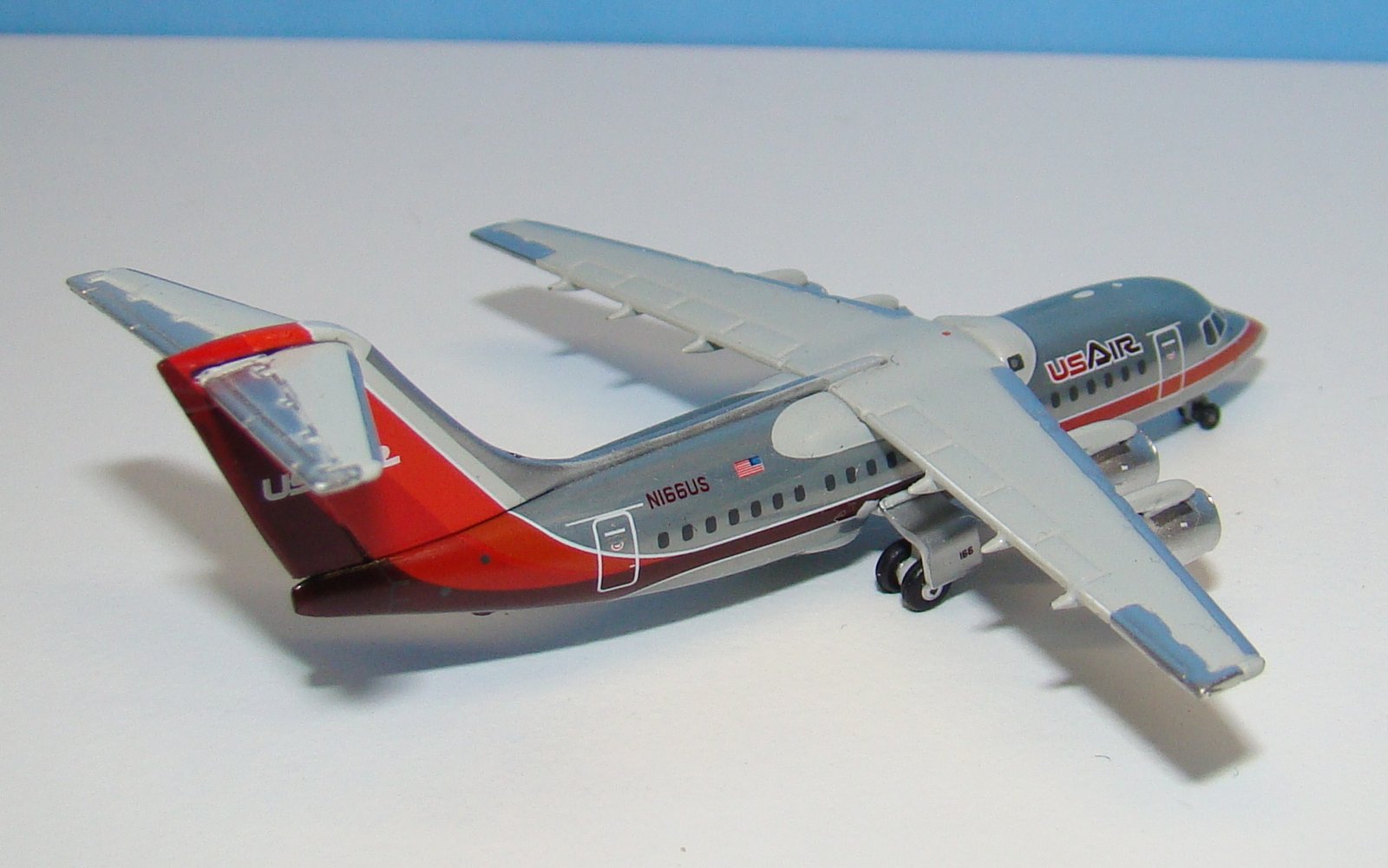
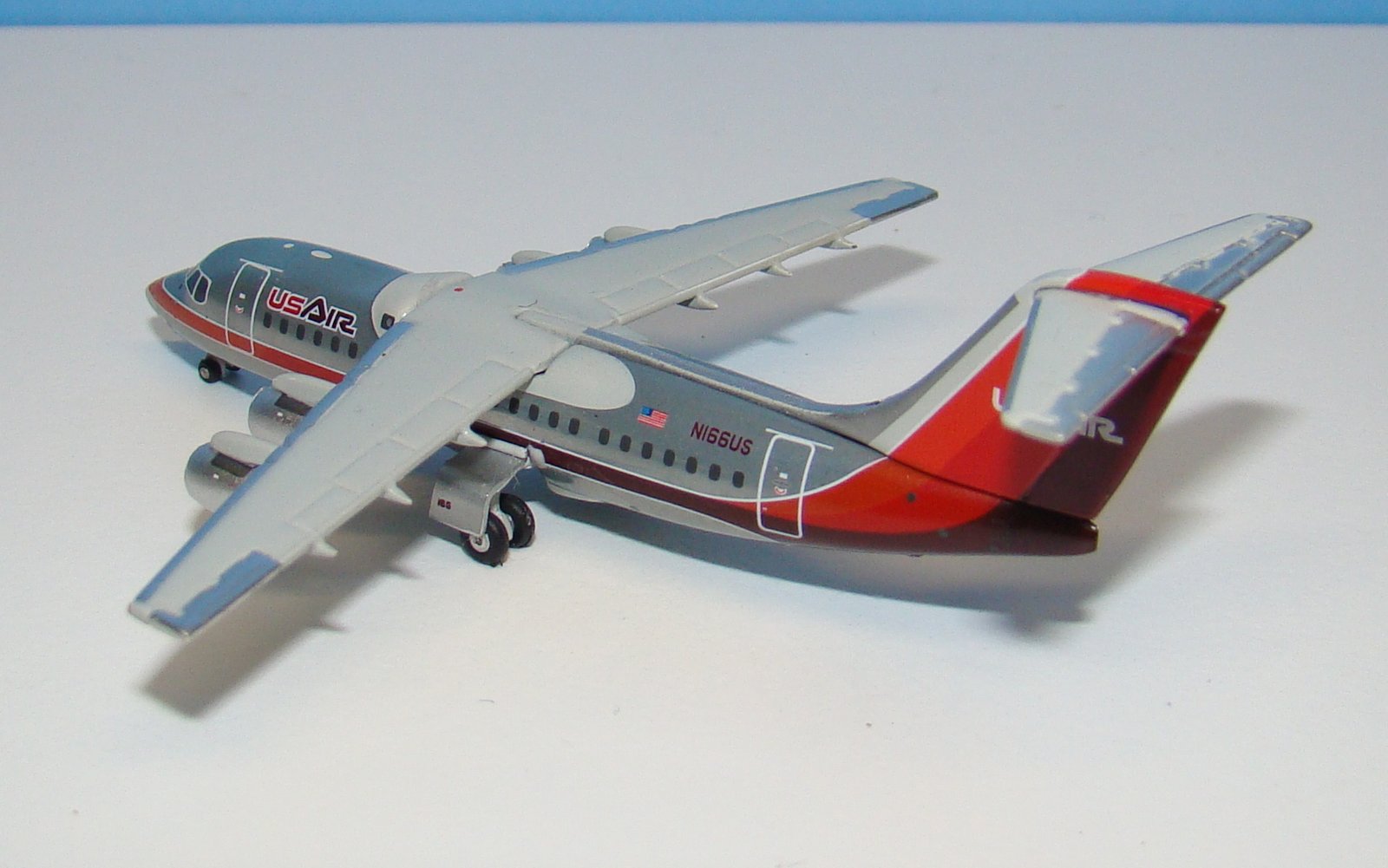
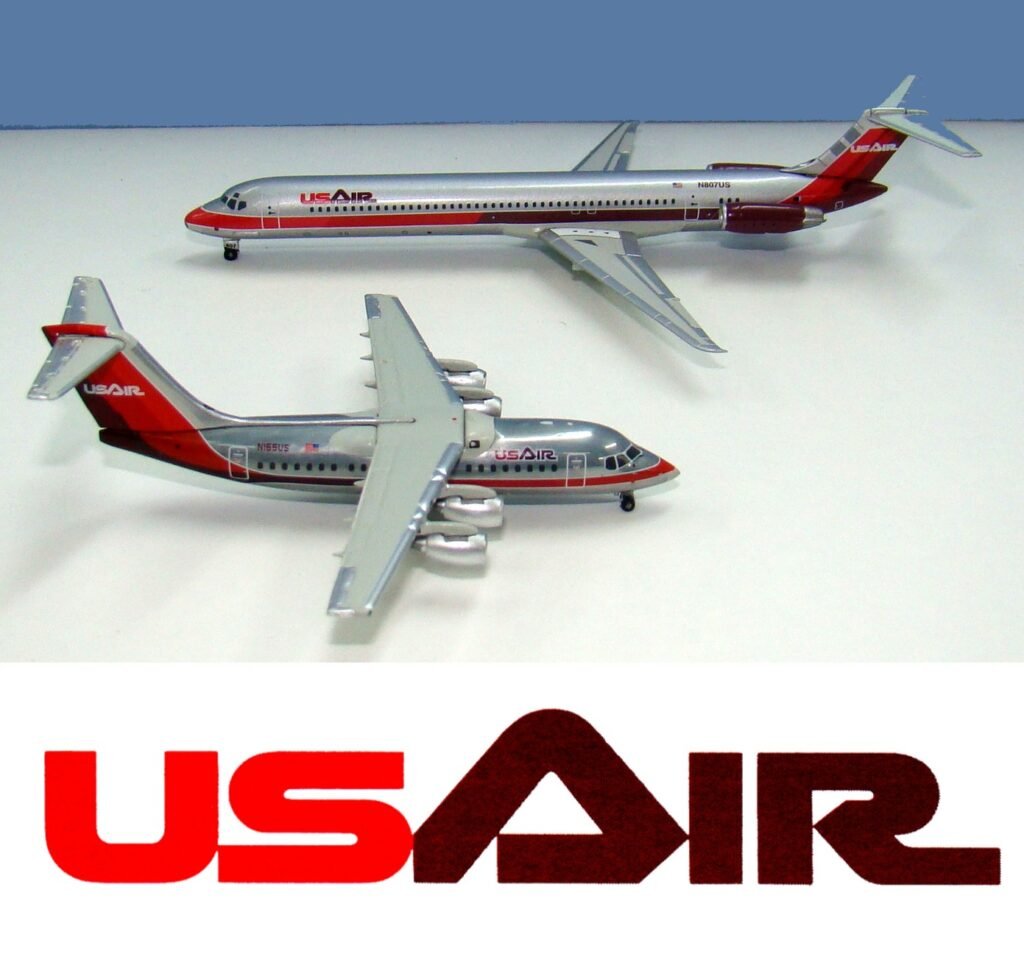
USAir British Aerospace BAE 146-200 N166US Gemini jets 1:400 Scale Model Airliner
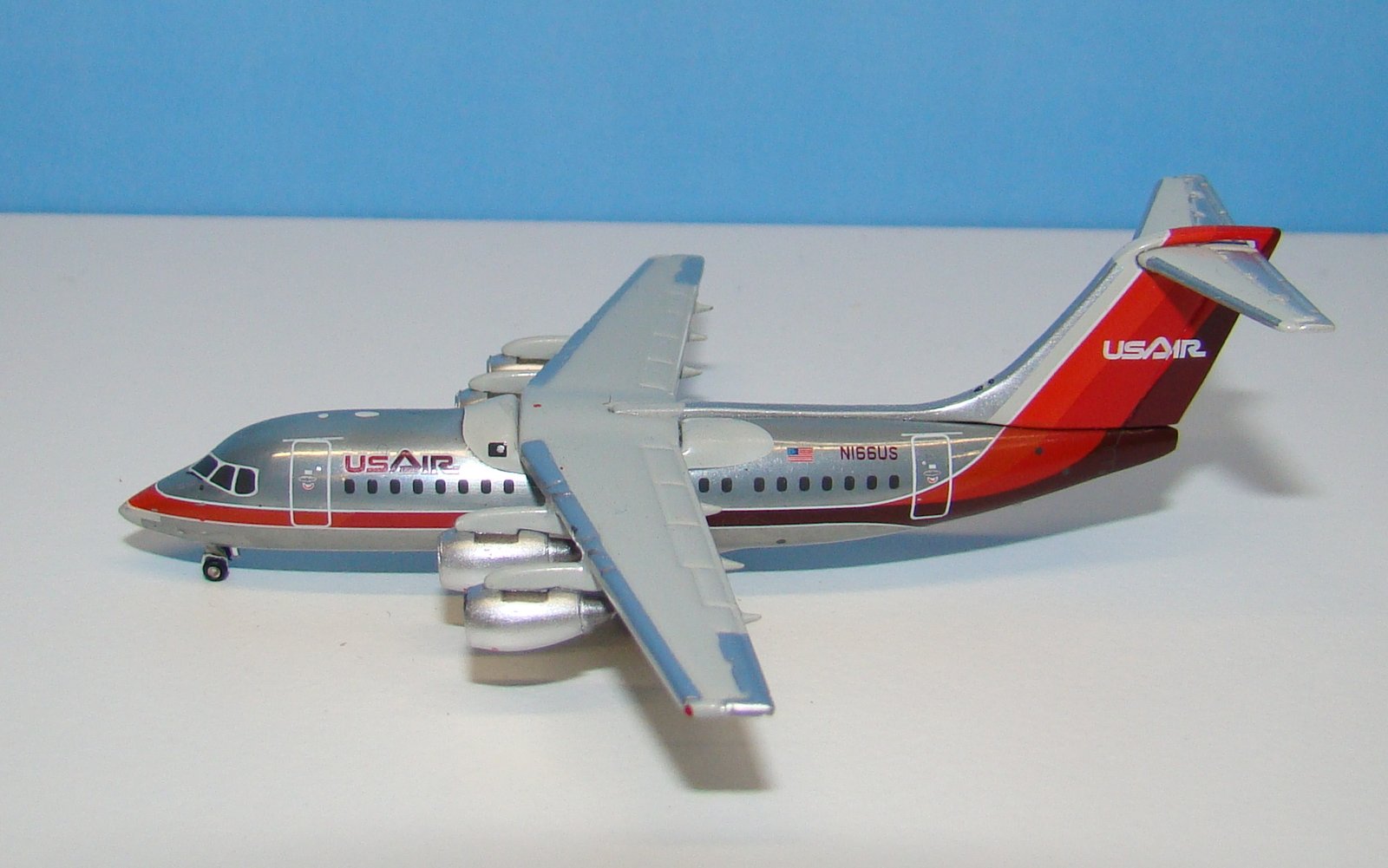
USAir British Aerospace BAE 146-200 N166US Gemini jets 1:400 Scale Model Airliner
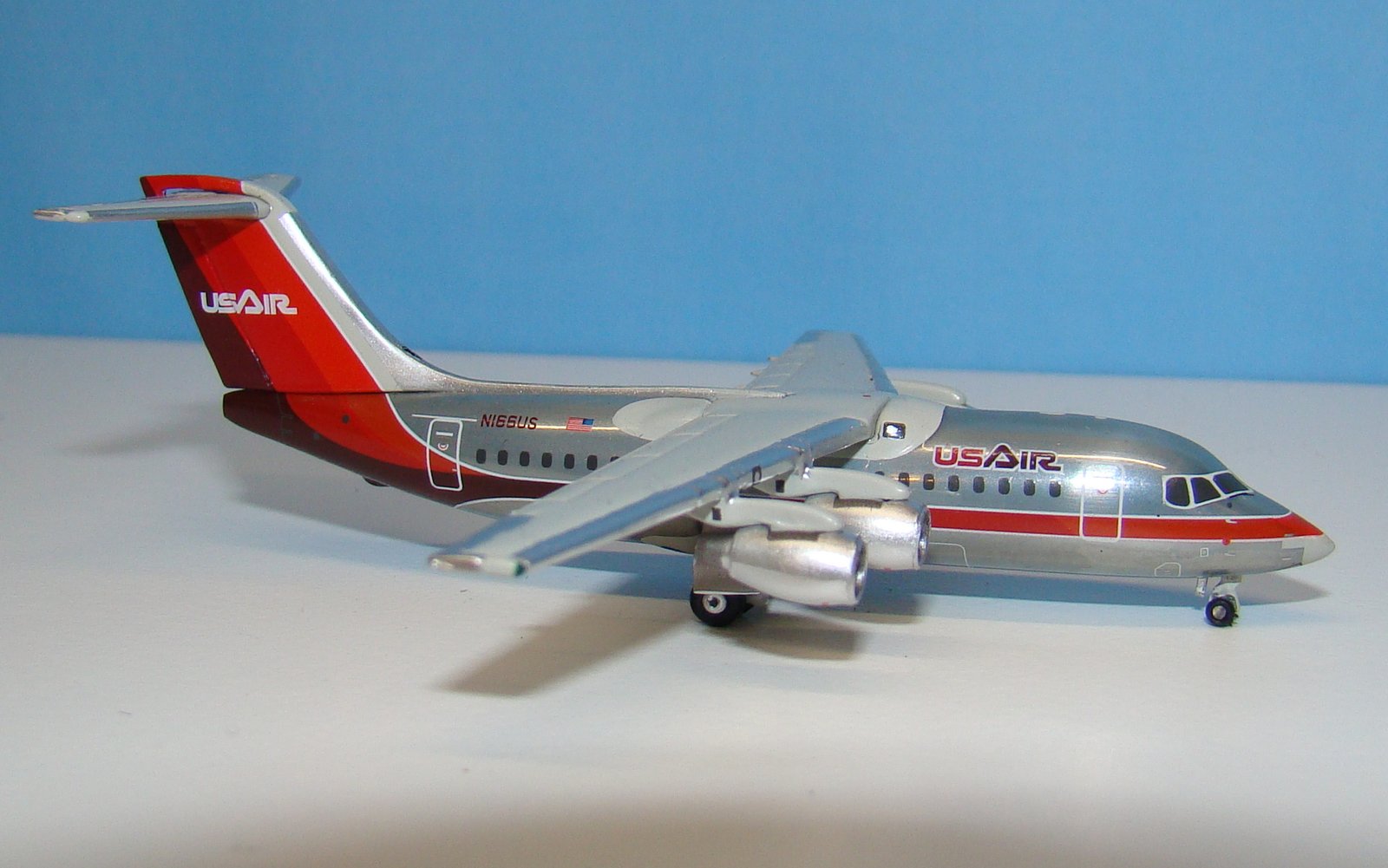
USAir British Aerospace BAE 146-200 N166US Gemini jets 1:400 Scale Model Airliner
USAir British Aerospace BAE 146-200 N166US Gemini jets 1:400 Scale Model Airliner
USAir British Aerospace BAE 146-200 N166US Gemini jets 1:400 Scale Model Airliner
USAir British Aerospace BAE 146-200 N166US Gemini jets 1:400 Scale Model Airliner
USAir had a strong network on the East Coast whereas on the West Coast Pacific Southwest Airlines had been holding its own in the highly competitive Californian market. They didn’t look like very compatible partners, however USAir disagreed and on December 8, 1986 announced it would acquire PSA for $400 million to create the USA’s 6th largest airline. This agreement came literally hours after American’s purchase of AirCal.
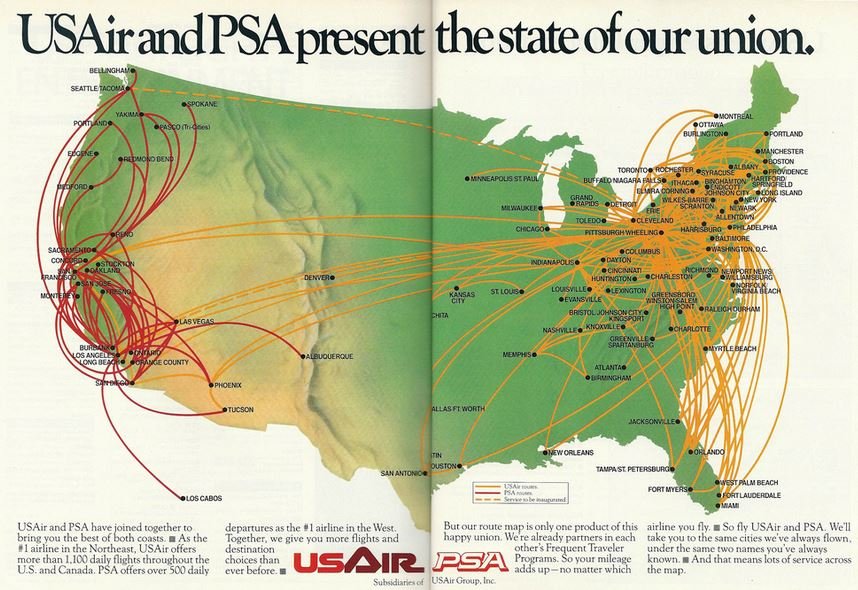
The combined PSA/USAir network in 1988
The two airlines had no overlap in their networks and the resulting combined network was dumb-bell shaped with strength on both coasts and nothing in between. USAir’s plan seems to have been to initially link up PSA services with its own routes to Los Angeles, Phoenix, San Diego, San Francisco and Tucson and then grow a transcontinental network. There was even talk of starting a mid-continent hub – perhaps at Denver. The mid-continent plans, if there ever were any, were never realised.
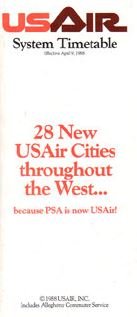
USAir’s acquisition initially went smoothly and PSA ceased to exist on April 8, 1988. USAir then undertook a programme, which in hindsight amounted to the wholesale destruction of the value of their acquisition. For one thing USAir completely eradicated any memory of PSA. This was perhaps understandable, however PSA had spent decades building an excellent reputation for customer service and self-promotion. Removing the PSA brand and famous smile effectively eradicated this goodwill in one swoop. PSA programmes like the Smile High Club and self-ticketing were stopped.
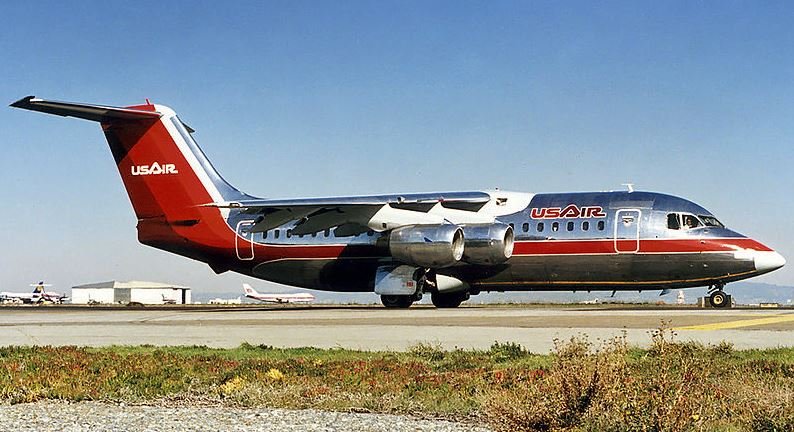
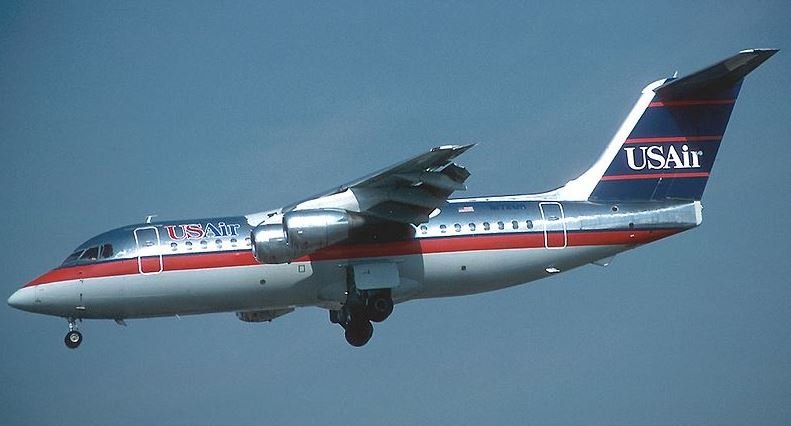
The BAE 146 looked great in USAir colours
USAir replaced the PSA management team and changed the configuration of the fleet – even going so far as to add a row of first class seats to the BAE 146s reducing their seat count to 81. Along with this went the imposition of USAir’s high cost format (like hot meals on flights) and accordingly higher fares. Worse USAir arrogantly imposed itself on the PSA employees who were forced to operate the USAir way and received a lot of attitude from the USAir employee community.
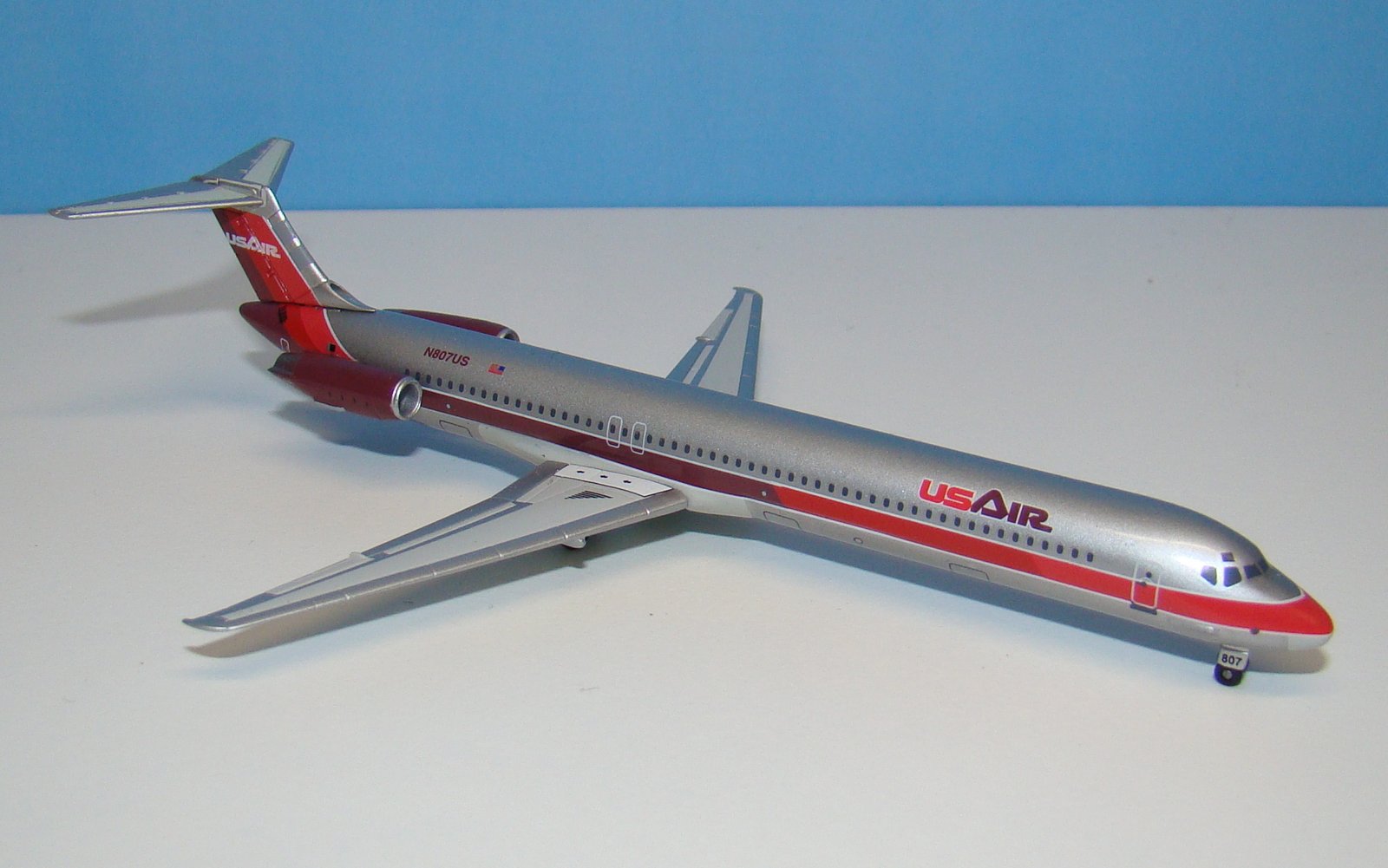
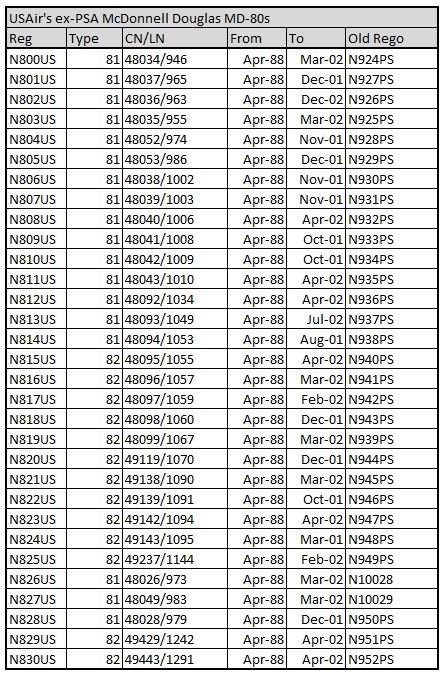
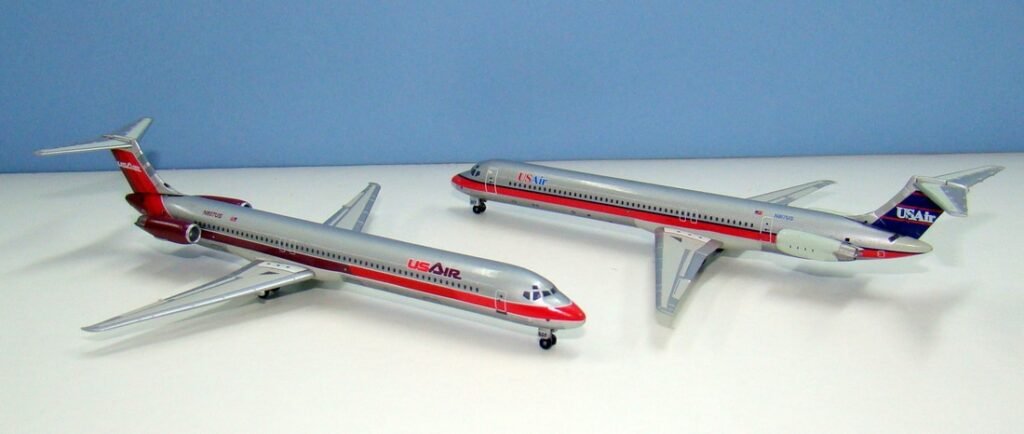
PSA’s network had been based around high frequency and low fares. Not content with removing the latter USAir ruined the former. Frequencies were decreased and the MD-80 fleet moved to the East Coast where they could make more money. The PSA MD-80s were unusually equipped with a Head-Up Display (HUD) to enable Cat IIIA/B landings at fogbound cities like San Francisco. When they went East (along with the MD-80 flight simulator) this equipment was characteristically stripped out. The MD-80s were replaced by 737s however the West Coast operations on time stats were impacted regularly by the cascading delays and cancellations of the East coast operation.
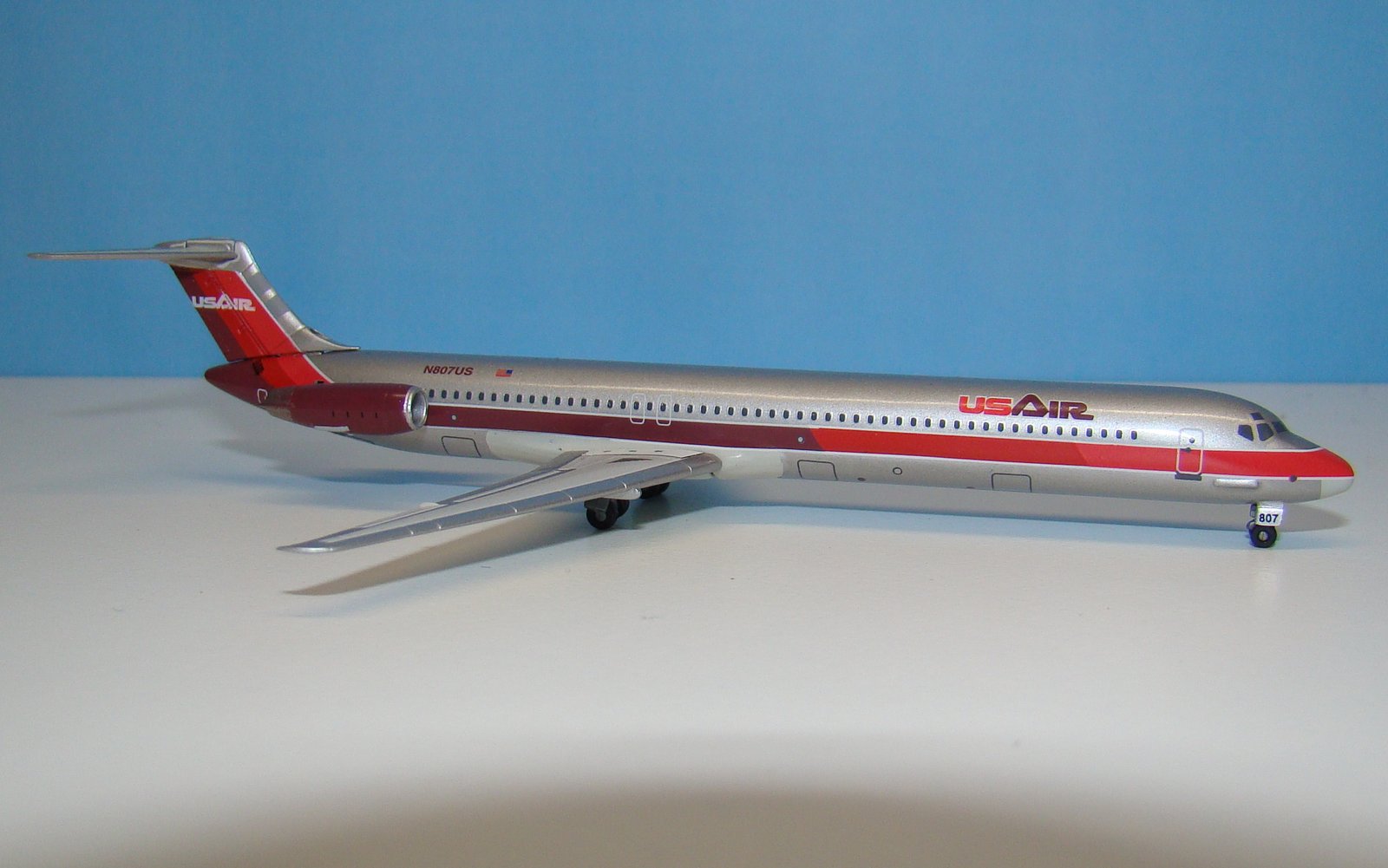
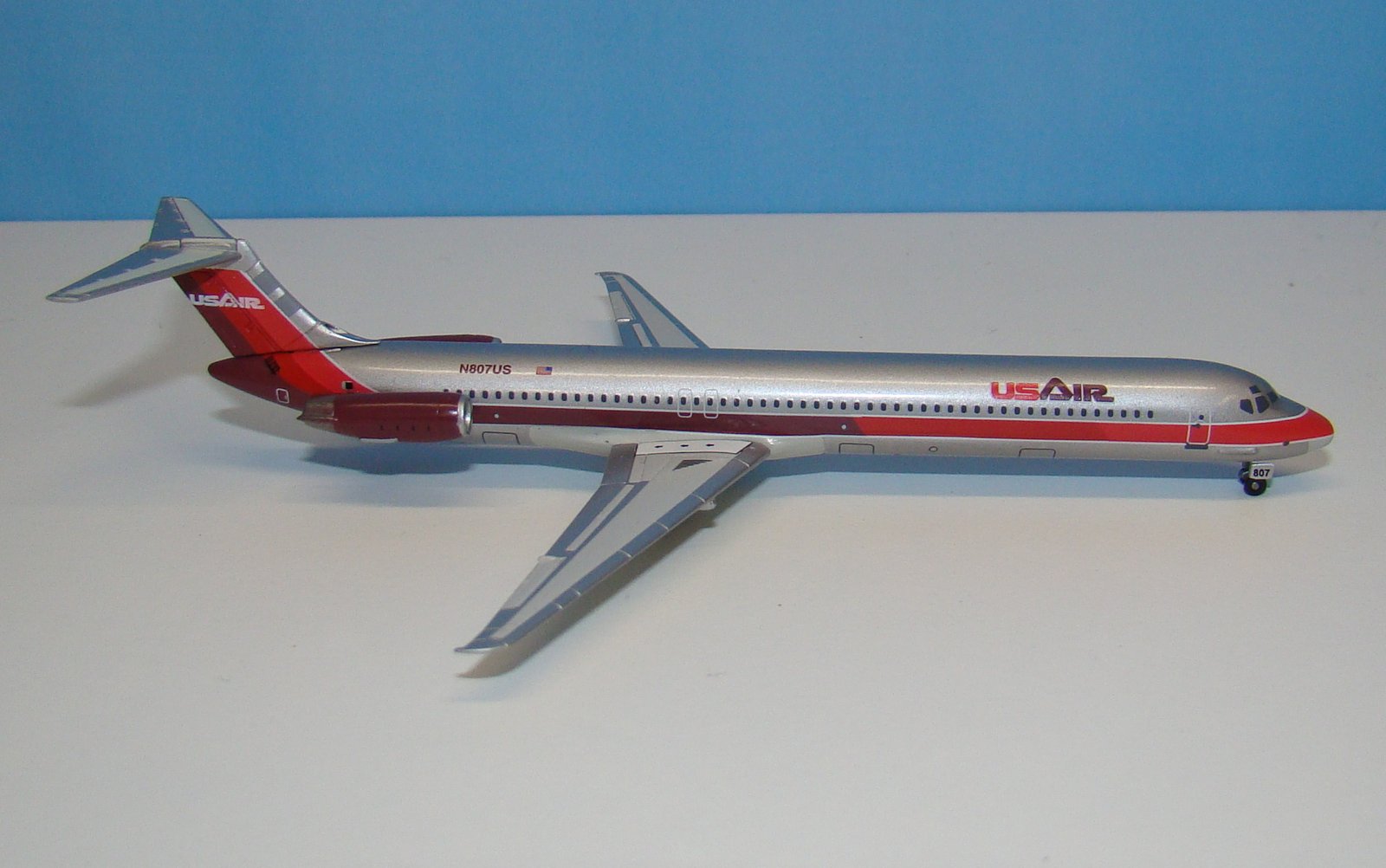
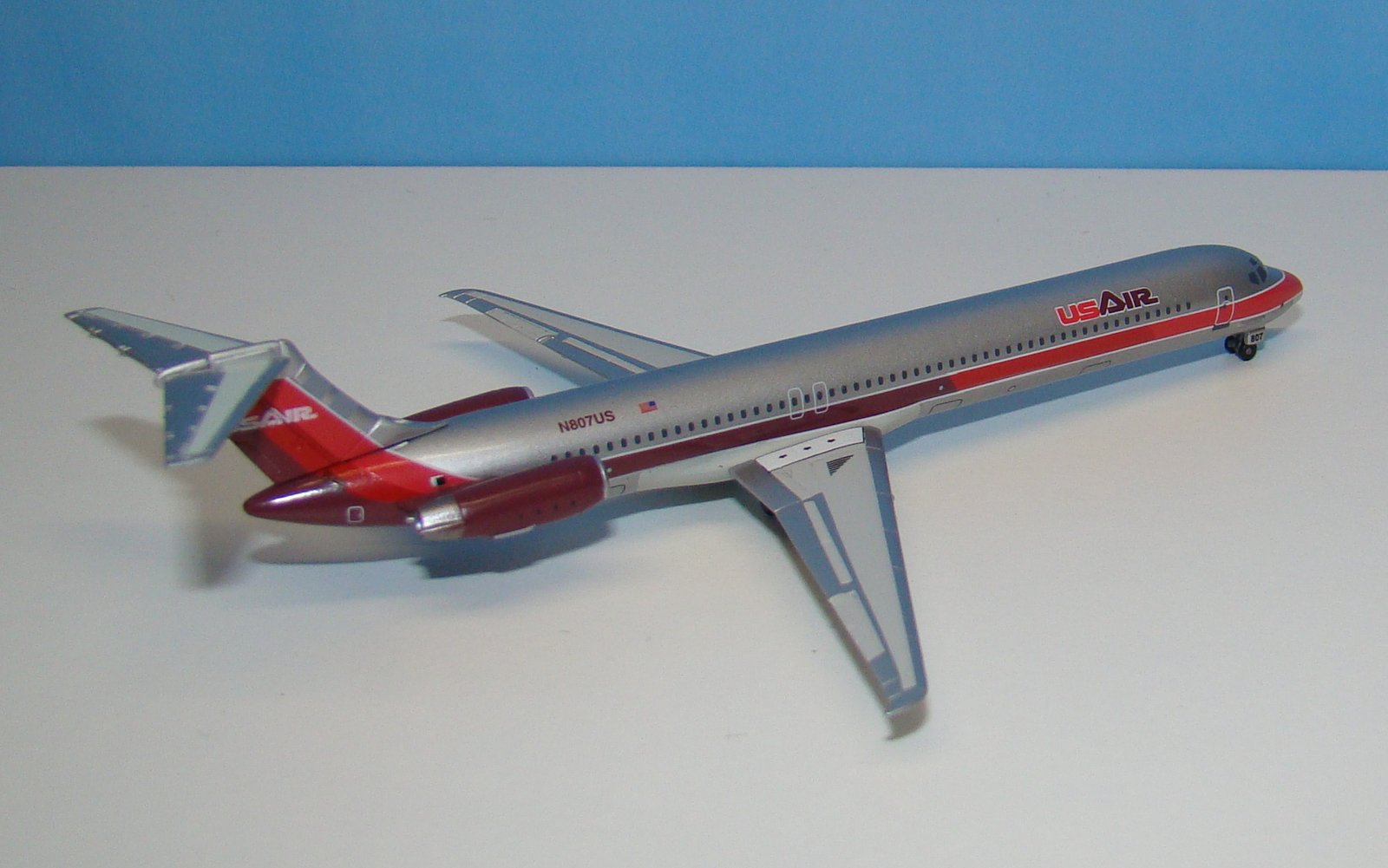
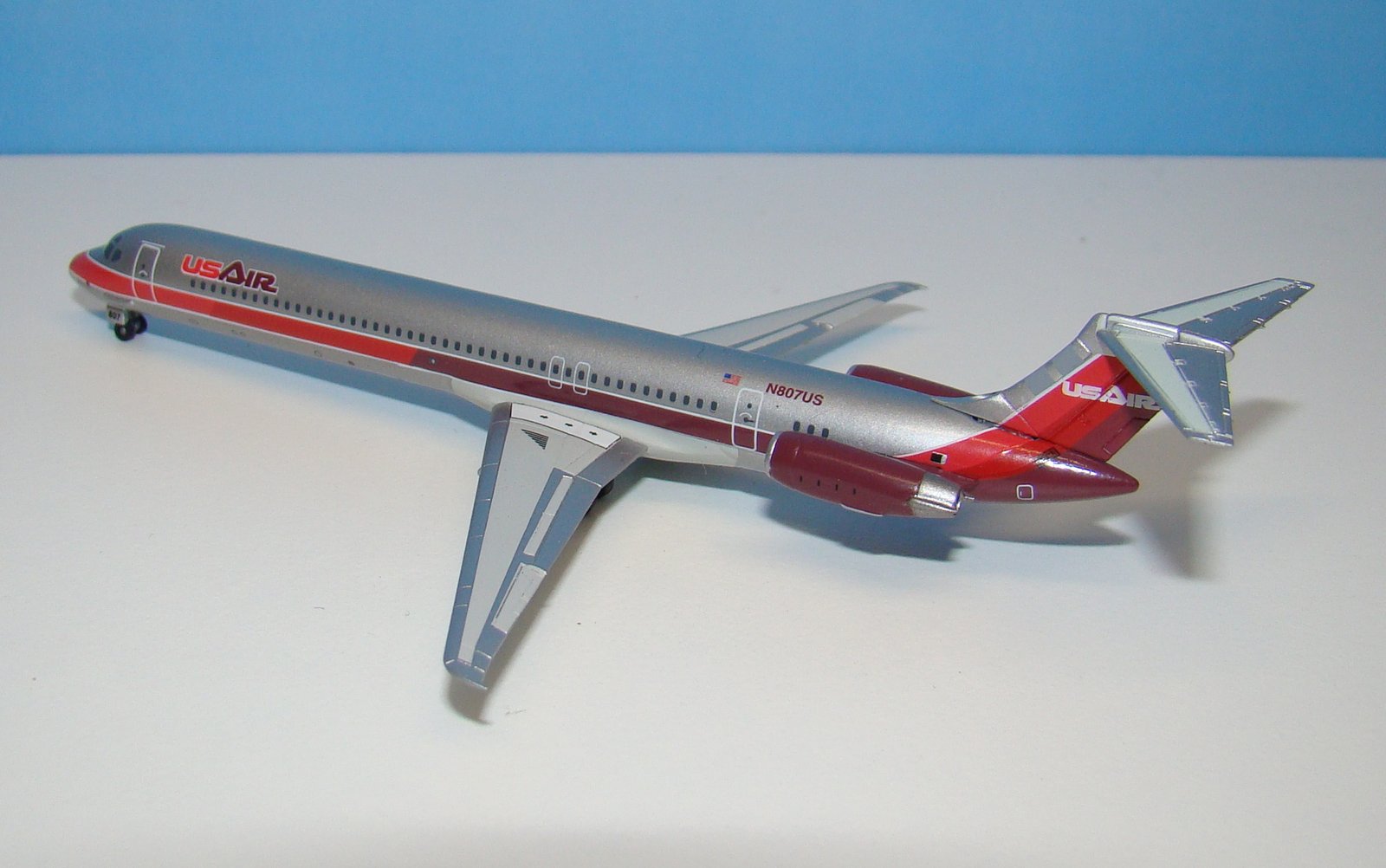
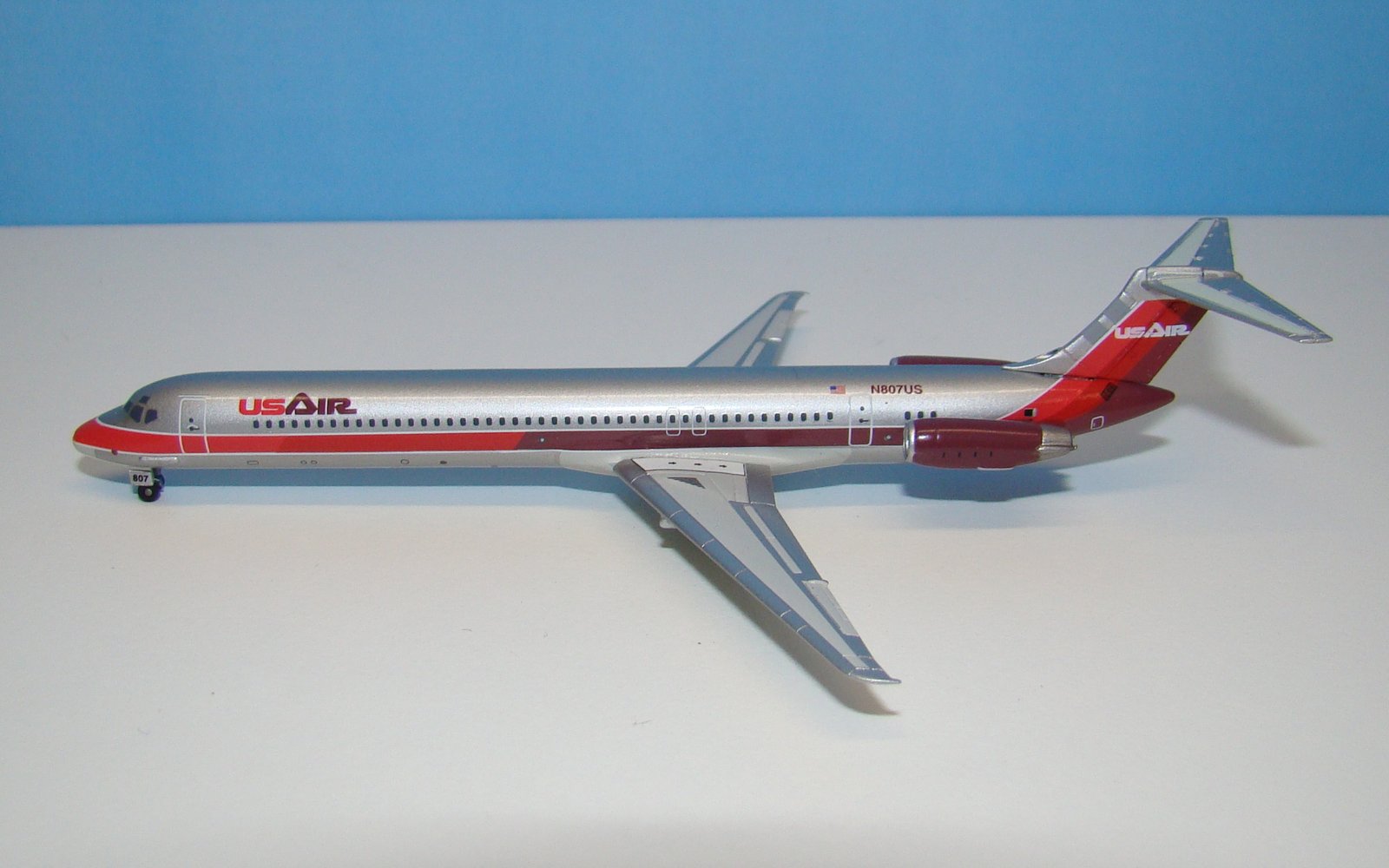
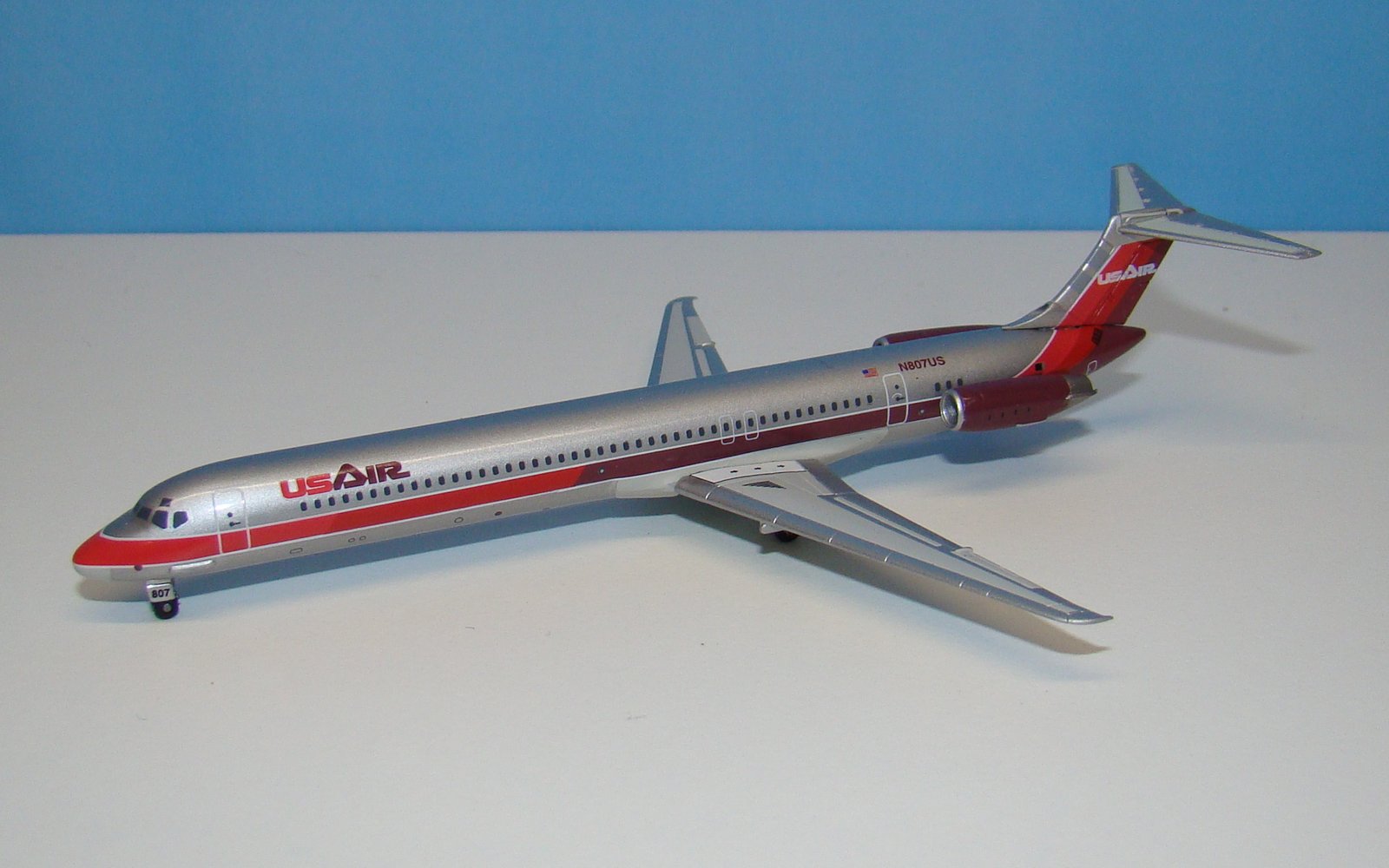
USAir McDonnell Douglas MD-80 N807US Dragon Wings 1:400 Scale Model Airliner
USAir McDonnell Douglas MD-80 N807US Dragon Wings 1:400 Scale Model Airliner
USAir McDonnell Douglas MD-80 N807US Dragon Wings 1:400 Scale Model Airliner
USAir McDonnell Douglas MD-80 N807US Dragon Wings 1:400 Scale Model Airliner
USAir McDonnell Douglas MD-80 N807US Dragon Wings 1:400 Scale Model Airliner
USAir McDonnell Douglas MD-80 N807US Dragon Wings 1:400 Scale Model Airliner
USAir McDonnell Douglas MD-80 N807US Dragon Wings 1:400 Scale Model Airliner
USAir took what was an agile low cost, marginally profitable operation in a high competition environment and made it a lethargic, high cost operation, which was accordingly wildly unprofitable. In the 4th quarter of 1990 USAir made a loss of $221.1 million almost doubling its 4th quarter loss from 1989 of $101.7 million. Its struggles to subsume Piedmont plus the rise in jet fuel prices and economic depression caused by the Gulf War left it in a real mess. Accordingly in January 1991 it abandoned its hopes of creating a viable West Coast network.
Some of the BAE 146s got into the pinstripe scheme
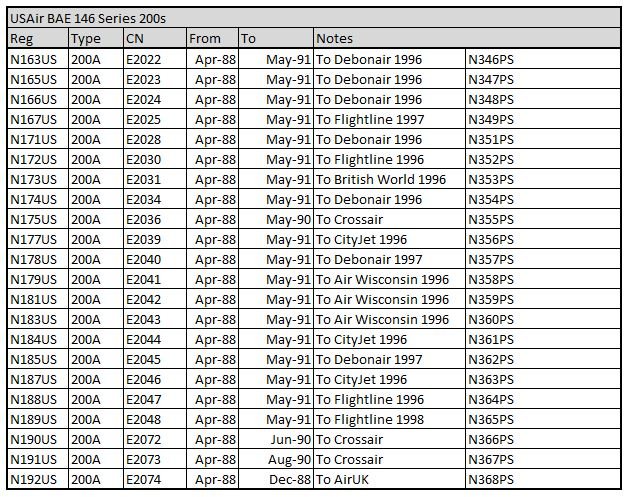
It announced its total withdrawal from 6 markets in California (Burbank, Oakland, Ontario. Orange County, Palm Springs and San Jose) plus one each in Oregon and Washington by May. The entire fleet of BAE 146s were withdrawn and USAir’s capacity decreased by 5%. Of its staff 3,585 were laid off – nearly 7% of its payroll including the closure of the San Diego crewbase. All but four of the BAE 146s, which were sold earlier, would languish in the desert for years until 1996/97 when they joined British World, Cityjet, Debonair and Flightline.
Many ex-PSA employees would stay on but have to commute to the East Coast for work. In essence these staff and the MD-80s would be all that remained of PSA in the years to come. Even so PSA’s smile would occasionally appear on USAir aircraft thanks to crafty engineers.
In hindsight even if USAir had survived against United and Delta the encroachment of Southwest Airlines and Alaska Airlines would have sealed its fate. Could PSA have survived on its own against these threats? The airline component was infrequently profitable during the 1980s, however even if it may have not survived it certainly could have found a more suitable candidate than USAir with which to trust its legacy too. The USAir deal remains a textbook case of how not to merge two airlines.