Deregulation changed the state of play in the Californian market, where unregulated intra-state airlines like PSA and Air California had been battling with the regulated airlines since the 1960s. Competition was stronger than ever with new start up airlines and the trunk airlines looking to create West Coast networks where they had previously had none. This would lead to a tempestuous period for Pacific Southwest. Amongst all this it took a punt on a small four engined British airliner.
The early 1980s had been tough for most US airlines not just PSA. The US economy took a nosedive whilst the 1981 PATCO Air Traffic Controllers strike also heavily impacted operations. PSA had successfully expanded into inter-state services, though several efforts to gain permission to take advantage of Braniff’s failure (lastly with a plan to operate 26 ex-Braniff 727-200s from Dallas) met without success. Combined with fare wars and the end of its troublesome Tristars sub-lease to Aero Peru PSA was moving into the red by 1982, when it lost $17 million.
These troubles continued into 1983 despite positive work in becoming Disneyland’s official airline and major expansion into longer haul West Coast markets such as Portland and Spokane. A $9.3 million loss was reported for that year; however the airline had a clear plan of how to get back into the black. One part of this was cost cutting, which was aggressively and successfully undertaken in 1984 via new profit sharing and stock ownership for employees in return for pay cuts and productivity improvements. The second part was a new fleet of ultra quiet and economic jets.
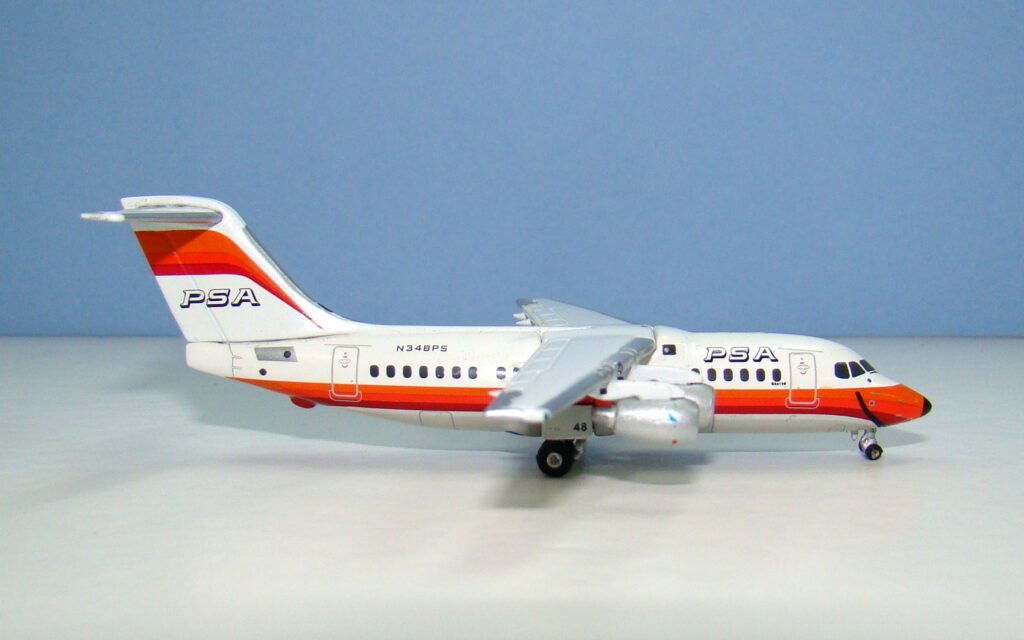
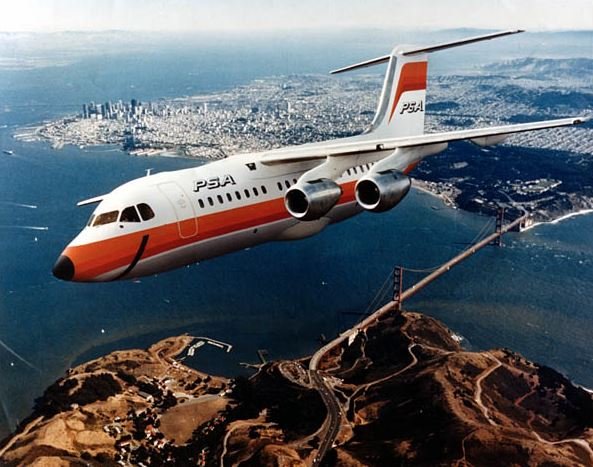
Somewhat surprisingly these jets were British. PSA was interested in finding smaller jets in place of its remaining 727-200s and handful of DC-9s. In November 1983 they found their aircraft and ordered 20 British Aerospace BAE-146-200s, plus took options on a further 25. The 146s were initially to be equipped with 100 seats and PSA was able to acquire delivery slots for early 1984.
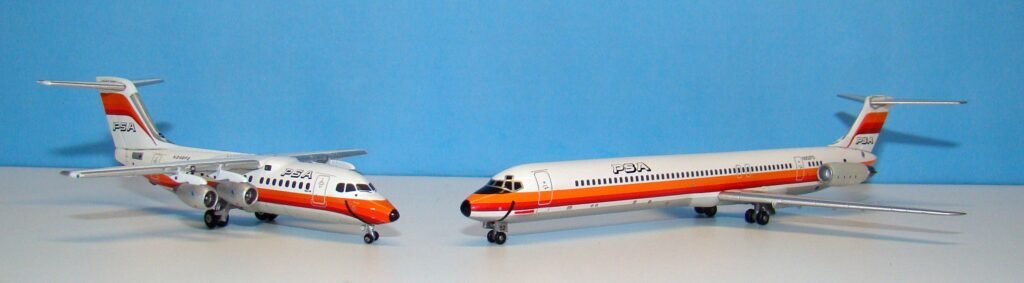
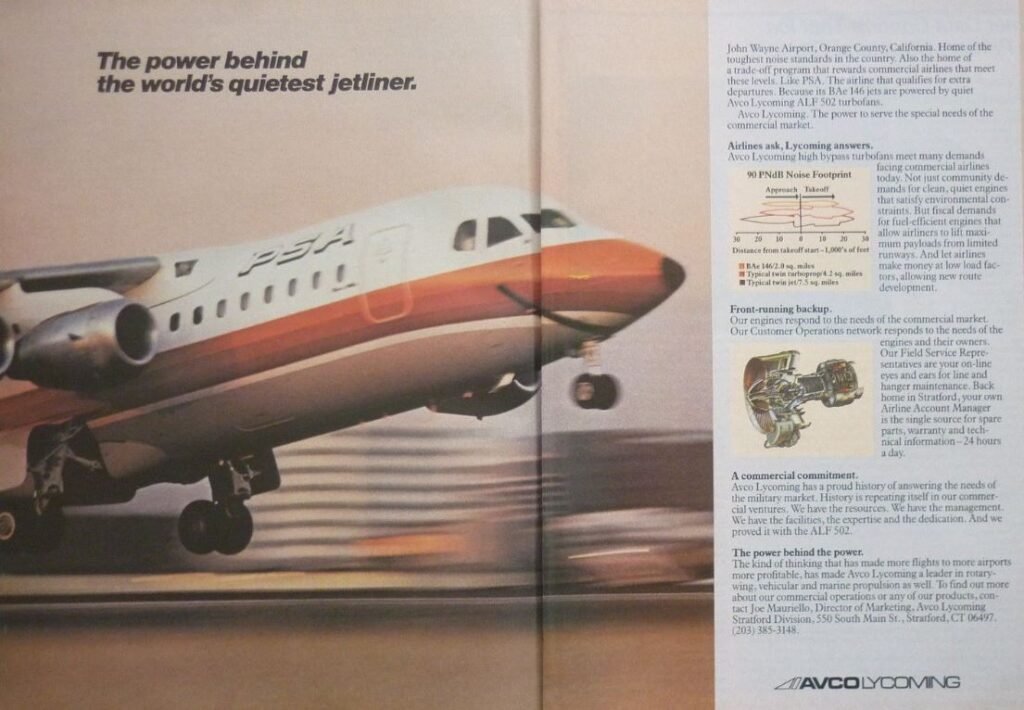
PSA’s VP of Marketing and Fleet Planning Byron Miller saw the MD-80 remaining as the fleet flagship but the 146s replacing DC-9s and 727s on “lighter routes, and those routes and periods where Californian competition — the most vicious in the world, has diluted PSA’s traffic”. Miller saw the 146 as enabling PSA to offer higher frequency at higher load factors. Economically the 146 offered fuel consumption of 600gal/hr compared to 1,100 gal/hr of an MD-80 and 1,550 gal/hr of a 727-200.
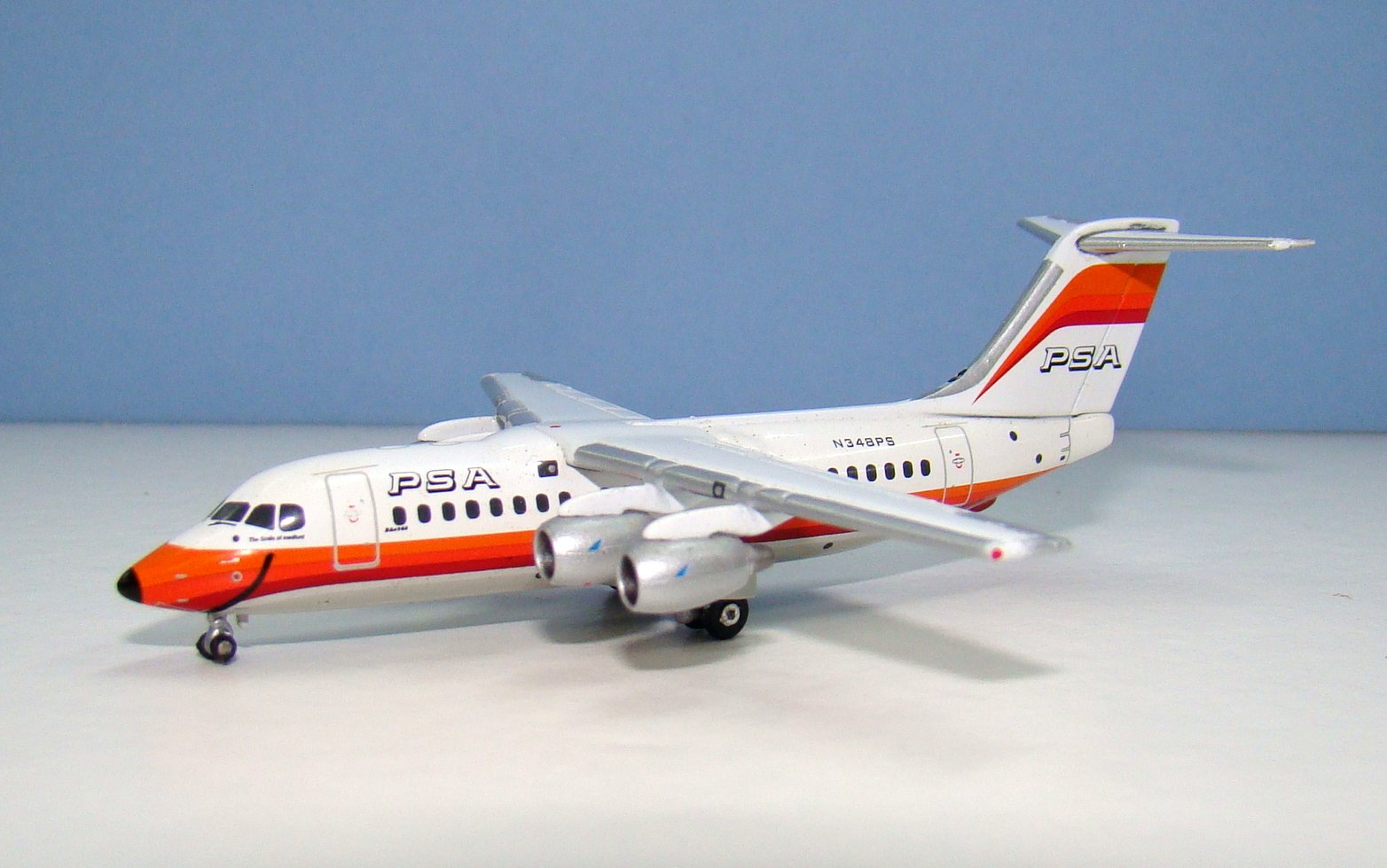
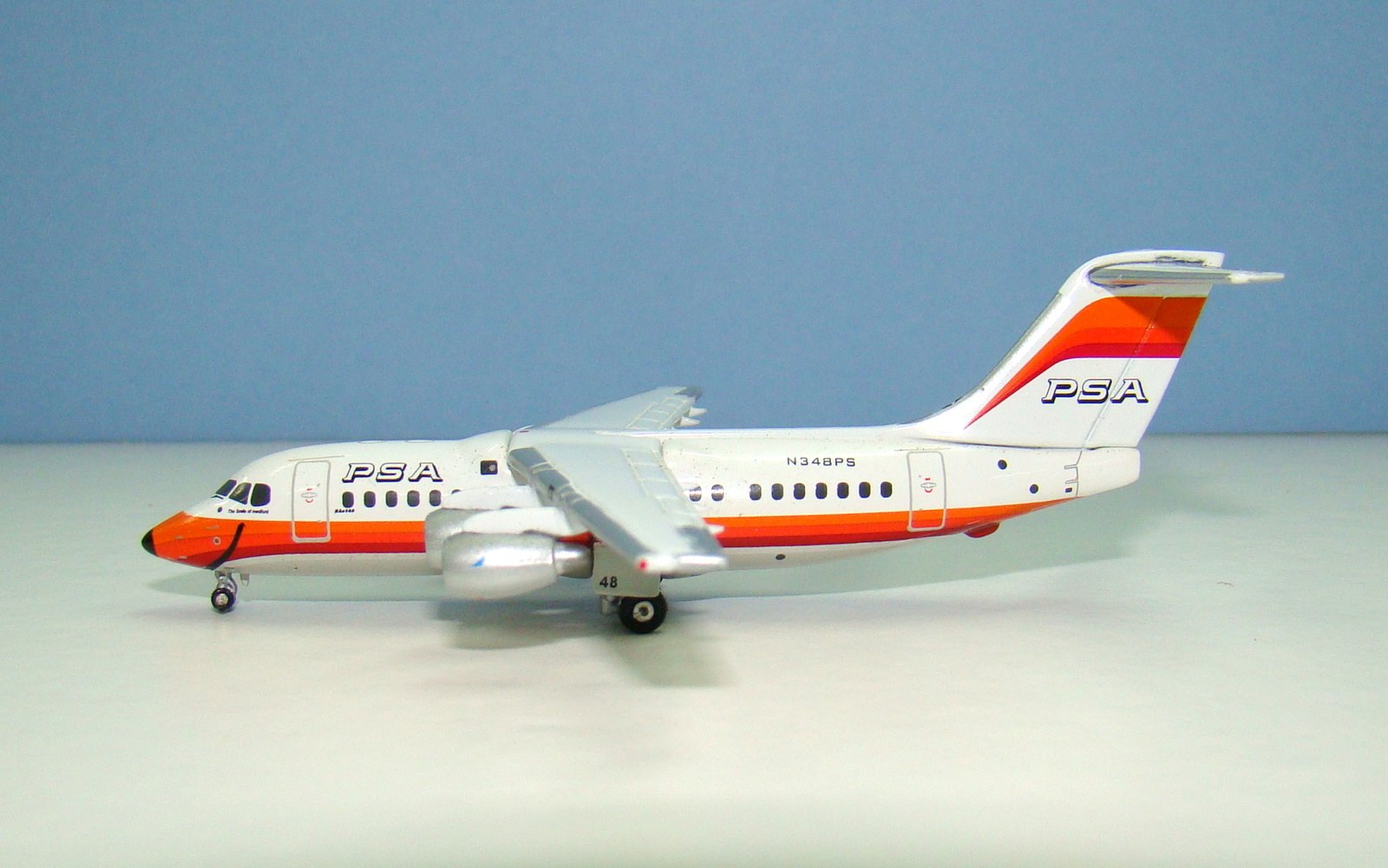
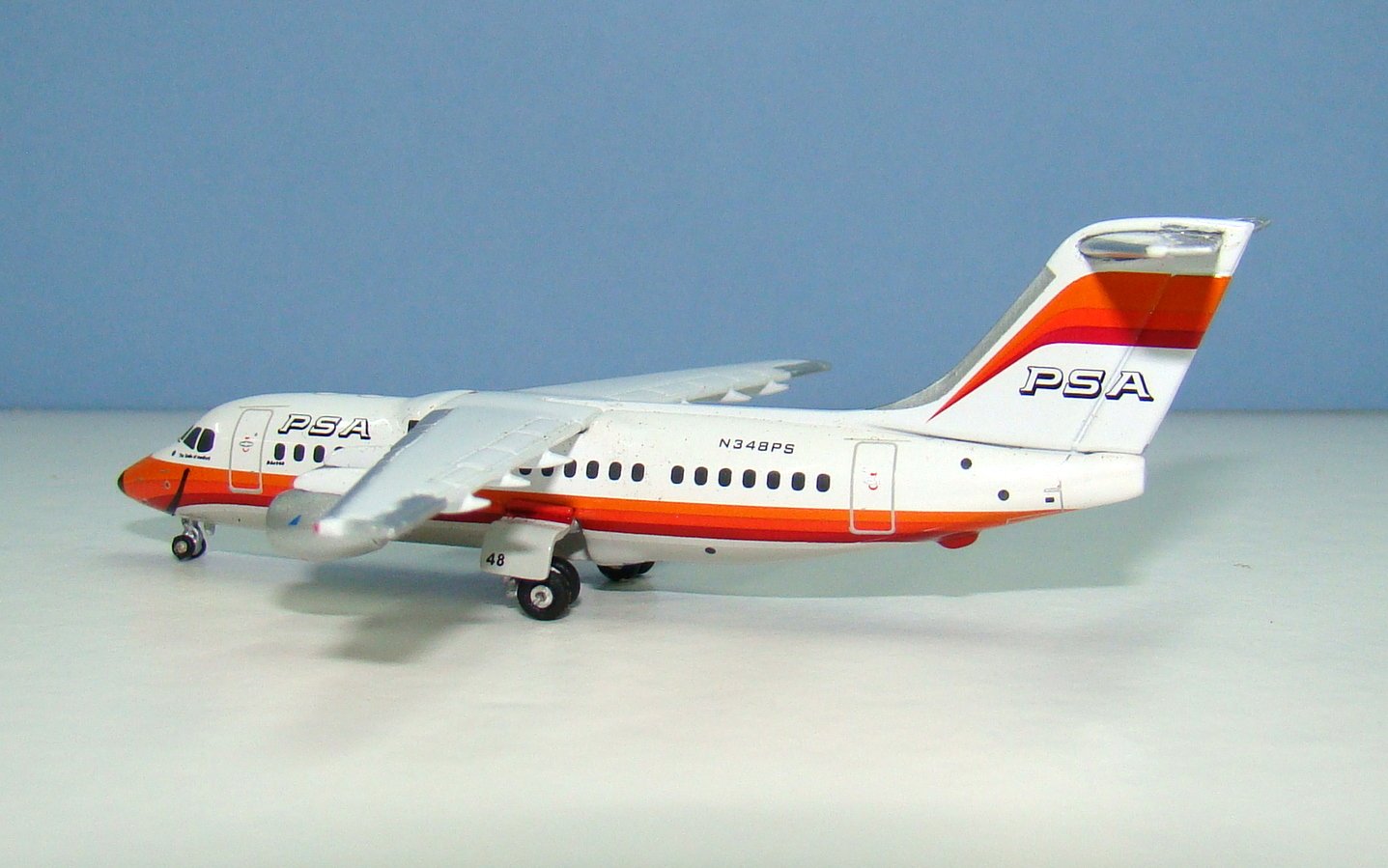
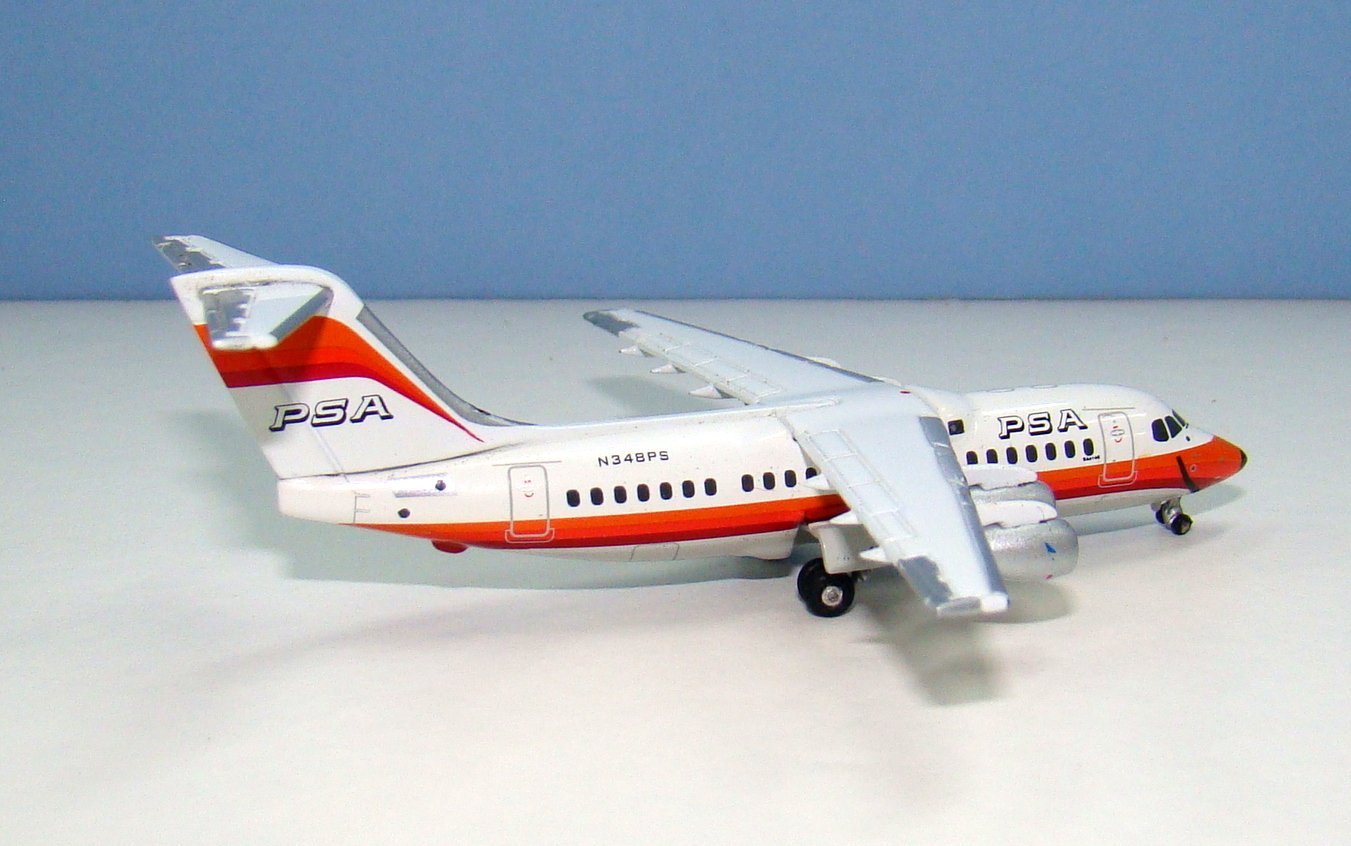
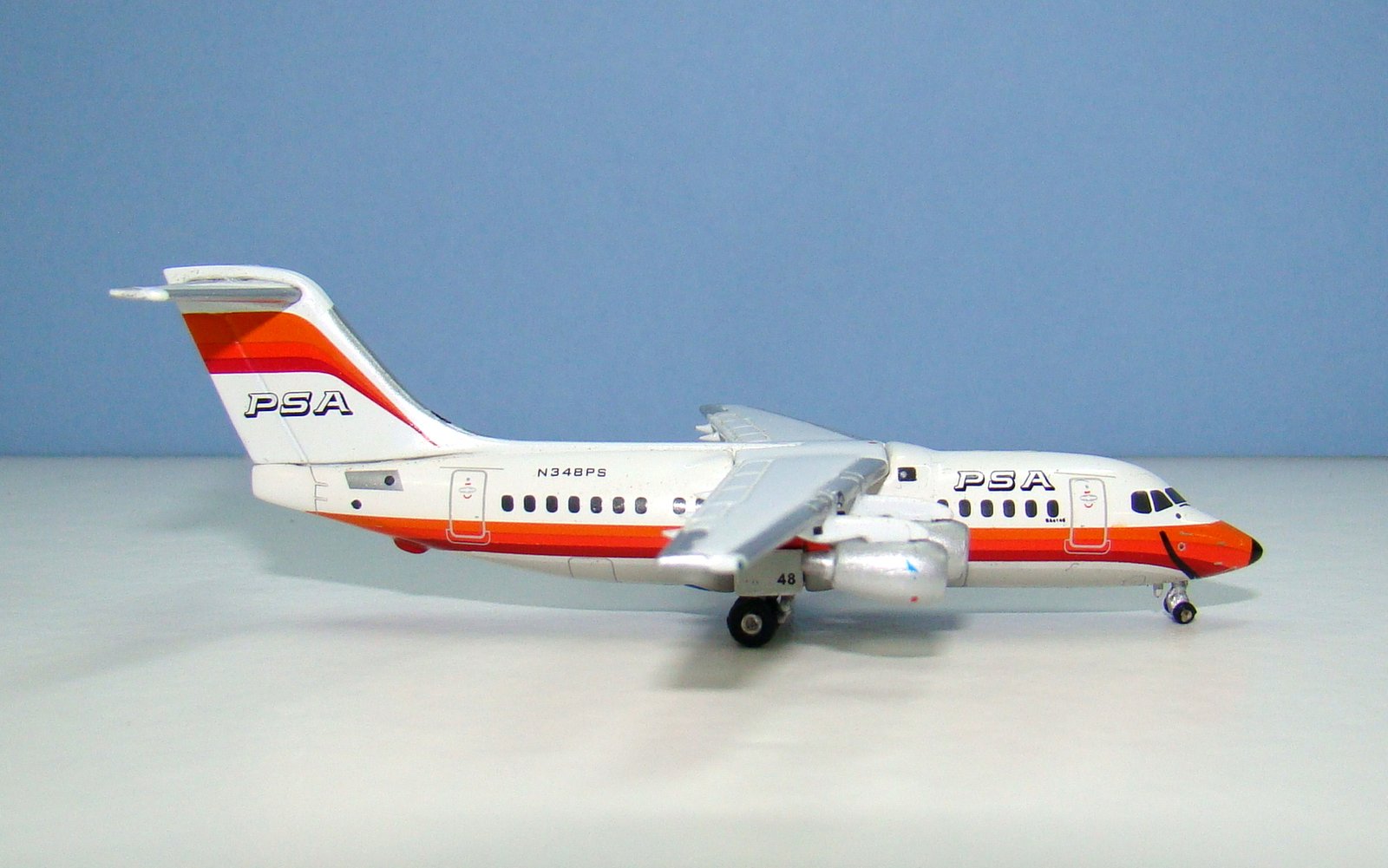
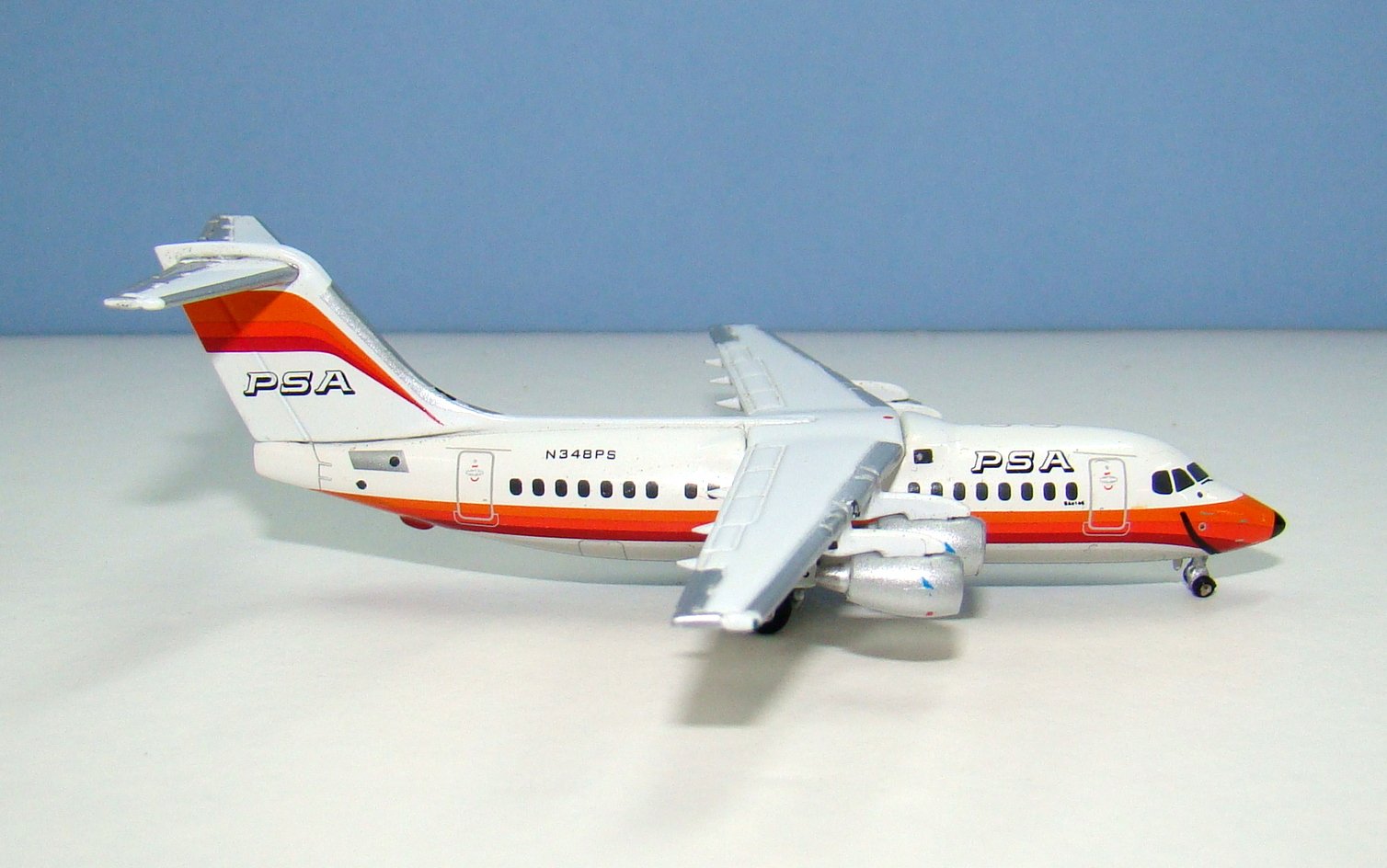
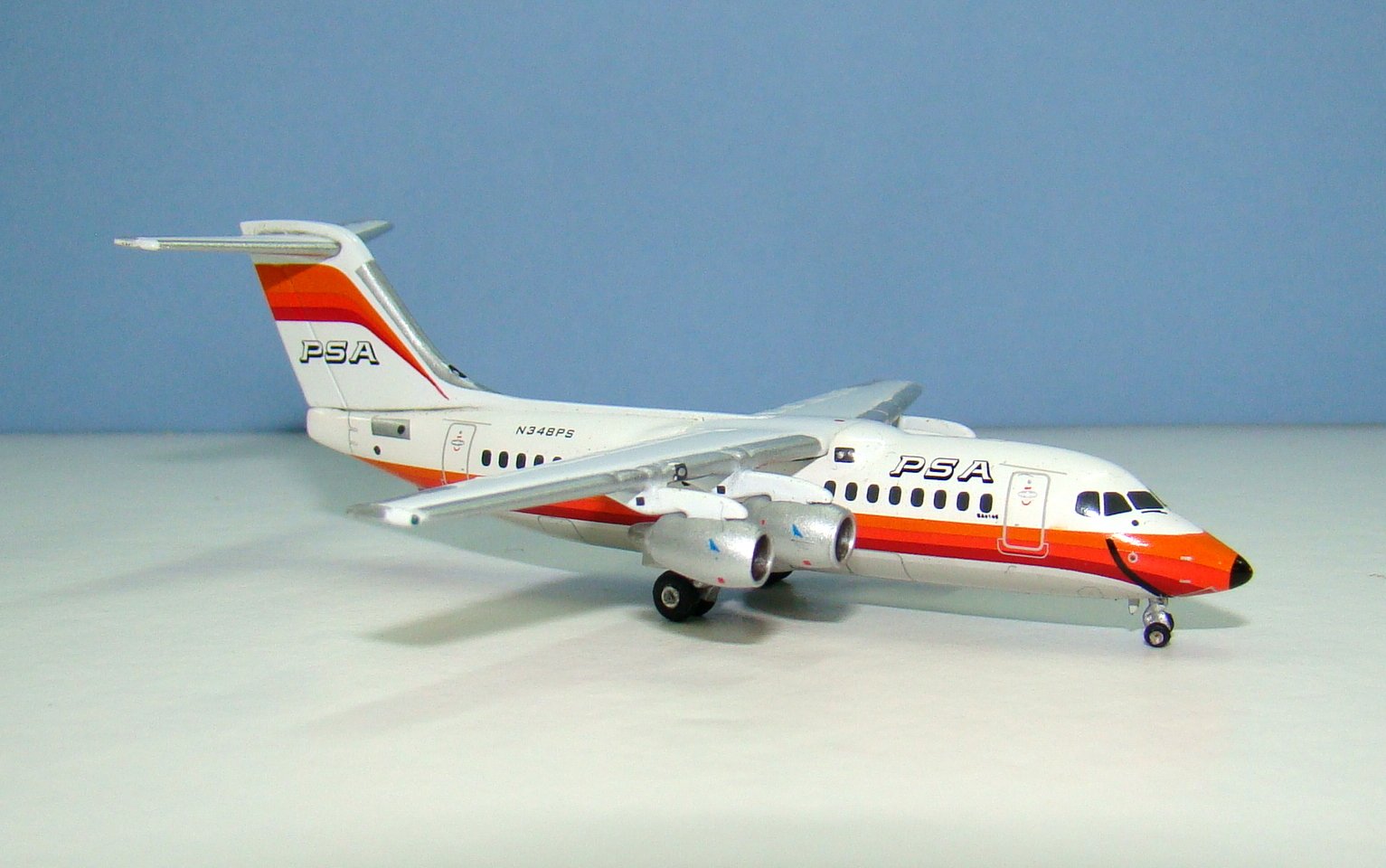
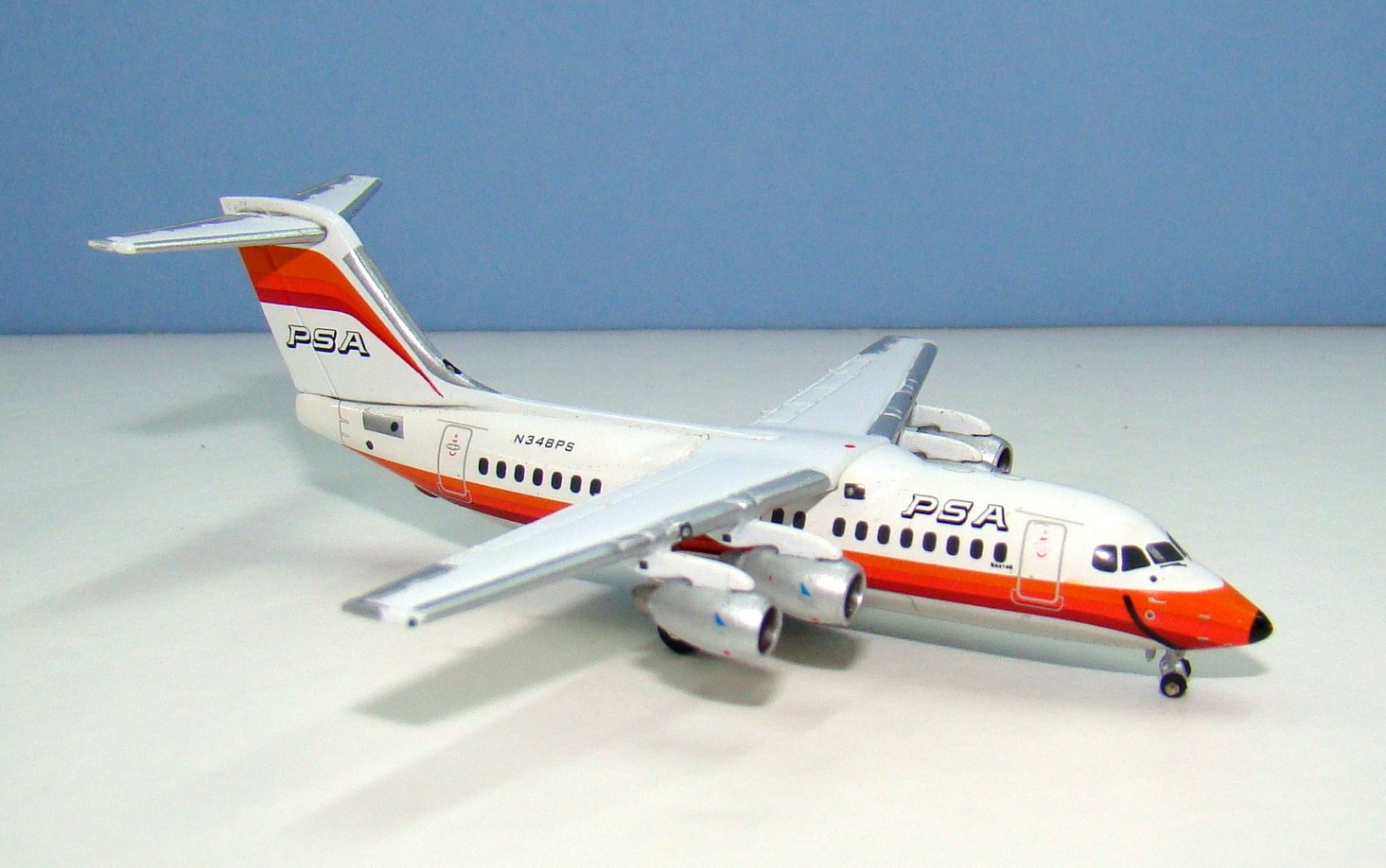
Miller went so far as to say that there was no competition to the BAe 146 available, with the Fokker F28 too noisy for sensitive airports like Orange County, McDonnell Douglas’ proposed MD-90 not ready and no turboprop aircraft suitable. One area that did need improvement was internal cabin noise, which originally was worse than on the MD-80. This was resolved with further insulation.
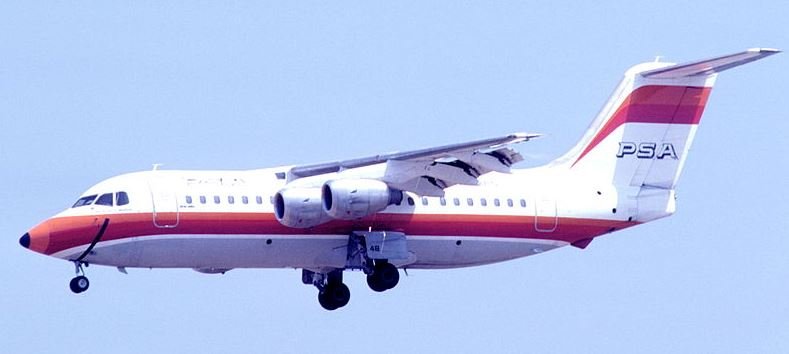
The first BAE 146 Smiliner went into service on June 20, 1984 between Burbank and Oakland. The last 727 flew with PSA on November 26, 1984 between Las Vegas and San Diego. The 146s showed their value in 1985 by enabling PSA to improve its frequencies at noise sensitive John Wayne, Orange County airport from 6-23 daily flights. AirCal using noisier 737-300s could only increase its frequencies to 15.5 and was forced to also acquire BAE 146s to compete.
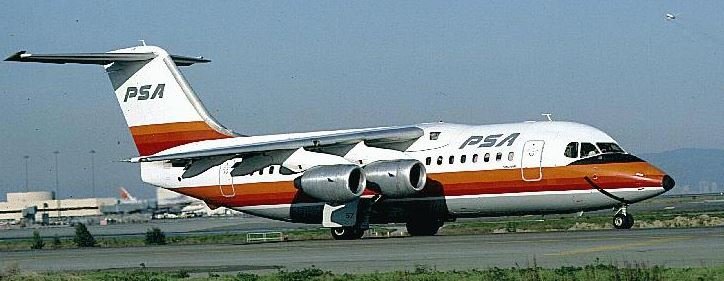
In early 1985 PSA introduced a new livery. Broadly similar to the earlier one it had a simpler stripe structure and new primer gray titles, but was not a success and was scrapped after only 3 aircraft received it. In December the 146s were used to inaugurate service to 7 new cities (to Pasco, Yakima, Eugene, Boise, Eureka and Los Cabos) all on the same day. PSA worked to increase frequencies elsewhere too. The 146s helped enable PSA to initiate its PSA Expressway services between Los Angeles and San Francisco, which operated every half an hour in both directions during the week. All this was possible as by the end of 1985 all 20 BAE 146s were in service.
It was far from all smiles with the 146s however. The aircraft suffered badly with engine reliability issues, which made it something of a maintenance nightmare. As late as February 1987 there was an inflight uncontained engine failure. This came close to causing fatal damage to the aircraft. Luckily engine pieces were only found in non-vital areas like an overhead bin and baggage compartment and nobody was injured. The 146s were so troublesome that British Aerospace leased 3 BAE-146-100s to PSA as backup aircraft.
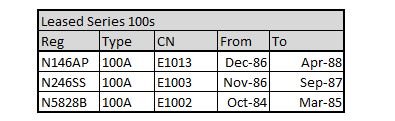
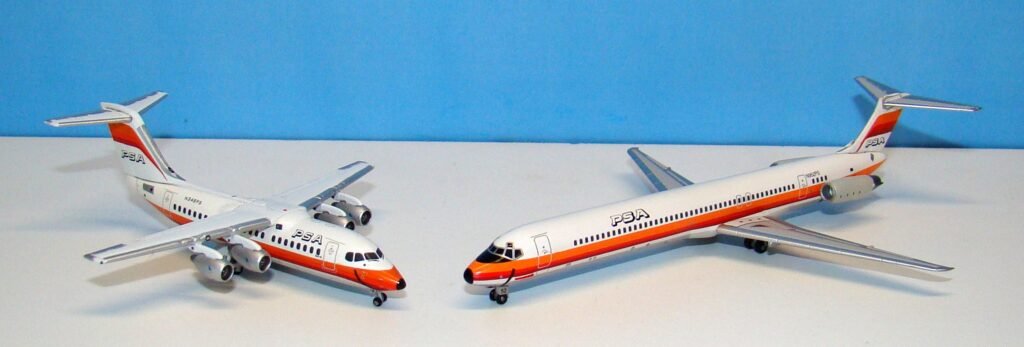

Despite fighting off the likes of Pacific Express, Western and Republic whilst holding off United, Continental West and AirCal competition was only increasing into 1986. When American bought out AirCal in late 1986 the writing was on the wall. Accordingly USAir came calling and in December a deal was announced to buy PSA for $400 million. USAir was keen to acquire a West Coast network and link it up to its East Coast one and as such the 146s would be integral to that.
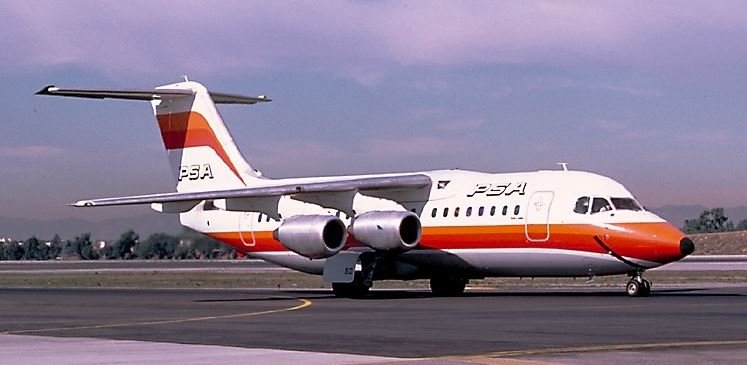
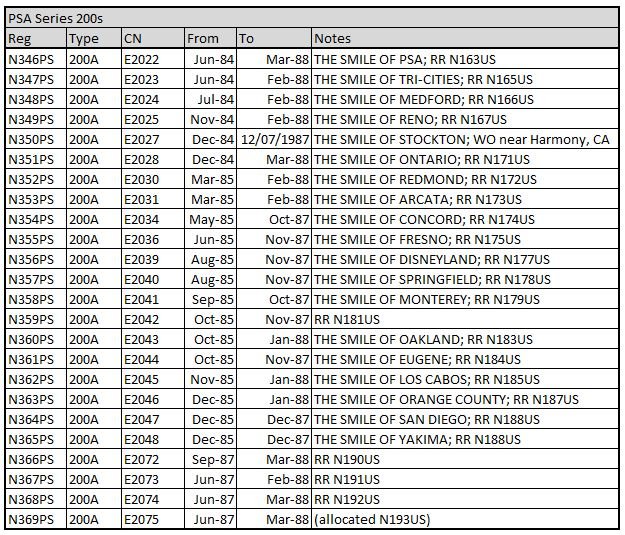
Prior to the takeover a bad omen of the future under USAir materialised when N350PS, a BAE 146-200 operating flight 1771, one of the PSA Expressway flights, crashed in December 1987. David Burke, a disgruntled ex-USAir employee went aboard the flight, killed the crew and then himself. The aircraft was destroyed when it nosedived into the ground from 23,000 feet killing all 44 aboard. The aircraft had been scheduled to take up the new registration N168US as all the 146s were re-registered with N1**US registrations from late 1987.
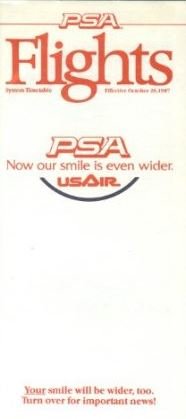
The last PSA flight operated on April 8, 1988 and the PSA fleet quickly was replaced by the red stripes of USAir. USAir’s tenure on the West Coast was nothing short of a disaster.
References
1983. More Orders for BAe 146 soon says Avco. Flight Global
1986. AirCal Orders British Jets to Counter PSA. LA Times
1986. USAir to buy PSA for 400 million. New York Times
1987, Dec. British-Built PSA Aircraft Known for ‘Good Track Record’. LA Times
PSA History. PSA History.org
Lehman, William. US Airways. Images of Aviation. Arcadia Publishing