Ecuatoriana’s cessation of operations in 1993 had been something of a shock as the airline’s financial condition was unknown even though its service levels had been decreasing. Despite a lengthy period out of operation the Ecuatoriana brand wasn’t finished however, and a white knight appeared in the form of the Brasilian airline VASP. VASP was keen to form a pan-South American VASP Air System including Ecuador’s colourful national carrier.
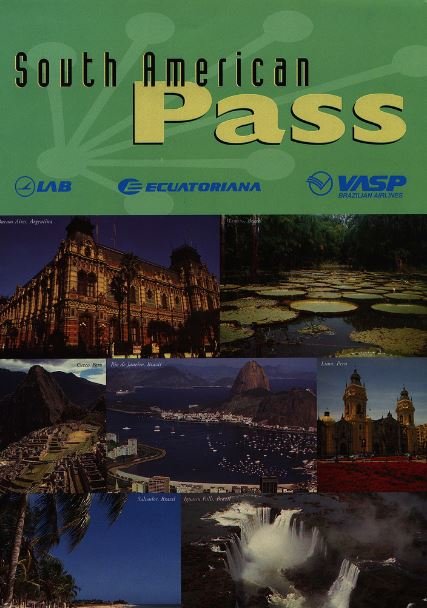
VASP was a Sao Paulo based Brasilian scheduled carrier which had been privatised in 1990 and under its new owner and president, Wagner Canhedo, had decided on an expansion push. It doubled its fleet using 737-300/400s and DC-10s and began international services, however by 1993 it was forced to return most of the aircraft due to failure to pay leasing fees. This didn’t stop the airline though and in 1994 a second international expansion began using new MD-11s. VASP dreamed of creating a VASP Air System and the cornerstone of this policy was to buy into failing South American airlines and operate them together.
VASP Air System advert in Billboard magazine November 1997
Accordingly in 1995 it acquired controlling interests in Lloyd Aereo Bolviano (LAB) of Bolivia, TAN of Argentina and Ecuatoriana. VASP acquired 49% of the non-flying Ecuadorian airline with a further 10% going to Ecuadorian investor Juan Eljuri Anton and the remainder staying with the Ecuadorian government.
Nonetheless, the sale went through and VASP acquired assets worth approximately $15 million, including a DC-10 aircraft in need of a major overhaul, office space, and spare parts. The privatization process included a five-year business plan plus a minimum cash contribution of $10 million. The airline had rights to fly 30 routes, of which 18 had never been flown but included services to Madrid.
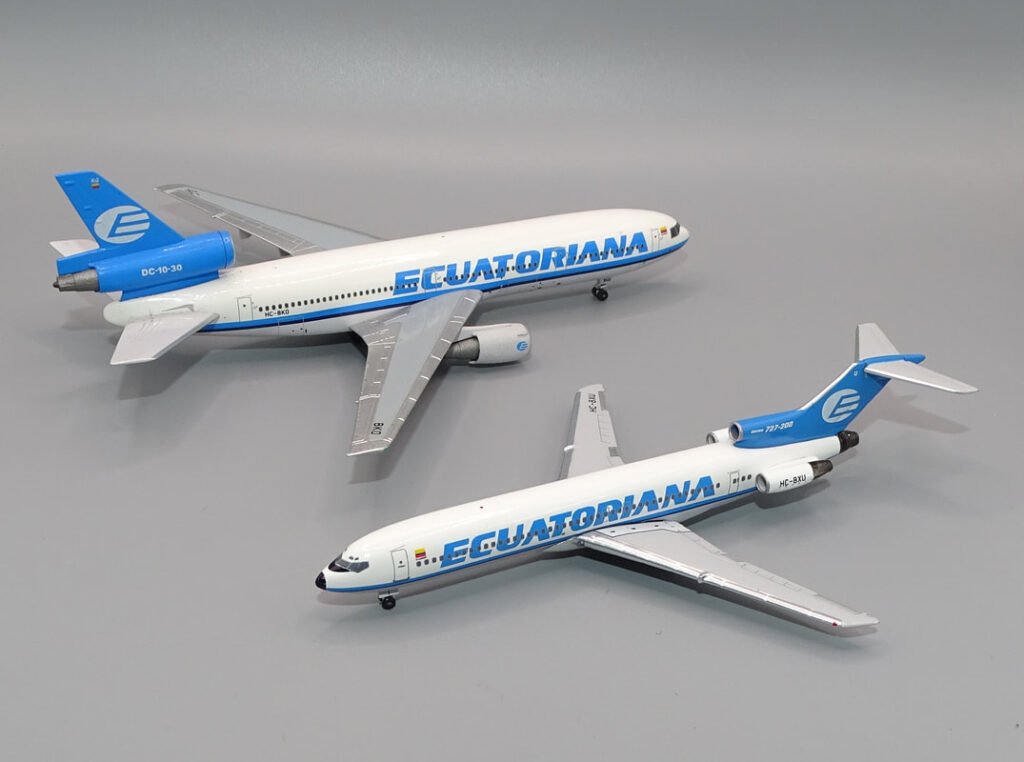
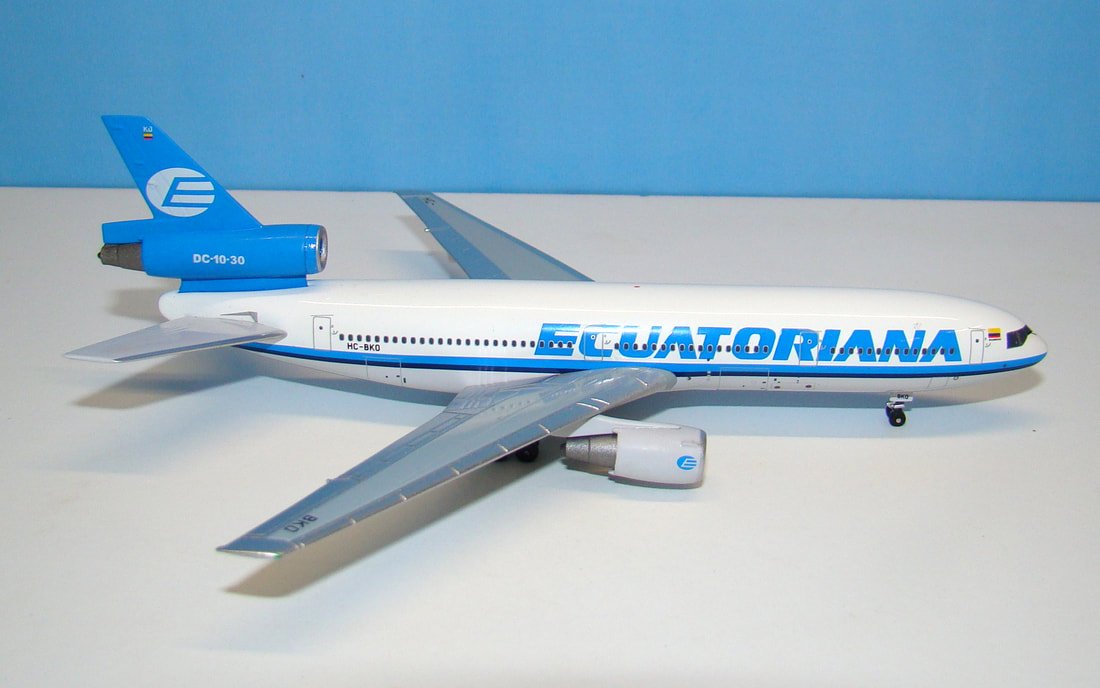
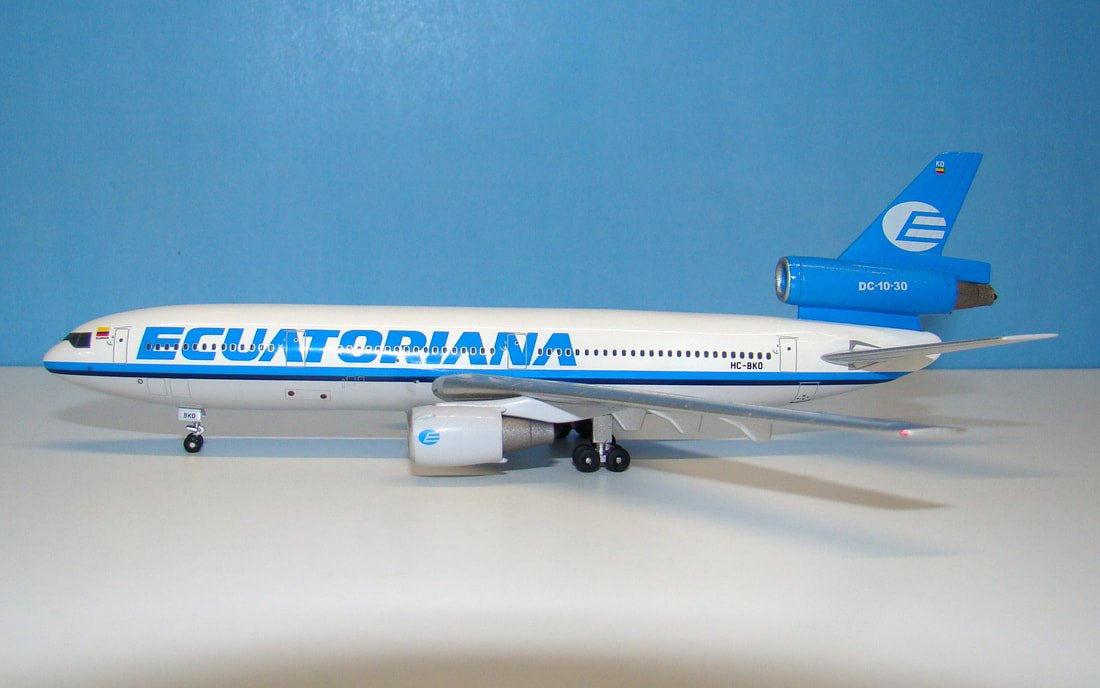
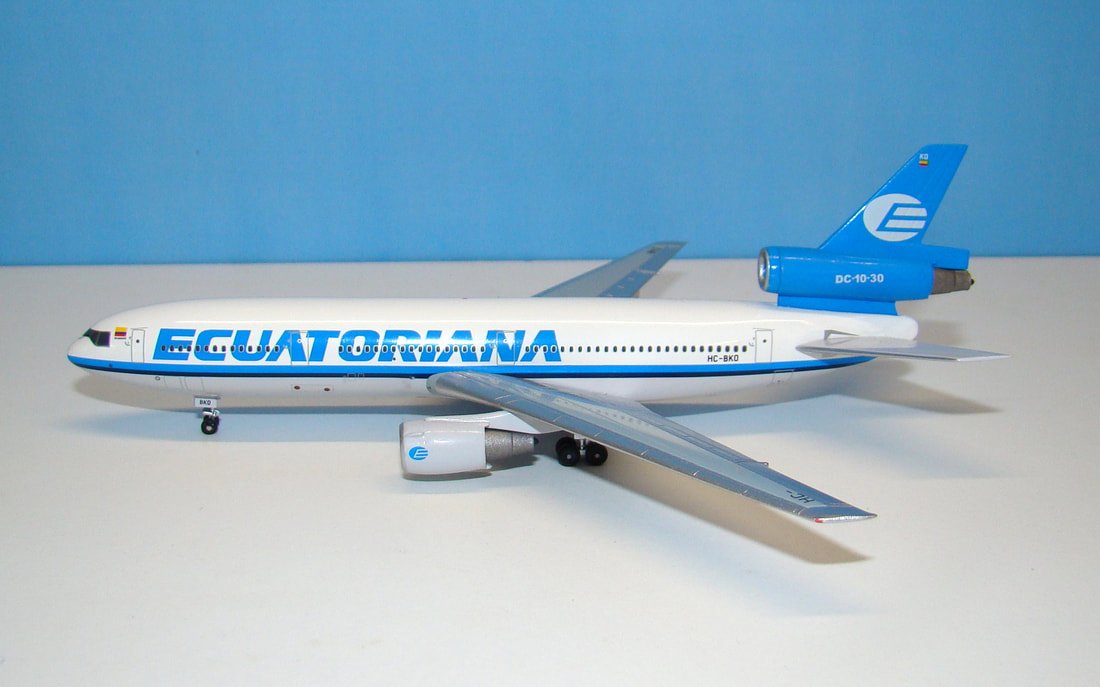
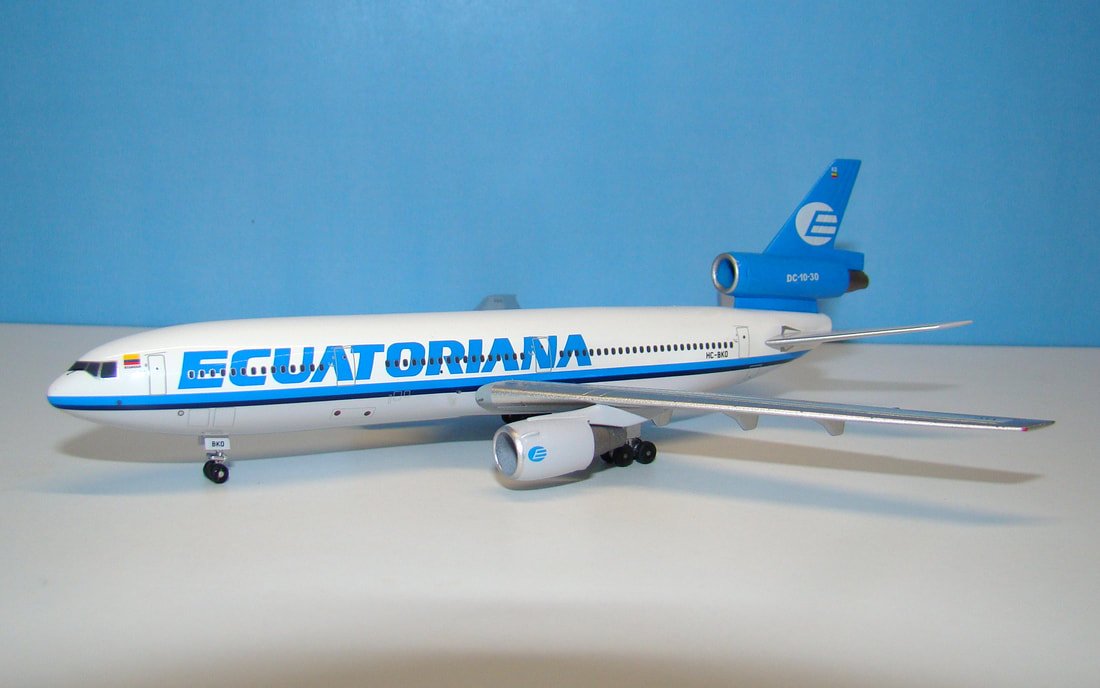
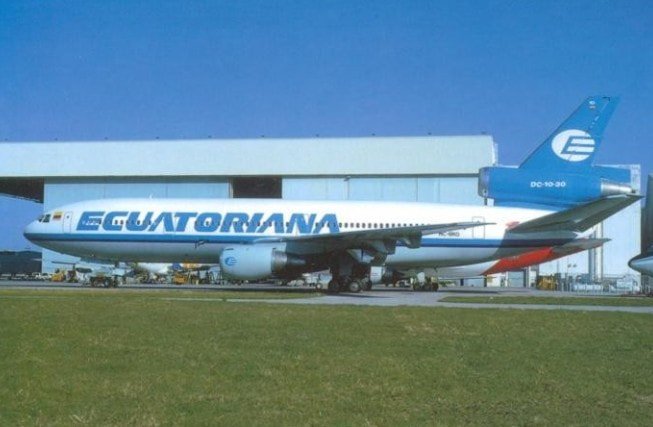
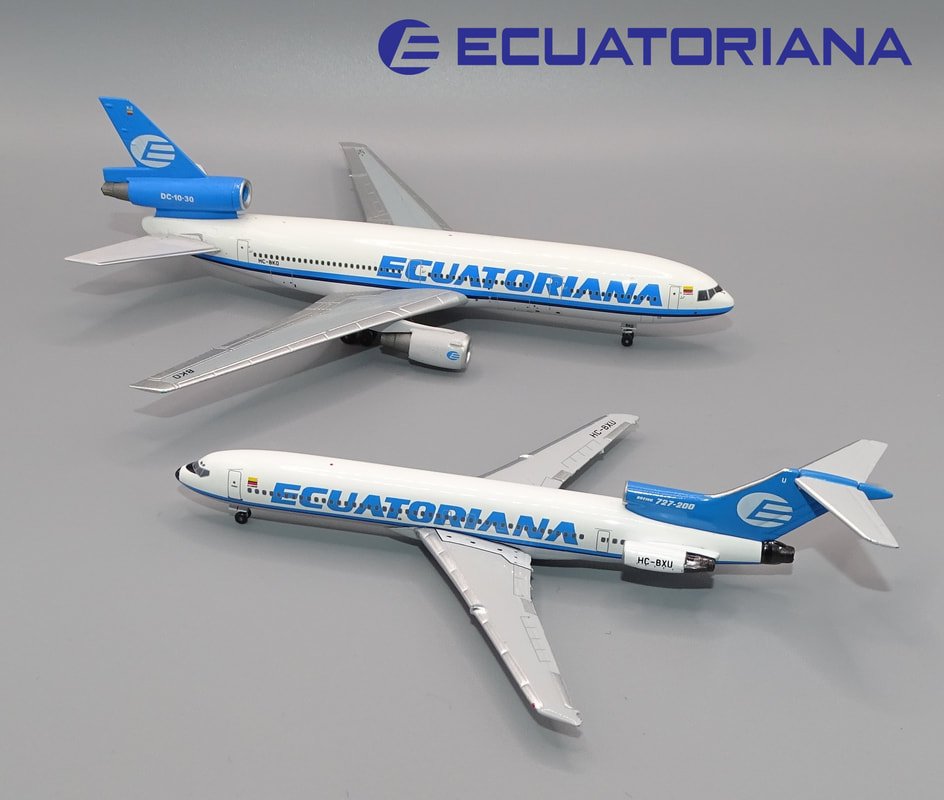
Ecuatoriana McDonnell Douglas DC-10-30 HC-BKO Aeroclassics 1:400 Scale Model Airliner
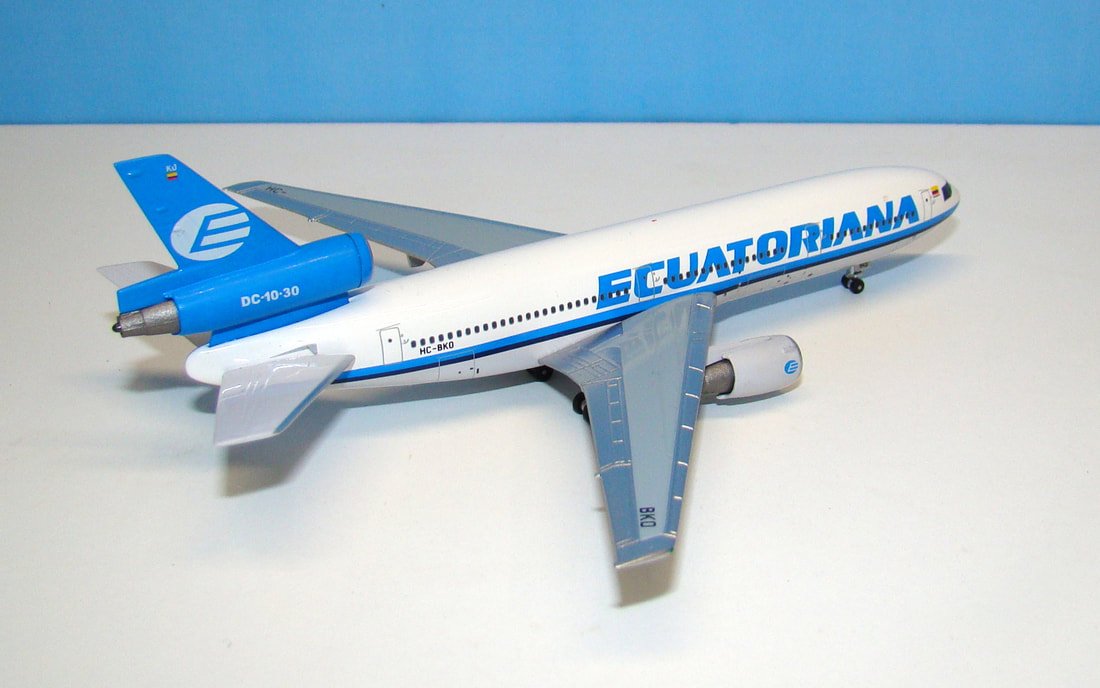
Ecuatoriana McDonnell Douglas DC-10-30 HC-BKO Aeroclassics 1:400 Scale Model Airliner
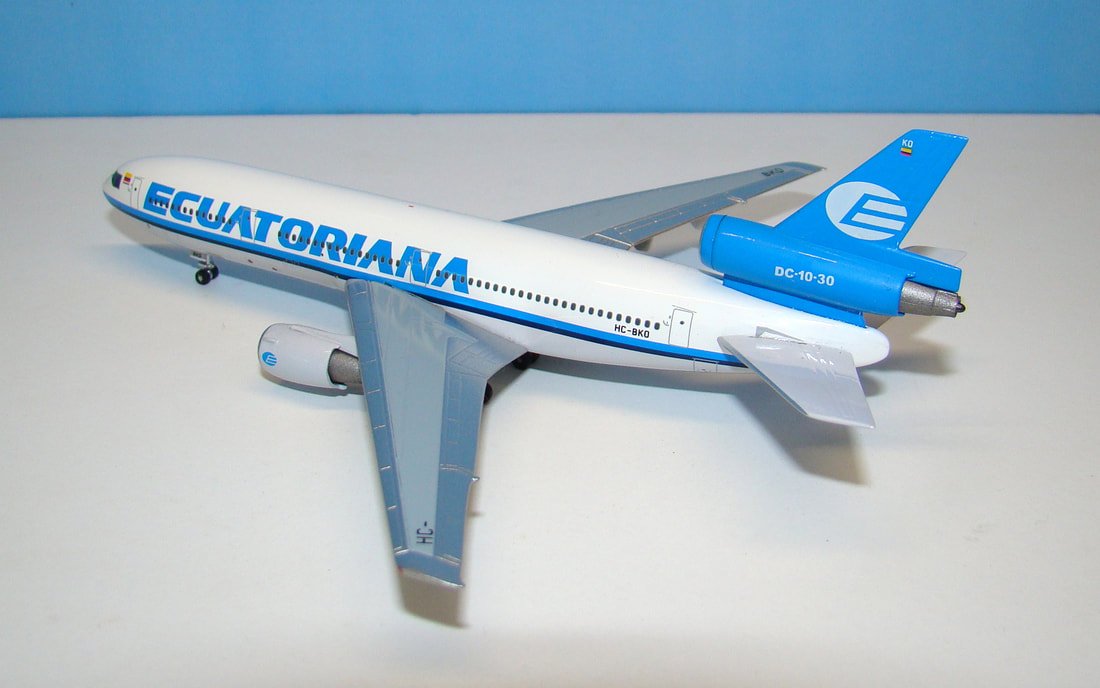
Ecuatoriana McDonnell Douglas DC-10-30 HC-BKO Aeroclassics 1:400 Scale Model Airliner
Ecuatoriana McDonnell Douglas DC-10-30 HC-BKO Aeroclassics 1:400 Scale Model Airliner
Ecuatoriana McDonnell Douglas DC-10-30 HC-BKO Aeroclassics 1:400 Scale Model Airliner
Ecuatoriana McDonnell Douglas DC-10-30 HC-BKO Aeroclassics 1:400 Scale Model Airliner
Operations were restarted in 1996 using a trio of 727-200s (one ex-Northwest and two ex-Aerolineas Argentinas). VASP now owned the old Ecuatoriana DC-10-30 HC-BKO and re-registered her as PP-SFB in May 1996.
VASP’s acquisition of Ecuatoriana wasn’t without controversy. It was one of 9 consortia that were interested in the airline – others included Aces-Aeroecuador, Air France, Avro-British Aerospace, Carnival Airlines, Challenge Air Cargo, Continental Airlines, Protexa-Aerogal and Filancasa-Taca. There were questions raised about the manner of the sale, which the Ecuadorian Congress considered to be opaque and it went through while a report from the Comptroller General’s Office was still pending.
VASP wet-leased Ecuatoriana’s old DC-10 back to the airline so that international services to Miami and New York could be restarted, from June 1996, as the FAA had imposed operating restrictions on Ecuadorian airlines operating to the USA for safety reasons. The same trick was used to provide an A310 for Ecuatoriana also and this ex-TEA France / Sudan Airways frame became PP-SFH in November 1997.
The livery for the new Ecuatoriana was a rather uninspiring version of VASP’s own as VASP attempted to undertake some uniform marketing for its VASP Air System network. It doesn’t seem that the new Ecuatoriana was particularly successful however the carrier’s own operations were tied inextricably to that of its parent VASPs and as the 1990s moved on VASP’s own position became more and more unstable.
Worse the airline was flying during a tumultuous time in Ecuador’s history as it suffered an economic crisis in 1998-99 that resulted from a period of combined inflationary-currency crisis, financial crisis, fiscal crisis, and sovereign debt crisis.
Ultimately the combination of these factors led to Ecuatoriana’s collapse once again. The USA had rescinded Ecuatoriana’s permit to operate the vital Quito-New York route in 1999 and the Ecuadorian government filed a lawsuit against VASP for non-compliance with the agreed investment plan.
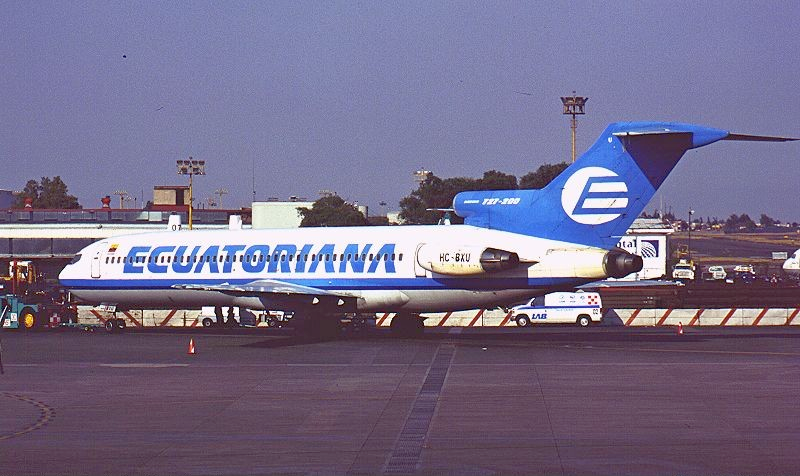
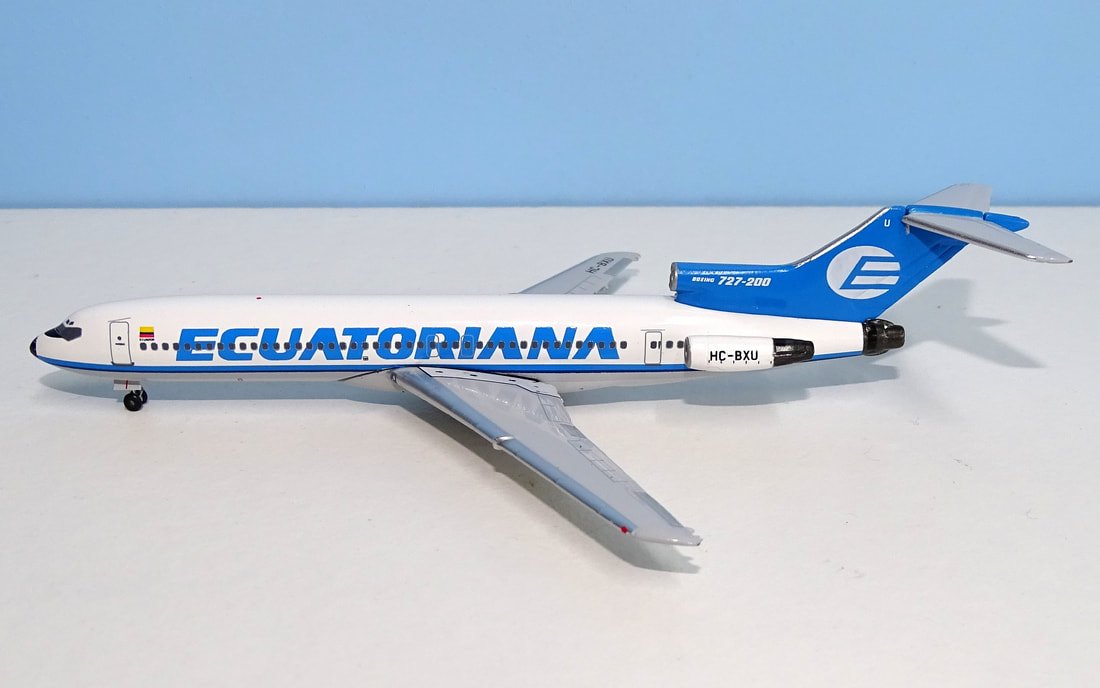
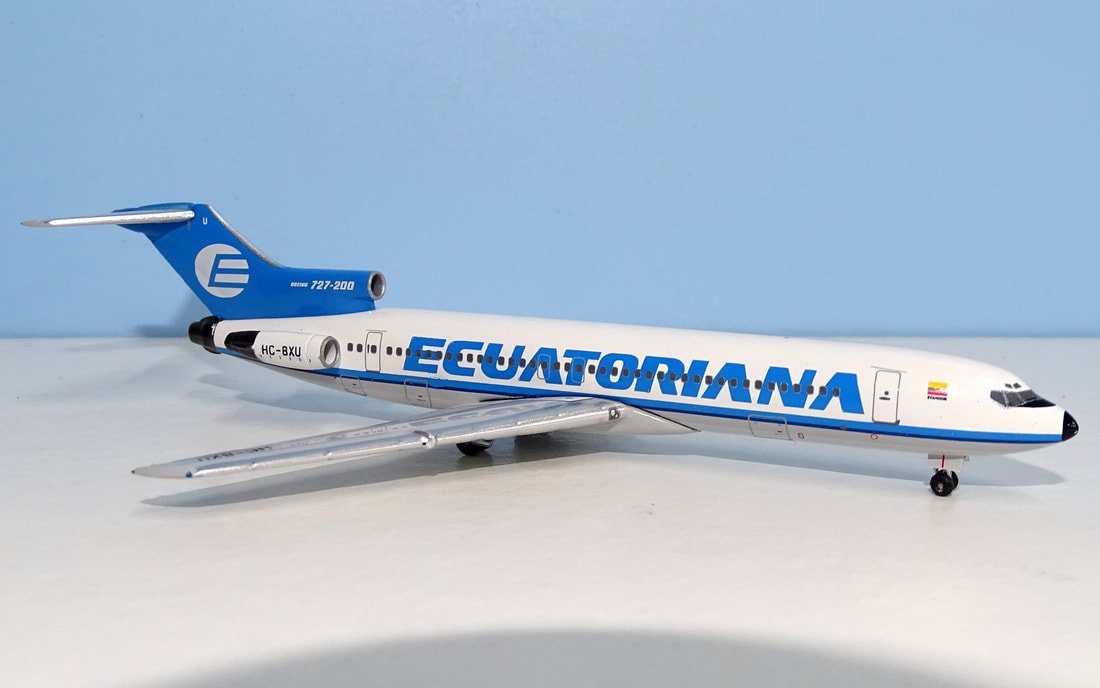
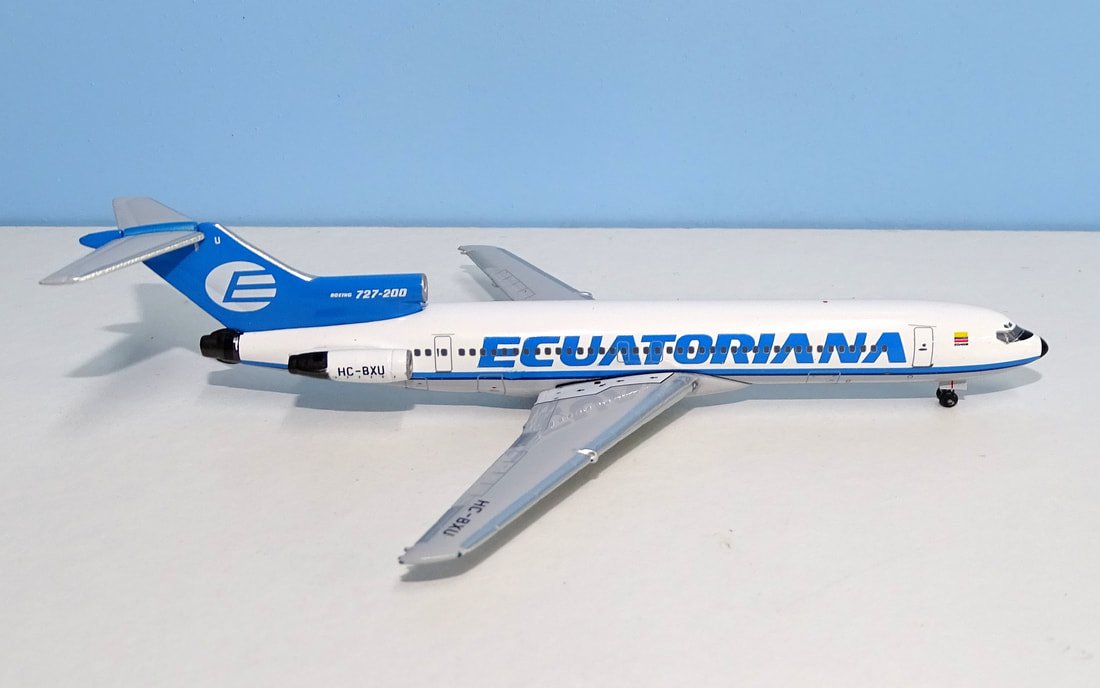
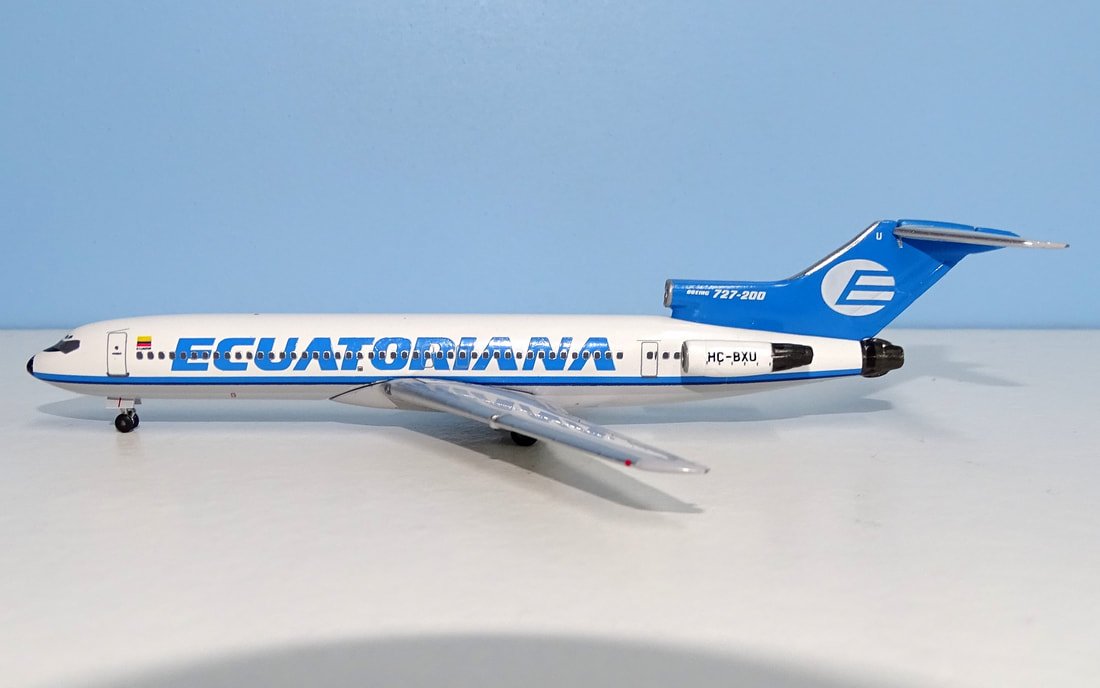
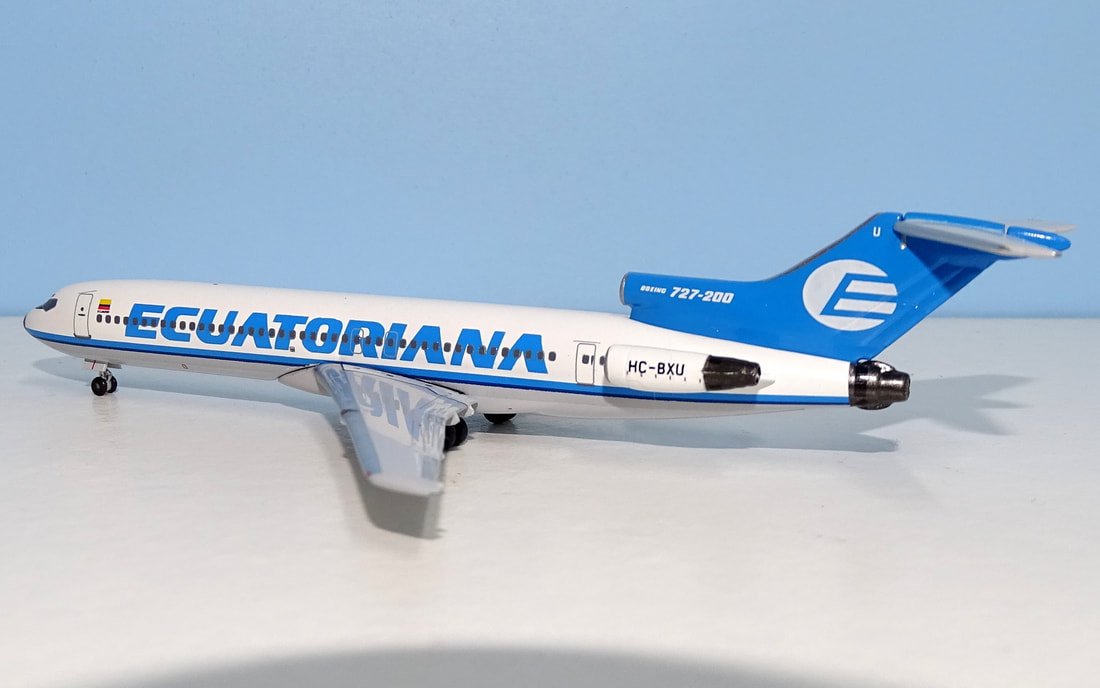
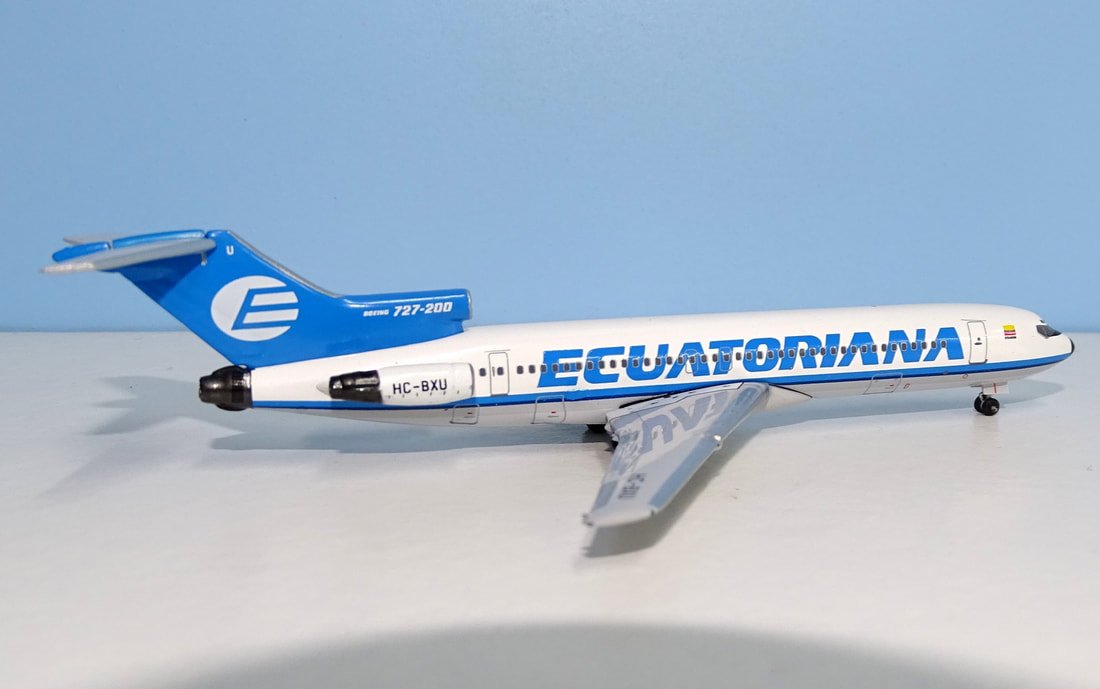
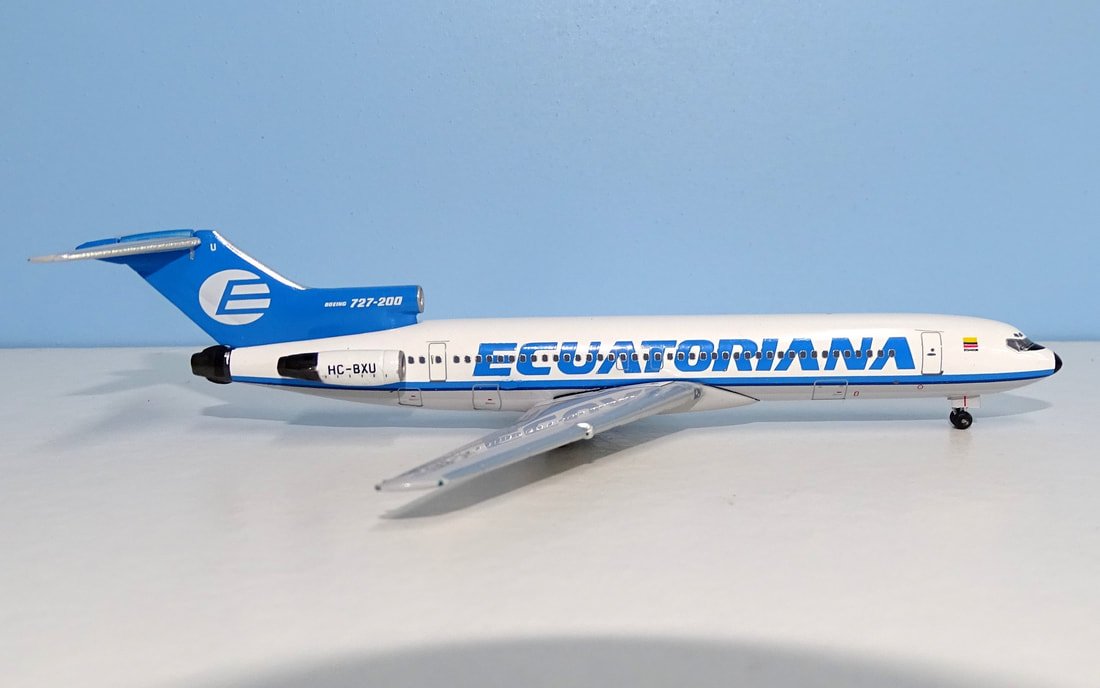
Ecuatoriana Boeing 727-200Adv HC-BXU Aeroclassics 1:400 Scale
Ecuatoriana Boeing 727-200Adv HC-BXU Aeroclassics 1:400 Scale
Ecuatoriana Boeing 727-200Adv HC-BXU Aeroclassics 1:400 Scale
Ecuatoriana Boeing 727-200Adv HC-BXU Aeroclassics 1:400 Scale
Ecuatoriana Boeing 727-200Adv HC-BXU Aeroclassics 1:400 Scale
Ecuatoriana Boeing 727-200Adv HC-BXU Aeroclassics 1:400 Scale
Ecuatoriana Boeing 727-200Adv HC-BXU Aeroclassics 1:400 Scale
Already by 1998 VASP had been overtaken in the domestic market by TAM whilst its owned fleet was old and its newer aircraft subject to leasing agreements in US dollars. The devaluation of the Brasilian Real in 1999 was a major blow and VASP was forced to suspend all international operations. VASP desperately retrenched to stay in business which meant cutting loose its loss making subsidiary companies. In November in an attempt to force Ecuatoriana to pay overdue management fees VASP took back the A310, which was its primary source of revenue. Ecuatoriana stopped operations with its own aircraft in December 2000.
In November 2000 the Ecuadorian government signed a deal with Lan Chile to takeover Ecuatoriana’s management and VASP agreed to sell its share. By this point there wasn’t much left of Ecuatoriana as all its aircraft were repossessed aside from the DC-10. Operations continued using Lan Chile’s own 767s and the DC-10 was broken up at Quito in 2004.
Lan Chile began to operate for Ecuatoriana on Ecuatoriana’s old routes and started its own Ecuadorian subsidiary Lan Ecuador. Without backers or its own aircraft there was no way back for Ecuatoriana, though its a little unclear exactly when the company ceased existing legally. It seems Lan sold its share of the airline to Lloyd Aereo Boliviano, but LAB’s own poor shape meant this achieved little. It seems Ecuatoriana officially ceased to exist in 2006, but it hadn’t flown its own metal since December 2000.