Special airline colours are nowadays ten a penny and there are few major airlines without some form of promotional livery or retro-scheme. This wasn’t the case during the 1990s, although Japanese airlines have always been at the vanguard of the trend. One of the first of the special schemes from Japan was typically cartoonish but unusually was worn by a McDonnell Douglas DC-10 and one in the colours of Japan’s 3rd airline – Japan Air System.
JAS embraced the concept of special schemes. It operated the A300-600R JA8562 that wore the advertising slogan of the drink brand Pocari Sweat, a range of Kurosawa designed schemes on its new McDonnell Douglas MD-90s and a competition designed rainbow scheme on its 777s. Perhaps less well known is the special scheme worn briefly by one of its pair of McDonnell Douglas DC-10-30s before any of the other special liveries.
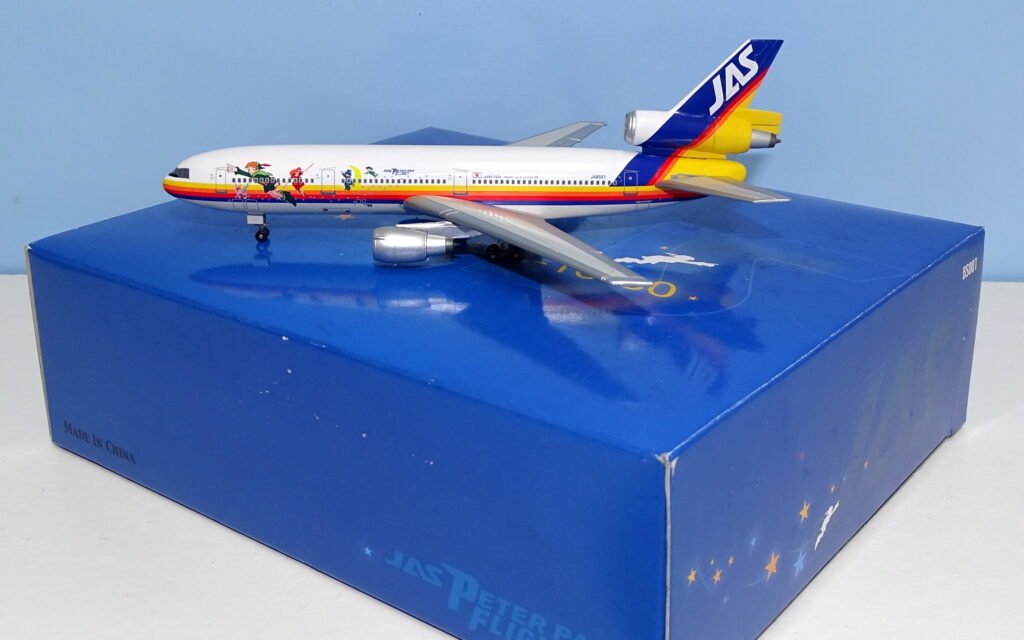
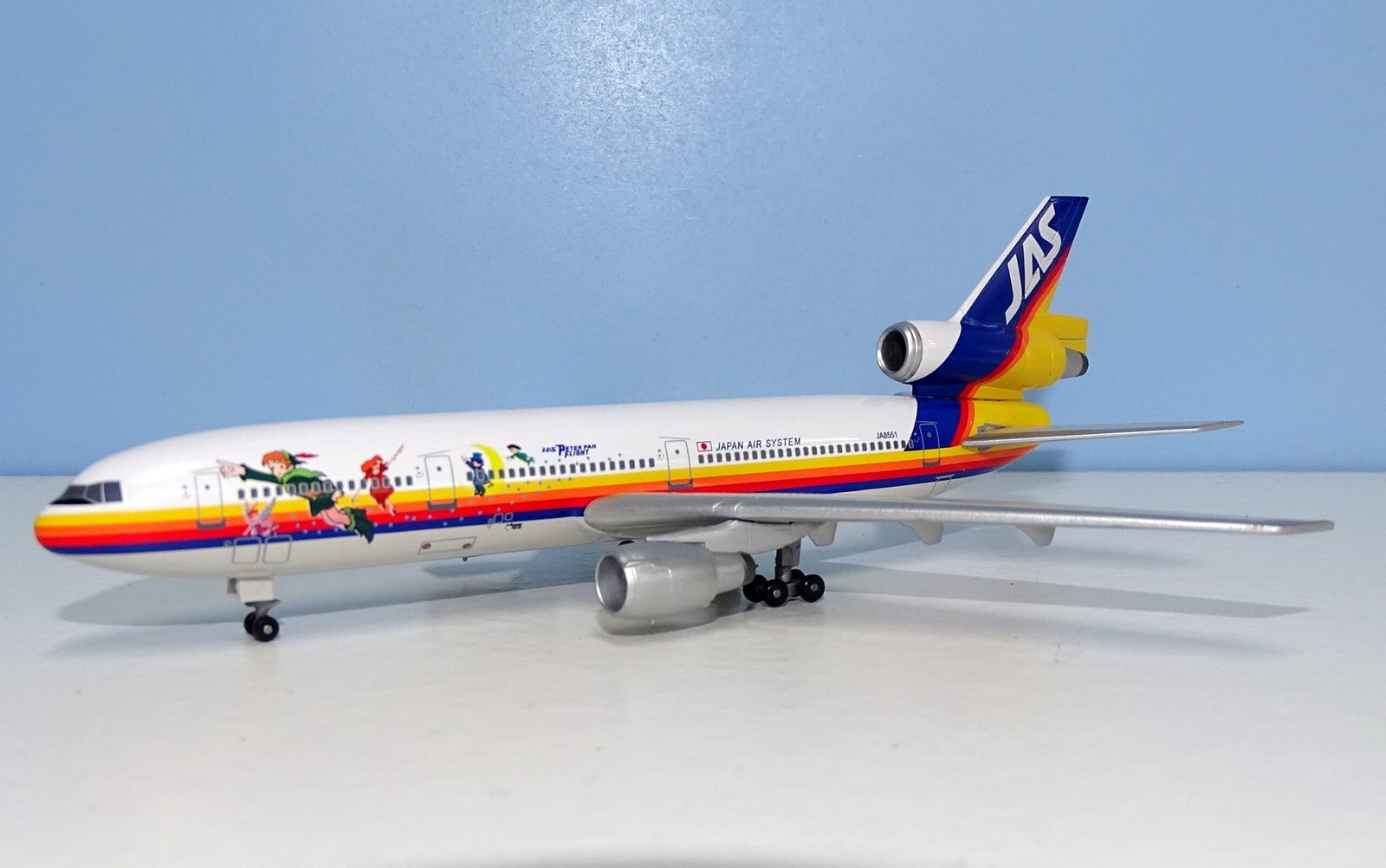
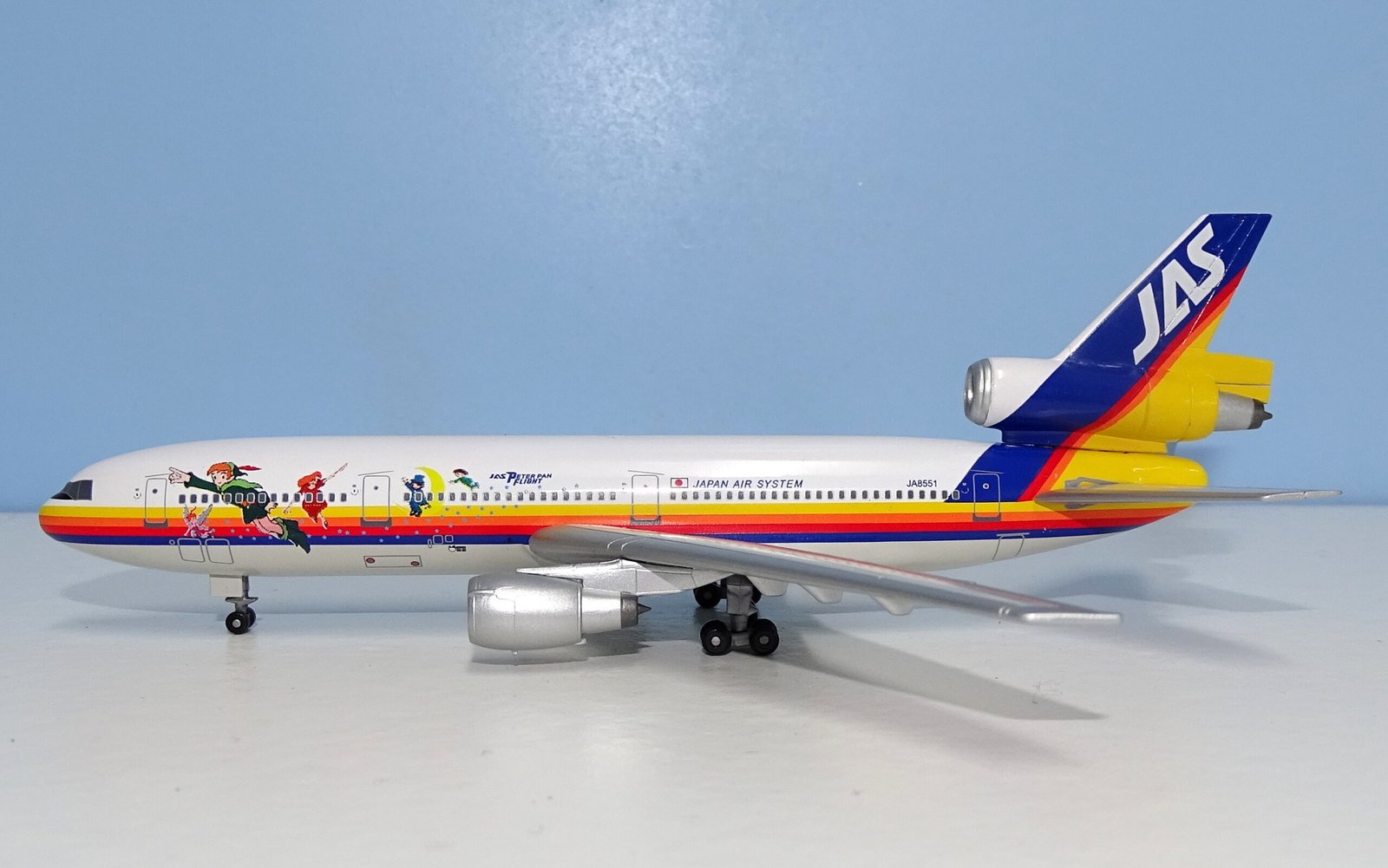
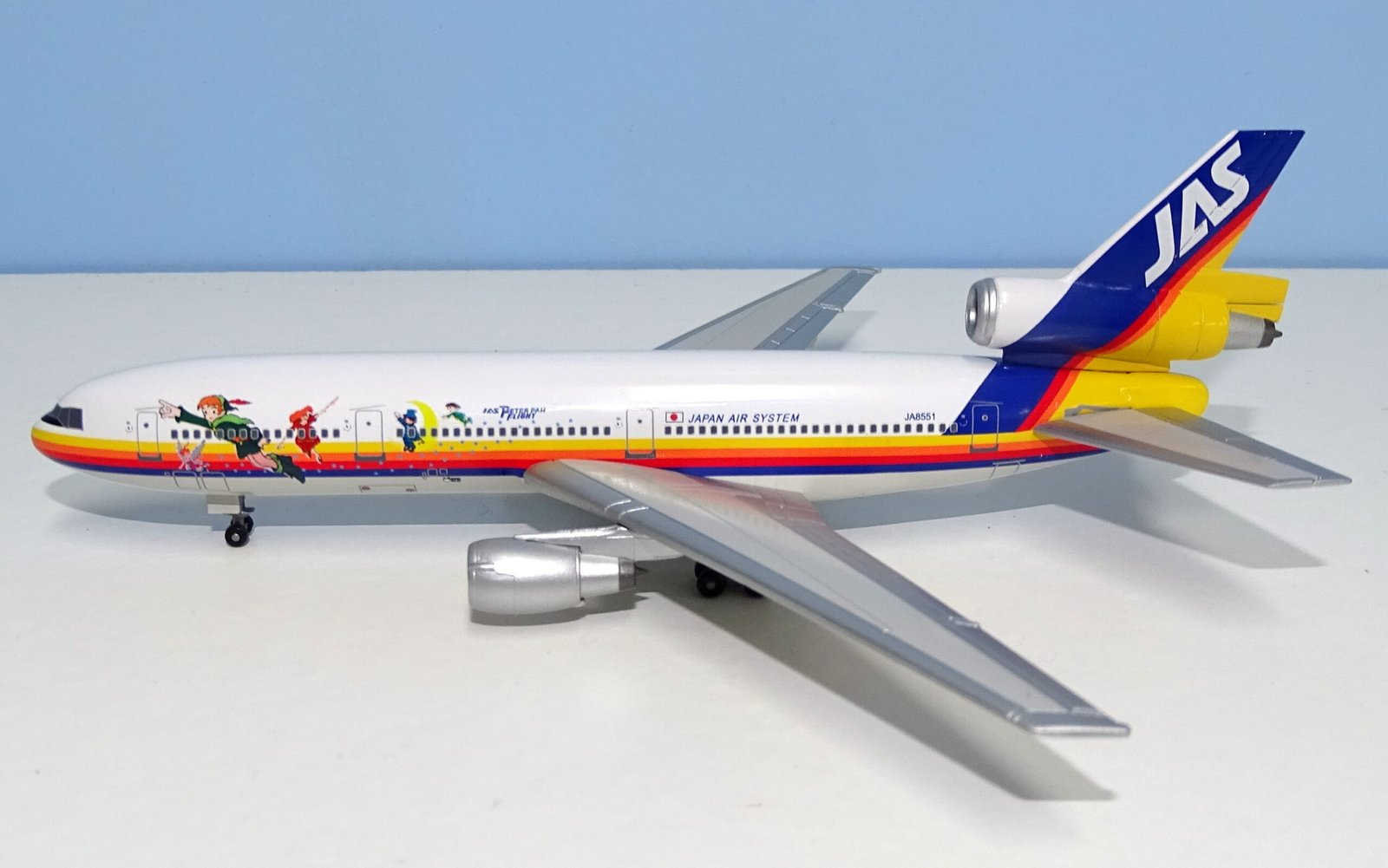
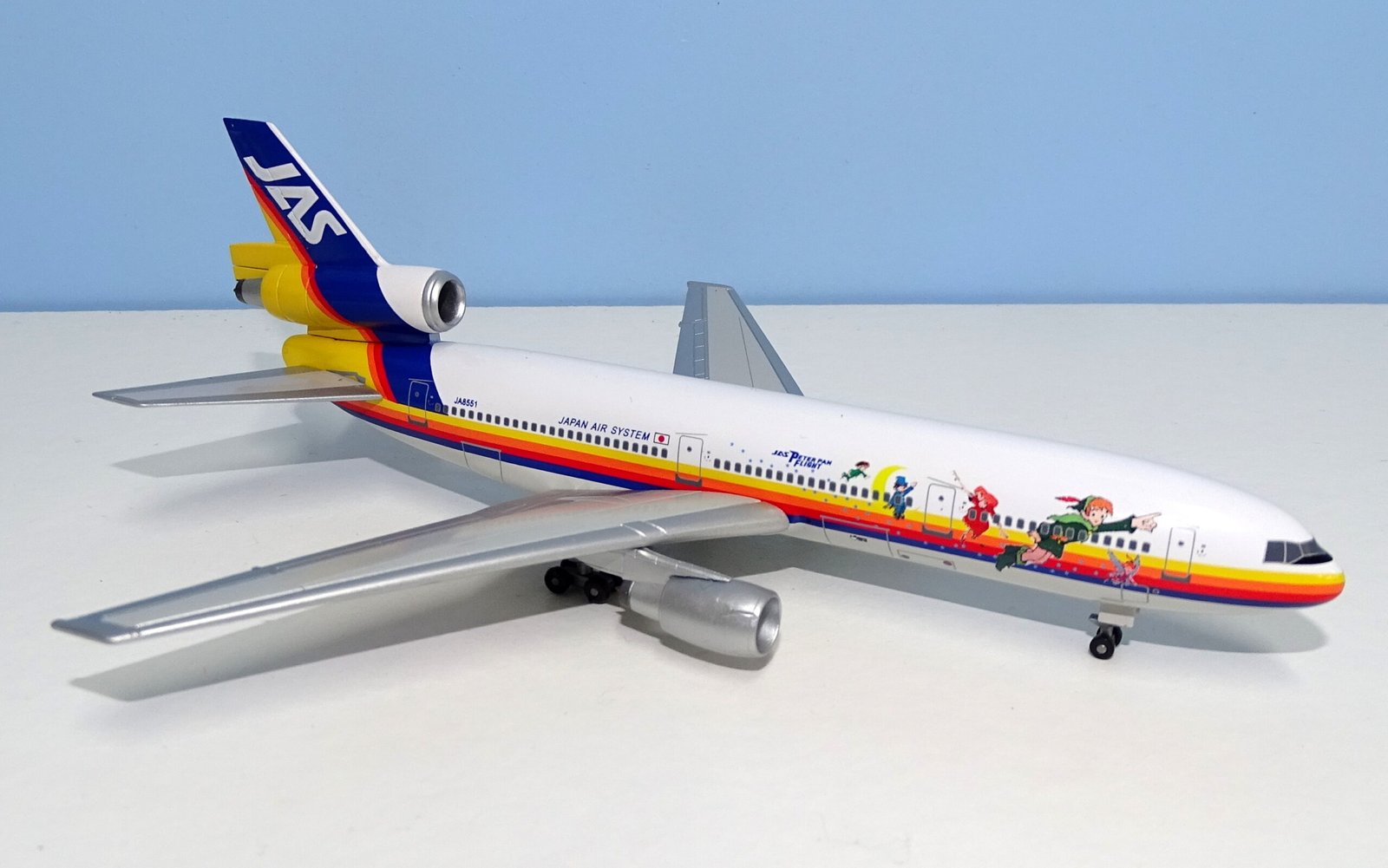
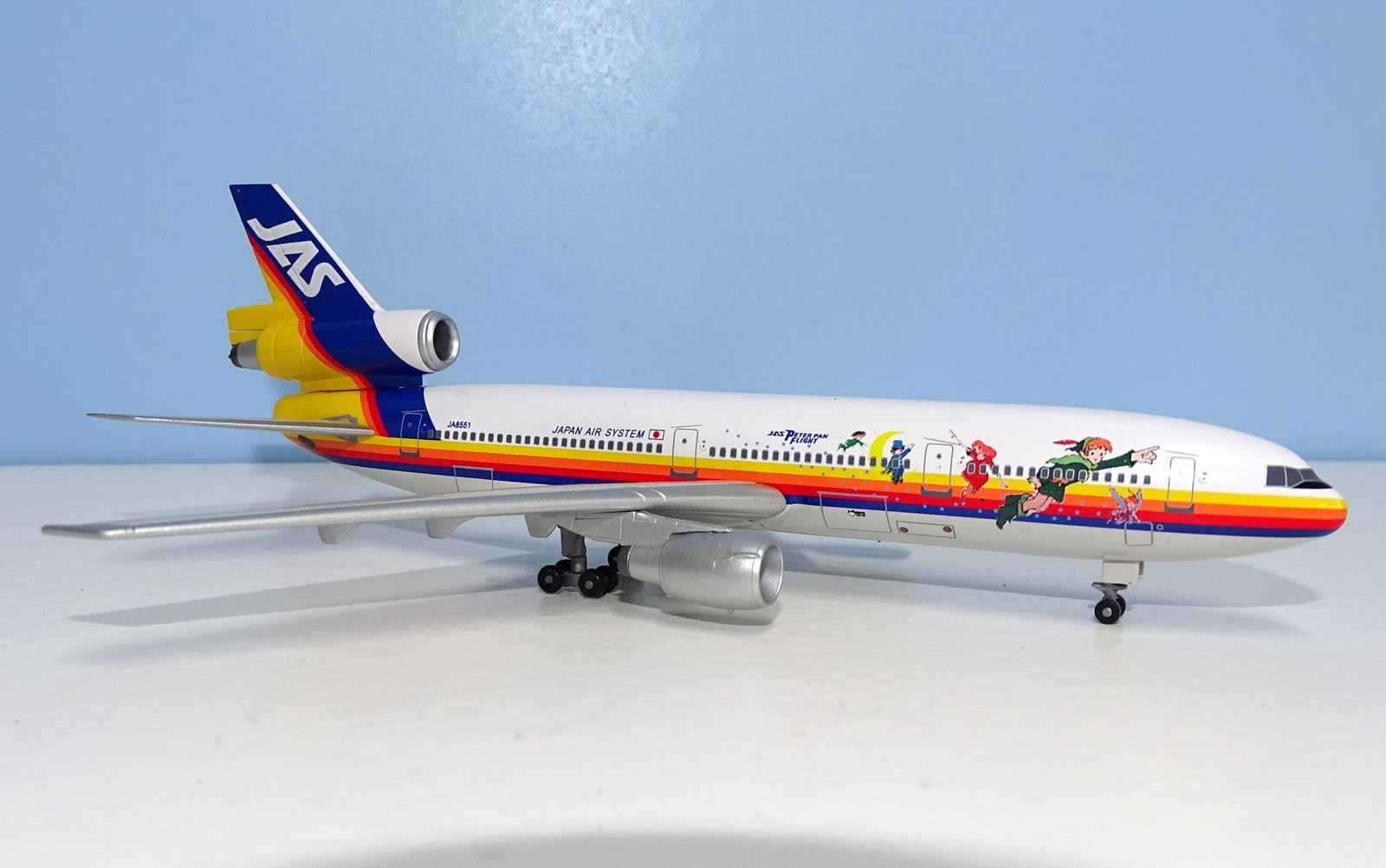
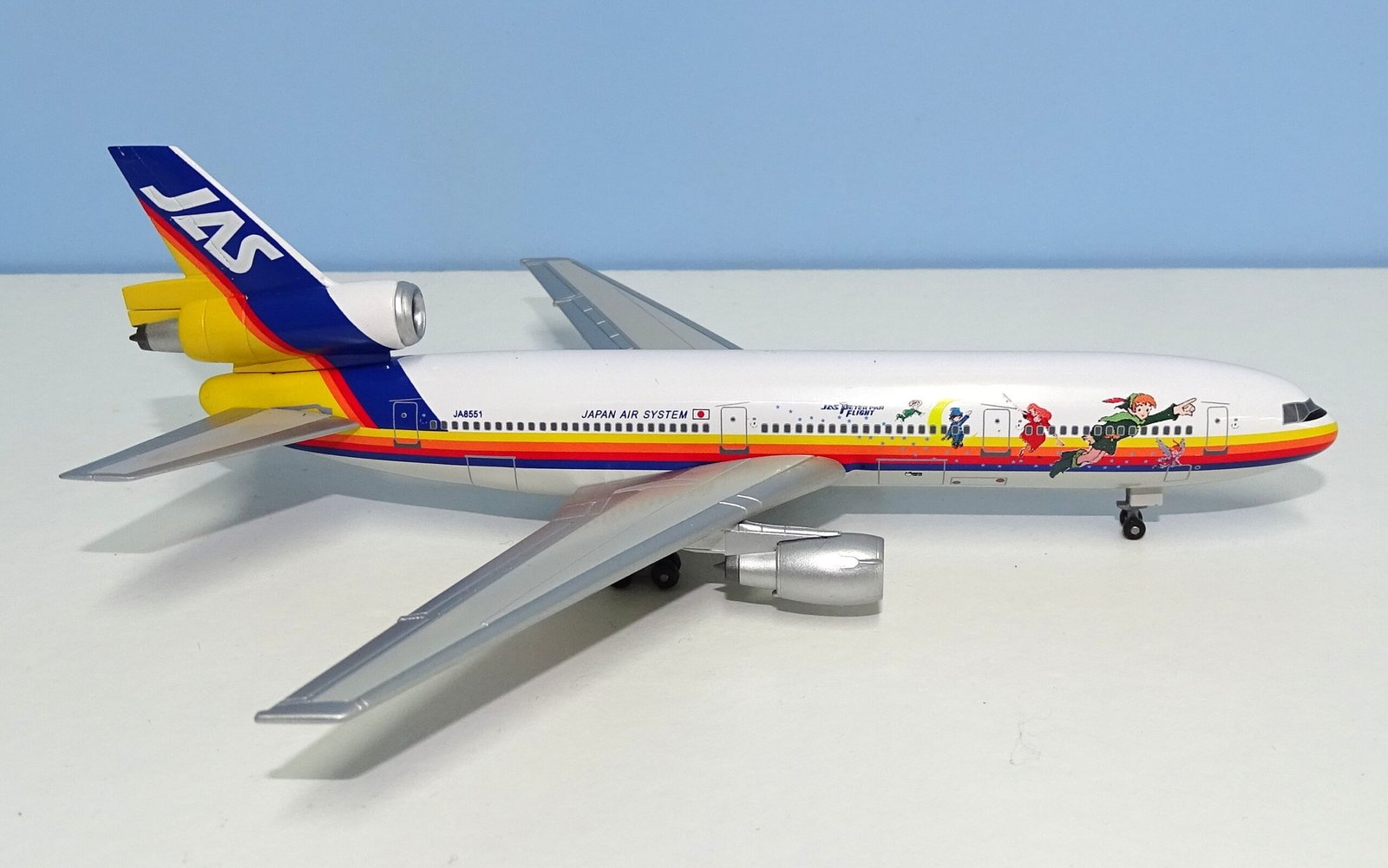
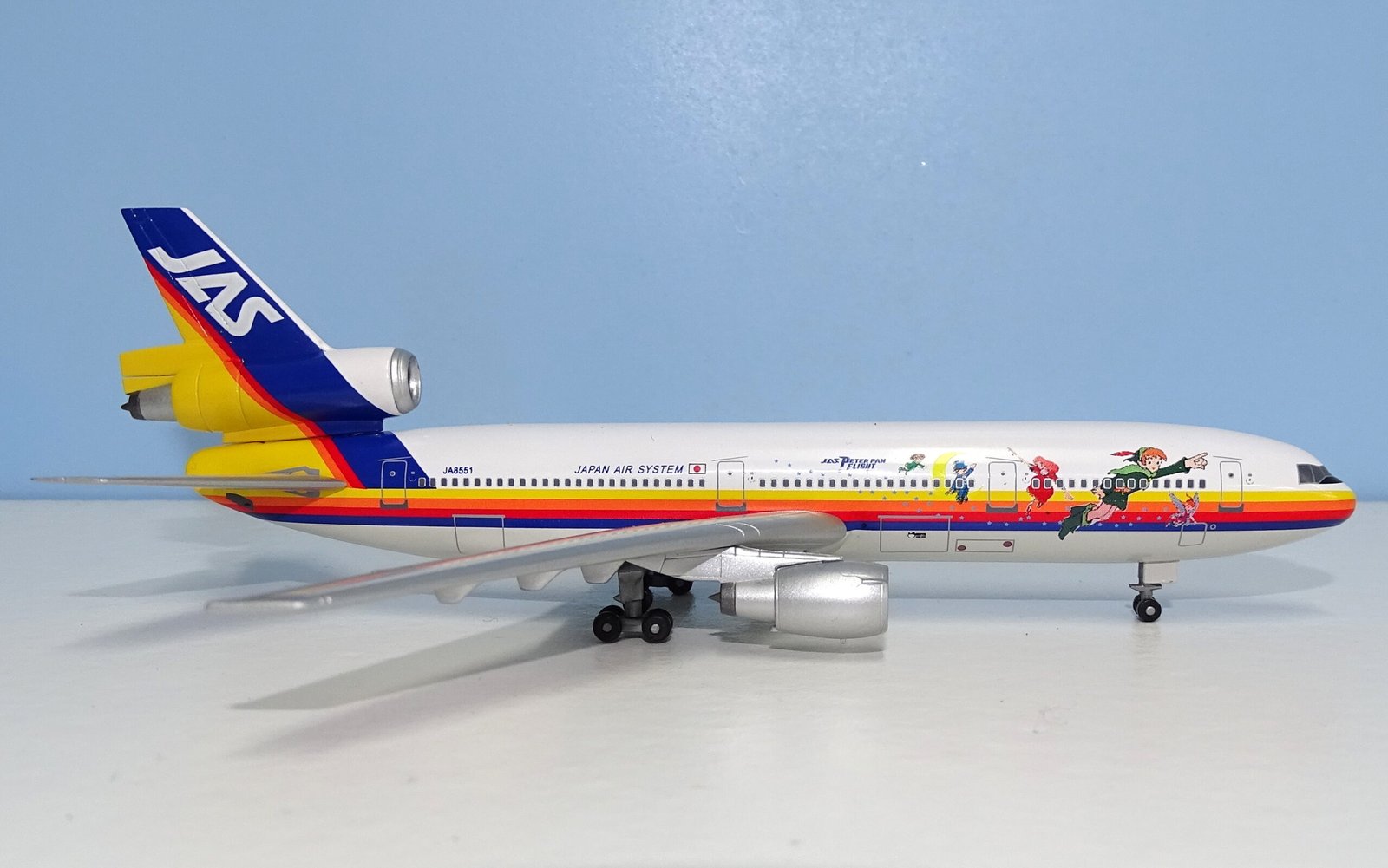
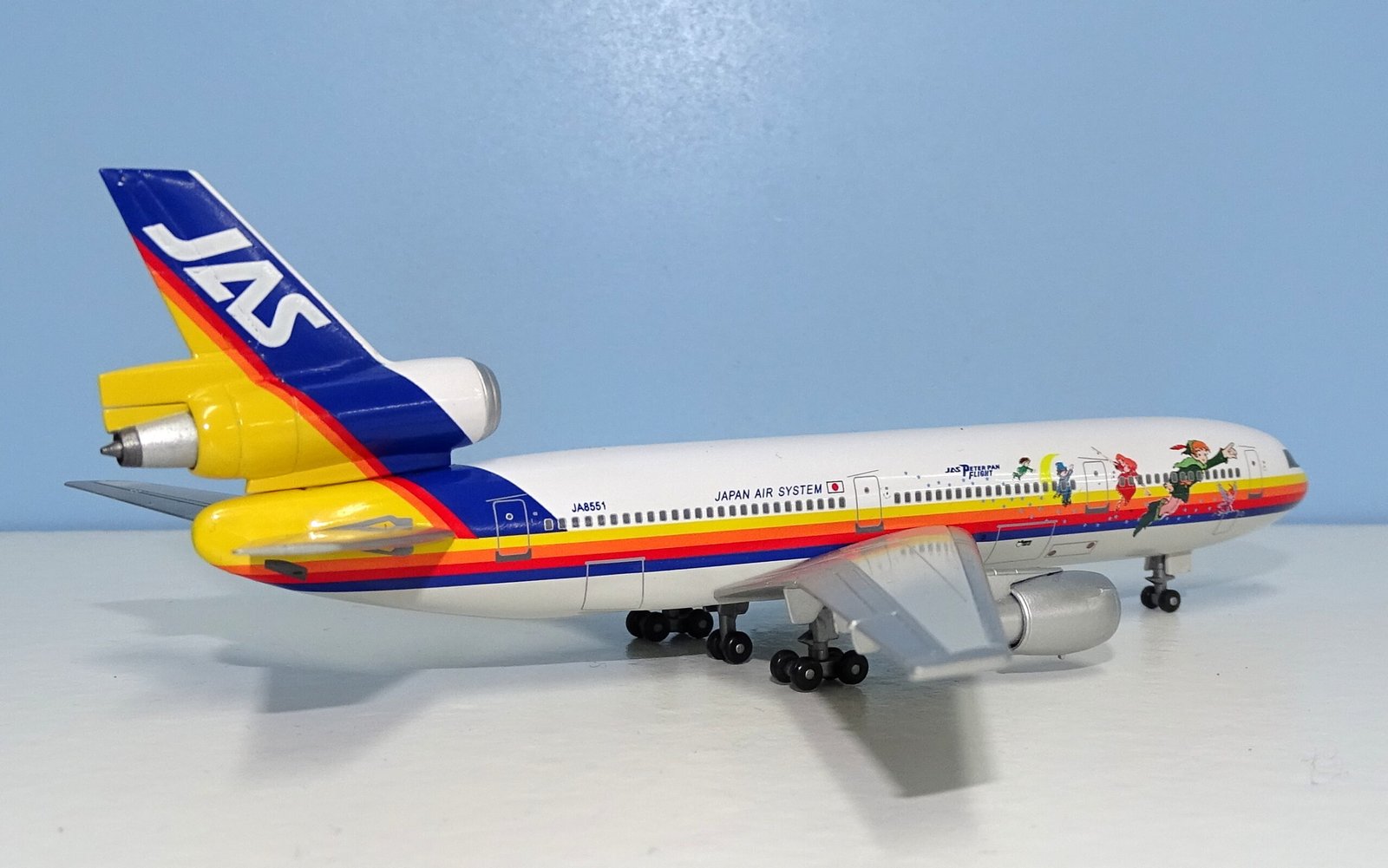
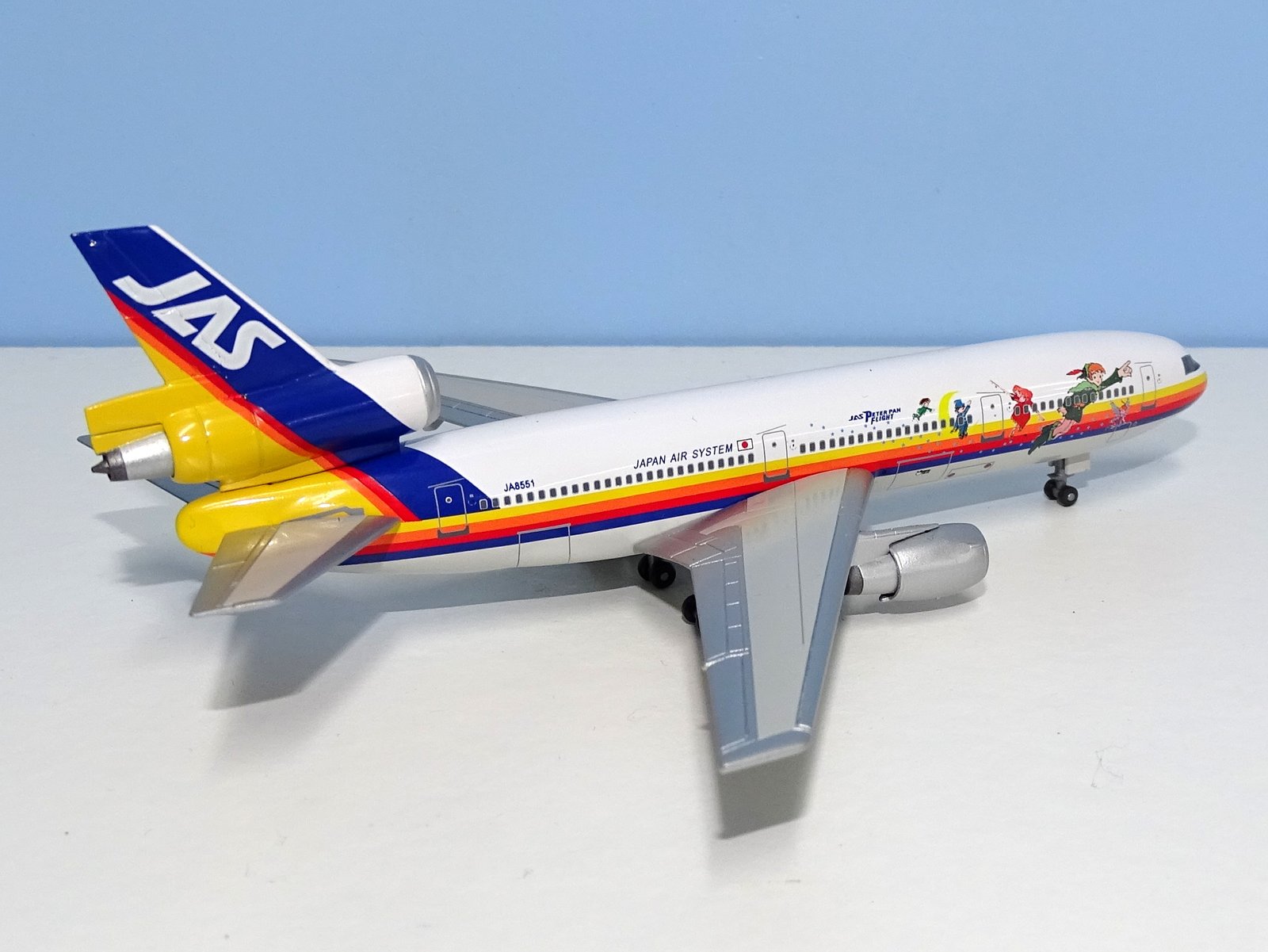
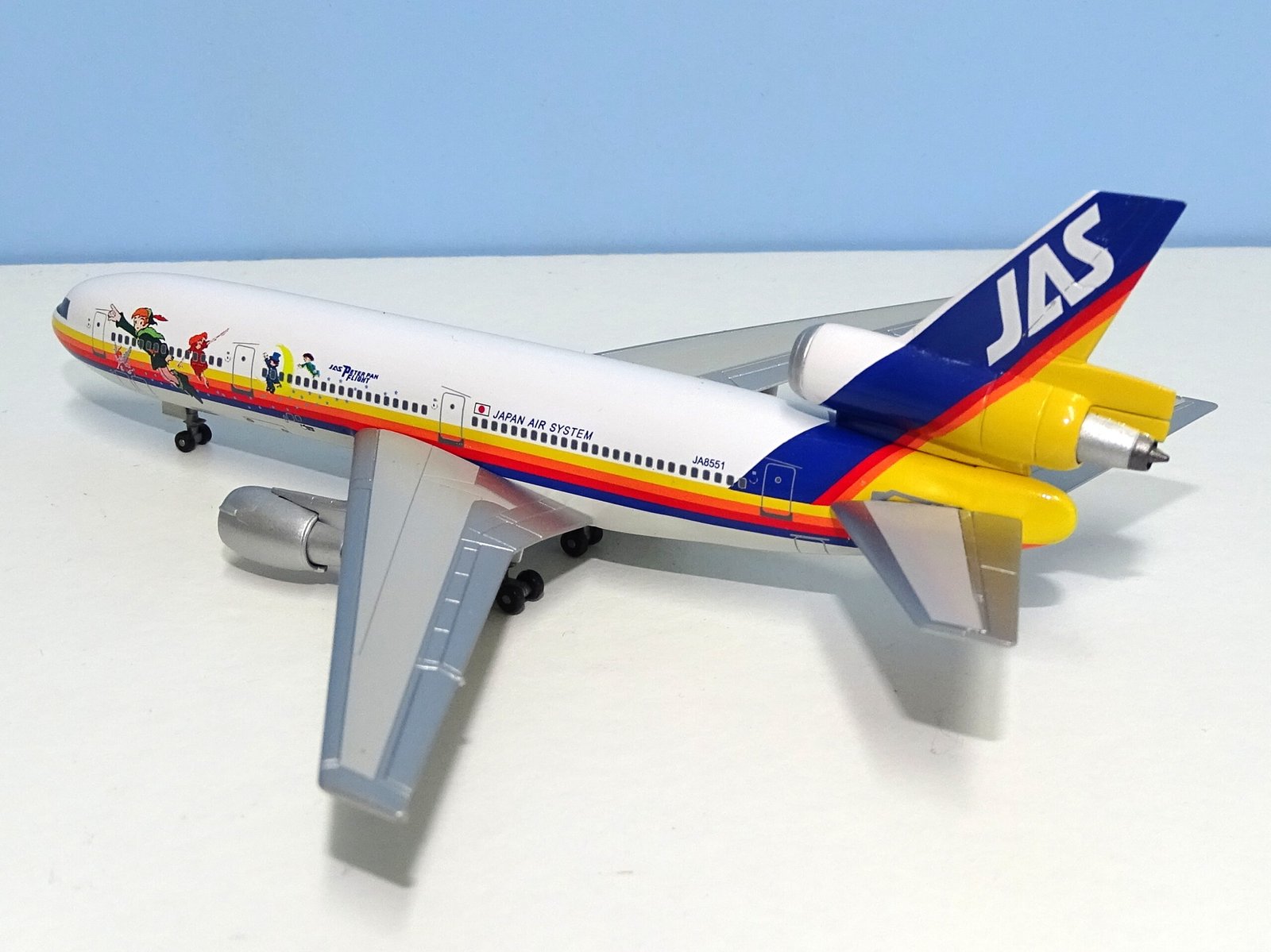
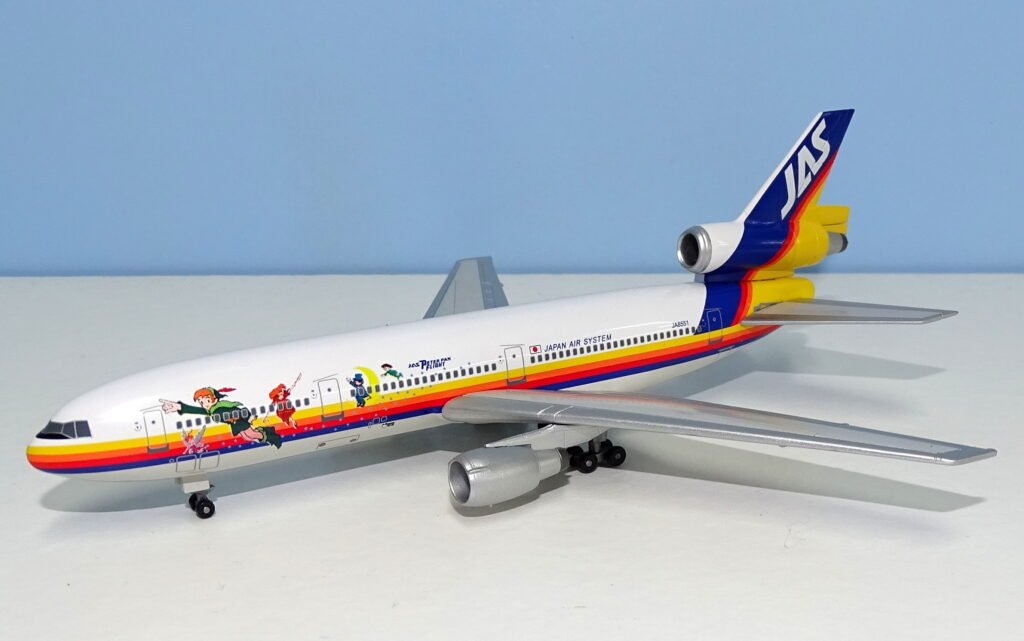
Japan Air System McDonnell Douglas DC-10-30 JA8551 Big Shooter (Dragon Wings) 1:400 Scale Model Airliner
The DC-10 has not often been chosen for special colours as airlines tend to use their newer fleet members for this sort of privilege, although there have been notable exceptions – such as the WWF AOM scheme and the split Northwest / KLM colours. At the time Japan Air System’s pair of DC-10s were actually relatively new as they were only delivered to JAS, fresh from the factory, in March and July 1988. In fact, only a pair of DC-10s came off the line after the Japanese pair.
Japan Air System had been known as Toa Domestic Airlines prior to April 1988 and the DC-10s were acquired as part of its expansion into international routes following the deregulation of the Japanese market. The first international service was flown on July 1 linking Tokyo – Seoul five times weekly with two-class Airbus A300s.
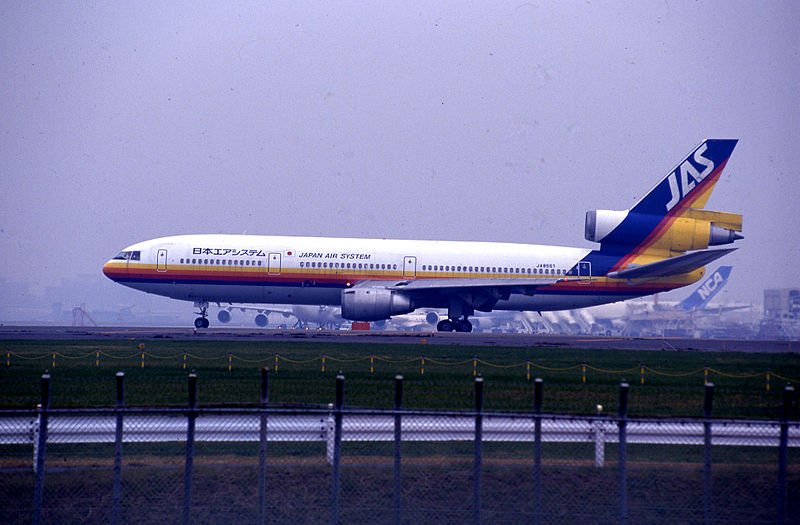
Although the first DC-10 was actually delivered prior to the name change as far as I’m aware it never carried TDA titles. The DC-10s were delivered in a single class 295 seat configuration highlighting their primary usage on leisure routes. The first scheduled service was operated between Tokyo and Okinawa on April 1.
contri from Yonezawa-Shi, Yamagata, Japan / CC BY-SA (https://creativecommons.org/licenses/by-sa/2.0)
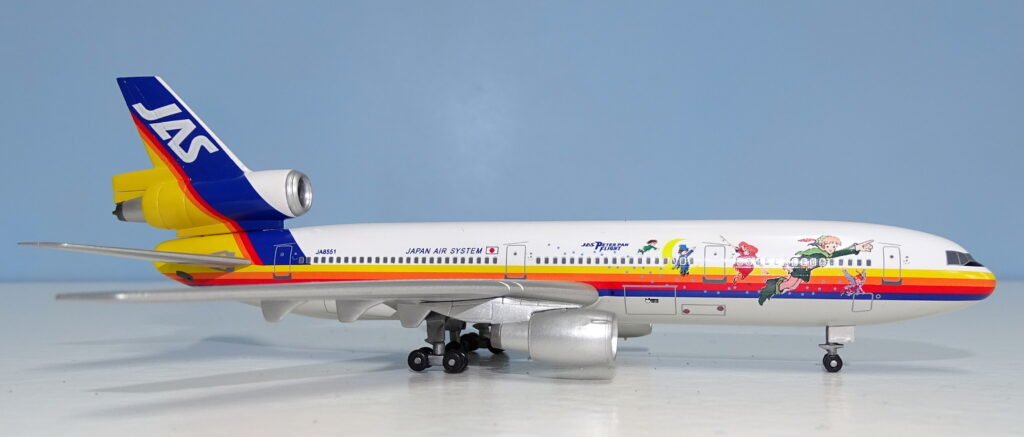
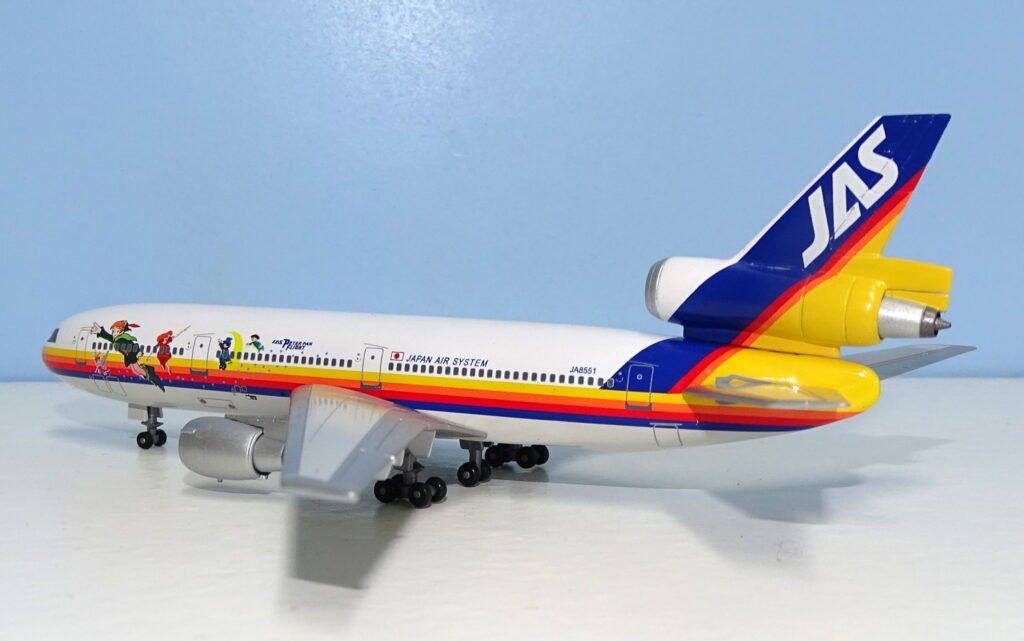
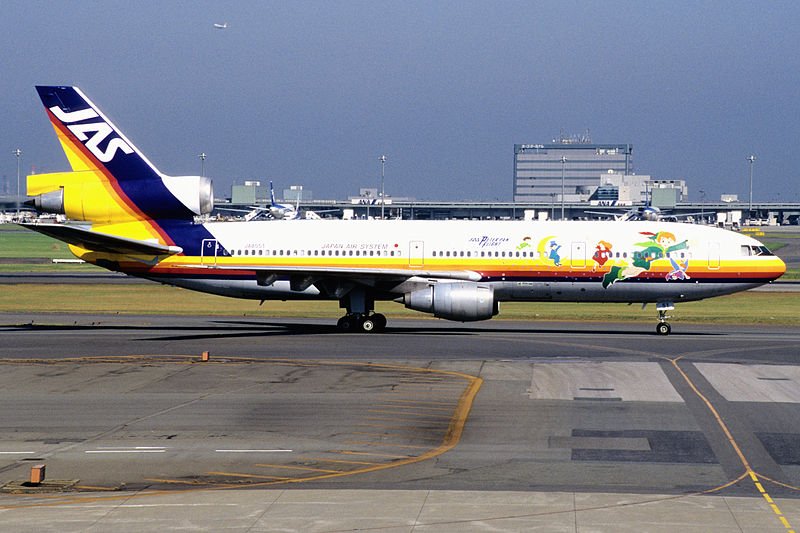
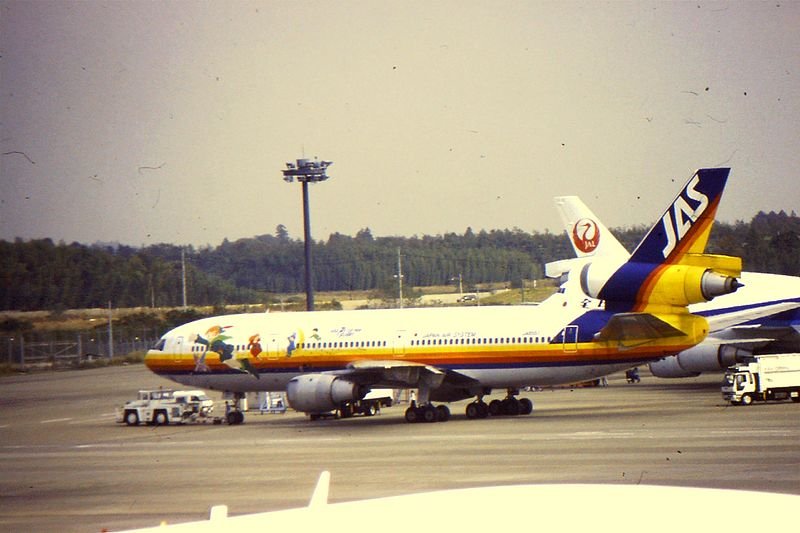
In June 1991 service was launched from Tokyo to Honolulu using the Tens. They could also be seen on the Tokyo – Seoul service and later on the Osaka Kansai – Guangzhou route. It wasn’t until August 29, 1995 that one of the pair was unveiled at Tokyo-Haneda wearing its special scheme. The aircraft chosen was JA8551, the second DC-10, and it was adorned with Peter Pan colours as the ‘JAS Peter Pan Flight’.
contri from Yonezawa-Shi, Yamagata, Japan / CC BY-SA (https://creativecommons.org/licenses/by-sa/2.0)
The aircraft wore typically Japanese style cartoon versions of Peter Pan, Tinker Bell and the Darling children with John Darling sitting in a crescent moon. Although the images bear a passing resemblance to the Disney version of the characters, they are distinctly different. The extra characters were worn over the top of the existing JAS ‘Airbus House Colours’ style livery.
G B_NZ / CC BY-SA (https://creativecommons.org/licenses/by-sa/2.0)
During the unveiling of the livery two families were selected from parents and children who had attended the JAS summer aviation school to apply the finishing touches to the livery, in the form of additional blue star stickers.
Japan Air System McDonnell Douglas DC-10-30 JA8551 Big Shooter (Dragon Wings) 1:400 Scale Model Airliner
Japan Air System McDonnell Douglas DC-10-30 JA8551 Big Shooter (Dragon Wings) 1:400 Scale Model Airliner
Japan Air System McDonnell Douglas DC-10-30 JA8551 Big Shooter (Dragon Wings) 1:400 Scale Model Airliner
Japan Air System McDonnell Douglas DC-10-30 JA8551 Big Shooter (Dragon Wings) 1:400 Scale Model Airliner
Japan Air System McDonnell Douglas DC-10-30 JA8551 Big Shooter (Dragon Wings) 1:400 Scale Model Airliner
Japan Air System McDonnell Douglas DC-10-30 JA8551 Big Shooter (Dragon Wings) 1:400 Scale Model Airliner
Japan Air System McDonnell Douglas DC-10-30 JA8551 Big Shooter (Dragon Wings) 1:400 Scale Model Airliner
Japan Air System McDonnell Douglas DC-10-30 JA8551 Big Shooter (Dragon Wings) 1:400 Scale Model Airliner
Japan Air System McDonnell Douglas DC-10-30 JA8551 Big Shooter (Dragon Wings) 1:400 Scale Model Airliner
Japan Air System McDonnell Douglas DC-10-30 JA8551 Big Shooter (Dragon Wings) 1:400 Scale Model Airliner
The inspiration behind the scheme was an international charter flight programme jointly operated by JAS and the Kinki Nippon Tourist Co Ltd, the 2nd largest travel agency in Japan at the time. The flights supported fund raising for the Peter Pan’s Children’s Fund Japan (a subsidiary of the Great Ormond Street foundation from the UK). Donations were collected at check-in counters and JAS offices to assist children with serious illnesses.
The first Peter Pan flight took place on September 2, 1995 between Sendai and Honolulu with 21 flights planned through to March 1996. Mostly these operated from regional Japanese cities such as Hiroshima, Miyazaki and Nagoya to Honolulu, Brisbane, Bali, Sydney and Wuhan. During their downtime JA8551 operated on standard scheduled routes.
JetPix [GFDL 1.2 (http://www.gnu.org/licenses/old-licenses/fdl-1.2.html) or GFDL 1.2 (http://www.gnu.org/licenses/old-licenses/fdl-1.2.html)]
It appears the Peter Pan stickers were removed shortly after March and 9 months later JAS accepted its first Boeing 777-200, which eclipsed the DC-10s as fleet flagship.
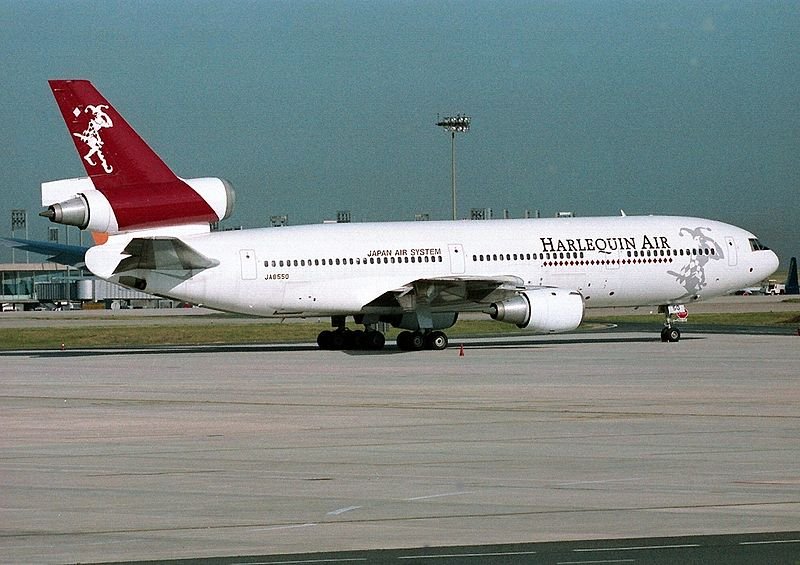
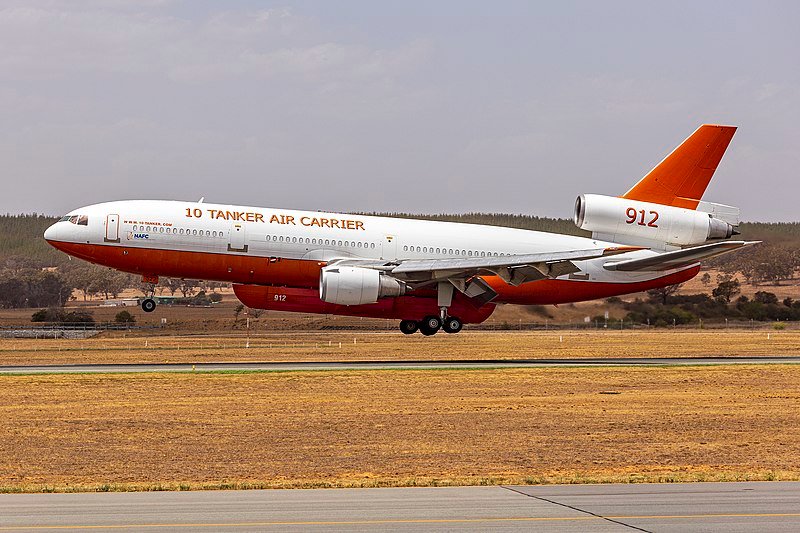
JA8551’s sister ship, JA8550, was leased to the JAS subsidiary Harlequin Air in December 1997 but JA8551 continued in service until April 20, 2000. Both aircraft would subsequently join Northwest and then in 2006 Omni Air International. JA8550 remains in service now converted to a water bomber as N522AX with 10 Tanker Air Carrier.
Bidgee / CC BY-SA 3.0 AU (https://creativecommons.org/licenses/by-sa/3.0/au/deed.en)
Japan Air System’s DC-10s were an interesting stopgap that allowed JAS to expand into a major player in the Japanese marketplace and the Peter Pan Flight series was a worthwhile, if poorly known, part of their service history.
References
1996. Ohmoto, A. Peter Pan Flies On the Airways. Airways Vol 2, No 6 Japan Air System. Airplane Issue 61 History of JAS. Japan Airlines.com JAS DC-10s. RZJets.net