TAESA (Transportes Aéreos Ejecutivos) Lineas Aéreas was begun in April 1988 operating executive jets and began scheduled passenger operations in 1989. It was the brainchild of the then 36 year old pilot Alberto Abed and the powerful Mexican industrialist Carlos Hank Rhon as a vehicle to create a competitor to the duopoly of Mexicana and Aeromexico in the newly deregulated Mexican market. It grew quickly but the 90s would prove a rocky time for airlines in Mexico.
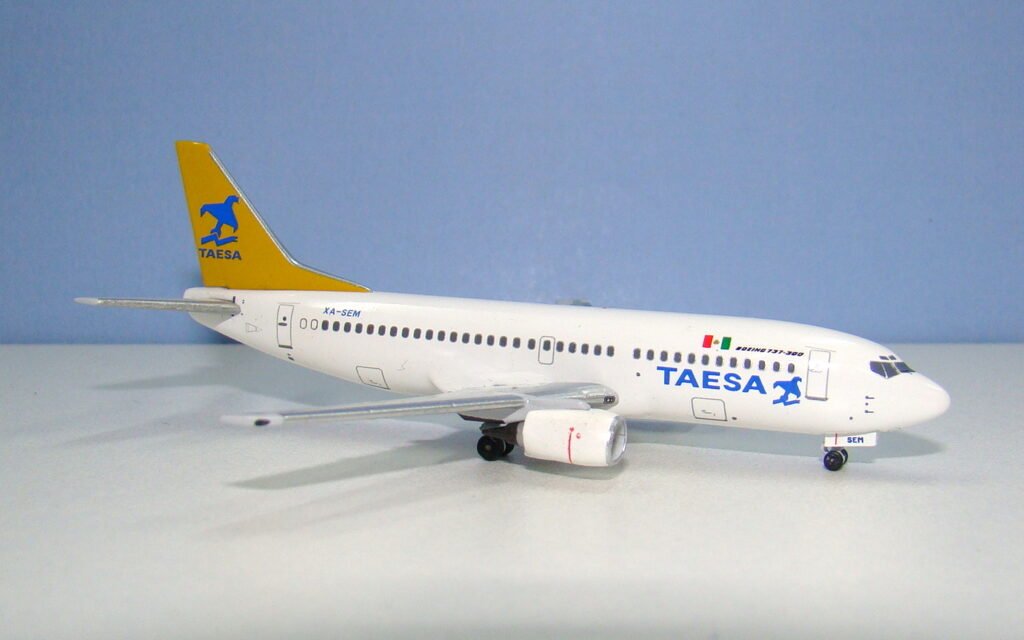
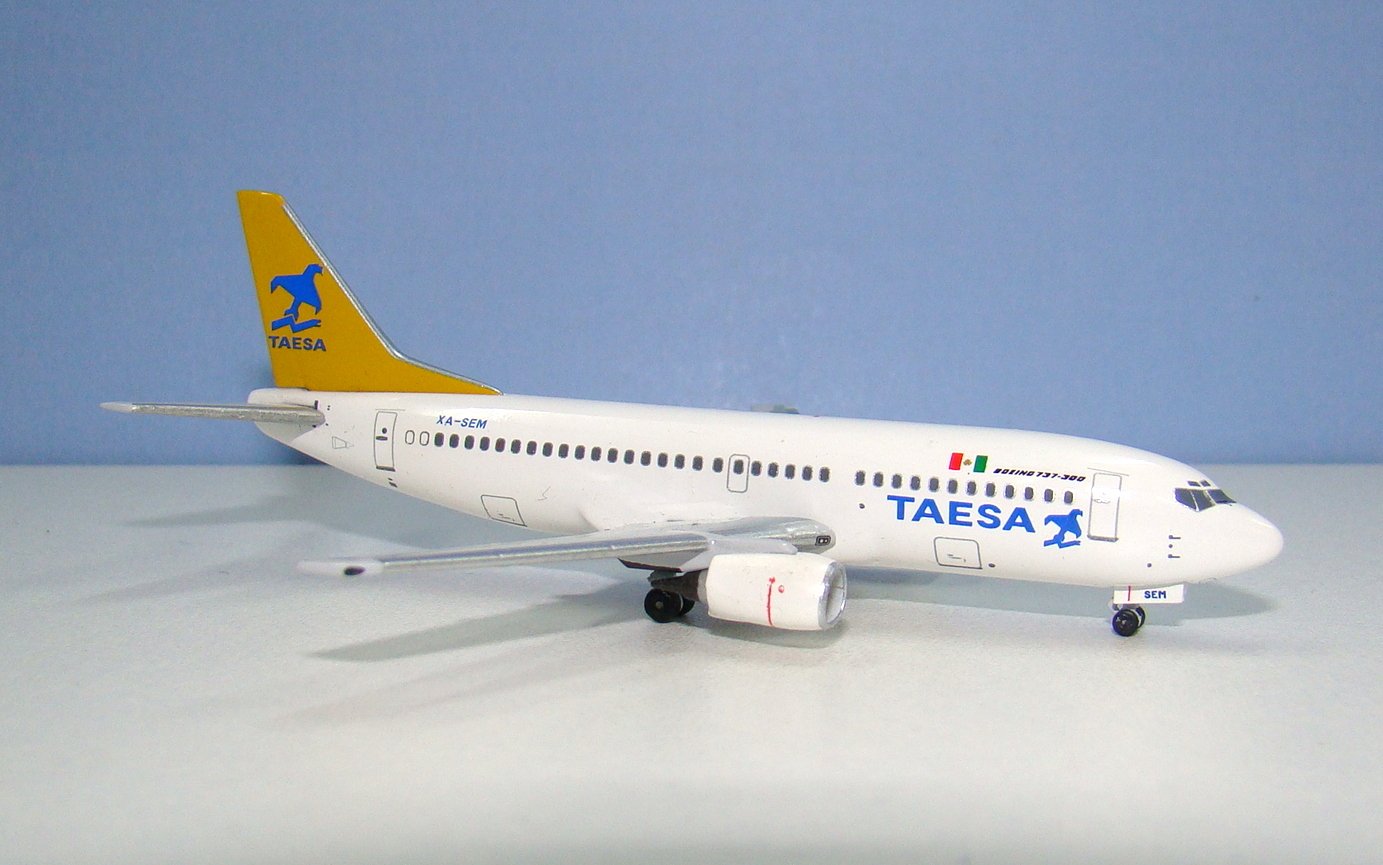
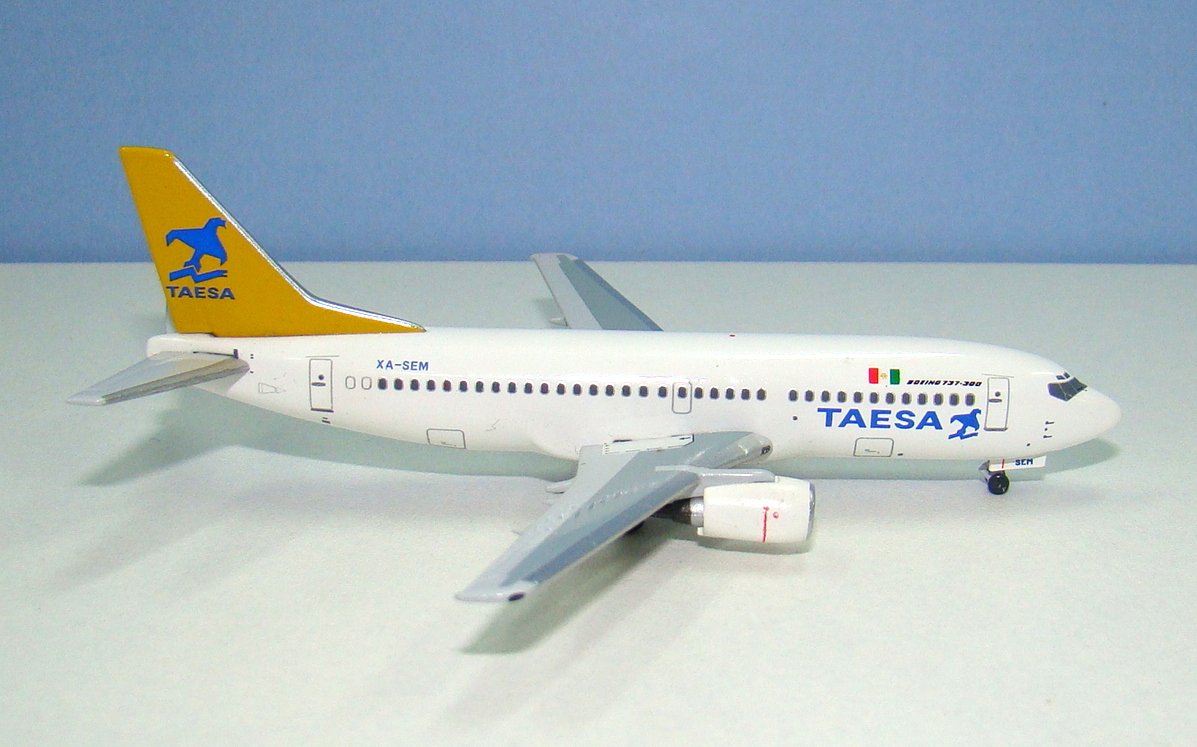
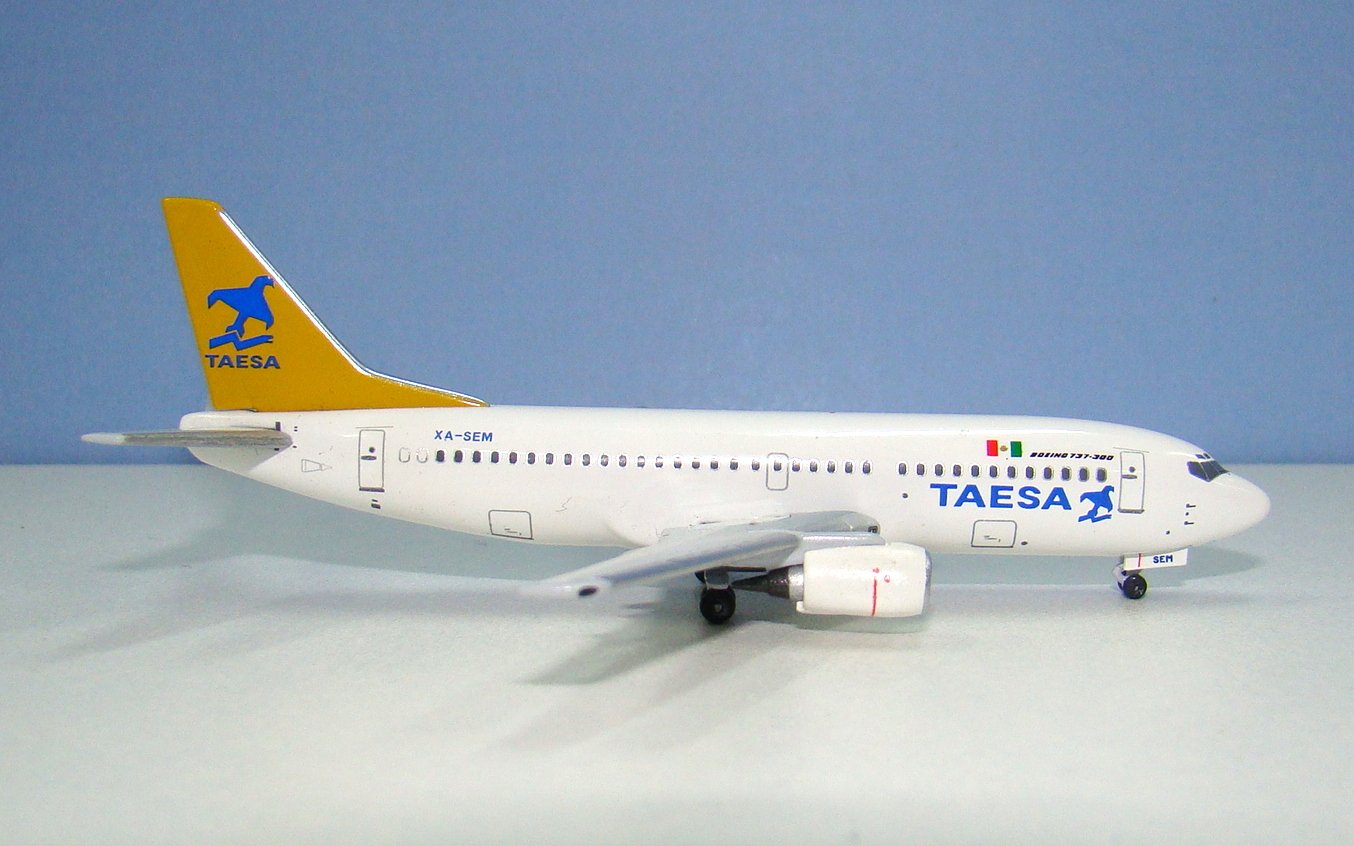
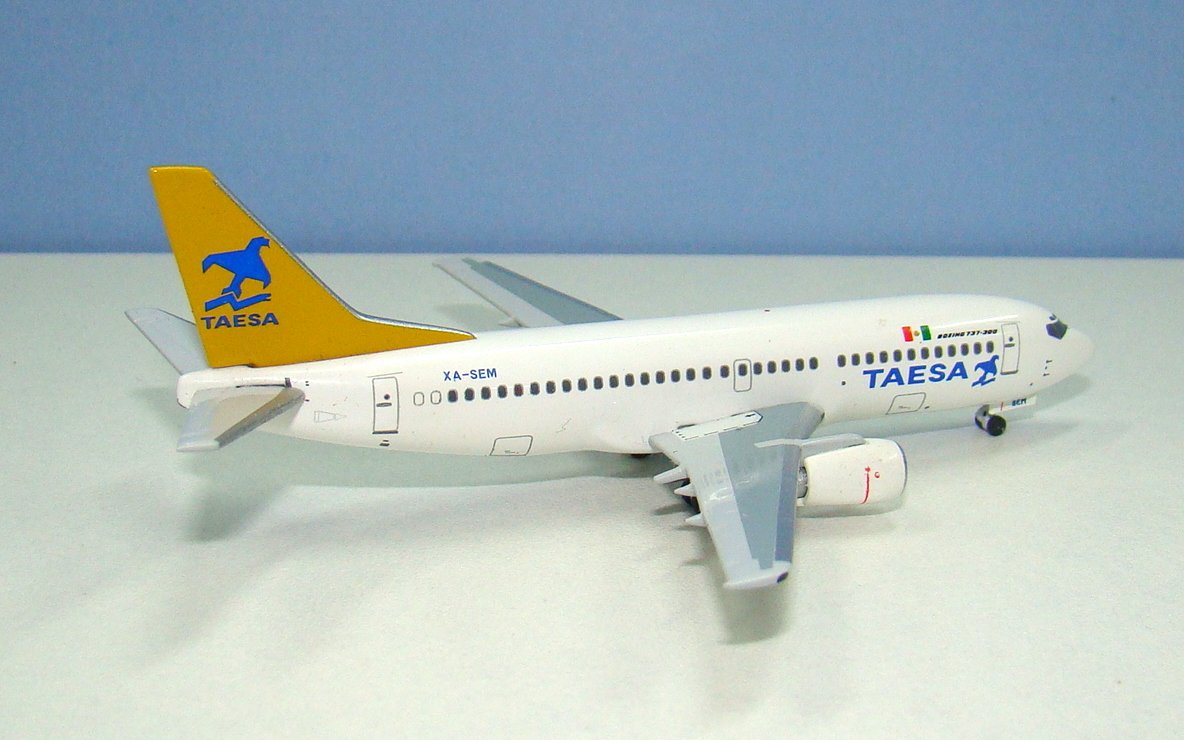
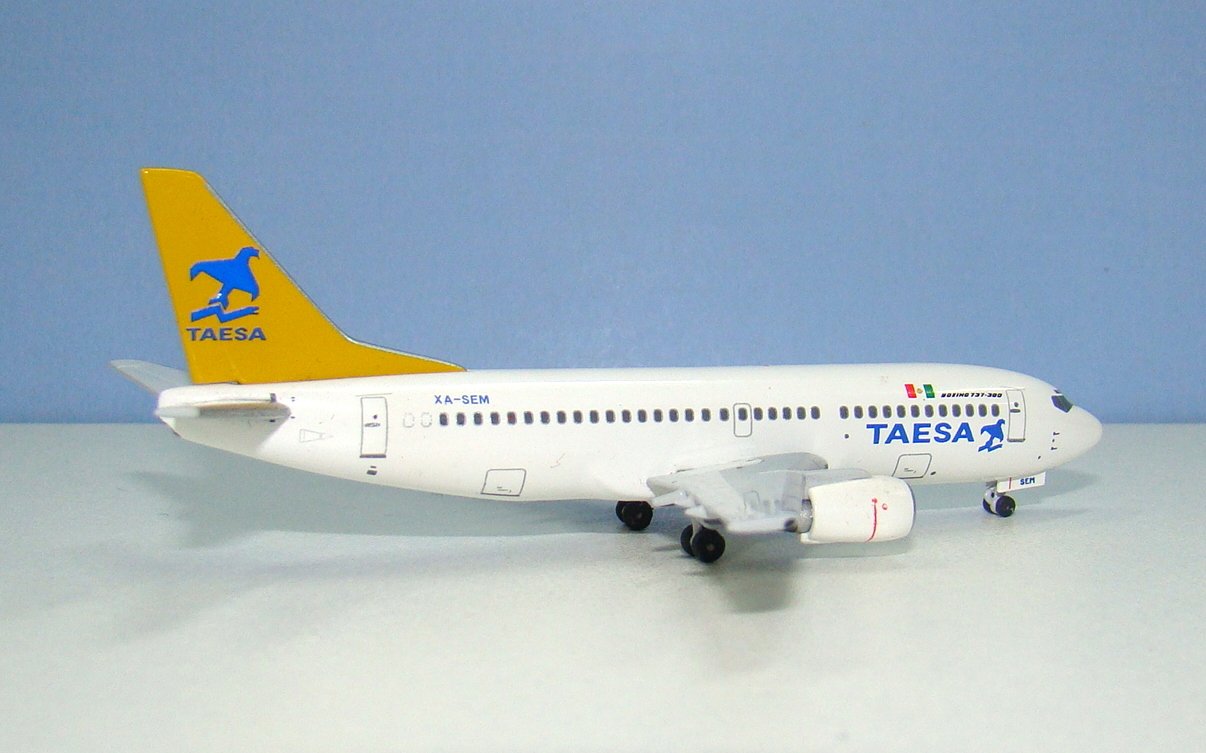
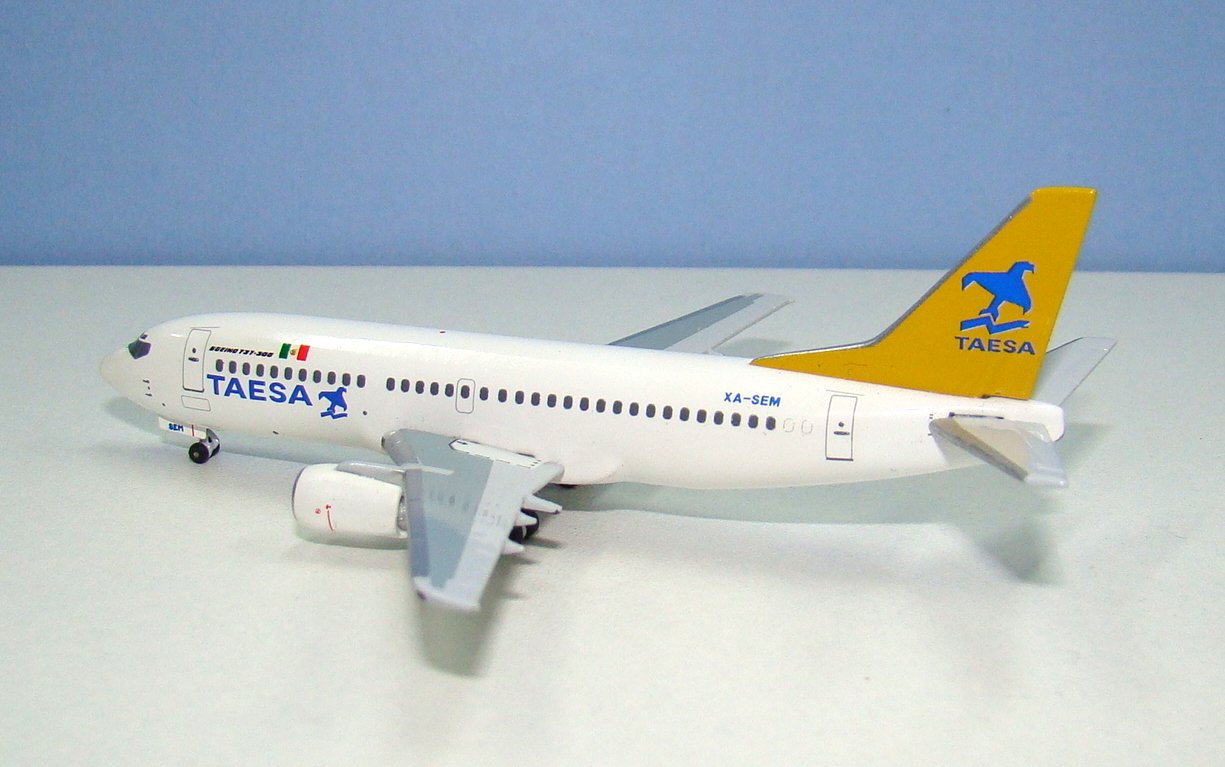
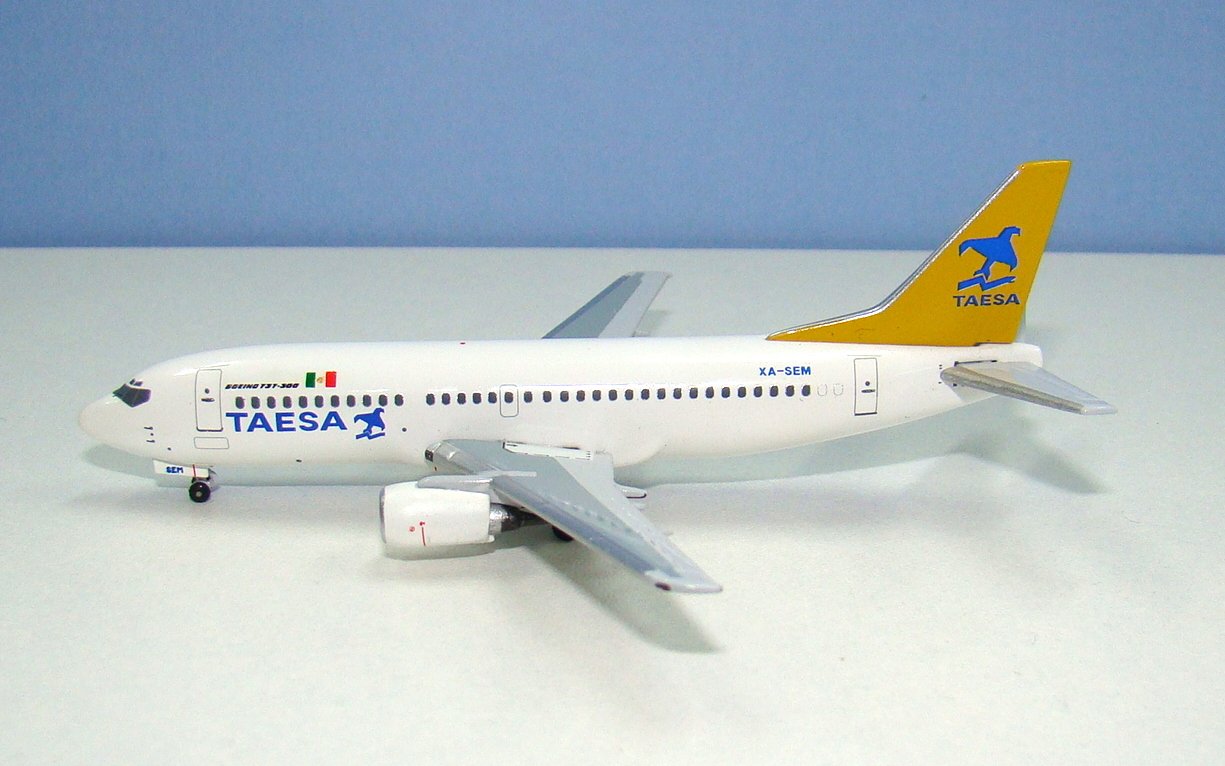
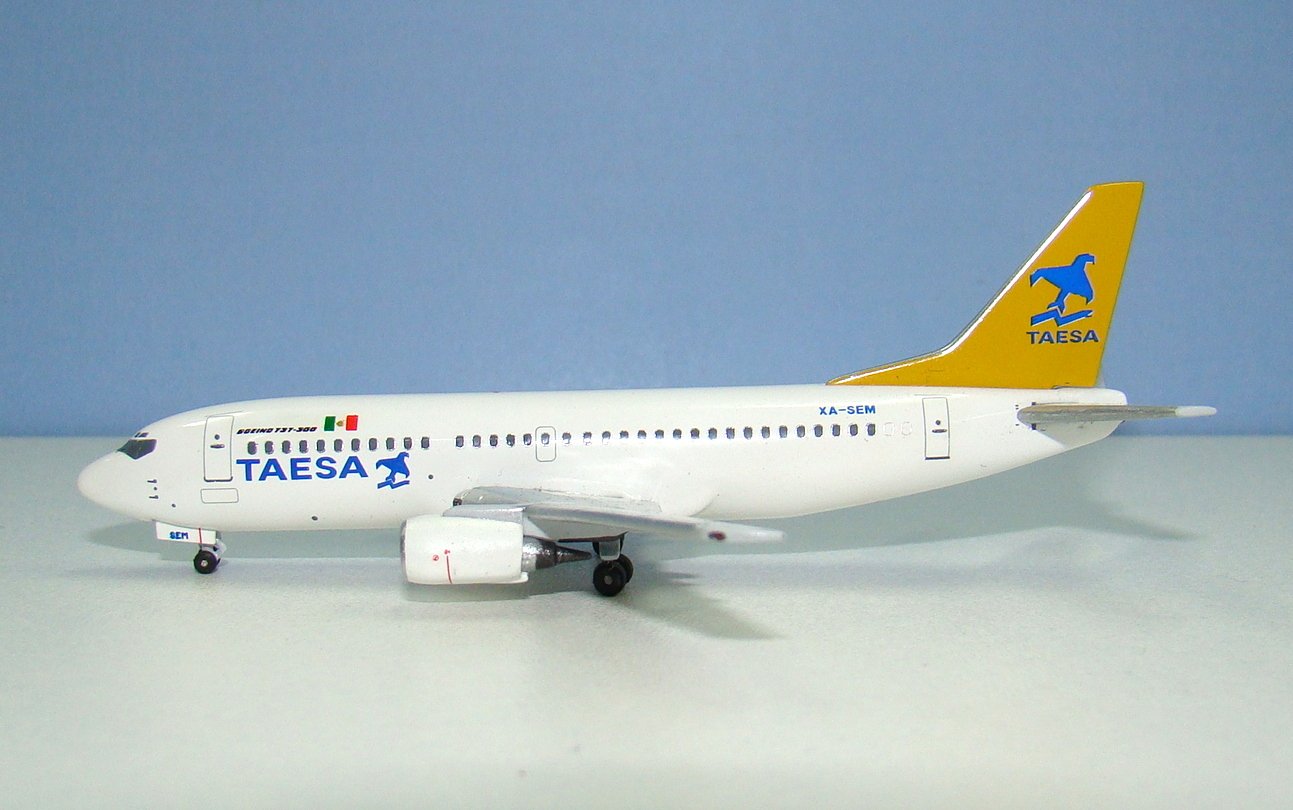
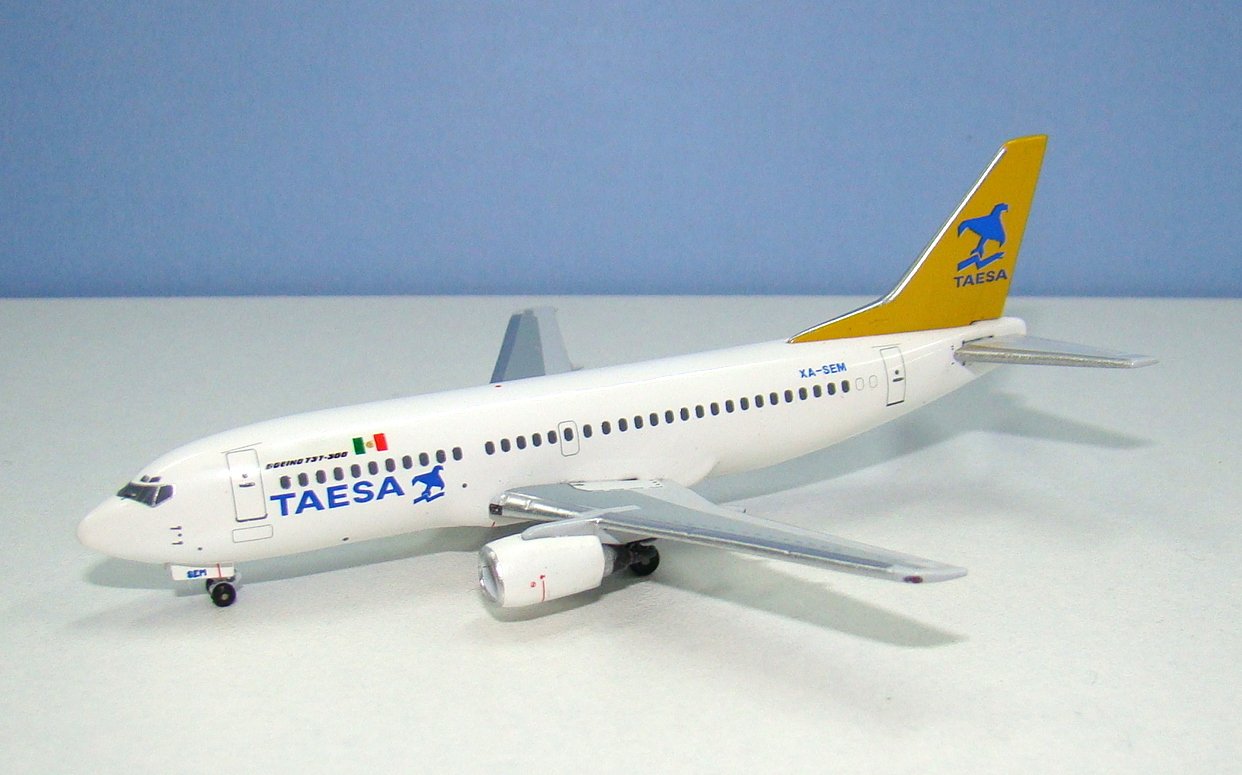
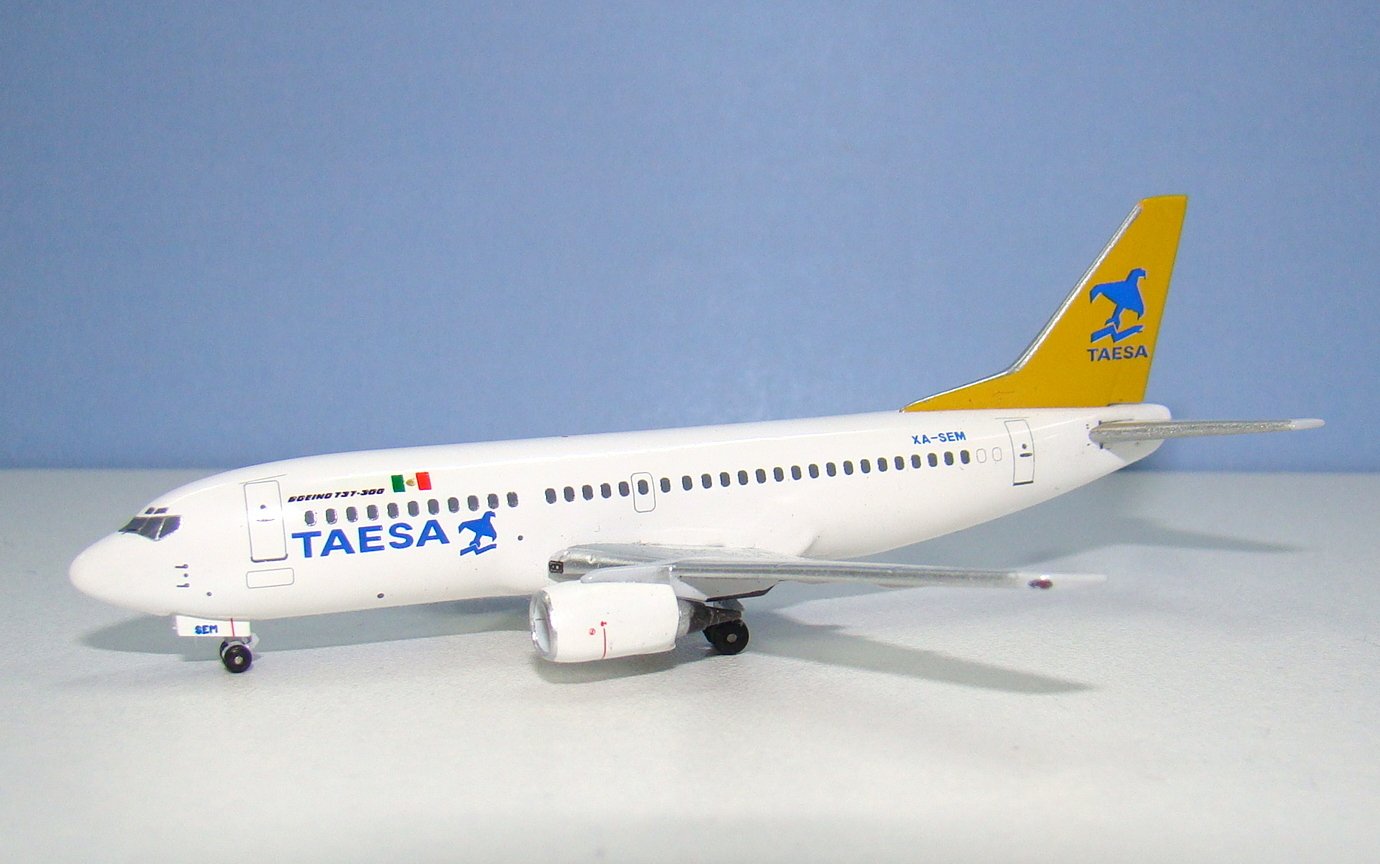
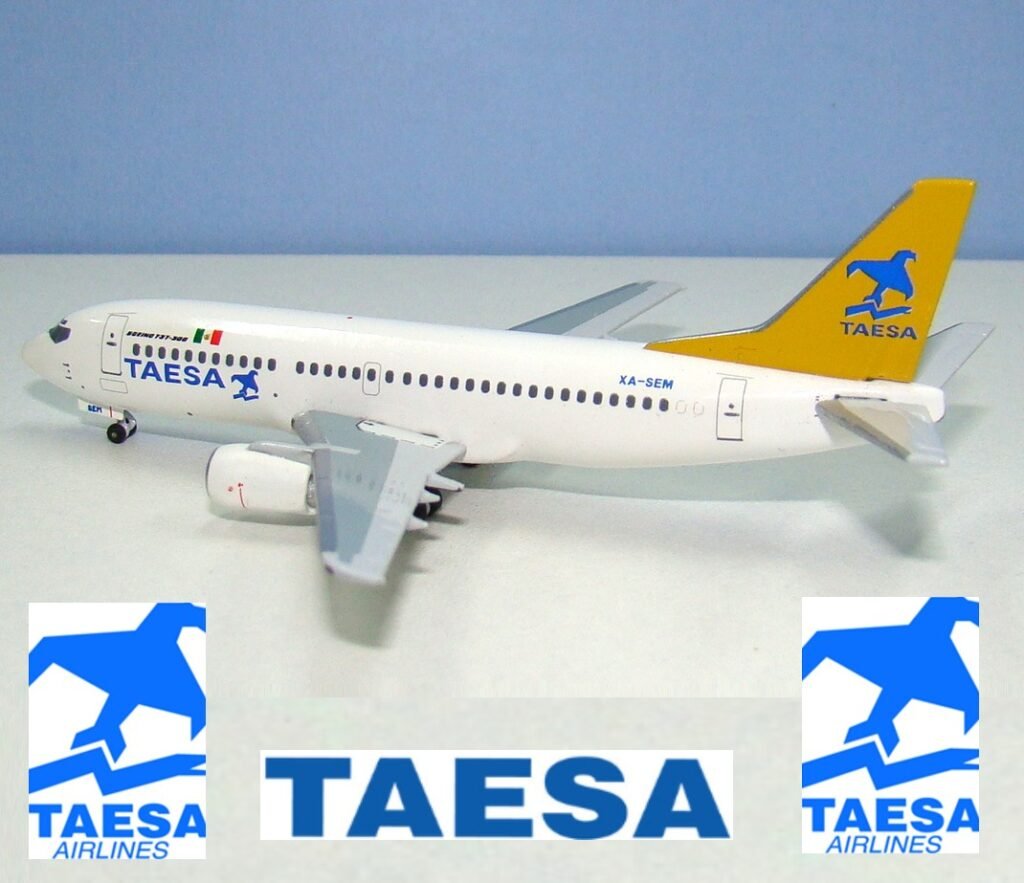
TAESA Boeing 737-3Y0 XA-SEM Aeroclassics 1:400 Scale Model Airliner
In 1988 Carlos Rhon had tried and failed to takeover Mexicana. Following this instead he partnered with Alberto Abed, using Abed’s existing Air Taxi executive charter company as a starting point. Air Taxi’s business had boomed when Abed cut the fares for business fliers by 50% and it had 25 aircraft by 1990. TAESA was started with $500,000 of which Abed put up $150,000 for a 49% stake. Charter flights were the first step and 8 727-100s were secured for $3.5 million each.
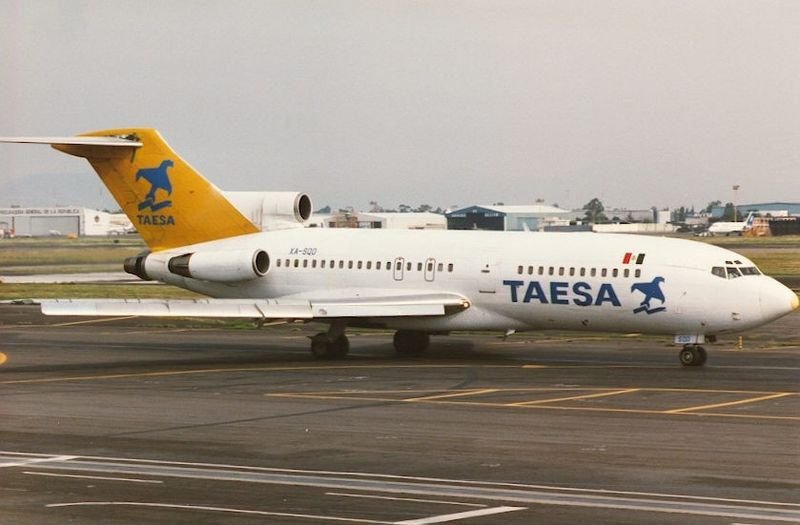
Boeing 727-31 XA-SQO at Mexico City in 1996
By 1992 TAESA was Mexico’s third largest airline and operated 22 Boeing aircraft as well as a large fleet of executive jets. As well as absorbing La Tur’s operations in early 1992 it had also taken over another small start-up, Aviación del Noroeste, in 1990 and though the airline’s ATR-42s had been absorbed by TAESA it continued to operate separately with a single 737.
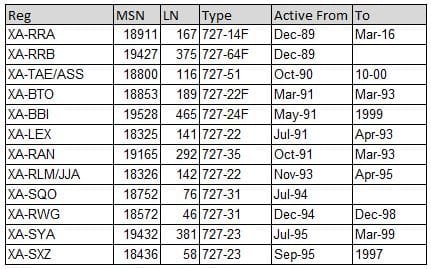
TAESA's 727-100 fleet
The company’s success hinged upon a variety of factors. It was able to take advantage of aircraft leased at favourable rates due to a surplus in the market, charge low fares using a non-unionised workforce and take the fight to both the majors, neither of which were in strong financial shape at the time. Indeed the fare wars that TAESA and other startups (like SARO) kicked off almost bankrupted Mexicana, which was taken over by Aeromexico in 1993.
TAESA Boeing 737-3Y0 XA-SEM Aeroclassics 1:400 Scale Model Airliner
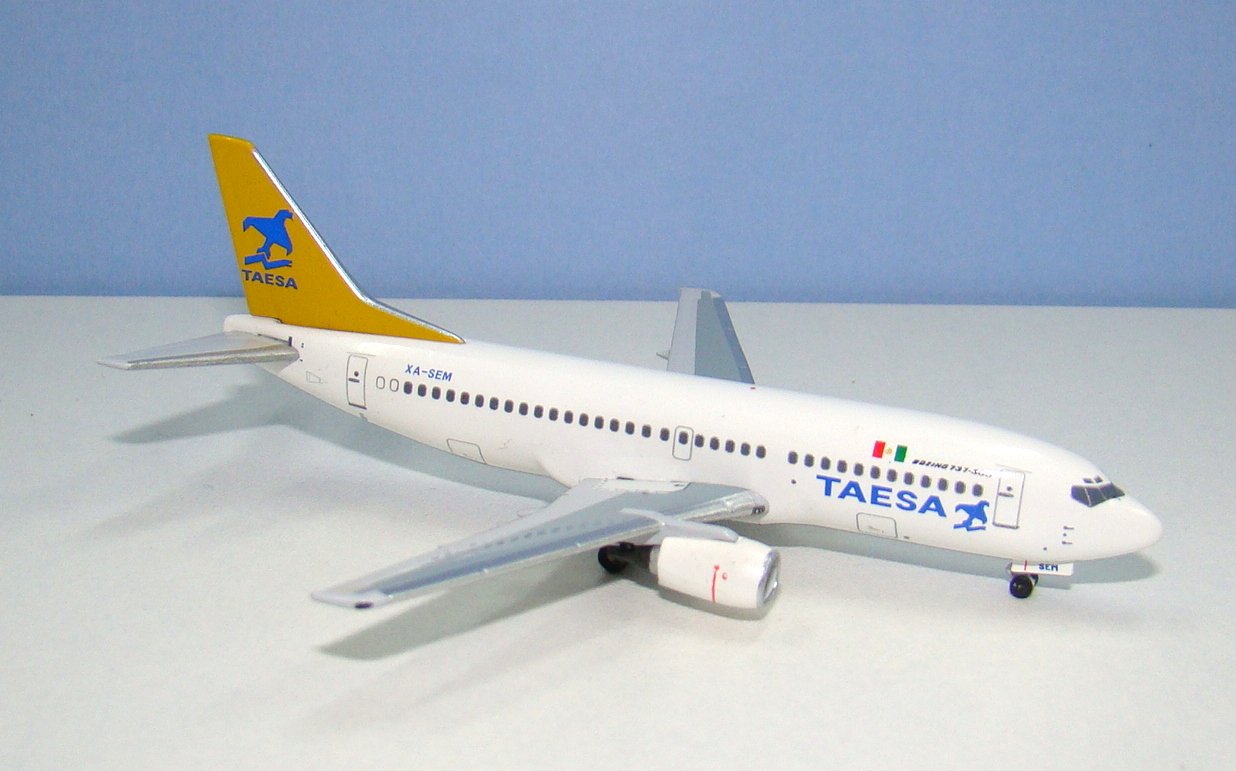
TAESA Boeing 737-3Y0 XA-SEM Aeroclassics 1:400 Scale Model Airliner
TAESA Boeing 737-3Y0 XA-SEM Aeroclassics 1:400 Scale Model Airliner
TAESA Boeing 737-3Y0 XA-SEM Aeroclassics 1:400 Scale Model Airliner
TAESA Boeing 737-3Y0 XA-SEM Aeroclassics 1:400 Scale Model Airliner
TAESA Boeing 737-3Y0 XA-SEM Aeroclassics 1:400 Scale Model Airliner
TAESA Boeing 737-3Y0 XA-SEM Aeroclassics 1:400 Scale Model Airliner
TAESA Boeing 737-3Y0 XA-SEM Aeroclassics 1:400 Scale Model Airliner
TAESA Boeing 737-3Y0 XA-SEM Aeroclassics 1:400 Scale Model Airliner
TAESA Boeing 737-3Y0 XA-SEM Aeroclassics 1:400 Scale Model Airliner
TAESA Boeing 737-3Y0 XA-SEM Aeroclassics 1:400 Scale Model Airliner
Alberto Abed ran the airline but also flew as a pilot. In 1992 TAEA hoped to fly 2 million passengers and garner a 9% share of the market. TAESA’s approach was multi-faceted with all-cargo 727s, charters and scheduled services. By the end of 1992 it was serving US and Canadian destinations with charter flights to Cancun, Mexico City, Acapulco and Puerto Vallarta. Scheduled services accounted for 43% of flights, charters 43% and cargo 14%. Further expansion into scheduled routes was sought.
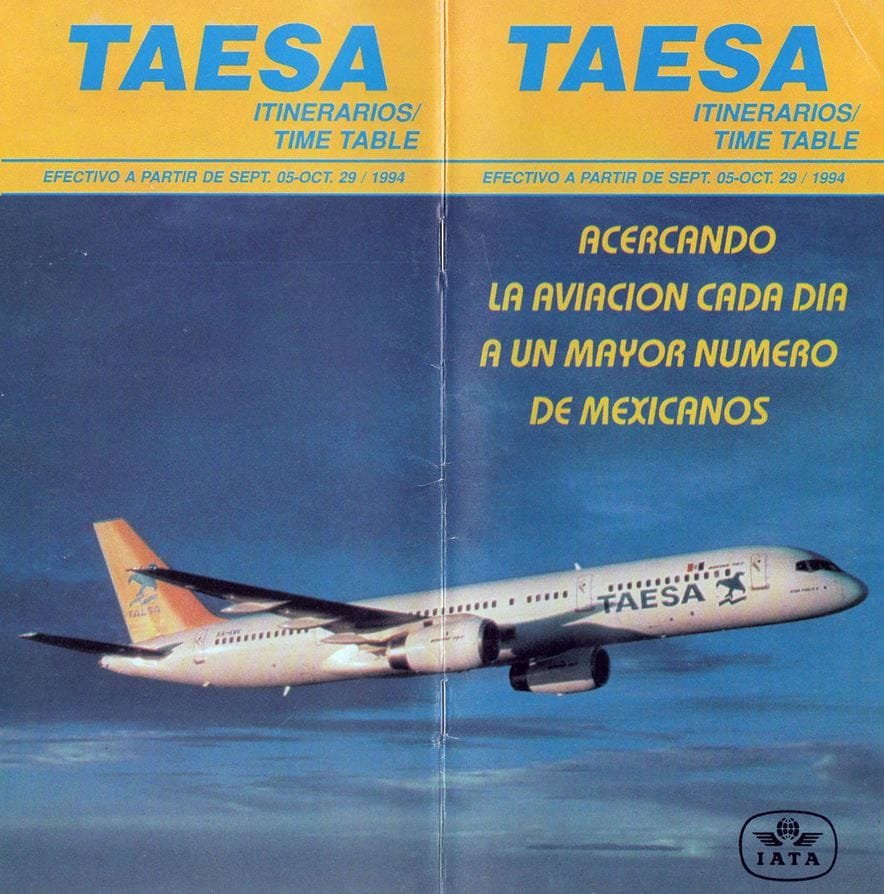
Image courtesy of timetableimages.com
TAESA’s fleet was surprisingly modern for a start-up in the 1980/90s, as with profits growing large leasing companies like Ireland’s Guiness Peat Aviation (GPA) began offering aircraft at bargain rates. TAESA became the first airline in Mexico to operate both the Boeing 737-500 and 757-200. The first of the latter type arrived in October 1991 for $350,000 a month . They were used primarily for charter packages which carried about 180,000 passengers from places like Newark, JFK, Islip and Stewart Island.
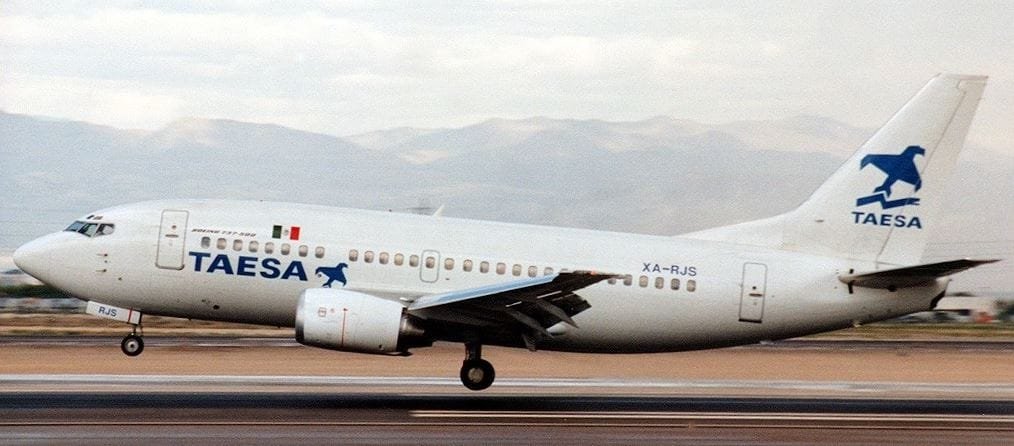
737-500 XA-RJS in 1992
TAESA's 737-500 fleet
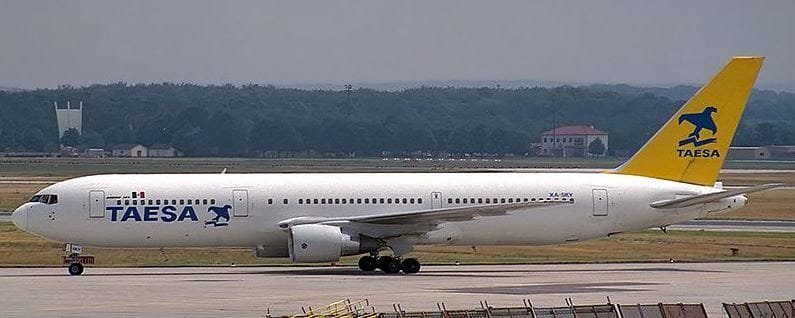
The 737-500s were available at only $200,000 a month and 4 joined in early 1992 along with 3 737-300s and 1 737-400. In June 1992 even a Boeing 767-3Y0ER (XA-SKY) was leased and used for charters to seven cities in Europe. It wasn’t all plain sailing however as in 1992 concerns were raised over safety standards. Violations were found, such as overweight aircraft, but the FAA backed away when TAESA fixed the issues. By 1993 TAESA had claimed a healthy stake in the Mexican market and was being touted as the possible no2 airline for Mexico.
TAESA 767-3Y0ER XA-SKY at Frankfurt in 1994
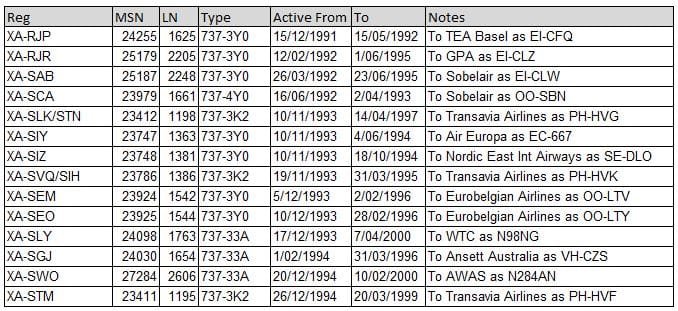
TAESA's 737-300/400 fleet 1991-1995
It appeared to have a winning strategy but unfortunately times were about to get rough for Abed’s airline. In part 2 we’ll investigate TAESA’s bumpy ride through the mid-90s.