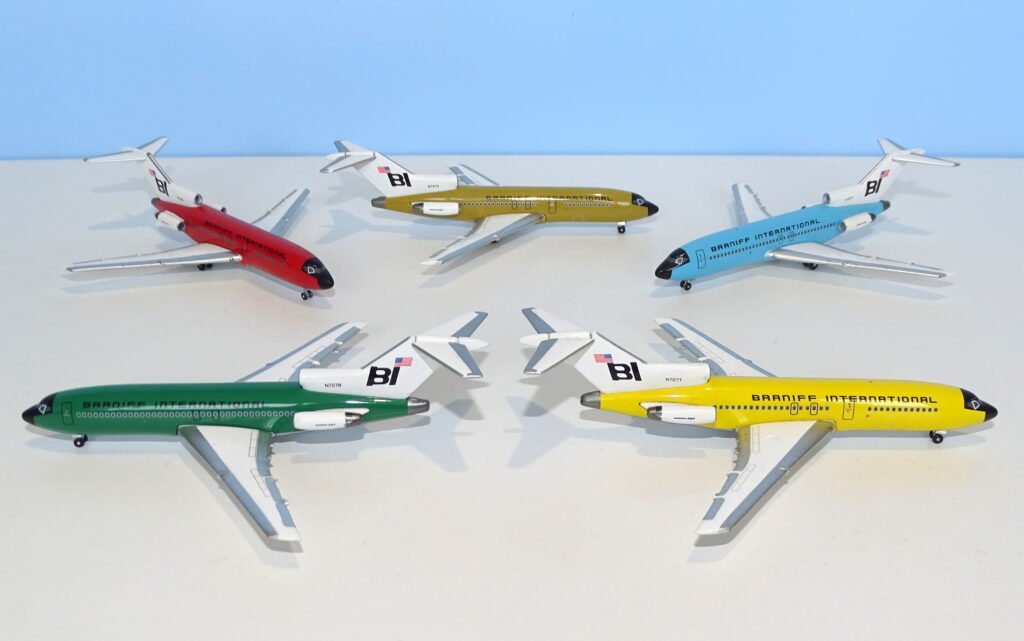
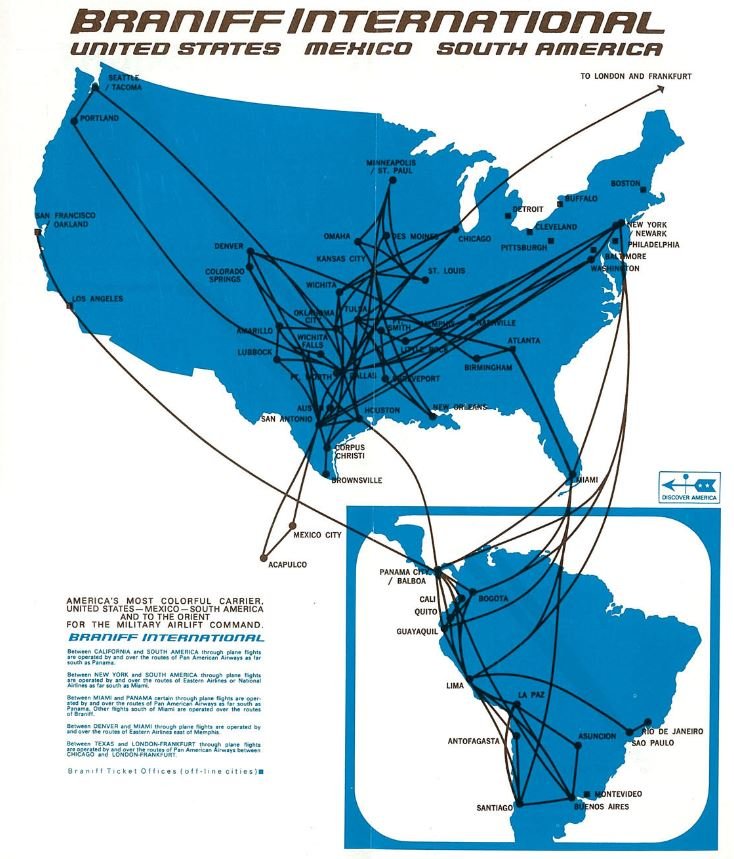
By the end of the 1960s the dynamic leadership of Harding Lawrence had turned Braniff from a little known Texan trunk airline into a dynamic market leader famous for its ‘End of the Plain Plane’ marketing campaign pioneered by Lawrence’s future wife Mary Wells. Revenue Passenger Miles had more than doubled in 5 years and the takeover of Panagra had further bolstered Braniff’s position as a major force in Latin America. But, the airline wasn’t standing still and just as Braniff discovered its perfect aircraft it was time for another change.
All models in this post are 400 scale and were made by:

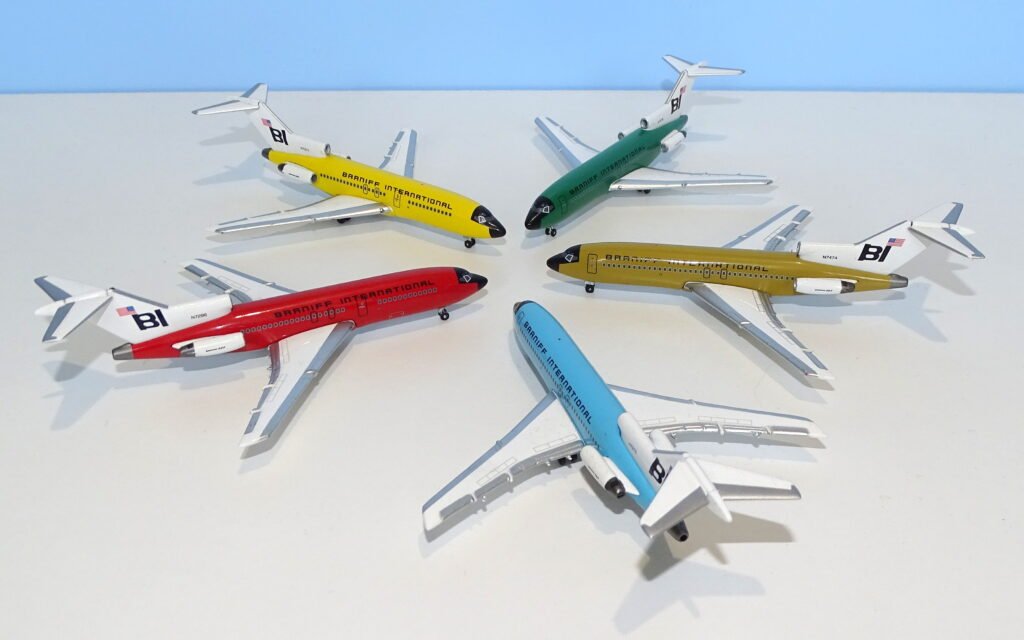
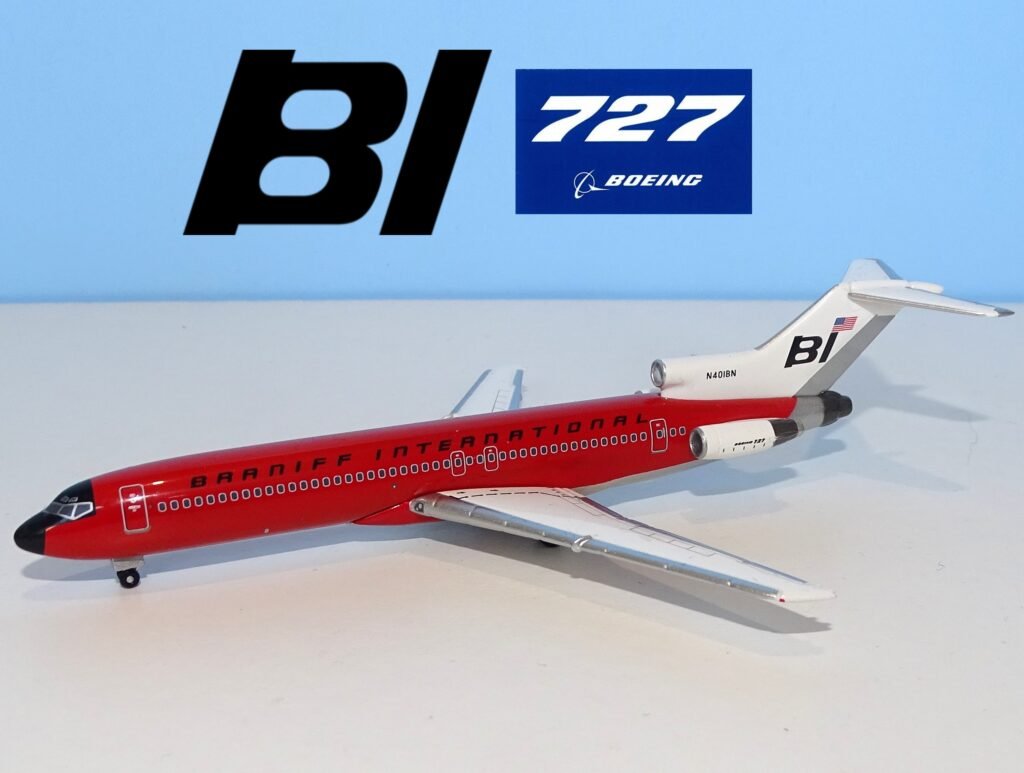
Braniff had started taking delivery of brand new Boeing 727-27s in May 1966 and the type, more than any other, came to define the Girard designed ‘End of the Plain plane’ livery – commonly referred to as the Jellybean. Twenty four of the new tri-jets were acquired including four aircraft originally destined for Pacific Northern Airlines (confusingly one of these was a series 162, two were 62Cs and one was a 27C).
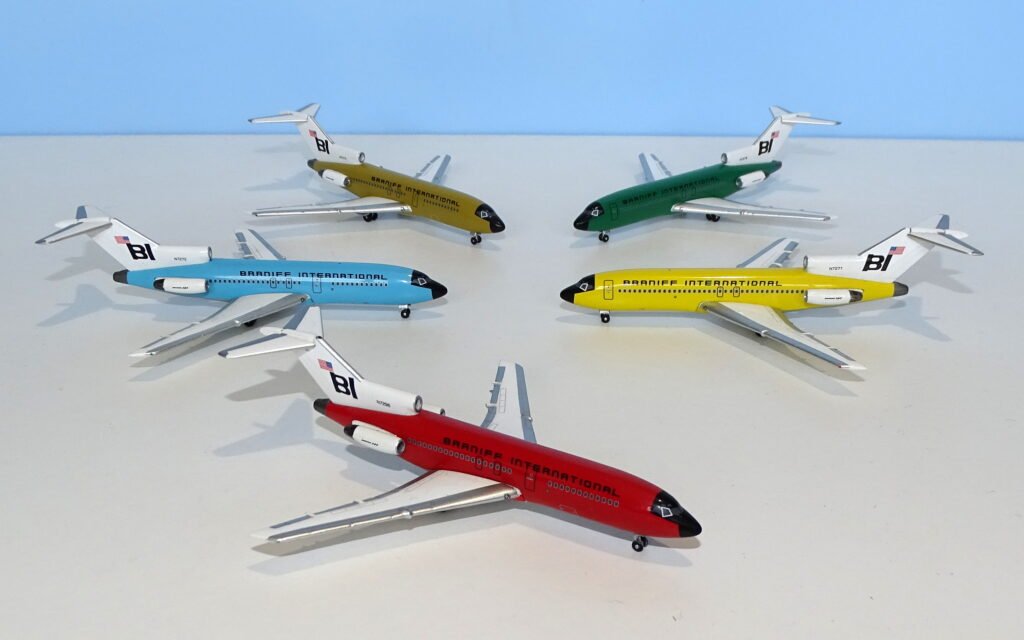
Most of the new 727s were delivered with a large forward side cargo door as 727-27Cs. This enabled Braniff to operate them as passenger jets during the day and freighters at night. The obvious benefit was a doubling of the aircraft utilisation rate and it enabled Braniff to start its own AirGo cargo business.
At times the 727-27Cs could be operated as combis with cargo in the forward section and seats for 51 in the rear. These initial 24 727s were registered N7270-N7296 with N72783, 85 and 91 missing from the sequence. The 727s wore the usual range of Jellybean colours but were otherwise reasonably standard aside from a couple of features.
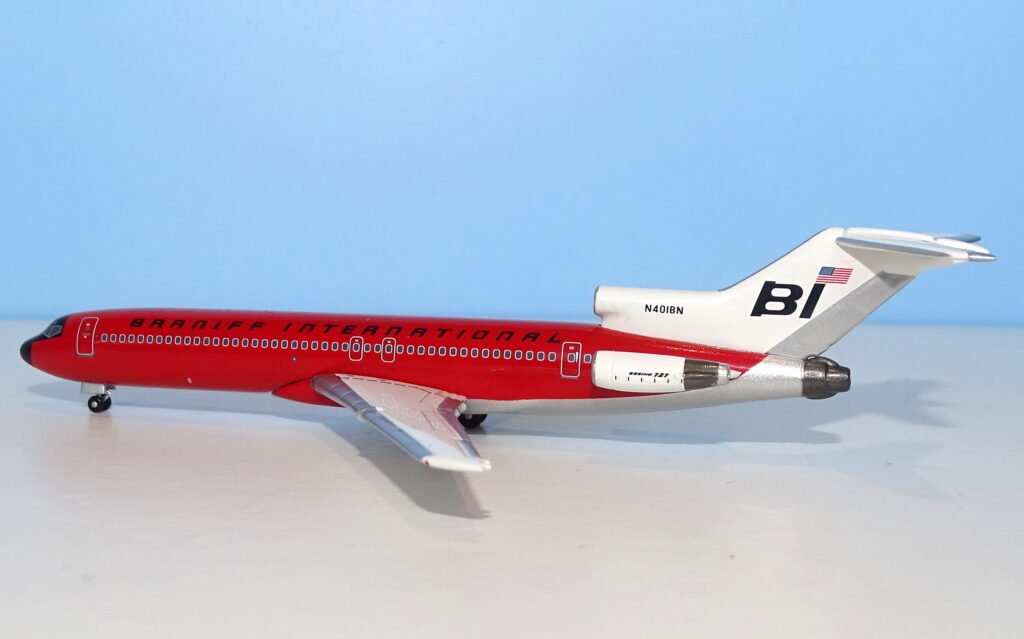
Firstly the shape of the 727 tail required a modification to the large BI tail logo with the position of the US flag on the portside being moved to the I. Secondly although initially all the aircraft were delivered with a painted rear fuselage and rudder it quickly became evident that the exhaust buildup on the rear fuselage made this unwise. Some 727 operators, such as National, had cottoned on to this issue immediately but Braniff only started receiving new 727-27Cs with a natural metal rudder and rear in Autumn 1967, by which time only four or five frames were left to be delivered.
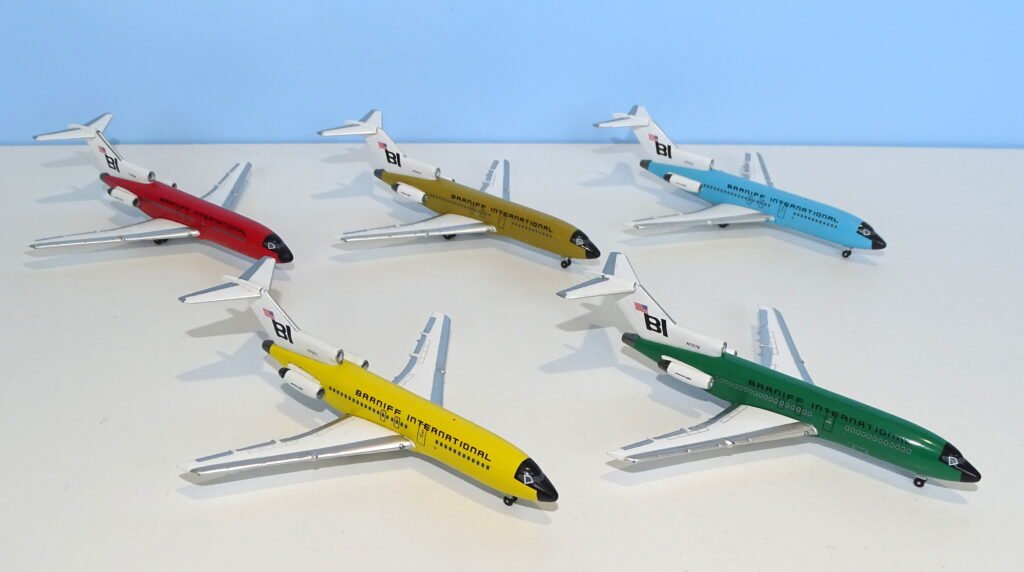
The 727 had quickly proven to be an excellent plane for the airline and led to the cancellation of remaining One-Elevens and the eventual replacement of those in service with the trijet. It would also gradually supersede the Lockheed L-188 Electras too. Braniff would add to its 727-100 fleet at he end of the 60s with second-hand aircraft acquired from Frontier Airlines, Piedmont and BWIA. Several others also served on short term leases.
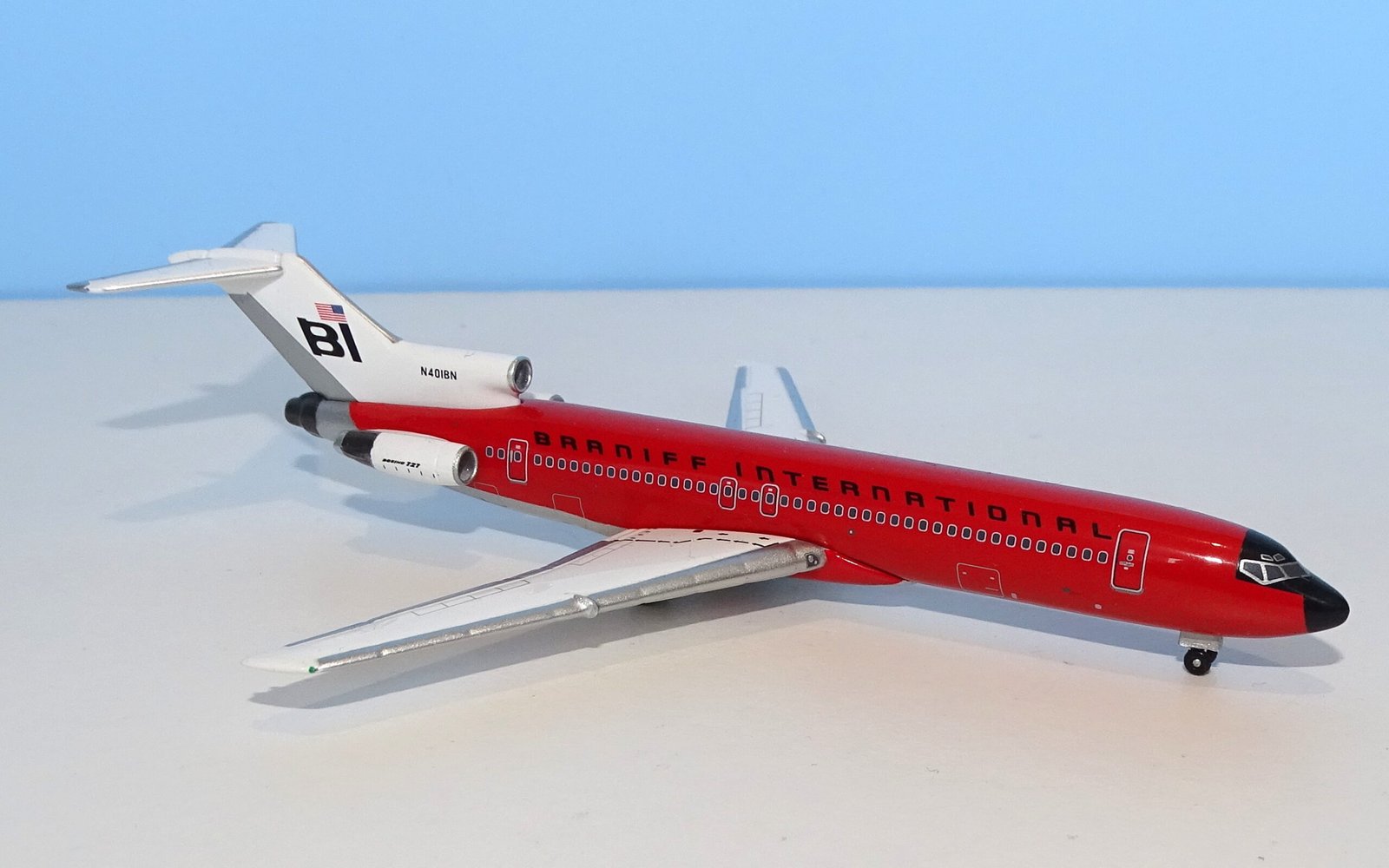
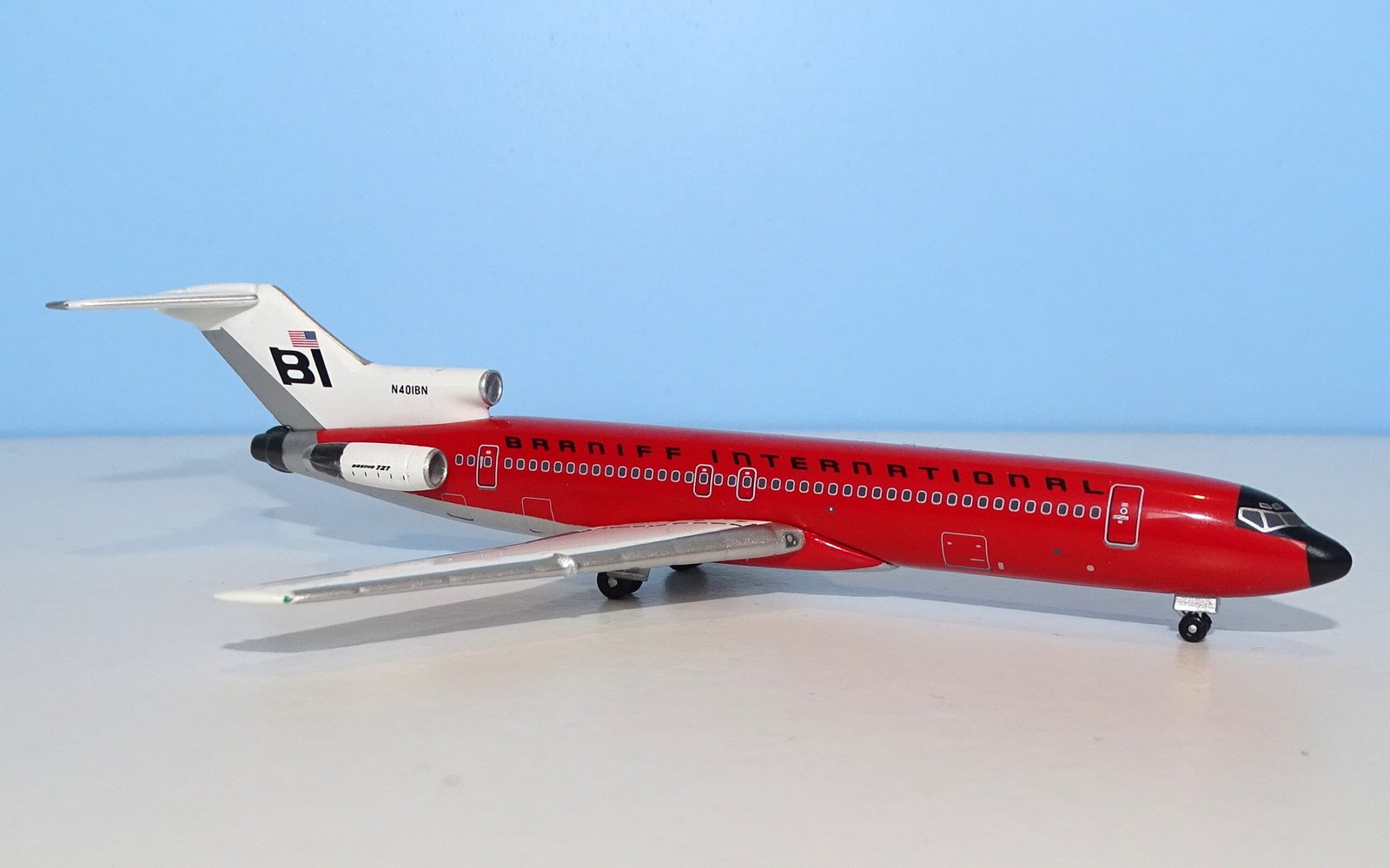
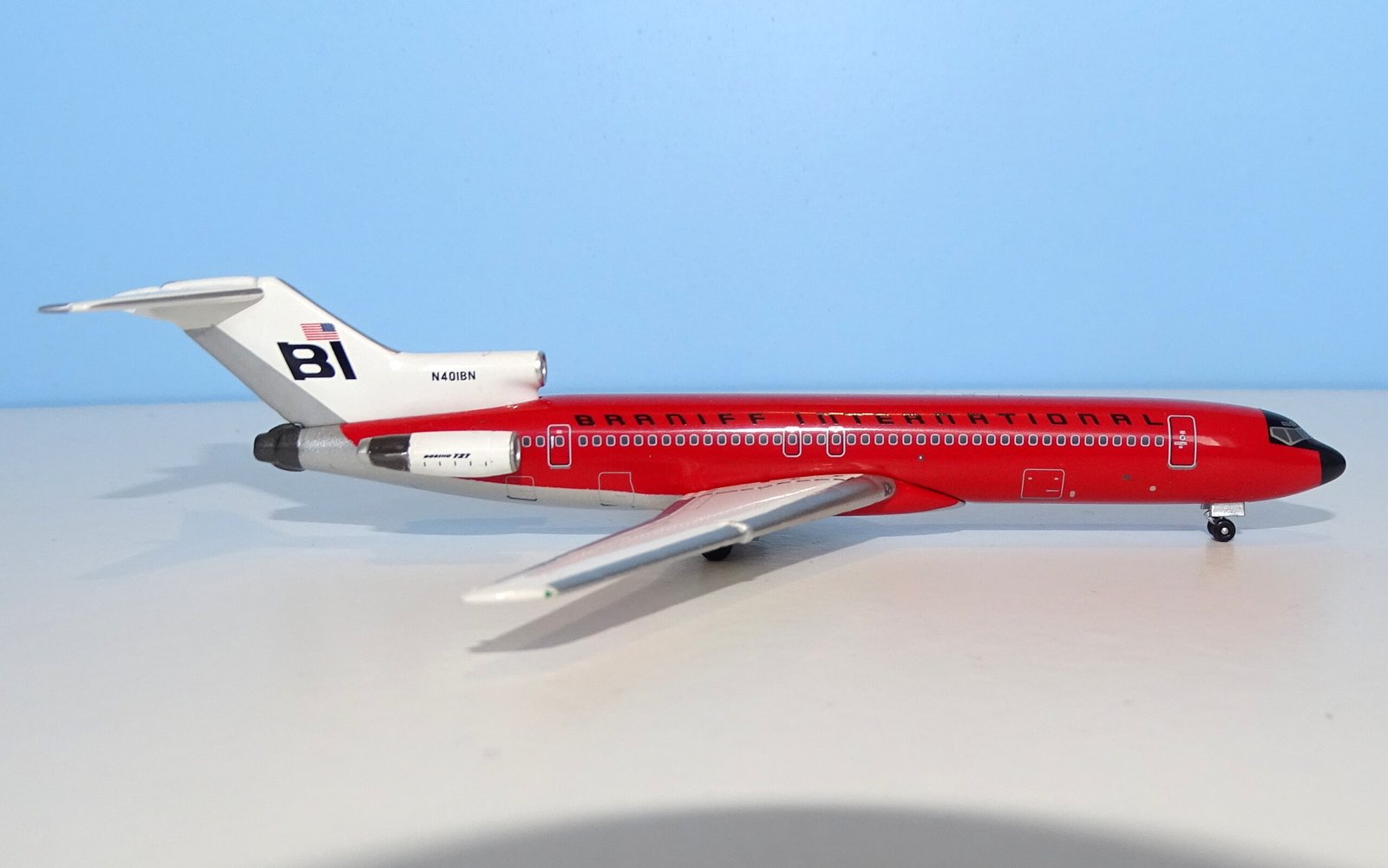
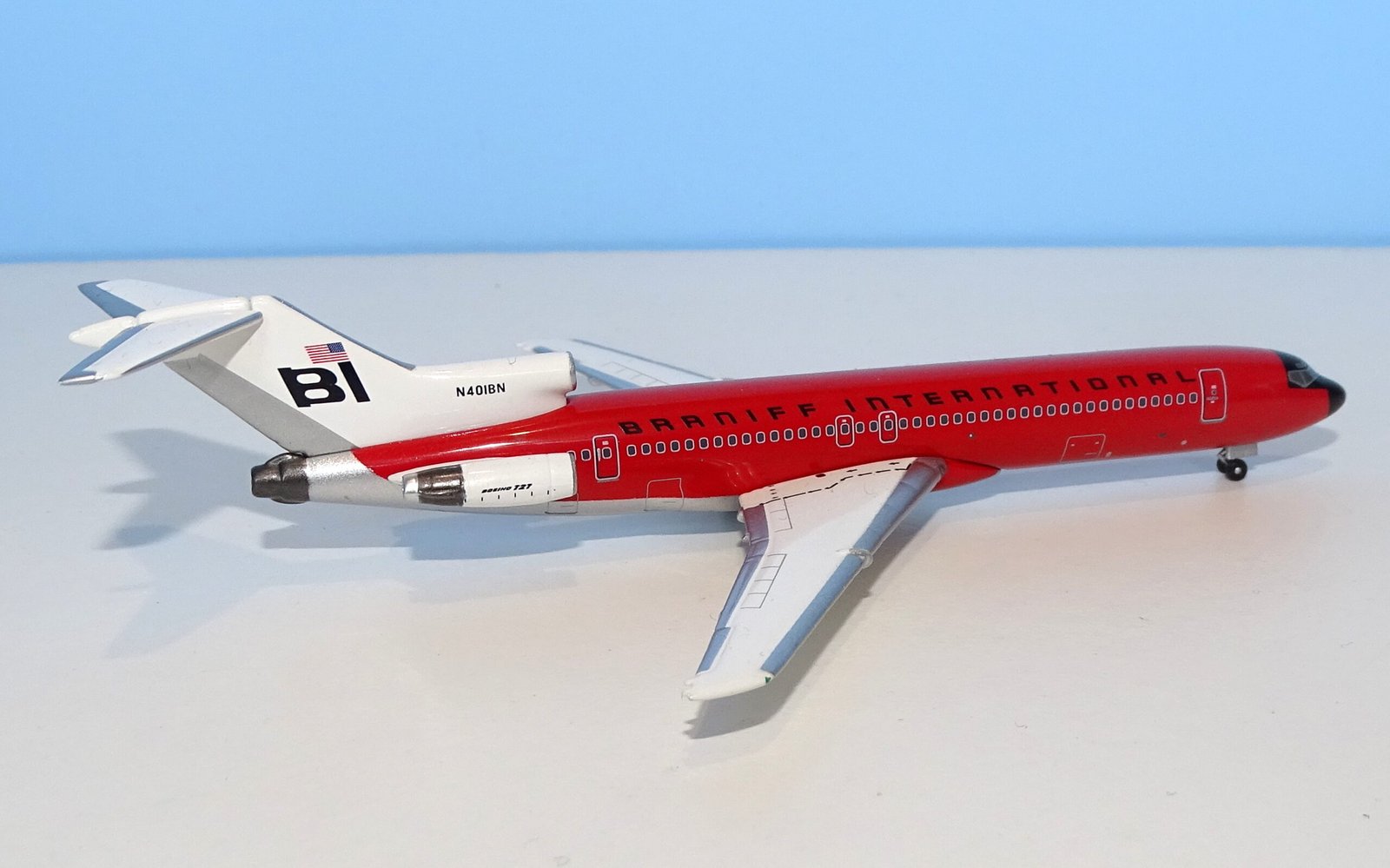
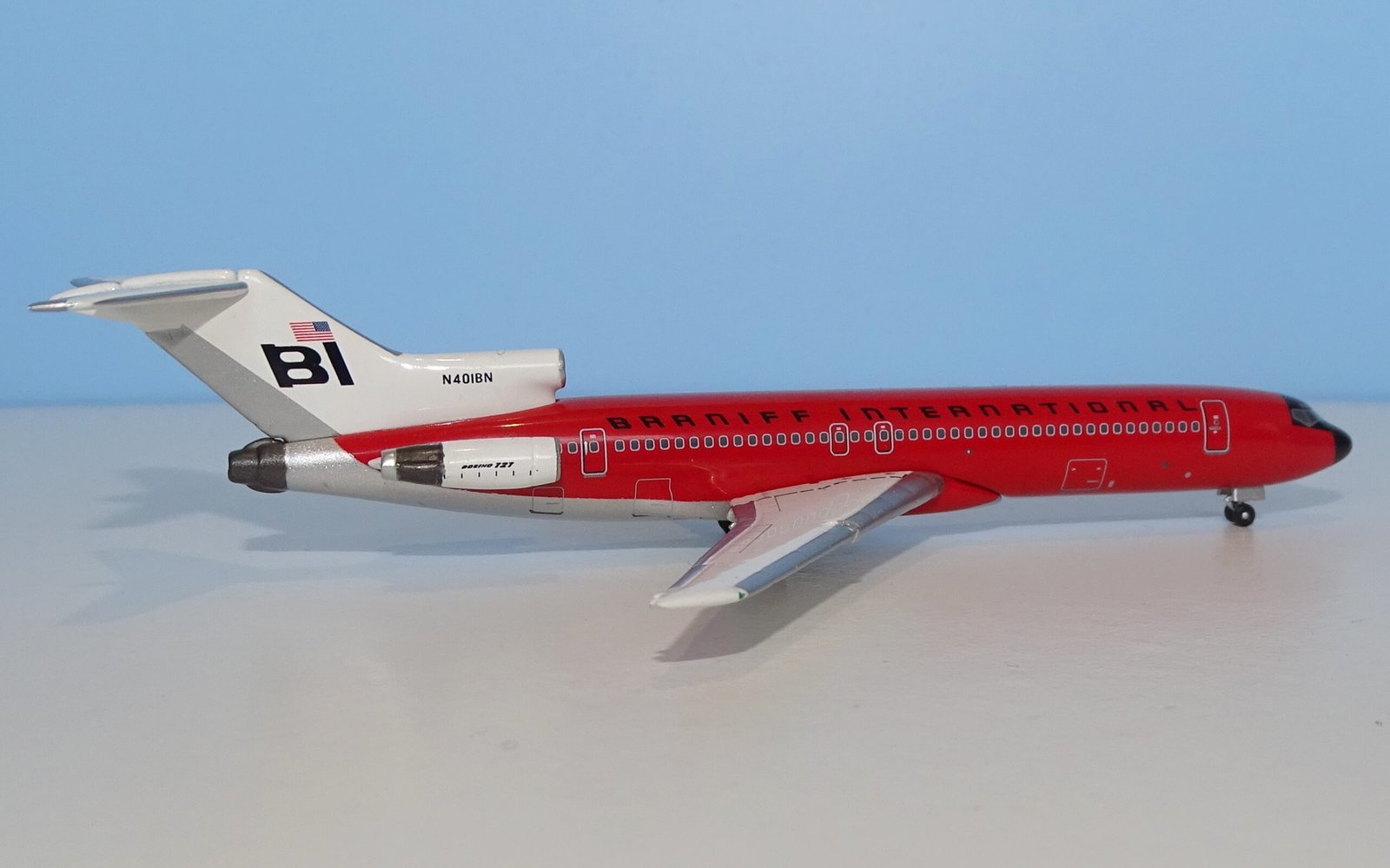
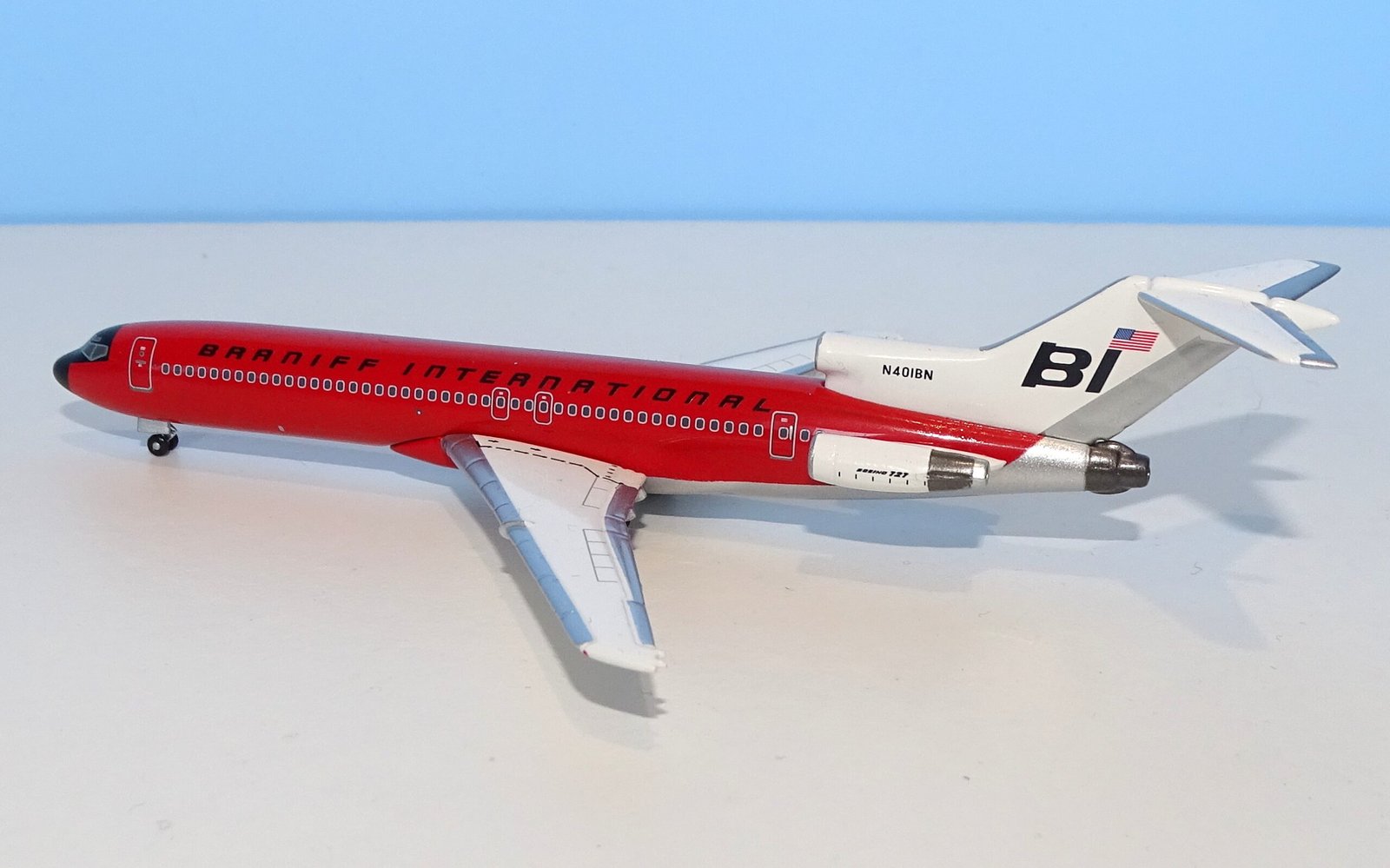
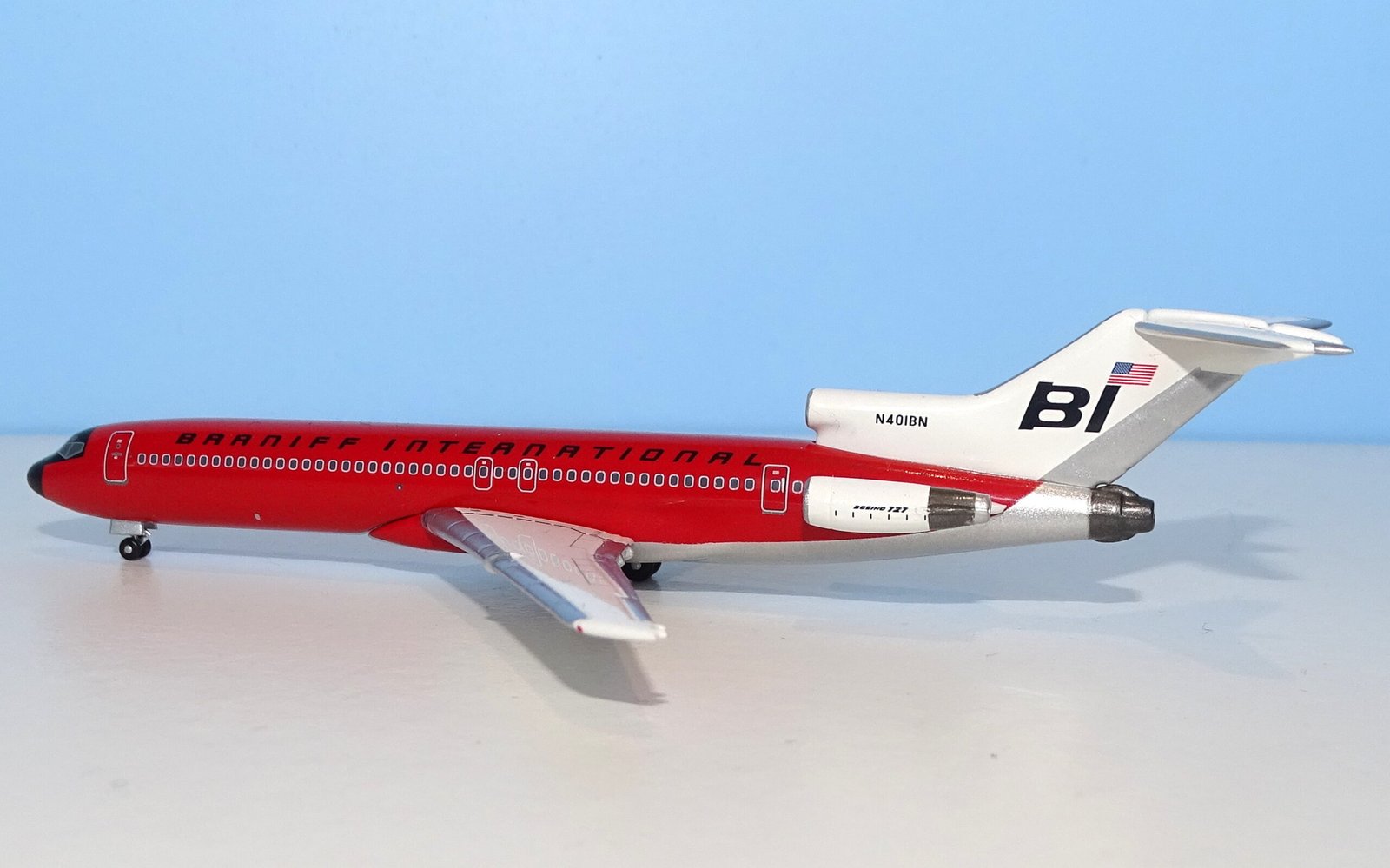
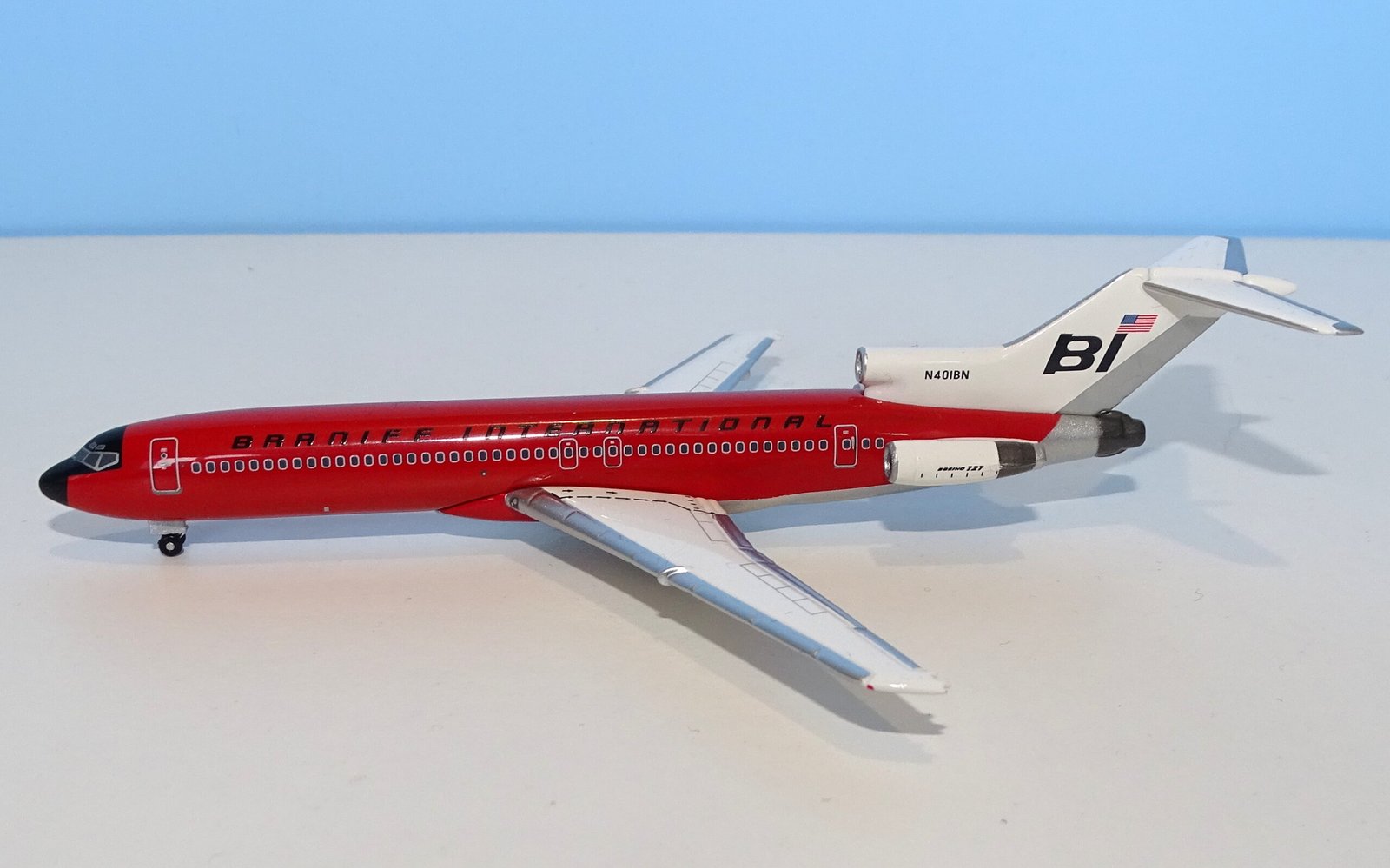
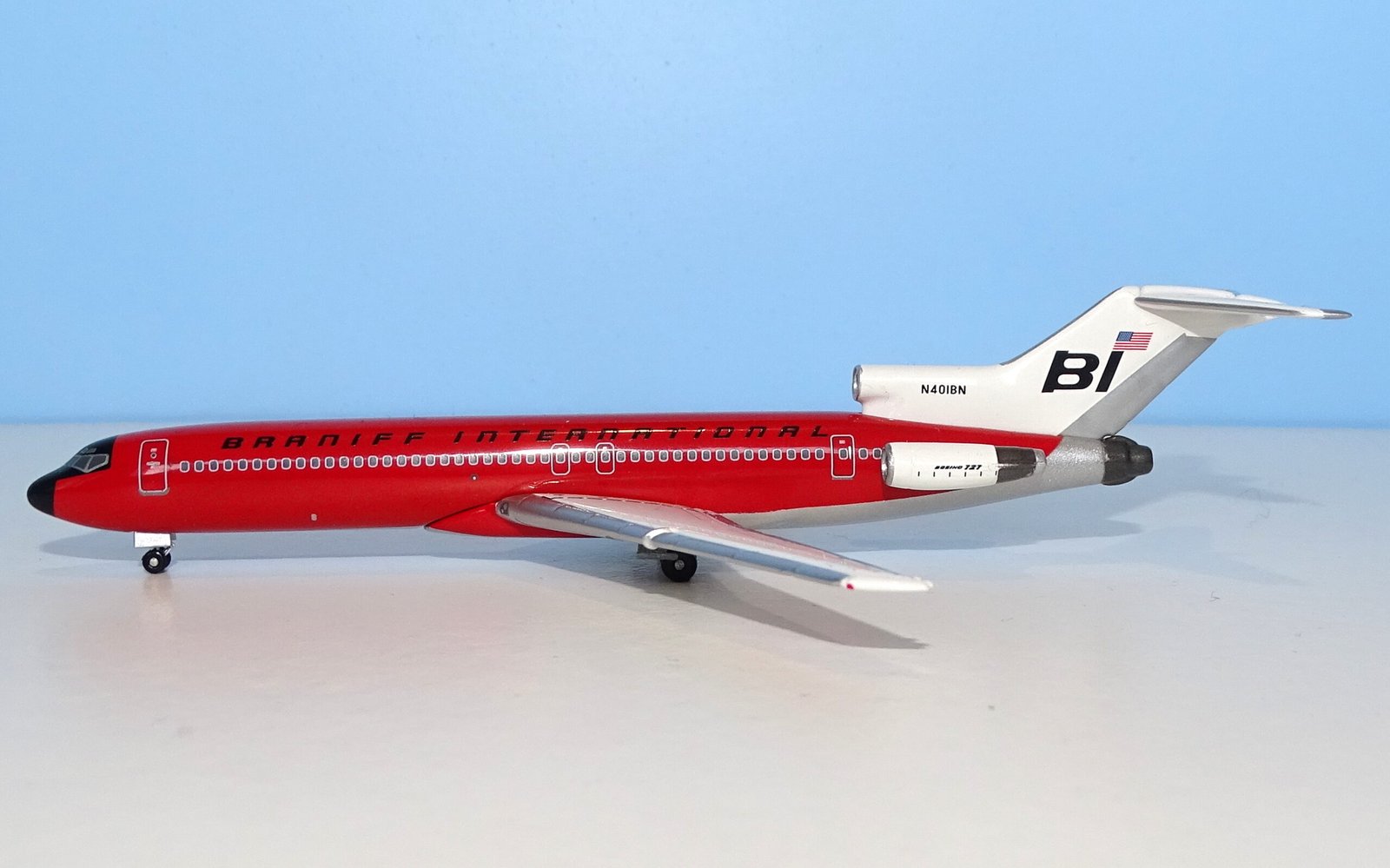
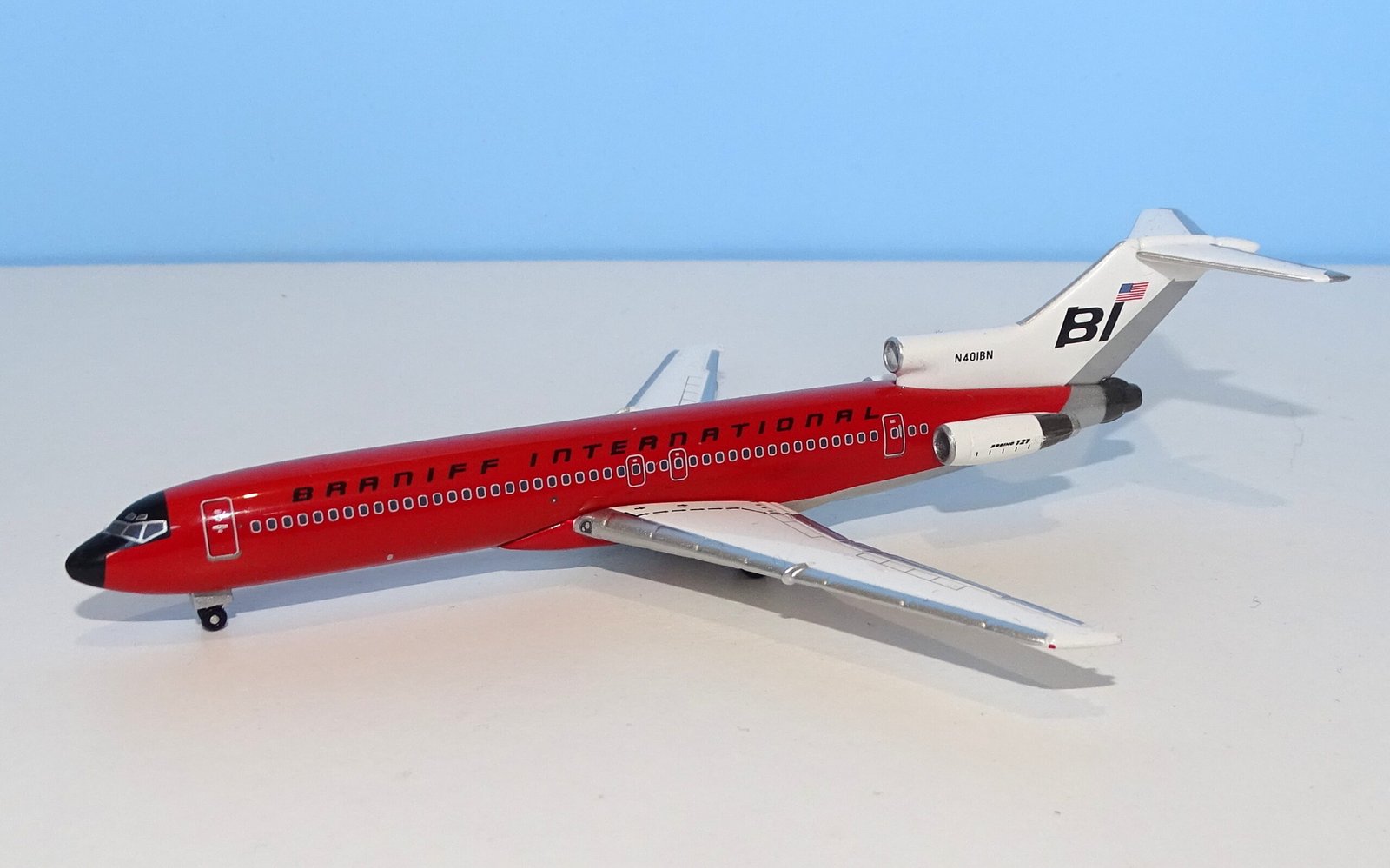
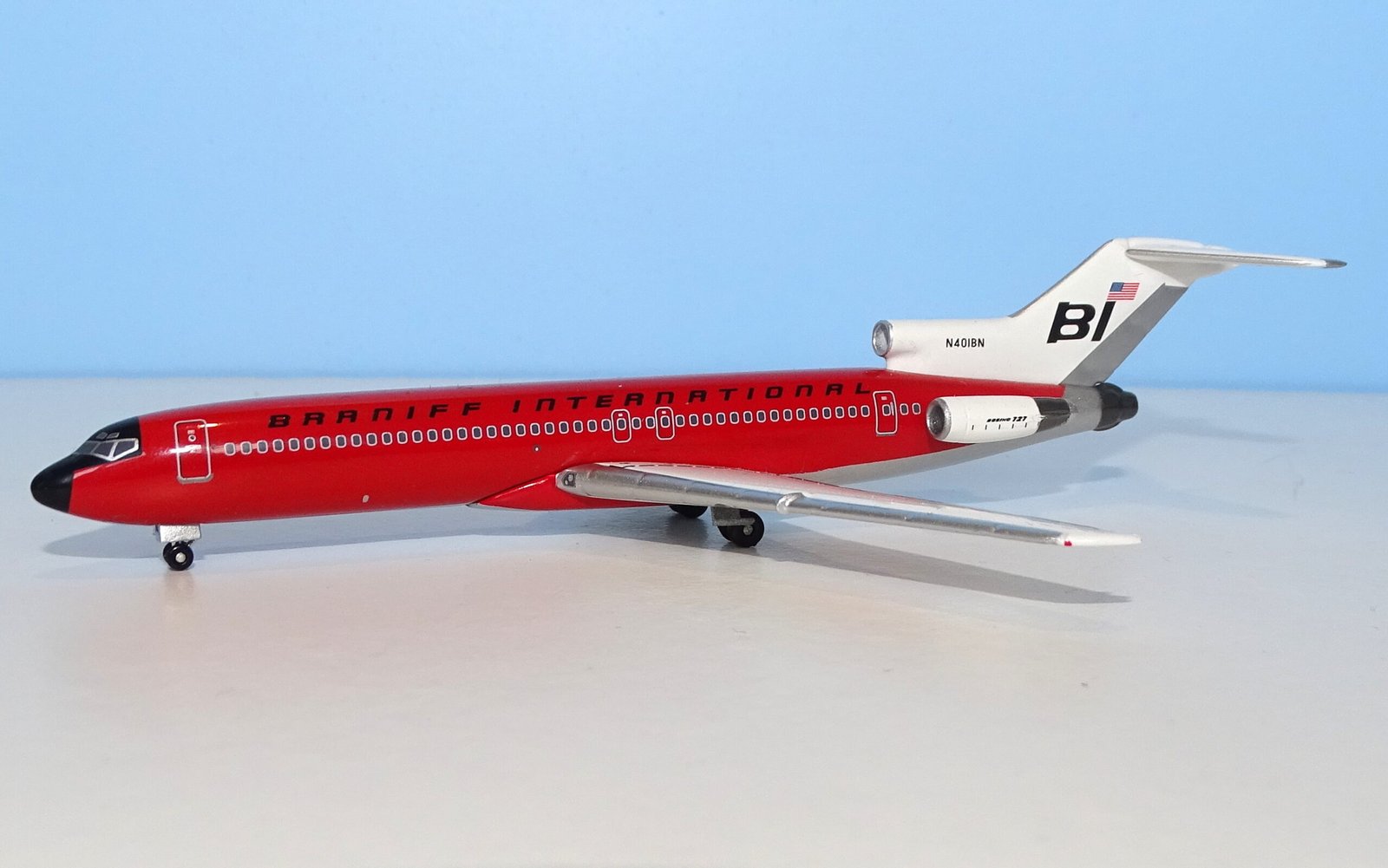
N401BN – Red
Note that all three aircraft were delivered with the baremetal rear and rudders. It seems they weren’t the only Jellybean series 200s as as late as November 1971 a pair of ex-Allegheny 727-2B7s arrived painted in the medium blue.