The philosophical and literal union (they married) between Mary Wells of the marketing firm Wells Rich Greene and Harding Lawrence, leader of Braniff International, powered the airline’s transformation through the 1960s and 70s. The artistic apogee of this union was the special Calder schemes one of which celebrated the 1976 US Bicentennial. A late addition to the scheme gained it its nickname and the aircraft that wore it had some personality too.
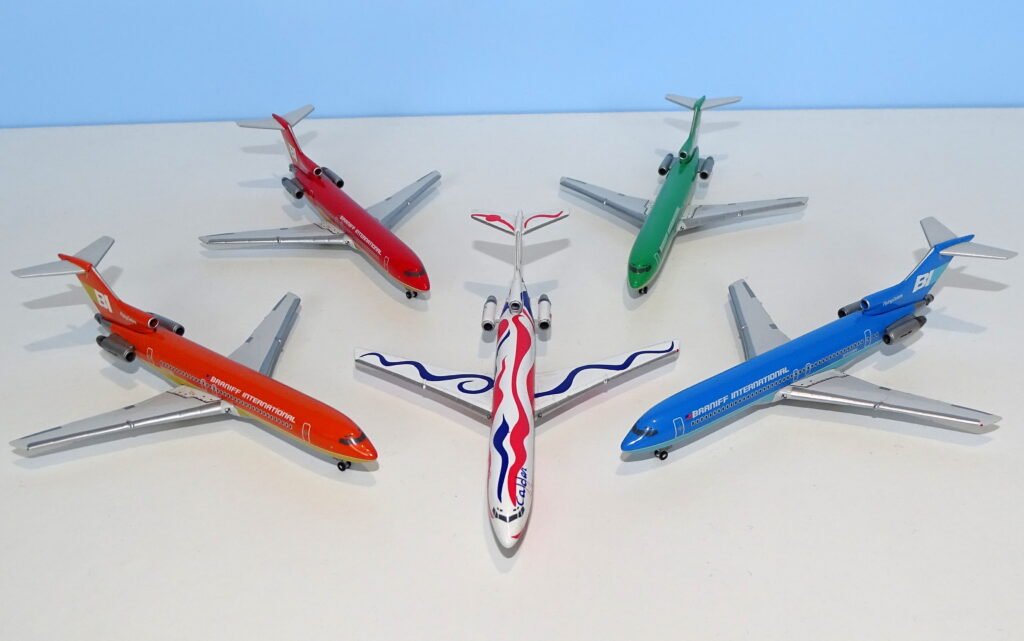
This is part 3 of a series covering Braniff and its 727s. For earlier parts see:
In 1973 advertising executive George Gordon persuaded the famous modern artist Alexander Calder to create the ‘Flying Colors of South America’ on a DC-8. Two years later Calder’s work would reappear on another Braniff aircraft, but this time to mark the Bicentennial of the USA.
The DC-8 scheme (see this post for more details) took 6 months to design and cost the airline $100,000. The 727 scheme to mark the US Bicentennial would cost a similar price and undergo a similar gestation. Alexander “Sandy” Calder would paint between 4 and 6 model prototypes at his Paris studio. These were then shipped to the USA and of the 4 versions of the US scheme the winner was chosen by a commitee of art critics.
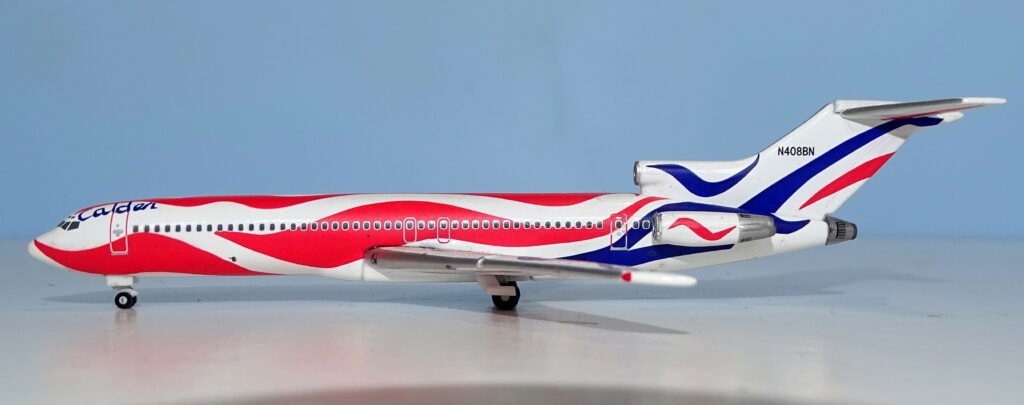
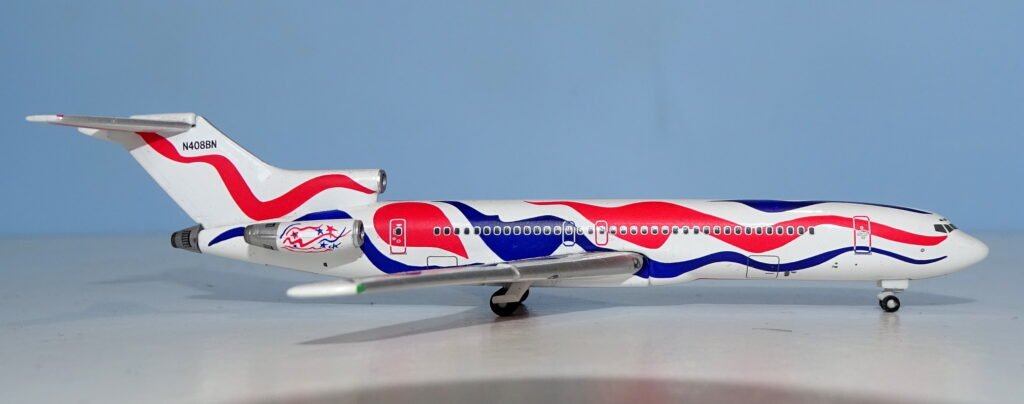
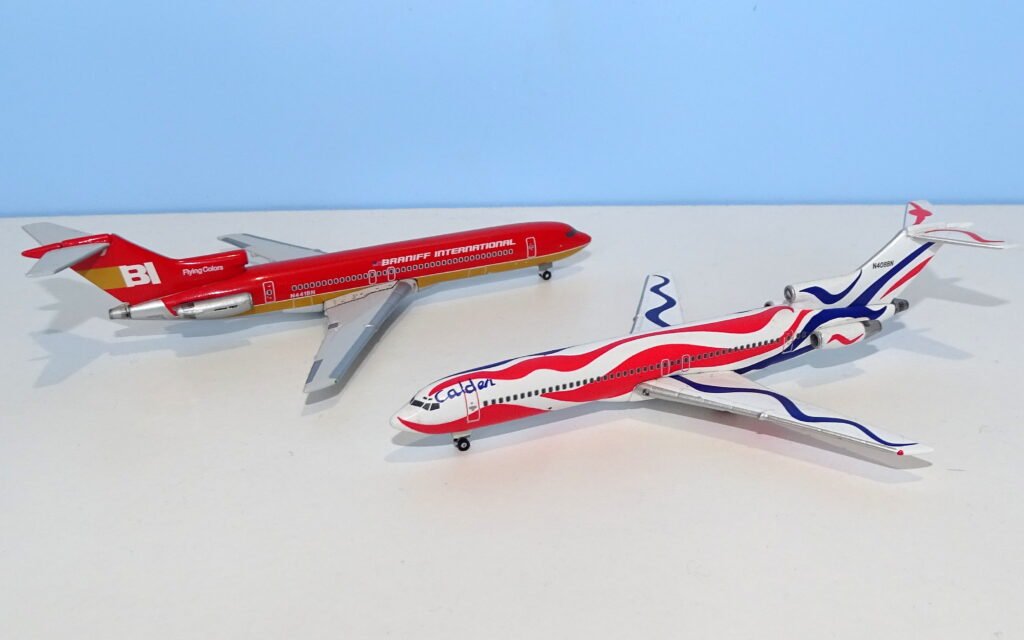
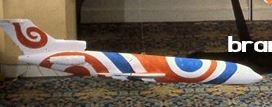
The winning design was one of flowing red and blue stripey waves running down the length of the fuselage. As with the DC-8 scheme the Braniff name did not appear and instead only Calder’s signature was added just above the L1 door. The other three designs were named ‘Tick-Tack’, ‘Bulls-Eye’ and ‘British Flag’. The ‘Bulls-Eye’ colours included red and blue circles looking like a cross between a target and a wacky fried egg. The “British Flag” design was so called for the union of the red and blue striping which covered the majority of the airframe. Below are shots of the other 3 designs taken from the excellent Braniff Pages site page about the Calder aircraft:
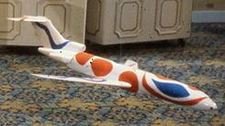
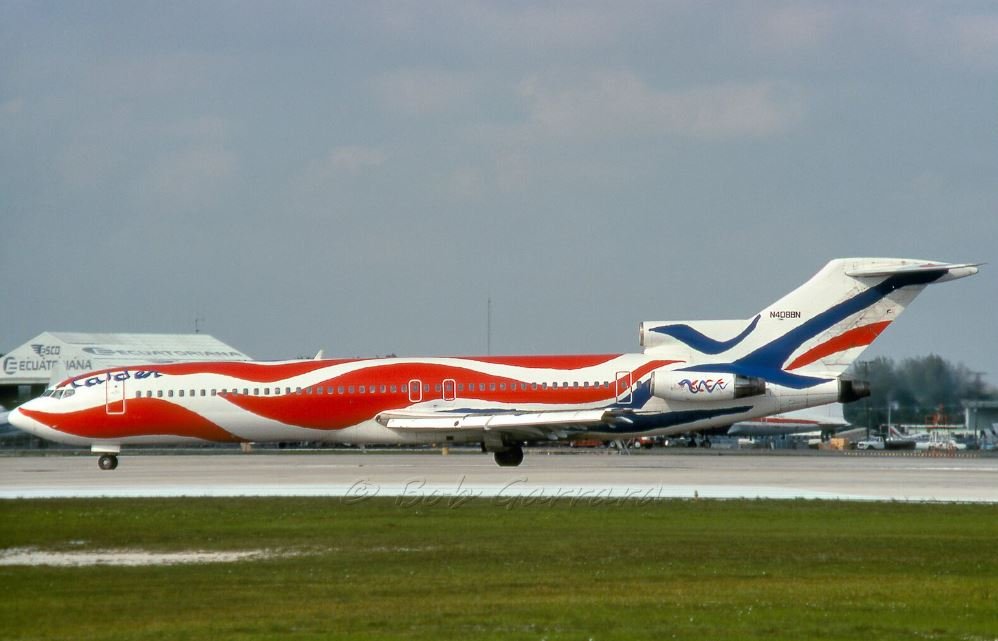
This was fitting as the aircraft chosen to wear the special scheme was N408BN, one of the older non-Advanced 727-200s, which itself had some personality. The aircraft was one of 4 purchased second-hand from Frontier Airlines where she had been N7278F, delivered in 1968. Frontier hadn’t treated the aircraft with much care and after only four years of rough usage she had wrinkled skin on the underside of the fuselage just aft of the wings.
She was also something of a hangar queen – an aircraft with a multitude of usually minor writeups for various things that kept her out of service longer than her fellows. Lastly she flew like a pig as she had a trim issue which meant that at higher altitudes she refused to fly straight and required the pilot to always apply some kind of pressure to the controls.
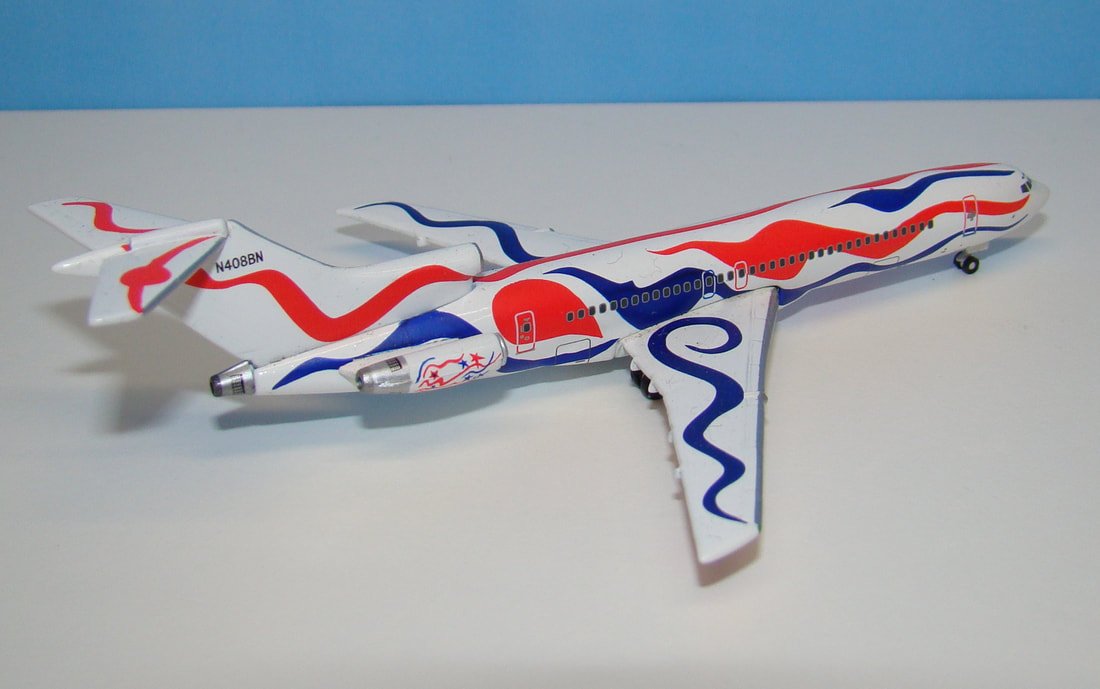
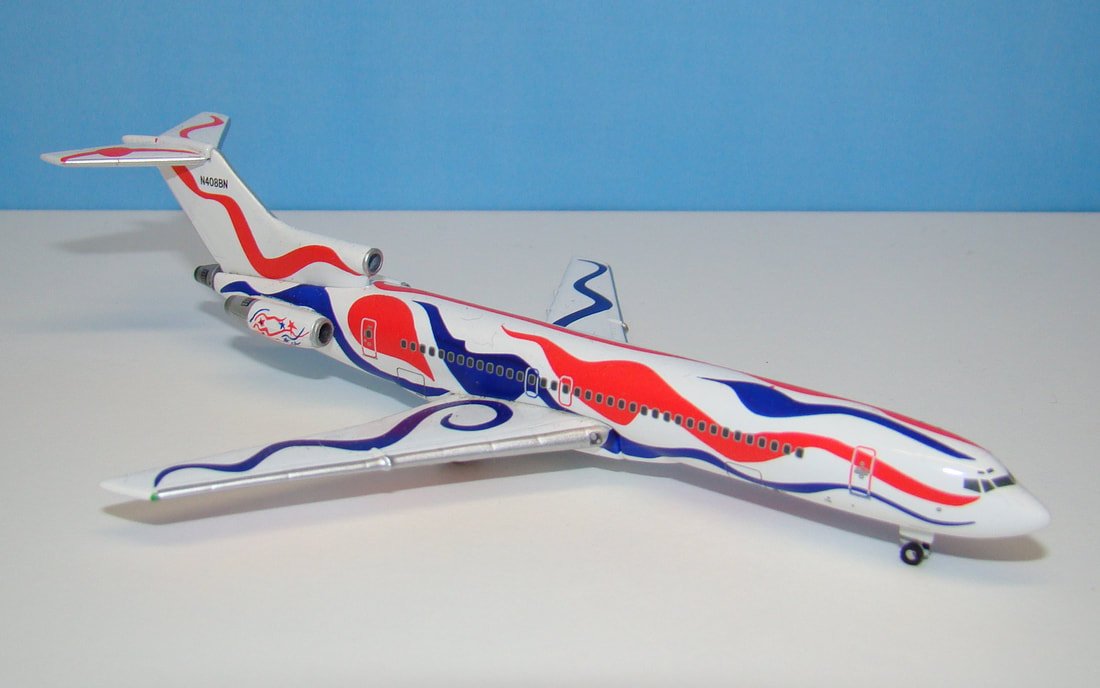
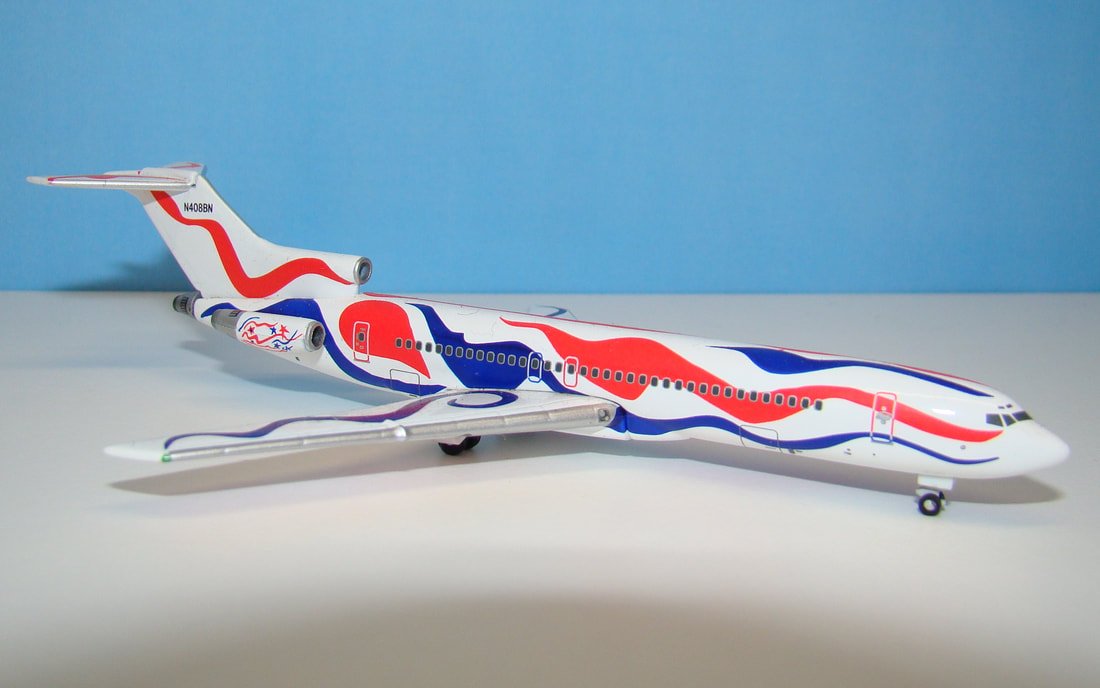
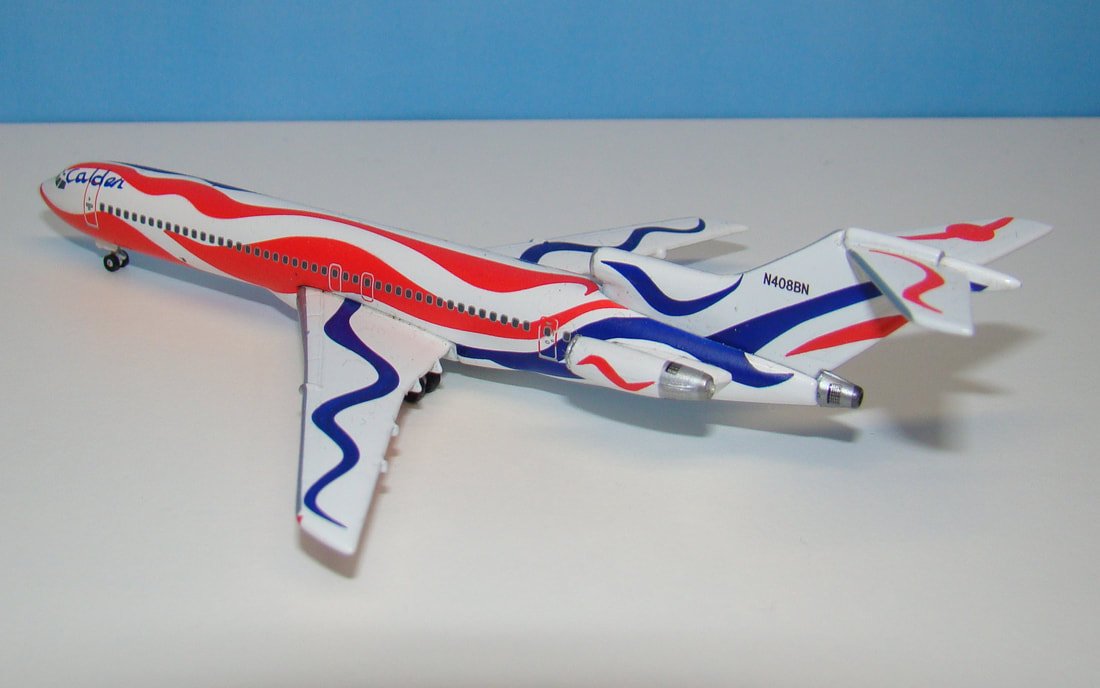
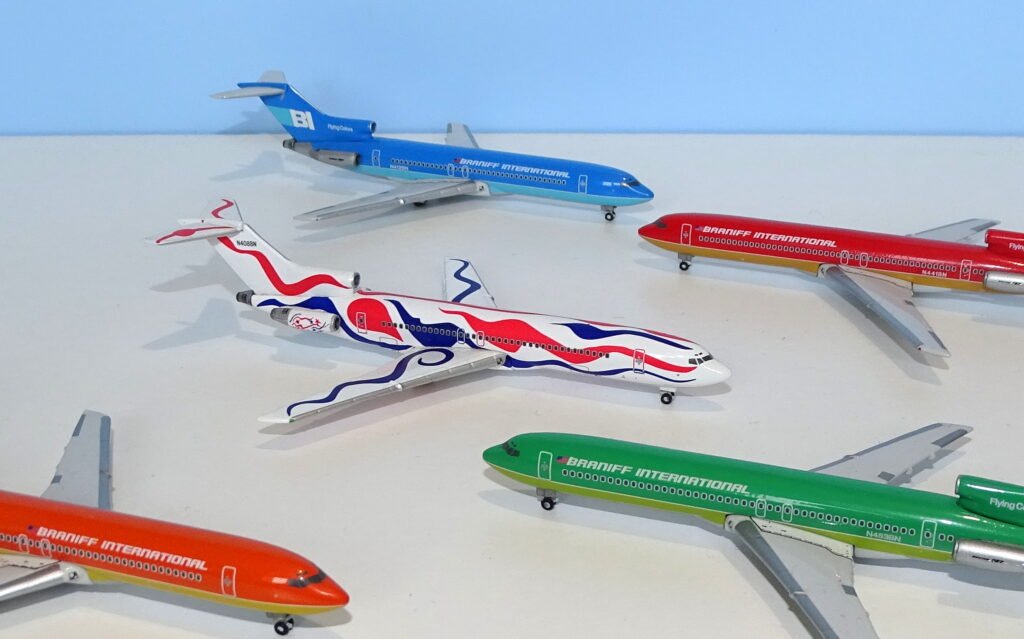
Regardless of the aircraft’s issues the design was a winner and N408BN spent a lot of 1976 touring airports on the Braniff network. Braniff received huge publicity and by the end of the year the airline claimed that the artwork was the most seen piece of art in history. Note the Gemini release above shows the aircraft as originally painted minus the snake / dragon.
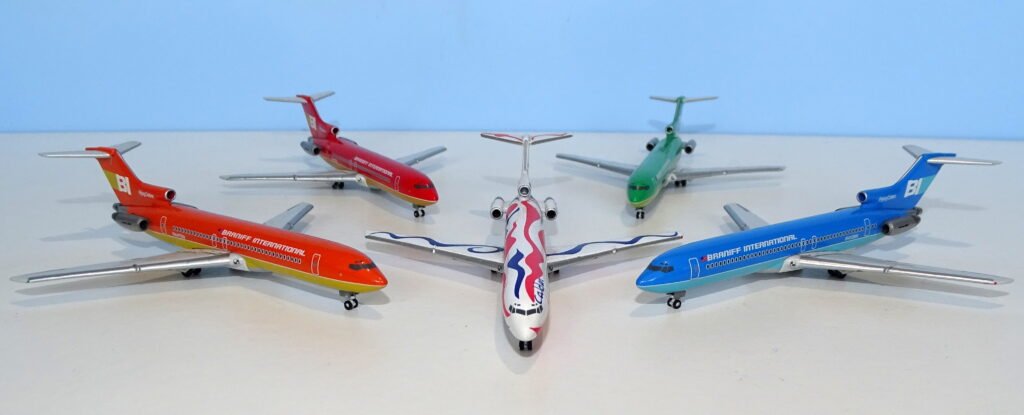
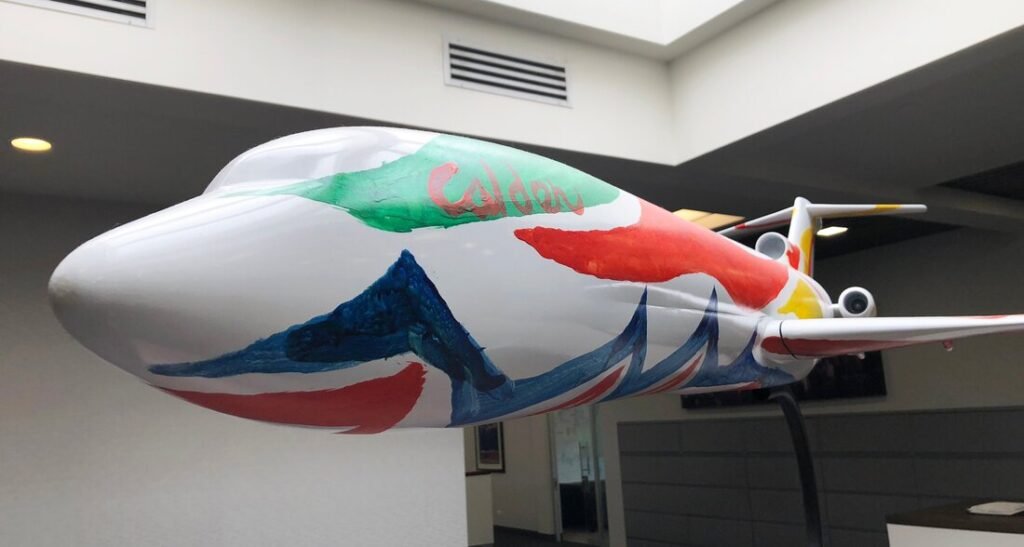
Calder was employed to paint a third aircraft – this time to be in the ‘Flying Colors of Mexico’. He had painted two models but sadly whilst in New York working on them with Braniff he died in 1976. Partly because without Calder to supervise the painting it wouldn’t be an original piece of art and partly out of respect following Calder’s death Braniff shelved the idea. Some of the artwork for the Mexico plane can be found on the Braniff pages here.
At the time Braniff was moving away from its gaudy colours towards the more refined Ultra look which debuted in 1977. N408BN herself was parked with the rest of the Braniff fleet in 1982 and would remain at DFW until 1984. Being one of the older less capable 727s she was not particularly sought after and so remained to join Braniff II on March 1, 1984, albeit repainted into the new carrier’s colours. She left their fleet on February 19, 1985 and was bought by International Air Leases on May 30.
Subsequently she had an active career operating short term leases to several deregulation startup airlines like Pride Air (June-November 1985), Arrow Air (December 1985 – January 1986), Skybus / World Airways (March-September 1986) and Air Atlanta (November 1986 – April 1987). She then went to Cayman Airways for a short while before being exported to Turkey for Toros Airways as TC-AJY. She was finally withdrawn in June 1990 and sent to Opa Locka. She was still there in 1993 in a partially dismantled state when she was blown up for the movie Bad Boys in November.
References
Nance, John J. 1984. Splash of Colors: The Self-destruction of Braniff. William Morrow & Company
The Braniff Pages