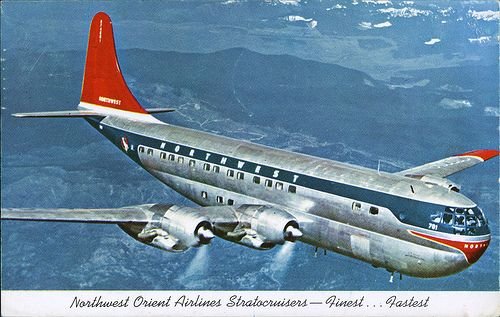
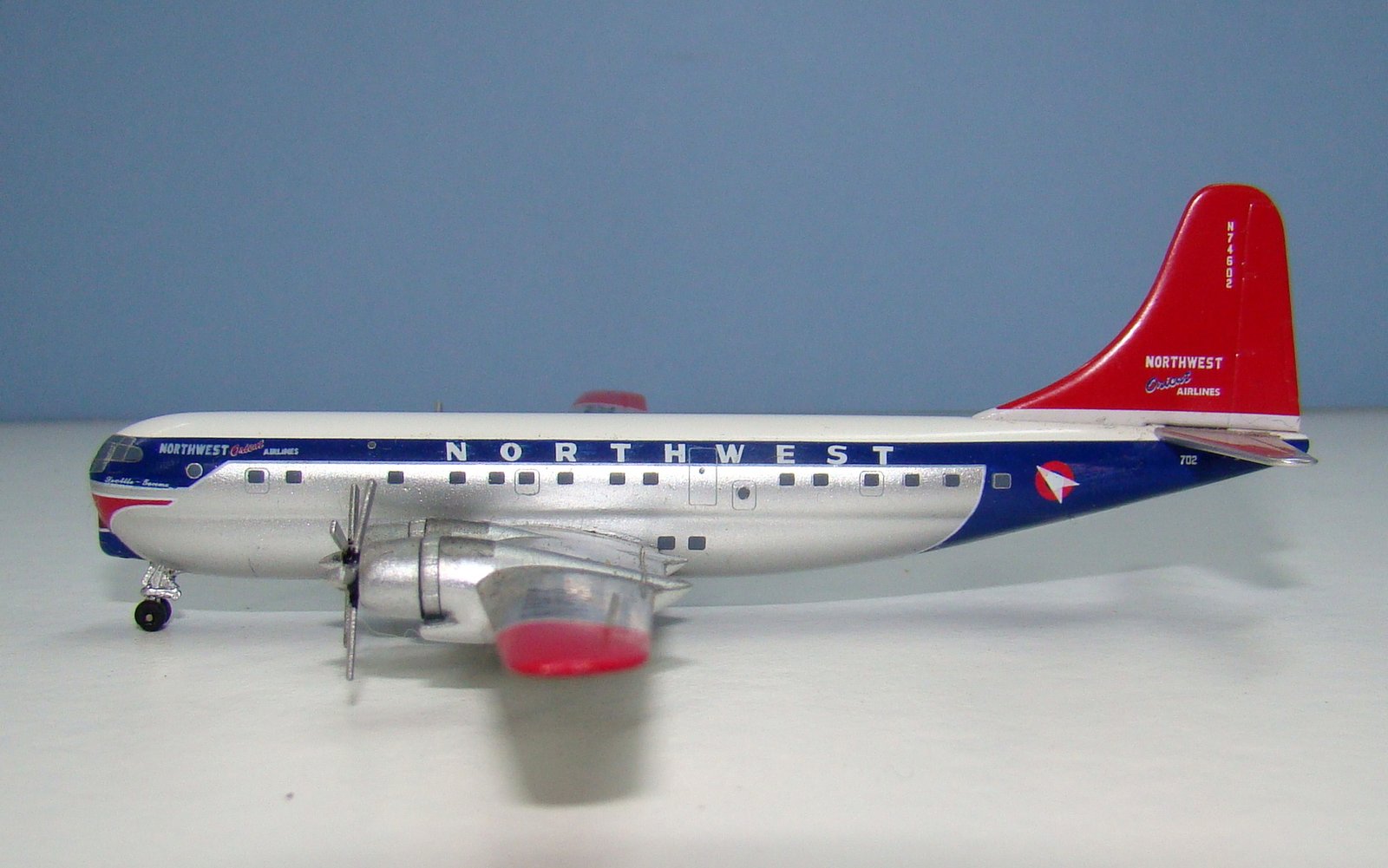
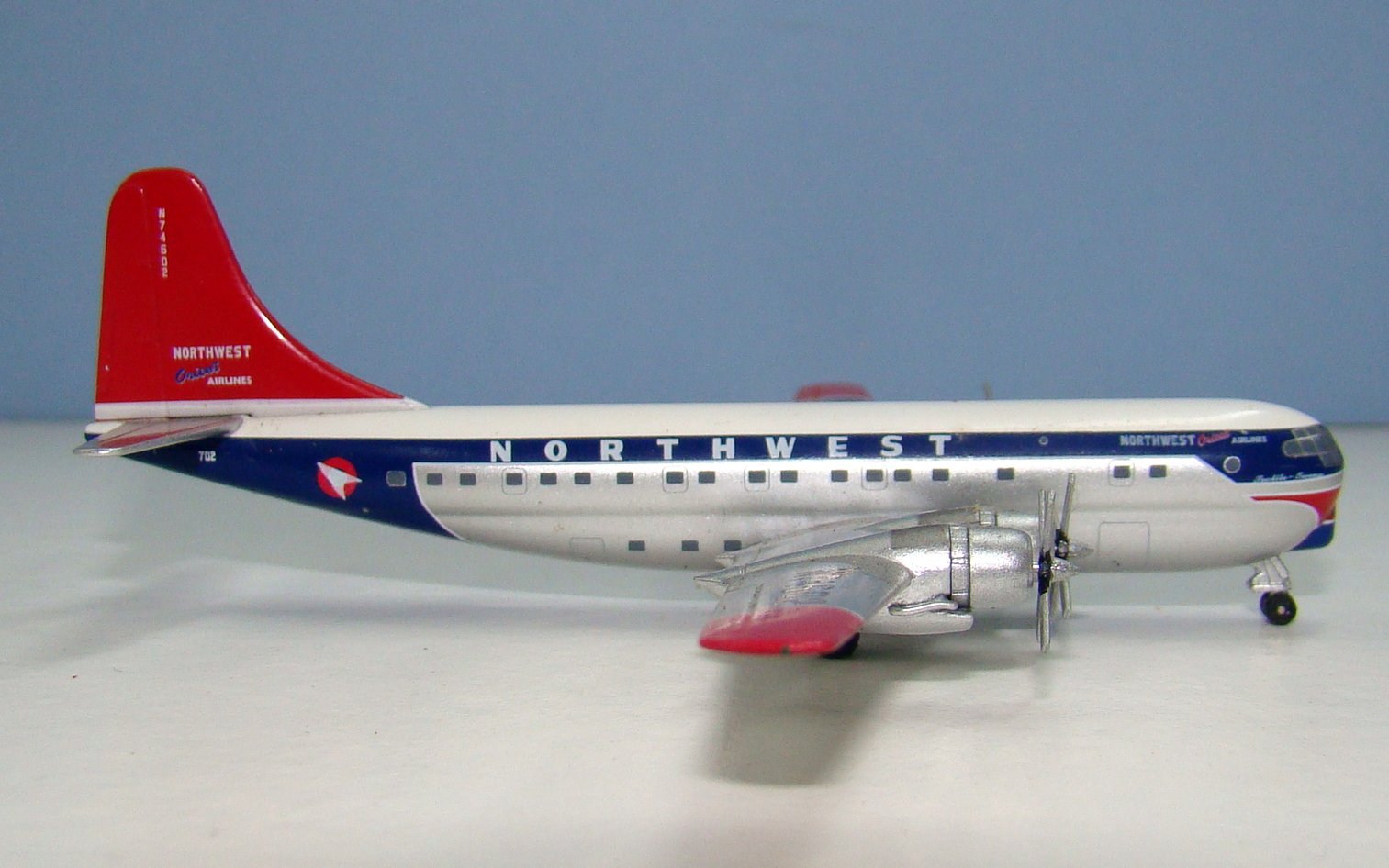
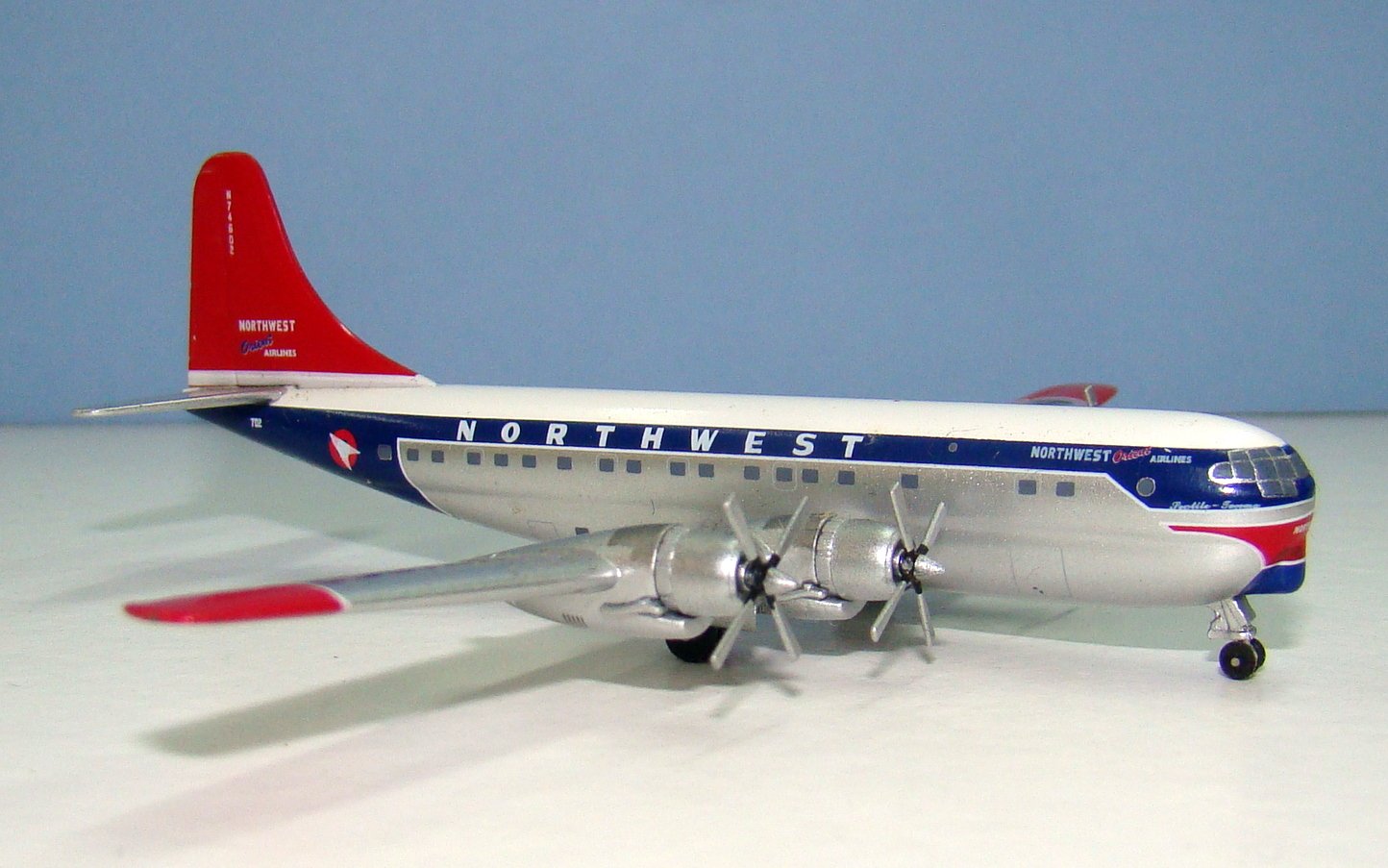
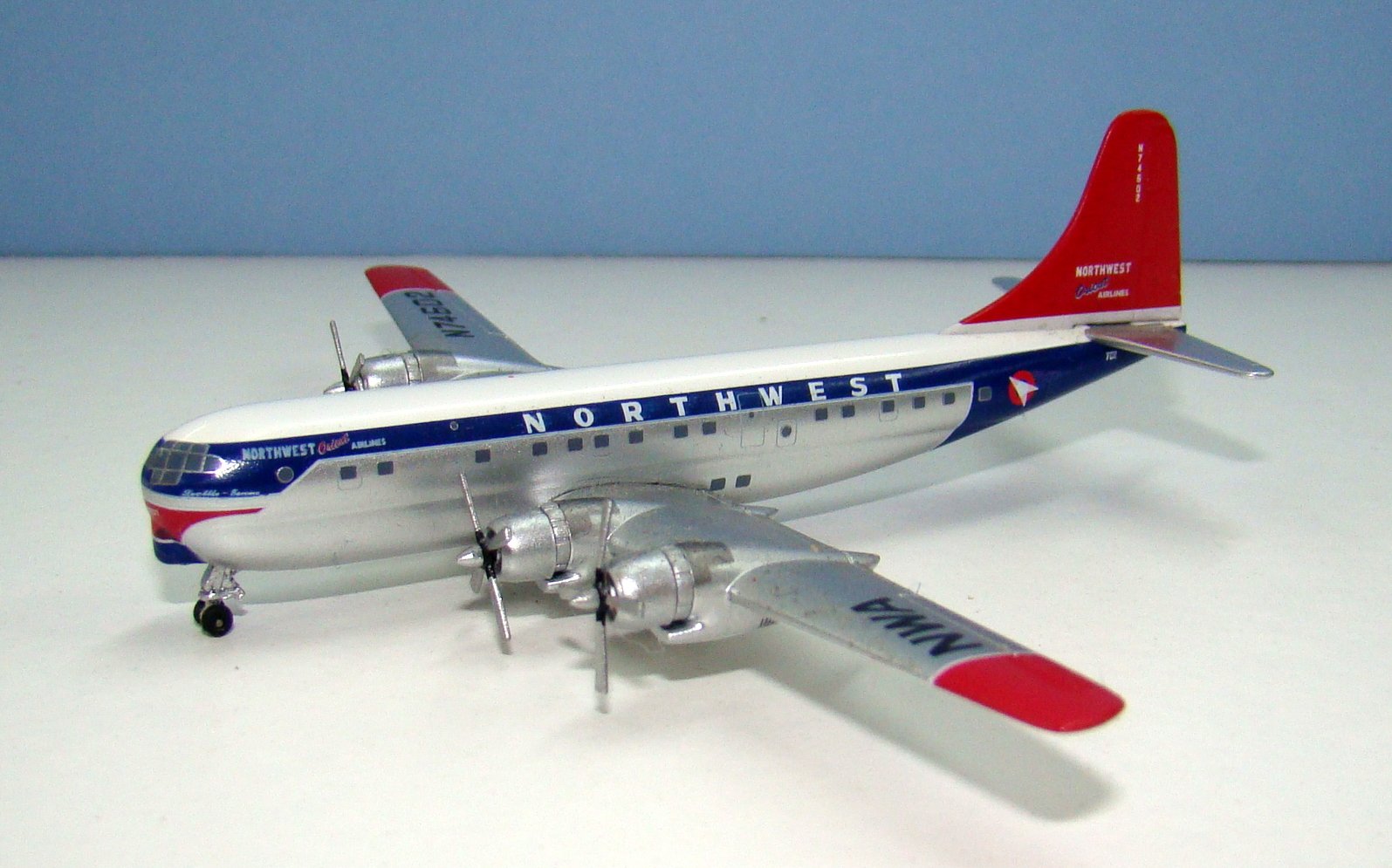
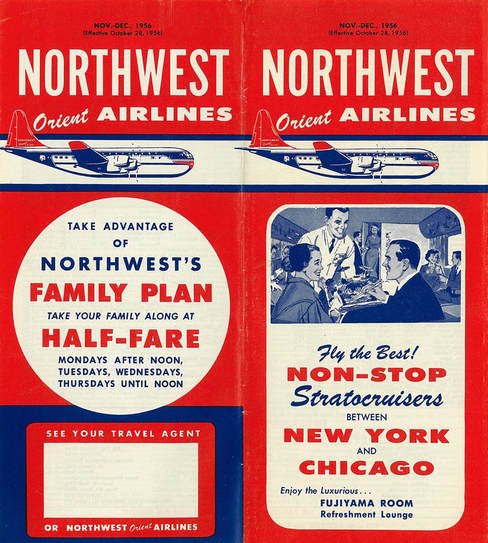
Boeing delivered only 55 Stratocruisers, and the civilian programme was always a footnote compared to the almost 900 KC-97 tanker transports, however the mighty Strat was the last word in luxury during the 1950s even if not the last word in economics. Northwest’s Strats were especially unique both in terms of their look and how they were utilised.
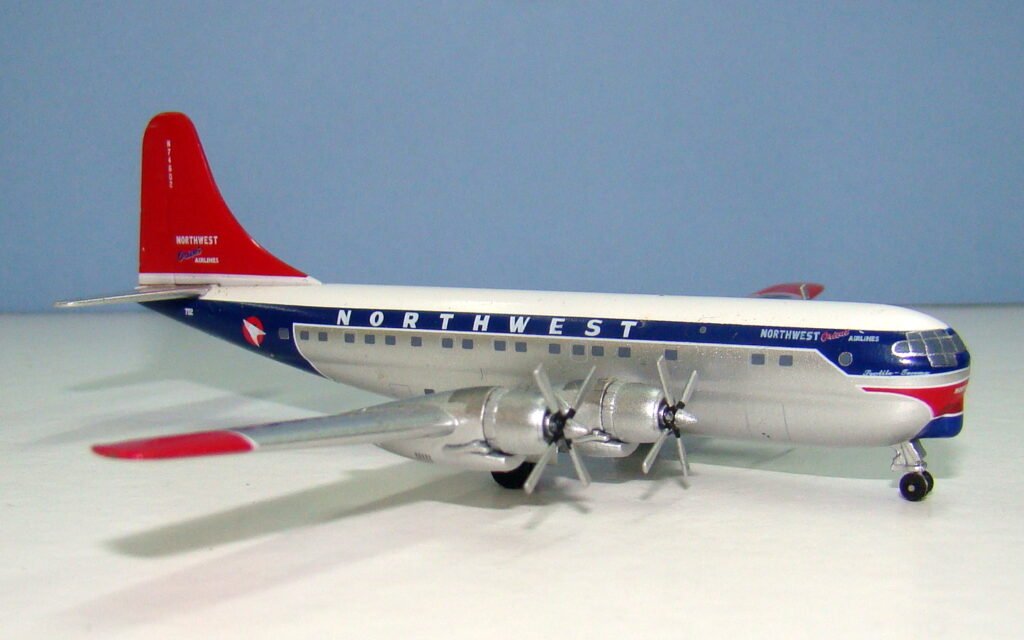
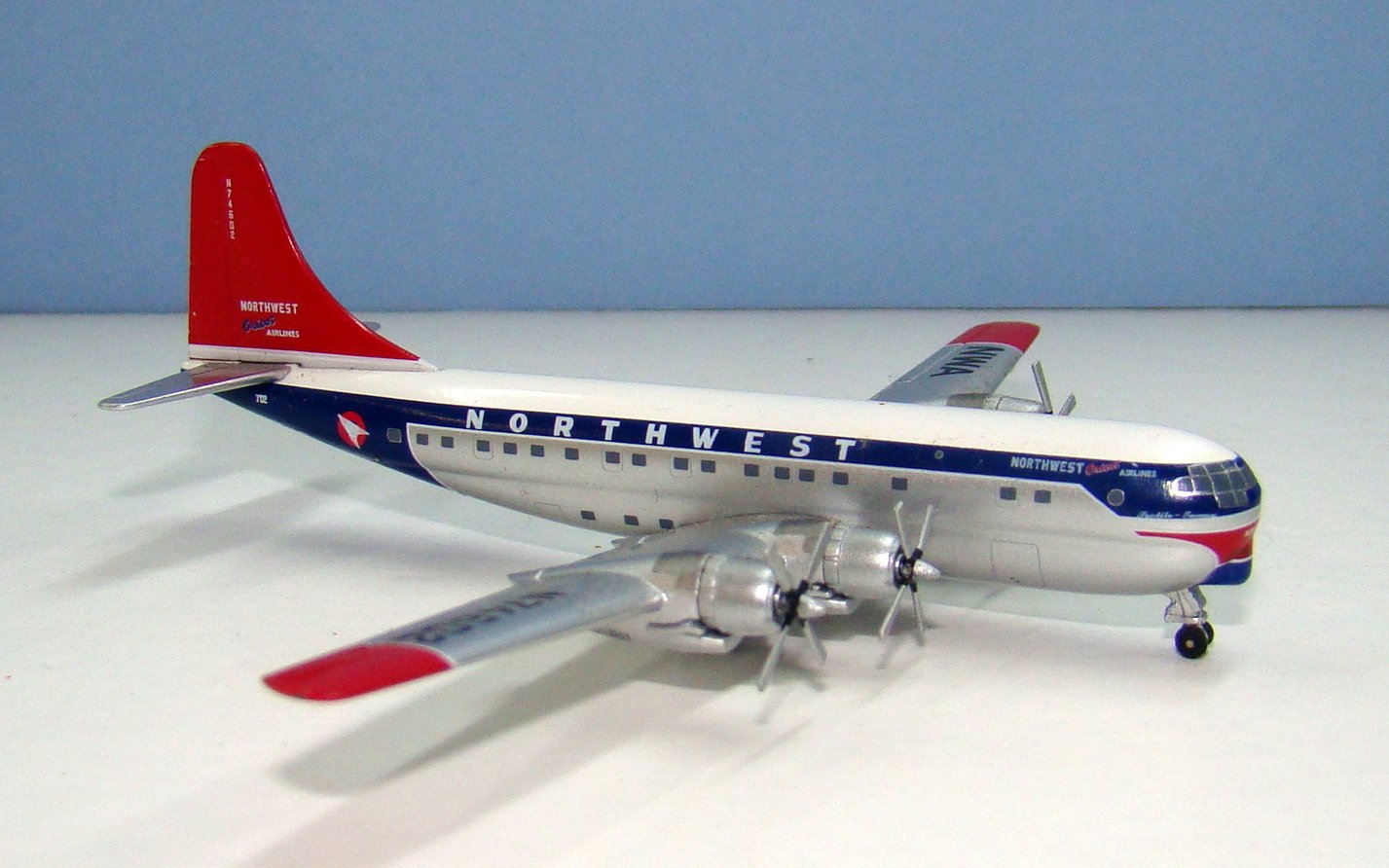
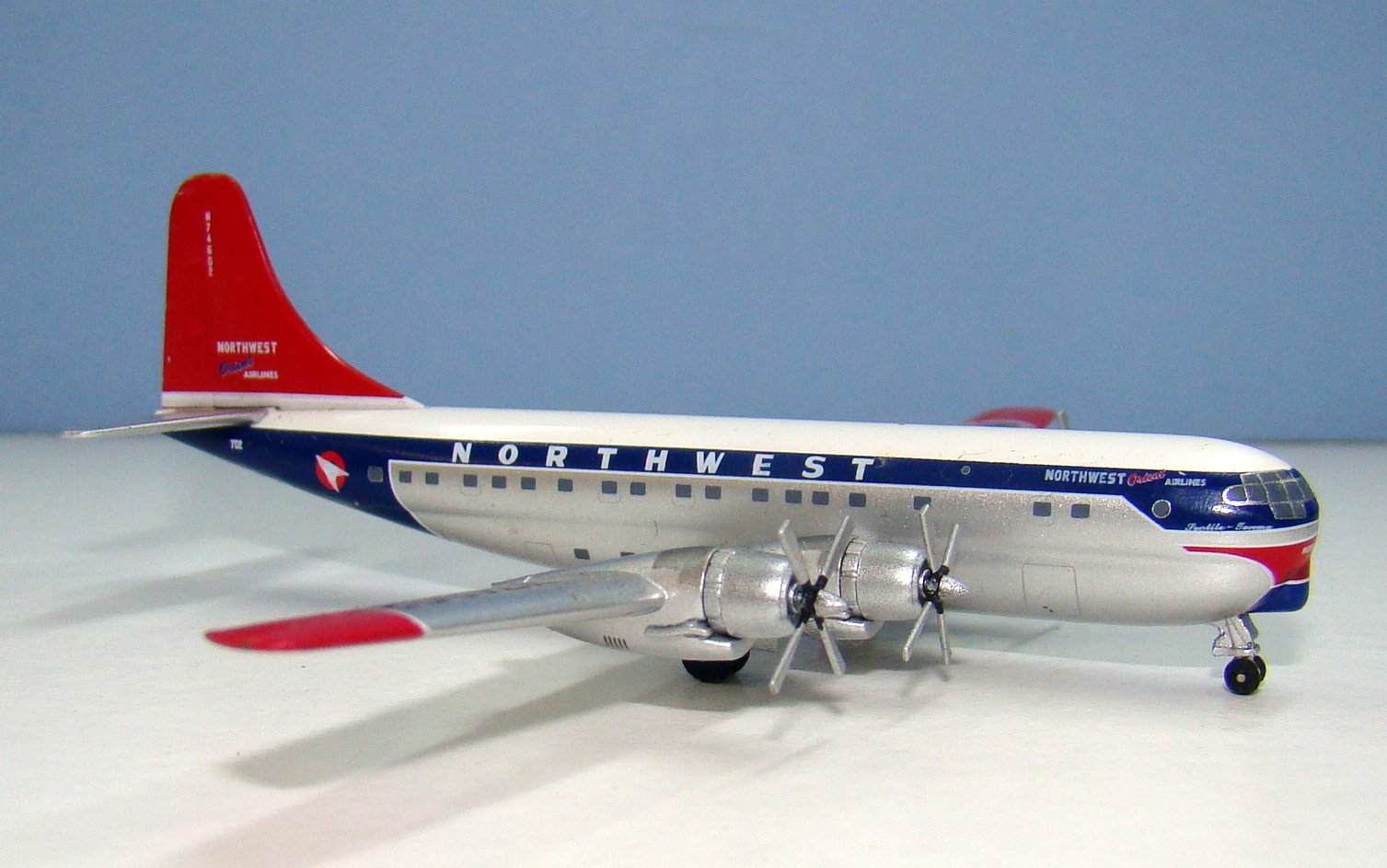
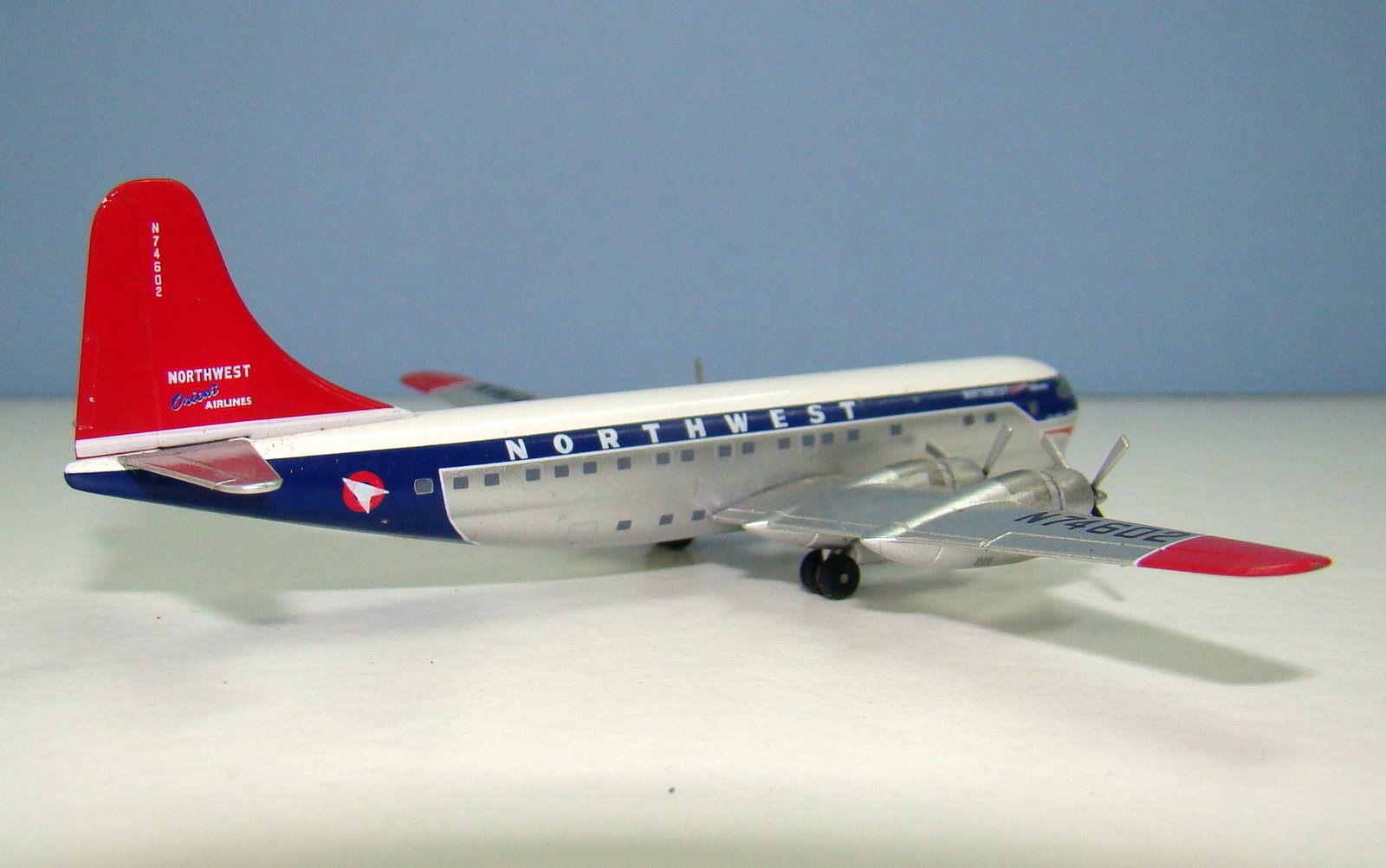
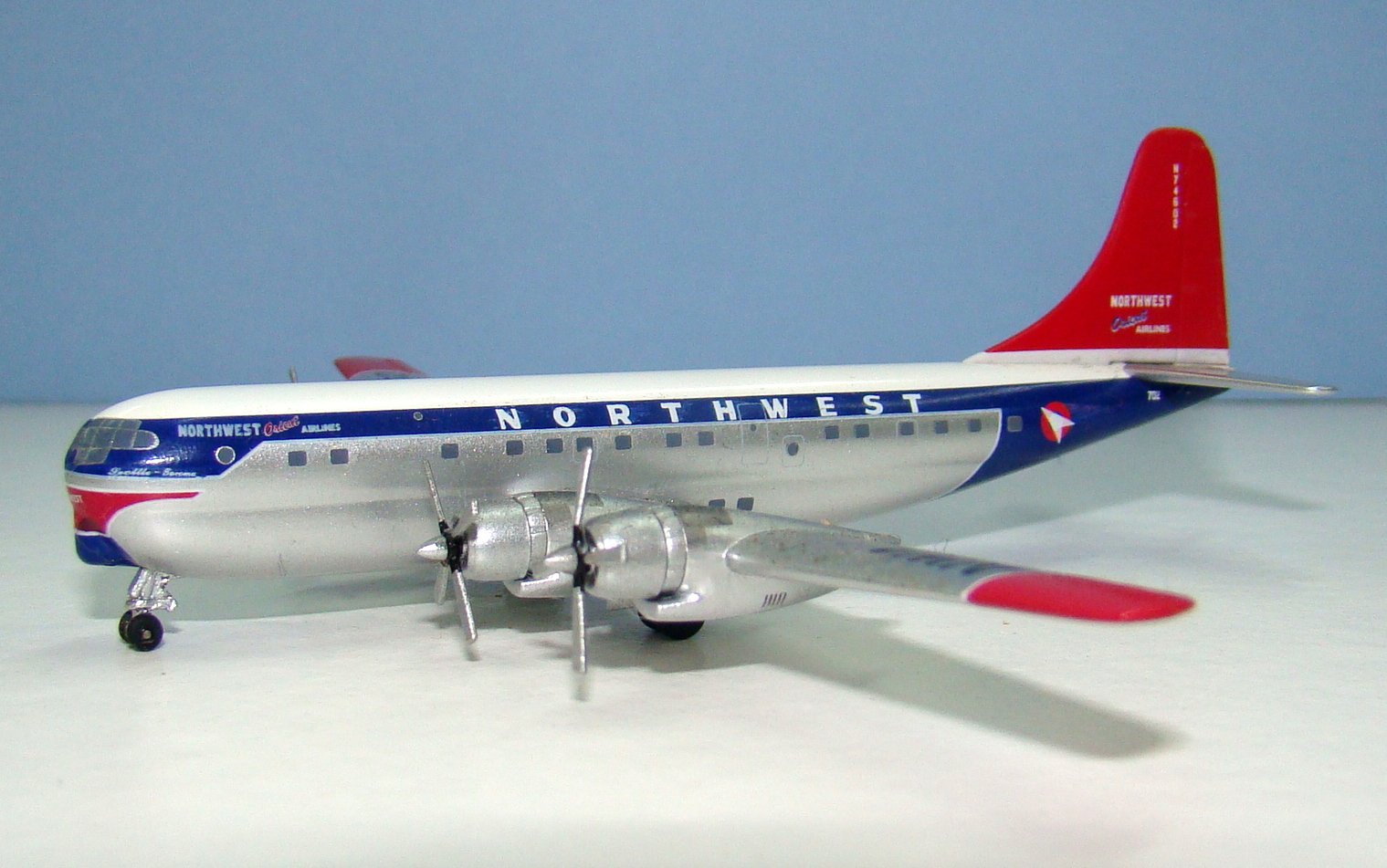
Northwest Airlines Boeing 377-10-30 Stratocruiser N74602 Aeroclassics 1:400 Scale Model Airliner
Northwest had emerged from World War Two with an excellent record for flying on the difficult routes up to Alaska and the Aleutians making good use of its extensive cold weather flying experience. Due to this experience, as well as President Truman’s loathing for Trippe’s Pan Am and United’s disinterest in international routes, Northwest was awarded a Great Circle Route to the Orient via Alaska in June 1946. Along with a transcontinental route awarded in 1944 Northwest was now one of the big boys.
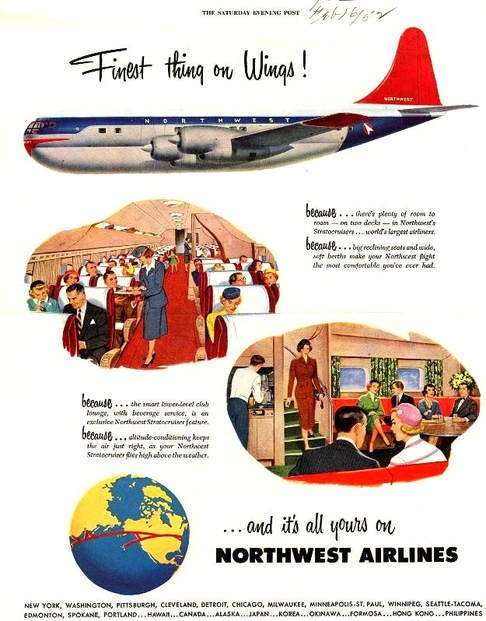
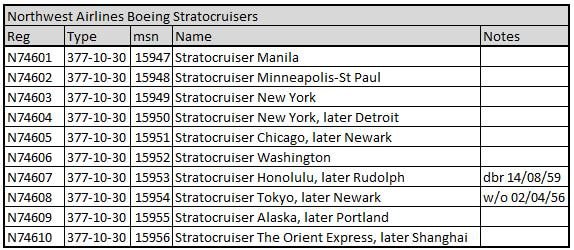
In the same month, March 1946, that DC-4s began service the airline placed an impressive order for 10 Boeing Stratocruisers. These became model 377-10-30s recognisably different from all other Strats due to their rectangular cabin windows. As with all Strats they were initially setup for luxury in layout that featured only 61 seats on the main deck. This could be reduced even further to just 28 when 16 berths were setup to sleep 24. The total seating capacity at this stage was 75, which at the time was considered ‘high density’!
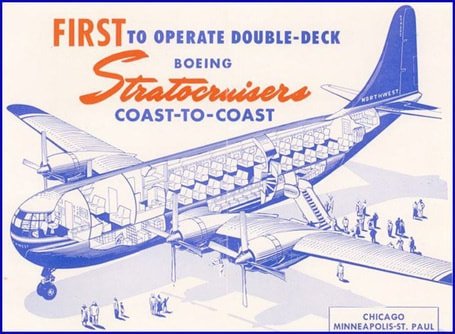
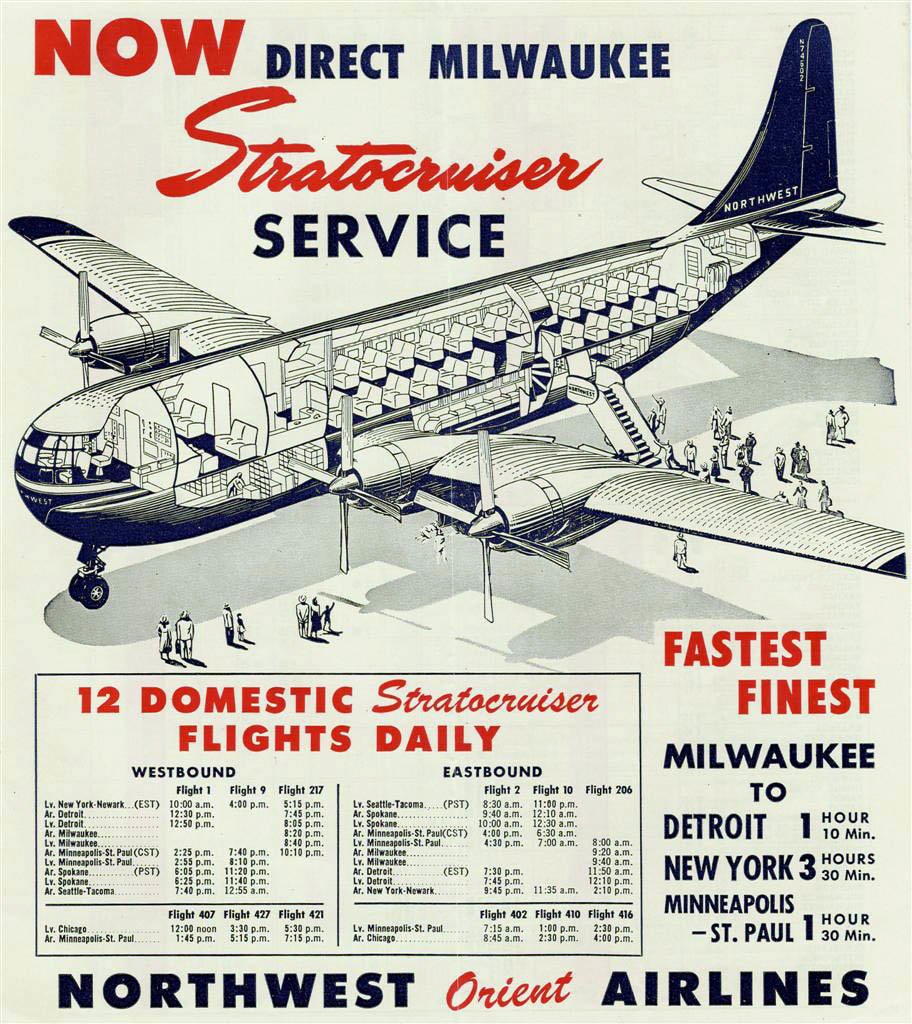
One of the main factors in the popularity of the Stratocruiser with the public was its massive size, which enabled a lot of internal space. The double bubble fuselage allowed the fitting of a lower floor lounge and cocktail bar. Plus despite its size and ungainly appearance the Stratocruiser was almost as fast as the Connie and set a number of point to point records.
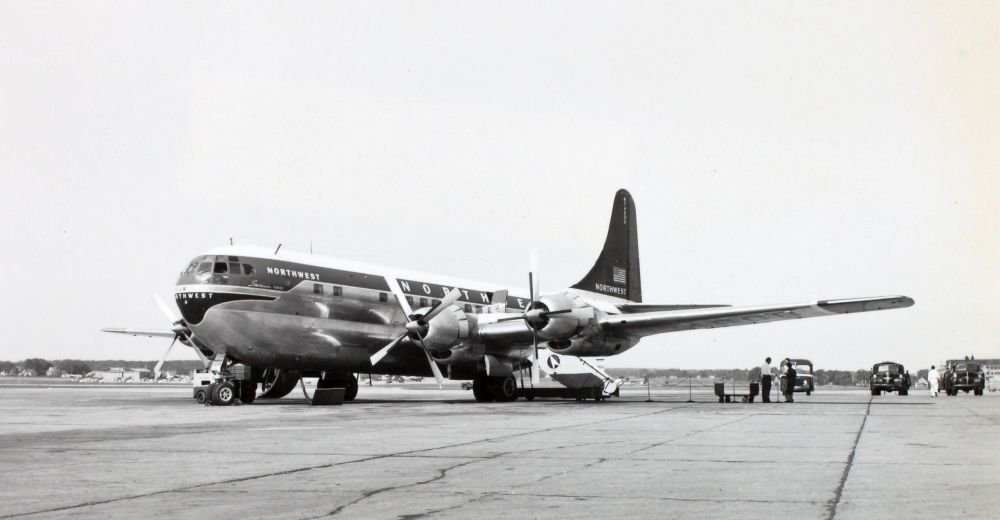
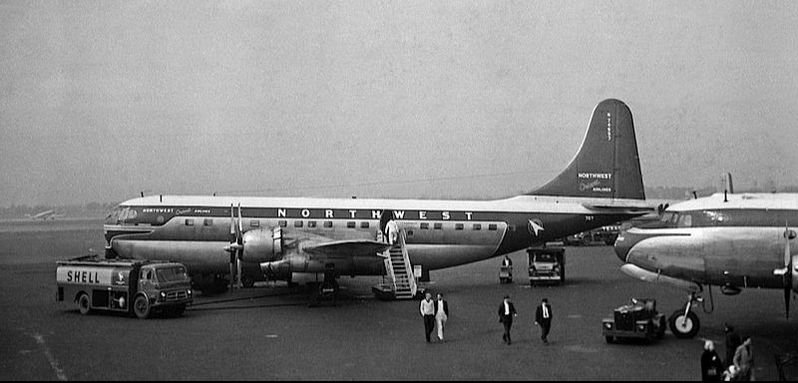
An NW Strat. From the Charles M. Daniels Collection posted to Wikipedia
The Strat flew for the first time on July 8, 1947, by which time all 55 had been ordered. The type was almost universally used on long haul over water flights by its operators however upon delivery of its first frame on June 22, 1949 Northwest put it first into service between Minneapolis and Chicago on August 1. Indeed this sort of routing was to become the standard for the Northwest Strats, which were the only ones to be regularly, and in fact mainly, used for US domestic services during their careers. The first aircraft to arrive was actually Northwest’s second Strat N74602 even though N74601 had been rolled out first, on February 18.
The Stratocruisers were a massive landmark for Northwest whose passengers up until then had mainly been used to flying in DC-3s. There was huge publicity both internal and external to the company. The Strat featured on the front page of almost every edition of the airline’s magazine, Northwest Passage News, plus even got into the 1949 edition of the Webster’s New International Dictionary in the red tail livery.
Northwest Airlines Boeing 377-10-30 Stratocruiser N74602 Aeroclassics 1:400 Scale Model Airliner
Northwest Airlines Boeing 377-10-30 Stratocruiser N74602 Aeroclassics 1:400 Scale Model Airliner
Northwest Airlines Boeing 377-10-30 Stratocruiser N74602 Aeroclassics 1:400 Scale Model Airliner
Northwest Airlines Boeing 377-10-30 Stratocruiser N74602 Aeroclassics 1:400 Scale Model Airliner
Northwest Airlines Boeing 377-10-30 Stratocruiser N74602 Aeroclassics 1:400 Scale Model Airliner
Northwest Airlines Boeing 377-10-30 Stratocruiser N74602 Aeroclassics 1:400 Scale Model Airliner
Northwest Airlines Boeing 377-10-30 Stratocruiser N74602 Aeroclassics 1:400 Scale Model Airliner
Northwest Airlines Boeing 377-10-30 Stratocruiser N74602 Aeroclassics 1:400 Scale Model Airliner
The famous comedian Bob Hope took his first flight in September 1949 when the Strats were for the first time put on the transcontinental Seattle-New York route and remarked:
“Boy this plane sure travels fast. I lay down for 40 winks, and at the end of 39 you tell me we’re about to land. Remember I still have that one wink coming. I start to “hic” in Chicago and when I get to the “cup” we are over La Crosse.”
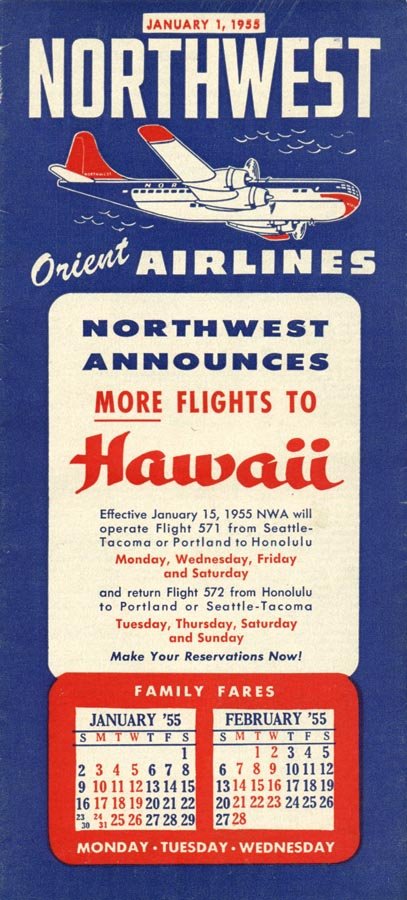
On November 6 services were launched to Honolulu from Seattle, a route that Northwest had been granted only in July 1948. Both United and Pan Am also operated to Hawaii with Strats. By December 21, 1949 all ten of the aircraft were in service. Northwest introduced for a promotion of its Hawaiian services what it called “the first aerial floor show on two floors”. This included hula dancers Luana Poepoe and Momi Nasaka along with guitarist Johnny Kaonohi (aka Johnny Pineapple). It gained great publicity and briefly the airline though of introducing it as a regular occurrence.
N74607 at Midway in 1957. Photo by Jon Proctor from Wikipedia
Other promotional skits included “Strato Fashion Flights”, which were literally fashion shows featuring University of Minnesota coeds as the models. Northwest continued to utilise the Stratocruisers on domestic routes connecting destinations between Seattle and New York or Washington DC. Stops included Chicago-Detroit-Milwaukee-Minneapolis and Spokane.
In fact it wasn’t until April 28, 1952 that the Stratocruisers were placed on the long range Pacific routes. They then flew a Seattle-Anchorage-Tokyo-Okinawa-Manila service. Nonetheless the reliability and economics of the Strats didn’t appear to suit the Pacific and in 1955 they were replaced by Super Constellations. In 1953 Northwest reconfigured its Strats into a more sustainable 83 seat layout. They also gained weather radar in a small pimple style radome added to the blunt nose.
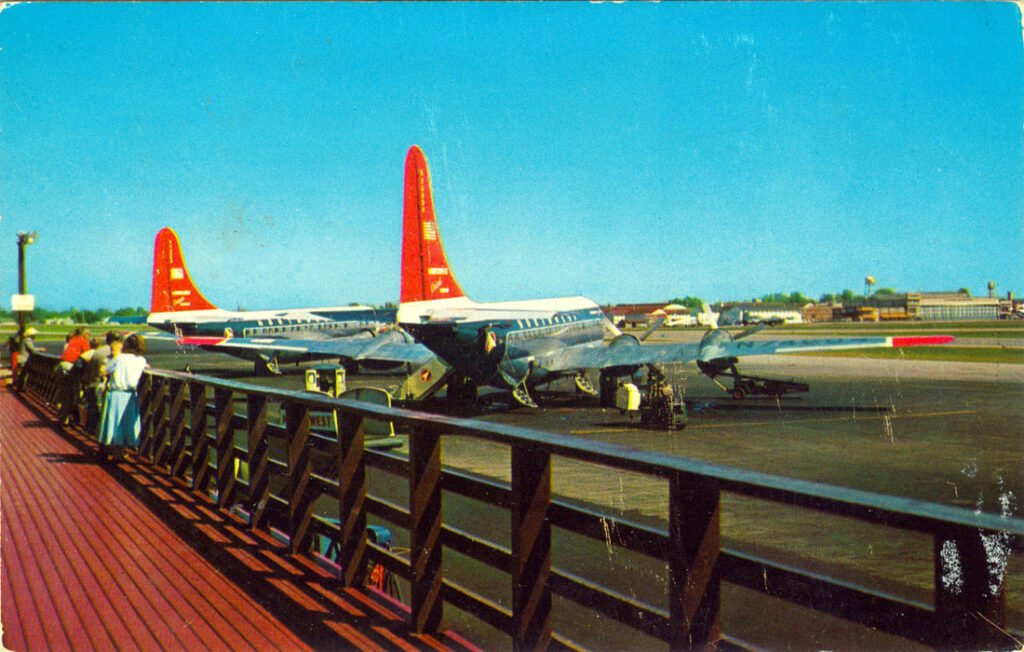
A pair of Strats at Minneapolis in 1960, their last year of service
Following the type’s withdrawal from the Great Circle route they returned in force to domestic services. It continued to fulfil these high profile tasks giving Northwest and admirable reputation for service until the type’s final withdrawal on September 15, 1960. By 1959 the Strats had mainly been replaced by DC-7Cs however even at this late stage Strats could still be seen plying the routes between Washington-Cleveland-Detroit, Washington-Pittsburgh-Cleveland-Detroit, New York-Minneapolis, New York-Milwaukee and Chicago-Minneapolis.
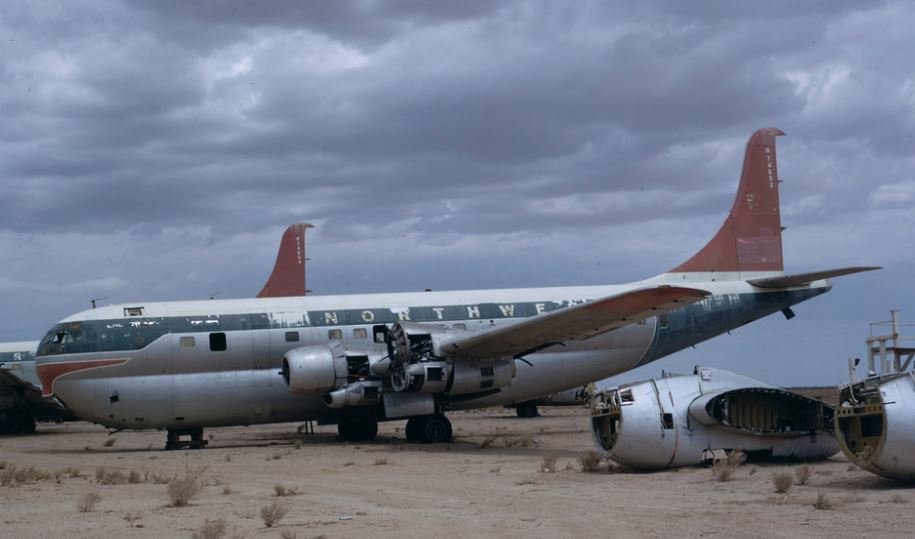
N74602 has seen better days in this shot
The eight surviving Northwest Strats were traded in to Lockheed in part exchange for new Electras. One aircraft, N74608, had been destroyed in 1956 when it ditched into Puget Sound whilst N74607 had been badly damaged in an internal fire caused by an exploding Oxygen bottle on July 14, 1959. Eventually several were used for Guppy conversions by Aero Spacelines.
References
1972. Davies, R.E.G. Airlines of the United States since 1914 1986. Yenne, B. Northwest Orient. Bison Books 2001. Hewson R. Airlife’s Classic Airliners: Boeing Stratocruiser. Airlife