By the late 1950s Northwest had solidified its place as a prime mover across the Pacific Ocean, but the landscape was changing and to keep its place it needed to select equipment to take it out of the piston age and into the jet age. Few were surprised when it looked towards Douglas for its first jets, however they would wear the red tail for less than four years.
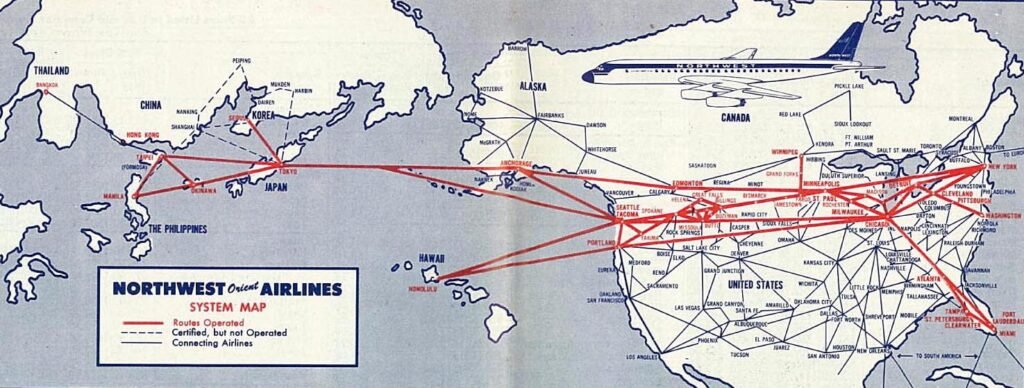
By 1957 the Northwest Orient Pacific route network connected Minneapolis St Paul and Seattle with Tokyo, Seoul, Manila, Okinawa and Taipei on the ‘Great Circle Route’ via either Anchorage or Shenya (in the Aleutians). The primary equipment for these routes was Douglas DC-7Cs and despite dalliances with both Boeing Stratocruisers and Lockheed Super Constellations Northwest had been a strong Douglas customer for many years.
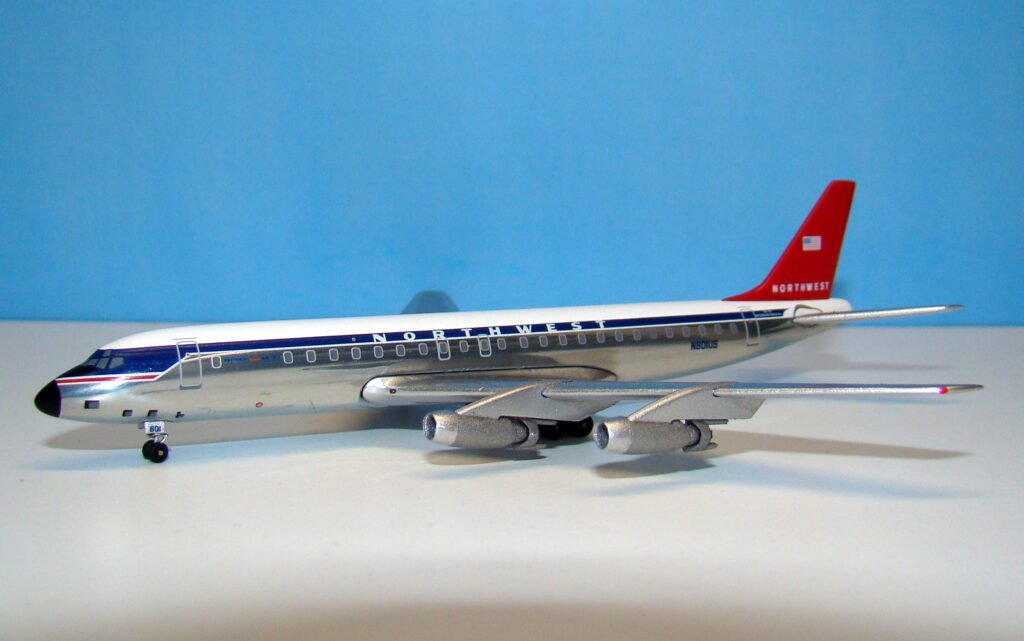
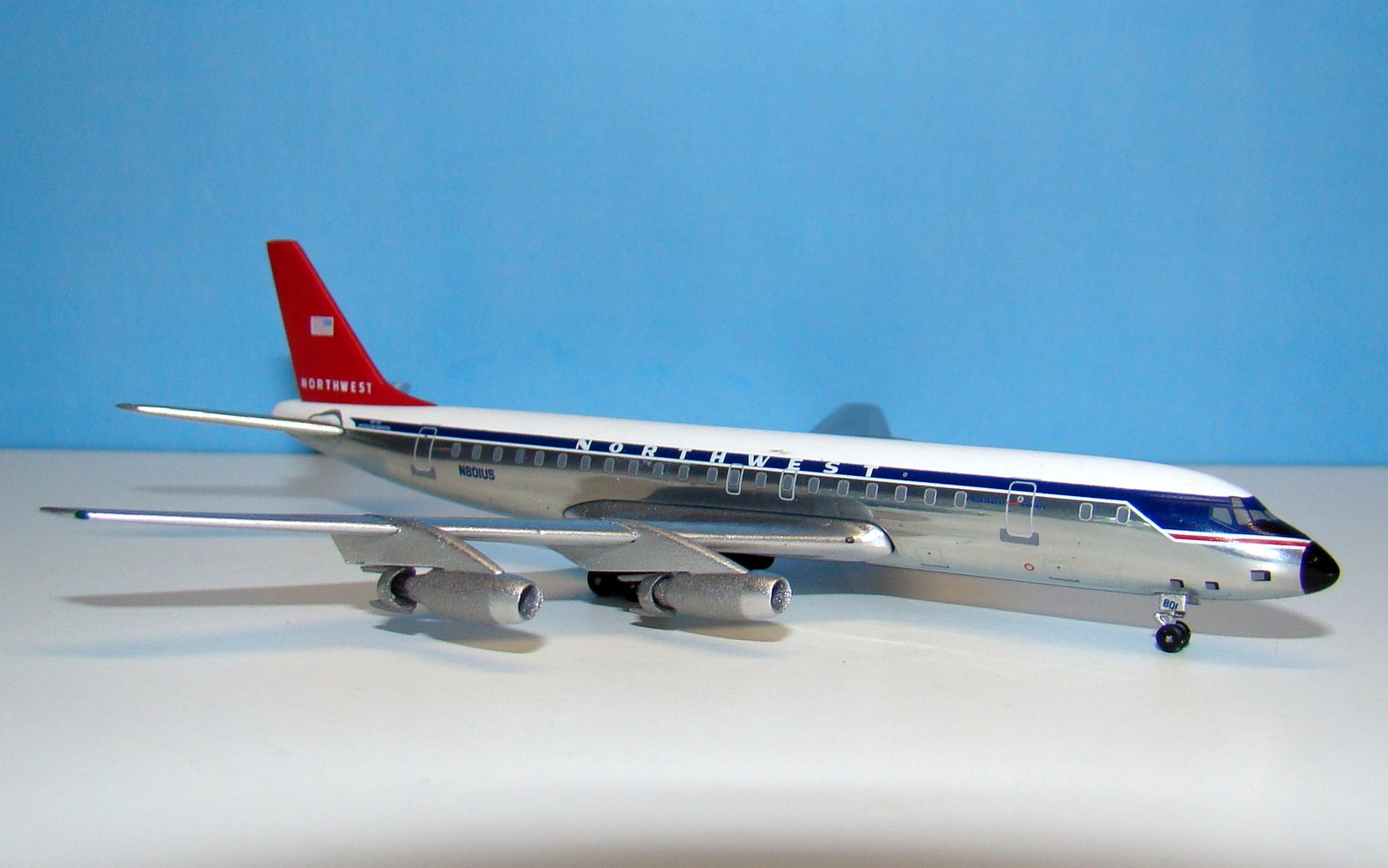
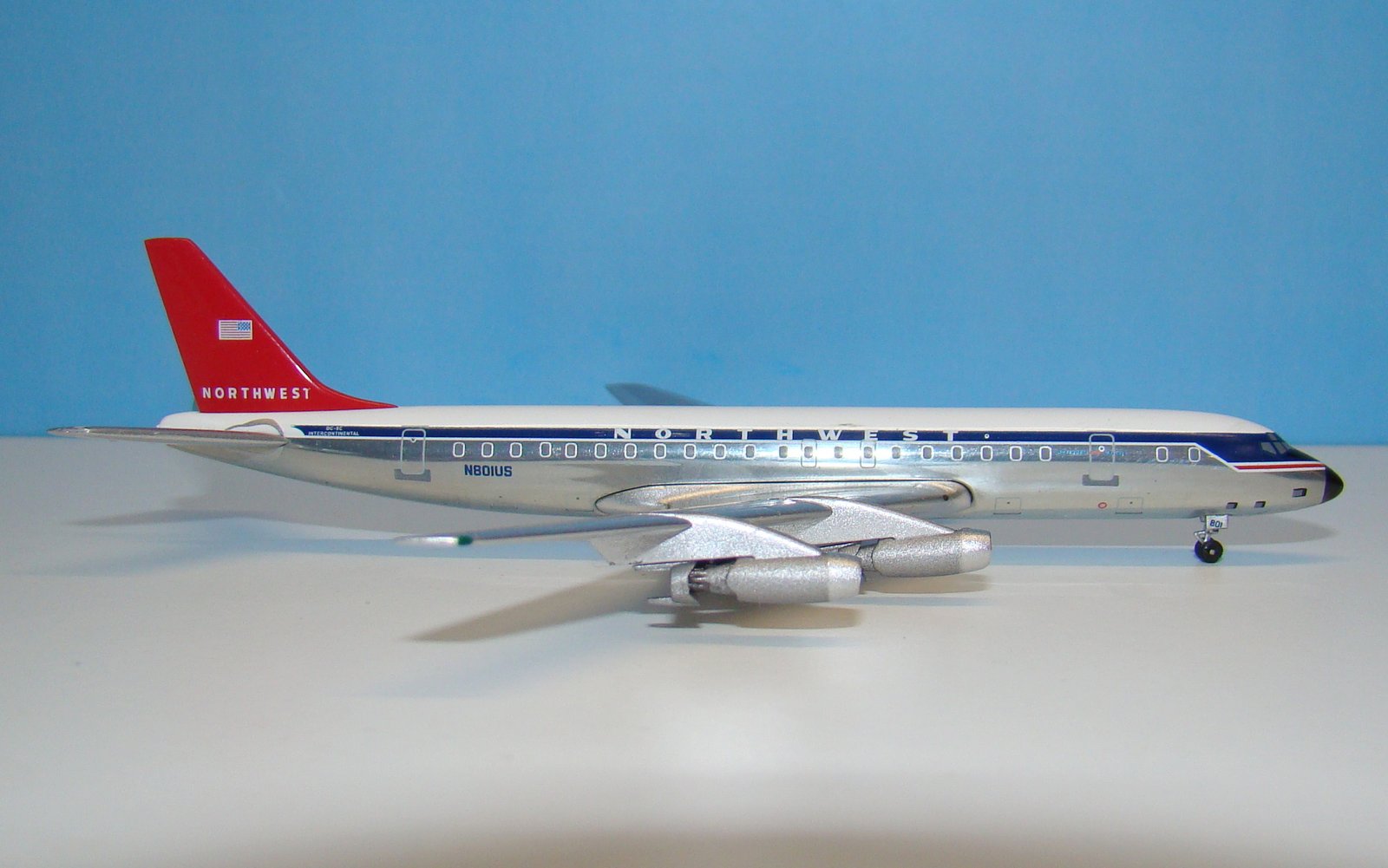
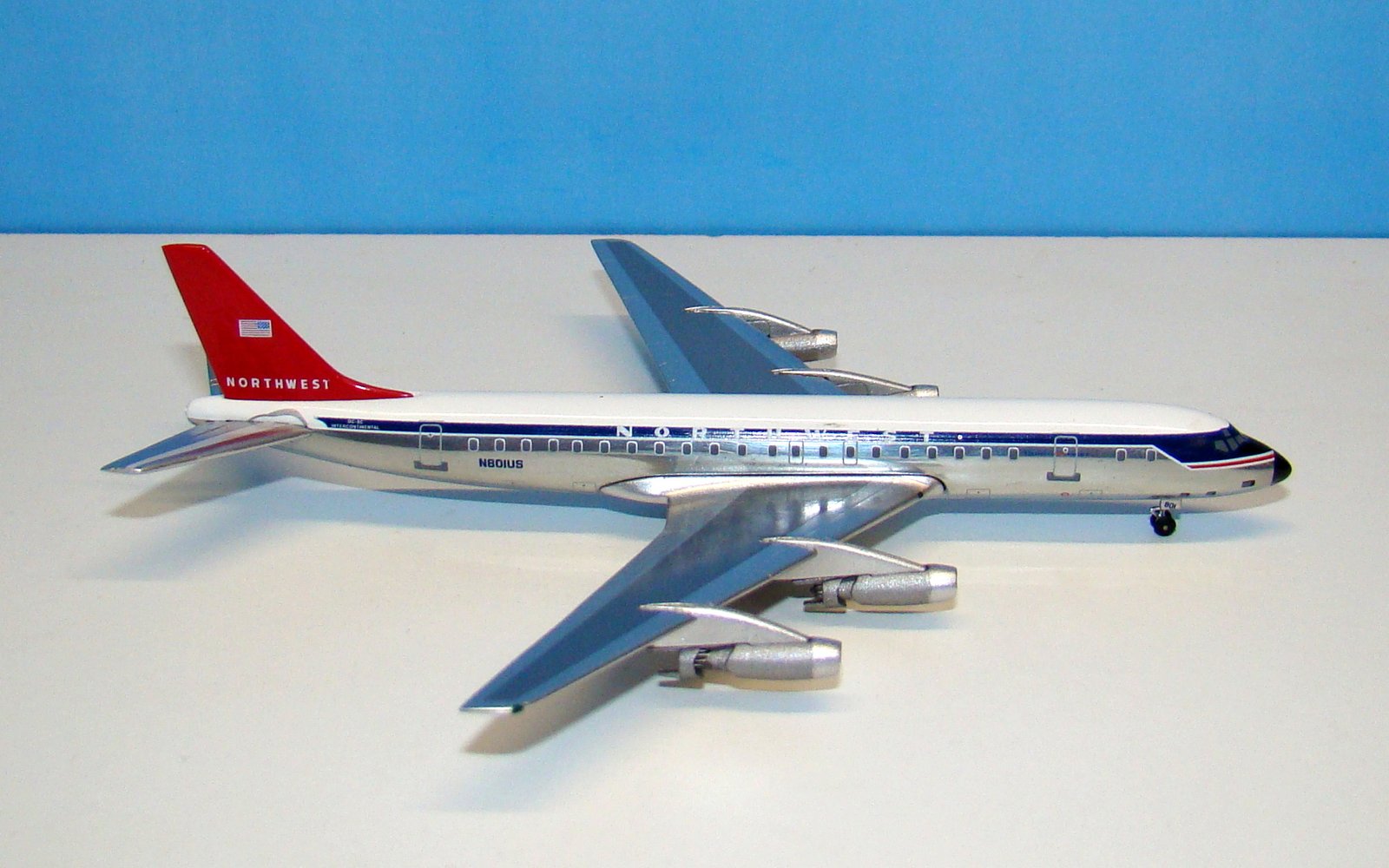
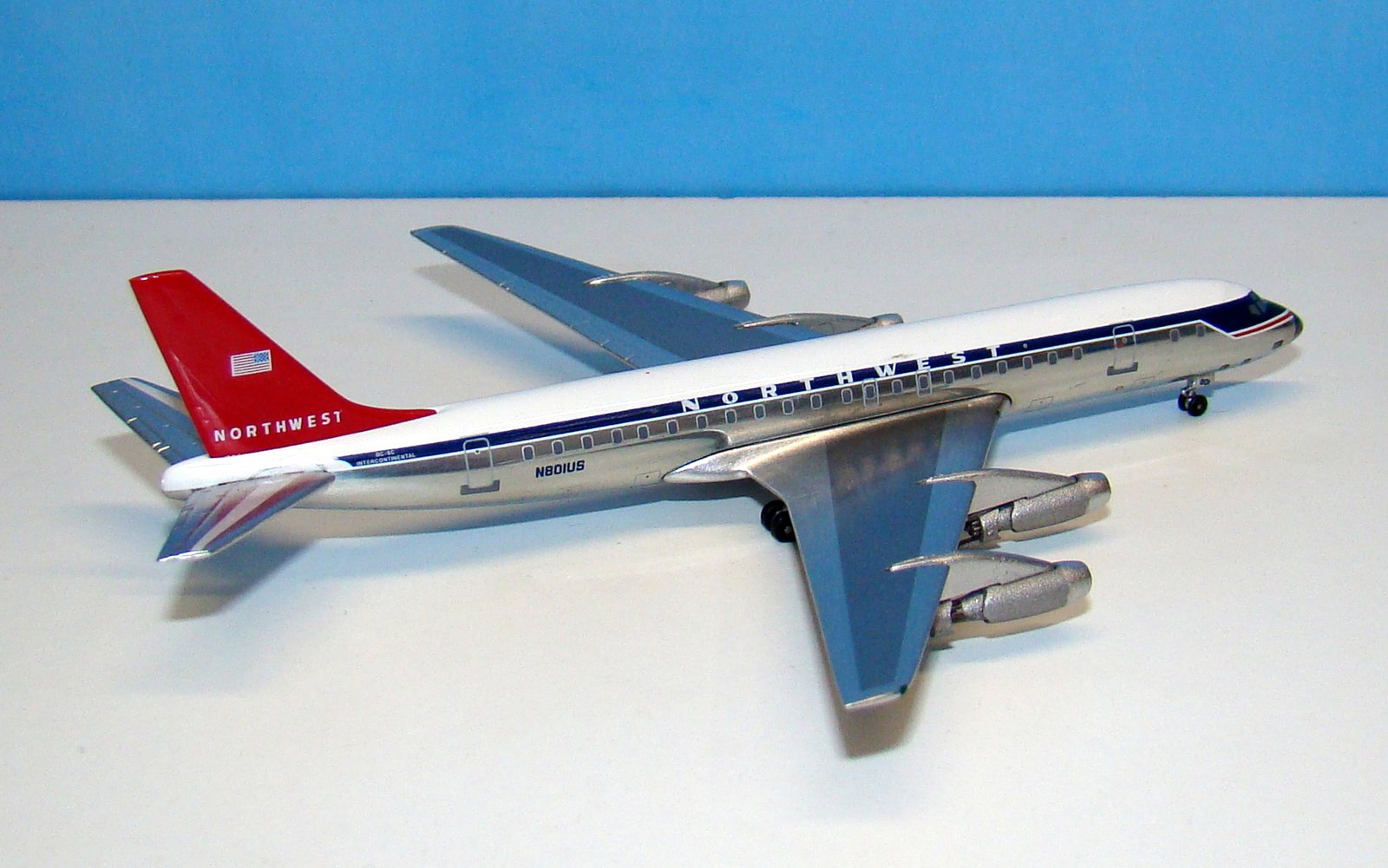
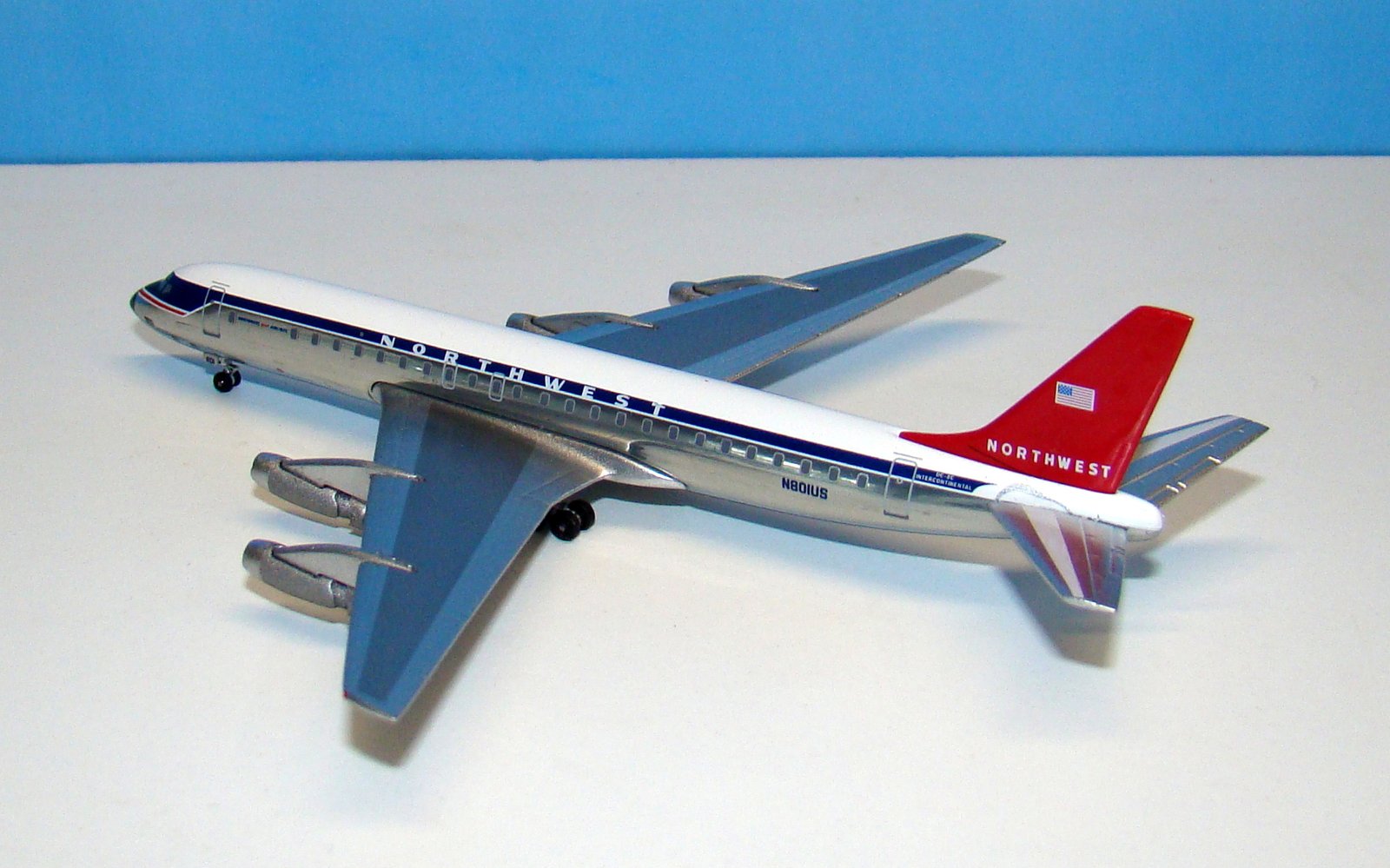
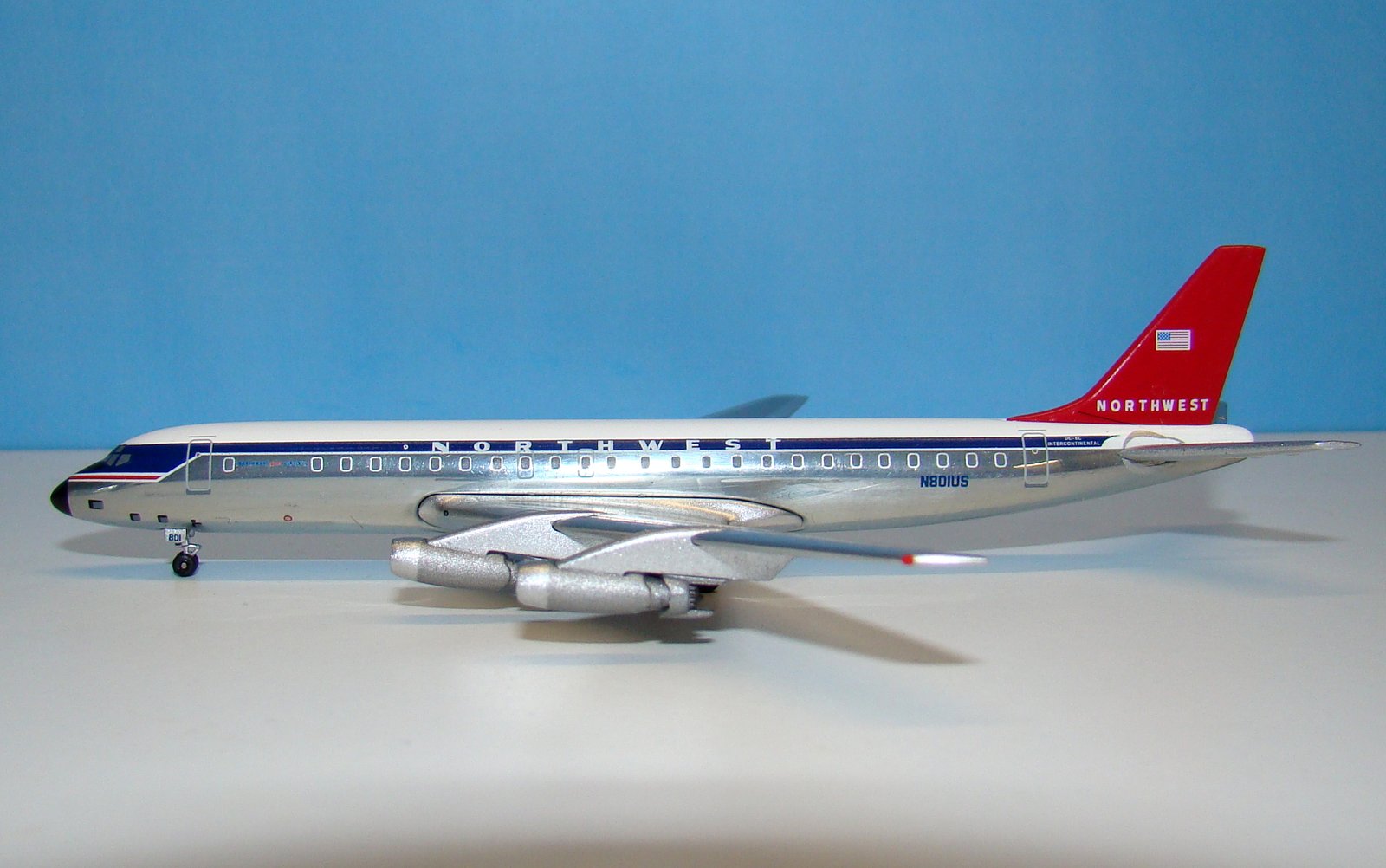
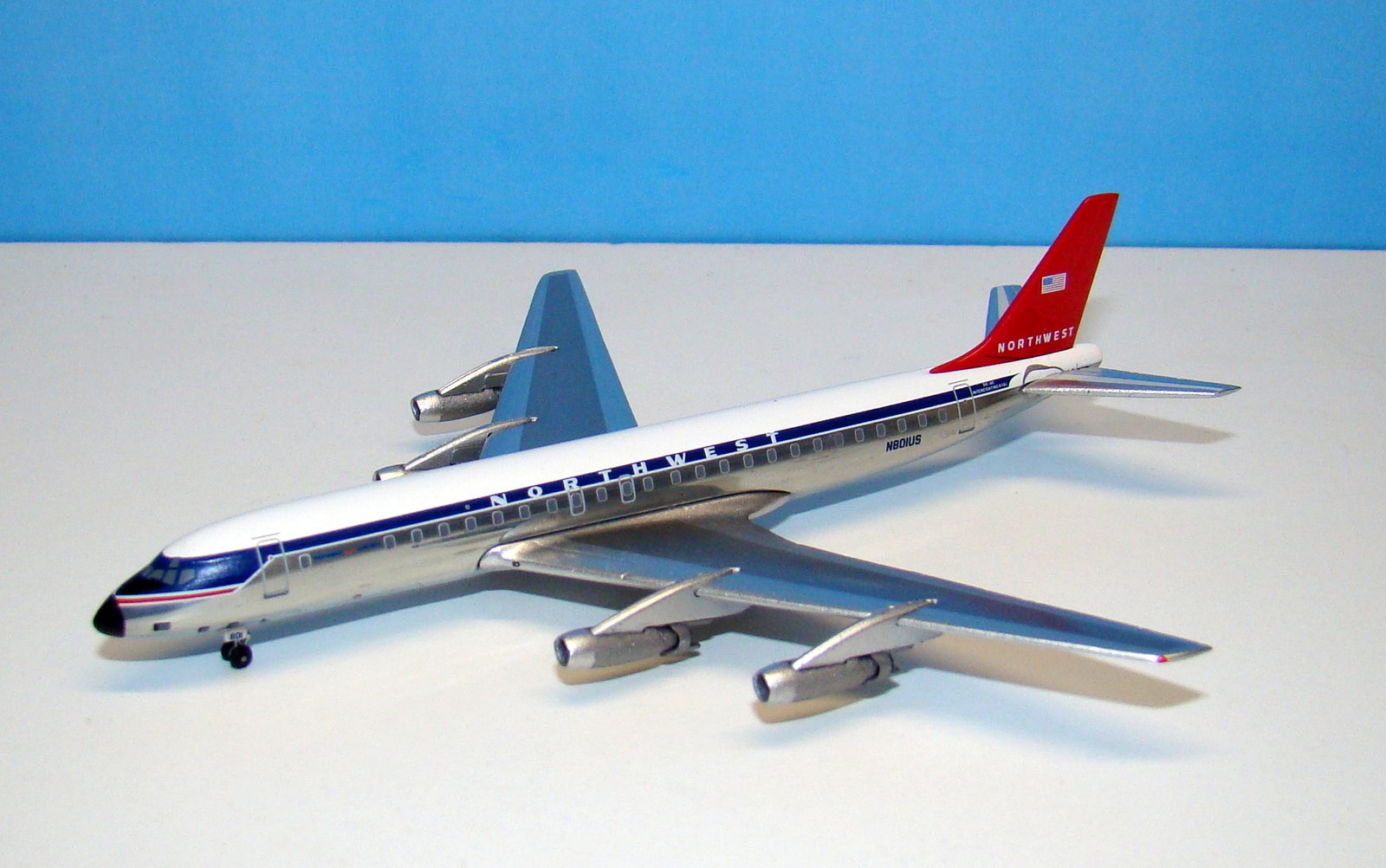
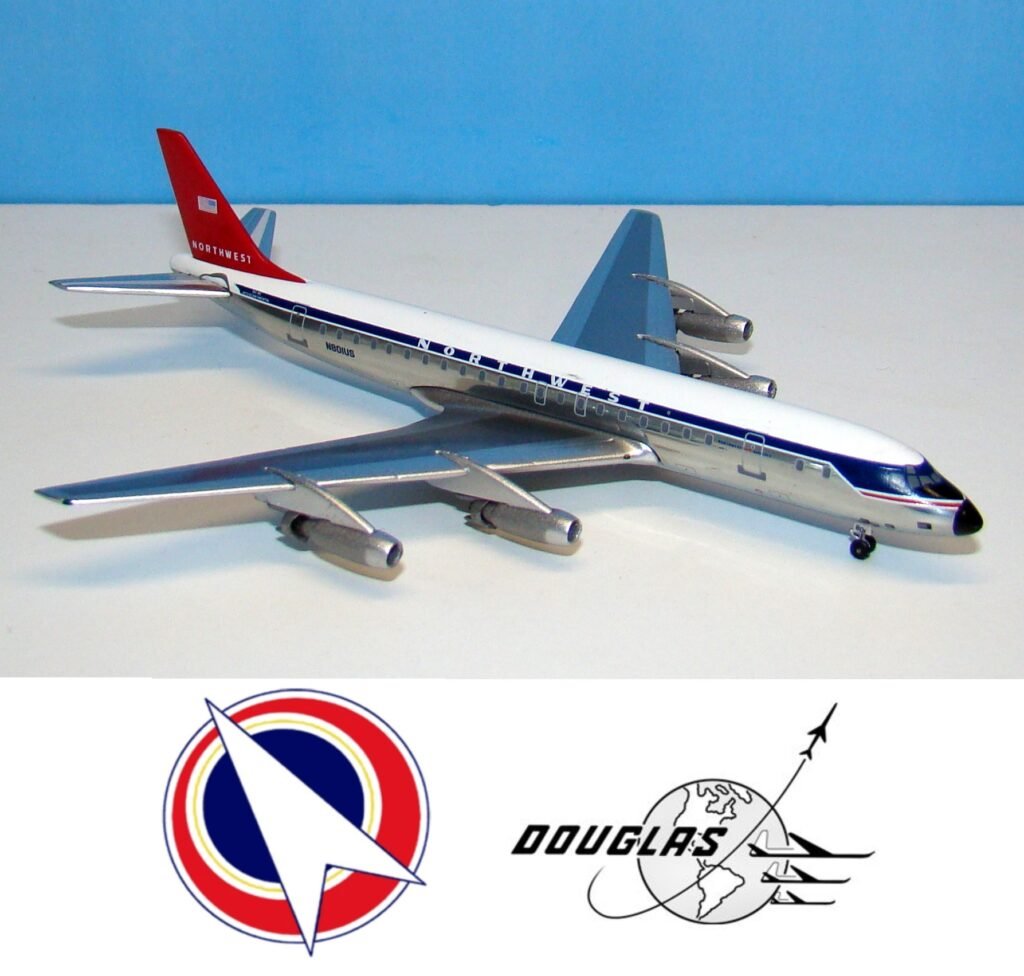
Northwest Orient Douglas Dc-8-32 N801US Aeroclassics 1:400 Scale Model Airliner
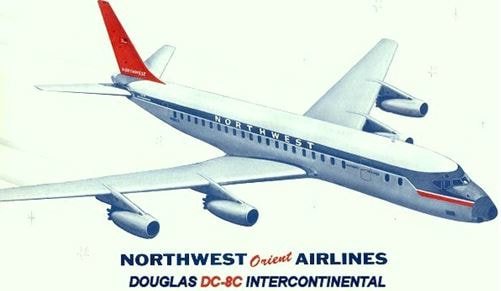
Orient didn’t actually place a firm order for new jets until December 30, 1958 by which time the Douglas DC-8 was well into its flight test programme after its first flight on May 30. The deal was for 5 Pratt & Whitney JT4A powered DC-8-30 series ‘Intercontinentals’ with 5 options for upgraded future versions. In a continuance of the naming shenanigans that Eastern perpetrated in trying to call its DC-8s DC-8Bs, to make them seem like newer versions than Deltas DC-8s, both Pan Am and Northwest got on the same bandwagon and would call their own DC-8s DC-8Cs!
N801US began Northwest’s jet services from New York to Tokyo and Manila via Anchorage on July 8th 1960. The new DC-8s seated 127 passengers, half again compared to the DC-7Cs, and flew much much faster. They boasted ‘Luxury Imperial Service’ and ‘Thrifty Coronation Coach’.
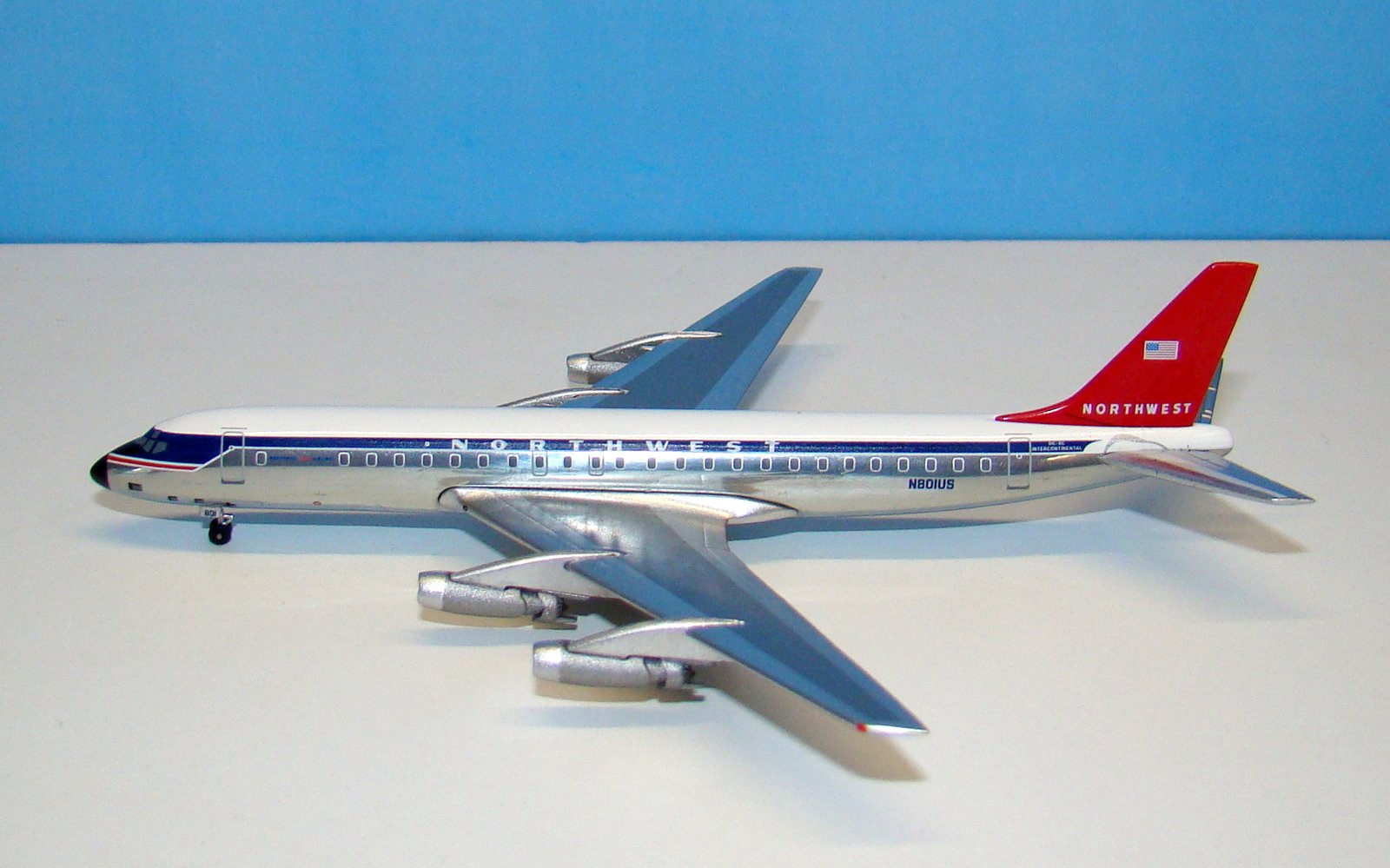
Northwest Orient Douglas Dc-8-32 N801US Aeroclassics 1:400 Scale Model Airliner
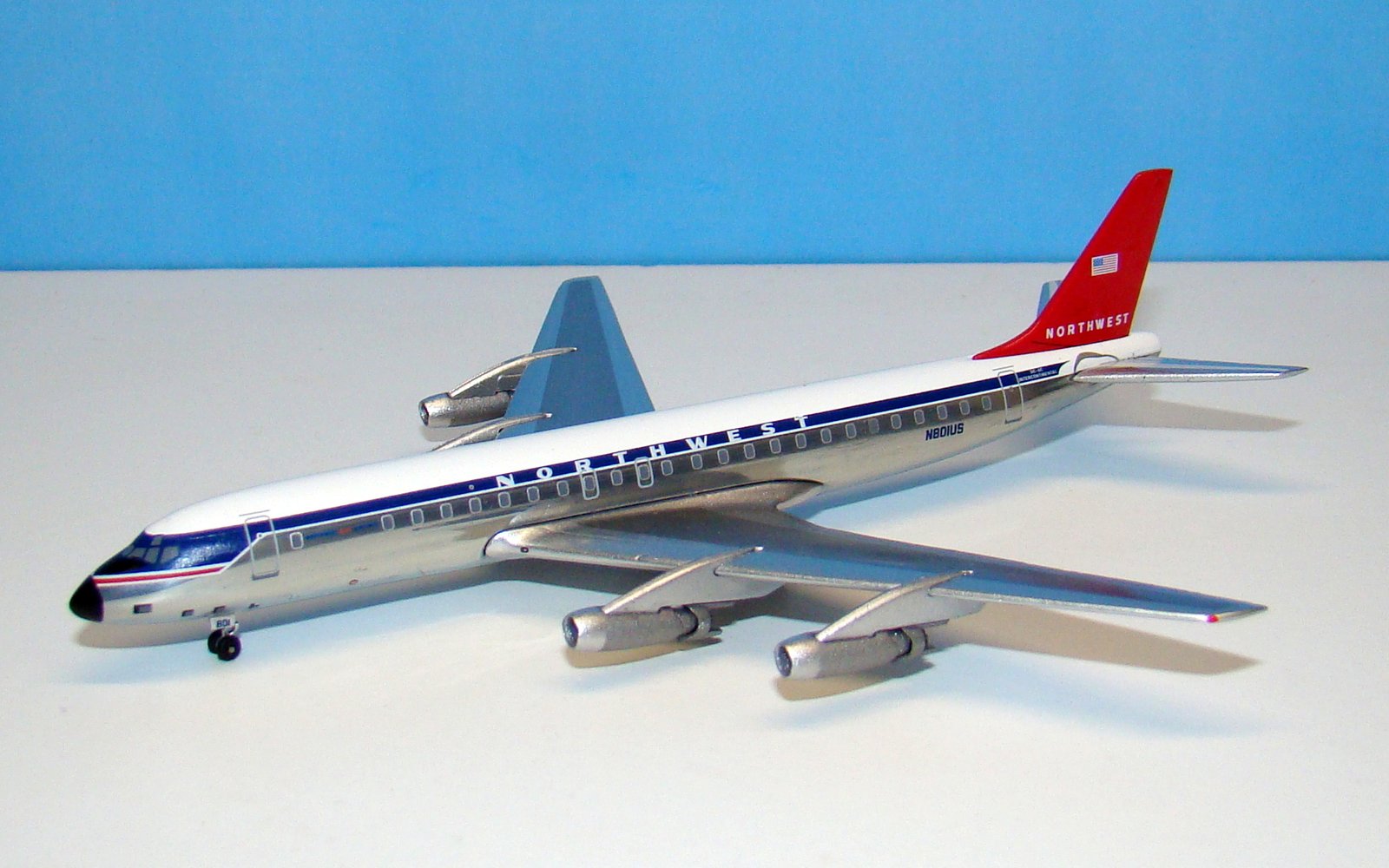
Northwest Orient Douglas Dc-8-32 N801US Aeroclassics 1:400 Scale Model Airliner
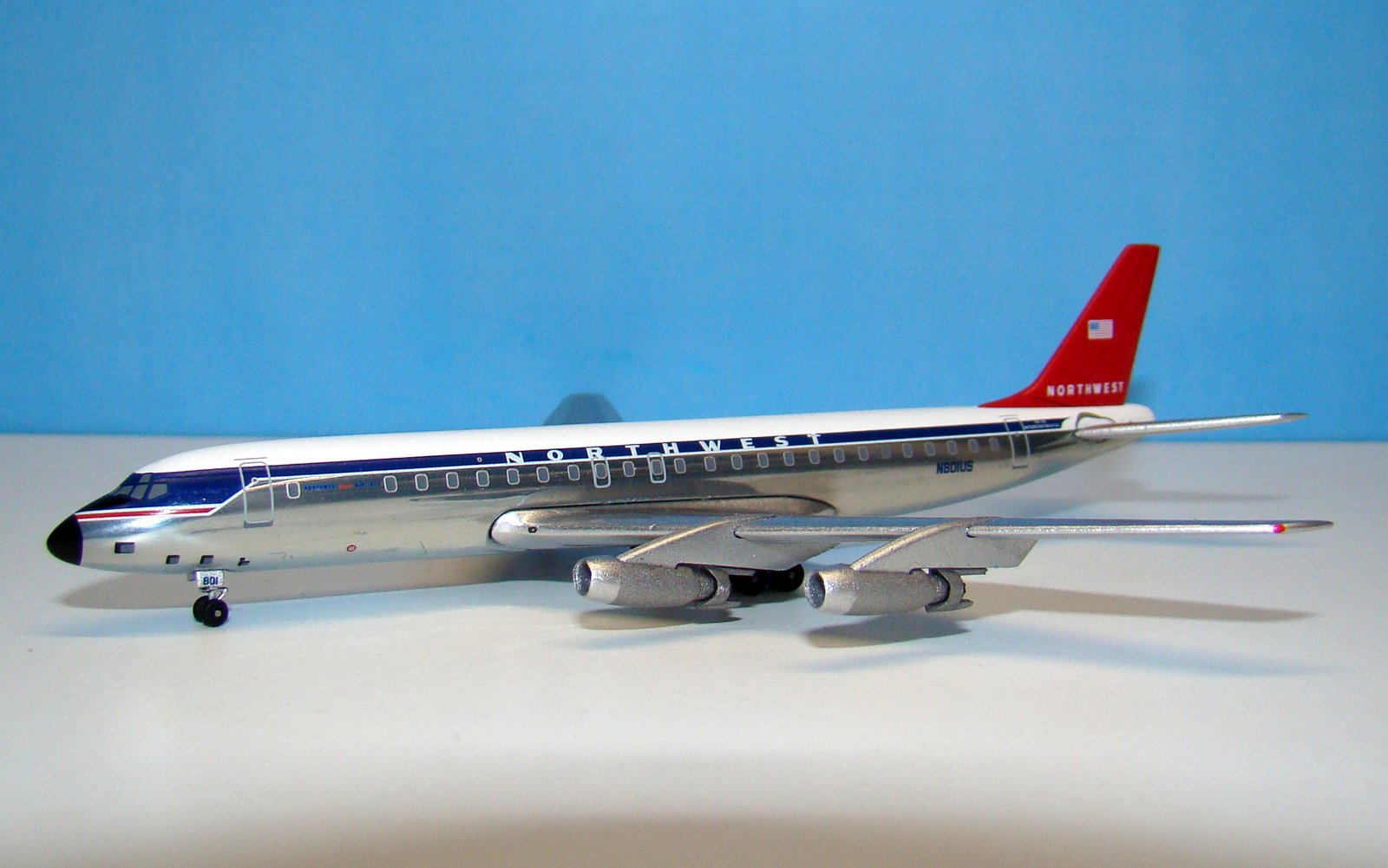
Northwest Orient Douglas Dc-8-32 N801US Aeroclassics 1:400 Scale Model Airliner
Northwest Orient Douglas Dc-8-32 N801US Aeroclassics 1:400 Scale Model Airliner
Northwest Orient Douglas Dc-8-32 N801US Aeroclassics 1:400 Scale Model Airliner
Northwest Orient Douglas Dc-8-32 N801US Aeroclassics 1:400 Scale Model Airliner
Northwest Orient Douglas Dc-8-32 N801US Aeroclassics 1:400 Scale Model Airliner
Northwest Orient Douglas Dc-8-32 N801US Aeroclassics 1:400 Scale Model Airliner
Northwest Orient Douglas Dc-8-32 N801US Aeroclassics 1:400 Scale Model Airliner
Northwest Orient Douglas Dc-8-32 N801US Aeroclassics 1:400 Scale Model Airliner
The first pair of DC-8Cs were delivered in Northwest’s traditional 1950s era scheme as had been advertised in advance. This consisted of an unusual dark blue above the window cheatline with Northwest titles rather shoehorned into it in white.
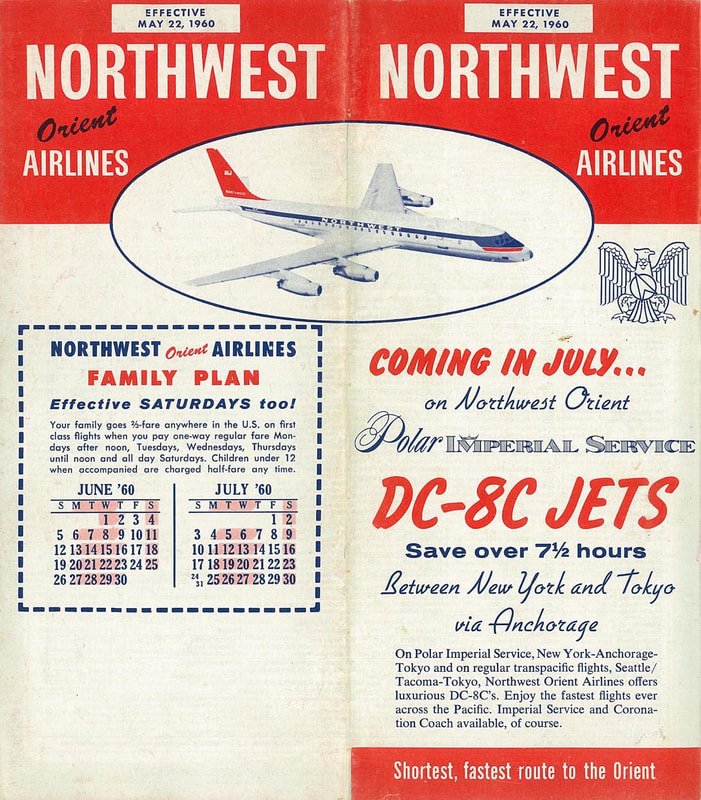
Northwest had from 1958 adopted the ‘Regal Imperial Service’ Eagle as its main logo (although it only ever appeared on the tail of a few Electras) and so the traditional compass logo forward behind the cockpit was not included. It seems that Northwest realised the propliner scheme didn’t really suit the jets and only N801US and N802US wore it.
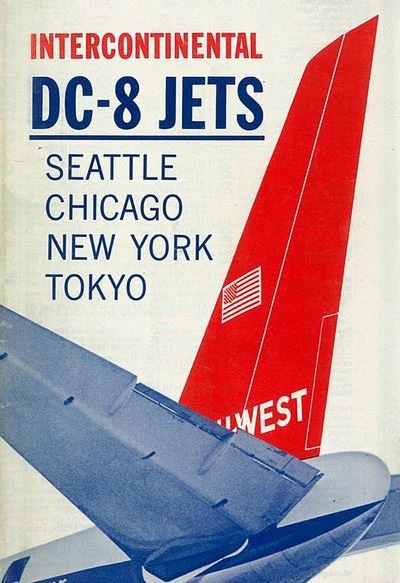
The 1960 timetable. Note the Regal Imperial Service Eagle logo
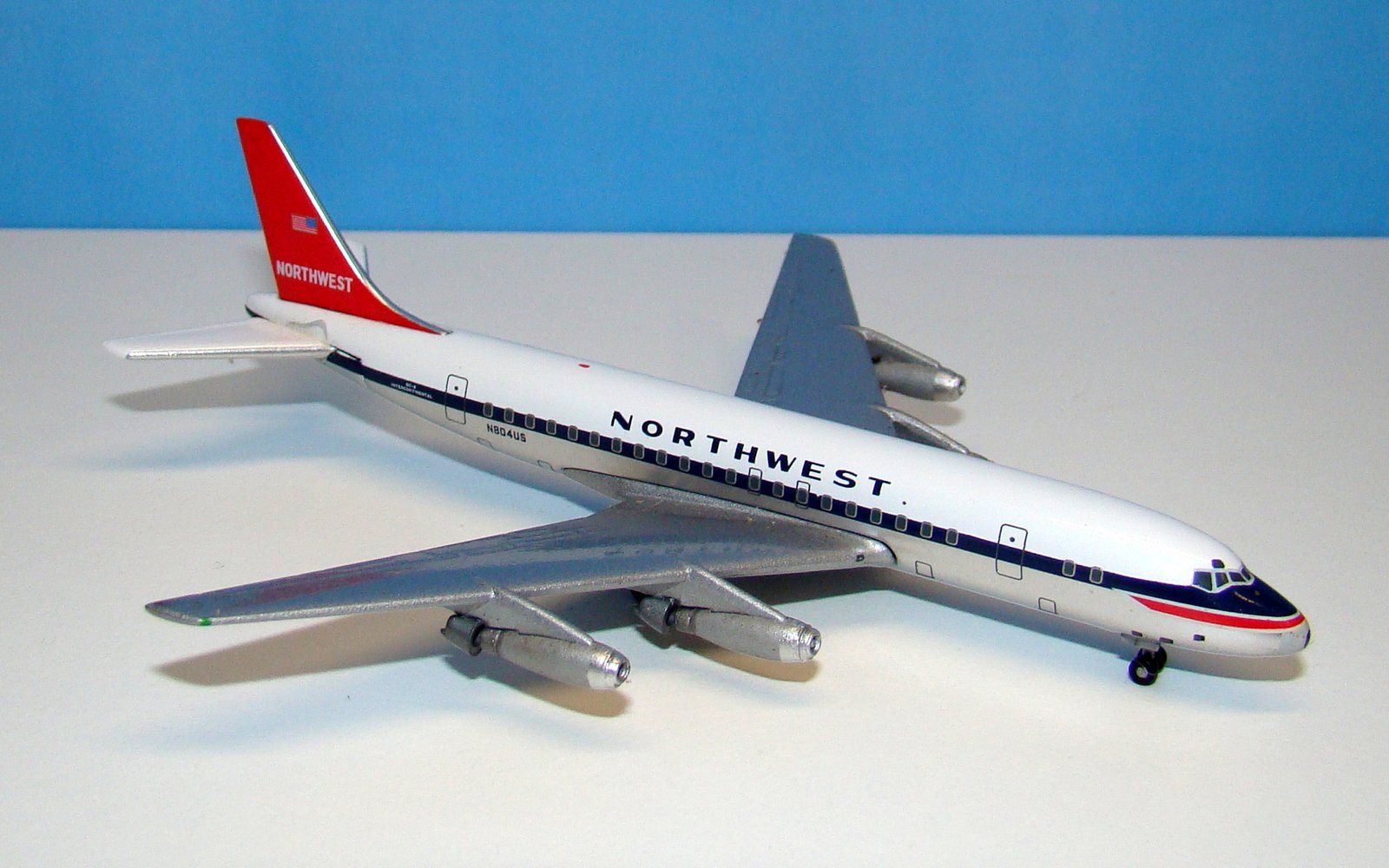
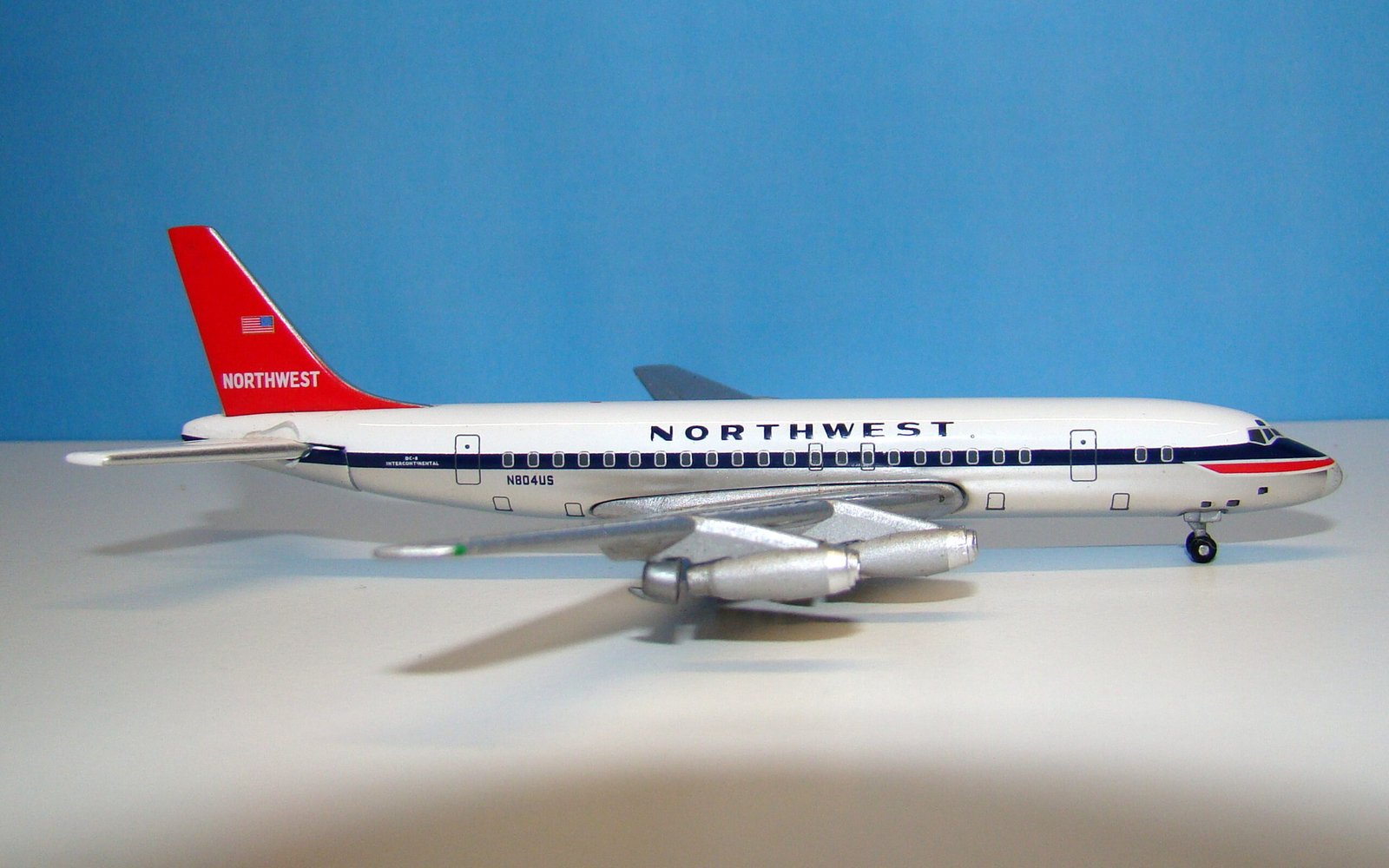
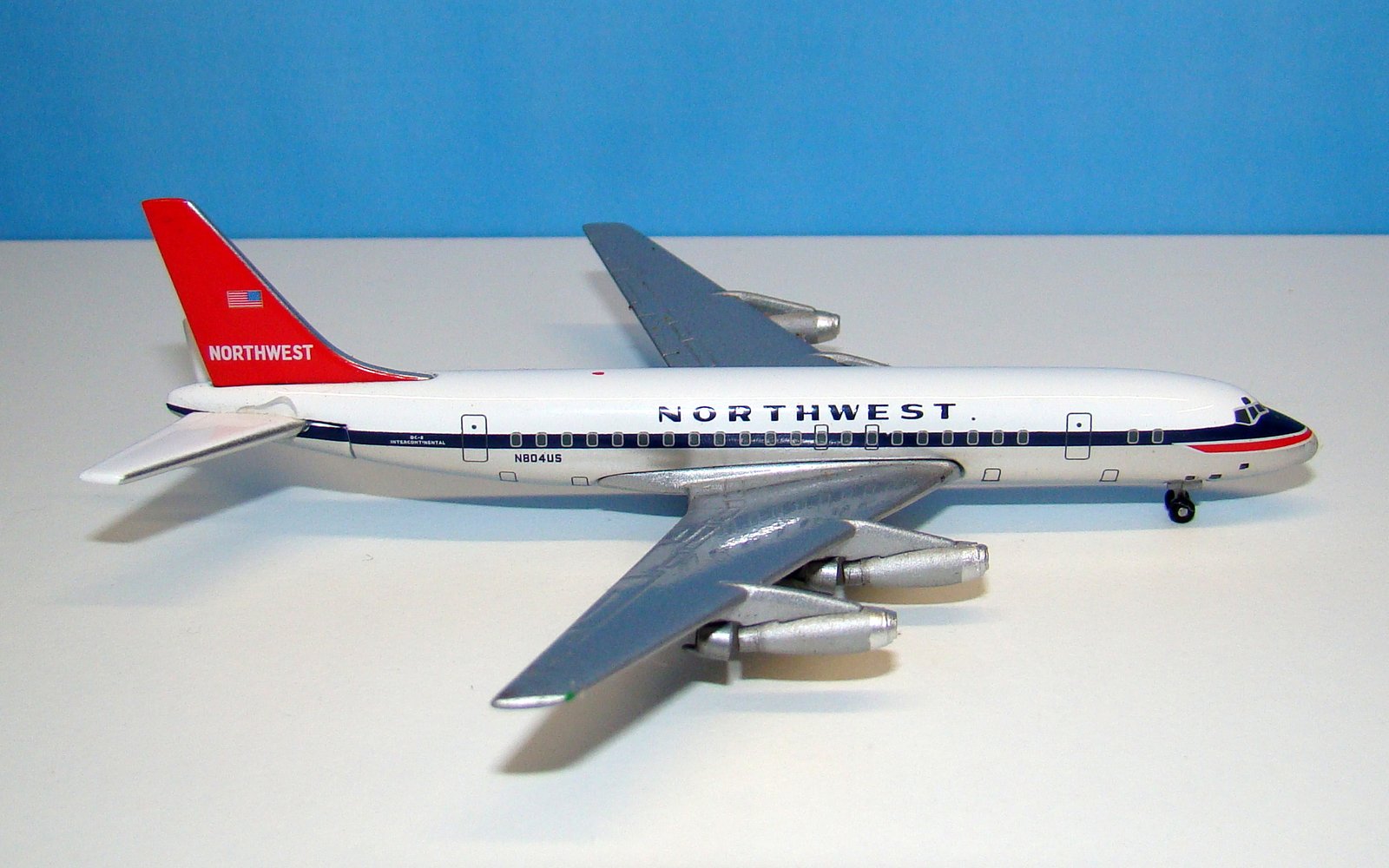
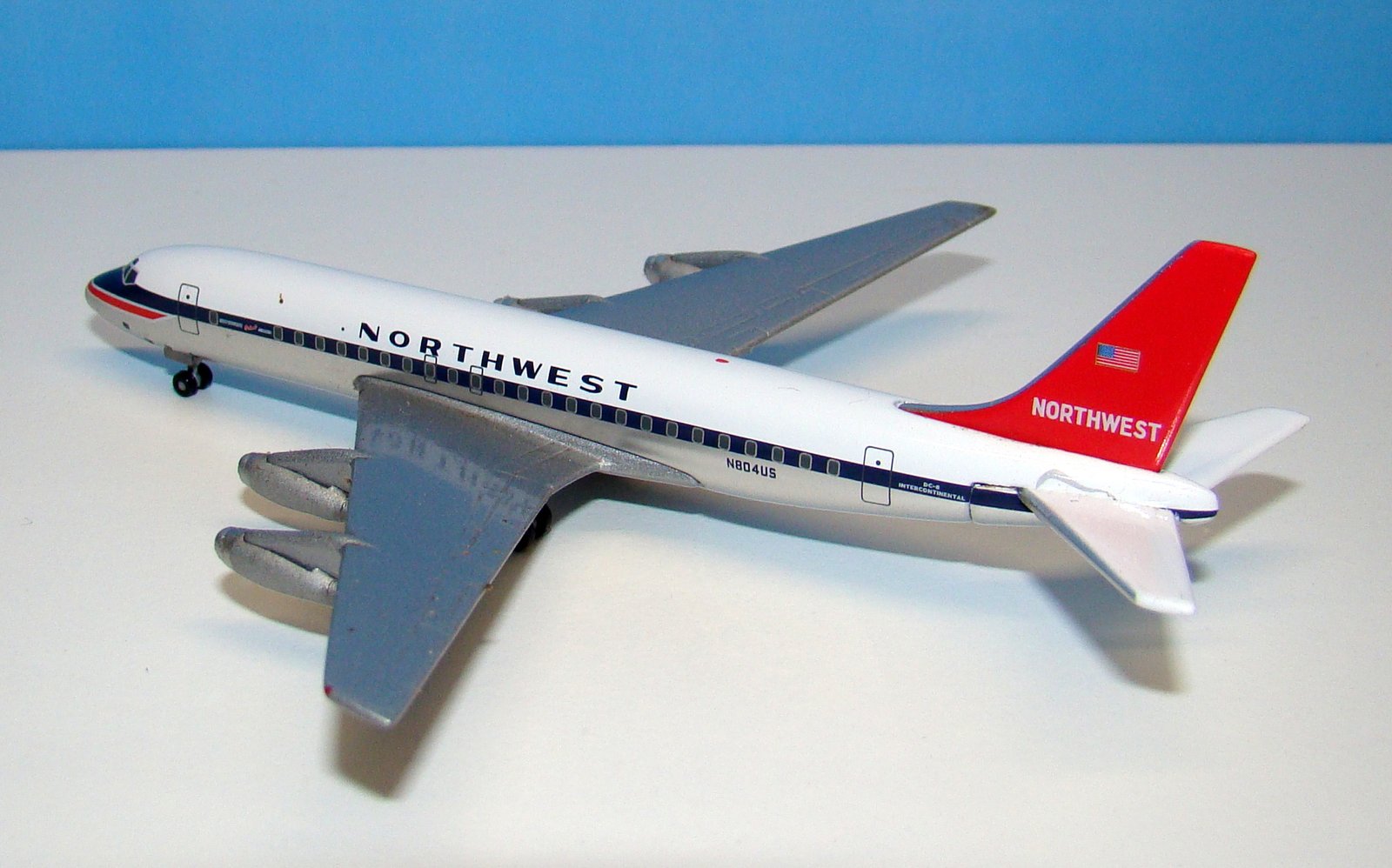
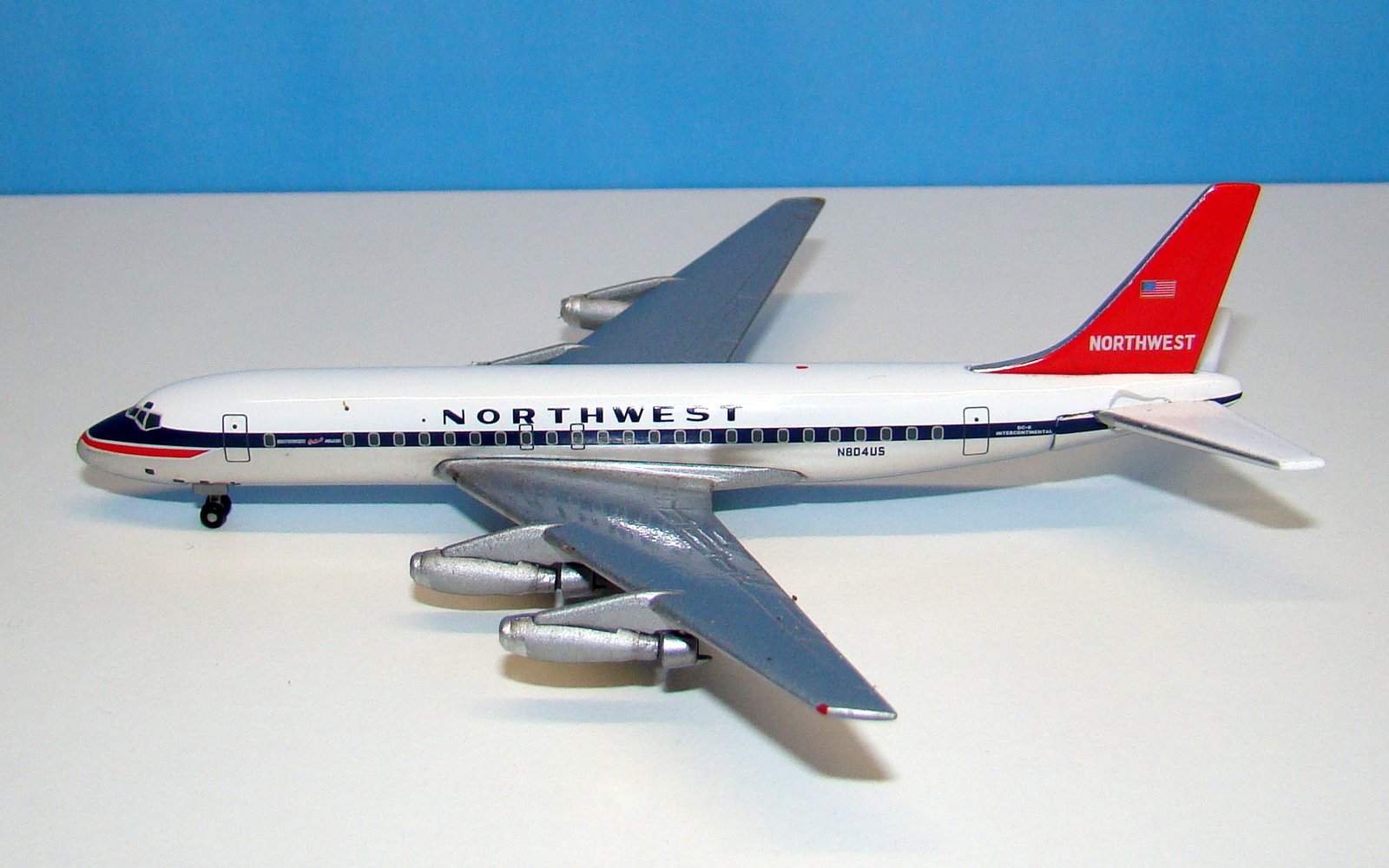
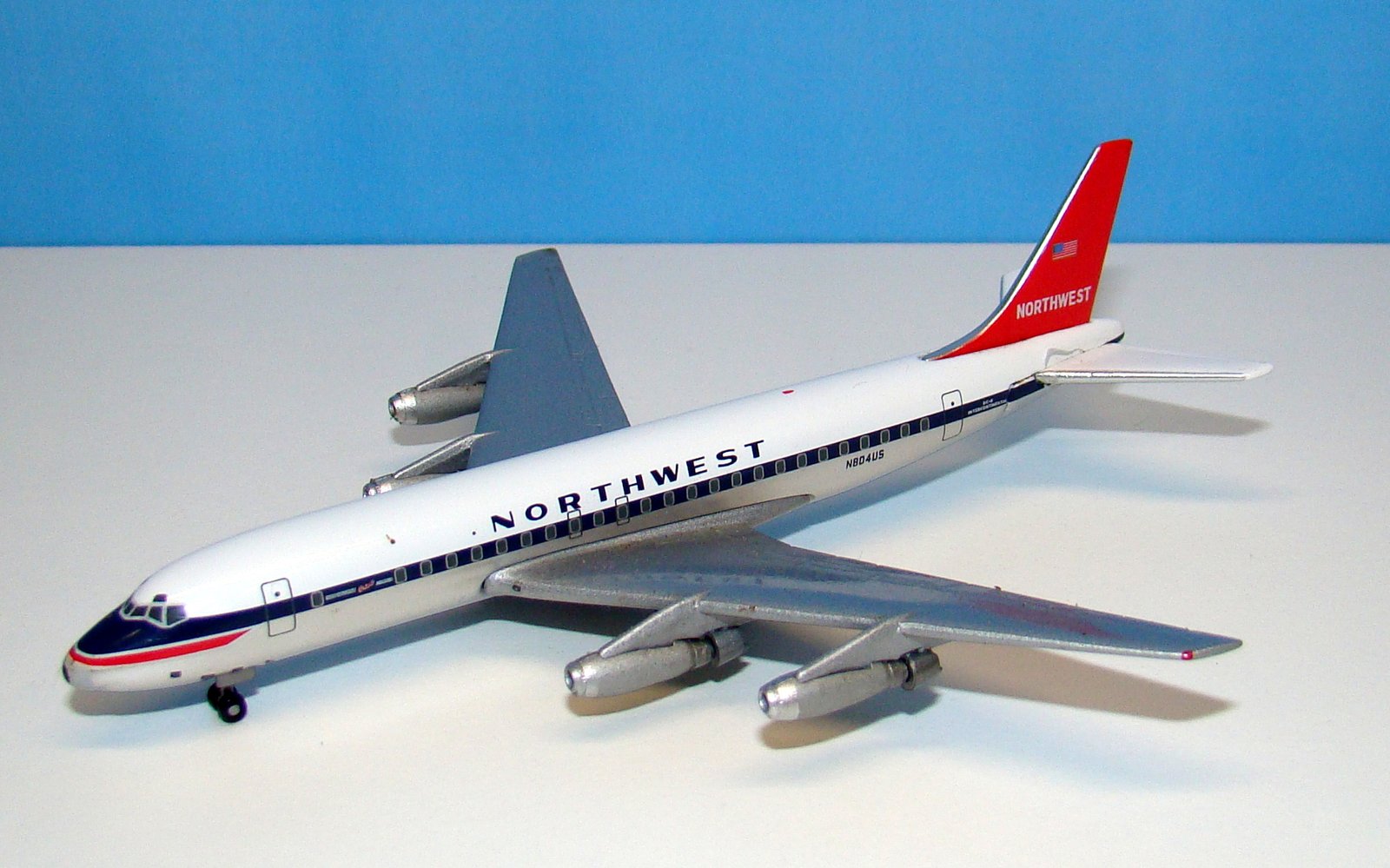
The third aircraft was hastily modified prior to delivery to wear what would become the standard Northwest livery for much of the 1960s. The cheatline was lowered to the windowline and Northwest titles established in dark blue above it. The ‘Regal Imperial Service’ Eagle was not incorporated into the updated scheme and indeed was dropped in 1962 completely.
Below is the last of my old Gemini Jets DC-8s wearing the updated scheme. C’mon Aeroclassics let me replace this old bird.
Northwest Orient Douglas DC-8-32 N804US Gemini Jets 1:400 Scale Model Airliner
Northwest Orient Douglas DC-8-32 N804US Gemini Jets 1:400 Scale Model Airliner
Northwest Orient Douglas DC-8-32 N804US Gemini Jets 1:400 Scale Model Airliner
Northwest Orient Douglas DC-8-32 N804US Gemini Jets 1:400 Scale Model Airliner
Northwest Orient Douglas DC-8-32 N804US Gemini Jets 1:400 Scale Model Airliner
Northwest Orient Douglas DC-8-32 N804US Gemini Jets 1:400 Scale Model Airliner
Northwest Orient Douglas DC-8-32 N804US Gemini Jets 1:400 Scale Model Airliner
As well as being used on the long range routes the DC-8s saw operation on domestic sectors also with July 16, 1960 signalling the start of DC-8 ops on the New York to Seattle service. It wasn’t all plain sailing however as in October the airline suffered a strike by DC-8 flight engineers, which lasted for a fortnight. They were seeking increased pay for international sectors.
Unfortunately for Douglas Boeing had adapted strongly to the new jet marketplace and by customising its base 707 was able to offer a variety of different models to airlines seeking either long or short-haul jets. Northwest needed proper domestic jets and settled on thenew Boeing 720 (a highly modified 707-120 designed for shorter sectors).
The DC-8-30s had initially suffered some performance issues, however there is little evidence that Northwest was really unhappy with them. Nonetheless the arrival of the first Boeing 720s in July 1961 gave Boeing the foot in the door it needed. A fleet rationalisation review in 1962 spelled the end for the DC-8s and their replacement by long range Boeing 707-351Bs. The 707s did allow for non-stop flights, without the Anchorage stop, which must have been a bonus.
The first DC-8 left the fleet in October 1962 sold to the French airline UAT (Union Aeromaritime de Transport), later a constituent of UTA. The remaining four were sold to National Airlines in 1963 and left from September-October.
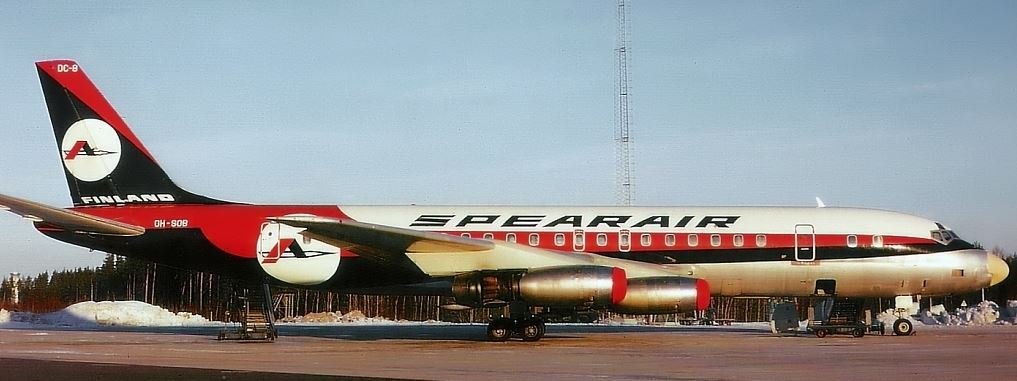
N801US became N7181C. She was leased to the Finnish charter airline Spear Air in 1972, as OH-SOB, but was repossessed in late 1974 and sold to ONA.
The former N801US in the colourful scheme of Finnish charter airline Spear Air
She served several leases including for McCulloch Int, United Air Carriers, Egyptair, Tunis Air and Saudia as well as wearing the US Bicentennial scheme in 1976. Stored at Jeddah in March 1981 she wasn’t broken up until 2005. Her cockpit has been used in a children’s play area.