By 1970 Nordair was well-established as one of the five regulated regional airlines providing a variety of services both charter and scheduled. In the latter area Nordair had in 1969 been assigned Ontario, aside from the Northwest of the province, and Northwest Quebec as its area of scheduled operations to feed the routes of Air Canada and CP Air. The assignment of specific areas of operations allowed Nordair and the other four regional airlines to plan for growth and acquire modern aircraft.
Although based in largely French speaking Quebec, at Montreal, Nordair was an English-speaking airline unlike its Quebec neighbour Quebecair. This was a source of some friction and was a major stumbling block in several attempts over the years to get the two airlines to combine. Nordair employees resented being taken over by the French speaking airline especially when in comparison to Quebecair Nordair was staunchly profitable.
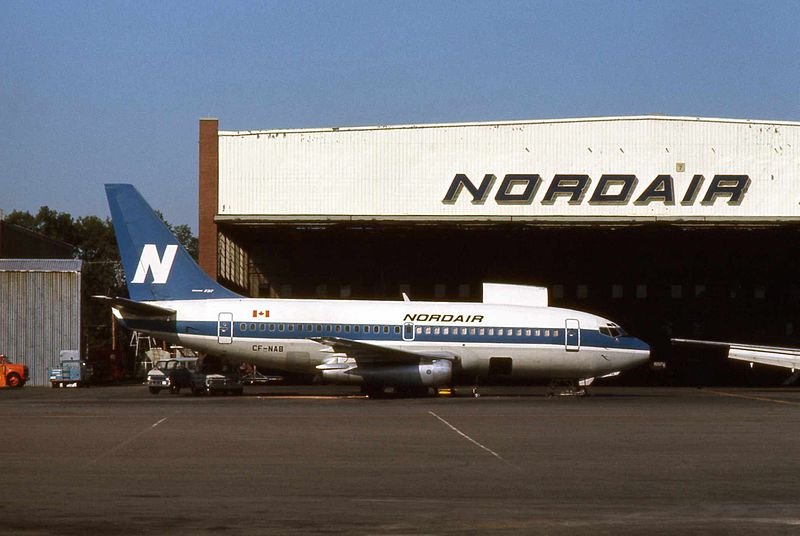
The consolidation of Nordair’s position in 1968/69 had allowed it to acquire new Boeing 737-200s as the core of its jet-age fleet. Not only were the 737s suitable for operating in Canada’s Arctic but they could also fly charter services to Florida and the Caribbean. The 737s replaced the previous ragtag fleet of piston-liners Nordair had relied on. The 737s could also be used on the new regional ‘trunk’ routes Nordair had gained permission to start by the Canadian ATB, namely Montreal to Hamilton and Montreal to Ottawa.
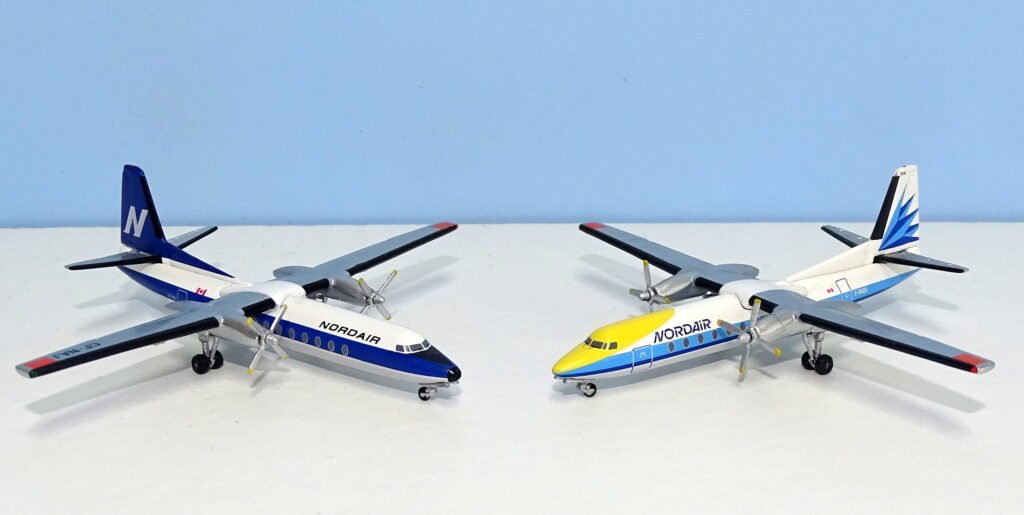
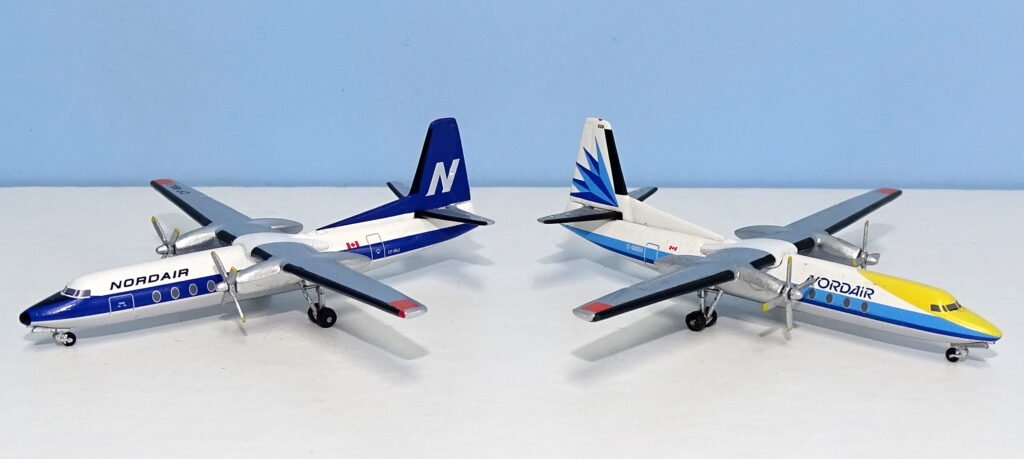
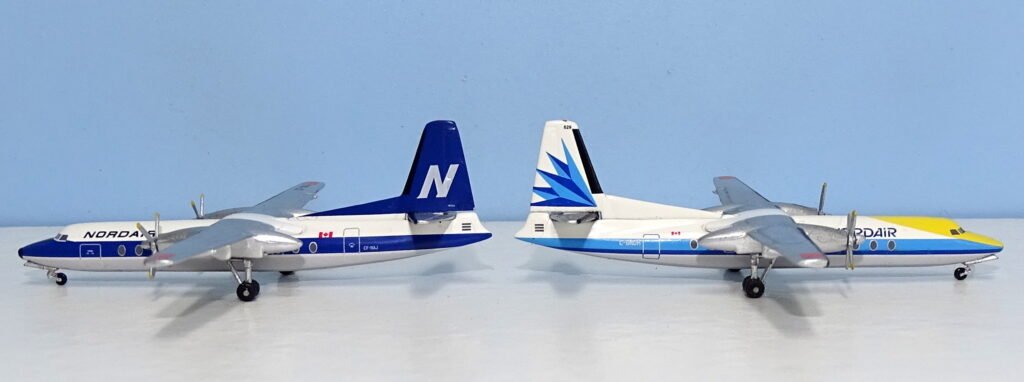
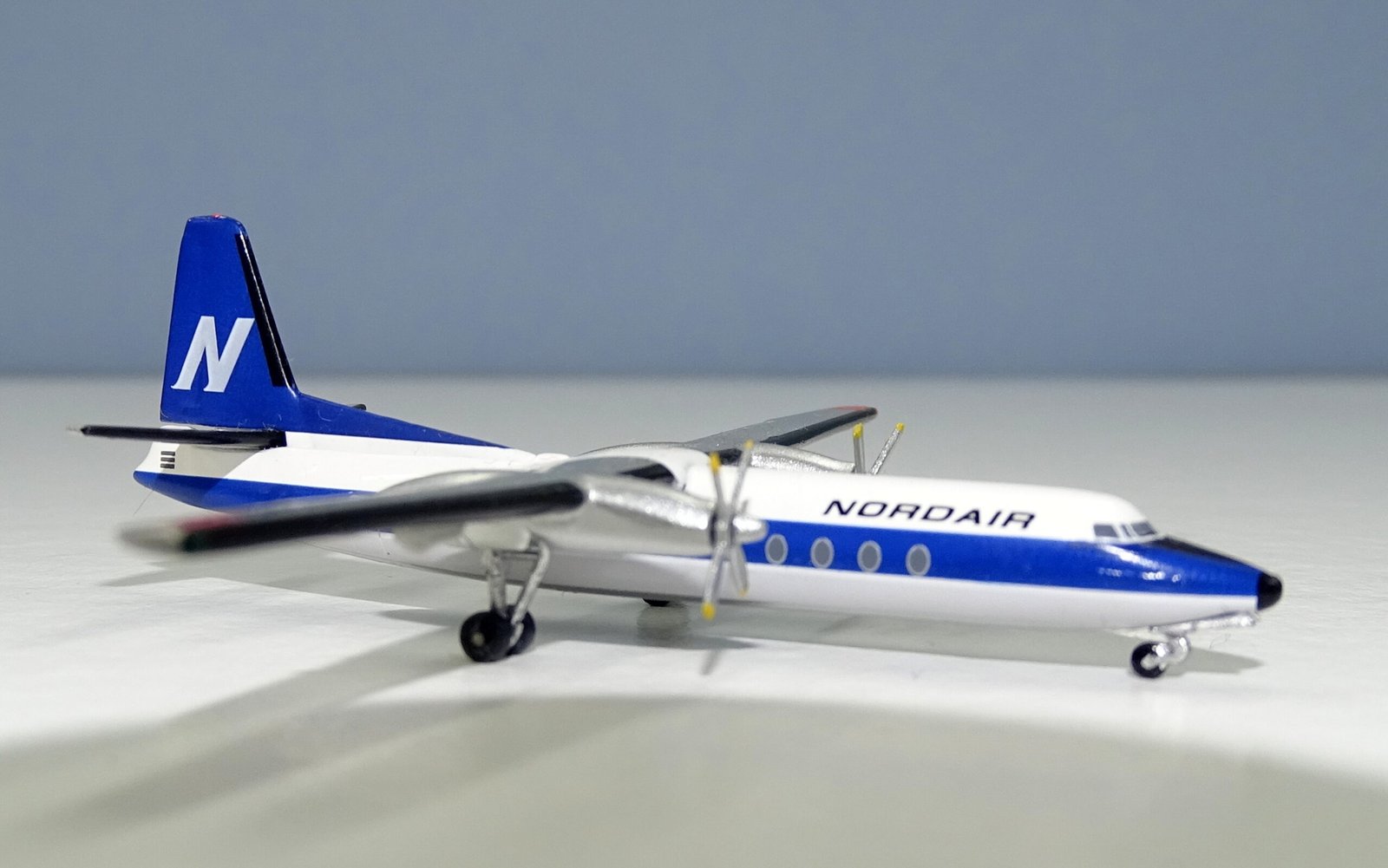
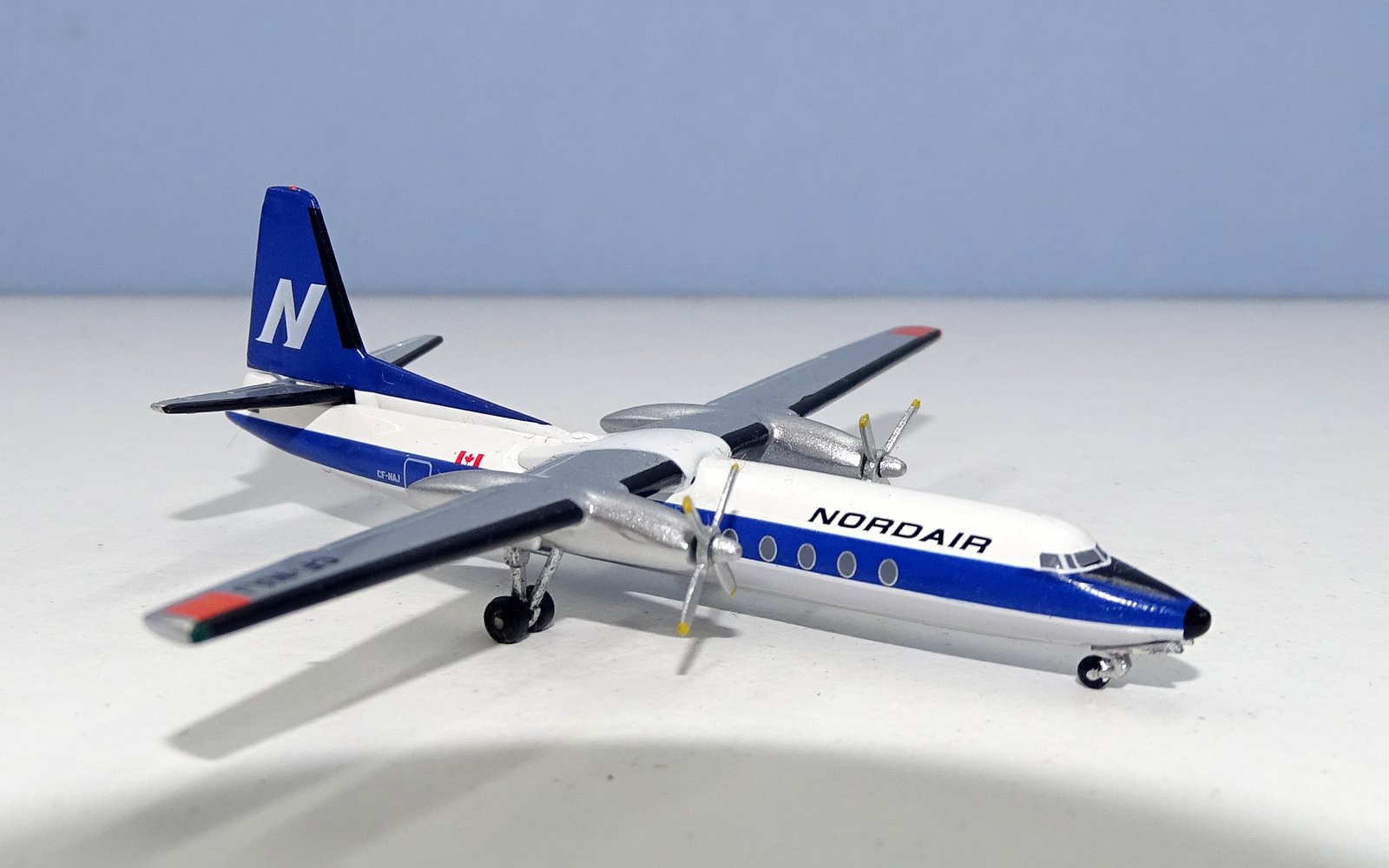
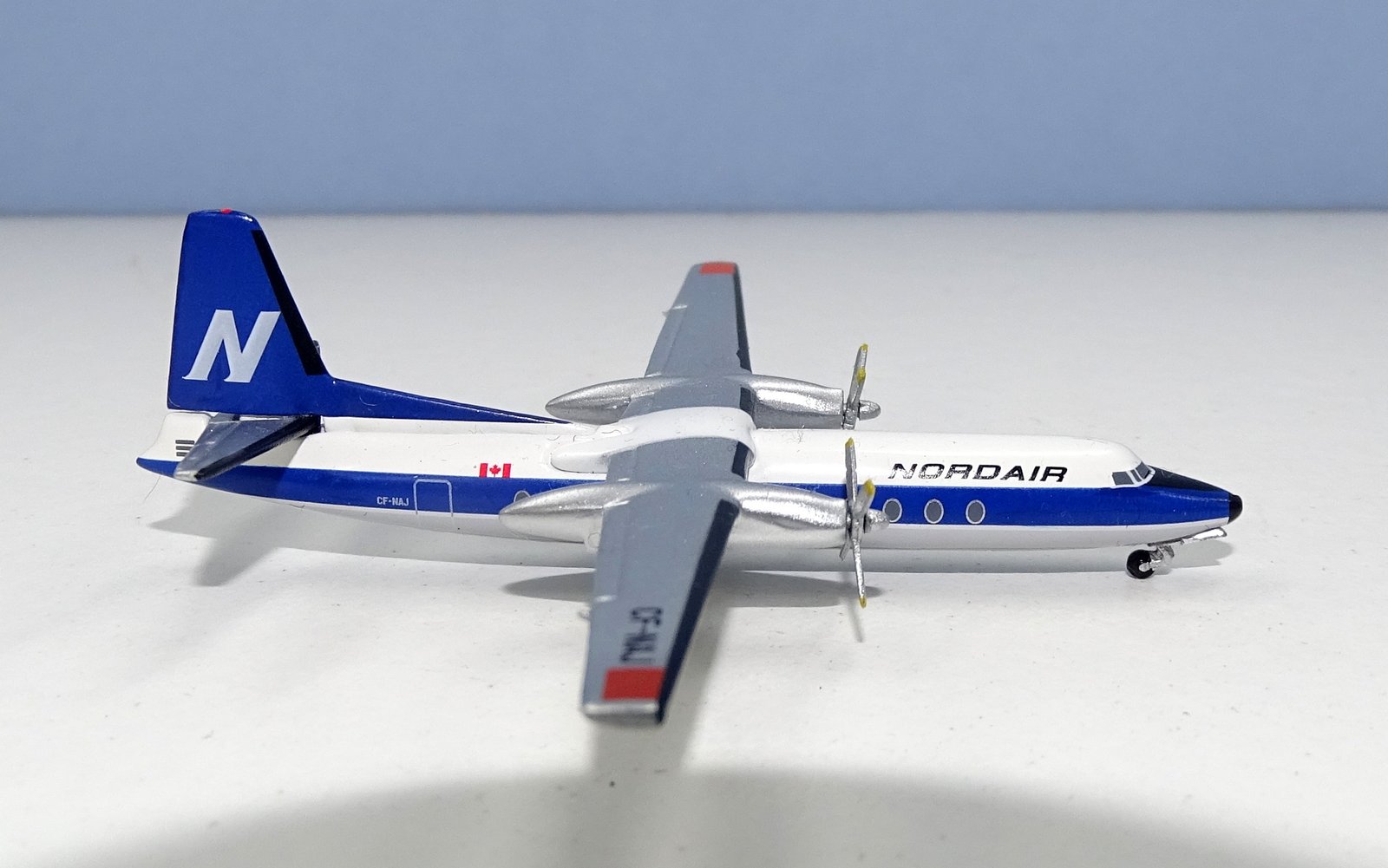
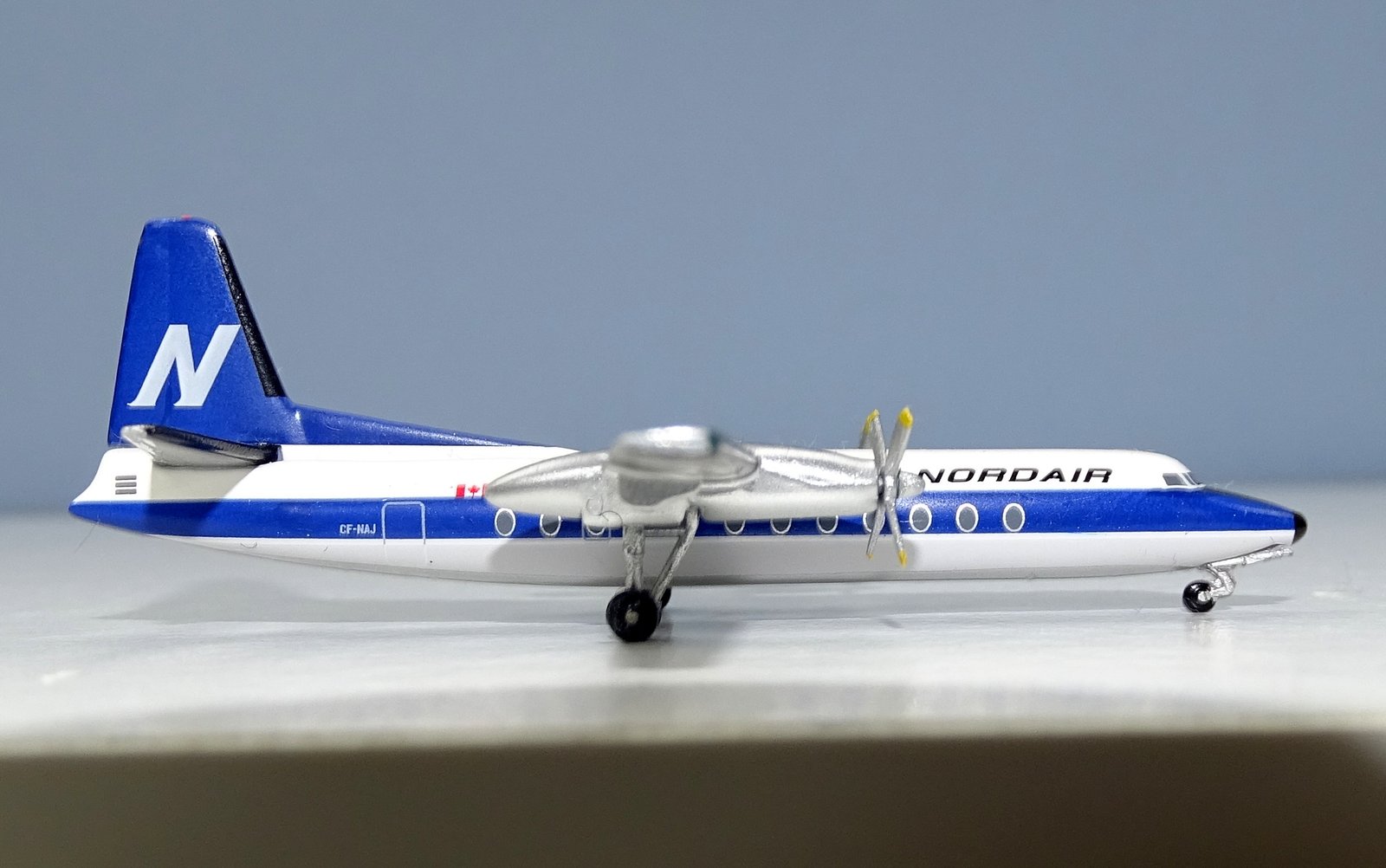
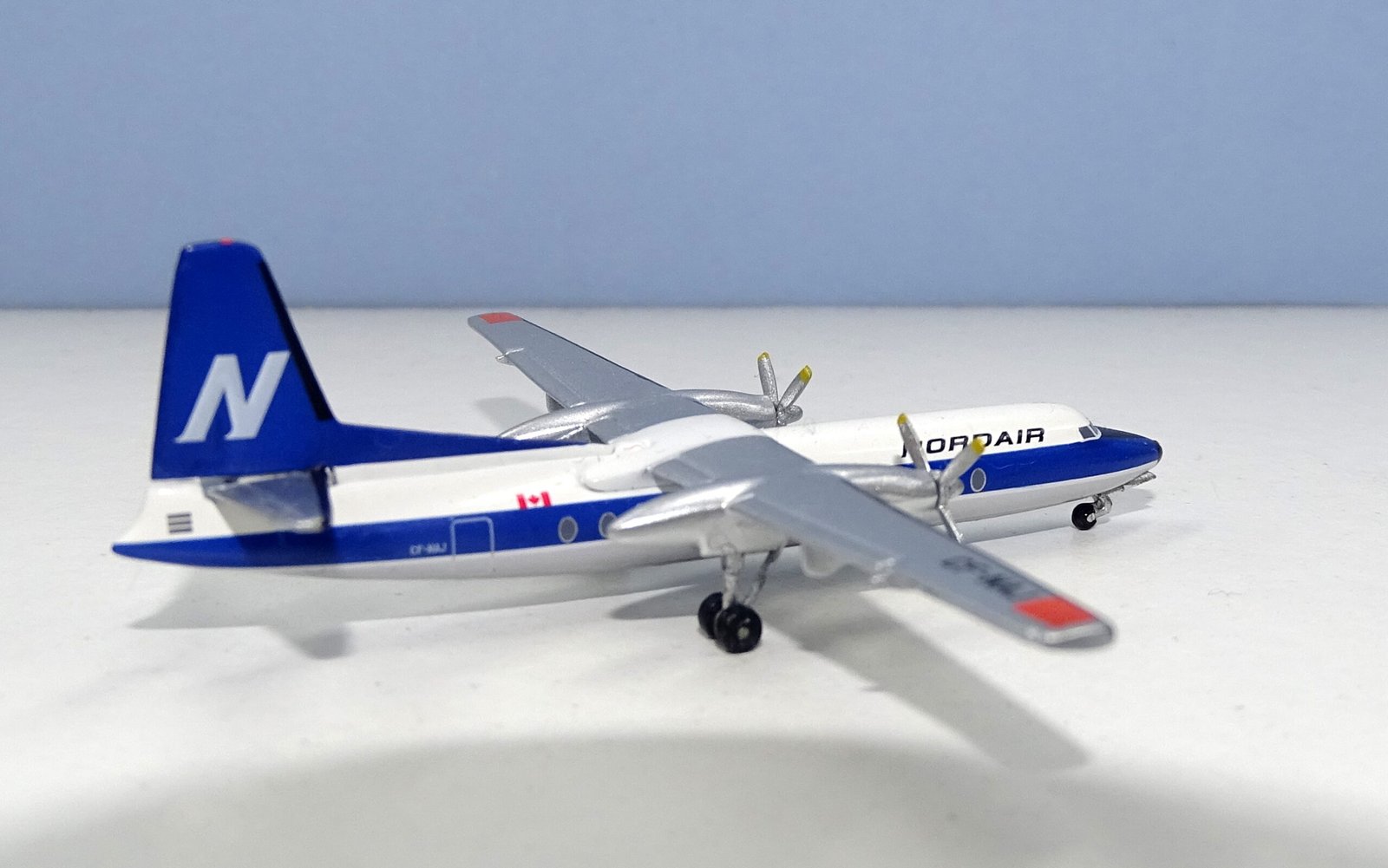
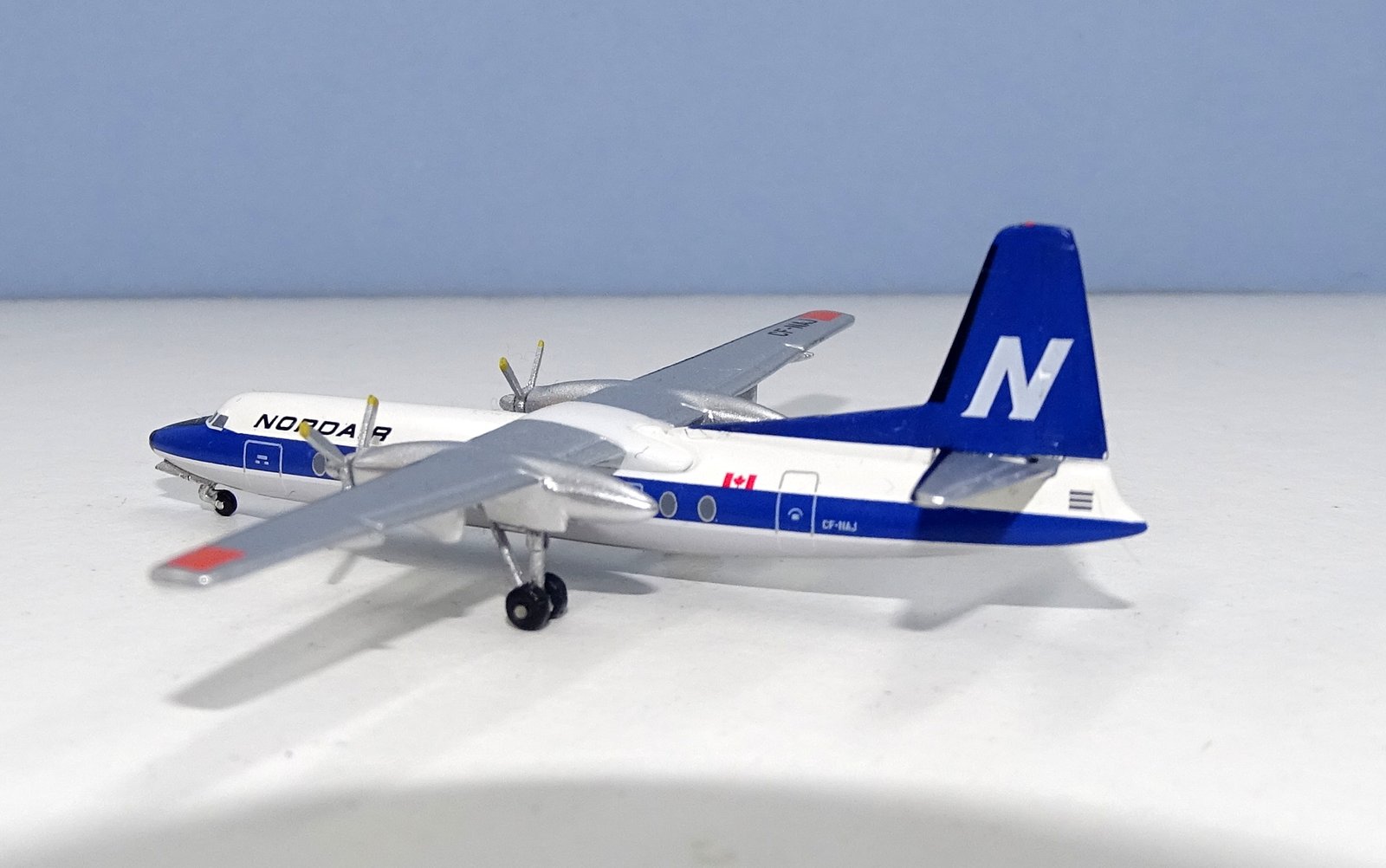
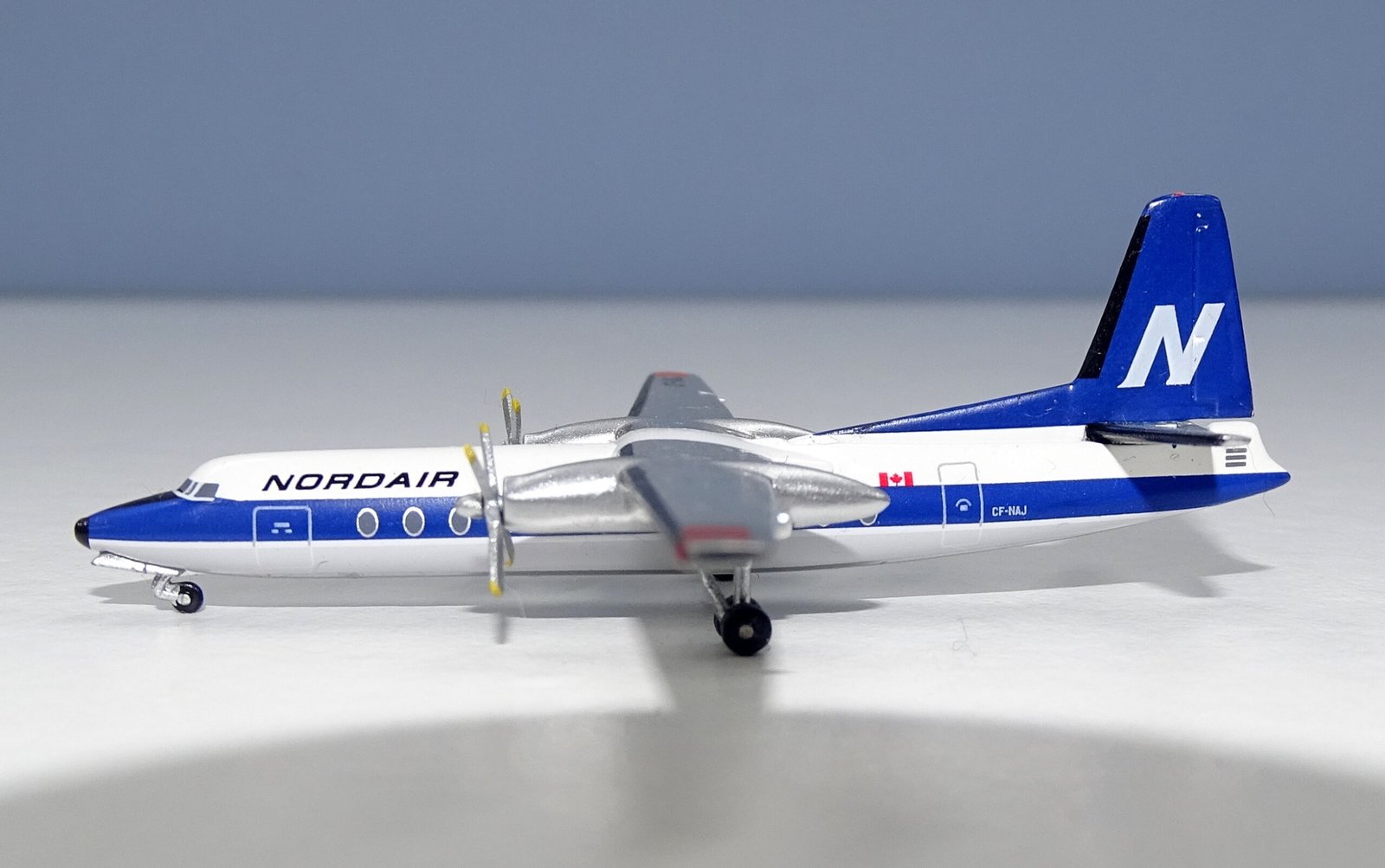
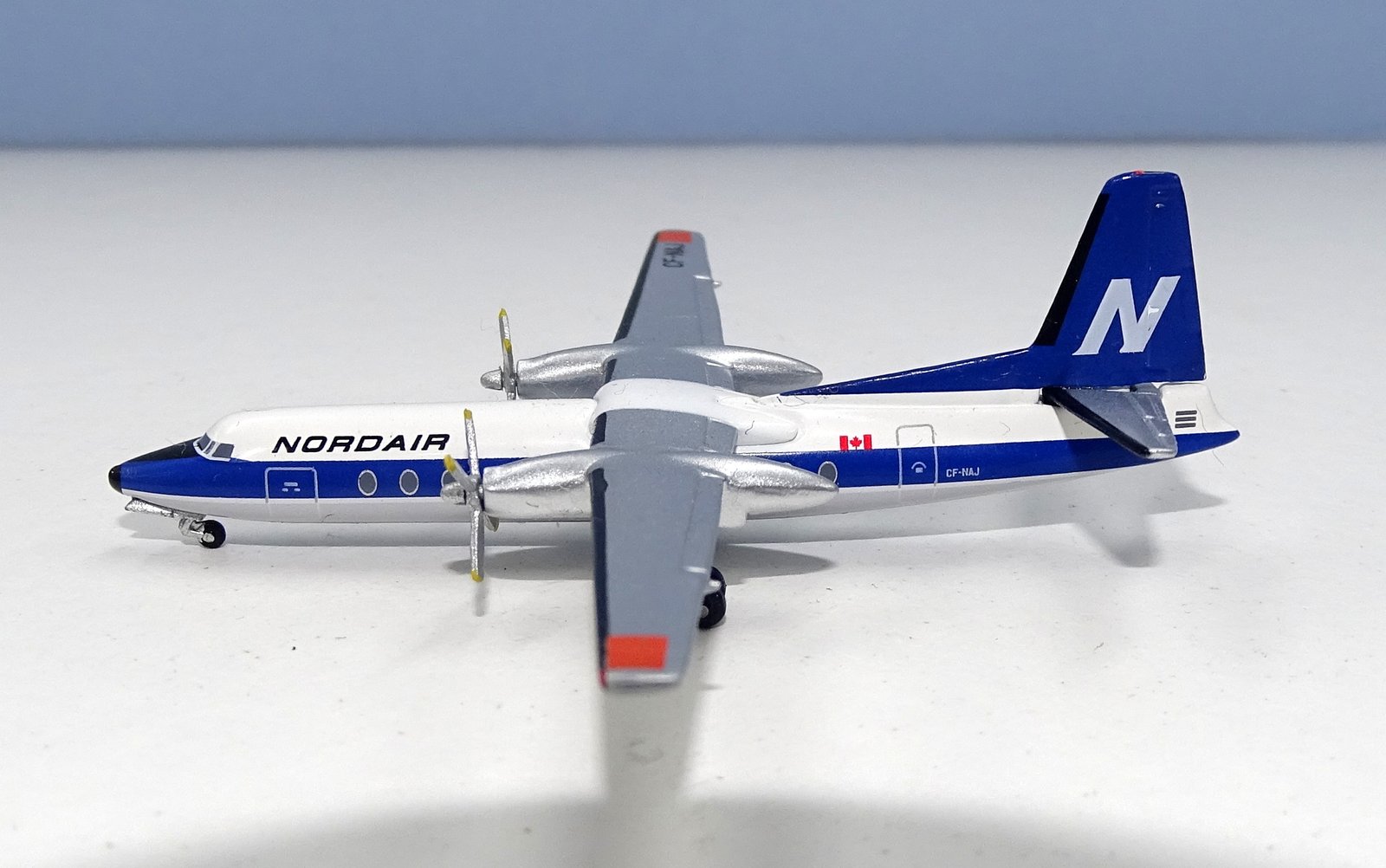
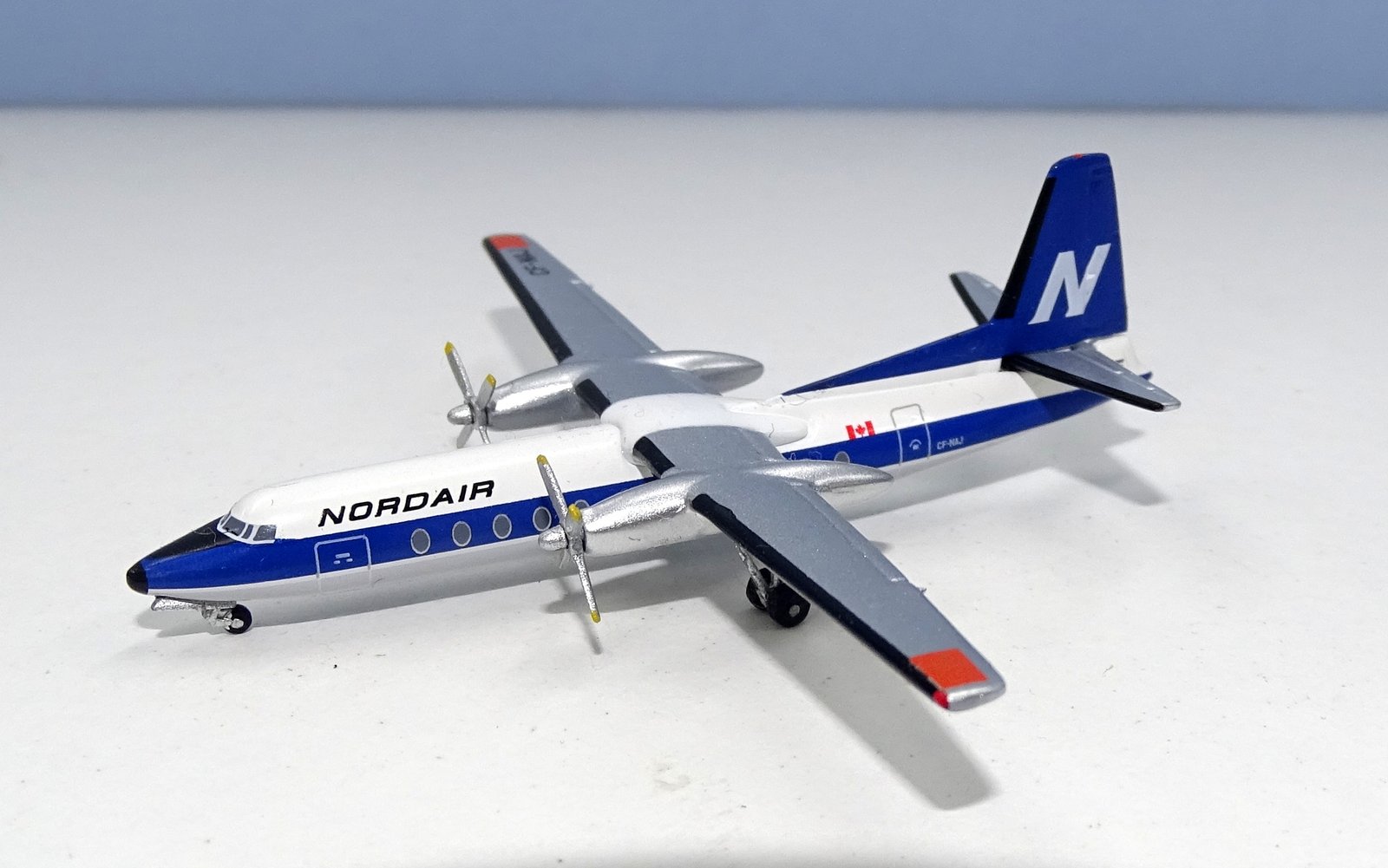
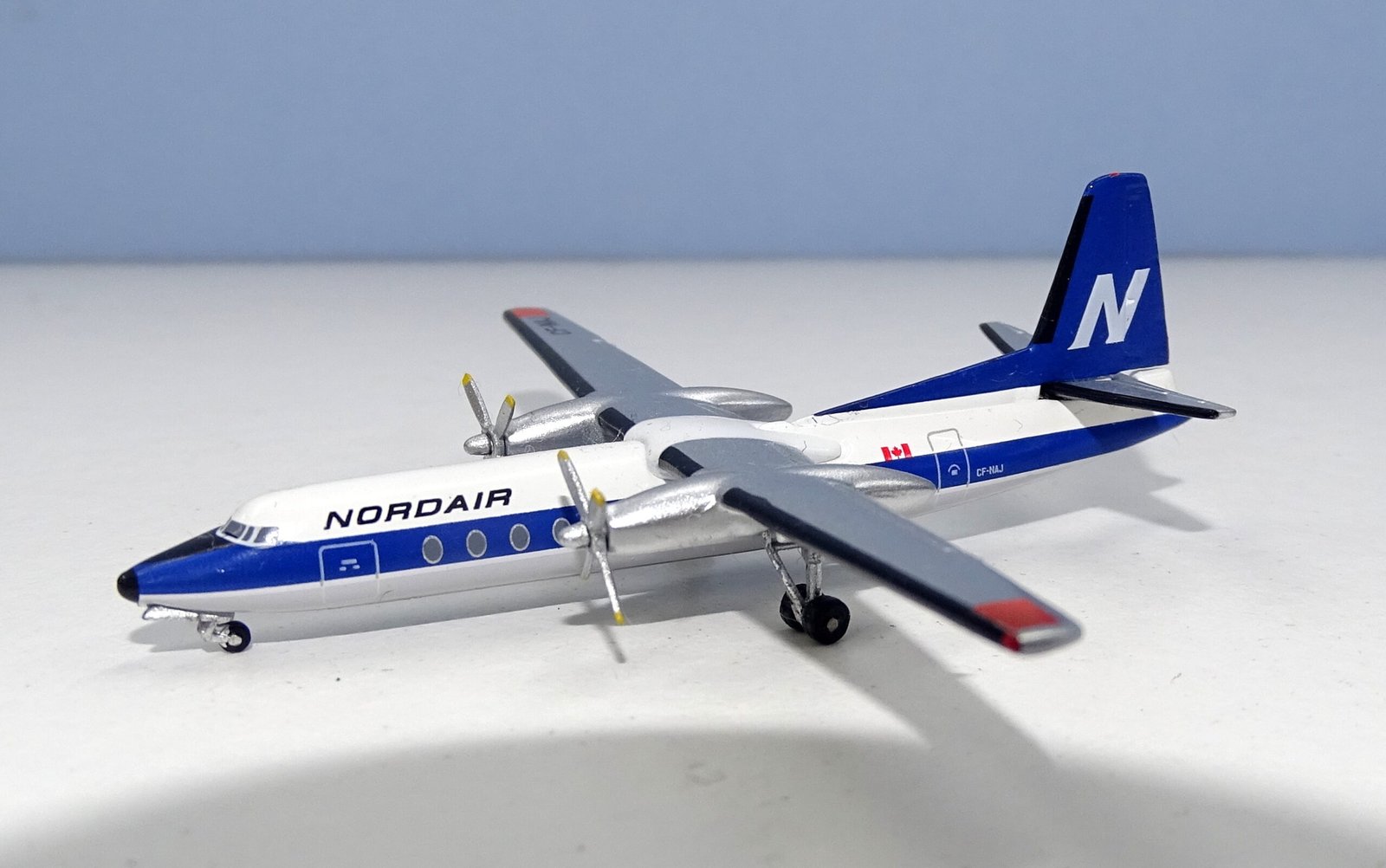
Nonetheless, despite the 737’s versatility Nordair was also in need of a new prop-liner with which to operate to smaller communities. Their choice was the 56 seat Fairchild-Hiller FH-227, a 1.83 metre stretch of the license-built Fairchild F-27, itself a US copy of the Fokker F27. The FH-227 gained the nickname of the ‘Whistle-Pig’ and Fairchild-Hiller sold 78 before production ceased in 1968.
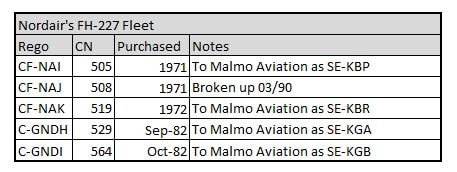
Nordair acquired three aircraft from Fairchild in 1971/72. All three were 1966 build aircraft, two of which had served for short periods with the major FH-227 operator Mohawk Airlines. The third aircraft had not been taken up by Piedmont and all three appear to have seen relatively little service prior to delivery to Nordair.
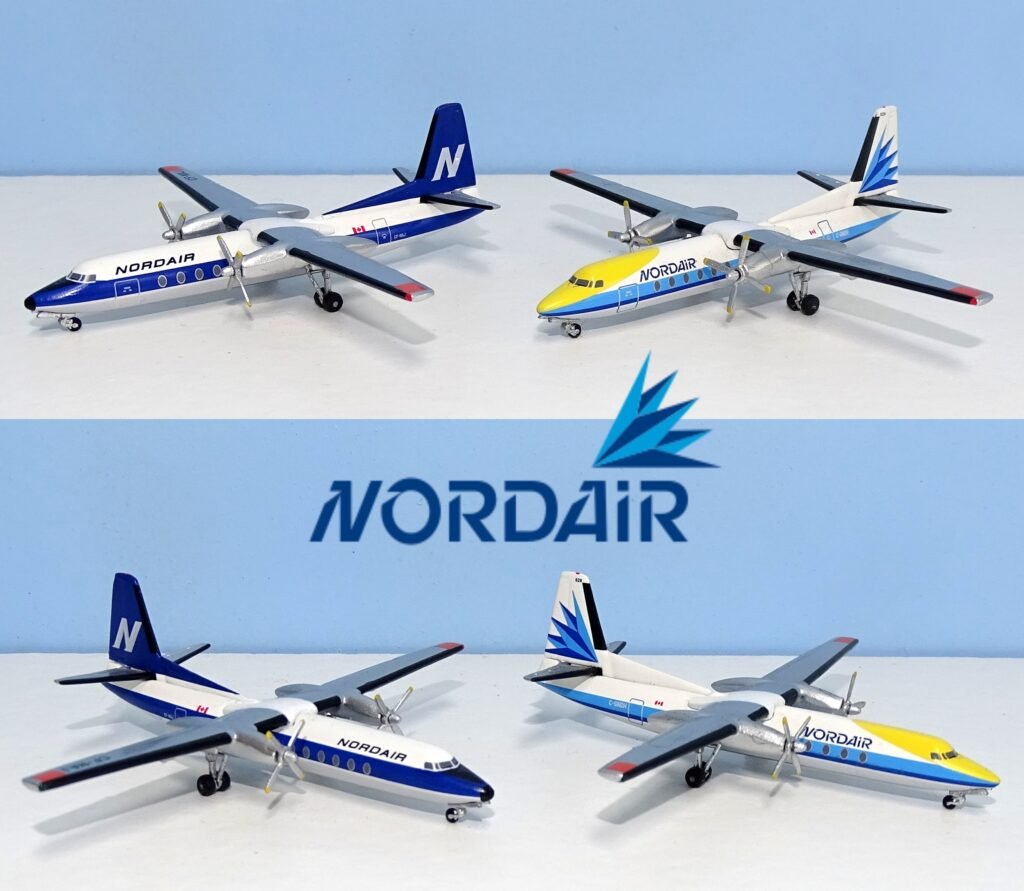
Nordair Fairchild-Hiller FH-227 CF-NAJ Aeroclassics 1:400 Scale Model Airliner
Nordair Fairchild-Hiller FH-227 CF-NAJ Aeroclassics 1:400 Scale Model Airliner
Nordair Fairchild-Hiller FH-227 CF-NAJ Aeroclassics 1:400 Scale Model Airliner
Nordair Fairchild-Hiller FH-227 CF-NAJ Aeroclassics 1:400 Scale Model Airliner
Nordair Fairchild-Hiller FH-227 CF-NAJ Aeroclassics 1:400 Scale Model Airliner
Nordair Fairchild-Hiller FH-227 CF-NAJ Aeroclassics 1:400 Scale Model Airliner
Nordair Fairchild-Hiller FH-227 CF-NAJ Aeroclassics 1:400 Scale Model Airliner
Nordair Fairchild-Hiller FH-227 CF-NAJ Aeroclassics 1:400 Scale Model Airliner
Nordair Fairchild-Hiller FH-227 CF-NAJ Aeroclassics 1:400 Scale Model Airliner
Nordair Fairchild-Hiller FH-227 CF-NAJ Aeroclassics 1:400 Scale Model Airliner
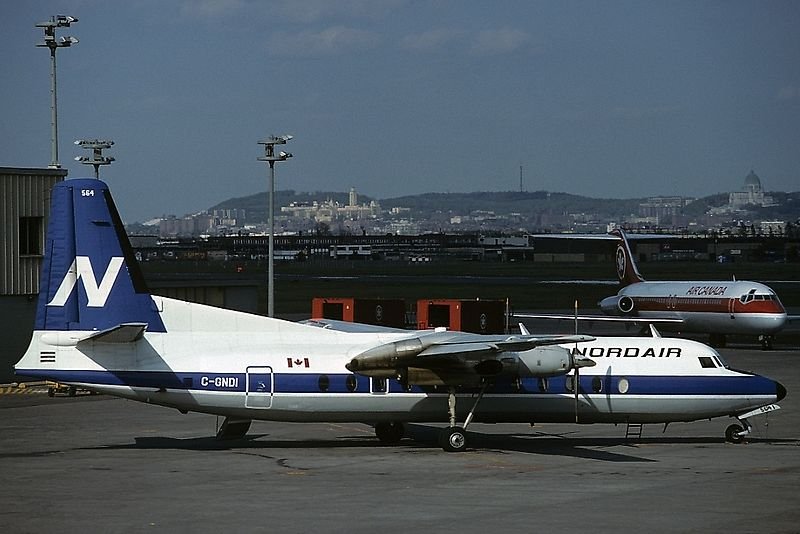
Two aircraft were based at Frobisher Bay, now known as Iqalit, in the far North Canadian province of Nunavut. Iqalit itself is on the huge but sparsely populated island of Baffin Island (it is the fifth largest island in the world). From here they flew services to the isolated communities of Cape Dyer, Hall Beach and Cambridge Bay. The other aircraft was stationed at Montreal and used for services to Chibougamau, Val d’Or and Matagami, all in Western Quebec.
Piergiuliano Chesi / CC BY-SA (https://creativecommons.org/licenses/by-sa/3.0)
In May 1972 Nordair started its first international scheduled service from Montreal to Pittsburgh. As expected, the 737s were used on the route but the service was not a success and the 737s were regularly down-graded to FH-227s until the route was eventually cancelled.
Alain Rioux [GFDL 1.2 (http://www.gnu.org/licenses/old-licenses/fdl-1.2.html) or GFDL 1.2 (http://www.gnu.org/licenses/old-licenses/fdl-1.2.html)]
Nordair was profitable throughout the 70s but in 1977 its owner James Tooley put the airline up for sale, seemingly weary of the constant issues concerning use of the French language. This began a period of various attempts at forcing sales through as Nordair became embroiled in the local politics. The end result of this was that in 1982 the airline suffered its first loss in 20 years with a C$2.4 million deficit caused by both economic problems and a 5-month strike by employees. It was not alone in this as even Air Canada and CP Air were recording significant losses at the time, whilst its competitor Quebecair was close to collapse.
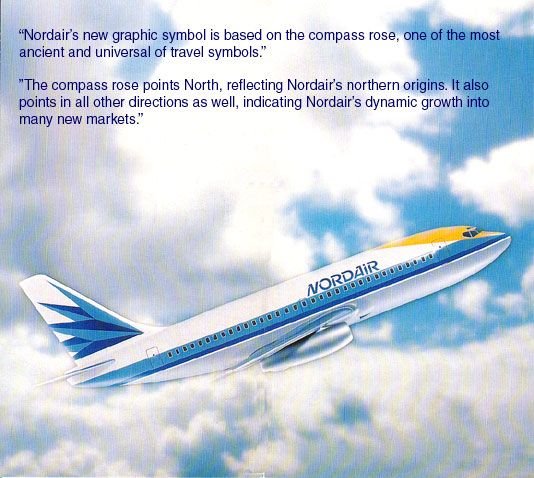
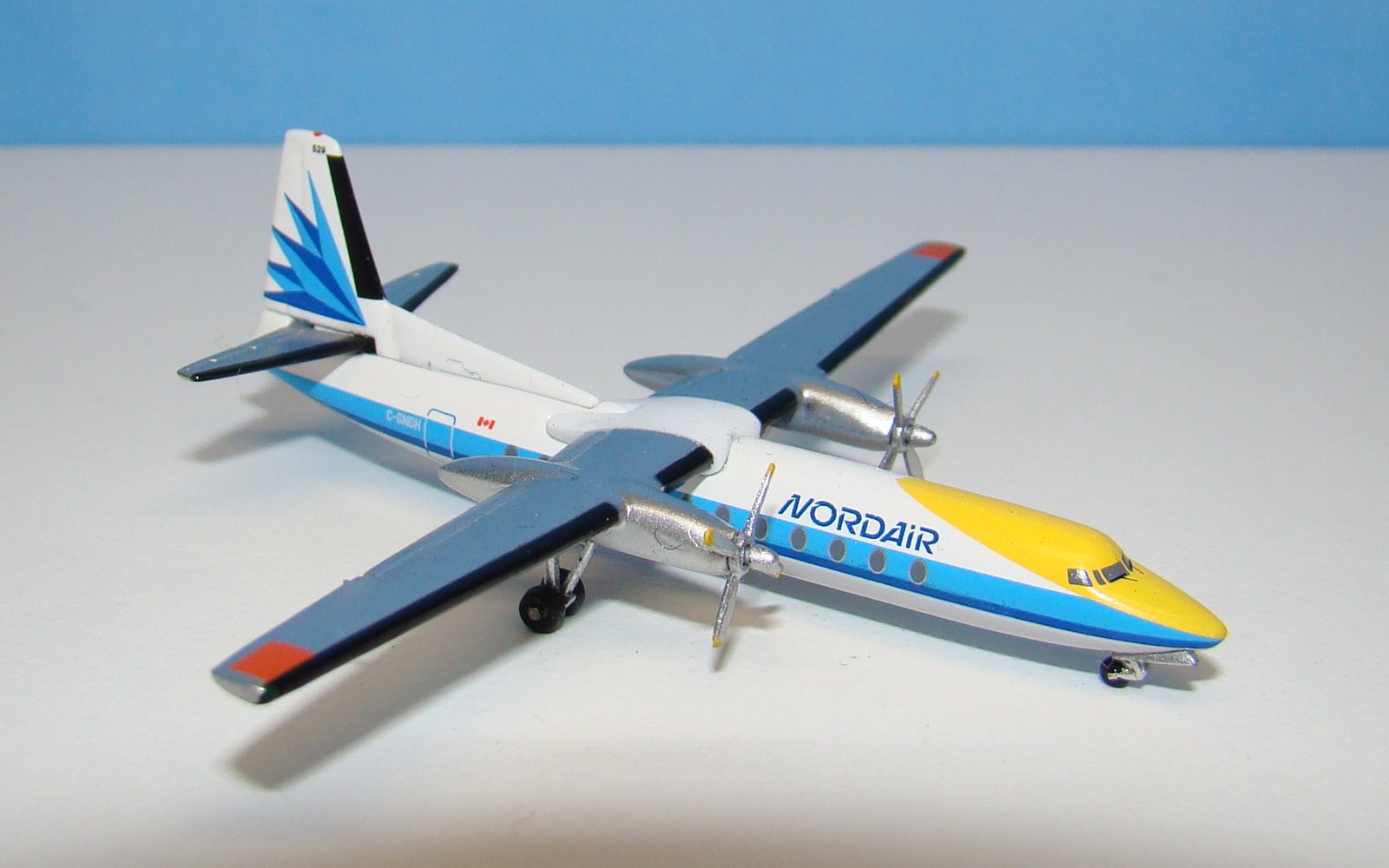
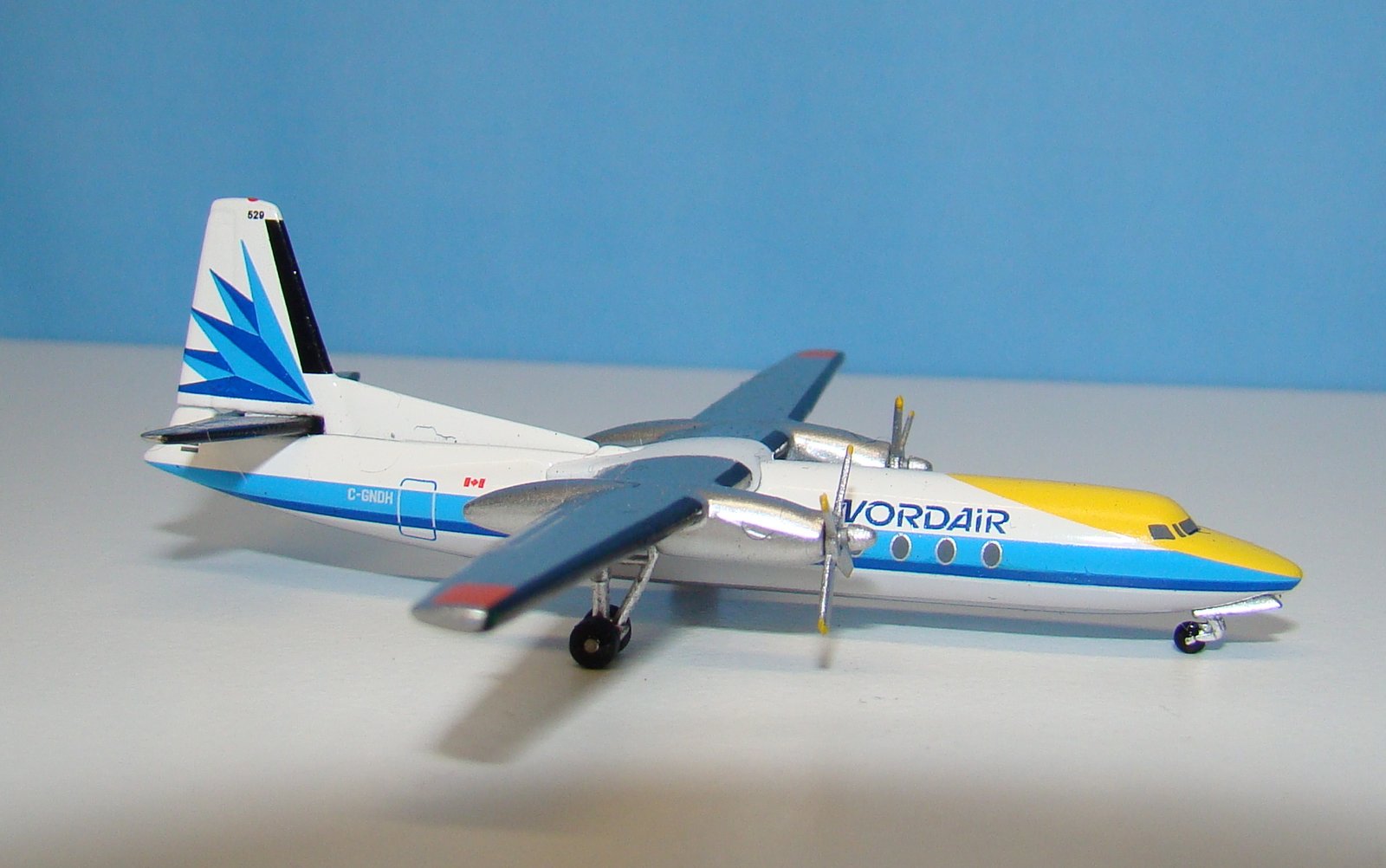
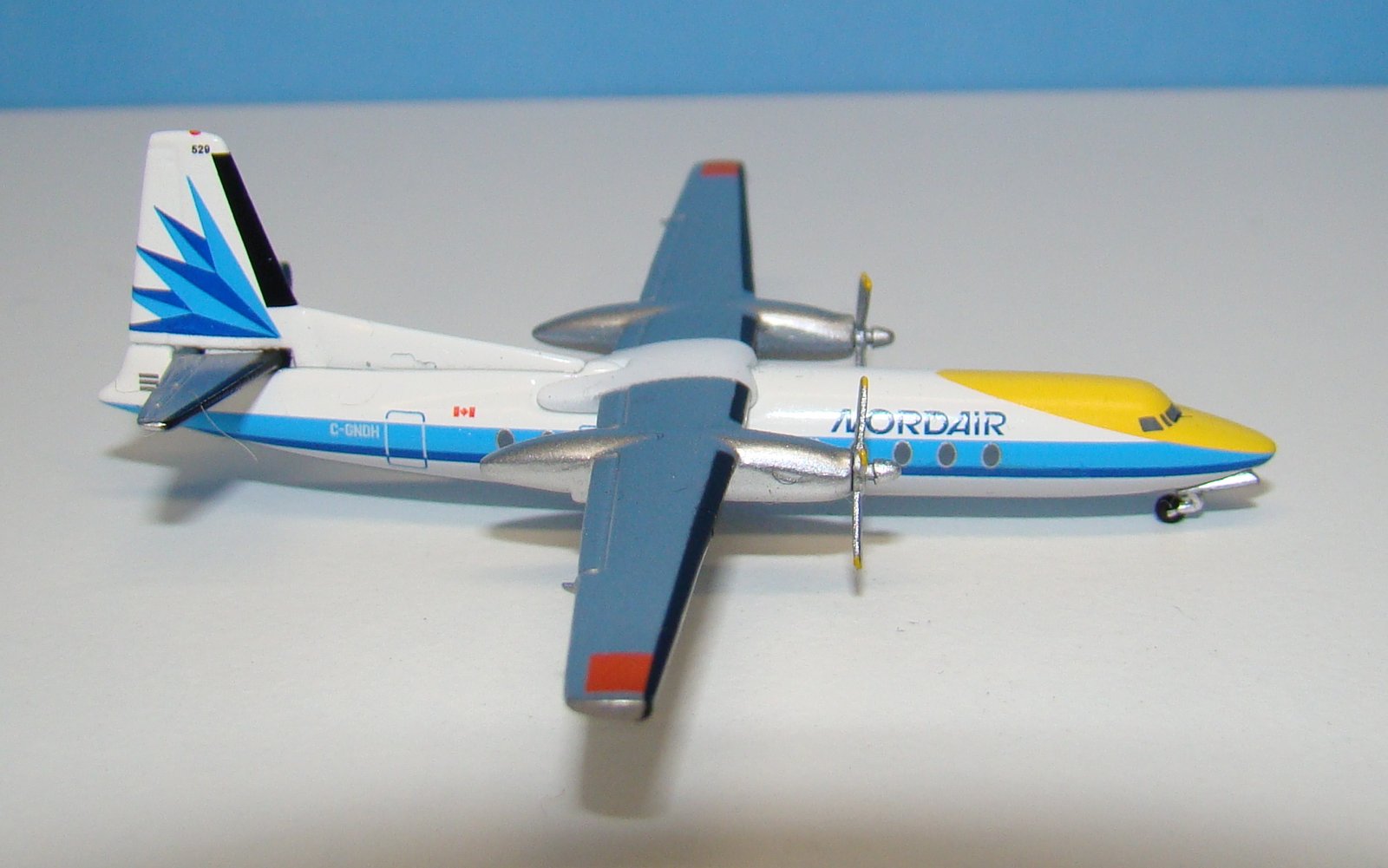
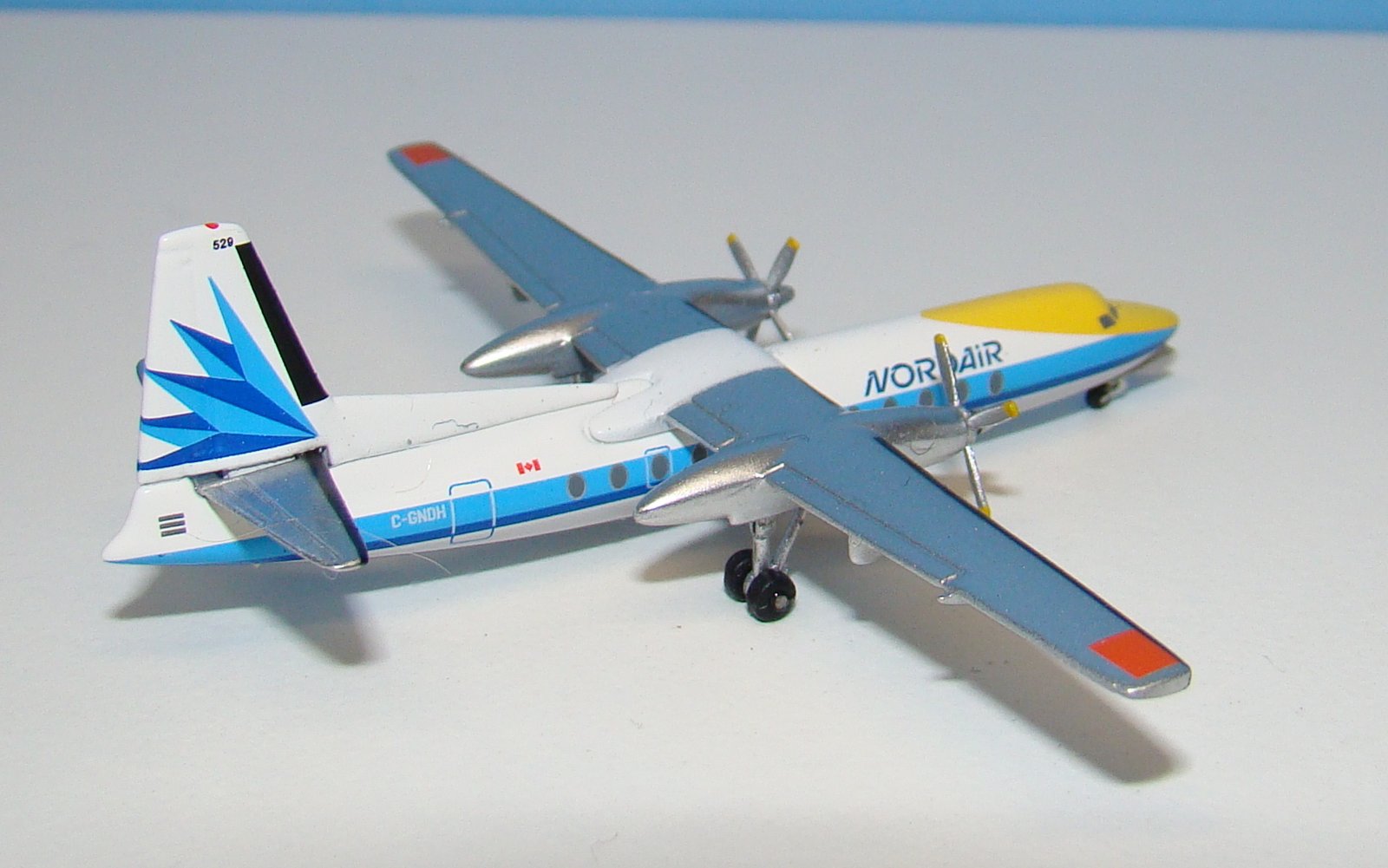
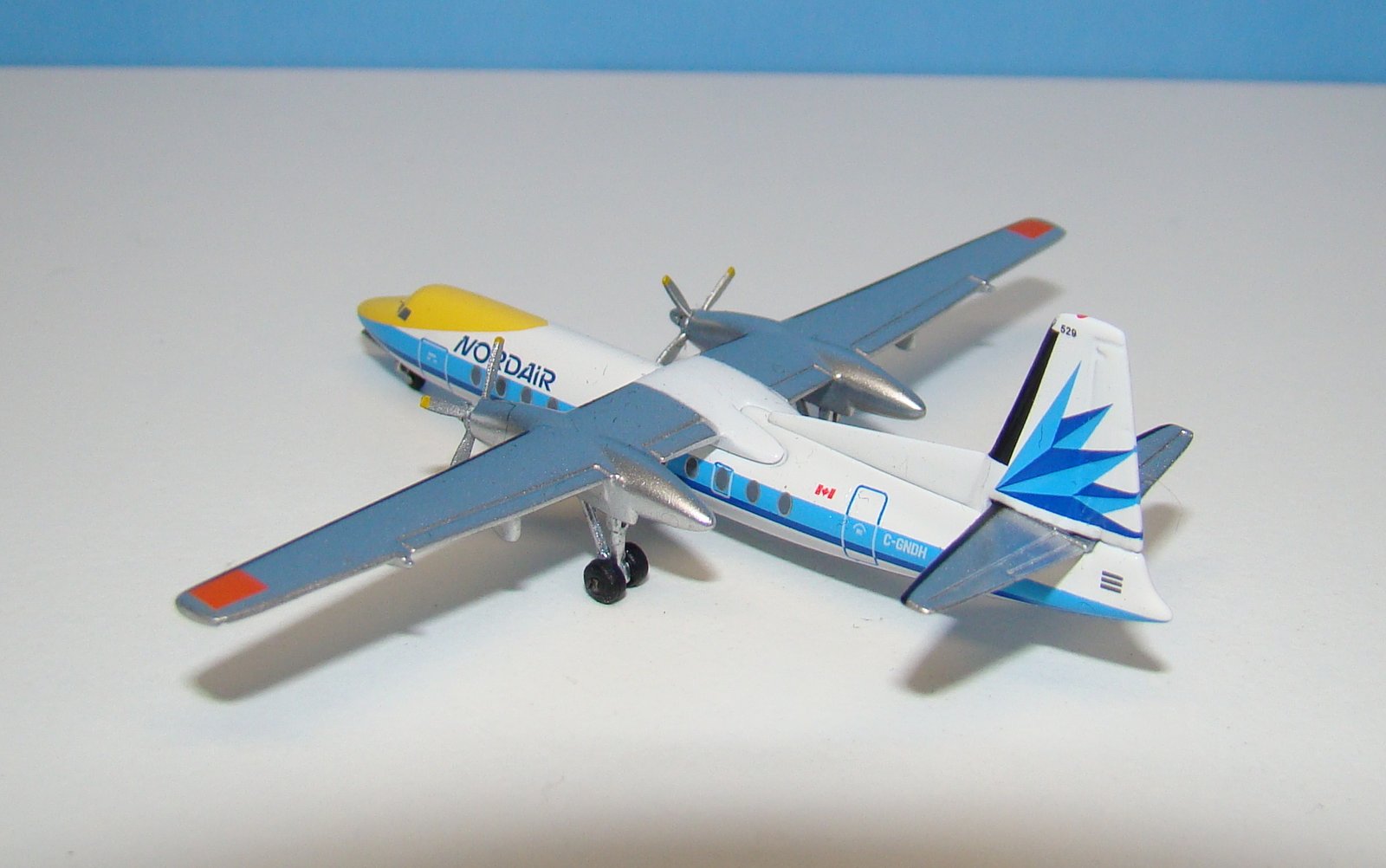
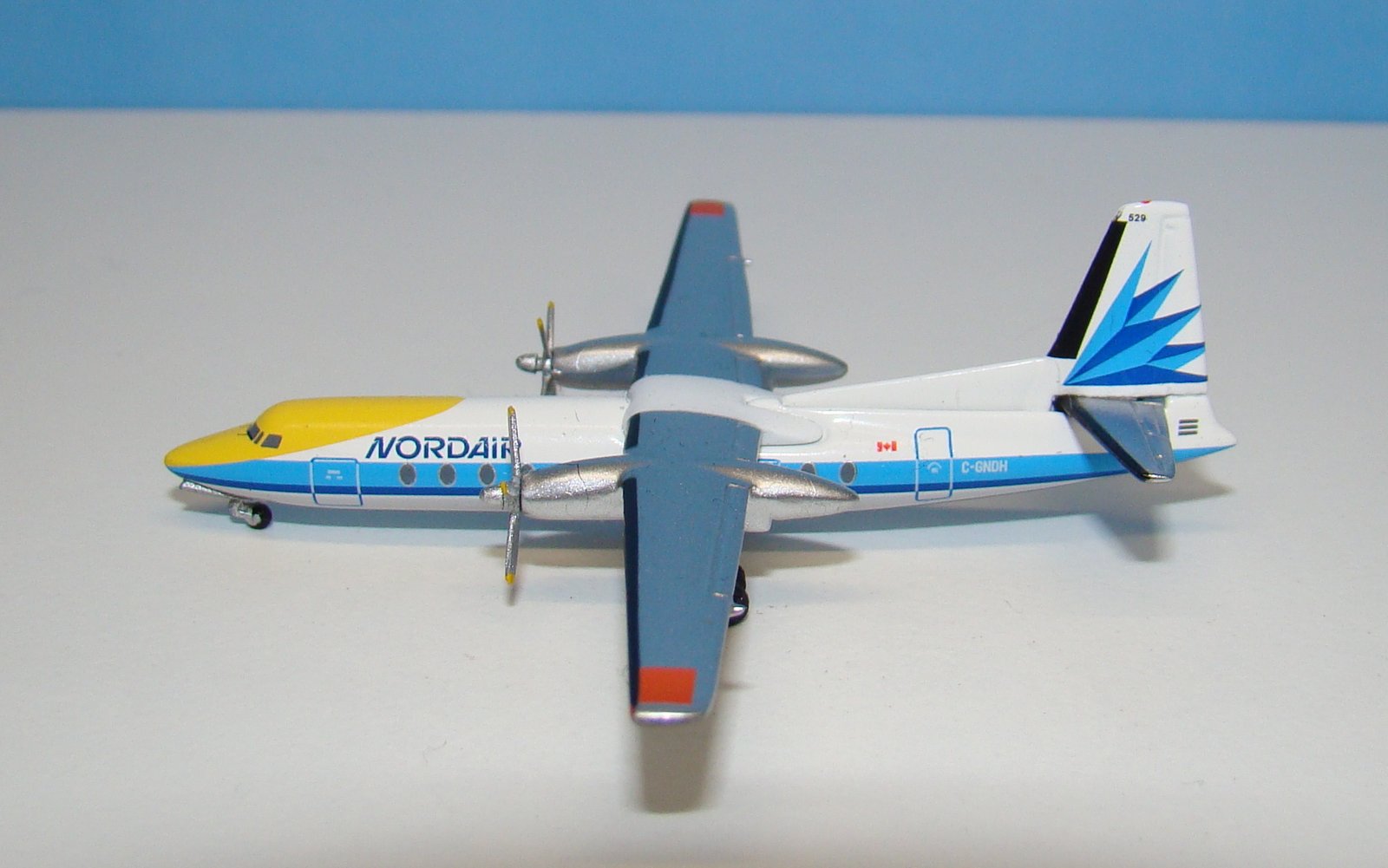
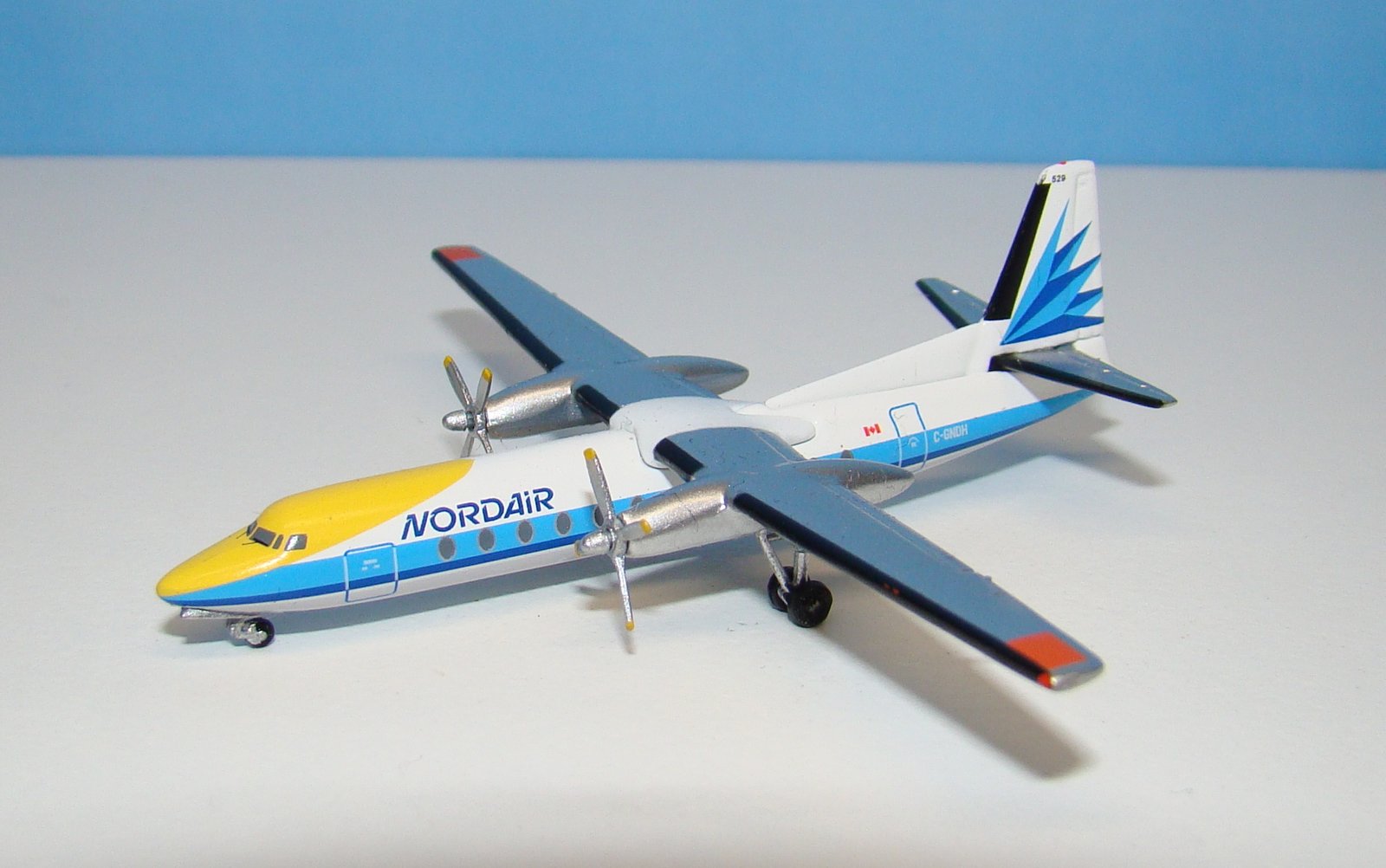
The financial problems didn’t stop Nordair from acquiring another pair of FH-227s, both of which had been originally delivered to Ozark in 1967 but came via the French regional TAT. In 1984 Nordair reinvented itself with a new livery based upon the compass rose “one of the most ancient and universal travel symbols”. The new scheme featured a dynamic new tail logo, replacing the rather boring blue tail and N logo of many years. There was also an exciting yellow flash added to the forward cabin roof.
Nordair Fairchild-Hiller FH-227 C-GNDH Aeroclassics 1:400 Scale Model Airliner
Nordair Fairchild-Hiller FH-227 C-GNDH Aeroclassics 1:400 Scale Model Airliner
Nordair Fairchild-Hiller FH-227 C-GNDH Aeroclassics 1:400 Scale Model Airliner
Nordair Fairchild-Hiller FH-227 C-GNDH Aeroclassics 1:400 Scale Model Airliner
Nordair Fairchild-Hiller FH-227 C-GNDH Aeroclassics 1:400 Scale Model Airliner
Nordair Fairchild-Hiller FH-227 C-GNDH Aeroclassics 1:400 Scale Model Airliner
Nordair Fairchild-Hiller FH-227 C-GNDH Aeroclassics 1:400 Scale Model Airliner
Unfortunately, Nordair itself was still up for grabs and despite being majority owned by Air Canada, since late 1977, in 1986 it was taken over by CP Air. Nordair was officially swallowed up under CP’s certificate on January 24, 1987 but it was over two years before all the aircraft were repainted into the new Canadian Airlines colours.
The five FH-227s gained Canadian titles but were retired from service not long after the merger. At least one, C-FNAI, never gained the new Nordair colours. Four of the five went to Malmo Aviation of Sweden in 1987/88. The Whistle-Pigs had in Nordair service proven themselves worthy partners to the 737s providing the ruggedness to operate in Arctic conditions or to fly trunk scheduled services.
References
2006, March/April. Giannico, P. Nordair: From Provincial Quebec to High Arctic. Airliners Nordair. RZjets.net 1965. Rationalisation in Canada. Flight International 1973. Quebecair. Flight International 1982. Nordair Losses. Flight International