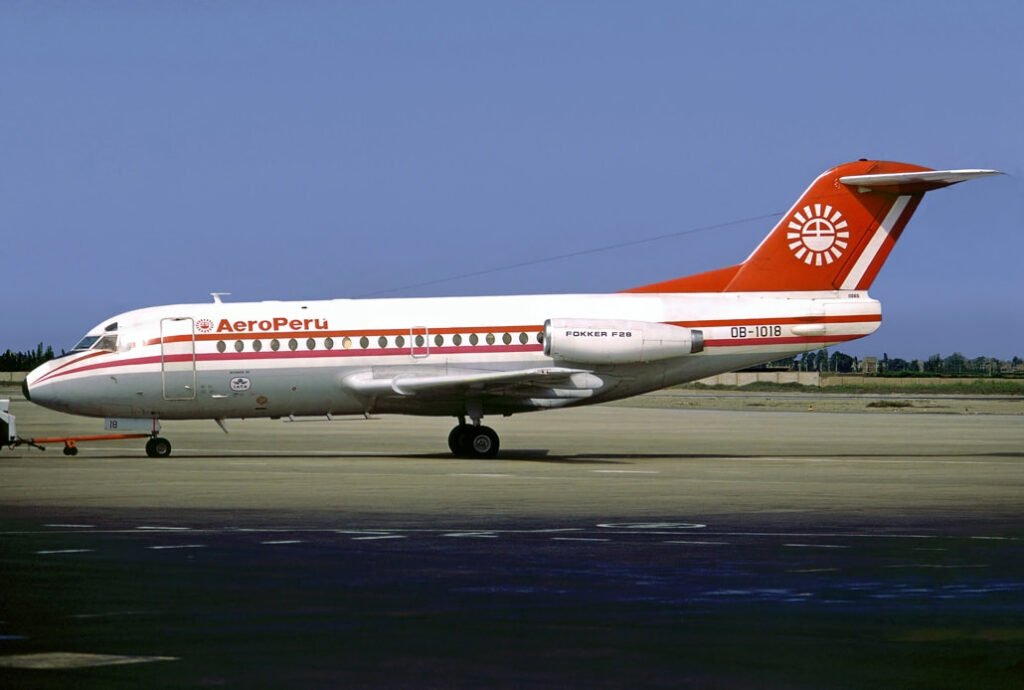
The Dutch Fokker 28 Fellowship proved to be a hardy design that after first flying in 1967 provided strong competition, at the lower end of the passenger scale, to the Douglas DC-9 and BAC One-Eleven. One feature of its design that was unusual was the split-section tailcone airbrake that enabled rapid descents – something no doubt of much use in a mountainous country like Peru. Accordingly, the Peruvian Army’s airline SATCO came to be an early customer, but the type would soon be seen flying in more colourful liveries through the Peruvian Amazon.
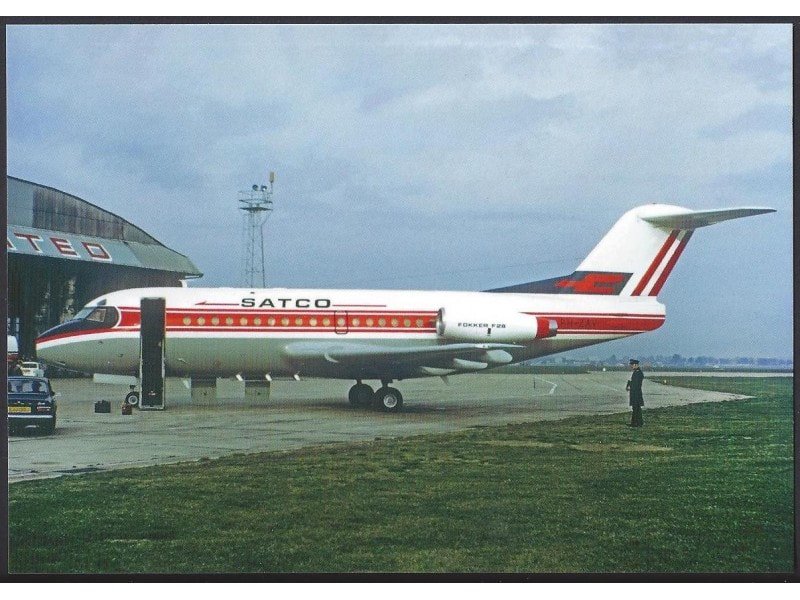
SATCO had been formed in 1960 when the Peruvian government reorganised the state owned Transportes Aéreos Militares – TAM Peru which had been founded in 1946. As much a part of the Peruvian Airforce as an airline SATCO provided transport to remote areas of the country using classic piston types such as the Douglas DC-4 and Curtiss C-46.
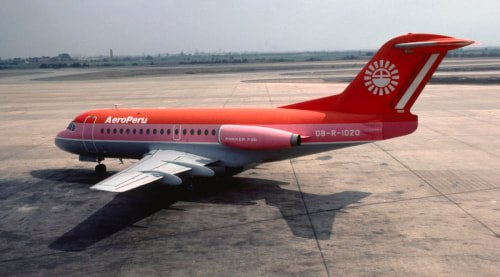
Joining these rugged piston prop-liners from March 1973 were a trio of new Fokker F28-1000s (OB-R-1018, 1019, 1020), however their time with SATCO was short as in May a new civilian airline was formed from elements of SATCO, including the F28s. This was named Empresa de Transporte Aéreo del Perú, or for operational purposes Aeroperú.
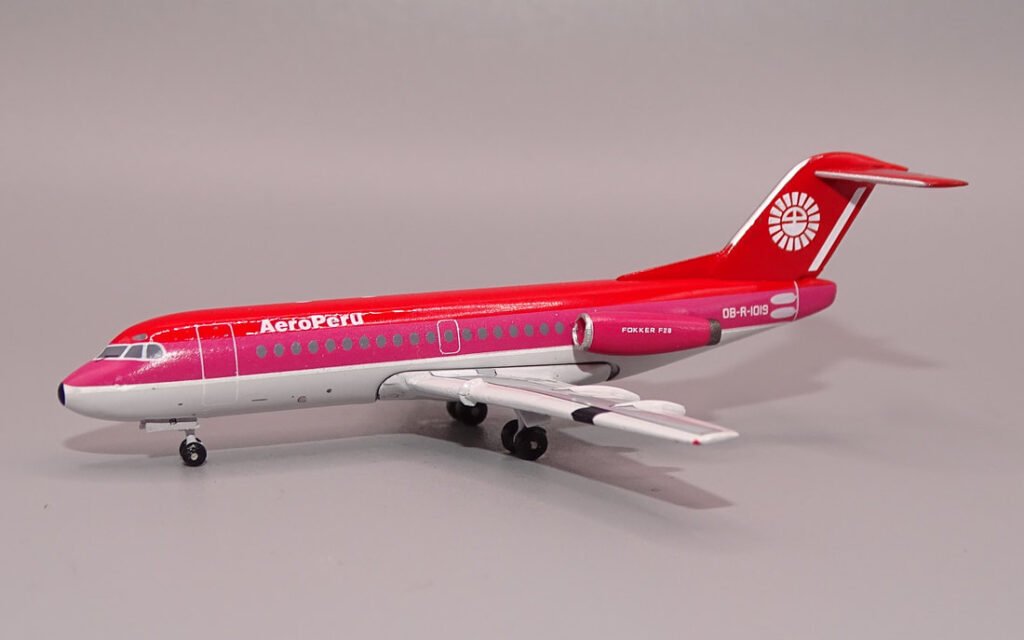
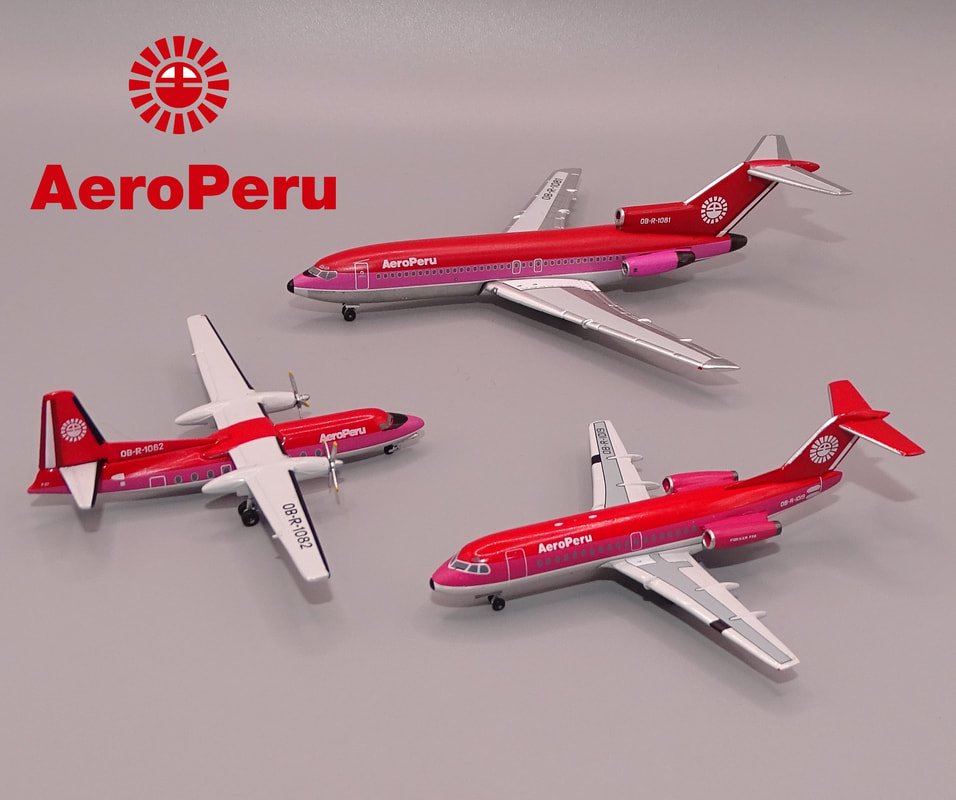
The initial fleet included the three F28s originally delivered to SATCO, which began service with Aeroperú on the Lima-Cusco route in October. The F28s were joined by a single ex-Eastern 727-25 in May 1974, and a pair of ex-VIASA DC-8-54s in July with which the airline began international services.

The F28s were joined on domestic routes by Fokker F27-600s. The first was an ex-Maersk Air frame built in 1970 and leased in 1974 for a short time, until Aeroperú’s own pair of new build aircraft were ready in mid-1975. The F27s may well have replaced a pair of ex-SATCO Douglas DC-4s that had transferred across at the same time as the F28s.

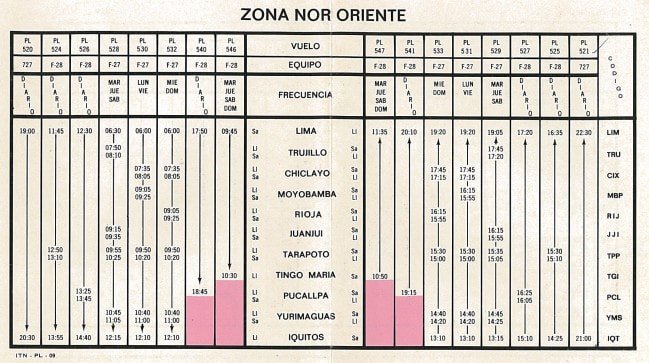
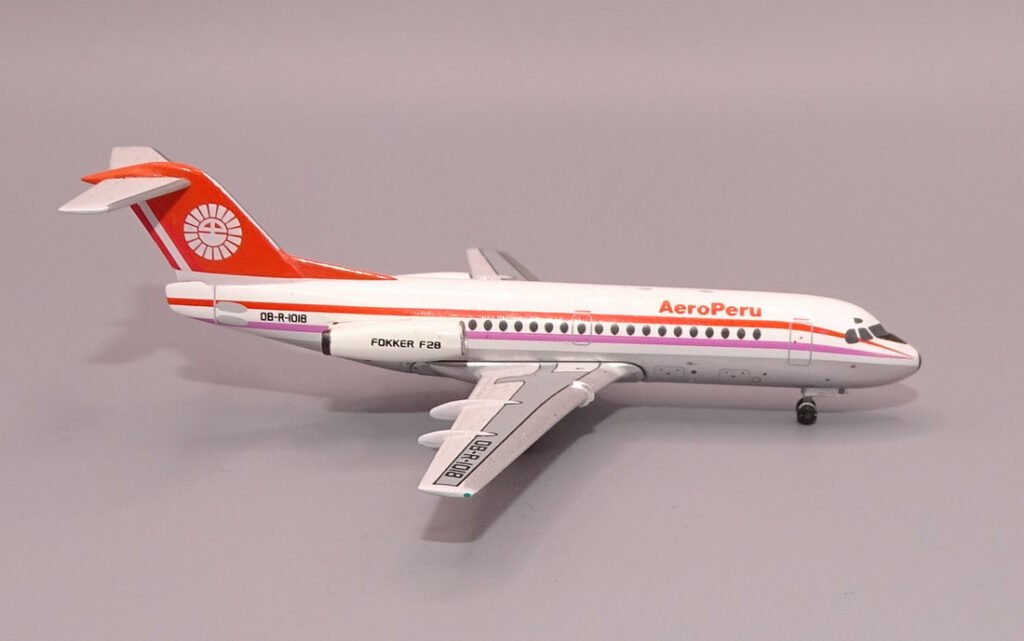
The new Peruvian flag carrier debuted with a orange and hot pink livery that was very 1970s, but certainly stood out. The 1975 timetable shows the domestic services split into three sections – the North, South and Northeast:
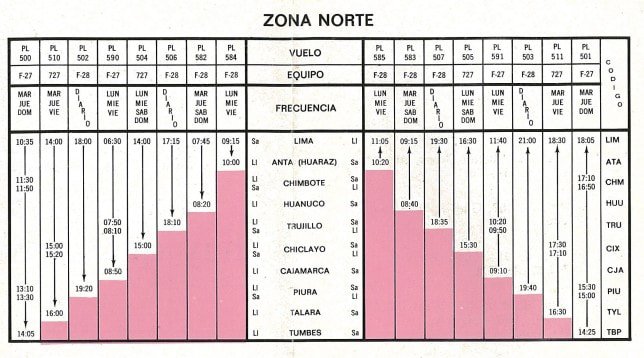
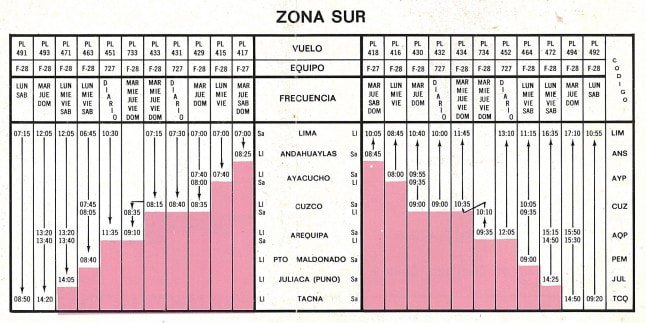
Timetable images are from the always amazing timetableimages.com
As Aeroperú reached the end of the 70s and leased L-1011 Tristars they lost the hot pink livery, but the F28s continued to ply the jungle routes. One of the trio, OB-R1020 was destroyed in October 1988 when it crashed after takeoff from Juliaca. Passengers towards the front of the aircraft survived but 12 in the mid and rear were killed.
Aeromexico took a 70% shareholding in Aeroperú during 1991, but the airline was not profitable and despite Delta taking a shareholding in 1998 it suspended all flights on March 10 1999. It’s a little unclear when the F28s left service with at least one seemingly in storage by 1994, however both had been broken up by 1998. They had provided staunch service to Aeroperú for over twenty years in some of the most challenging flying conditions known.