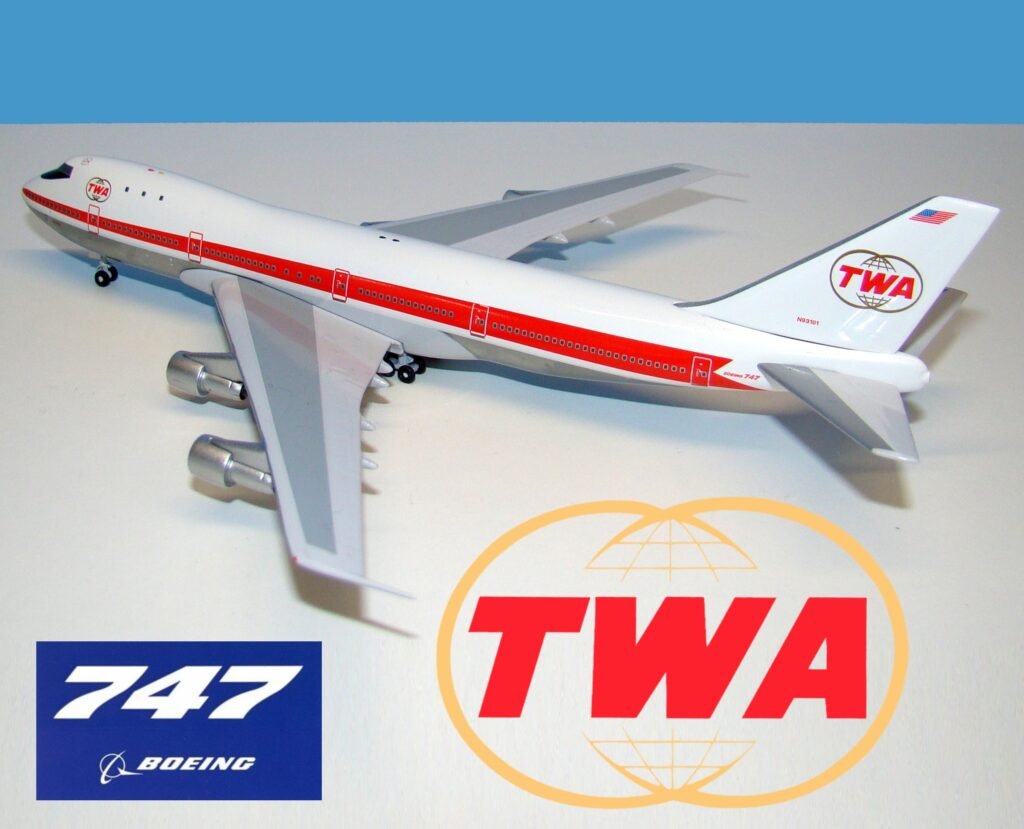
The Boeing 747 signalled a step change in the size and cost of the airline industry. Eagerly acquired by the world’s major airlines the huge jet help cause levels of indigestion during the 1970s that almost killed both Pan Am and TWA. Nonetheless it proved itself in service and throughout its career with TWA saw four different liveries grace its form, as it carried the failing airline through to the end of the 1990s.
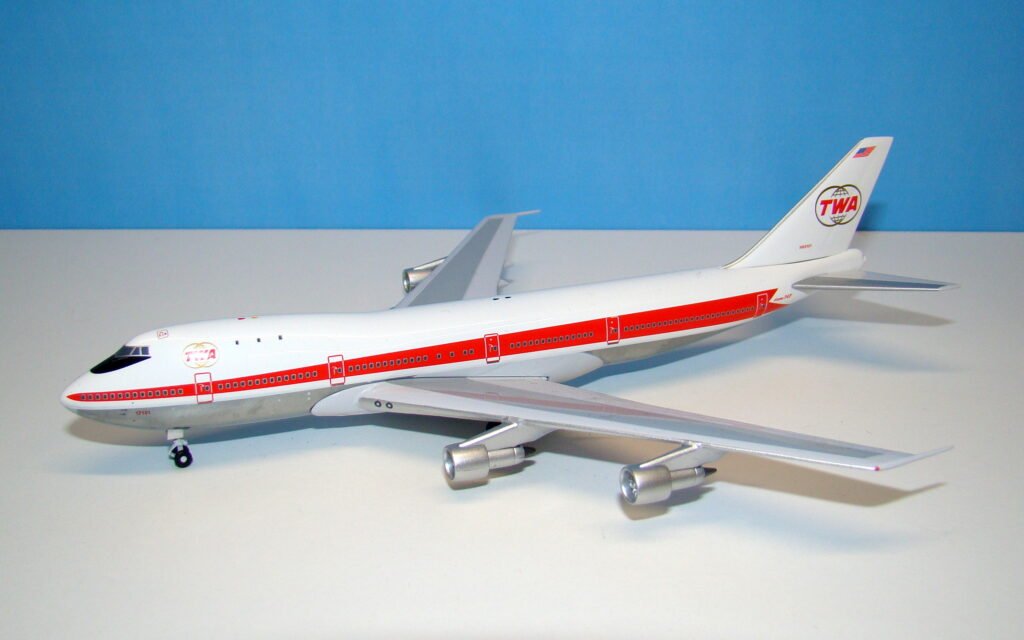
The Boeing 747 was a product of the tremendous growth in long haul passenger traffic during the 1960s. It had only been in 1957 that 1 million passengers flew annually across the Atlantic Ocean but only ten years later that number had skyrocketed to 5.5 million. Growth forecasts estimated a continuous 12% annual growth and the first generation jets simply couldn’t keep up with this demand. Douglas stretched their DC-8 into the series 61, creating the first ‘jumbo jet’, but this was merely a stopgap.
With Pan American signing up for 25 747s in April 1966 it was only a matter of time until most of the world’s other major airlines were forced to also order 747s. By the time of the ceremonial rollout of the first aircraft in September 30, 1968 27 airline badges were worn on its side and orders had been placed for 158 aircraft.
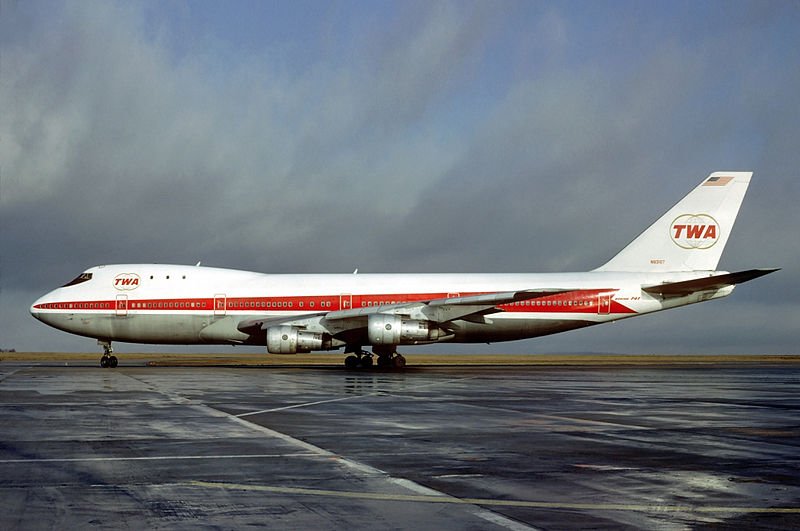
Many of these orders came from the main American trunk airlines, which even though they did not have international route networks still felt they needed to acquire jumbos. Some like American and United ordered large fleets (10 and 18 respectively) even though their longest routes were to only Hawaii. Pan Am’s great international US competitor was of course Trans World Airlines and at least they had something like the route network to accommodate the 12 aircraft they had ordered as part of a large Boeing order on September 2nd.
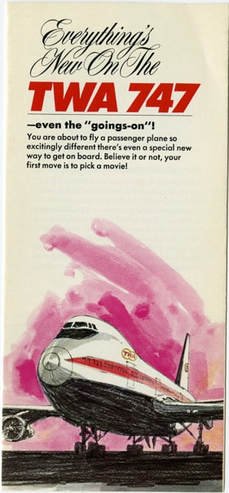
TWA had had a torrid early 1960s but by the mid-60s was firmly profitable. Even a strike in 1966 didn’t hamper this unduly. That year the airline made $29.7 million, although admittedly this was $20 million less than it had made the year before. They could thus afford the 747s despite each costing $22 million. Nonetheless the huge orders being made by other US airlines, especially United, which had ordered nearly 100 jets in 1965, were a harbinger of overcapacity problems to come. At the time TWA was still flying Lockheed Constellations (which finally left the fleet in May 1967) so the jump to 747s was a massive change.

Five 747s were used in the flight testing programme and of these four would ultimately end up with either Pan Am or TWA. TWA took line number 5 as its first 747-131. The 747 production line was in fact humming into 1969 and by March 1970 a new 747 was being produced every three days. That meant that within six months of the first commercial service, on January 22, 55 aircraft had been delivered to 11 airlines including TWA.
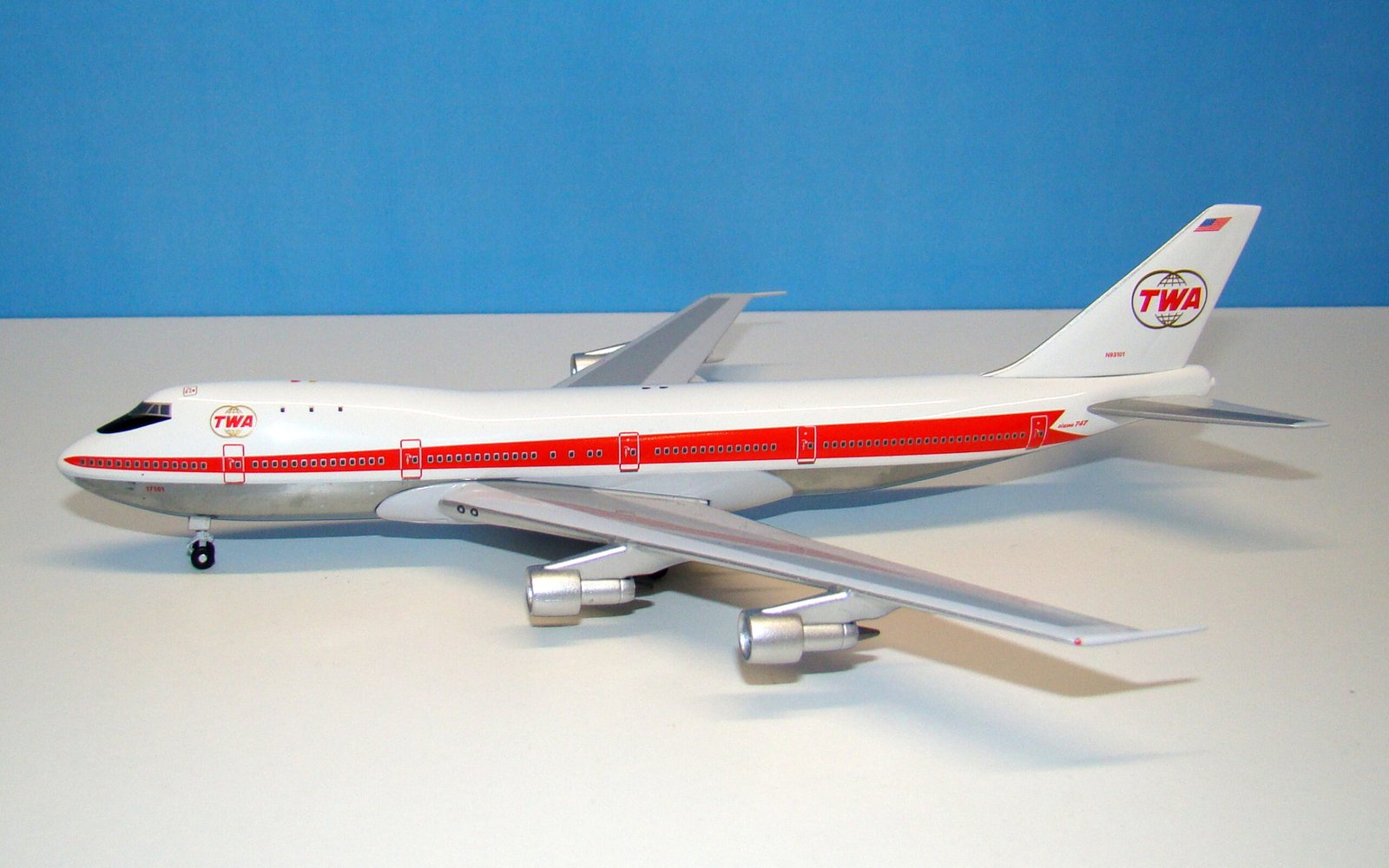
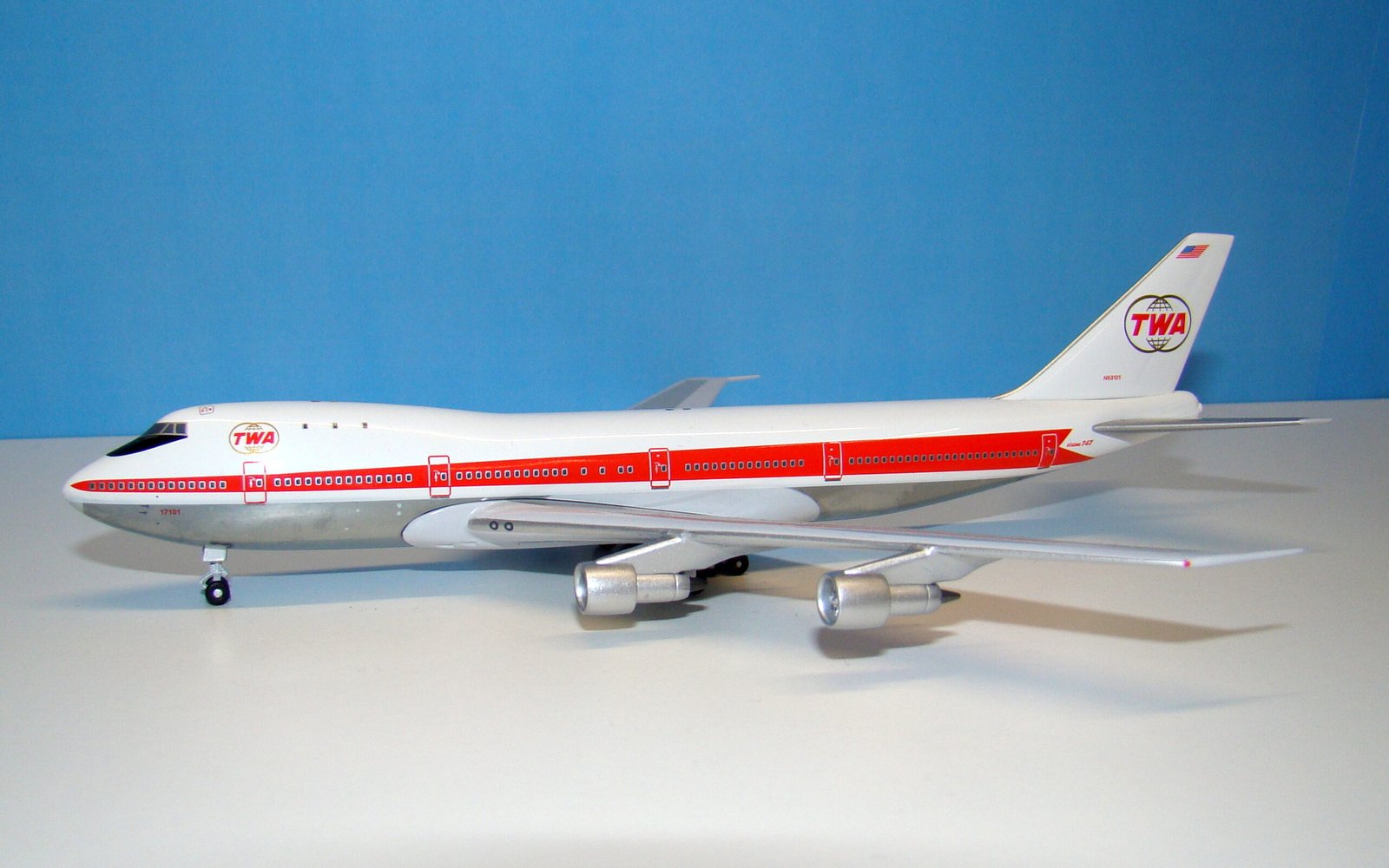
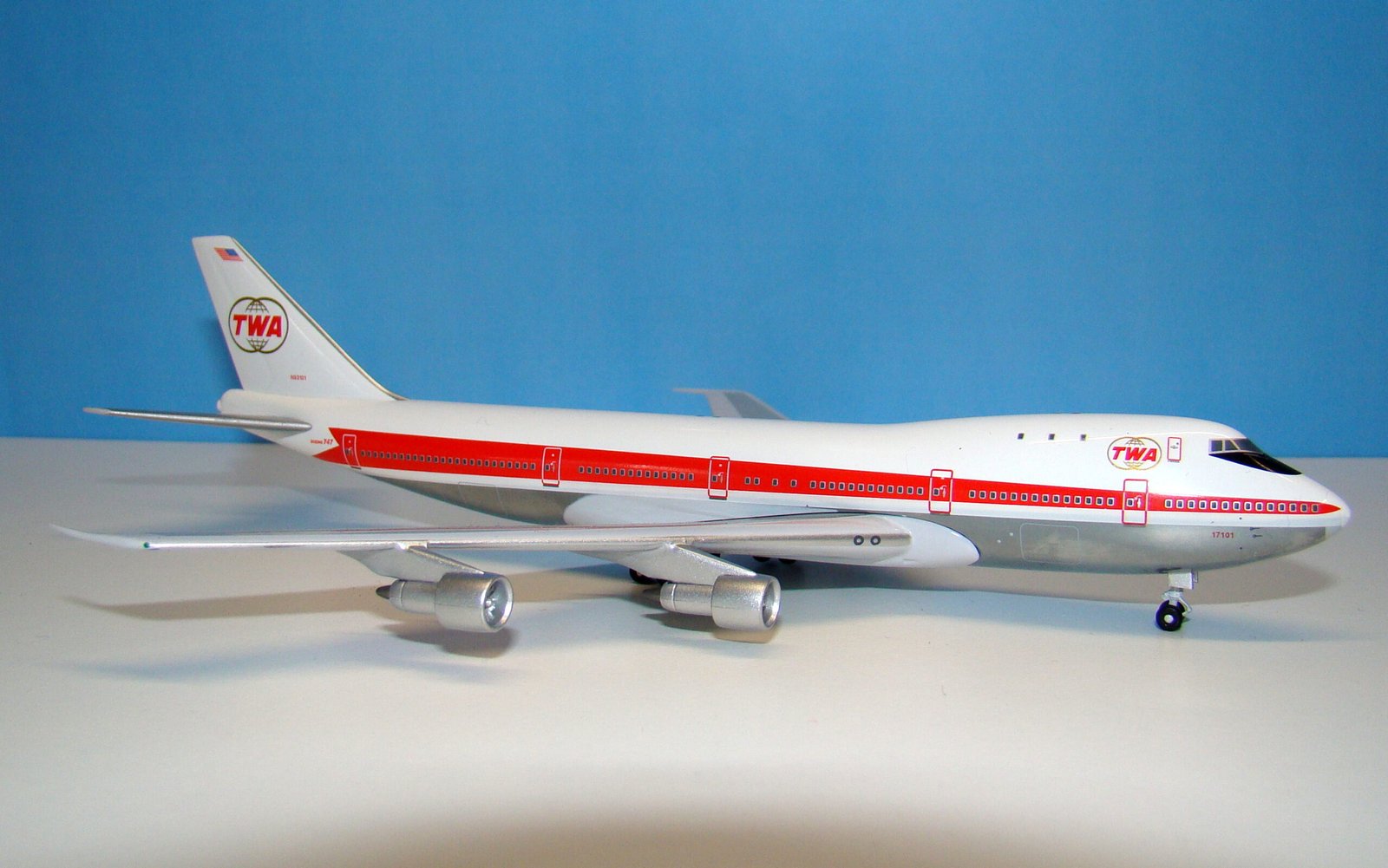
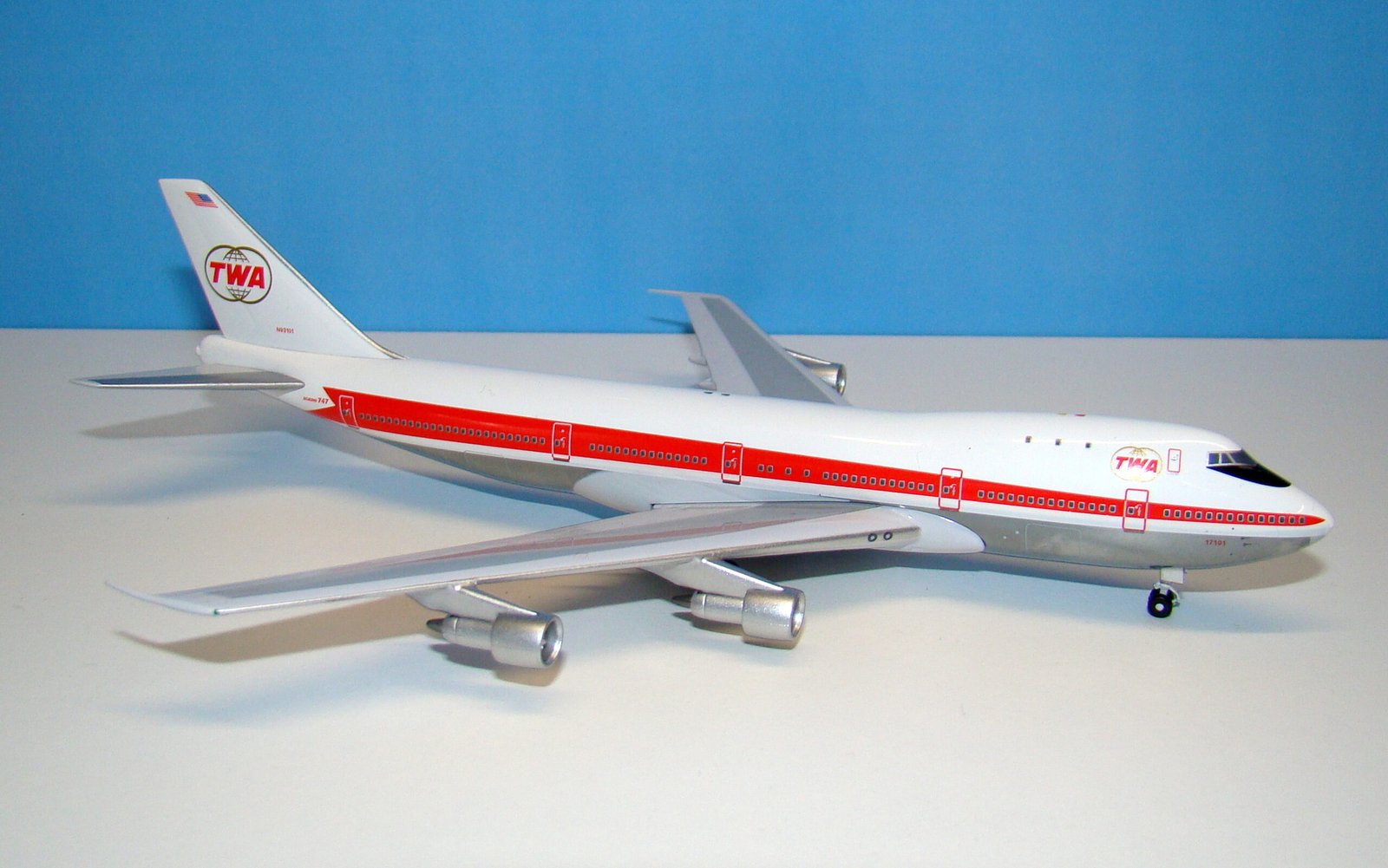
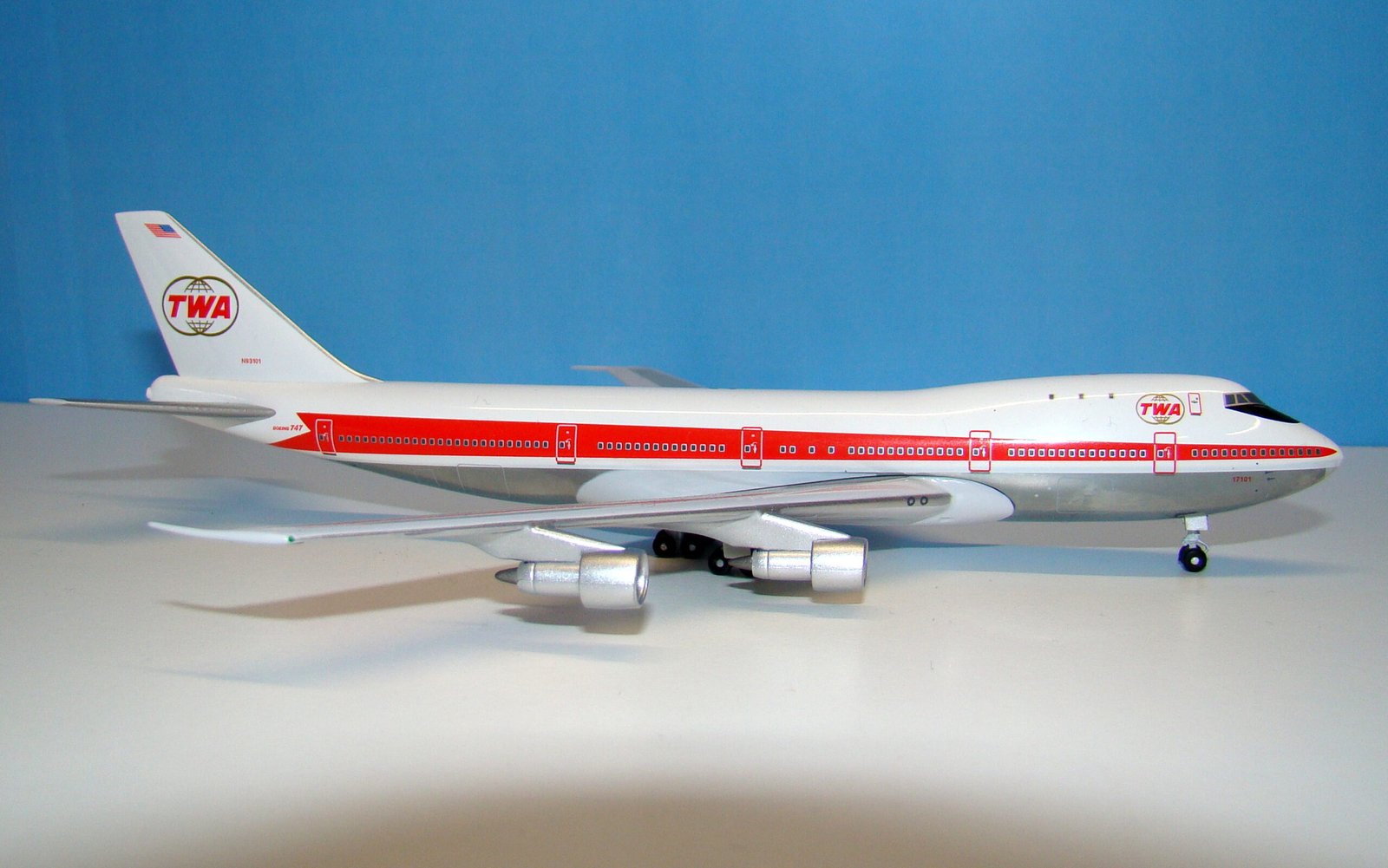
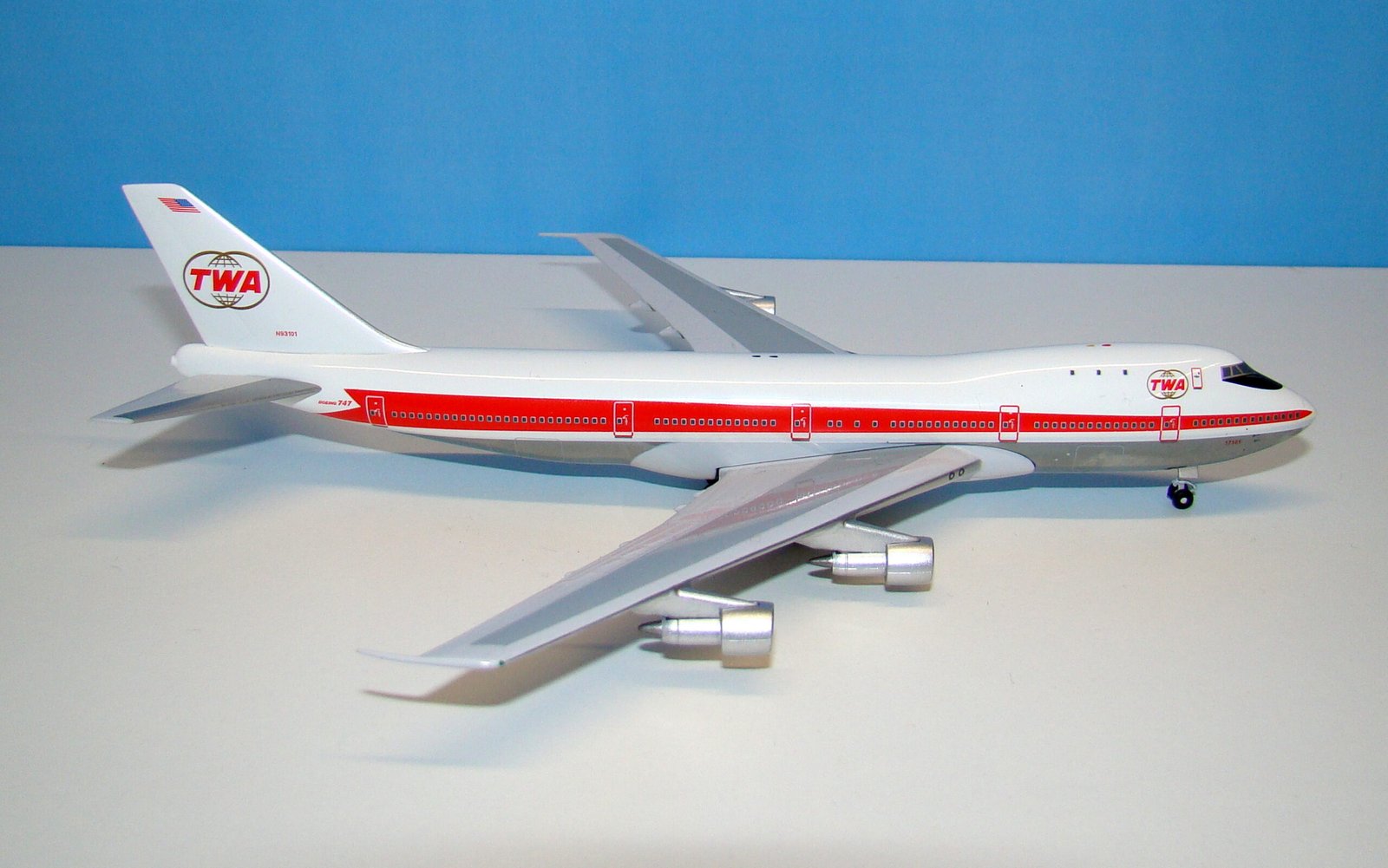
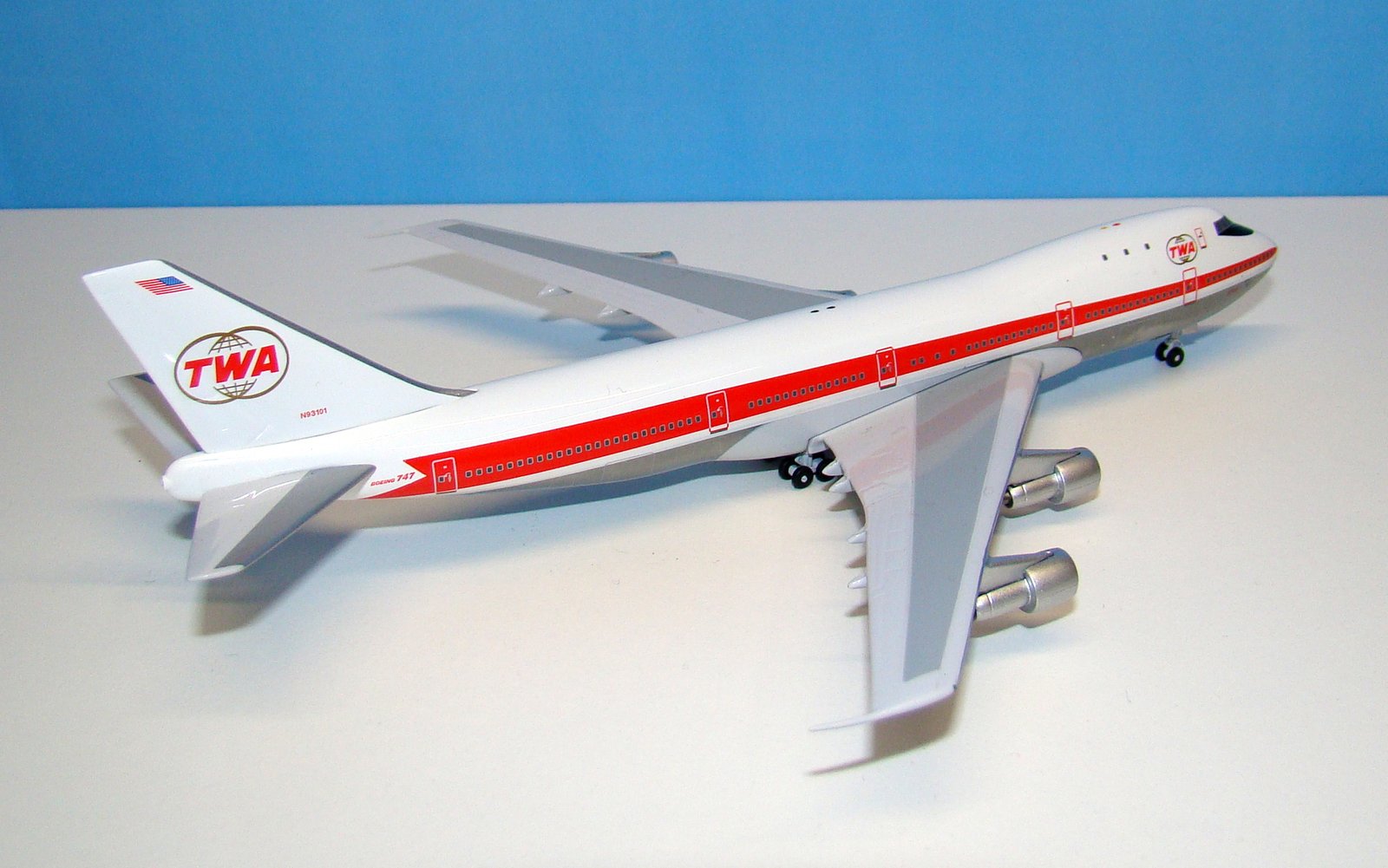
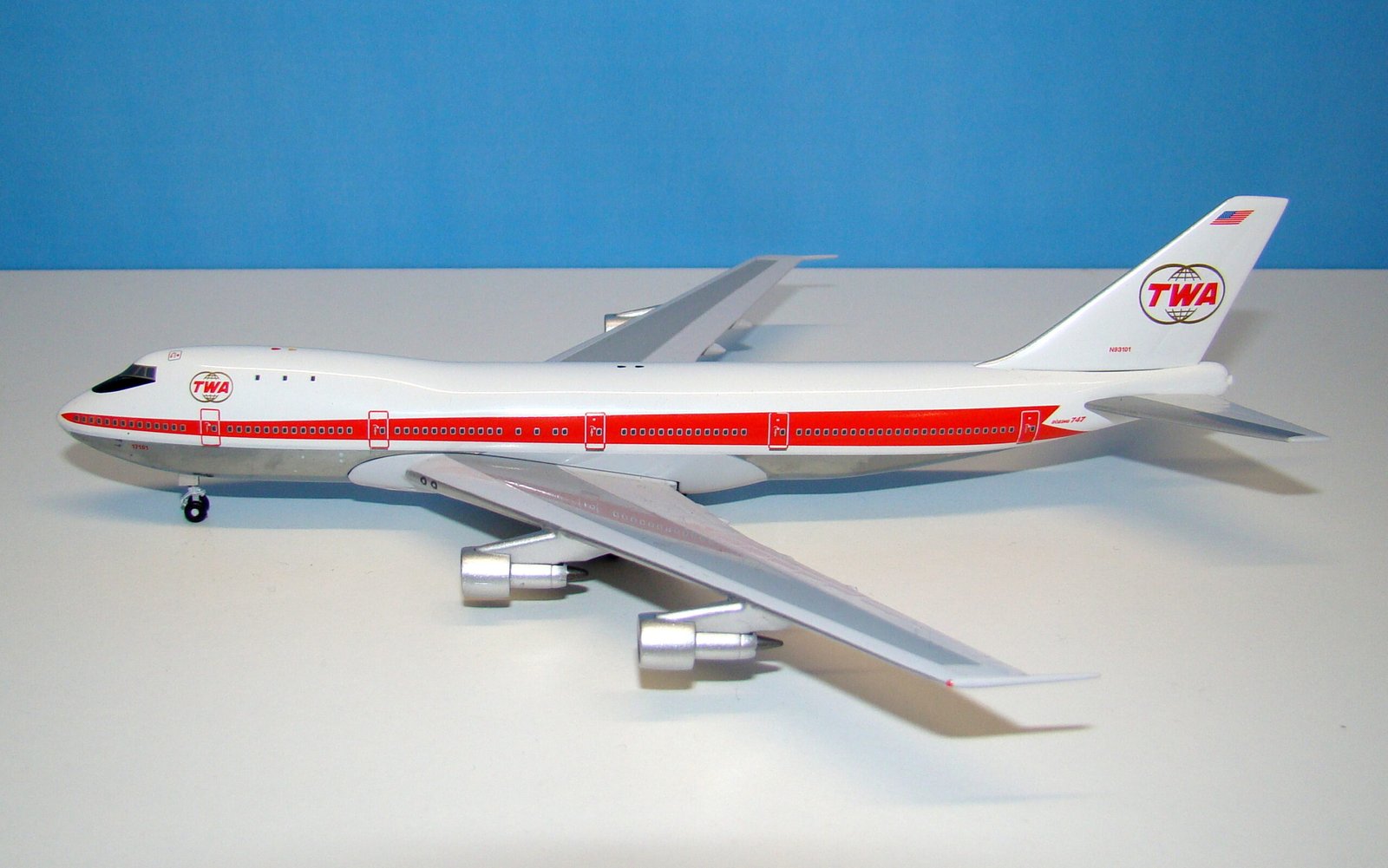
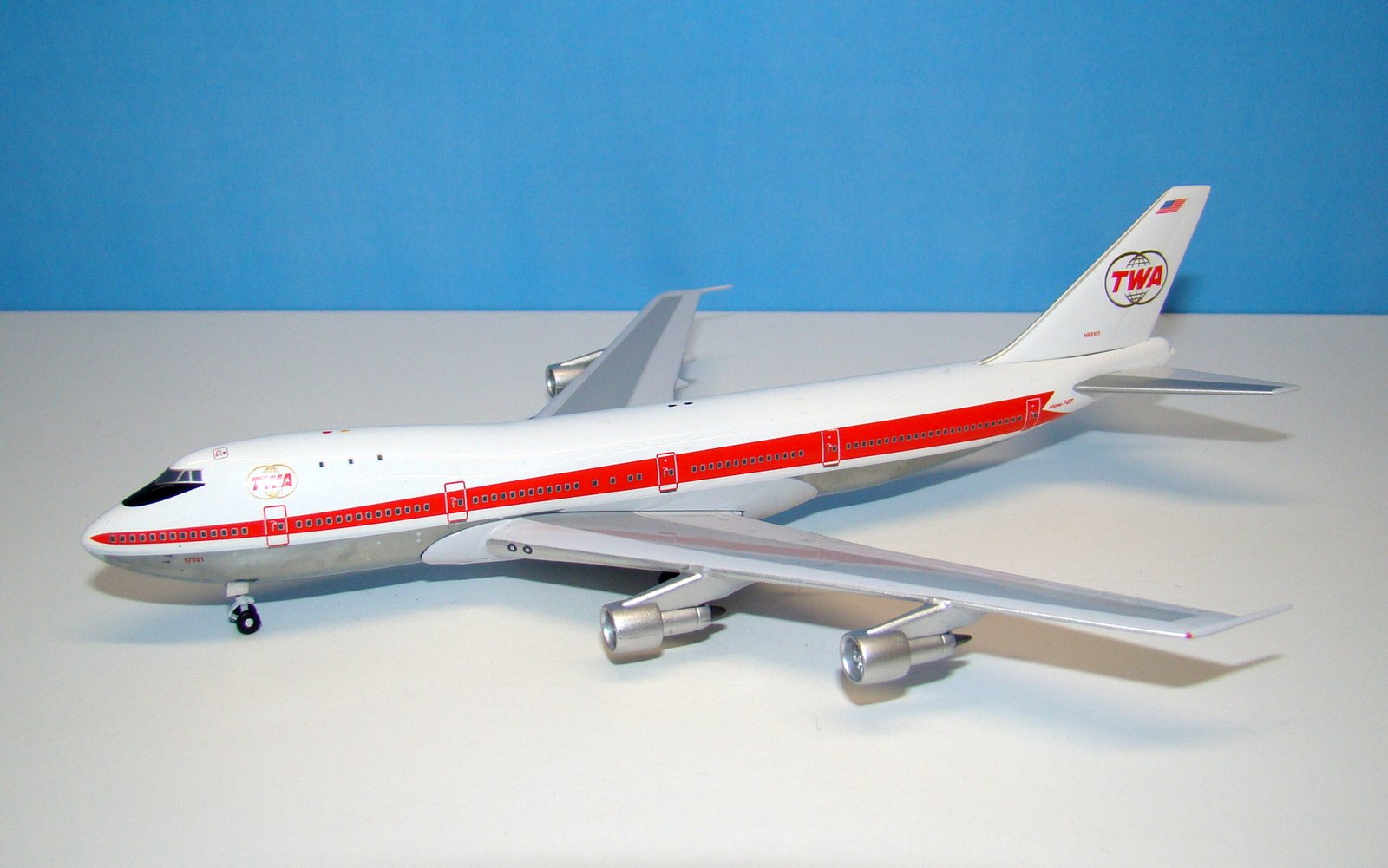
TWA was the second airline to inaugurate 747 operations and began service on February 25, 1970. The first aircraft were used on the coast to coast Los Angeles – New York route marking the first transcontinental US service by a 747.
Transatlantic services began on March 18, between New York and London. By 1971 TWA had 14 747s in service (having topped up its order by purchasing Eastern’s four delivery slots) and was also operating the type from New York to Paris, Rome and Madrid.
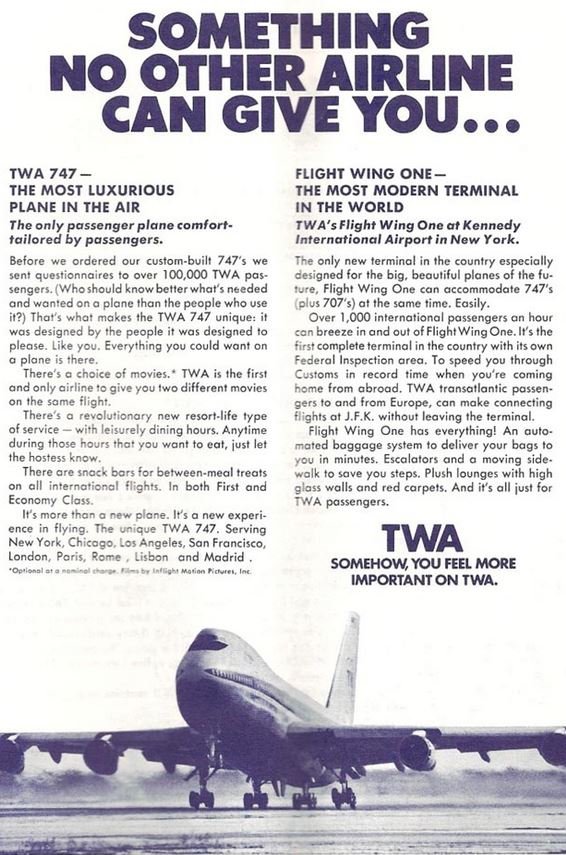
The TWA 747s were configured into 5 zones (A-E) moving from nose to tail. The first class Zones A and B seated 24 and 38 passengers respectively. The economy class zones had a spacious nine abreast seating (in a 3:4:2 pattern across). The seats were a full 2 inches wider than previous TWA seats. The three economy class zones seated 284 passengers as follows: zone C (92), zone D (78) and zone E (114). The different zones were colour coded with first class A and B naturally as Gold. Economy zones were blue, red and green. Passenger boarding passes were coloured appropriately to enable easier boarding.
The size of the aircraft enabled TWA to introduce other luxury features. The standard ‘meals on wheels’ style service was dropped and replaced by a personalised service allowing passengers to order when they wished during standard meal periods. As was expected by then each zone of the aircraft had a large movie screen and the capability to show different films in different zones. Nowadays this seems hopelessly outdated but at the time it was cutting edge. The passenger zones also enabled the splitting of smoking and non-smoking passengers. The upper deck was used as a lounge for first class passengers rather than for additional seating. It could accommodate up to 16 passengers and had its own bar.
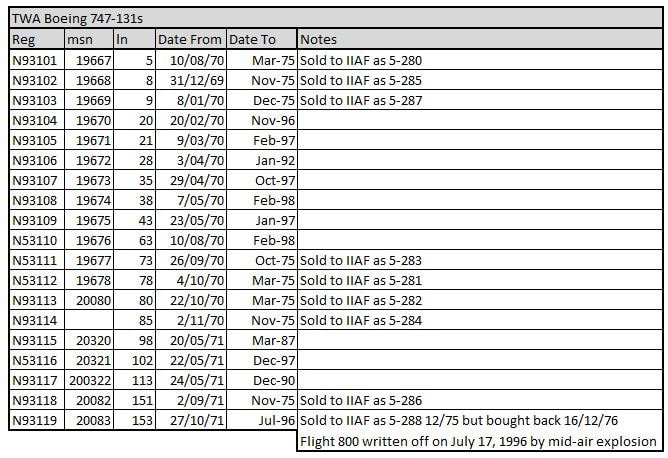
TWA continued to receive new 747s into late 1971 with the last of 19 aircraft acquired in October. The TWA 747s were appropriately registered from N93101-N93119 (four had N531** regs but in sequence). Unfortunately the service entry of the mighty 747 coincided with an economic downturn and this hit both Pan Am and TWA hard. Even without it they had been competing heavily across the Atlantic, not just with each other but also 20 foreign airlines plus a bevy of US supplemental carriers that in 1969 when combined had carried more passengers across the Atlantic than Pan Am had.

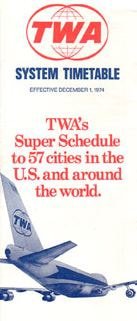
Things were so bad that Pan Am and TWA even talked of merging, although this was killed by the Nixon administration’s distaste for it. Things continued to get worse and in October 1974 this resulted in a route swap agreement between the two US titans. For TWA this meant giving up its Pacific network (Taiwan, Guam and Honolulu) and thus the closure of its round the world route from March 2, 1975. TWA also ceased service to Frankfurt, Hong Kong, Bombay and Bangkok.
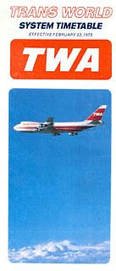
The flipside was that Pan Am gave up service to Paris, Barcelona, Nice, Vienna and Casablanca. In addition Pan Am’s Chicago, Los Angeles and Philadelphia to London services were also canned. The route swap was only authorised for a two year period but when it expired only the Frankfurt route was restarted.
These changes didn’t stop the red ink flowing at TWA and by 1975 the airline was in a terrible state. There was simply far too much capacity in the market. For example three airlines offered 9 am departures from New York to Los Angeles using 747s, which had only a 35% load factor!
TWA was forced to sell nine of its 747 fleet to Imperial Iranian Air Force to meet payroll commitments. The aircraft sold were the first three, and six of the last nine delivered. They left the fleet between March and December 1975. The IIAF sent them to Boeing’s Wichita plant where they were converted with a side cargo door and other modifications. Some were used as transports whilst others fulfilled the role of inflight refueling tankers.
Of the 12 747s the IIAF purchased (9 from TWA and 3 from Continental) only ten had the SCD modification. One of the unmodified frames was the ex-N93119 and she was actually bought back by TWA in December 1976 bringing its 747-131 fleet back up to 11. By then the economy had turned around and TWA’s international routes were making good money again.

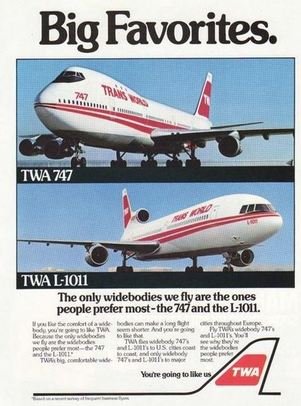
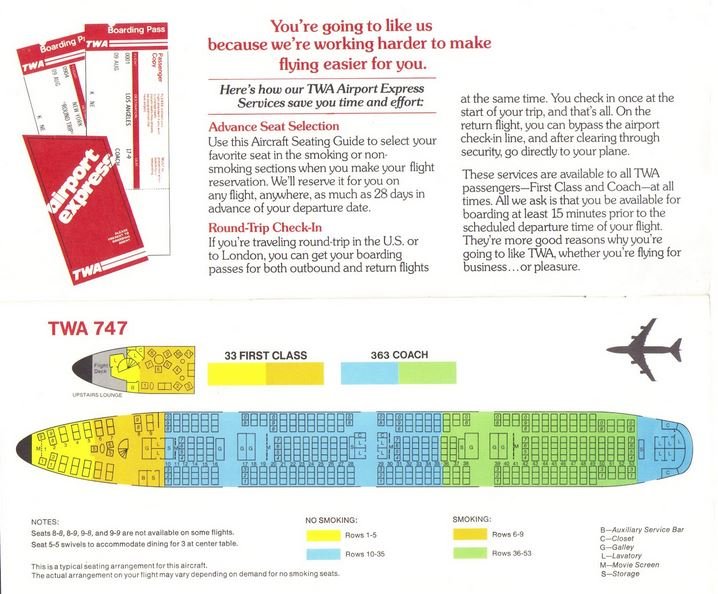
By 1979 TWA had reconfigured the 747 fleet and although the upper deck was still used as a first class lounge the first class seating had been reduced to only 33. The economy areas had changed to ten abreast seating and capacity had gone up to 363 seats, giving a total of 396 passengers compared to only 346 when they were introduced. Below is an ad showing the later configuration:
TWA would expand its 747 fleet into the 1980s with the purchase of a trio of new 747SPs and a selection of second hand 747-100s (5) and 200s (7). The type would continue to be the backbone of the airline’s shrinking long haul network well into the 1990s. TWA’s last 747, N93108, was one of the originals and was ferried to Marana in November 1998 as the last flyable jumbo the airline had. By the end of her career she had amassed a total time of 105,230 hours and 19,566 landings. Long after the airline she had joined had changed beyond all recognition the 747 kept the globe of Trans World flying.
References
1981. Lucas, J. Boeing 747 – The First Ten Years in Service. Jane’s
1983. Serling, R. Howard Hughes’ Airline: An Informal History of TWA. St Martin’s / Marek
Davies, R.E.G. TWA: AN Airlines and its Aircraft