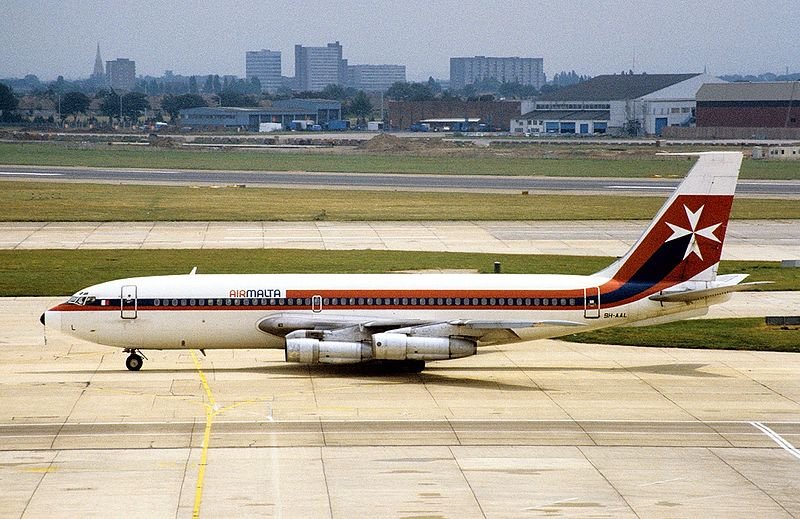
The Republic of Malta consists of a pair of islands (Malta and Gozo) close to Sicily in the central Mediterranean. Although small they attract large numbers of tourists but air traffic volumes are highly seasonal. To meet that demand the national carrier has long leased extra capacity for summer seasons and one of the more interesting leases was a former and future military 707.
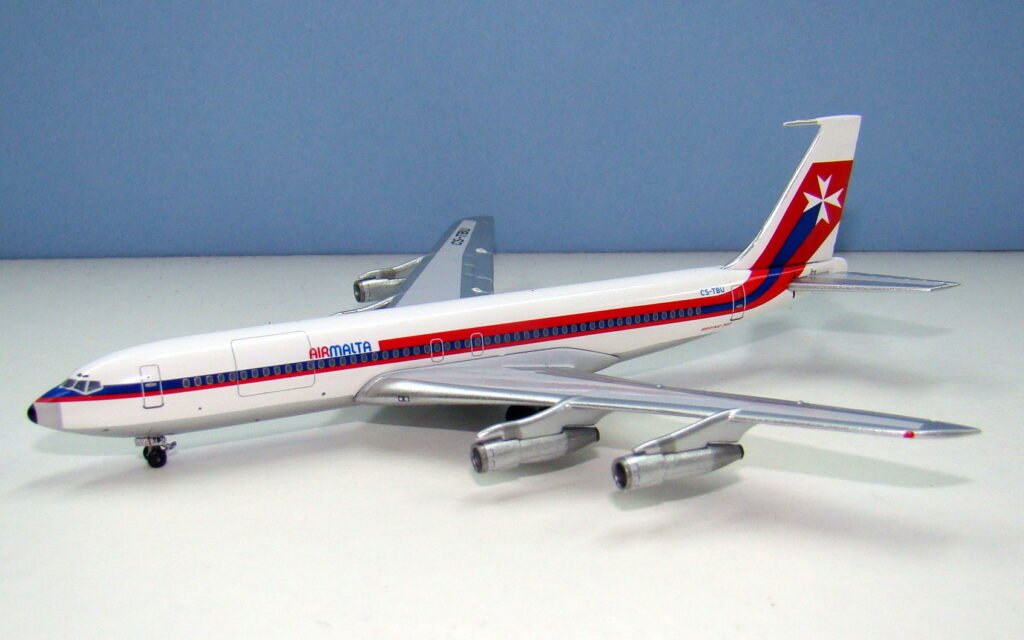
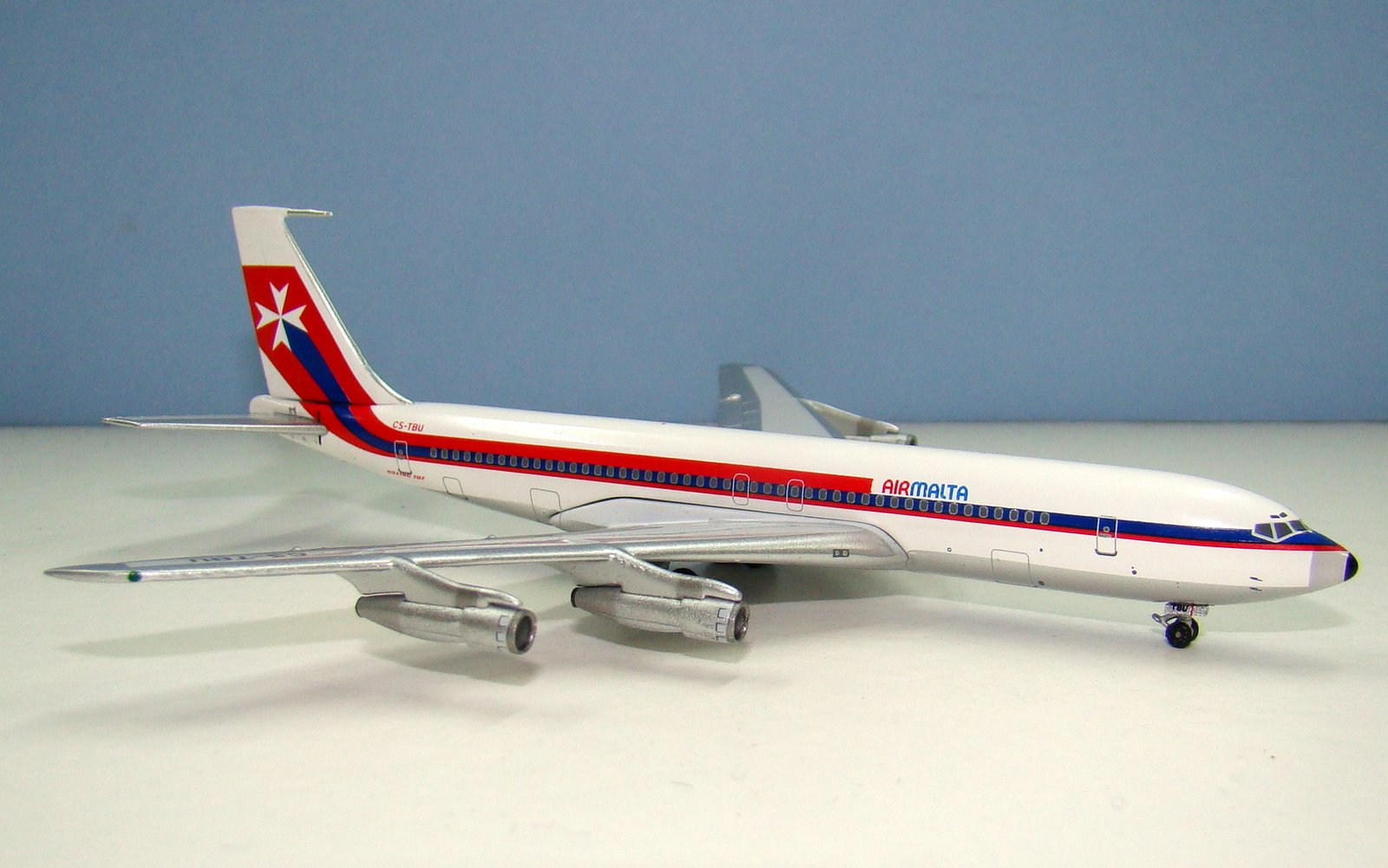
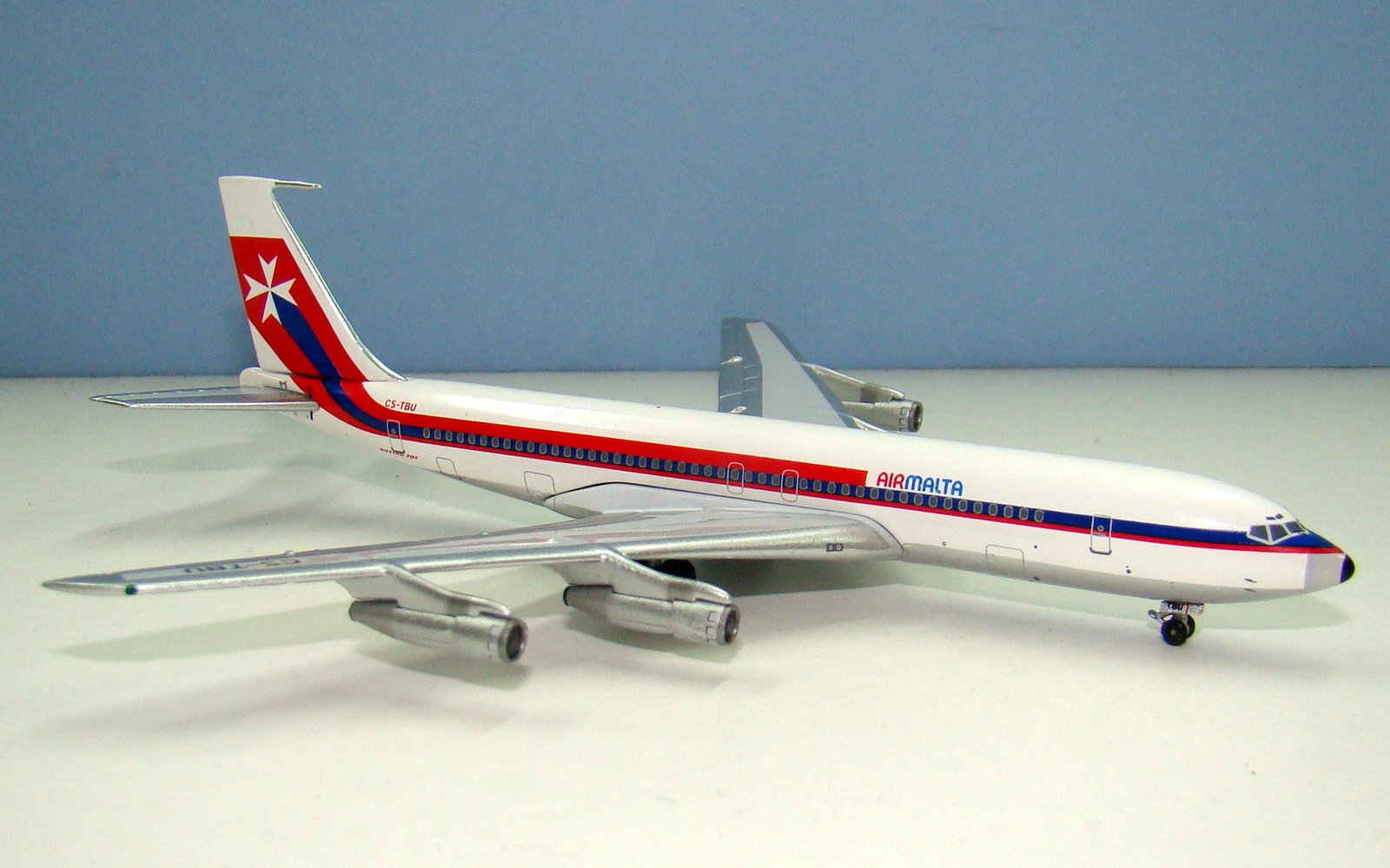
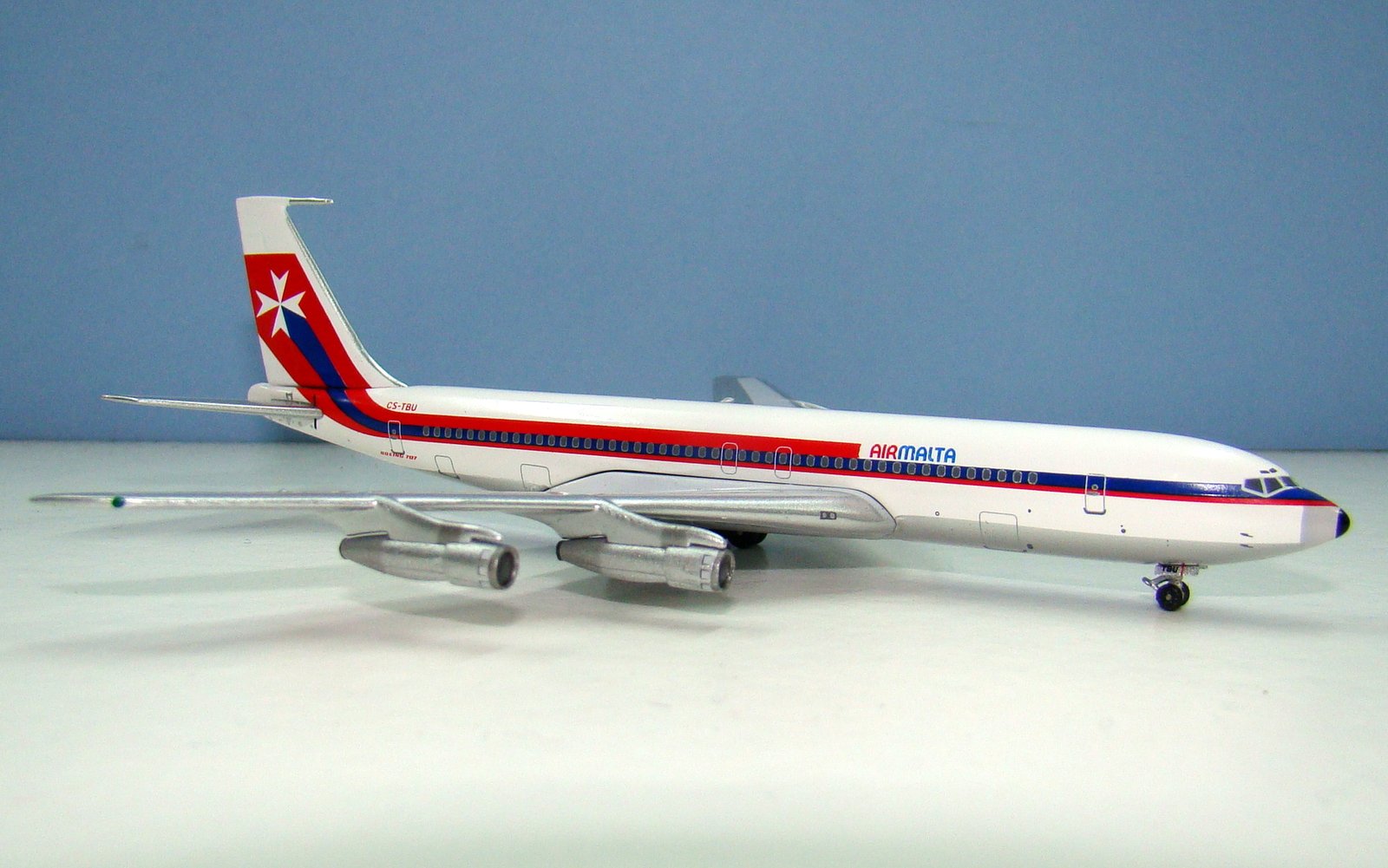
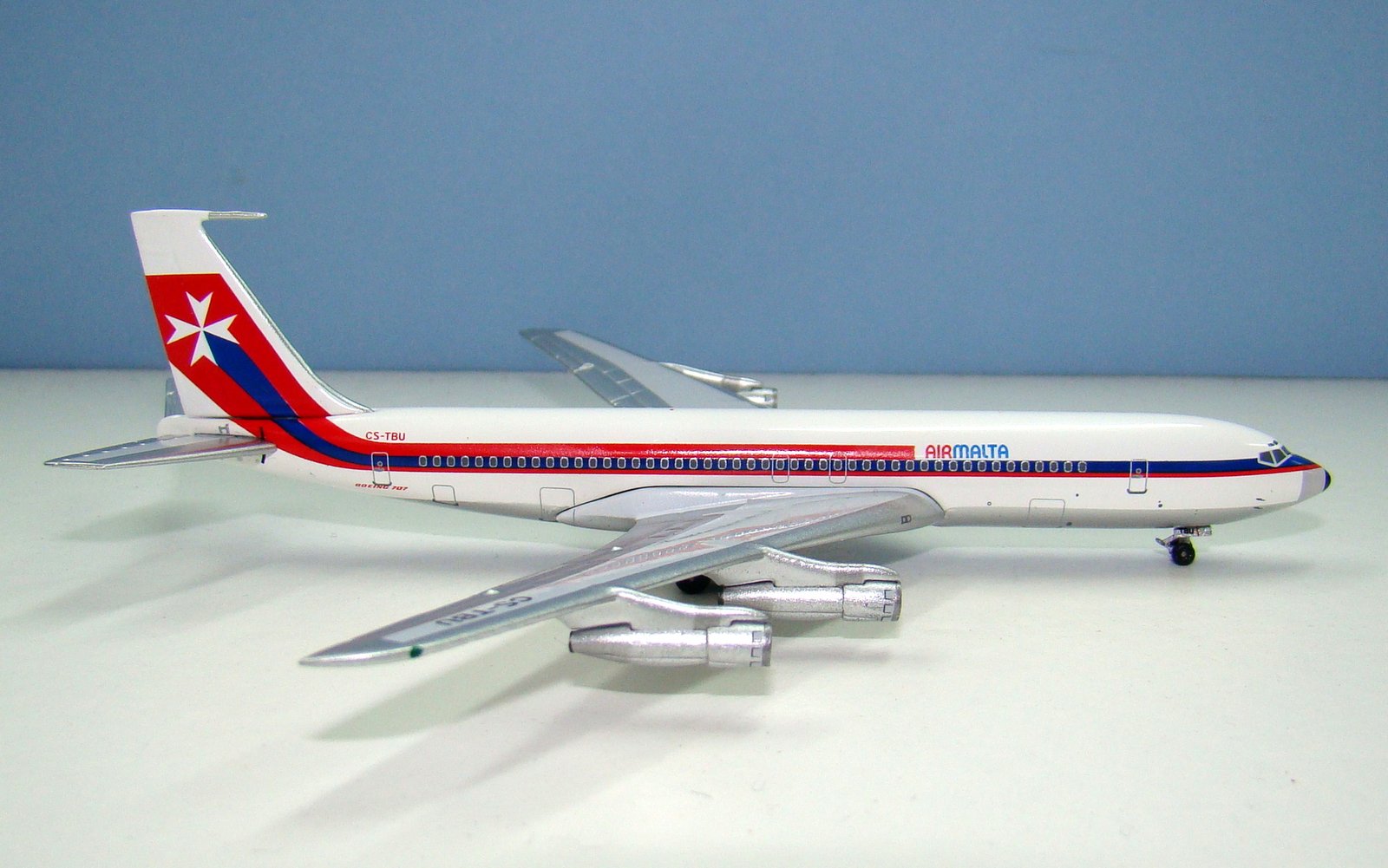
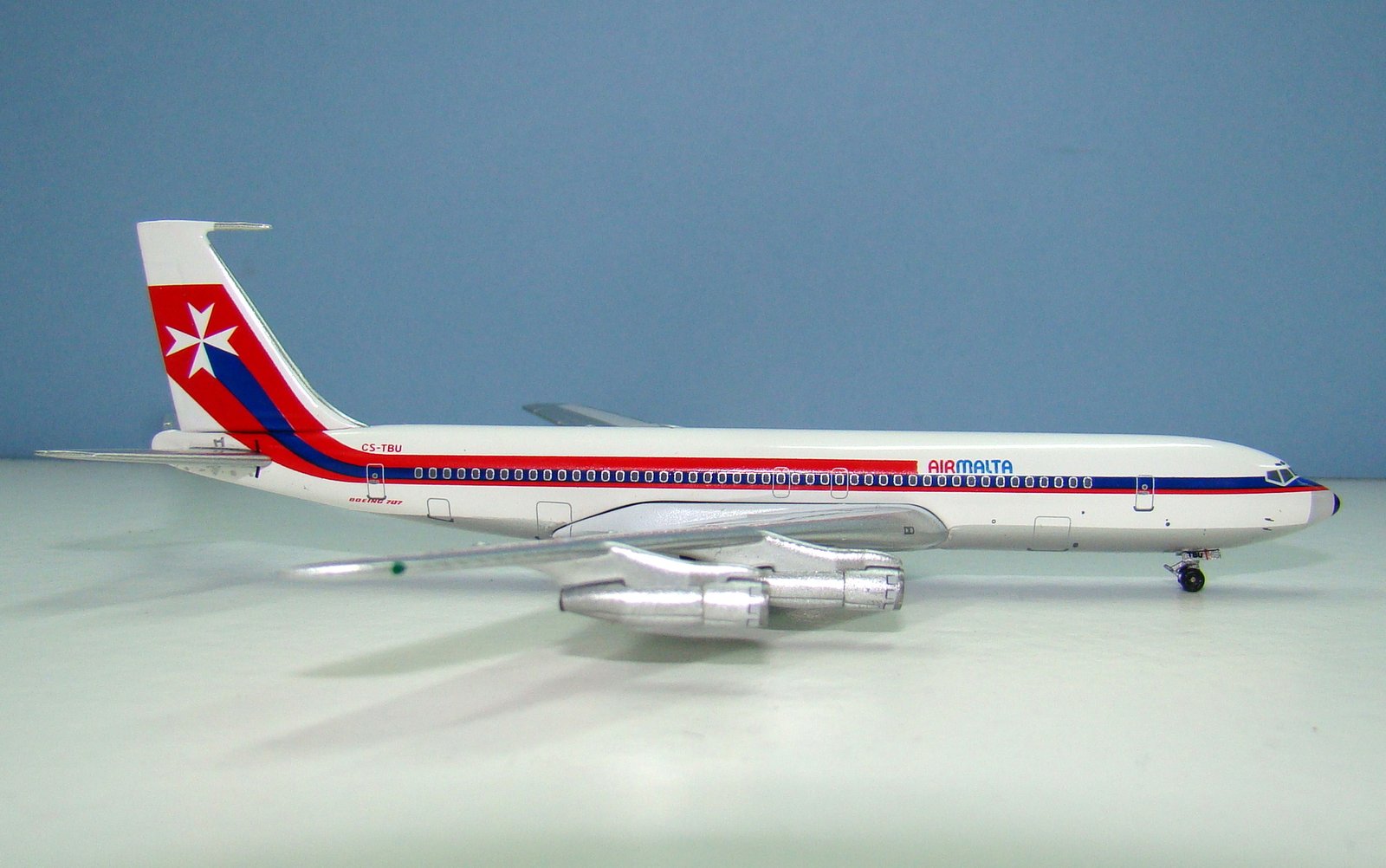
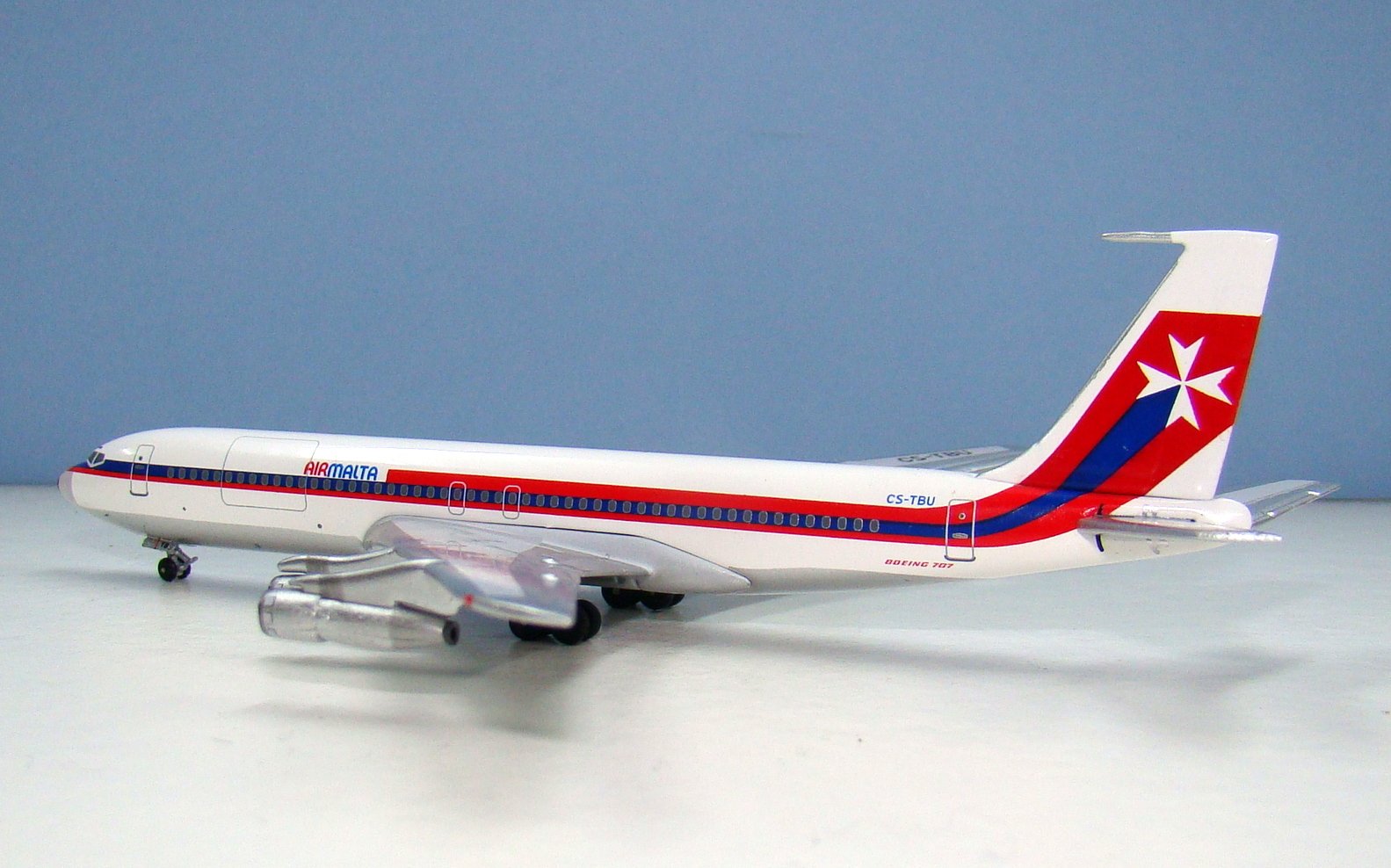
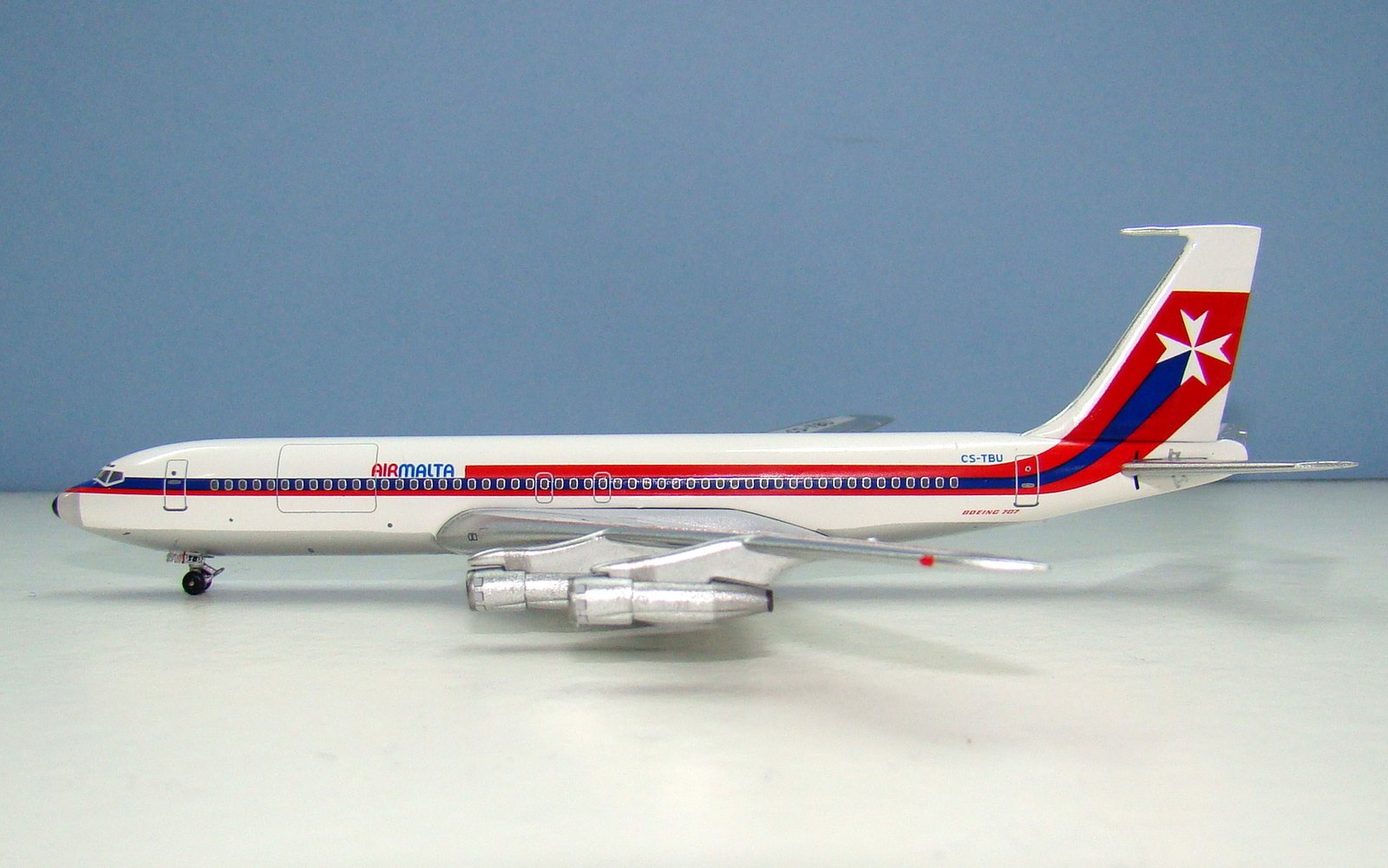
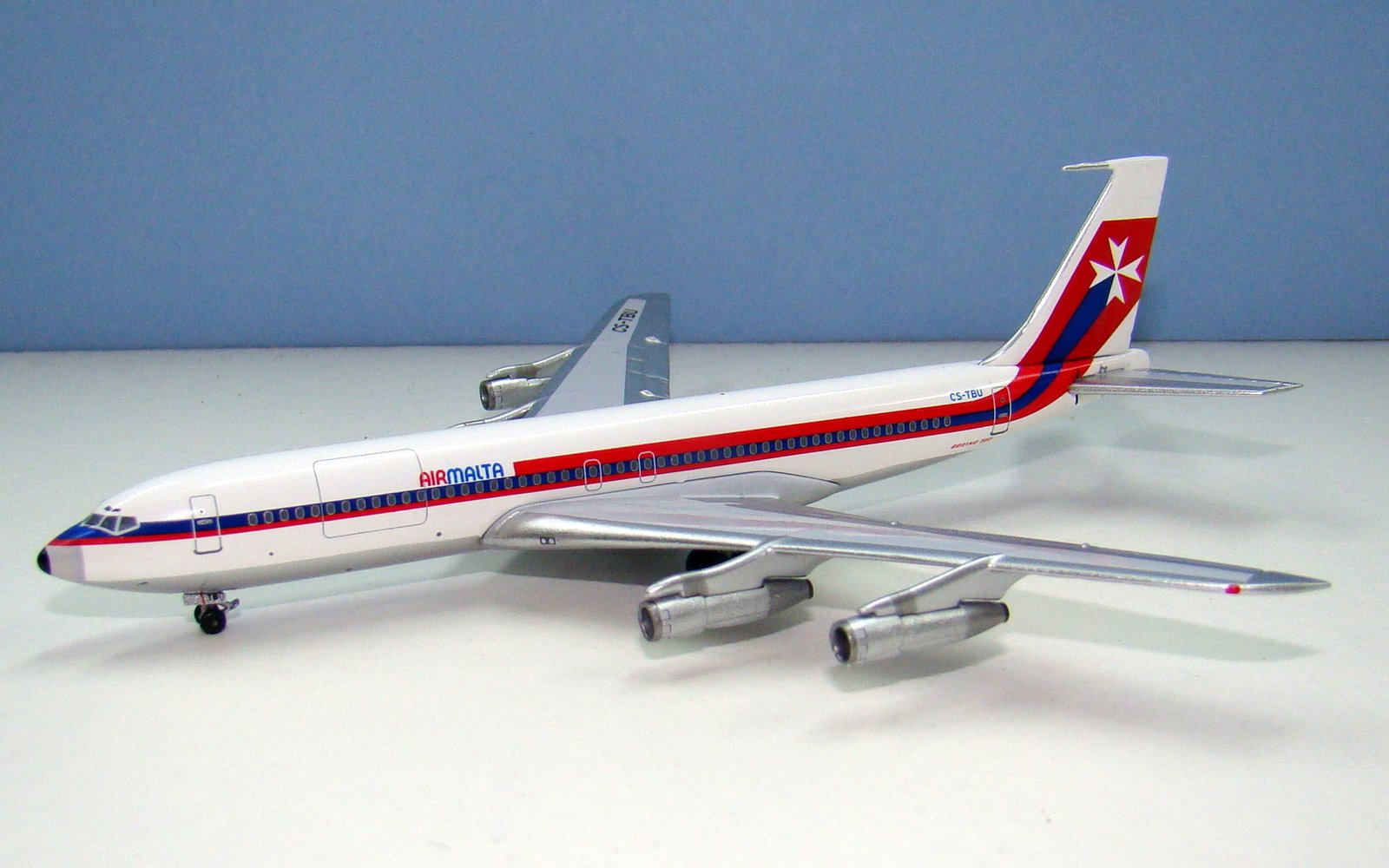
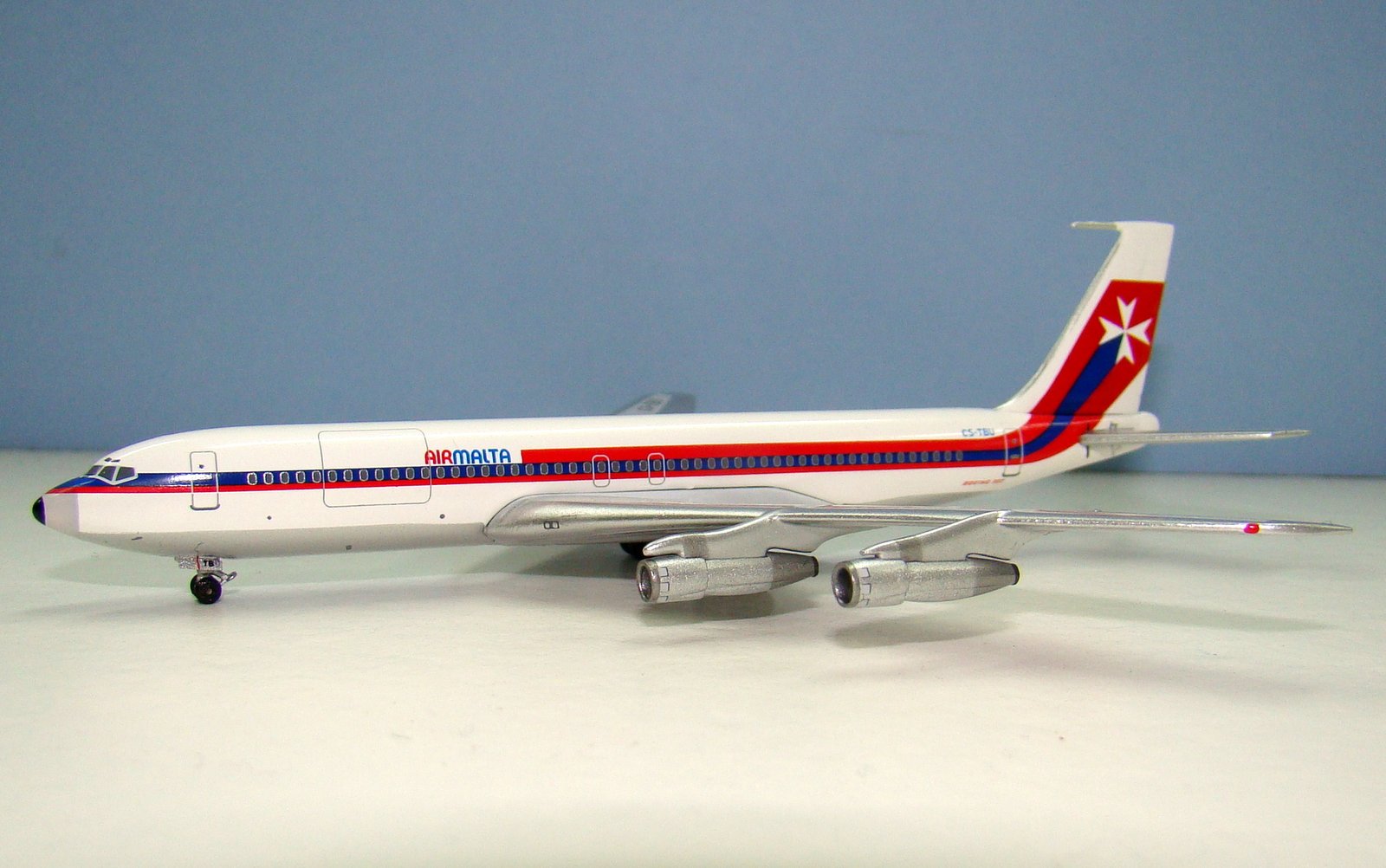
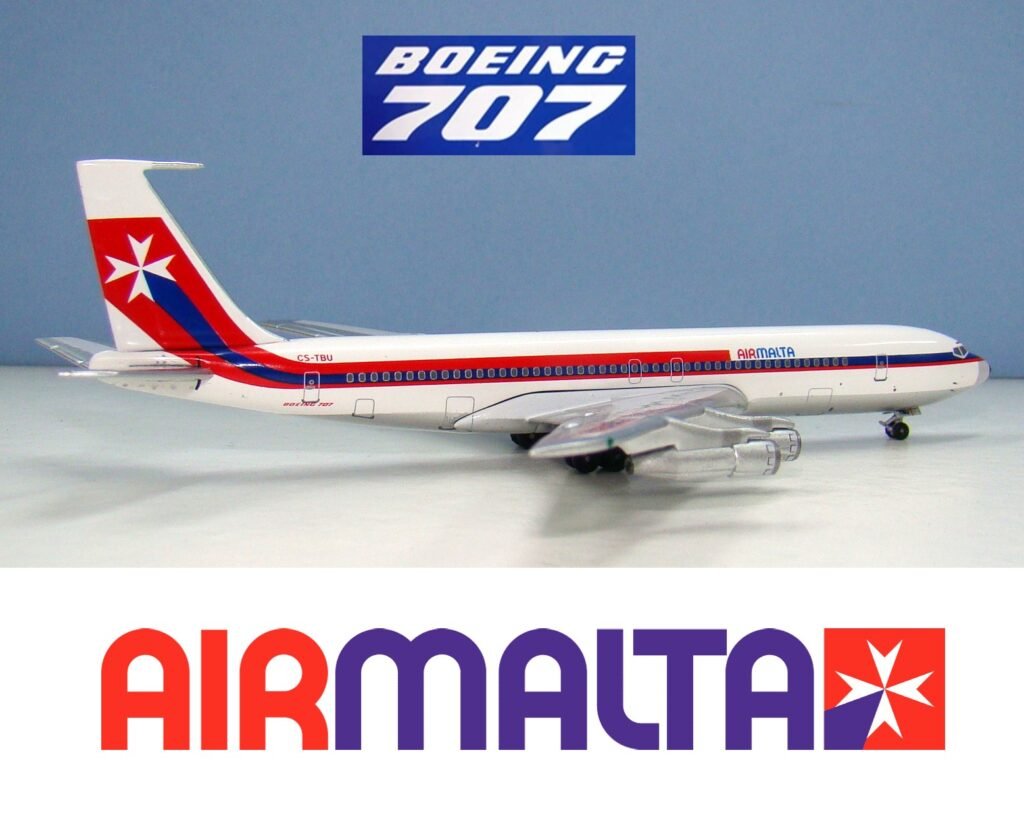
Air Malta Boeing 707-3F5C CS-TBU Aeroclassics 1:400 Scale Model Airliner
The island nation of Malta, with its strategic position in the Med, has throughout its history been a waypoint for a succession of powers from the Phoenicians to the Arabs to the Knights of St John and most recently of course the British. Famously during World War Two the entire island was awarded the George Cross during the long siege undertaken by Axis forces and had become known as Fortress Malta. Nowadays independent as the Republic of Malta the island is primarily a tourist destination drenched in a warm climate and thousands of years of history.
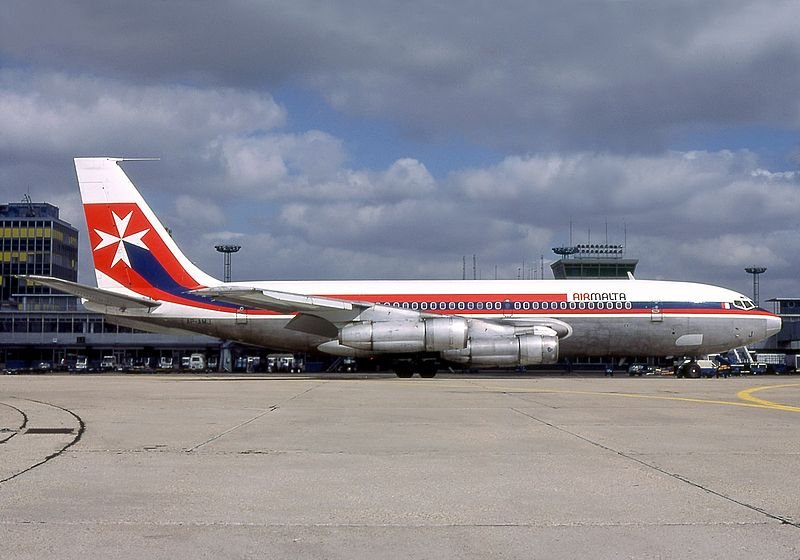
One of the original PIA 720s in 1978 at Paris orly. Photo by Michael Gilliand from Wikipedia
Independence was gained in 1964 but it was the election of the Maltese Labour party in 1971 that enabled the island to become a republic several years later, in December 1974. As part of this drive towards independence a national airline was needed (operations of Malta Airlines had previously been in co-operation with BEA) and Air Malta was formed on march 30, 1974.
Services didn’t begin until April 1, 1974 using a pair of wet-leased Pakistan International Boeing 720s. PIA was at the time Asia’s best run airline and had been selected as the partner for Air Malta’s startup. Both of the 720s were later purchased whilst 3 ex-Western Airlines 720-047Bs were added in 1978/79.
Timetables images from the excellent timetableimages.com
A light grey belly finish on one of the 720-047Bs in 1982 at LHR. Photo by Tim Rees from Wikipedia
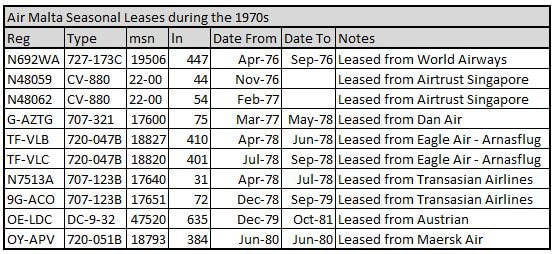
It was standard in the 1970s for Air Malta to require seasonal extra summer capacity or lease in extra equipment when the 720s were in for maintenance. The equipment chosen was diverse, from a pair of Convair 880s through much of Boeing’s early products and a DC-9. Two 720-047Bs were leased at different times from the Icelandic airline Eagle Air Arnasflug in 1978 and a 720-051B was leased from Maersk Air in 1980. The CV-880s wore a annoymised Cathay Pacific scheme but several of the others wore closer to the full Air Malta scheme. The 727-173C N692WA for example wore full colours although her lease was only for 6 months.
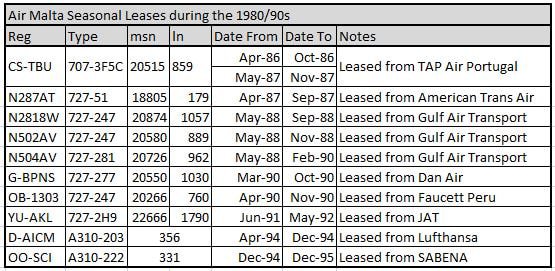
In 1980 a new era dawned for Air Malta as 3 737-200s were leased from Transavia. Their success led to fleet renewal with new owned 737-2YF Advanceds and the 720s were gradually retired, although the last survived into 1989. The number of leased aircraft appears to have dramatically fallen during the early 1980s, perhaps due to the expansion in its own fleet. Up until 1983 Air Malta had concentrated on scheduled services but from 1983 it expanded into IT charters and the success of these operations necessitated the return of seasonal leases from 1986.
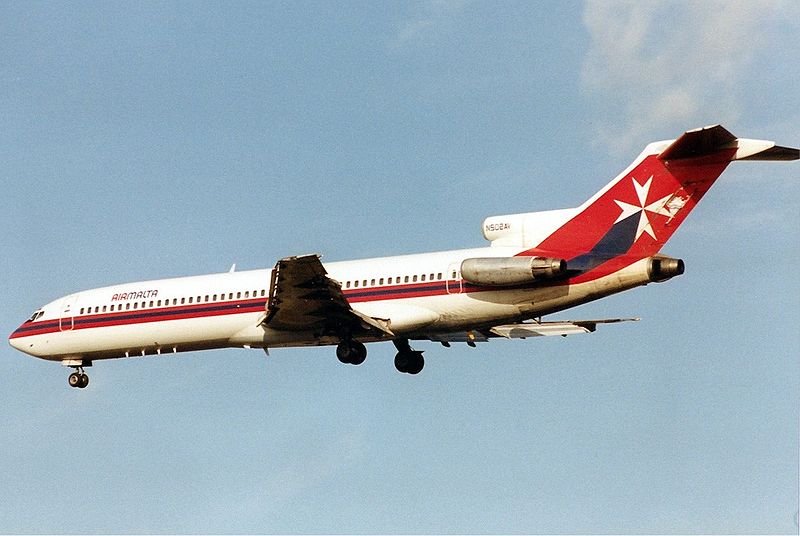
N502AV a 727-247. Photo by Torsten Maiwald from Wikipedia.
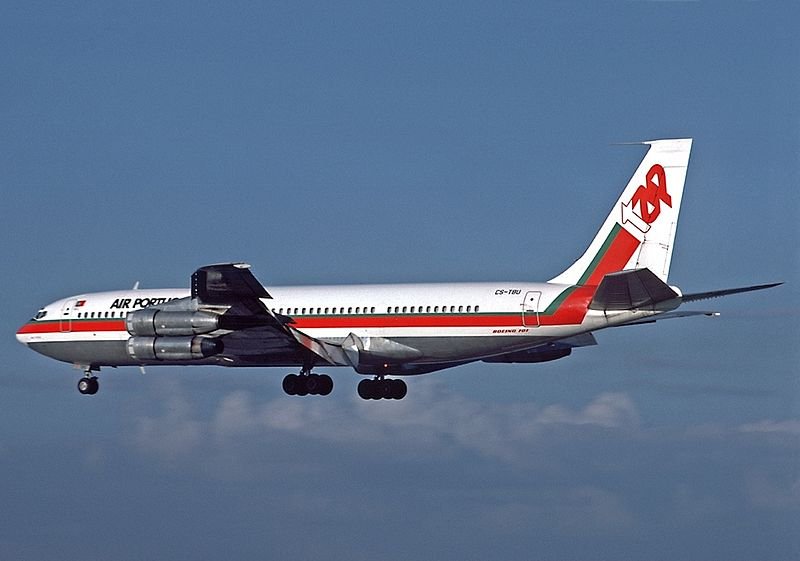
These usually utilised Boeing 727-200s from sources as varied as Dan Air, Gulf Air Transport (the US airline not the Middle-Eastern one), Faucett and JAT! The new programme however began with the airline’s 4th 707 lease and its first 707-320C. This was CS-TBU from TAP Air Portugal.
Air Malta Boeing 707-3F5C CS-TBU Aeroclassics 1:400 Scale Model Airliner
Air Malta Boeing 707-3F5C CS-TBU Aeroclassics 1:400 Scale Model Airliner
Air Malta Boeing 707-3F5C CS-TBU Aeroclassics 1:400 Scale Model Airliner
Air Malta Boeing 707-3F5C CS-TBU Aeroclassics 1:400 Scale Model Airliner
Air Malta Boeing 707-3F5C CS-TBU Aeroclassics 1:400 Scale Model Airliner
Air Malta Boeing 707-3F5C CS-TBU Aeroclassics 1:400 Scale Model Airliner
Air Malta Boeing 707-3F5C CS-TBU Aeroclassics 1:400 Scale Model Airliner
Air Malta Boeing 707-3F5C CS-TBU Aeroclassics 1:400 Scale Model Airliner
Air Malta Boeing 707-3F5C CS-TBU Aeroclassics 1:400 Scale Model Airliner
1986 seems to be late to be leasing in a passenger 707 and it is curious as to why Air Malta didn’t look to source something more modern like an A300 or 757. I assume the lease rates for these newer types was simply too high. CS-TBU had begun her career with the FAP Força Aérea Portuguesa (Portugese Air Force) as CS-DGJ (or 8802 as her military rego). Portugal was actually only the third military customer for the 707 (after the USAF and Luftwaffe) acquiring a pair of 707-3F5Cs in 1971 in passenger/VIP configuration.
Portugal still had conscript armies pre-1974 and was previously reliant on old DC6’s and Noratlases to replenish and repatriate their soldiers in Africa. As African countries became independent they started denying Portugal landing and overflying rights in mainland Africa and the old 6’s and Nor’s didn’t have the legs to make it around the bulge of Africa to Sao Tome or Luanda from Ilha do Sal. So much like SAA the Portugese Air Force were forced to buy jets that had the necessary range. Thus the 2 707’s were bought primarily to ferry conscripts and supplies to Angola and Mozambique.
CS-TBU with TAP in June 1988. Photo by Felix Goetting from Wikipedia
Portugal at the time was under the Estado Novo dictatorship but this was overthrown during the April 1974 Carnation Revolution. With the dictatorship over the 707s became surplus and both were converted to standard passenger config and delivered to TAP in October 1976. CS-DGJ became CS-TBU ‘Jaime Cortes’.
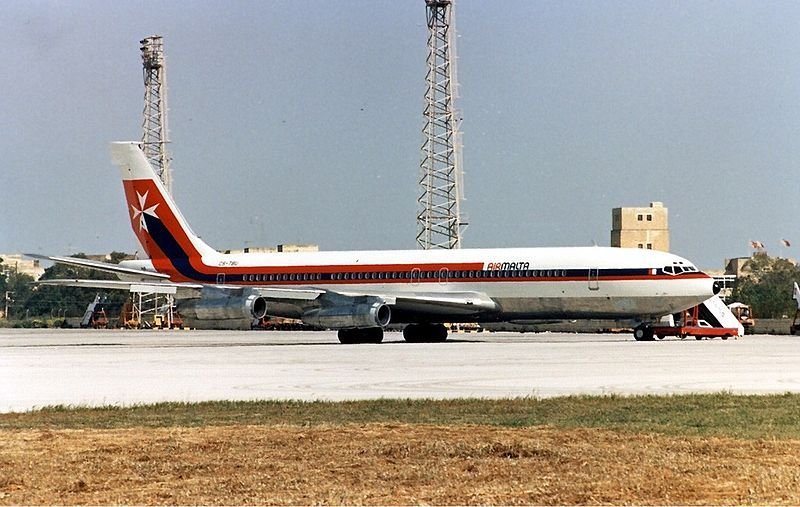
CS-TBU in Maltese colours. Photo by Gordon Zammit from Wikipedia
TAP already had a fleet of 707-382Bs as well as a pair of ex-BCal 707-399Cs and an ex-World Airways 707-373C so the pair of 3F5Cs no doubt fitted in easily enough although apparently their internal layout was unusual. This aircrat was leased to Nigeria Airways in late 1979 but otherwise remained with TAP until the Maltese lease. She was obviously satisfactory to Air Malta as she served for two seasons before 727s were brought in for subsequent years. By 1988 Air Malta’s charter services carried 680,000 passengers annually.
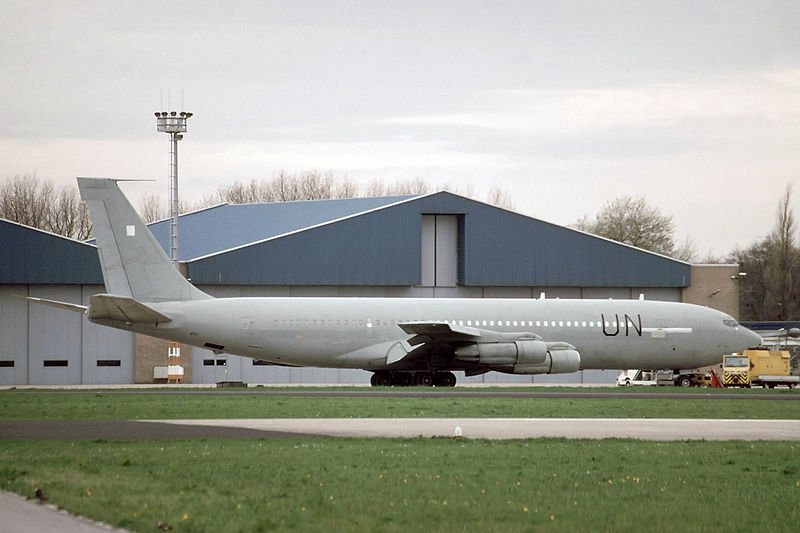
MM62151 in Italian Service whilst chartered by the UN to bring the Lockerbie bombing suspects to the Hague in 1999. Photo by Rob Schlieffert from Wikipedia
Four of TAP’s 707s were sold in the early 90s to the Aeronautica Militare Italiana (Italian Air Force) including both the 707-3F5Cs. This guaranteed further long service and CS-TBU (as MM62151) saw service until her last operational flight on April 3, 2008. She was transferred to Lackland-San Antonio Air Force Base presumably for use in keeping the USAF KC-135 fleet in the air.
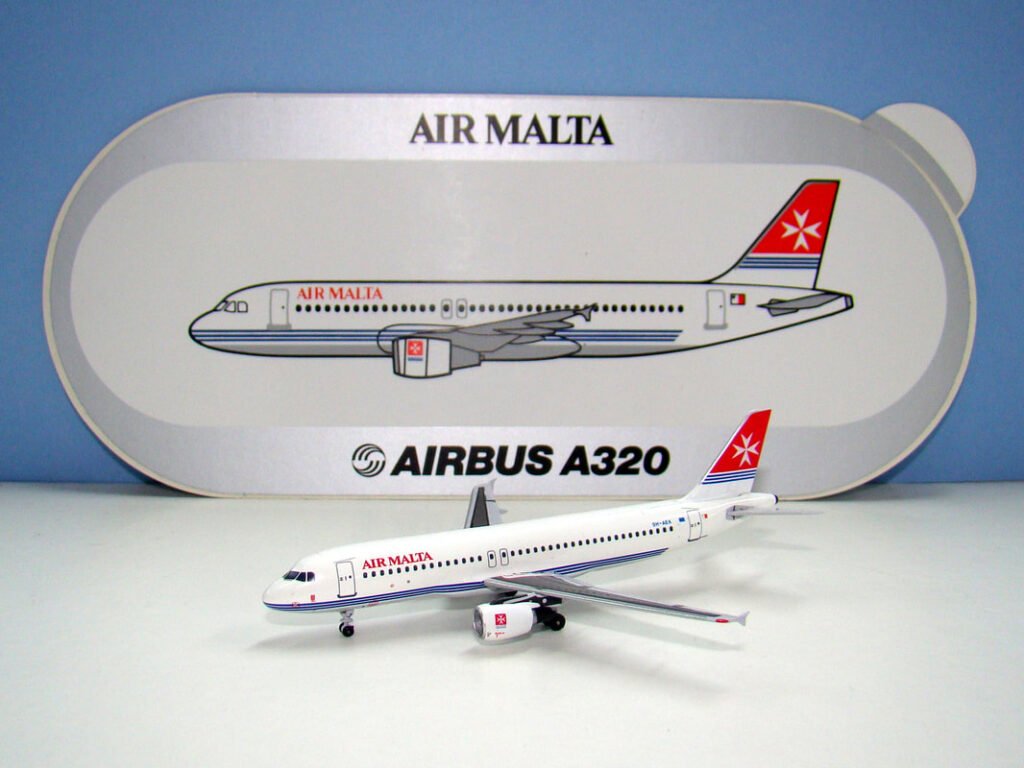
Interestingly only a few years after operating a passenger 707 Air Malta had new Airbus A320s in service following the order of a single example through ILFC in 1987 which was delivered in 1990. The airline has since operated further 737 classics but the A320 remains the core of the fleet as it battles to remain relevant in the face of increasing LCC encroachment at its Valetta hub.
References
2001. Vomhof, Klaus. Leisure Airlines of Europe. Scoval Publishing Ltd Air Malta. RZjets.net 2004. Air Malta 707s. Airliners.net