The colourful fleet of green Shamrock jets of Aer Lingus has connected the Republic of Ireland to Europe for many years and no type was more important in doing so than Boeing’s 737. The Baby Boeing was a type that the airline showed early faith in, a faith that was proven well founded with many years of service.
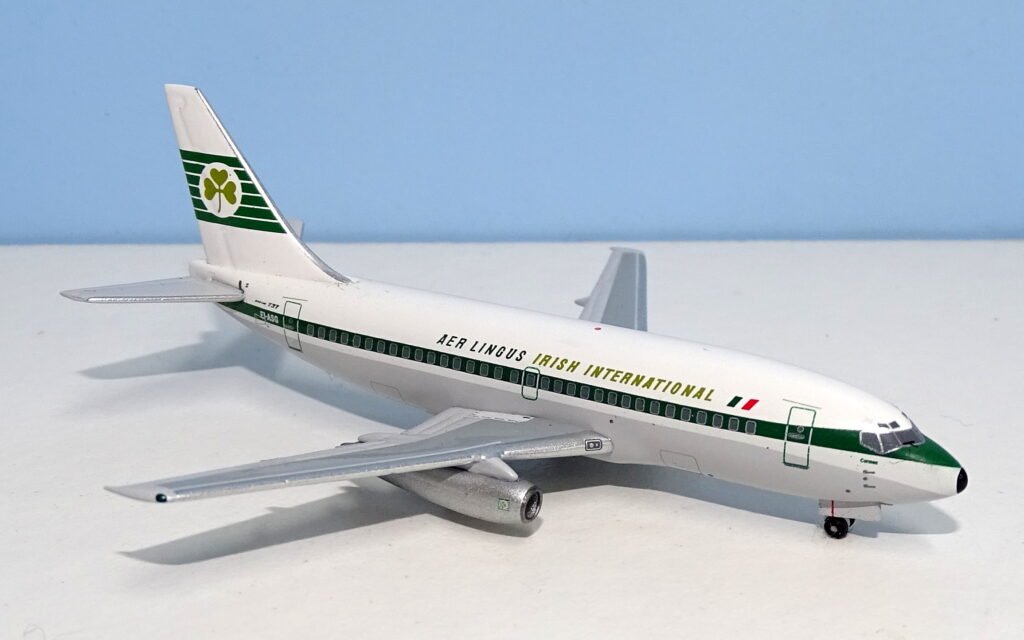
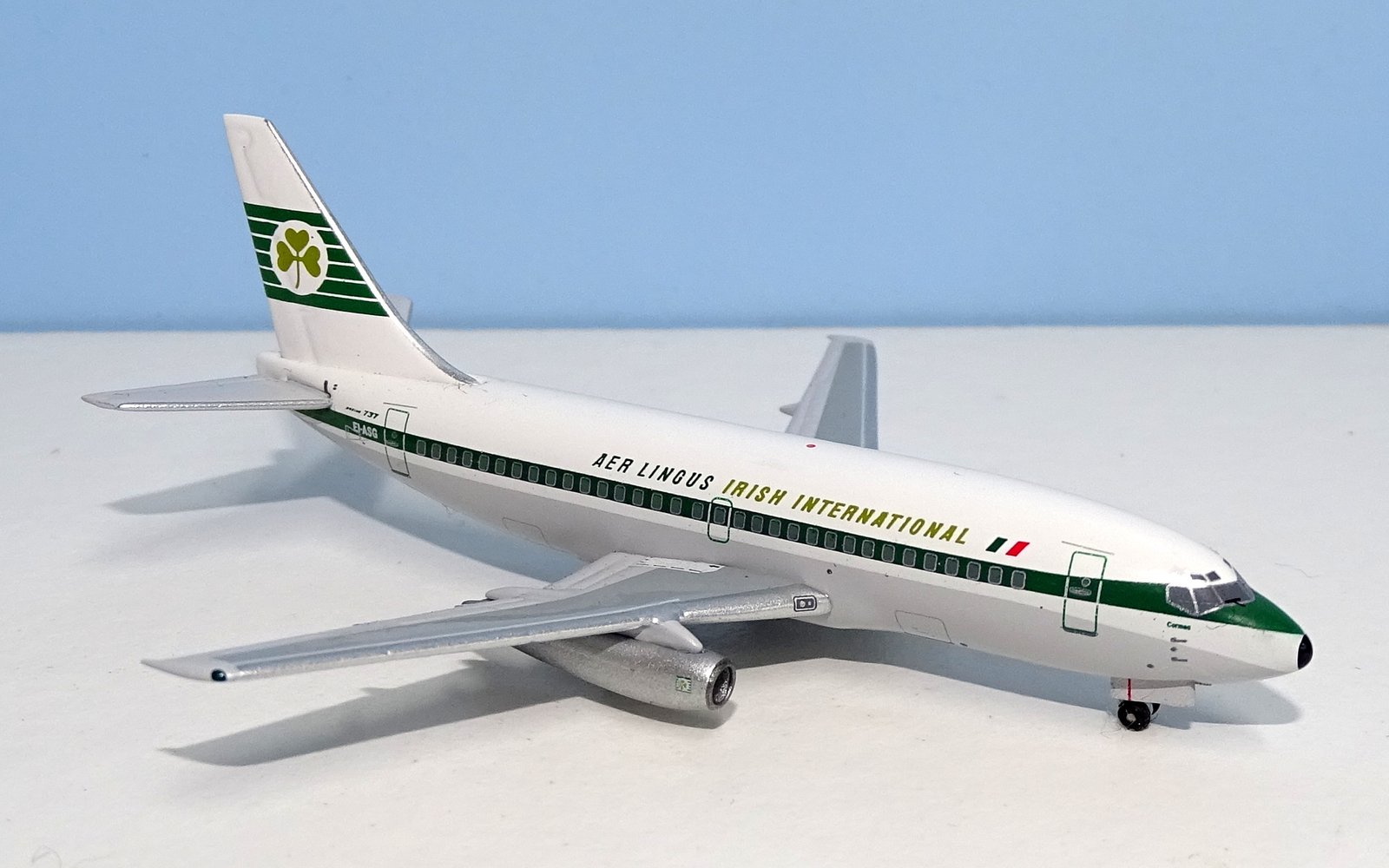
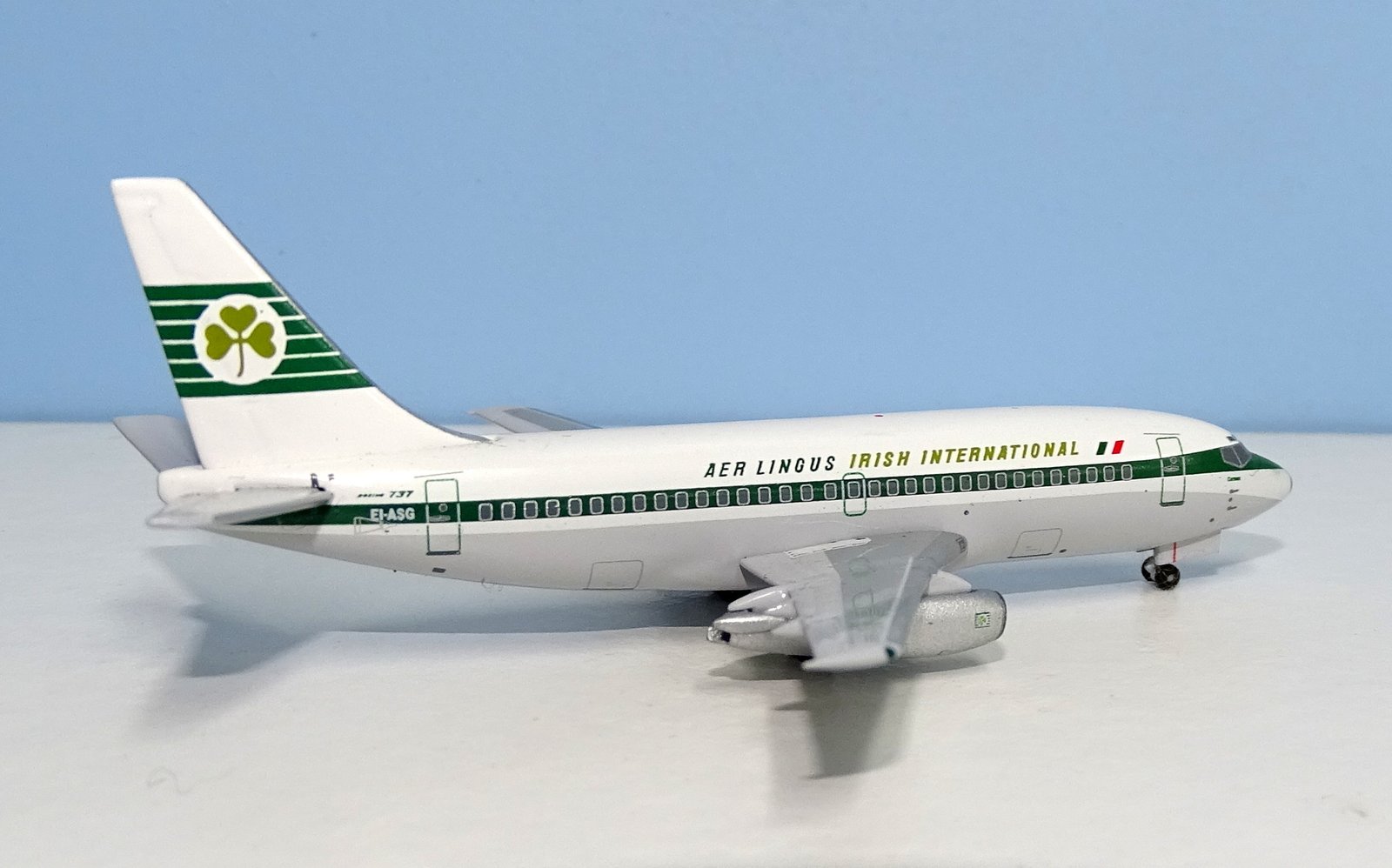
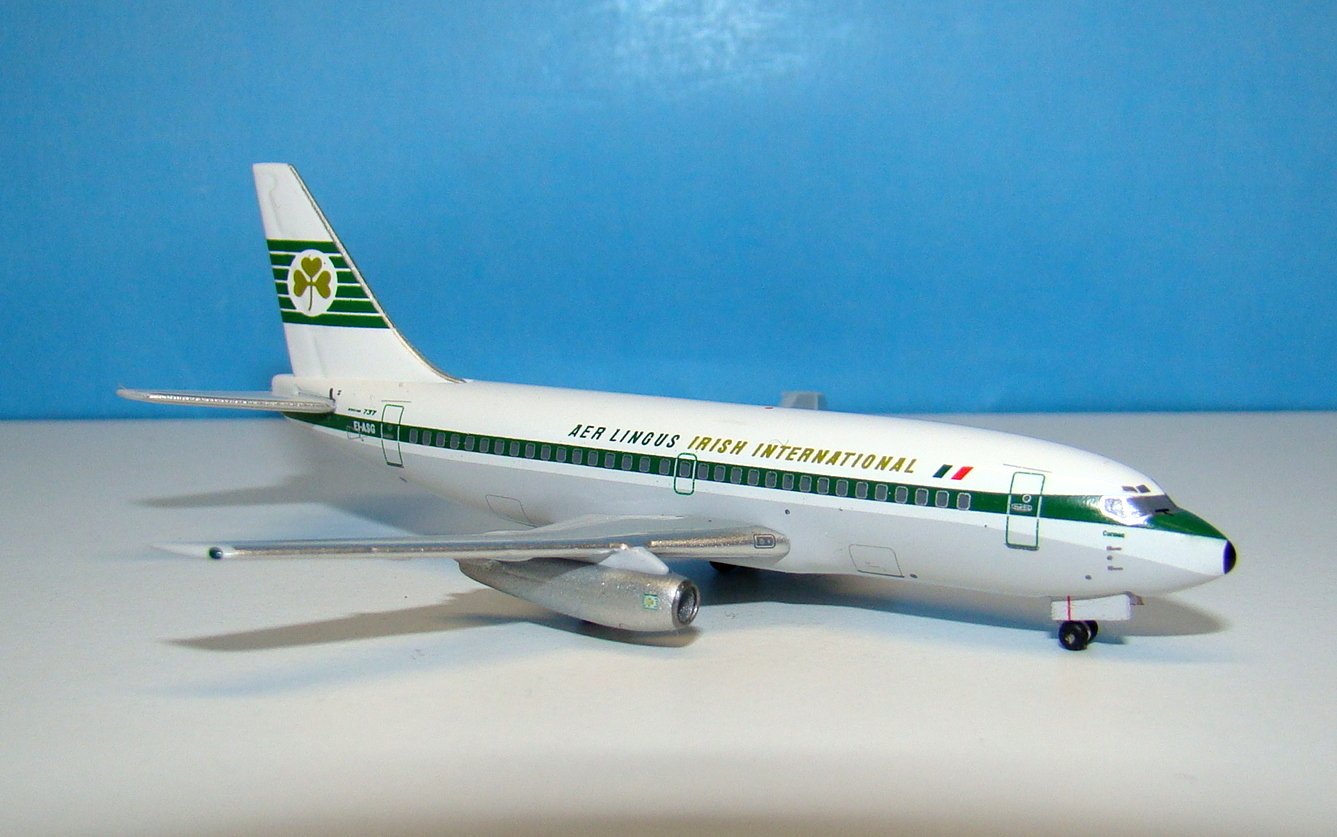
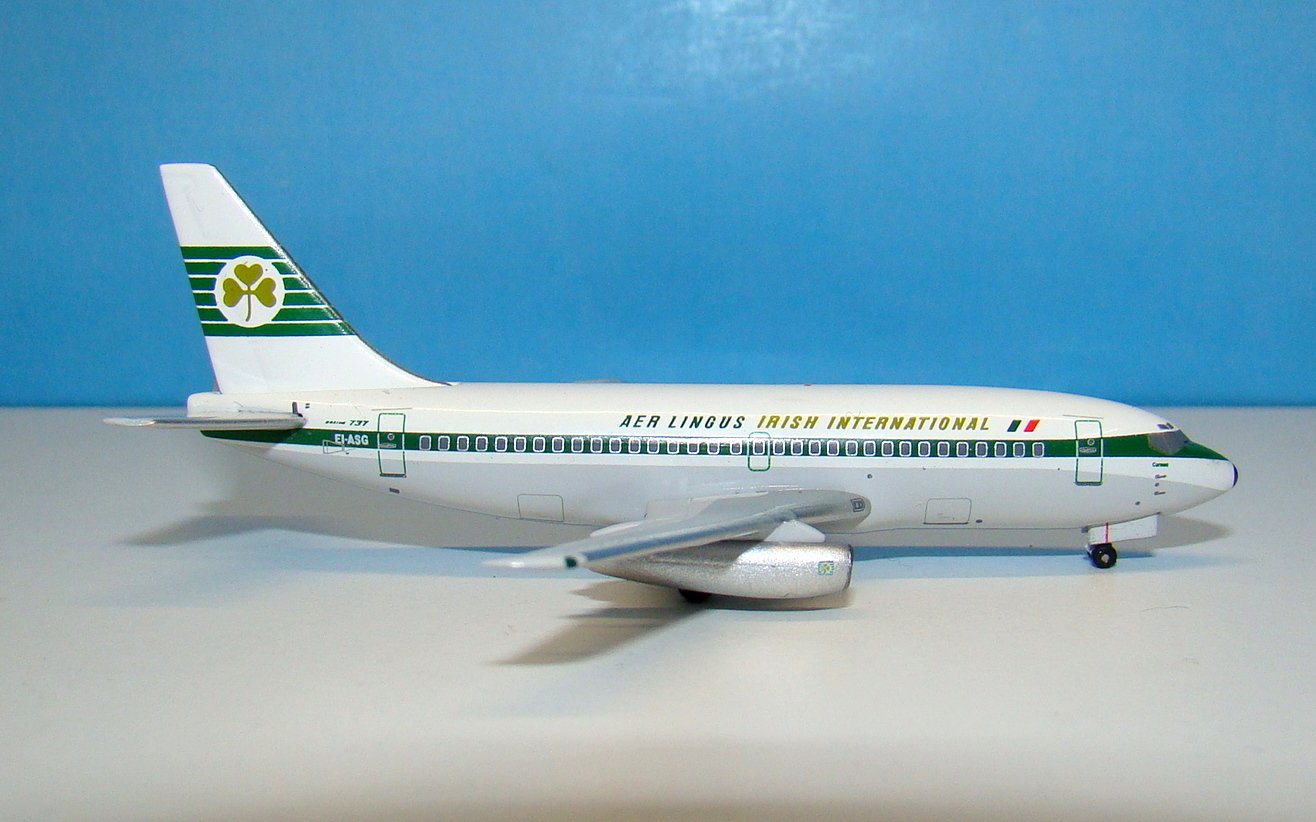
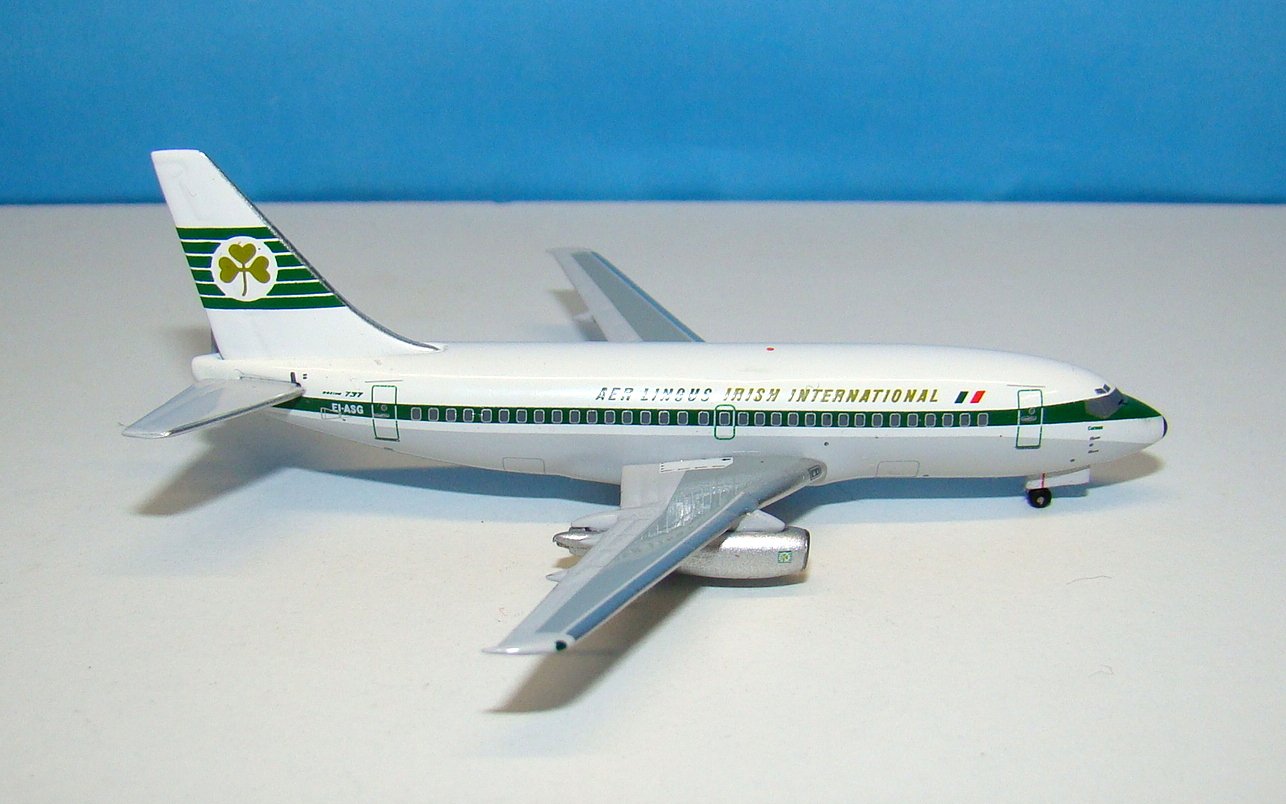
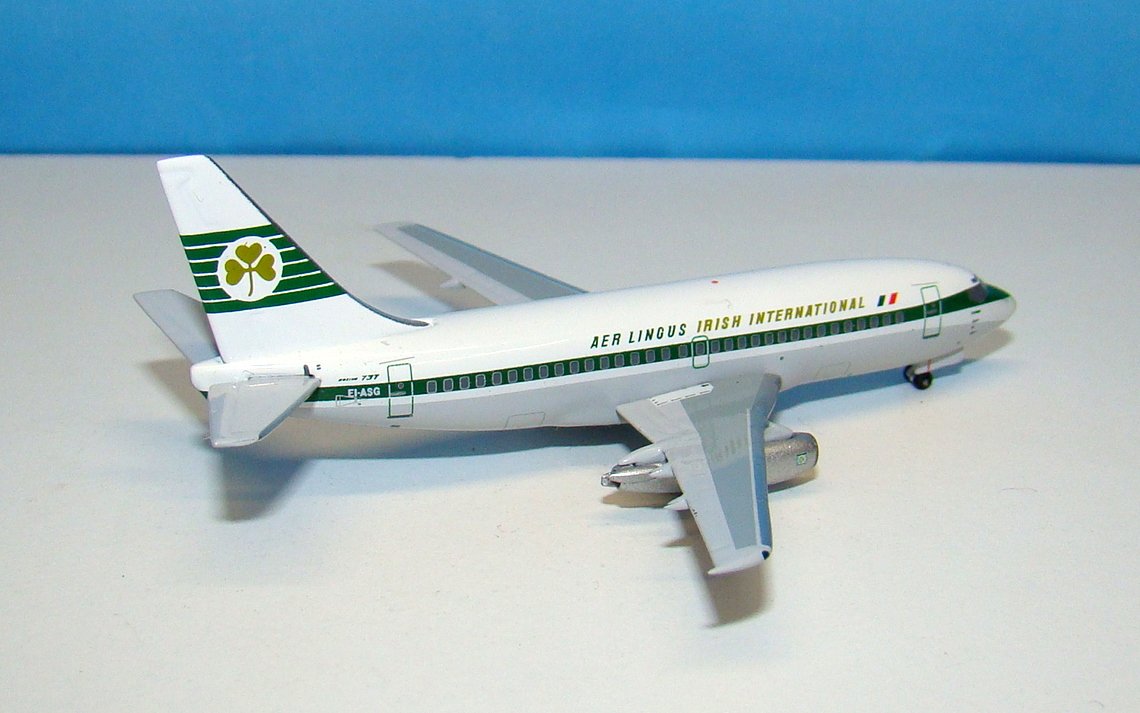
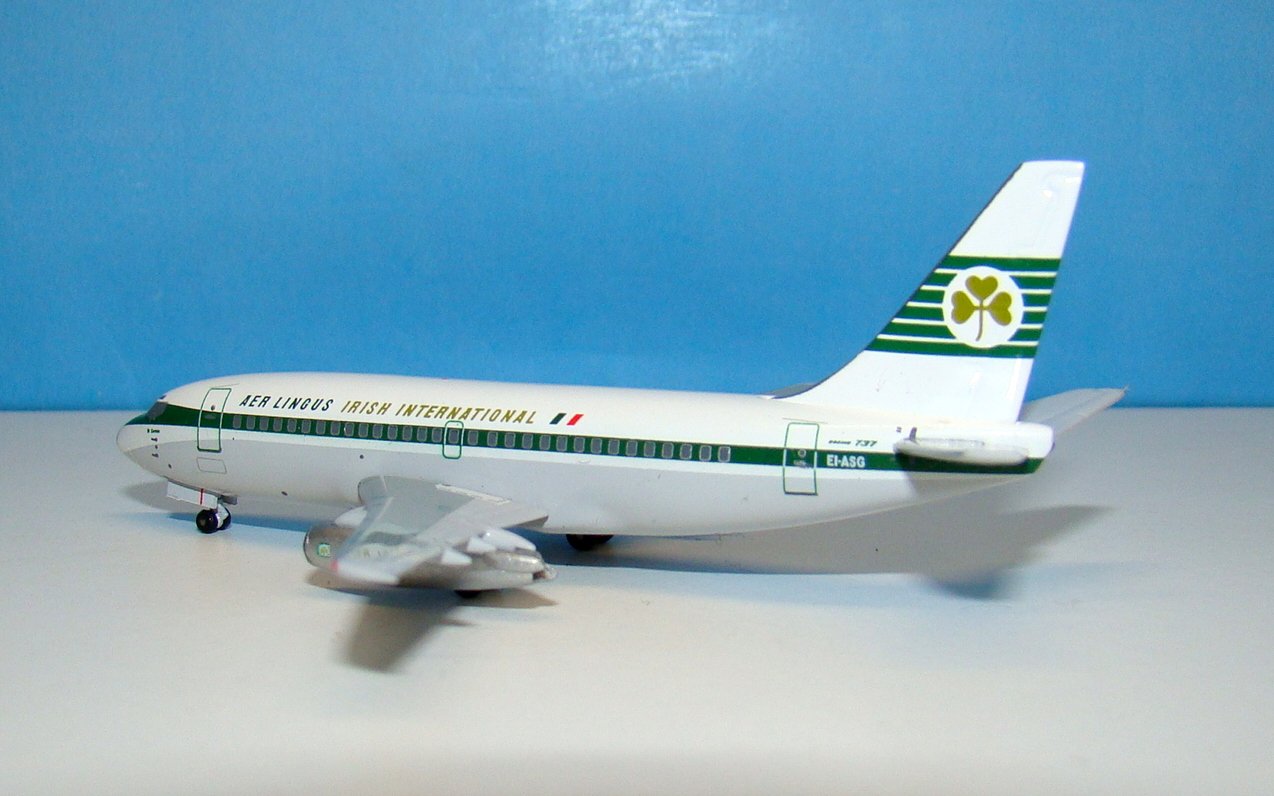
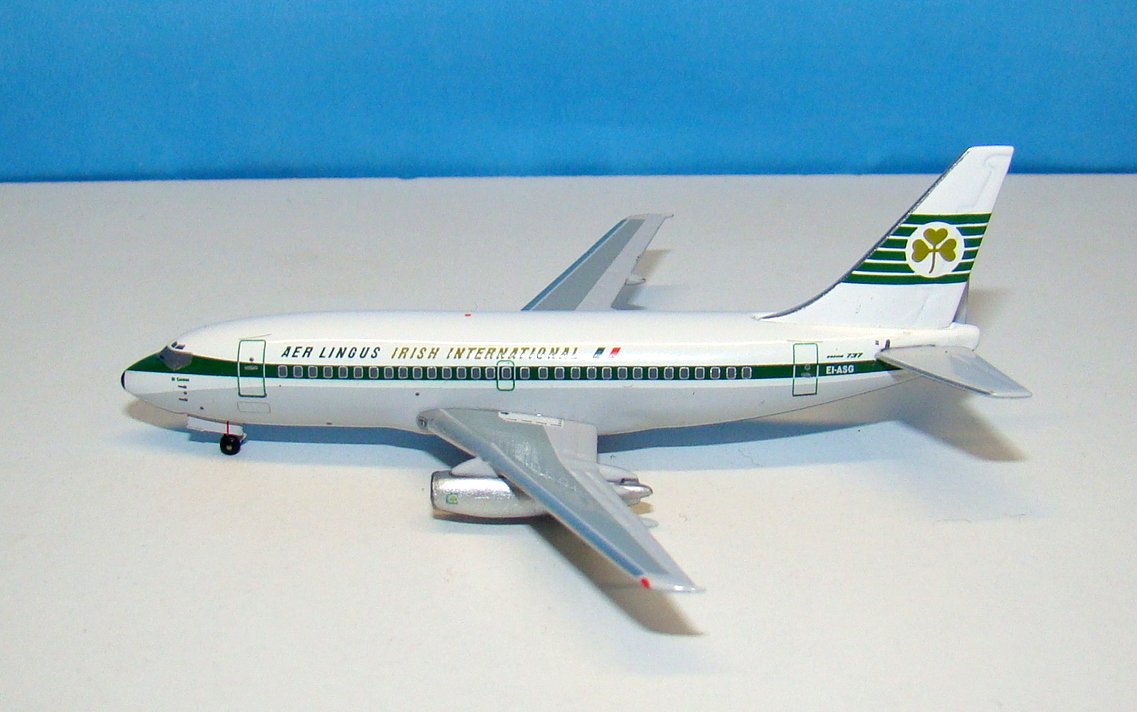
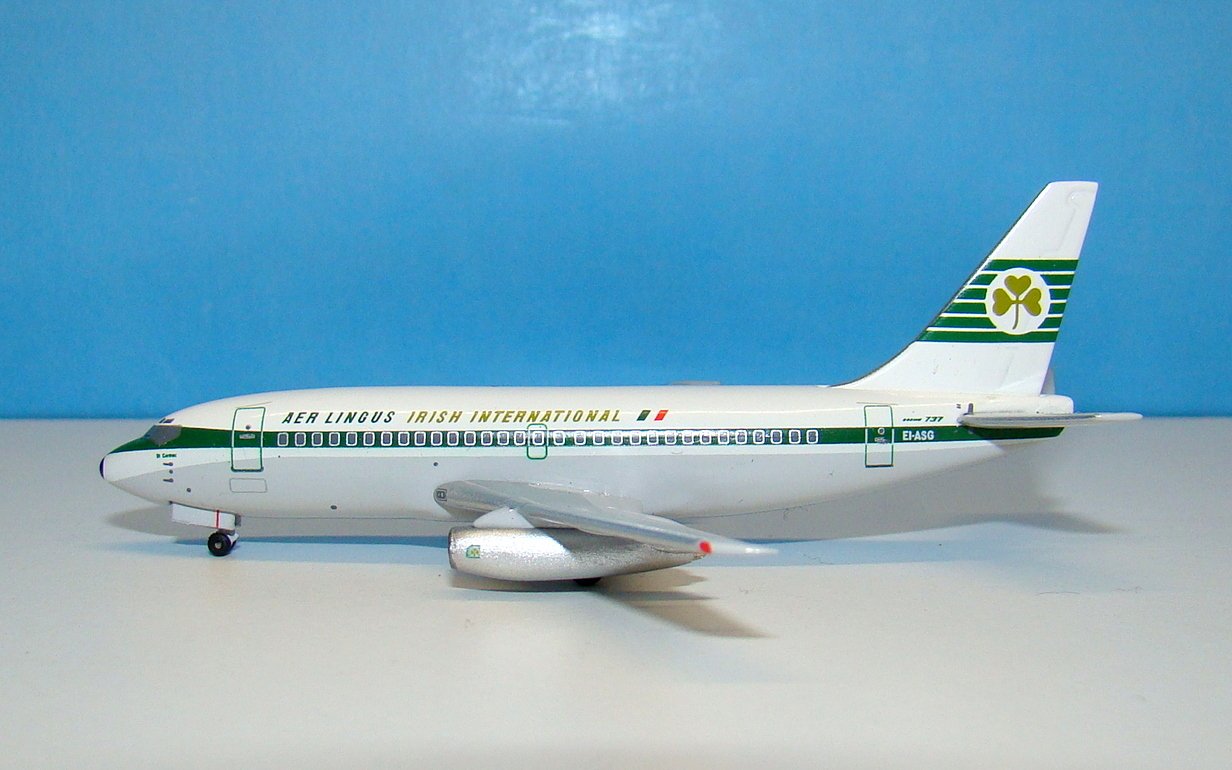
Aer Lingus Boeing 737-284 EI-ASG Aeroclassics 1:400 Scale Airliner
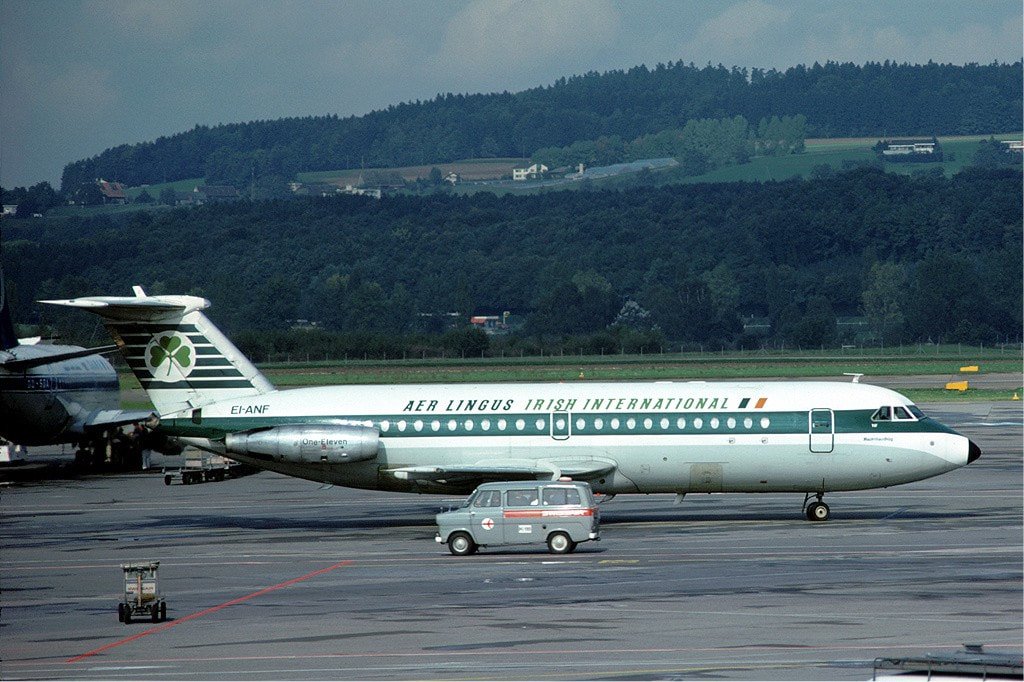
Aer Lingus had, perhaps unsurprisingly, chosen the British BAC One-Eleven as its first short-haul jet and the first of four arrived in May 1965. They supplemented the Vickers Viscount fleet and were quickly put to work, first on the Dublin-Cork-Paris route. The One-Elevens would have a long career with Aer Lingus but almost immediately proved too small, seating only 74 passengers. Arguably the failure of BAC to stretch the One-Eleven soon enough led to the loss of Aer Lingus as a customer and they instead looked across the Atlantic for alternatives.
Eduard Marmet, CC BY-SA 3.0 GFDL 1.2, via Wikimedia Commons
Above: EI-ANF served with Aer Lingus from June 1965 until March 1991. Here she is in 1975 at Zurich
The choice fell on Boeing’s new ‘Fat Albert’ 737-200, rather than the competing Douglas DC-9-30, and an order for two was placed in November 1966. This made the Irish flag carrier one of the very earliest to order the type, which was still over a year and a half away from entering service with launch customer United Airlines.
Michel Gilliand (GFDL 1.2 or GFDL 1.2 ), via Wikimedia Commons
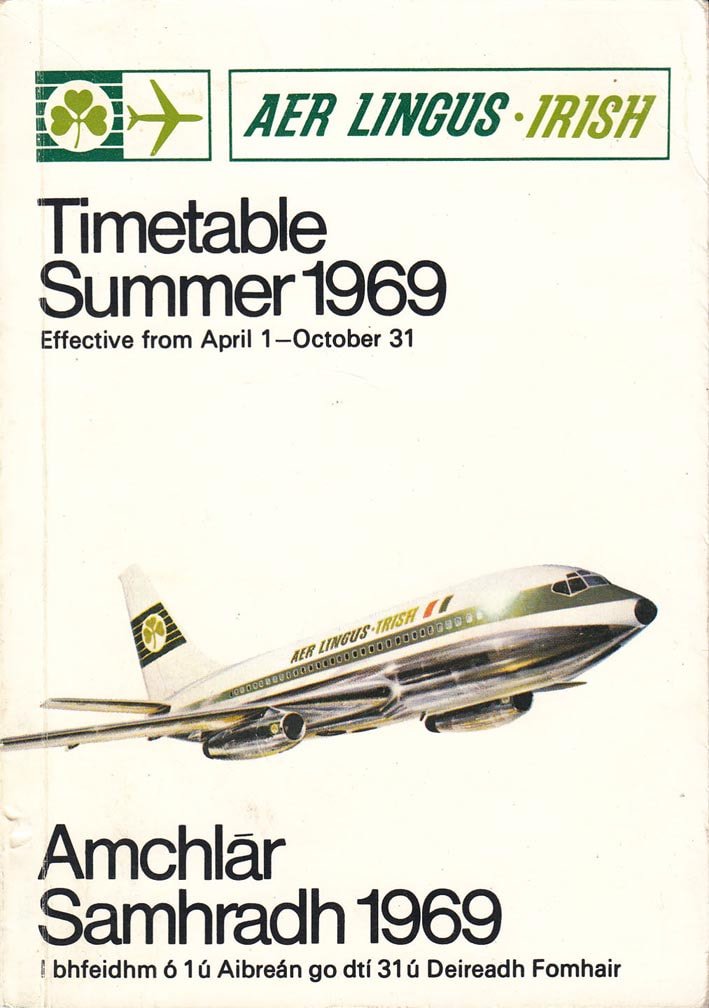
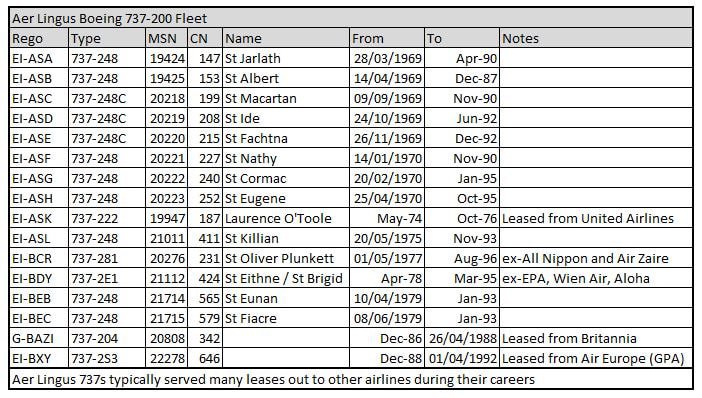
The first pair of 737-248s arrived in March and April 1969, and seated 117 passengers. A further three aircraft arrived in 1969 although all three of these were 737-248 Combis with the Side Cargo Door. Another trio of new build standard 737-248s arrived in 1970. Initially the 737s plied the all important Dublin-Heathrow route but as their numbers grew they ventured further into Europe.
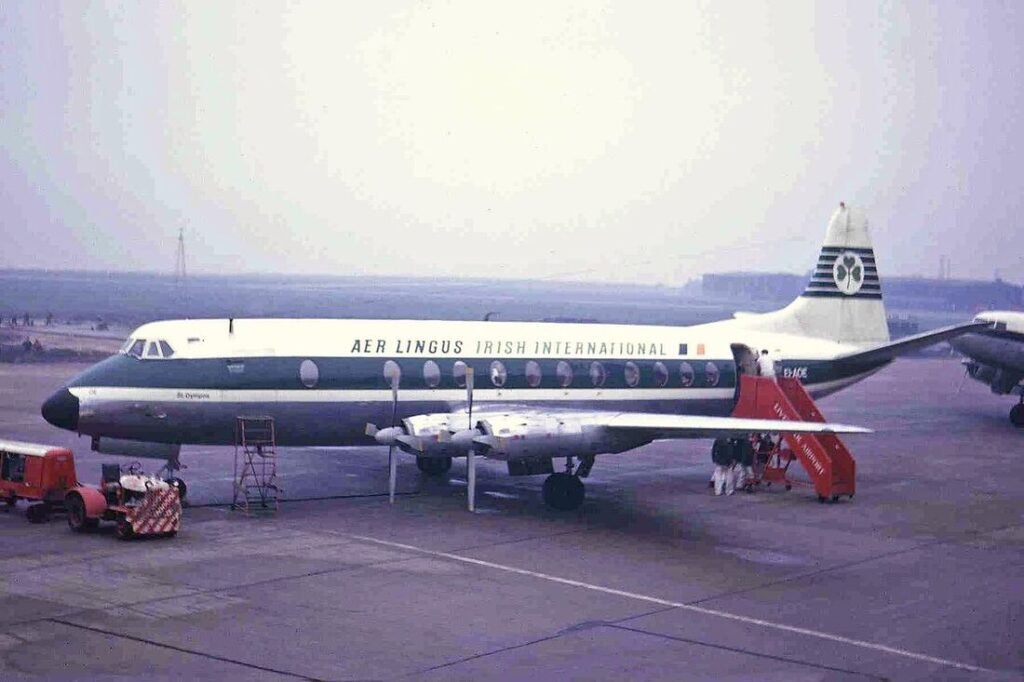
With 8 737-248/248Cs on strength Aer Lingus was able to retire its entire fleet of Vickers Viscount 800s, which consisted not only of 7 Viscount 808s delivered from 1957-1958 but also an ex-Cunard Eagle frame (purchased in 1962) and 9 former KLM Viscount 803s acquired in the mid-60s.
Ken Fielding/https://www.flickr.com/photos/kenfielding, CC BY-SA 3.0 , via Wikimedia Commons
Above: Viscount 803 EI-AOE, seen here in 1966 at Liverpool, had been PH-VIF with KLM until September 1965
One of the features of the Aer Lingus 737-200 fleet was the number of lease periods undertaken. Almost every 737-200 that served with the airline operated one or more leases during their time with the carrier. The first aircraft, EI-ASA, for example was leased out to Air Algerie as early as June 1970 until mid-1971, when she joined Cameroon Airlines and then Zambia Airways. She didn’t rejoin the fleet until mid-1976 and served a further lease in September 1983, this time to Nigeria Airways. Her career was not unusual and Aer Lingus 737s saw lease periods with airlines as varied as Air Florida, Bahamasair, Hispania, Egyptair, Transair Canada, Southwest, VASP and Frontier Airlines.
Aer Lingus Boeing 737-284 EI-ASG Aeroclassics 1:400 Scale Airliner
Aer Lingus Boeing 737-284 EI-ASG Aeroclassics 1:400 Scale Airliner
Aer Lingus Boeing 737-284 EI-ASG Aeroclassics 1:400 Scale Airliner
Aer Lingus Boeing 737-284 EI-ASG Aeroclassics 1:400 Scale Airliner
Aer Lingus Boeing 737-284 EI-ASG Aeroclassics 1:400 Scale Airliner
Aer Lingus Boeing 737-284 EI-ASG Aeroclassics 1:400 Scale Airliner
Aer Lingus Boeing 737-284 EI-ASG Aeroclassics 1:400 Scale Airliner
Aer Lingus Boeing 737-284 EI-ASG Aeroclassics 1:400 Scale Airliner
Aer Lingus Boeing 737-284 EI-ASG Aeroclassics 1:400 Scale Airliner
Aer Lingus Boeing 737-284 EI-ASG Aeroclassics 1:400 Scale Airliner
Since the merger of Aer Lingus and Aerlinte Eireann in January 1960 the fleet had worn rather ungainly Aer Lingus – Irish International titles but in November 1974 a fresh new identity for the airline was unveiled (whose style bears a distinct similarity to the KLM scheme from the same period). It was designed by King and Wetherell and ditched the Irish International part of the titles.
Eduard Marmet, CC BY-SA 3.0 GFDL 1.2, via Wikimedia Commons
There was no mistaking the Irish nature of the airline however, with a bright green rooftop and tail, dark green windowline and a massive white Shamrock on the tail. Variations of this scheme would carry the airline into the 2010s and be one of the most recognisable airline brands.
Aer Lingus cautiously expanded its short-haul operations in the 1970s with new routes from Dublin-Milan, in 1976, Cork-Amsterdam and Dublin-Gatwick in 1978 and Cork-Zurich in 1979. To service these routes more 737s were required. A United 737-222 was leased for just over two years from May 1974 and new 737-248s were added in 1975 (1) and 1979 (2). Other leased 737s were also added during the 1970s and 1980s even after newer types joined the fleet.
Udo Haafke (GFDL 1.2 or GFDL 1.2 ), via Wikimedia Commons
Several other 737-200s were leased during the 1980s, by which time Aer Lingus was looking at a new family of Baby Boeings. In part 2 we’ll take a look at the 2nd generation of 737s at the Irish flag carrier