The 737 had proved the foundation for Aer Lingus’ growth in the 1970s and 80s so it was natural that the carrier would look favourably on the new generation of the type. Nonetheless despite acquiring all three new variants the 737-300/400/500s would serve for a much shorter period of time than the series 200s.
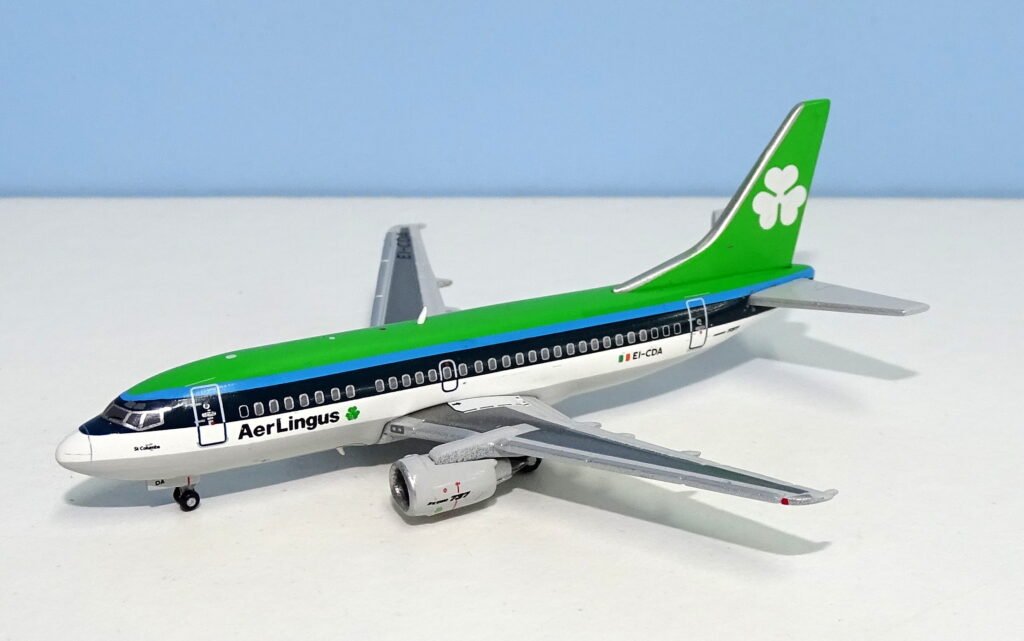
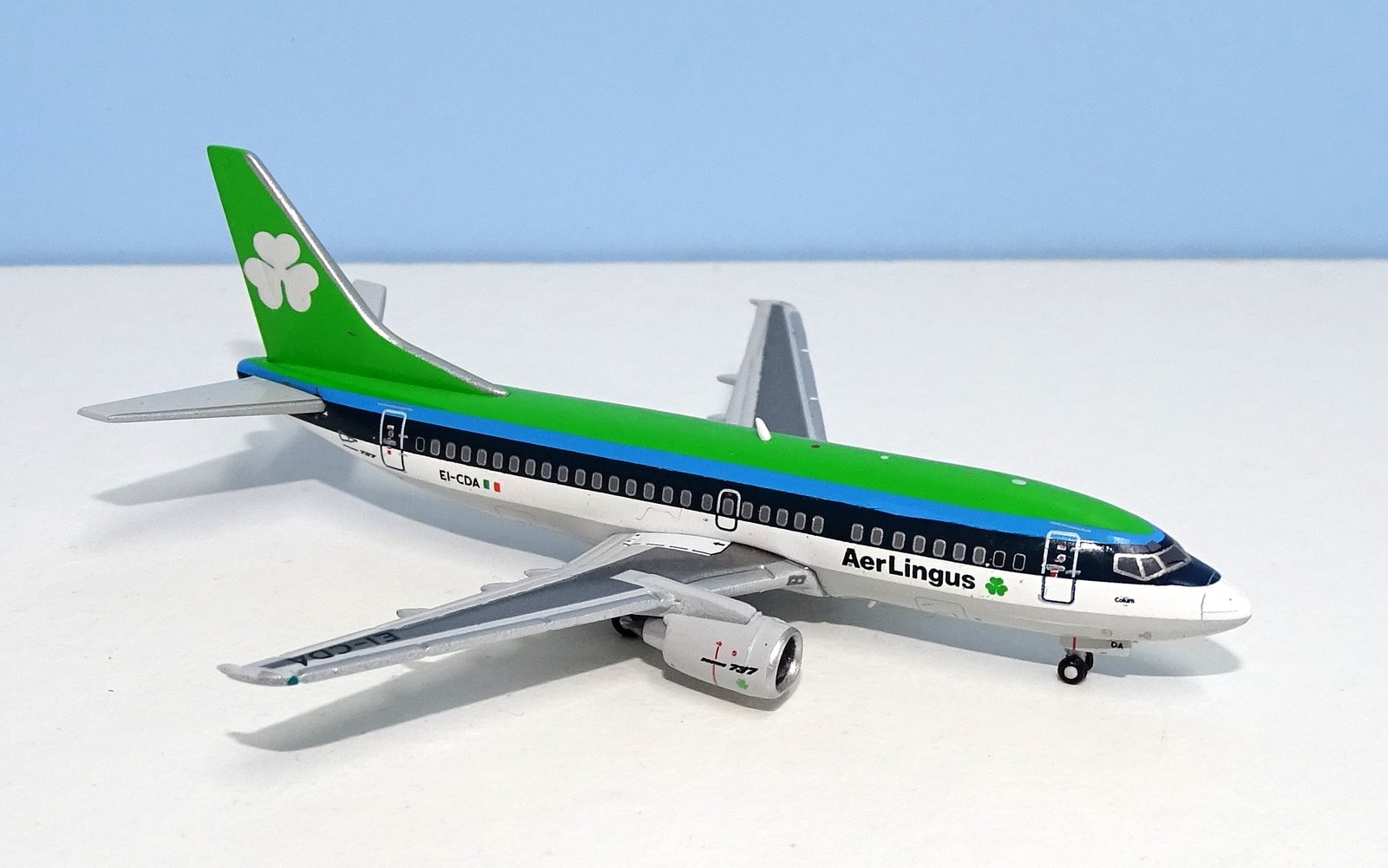
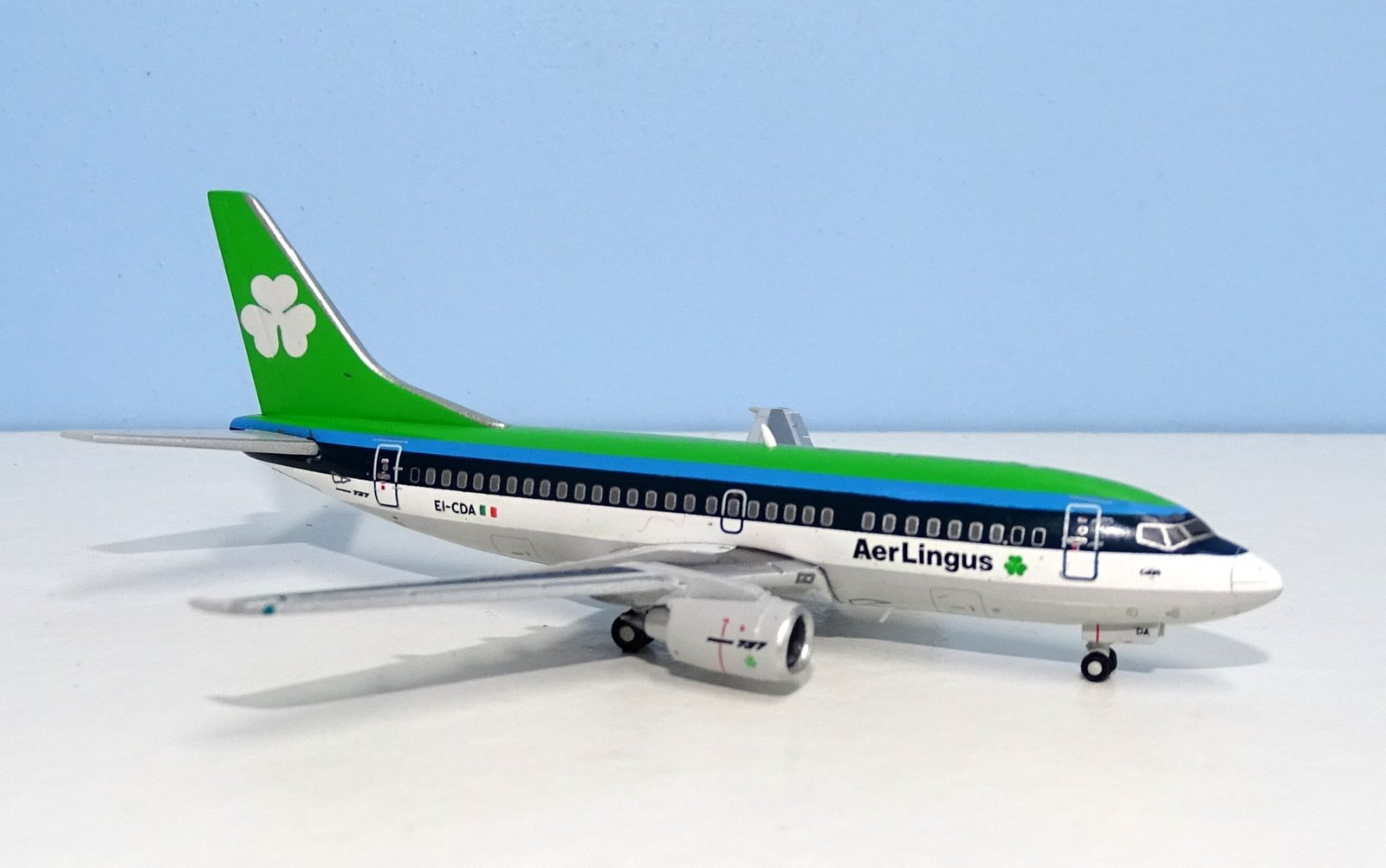
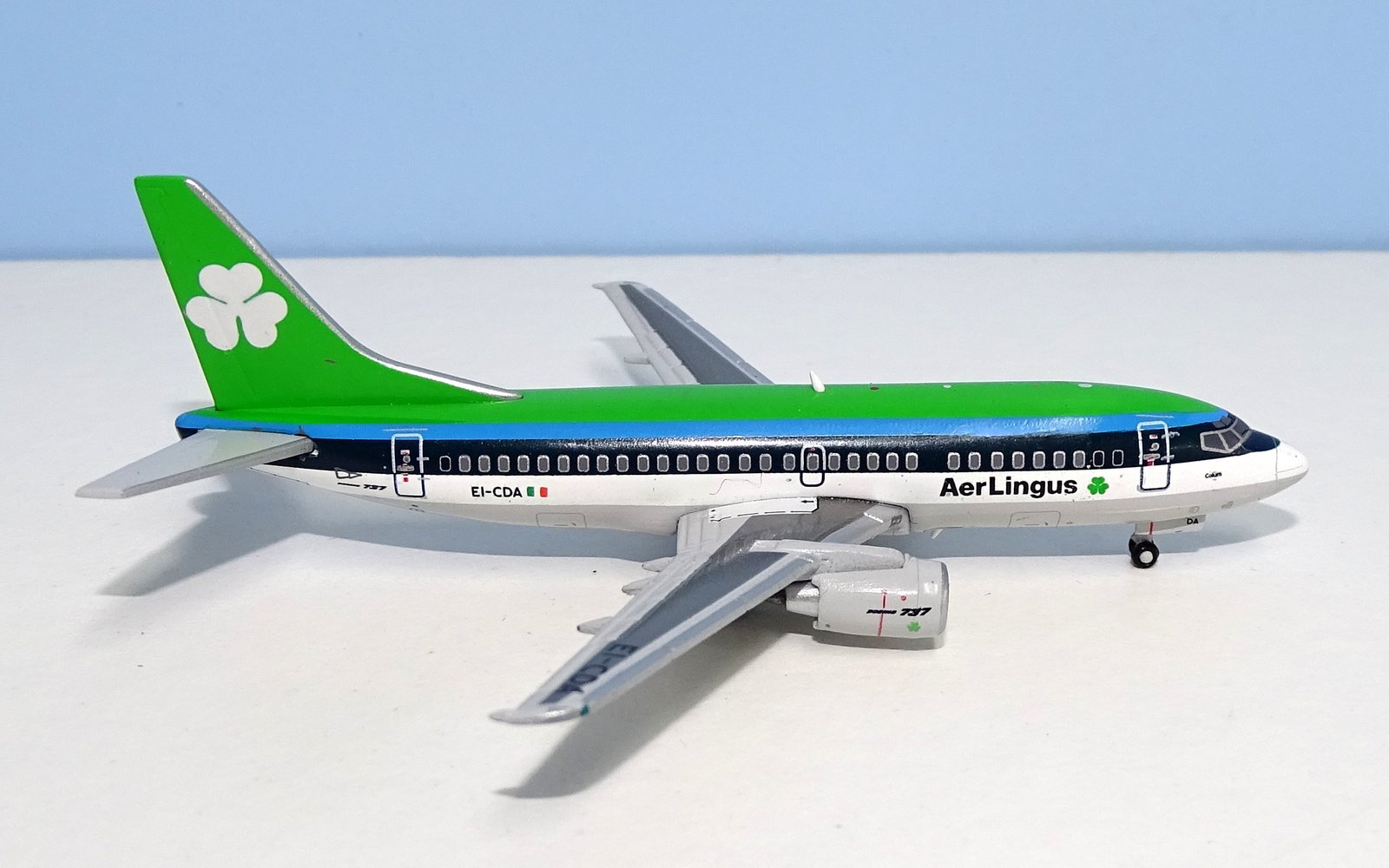
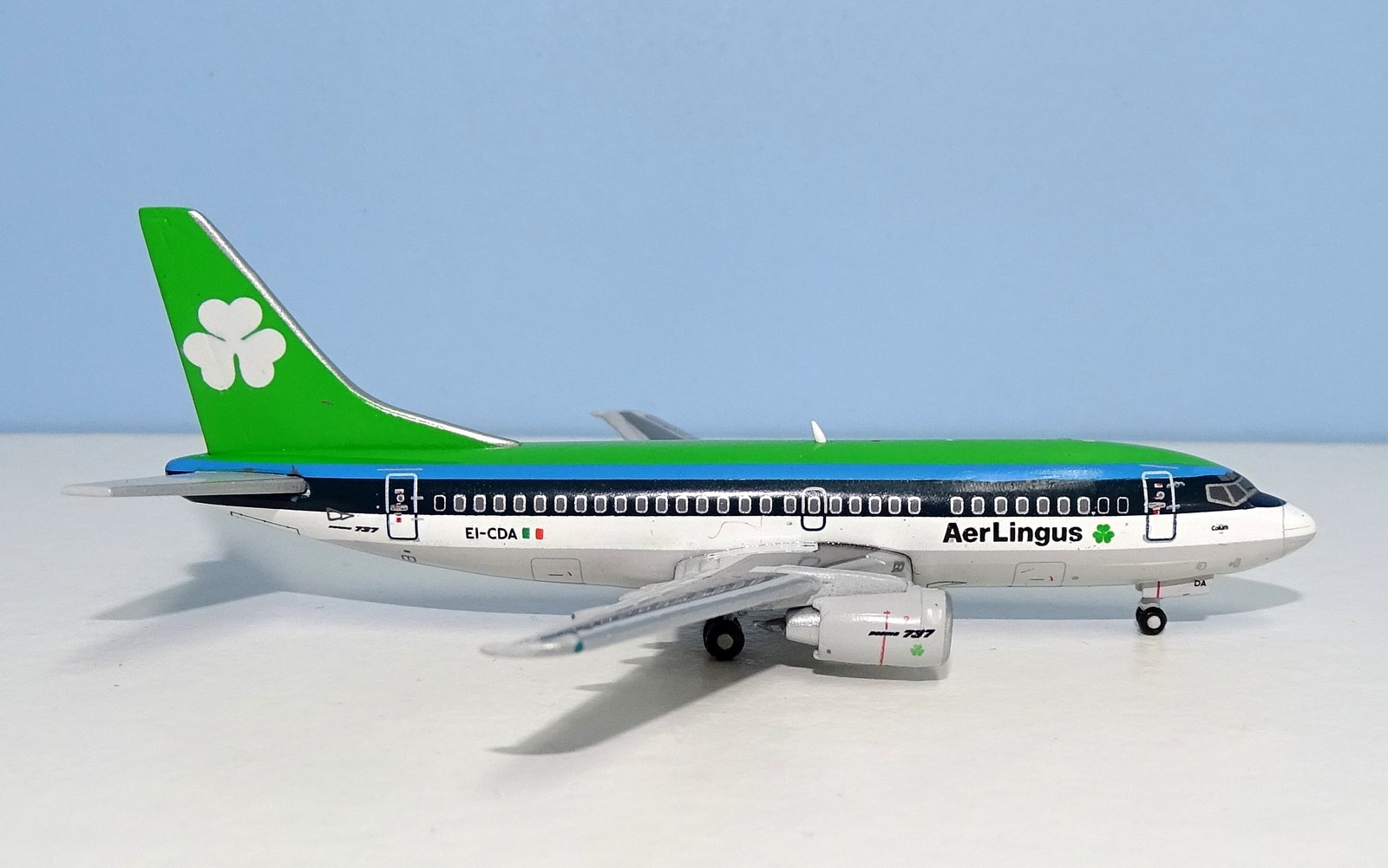
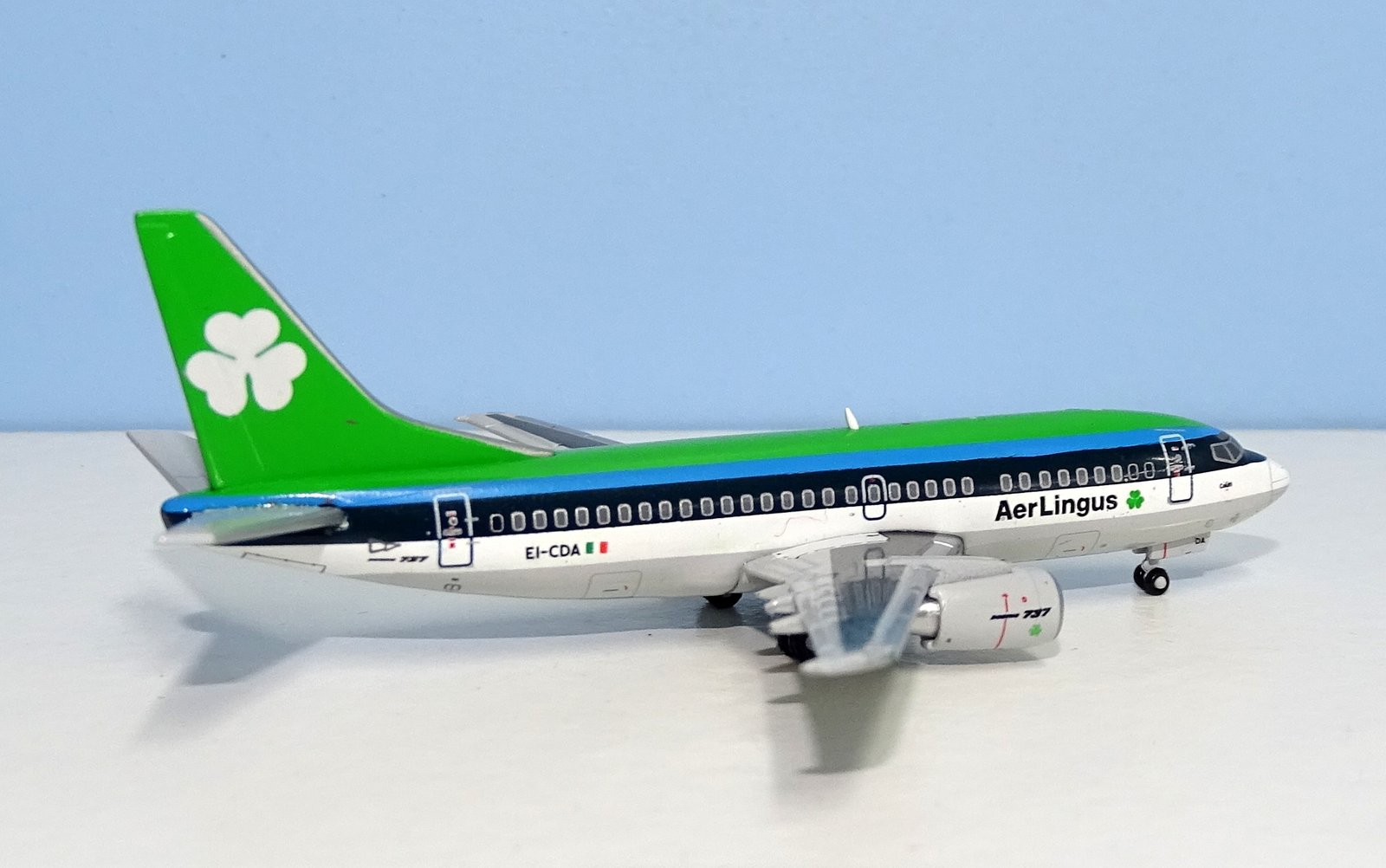
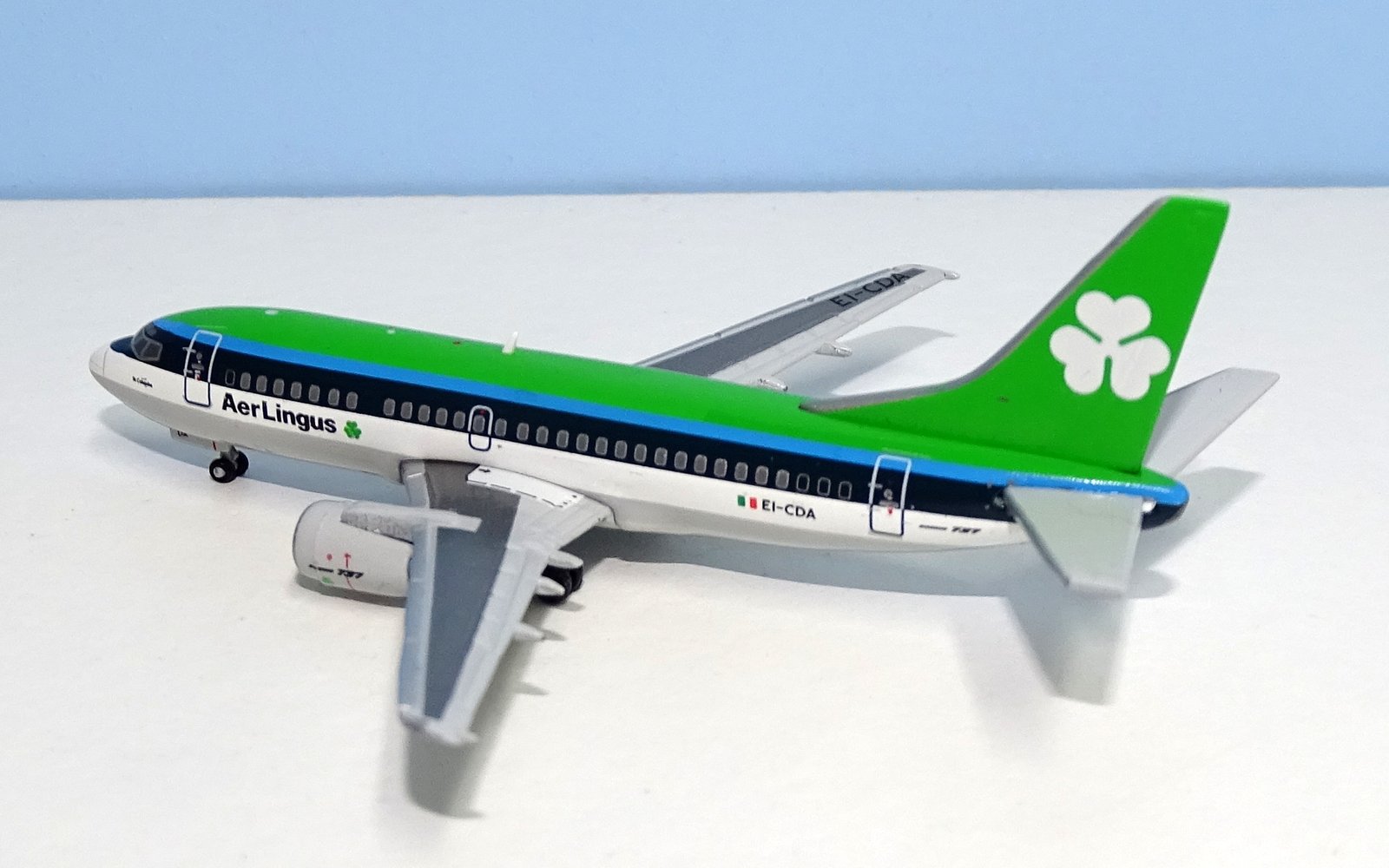
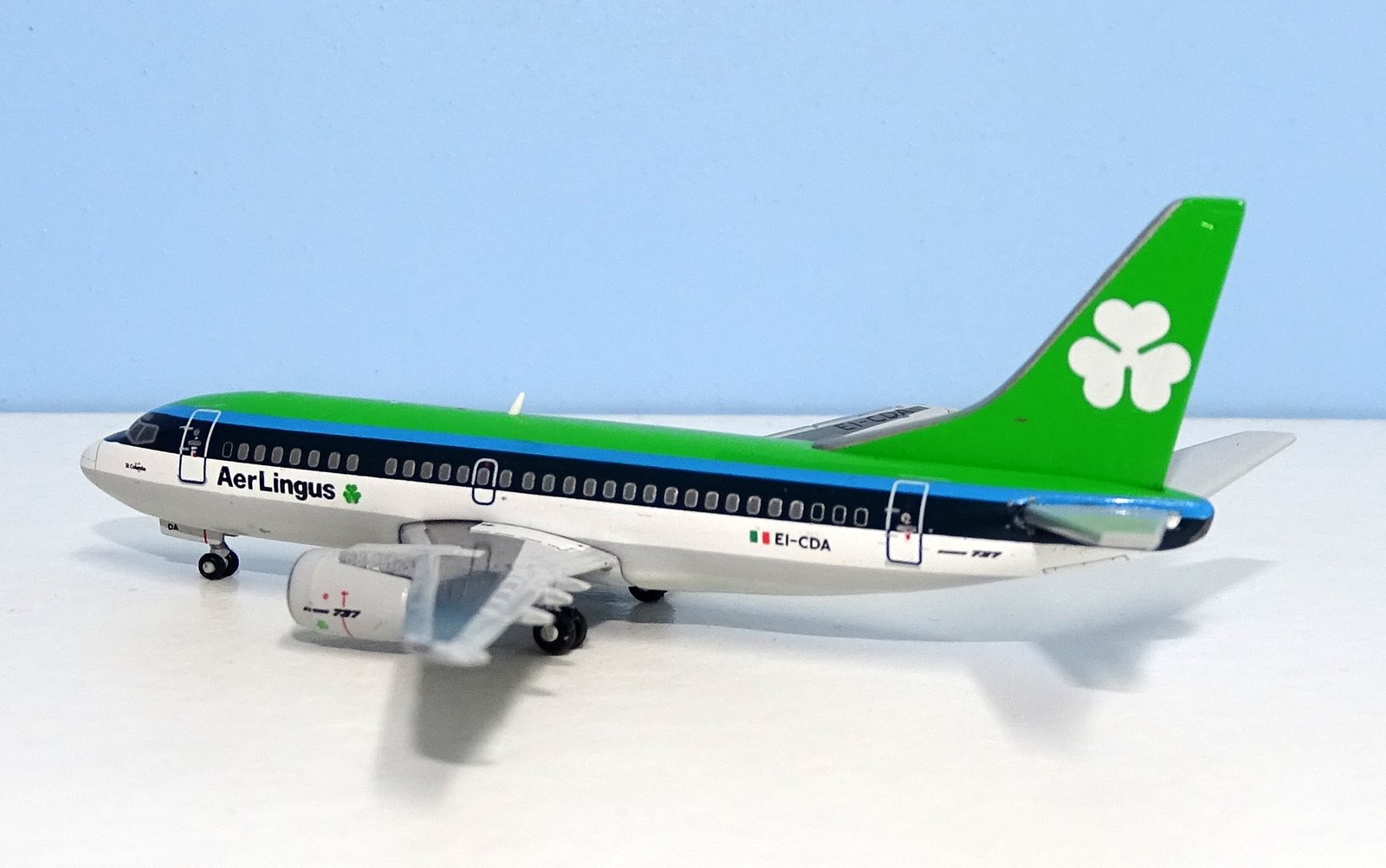
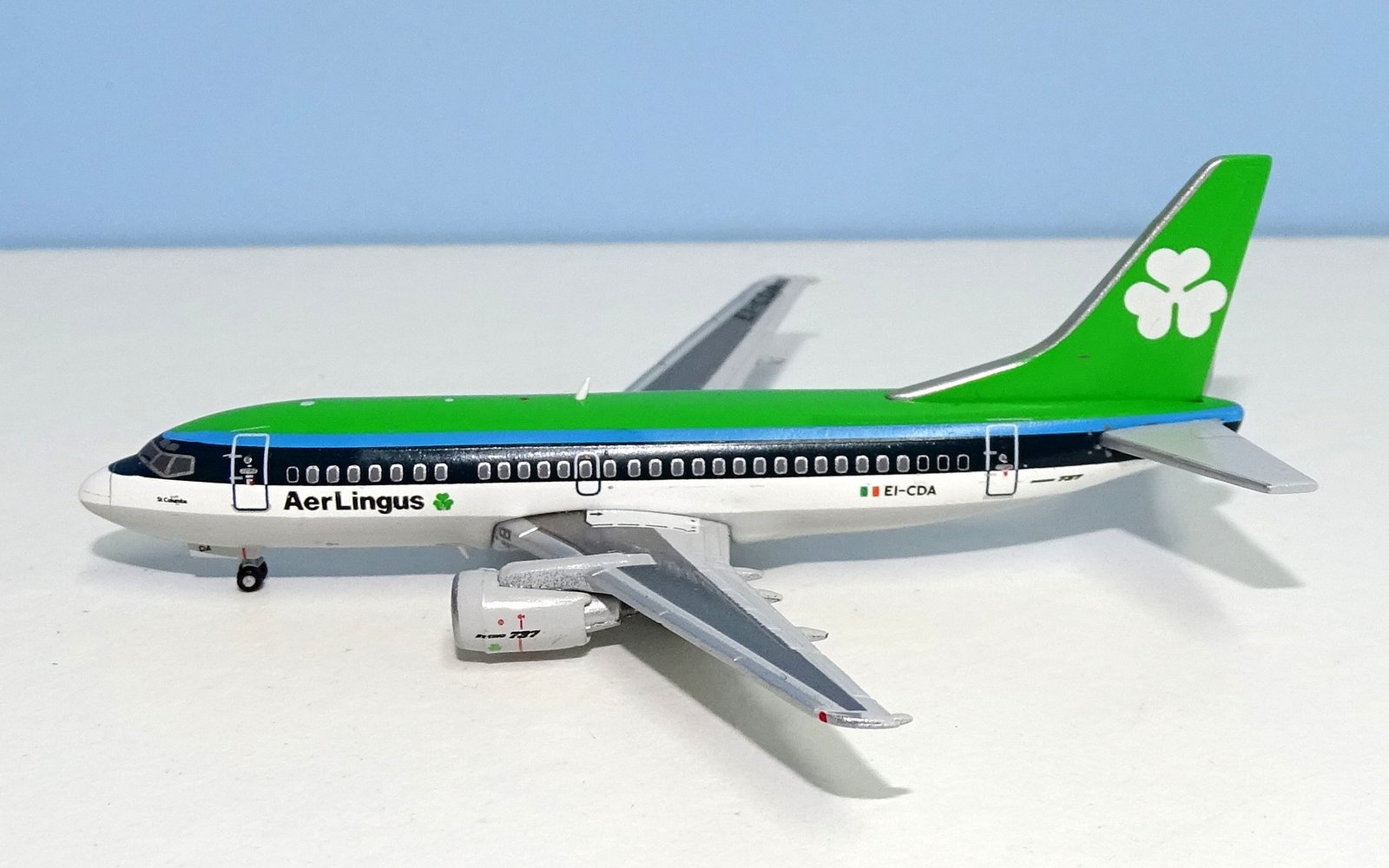
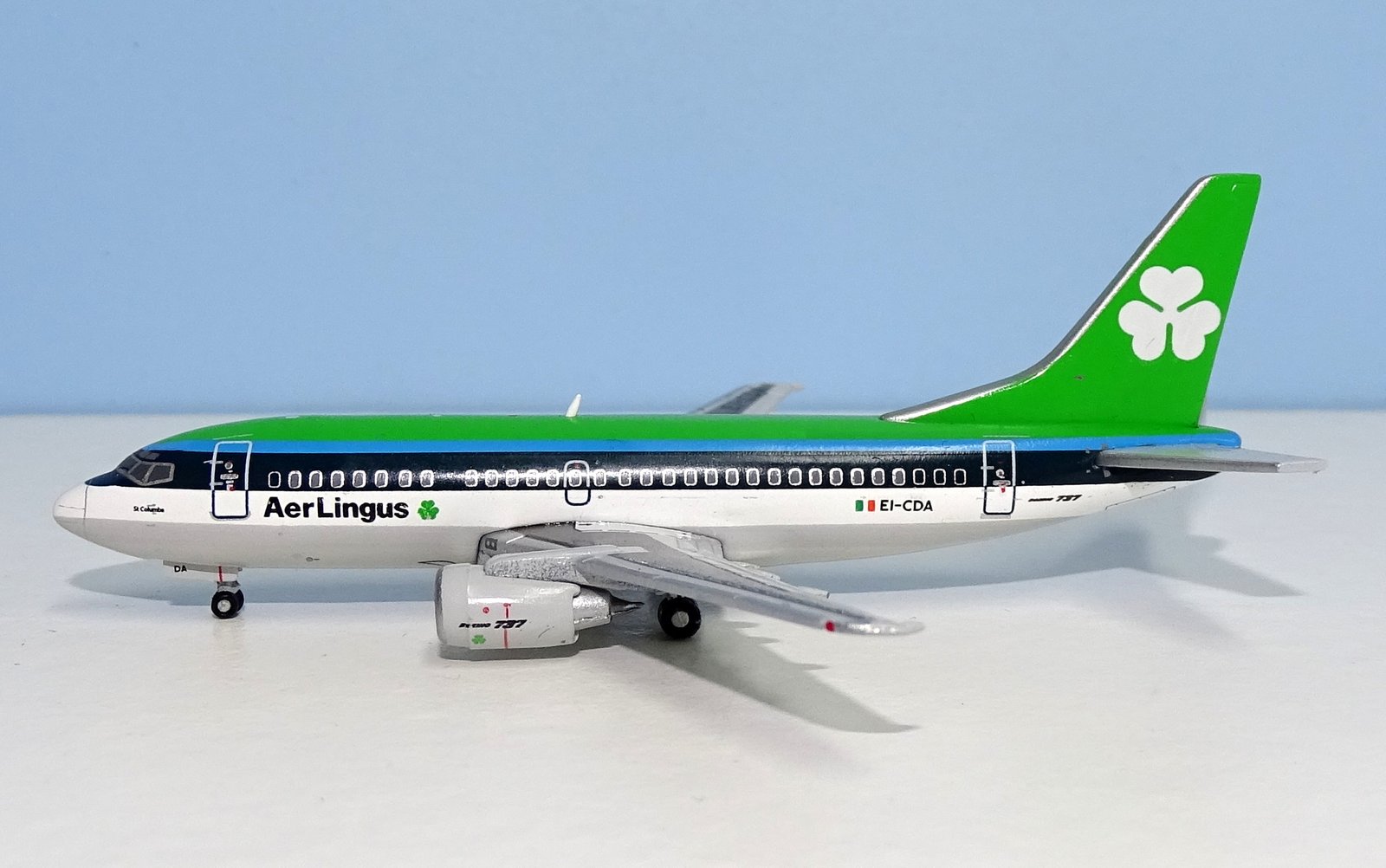
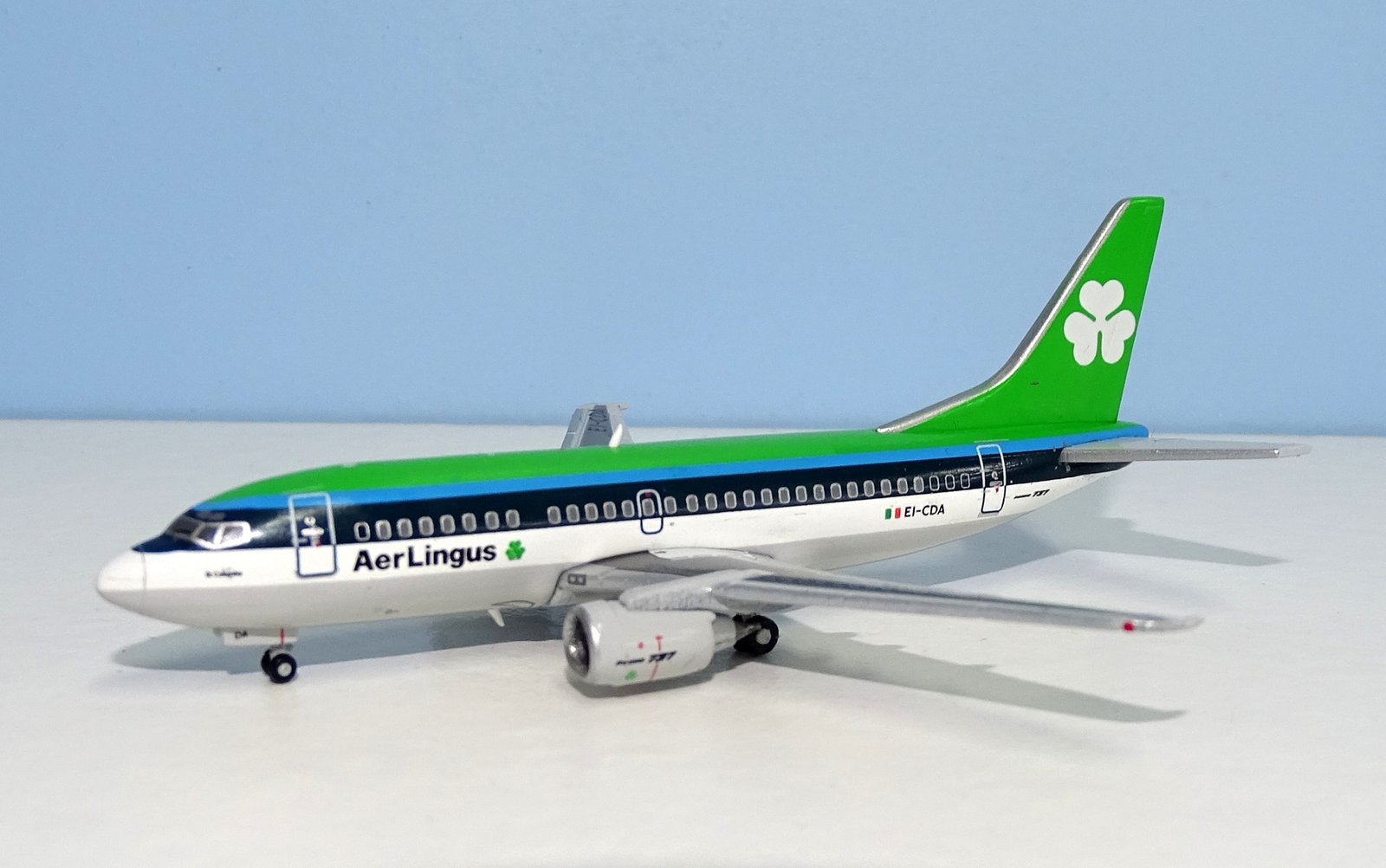
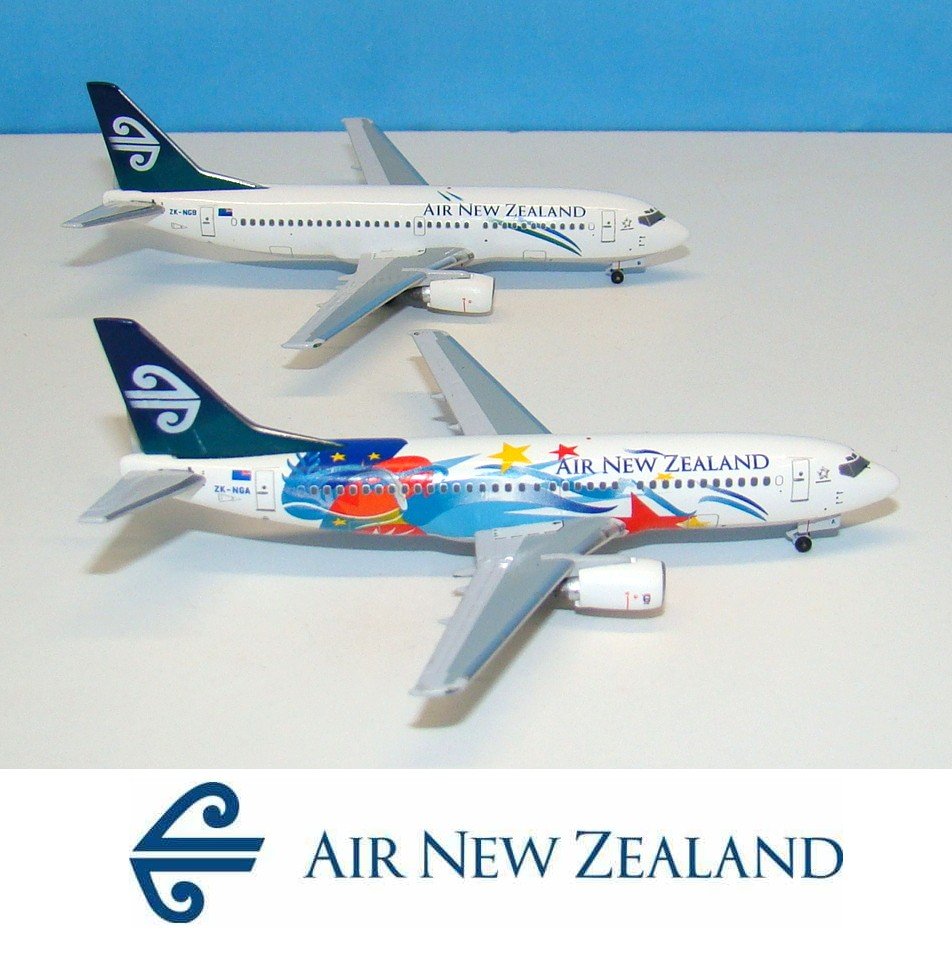
Aer Lingus Boeing 737-584 EI-CDA JC Wings 1:400 Scale Airliner
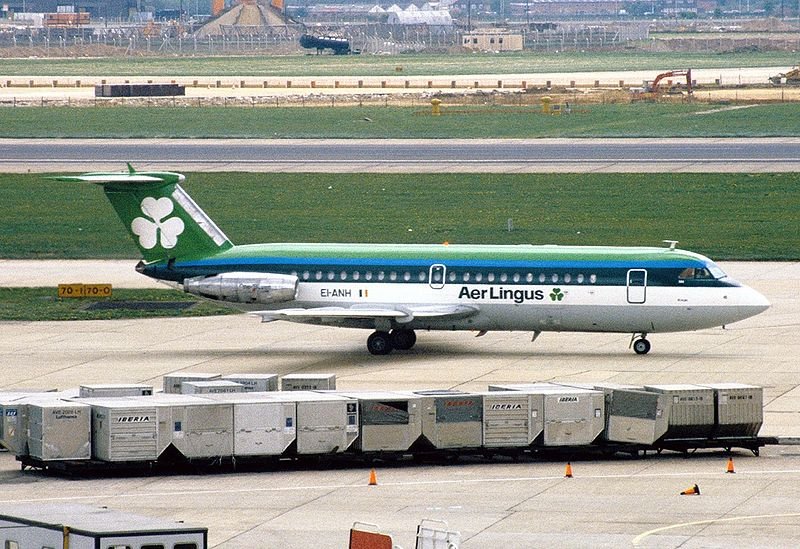
By 1985 the Aer Lingus short-haul fleet consisted of the quartet of trusty BAC One-Elevens, delivered in 1965, 13 737-200s (11 series 248/248Cs, 1 series 2E1 and 1 series 281) and 4 Shorts 360s.
Tim Rees (GFDL 1.2 or GFDL 1.2 ), via Wikimedia Commons
The Shorts had been recent acquisitions following the 12 month leases of a Shorts 330 from Belfast in May 1983. The success of this trial spurred Aer Lingus to create Aer Lingus Commuter in 1984, which was aimed at building domestic traffic and enabling thinner routes to thrive that couldn’t support the 737s.
The Shorts fleet would continue to grow and reach a maximum of 9 aircraft before they were replaced by new Fokker 50s starting in February 1989. They operated routes such as Dublin to Bristol, East Midlands, Edinburgh, Leeds/Bradford and Liverpool or Cork to Birmingham, Bristol, Manchester or Rennes. Domestic services to Sligo and Galway were added in 1988. Later Saab 340s would be added, primarily for Domestic routes.
Alan McKnight (GFDL or GFDL ), via Wikimedia Commons
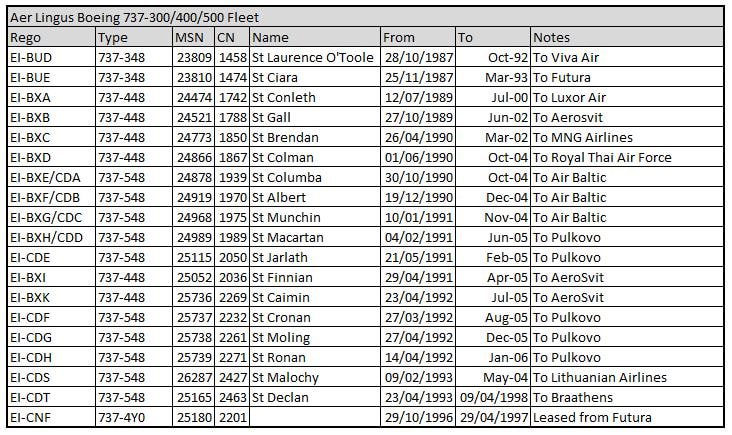
The Boeing 737-200s had proven to be a great success and although two further aircraft were leased, in 1986 and 1988 respectively, the series 300 had flown in February 1984. Production of the series 200 actually continued until August 1988 but the updated 737-300 had been first delivered on November 28, 1984. The majority of existing 737-200 operators chose the updated 737-300 as they began to roll over their older fleets and plan for the future. Aer Lingus, with its 17 years of 737 service behind it was no different and in June 1986 ordered a pair of 737-348s.
Below: EI-BUD was one of the pair of short-lived 737-348s.
Ardfern, CC BY-SA 3.0 , via Wikimedia Commons
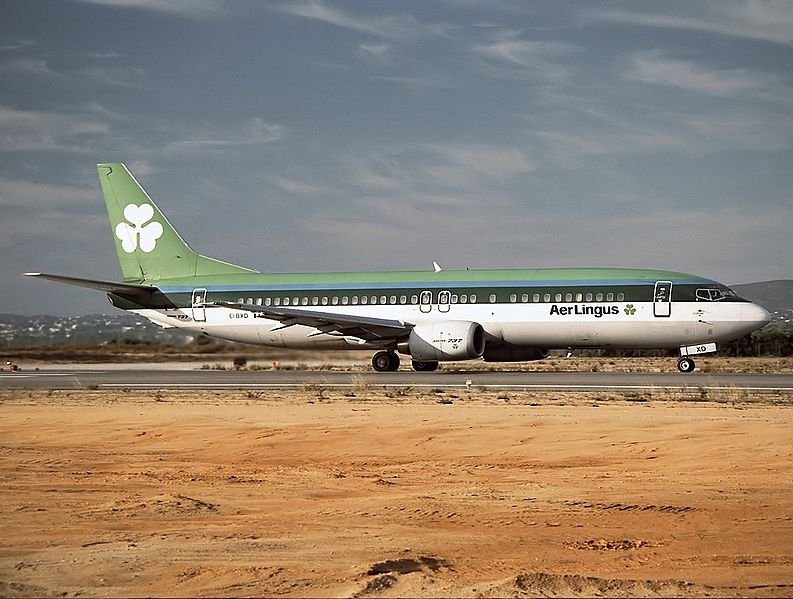
The series 300s accommodated 135 passengers and were put into service initially on the vital and frequent Dublin-Heathrow link. The first arrived in late October 1987 and the first Heathrow sector followed on November 3. Recognising the strong passenger demand on its trunk routes Aer Lingus next selected the longer 737-400, with the first of 6 aircraft joining in July 1989. These would seat 156 passengers and again be focused mostly on Heathrow.
Pedro Aragão, CC BY-SA 3.0 GFDL, via Wikimedia Commons
While the 737-300s and 400s were focused on growth sectors Aer Lingus still operated the 4 smaller One-Elevens and its fleet of 737-200s which were operating routes requiring less capacity. With the One-Elevens approaching their 25th birthday and many of the 737s dating from the 1960s it was not surprising that Aer Lingus also took interest in the smallest member of the new 737 lineup – the 737-500.
Orders were placed for 6, which would seat 117 in a mixed class layout, and follow on orders increased the fleet to ten. The first frame, EI-BXE, arrived in late October 1990 and the first four aircraft had been delivered by April 1991 allowing for the retirement of the trusty BAC One-Elevens. With delivery of the first 737-500 Aer Lingus became the first airline in the world to operate all three of the new 737 variants at the same time.
Aer Lingus Boeing 737-584 EI-CDA JC Wings 1:400 Scale Airliner
Aer Lingus Boeing 737-584 EI-CDA JC Wings 1:400 Scale Airliner
Aer Lingus Boeing 737-584 EI-CDA JC Wings 1:400 Scale Airliner
Aer Lingus Boeing 737-584 EI-CDA JC Wings 1:400 Scale Airliner
Aer Lingus Boeing 737-584 EI-CDA JC Wings 1:400 Scale Airliner
Aer Lingus Boeing 737-584 EI-CDA JC Wings 1:400 Scale Airliner
Aer Lingus Boeing 737-584 EI-CDA JC Wings 1:400 Scale Airliner
Aer Lingus Boeing 737-584 EI-CDA JC Wings 1:400 Scale Airliner
Aer Lingus Boeing 737-584 EI-CDA JC Wings 1:400 Scale Airliner
Aer Lingus Boeing 737-584 EI-CDA JC Wings 1:400 Scale Airliner
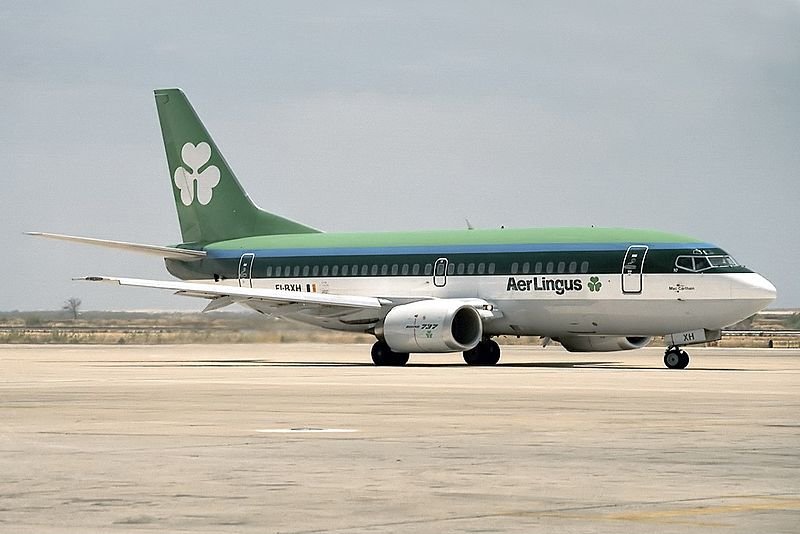
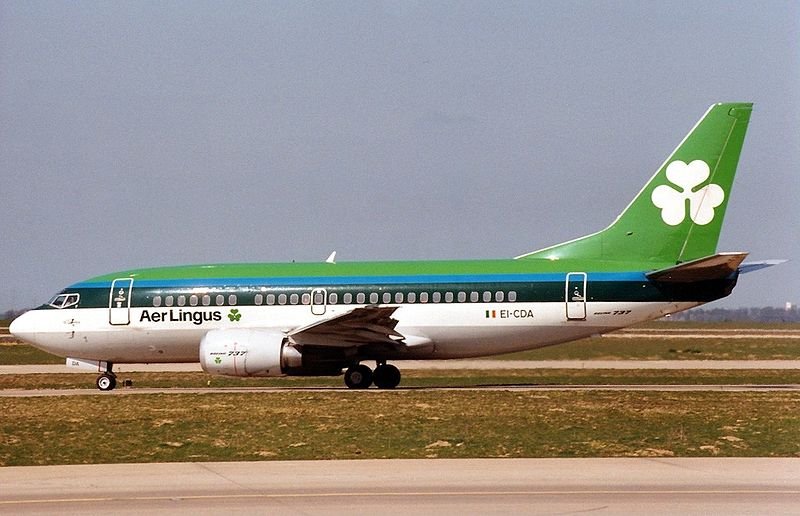
The first four 737-500s had registrations from EI-BXE-BXH but in mid-1991 they were re-registered in the sequence EI-CDA onwards. The series 500s flew their first service on the Dublin-Gatwick route on November 2, 1990 but were also used on the Dublin-Heathrow and Dublin-Brussels service as well.
Below: This photo showing EI-BXH dates itself to between late 1990 and mid-1991 before she was re-registered:
Pedro Aragão, CC BY-SA 3.0 GFDL, via Wikimedia Commons
The end of the 1980s was a period of significant growth for Aer Lingus, which in 1988 took advantage of 5th freedom rights to start a number of services routing through Manchester, Birmingham and Bristol. Copenhagen, Hamburg, Milan and Zurich were also added. In 1990 extra UK destinations were begun from Dublin to Stansted and Newcastle and 5th freedom routes flying Dublin-Bristol-Brussels and Dublin-Manchester-Paris started.
JetPix (GFDL 1.2 or GFDL 1.2 ), via Wikimedia Commons
As new 737-400s and 500s were added to the fleet the 737-200 numbers began to decrease. The first, EI-ASB, had left the fleet in 1987 but a few of the 737-200s would survive into 1995.x
Aer Lingus entered the 1990s in a strong position and dominated the trunk Ireland-London routes. This was further assisted in March 1991 when British Airways withdrew its competing services, however things were not looking good for Aer Lingus either. The fallout from the First Gulf War created a major economic downturn that brought Aer Lingus close to collapse. The fleet was trimmed, which not only meant old 737-200s but also the pair of 5 year old 737-300s.
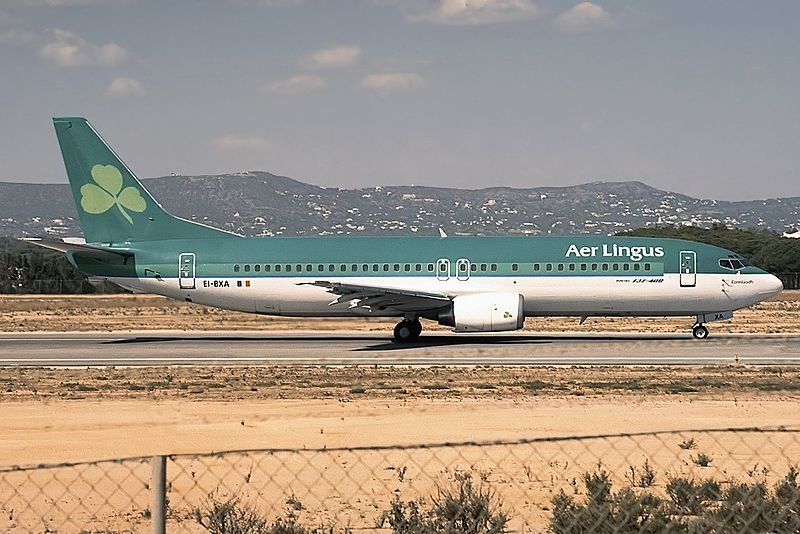
Below: 737-448 EI-BXA wearing the 96 colours in 1997 at Faro
Pedro Aragão, CC BY-SA 3.0 GFDL, via Wikimedia Commons
In 1993 the new CEO Bernie Cahill formulated the ‘Cahill Plan’ to restructure the airline and focus it only on flying aircraft. However, the plan created a lot of poor faith with the airline’s employees and the new management completely missed the importance of the rise of the internet and the accompanying impact of Ryanair. Aer Lingus would continue to struggle well into the 2000s, despite joining the Oneworld alliance.
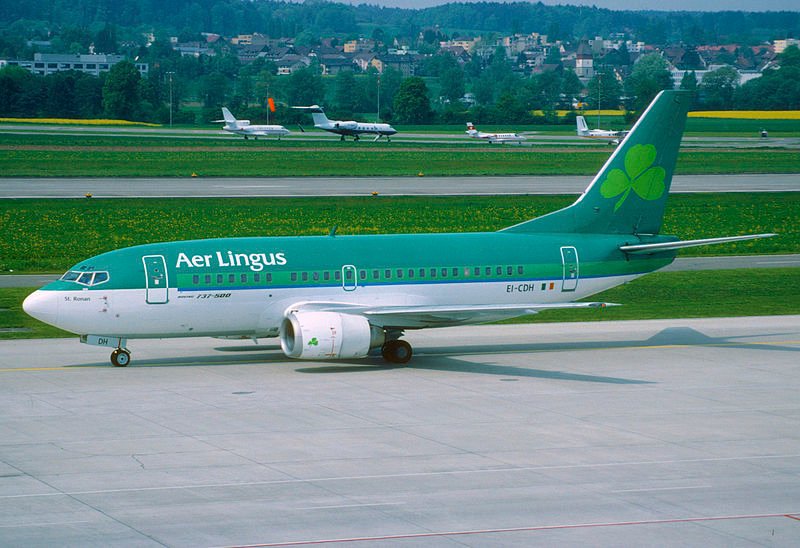
Below: 737-548 EI-CDH wearing the 1996 colour scheme at Zurich in 1998:
Aero Icarus from Zürich, Switzerland, CC BY-SA 2.0 , via Wikimedia Commons
The issues at the airline did not stop it from re-equipping its fleet and despite its long association with the 737, as with many European flag carriers, it was Airbus that benefitted. The first Airbus A321s arrived in May 1998 and were followed by A320s in June 2000. Several 737-548s were sold in the late 90s and the 737-448s began to leave the fleet in 2000. By February 2006 all the 737s had departed, however the impressive service they provided to Ireland’s flag carrier lives long in the memory.