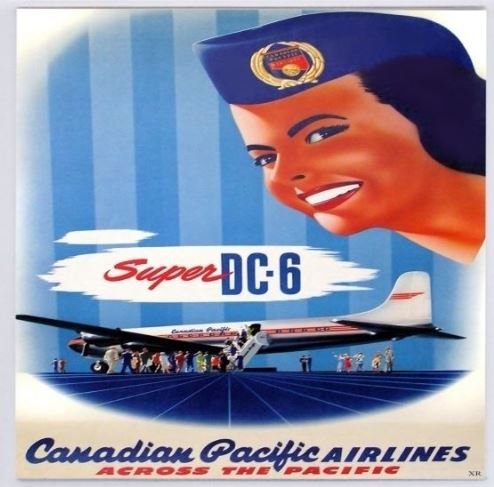
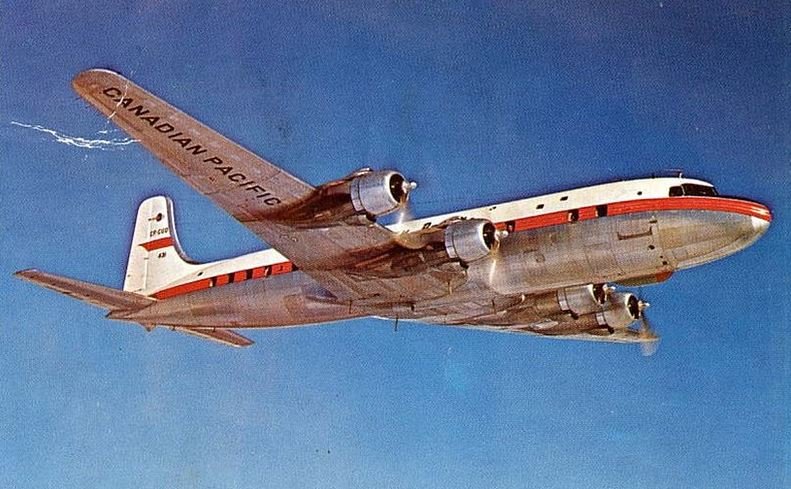
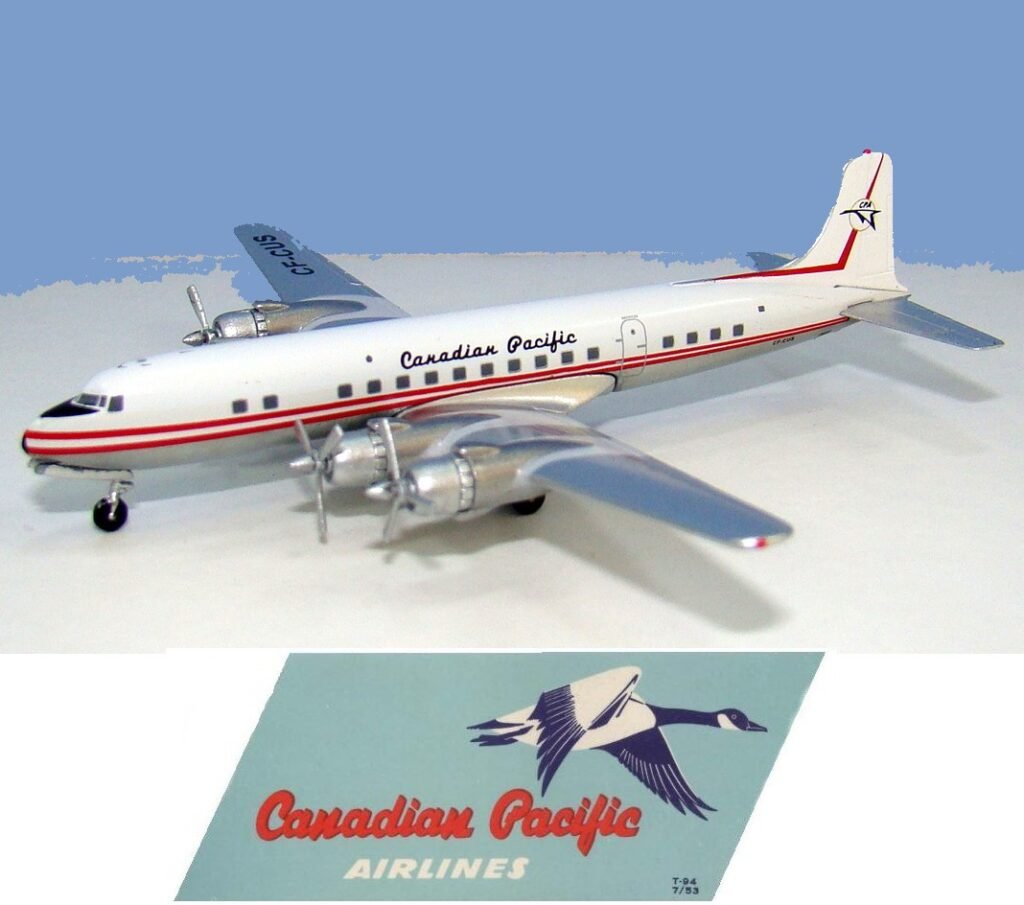
Canadian Pacific turned to the trusty Douglas DC-6B to carry it through the 1950s, but even though the type was replaced by new turboprops, and then jets, on the long haul routes it was reliable and economic enough to be repurposed. The Sixes provided an upgrade to passengers on the domestic routes and continued to serve CP into the late 1960s, a testament to the type’s rugged excellence.
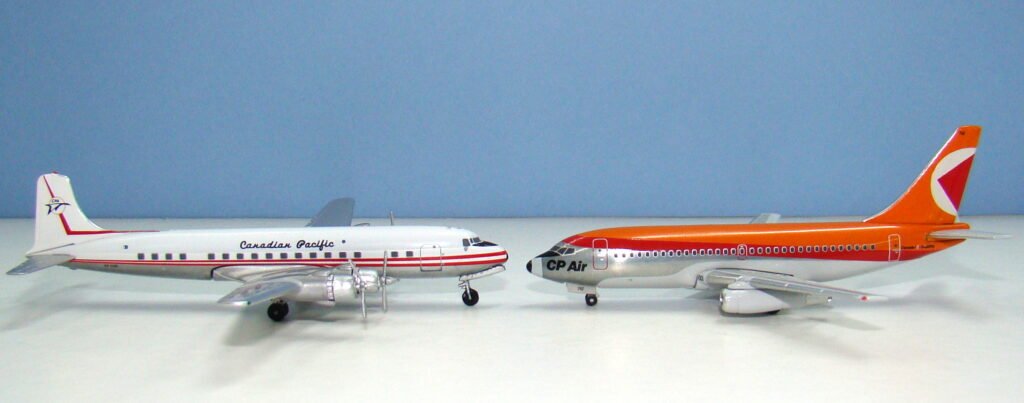
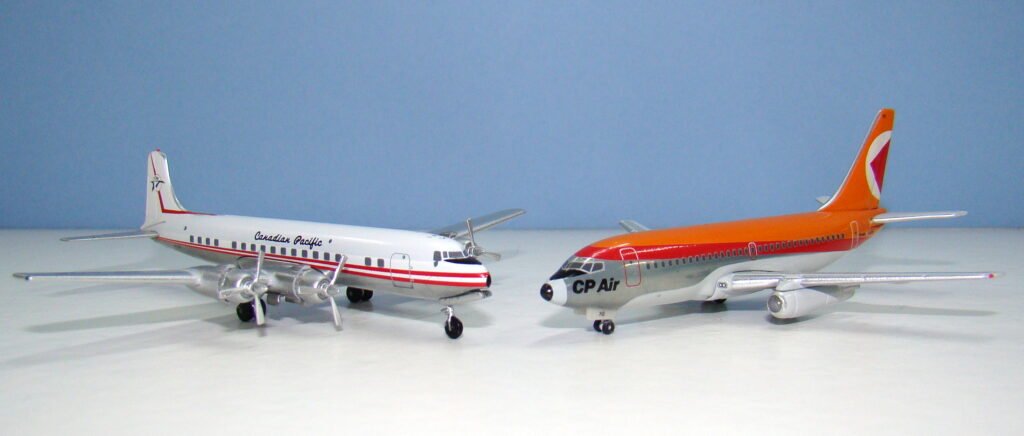
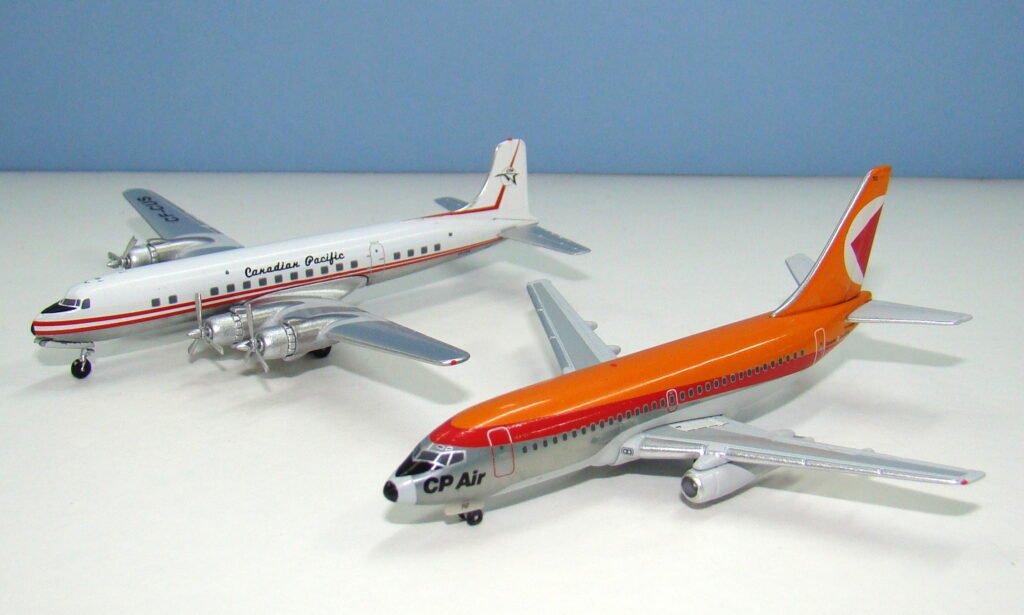
Canadian Pacific Douglas DC-6 CF-CUS by Aeroclassics and her replacement a CP Air 737-200
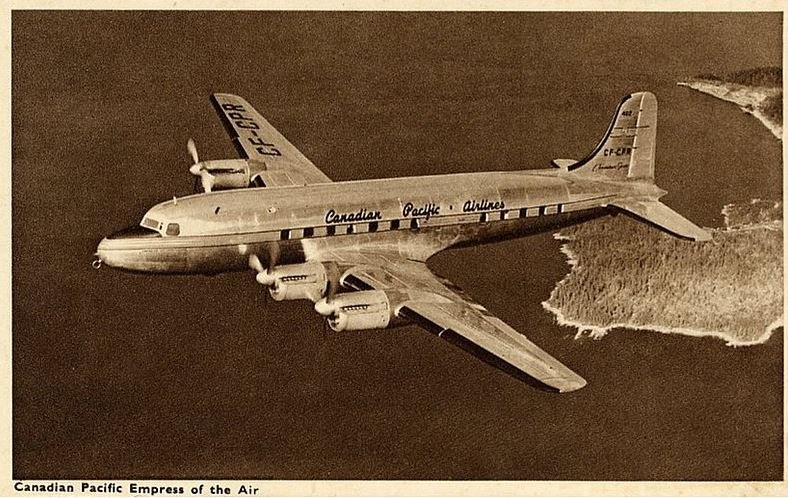
Canadian Pacific initiated its North Pacific services with the Canadair C-4 – the modified and pressurised licence built Canadian version of the Douglas DC-4. These aircraft were called North Stars in Trans Canada service and Argonauts with BOAC, but in Canadian Pacific service they were known as Canadair Fours. Unfortunately CP wasn’t particularly impressed by tha C-4, mainly because of its Rolls-Royce Merlin engines. These military designed engines were reliable but incredibly noisy and not particularly fuel efficient. By 1950 Canadian Pacific was looking for alternatives and took the backward step of replacing the three remaining C-4s (the fourth had run off the end of the runway at Tokyo in 1950) with three ex-Pan Am DC-4s. Though unpressurised they were more fuel efficient and offered a quieter ride.
One of the Canada Fours - note the obvious lateral exhausts from the Merlin engines
The DC-4s could only ever be a stopgap solution and the obvious replacement was already in production in the form of the DC-4’s big brother the DC-6. Canadian Pacific ordered four of the new DC-6B, which would be the most efficient piston propliner in history. The first, CF-CUO was delivered on January 17, 1953 and operated a proving flight from Vancouver to Honolulu on January 24. Two days later on the return leg it inaugurated passenger service.
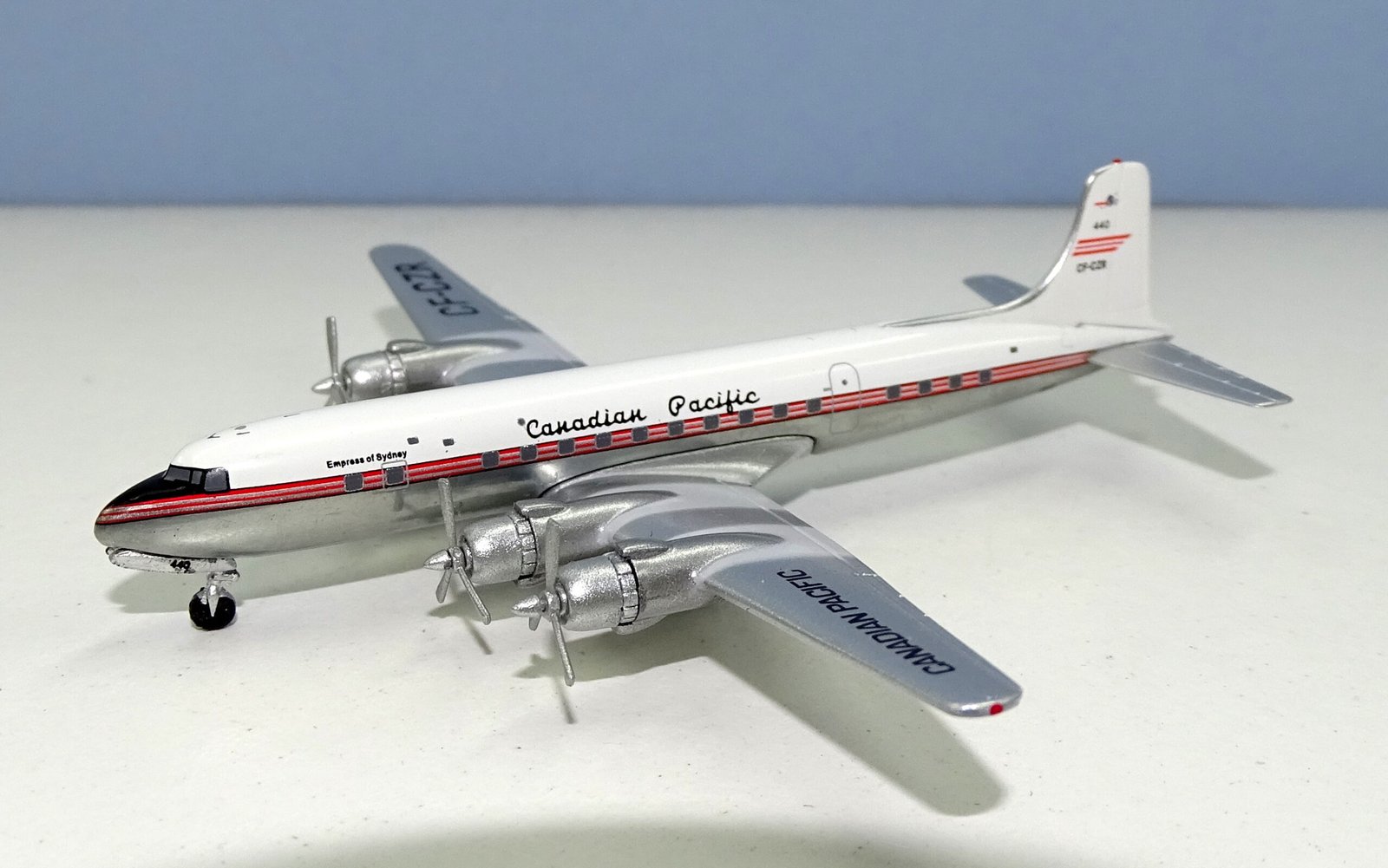
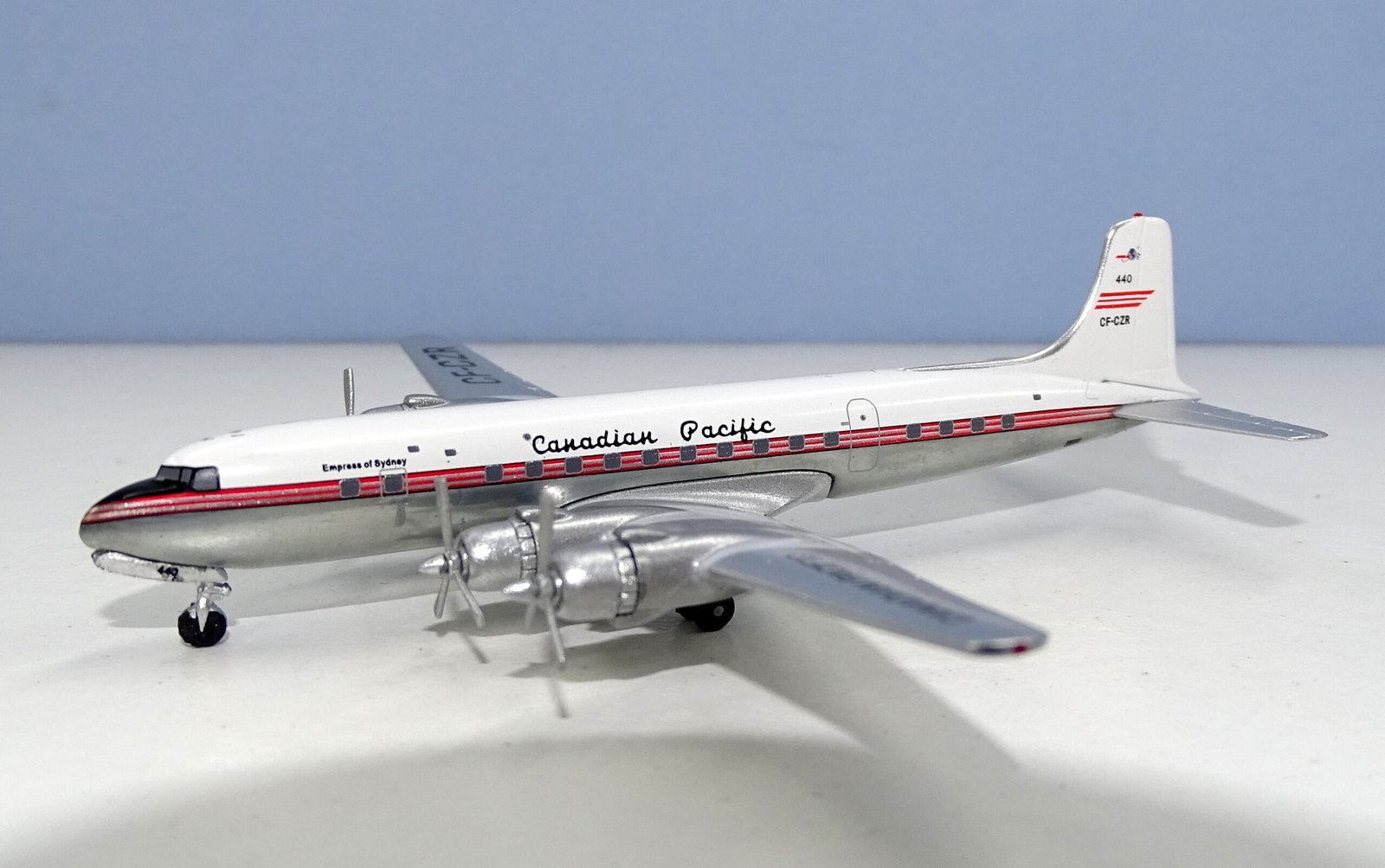
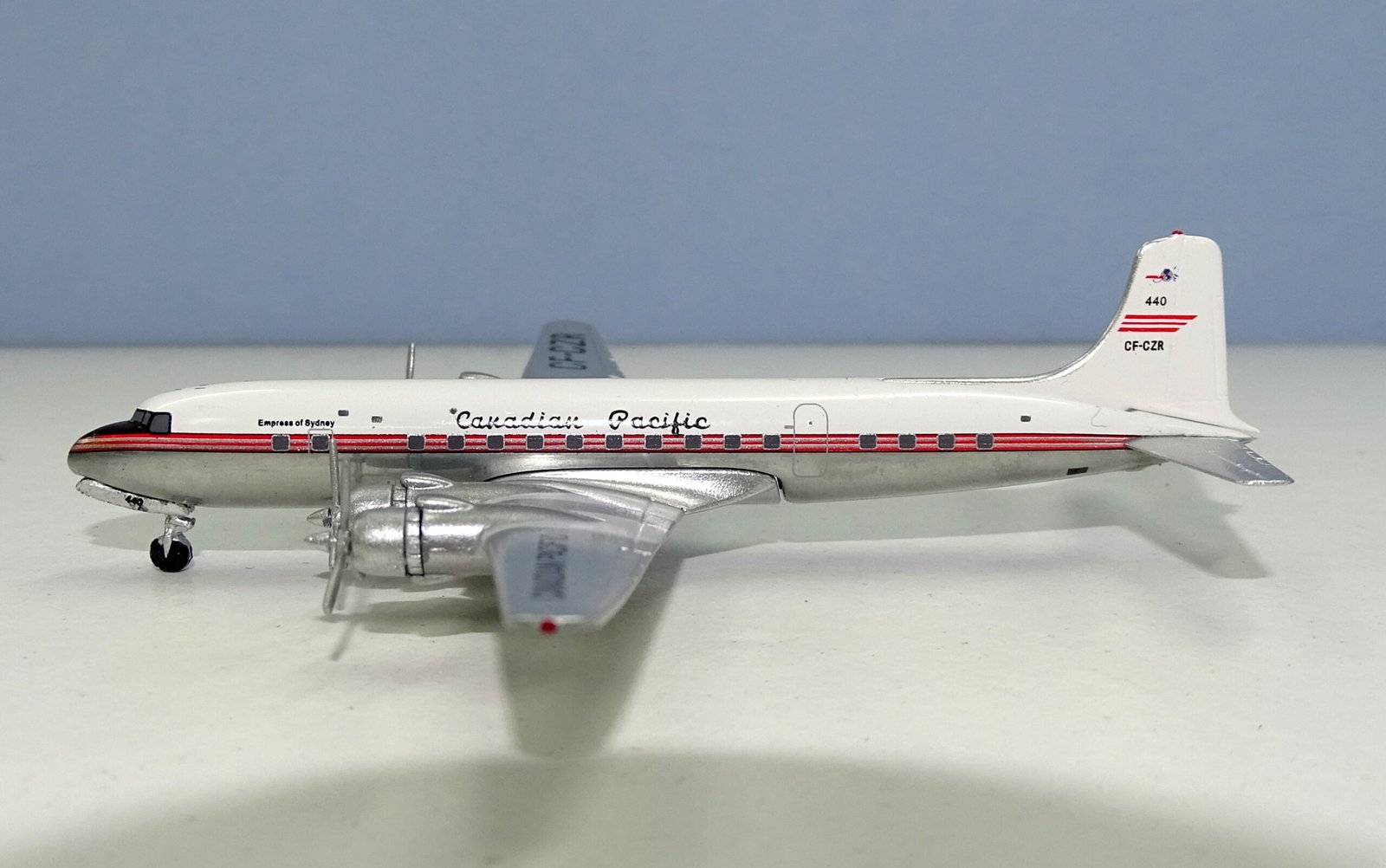
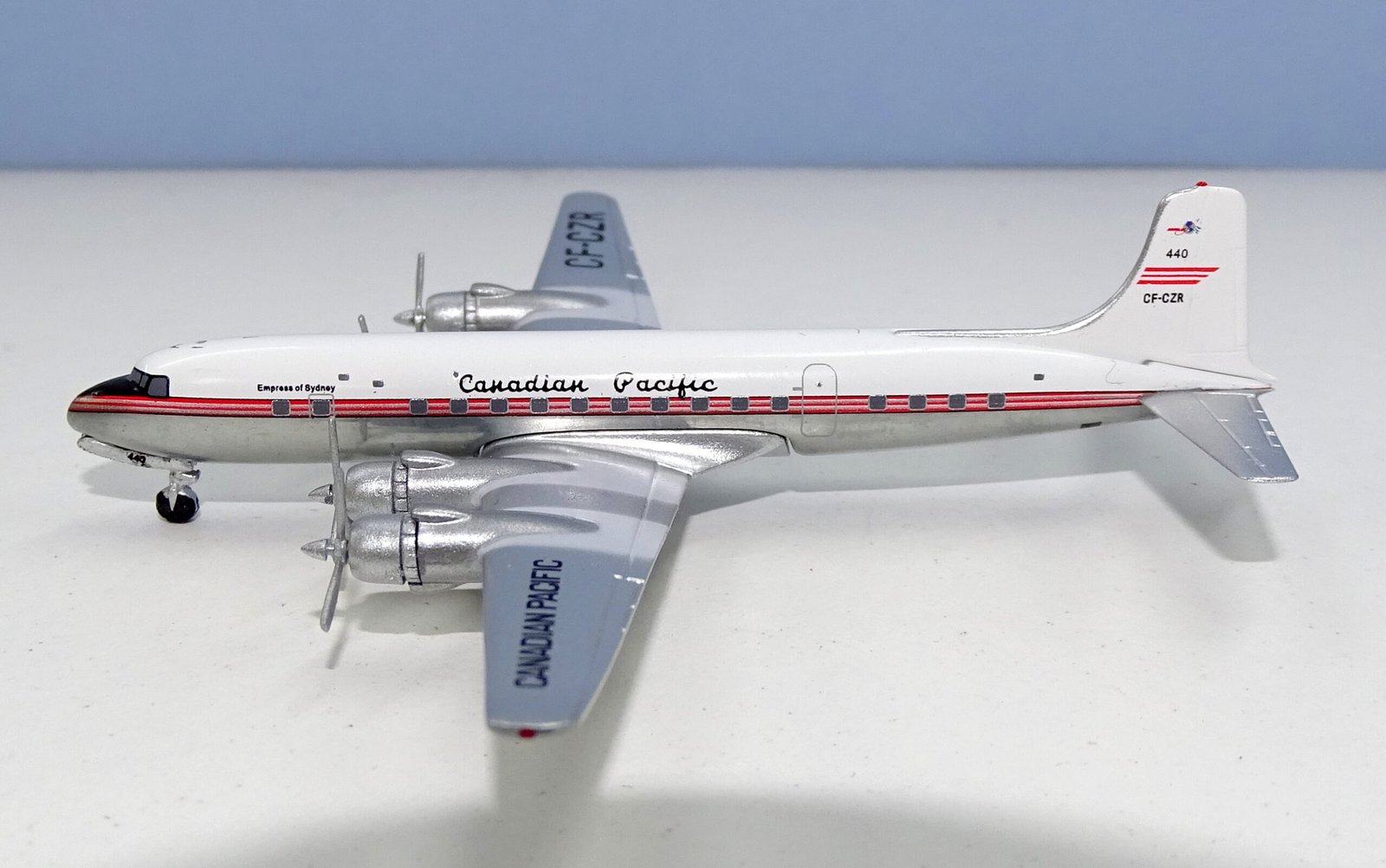
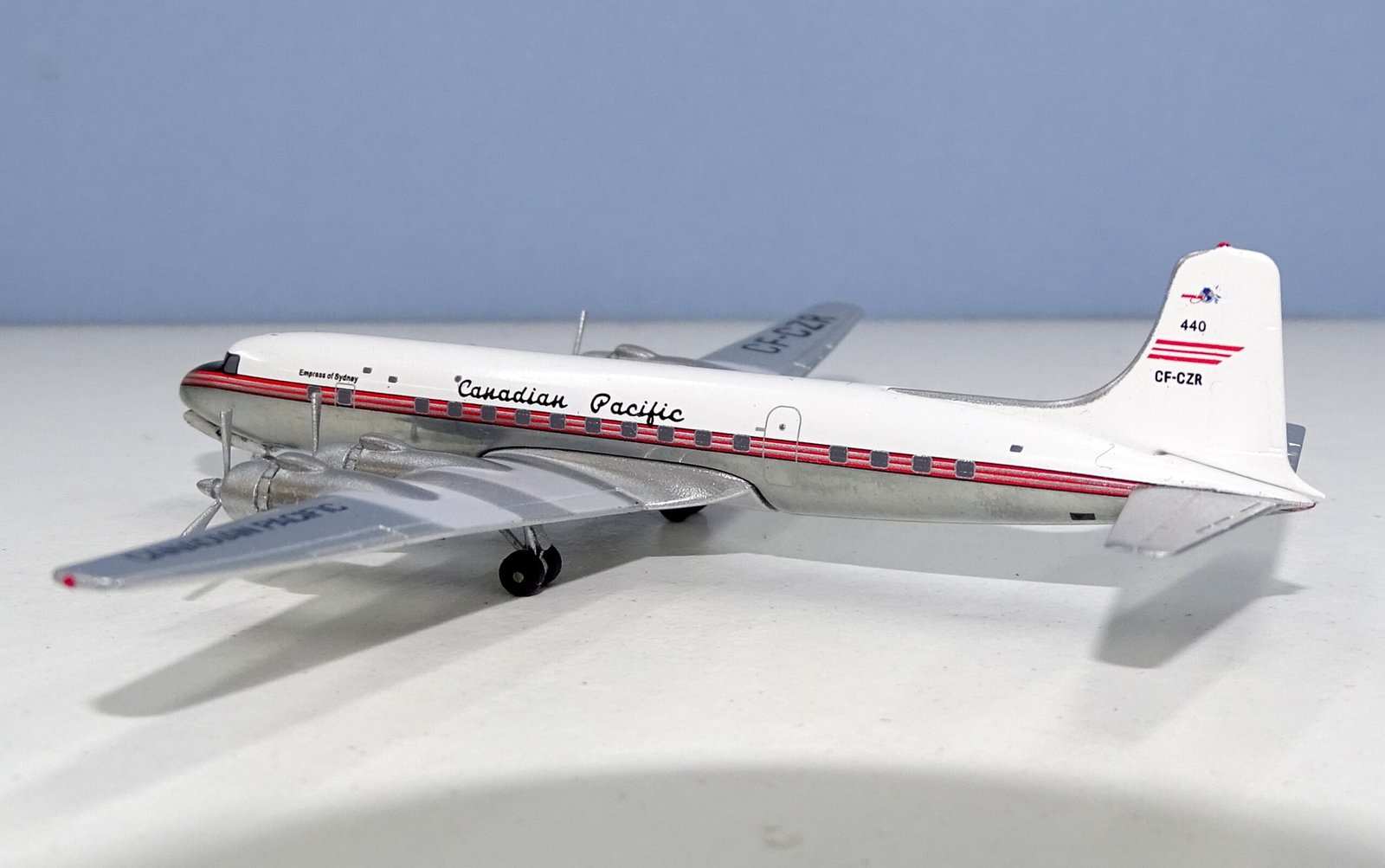
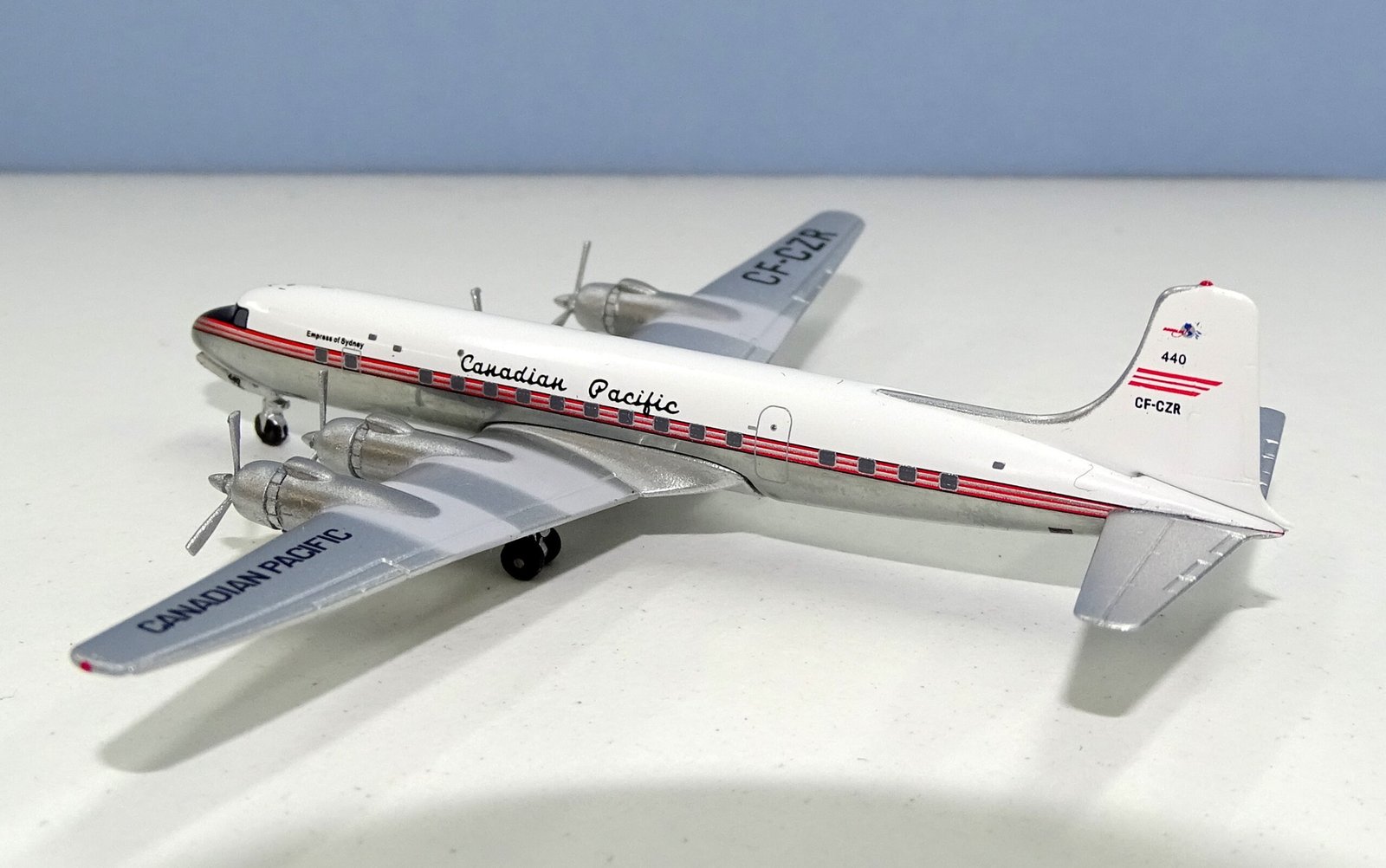
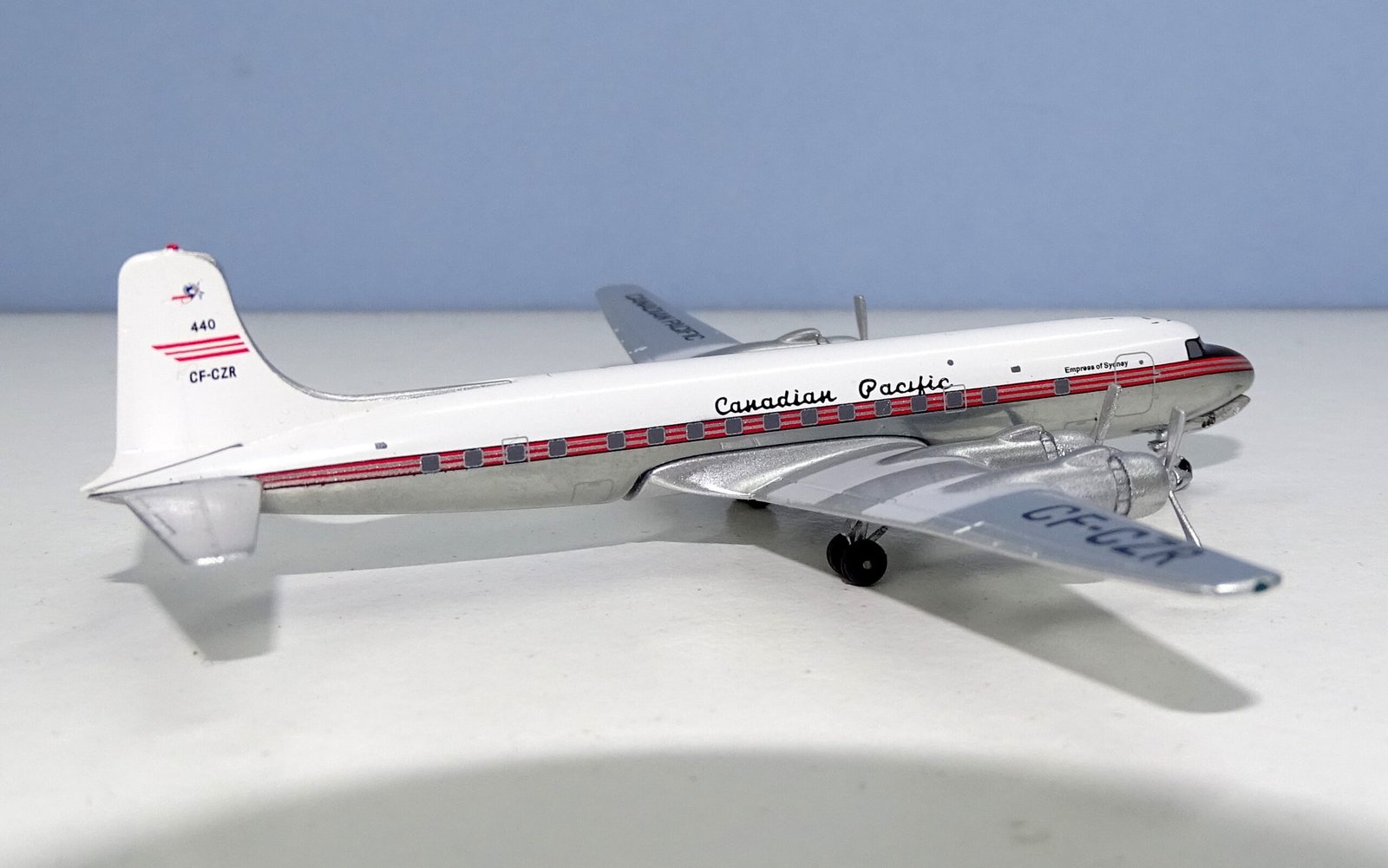
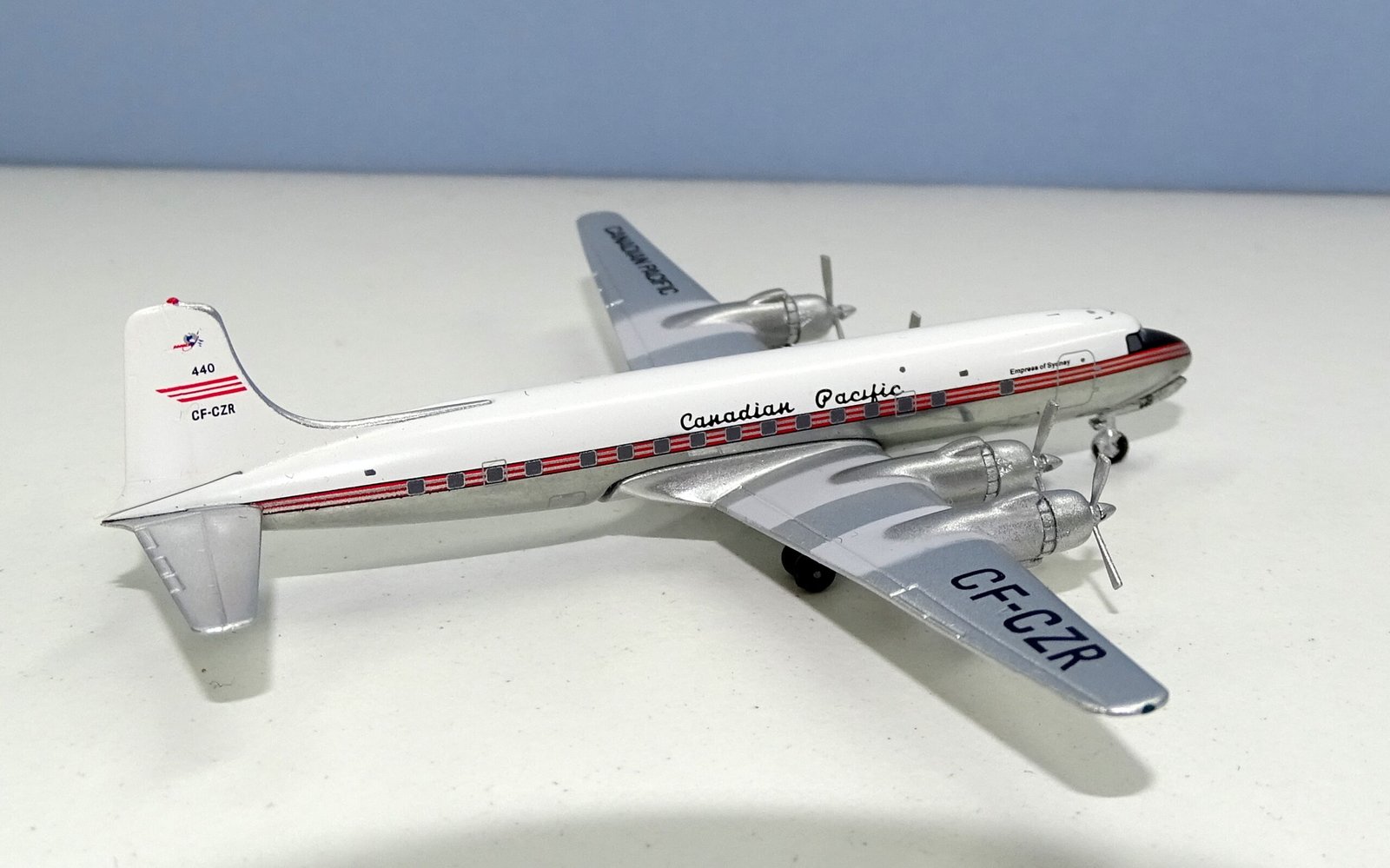
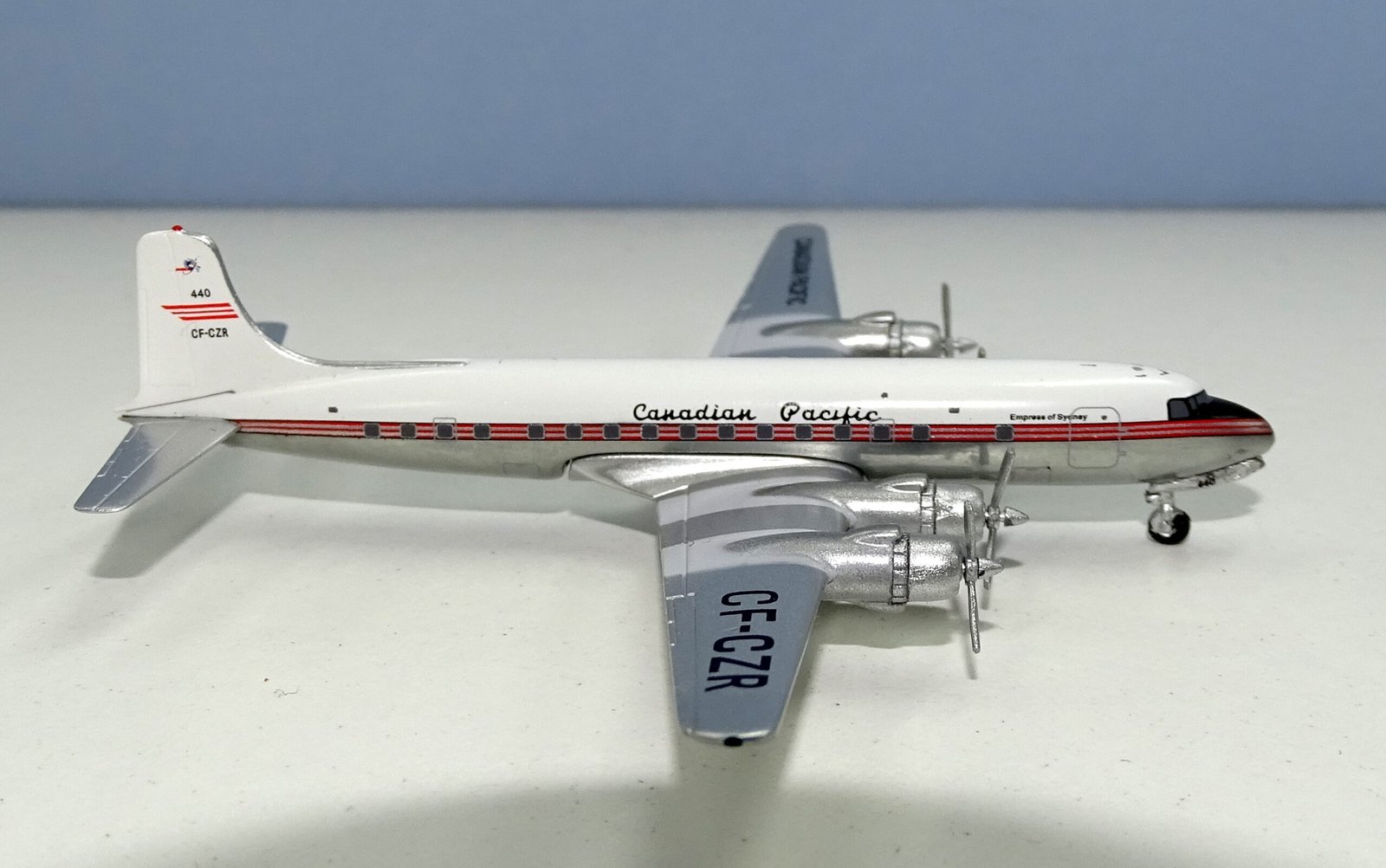
Canadian Pacific Douglas DC-6B CF-CZR Aeroclassics 1:400 Scale Model Airliner
Canadian Pacific Douglas DC-6B CF-CZR Aeroclassics 1:400 Scale Model Airliner
Canadian Pacific Douglas DC-6B CF-CZR Aeroclassics 1:400 Scale Model Airliner
Canadian Pacific Douglas DC-6B CF-CZR Aeroclassics 1:400 Scale Model Airliner
Canadian Pacific Douglas DC-6B CF-CZR Aeroclassics 1:400 Scale Model Airliner
Canadian Pacific Douglas DC-6B CF-CZR Aeroclassics 1:400 Scale Model Airliner
Canadian Pacific Douglas DC-6B CF-CZR Aeroclassics 1:400 Scale Model Airliner
Canadian Pacific Douglas DC-6B CF-CZR Aeroclassics 1:400 Scale Model Airliner
Canadian Pacific Douglas DC-6B CF-CZR Aeroclassics 1:400 Scale Model Airliner
Canadian Pacific Douglas DC-6B CF-CZR Aeroclassics 1:400 Scale Model Airliner
Canadian Pacific Douglas DC-6B CF-CZR Aeroclassics 1:400 Scale Model Airliner
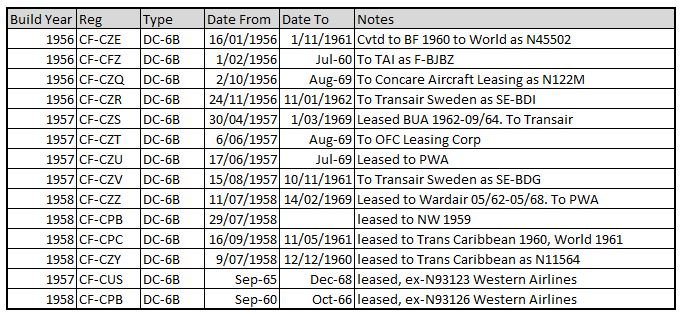
Canadian Pacific's first 6 DC-6Bs
True North Pacific service was begun on March 10 and CF-CUO, now named ‘City of Lima’, operated the new Vancouver-Mexico City-Lima route on October 24. All four DC-6Bs were delivered by late June 1953 and registered CF-CUO-R.
Two freighter DC-6As were delivered in September 1953 in anticipation of the airline being granted a cargo service between Vancouver, Edmonton, The Pas, Toronto and Montreal. Unfortunately in the face of TCA protests the route was not awarded and both were sold on and had left the fleet by June 1954. TCA took on the route with Bristol freighters but it proved highly uneconomic, which must have provided much schadenfreude for Canadian Pacific.
Into 1955 the DC-6s followed in SAS’ pioneering footsteps on a polar rute with CF-CUR flying Vancouver-Sondestrom-Amsterdam on June 3. In October 1955 a route swap saw Canadian Pacific takeover TCA’s Toronto-Mexico City service and in return it gave TCA its domestic Quebec services. CF-CUO operated the first service on October 23. On June 1, 1956 the Lima route was extended to Buenos Aires and Santiago was tagged on from September 21, 1957. The same year both Madrid and Lisbon were added on June 6th and May 30th respectively. Both inaugural servives were operated by CF-CZE. She was one of a second larger batch of DC-6Bs that began to arrive in 1956. Between 1956 and 1958 12 more new DC-6Bs would be delivered, although not all would see long service with CPA.
Canadian Pacific's later DC-6Bs
It wasn’t all additions however as not long after the first of the 2nd batch arrived CF-CUP ‘Empress of Mexico” was damaged beyond repair at Cold Bay, Alaska. She was operating a Vancouver-Hong Kong flight stopping at Cold Bay and Tokyo. Conditions at Cold Bay weren’t great and when the aircraft broke through the cloud it was too close in and high. The pilot seems to have attempted a go-around and though power was applied flaps were raised rather than retracted. The aircraft struck the ground and caught fire. Four of the eight crew and eleven of the fourteen passengers were killed.
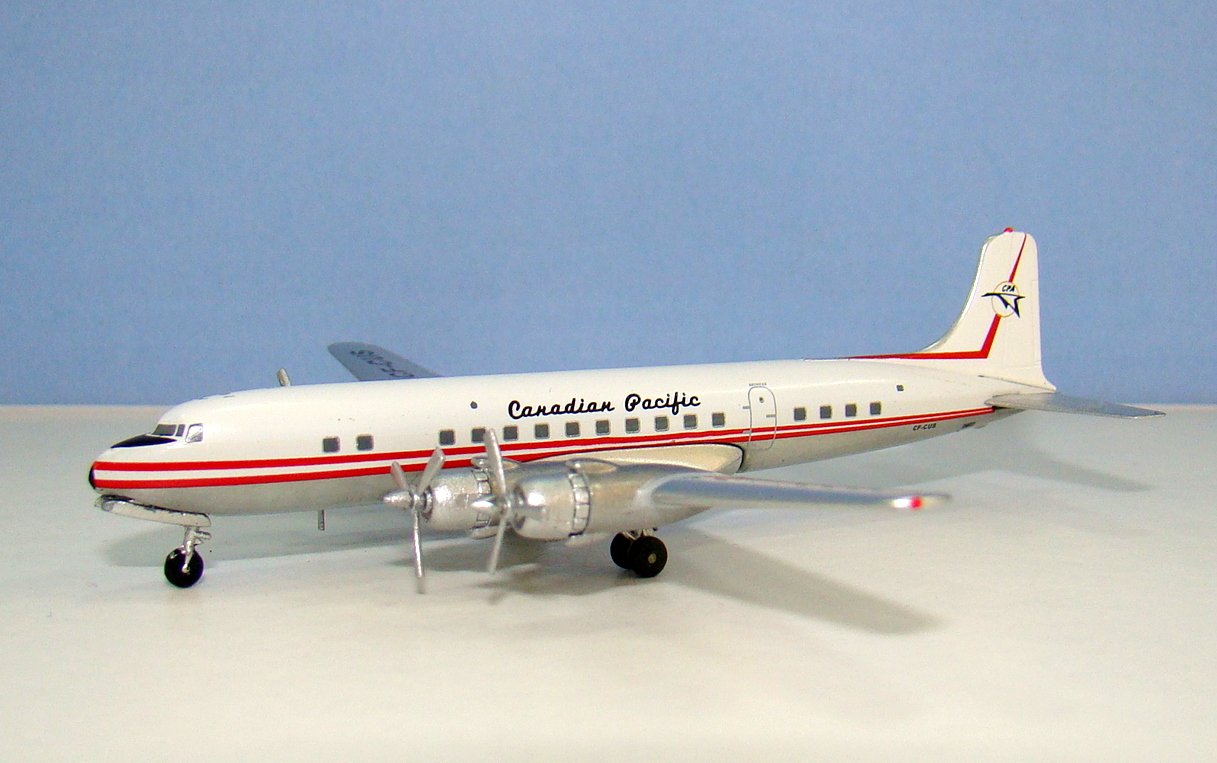
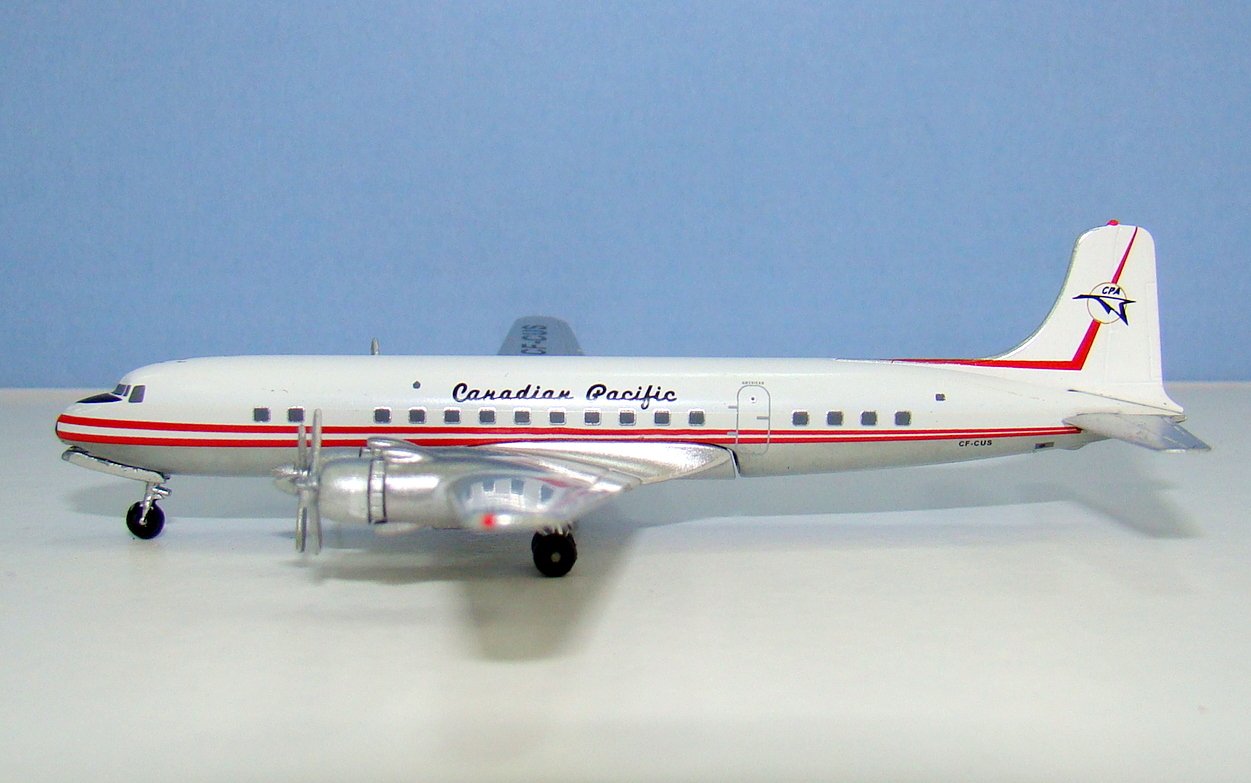
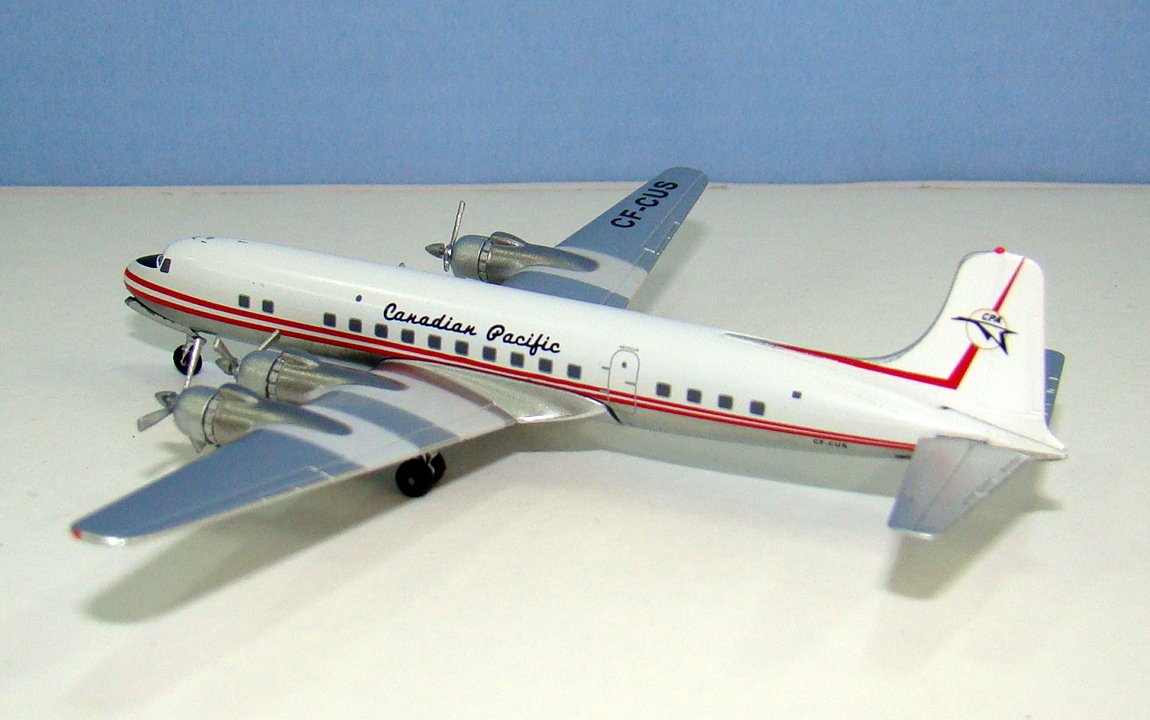
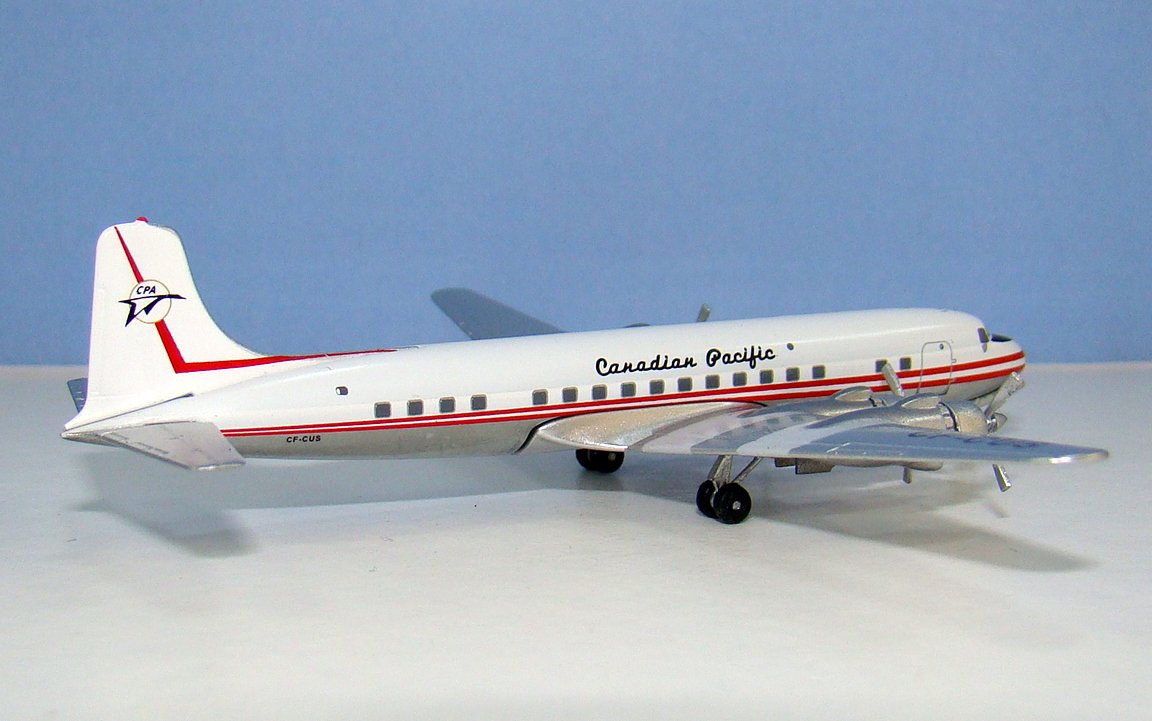
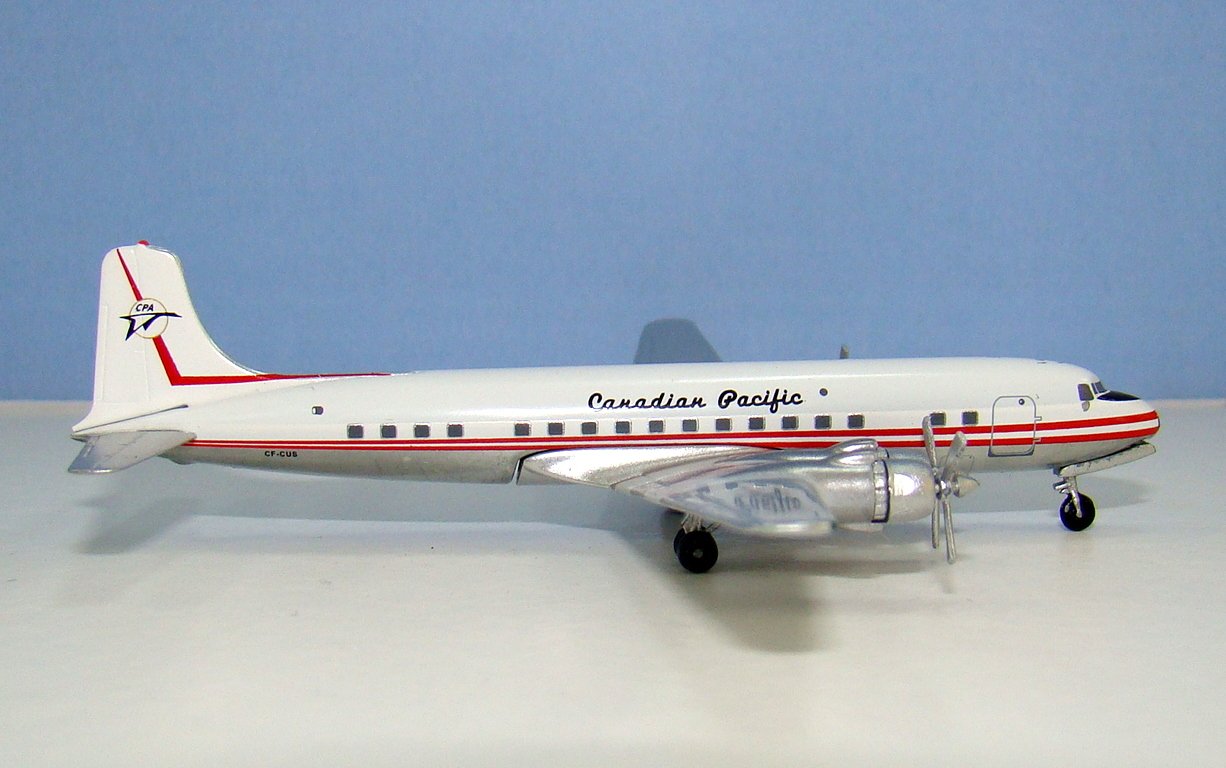
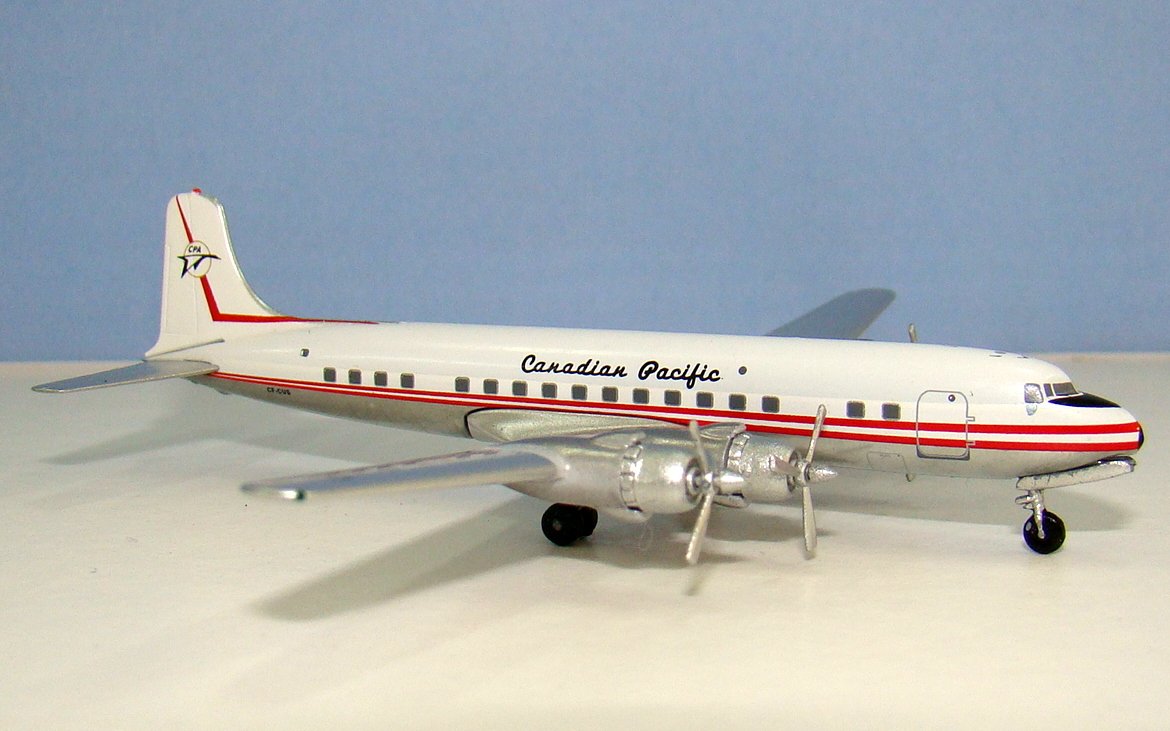
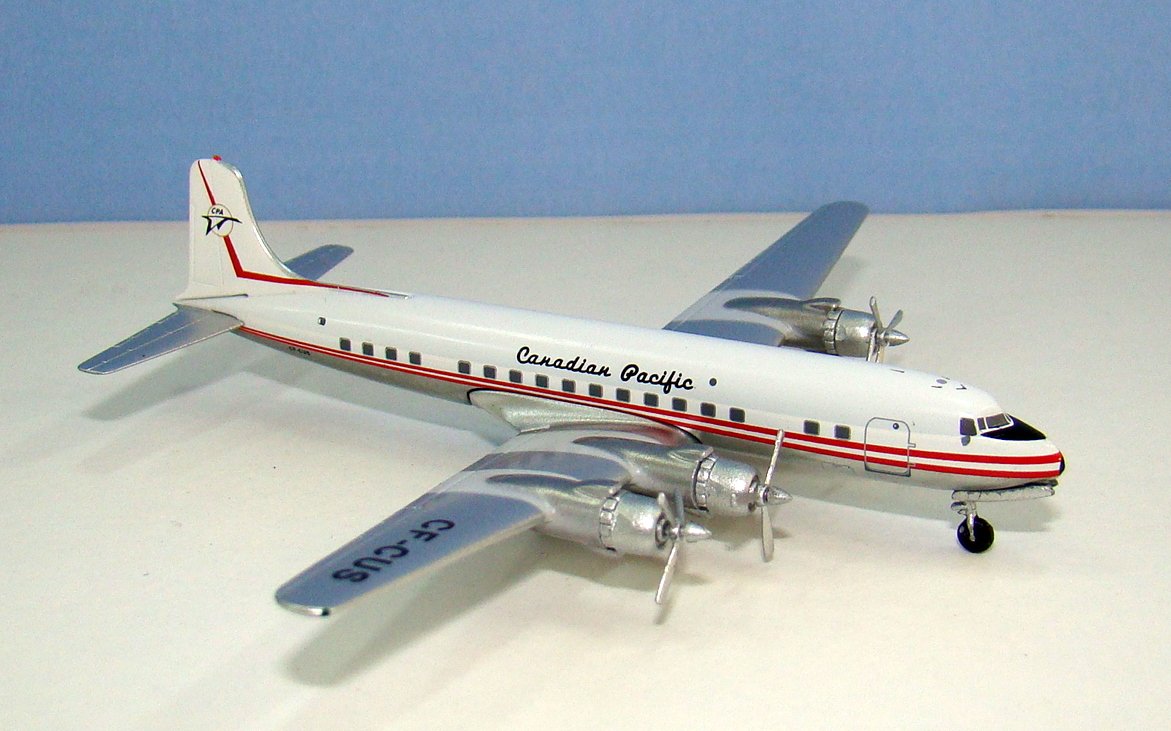
CF-CUS below wears the jet age livery of the 1960s:
Canadian Pacific Douglas DC-6B CF-CUS Aeroclassics 1:400 Scale Model Airliner
Canadian Pacific Douglas DC-6B CF-CUS Aeroclassics 1:400 Scale Model Airliner
Canadian Pacific Douglas DC-6B CF-CUS Aeroclassics 1:400 Scale Model Airliner
Canadian Pacific Douglas DC-6B CF-CUS Aeroclassics 1:400 Scale Model Airliner
Canadian Pacific Douglas DC-6B CF-CUS Aeroclassics 1:400 Scale Model Airliner
Canadian Pacific Douglas DC-6B CF-CUS Aeroclassics 1:400 Scale Model Airliner
Canadian Pacific Douglas DC-6B CF-CUS Aeroclassics 1:400 Scale Model Airliner
Canadian Pacific Douglas DC-6B CF-CUS Aeroclassics 1:400 Scale Model Airliner
Canadian Pacific Douglas DC-6B CF-CUS Aeroclassics 1:400 Scale Model Airliner
Canadian Pacific Douglas DC-6B CF-CUS Aeroclassics 1:400 Scale Model Airliner
Canadian Pacific Douglas DC-6B CF-CUS Aeroclassics 1:400 Scale Model Airliner
Towards the end of the 1950s, even though new DC-6Bs were still being delivered, the end was in sight for the type as the primary long-haul aircraft for Canadian Pacific. First Bristol Britannias and then Douglas DC-8s began to be ordered and delivered. Of the surviving original 3 DC-6Bs two were sold to UAT in 1959 and the other leased to Cunard Eagle in 1961. Several of the newer frames also saw only short service. One went to Northwest in 1959, one to TAI in 1960, two to Transair in 1961/62 and two to Trans Caribbean in 1961/62.
Canadian Pacific's domestic network in 1960
The DC-6Bs however found a new life with Canadian Pacific replacing the Convair 240s on the domestic British Colombia network. The first service was flown on June 28, 1957 between Vancouver and Terrace. From July 1 they started operating the Vancouver-Whitehorse route and would remain on this service for over a decade until replaced by new 737-200s in 1968. CP even leased a pair of Western Airlines DC-6Bs from 1960-66 and 1965-68 to provide extra capacity in addition to the remaining 5 aircraft.
The first Boeing 737 was delivered in the now CP Air’s new orange scheme on October 22. They quickly displaced the DC-6s from the Vancouver-Terrace, Prince Rupert and Whitehorse services. The growing 737 fleet enabled the final DC-6s to be sold on by August 1969. The DC-6B proved its worth many times at Canadian Pacific. It was an upgrade on both the C-4 and DC-4 and outlasted its long haul replacement the Britannia by switching to short haul routes.