TAESA had come through the crisis of the mid-90s albeit with a large debt burden, modified ownership and a much older fleet of aircraft. Moving into 1998 TAESA had a bright new livery and began to take delivery of new aircraft too. If it could just capitalise on this then it still could be the standard bearer for competition in the Mexican market.
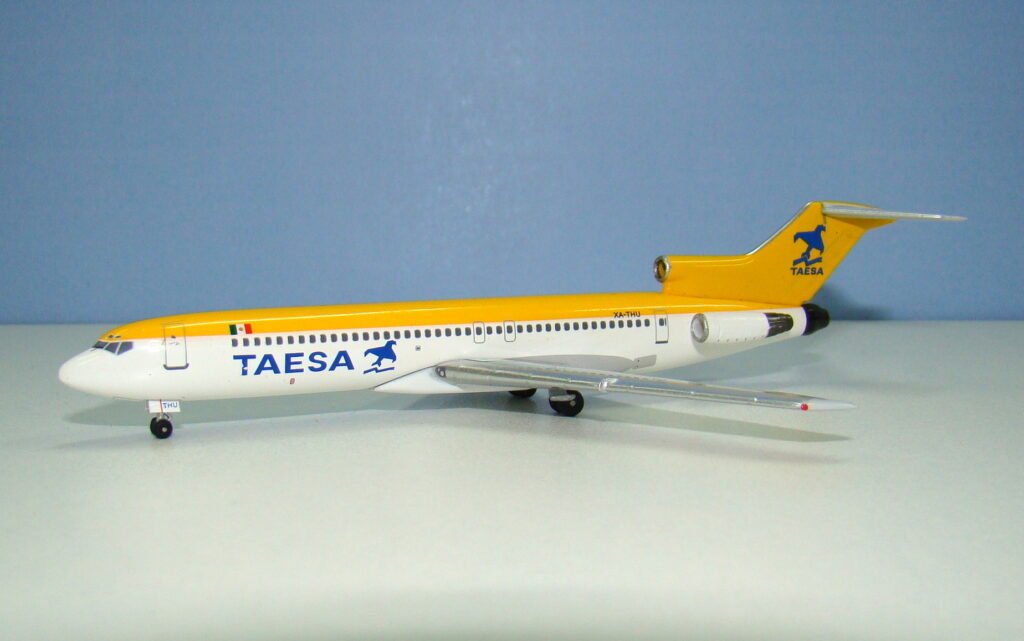
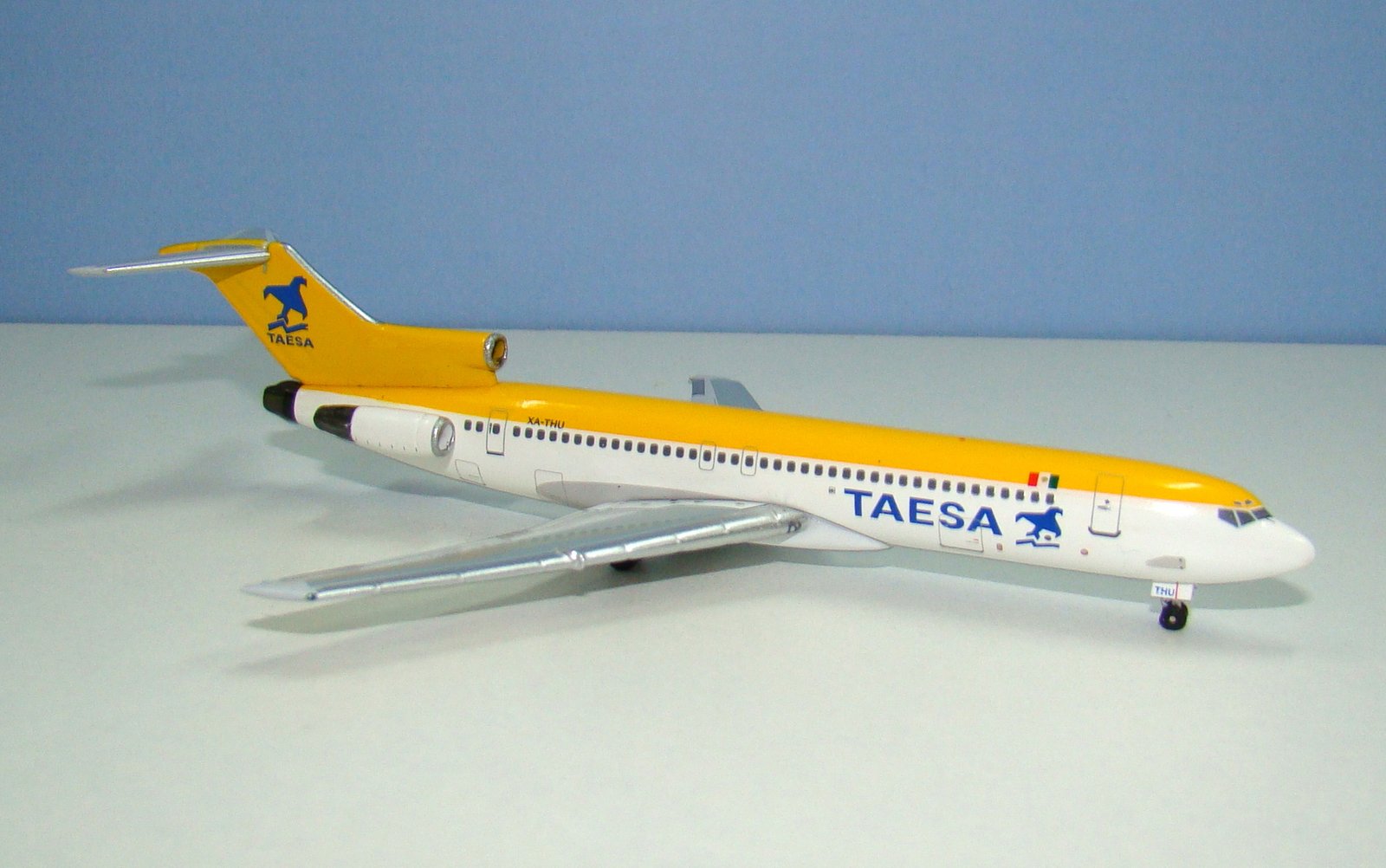
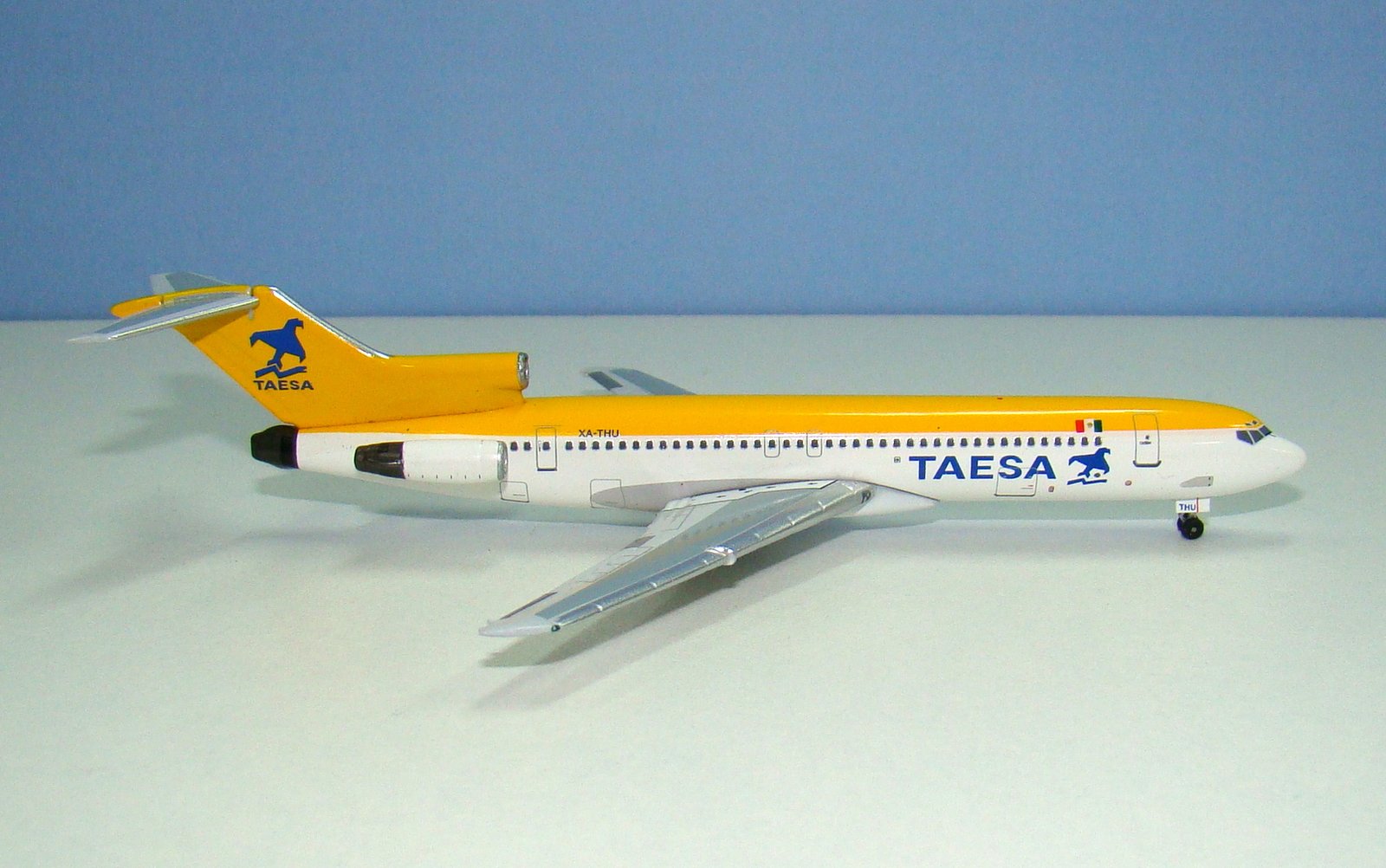
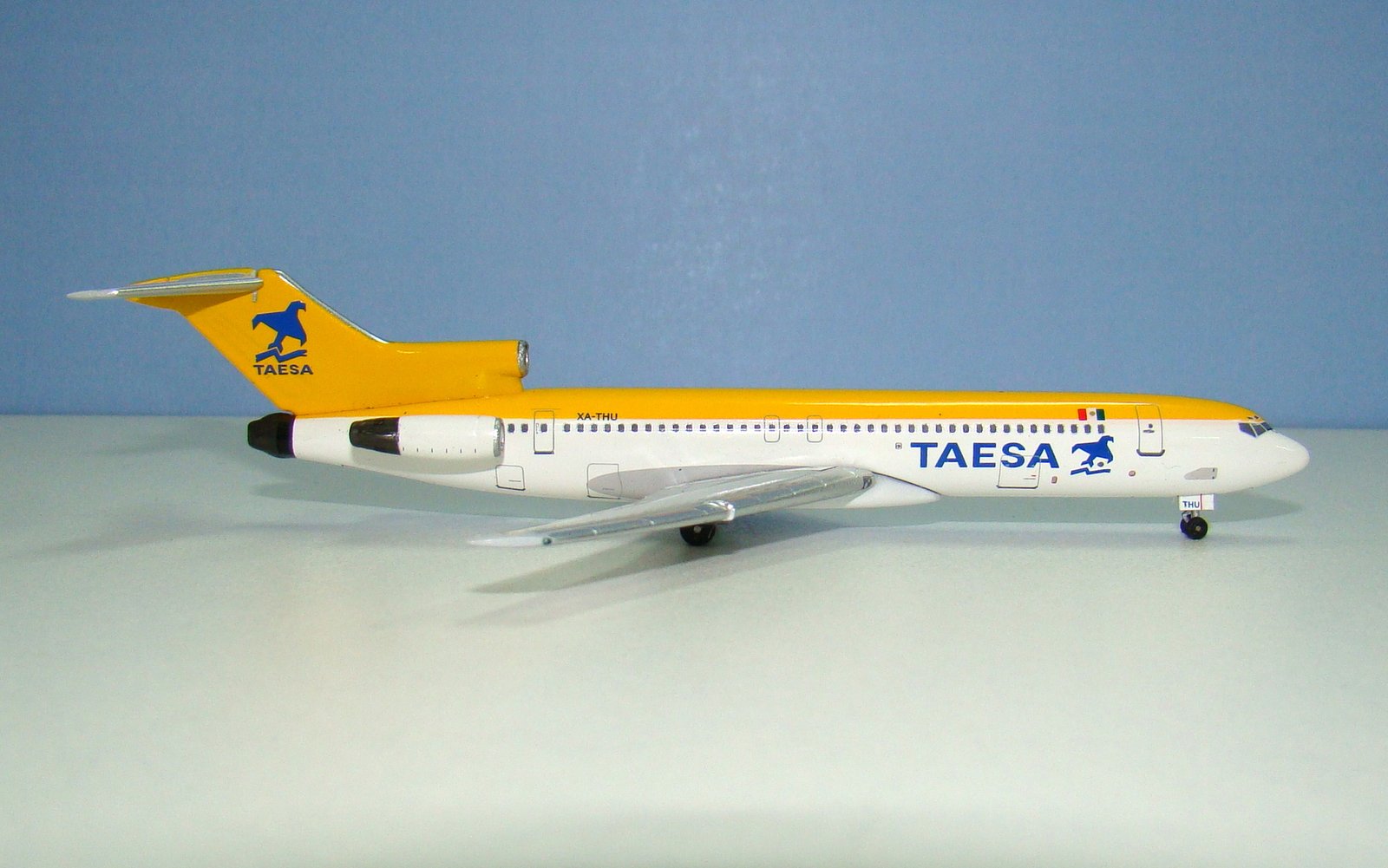
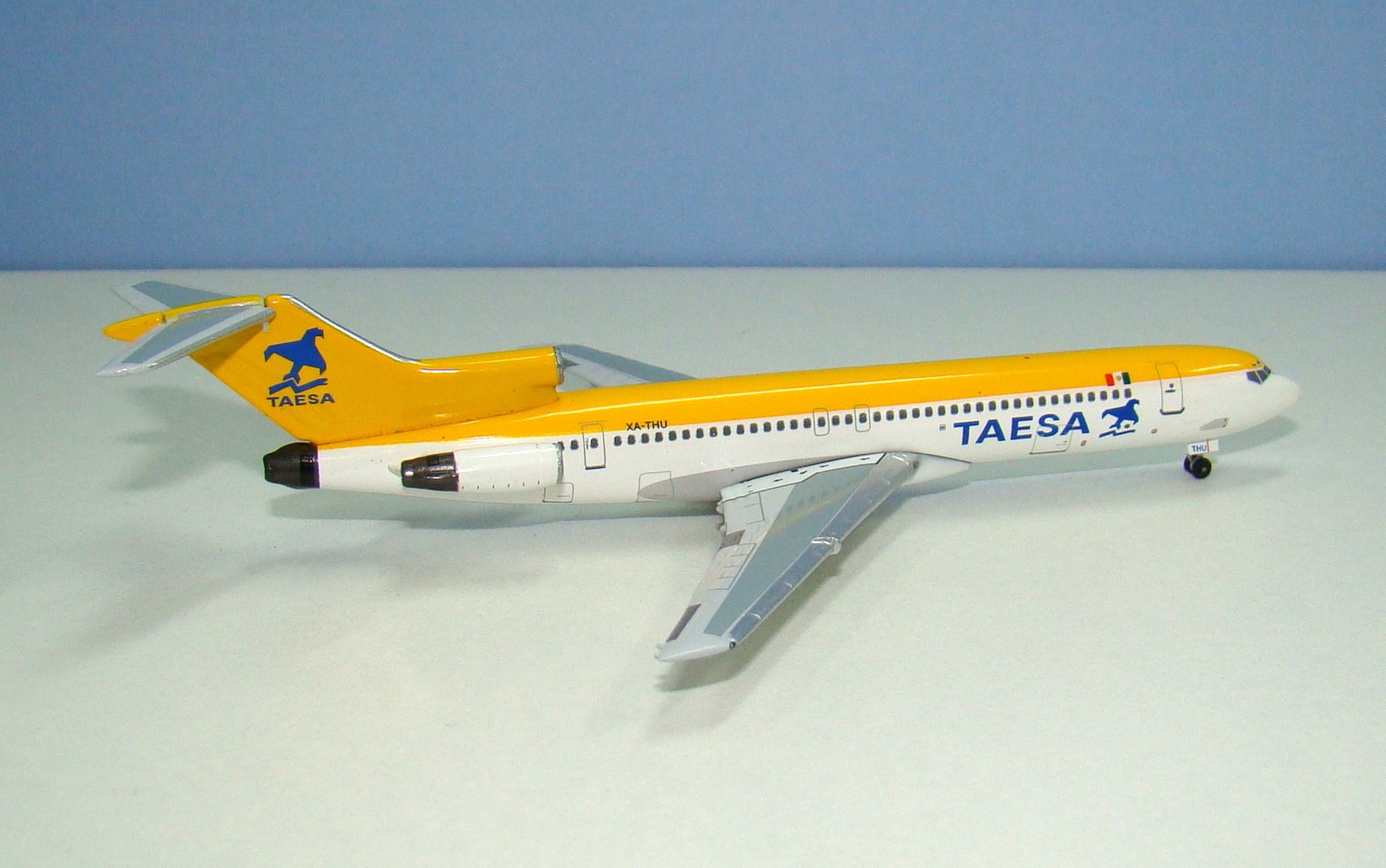
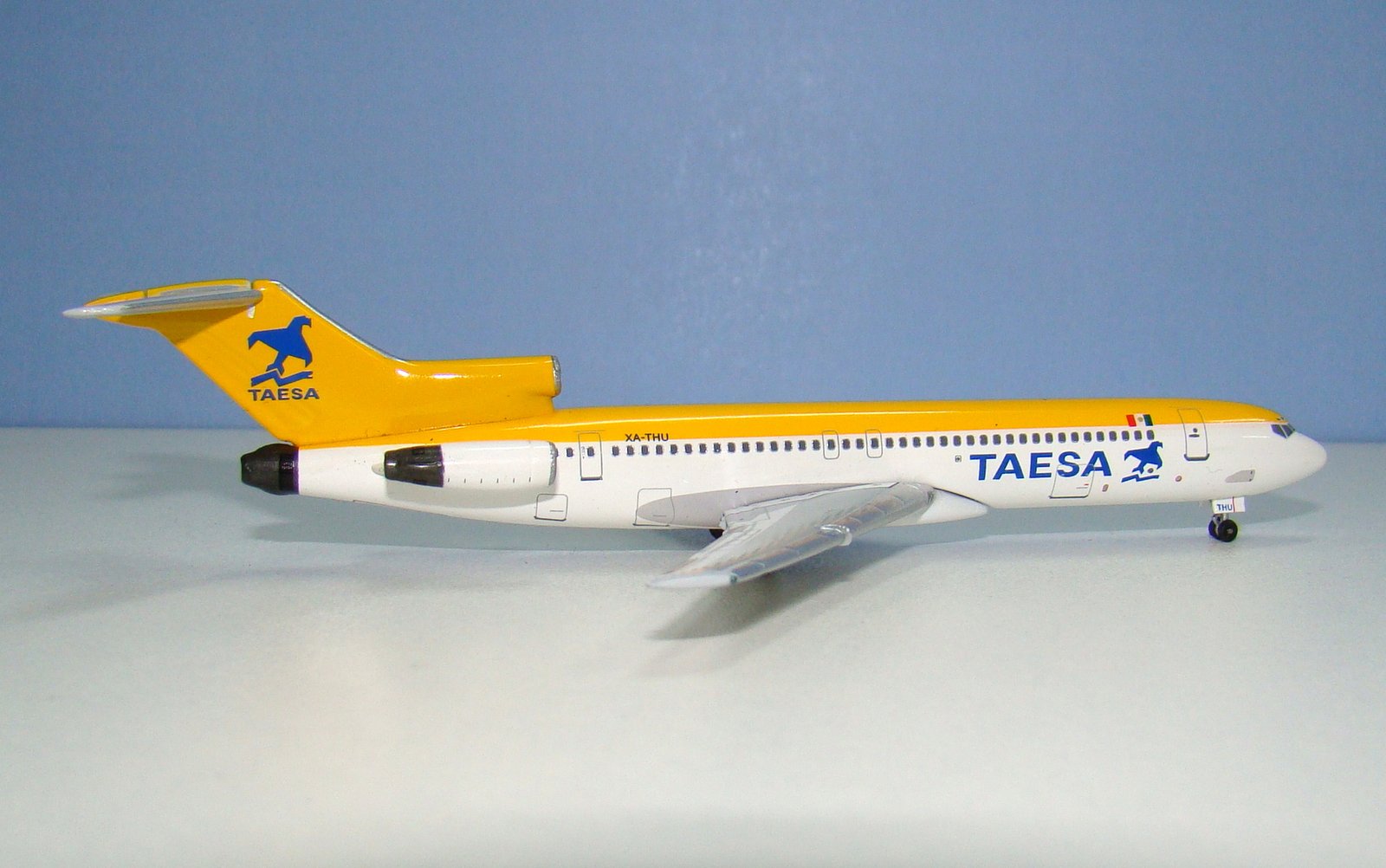
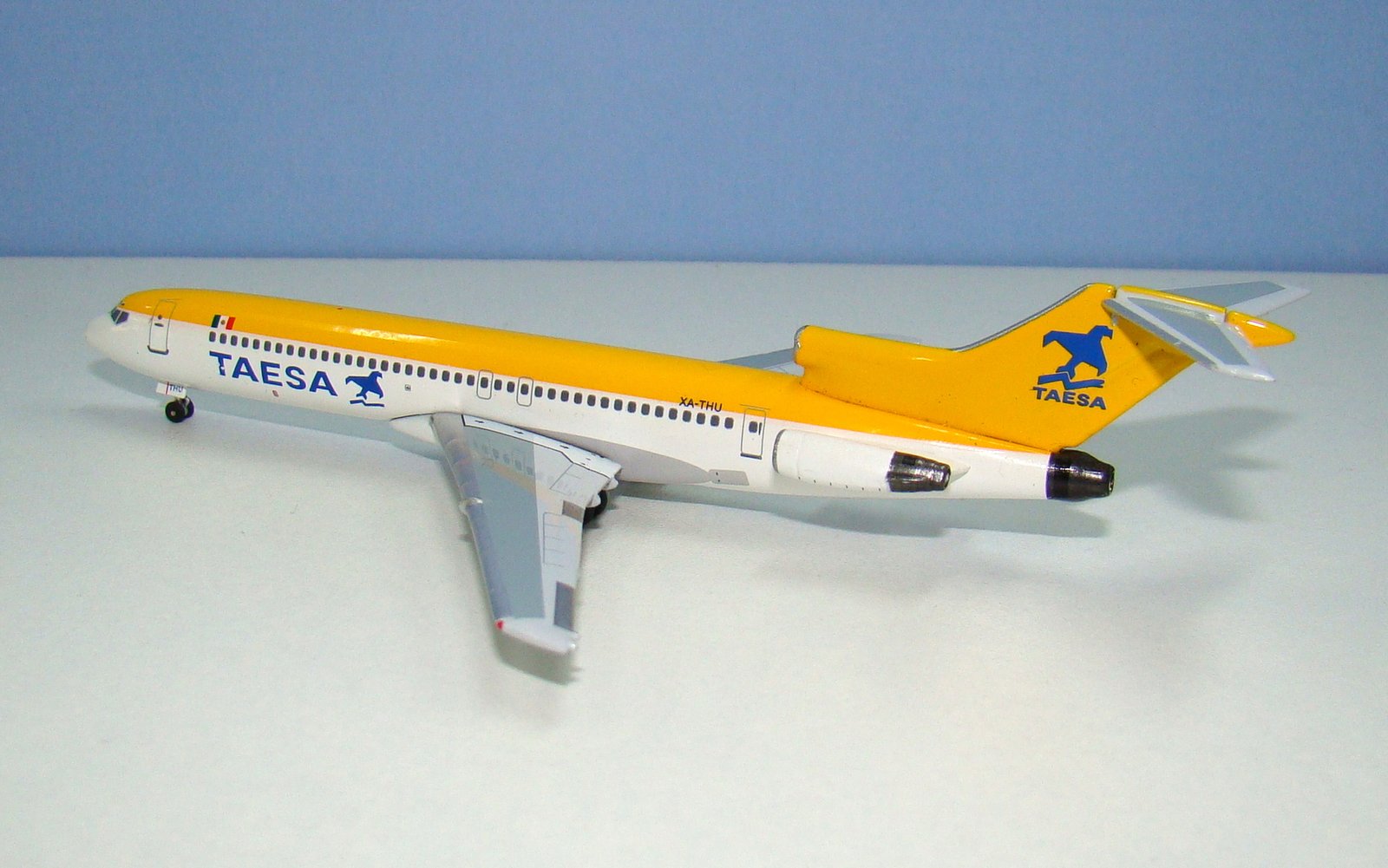
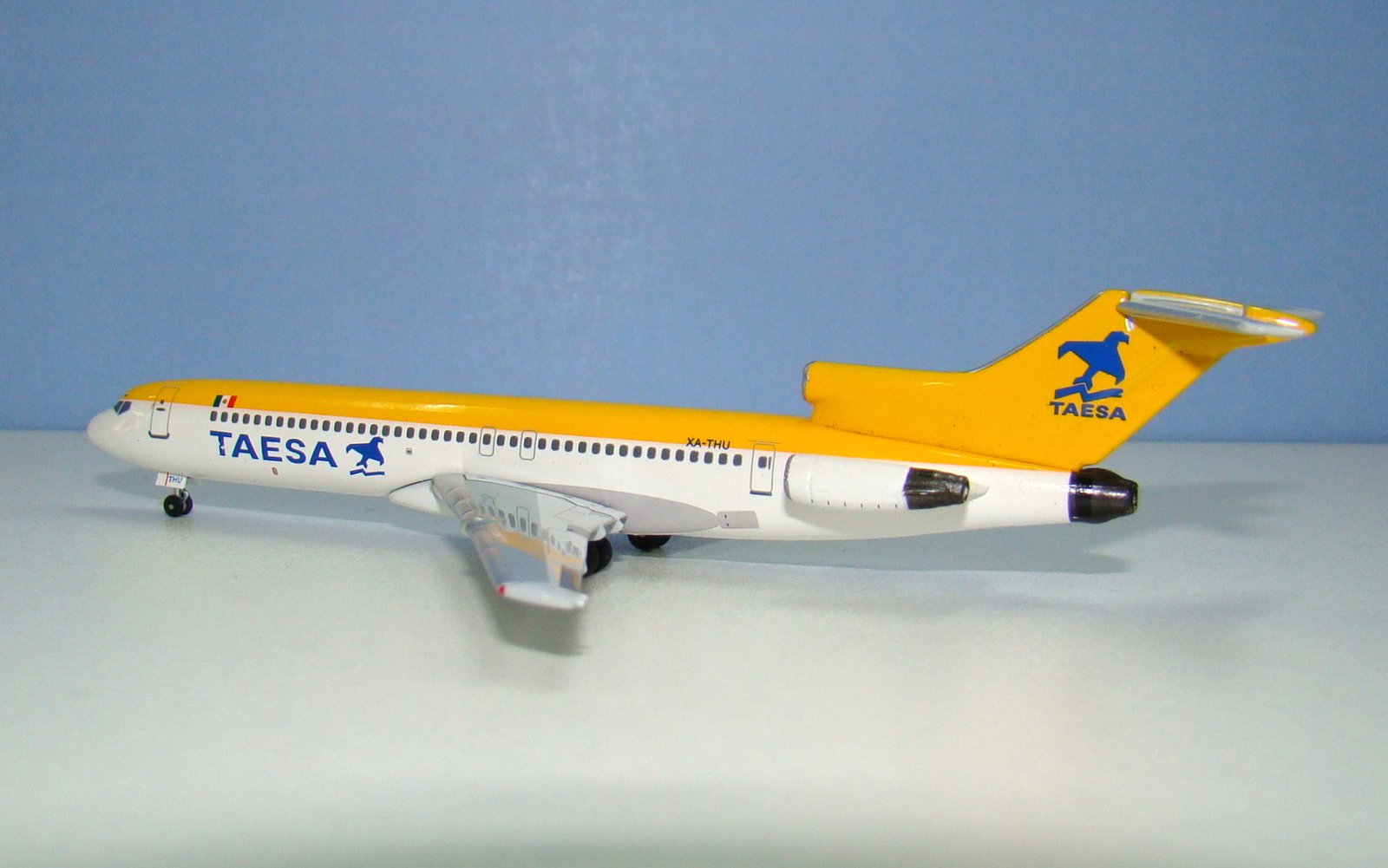
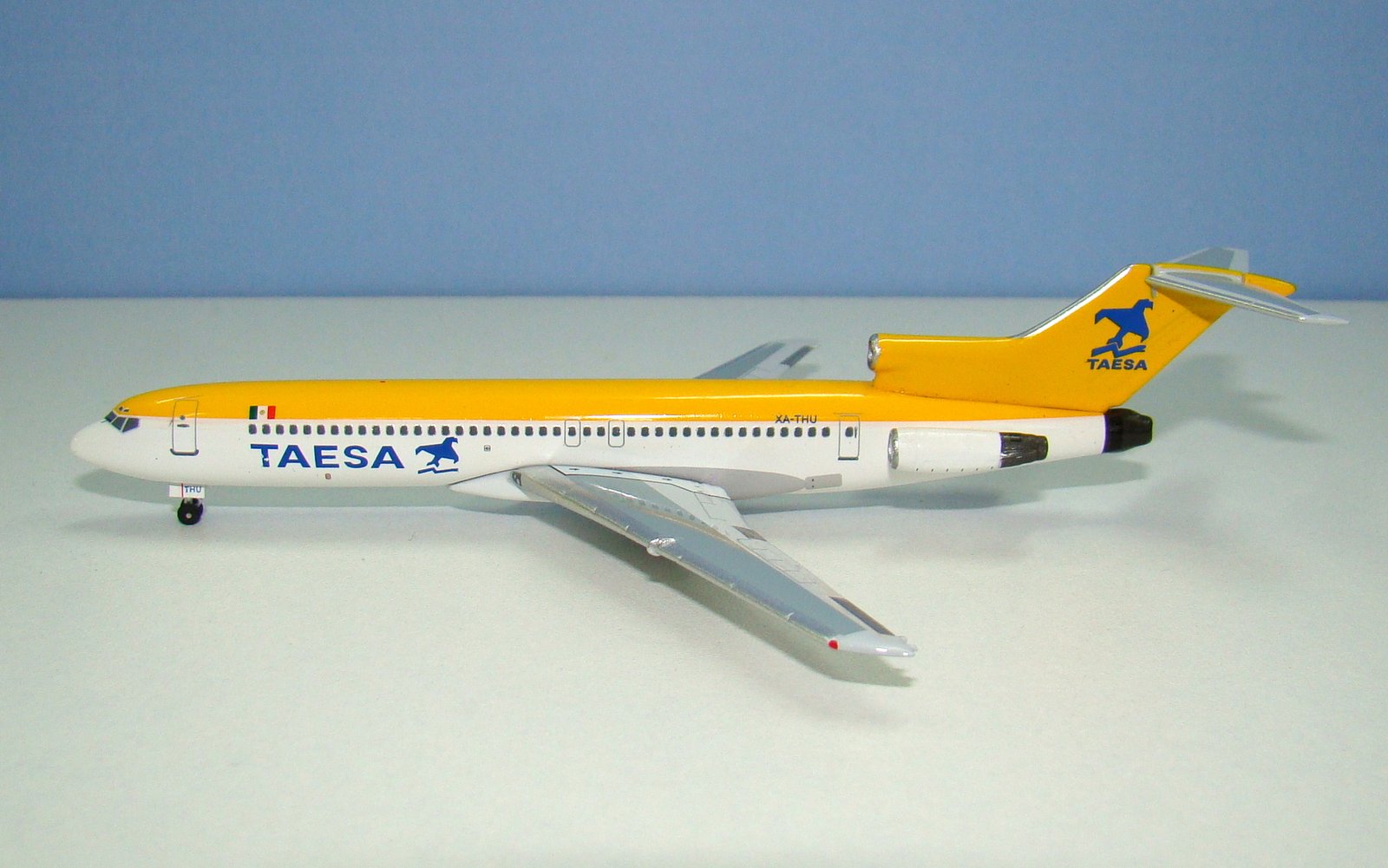
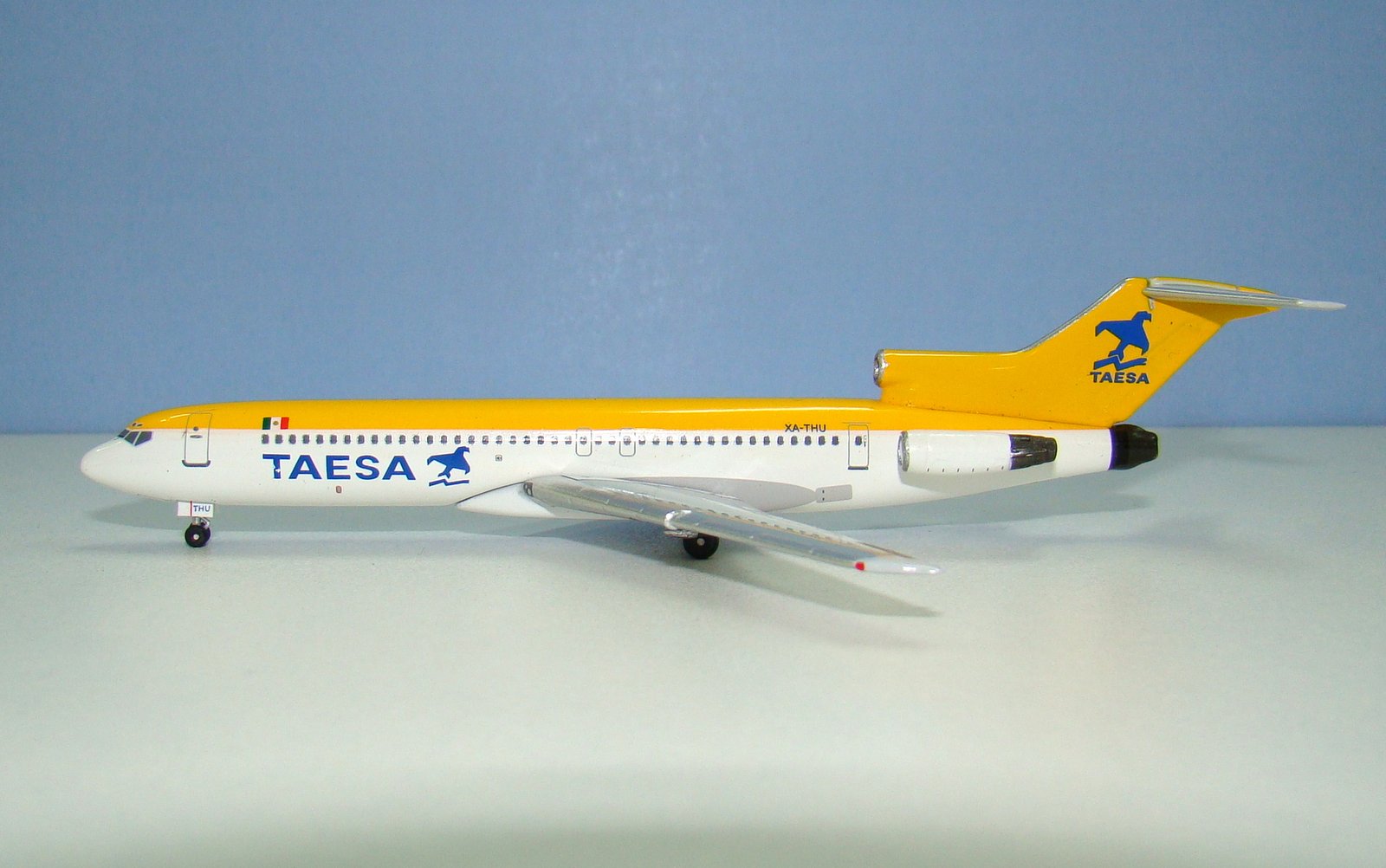
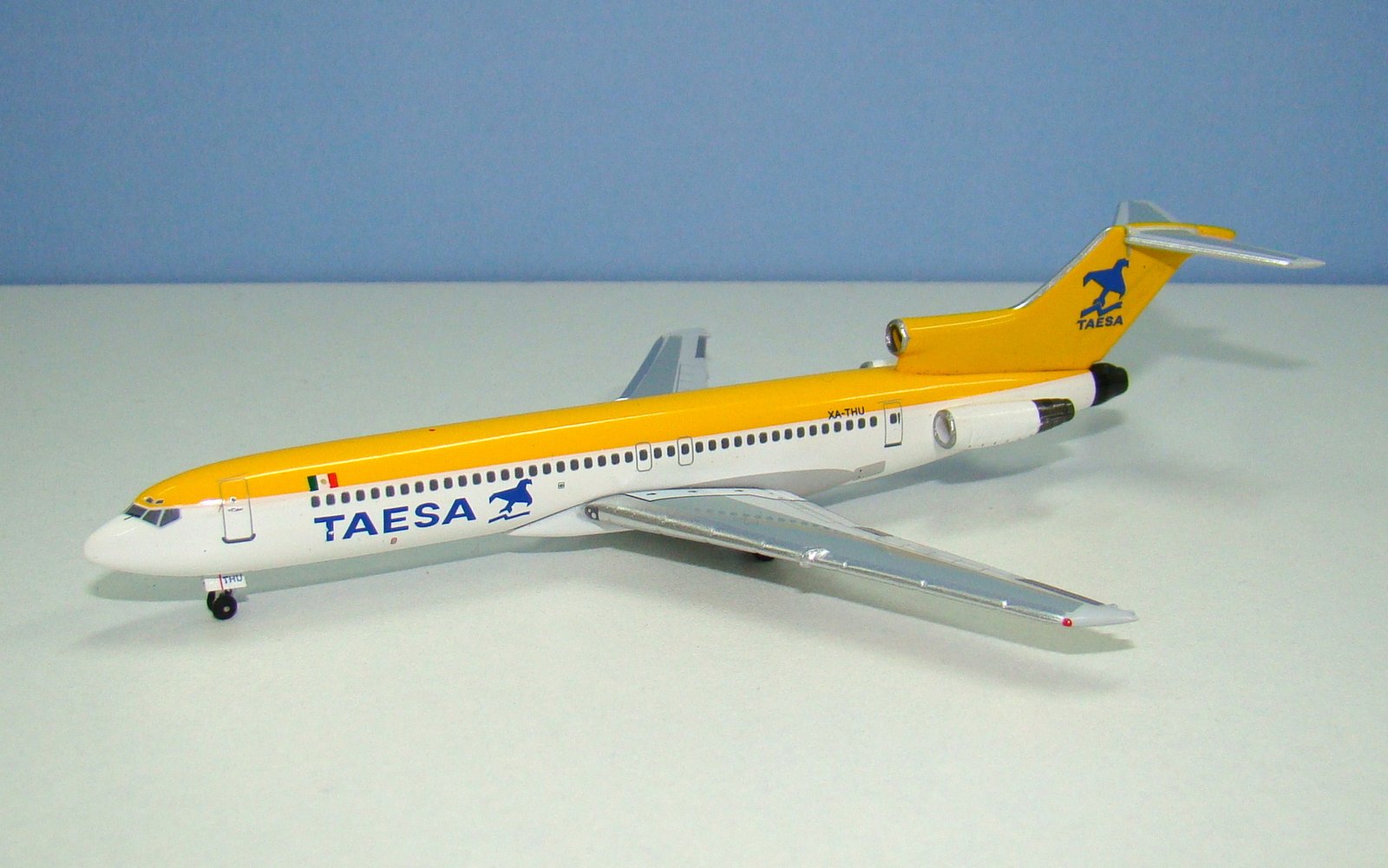
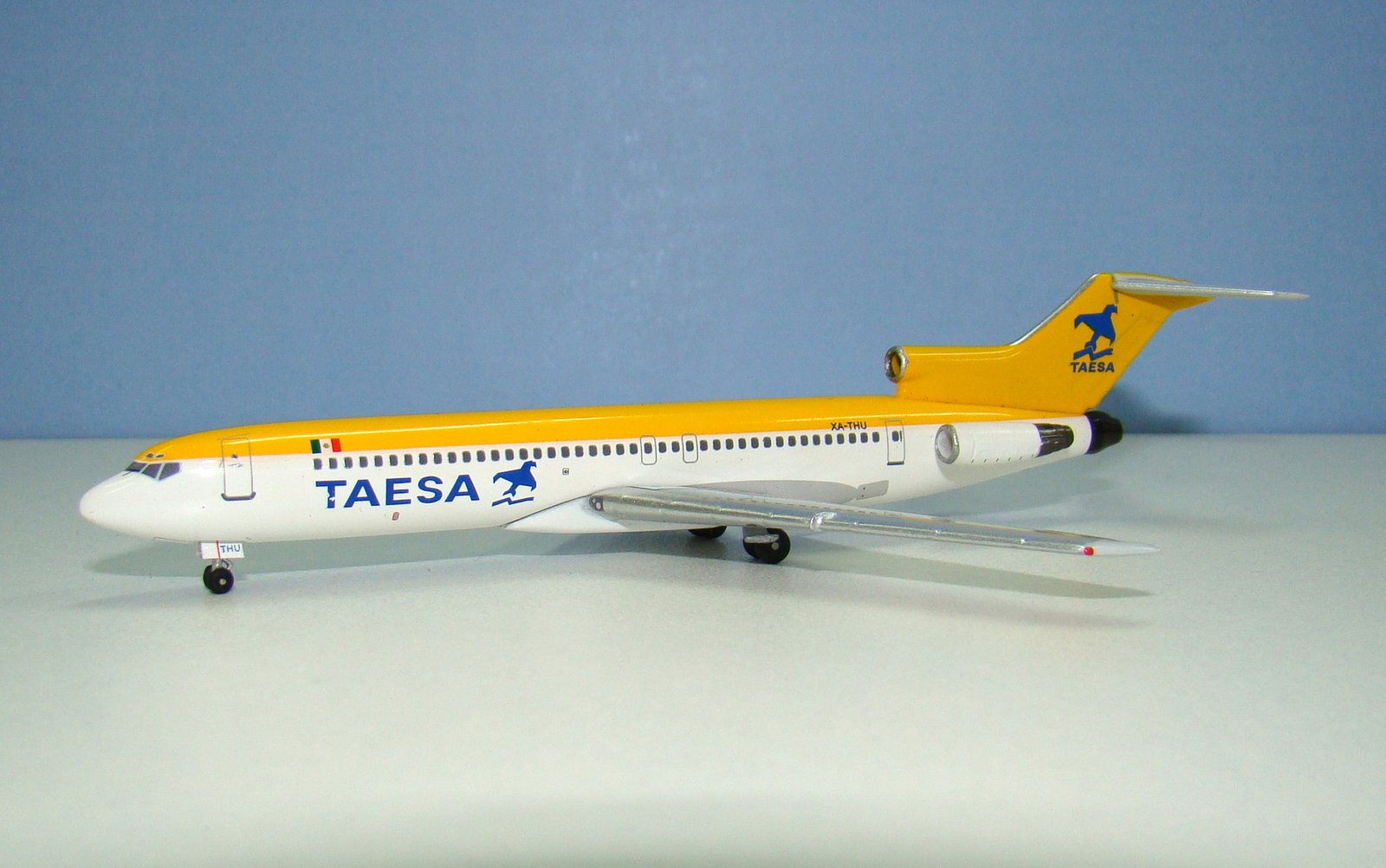
TAESA Boeing 727-225Adv XA-THU Aeroclassics 1:400 Scale Model Airliner
The fleet was still a little bit of a hotchpotch of various aircraft but the 737-300 fleet had been almost completely flipped with new leased examples. By June 1999 the fleet stood at:
2 727-100
1 727-200
3 737-200
6 737-300
1 757-200
5 DC-9-14
1 DC-9-30
1 DC-10-30F
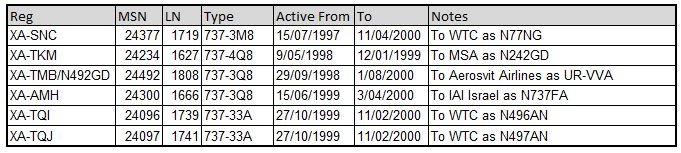
TAESA's 1997-1999 Boeing 737-300 additions
TAESA Boeing 727-225Adv XA-THU Aeroclassics 1:400 Scale Model Airliner
TAESA Boeing 727-225Adv XA-THU Aeroclassics 1:400 Scale Model Airliner
TAESA Boeing 727-225Adv XA-THU Aeroclassics 1:400 Scale Model Airliner
TAESA Boeing 727-225Adv XA-THU Aeroclassics 1:400 Scale Model Airliner
TAESA Boeing 727-225Adv XA-THU Aeroclassics 1:400 Scale Model Airliner
TAESA Boeing 727-225Adv XA-THU Aeroclassics 1:400 Scale Model Airliner
TAESA Boeing 727-225Adv XA-THU Aeroclassics 1:400 Scale Model Airliner
TAESA Boeing 727-225Adv XA-THU Aeroclassics 1:400 Scale Model Airliner
TAESA Boeing 727-225Adv XA-THU Aeroclassics 1:400 Scale Model Airliner
TAESA Boeing 727-225Adv XA-THU Aeroclassics 1:400 Scale Model Airliner
TAESA Boeing 727-225Adv XA-THU Aeroclassics 1:400 Scale Model Airliner
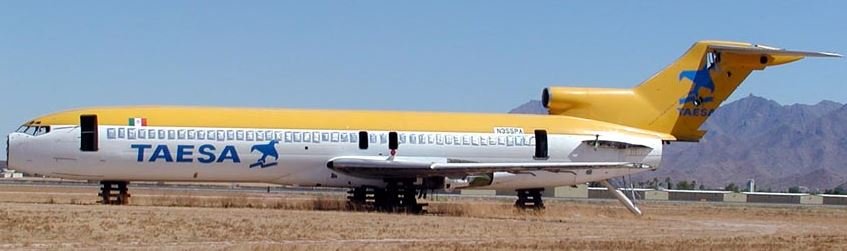
The carrier’s yellow tail livery had been updated with a bright yellow roofline. Amongst the aircraft it was deployed on was the single 727-200 XA-THU. This frame was originally delivered to Eastern in April 1973 as N8863E and briefly switched to Pan Am in October 1989, as N355PA ‘Clipper Inca’, before moving to AvAtlantic in December 1992. She joined TAESA in June 1997 – only the second of her type to have done so.
TAESA's DC-9-30 and B727-200s
TAESA’s faltering new start came to an abrupt end in November when disaster struck. On November 9, 1999 TAESA’s sole DC-9-31, XA-TKN, crashed west of Mexico City killing all 18 aboard. TAESA flight 725 had taken off Tuesday from the western border city of Tijuana with 91 passengers aboard.
After stopping in Guadalajara and Uruapan, it had only 13 passengers and five crew members aboard as it headed to Mexico City, 180 miles to the east. The plane impacted the ground in a nose low attitude in an avocado grove and was totally destroyed. For more on this see the Wikipedia entry for Flight 725.
Two weeks later, on November 25, 1999, the Mexican authorities grounded the entire TAESA fleet of 27 aircraft citing safety concerns. At the time the airline was serving Oakland (California), Chicago (Illionois) and Laredo (Texas) as well as a full domestic network. The airline was still in debt and the grounding was catastrophic not only to its bottom line but also its image. TAESA released a statement:
”Since Taesa considers safety to be the No. 1 priority, it will abide by this decision, gladly collaborating with authorities so that all these doubts can be cleared up,”
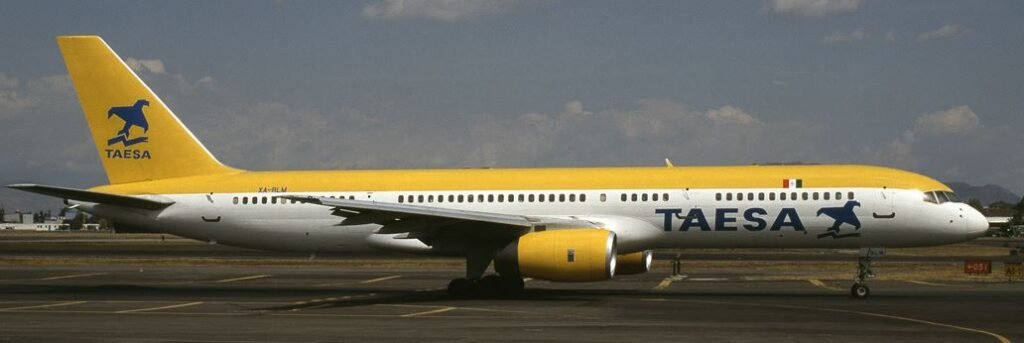
XA-RLM was the last 757 in the fleet and the only one to wear the yellow top scheme
It didn’t help the airline’s cause that it was undergoing disputes with its flight attendants who had been trying to decertify their union and affiliate with a more aggresive one. After the Nov. 9 crash, Alejandra Barrales, the leader of the independent union, accused TAESA of filing deceptive maintenance logs about several of its aircraft to cover up what she called ‘recurring mechanical problems’.
Whatever the truth of the maintenance irregularities the findings of the crash investigations do not mention any issues with the aircraft. Instead the crash was caused by pilot error. The crew didn’t use the checklists prior to departure and in the dark climbout became spatially disoriented. The nose up attitude of the aircraft eventually led to a stall from which the crew were unable to recover. These findings came far too late for TAESA. Even if it had had the funds to fully restart operations its name had been irreperably damaged. TAESA’s bankruptcy was confirmed in February 2000.
In the wake of its failure various other Mexican airlines, like Allegro and Aviacsa, filled the gap. However it wouldn’t be until the true low cost revolution reached Mexico, with Interjet and Volaris, that real competition would return to the Mexican marketplace. TAESA was a pioneer of deregulation in Mexico and if not for events somewhat outside of its control it may still be flying today.