The sea of red-ink that flowed out of the US airline industry during the 1980s, thanks to fare wars and failed startups, coupled with the global economic downturn initiated by the first Gulf War would you’d have thought been enough to discourage all but madmen from starting a new airline in the USA by the early 90s. It seems however that some are not so easily dissuaded and so Air South was born as one of several new challengers to the US majors.
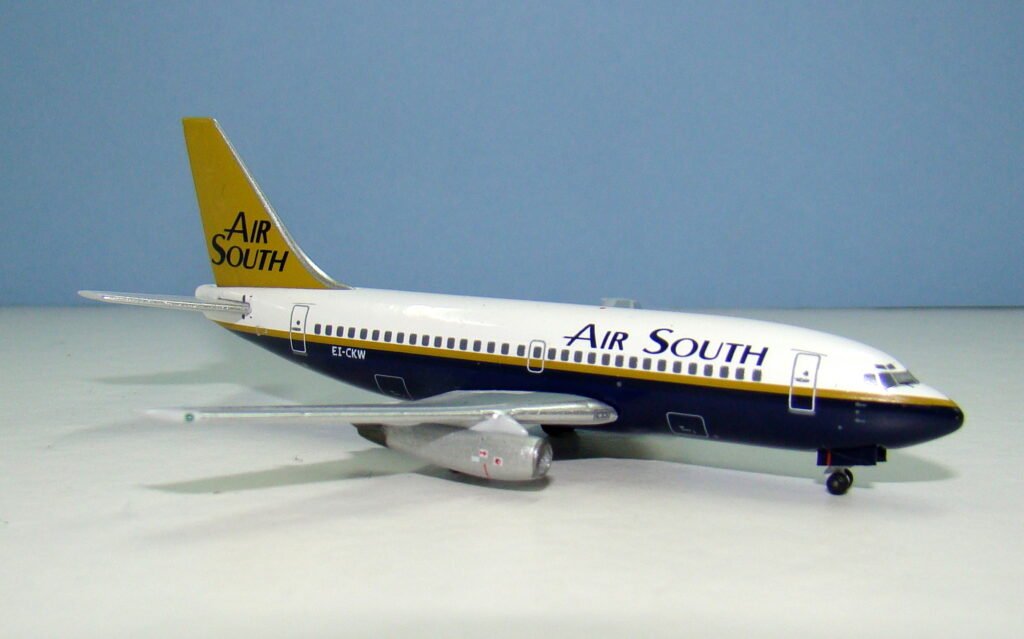
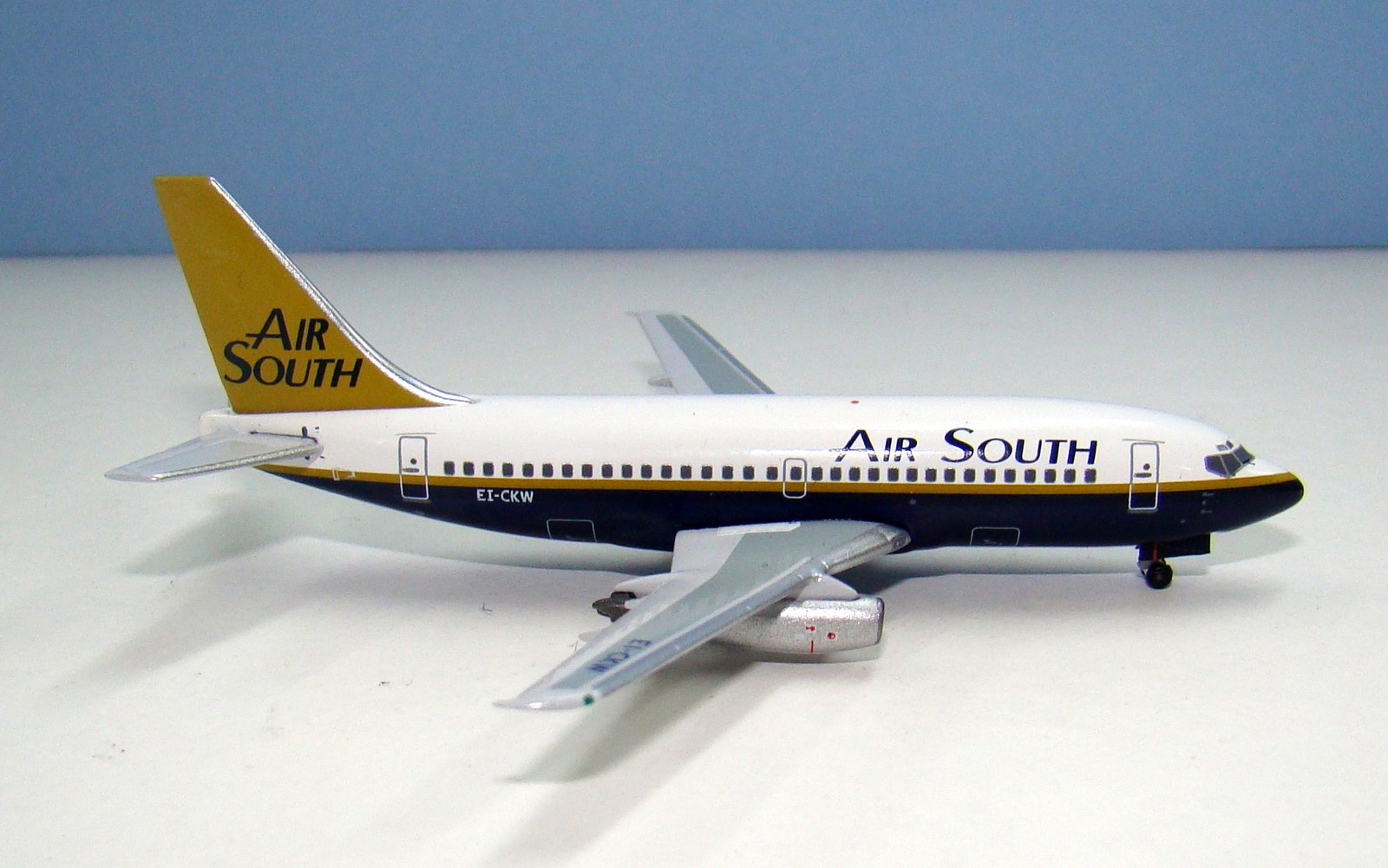
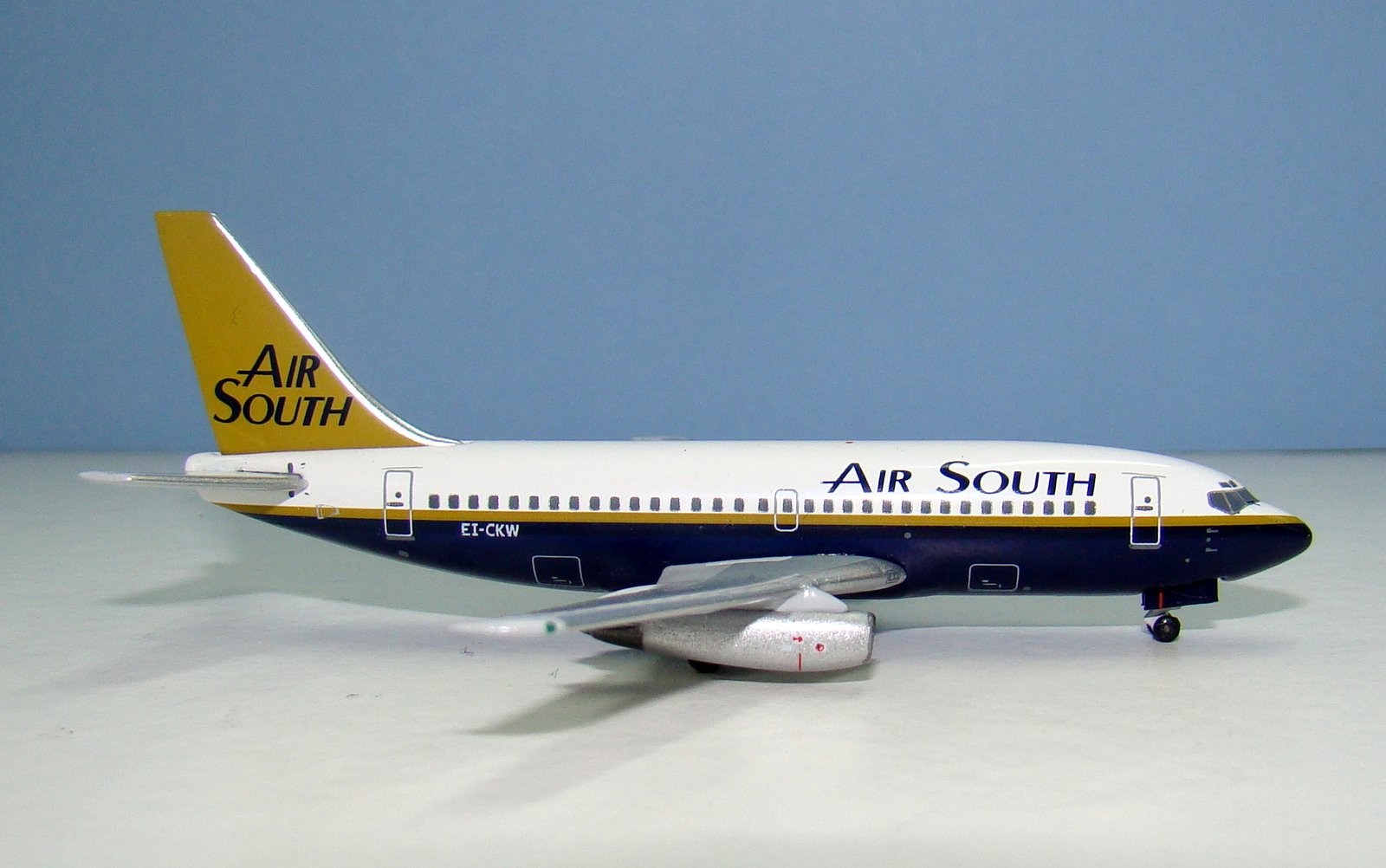
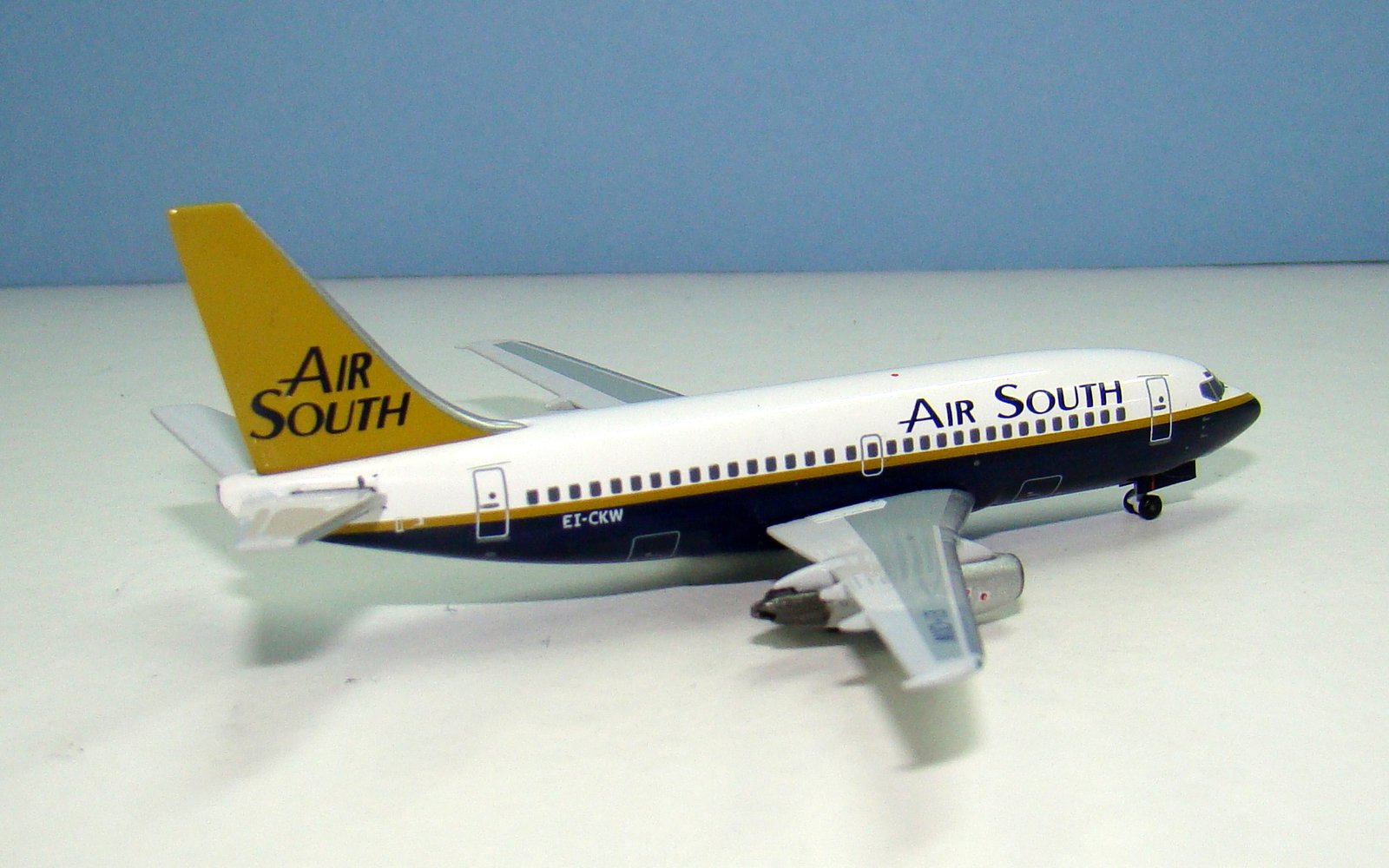
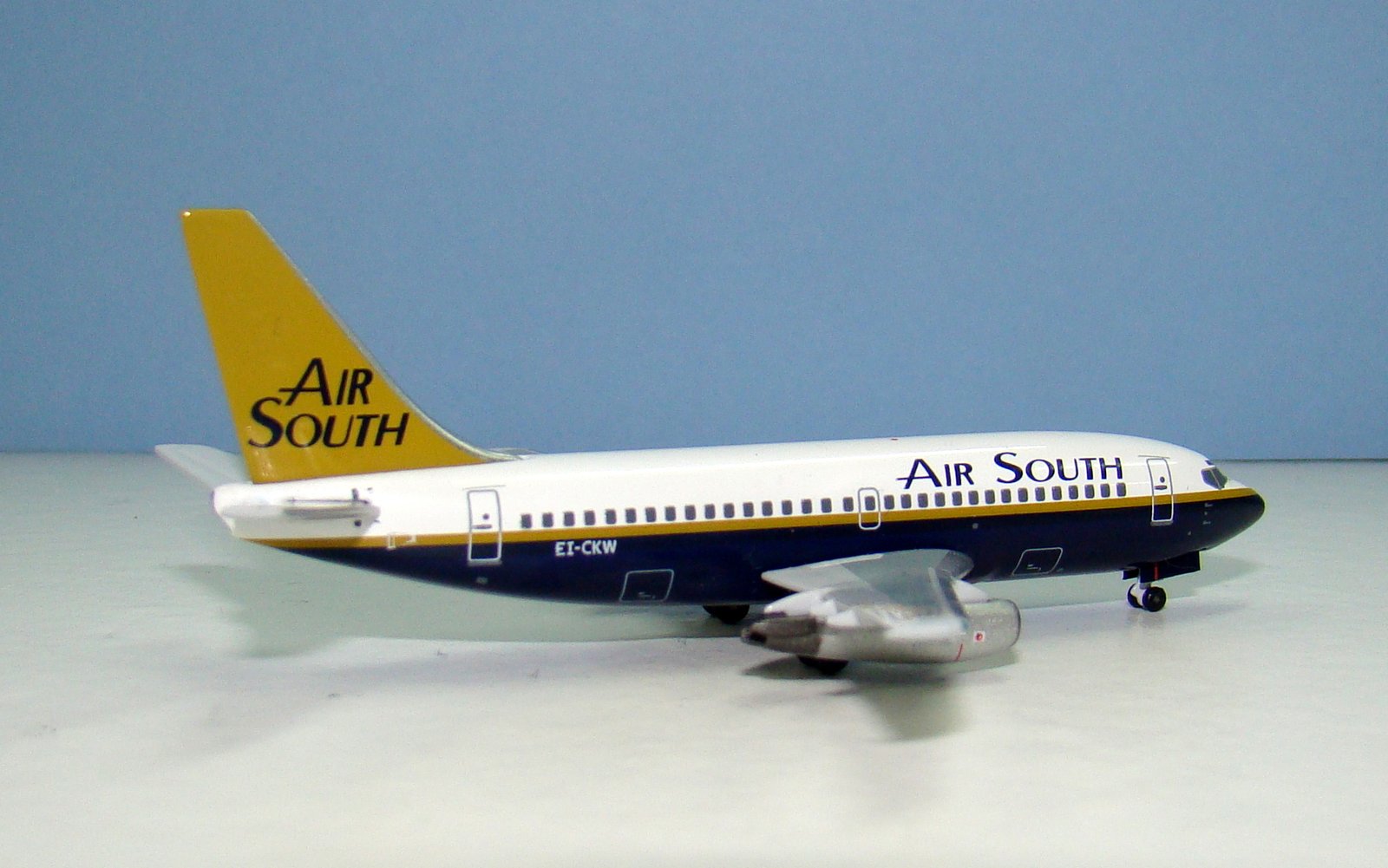
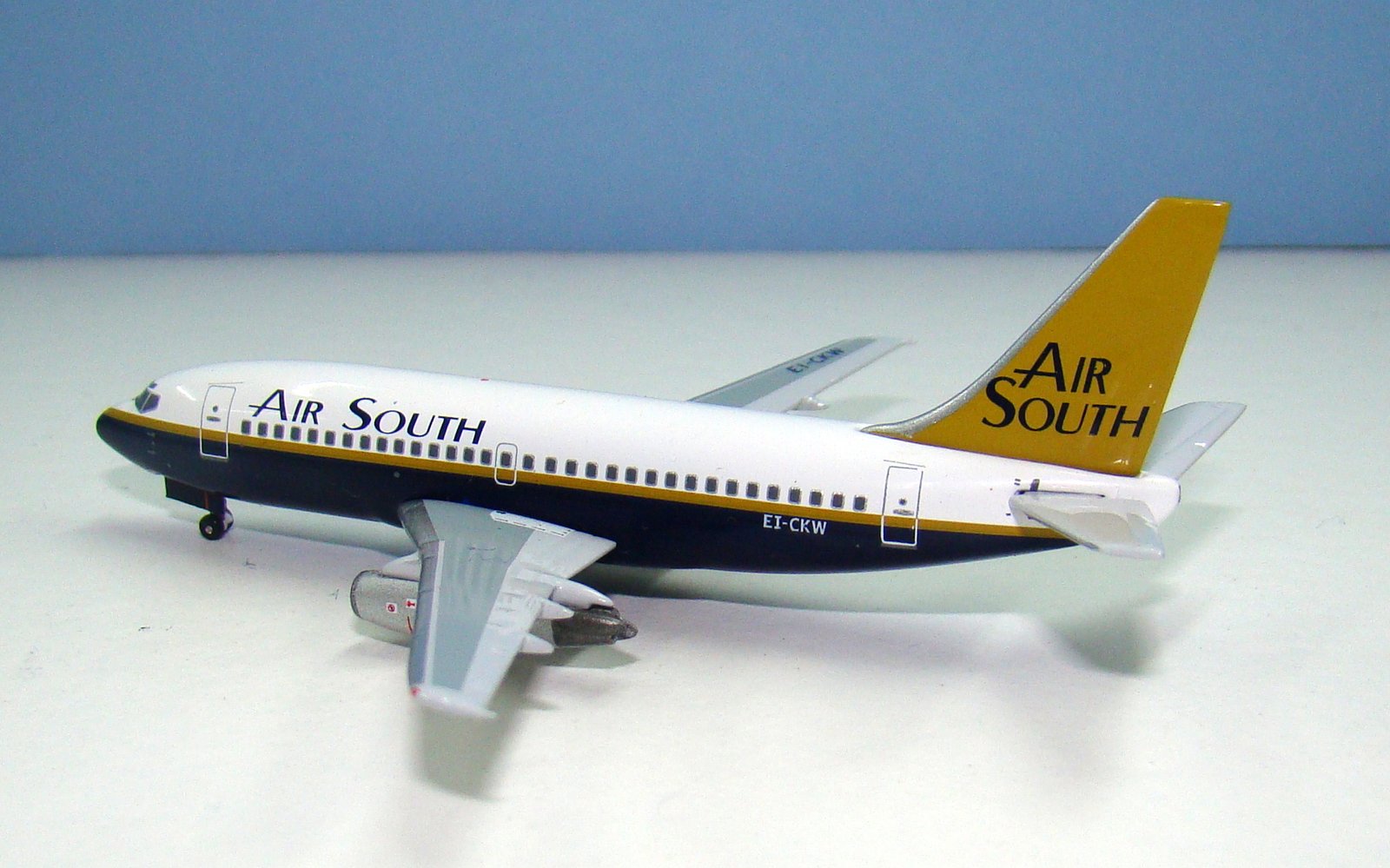
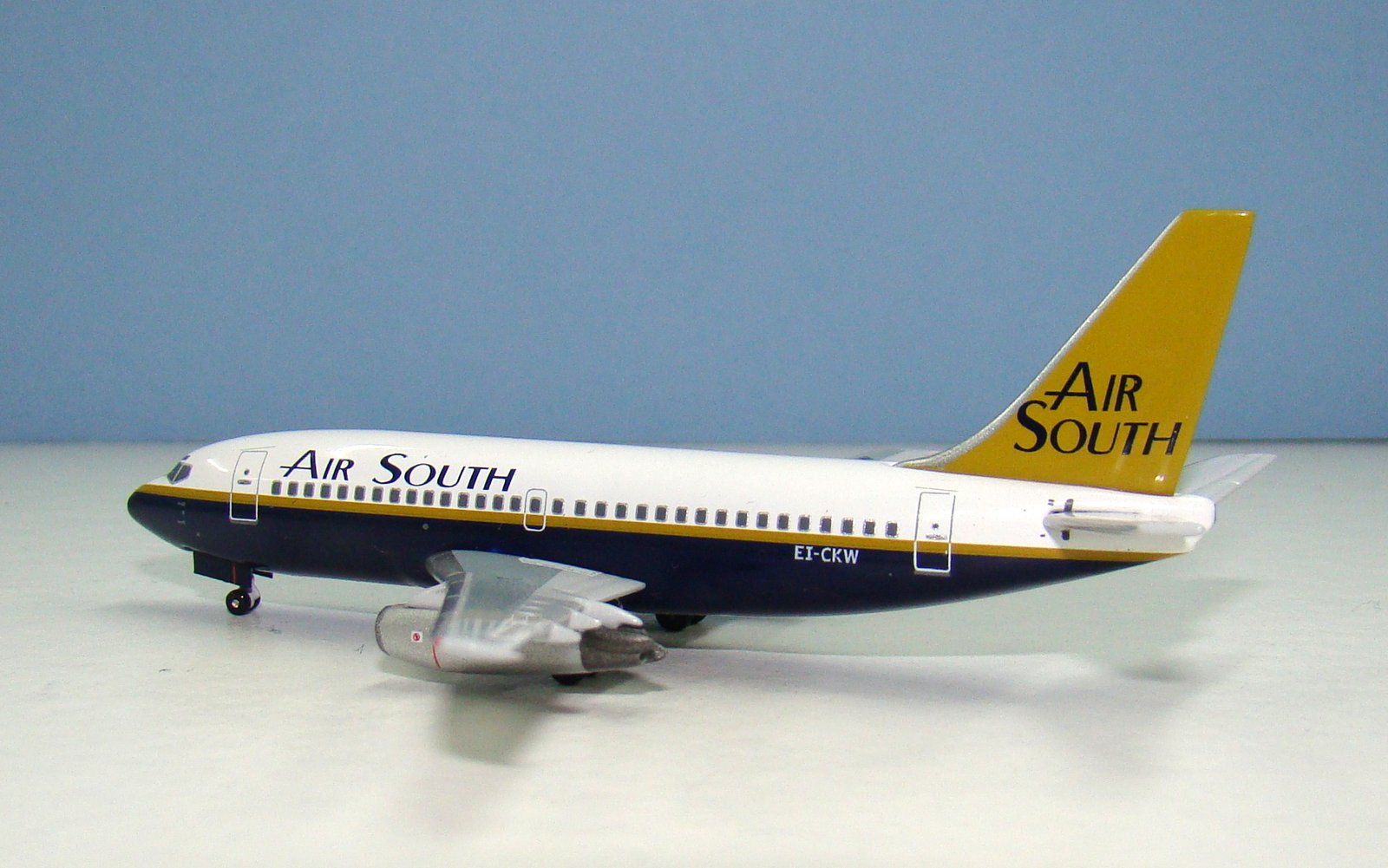
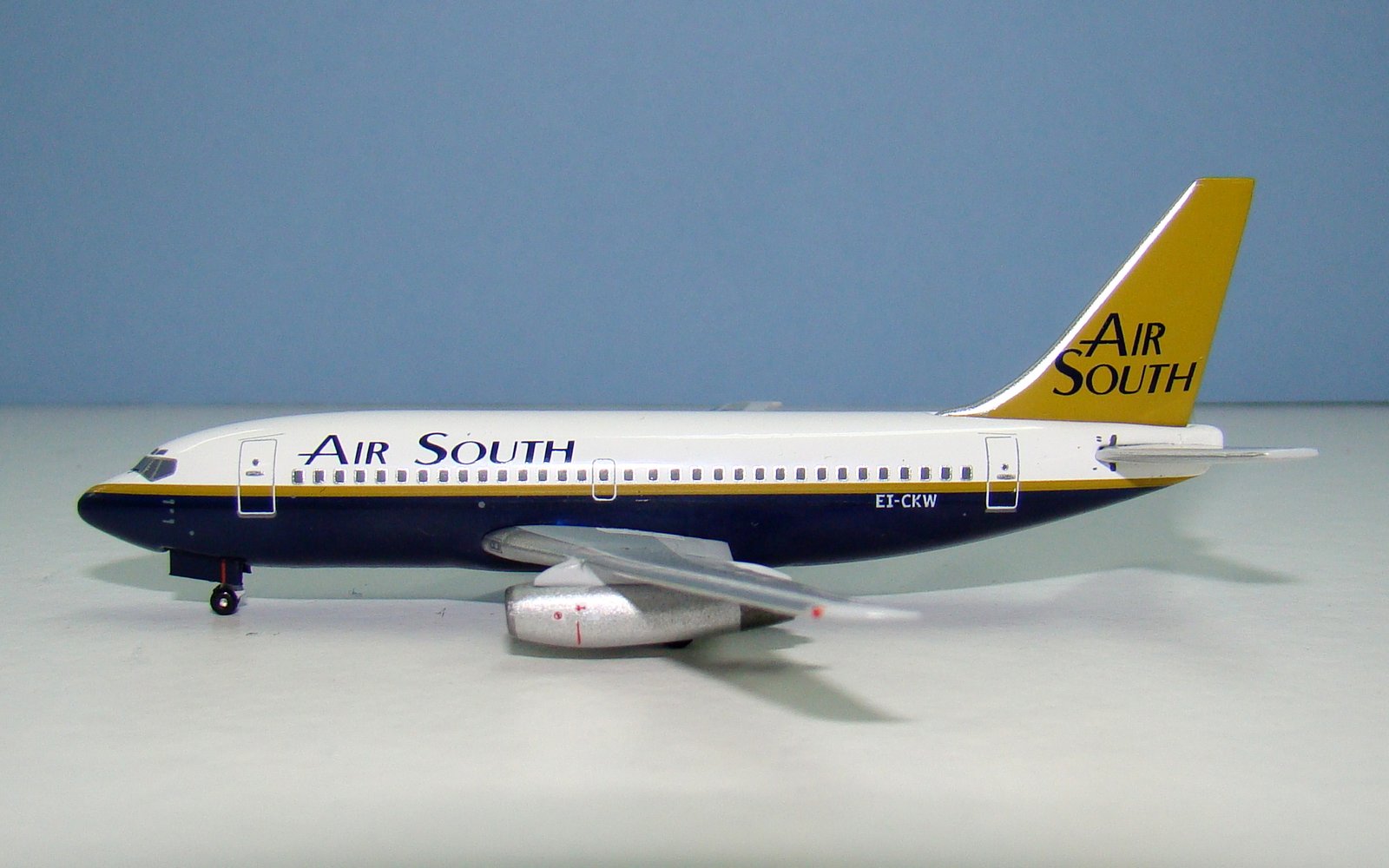
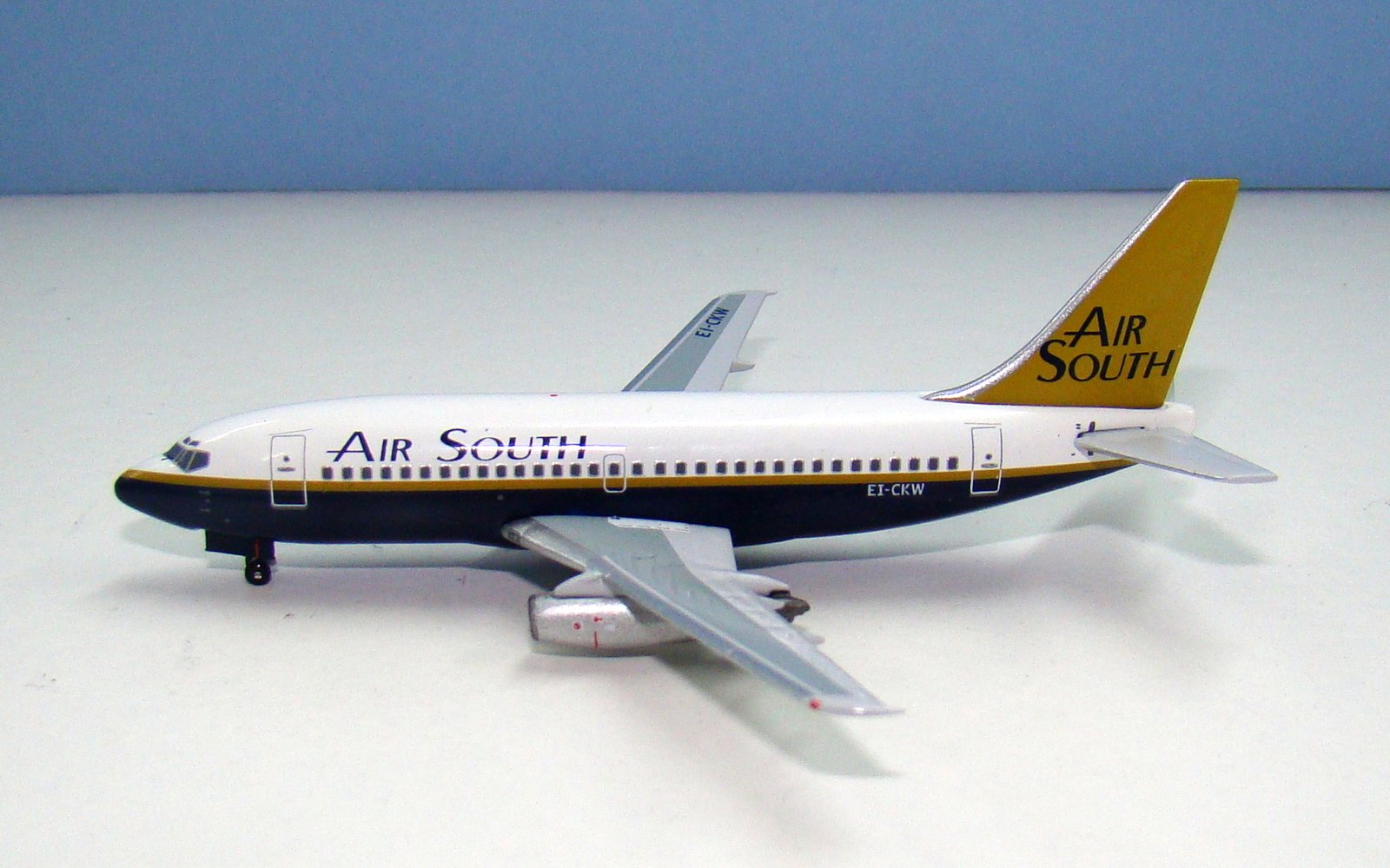
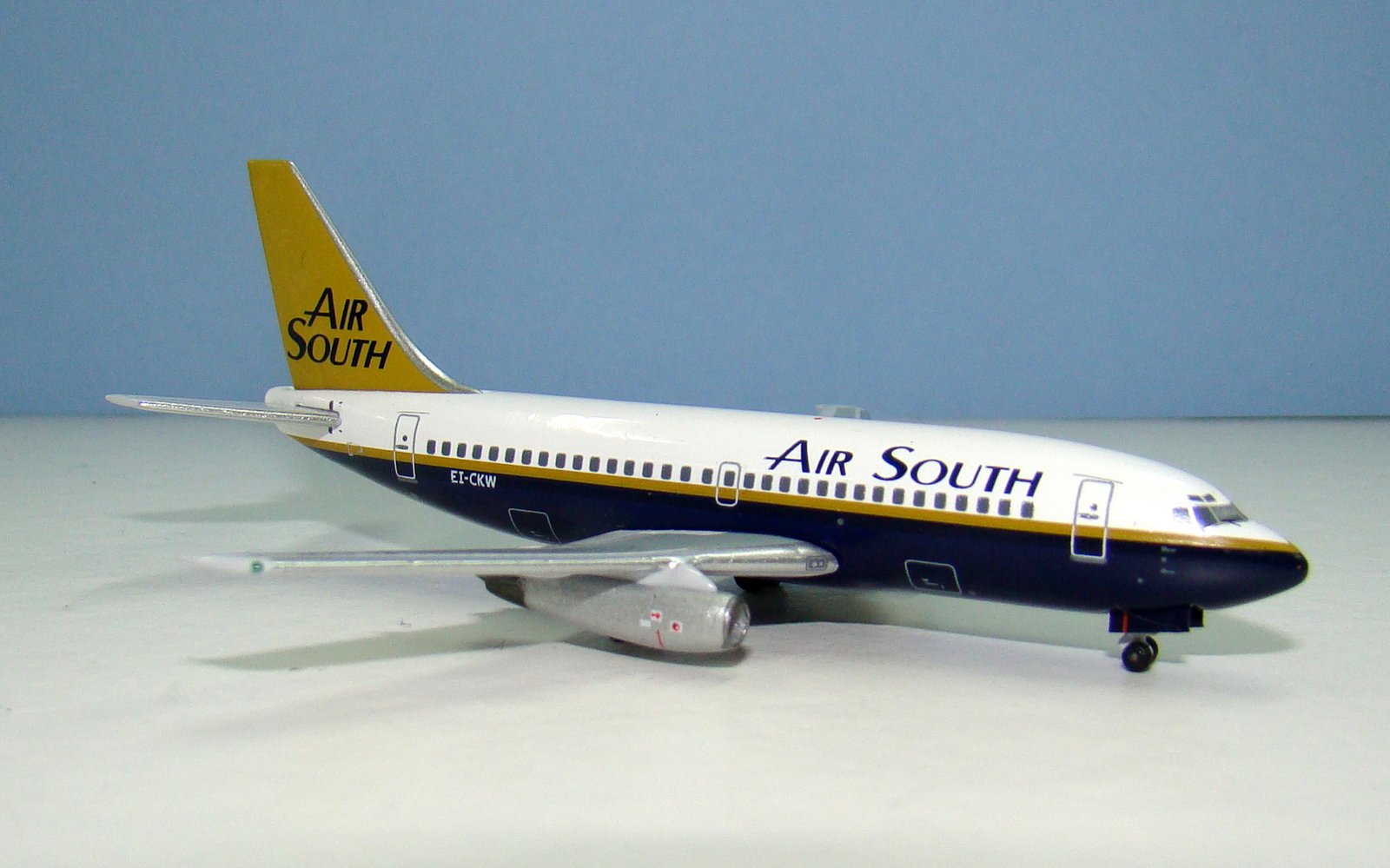
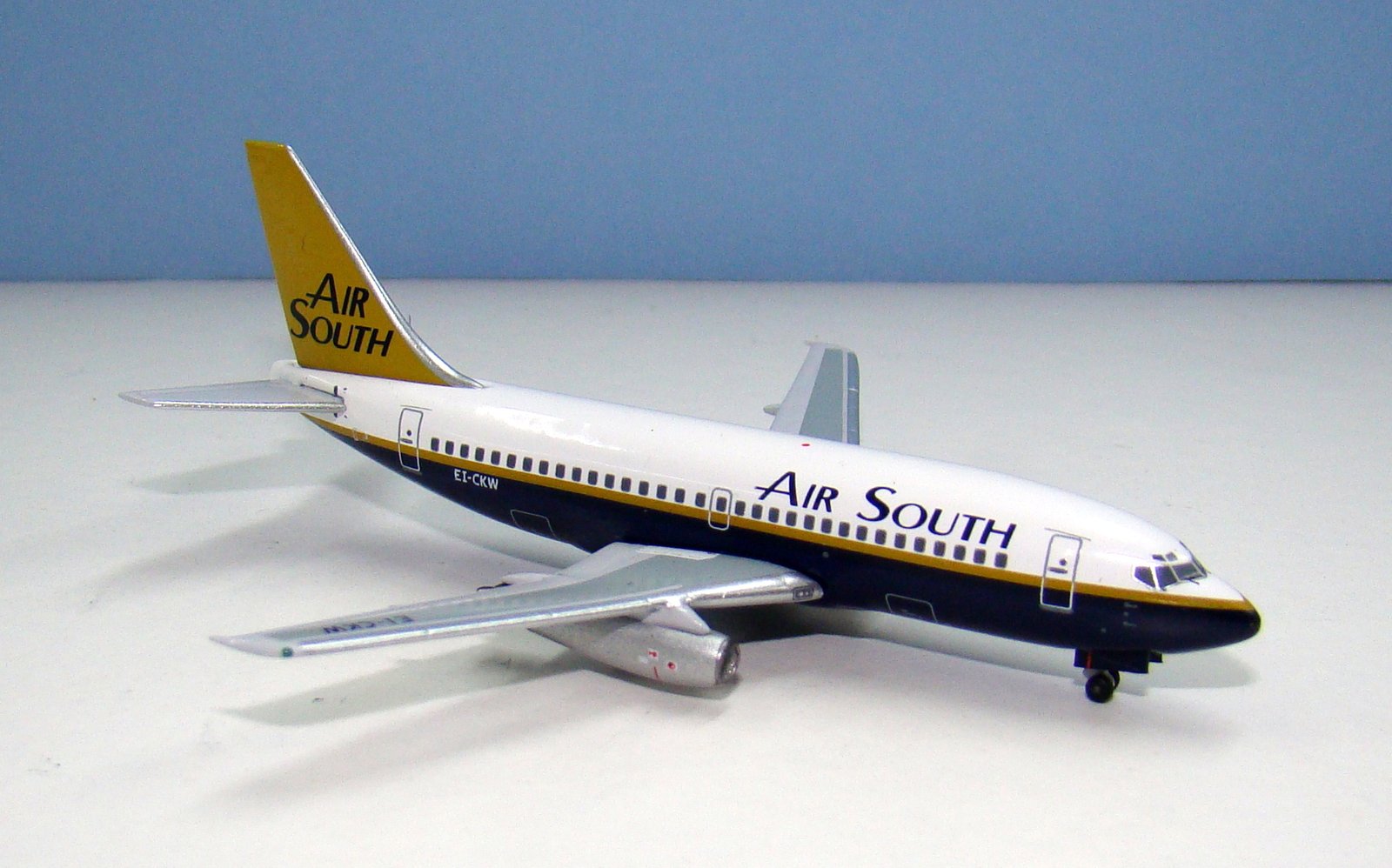
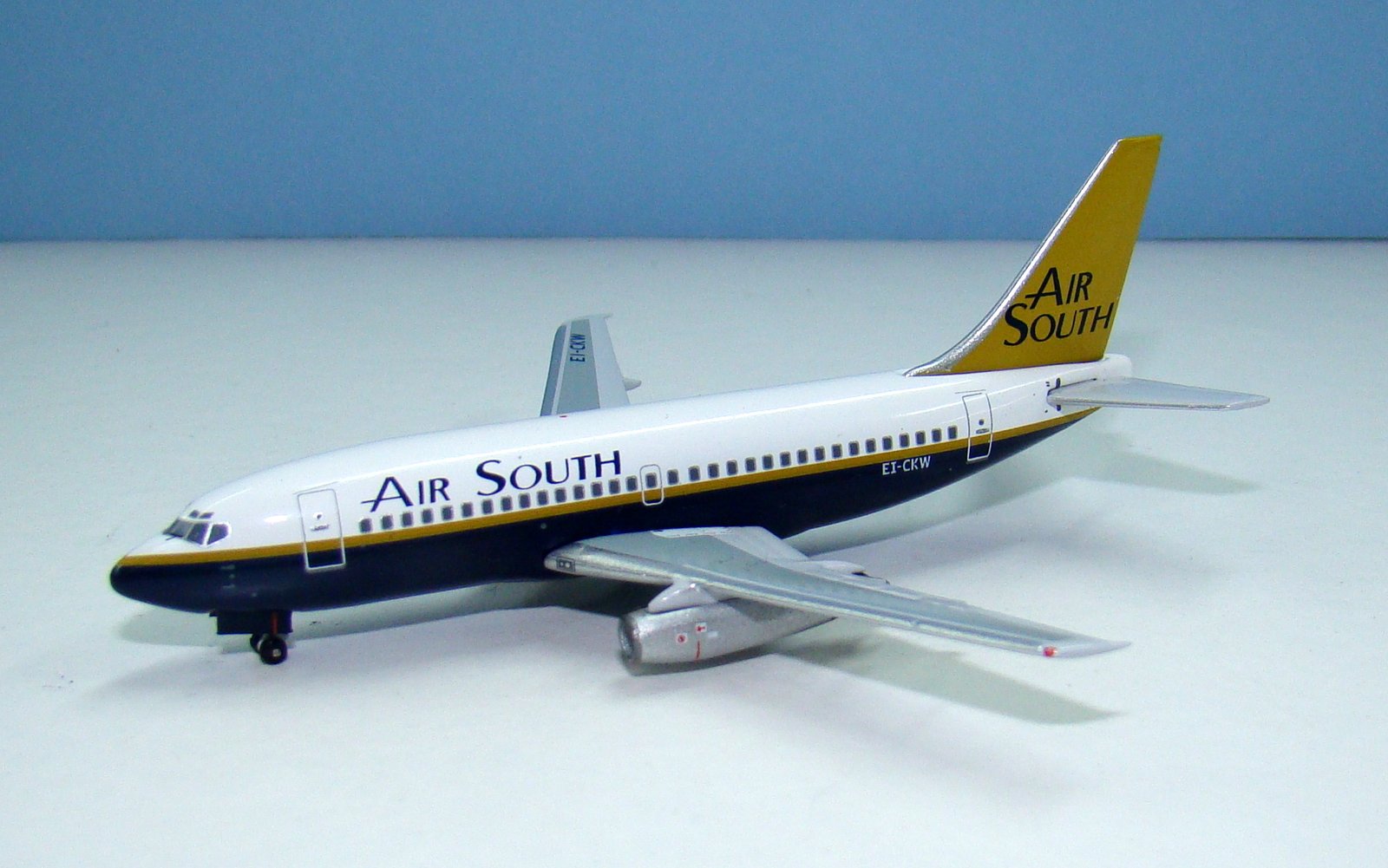
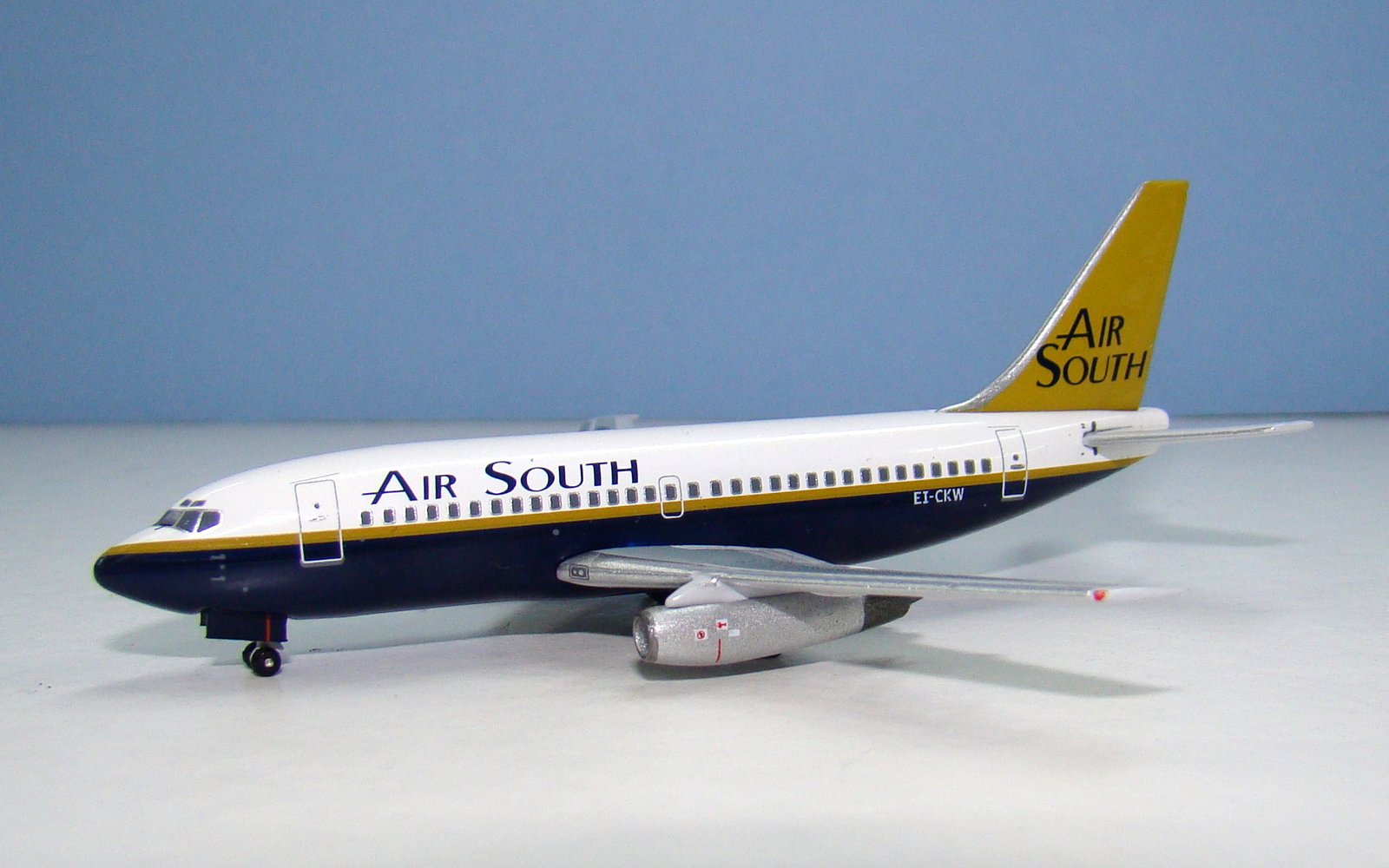
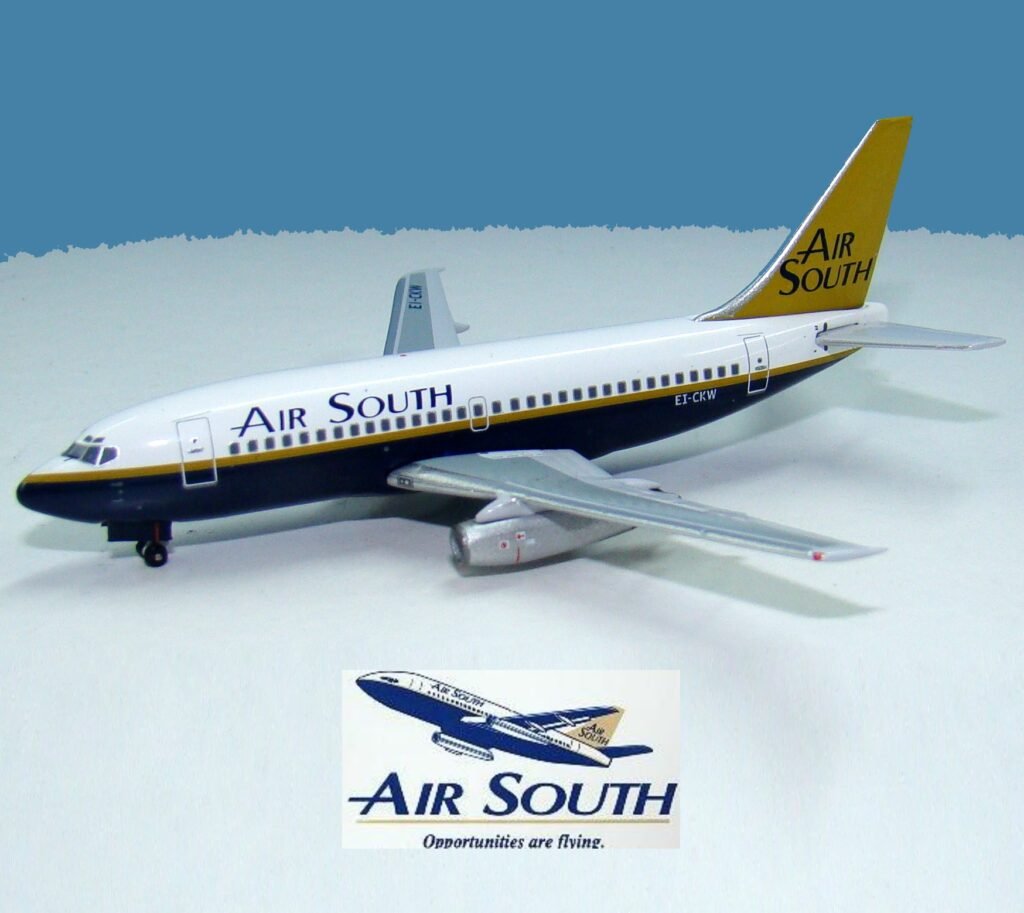
Air South Boeing 737-2P6Adv EI-CKW Aeroclassics 1:400 Scale Model Airliner
Air South Airlines was founded in 1993 and was in fact the fourth airline within the USA alone to have used that name, not itself a happy omen. Its homebase was in Columbia, South Carolina and its call sign would become ‘Khaki Blue’. The airline’s model was to operate low cost high frequency services, often from secondary airports that had lost their jet operations. Initial capital came from founders Donald Baker and Rod Marlin, local citizens as well as the state of South Carolina itself. It had the backing of South Carolina Governor Carroll A. Campbell, Jr. and Columbia mayor Bob Coble. To secure $12 million (of its initial $17 million startup capital) of low interest state loans it hired hundreds of staff directly from Columbia.
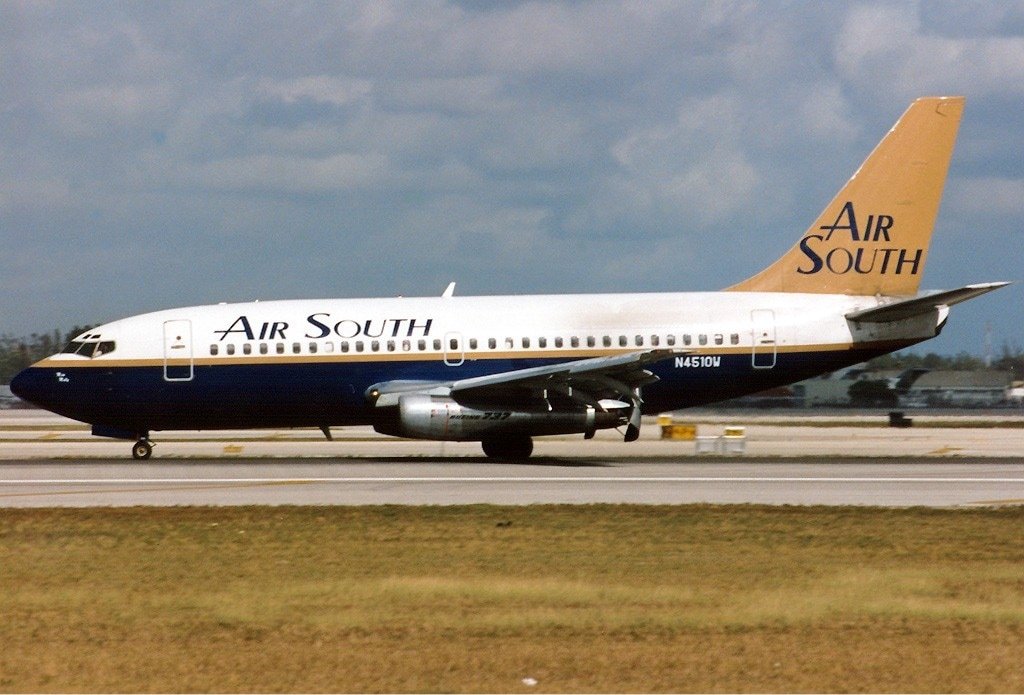
Boeing 737-247 N4510W at Miami in 1996. Photo by Torsten Maiwald from Wikipedia
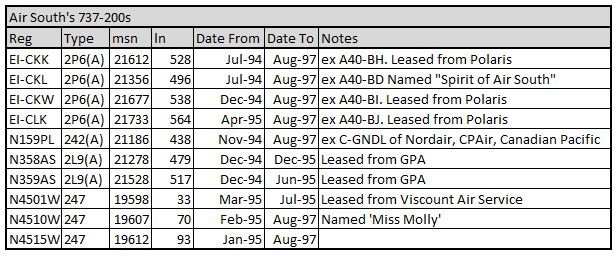
It began operations with its first 737-200 on August 23, 1994 and the fleet rapidly expanded to 9 aircraft mostly leased from Polaris Aircraft Leasing and Guiness Peat Aviation. These included four Irish registered 737-2P6 Advanced aircraft that had originally served with Gulf Air. Two of the others were ex-Western Airlines 737-247s dating from 1968.
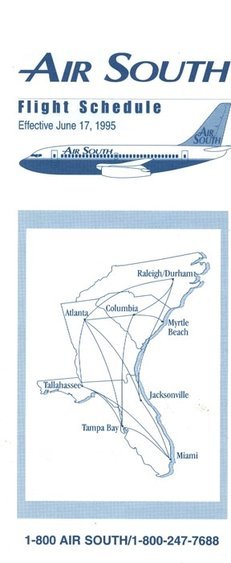
Initial services targeted markets such as Jacksonville, Miami, St Petersburg and Tampa in Florida plus destinations in Georgia (Atlanta), South Carolina (Myrtle Beach) and Virginia (Norfolk). Most flights would be one aircraft multi-stop units like the initial service from Columbia-Atlanta-St Petersburg-Miami. It would try to fly to secondary airports like Orlando Sanford rather than MCO and Fort Lauderdale rather than Miami where it could. After three months operations expanded to Tallahassee, Baltimore and Raleigh Durham.
At the time Southwest Airlines did not operate in the region and Air South attempted to mirror the in-flight service and philosophy of the airline. There was no assigned seating, the aircraft were in single class configuration and there was no meal service. One difference was that it chose to support the travel agent distribution system although this was not particularly successful. Agents would routinely not mention Air South since the major airlines paid them special bonus commissions as a reward for booking a targeted proportion of passengers with them. These ‘overrides’ although not illegal were obviously disadvantageous to both the customer (who often wasn’t informed of the cheapest flights) and to competition in general.
Air South Boeing 737-2P6Adv EI-CKW Aeroclassics 1:400 Scale Model Airliner
Air South Boeing 737-2P6Adv EI-CKW Aeroclassics 1:400 Scale Model Airliner
Air South Boeing 737-2P6Adv EI-CKW Aeroclassics 1:400 Scale Model Airliner
Air South Boeing 737-2P6Adv EI-CKW Aeroclassics 1:400 Scale Model Airliner
Air South Boeing 737-2P6Adv EI-CKW Aeroclassics 1:400 Scale Model Airliner
Air South Boeing 737-2P6Adv EI-CKW Aeroclassics 1:400 Scale Model Airliner
Air South Boeing 737-2P6Adv EI-CKW Aeroclassics 1:400 Scale Model Airliner
Air South Boeing 737-2P6Adv EI-CKW Aeroclassics 1:400 Scale Model Airliner
Air South Boeing 737-2P6Adv EI-CKW Aeroclassics 1:400 Scale Model Airliner
Air South Boeing 737-2P6Adv EI-CKW Aeroclassics 1:400 Scale Model Airliner
Air South Boeing 737-2P6Adv EI-CKW Aeroclassics 1:400 Scale Model Airliner
Air South Boeing 737-2P6Adv EI-CKW Aeroclassics 1:400 Scale Model Airliner
Losses mounted from the start and were over $10 million within the first 6 months. By August 1995 Air South had enplaned 89,240 passengers with a load factor of 50%. The airline claimed that its break even point was below 50% and in fact for that month it recorded a profit of $89,000. This was the third month in a row that the airline reported a profit, however these three months would be the only profitable ones in the airline’s history. Overall for 1995 the airline posted a significant loss along with the state’s other major airline Midway.
The airline seemed to catch flak from the local press who were critical of investment from the State and this served to undermine the carrier somewhat. It also seems that there was trouble within the carrier if a 1997 lawsuit is to be taken at face value. Patrick O’Shea the airline’s first CEO resigned in February 1995 and claimed that two board members, Clifton Haley and William Hambrecht, initiated a “seditious campaign” to force him off the company’s board. He along with Baker and Marlin alleged that Haley and Hambrecht “executed a campaign to dominate the affairs of Air South for their personal benefit, to the detriment of other shareholders and particularly to the detriment of plaintiffs,”. They also suggested that the profits Air South showed were false.
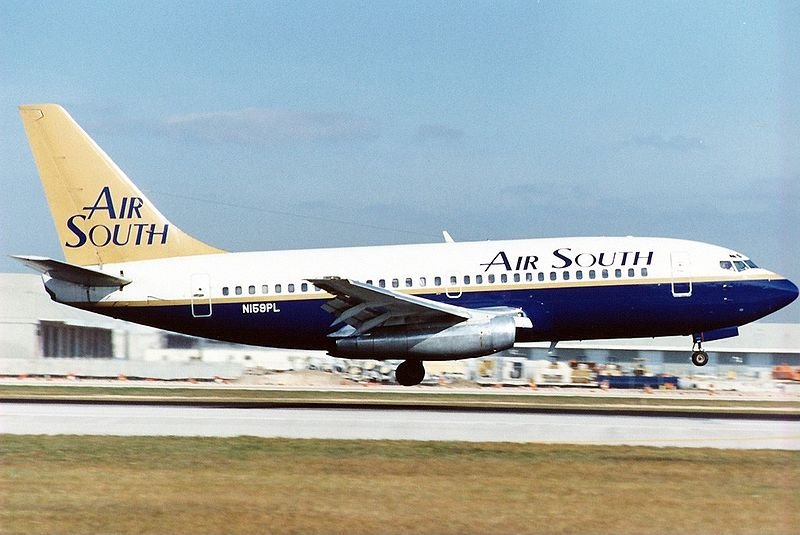
Boeing 737-242Adv N159PL at Miami in December 1996. Photo by JetPix from Wikipedia
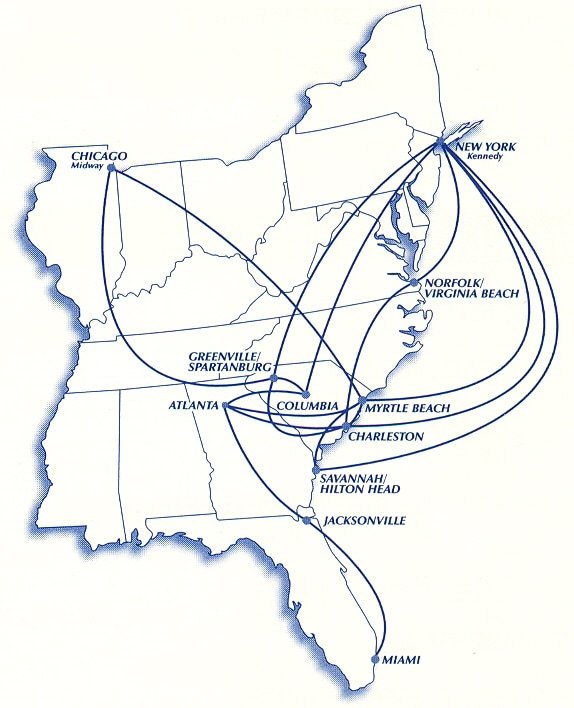
This certainly suggests a turf war on the Air South board. Indeed Hambrecht’s investment banking firm Hambrecht & Quist, did acquire a controlling interest in 1996 and invested $25 million in the airline. A new management team was brought in and cut the airline’s flights by a third. They also altered Air south’s focus abandoning its low cost, high frequency approach and instead suicidally targeting high cost, low frequency routes in competition with the majors. The seat mile costs skyrocketed from 8.5-13 cents by 1997. Services were launched to Chicago Midway and New York JFK but were not only impacted by competition but also by winter weather delays. Additionally the fallout of the Valujet crash led to a variety of FAA restrictions and bad press being imposed on smaller airlines.
Air South's June 1997 route map
By the end of 1996 Air South had lost a combined $41 million for the previous two years. Lack of cash had left a 737 grounded for three weeks awaiting a replacement engine in April 1996 and wreaked havoc with the schedule, leading to 20% cancellations. In the first quarter of 1997 a further $7.8 million was lost. The end came for Air South on August 28, 1997 with a combined debt of over $60 million. $12 million of this was owed to the state of South Carolina. Air South had been in a marketing partnership with Kiwi International Air Lines since September 1995 and they offered to accept stranded Air South passengers.
Southwest Airlines has since moved into Air South’s old territory and made a success of the majority of the same routes. In the end Air South was another case of an underfunded start-up airline without a clear reason to exist, which didn’t have deep enough pockets to overcome the extremely high cost of market entry. Nonetheless they gave it their best shot at serving the South in khaki blue.