Nowadays Pakistan International Airlines (PIA) is not thought of as a leader in civil aviation. Like its Indian neighbour Air India it has fallen from grace since the 1980s and struggled with embarrasing operational issues, regular crashes, corruption, one of the highest employee to aircraft ratios in the world and heavy financial losses. It wasn’t always this way however and during the 1950s-80s PIA was one of the world’s best run international airlines and a source of great pride to the people of Pakistan.
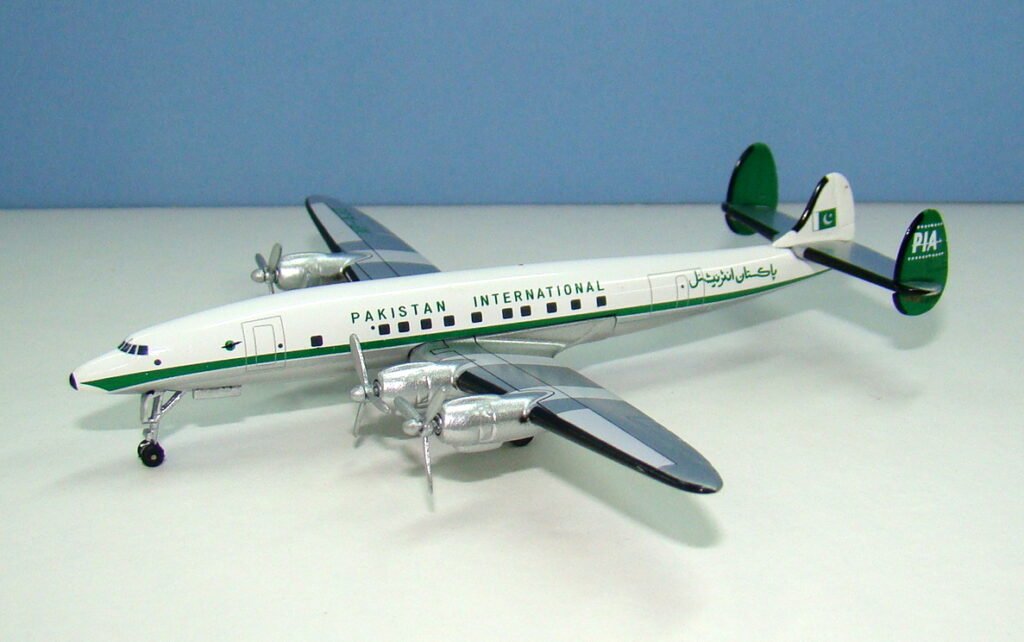
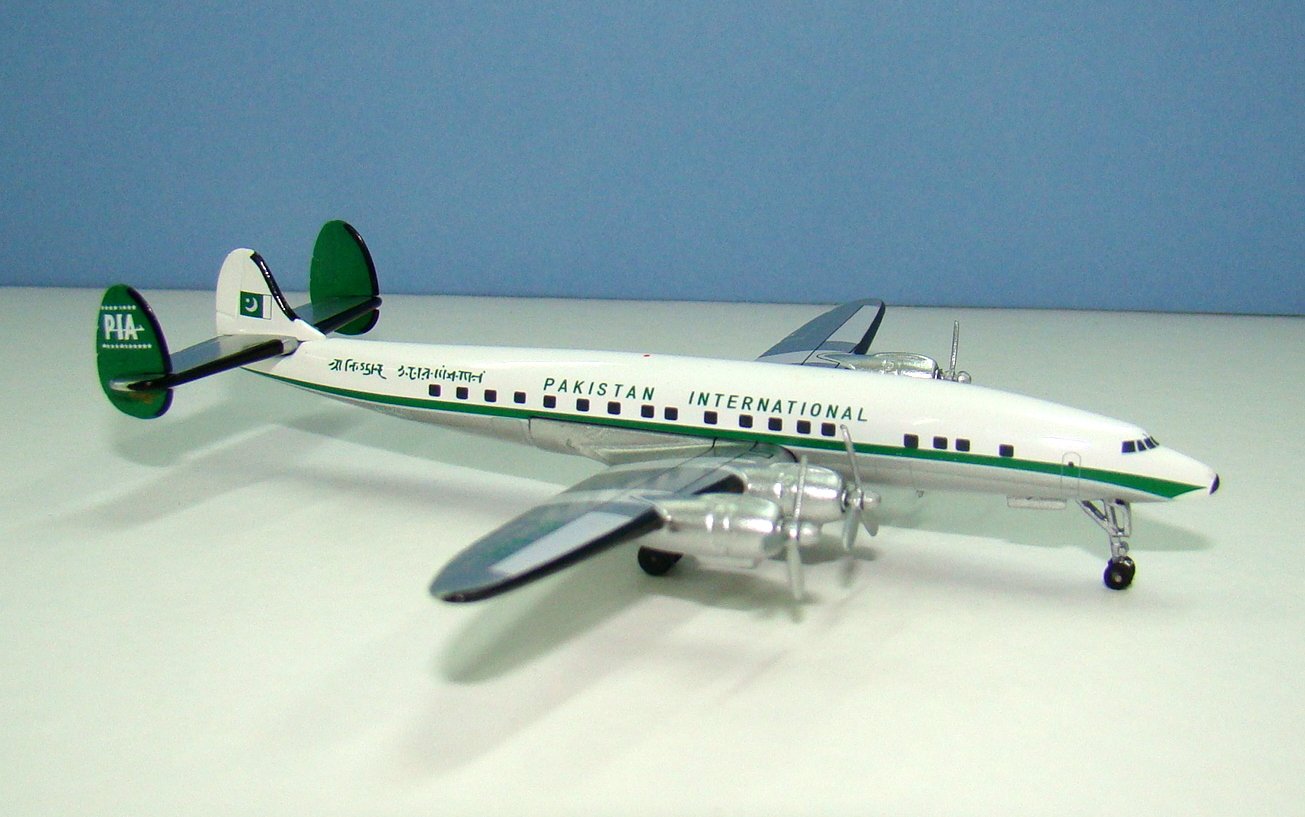
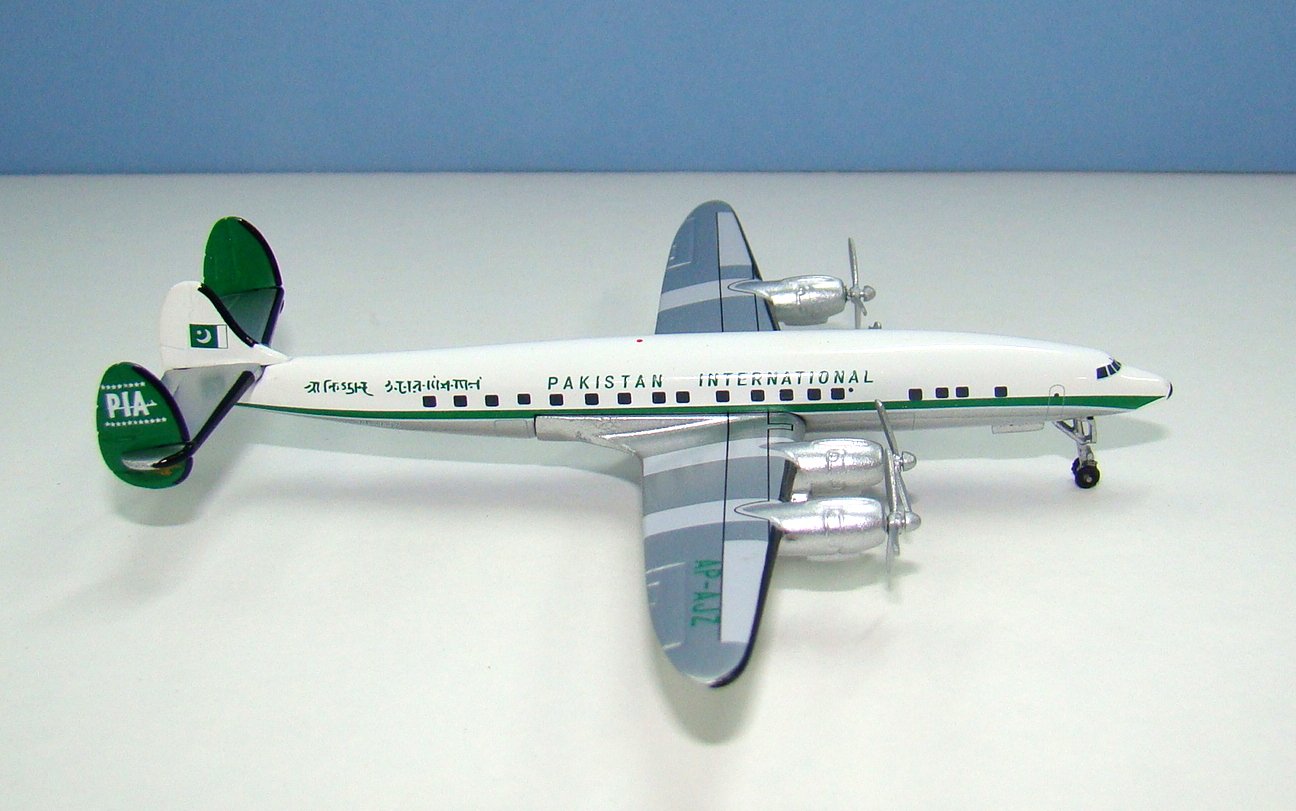
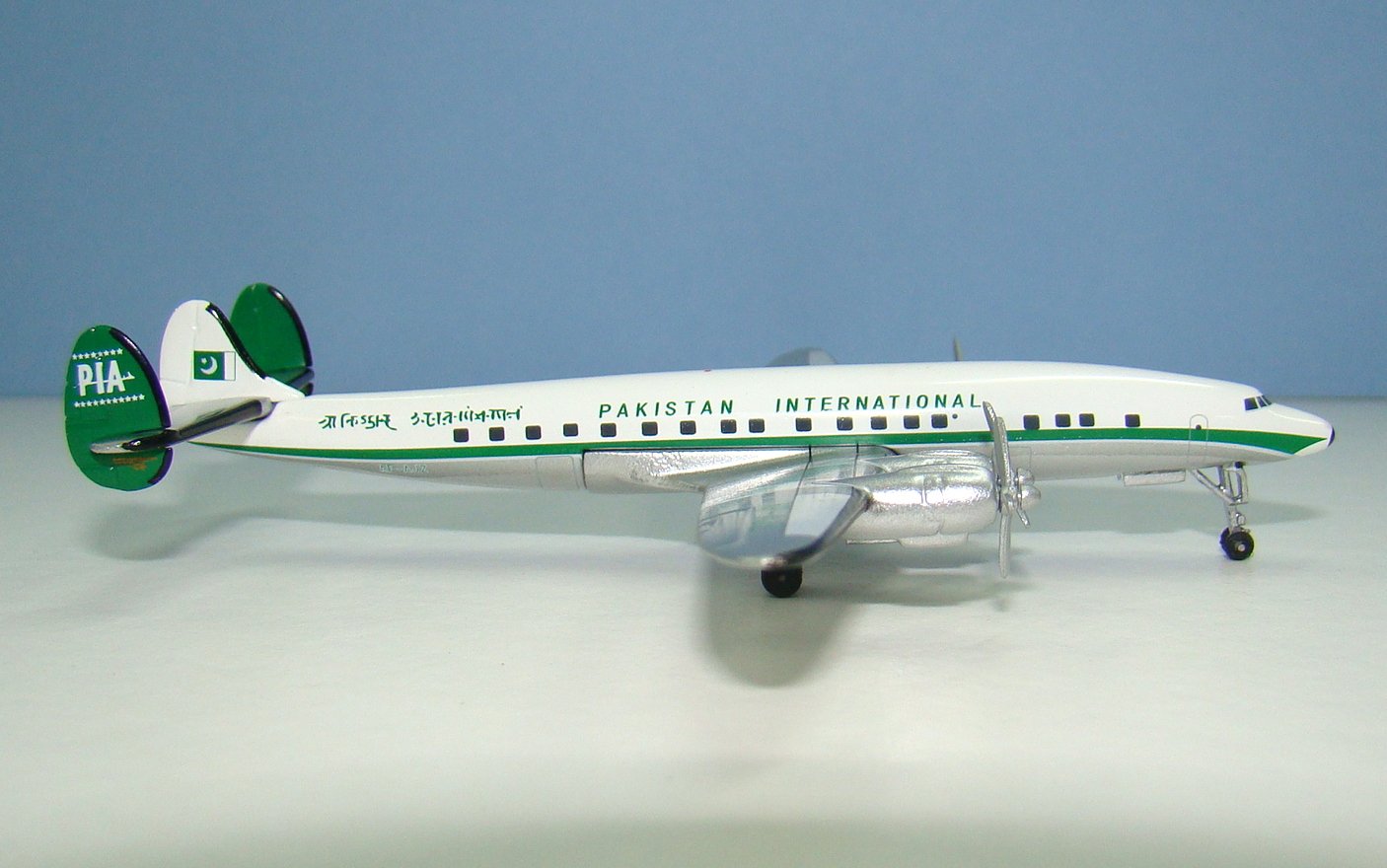
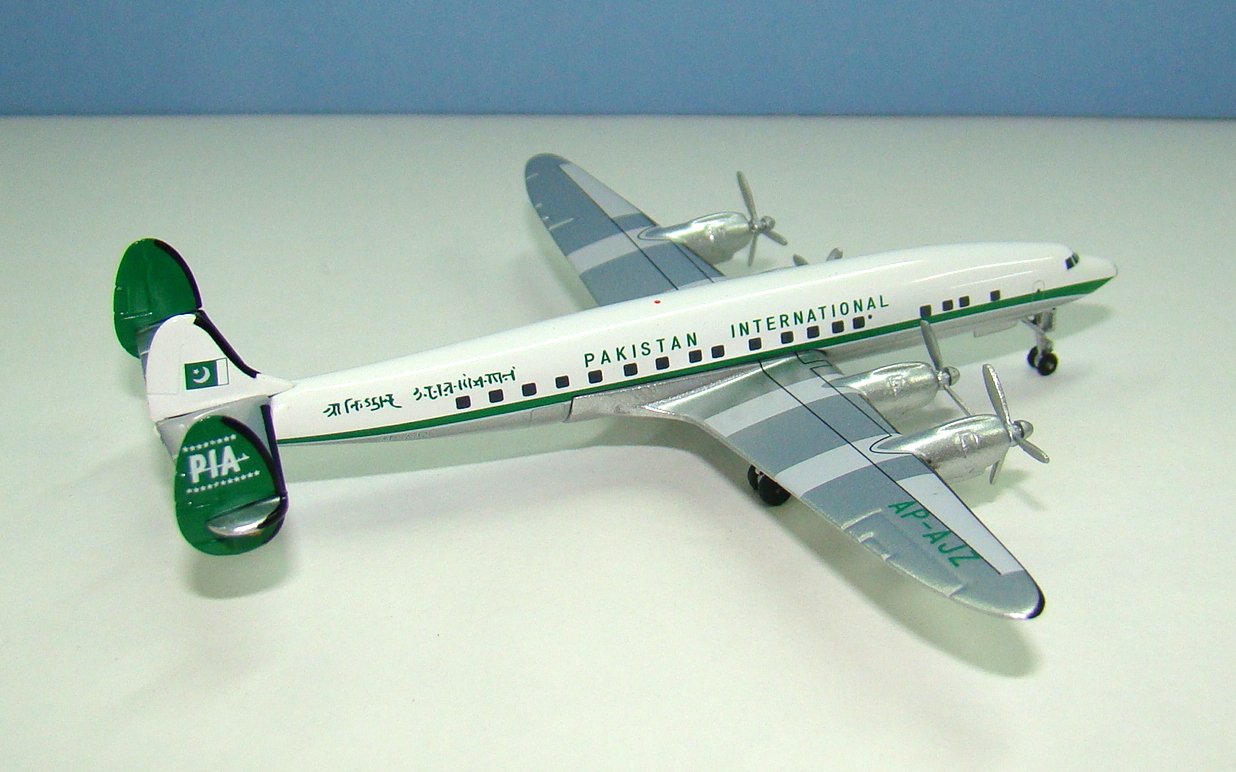
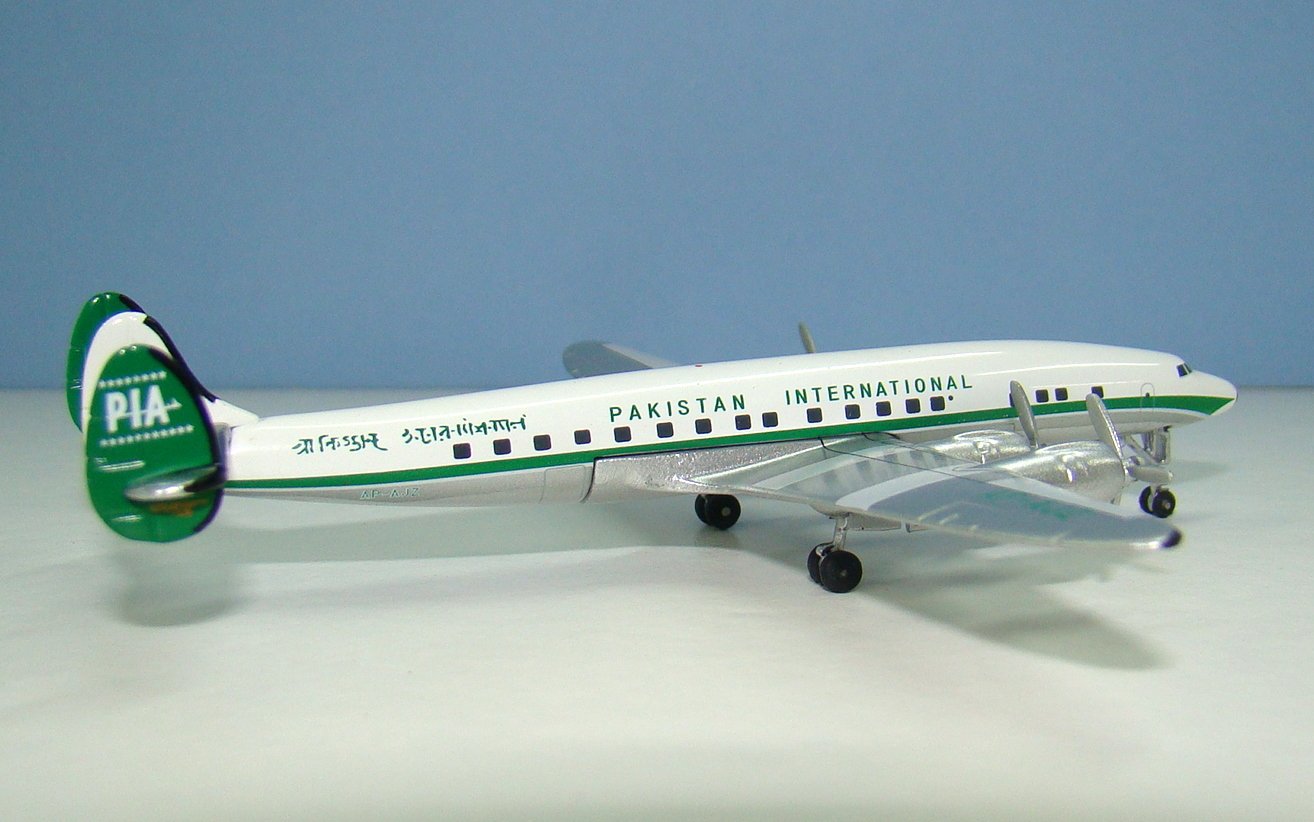
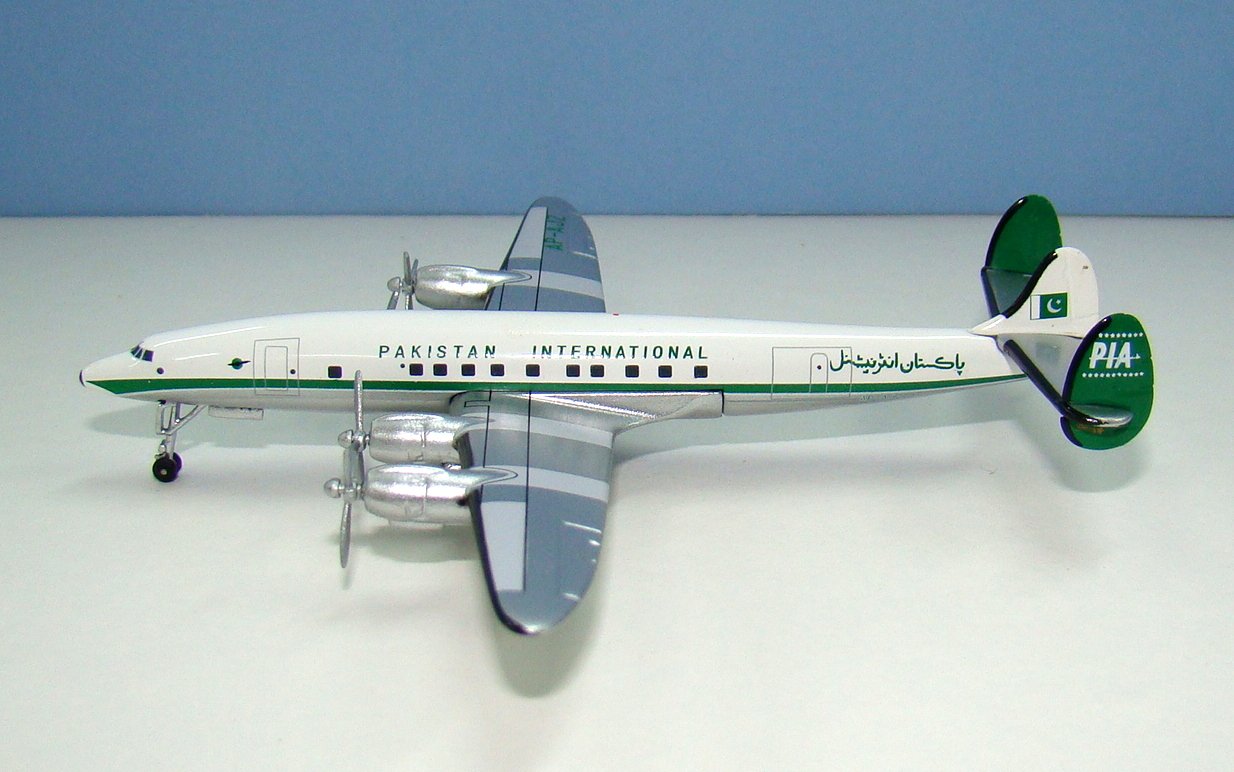
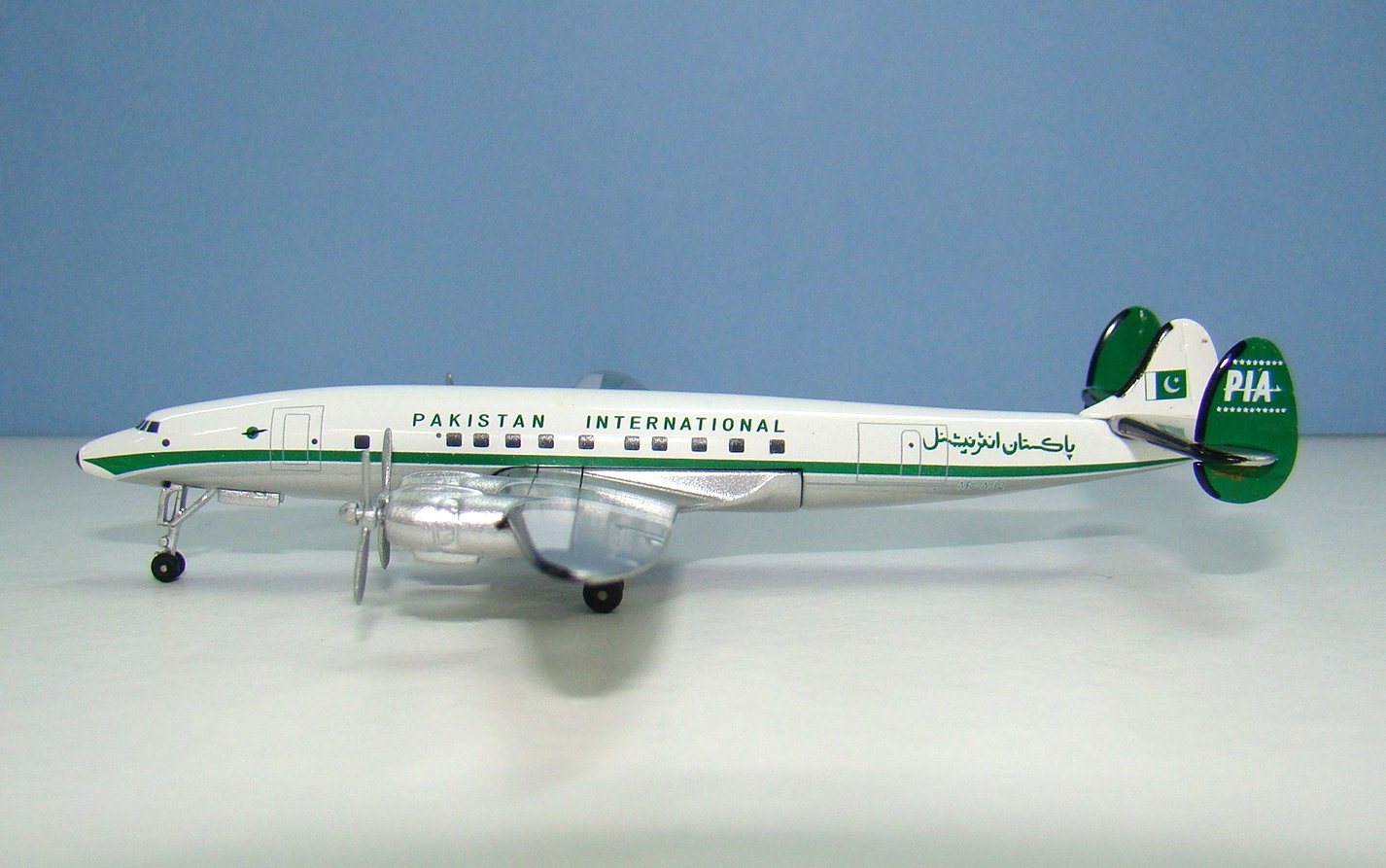
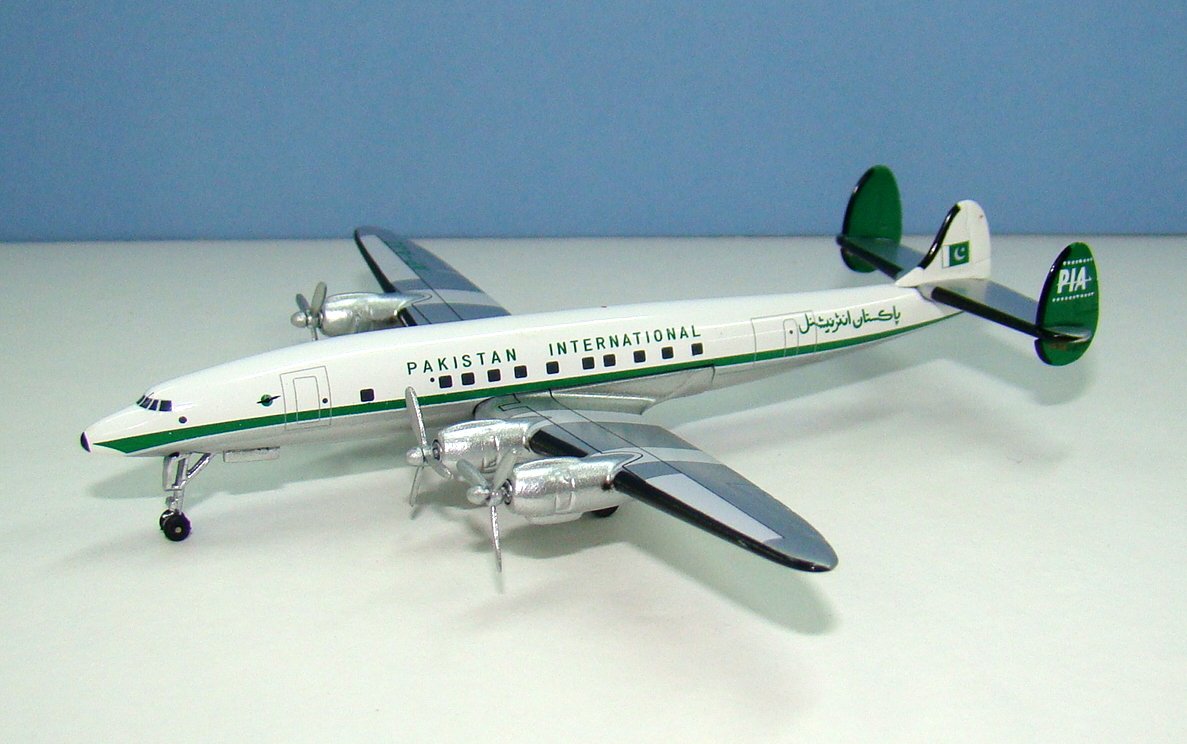
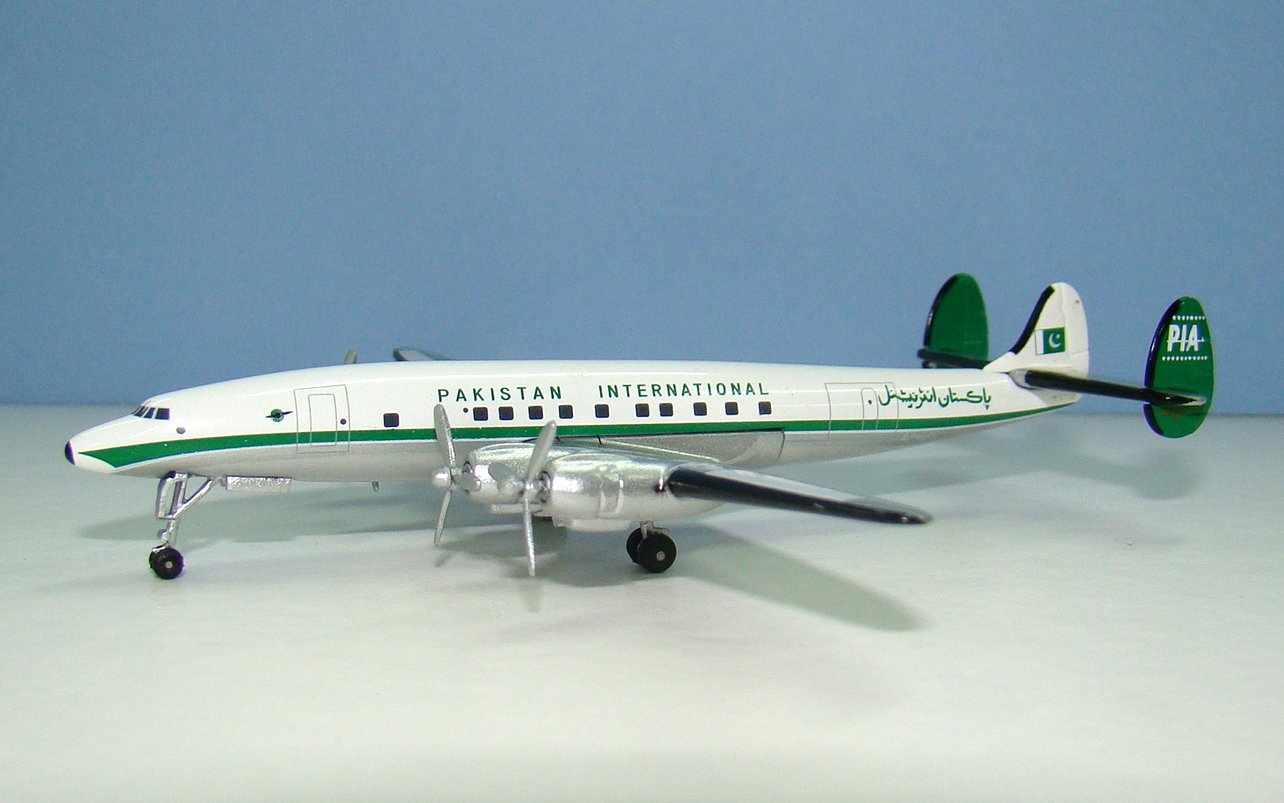
PIA Lockheed L-1049H Super Constellation AP-AJZ Aeroclassics 1:400 Scale Model Airliner
Pakistan gained its independence on August 14, 1947 in the chaos that resulted from the end of the British Raj and the partition of India into two. Up to 2 million people were killed and tens of thousands of others, mostly woman, had atrocities commited against them whilst the largest mass movement in human history took place. The result was the formation of Muslim majority Pakistan encompassing the provinces of Balochistan, East Bengal, West Punjab, Sindh and the North-West frontier.
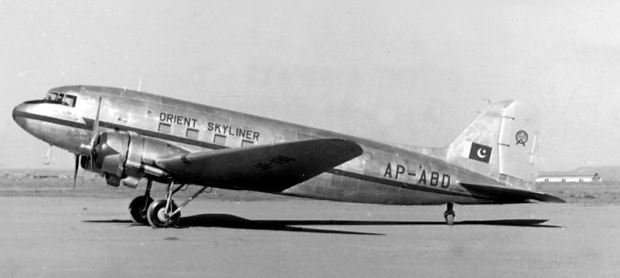
An Orient Airways DC-3. From the collection of Ed Coates
The new country was keen to create a national airline and already the private Orient Airways was in operation using a fleet of 3 DC-3s. Orient Airways continued to expand its domestic services but was losing money and it was agreed that it should merge with the government owned airline – Pakistan International. PIA was a paper airline at the time, although the Pakistani government had ordered 3 Lockheed L-1049C Super Constellations in May 25 1951. The aircraft weren’t delivered until 1954 and the first Constellation service connected Karachi and Dacca (then a domestic route as Bangladesh was not independent) on June 7, 1954.
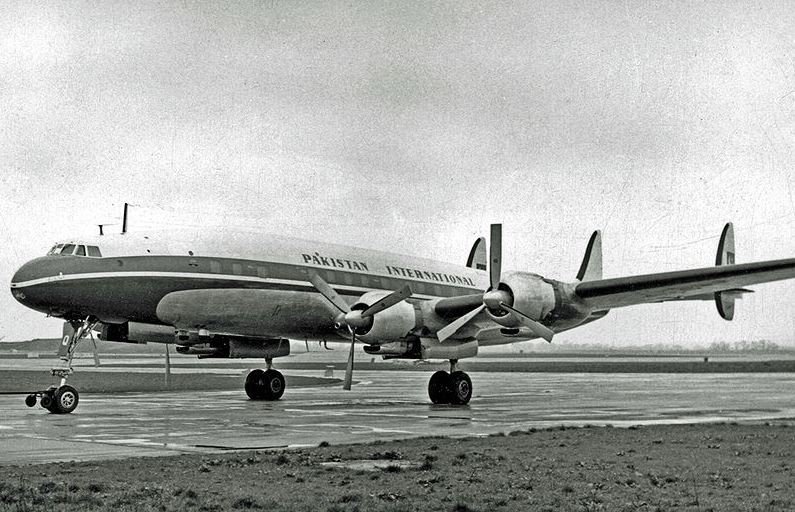
AP-AFQ at Heathrow in 1955. Photo by RuthAS from Wikipedia
The 3 L-1049Cs were registered as AP-AFQ-S. PIA was the first mainland Asian country and first Muslim country to put the Super Constellation into service. On February 1, 1955 the first international service took off between Karachi and London, via Cairo and Rome. The formal merger of Orient Airways took place on March 11, 1955 and introduced a proper domestic fleet (DC-3s and a few CV-240s) allowing the Super Connies to operate on international routes full time.
On July 19, 1957 the London service was increased to twice weekly, routing via Bahrain and Rome rather than Cairo, with one of the services also stopping at Geneva. Tehran and Damascus were added as further intermediate stops in 1958.
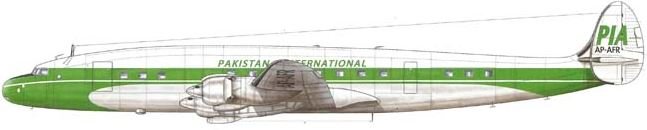
By Andre Jouineau
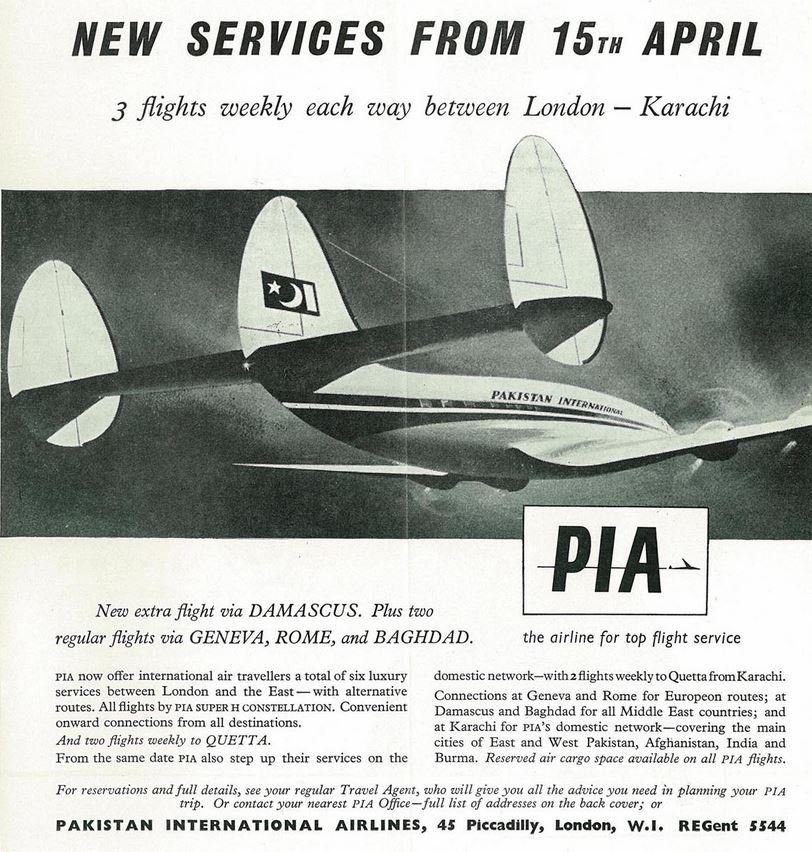
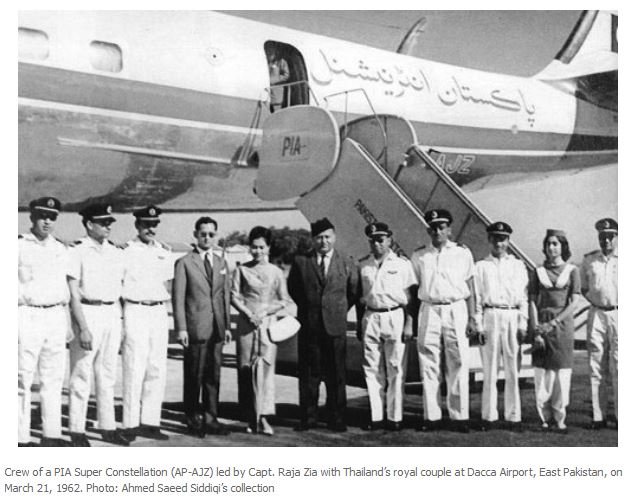
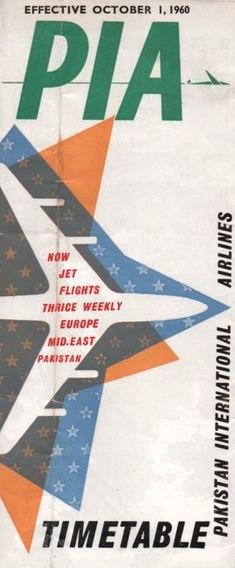
PIA was renowned for the expertise and quality of its staff and excellent cabin service. In 1956 3 Vickers Viscount 815s were ordered and also, to enable the increase in frequency and stops on the long haul routes, a further pair of Super Connies. These were the upgraded L-1049H Super Constellation equipped with radar noses and weren’t delivered until February and March 1958. The L-1049Hs were also fitted with a rear main deck cargo door allowing the aircraft to operate either passenger or freight services. In 1959 Air Marshal Nur Khan was appointed as the managing director and he helped begin a golden age for the airline.
From a 1958 timetable advertising the L-1049Hs. From www.timetableimages.com
The first Viscount 815s initiated PIA’s first turbine service on January 31, 1959, between Karachi and Delhi. A further pair of Viscounts was added in August and September with new Fokker 27s ordered to finally relieve the remaining DC-3s on the Eastern network from 1961.
PIA Lockheed L-1049H Super Constellation AP-AJZ Aeroclassics 1:400 Scale Model Airliner
PIA Lockheed L-1049H Super Constellation AP-AJZ Aeroclassics 1:400 Scale Model Airliner
PIA Lockheed L-1049H Super Constellation AP-AJZ Aeroclassics 1:400 Scale Model Airliner
PIA Lockheed L-1049H Super Constellation AP-AJZ Aeroclassics 1:400 Scale Model Airliner
PIA Lockheed L-1049H Super Constellation AP-AJZ Aeroclassics 1:400 Scale Model Airliner
PIA Lockheed L-1049H Super Constellation AP-AJZ Aeroclassics 1:400 Scale Model Airliner
PIA Lockheed L-1049H Super Constellation AP-AJZ Aeroclassics 1:400 Scale Model Airliner
PIA Lockheed L-1049H Super Constellation AP-AJZ Aeroclassics 1:400 Scale Model Airliner
PIA Lockheed L-1049H Super Constellation AP-AJZ Aeroclassics 1:400 Scale Model Airliner
PIA Lockheed L-1049H Super Constellation AP-AJZ Aeroclassics 1:400 Scale Model Airliner
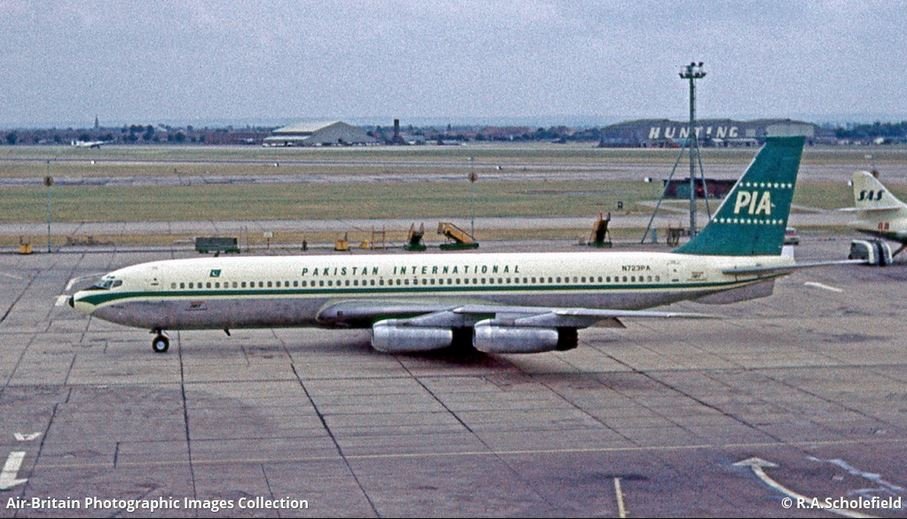
In March 7, 1960 PIA joined the jet age by leasing a Pan Am Boeing 707 – N723PA ‘Clipper Viking’. The 707 enabled extension of the London service onto New York from June 17, 1961. She augmented the Super Connies until December 1962 by which time the airlines first owned jets were in service. These were in the form of a trio of Boeing 720-040Bs (a fourth would join in 1965 to replace AP-AMH, which crashed on May 20). The arrival of pure jets signalled the beginning of the end for the Connies. They were reassigned to fly all tourist class high density domestic services, with AP-AFQ withdrawn in 1964 and cannibalised. Interestingly her fuselage was salvaged and she was used as a cabin trainer until the early 1980s. The remaining Connies saw service on the challenging Himalayan services from Rawalpindi to Skardu and Gilgit in Kashmir. Due to the mountainous terrain and difficult approaches this route could only be flown in VFR conditions.
Another of the original trio of L-1049Cs, AP-AFS, was broken up in 1967, however the remaining 3 aircraft all soldiered on into 1969 and when withdrawn found a further career. All three were donated to the Indonesia Air Force and they became T-1041-43. Their careers in Indonesia were relatively short and all appear to have been withdrawn by 1973.
The leased 707-321 N723PA at Heathrow on June 23, 1962
The PIA of the 1960s was a well run airline with a high standard of operations including frequent surprise checks on the cleanliness of staff uniforms, check in counters and aircraft interiors. PIA was seen as a true flag carrier for the nation of Pakistan. A note of its high standards can be seen in that it was the first Asian airline to be granted maintenance approval by the US Federal Aviation Administration (FAA) and the Air Registration Board, predecessor of the British Civil Aviation Authority (CAA).
PIA would keep these high standards well into the 1980s and interestingly it would be a key player in assisting with the startup of Emirates, one of the major reasons for its own problems in years to come. The continuing political unrest in and Islamification of Pakistan provide major obstacles to PIA’s future and it remains to be seen whether it can ever be profitable in a deregulated Pakistan air market. Nonetheless with a modern fleet now at its disposal it has a slim chance to recover its glory days.