Qantas had always been a well-run flag carrier and as such had shown little interest in Britain’s reborn Comet 4. Instead, despite some political pressure, it pragmatically turned towards the United States when it came to looking at its first jet equipment. Even so despite the acquisition of Boeing 707s Qantas would operate the British Comet albeit as part of a lease agreement with the British flag carrier BOAC.
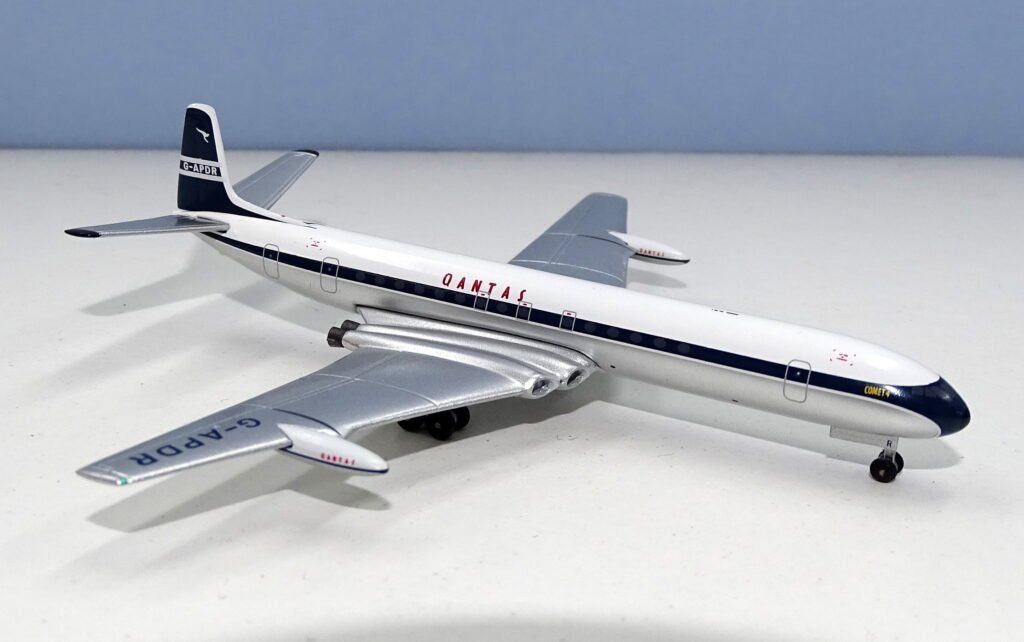
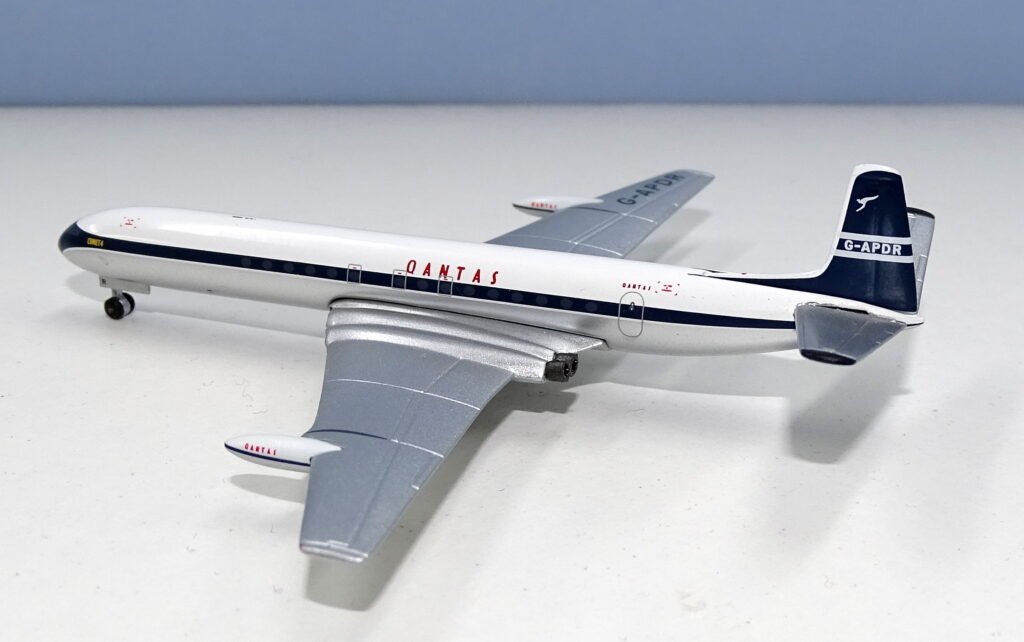
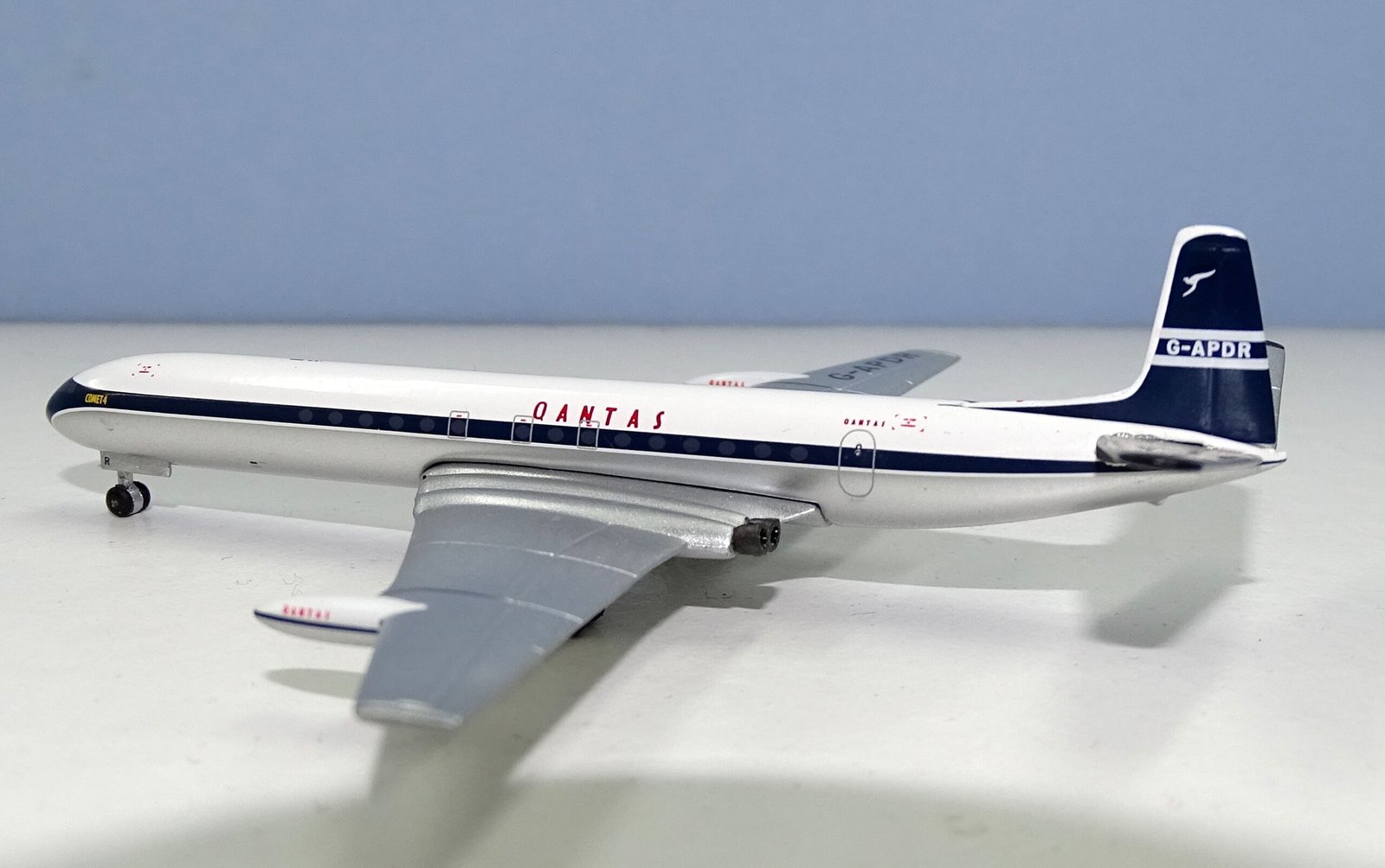
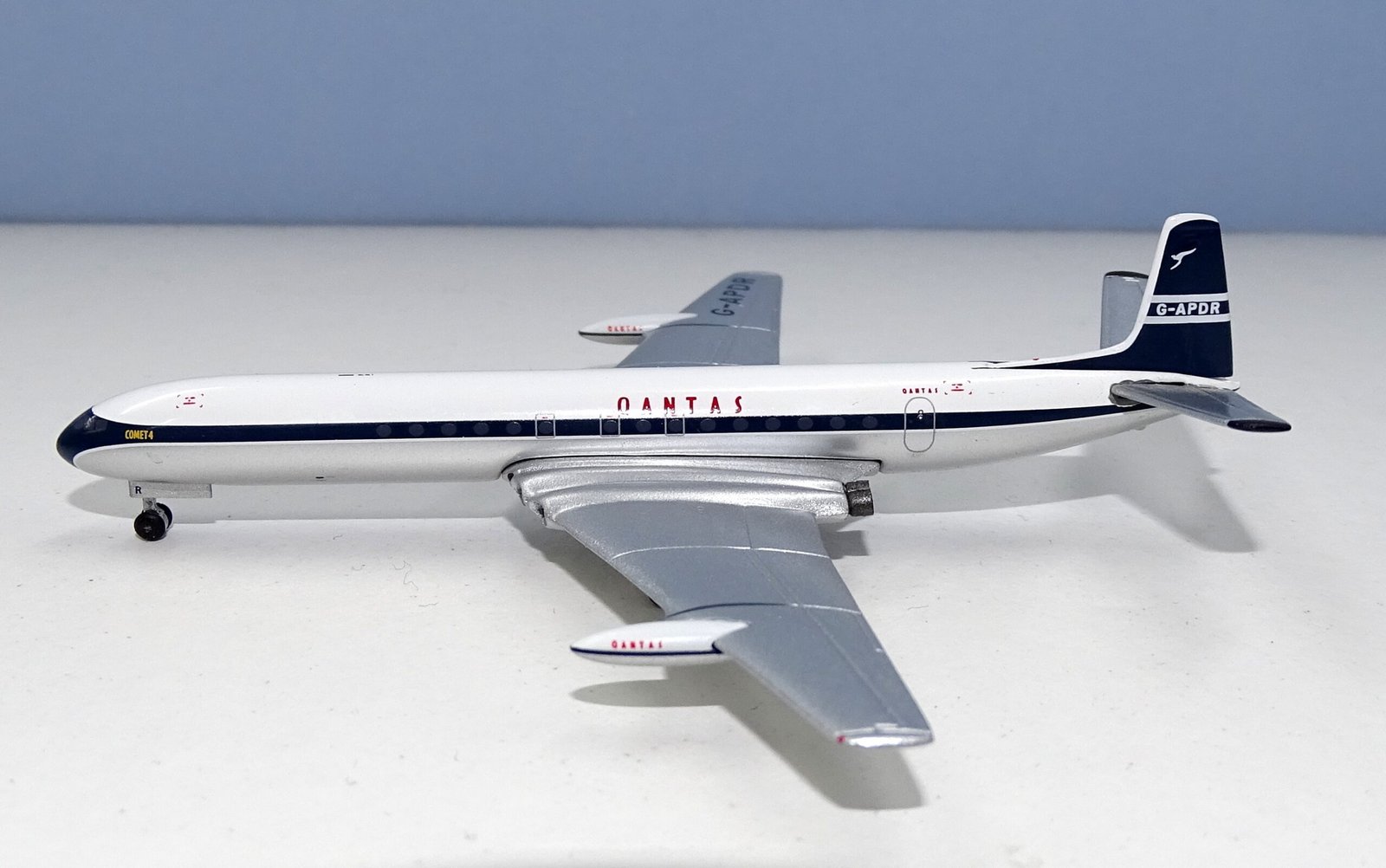
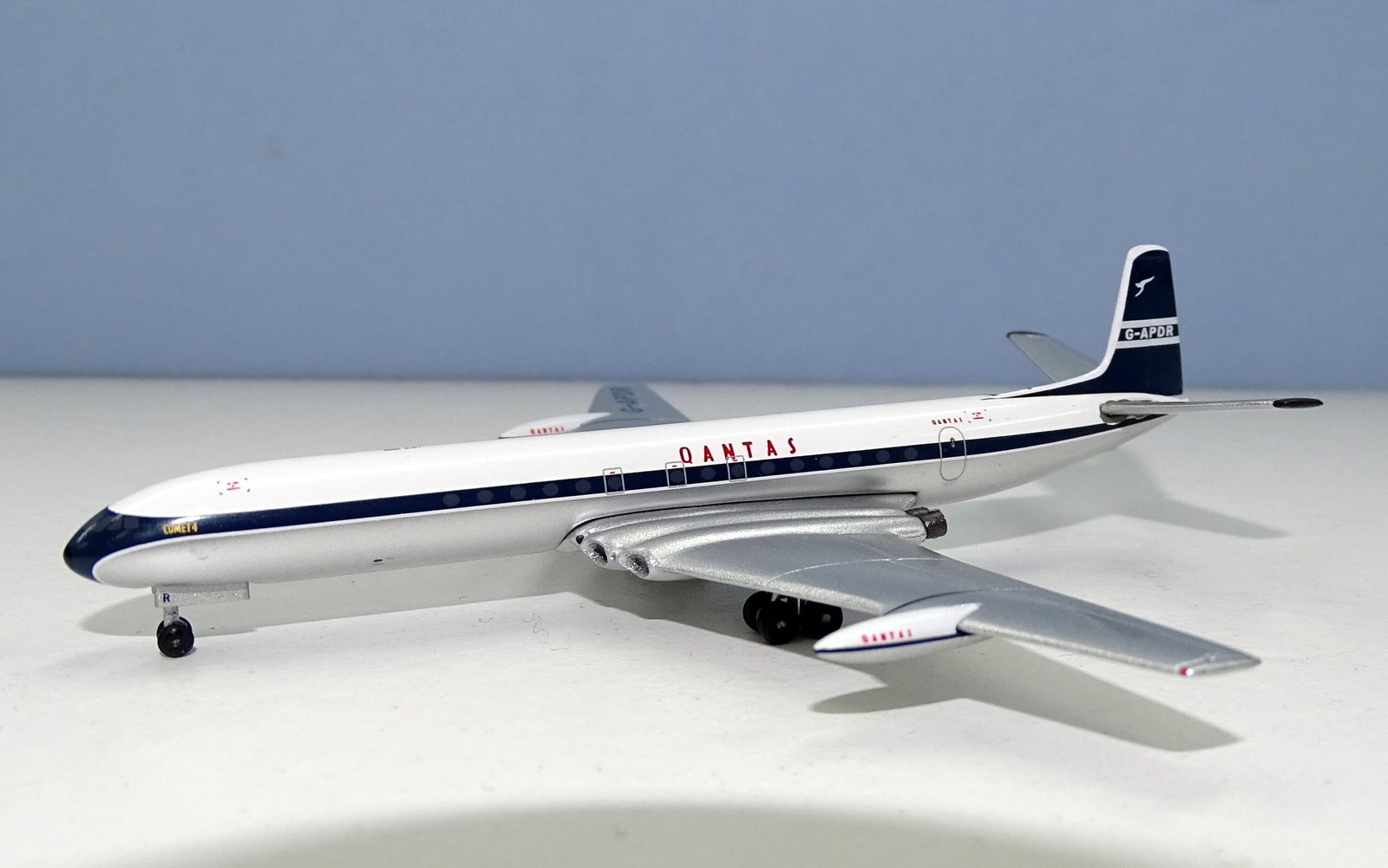
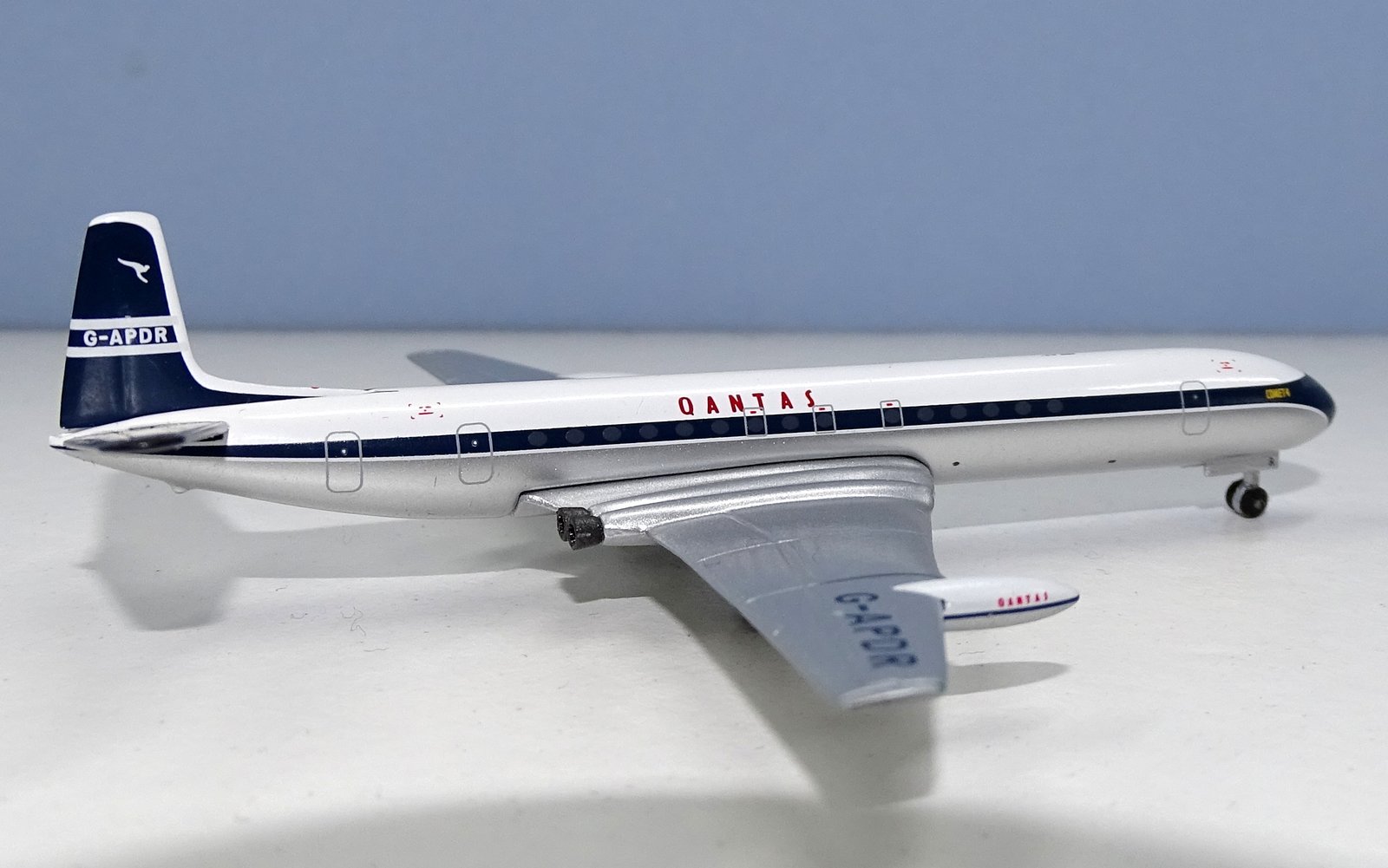
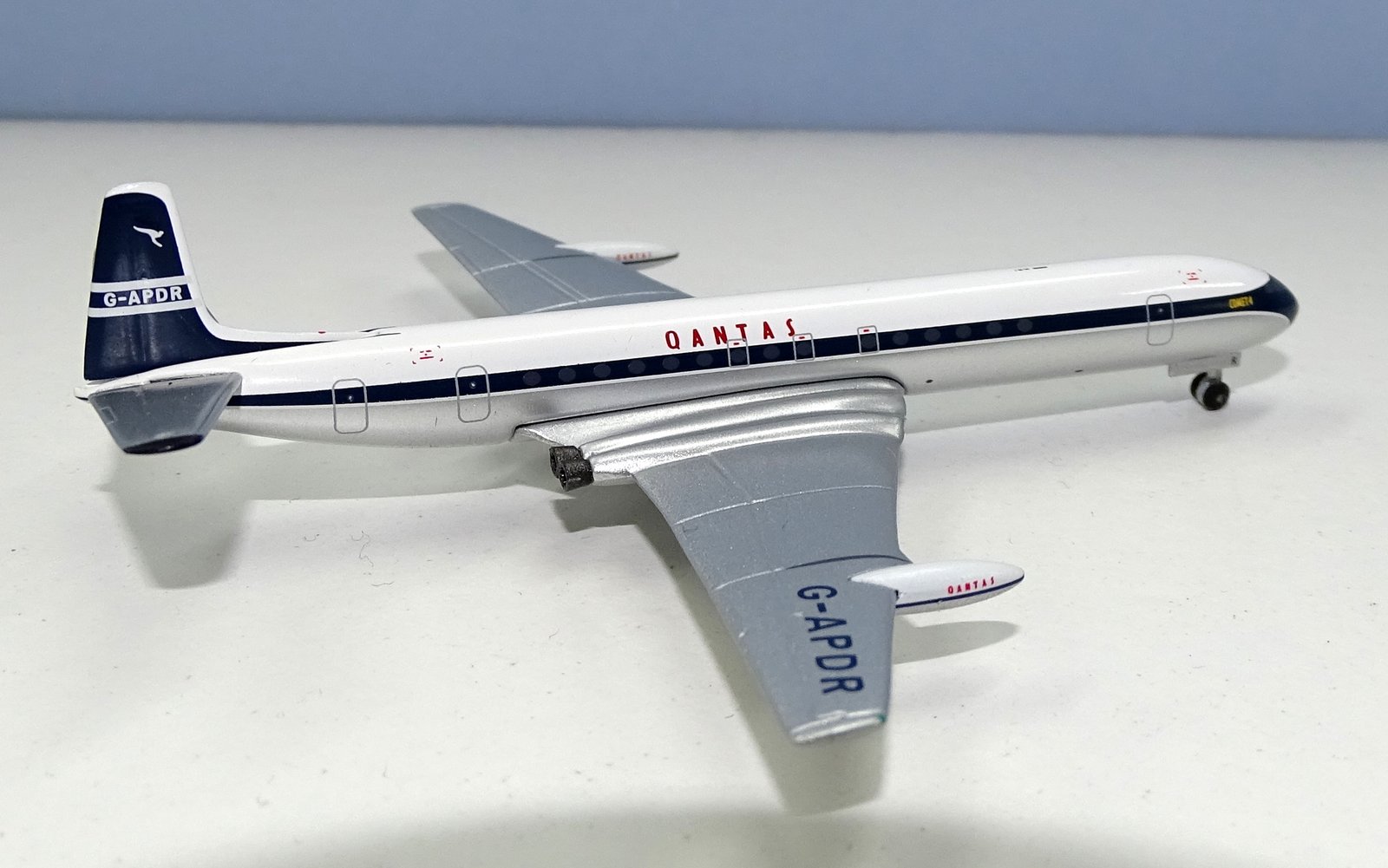
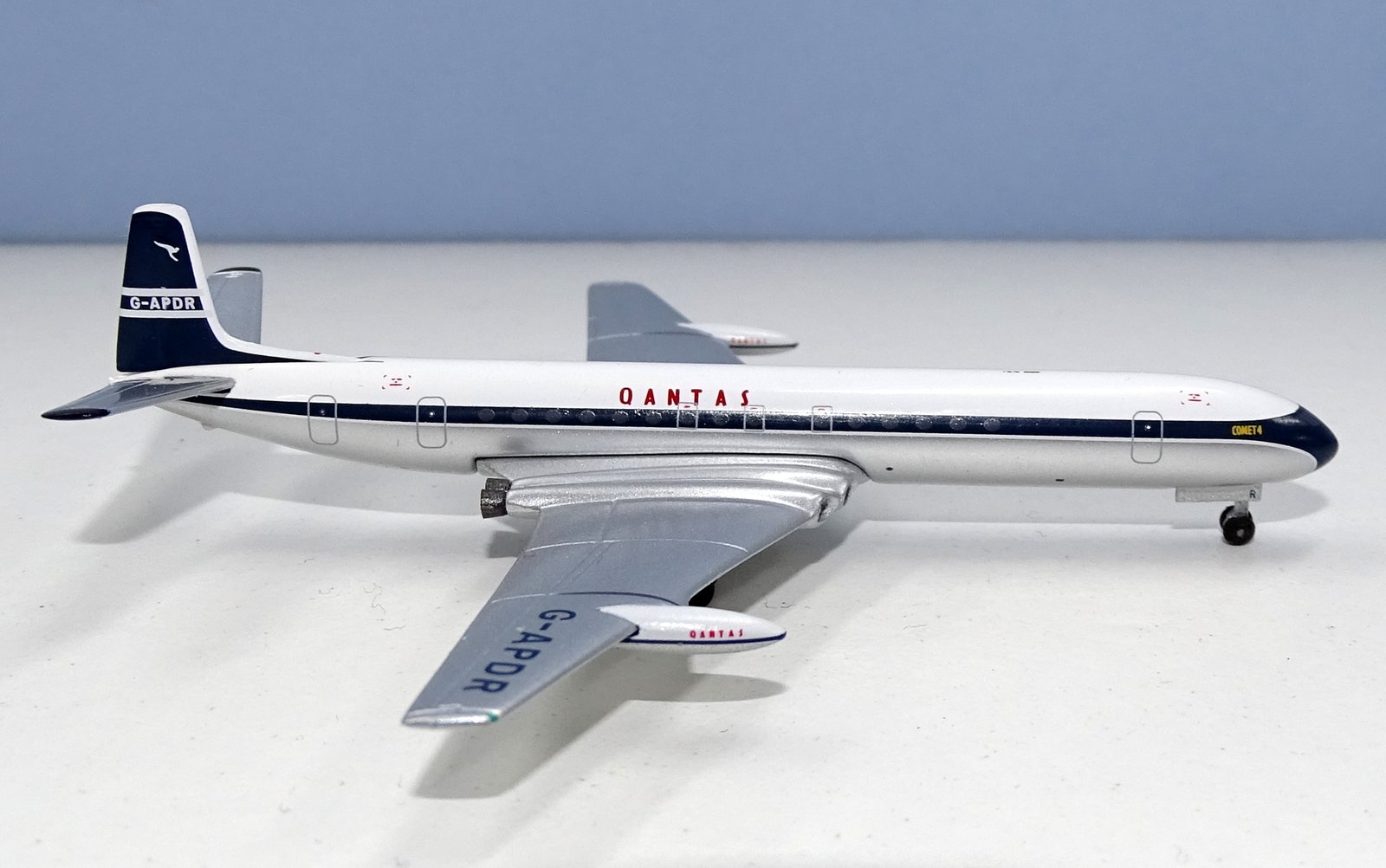
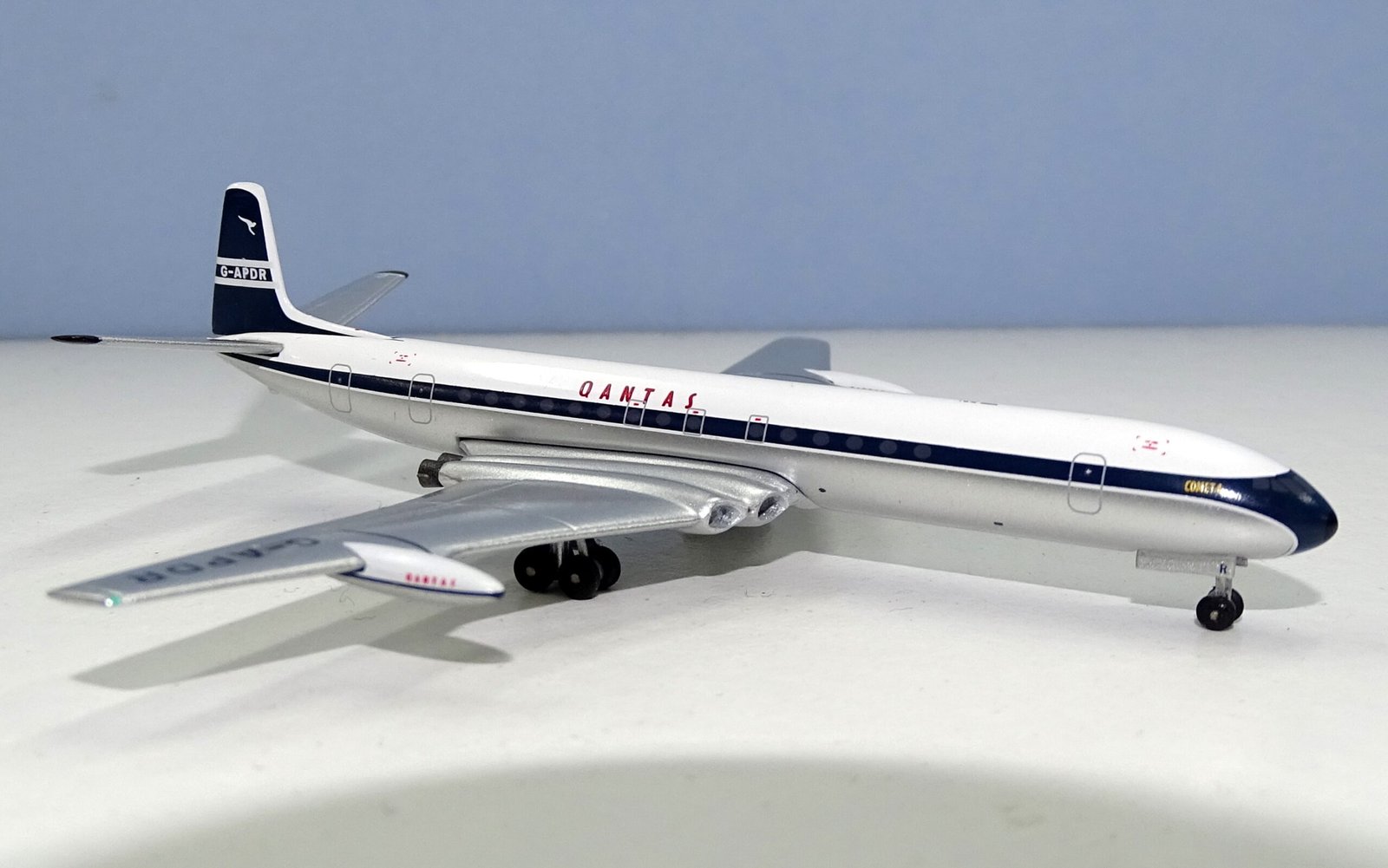
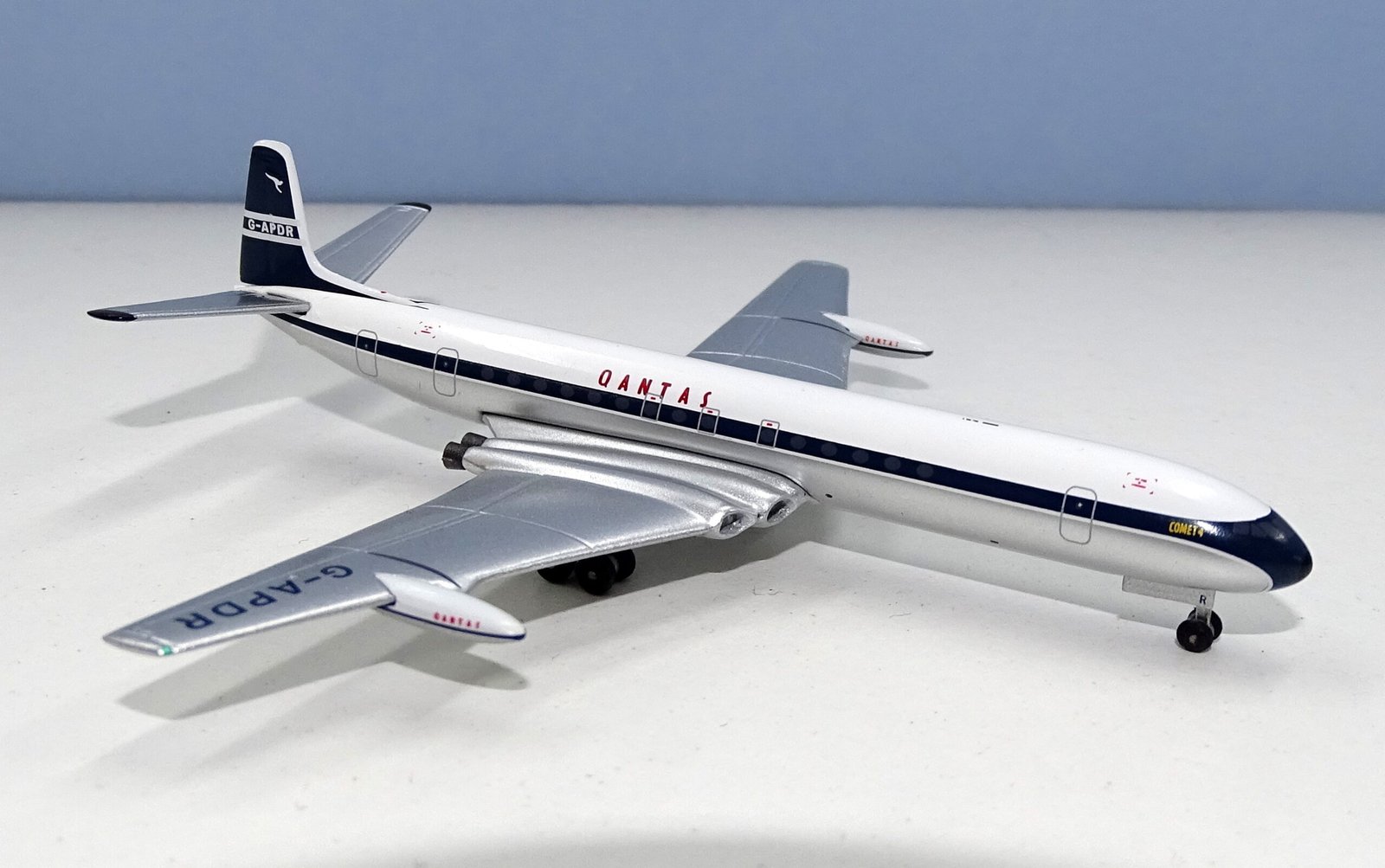
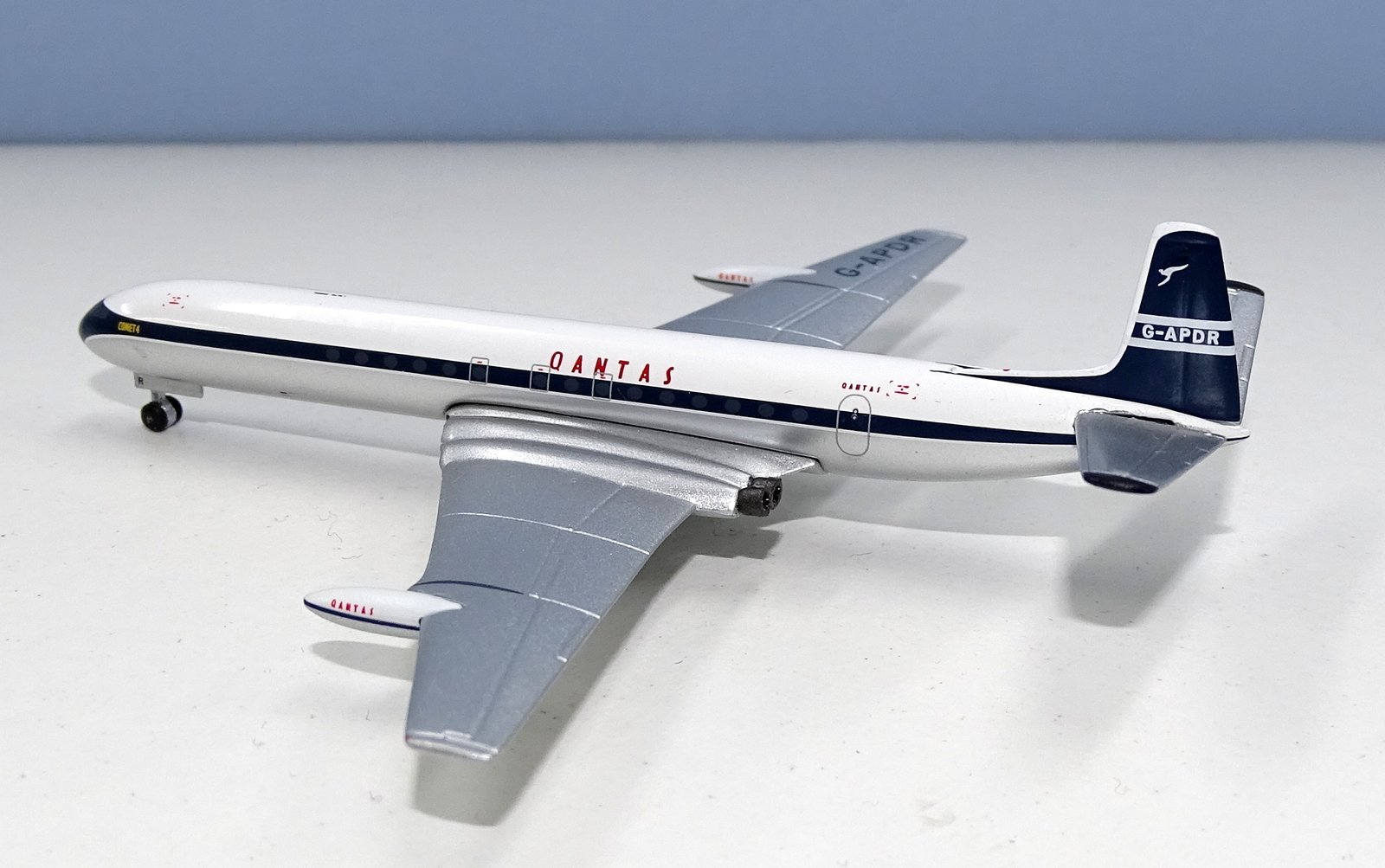
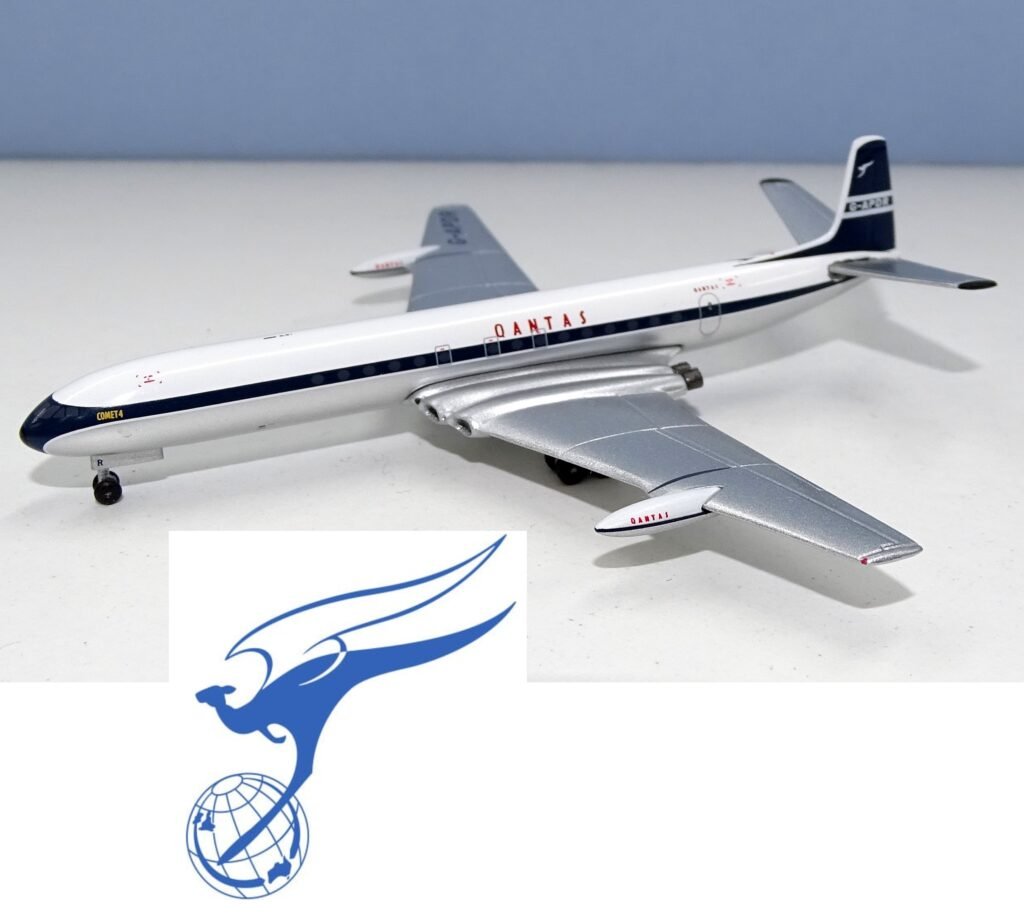
Qantas de Havilland Comet IV G-APDR 1:400 Scale Aeroclassics Model
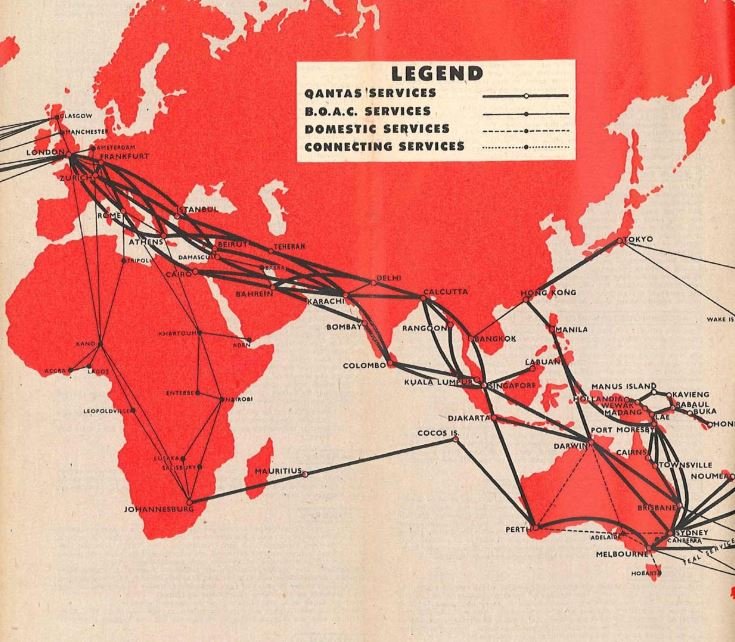
Qantas had been rightly disappointed during the first half of the 1950s by the failure of the Comet 1 and the delays that had befallen the Bristol Britannia. The airline had grown significantly with the takeover of British Commonwealth Pacific Airlines Limited and it was obvious that new equipment was needed. The number one route was still the famous ‘Kangaroo Route’, which since 1947 was operated in a profit-sharing partnership with BOAC, but the airline also had routes to Hong Kong, Japan and South Africa plus now BCPA’s network too.
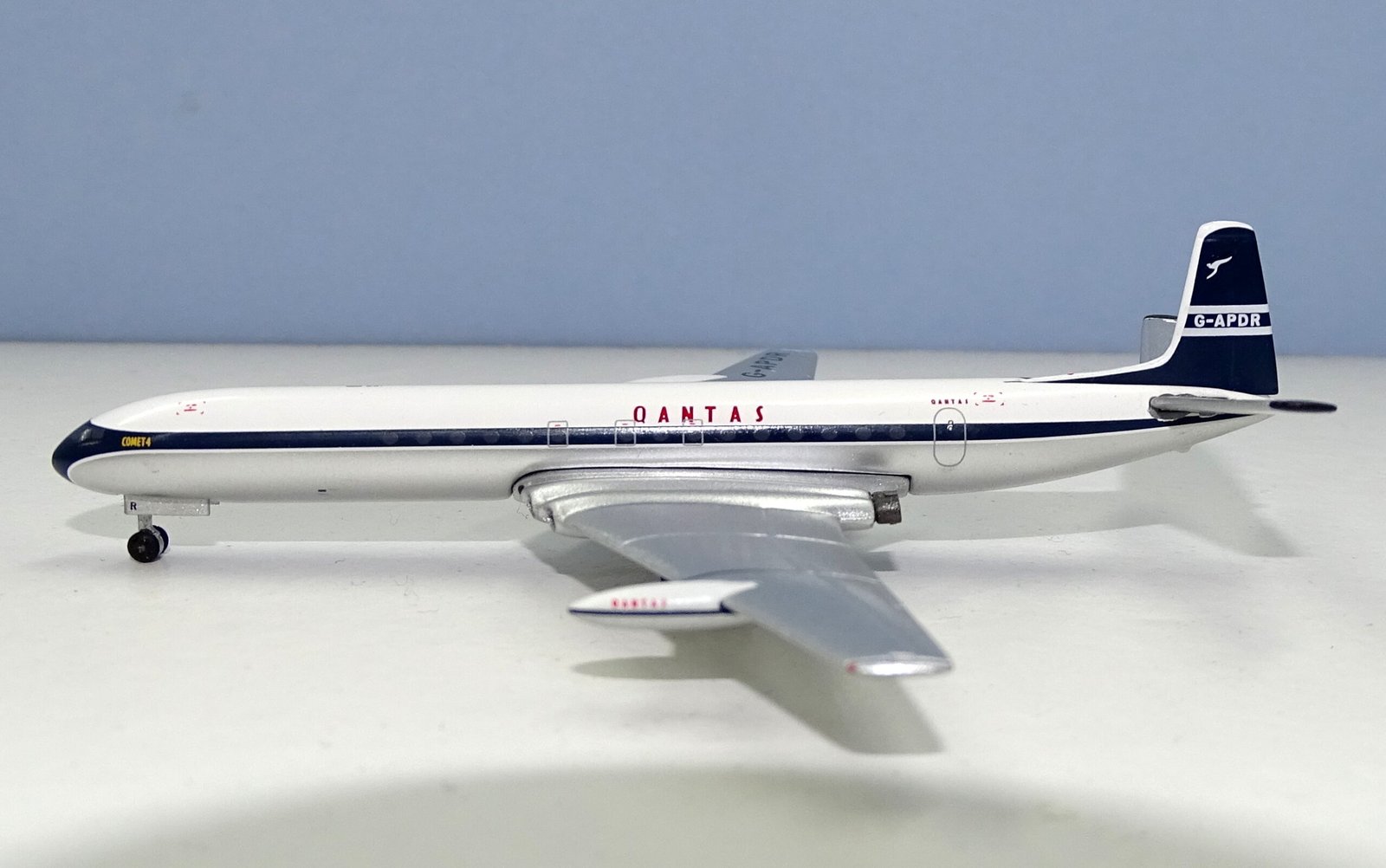
Qantas de Havilland Comet IV G-APDR 1:400 Scale Aeroclassics Model
BCPA had actually ordered three Comet 2s from de Havilland, although the agreement had never been fully finalised. By late 1953 it was clear that the Comet programme was now hopelessly delayed, following the disasters that had befallen the Comet 1, and any plans by Qantas to take the type were permanently shelved. Likewise, even at this early stage it was evident that the new Bristol Britannia turboprop was having major issues with its engines and would be delayed.
The mid-1950s was a time of steady growth for Qantas as it attempted to expand it service and connect with the UK across the Pacific as well as via the traditional Kangaroo routing. It also faced competition from Pan Am and Canadian Pacific. It needed to remain competitive and although Qantas was keen to operate the same equipment as BOAC, at least on the Kangaroo route, the British aircraft were simply inferior to competing American jets by the time they were available.
Qantas ordered the special Boeing 707-138 on September 6, 1956 and by this time the Comet IV and Britannia were well out of the running. Instead it had been a fight between Boeing and Douglas. It would be the 707s that would replace the trusty Super Constellations and it is symptomatic of the gulf between the Comet and 707 that the Comet IV actually offered less capacity and payload than the Connies, even if it was a lot faster.
Despite the obvious failings of the Comet IV vs the 707 British sources kept up pressure on Qantas through into 1958. In fact, the British exhibited some rather poor form in its rather desperate attempts to see off the Boeing order by highlighting the 707’s take-off issues and questioning its wing strength, alongside various political shenanigans.
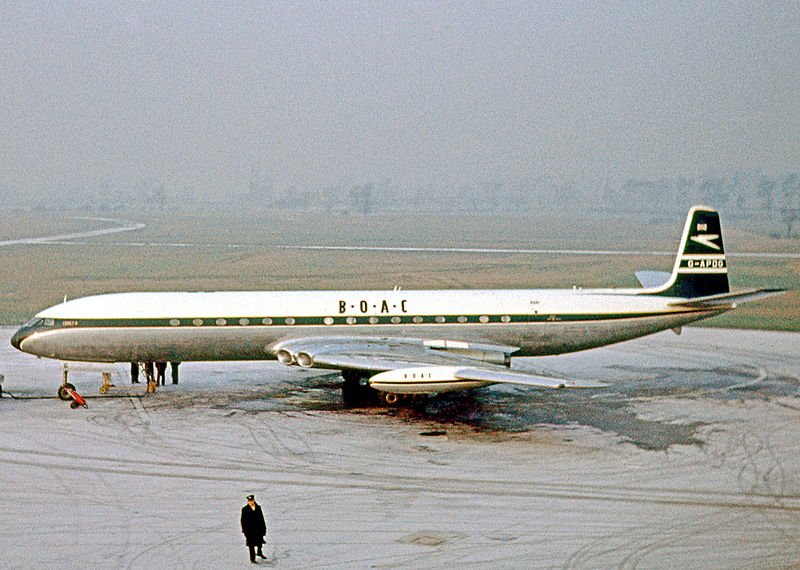
BOAC Comet IV G-APDG at Manchester in 1963. RuthAS [CC BY 3.0 (https://creativecommons.org/licenses/by/3.0)]
Comet IV services finally commenced in September 1958 with BOAC and still Qantas was having to bat away discussion of the type. Its own reports recognized it was a lot safer than the original Comet series, but even though it had superior take-off performance than the Boeing there were concerns over its wing embedded engines. In addition, the 707 was more advanced aerodynamically, faster and had better range. Fundamentally the US product was a lot more economical on a cost per seat mile basis and beat the Comet IV on almost every level. Even so Qantas did have to get the runway lengthened at Sydney to accommodate the early turbojet 707’s ground hugging ways.
Qantas’ first Boeing 707 was finally delivered on July 2, 1959 but surprisingly this didn’t spell the end of the possibility of Qantas operating the Comet IV. The relationship with BOAC that had become strained at times over the past few years was largely repaired by the middle of 1959 and discussion that year finalized the operation of services over the Kangaroo route for the next few years. Perth had yet to be upgraded to allow for 707 operations and BOAC agreed not to operate its Comets or Britannias through the airport until it had been made good for the Boeings. This meant Super Constellations would still operate from Sydney to Singapore via both Perth and Djakarta. Since revenue was shared equally between BOAC and Qantas on the Kangaroo route it made sense to do whatever was best for both airlines and this gave the Comet IV an unlikely opening.
Qantas de Havilland Comet IV G-APDR 1:400 Scale Aeroclassics Model
Qantas de Havilland Comet IV G-APDR 1:400 Scale Aeroclassics Model
Qantas de Havilland Comet IV G-APDR 1:400 Scale Aeroclassics Model
Qantas de Havilland Comet IV G-APDR 1:400 Scale Aeroclassics Model
Qantas de Havilland Comet IV G-APDR 1:400 Scale Aeroclassics Model
Qantas de Havilland Comet IV G-APDR 1:400 Scale Aeroclassics Model
Qantas de Havilland Comet IV G-APDR 1:400 Scale Aeroclassics Model
Qantas de Havilland Comet IV G-APDR 1:400 Scale Aeroclassics Model
Qantas de Havilland Comet IV G-APDR 1:400 Scale Aeroclassics Model
Qantas de Havilland Comet IV G-APDR 1:400 Scale Aeroclassics Model
Qantas de Havilland Comet IV G-APDR 1:400 Scale Aeroclassics Model
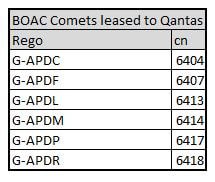
It was agreed that from November 1, 1959 Comet IVs would be leased to Qantas to operate at airfields along the route that were still unsuitable for the Boeing jets. The aircraft would operate with BOAC titles taped over and replaced by Qantas but the aircraft would be wet-leased (i.e. flown by BOAC crews). A small kangaroo was added to the tail and sometimes Qantas titles were applied to the pinion tanks on the wings.
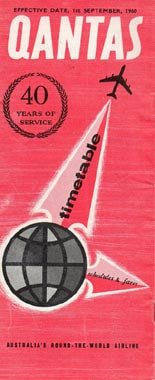
The 707 rules the 1960 timetable
Qantas 707 services actually began on the Kangaroo route on October 15 (three per week plus a Connie) whilst BOAC operated four Britannia 100 services. The Britannias were usurped between November and March by 5 BOAC Comet IV services plus the additional Qantas Comet services. The inaugural Qantas Comet service was flown on November 7, 1959 between London Heathrow and Singapore., routing via Athens, Teheran, Colombo and Kuala Lumpur.
Qantas leased six Comet IVs at various times operating the LHR-SIN segment and the aircraft gave surprisingly long service. In fact, due to demands on the 707s elsewhere in the Qantas network, and the fact that BOAC itself was operating Comets, the last Qantas Comet service wasn’t flown until May 30, 1963, as QF745-053.
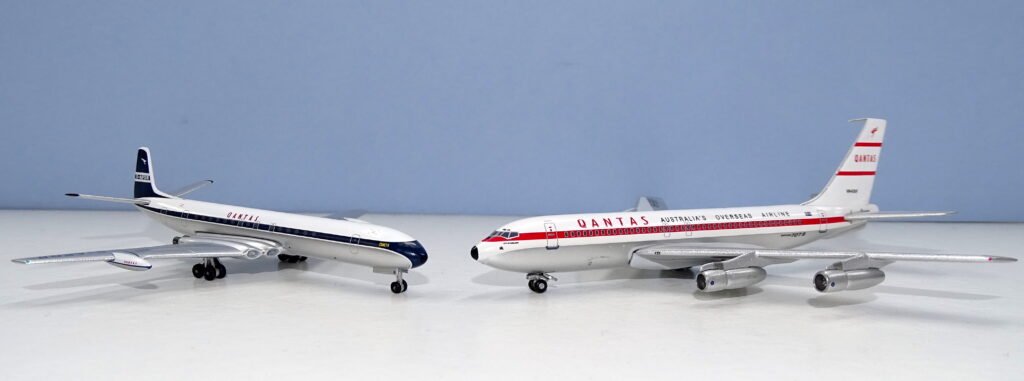
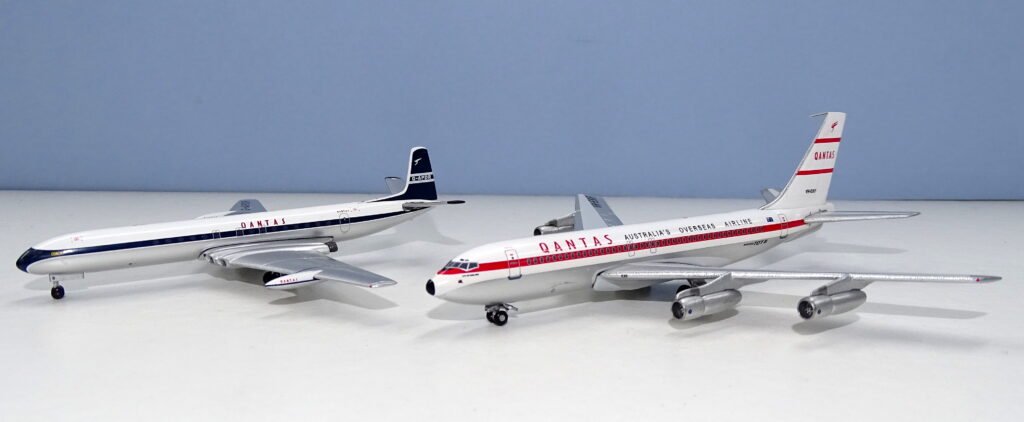
A wonderfully evocative shot shows one of the ex-Qantas Comets G-APDC in front of a Qantas 707-138B in 1963 at Heathrow. Ken Fielding/https://www.flickr.com/photos/kenfielding [CC BY-SA 3.0 (https://creativecommons.org/licenses/by-sa/3.0)]
Given the success the 707-138s would be for Qantas, especially after they were refitted with turbofans, it is impossible to criticize the Australians for acquiring the best product available despite the longstanding relationship with the mother country. Even so British persistence paid off eventually and even though Qantas never purchased the de Havilland product the Comet IV saw several years of good service wearing, an admittedly small, Kangaroo.
References
Gunn, J. High Corridors: Qantas 1954-1970. University of Queensland Press Aussie Airliners Comets