The UK charter airline scene has always been ultra-competitive and highly susceptible to economic downturns, which disproportionally impact spending on luxuries like package holidays. For that reason, the creation and cessation of charter airline activity was common during the heyday of IT charters. Few names managed any long-term success but one of those that made its mark was a relative latecomer – Air 2000.
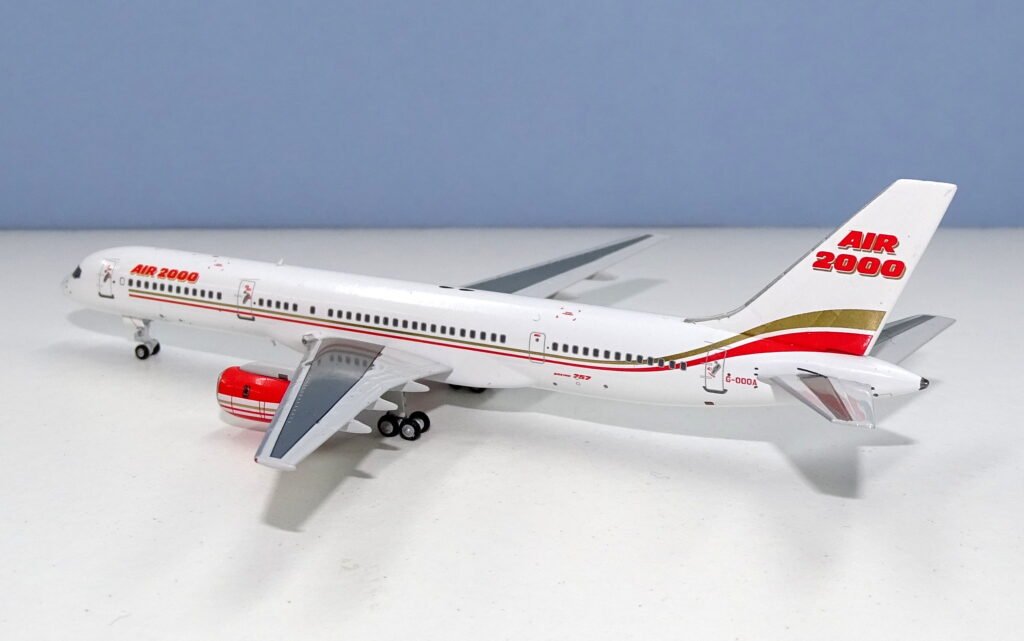
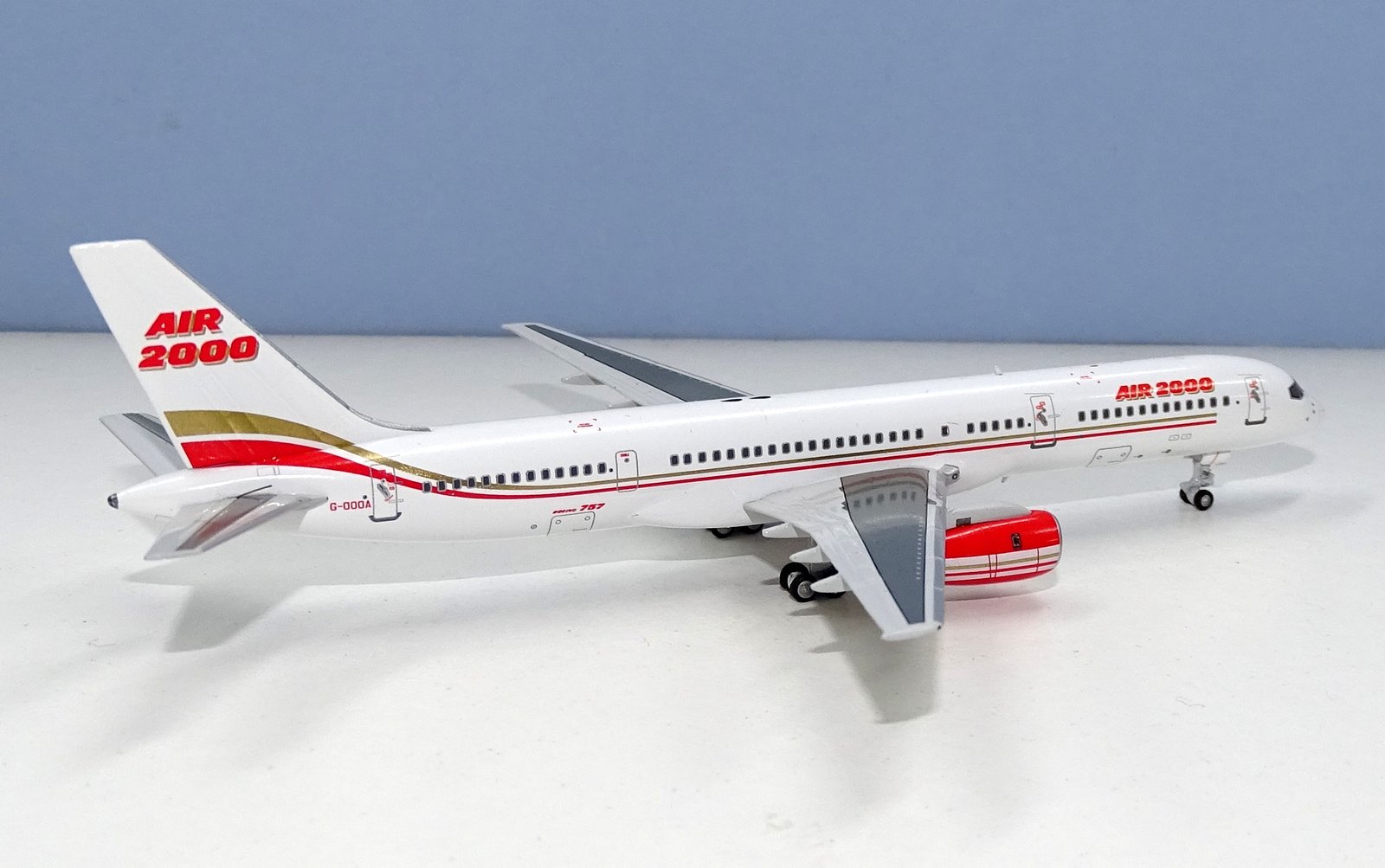
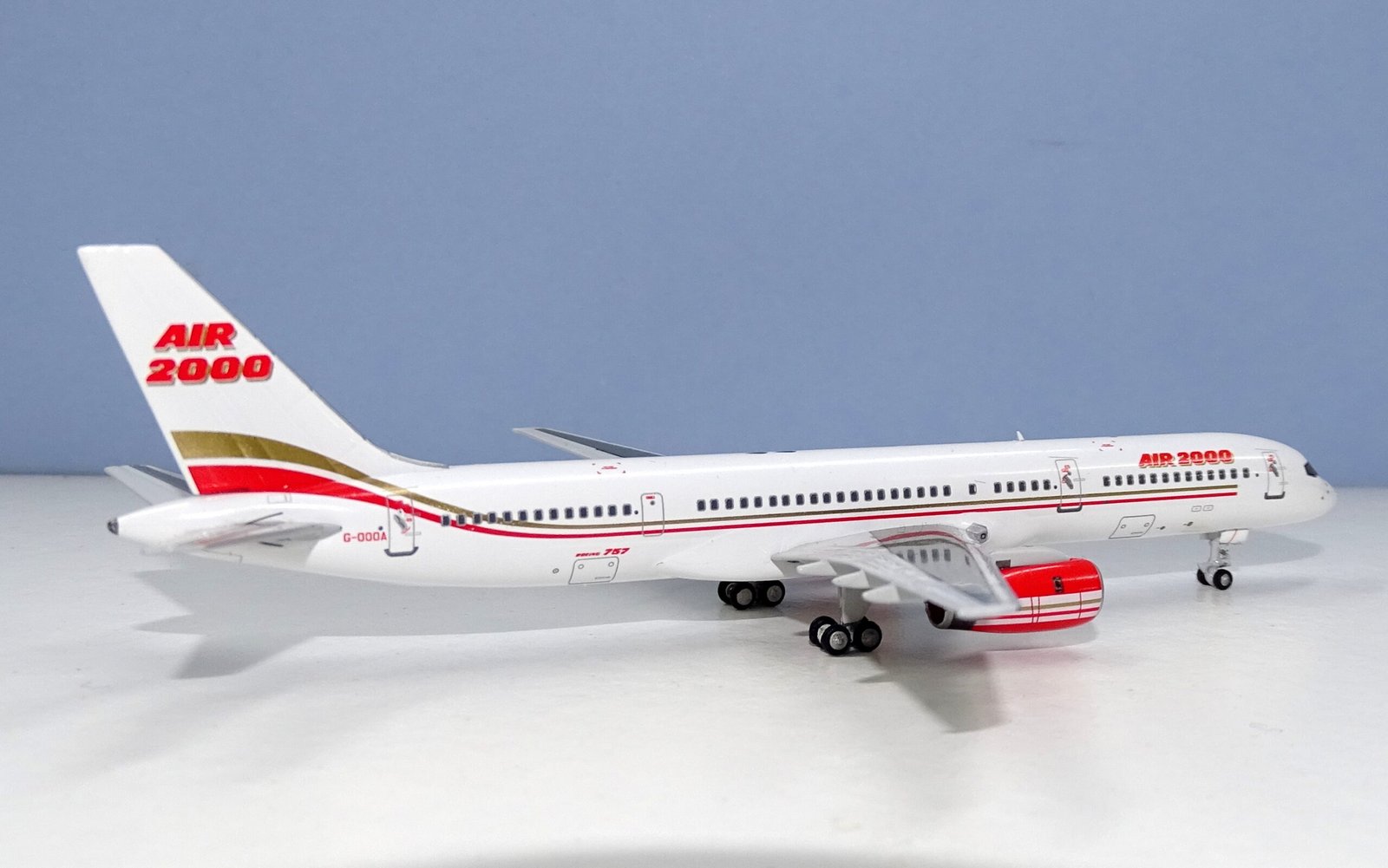
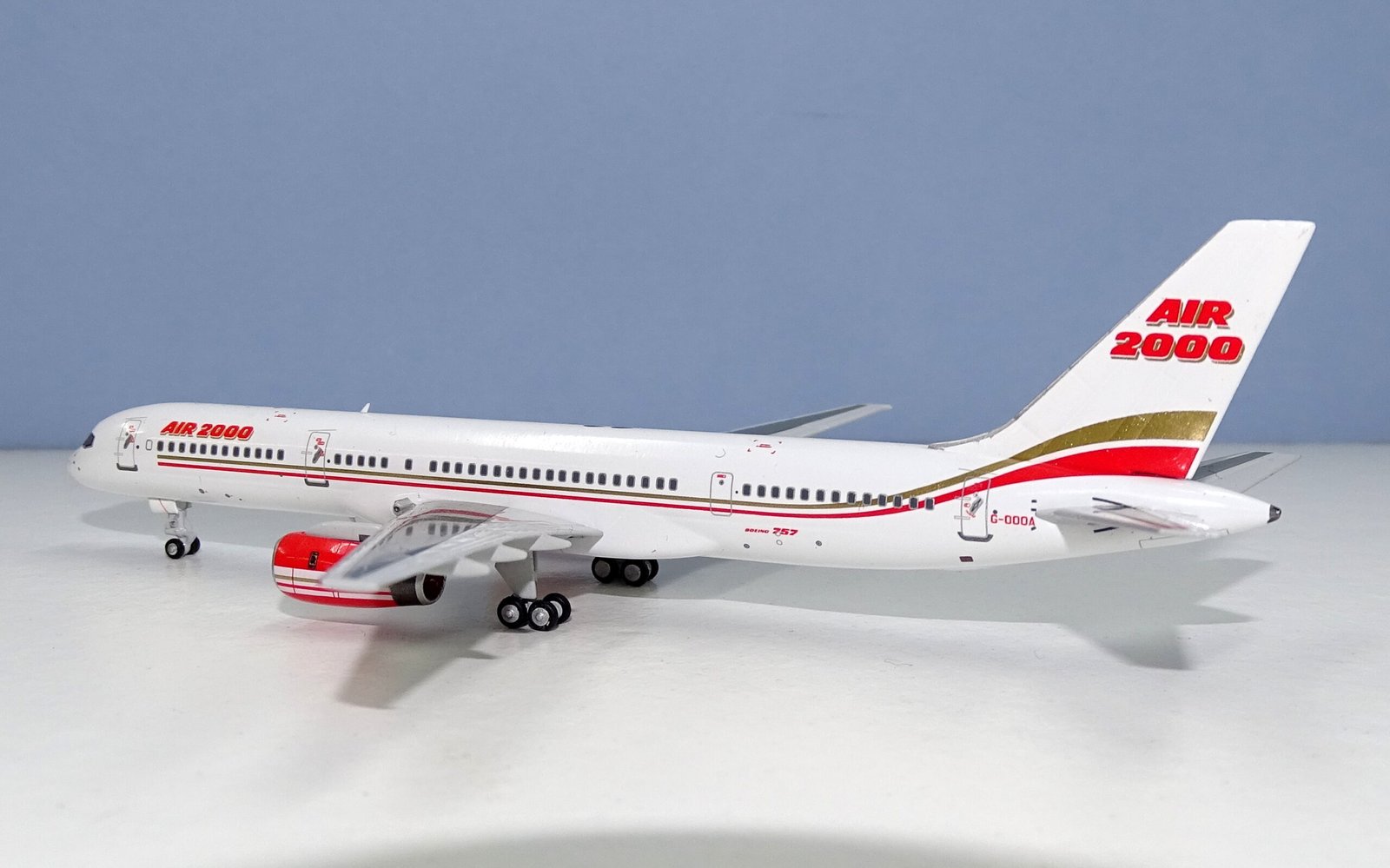
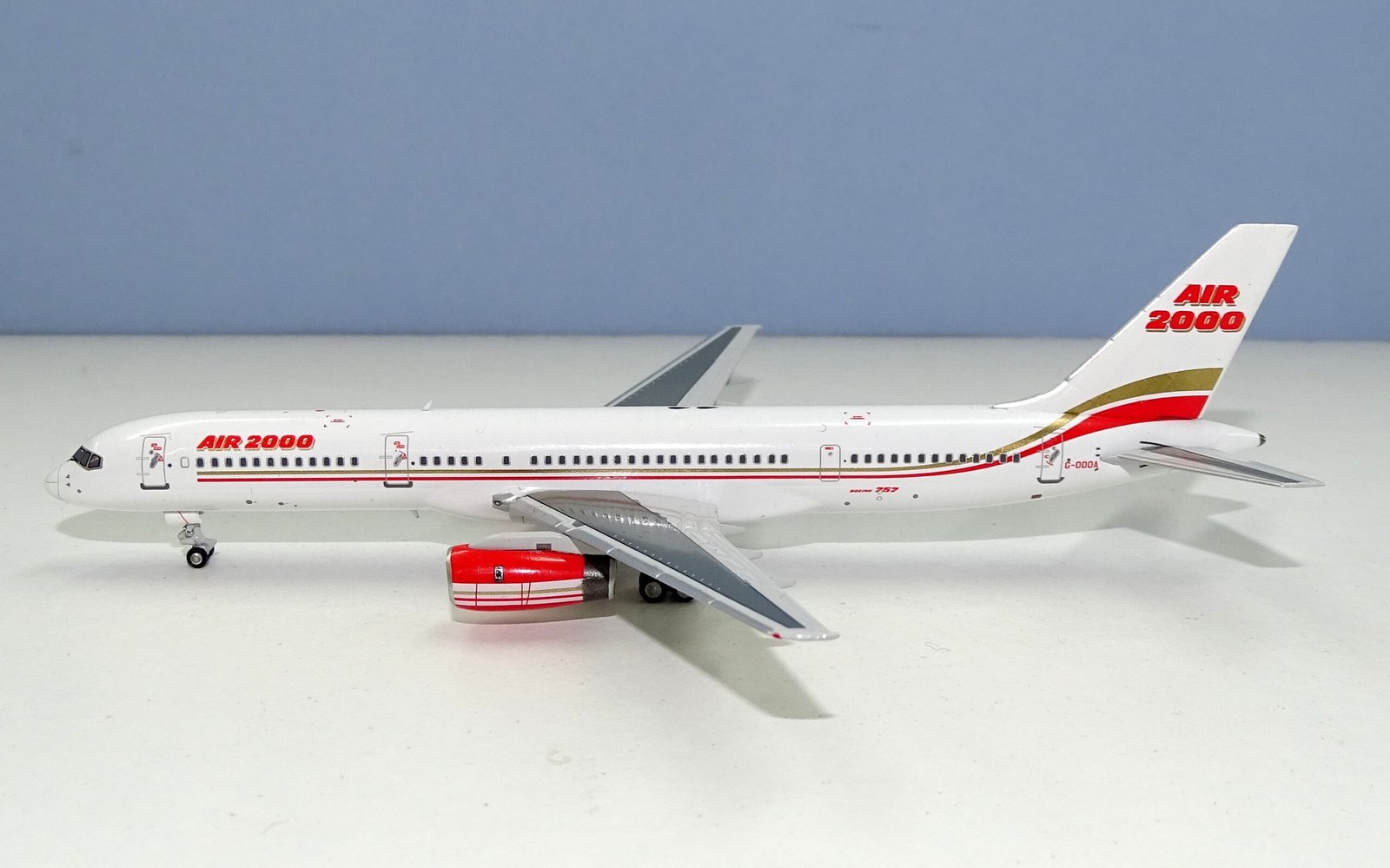
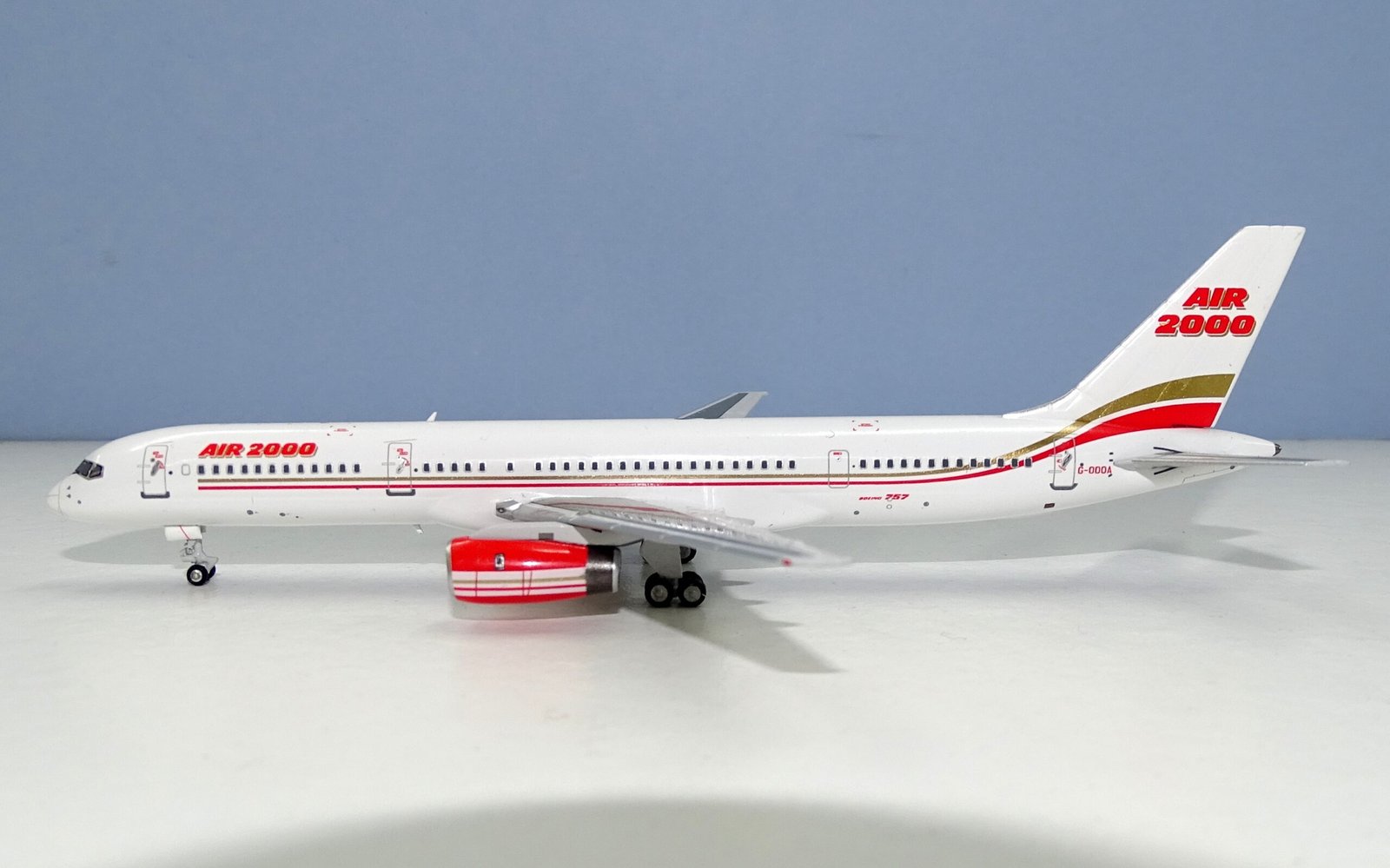
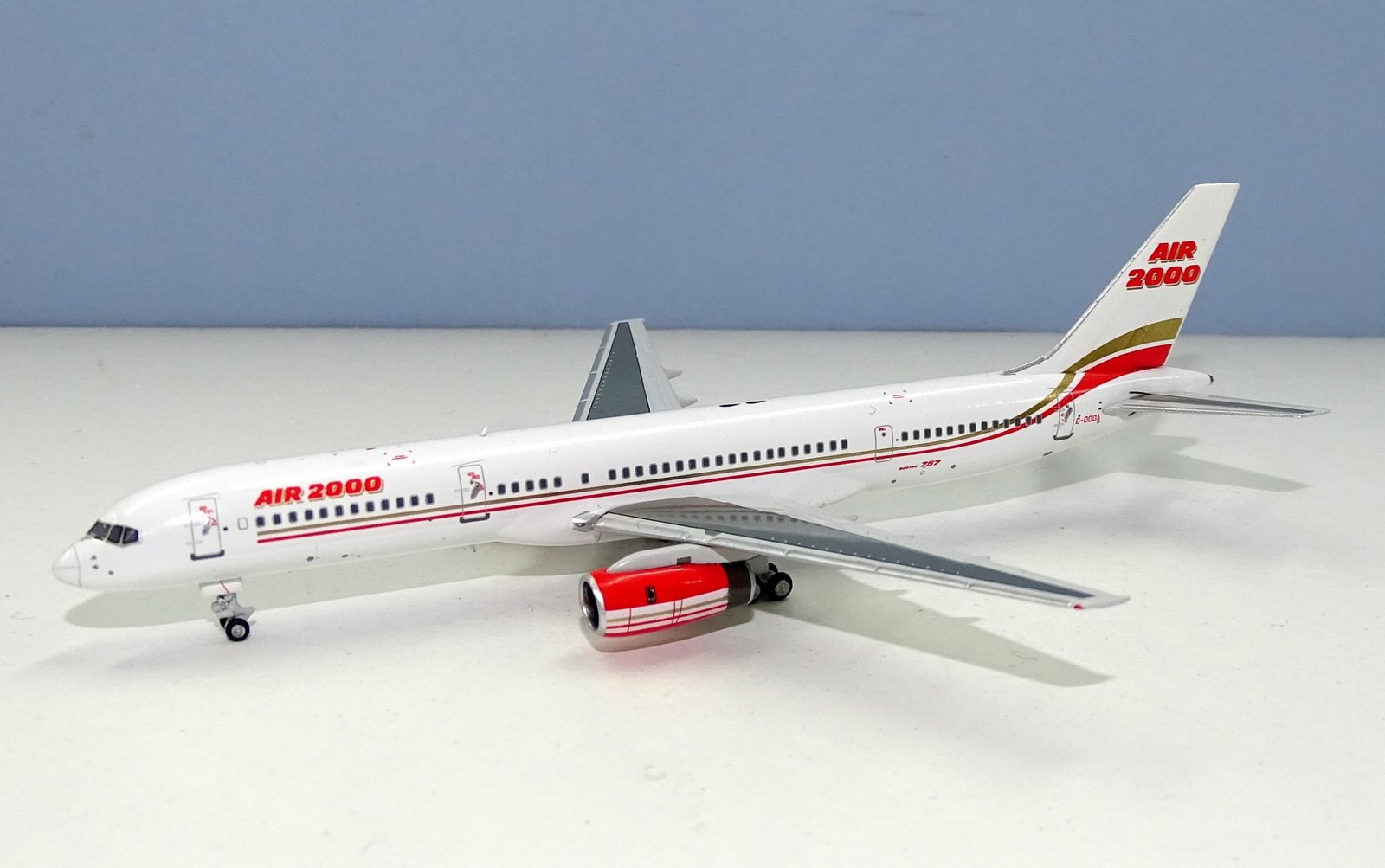
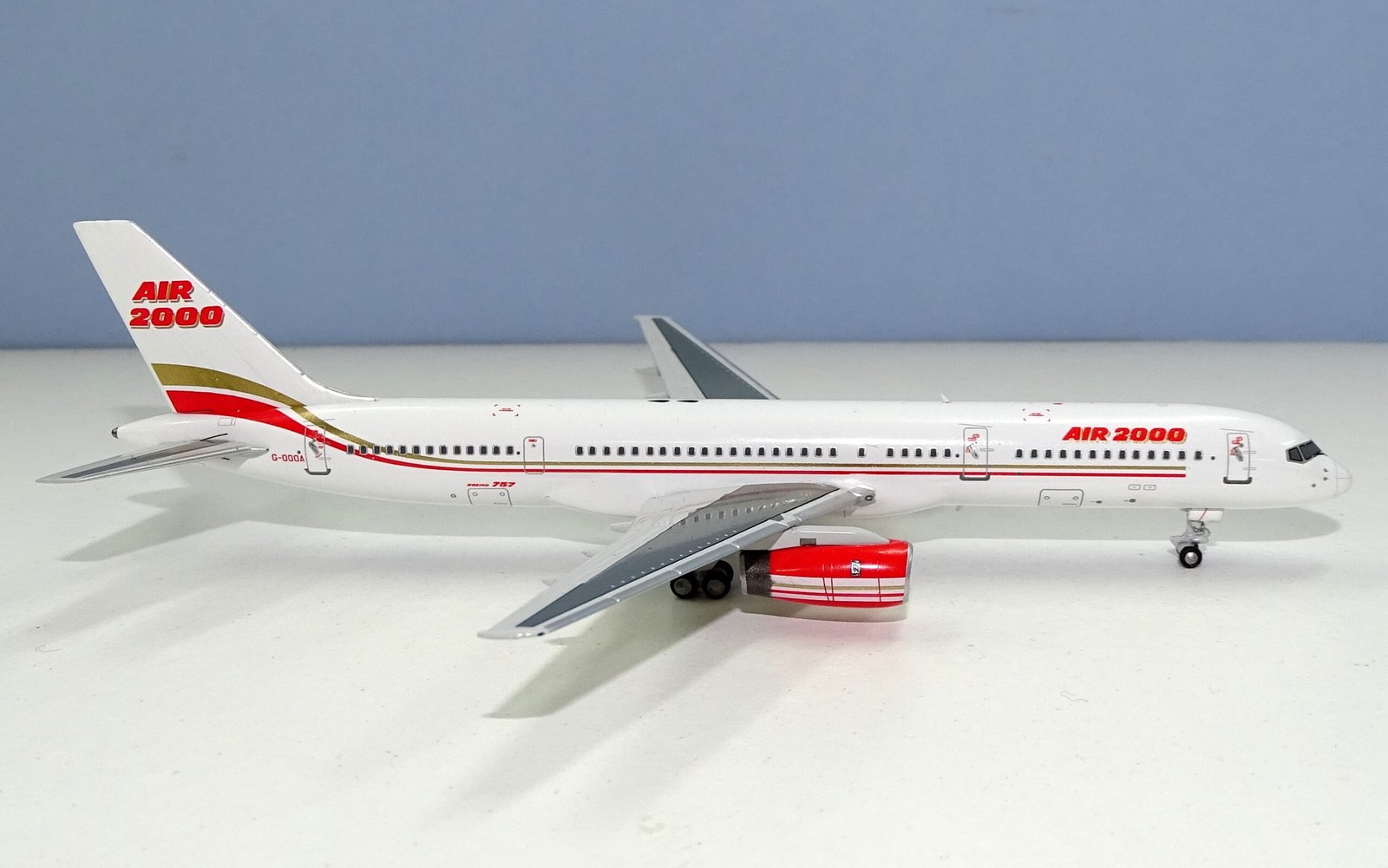
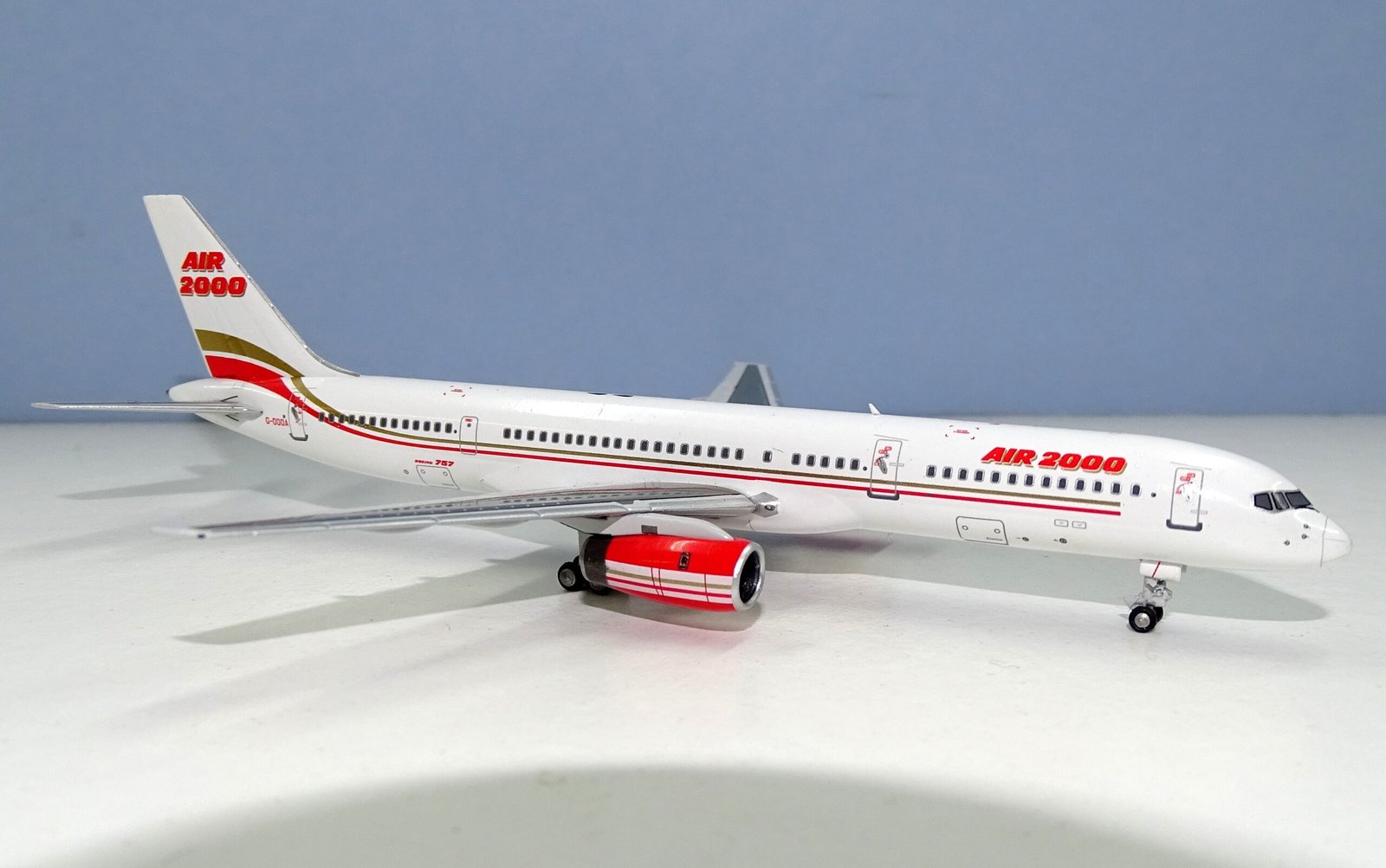
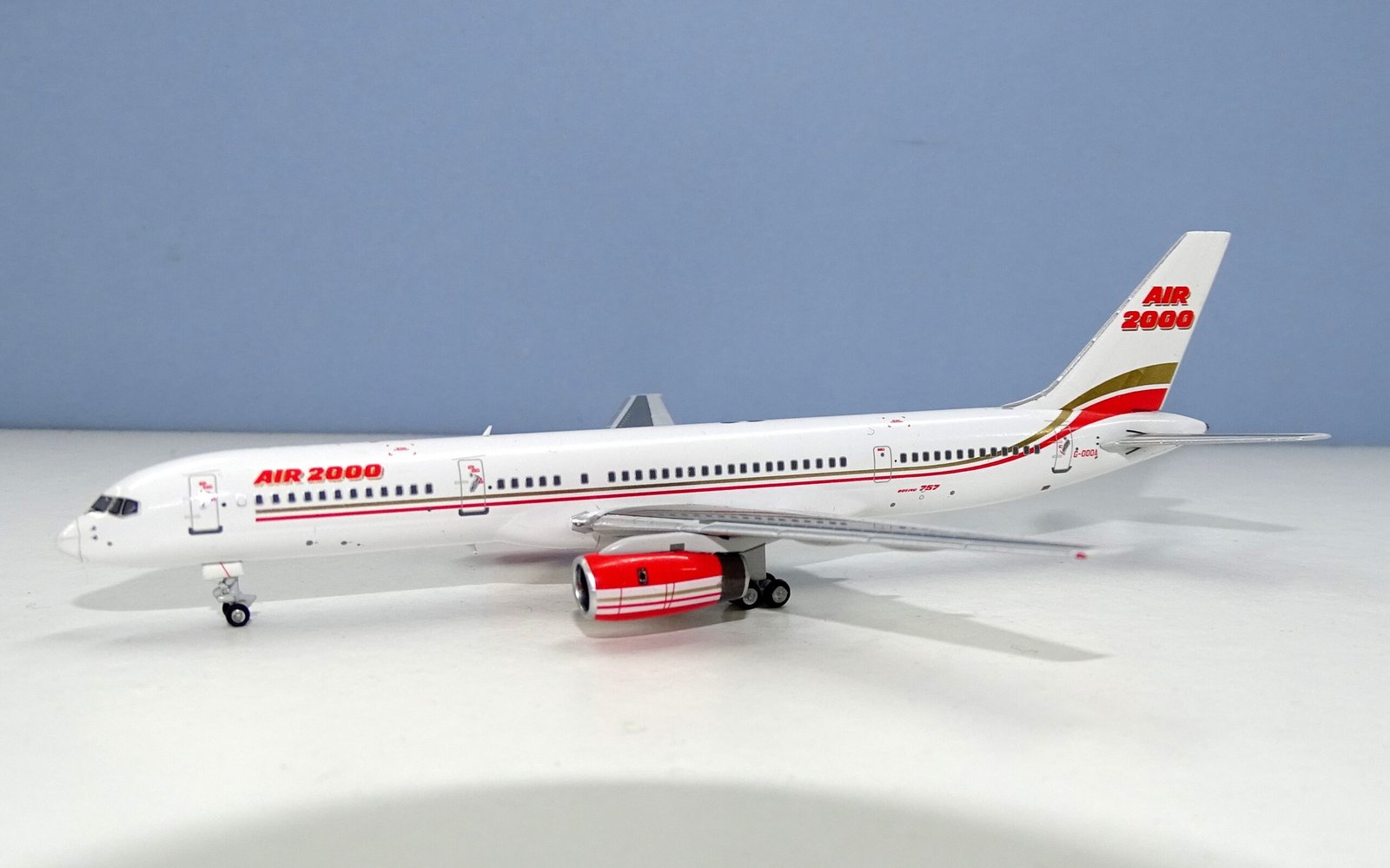
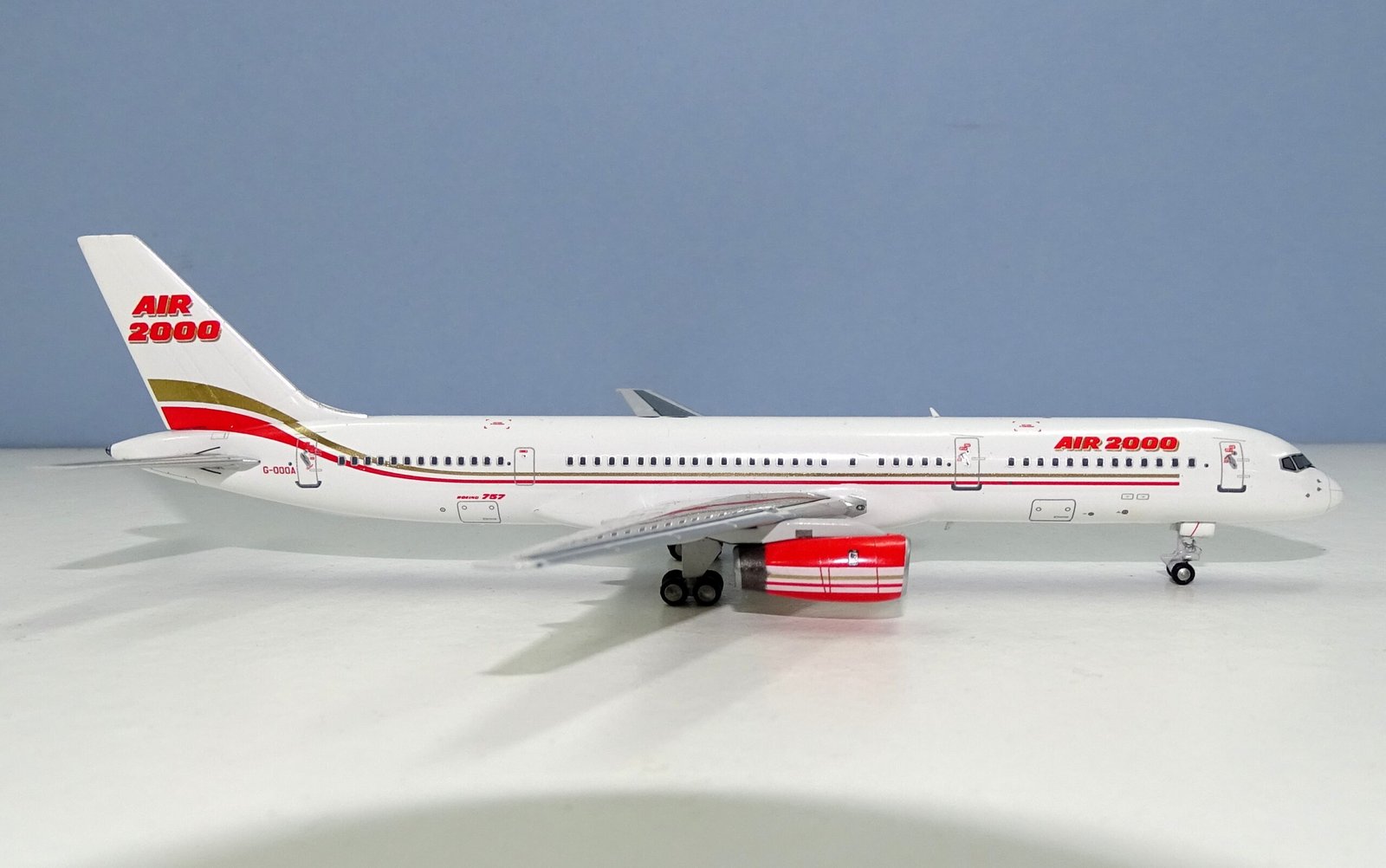
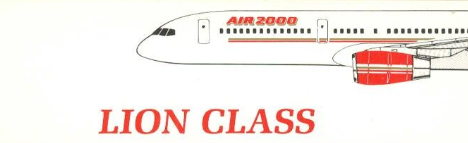
Air 2000 Boeing 757-28A G-OOOA NG Models 1:400 Scale Model
During the 1980s vertical integration of charter airlines with tour operator owners became commonplace and airlines, like Dan Air, that did not have a strong relationship with a particular tour operator struggled. Most tour operators began their own charter airlines. Many of these did quite well but several vanished as their parent company was swallowed up resulting in their merger into larger holdings. Orion Airways for example was merged into Britannia, when its parent, Horizon Travel, was acquired by Britannia’s parent Thomson, and Inter-European was merged into Airtours when its parent, Aspro Travel was taken over by the Airtours Group.
Owners Abroad was the UK’s third largest tour operator and had a specialist villa hire business. By 1986 it could look around at rivals like Thomson and ILG and see that they possessed their own airline subsidiaries (Britannia and Air Europe respectively). To counter this Owners Abroad paired with former Air Europe CEO Errol Cossey and took a 76% stake in a new airline, which became Air 2000 (ICAO callsign JETSET). Cossey, became CEO and aimed for Air 2000 to provide superior service but also a renewed focus on regional markets. For that reason, the new airline was to be based out of Manchester.
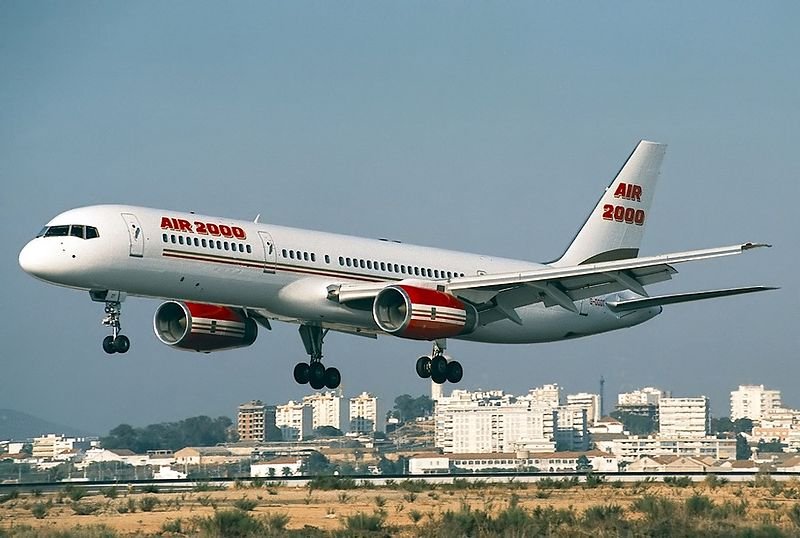
Pedro Aragão [CC BY-SA 3.0 GFDL]
As with most other UK charter airlines the Boeing 757 proved to be ideal for the type of operations Air 2000 was looking at. This was due to its, at the time, unrivalled capability to carry 231 passengers non-stop on sectors such as Glasgow-Corfu. Funding was found to order a pair of new aircraft from ILFC in the Spring of 1986 for entry into service for the 1987 season.
The first 757 G-OOOA in 1987 her first season. Pedro Aragão [CC BY-SA 3.0 GFDL]
The first aircraft, G-OOOA, was delivered from Seattle on April 3, 1987 and followed by G-OOOB on April 28th. The first service was on April 11 with 228 passengers transported between Manchester and Malaga. For the first summer season both aircraft were based out of Manchester and operated about 35 flights a week in total to 12 Mediterranean destinations. About 50% of seats were contracted to Owners Abroad. Cabin service was high quality and hot meals were served.
Air 2000 Boeing 757-28A G-OOOA NG Models 1:400 Scale Model
Air 2000 Boeing 757-28A G-OOOA NG Models 1:400 Scale Model
Air 2000 Boeing 757-28A G-OOOA NG Models 1:400 Scale Model
Air 2000 Boeing 757-28A G-OOOA NG Models 1:400 Scale Model
Air 2000 Boeing 757-28A G-OOOA NG Models 1:400 Scale Model
Air 2000 Boeing 757-28A G-OOOA NG Models 1:400 Scale Model
Air 2000 Boeing 757-28A G-OOOA NG Models 1:400 Scale Model
Air 2000 Boeing 757-28A G-OOOA NG Models 1:400 Scale Model
Air 2000 Boeing 757-28A G-OOOA NG Models 1:400 Scale Model
Air 2000 Boeing 757-28A G-OOOA NG Models 1:400 Scale Model
The first year brought a profit of over GBP3 million aided no doubt by being able to lease out one of the 757s to British Airways during the winter period. The second operated flights from both Manchester and London Gatwick.
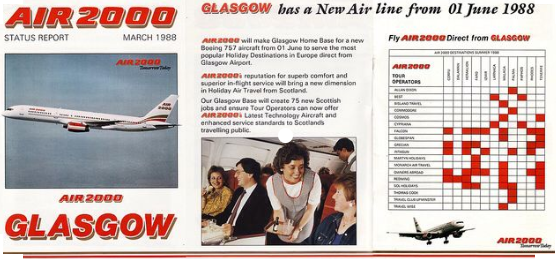
This success allowed the addition of a pair of extra 757s for summer 1988 and these were based primarily out of Edinburgh and Glasgow. The 757s proved able on longer sectors like Glasgow-Larnaca. With extra aircraft Air 2000 looked for a more permanent plan for finding winter homes for its fleet in the down season from November-March. In 1988 it formed Air 2000 Airlines Ltd. in Canada however only 9 days prior to starting operations the National Transportation Agency of Canada refused the new airline its international licenses.
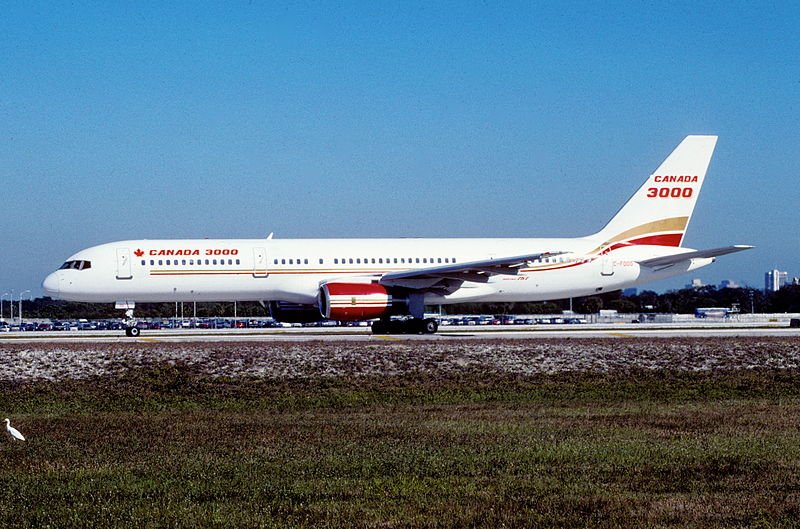
Air 2000 was forced to sell its 25% share to a Toronto Investment company and Air 2000 Canada became Canada 3000. Even so both airlines shared the same livery facilitating annual leases of equipment between themselves and so accomplishing the original aim.
Air 2000's G-OOOG became C-FOOG on at least 6 different occasions when in service with Canada 3000
The Air 2000 livery was unusually subdued for a charter airline and quite classy, no doubt a reflection of the level of onboard service. It featured a pair of thin pinstripe cheatlines in red and gold, which flared upwards to encompass the base of the fin. Titles were red with a gold shadow whilst the engines were red with a repetition of the pinstriping through the middle.
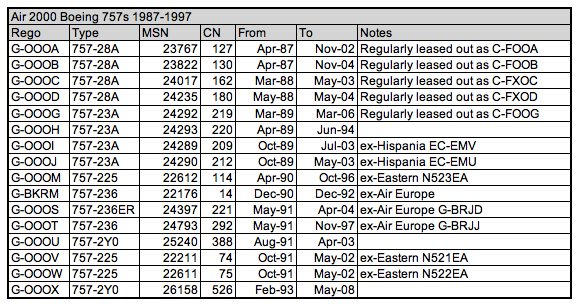
As the airline approached the 1990s it benefitted from the collapse of several other charter airlines. As well as adding new 757s leased from AWAS it also picked up several from the fleets of the defunct Spanish charter airline Hispania. The Gulf War was the catalyst for an economic downturn but once again Air 2000 benefitted and picked up several 757s from the fleet of the collapsed Air Europe. In 1990/91 3 ex-Eastern 757-225s were also added.
Part of the carrier’s success had been because it used its 757s to focus on longer haul charters such as Gatwick-Mombasa in Kenya, which began in October 1988 incorporating ‘Super Lion Class’ in the front cabin.
Air 2000 also pioneered transatlantic 757 ETOPs flights from Gatwick to Newark, Boston and Orlando (via Bangor). The latter were originally Winter only routes but soon became year-round. Gatwick would increasingly become an important base for the airline but Manchester and Glasgow remained vital to the network as well. Summer 1989 saw the start of long-haul services from both airports to Orlando and Acapulco.
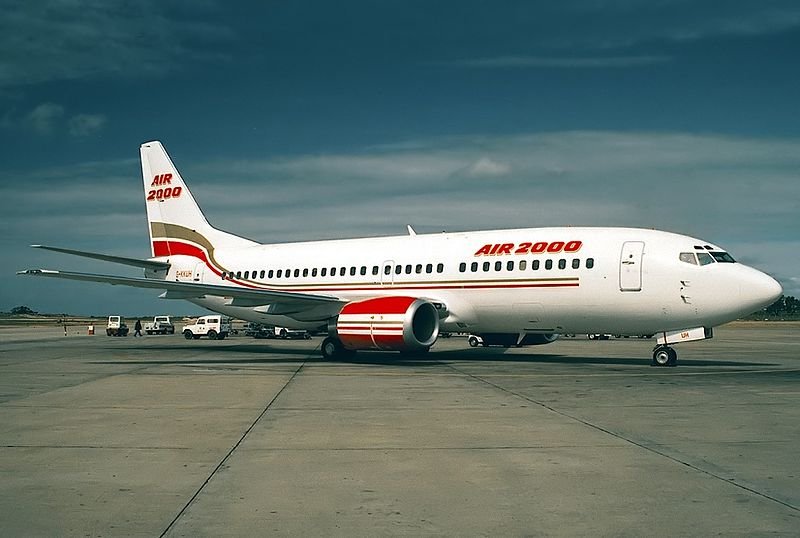
Air 2000's sole 737 G-KKUH. Pedro Aragão [CC BY-SA 3.0 GFDL]
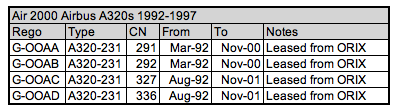
In order to free up the 757s for long haul flying the airline acquired a single 737-300, in January 1989, on lease from ILFC. The aircraft remained in service, mainly from Glasgow, for two full seasons before being passed to Linjeflyg of Sweden. Instead of the 737 Air 2000 settled on the competing Airbus A320 and four arrived on lease from ORIX Aviation between March and August 1992.
G-OOAB in her first season. 1992. Pedro Aragão [CC BY-SA 3.0 GFDL]
Interestingly Air 2000’s long-haul Scottish operations broke new ground elsewhere. Initially, flying from Glasgow on long-haul services challenged the British Government’s ‘gateway’ policy, which meant all intercontinental flights to Scotland had to use Prestwick. The stop added three hours onto the journey time and GBP4,500 to the cost. Air 2000 petitioned the courts and fought a battle, which it finally won in July 1989, to allow it to operate direct flights from Glasgow. The first direct service, between Glasgow and Orlando, took off on September 17. Following this victory the ‘gateway policy’ collapsed and British Airways, Northwest, American Airlines and Air Canada were able to launch services to Glasgow.
By 1993 Air 2000 was flying over 4.2 million passengers making it the 3rd largest charter airline in the UK less than six years after its launch. That was also the year that it branched out into scheduled services connecting Gatwick with Larnaca and Paphos from October. The scheduled business concentrated on Cyprus and in the next few years services began from Birmingham, Glasgow, Manchester and Newcastle. Scheduled flights used the DP identifier rather than the standard AMM.
Despite the airline’s success Owners Abroad had a torrid time during the early 90s. It missed out on a resurgence in the Spanish tourist market and had to fight off a hostile takeover from the competing Airtours Group.
By 1996 aircraft carried the First Choice logo. JetPix [GFDL 1.2 (http://www.gnu.org/licenses/old-licenses/fdl-1.2.html) or GFDL 1.2 (http://www.gnu.org/licenses/old-licenses/fdl-1.2.html)]
Various leadership changes and brand recognition issues resulted in 1994 to restructuring and rebranding of the parent to be called First Choice Holidays. Air 2000 was now flying about 70% of its capacity for First Choice but also flew for 25 other tour operators. Services from Dublin began in 1996 and by March 1997 the fleet stood at 13 757s and 4 A320s.
In about 1998 Air 2000 changed its scheme to what is known as the 'tapestry colours'. Aero Icarus from Zürich, Switzerland [CC BY-SA 2.0 (https://creativecommons.org/licenses/by-sa/2.0)]
Air 2000’s rise from nowhere to third largest charter airline in less than a decade was impressive and the airline would be a major asset as First Choice battled successfully to survive the century’s end consolidation frenzy that it itself helped start with the purchase of Unijet and Hayes & Jarvis. Eventually the airline would fall foul of the consolidation and integration in the tourist market and be rebranded as First Choice Airways but it had certainly outdone the limitations of its original name by easily surviving well beyond the year 2000. Indeed, several of its 757s still serve with Thomson Airways with whom First Choice was eventually merged in 2008.
References Leishman, N. Jetsetting with Air 2000. Airliners Summer 1991 Shaw, R. Boeing 757. Airlife Vomhof, K. Leisure Airlines of Europe. Scoval Press Woodley, C. Flying to the Sun: A History of Britain’s Holiday Airlines