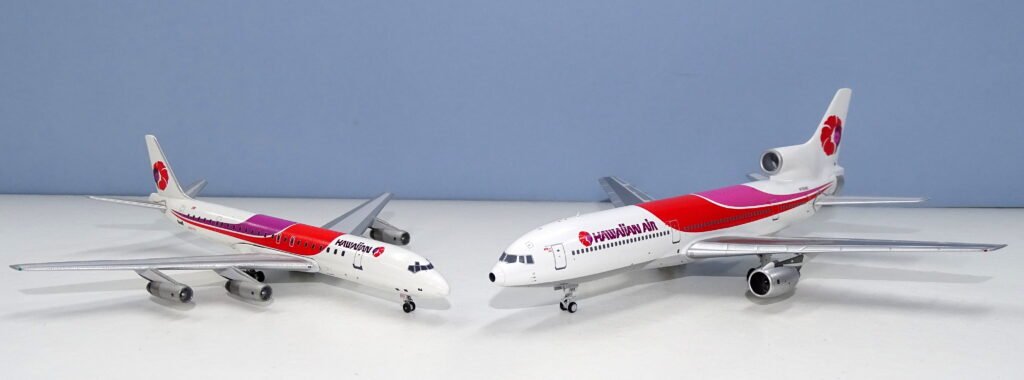
Hawaiian Airlines was faced with the same range of challenges in the deregulated 1980s as other legacy carriers – increased competition, deflated prices and the loss of its protected status. It responded with an unprecedented expansion, hoping to open up Honolulu as a transit hub on the one hand and a major charter player on the other. The strategy was far from a success but the airline just about survived.
During the 1960s and 1970s competition on inter-island flights was limited to Hawaiian Airlines and Aloha. There was strong competition to serve Hawaii from the mainland USA but even after the opening of these routes they had been limited to only US trunk airlines and they had to serve Honolulu. Deregulation brought massive change to the landscape as not only could new start-ups compete on inter-island flights but other Hawaiian destinations were open to long-haul traffic, allowing inter-island services to be bypassed.
For Hawaiian Airlines these would prove a major challenge that appeared to threaten the viability of the carrier’s entire business model. Their response was to take the bull by the horns and expand to meet the challenges, a move which would in the end cause an existential crisis for the airline.
Hawaiian at the beginning of the 1980s was still purely operational on the inter-island flights connecting the various Hawaiian Islands with their Honolulu base. The fleet, which had consisted of DC-9-50s and Shorts 330s in 1980 was gradually transitioning to McDonnell Douglas DC-9 Super 80s (i.e. MD-80s) and De Havilland Dash-7s.
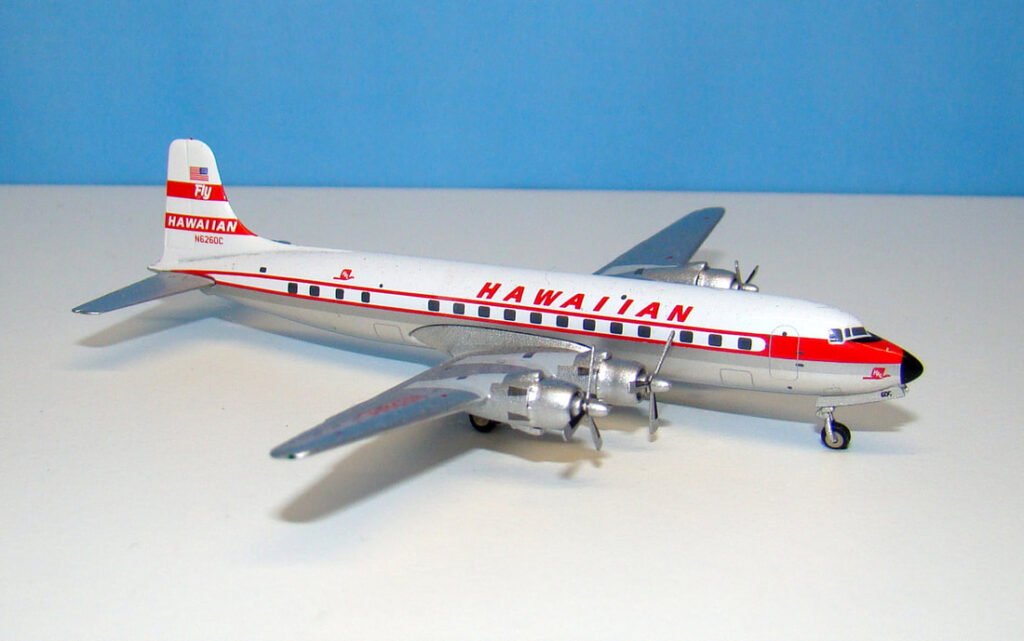
Hawaiian Airlines Douglas DC-6 N6260C Gemini Jets 1:400 Scale Model Airliner
The carrier had previously operated some longer-range aircraft, in the form of several DC-6s, during the early 1960s and had attempted to acquire scheduled services to both the mainland USA and Pacific region, but had never been able to get past the CAB to acquire the route authorities. Instead the carrier had only been able to get permission to fly a military contract under the MATS programme, which it did so between October 1959 and December 1960 connecting Honolulu to Midway, Kwajalein and Eniwetok.
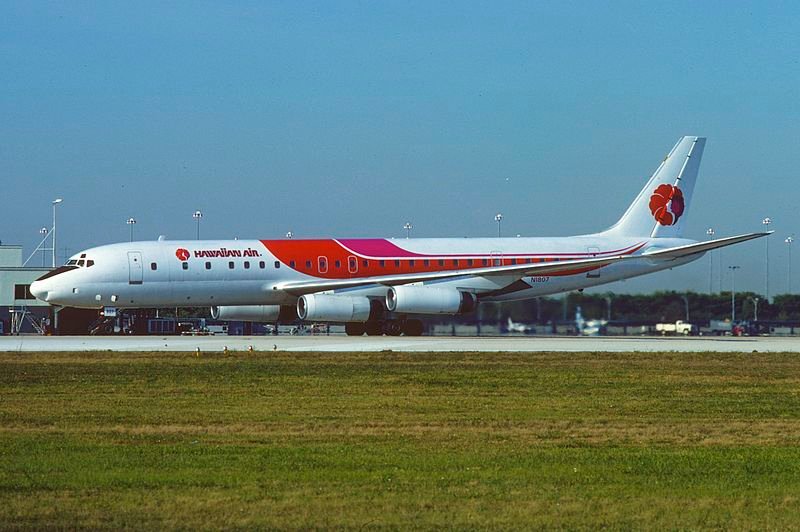
N1807 - one of the early ex-Braniff DC-8s at Miami in 1984. Aero Icarus from Zürich, Switzerland [CC BY-SA 2.0 (https://creativecommons.org/licenses/by-sa/2.0)]
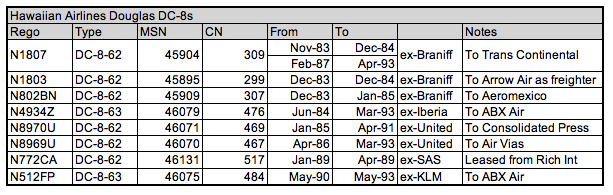
Deregulation meant the CAB no longer held sway over what routes and airline could operate and Hawaiian began an aggressive expansion, which began in 1983 with the lease of a trio of Douglas DC-8-62s. This initial trio had all served with Braniff, although one was originally delivered new to Alitalia. They began a series of worldwide charter flights.
The initial DC-8s were returned to their lessor after about a year and replaced by another pair of DC-8-62s and a single DC-8-63. Their charter services encompassed both civilian and military flying and gave the airline its first taste of long-haul operations.
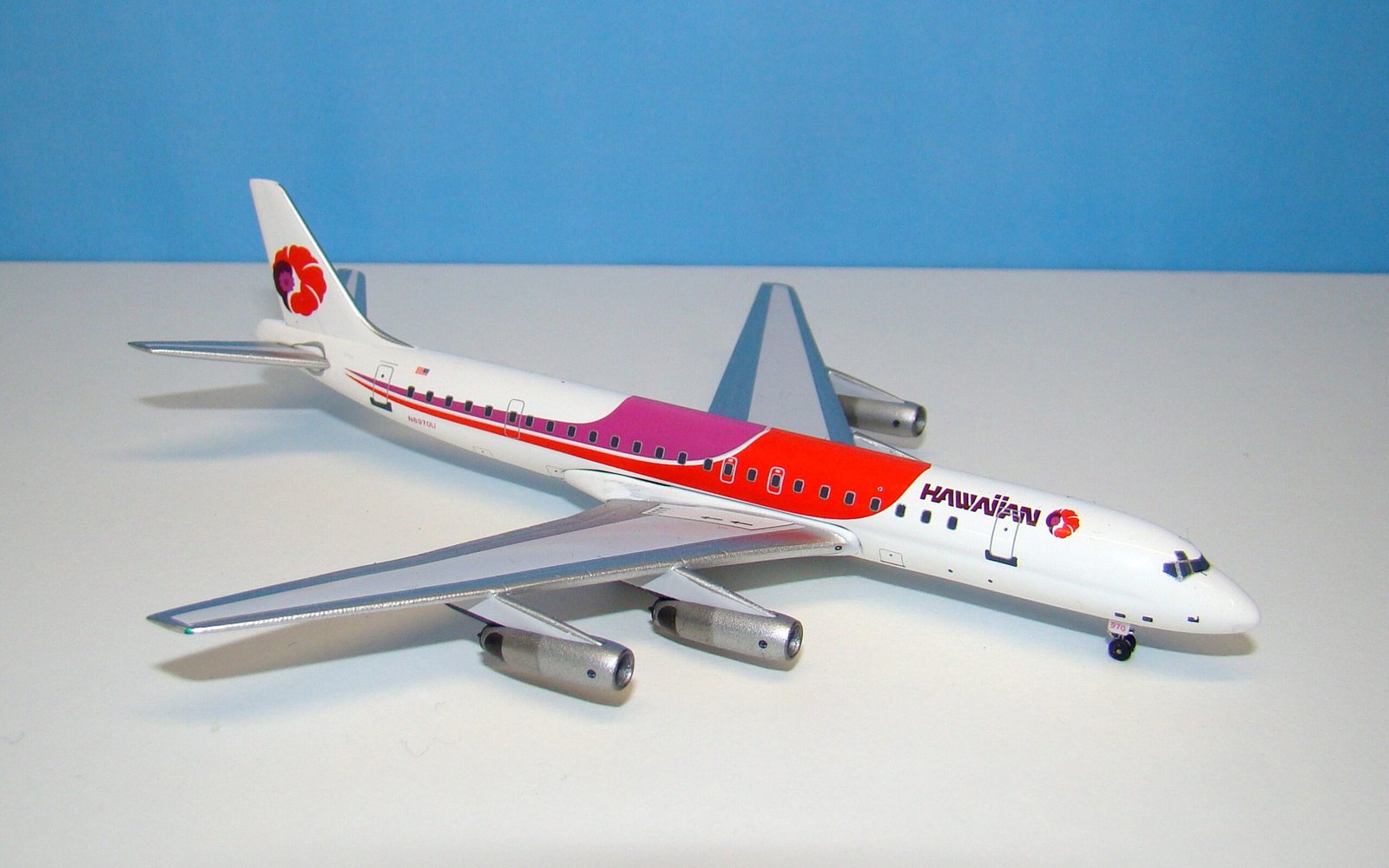
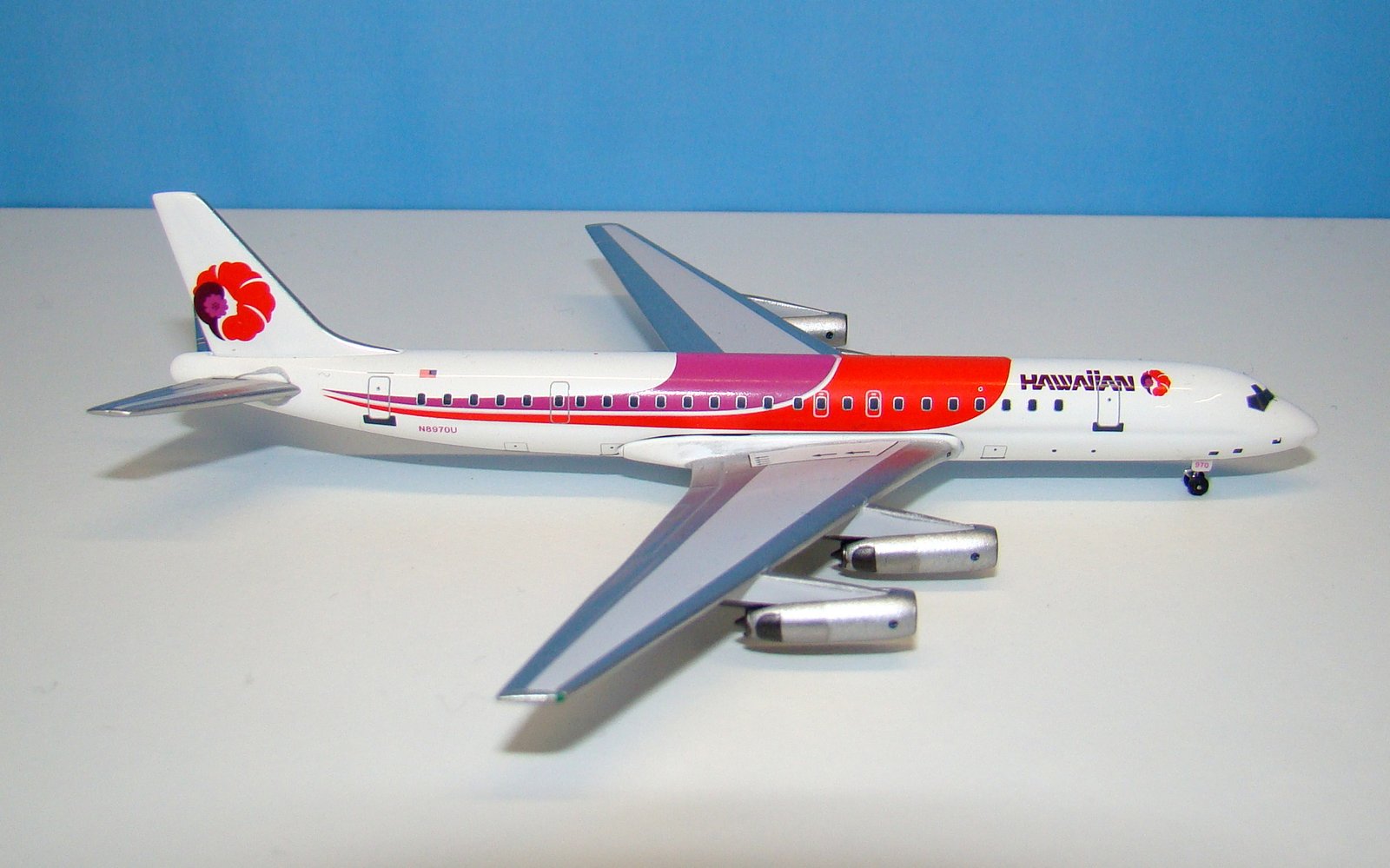
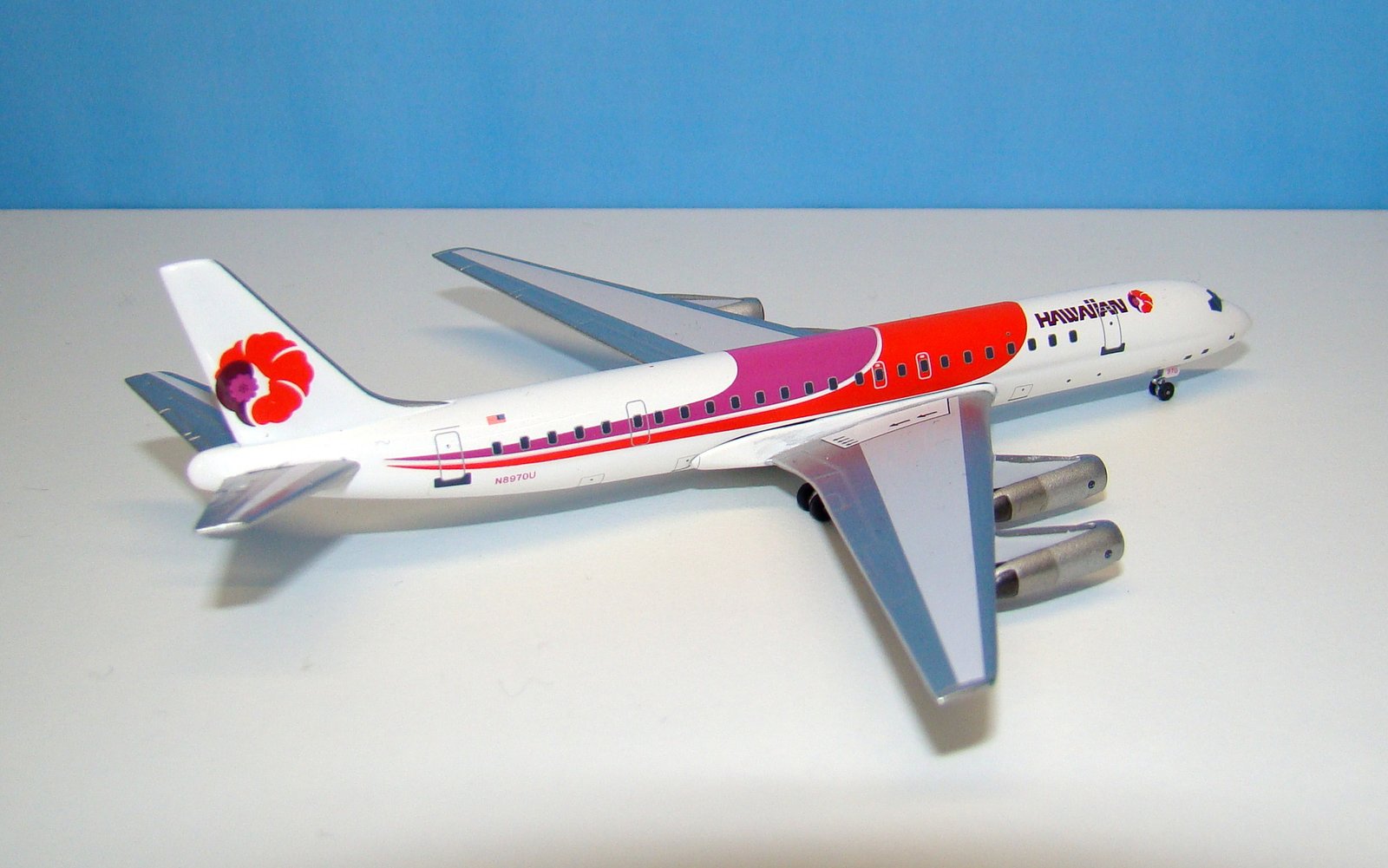
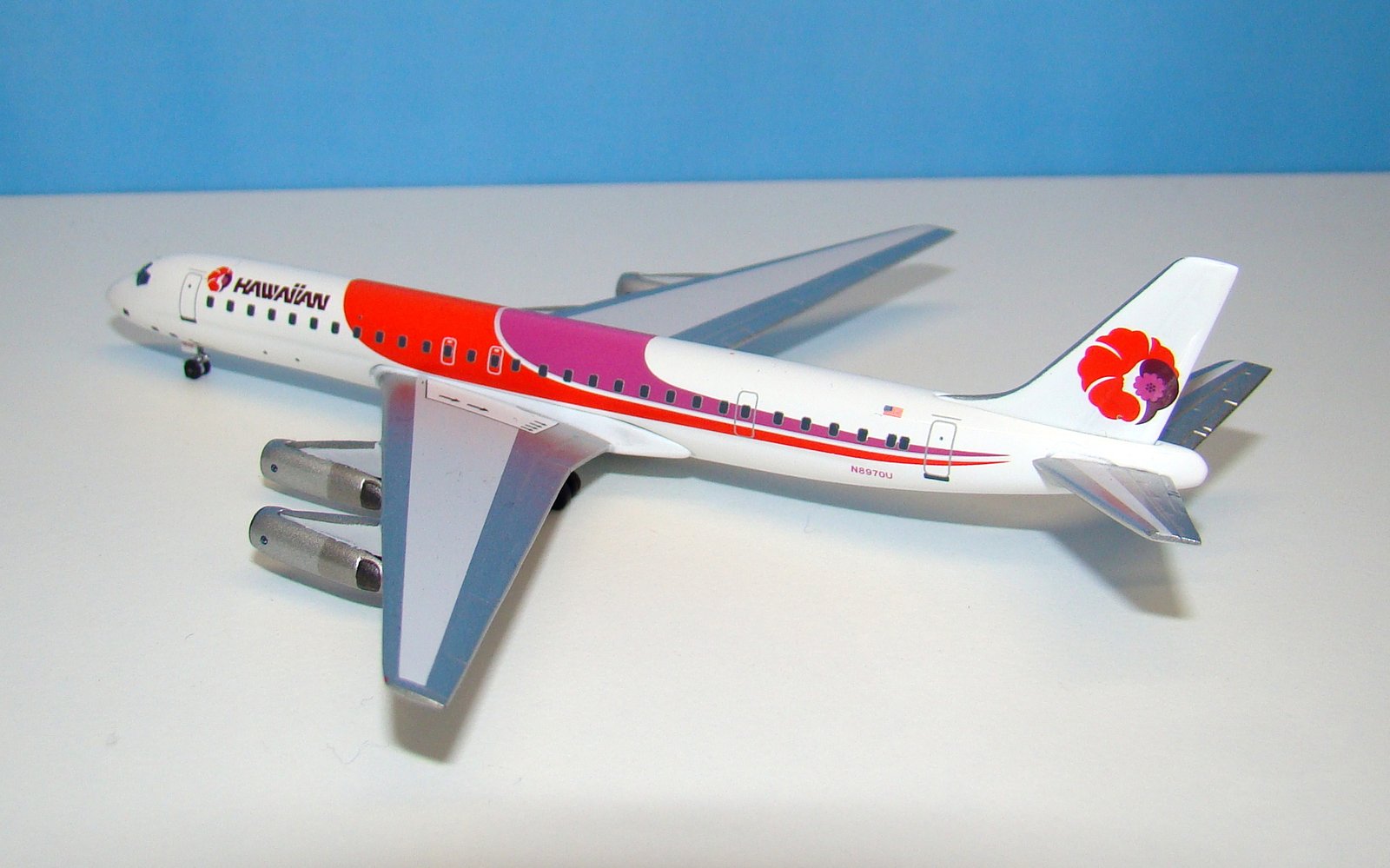
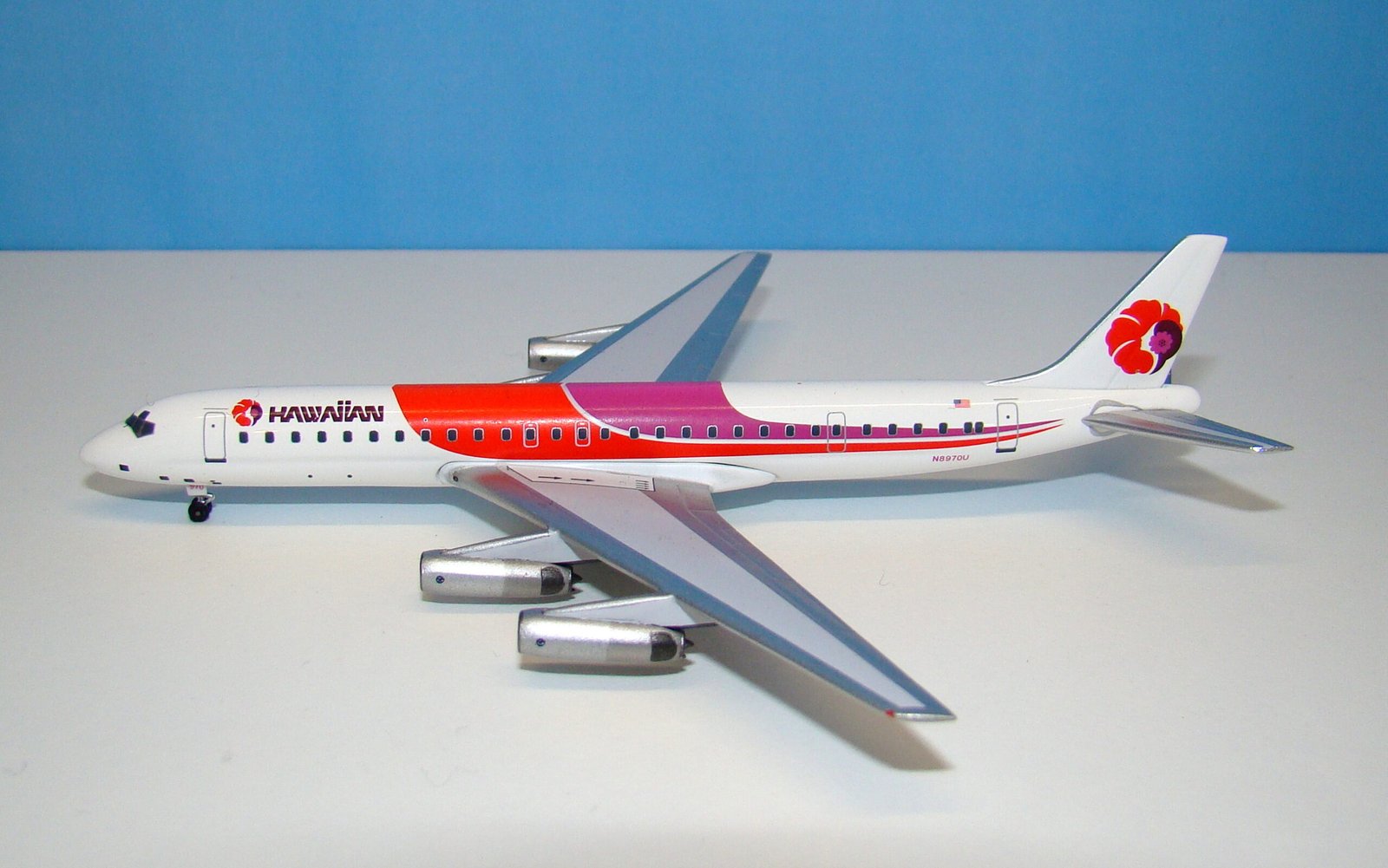
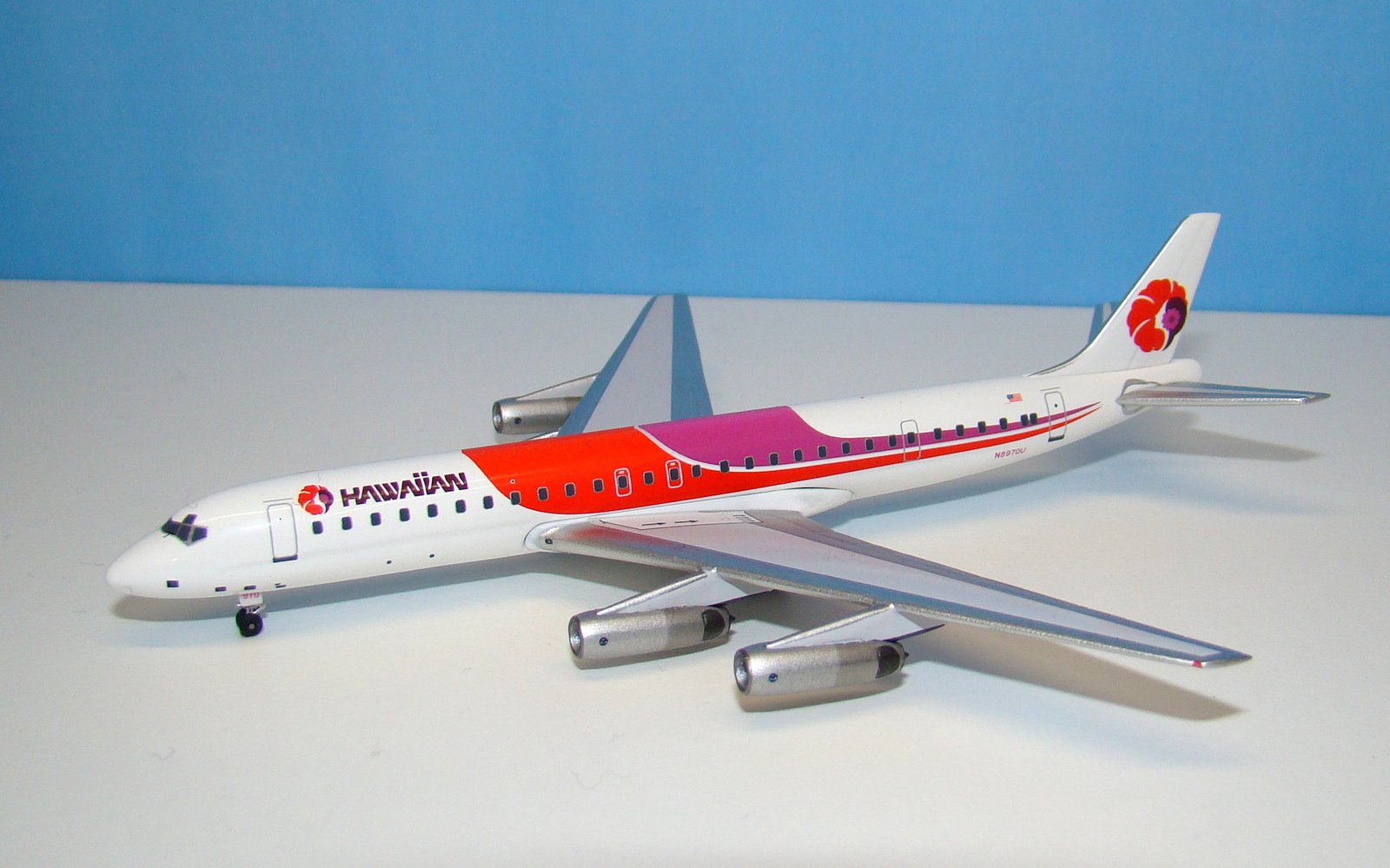
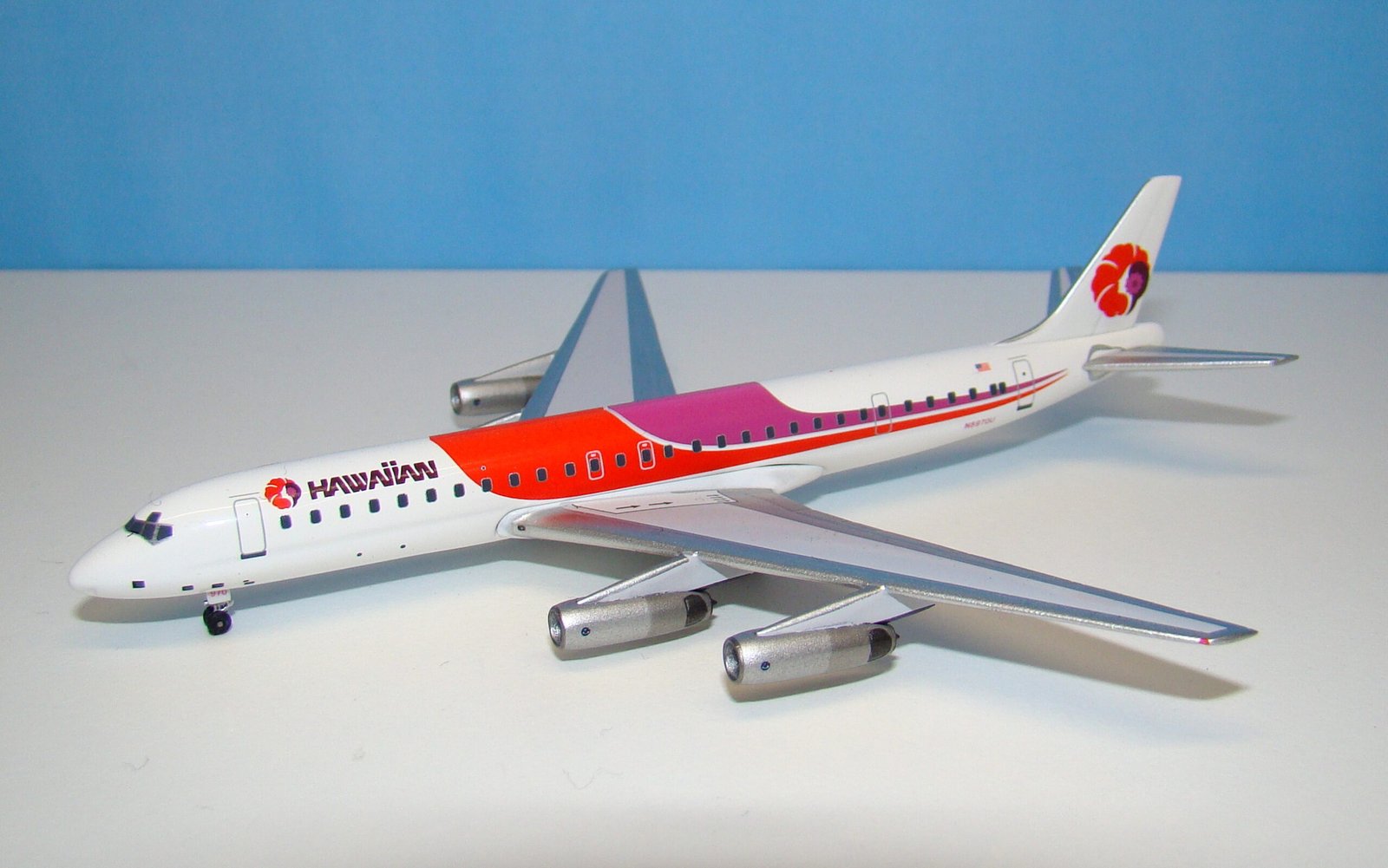
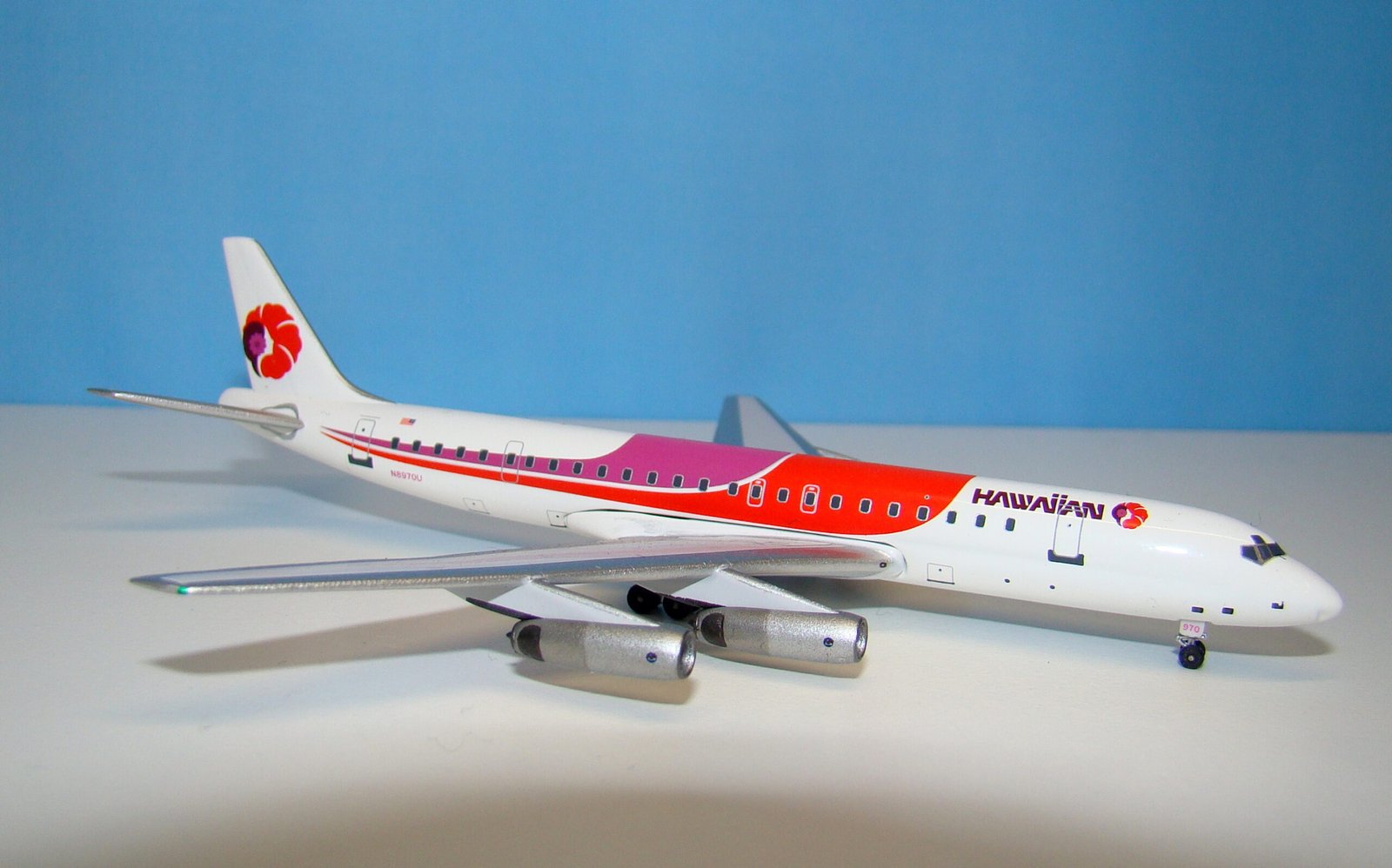
Hawaiian Airlines Douglas DC-8-62 N8970U Aeroclassics 1:400 Scale Model Airliner
Hawaiian Airlines Douglas DC-8-62 N8970U Aeroclassics 1:400 Scale Model Airliner
Hawaiian Airlines Douglas DC-8-62 N8970U Aeroclassics 1:400 Scale Model Airliner
Hawaiian Airlines Douglas DC-8-62 N8970U Aeroclassics 1:400 Scale Model Airliner
Hawaiian Airlines Douglas DC-8-62 N8970U Aeroclassics 1:400 Scale Model Airliner
Hawaiian Airlines Douglas DC-8-62 N8970U Aeroclassics 1:400 Scale Model Airliner
Hawaiian Airlines Douglas DC-8-62 N8970U Aeroclassics 1:400 Scale Model Airliner
Hawaiian Airlines Douglas DC-8-62 N8970U Aeroclassics 1:400 Scale Model Airliner
Charter routes were merely the first phase of expansion and the DC-8s would become the aircraft of choice to operate a new South Pacific network connecting Honolulu with Pago Pago in American Samoa and Nuku’alofa in Tonga from mid-1985.
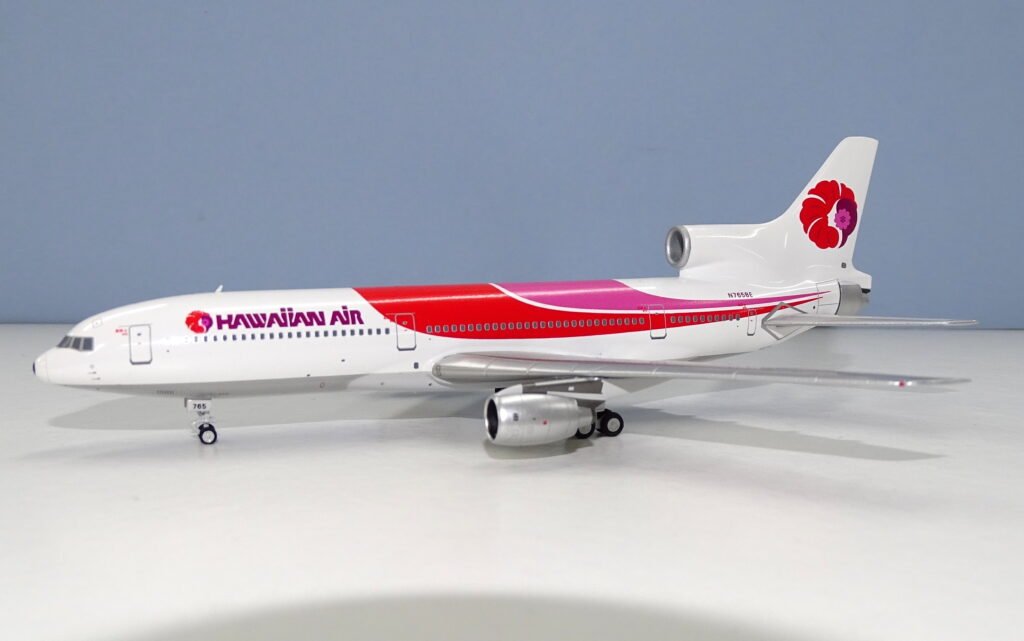
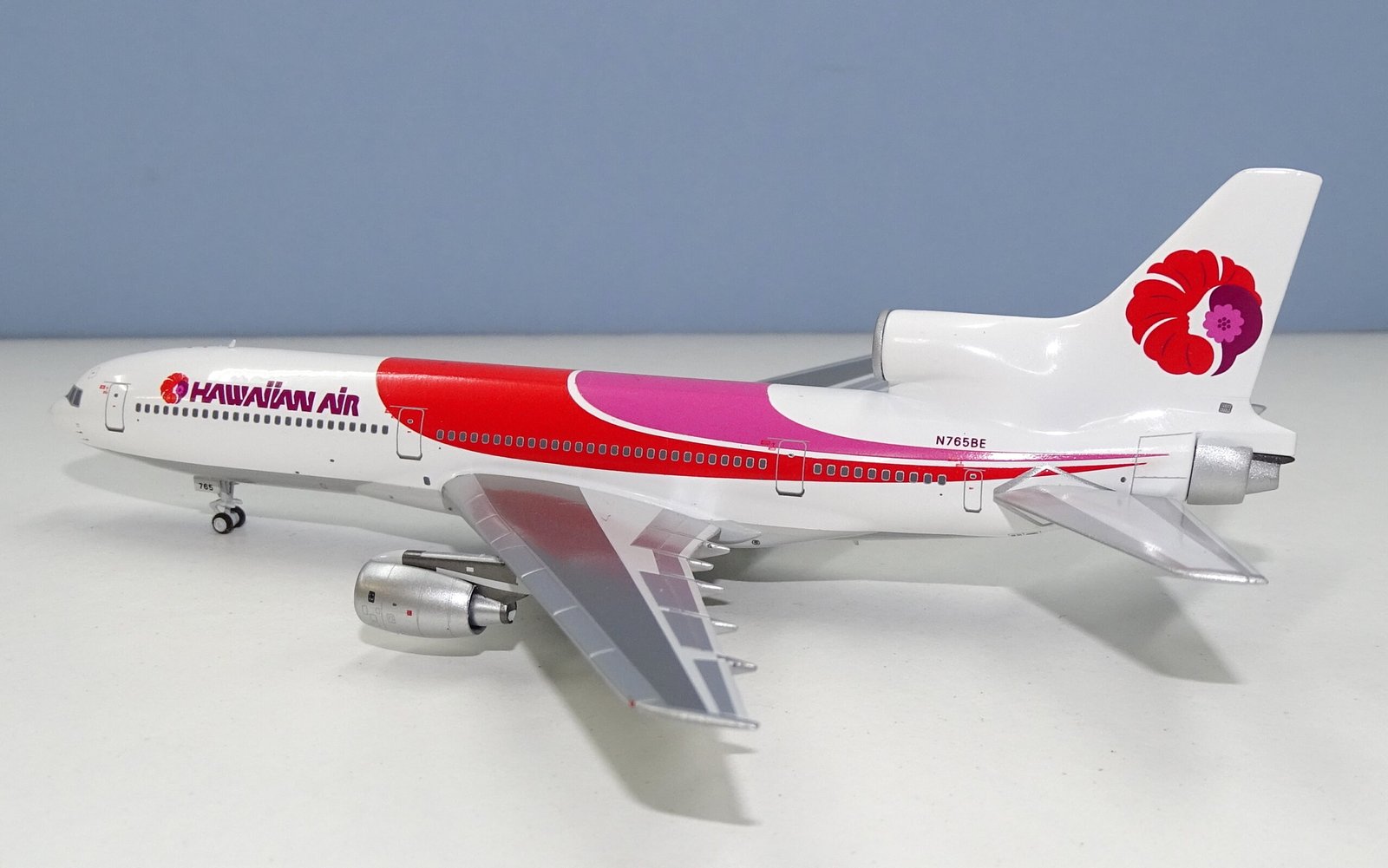
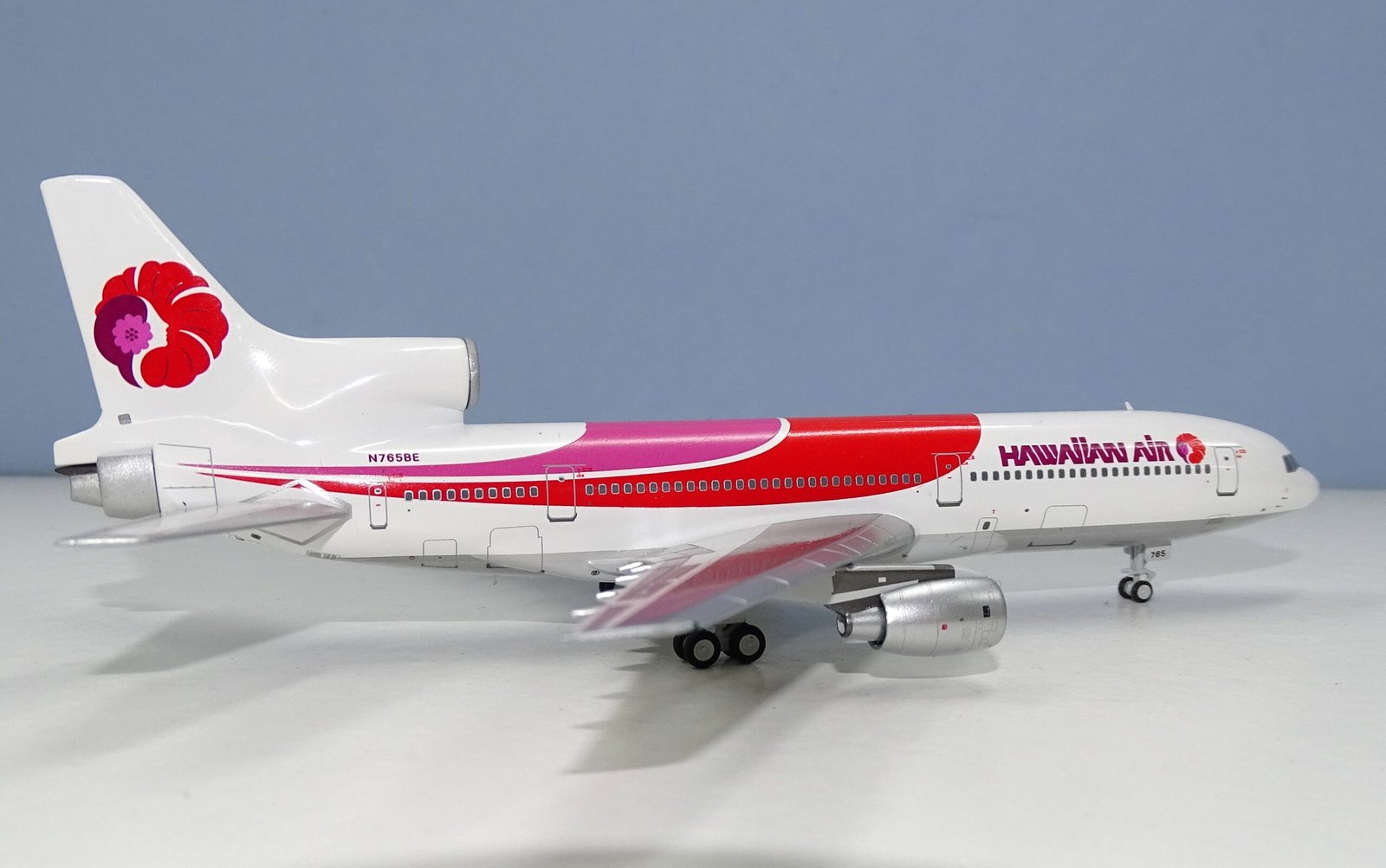
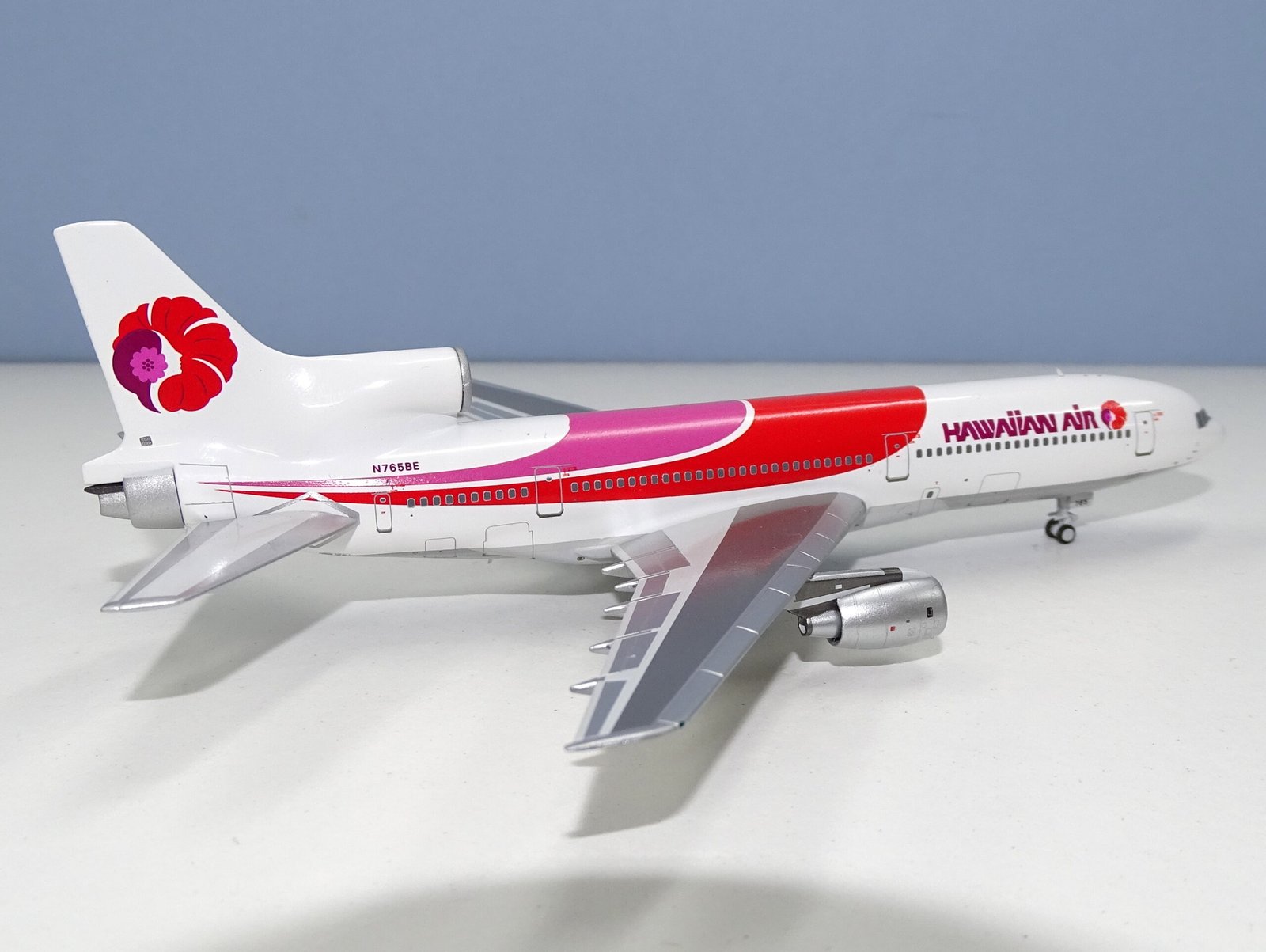
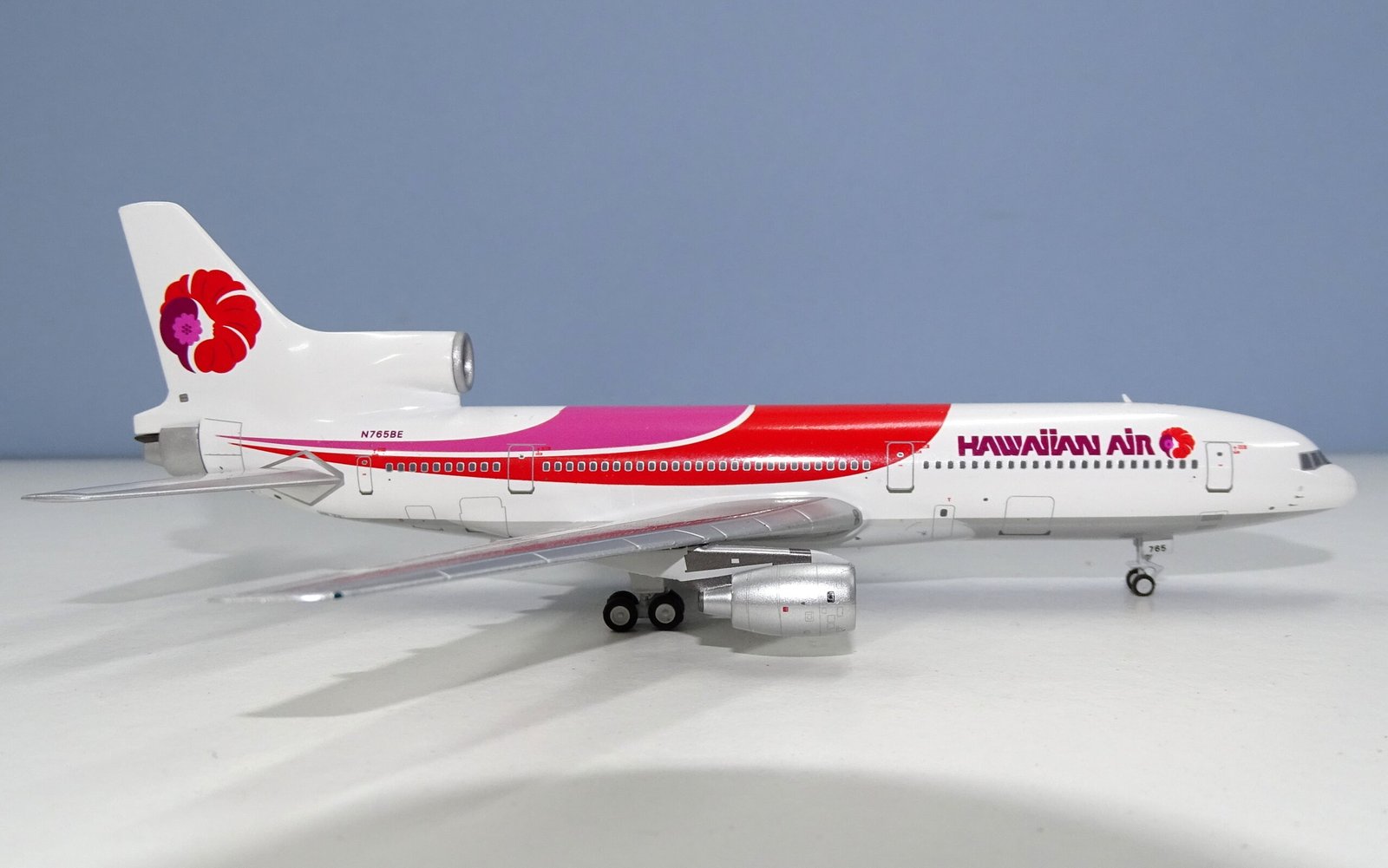
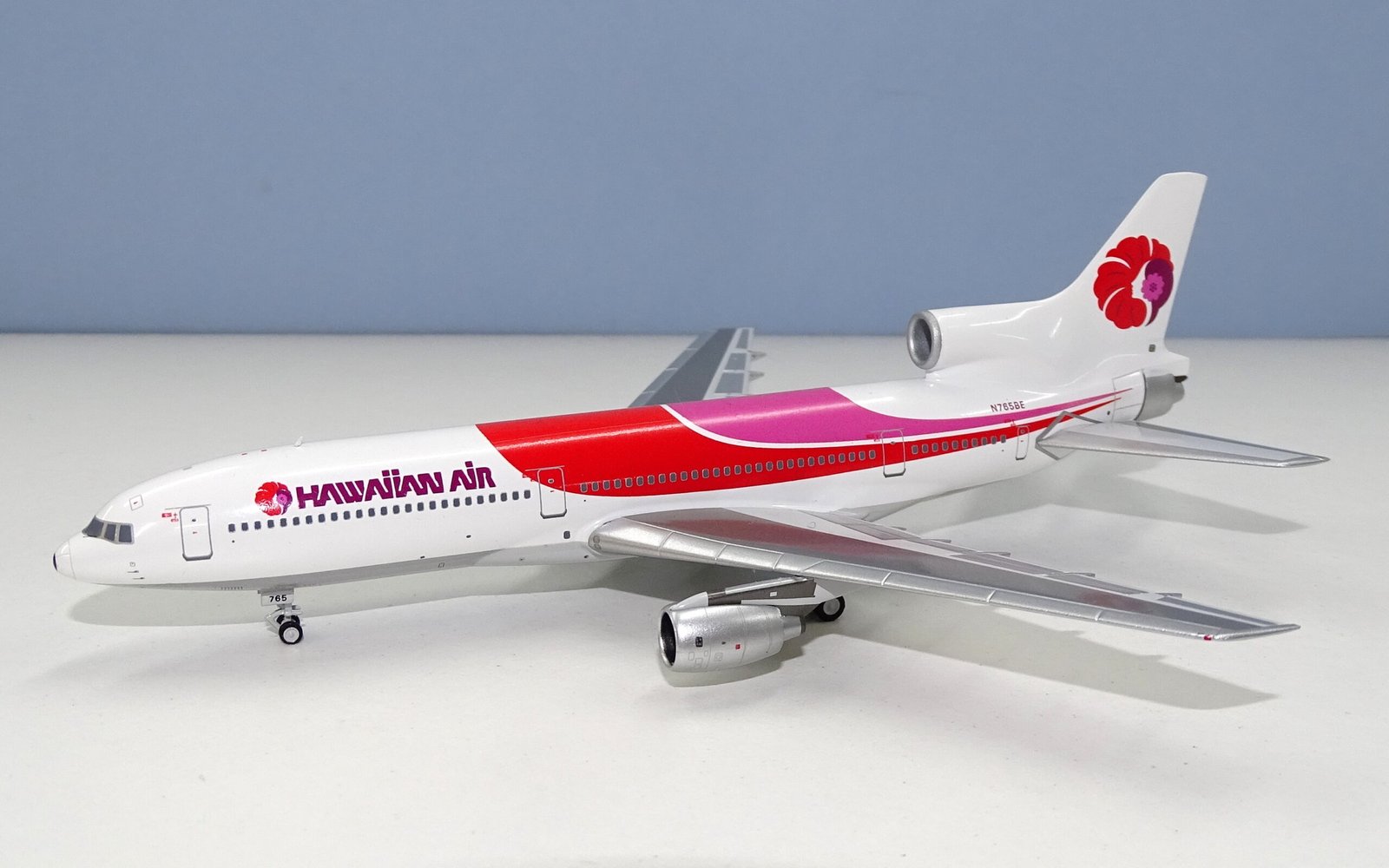
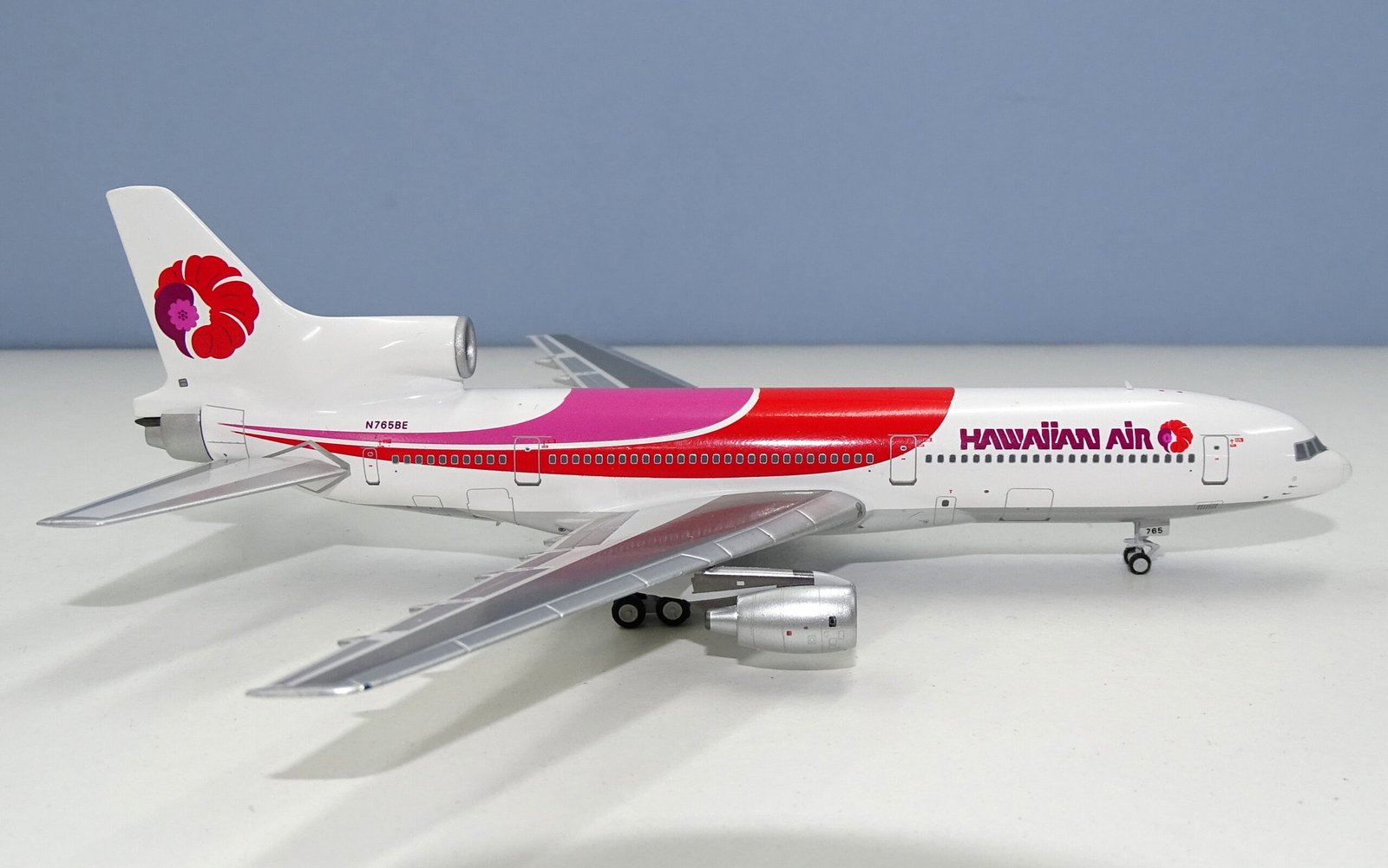
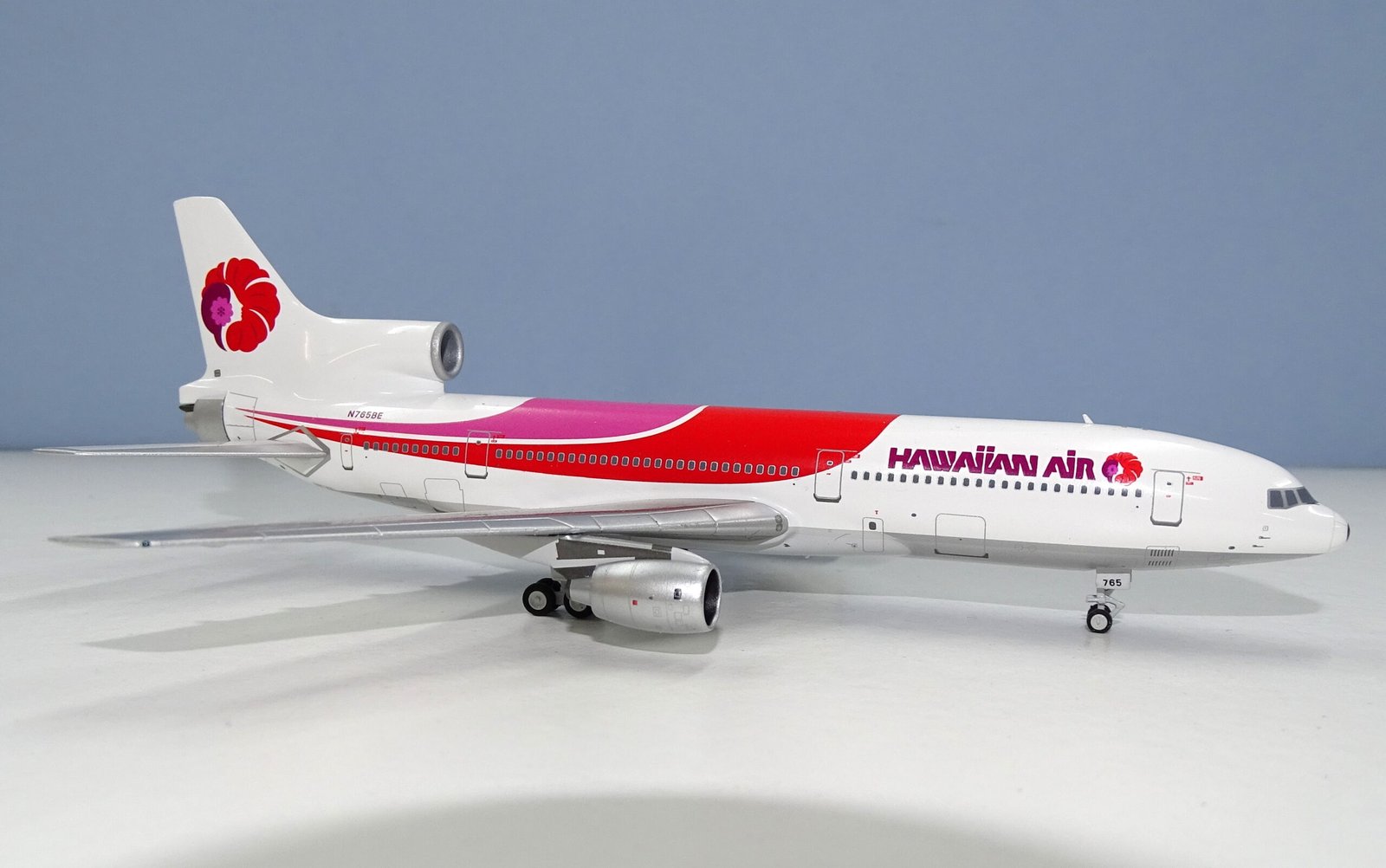
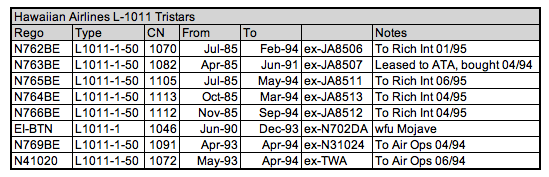
1985 would also be the year that Hawaiian would boldly enter into the Hawaii-US mainland market and to compete here it acquired five ex-All Nippon Lockheed Tristars from Boeing. All five had been acquired by Boeing in part exchange for new 767-200s and subsequently upgraded as Tristar 50s. The first aircraft arrived in March and scheduled services began on June 12 connecting Los Angeles to Honolulu daily.
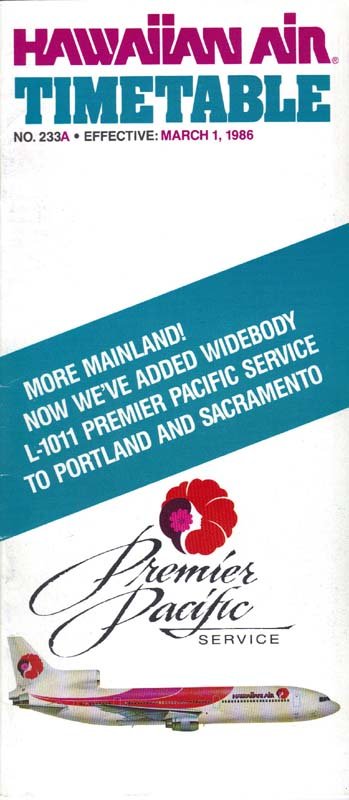
As further Tristars joined the fleet West Coast ‘Premier Pacific’ service was expanded and LA went double daily. In January 1986 San Francisco and Seattle were added and by March Portland and Sacramento were also online. Las Vegas soon acquired a twice-weekly service also.
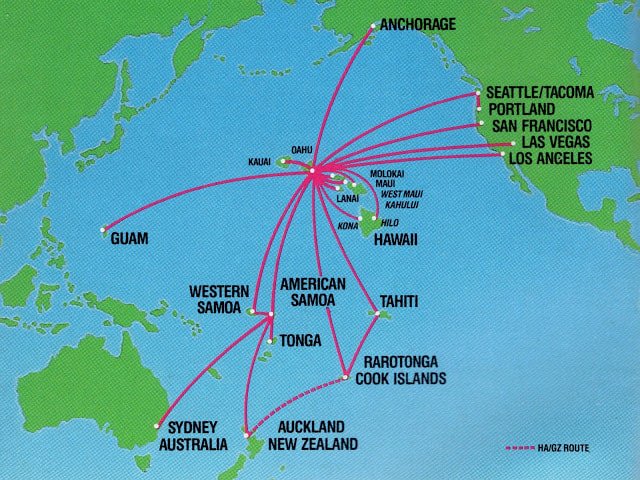
Hawaiian looked not only to bring tourists to Hawaii itself but use Honolulu as a transit hub from which it could connect the US mainland to exotic South Pacific destinations. On July 11, 1986 Apia, the capital of Western Samoa, was added to the South Pacific routes. Hawaiian was by now competing strongly against incumbents like American, Continental, Delta and United. When Pan Am sold its Pacific routes Hawaiian took over its entire check-in area at Honolulu for itself. Sacramento was dropped from the system but in its place early 1987 saw the addition of Anchorage.
Despite the expansion of scheduled routes Hawaiian’s charter commitments remained strong and the DC-8s and L-1011s could regularly be seen as far afield as London, Frankfurt, Tel Aviv, Fukuoka and Athens. This was partly required due to the heavily seasonal nature of traffic to the Hawaiian Islands.
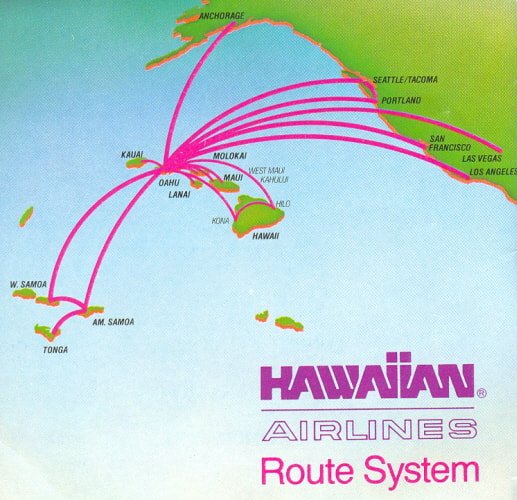
An early 1987 route map before the extension of Pacific service
The South Pacific network also continued to gain attention and by mid-1987 Hawaiian was serving Guam, Tahiti, Rarotonga, New Zealand and Australia in addition to the two Samoas and Tonga. This was the highpoint of Hawaiian’s expansion. A fare war on the mainland routes, intense competition and inefficient services put an end to profits that year. In fact, it would be a decade before profits were to be seen again. By mid-1989 the airline was in significant debt having lost $13 million in the first half of the year and $30.6 million in the previous two and a half years.
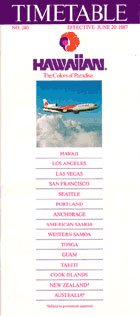
Below: This June 1987 timetable shows the height of the Pacific network
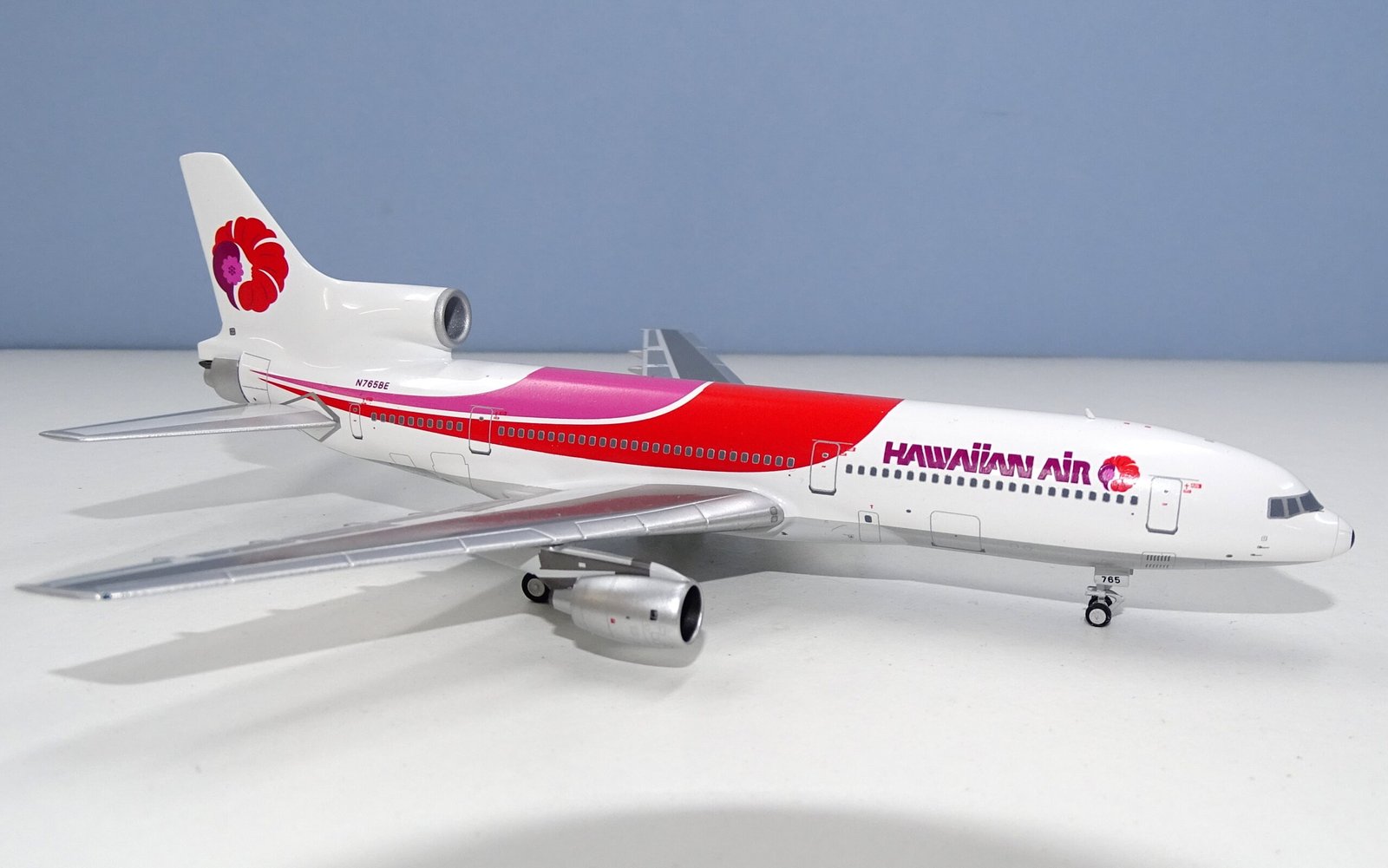
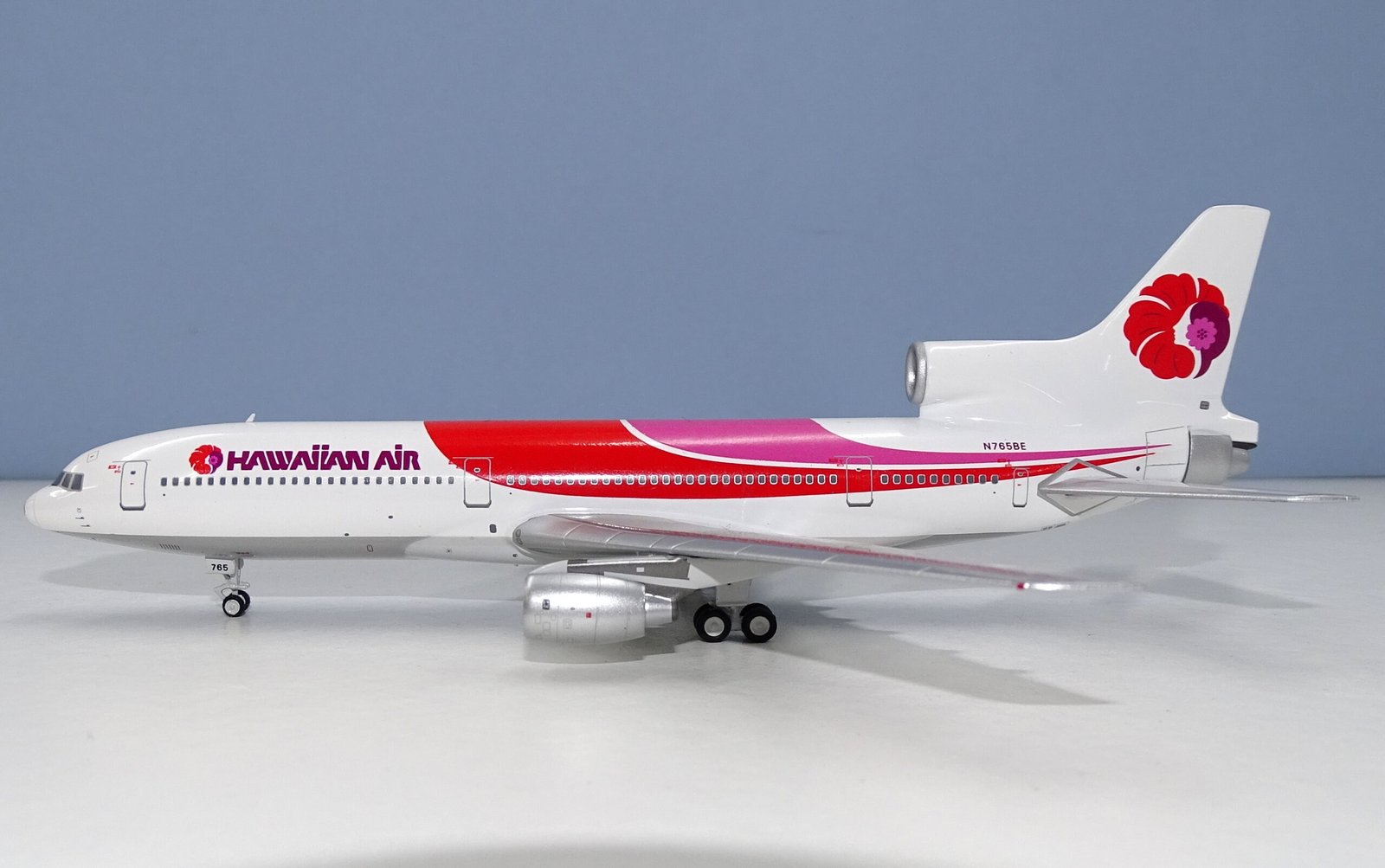
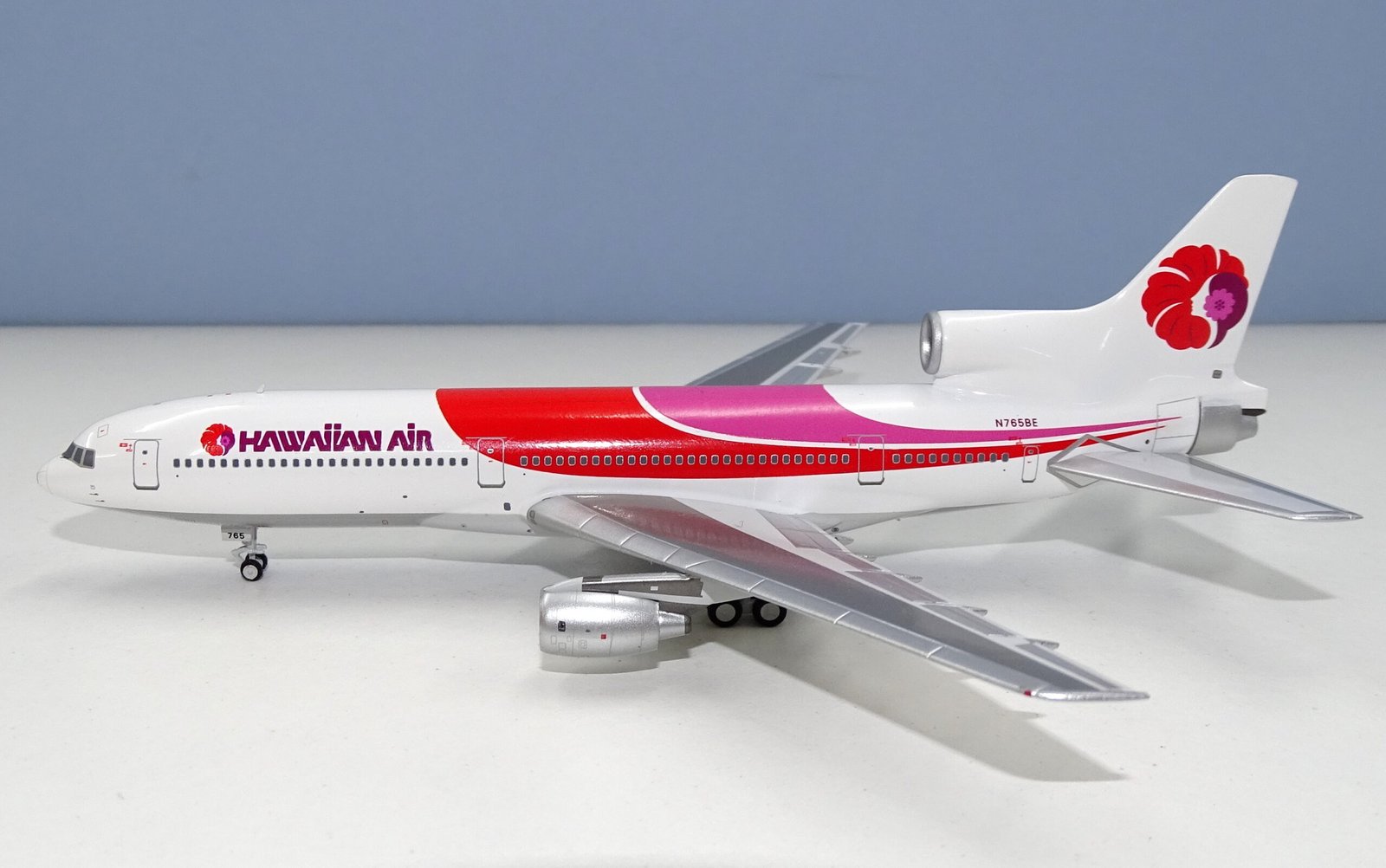
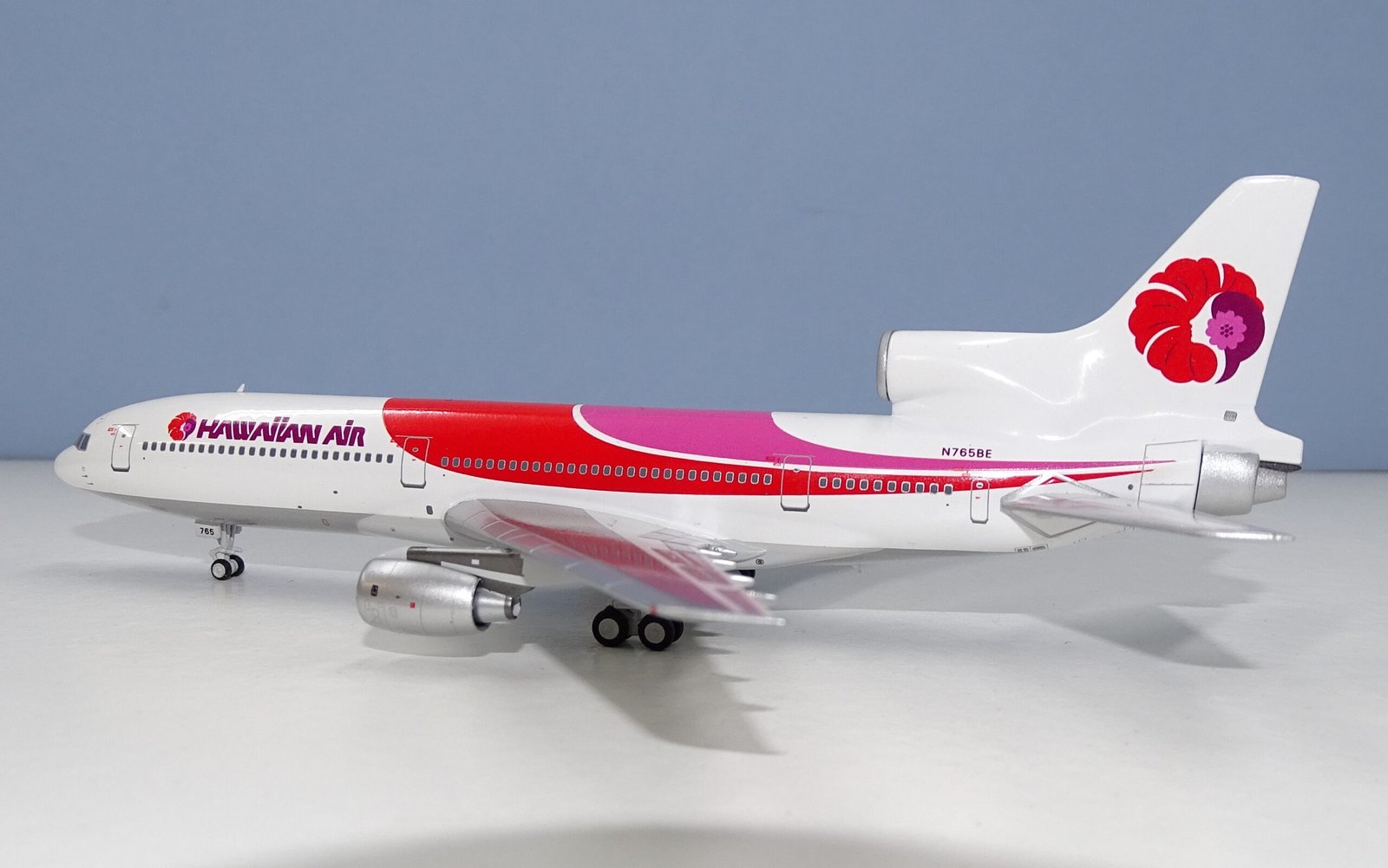
Hawaiian Airlines Lockheed L-1011-50 Tristar N765BE NG Models 1:400 Scale
Hawaiian Airlines Lockheed L-1011-50 Tristar N765BE NG Models 1:400 Scale
Hawaiian Airlines Lockheed L-1011-50 Tristar N765BE NG Models 1:400 Scale
Hawaiian Airlines Lockheed L-1011-50 Tristar N765BE NG Models 1:400 Scale
Hawaiian Airlines Lockheed L-1011-50 Tristar N765BE NG Models 1:400 Scale
Hawaiian Airlines Lockheed L-1011-50 Tristar N765BE NG Models 1:400 Scale
Hawaiian Airlines Lockheed L-1011-50 Tristar N765BE NG Models 1:400 Scale
Hawaiian Airlines Lockheed L-1011-50 Tristar N765BE NG Models 1:400 Scale
Hawaiian Airlines Lockheed L-1011-50 Tristar N765BE NG Models 1:400 Scale
Hawaiian Airlines Lockheed L-1011-50 Tristar N765BE NG Models 1:400 Scale
Hawaiian Airlines Lockheed L-1011-50 Tristar N765BE NG Models 1:400 Scale
In 1988 a subsidiary of Japan Air Lines had put in $20 million for a 20% stake in the company but it hadn’t impacted profitability and John H. Magoon Jnr – the chairman and CEO was in the firing line as architect of Hawaiian’s Pacific strategy. The airline’s level of service had also dropped and the carrier consistently ranked as one of the industry’s leaders in terms of customer complaints.
The expansive 1989 route map
By mid-1989 Hawaiian’s weakness was attracting speculation and it had already had to deny rumours that Delta was interested in taking it over to gain access to the Pacific routes. Instead an investment group led by Peter V. Ueberroth and J. Thomas Talbot acquired the airline in late December 1989. Despite the takeover Hawaiian’s fortunes did not improve as the new team struggled to offset operating losses and pay for deferred maintenance on the fleet.
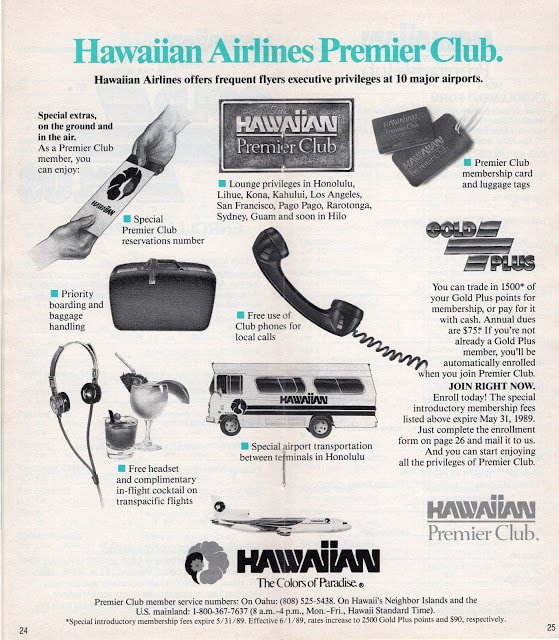
Advertising the Premier club in this April 1989 timetable
The new management faced several challenges. Several of the long-haul routes (like Auckland and Sydney) could not be operated profitably with low-frequency DC-8 services when competing carriers flew the same services more frequently and with widebody equipment. Additionally, advance block sales of tickets at low prices damaged route profitability and market-share was being hit by the airline’s poor image for reliability.
Extensive efforts were made to improve on time performance and flight schedule completion but the contraction of long-haul services was also begun. Hawaiian could not afford to acquire competitive long-haul equipment even after being awarded the Honolulu-Fukuoka, Japan route and on December 10, 1990 a deal was announced with Northwest Airlines in which the latter would purchase the Sydney route, operate the Fukuoka service and provide a $20 million cash infusion in return for a 25% minority stake in the airline.
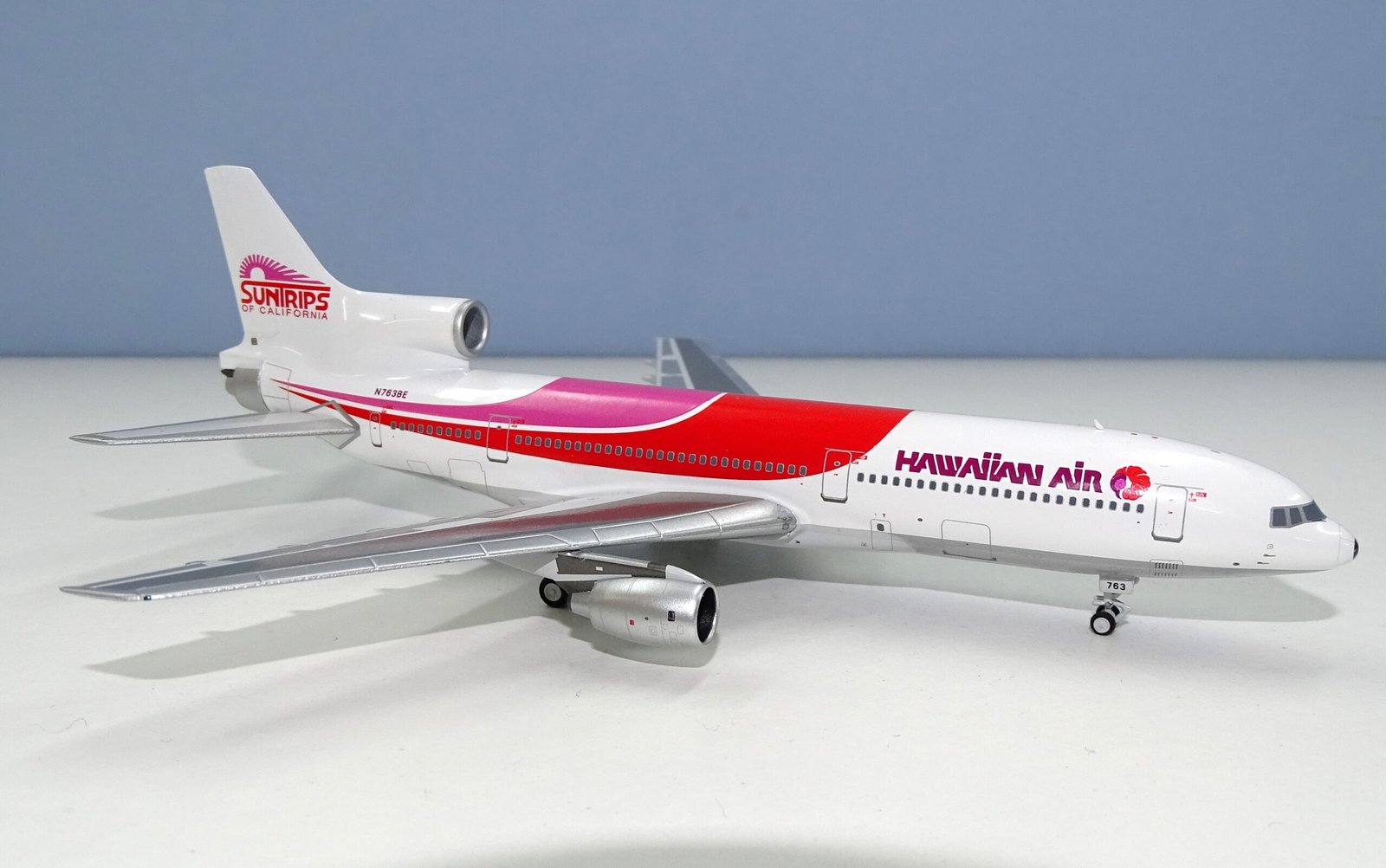
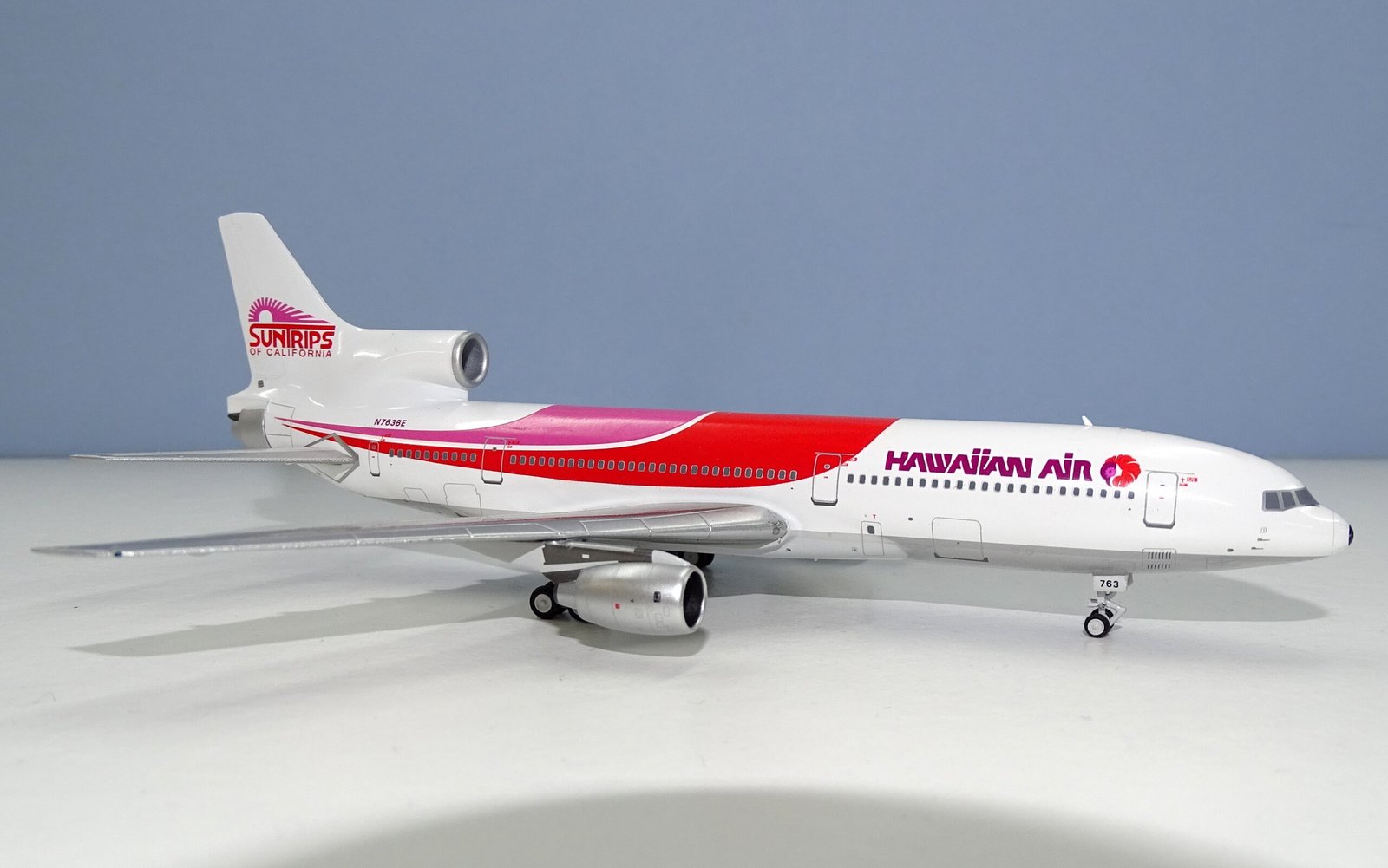
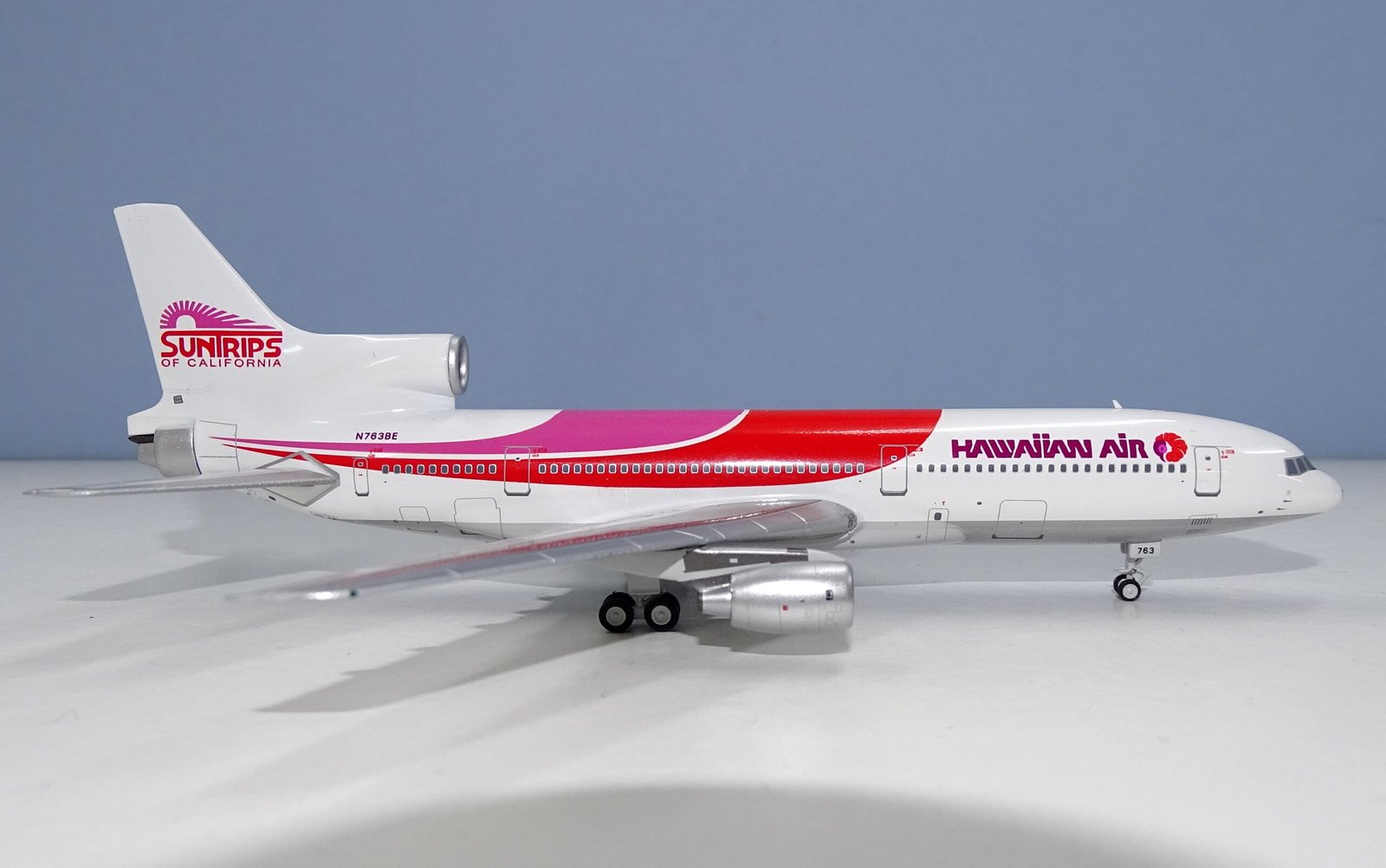
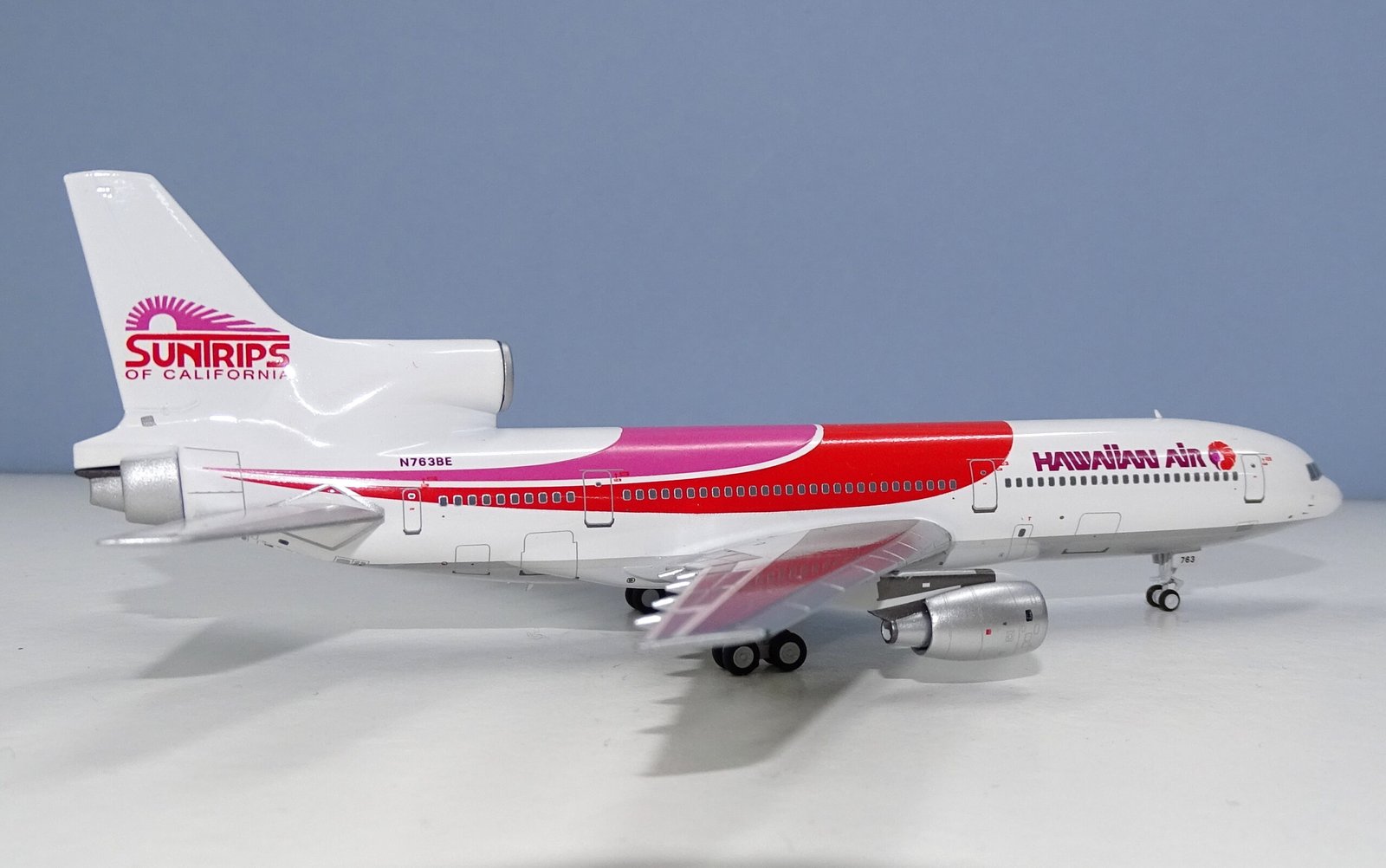
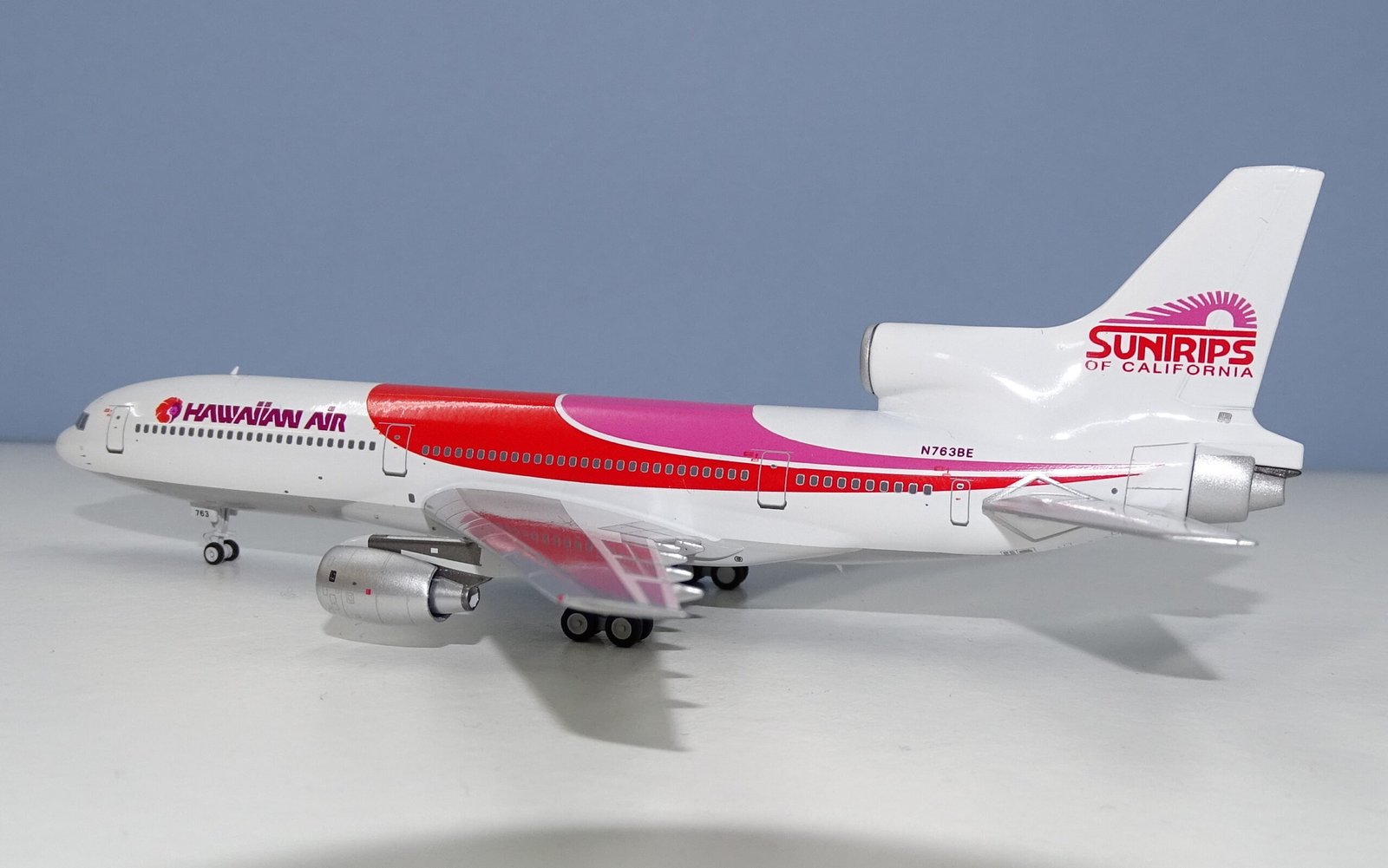
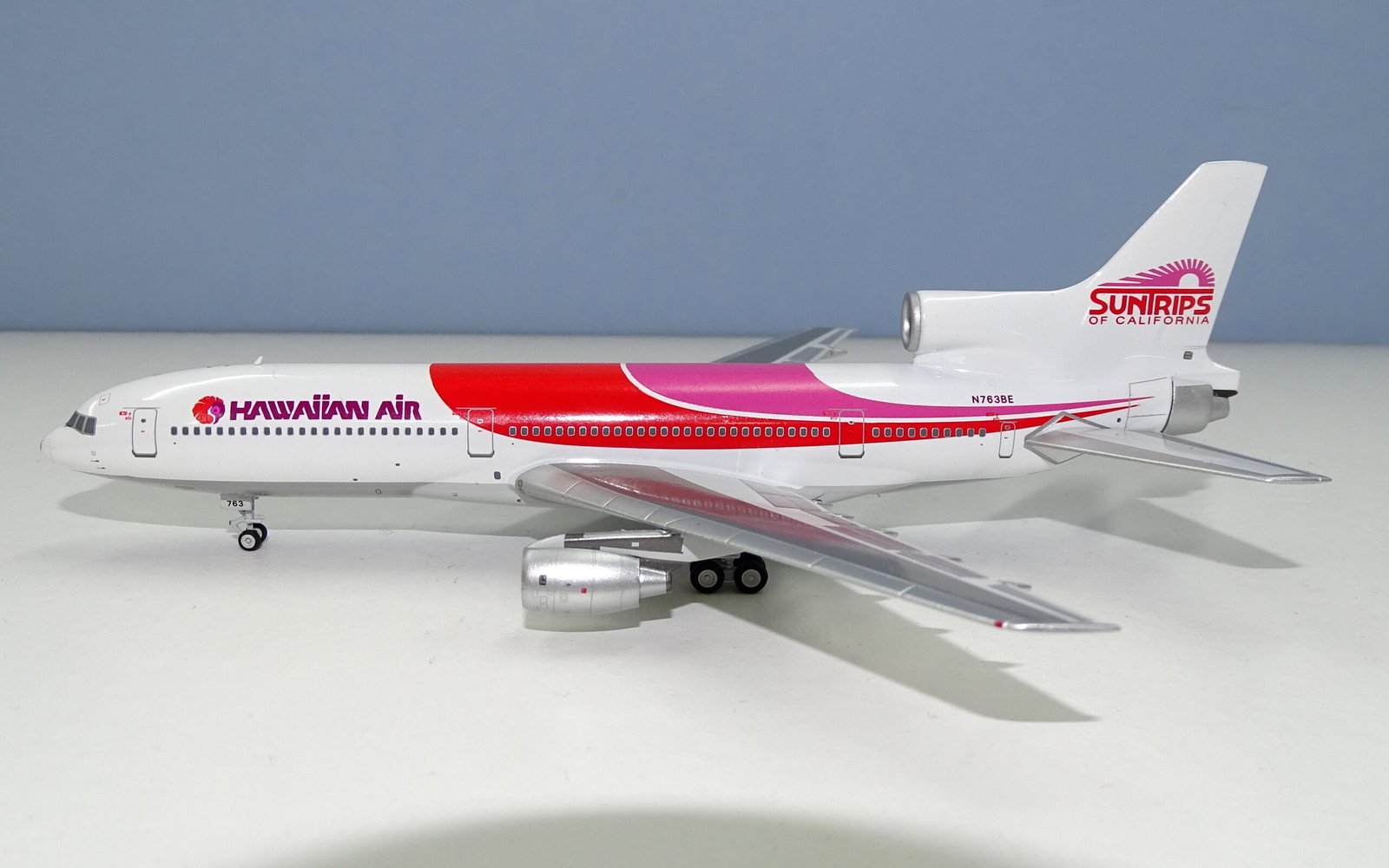
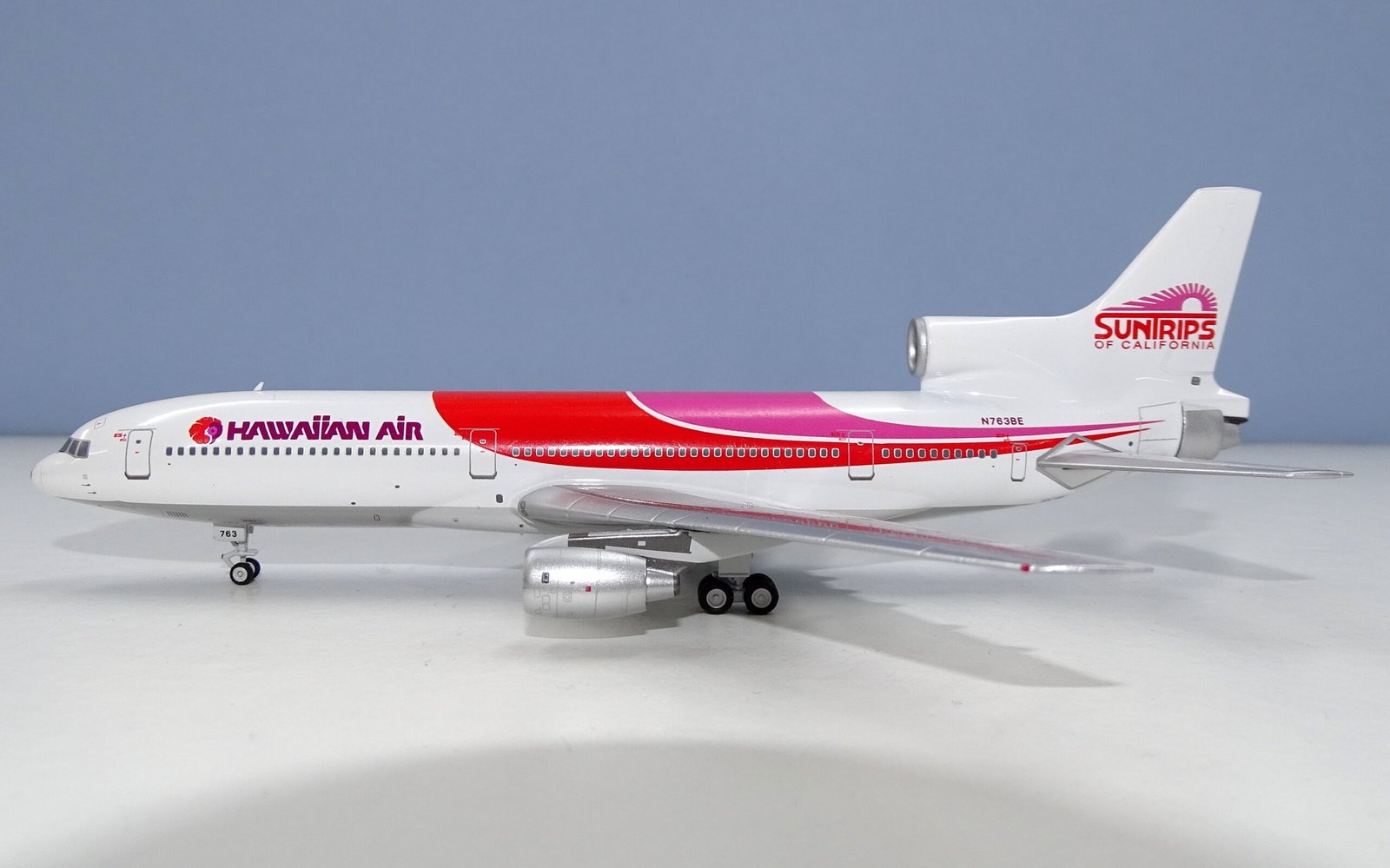
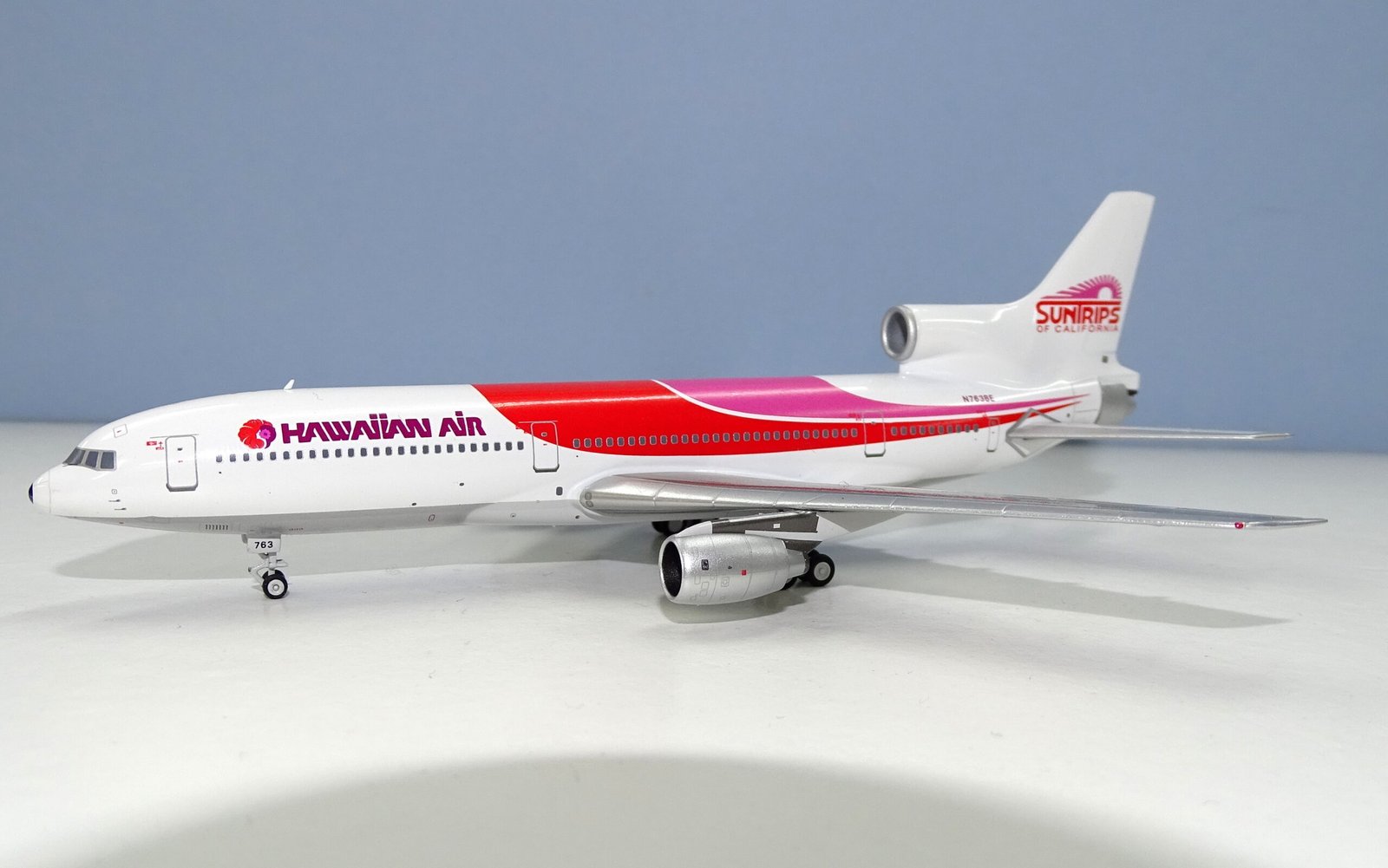
Hawaiian Airlines Lockheed L-1011-50 Tristar N763BE NG Models 1:400 Scale
Hawaiian Airlines Lockheed L-1011-50 Tristar N763BE NG Models 1:400 Scale
Hawaiian Airlines Lockheed L-1011-50 Tristar N763BE NG Models 1:400 Scale
Hawaiian Airlines Lockheed L-1011-50 Tristar N763BE NG Models 1:400 Scale
Hawaiian Airlines Lockheed L-1011-50 Tristar N763BE NG Models 1:400 Scale
Hawaiian Airlines Lockheed L-1011-50 Tristar N763BE NG Models 1:400 Scale
Hawaiian Airlines Lockheed L-1011-50 Tristar N763BE NG Models 1:400 Scale
Hawaiian Airlines Lockheed L-1011-50 Tristar N763BE NG Models 1:400 Scale
The airline’s image in the eyes of the US military also suffered, so that in early 1990 it had been put on a temporary “non-use” status, but fortunately it was able to quickly make things right and was awarded two long-term contracts. These included flying over 200 missions related to the Operation Desert Shield build up in the Gulf, which had done so much to damage the world’s economic fortunes at the dawn of the 90s.
Scheduled service to Anchorage, Las Vegas, Auckland and Guam were all cancelled in 1990 but despite the improvements the airline still made a loss, which would balloon out to $99 million in 1991. Not only having to contend with its own challenges, rapidly increasing fuel costs and the general traffic downturn caused by the Gulf crisis hit the airline hard even as its operational performance improved significantly.
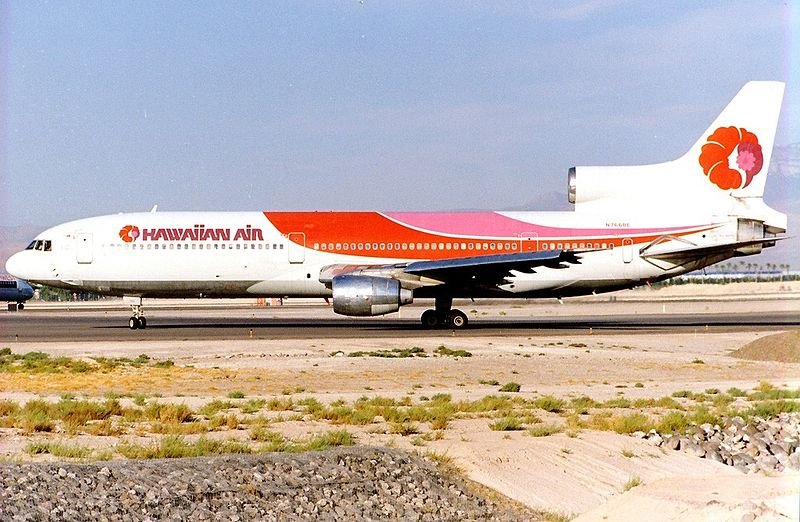
N766BE still in the full titles version of the Pualani scheme in August 1993. JetPix [GFDL 1.2 (http://www.gnu.org/licenses/old-licenses/fdl-1.2.html) or GFDL 1.2 (http://www.gnu.org/licenses/old-licenses/fdl-1.2.html)]
Financial instability continued into 1992 and the airline was hit by an estimated $7 million loss from the impact of Hurricane Iniki when it hit the island of Kauai on September 11. It was clear that further cuts needed to be made and in 1993 the DC-8s were all withdrawn and the South Pacific network reduced to only Tahiti and American Samoa. John A. Ueberroth, who had taken over from J. Thomas Talbot as CEO in June 1990 was replaced in June 1993 by Bruce R. Nobles but it was still necessary for Hawaiian to declare Chapter 11 bankruptcy on September 21.
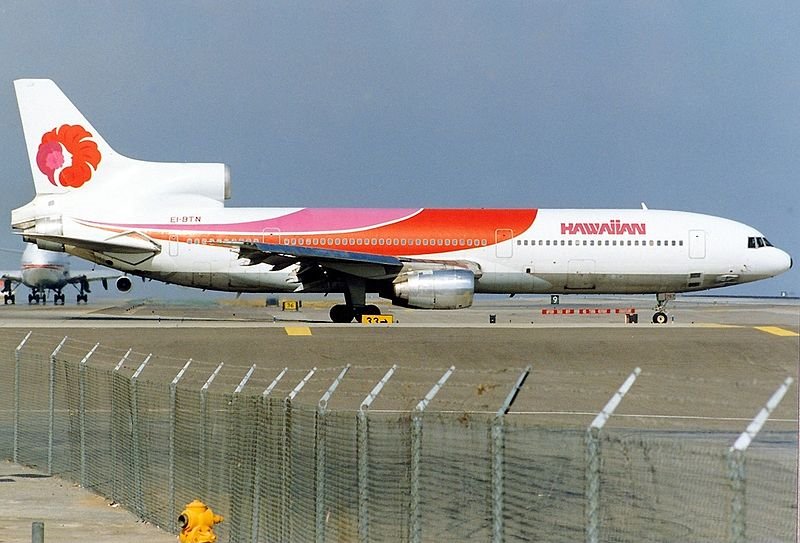
EI-BTN in the later short titles version of the Pualani scheme in August 1993. JetPix [GFDL 1.2 (http://www.gnu.org/licenses/old-licenses/fdl-1.2.html) or GFDL 1.2 (http://www.gnu.org/licenses/old-licenses/fdl-1.2.html)]
The negotiations undertaken during the period between the bankruptcy filing and the airline’s exit from bankruptcy on September 12, 1994 would result in a very different airline emerging, one backed by its new partner American Airlines.
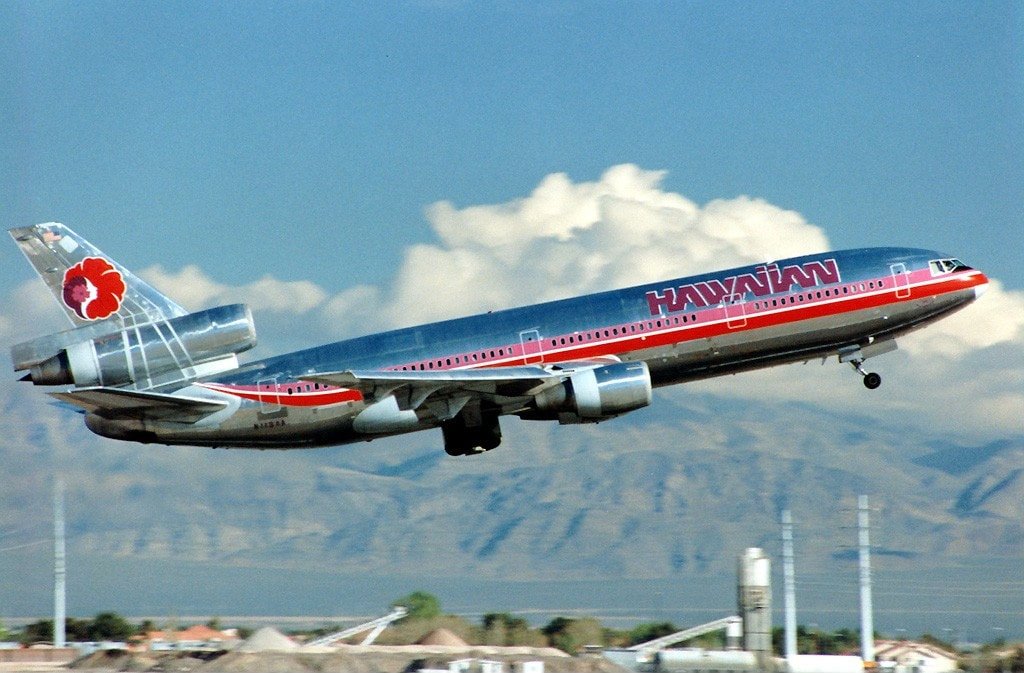
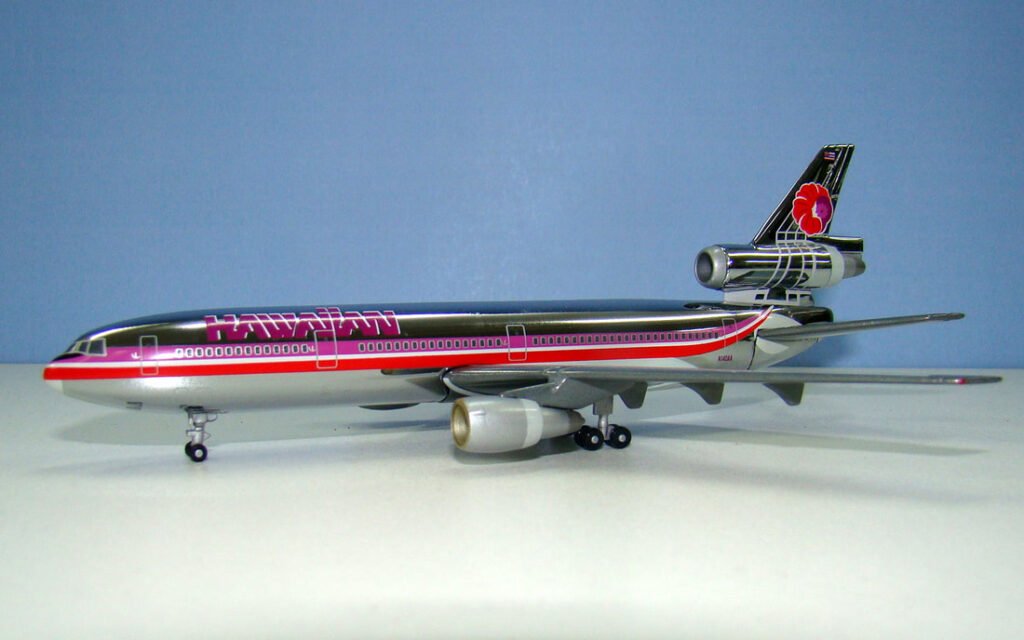
As part of the deal Hawaiian joined American’s frequent flyer programme, moved over to AA’s computer system and leased 5 American Airlines McDonnell Douglas DC-10s as replacements for the Tristars. Among the improvements touted for the DC-10s was 9 abreast seating (compared to 10 abreast in the L-1011s), an improved cabin interior and of course a significant cost saving due to the American connection.
N148AA departing LAS in 1995. JetPix [GFDL 1.2 (http://www.gnu.org/licenses/old-licenses/fdl-1.2.html) or GFDL 1.2 (http://www.gnu.org/licenses/old-licenses/fdl-1.2.html)]
The DC-10s began to join in February 1994 and the Tristars quickly transitioned out of the fleet. The last Hawaiian Tristar service was operated by N766BE on September 6, 1994. One of the Tristars was purchased off lease by American Trans Air but the others all were returned to their lessors and subsequently joined Rich International.
Hawaiian Airlines McDonnell Douglas DC-10 N140AA Gemini Jets 1:400 Scale Model Airliner
Hawaiian would go on to rebuild its strength during the 90s but would still be unable to avoid a second trip to bankruptcy court in 2003. Nonetheless the exit from the first bankruptcy bookmarked Hawaiian’s first tumultuous phase in the deregulated marketplace. It had gambled and lost but still somehow survived to fight another day.