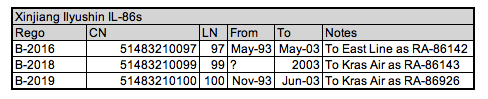
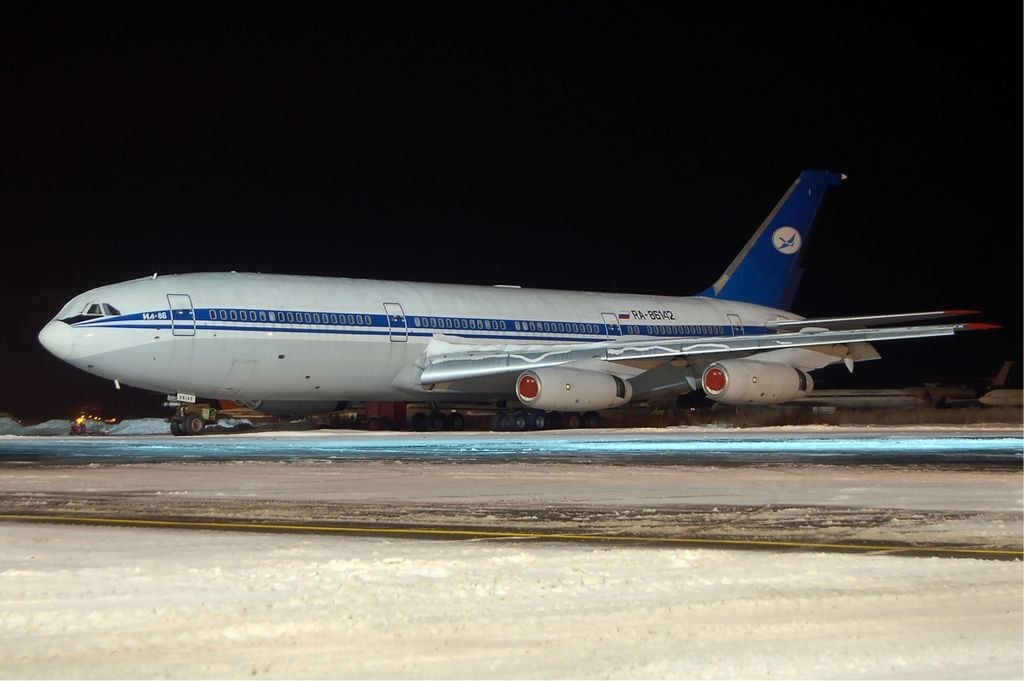
Even when it was first put into service the Soviet IL-86 was hardly a picture of modernity or efficiency, so it is little surprise that on the foreign market it was not a popular choice. Nonetheless, a few aircraft did make it out of the CIS and three ended up with Xinjiang Airlines in China, one of China’s first non-CAAC airlines.
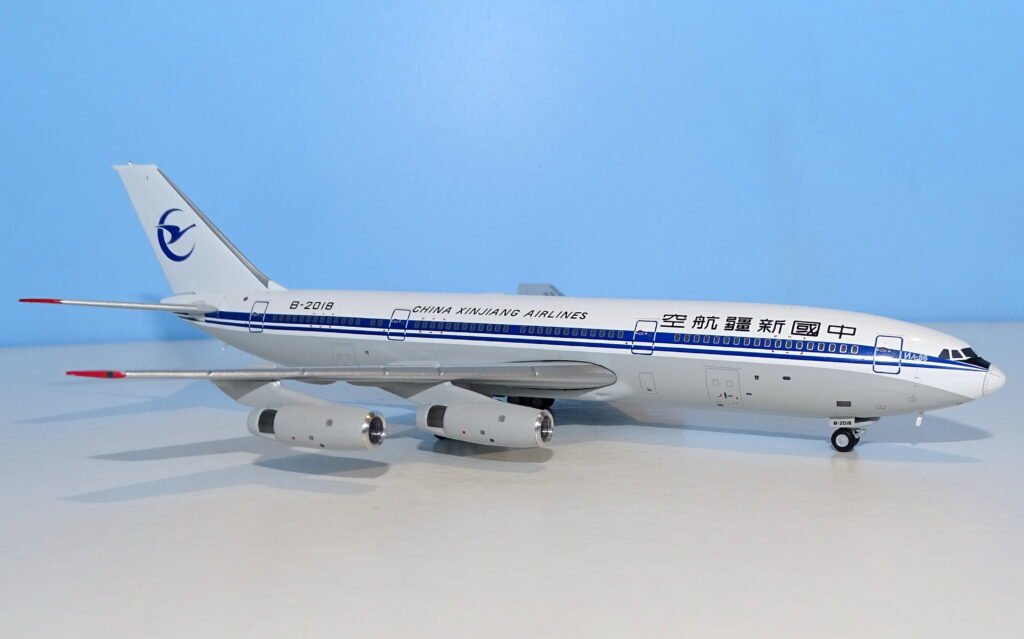
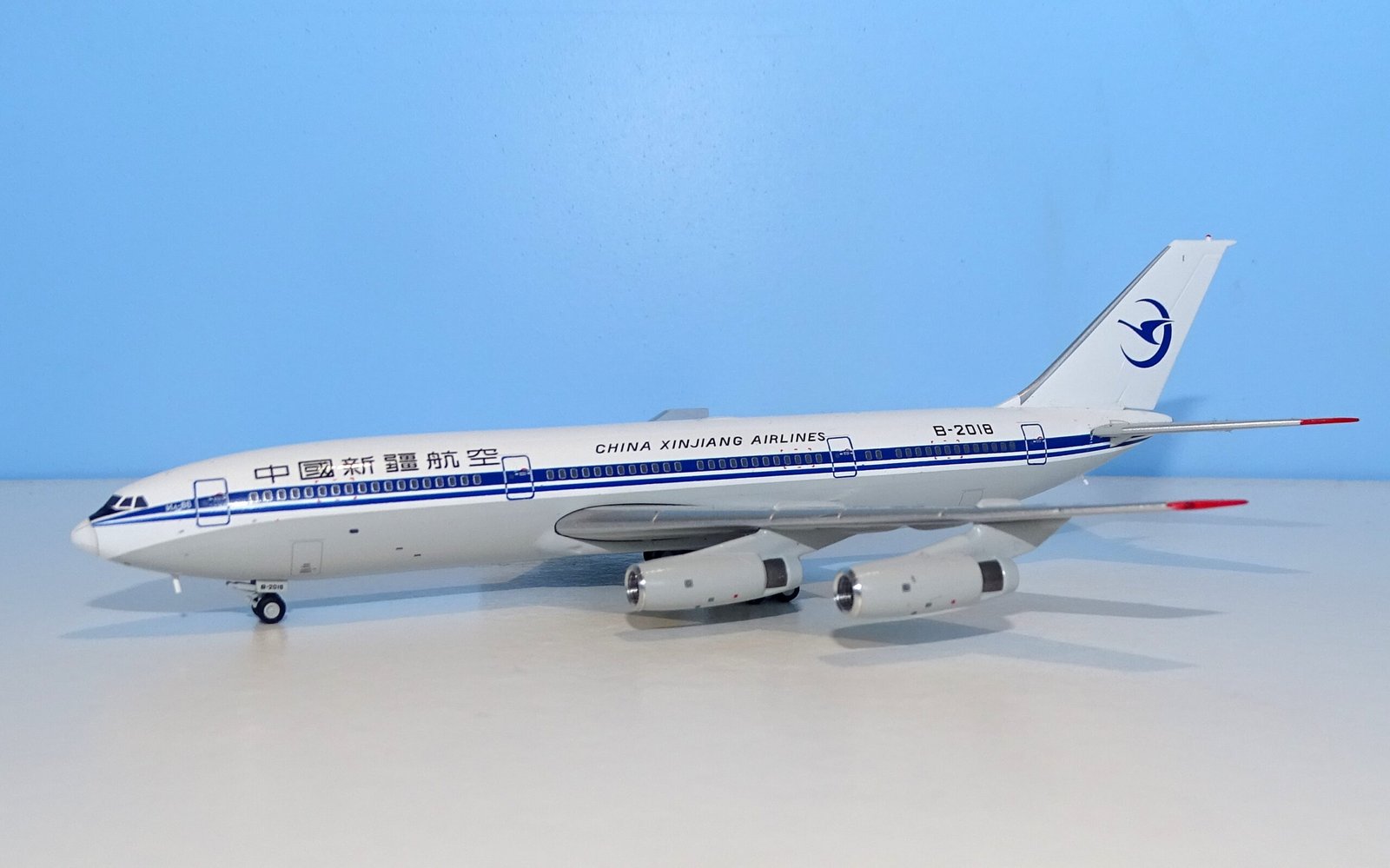
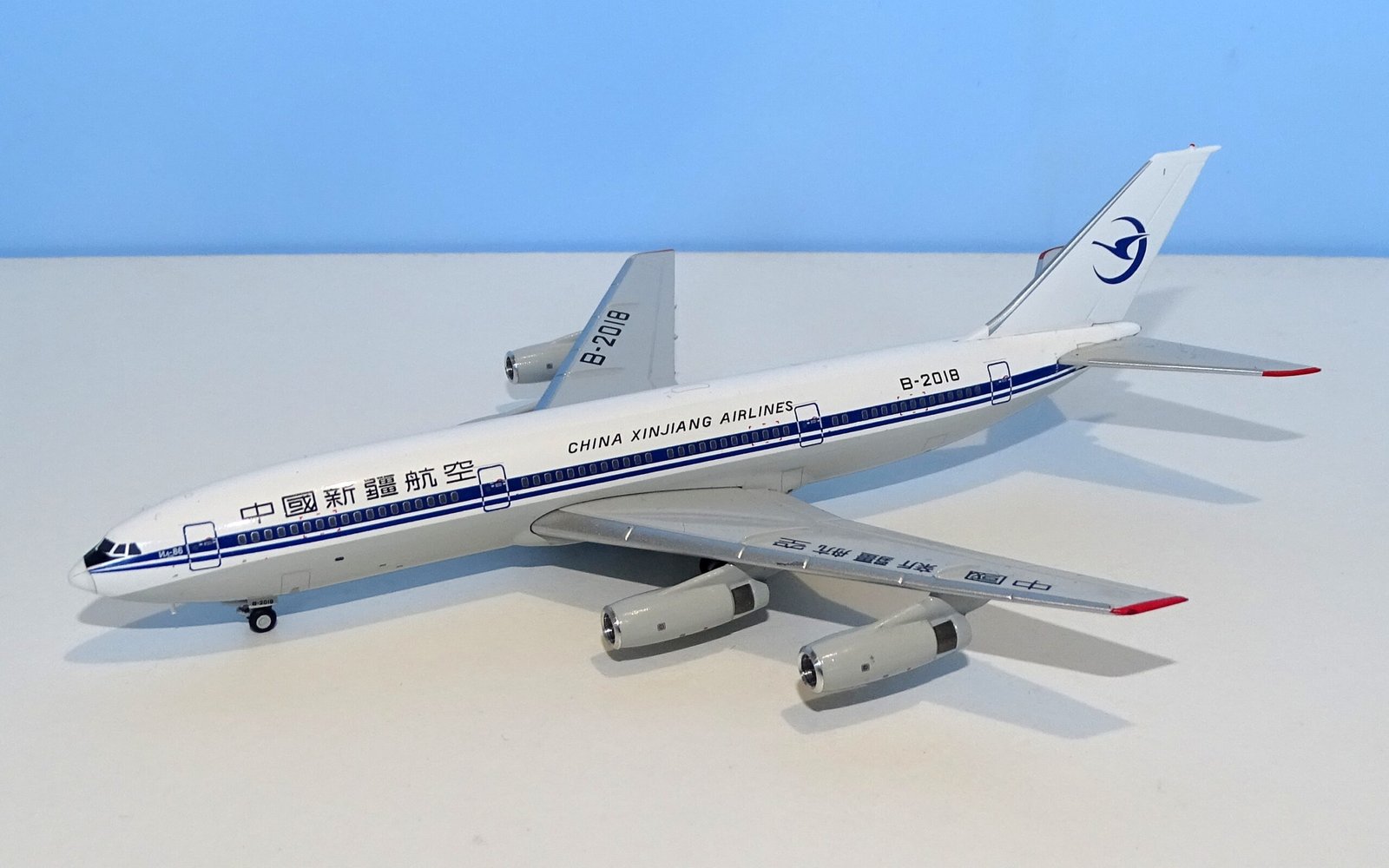
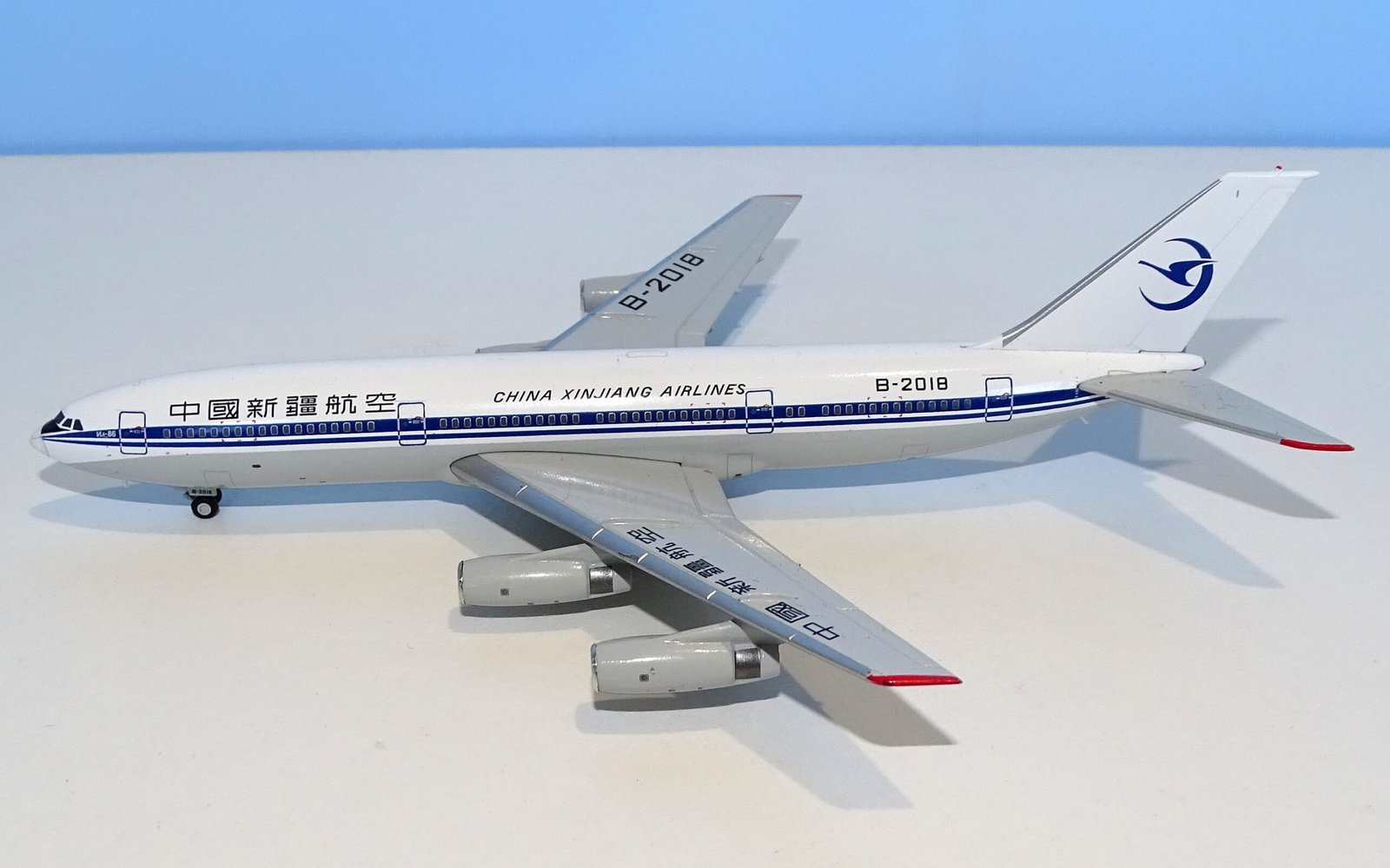
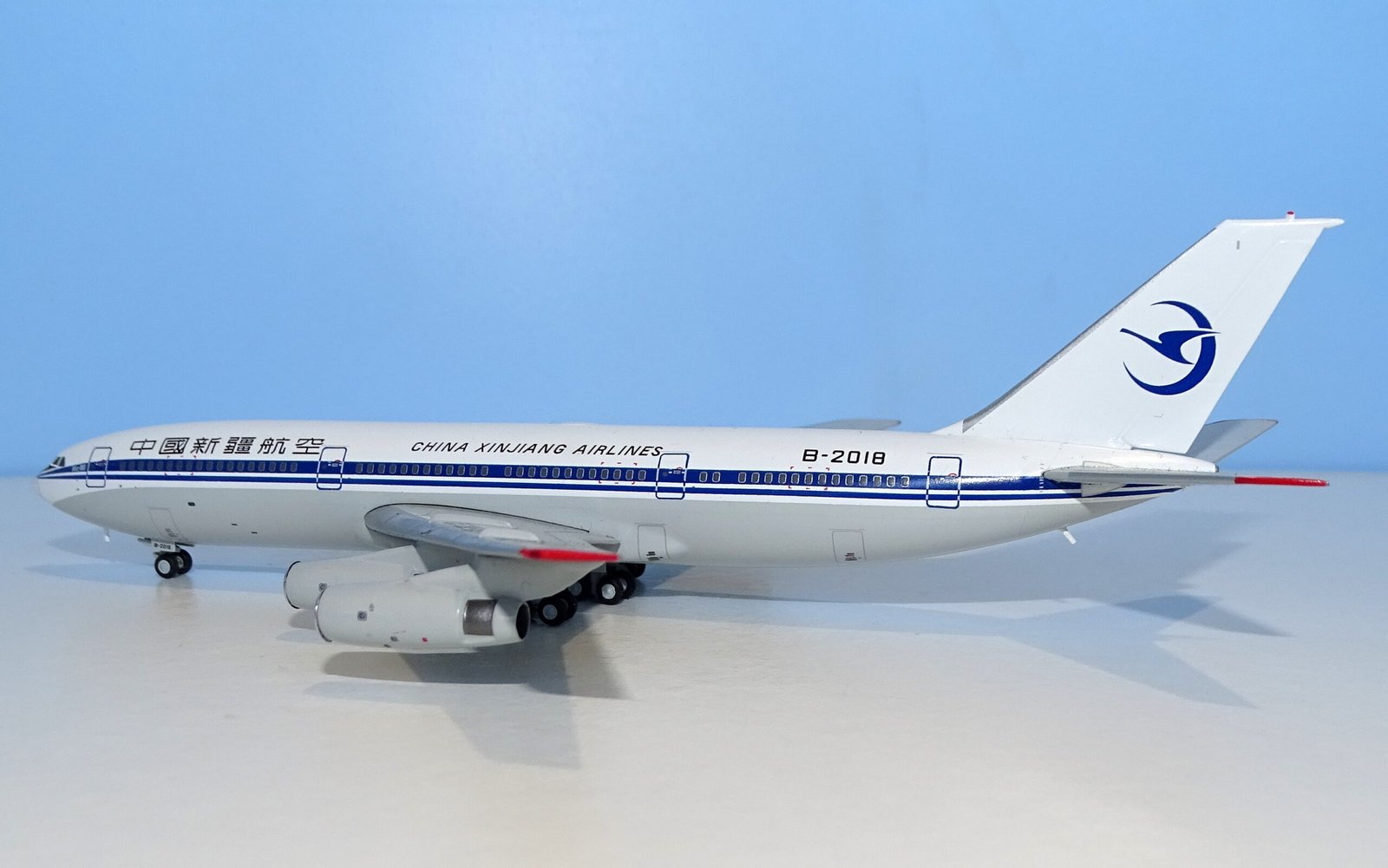
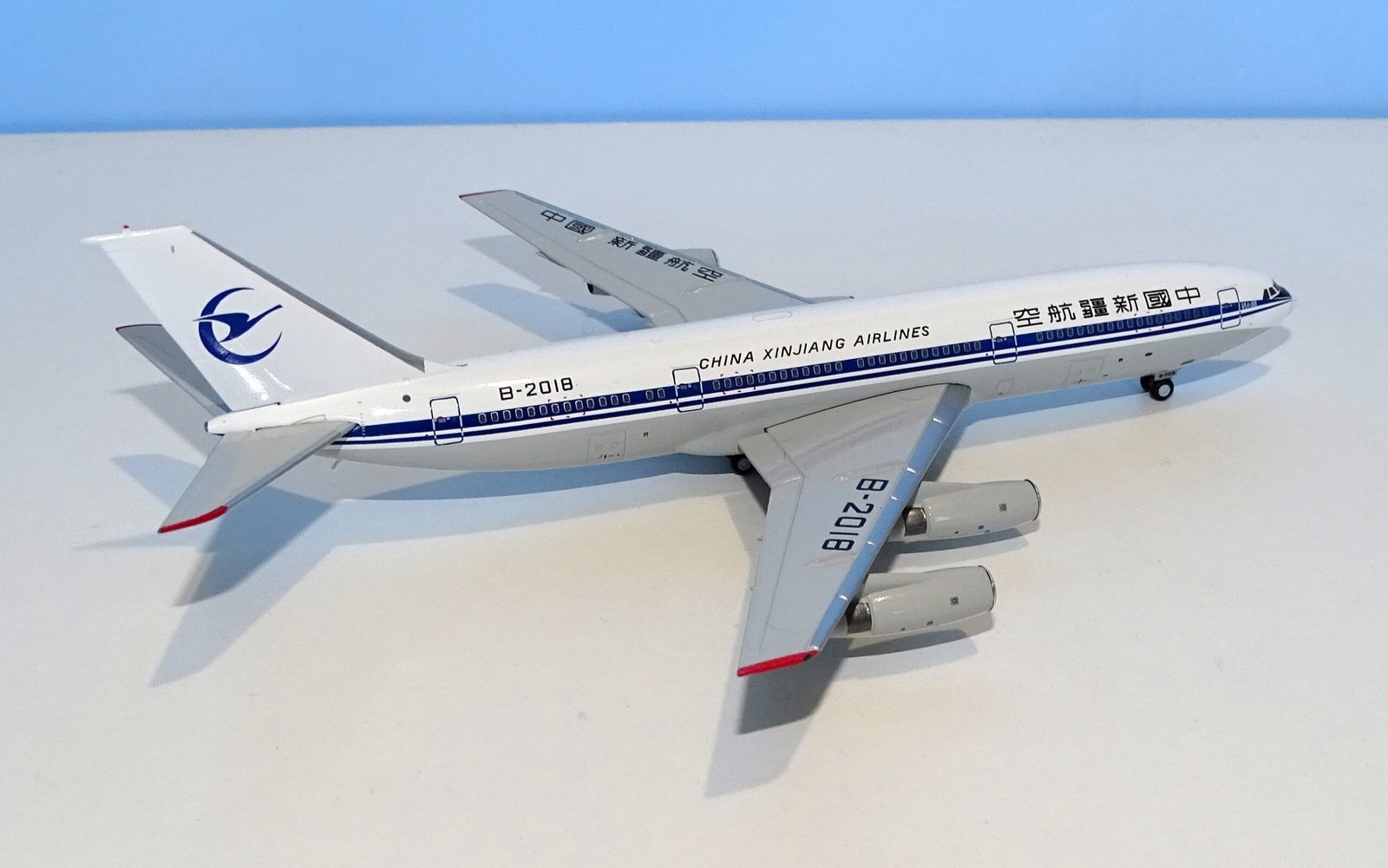
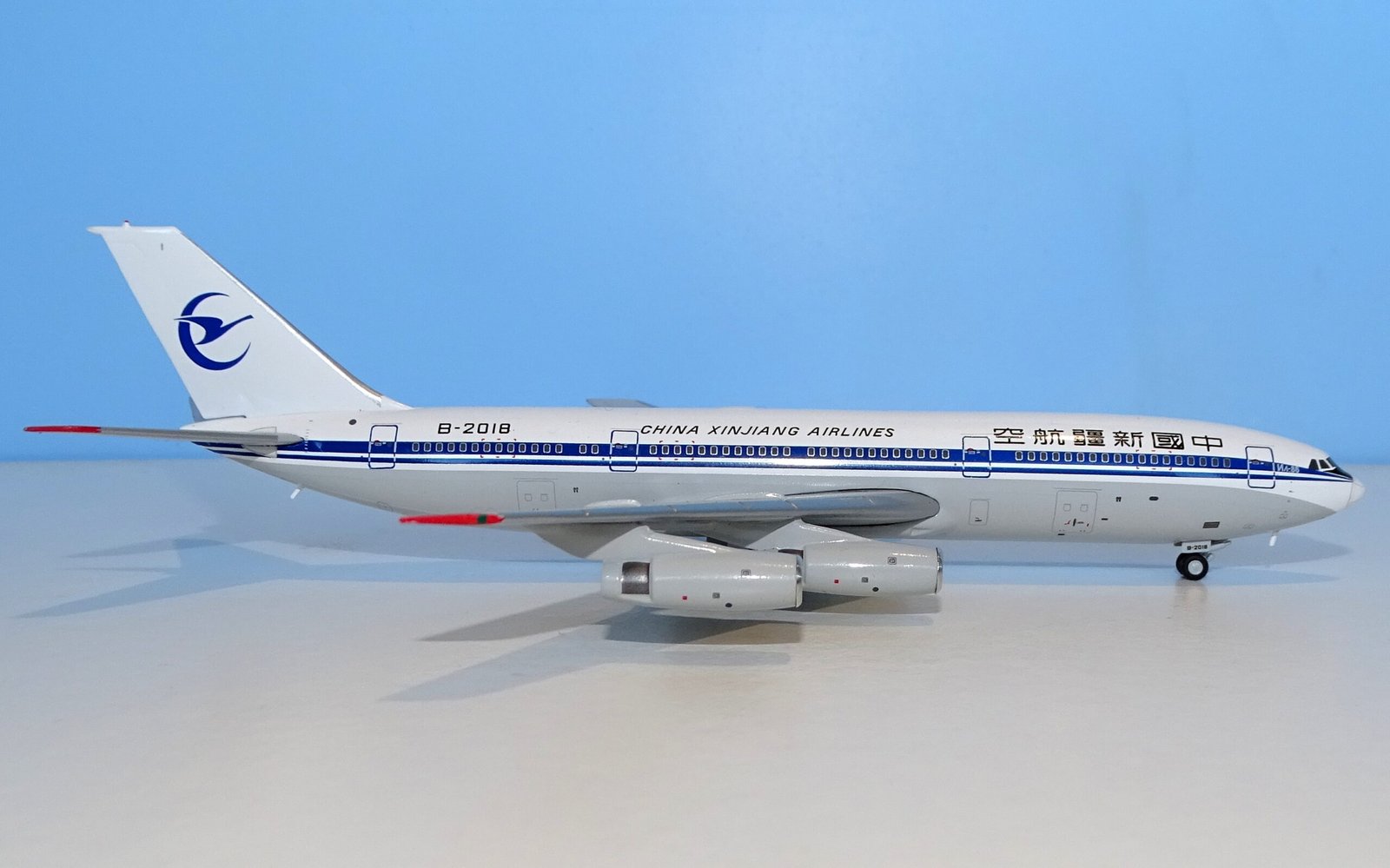
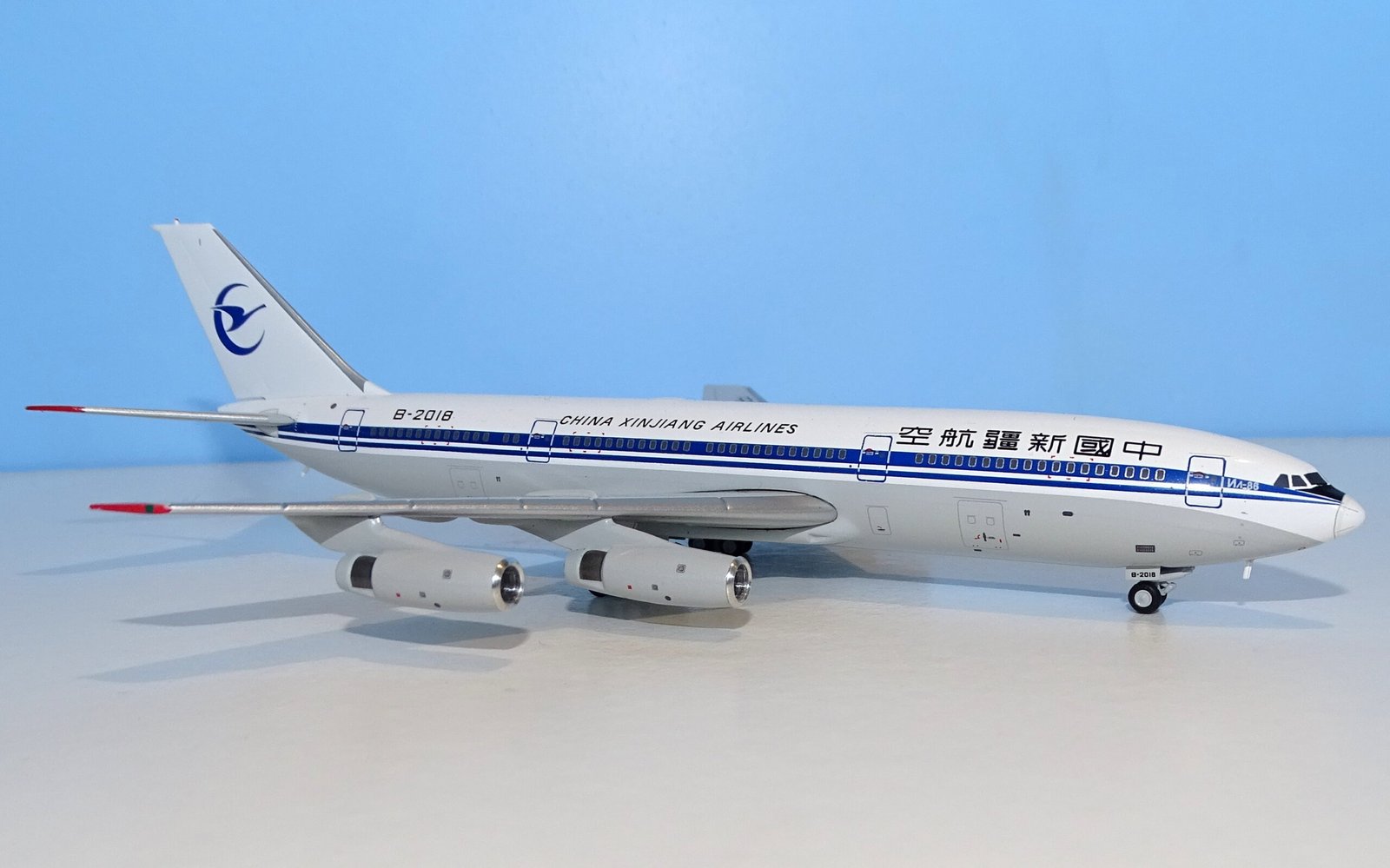
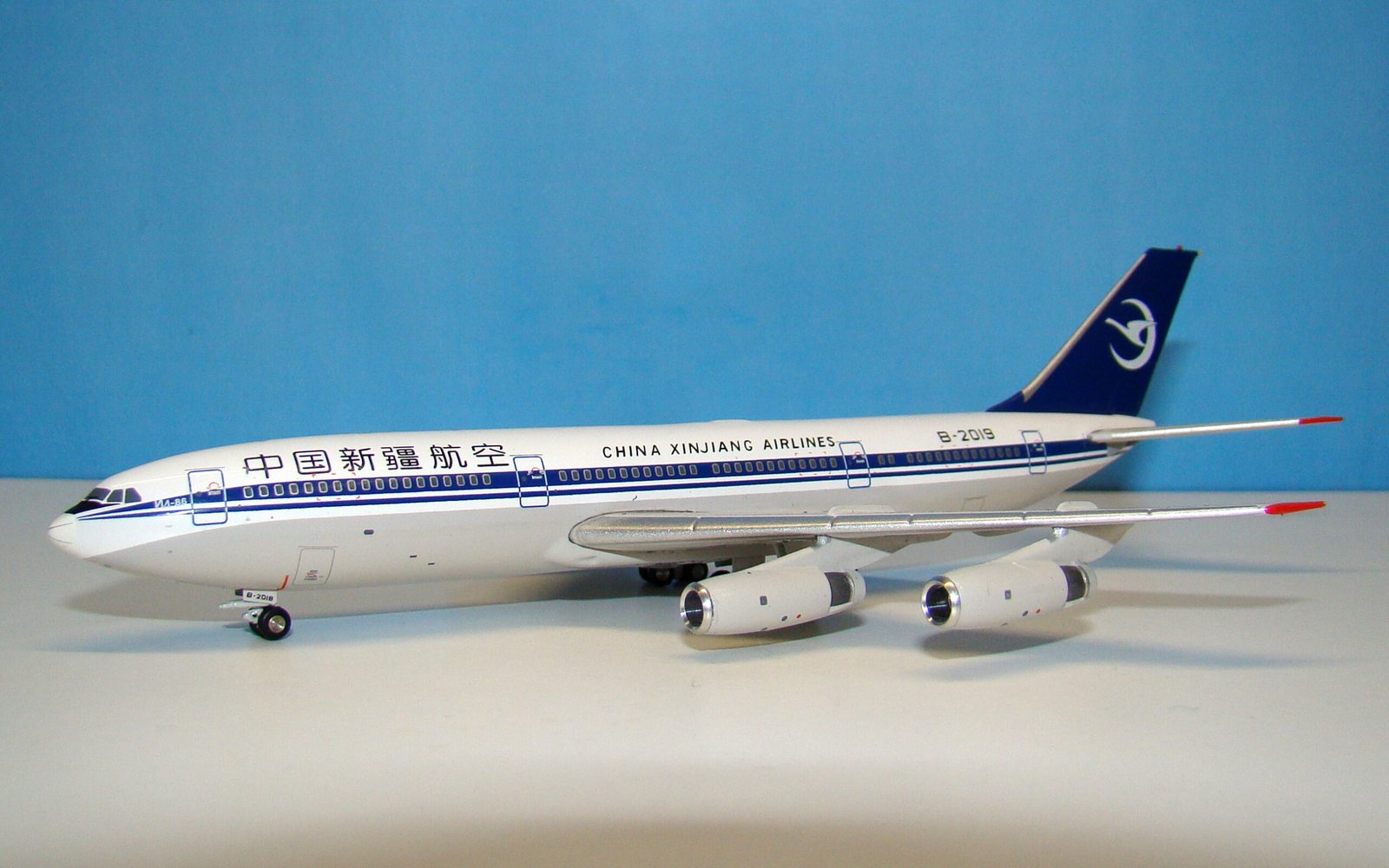
China Xinjiang Airlines Ilyushin IL-86 B-2018 YU ModeL 1:400 Scale Model Airliner
In the early 1980s the authorities in China decided to kick their reforms of Chinese aviation into high gear and breakup the monopolistic operations of the Civil Aviation Administration of China (CAAC). To this end, not only were CAAC’s airline operations split up but new airlines were also able to be setup for the first time. These initially consisted of joint ventures with special economic zones and regional governments. The second of the new airlines was formed in 1985, when CAAC undertook a 50:50 partnership with the remote Xinjiang region to form China Xinjiang Airlines from the ashes of the former CAAC Xinjiang Regional Authority.
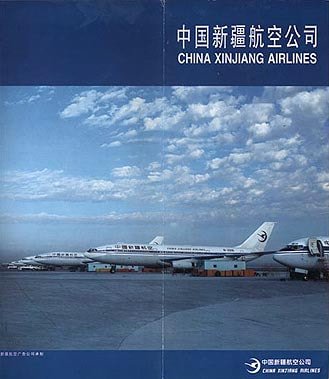
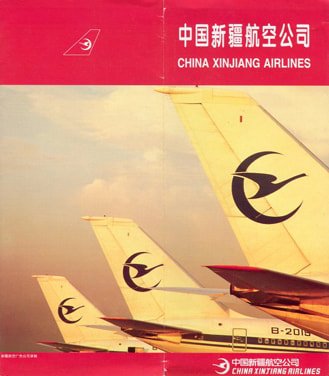
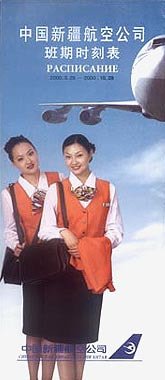
Above & below: 1997 and 1998 timetable. From the collection of David Zekria and Bjorn Larsson at Timetableimages.com
The Xinjiang Uygur Autonomous Region is as far Northwest as you can go in China and is close to the centre point of Asia. The region shares borders with Mongolia, Russia, Kazakhstan, Kyrgyzstan, Tajikistan, Afghanistan, Pakistan, and India, so as you might expect has a strong Muslim influence amongst its native population. Migration of Han Chinese to the region, in recent years, and heavy handed repression by the Chinese government has caused tension and acts of violence. Xinjiang is nowadays rarely out of the news courtesy of the mass concentration (or re-education) camps within its borders.
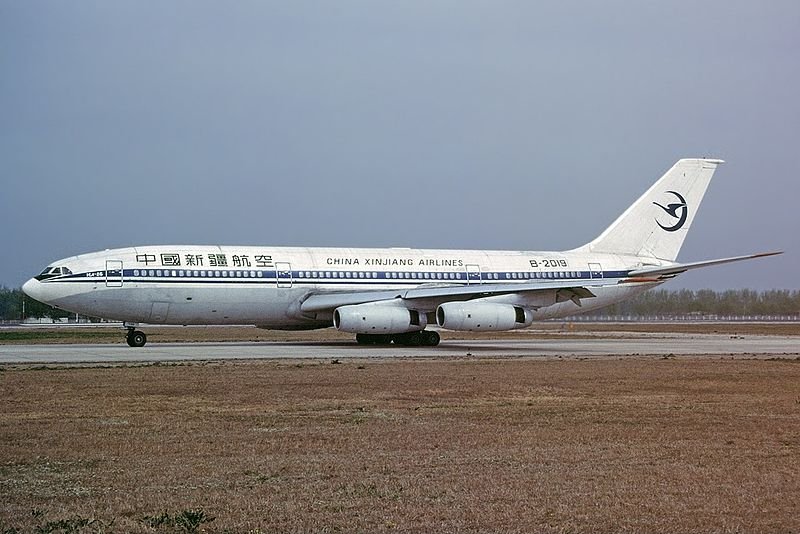
B-2019 at Beijing in 1999. Peter Bakema [GFDL 1.2 (http://www.gnu.org/licenses/old-licenses/fdl-1.2.html) or GFDL 1.2 (http://www.gnu.org/licenses/old-licenses/fdl-1.2.html)]
These tensions have no doubt been inflamed by the expansion of air travel and other industry in the region and the capital city of the region, Urumqi, has grown massively over the past thirty years (it also holds the unwelcome achievement of being one of the world’s 10 most polluted cities in the world relating to air pollution (7 are in China)). China Xinjiang Airlines was based at Urumqi with the aim of developing air travel in the remote region. Urumqi itself can boast of being the furthest major city from the ocean in the world. Air travel is therefore a must in this part of the world.
China Xinjiang Airlines Ilyushin IL-86 B-2018 YU ModeL 1:400 Scale Model Airliner
China Xinjiang Airlines Ilyushin IL-86 B-2018 YU ModeL 1:400 Scale Model Airliner
China Xinjiang Airlines Ilyushin IL-86 B-2018 YU ModeL 1:400 Scale Model Airliner
China Xinjiang Airlines Ilyushin IL-86 B-2018 YU ModeL 1:400 Scale Model Airliner
China Xinjiang Airlines Ilyushin IL-86 B-2018 YU ModeL 1:400 Scale Model Airliner
China Xinjiang Airlines Ilyushin IL-86 B-2018 YU ModeL 1:400 Scale Model Airliner
China Xinjiang Airlines Ilyushin IL-86 B-2018 YU ModeL 1:400 Scale Model Airliner
China Xinjiang’s network served not only regional routes but also the customary trunk service to Beijing. International services connected Urumqi to Moscow, Bishkek, Almaty, Tashkent, Novosibirsk and Islamabad. Indeed it is the only city connecting China to several of these destinations. The initial fleet was centred around Antonov AN-24s, De Havilland Canada DHC-6s and Tupolev TU-154Ms.
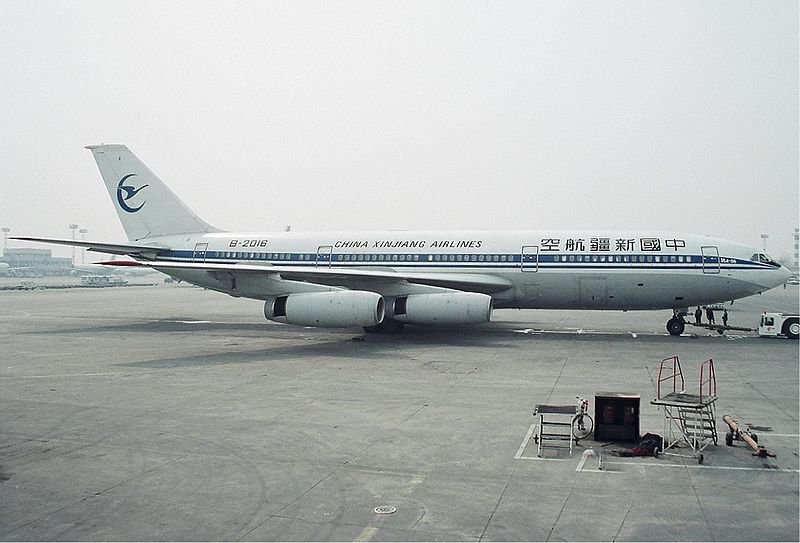
B-2016 still in the original colours in 1997. Paul Spijkers [GFDL (http://www.gnu.org/copyleft/fdl.html) or GFDL (http://www.gnu.org/copyleft/fdl.html)]
Given the links to Moscow and closeness to the interior it is not a major surprise that Soviet era equipment was utilised. The TU-154Ms were in fact quite new, being delivered factory fresh from 1986. By 1987 five were in service. The identity chosen for the airline was quite attractive and included a flying swan (a symbol of good luck) against a crescent (presumably denoting the regions Islamic links). Initially the swan and crescent on the tail were blue against a white background. Later in the 1990s the colours were swapped producing a more pleasing white swan against blue background.
Re-equipment was an important part of the new Chinese industry but this didn’t always mean that airlines were equipped with new Boeings. In fact in the late 80s there was a substantial amount of Soviet materiel entering the fleet. For China Xinjiang this became obvious when in 1993 it received 3 Ilyushin IL-86s, becoming the only airline outside of the ex-Soviet states to acquire the type new. When I wrote this piece originally I was alerted to the fact that the first private airline in Pakistan, Hajvairy Airlines, had leased a pair of Aeroflot IL-86s until 1993 and Greenair of Turkey also leased one aircraft, so China Xinjiang wasn’t the only airline outside the ex-Soviet states to use the type.
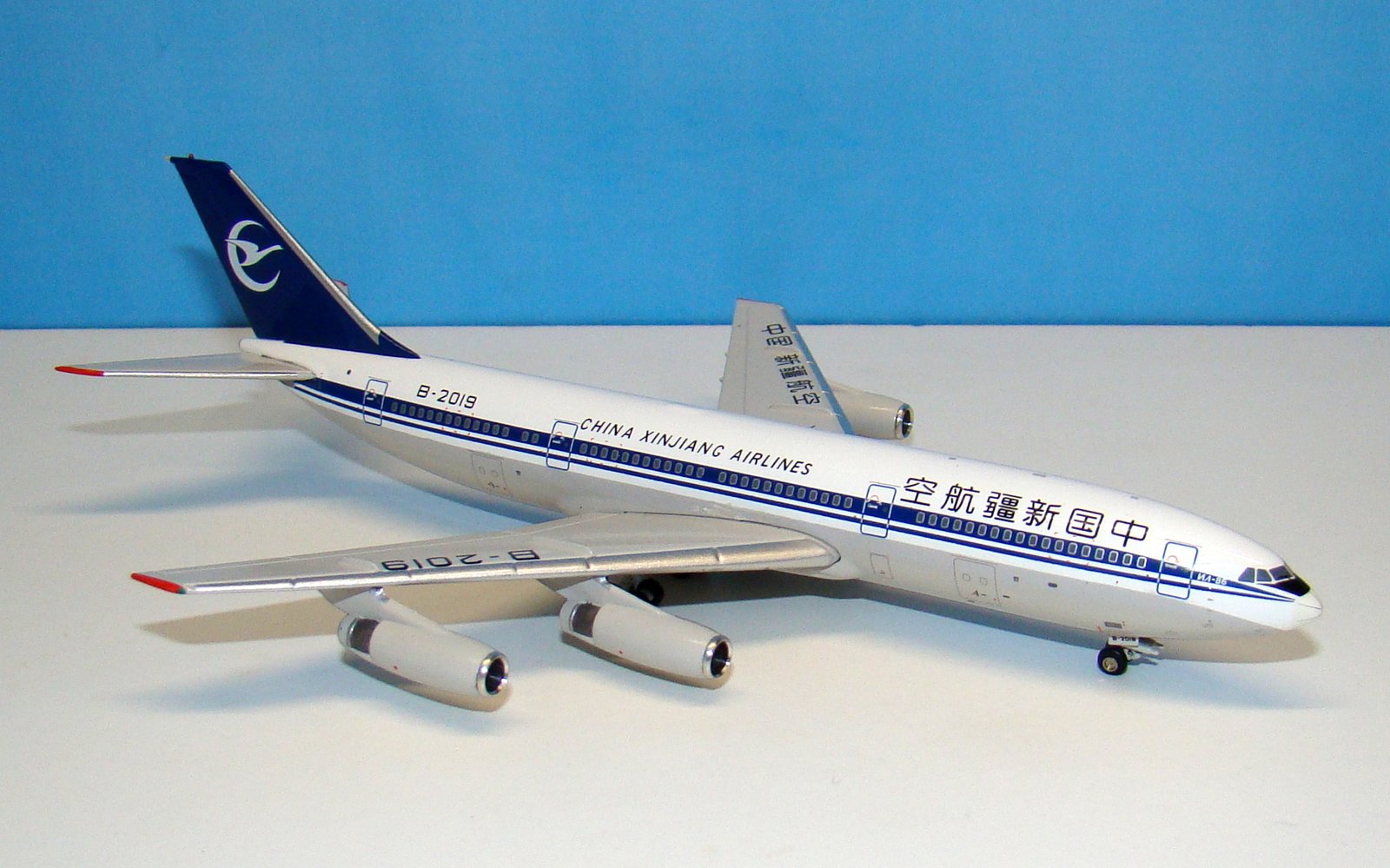
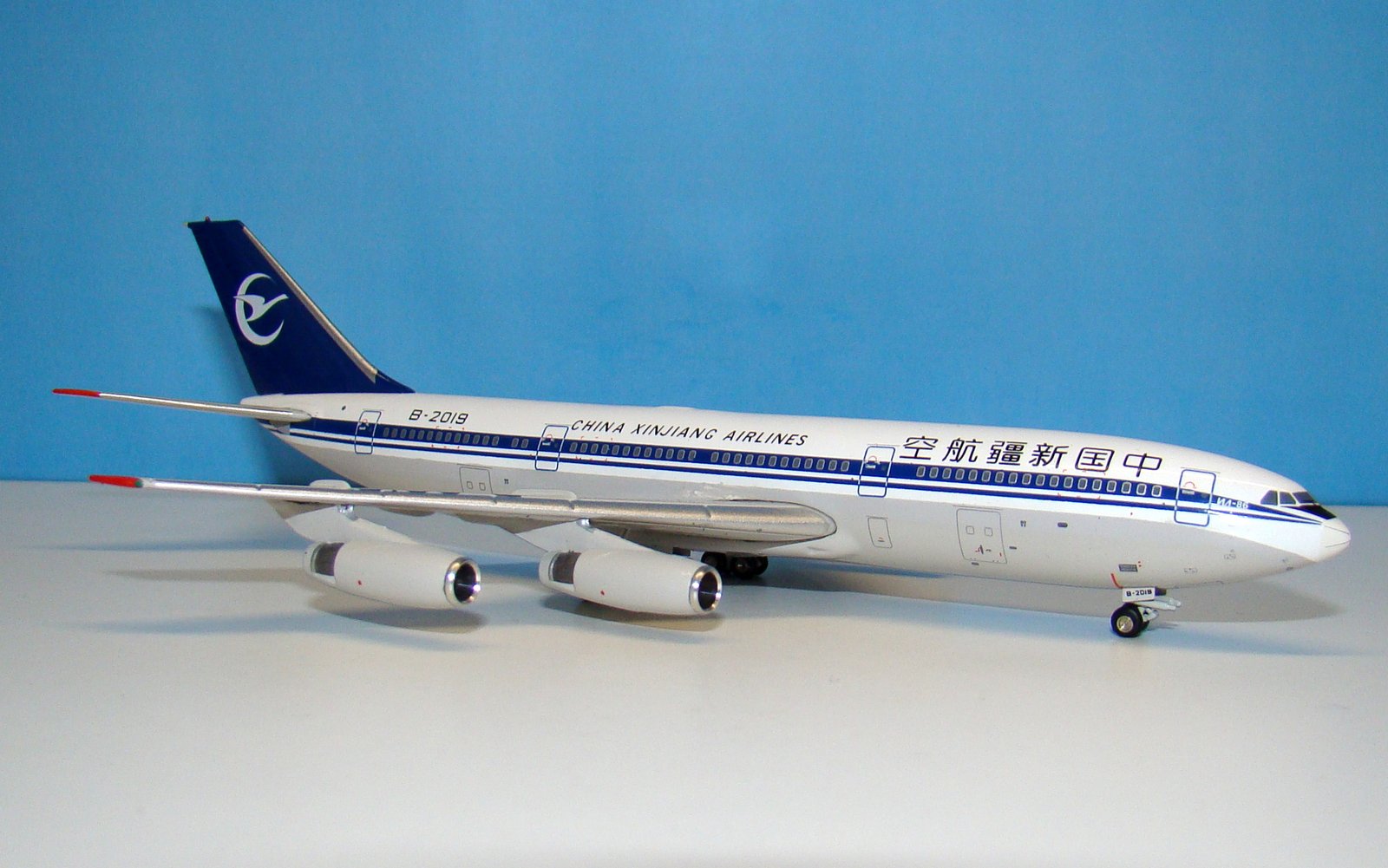
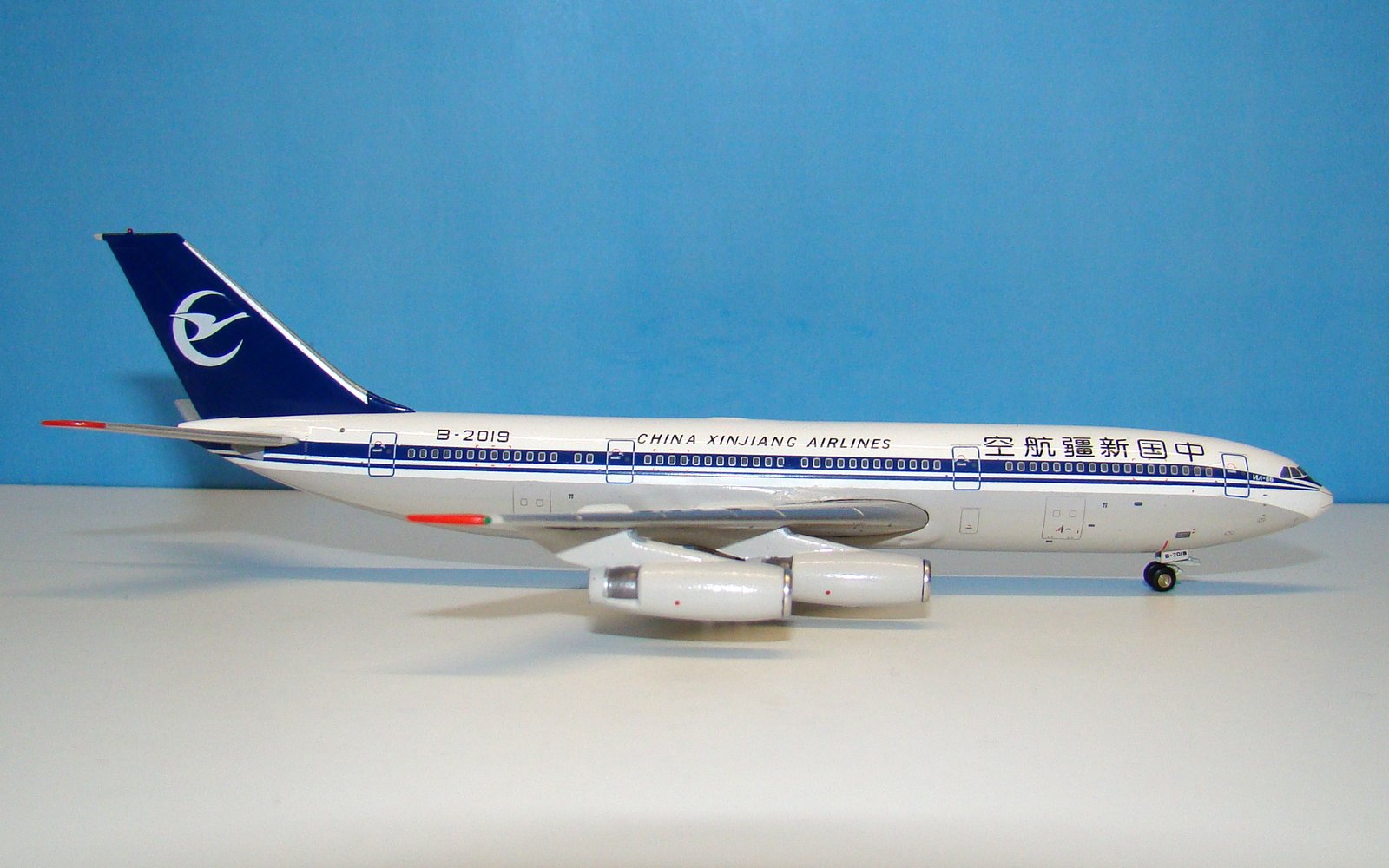
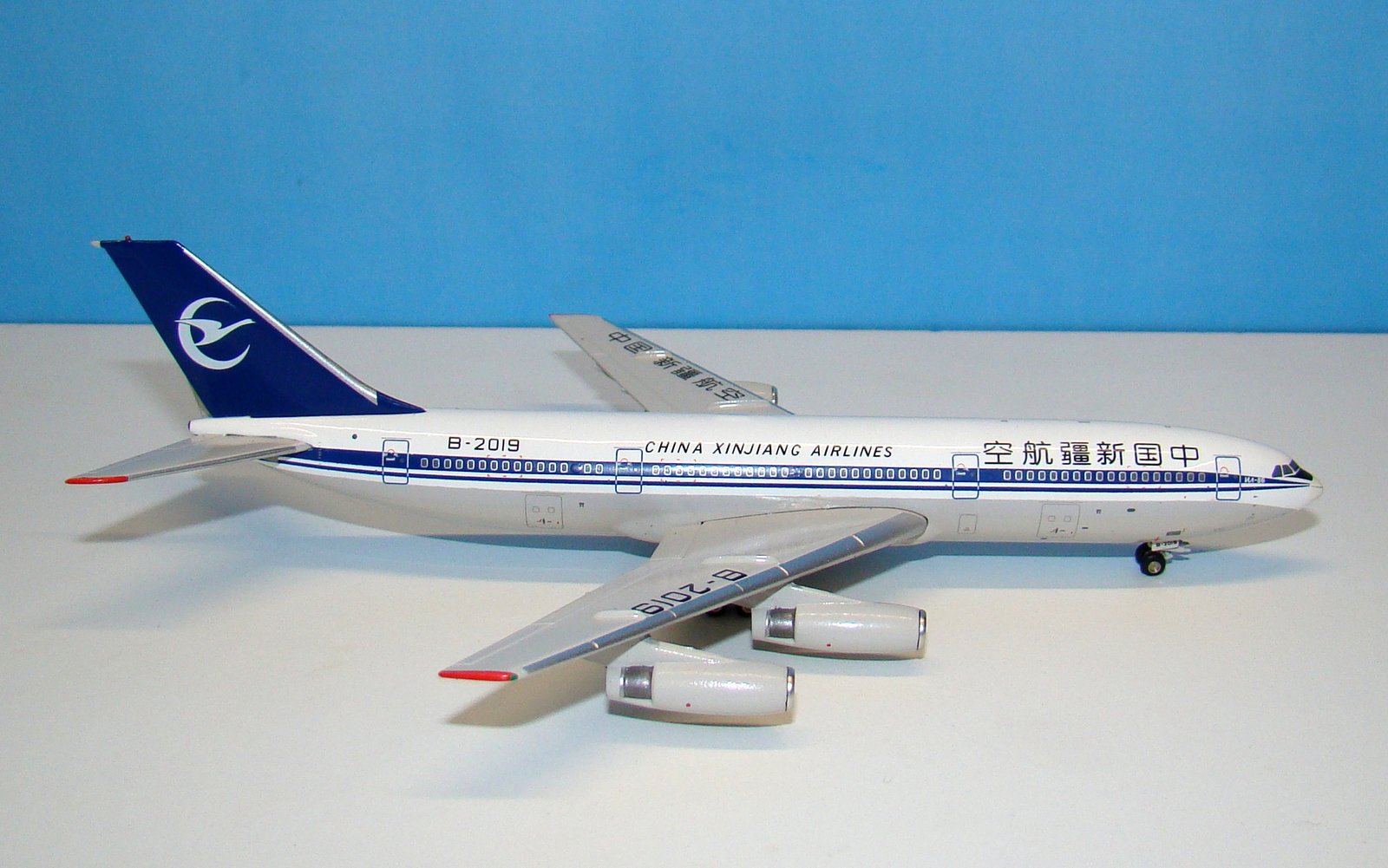
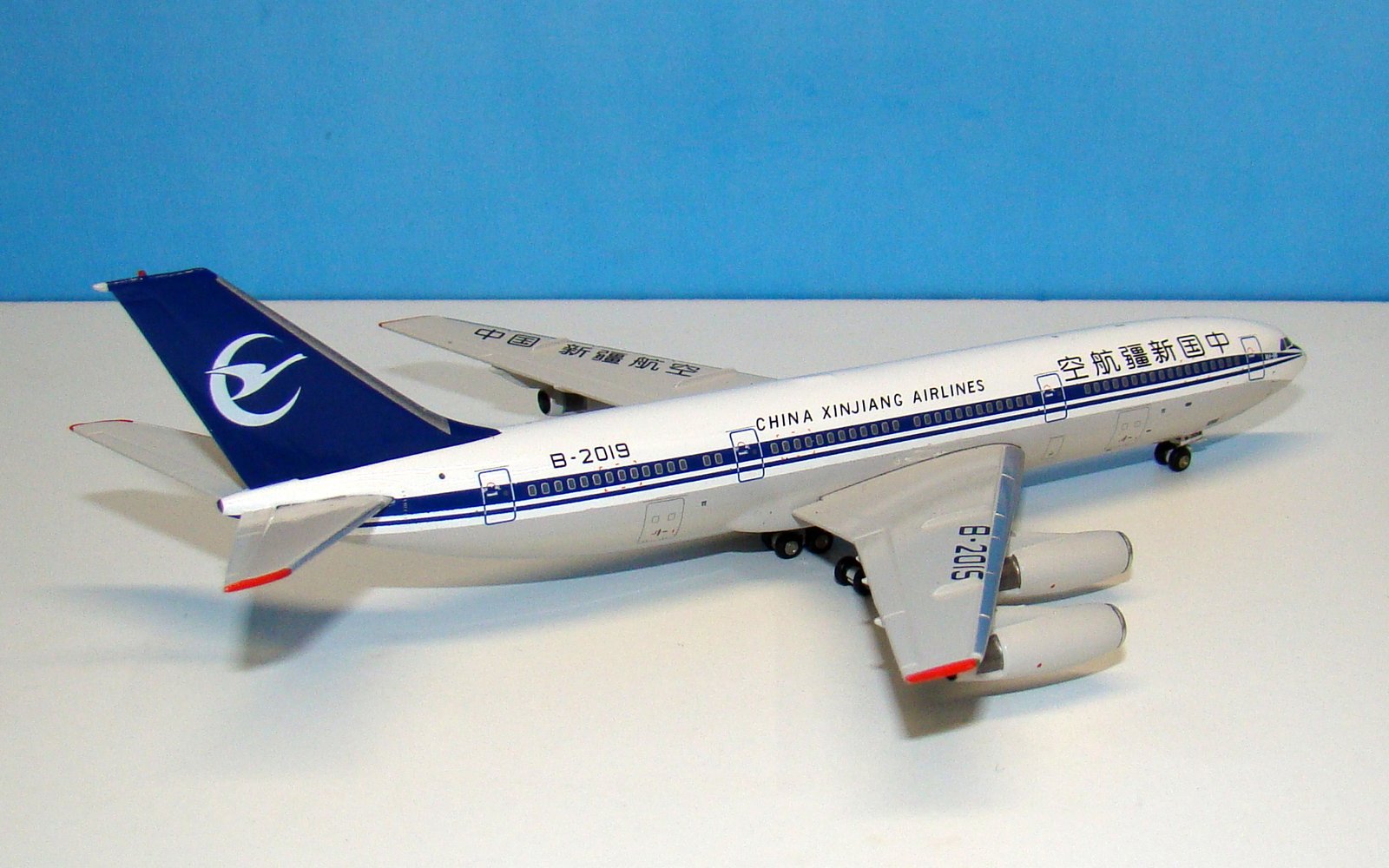
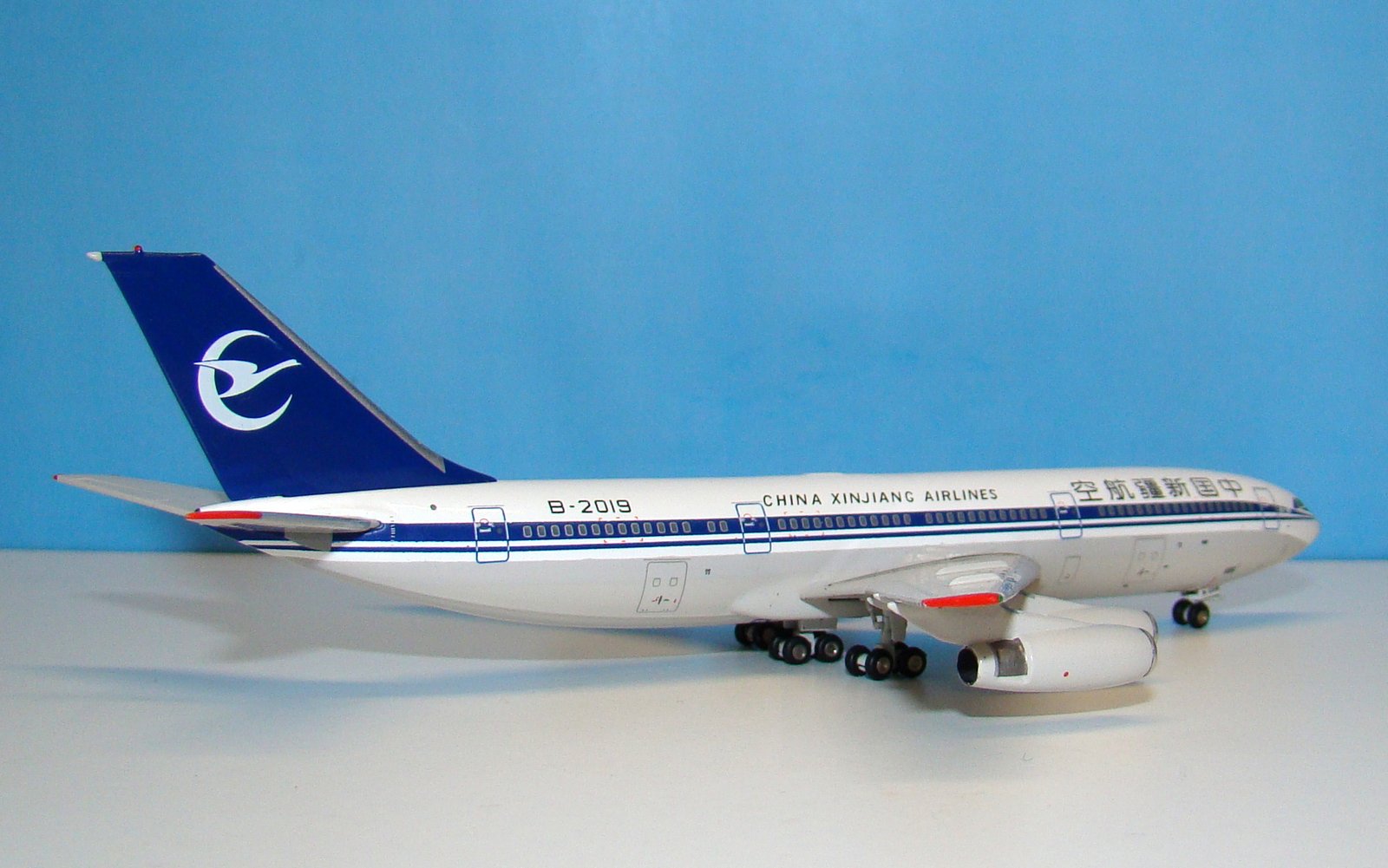
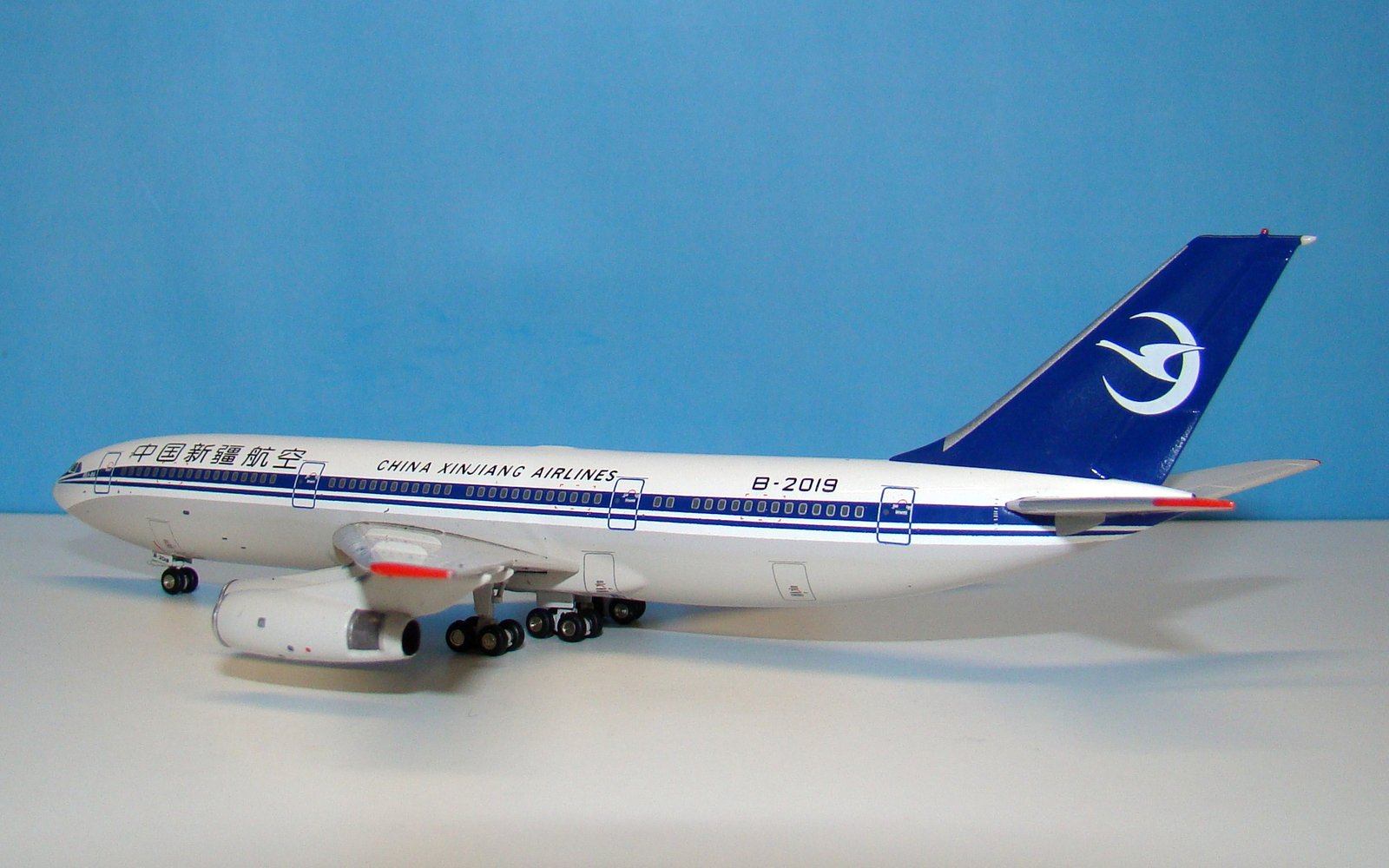
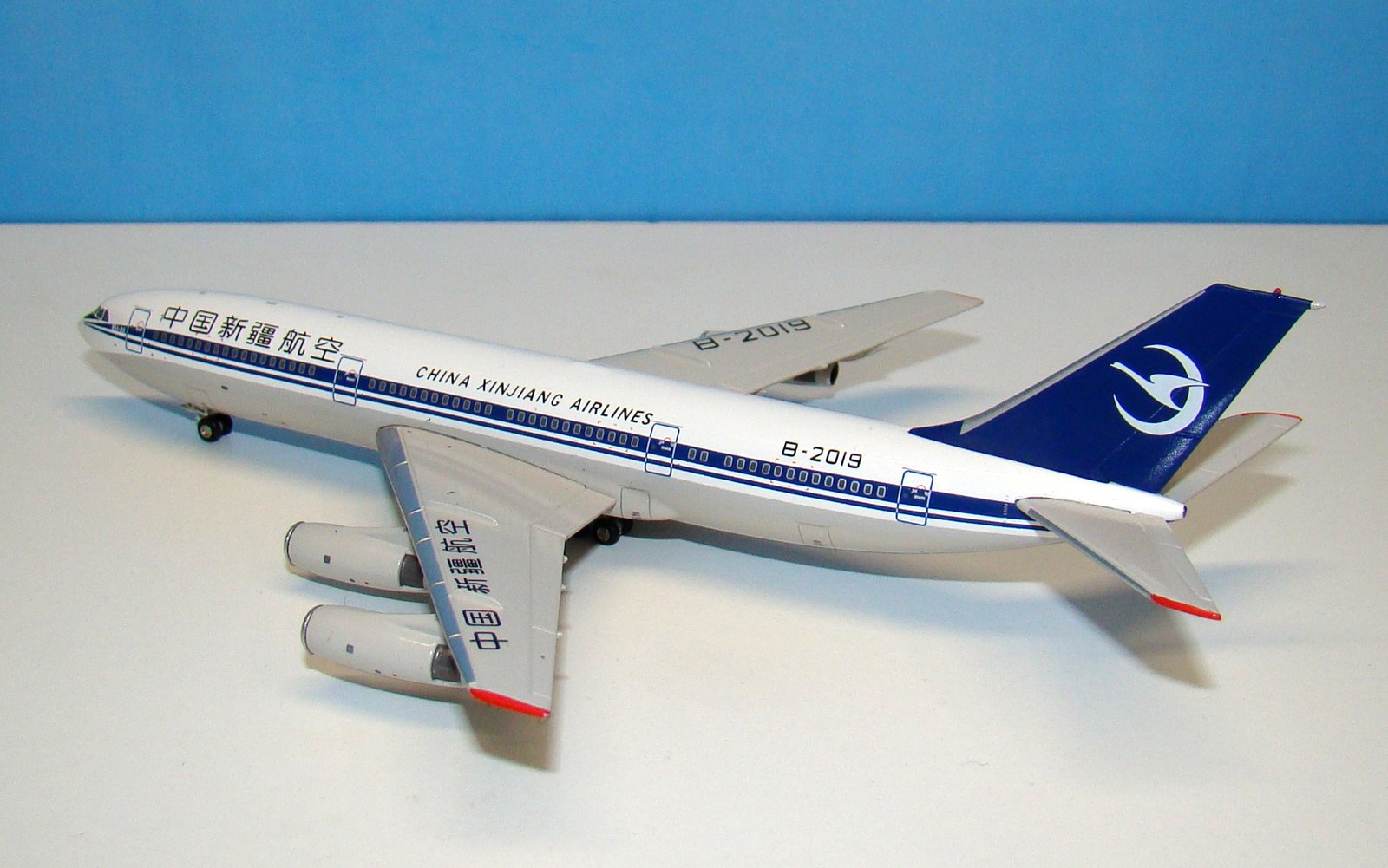
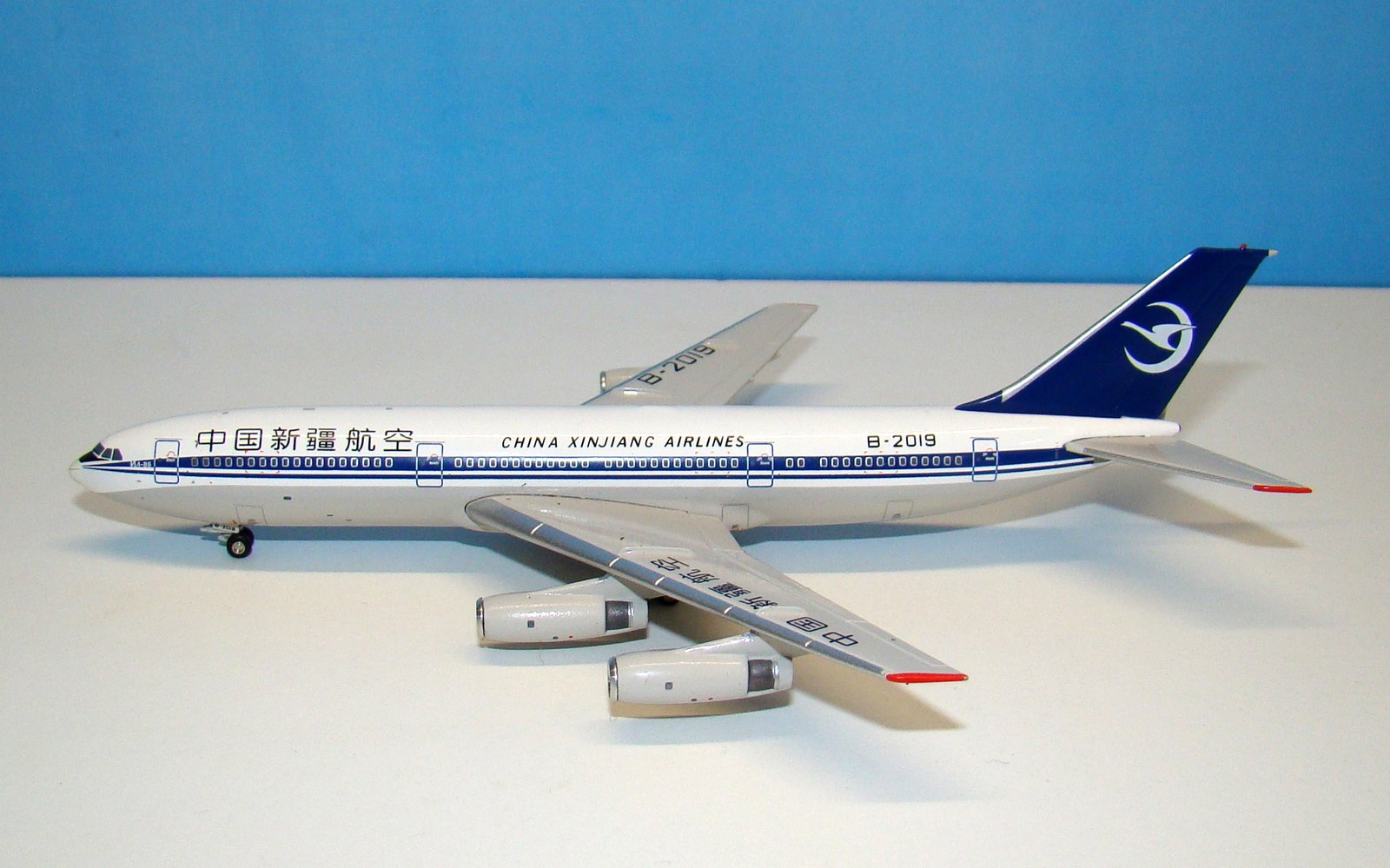
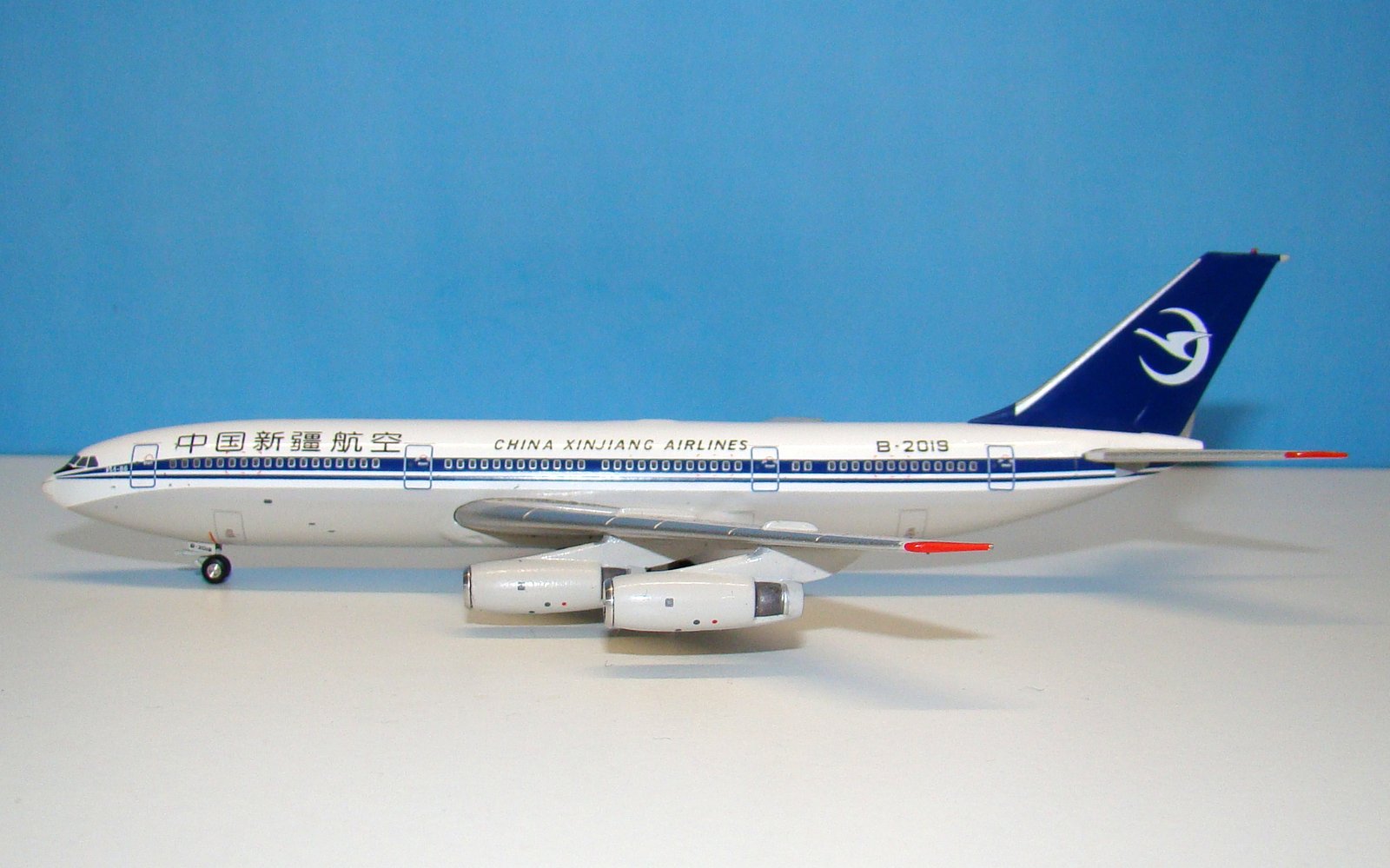
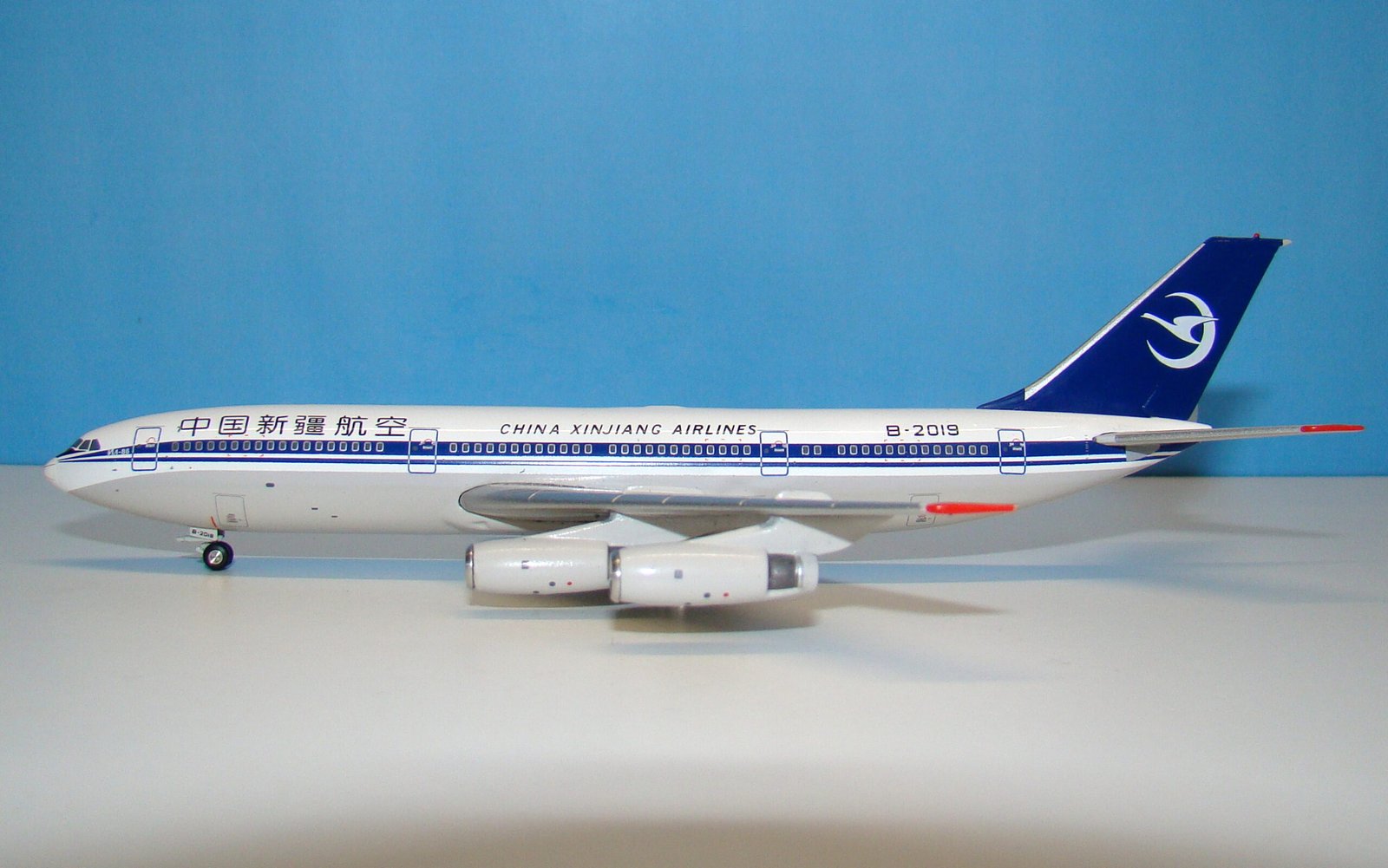
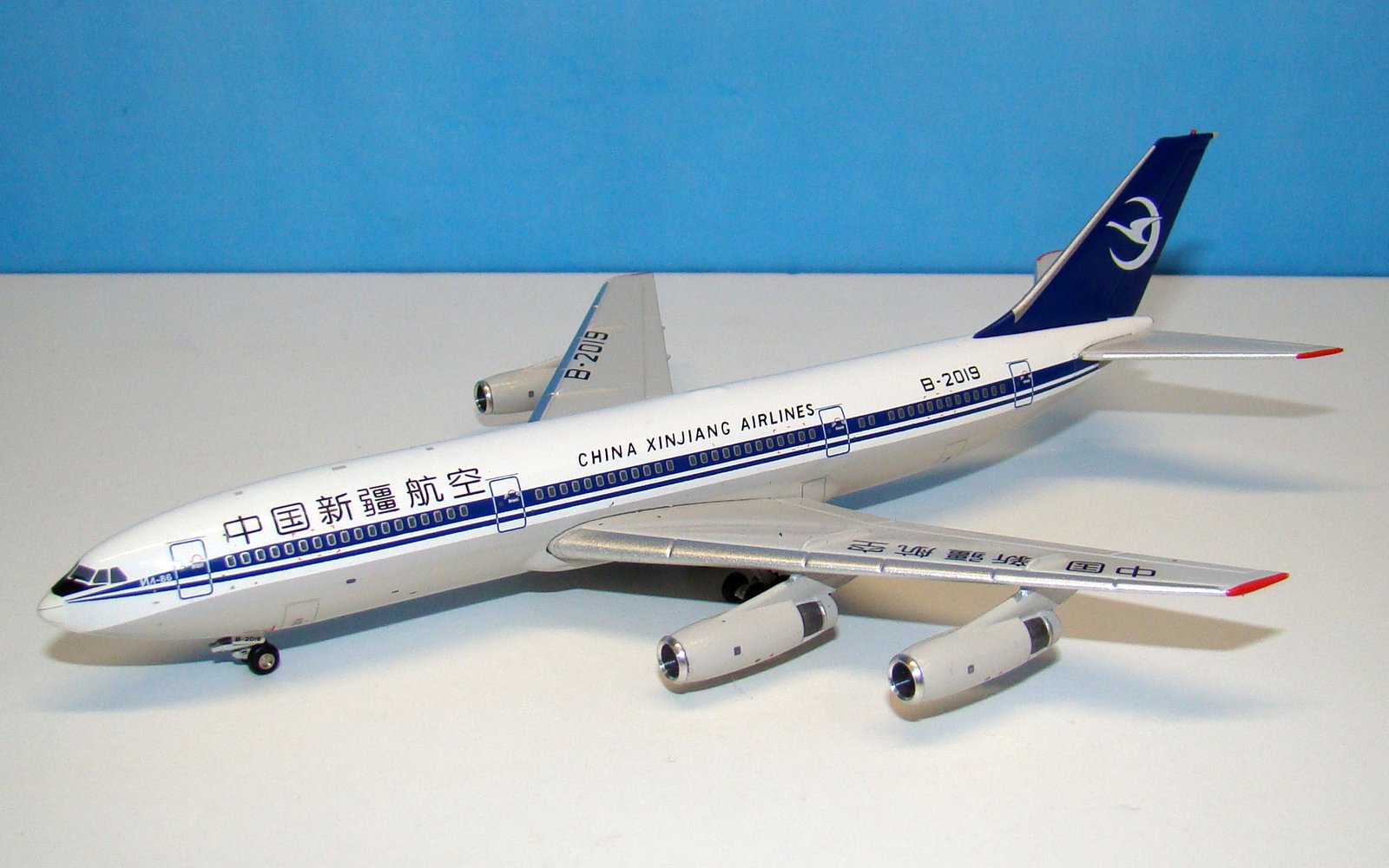
China Xinjiang Airlines Ilyushin IL-86 B-2019 Gemini Jets 1:400 Scale Model Airliner
China Xinjiang Airlines Ilyushin IL-86 B-2019 Gemini Jets 1:400 Scale Model Airliner
China Xinjiang Airlines Ilyushin IL-86 B-2019 Gemini Jets 1:400 Scale Model Airliner
China Xinjiang Airlines Ilyushin IL-86 B-2019 Gemini Jets 1:400 Scale Model Airliner
China Xinjiang Airlines Ilyushin IL-86 B-2019 Gemini Jets 1:400 Scale Model Airliner
China Xinjiang Airlines Ilyushin IL-86 B-2019 Gemini Jets 1:400 Scale Model Airliner
China Xinjiang Airlines Ilyushin IL-86 B-2019 Gemini Jets 1:400 Scale Model Airliner
China Xinjiang Airlines Ilyushin IL-86 B-2019 Gemini Jets 1:400 Scale Model Airliner
China Xinjiang Airlines Ilyushin IL-86 B-2019 Gemini Jets 1:400 Scale Model Airliner
China Xinjiang Airlines Ilyushin IL-86 B-2019 Gemini Jets 1:400 Scale Model Airliner
China Xinjiang Airlines Ilyushin IL-86 B-2019 Gemini Jets 1:400 Scale Model Airliner
China Xinjiang Airlines Ilyushin IL-86 B-2019 Gemini Jets 1:400 Scale Model Airliner
China Xinjiang Airlines Ilyushin IL-86 B-2019 Gemini Jets 1:400 Scale Model Airliner
Though spacious and reliably safe the IL-86 was effectively obsolete when it entered service, in the 1970s. The fact that it was still being produced in the 1990s was a real indictment of the state of Soviet aviation. Regardless the 3 new IL-86s proved themselves in service for a decade before sale to Kras Air and East Line of Russia.
B-2019 was the last of the trio which faithfully served the carrier until its merger into China Southern. All three were sold back to Russia where this frame, and B-2018, joined Kras Air in June 2003. She became RA-86926. After three years she was sold to Tatarstan Airlines in April 2006 and was still operational as of May 2009.
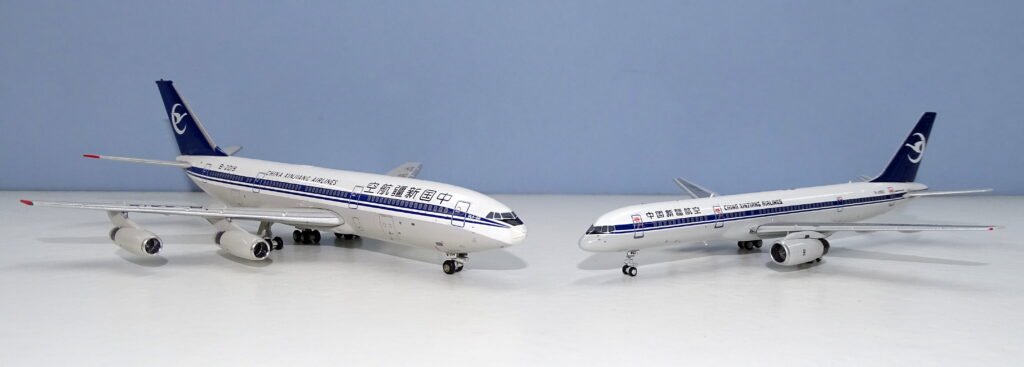
China Xinjiang was able to acquire more modern equipment with 737-300s also joining in 1993, followed by ATR-72s in 1997, Boeing 757s in 1997 and 737-700s in 2001. The airline however was a casualty of the government orchestrated consolidation of the industry and was merged into China Southern Airlines in 2003.
The ex-B-2016 with Kazan Air Enterprise and still wearing mostly Xinjiang colours in 2009. Pavel Adzhigildaev [CC BY-SA 3.0 GFDL 1.2]