The Eastern Air Lines shuttle was a pioneering idea in the busy US North-east market offering no-reservation guaranteed seat service between the super busy business destinations of New York, Washington and Boston. There are few markets that can support such a concept but travel from the UK regions to the London Heathrow was always a good contender. In 1975 the new British Airways decided to see if it could replicate the massive success of Eastern’s shuttle in the UK.
In order for a shuttle style service to work there are several factors that are required but mostly there needs to be demand. That was never going to be a problem for British Airways linking important regional centres like Glasgow and Belfast to the UK, and in fact global, financial centre of London. Day traveler business traffic between the UK regions and Heathrow was already strong; for example, in 1969 BEA was operating two-class Vickers Vanguards 8 times daily between Heathrow and Edinburgh and 7 times daily between Heathrow and Glasgow. The latter had additional frequencies with Tridents as well. It of course helped that even in the 1960s Heathrow was the epicenter of BOAC’s long-haul services.
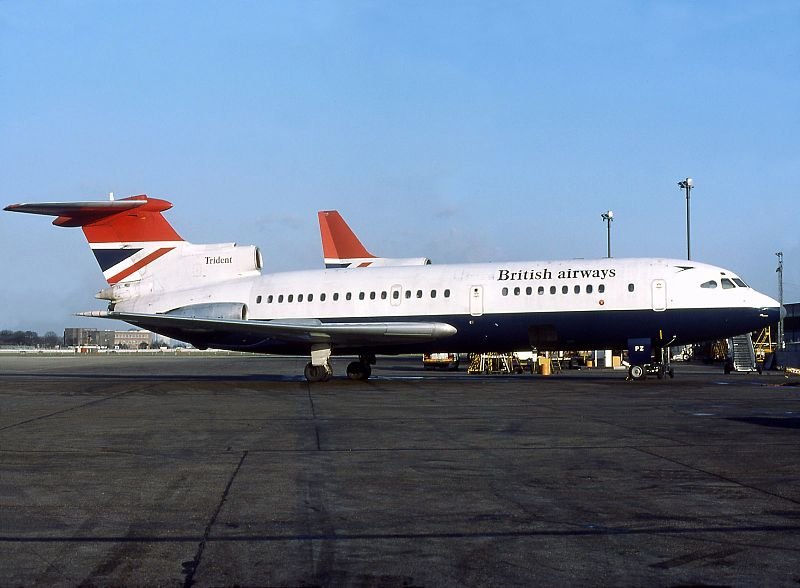
G-ARPZ one of the Trident 1s in 1980. Michel Gilliand [GFDL 1.2 (http://www.gnu.org/licenses/old-licenses/fdl-1.2.html) or GFDL 1.2 (http://www.gnu.org/licenses/old-licenses/fdl-1.2.html)], via Wikimedia Commons
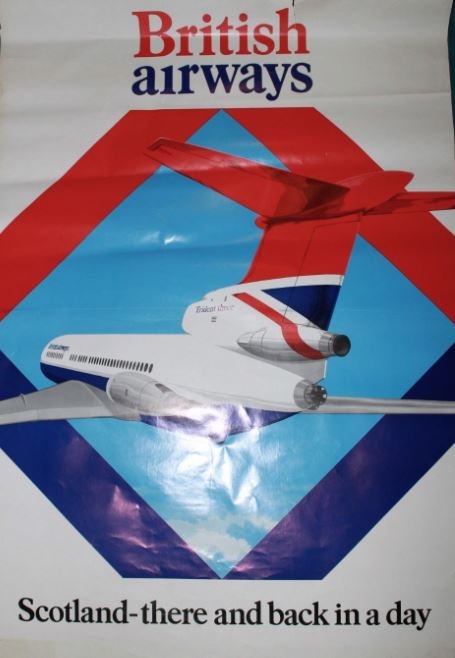
The initial British Airways Shuttle concept was of a single class aircraft with absolutely no onboard service but where no reservation was required. Every passenger arriving at the shuttle gate within ten minutes of departure was guaranteed a seat, even if this meant flying them alone on an otherwise empty aircraft. It was Europe’s first walk-on, no reservation, guaranteed seat service and began operating on the Heathrow-Glasgow route on January 12, 1975.
Further routes were added as follows:
Heathrow-Edinburgh April 1, 1976
Heathrow-Belfast April 1, 1977
Heathrow-Manchester October 28, 1979
A classic 1976 Terminal 1 view at Heathrow has Tridnt 1 G-ARPC being pushed back in hybrid BEA/BA colours
The initial Shuttle equipment was Trident 1s (except for the Manchester route which used One-Elevens). Nine had their cabins reconfigured with no galleys and 100 seats. The exact aircraft are a little unclear. G-ARPP was definitely one with the other 8 being from the following 10: G-ARPD, PH, PL, PO, PP, PR, PT, PY and PZ. Gradually the Trident 1s were replaced in front-line duties by the larger Trident 3s.
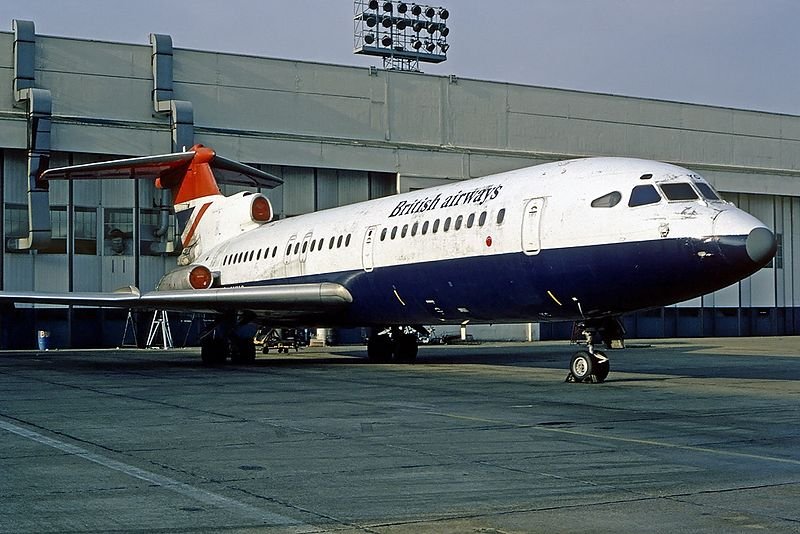
Trident 2 G-AVYC. Parked at the British Airways engineering base at Hatton Cross and looking quite scruffy, having been withdrawn from service in July 1980. It was broken-up in April 1981. Steve Fitzgerald [GFDL 1.2 (http://www.gnu.org/licenses/old-licenses/fdl-1.2.html) or GFDL 1.2 (http://www.gnu.org/licenses/old-licenses/fdl-1.2.html)], via Wikimedia Commons
One of the factors that made the shuttle concept work for BA was the fact that it could use fully amortized (i.e. paid for aircraft) especially as back-ups for when extra capacity was needed. Initially these were older Trident 1s and later Trident 2s and 3s. As time went on the Tridents were replaced by BAC One-Eleven 500s and then Boeing 737-200s on back-up duty.
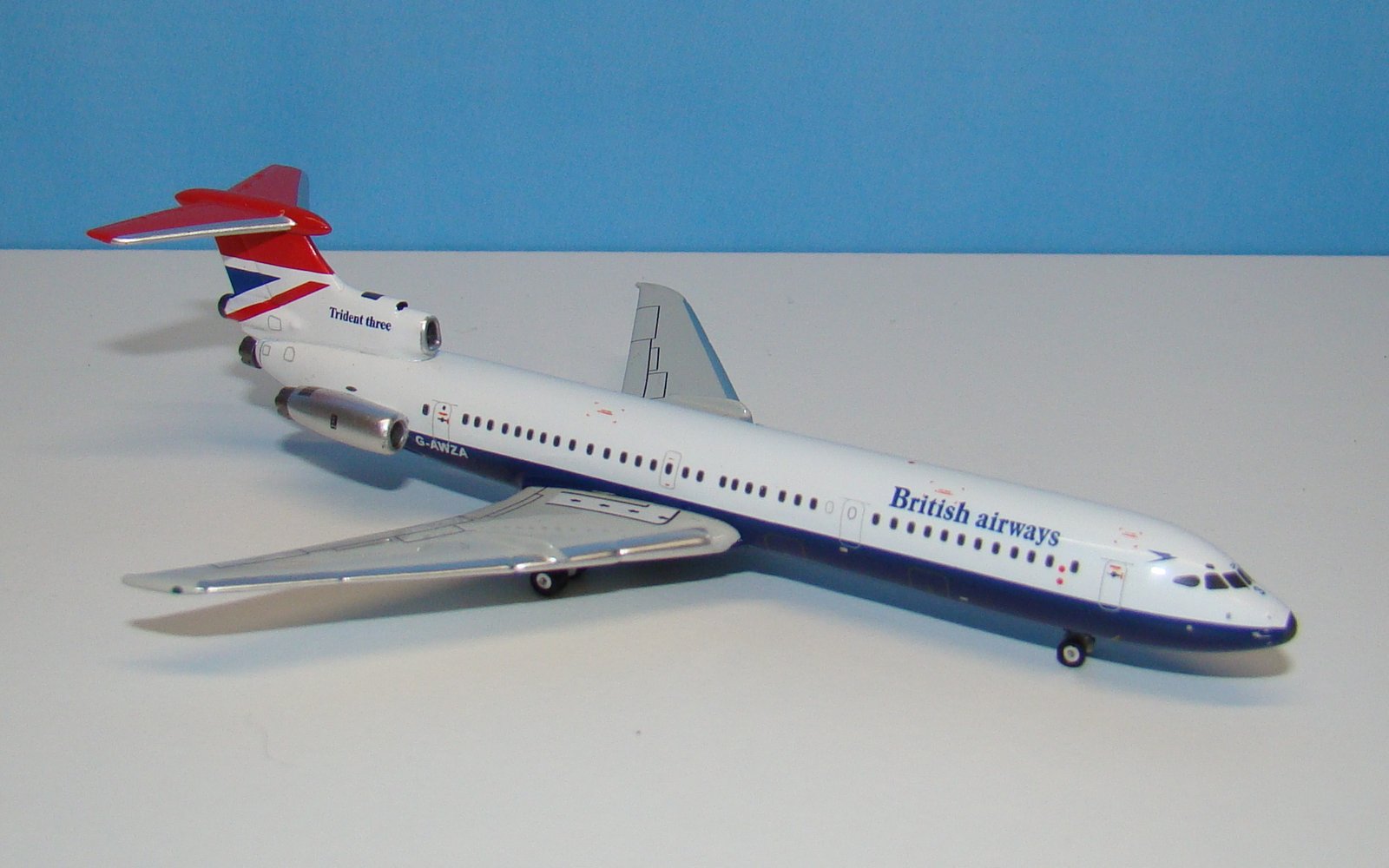
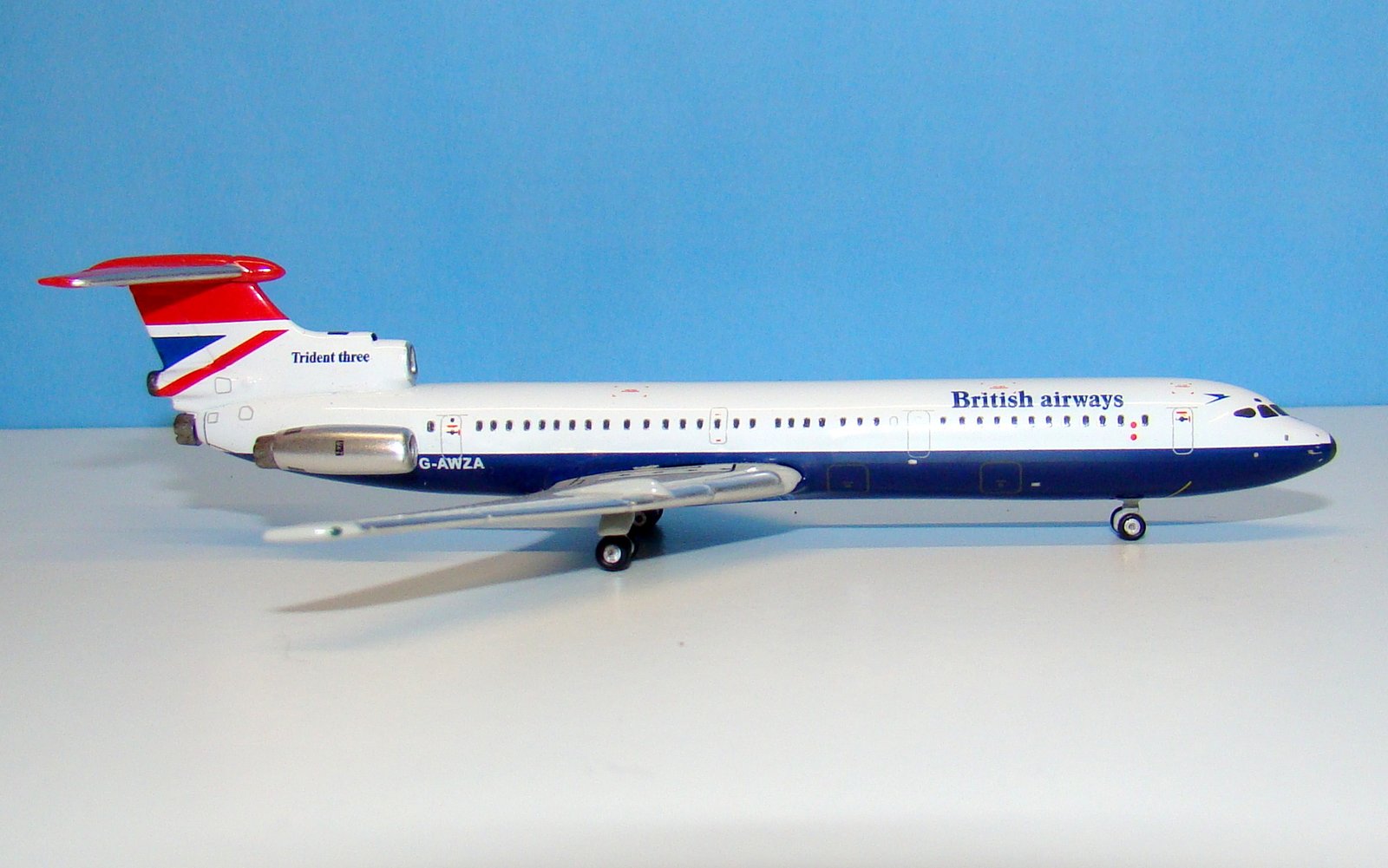
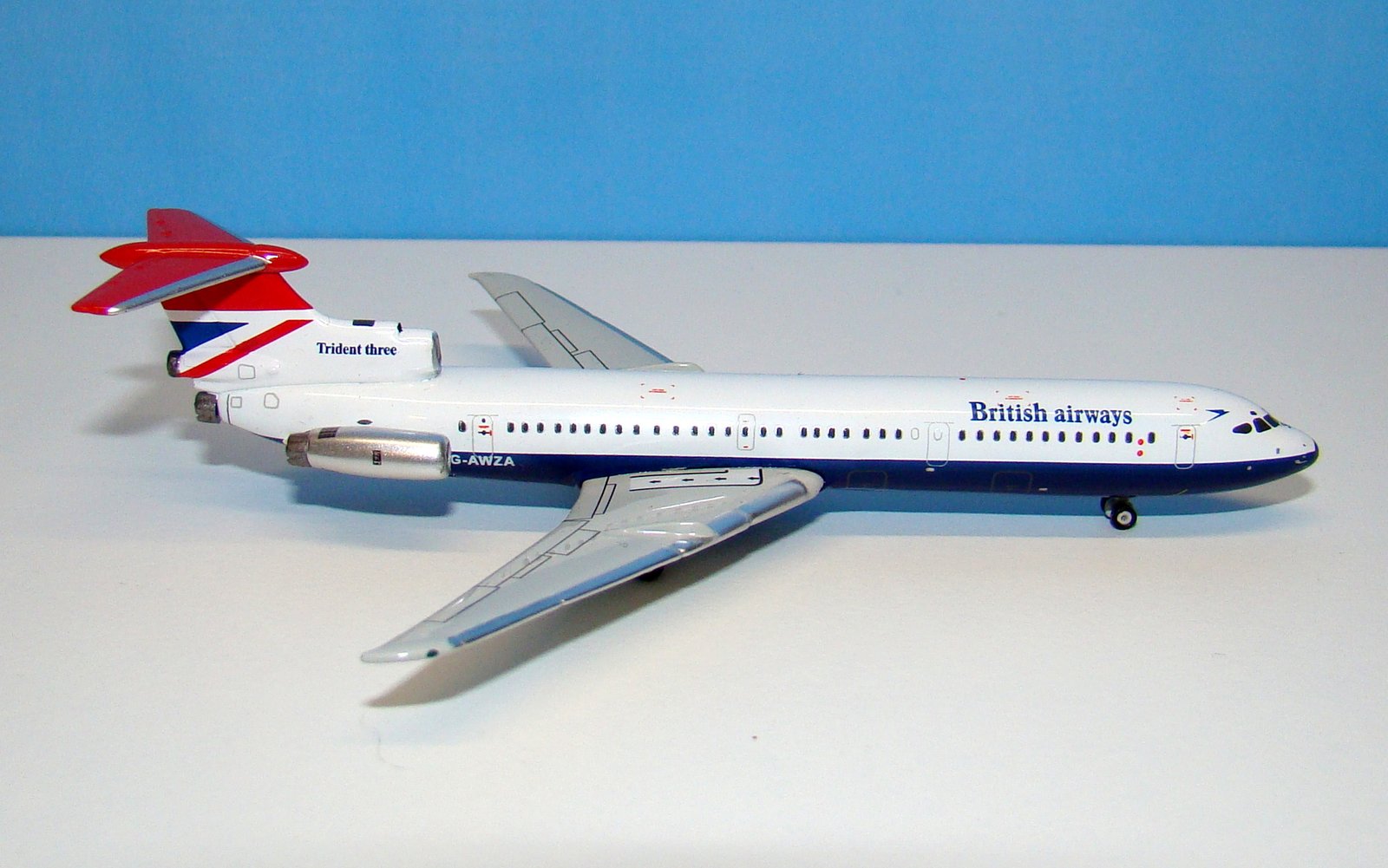
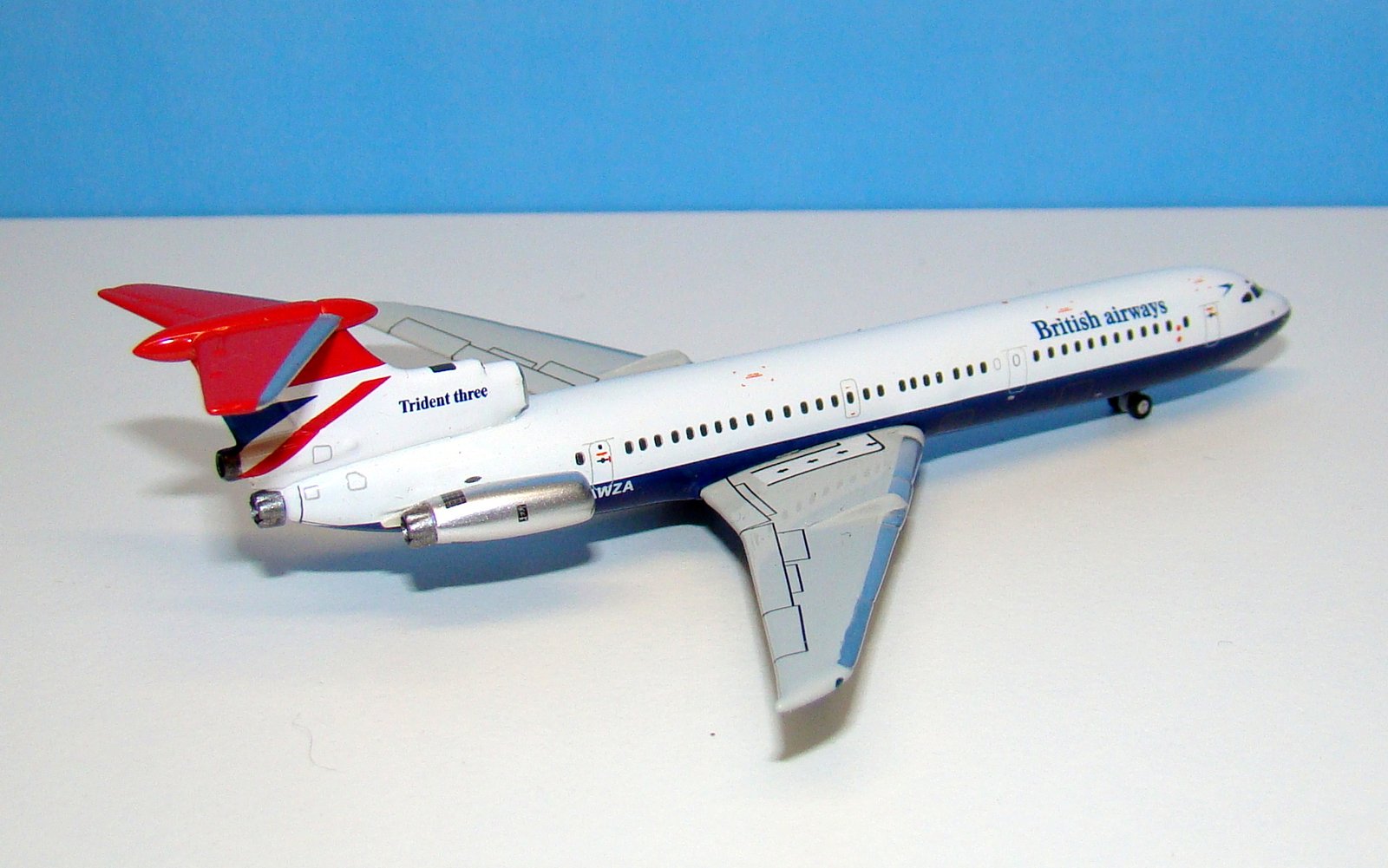
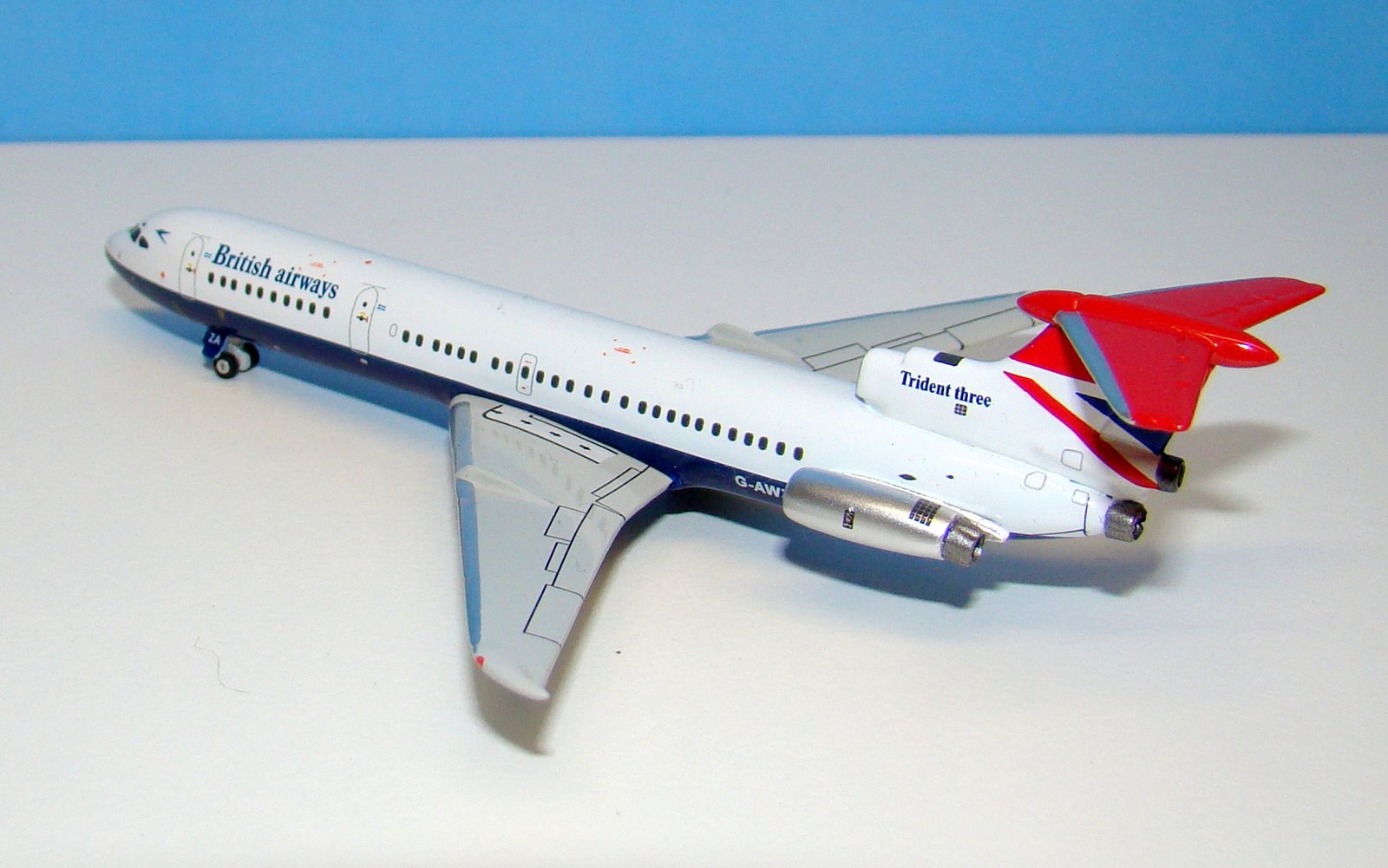
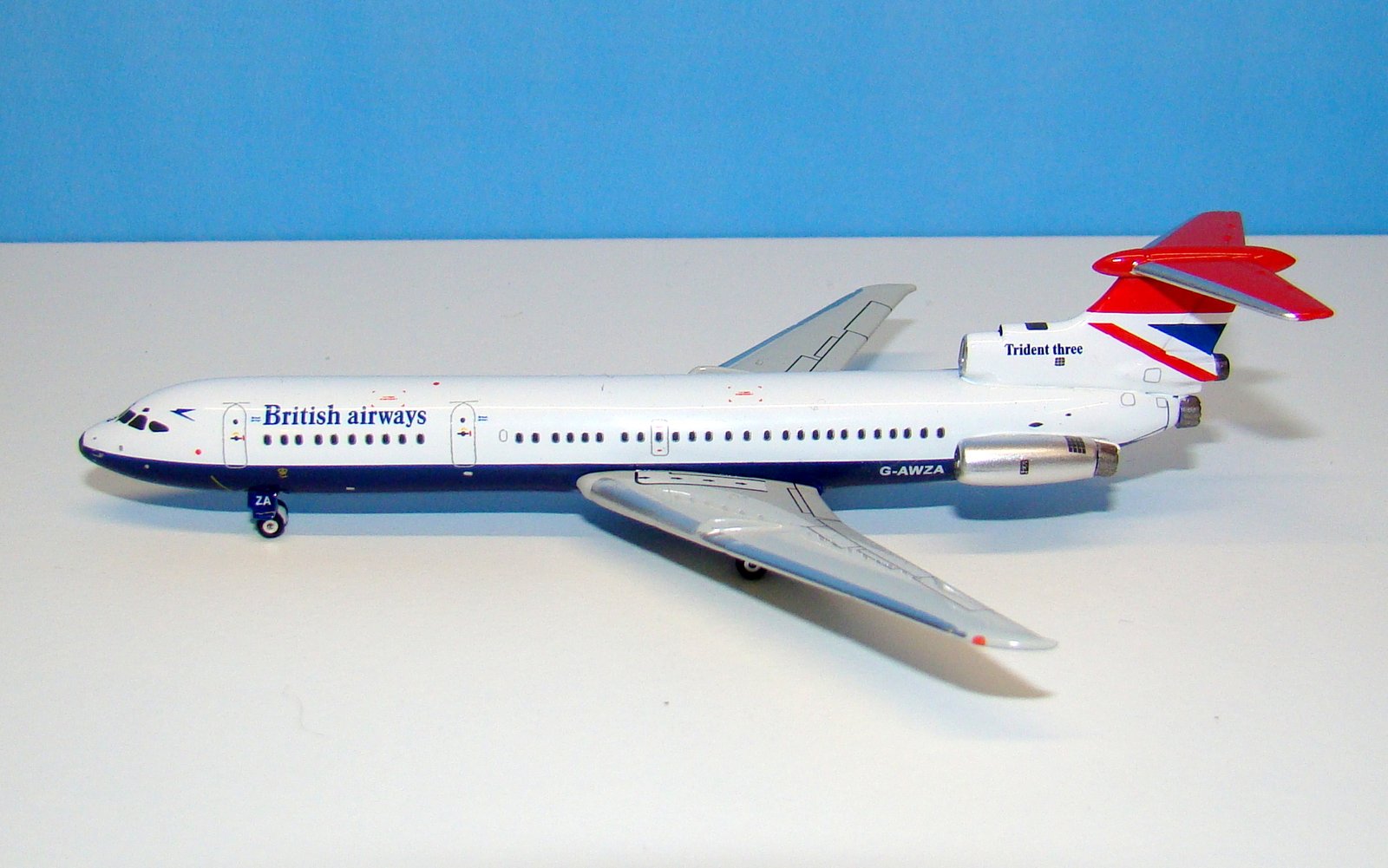
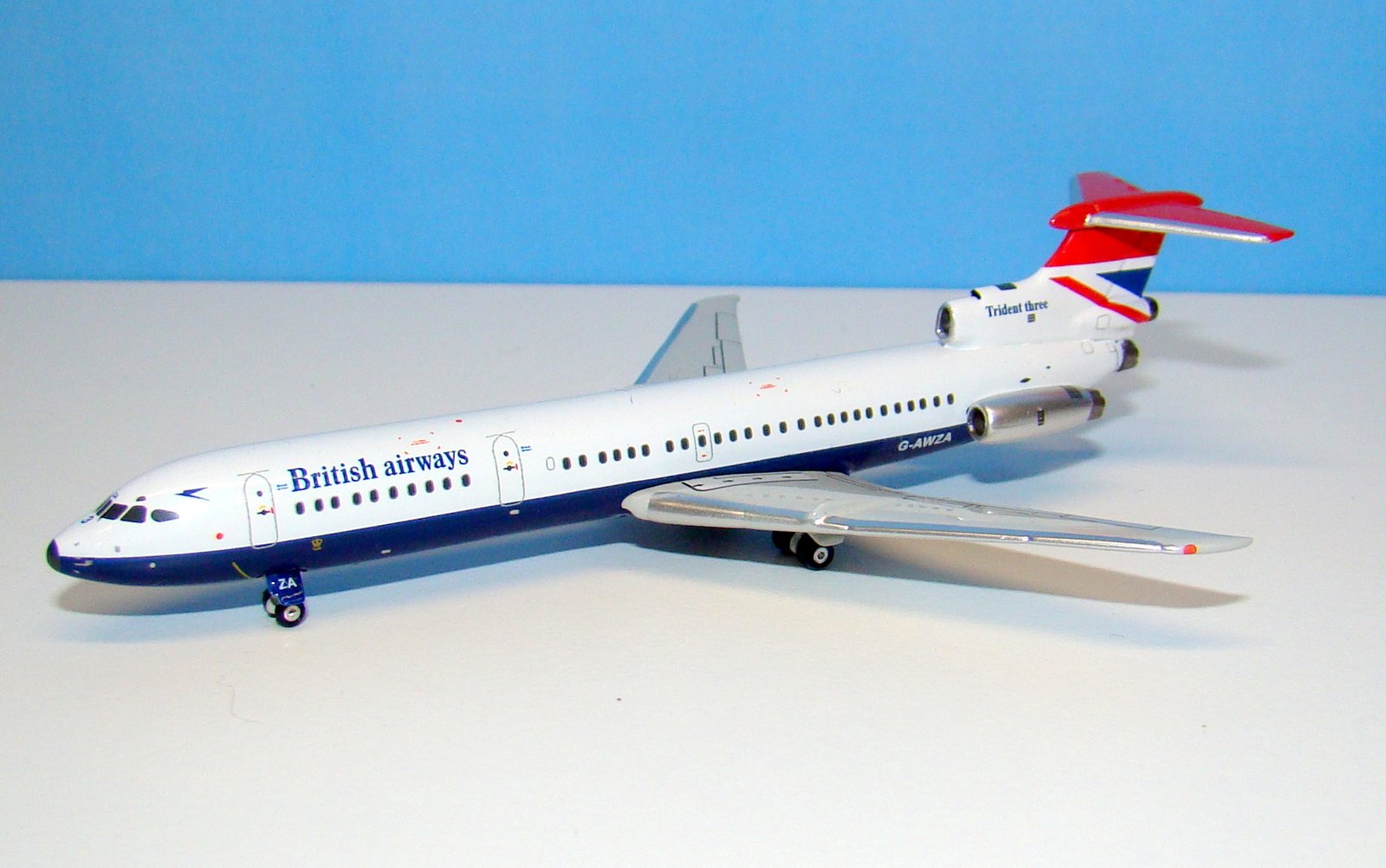
British Airways Hawker Siddeley Trident 3B G-AWZA Gemini Jets 1:400 Scale Model Airliner
British Airways Hawker Siddeley Trident 3B G-AWZA Gemini Jets 1:400 Scale Model Airliner
British Airways Hawker Siddeley Trident 3B G-AWZA Gemini Jets 1:400 Scale Model Airliner
British Airways Hawker Siddeley Trident 3B G-AWZA Gemini Jets 1:400 Scale Model Airliner
British Airways Hawker Siddeley Trident 3B G-AWZA Gemini Jets 1:400 Scale Model Airliner
British Airways Hawker Siddeley Trident 3B G-AWZA Gemini Jets 1:400 Scale Model Airliner
British Airways Hawker Siddeley Trident 3B G-AWZA Gemini Jets 1:400 Scale Model Airliner
One of the interesting side elements of the Shuttle was BA’s pride surrounding the all-weather capability of its Tridents (and Tristars). In fact, any passenger that was aboard a flight that used the Autoland capability was given a card that allowed them to send off for a commemorative Autoland tie or scarf!
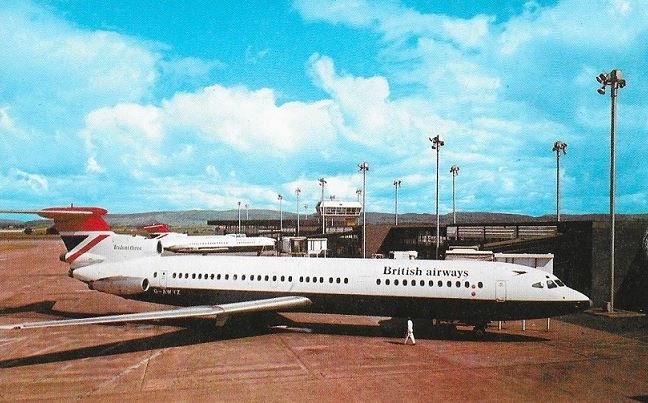
A Shuttle Trident 3 at Glasgow
In practice the back-up aircraft were rarely used but there were a few times when capacity demands surprised the usually reliable system or required the utilisation of widebody aircraft. Christmas was as you’d expect an especially busy period and Tristars and 747s were used. This occurred in the service’s first year when with 600 passengers left at the end of Christmas Eve and the European services shutting down for the night the airline was able to repurpose a pair of 747s at short notice from the long-haul arm to fly to Belfast. There were even instances of Concorde being used as a back-up plane (and not just for advertising purposes).
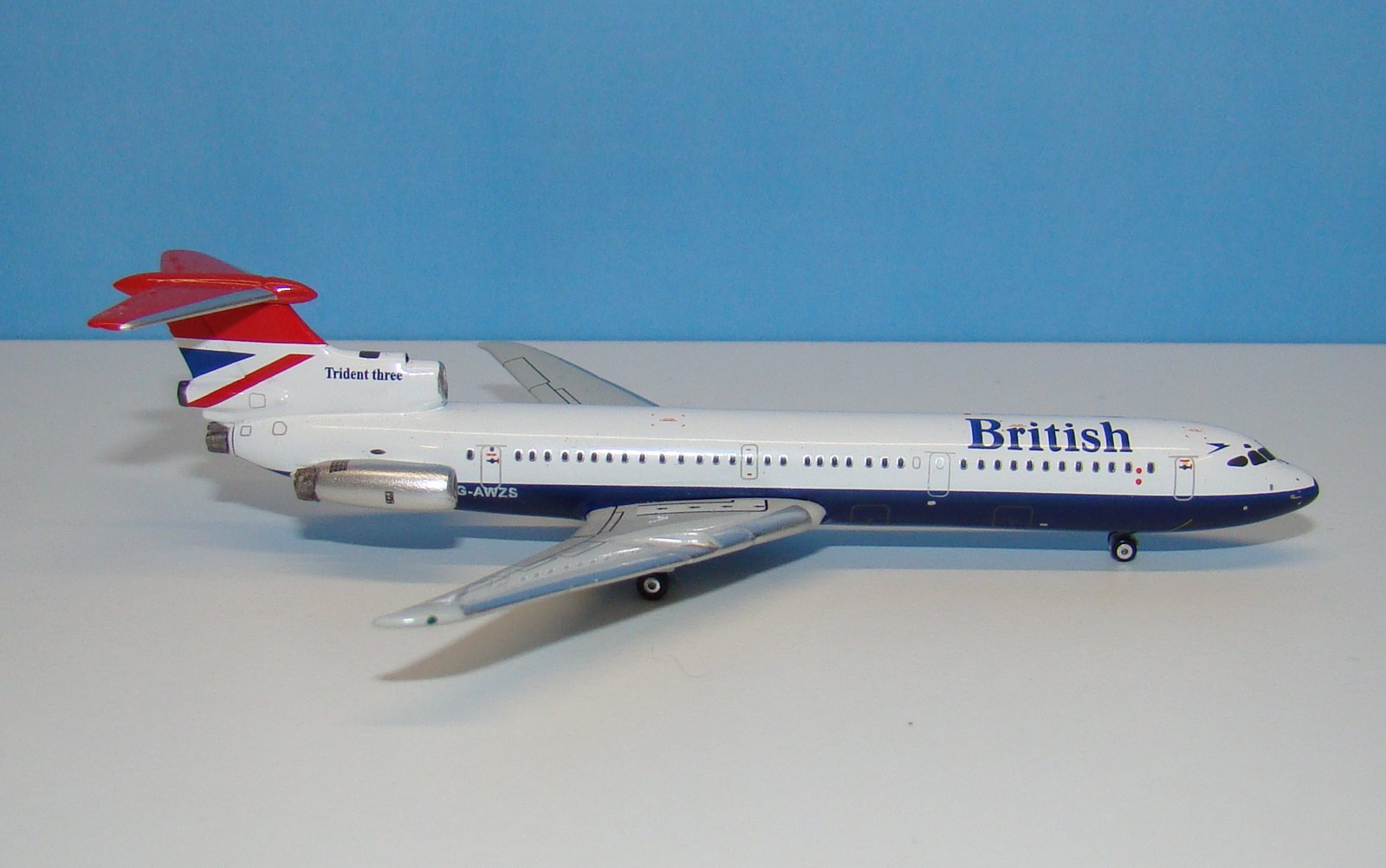
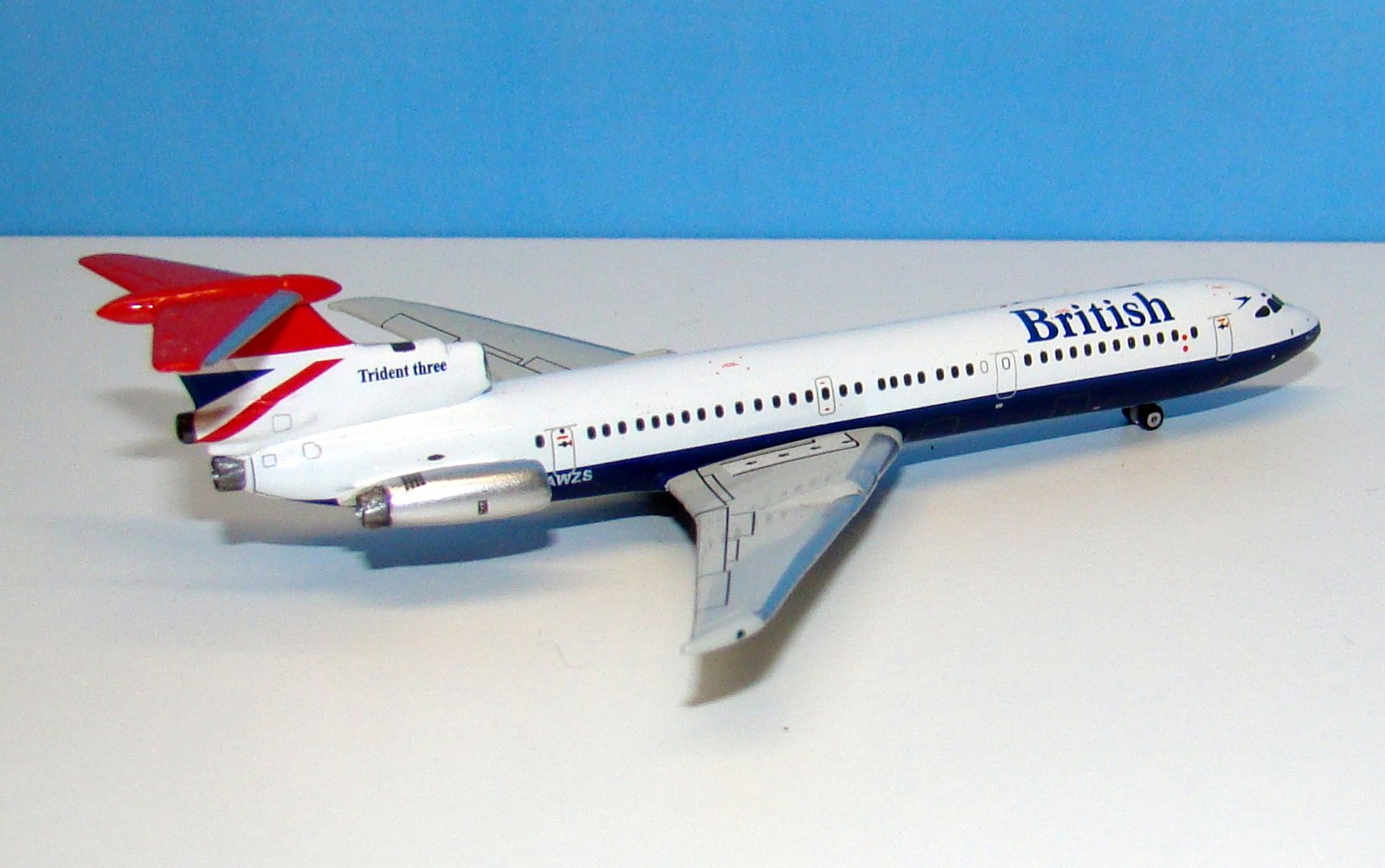
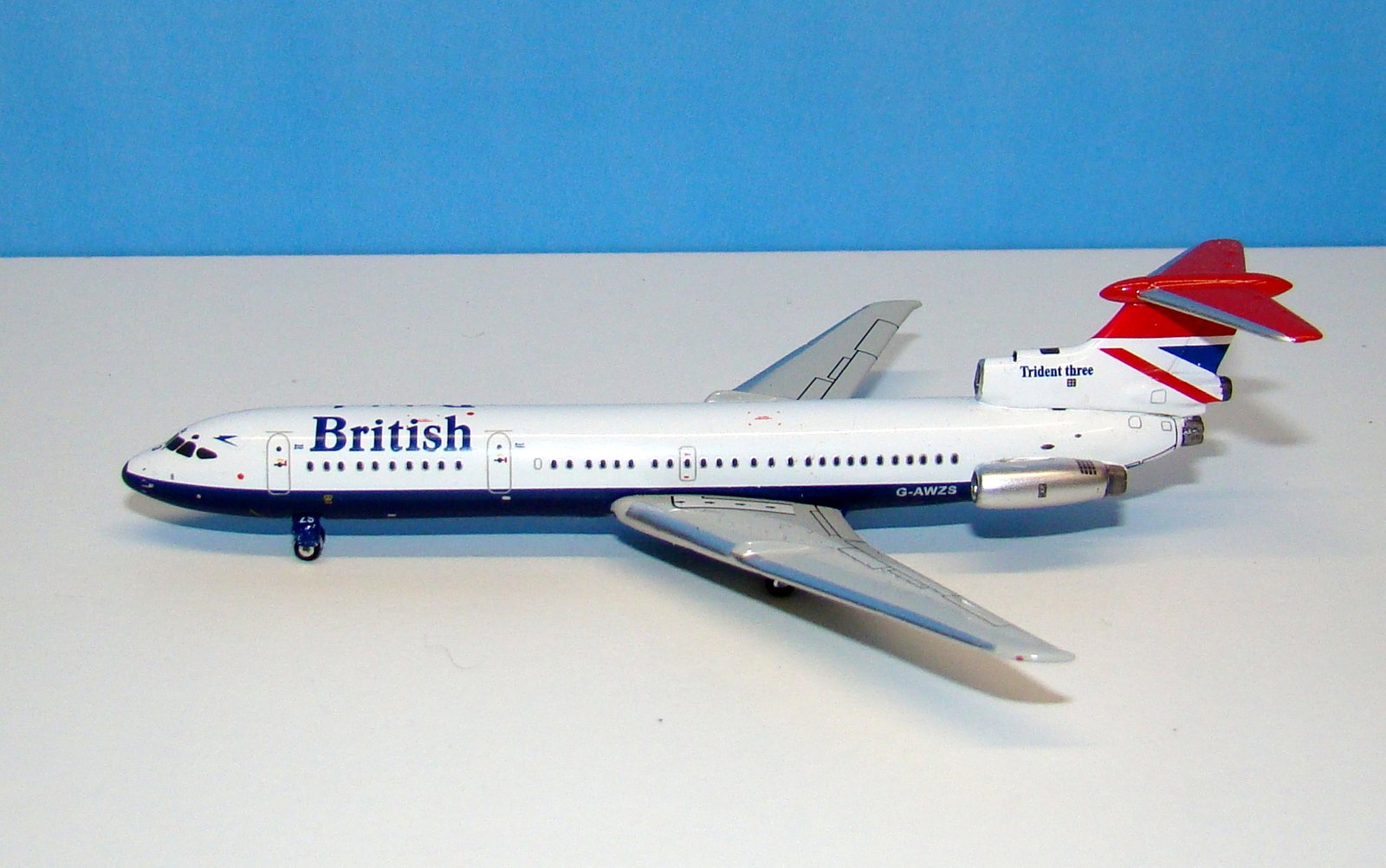
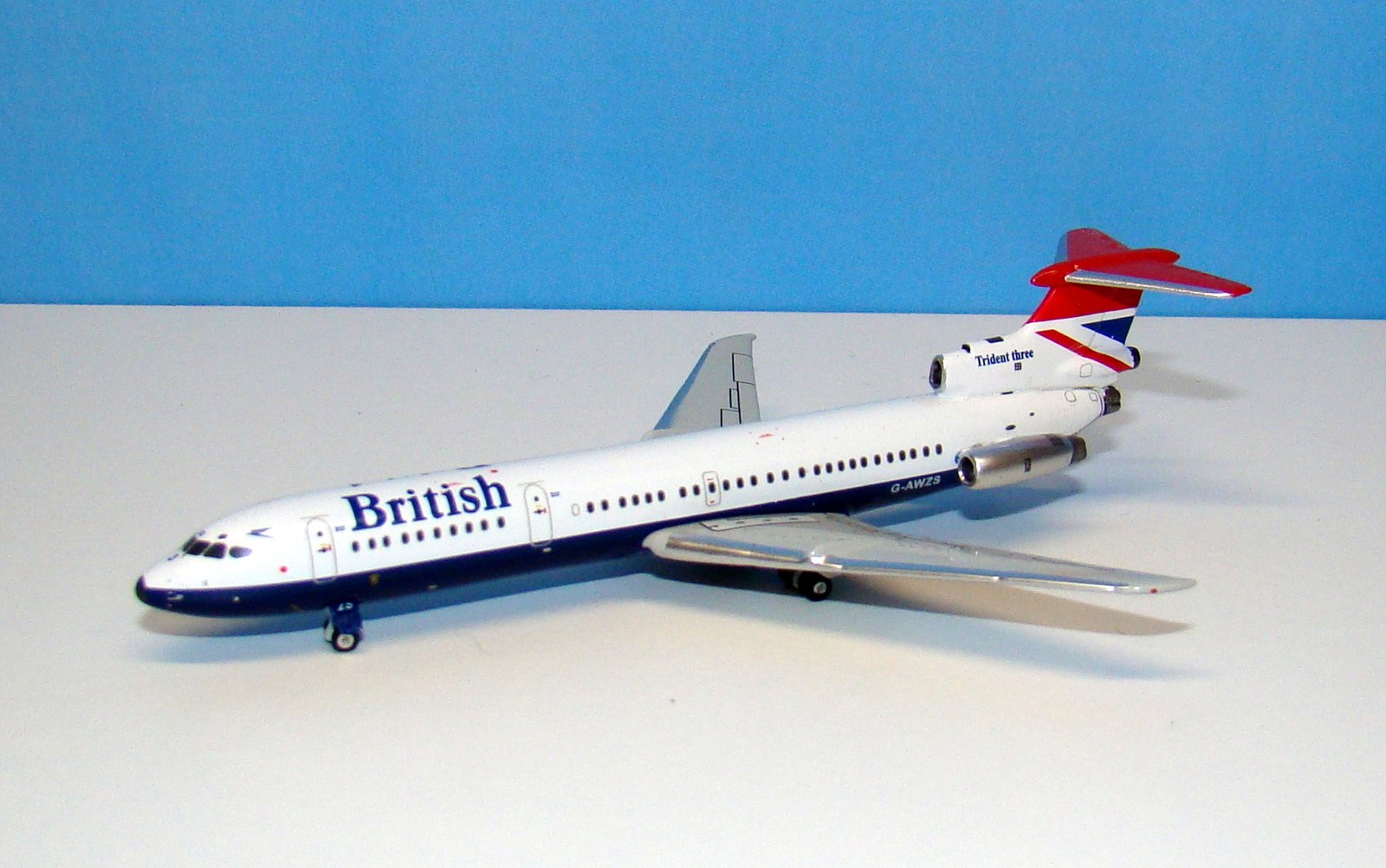
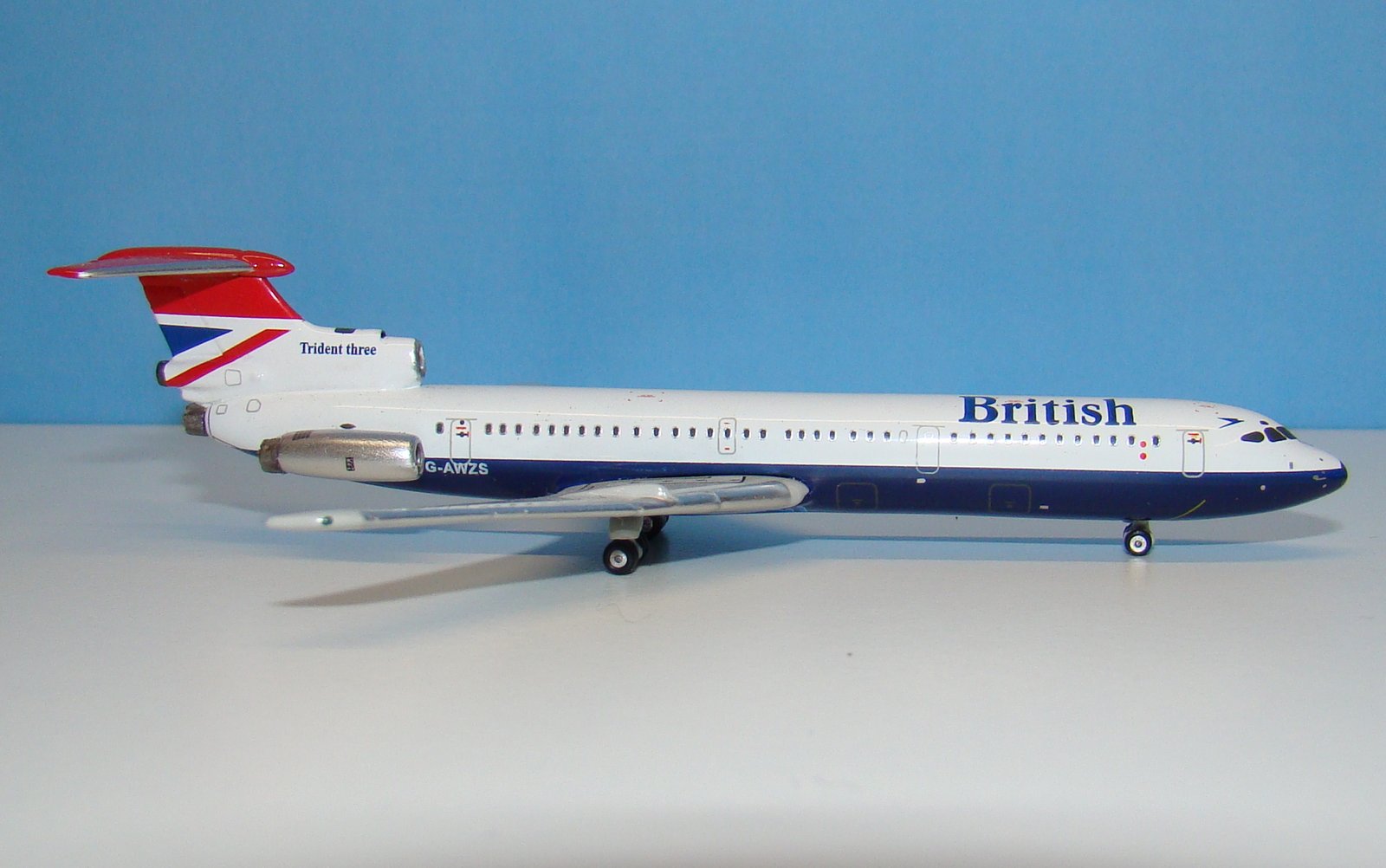
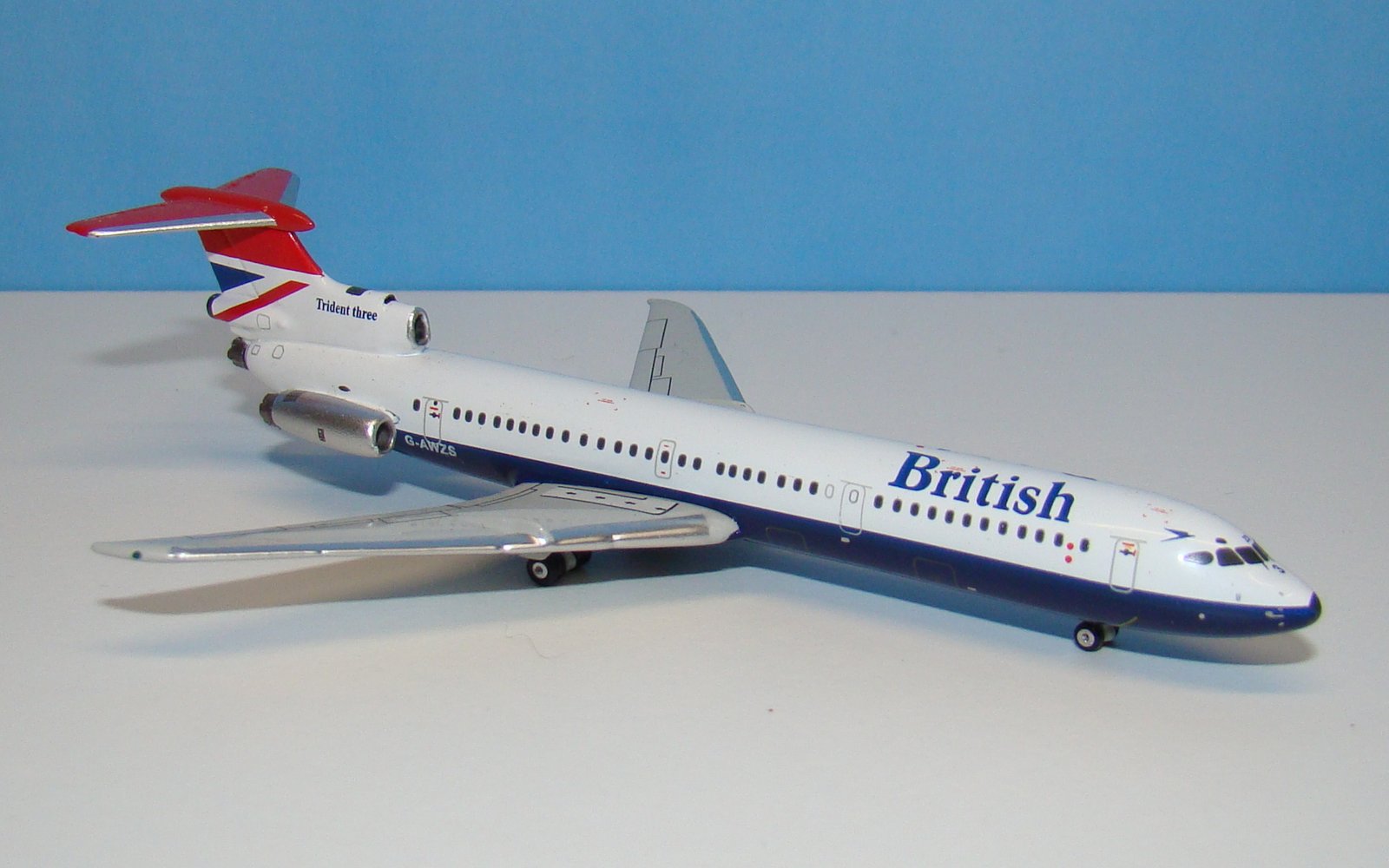
British Airways Hawker Siddeley Trident 3B G-AWZS Gemini Jets 1:400 Scale Model Airliner
British Airways Hawker Siddeley Trident 3B G-AWZS Gemini Jets 1:400 Scale Model Airliner
British Airways Hawker Siddeley Trident 3B G-AWZS Gemini Jets 1:400 Scale Model Airliner
British Airways Hawker Siddeley Trident 3B G-AWZS Gemini Jets 1:400 Scale Model Airliner
British Airways Hawker Siddeley Trident 3B G-AWZS Gemini Jets 1:400 Scale Model Airliner
British Airways Hawker Siddeley Trident 3B G-AWZS Gemini Jets 1:400 Scale Model Airliner
British Airways Hawker Siddeley Trident 3B G-AWZS Gemini Jets 1:400 Scale Model Airliner
The financial results for the Shuttle services were promising almost from the beginning. Prior to the Shuttle the Glasgow and Edinburgh routes lost GBP3.8 million between them. After one year with just Glasgow included in the Shuttle that was down to GBP2.1 million and for the FY1976-77 the two routes made a profit of GBP150,000 whilst transporting 1.2 million passengers.
The Glasgow route saw spectacular traffic growth initially, which was arrested somewhat when Edinburgh also became a shuttle service. However, the Edinburgh service carried 23% more passengers in its first year of service. The same pattern was visible when Belfast started with initial traffic growth of 8-14% initially.
Adding Belfast to the network required only a single extra Trident 1 and by August 1977 the entire Shuttle fleet stood at 10 Trident 1s and 6 Trident 3s. The introduction of the larger Trident 3s enabled a 46% capacity increase per aircraft and caused some initial inefficiency on the hourly Glasgow route but were perfectly suited to the two hourly Edinburgh service. The wing-crack issues the Trident 3 suffered in the late 70s also caused some cancellations of the Glasgow service during 1977 but these were only short-lived.
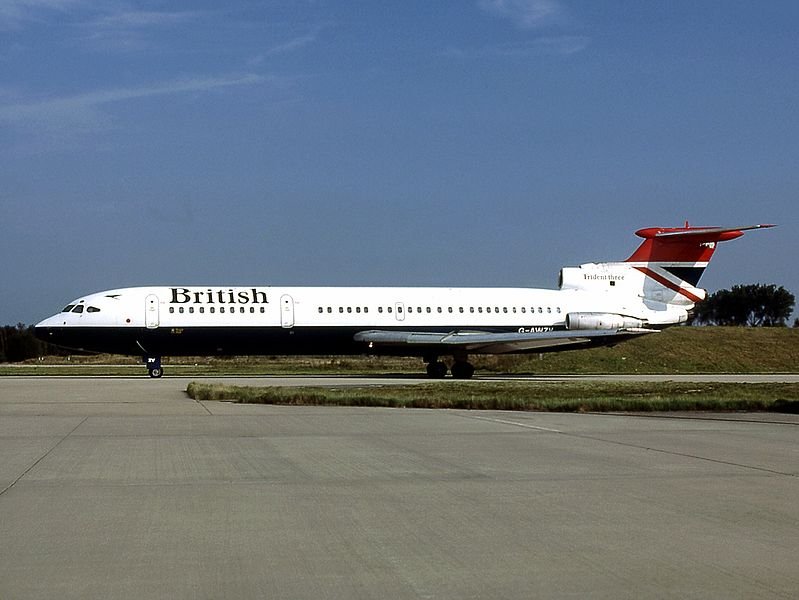
One of the last Trident 3s in late 1985 here at Paris. Michel Gilliand [GFDL 1.2 (http://www.gnu.org/licenses/old-licenses/fdl-1.2.html) or GFDL 1.2 (http://www.gnu.org/licenses/old-licenses/fdl-1.2.html)], via Wikimedia Commons
The Shuttle was a success for BA during a period of internal strife but November 1, 1982 would throw a major spanner in the works. That was the day that British Midland, the only other British airline of size with a presence at Heathrow, began its own ‘Diamond Service’ flights between Heathrow and Glasgow. These used DC-9s six times daily, neatly dovetailed in between the BA shuttle services. They offered lower fares as well as in-flight service (Cornflakes and milk for breakfast). Midland’s operations would soon extend to Edinburgh and Belfast and the impact on BA’s shuttle was profound.
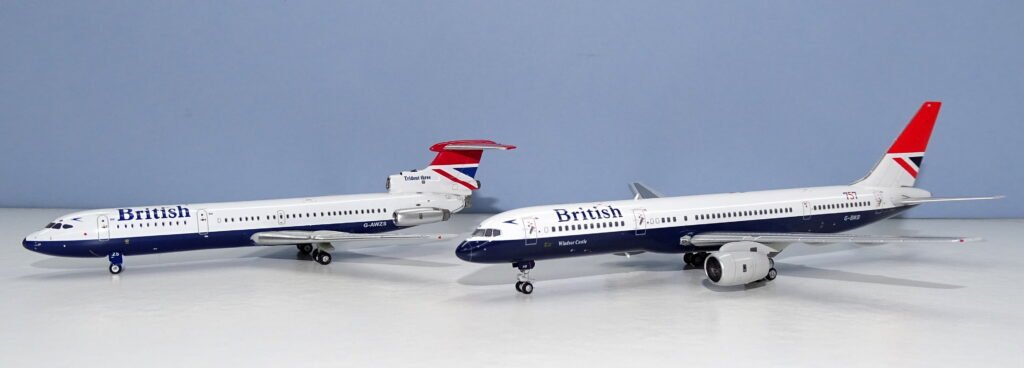
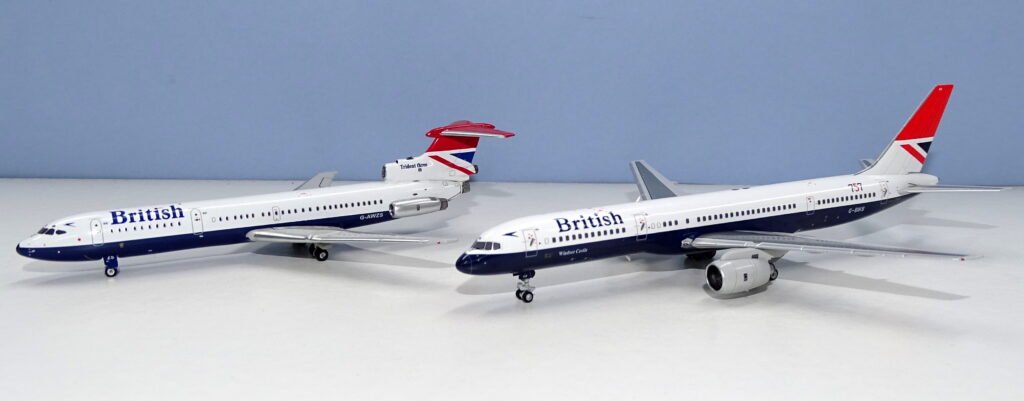
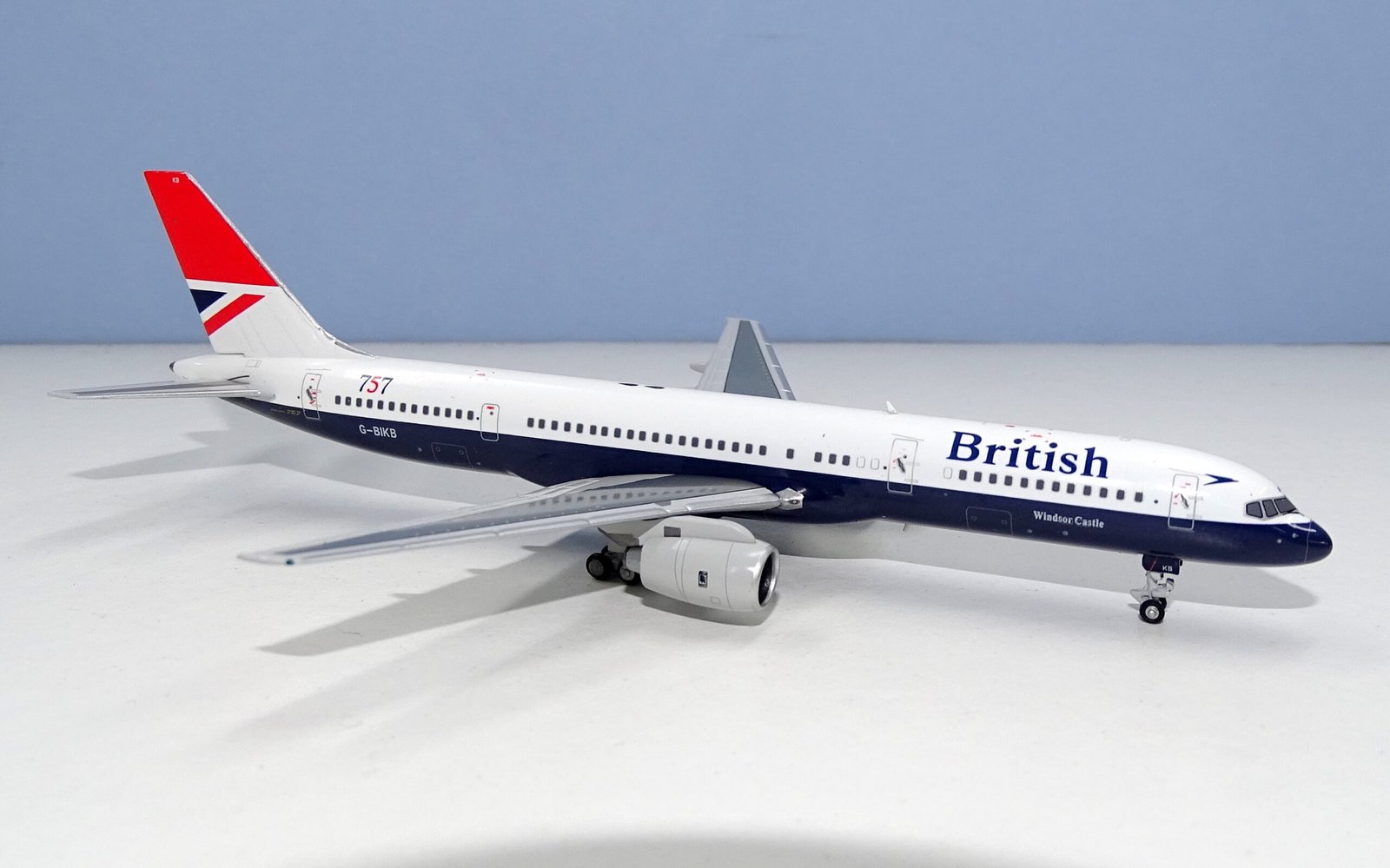
Changing from the old Gripper Trident 3s to new Boeing 757s must have been a nice upgrade
BA responded with an advertising campaign that showed a single passenger being flown in comfort on a back-up aircraft. To pass the advertising standards this needed to have actually happened and apparently it had once, although there were many times when a handful of passengers were all that were onboard.
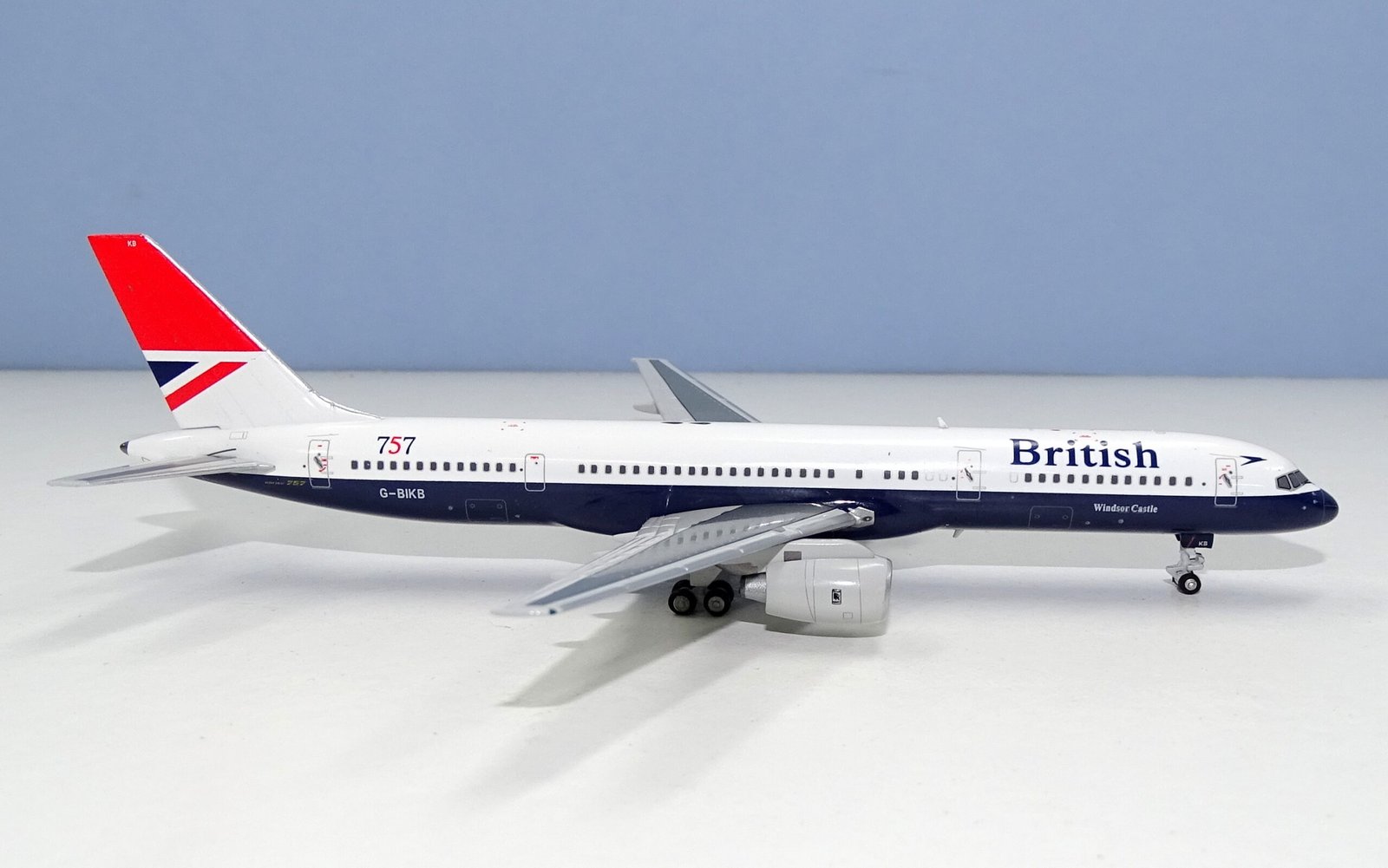
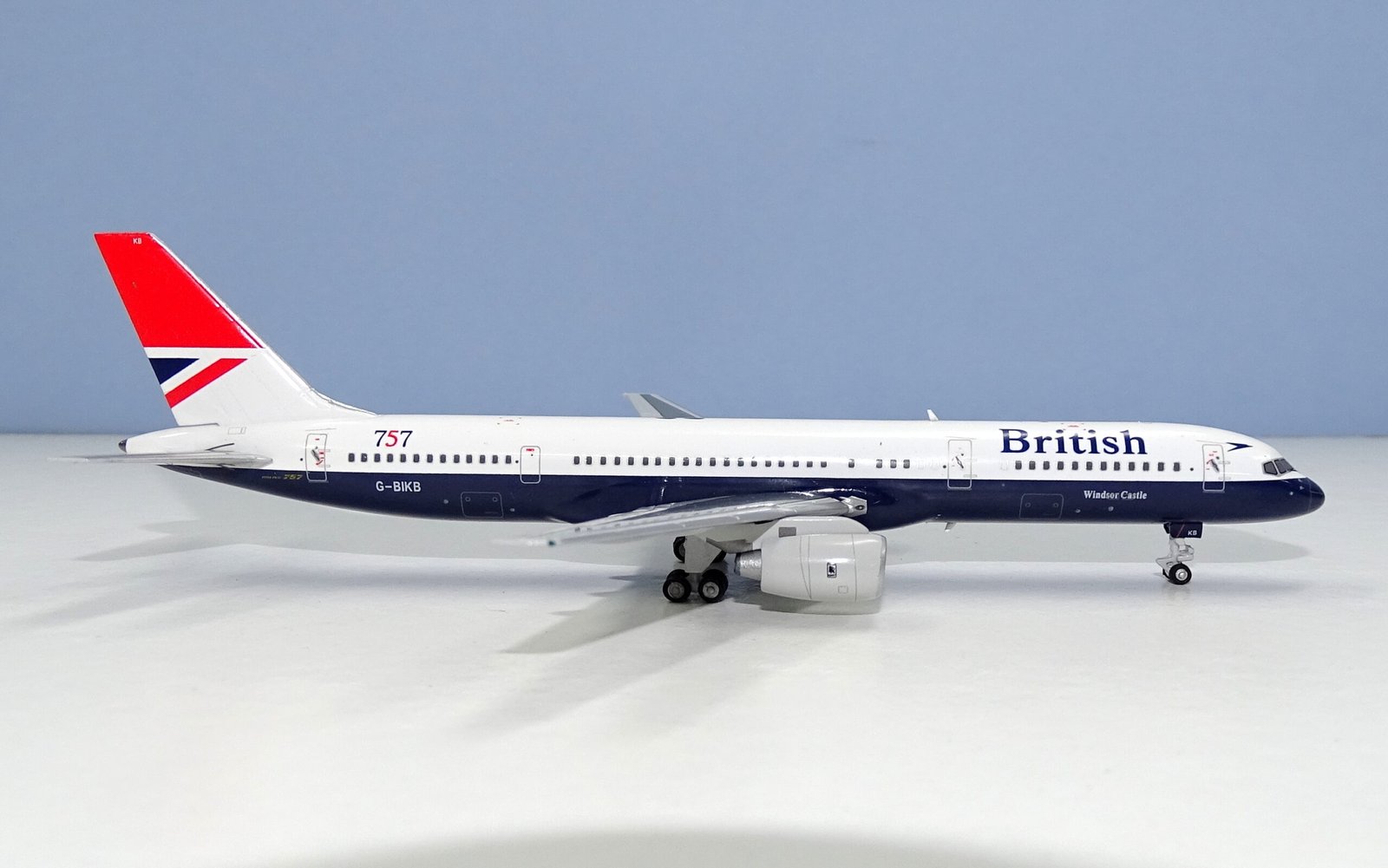
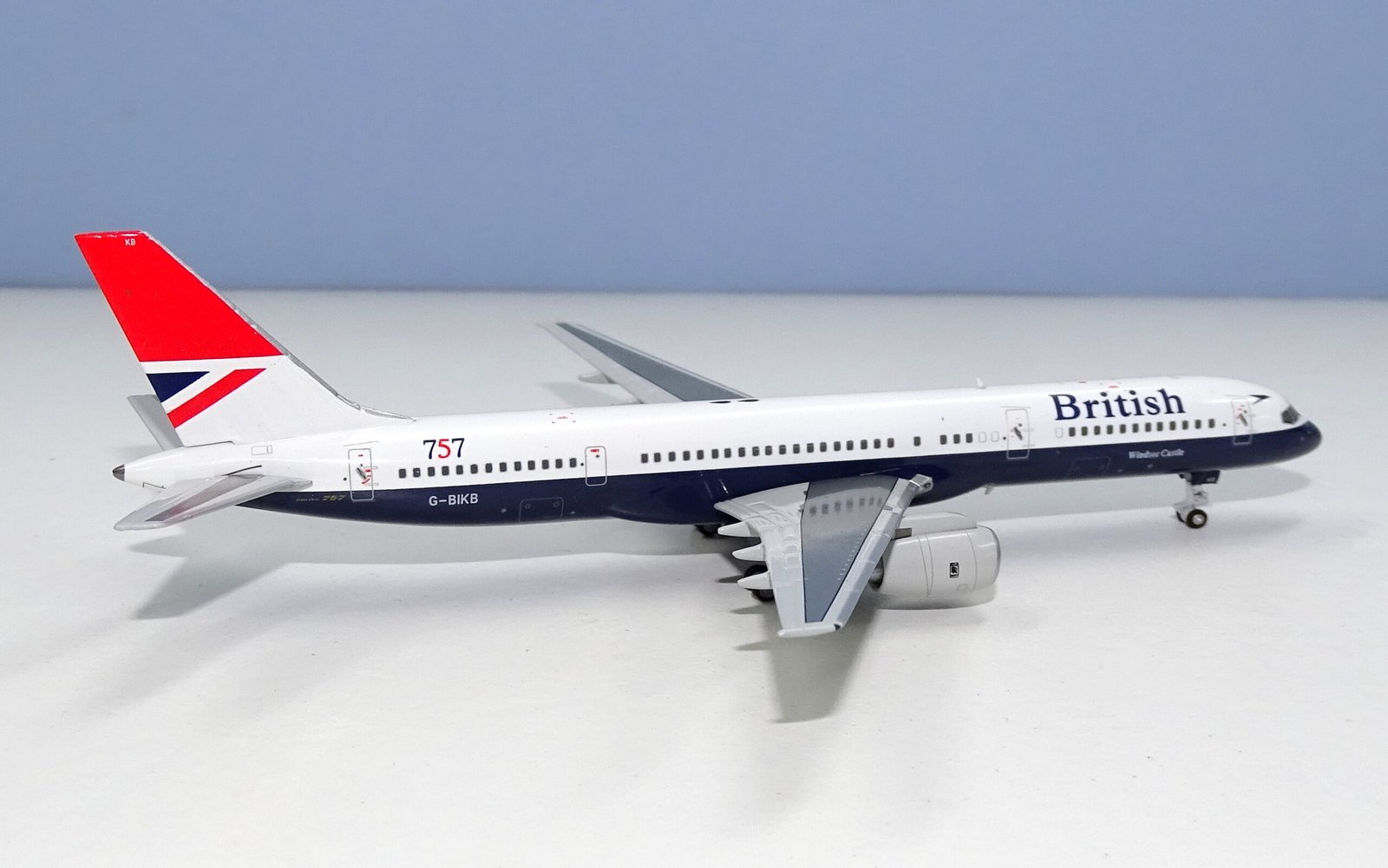
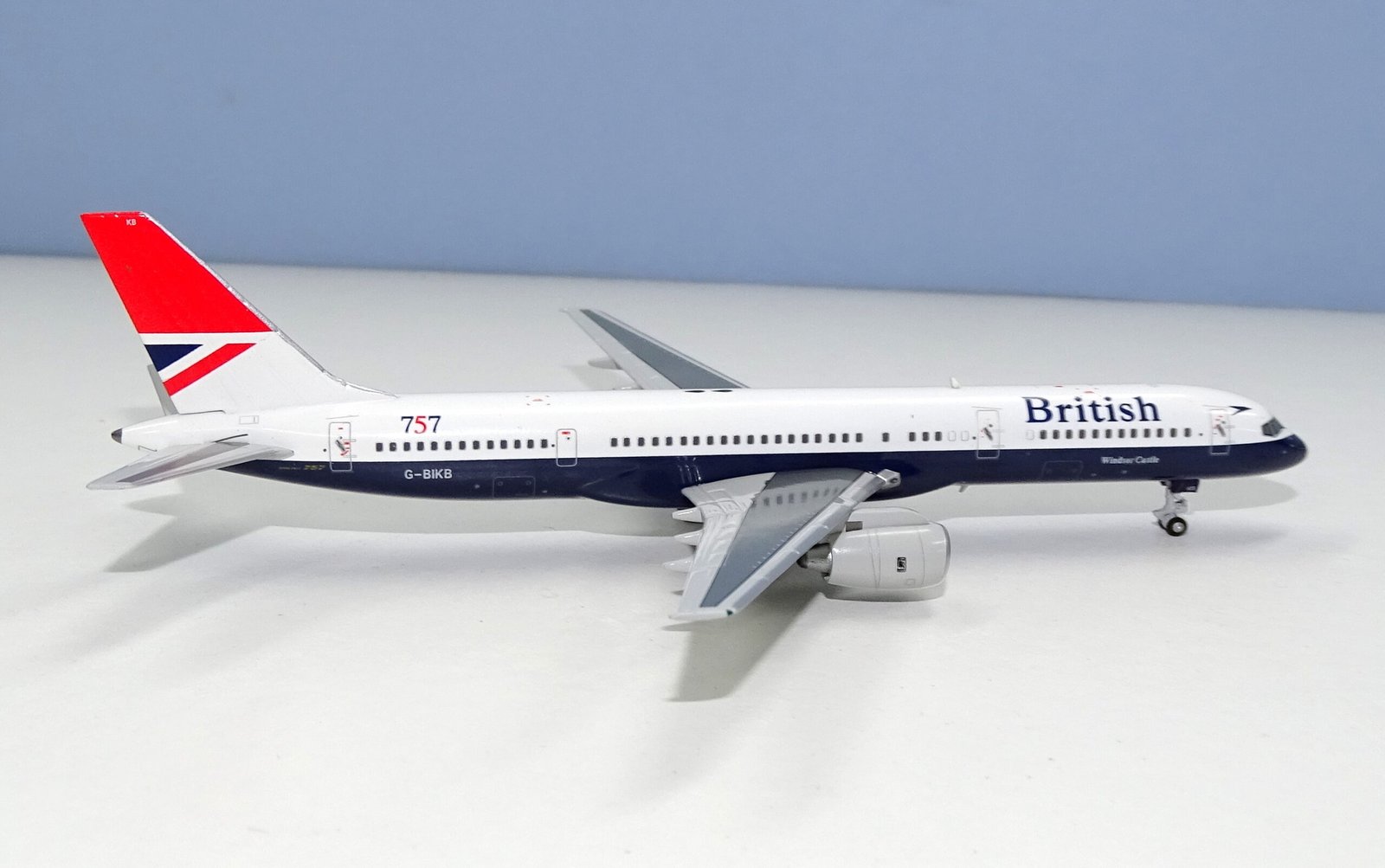
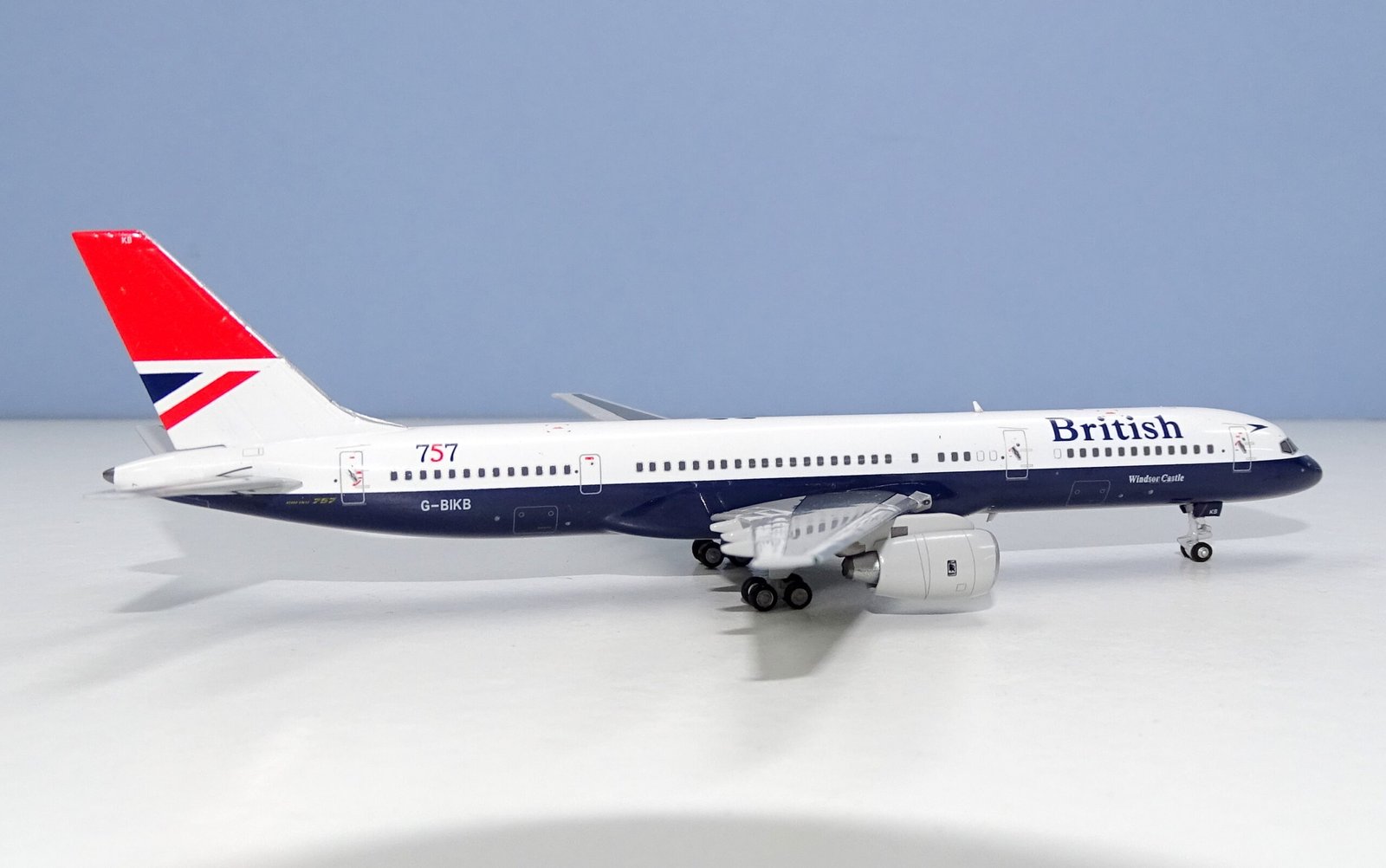
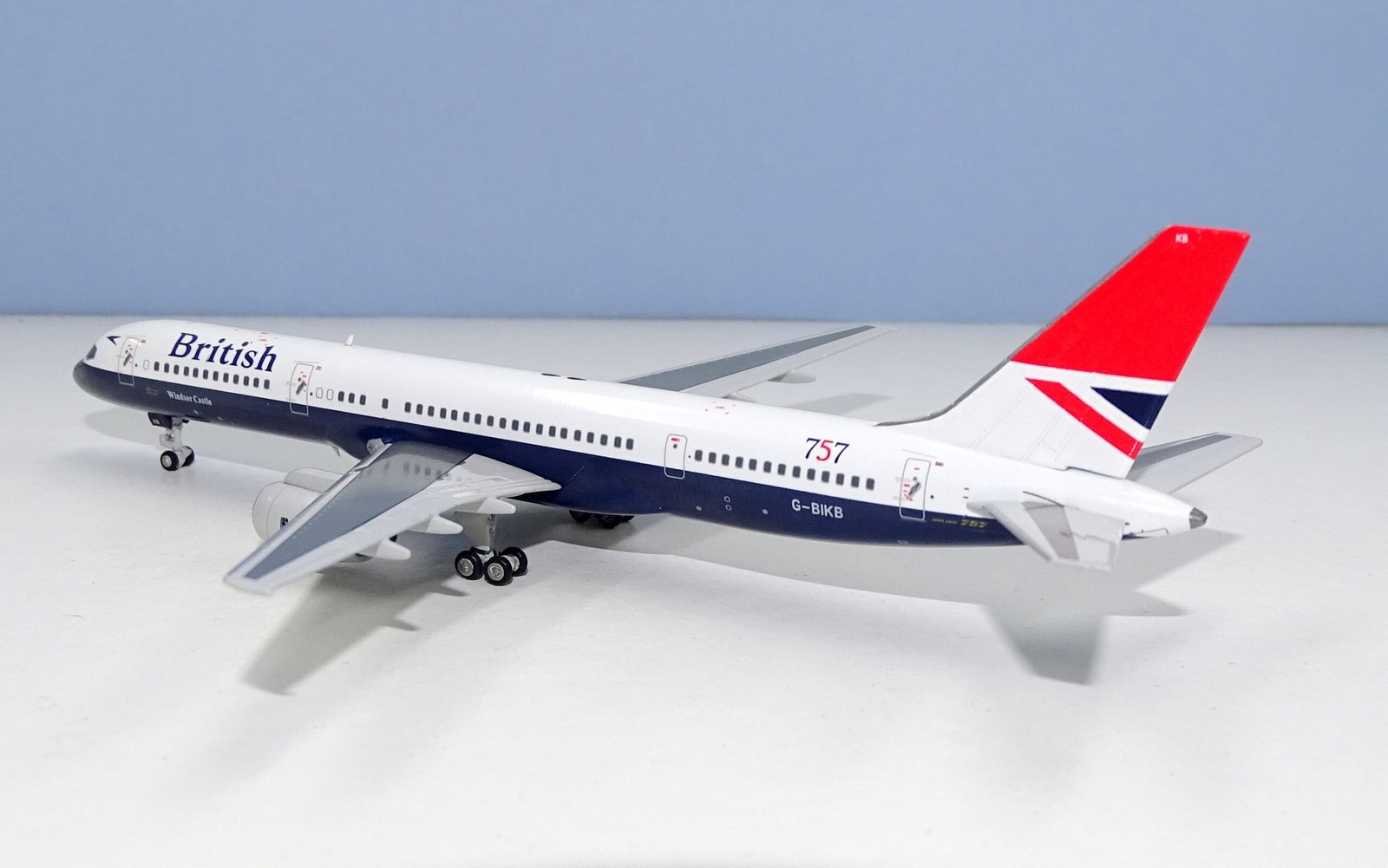
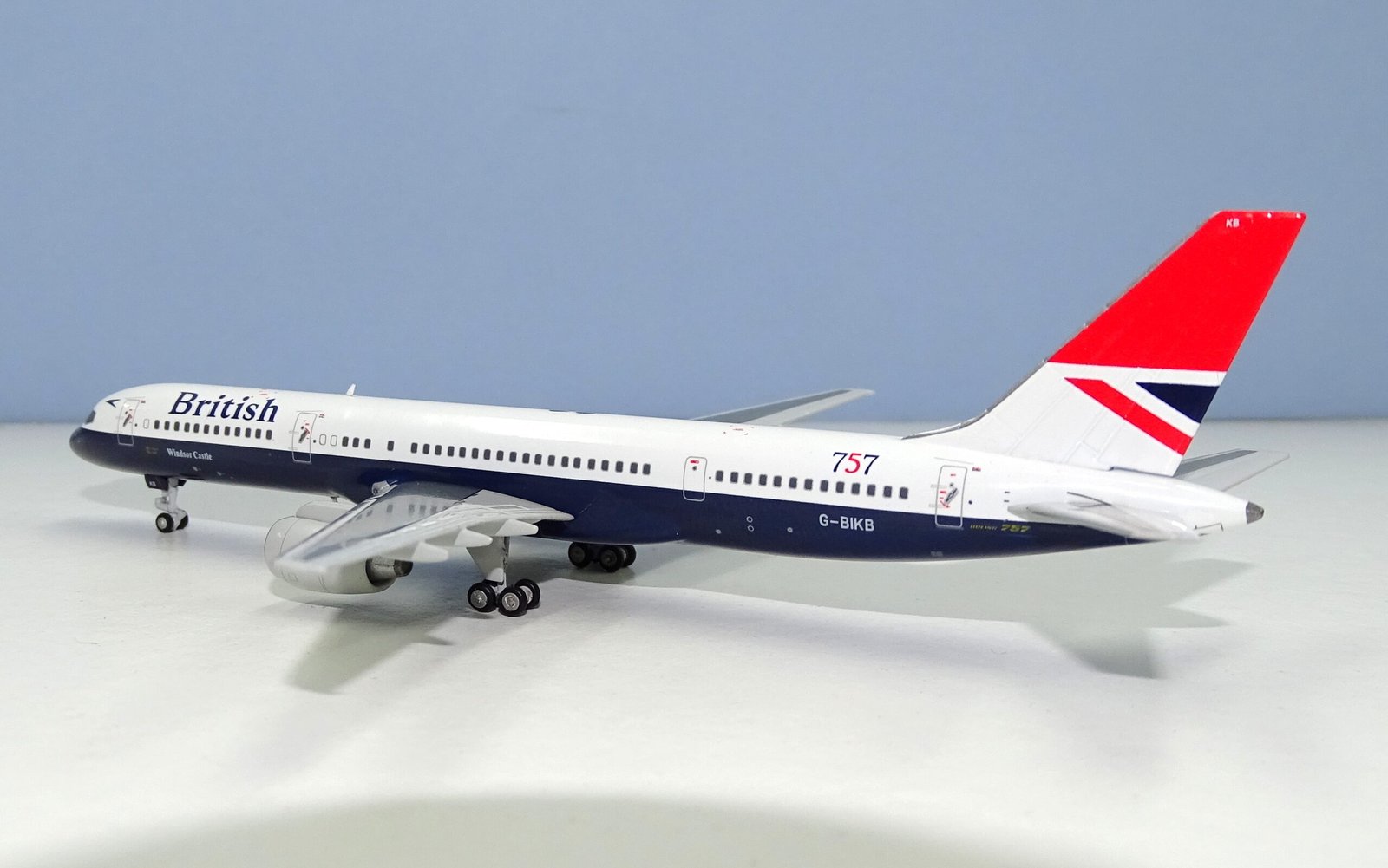
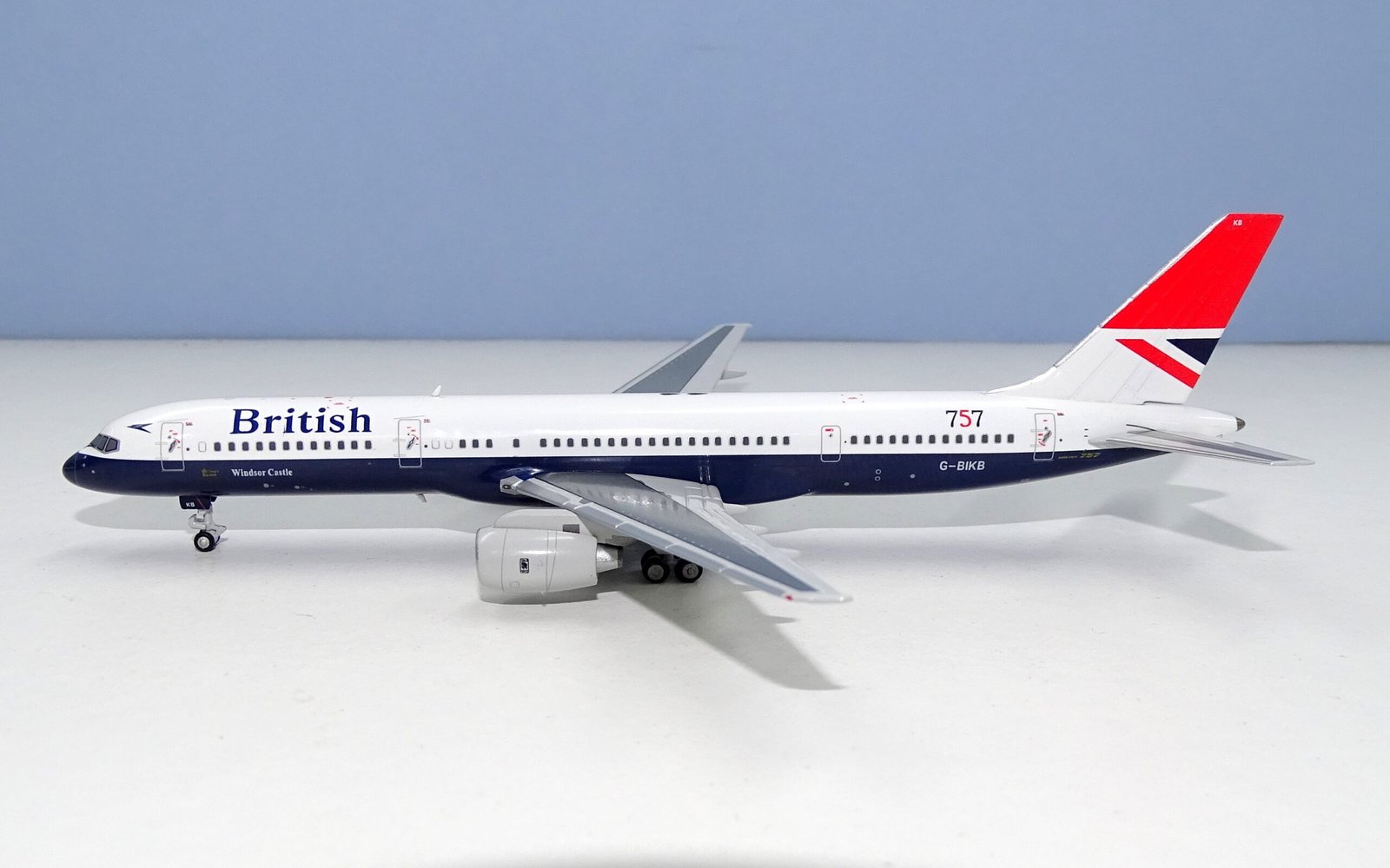
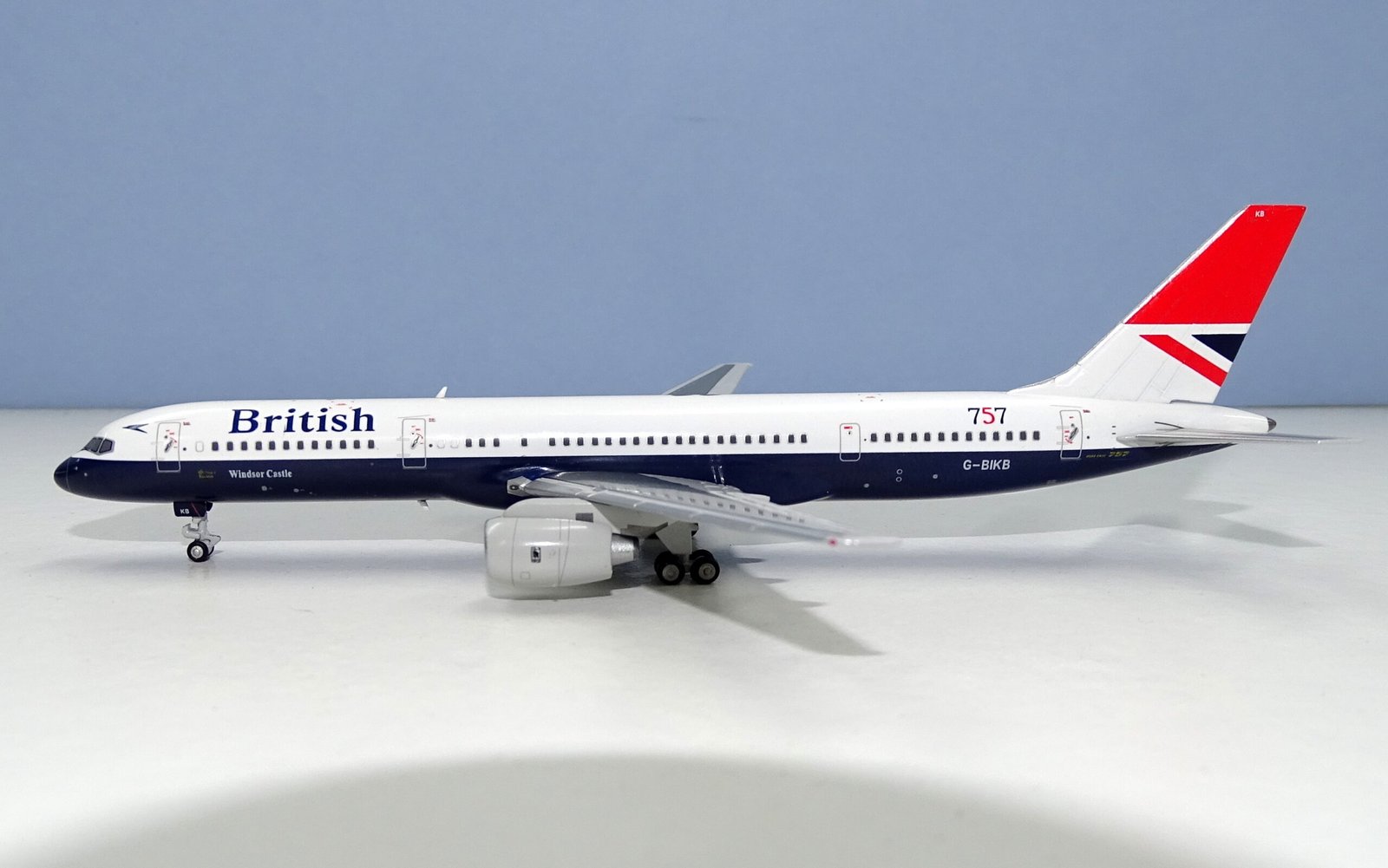
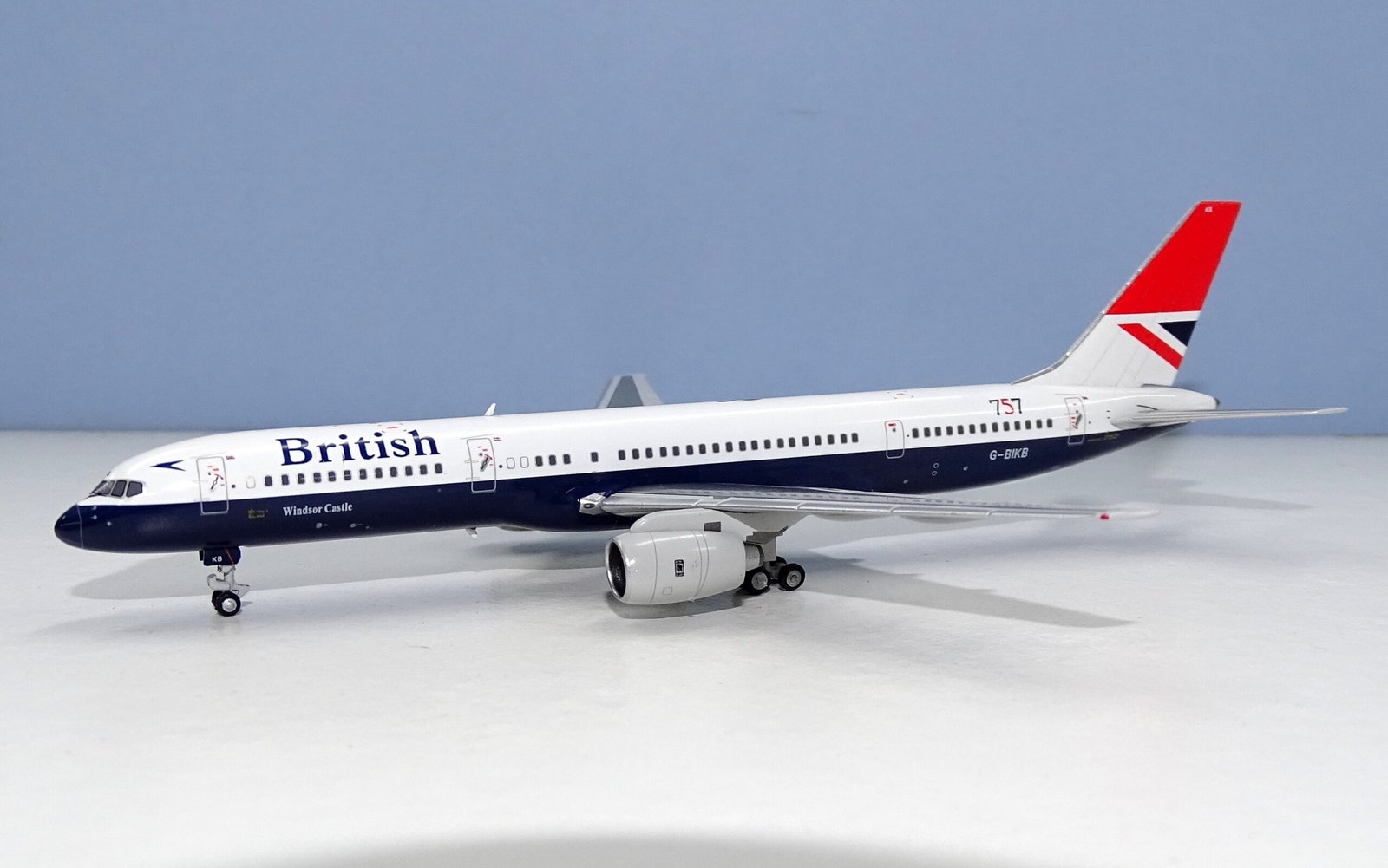
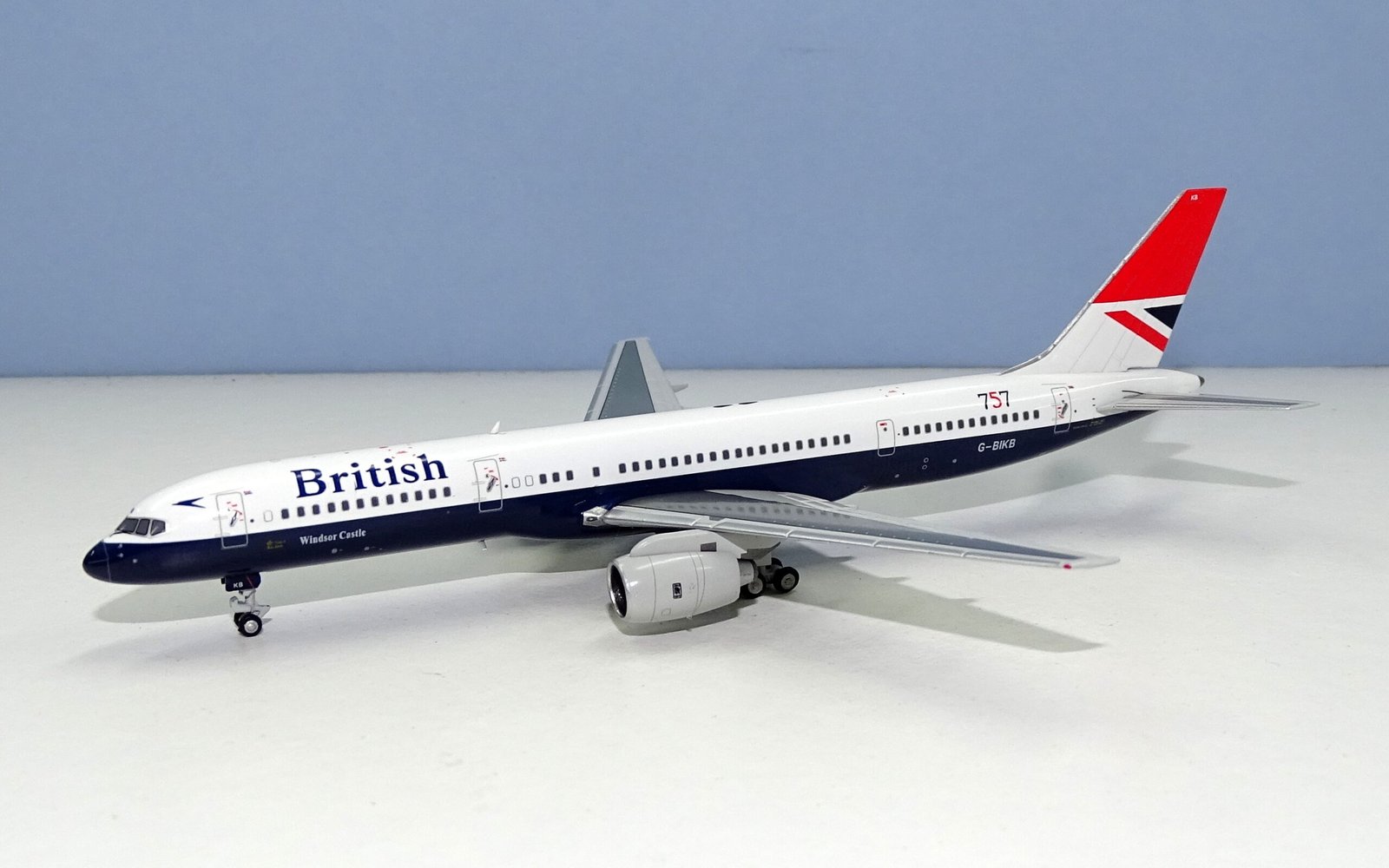
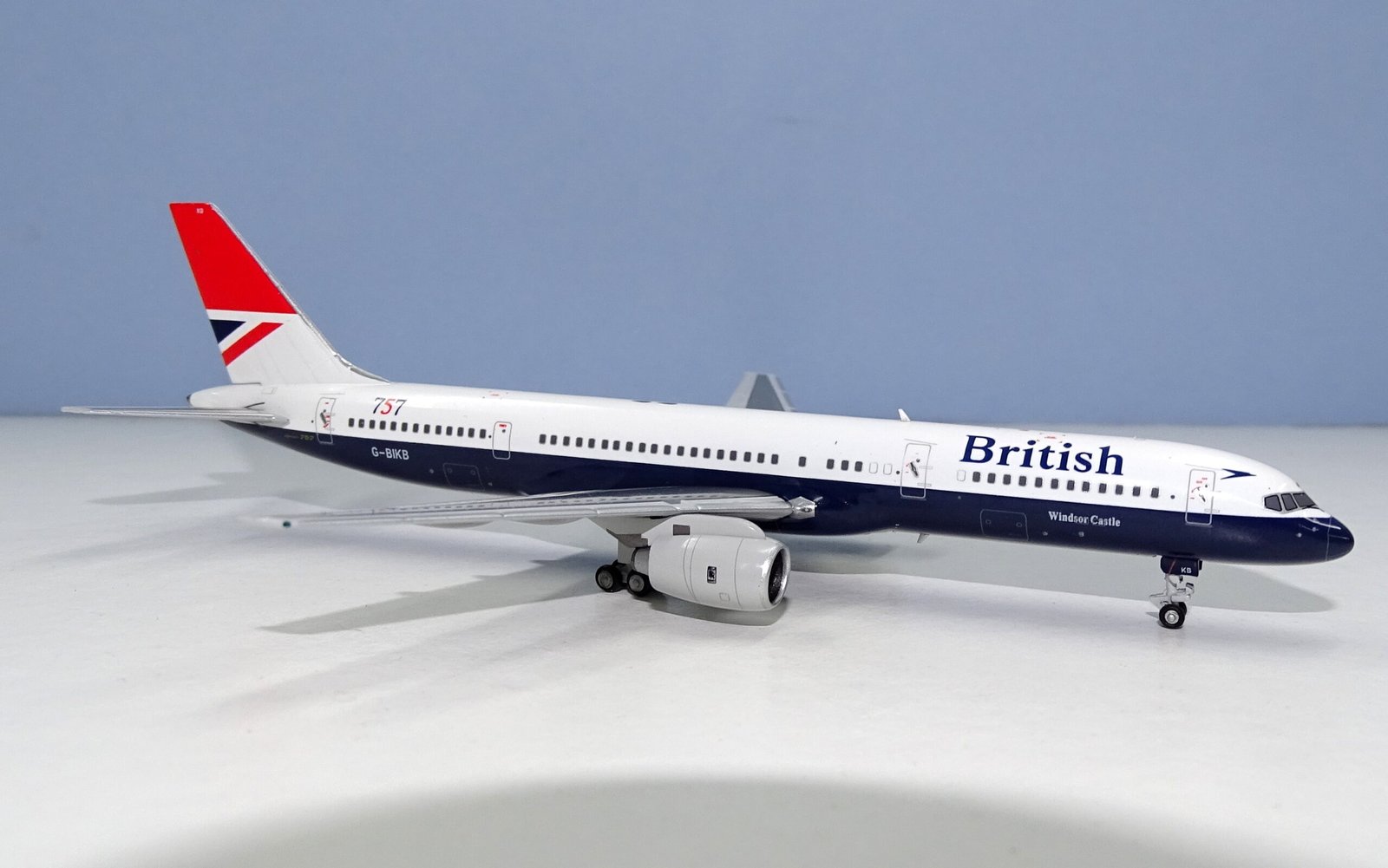
British Airways Boeing 757-236 G-BIKB NG Models 1:400 Scale Model Airliner
British Airways Boeing 757-236 G-BIKB NG Models 1:400 Scale Model Airliner
British Airways Boeing 757-236 G-BIKB NG Models 1:400 Scale Model Airliner
British Airways Boeing 757-236 G-BIKB NG Models 1:400 Scale Model Airliner
British Airways Boeing 757-236 G-BIKB NG Models 1:400 Scale Model Airliner
British Airways Boeing 757-236 G-BIKB NG Models 1:400 Scale Model Airliner
British Airways Boeing 757-236 G-BIKB NG Models 1:400 Scale Model Airliner
British Airways Boeing 757-236 G-BIKB NG Models 1:400 Scale Model Airliner
British Airways Boeing 757-236 G-BIKB NG Models 1:400 Scale Model Airliner
British Airways Boeing 757-236 G-BIKB NG Models 1:400 Scale Model Airliner
British Airways Boeing 757-236 G-BIKB NG Models 1:400 Scale Model Airliner
British Airways Boeing 757-236 G-BIKB NG Models 1:400 Scale Model Airliner
British Airways Boeing 757-236 G-BIKB NG Models 1:400 Scale Model Airliner
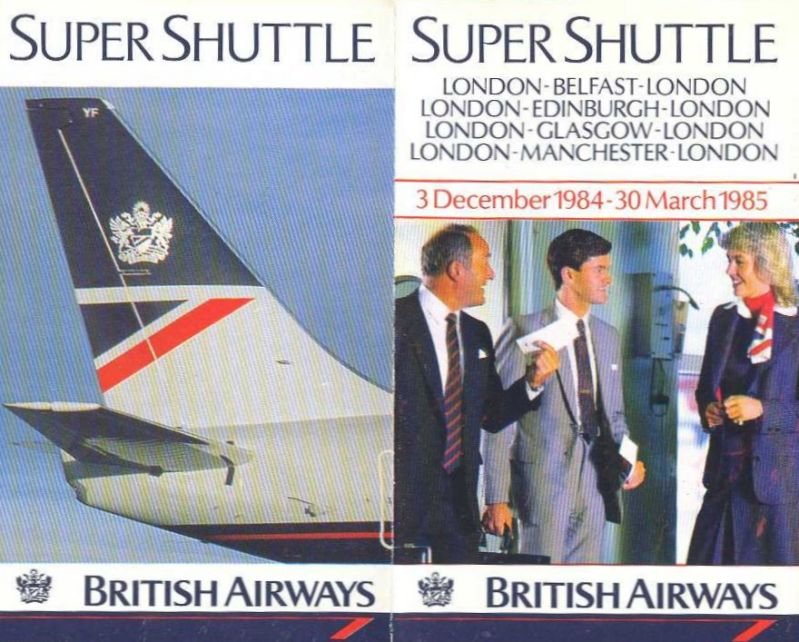
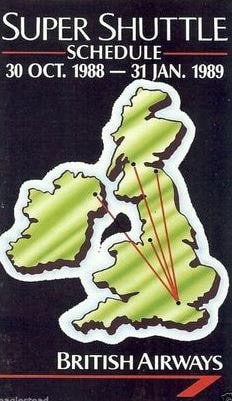
This was at a time when BA was in serious financial trouble (it announced a loss of GBP 544 million for 1981/82) but the reaction was swift. The Shuttle was rebranded on August 30, 1983 as the Super Shuttle on all four routes as a competitive response to British Midland’s entry onto the routes with its Diamond Service. The Super Shuttle competed against BD by moving away from the no frills offering. The revised service offered on-board service. There was a hot breakfast on early morning flights and a free bar and hot beverages on other flights.
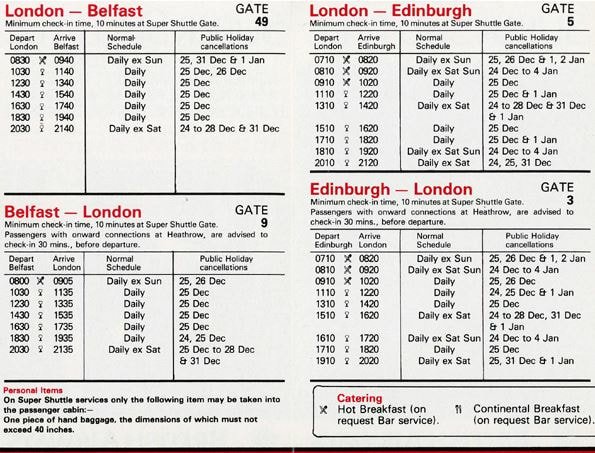
The Super Shuttle timetable in 1987 Pt1
Although the Shuttle was a high-cost operation for BA it was a valuable one. By the summer of 1983 it was carrying 2.5 million passengers a year, 1/7 of all the passengers BA flew.
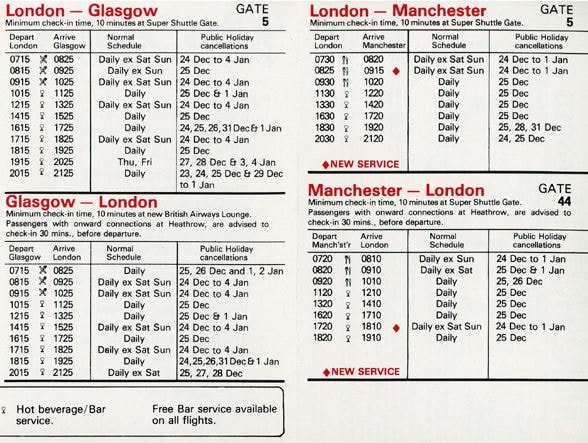
The Super Shuttle timetable in 1987 Pt2
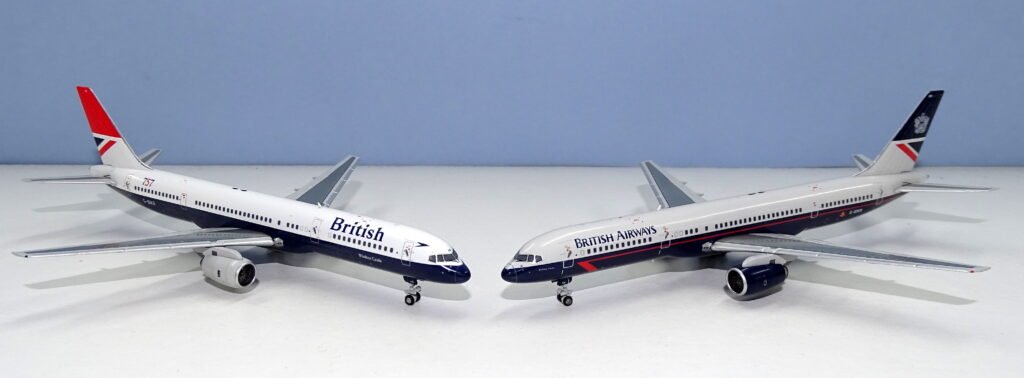
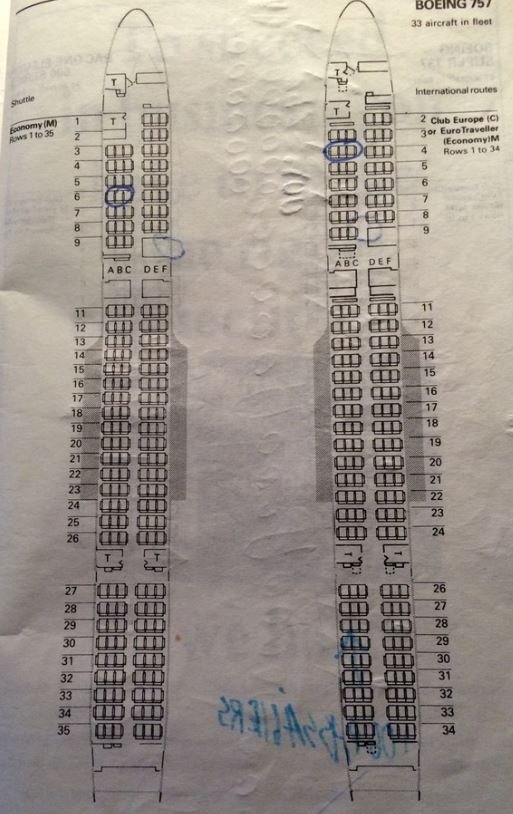
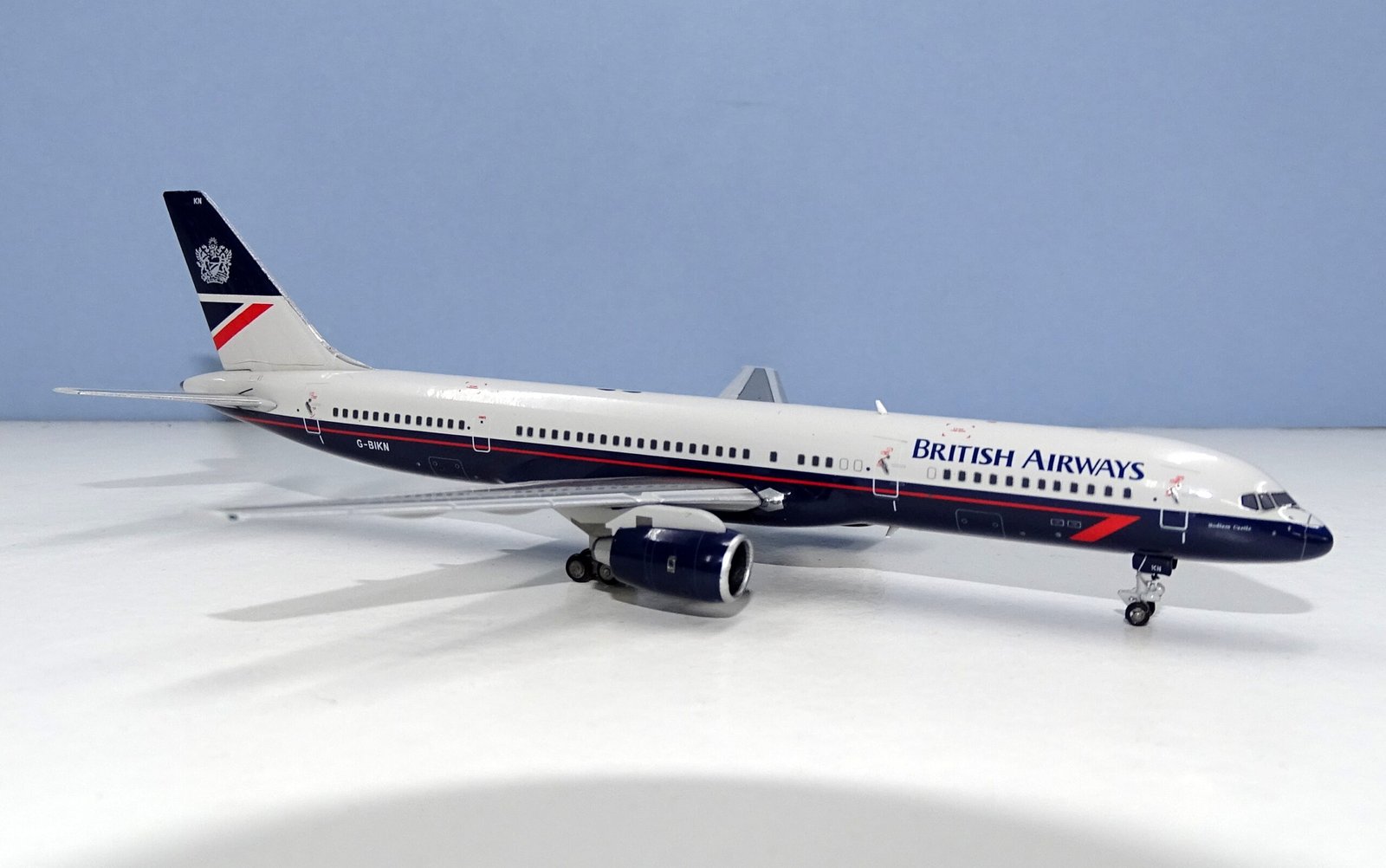
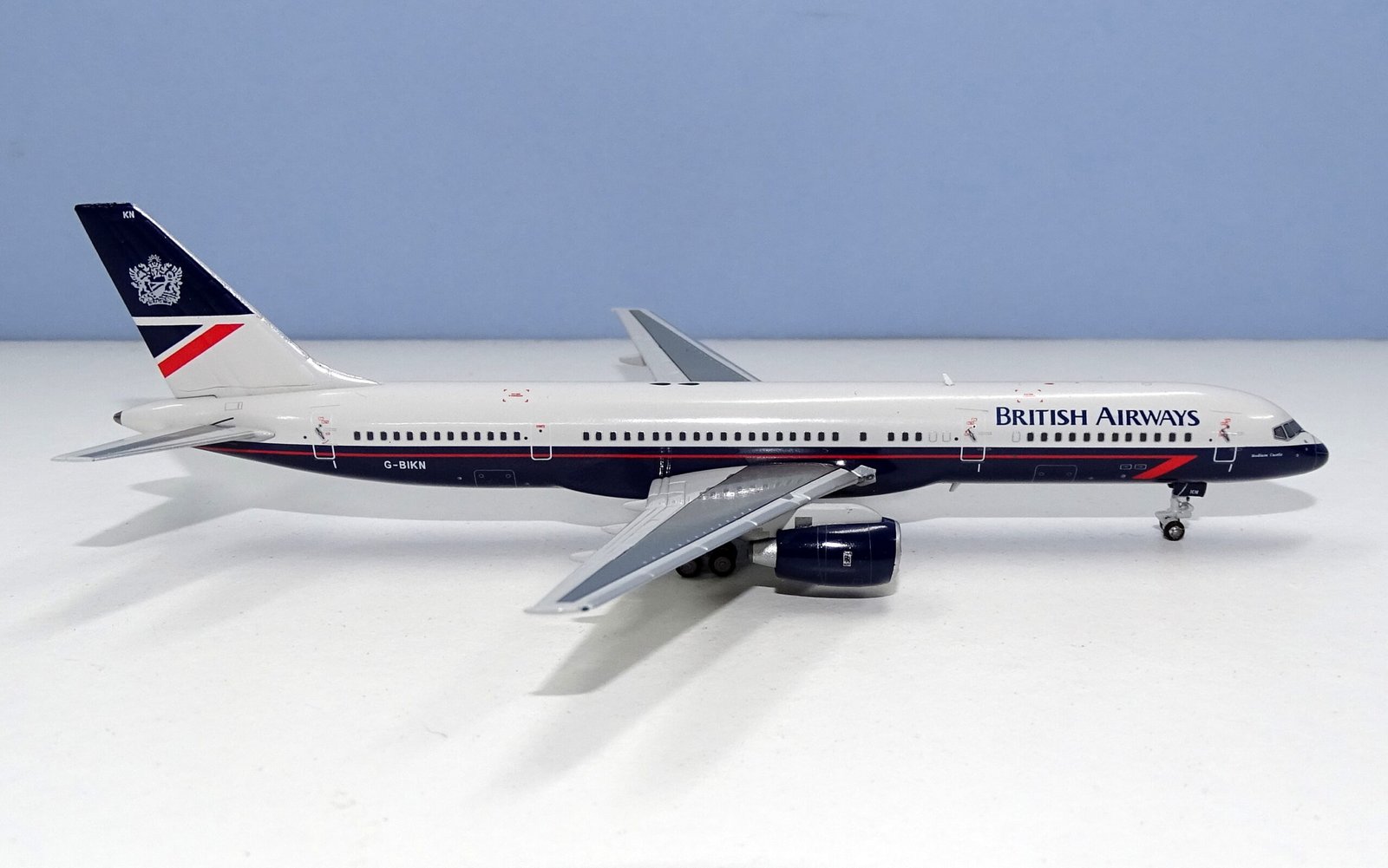
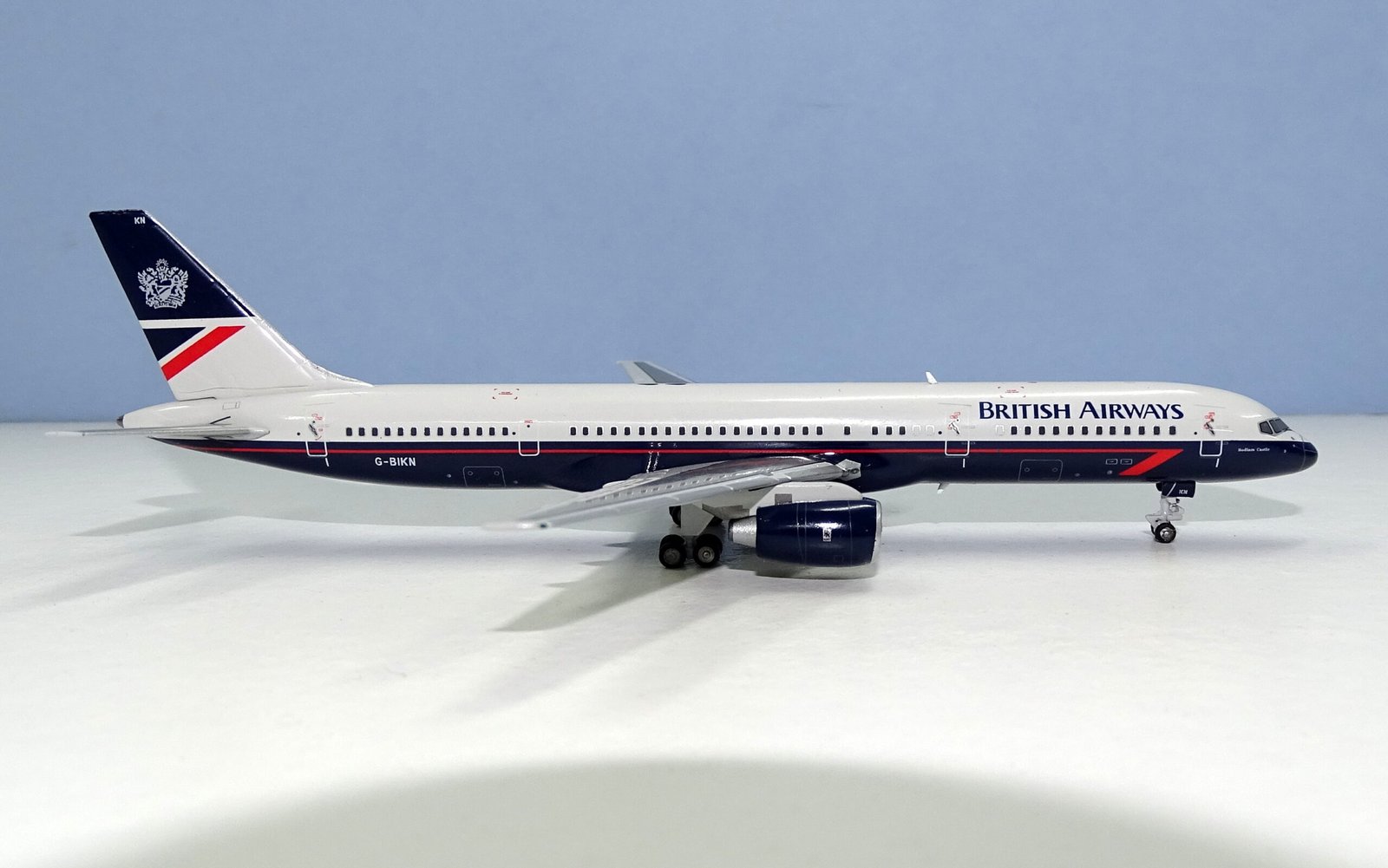
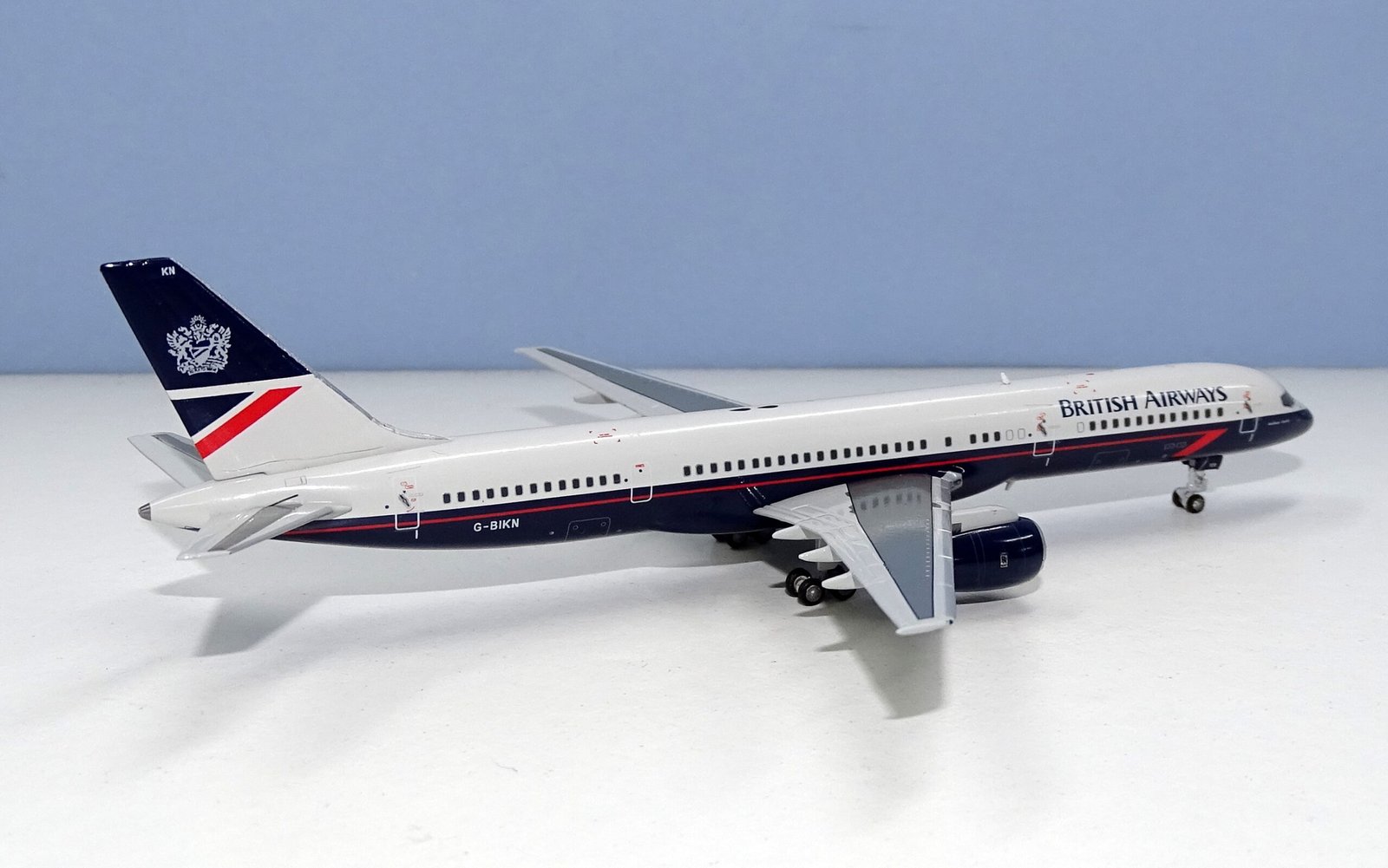
In addition to the change in service BA was able to offer new equipment in the form of the Boeing 757-236. The type had joined the fleet in January 1983 and several were outfitted in a high-density Shuttle 207 seat configuration.
The combination of the 757s and new service levels restored BA’s dominance on the Shuttle to about 75%. The trusty gripper (aka the Trident 3) continued in ever decreasing numbers on Shuttle routes until G-AWZU operated the last BA Trident flight on the last day of 1985.
The seating config for a Shuttle 757 (left) compared to a European 757 (right).
The 757s became the bedrock of the Shuttle operations (as well as BA’s medium range European network) but were assisted by 737s. From 1989 new 767-300s were also used and at times destinations like Edinburgh were receiving 3 a day.
With British Midland operating nearly as many services as BA on the same routes BA was able to avoid the need for the backup aircraft by pushing extra passengers on to British Midland flights. The agreement was reciprocal in that BD was able to move passengers to BA when their Cat II DC-9s could not operate but the Cat III 757s of BA could.
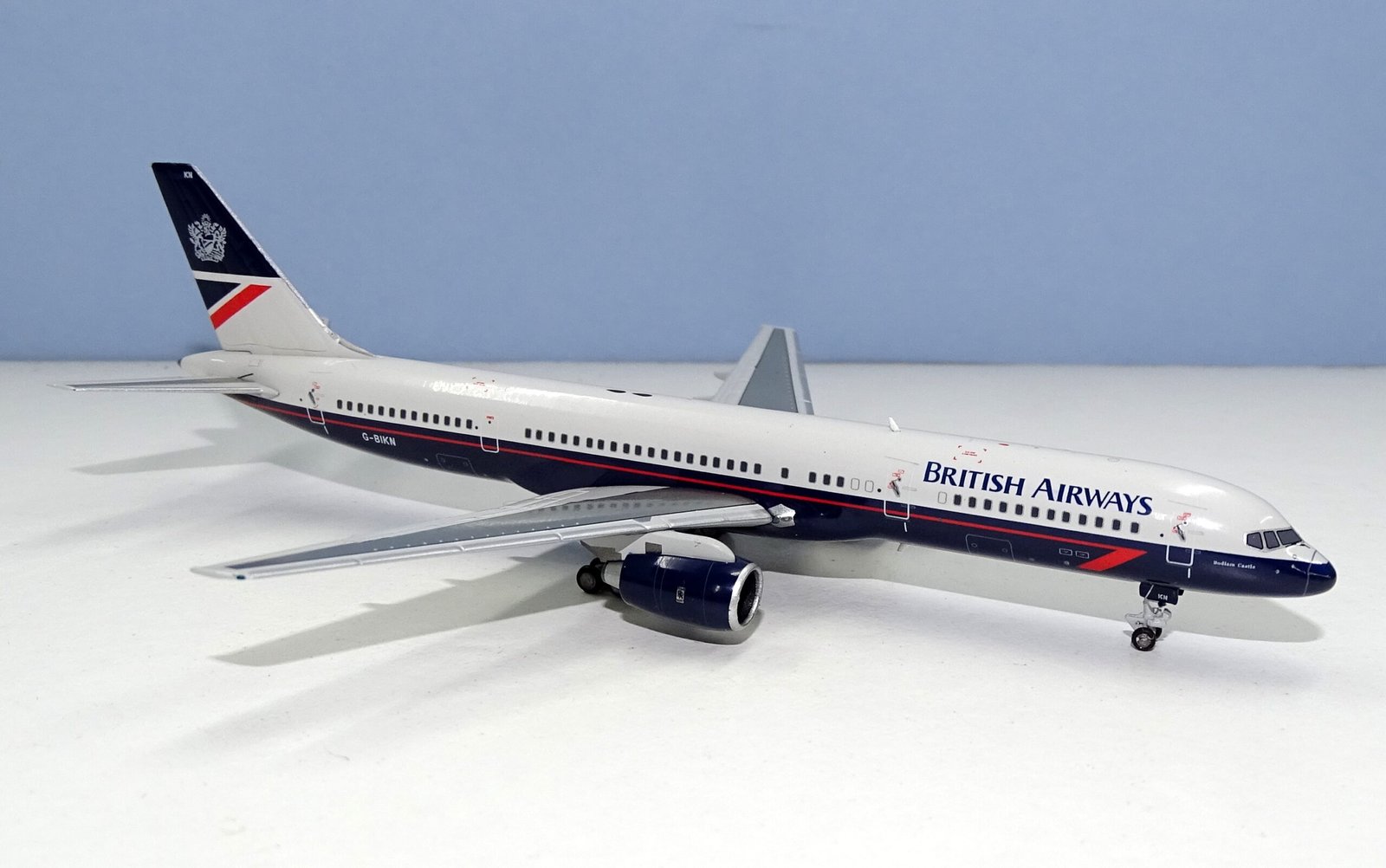
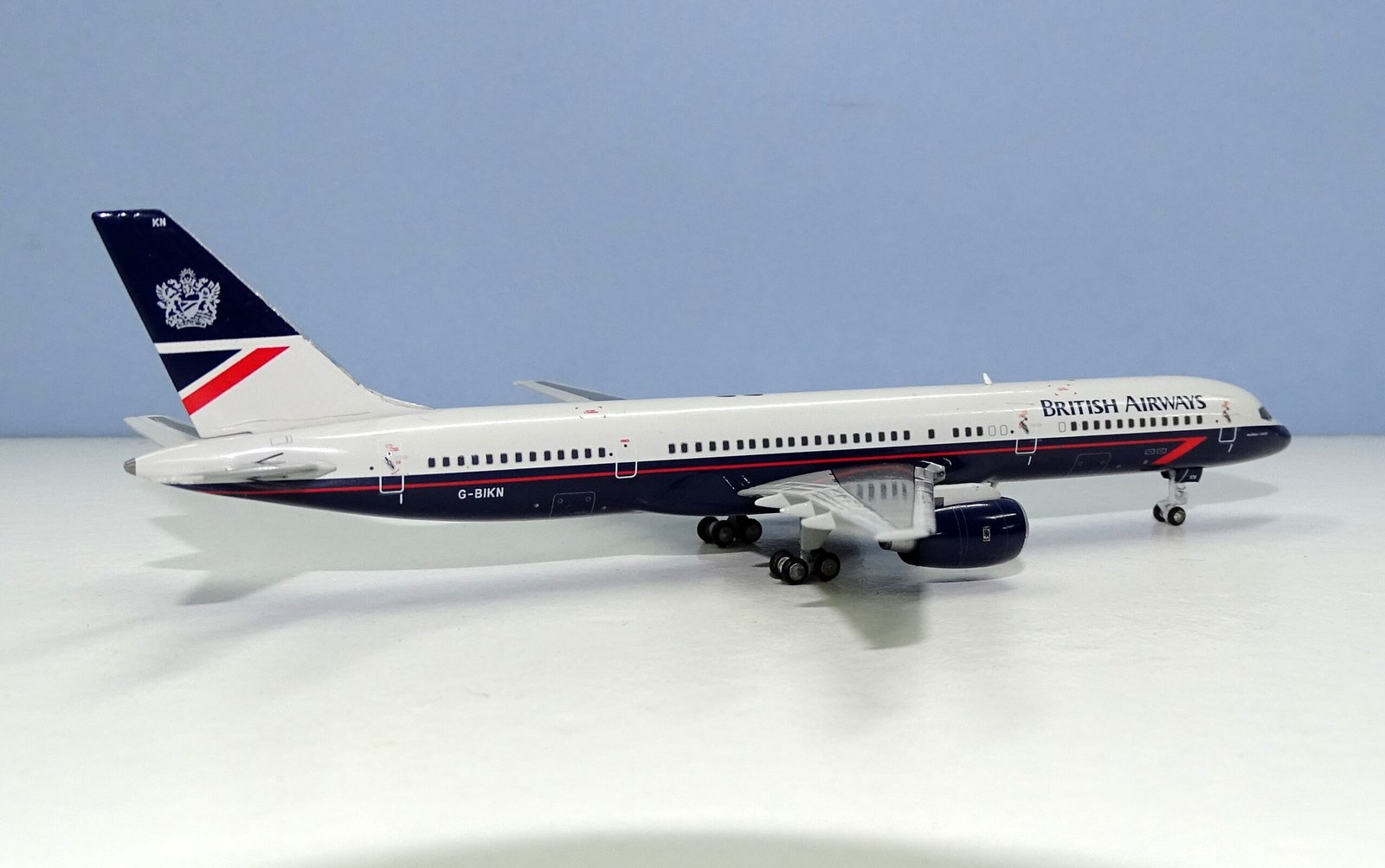
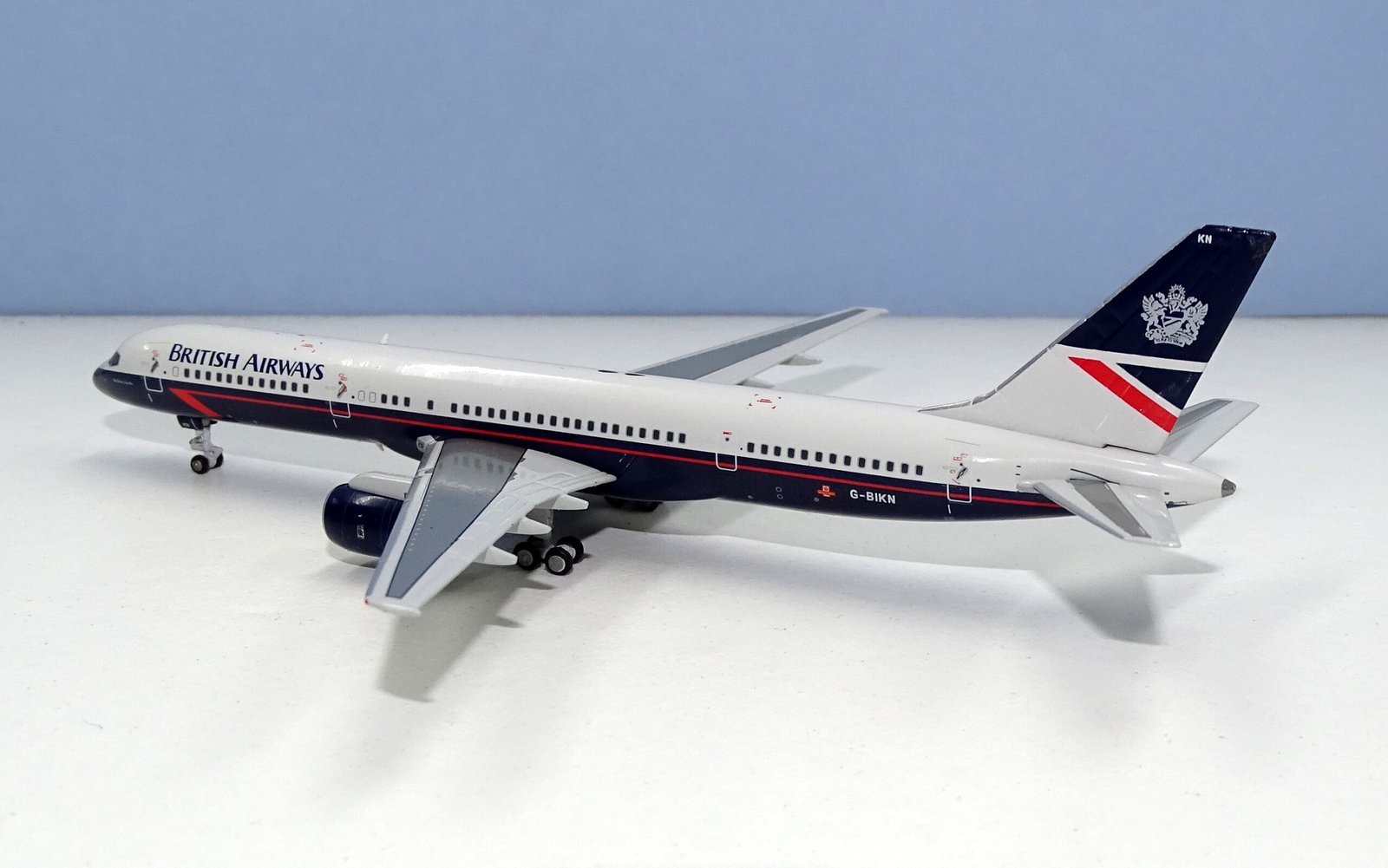
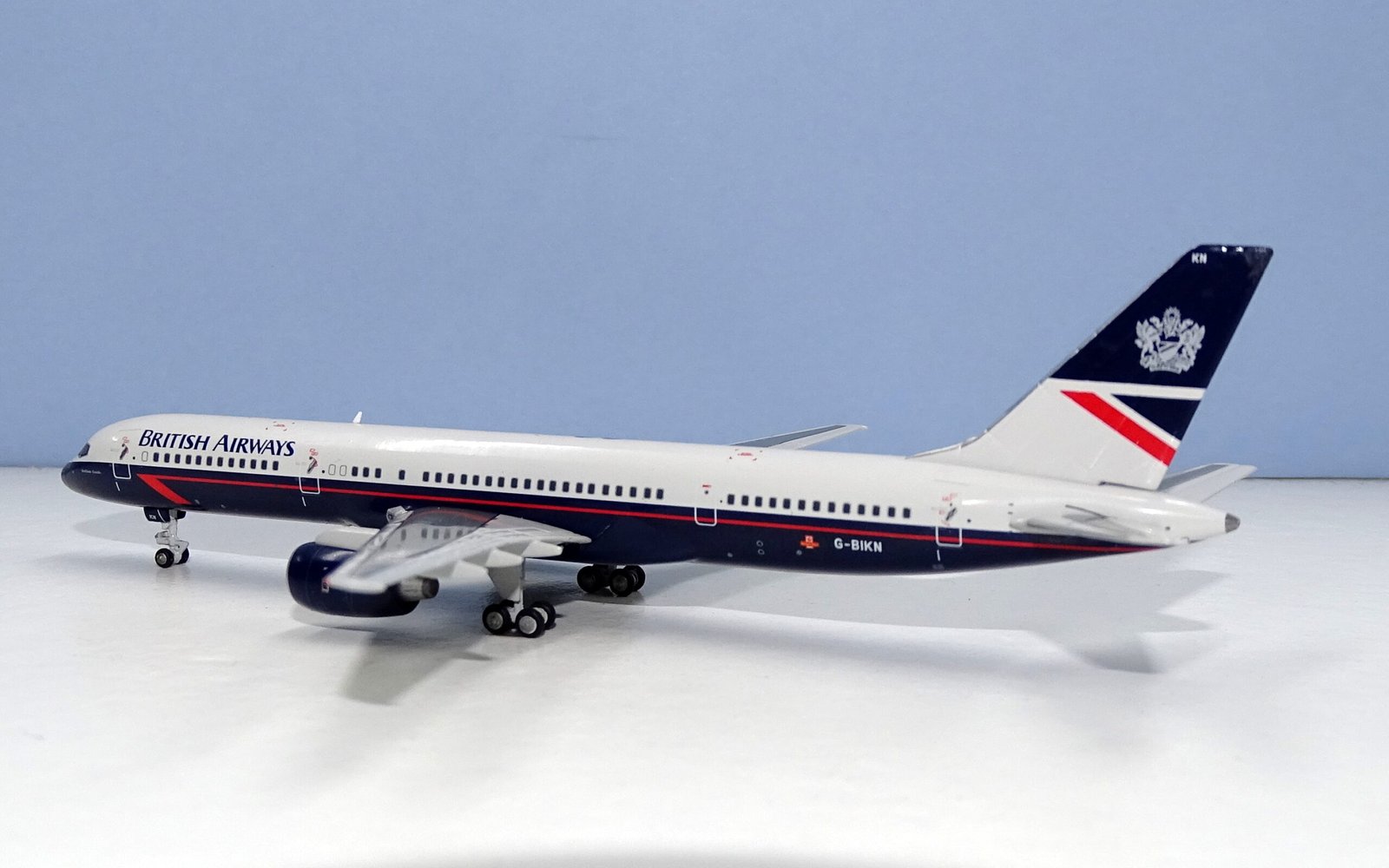
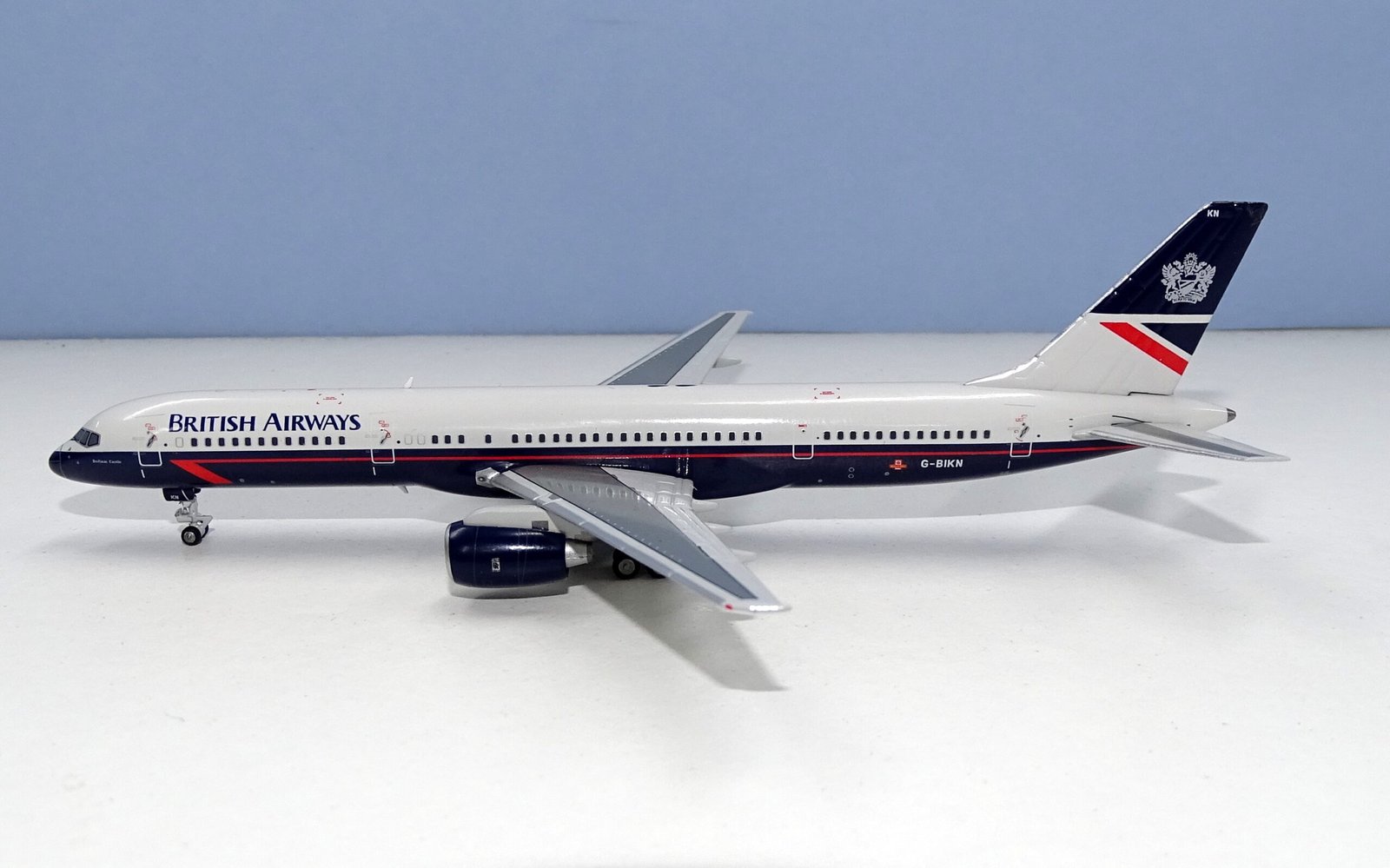
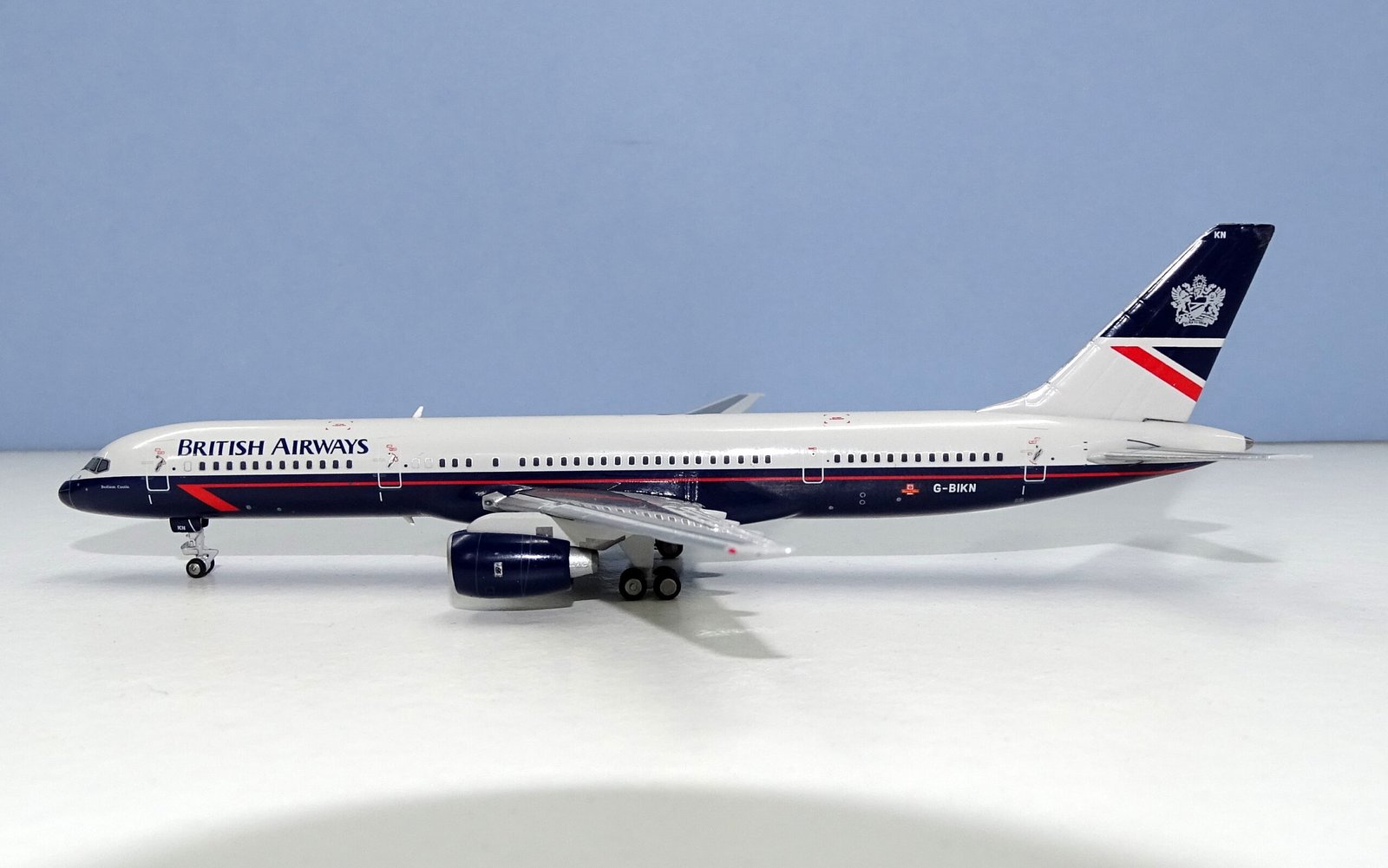
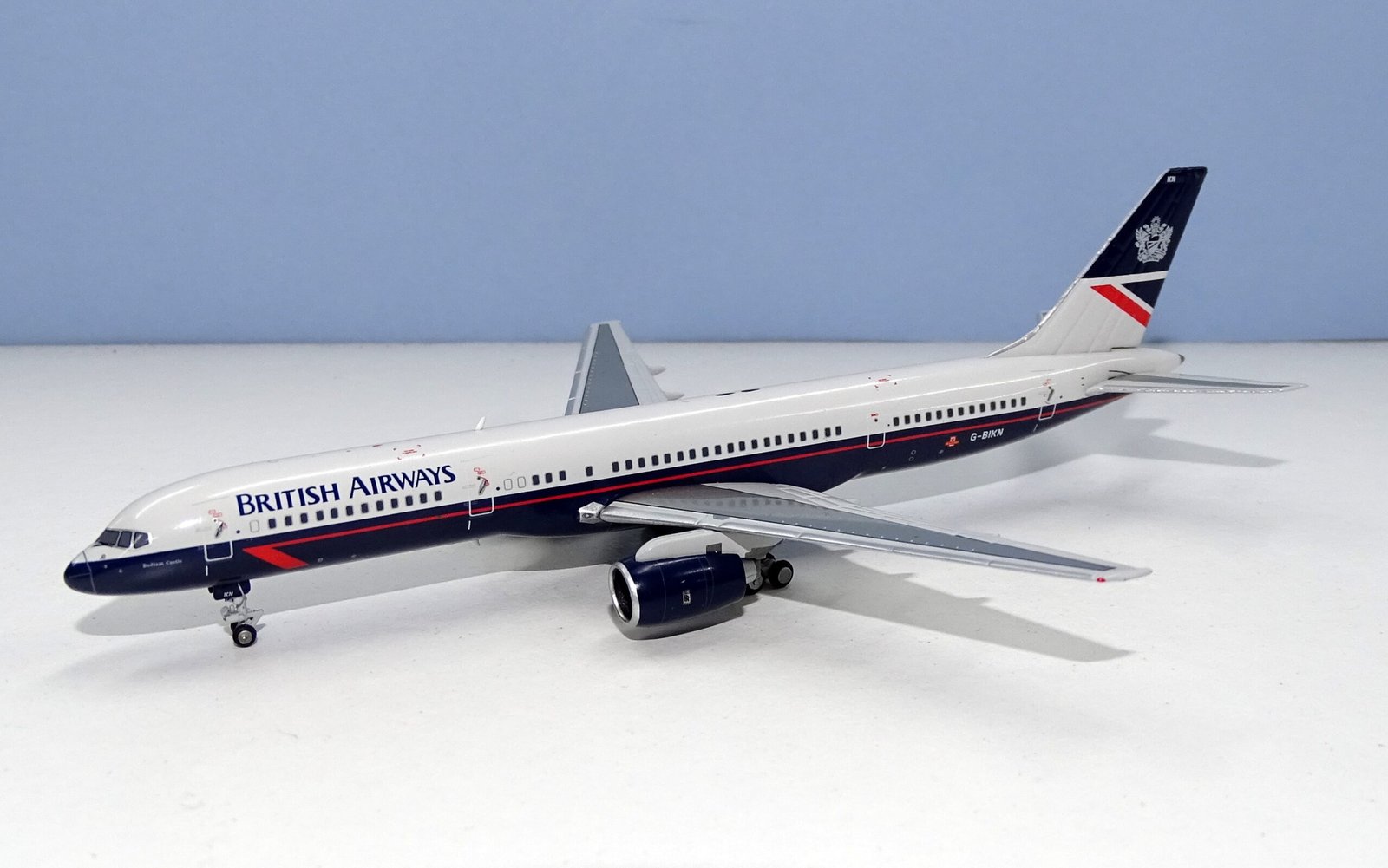
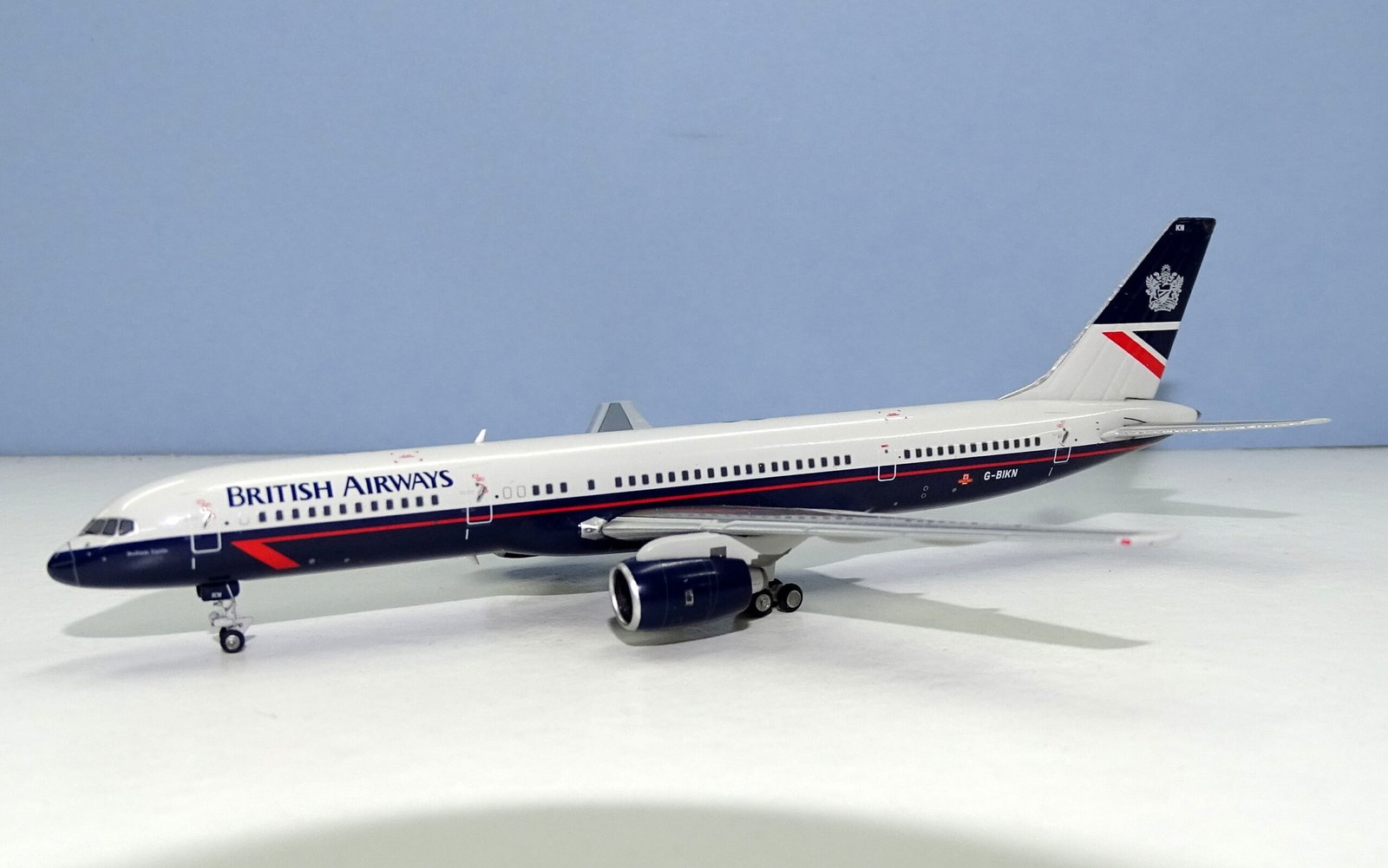
British Airways Boeing 757-236 G-BIKN NG Models 1:400 Scale Model Airliner
British Airways Boeing 757-236 G-BIKN NG Models 1:400 Scale Model Airliner
British Airways Boeing 757-236 G-BIKN NG Models 1:400 Scale Model Airliner
British Airways Boeing 757-236 G-BIKN NG Models 1:400 Scale Model Airliner
British Airways Boeing 757-236 G-BIKN NG Models 1:400 Scale Model Airliner
British Airways Boeing 757-236 G-BIKN NG Models 1:400 Scale Model Airliner
British Airways Boeing 757-236 G-BIKN NG Models 1:400 Scale Model Airliner
British Airways Boeing 757-236 G-BIKN NG Models 1:400 Scale Model Airliner
British Airways Boeing 757-236 G-BIKN NG Models 1:400 Scale Model Airliner
British Airways Boeing 757-236 G-BIKN NG Models 1:400 Scale Model Airliner
British Airways Boeing 757-236 G-BIKN NG Models 1:400 Scale Model Airliner
British Airways Boeing 757-236 G-BIKN NG Models 1:400 Scale Model Airliner
The Shuttle flights continued into the 1990s but gradually lost their uniqueness. It is unclear when the standard elements of the Super Shuttle ended, nonetheless of course the routes to Scotland and Northern Ireland remain important parts of the modern BA operation, albeit nowadays mainly with Airbuses and without the razzmatazz of the real BA Shuttle. All that really remains of the original operation is the Shuttle callsign, however the service was a successful way for BA to utilise older aircraft and turn loss making domestic routes into cash-cows. As such it was an important element in turning BA around and making BA’s future look brighter.