Under the reign of Harding Lawrence Braniff had become identified with, depending on your viewpoint, extravagant style or just really bright aircraft. Ever since the ‘End of the Plain plane’ campaign Braniff’s jets had been easy to spot in their range of bold colours.
The 1970s ‘Flying Colors’ livery toned it down a smidgen but the aircraft still wore a combination of bright two-tone schemes and then of course there was the Calder Flying Colours DC-8 and 727-200 as well.
Since 1965, when Lawrence tookover, he had grown the Texas airline from a $109 million company to a $900 million one and the airline not only had great publicity but could back it up with great profits and great service. In 1977 Braniff made a profit of $36.4 million so the carrier could afford to spend a bit. With June 20, 1978 representing the company’s 50th anniversary it was not a surprise that the third new look of the Lawrence era was in the wings.

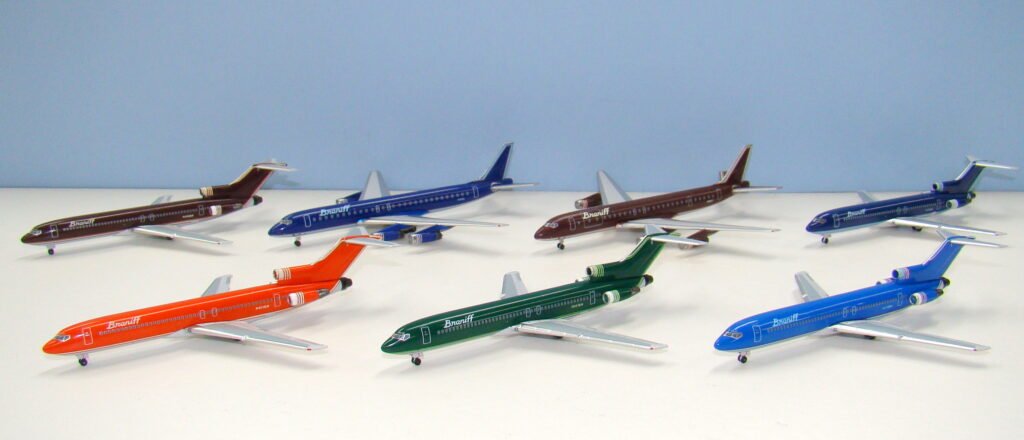
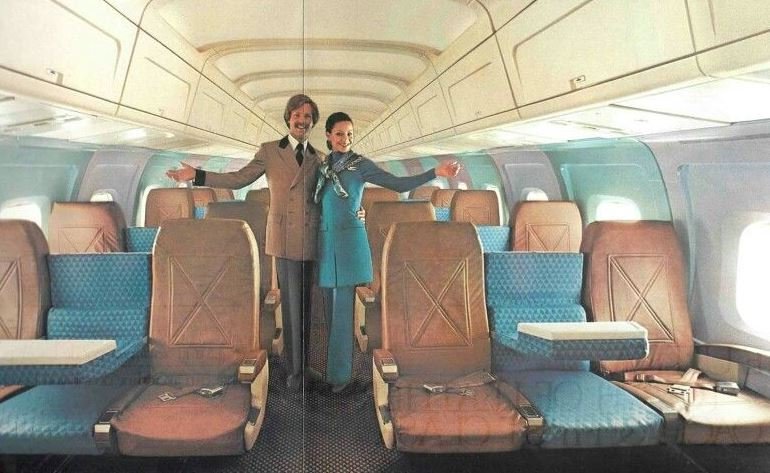
Only a month after the anniversary, on July 17, 1978 Braniff unveiled its ‘new look’ fleetwide colour scheme which came to be known as the Ultra livery. Like the bright pastels of the 1960s Jellybean fleet the Ultra colours were very much a product of their time and the Ultra look was more than just a colourscheme for the jets. It represented a total redesign of the aircraft interiors and staff uniforms and was designed to represent the epitome of elegance and sophistication.

The designs were the brainchild of Roy Halston Frowick, known more usually just as Halston. He was a fashion designer who had risen to fame during the 1970s for his minimalist, clean designs often using cashmere or ultrasuede. The original unveiling of the new look began on February 17, 1977 as part of the ‘Elegance Campaign’.
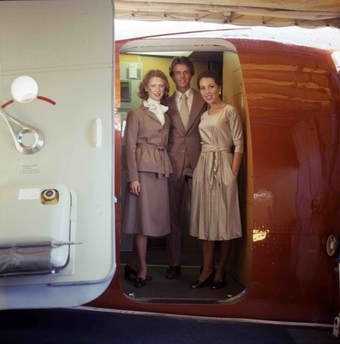

This included a 350 guest invitation only weekend of fun and excitement dubbed the ‘Three Evenings to Remember’ held in Acapulco, Mexico. The second night of the party included the unveiling of Halston’s designs for both air and ground personnel. The new uniforms featured light brown and ivory styling with overcoats and luggage all in Halston’s signature ultrasuede. For the groundcrews they included a heavyweight padded dark brown overcoat and a heavy duty bright yellow rain suit. In general it seems the uniforms were very well received and thought of as super comfortable.

The new uniforms were merely a portion of the extravagance of the 3 day event, which despite its cost paid for itself in advertising and promotion. Internally for the aircraft the Elegance Campaign included full-grain Leather seats in both First and Coach, plus of course the wide-body look that was becoming the norm during the 70s. Aircraft were also fitted with inflight movies and stereo music.
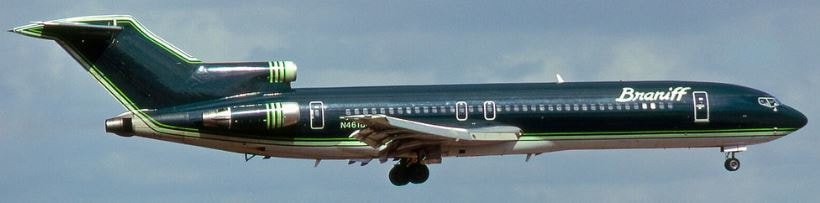
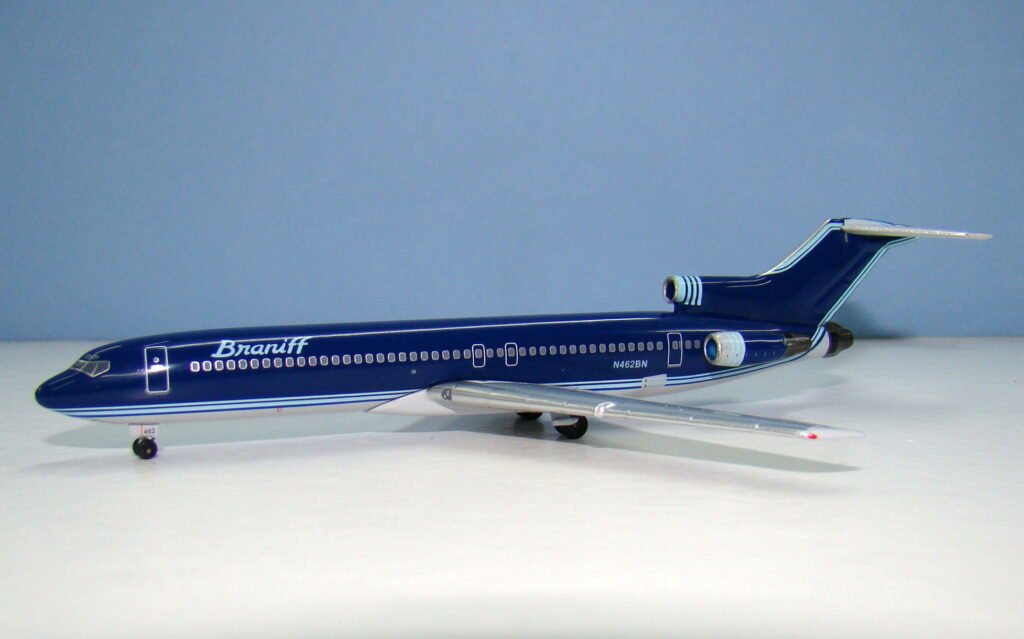
On the outside of the Braniff jets the Ultra colours were minimalist with most of the airframe painted in a block colour only highlighted by some colour co-ordinated ‘Power Pin Striping’ around the tail, ringing the engines and along the belly. Braniff titles, in a new cursive script, appeared only on the forward part of the aircraft leaving the tail as a block of colour.

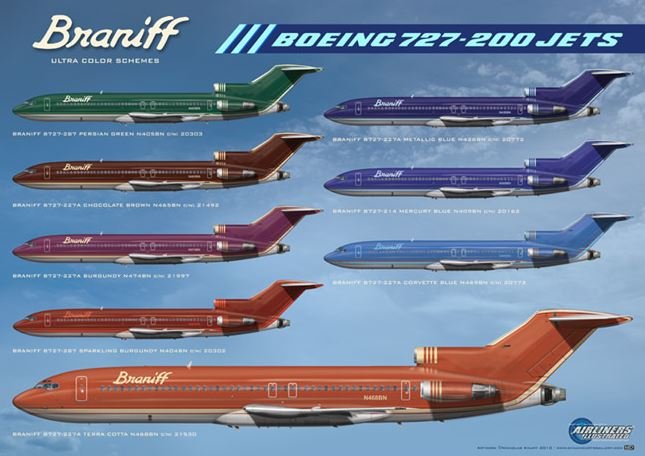
Unlike the bright red, green, yellow and blue of previous schemes the 8 colours chosen for the Ultra look were all darker shades known as:
- Terracotta
- Perseus Green
- Mercury Blue
- Metallic Blue
- Light Corvette Blue
- Chocolate Brown
- Burgundy
- Sparkling Burgundy
To be honest this Ultra scheme has never resonated with me but it appears to have pleased the industry and the passengers. Nonetheless the new Ultra colours have unfortunately become synonymous with the sort of hubris and extravagance that saw Braniff self-destruct, due largely to Lawrence’s reaction to deregulation of the US aviation market.


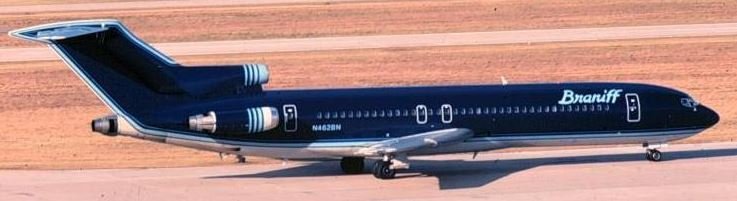
In fact the new colours were quickly overcome by the massive financial troubles that developed for the airline. It was October 1978 that began the death spiral of the airline. In preparation for deregulation airlines were able to bid for dormant routes. Harding Lawrence was convinced that deregulation was a fad and that he should use the limited window to grab as much marketshare as he could. It was an insane gamble that would all but destroy the airline. When the bidding opened most airlines applied for a few hundred new routes whilst Braniff applied for 1,672! Famously the running joke was that:
“when the magistrate for the CAB saw Braniff’s applications, he promptly told them to go to hell… and then Braniff promptly applied for the route authority to do so.”


This wasn’t the only issue that faced Braniff and led to its failure but it was a major one and the debt it created and untenable routes it started left Braniff weakened and open to strong competition and economic troubles that would finish it off.

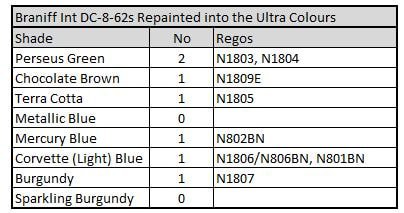

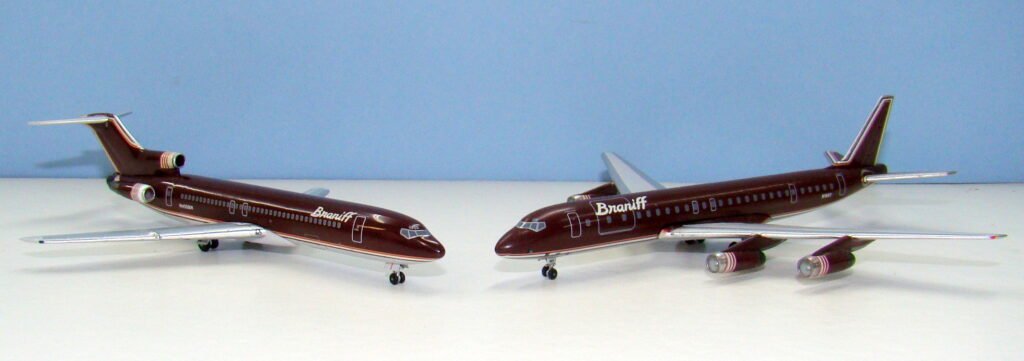
As Braniff’s problems mounted the repainting of the fleet slowed so that by the time the airline folded in 1982 the bankrupt fleet on the tarmac at DFW was still a patchwork of Ultra and Flying Colors liveried aircraft. All 25 new 727s delivered from April 1978 wore the new Ultra scheme however only 12 of the older frames were repainted leaving 43 still in the Flying Colors scheme. Of the 727-100 fleet only a single aircraft was repainted (along with two newer additions) although admittedly the series 100s were leaving the fleet anyway. None of the DC-8-51s were repainted prior to their disposal but all but 2 of the DC-8-62s received their Ultra scheme paint.


Interestingly two of the Ultra colours (Metallic Blue and Sparkling Burgundy) were only ever worn by a single aircraft each. Obviously the other type that wore a variant of the Ultra scheme were the 747s. All of the 747s except for the original N601BN wore an Orange version of the Ultra scheme. The main difference other than the colour was that the 747s didn’t wear the Power Pin Stripes on the belly which was instead solidly orange.
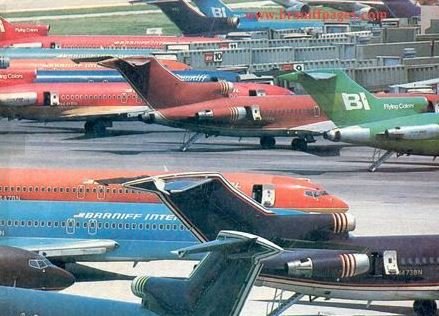
The Ultra look never really had the time or fleetwide application to make the desired impact as Braniff was overtaken by such nonsense as Concorde flights and a Pacific network before nosediving into the ground in the face of dreadful declines in service, mad network growth, recession and the arrival of an American Airlines hub at its base. In the end how it appears in retrospect is either going enabling Braniff to go out in style or as just another self-destructive act by the Lawrence management team. The truth is probably it was a bit of both. Nonetheless it was well thought of enough to be copied by the ill-fated third Braniff as late as the early 90s.